Intro

Diwali outdoor lighting ideas are my favorite thing to plan every fall, because no other holiday decor starts with the same premise: light itself is the celebration. Diwali, the Festival of Lights, falls in early November this year, and the whole point is driving out darkness with hundreds of little flames — which means your lighting plan isn't just decoration, it's the heart of the holiday. In my experience, the homes that look most magical on Diwali night aren't the ones with the most stuff — they're the ones that layer their light.
Layering is my guiding philosophy for every outdoor display, and it works beautifully for Diwali. Start with a base of warm ambient glow (string lights along the roofline or trees), add a middle layer of focal sparkle (lanterns, fairy-light curtains, glowing garlands), then finish with the soul of Diwali itself: rows of small, flickering diyas — real clay ones or LED — at ground level, drawing the eye along pathways and entry steps.
In this post I'll walk you through 19 ideas, from classic clay diya arrangements to modern LED tricks, with real measurements, safety notes for open flames, and honest budget ranges for each.
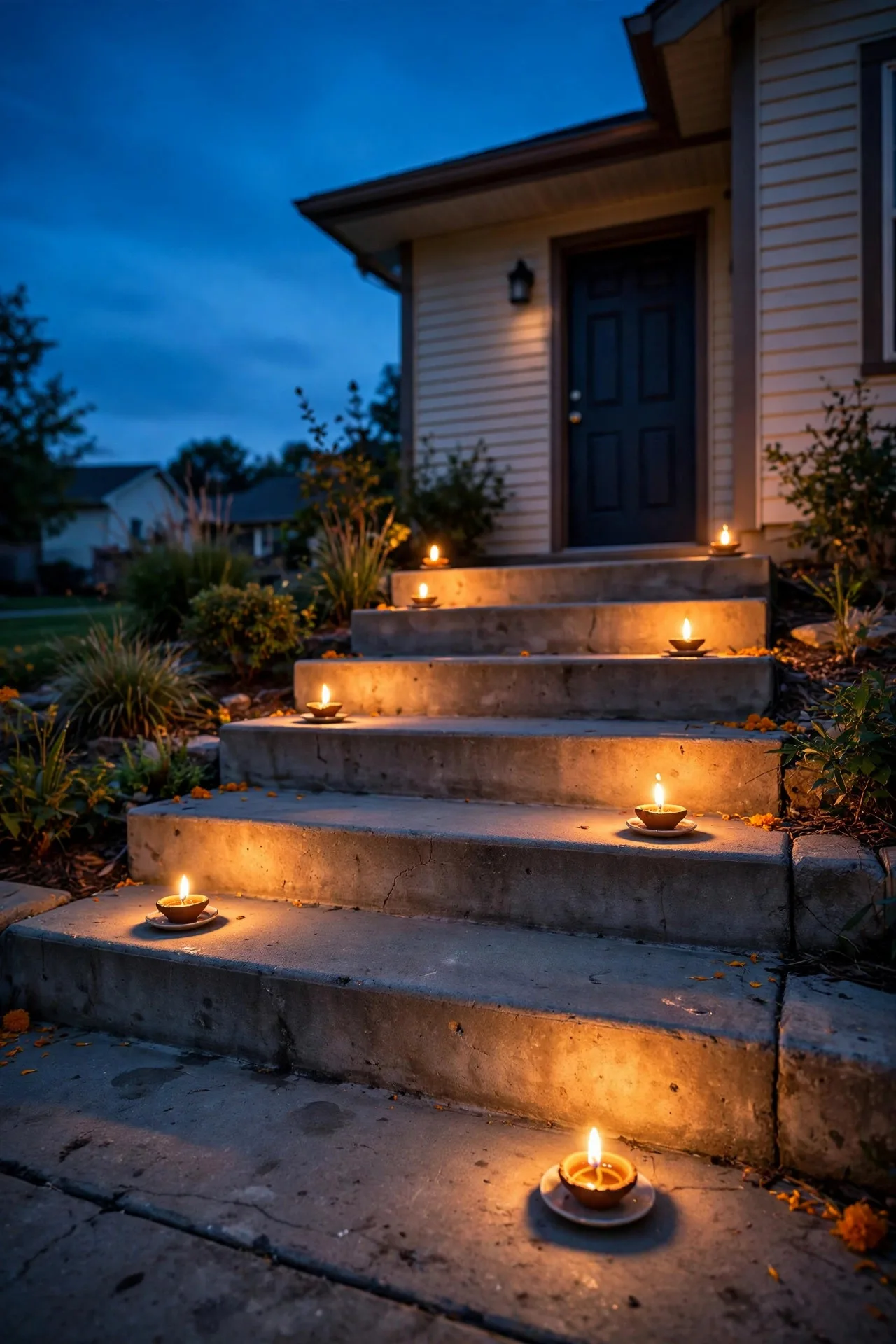
1. Line Your Entry Steps with Clay Diyas — Classic Diwali Outdoor Lighting Ideas
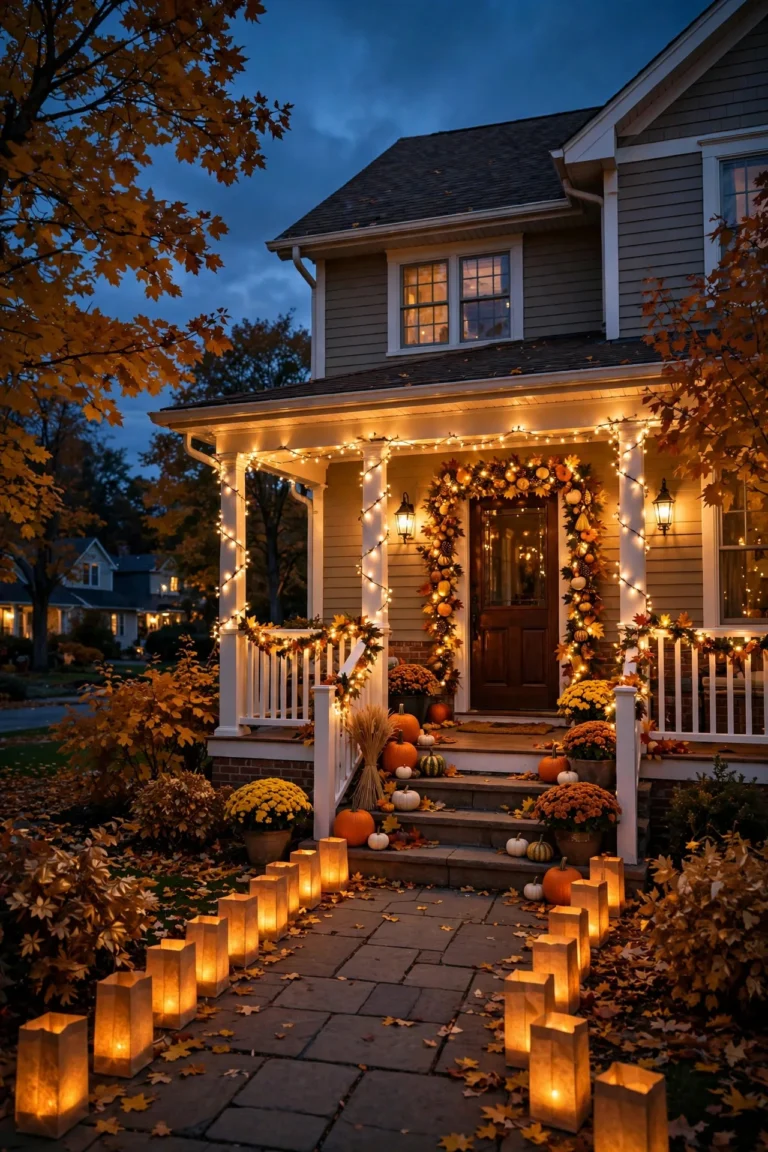
Nothing says Diwali like a staircase of real clay diyas. This is the single most iconic of all diwali outdoor lighting ideas, and it's also one of the cheapest. Place small clay oil lamps on every other step (about 12–18 inches apart), alternating sides so the eye zigzags up to your door. Fill each with mustard oil or clarified butter — ghee burns cleaner and drips less — and use cotton wicks cut to about half an inch above the rim. Light them at dusk and they'll burn for 2–4 hours, covering the whole evening celebration.
I always recommend putting each diya on a small ceramic saucer or a square of foil. It protects your steps from oil stains and makes cleanup the next morning genuinely painless. Keep real-flame diyas at least 3 feet from anything flammable: dry leaves, doormats, curtains, garlands. If it's windy, cluster diyas inside large glass hurricane covers or set them in shallow metal trays with sides — the flame stays lit and the glow actually intensifies through the glass. And never leave lit diyas unattended; assign the job of checking them to one person at the party. For a grander look, flank the top of the stairs with two tall brass or copper lanterns holding pillar candles.
Suggested budget range: $8 – $30.
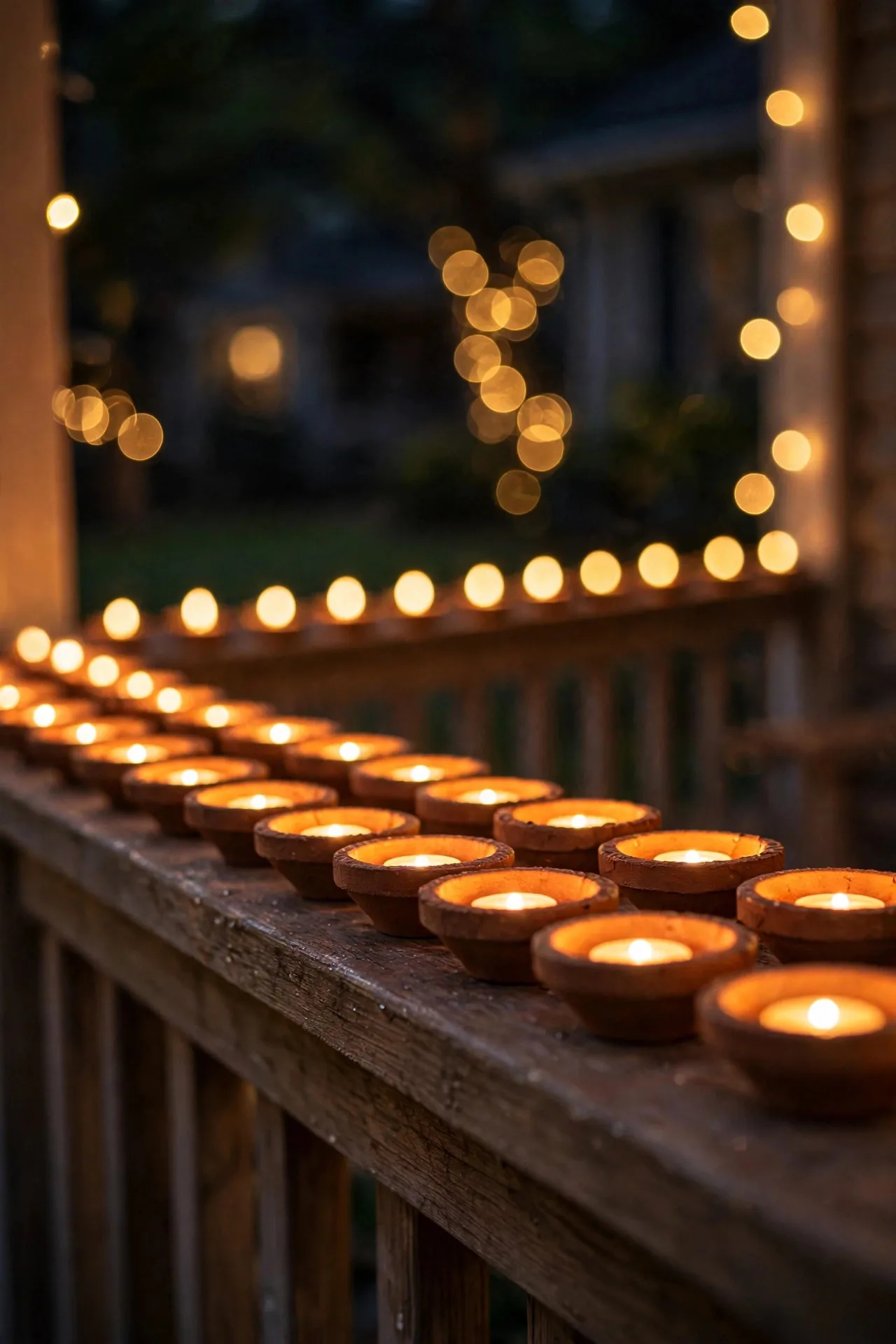
2. Swap in LED Diyas Wherever Flames Aren't Safe
Here's the honest truth: real flames are gorgeous, but LED diyas are the workhorse of modern Diwali decorating, and I use both every year. Battery-operated LED diyas flicker convincingly, never blow out in wind, and can go anywhere a real flame can't — tucked into garlands, inside paper lanterns, or along your porch railing, or anywhere small hands and curious pets roam. Look for the warm amber versions (around 2200–2700K color temperature) rather than harsh white; the cheap cool-white ones read as Christmas, not Diwali.
A pack of 24 LED diyas typically runs on individual coin batteries, which is fine for one season but wasteful long-term. I always recommend the rechargeable sets that come with a charging tray — you pop the whole batch on the tray overnight and they're ready for five nights of Diwali. Place them 6–10 inches apart in dense rows for maximum impact; scattered singles look sparse, but a tight crowd of them creates that river-of-light effect. One caveat: coin-battery versions aren't weatherproof, so bring them in if rain is forecast. Outdoor-rated rechargeable sets usually handle a light drizzle fine, but check the packaging.
Suggested budget range: $12 – $45.
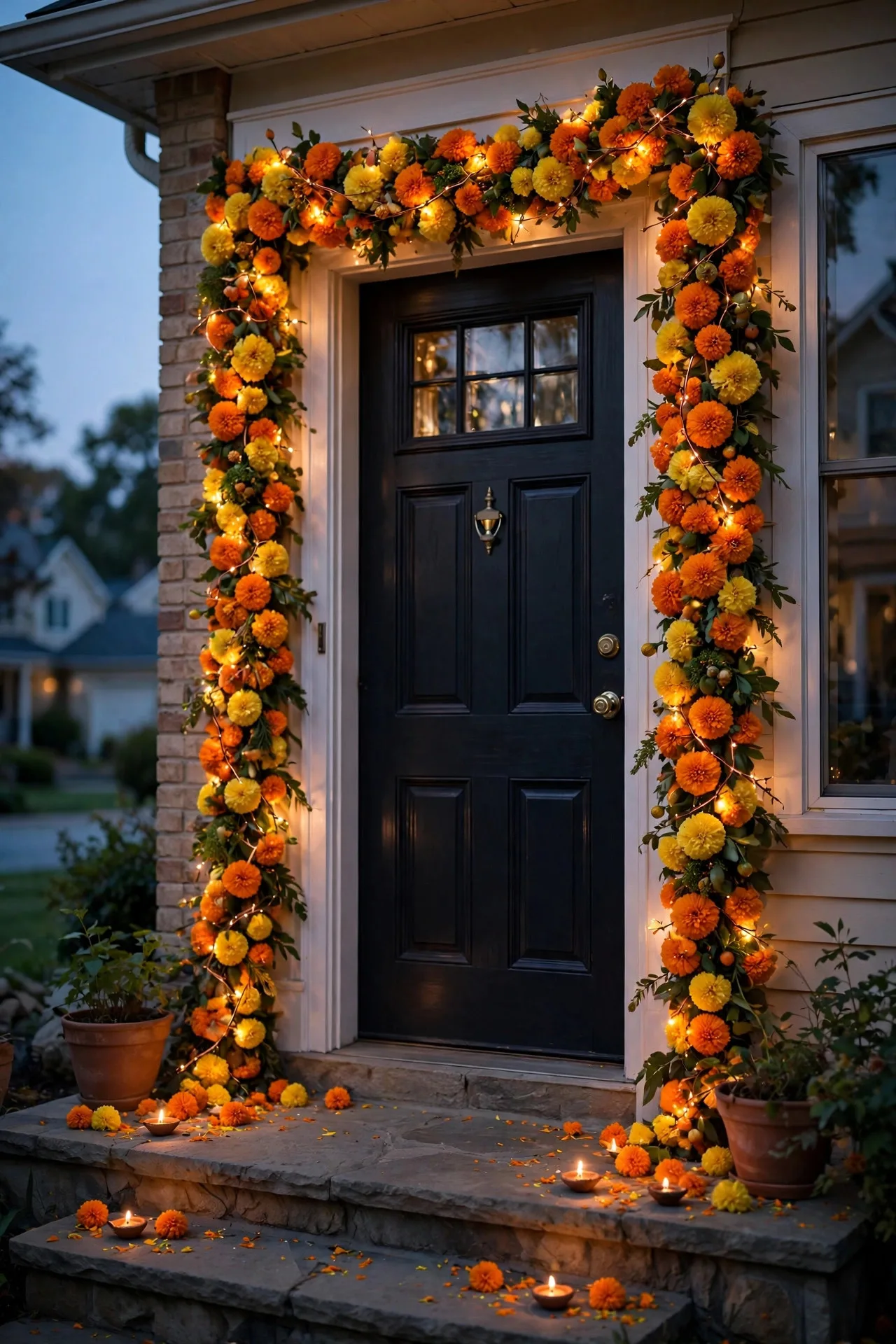
3. Frame Your Front Door with a Marigold Toran and Fairy Lights
A toran — the traditional garland hung over a doorway — is the warmest possible welcome, and weaving lights through it takes it from lovely to unforgettable. Start with a fresh marigold toran (real flowers if you can get them; the scent is half the experience) or a high-quality silk one that you'll reuse for years. Drape it across the top of your door frame and down both sides, letting the ends hang to about 5 feet so guests brush past the blooms.
Now weave a strand of copper-wire fairy lights through the garland, tucking the tiny bulbs between flowers so they peek out like captured fireflies. Two strands of 66-foot fairy lights (about 200 micro-LEDs each) will do a standard 36-inch door with both side drops. Secure everything with clear removable adhesive hooks rated for outdoor use — never nails or staples, which can damage the wire insulation and create a shock risk. Plug into an outdoor-rated timer so the display switches on at dusk automatically; honestly, timers are the single best purchase in all of outdoor decorating. Hang a matching lit toran on your windows for a coordinated look.
Suggested budget range: $25 – $70.
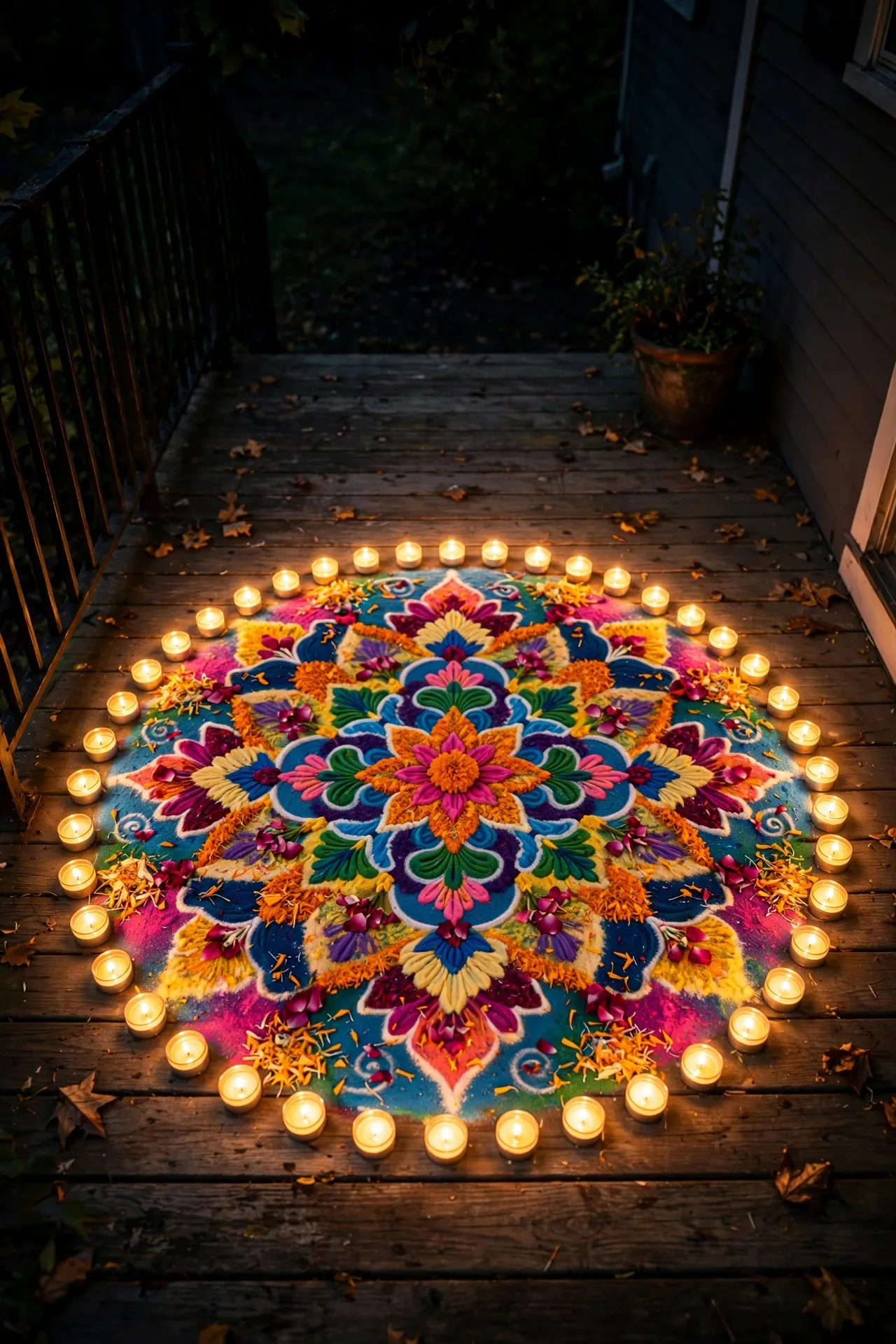
4. Ring Your Rangoli with Lights Instead of Just Chalk and Petals
A rangoli at the entrance is traditional, but most people photograph it in daylight and forget it by nightfall. Fix that by designing your rangoli with light built in. Draw your pattern with colored powder or flower petals as usual, then place small LED tea lights or LED diyas around its outer border — one every 4–6 inches, following the curves of the design. The light catches the pigment and petal edges, and the whole pattern glows from within.
For a bolder version, outline the rangoli with a thin rope light in warm white, laid directly on the ground tracing your design. Rope lights are weatherproof, flat enough not to trip anyone, and they make even a simple geometric pattern look spectacular after dark. If you're using real-flame diyas in the rangoli, keep them inside the design's center or on a tray — colored powders can be flammable, and pets will investigate anything at nose height. One more tip from experience: snap your rangoli photo at blue hour (about 20–30 minutes after sunset), when the sky is deep indigo and your lights are the brightest thing in the frame.
Suggested budget range: $10 – $40.
5. Drape Warm Gold String Lights Along the Roofline
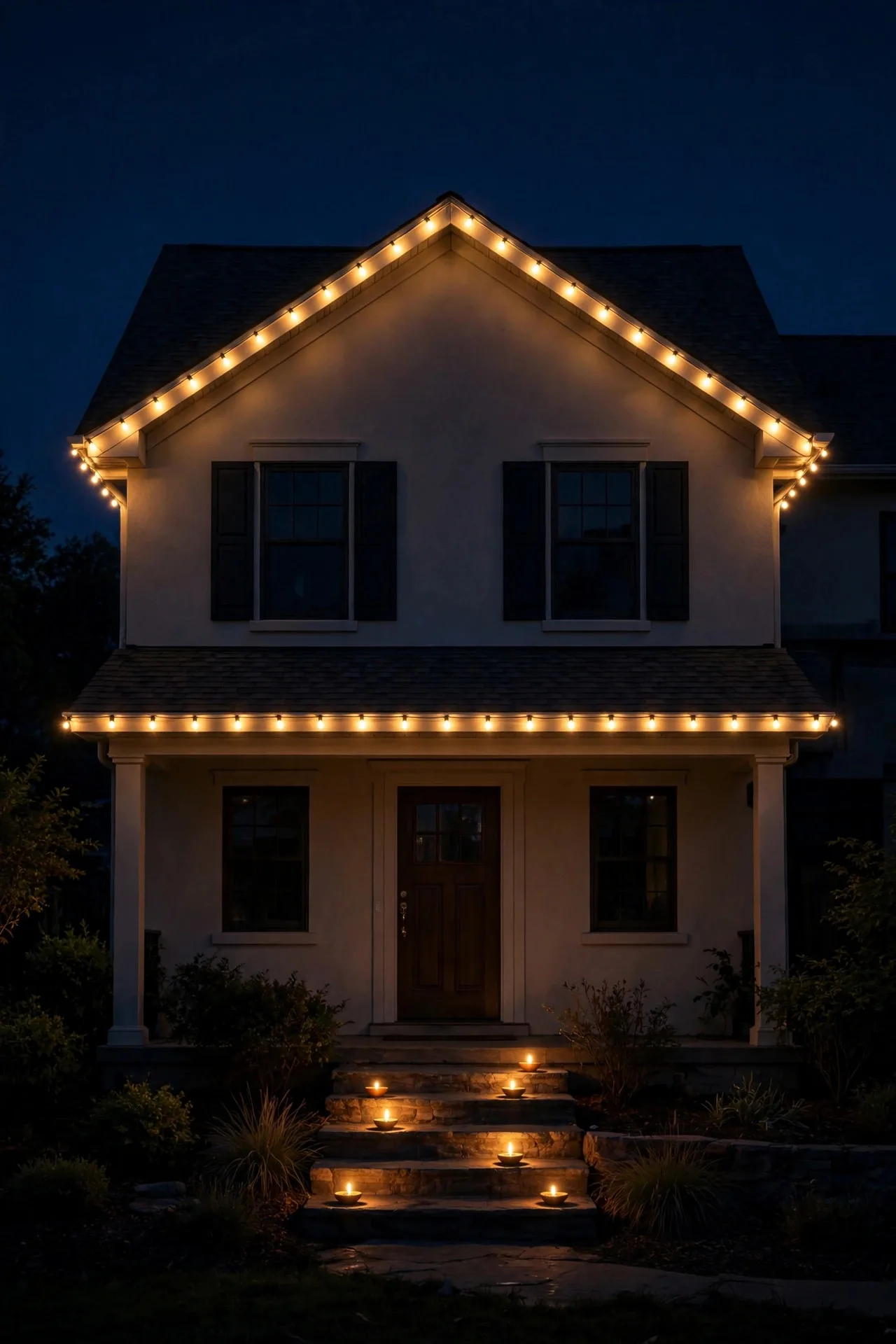
If you only do one big thing for Diwali, make it this: a clean line of warm string lights along your roofline or gutter. It's the base layer that makes everything else — the diyas, the garlands, the lanterns — look intentional rather than scattered. Choose warm white or amber bulbs (2700K), never cool white; Diwali glow is golden, full stop. Space your clips about 12 inches apart and let the strand follow the roof's edge in one smooth line — sagging strands look messy, so keep tension even.
For a typical single-story front, you'll need 50–100 feet of outdoor-rated string lights. Use plastic gutter or shingle clips rather than staples, and plug the run into a GFCI-protected outdoor outlet. If your roofline is long, you may need two strands — check the manufacturer's "connect end to end" limit (usually 3–5 strands for LED) and never exceed it. In my experience, C9-size LED bulbs give the most festive, celebratory look for Diwali — they're chunky enough to read from the street. Smaller fairy-style bulbs work better in trees and bushes. Put the whole thing on a dusk-to-dawn timer so you never have to think about it during the five days of celebration.
Suggested budget range: $30 – $90.
6. Hang Paper Star Lanterns from the Porch Ceiling
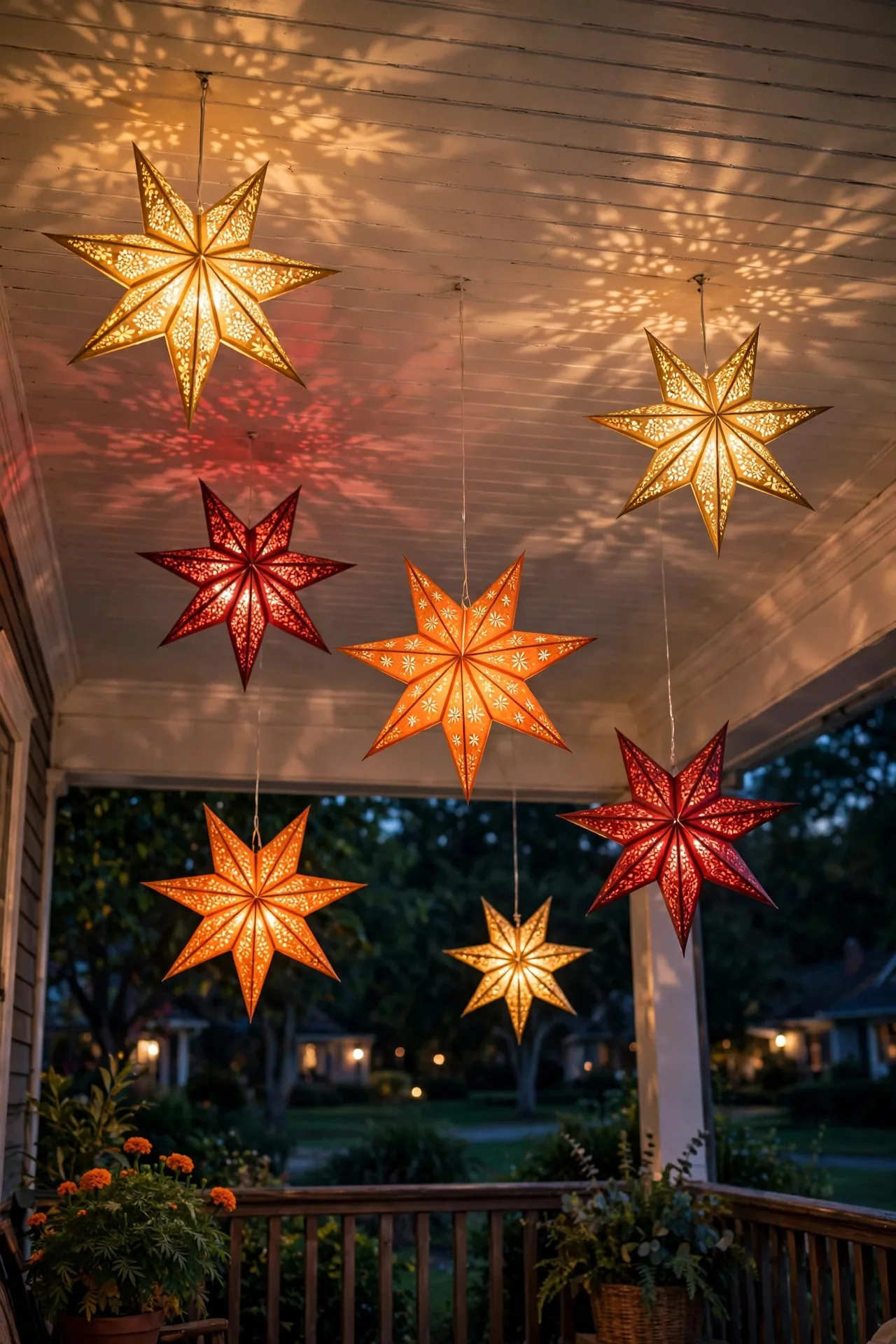
Paper star lanterns — the kind that fold flat and pop open into glowing geometric stars — are pure Diwali magic on a covered porch. Hang them from the porch ceiling at staggered heights, about 6–8 feet off the ground, spacing them 2–3 feet apart in a loose cluster. The trick is height variation: three lanterns at 7, 6, and 5.5 feet look artful; three at identical height looks like a waiting room. Use fishing line or clear cord so the lanterns appear to float.
Put an LED tea light or a small battery puck light inside each lantern — never a real flame inside paper, ever. The glow through the patterned paper throws gorgeous shadows on the ceiling, which is a whole second layer of decoration you get for free. If your porch is open to wind, choose fabric or plastic star lanterns instead of paper; they look nearly identical lit up and won't shred in a gust. For a fuller look, mix star shapes with a few round paper globe lanterns in deep red, marigold orange, and gold — the classic Diwali palette. Take them down before any real rain, or store them for next year.
Suggested budget range: $15 – $50.
7. Wrap Your Trees and Bushes in Fairy Lights
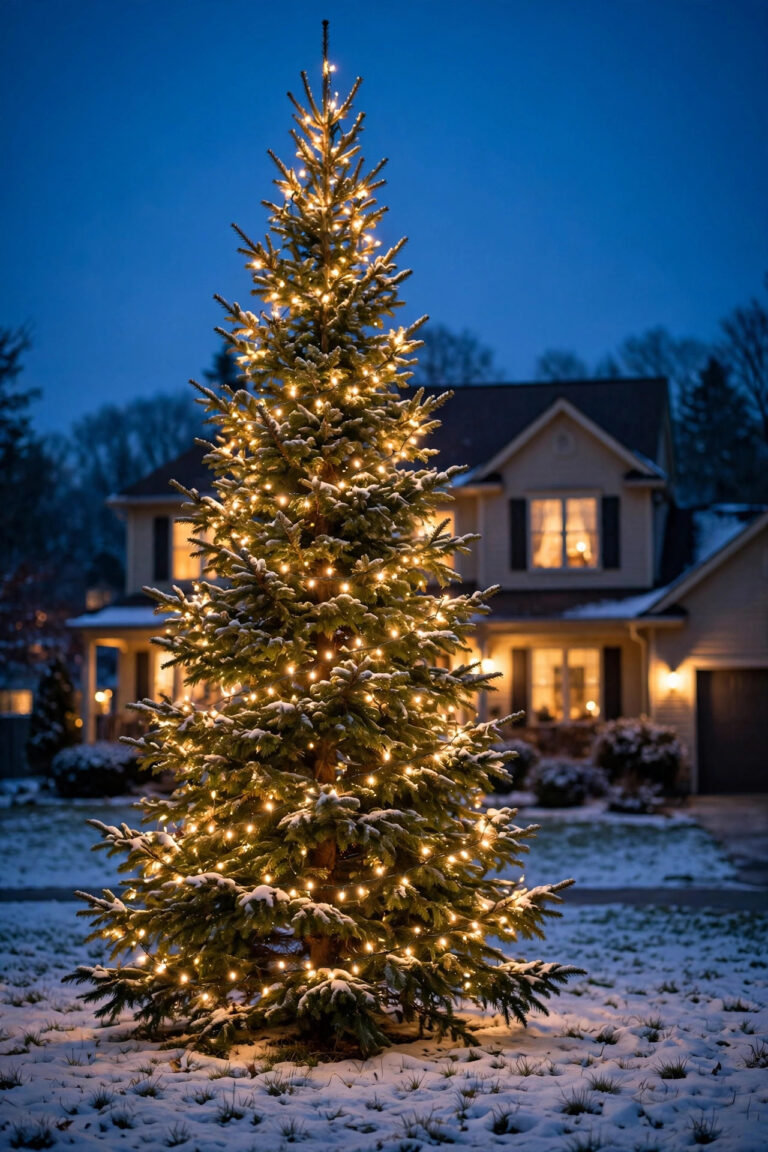
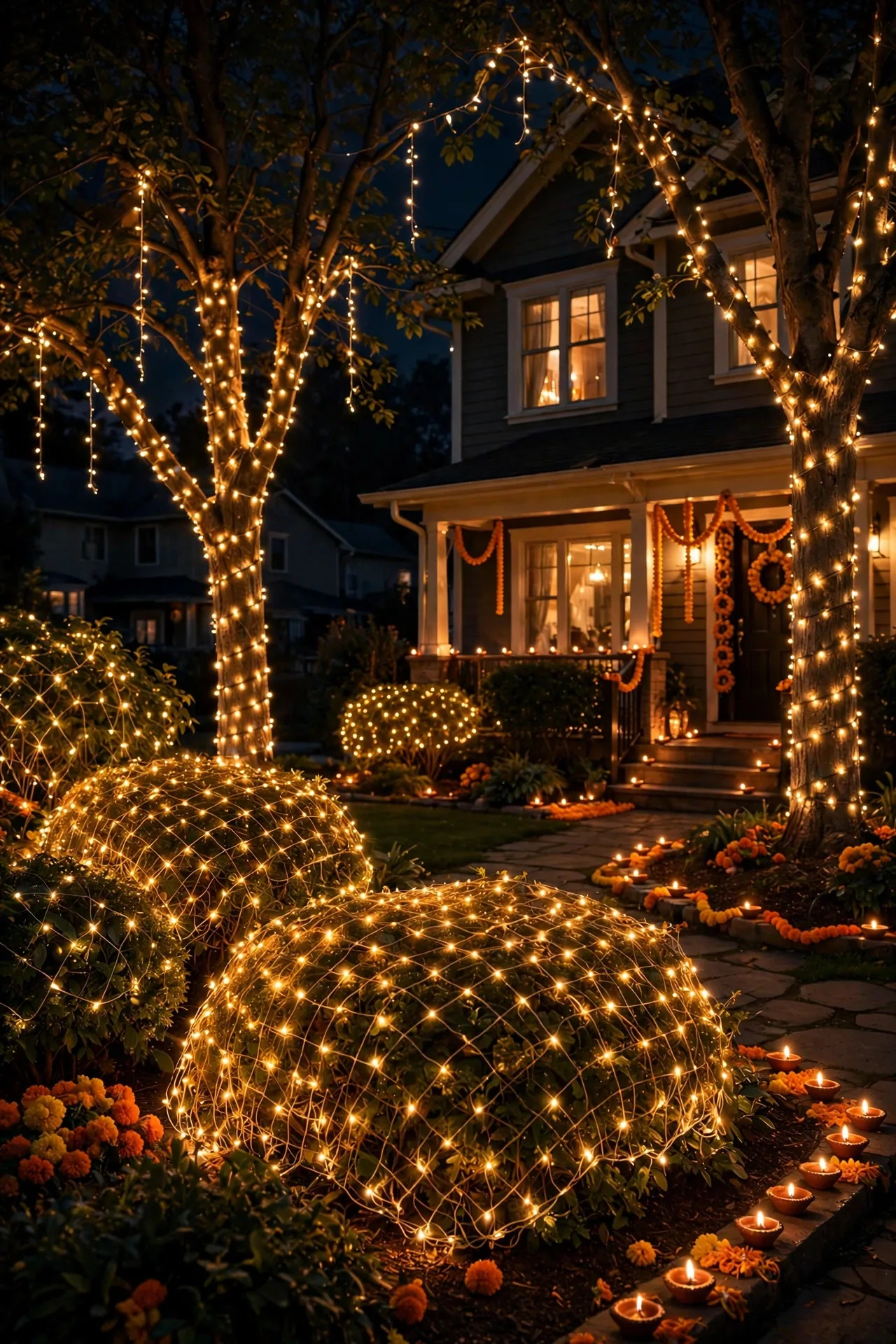
Diwali is a festival of abundance, so don't be shy — wrap every tree and big shrub in your front yard. The method matters: start at the trunk's base and spiral upward, spacing each wrap 4–6 inches apart, then drape the outer branches with a looser net of lights. For bushes, toss a light net over the top and let it settle naturally — nets are the fastest way to cover shrubs and they look perfectly even with zero fuss. Warm white mini-LEDs are the classic choice; for Diwali I lean toward the golden-amber tones that echo diya flames.
Plan on about 100 mini-lights per foot of tree height for a full, lush look (a 6-foot ornamental tree wants roughly 600 lights). That sounds like a lot, but two 300-light strands handle it. Battery-operated strands work for small bushes far from outlets, but for trees go plug-in or solar so you're not swapping batteries mid-festival. If you're also lighting for the winter holidays later, leave these up — honestly, half my Diwali tree lights just stay until January. Secure strands with green plant ties rather than wire, which can cut into bark as branches grow.
Suggested budget range: $20 – $80.
8. Light the Walkway with Stake Lights and Diya Clusters
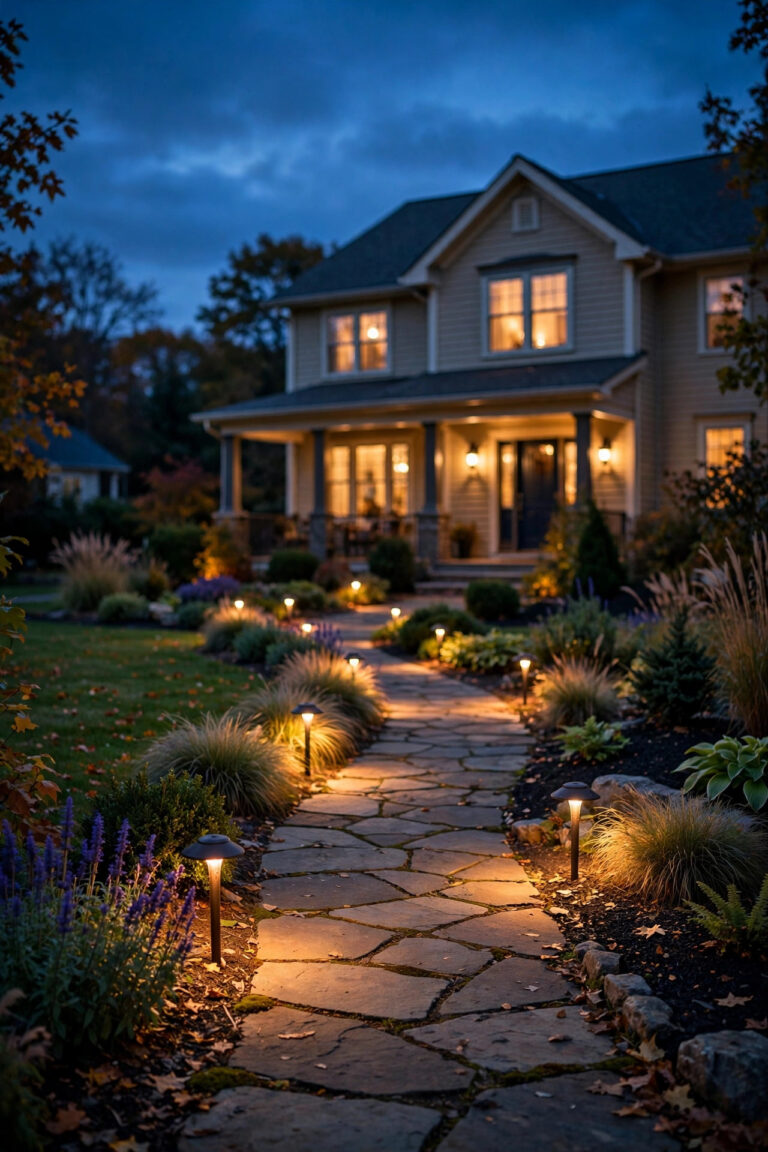
Your pathway is the red carpet of Diwali night — it's where guests walk, where kids run with sparklers, and where your lighting makes its first impression. Set solar or low-voltage LED stake lights along both sides of the walkway, spacing them 6–8 feet apart and alternating sides so the light zigzags. Pull them back 12–18 inches from the path's edge so nobody kicks them, and angle each head slightly toward the ground to create pools of light rather than glare in eyes.
Then add the Diwali layer: clusters of three to five diyas (LED or real) at the base of every other stake light. The stake light gives you reliable, even illumination for safety; the diya clusters give you the festival. If you're using real-flame diyas along a walkway, set each cluster on a flat stone or ceramic tile — never directly on mulch or dry grass — and keep them clear of foot traffic. Solar stake lights need 6+ hours of direct sun to charge fully, so place them where they won't sit in the house's shadow all afternoon. For a softer look, choose stake lights with frosted amber lenses rather than clear white.
Suggested budget range: $25 – $75.

9. Make a Grand Entrance with a Lit Toran Over the Gate
If your home has a front gate or an arbor entrance, that's your showpiece — treat it like one. Drape a long floral toran across the top beam, then swag warm string lights in gentle catenary curves (the natural hanging curve) from the beam's ends to its center. Three swags across a 6-foot gate look generous without being fussy. Add two tall lanterns on posts flanking the gate, each holding a cluster of LED pillar candles at different heights.
For the garland itself, marigold chains are traditional and their orange-gold color practically glows under warm light. If fresh flowers aren't available, silk marigold garlands look convincing at night — and darkness is forgiving. Weave one strand of fairy lights directly through the garland so the flowers themselves seem lit from within. Use outdoor-rated extension cords and keep all connections off the ground (a simple cord stake or even a brick works) so dew and sprinklers can't reach them. This is the photo everyone takes, so step back to the street and check the composition before the guests arrive.
Suggested budget range: $35 – $100.

10. Hang a Fairy-Light Curtain Across the Patio — Showstopper Diwali Outdoor Lighting Ideas
A curtain of fairy lights turns a plain patio wall or pergola beam into a waterfall of gold, and it's one of the highest-impact diwali outdoor lighting ideas for the money. Hang 8–10 strands of copper-wire fairy lights vertically from a pergola beam, patio cover edge, or a tension rod mounted between two posts, spacing strands 6–8 inches apart. Each strand should be 6–10 feet long, pooling just slightly at the bottom or ending an inch above the floor.
The magic is in the density: strands hung close together read as a solid shimmering wall; strands spaced wide look sparse and sad. For a 10-foot-wide span, plan on at least 10 strands of 300 micro-LEDs each. Use the warmest color temperature you can find (2200K "amber" or "candlelight" if available) — against a dark wall at night, it looks like liquid honey. Anchor the top with clear zip ties or small hooks, and weight the bottoms with nothing at all; the wires are light enough to hang straight. If wind is an issue, tie adjacent strands together loosely with clear thread every 2 feet. Pair this backdrop with floor-level diyas and you've got the perfect photo spot for the whole family.
Suggested budget range: $30 – $85.

11. Line the Fence with Glowing Lanterns
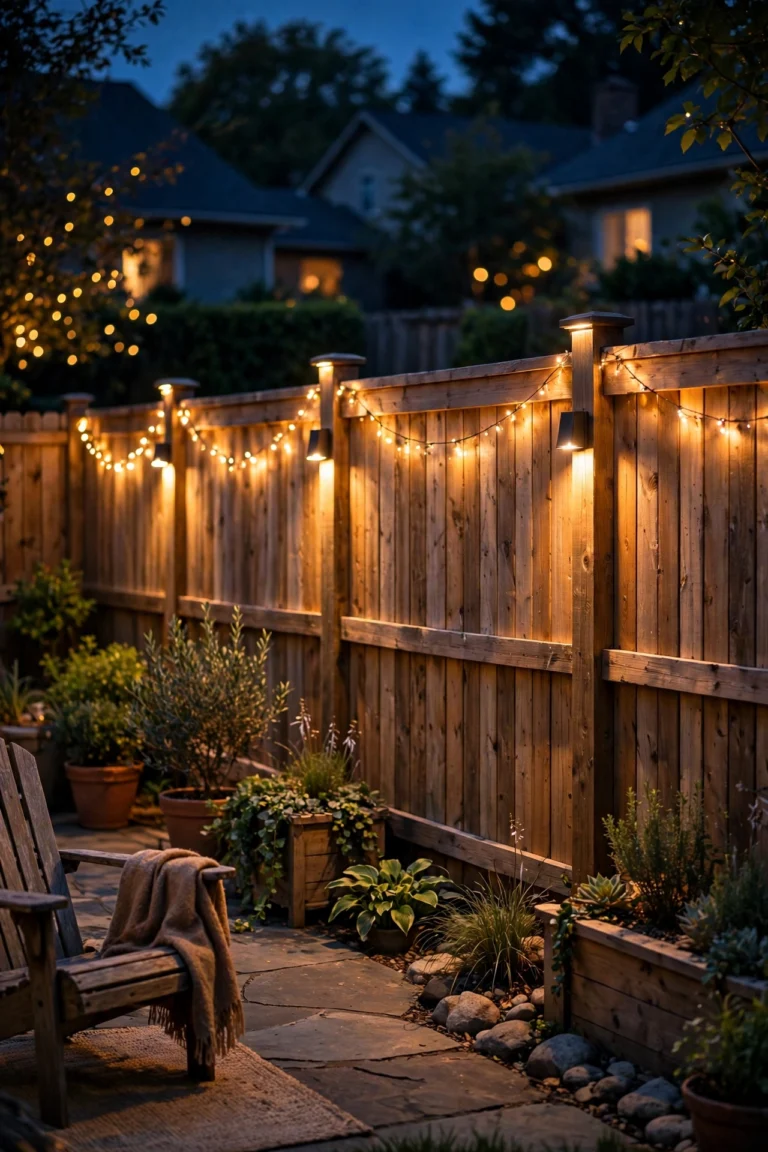
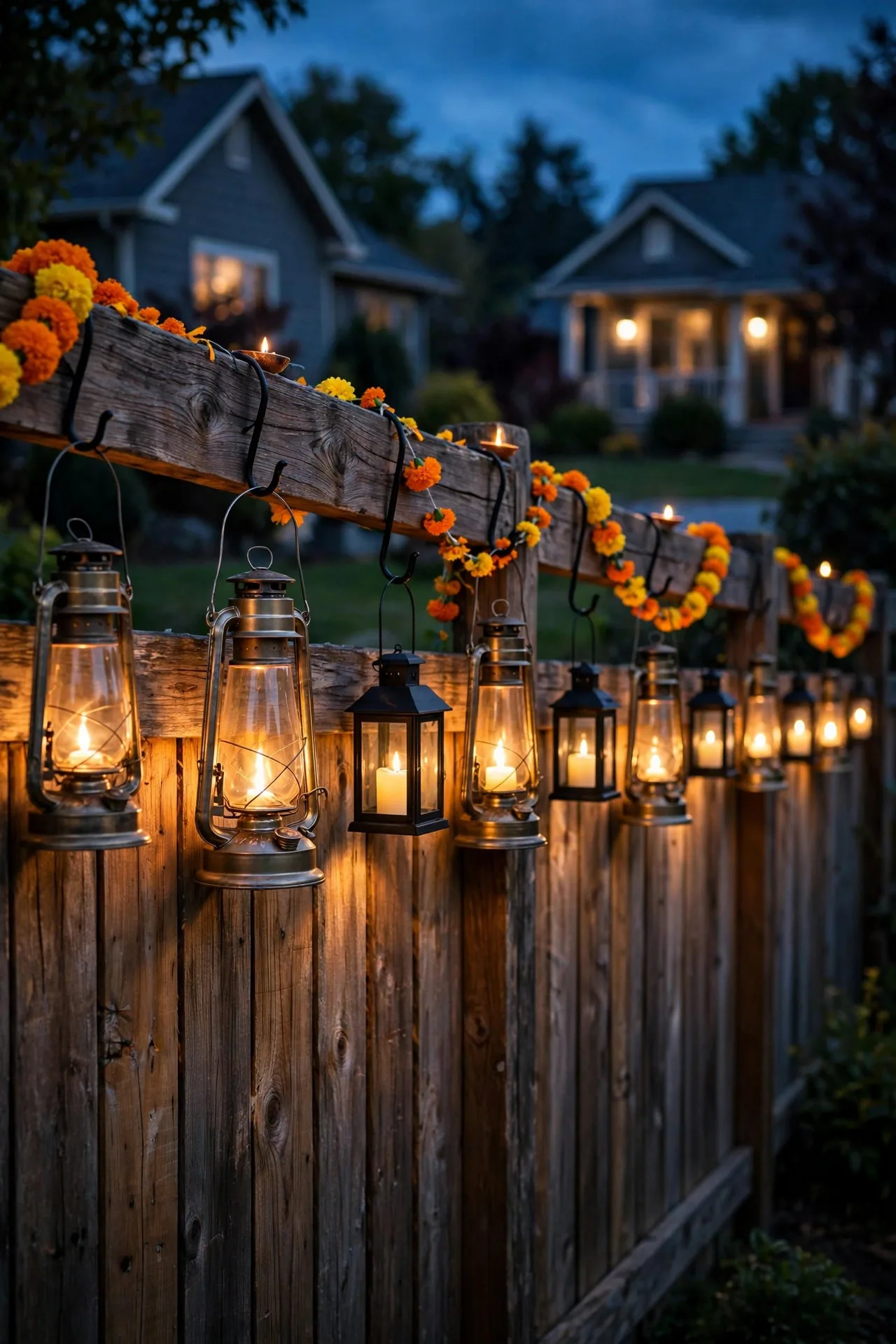
Fences are the most underused canvas in outdoor decorating, and Diwali is the perfect excuse to fix that. Hang metal or glass lanterns along your fence line every 4–6 feet using sturdy S-hooks over the top rail — no drilling, no damage. Inside each, place an LED pillar candle or a cluster of three LED tea lights; the glass panels magnify the flicker and throw dancing patterns onto the fence boards.
Mix lantern sizes for a collected-over-time look: alternate tall 12-inch lanterns with smaller 8-inch ones, all in the same finish (matte black, antique brass, or copper) so it feels curated rather than random. If your fence is wood, the warm light raking across the grain is genuinely beautiful — it's the same uplighting effect landscape designers charge for, done with $10 lanterns. For metal fences, hang lanterns from shepherd's hooks staked just inside the fence line instead. Bring glass lanterns inside during heavy rain or high winds; LED candles are fine in drizzle but the lantern frames last years longer when they're not left out all season.
Suggested budget range: $40 – $120.
12. Build a Diya Centerpiece for the Outdoor Dining Table
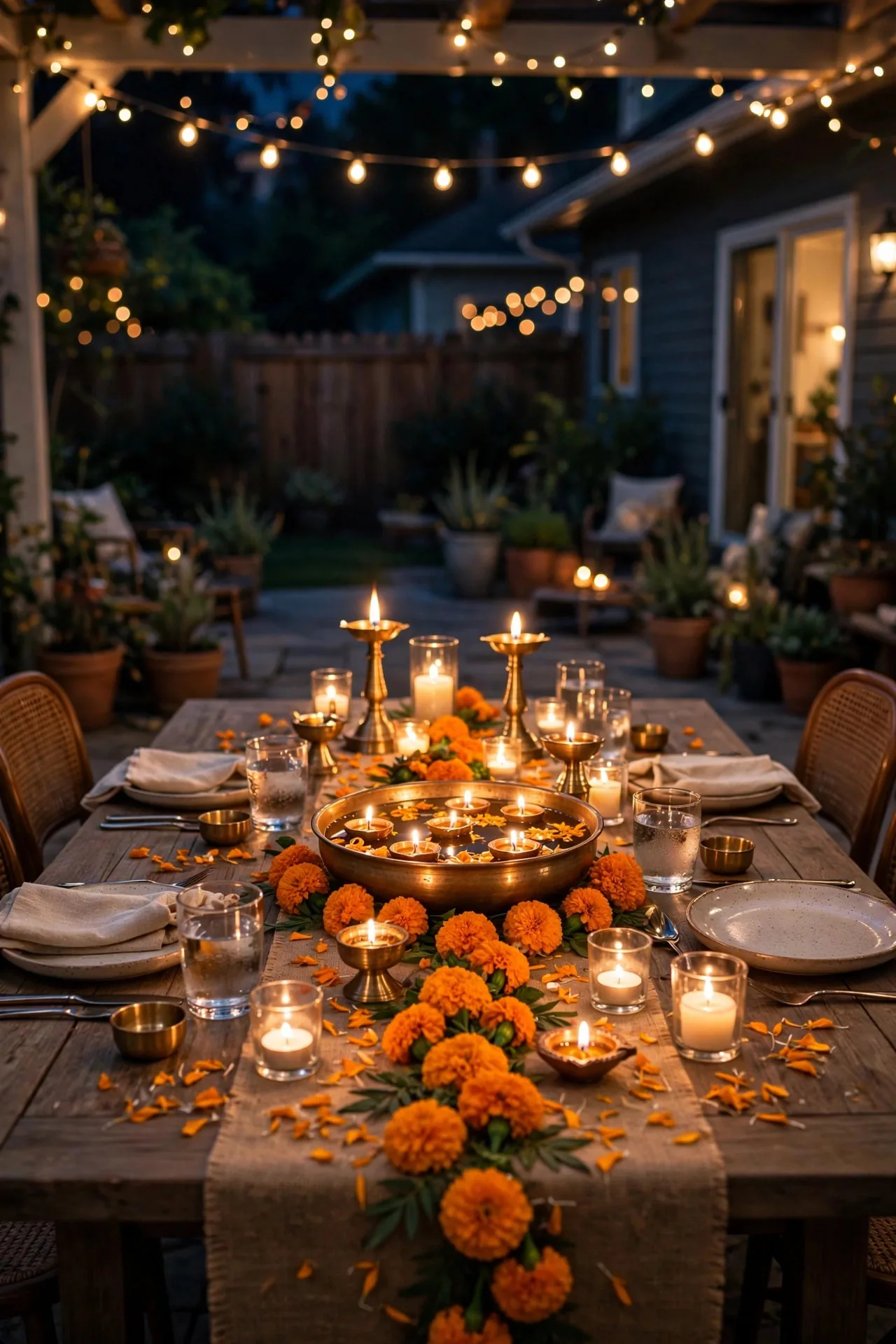
Diwali dinner outside, under the lights, surrounded by family — this is what the holiday is for. Build your table centerpiece around light: lay a runner of fresh marigold heads or scattered petals down the table's center, then place a mix of brass diyas, glass votives, and small LED tea lights along it, varying the heights. A low brass bowl filled with water and floating diyas makes a stunning anchor for the middle — the reflections double the glow.
Keep flames practical: use LED tea lights within 12 inches of anyone's plate or sleeve, and reserve real flames for the center of a wide table where nobody will knock them. Citronella isn't traditional, but if mosquitoes crash your region's Diwali, a couple of citronella tea lights tucked at the table's far ends won't ruin the mood. String a single strand of fairy lights overhead — across a patio umbrella or between two shepherd's hooks — so faces are lit warmly from above; candlelight alone leaves everyone's face in shadow. And set the whole thing on a timer or smart plug so the table is glowing when guests walk out.
Suggested budget range: $20 – $60.
13. Turn Planters into Glowing Accents with Fairy Lights
Your existing planters are free display stands — light them up. Coil a strand of battery or solar fairy lights through the foliage of each large planter by the door, porch, or patio, letting the tiny bulbs nestle among the leaves. The greenery diffuses the light into a soft, dappled glow that's far more interesting than a bare bulb. One 33-foot strand (100 micro-LEDs) per 16–20 inch planter is about right.
For extra Diwali drama, top the soil with a ring of LED diyas around the plant's base — they read as glowing embers at night. Or go the floral route: fill the planter with marigolds in orange, yellow, and deep red, then weave the fairy lights through the blooms. Marigolds are inexpensive, bloom right through Diwali season in most US zones, and the color story is perfect. Water the planters in the morning so the soil is dry by evening (wet soil + electrical anything is a combination to avoid, even with low-voltage LEDs). If you're using plug-in strands, run the cords behind the planters where they're invisible from the street.
Suggested budget range: $15 – $55.

14. Float Diyas in an Urli Bowl at the Entrance
An urli — a wide, shallow brass bowl filled with water — might be the most photogenic Diwali tradition there is, and it belongs right beside your front door. Fill the bowl two-thirds with water, scatter marigold heads and a few rose petals on the surface, then float 5–9 small diyas or floating tea lights among the flowers. The flames reflect on the water and the brass, tripling the light, and the whole thing smells faintly of marigold. Place the urli on a sturdy plant stand or low table at least 3 feet from the door swing, where guests can admire it without bumping it.
Real floating diyas (the wax kind) burn for 3–5 hours and are the traditional choice; LED floating tea lights are the practical one — they won't blow out and they can't tip hot wax onto your porch. Either way, keep the water level topped up; a floating candle that runs dry of water can overheat its container. In my experience, one large urli makes a stronger statement than three small bowls scattered around — go big, go central, and let it be the jewel of your entry. After Diwali, the same bowl works beautifully with pinecones and fairy lights for winter.
Suggested budget range: $20 – $65.

15. Outline Windows with Diyas on Every Sill
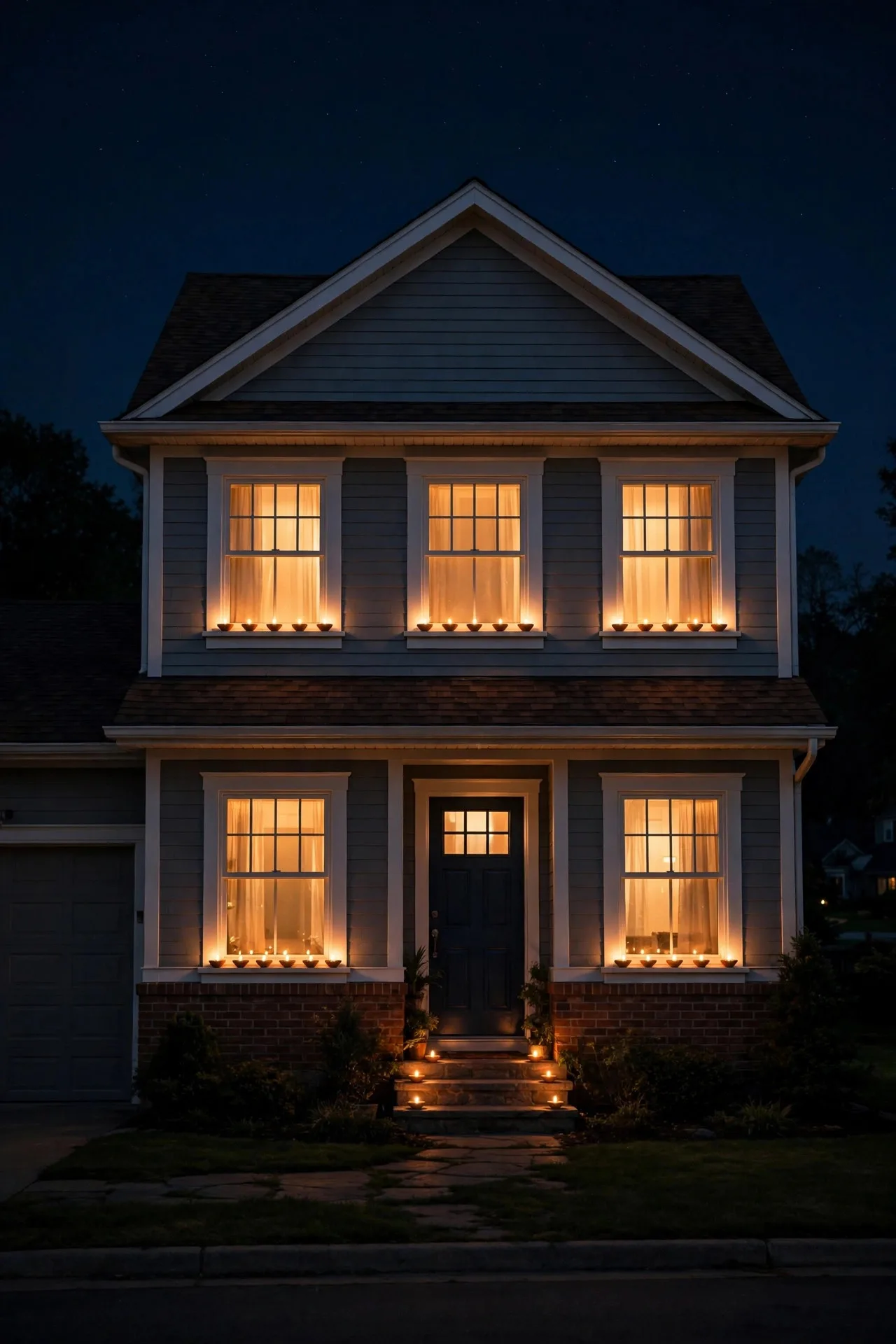
Diwali tradition says lit diyas in windows guide prosperity into the home — and from the street, a house with every window glowing is pure magic. Place two to three LED diyas on each exterior-facing windowsill, spacing them evenly across the sill's width. LED is the right call here: sills sit against curtains and blinds, which are exactly what you never want near an open flame. If you insist on real flames in windows, they go inside glass hurricane covers, minimum 12 inches from any fabric, and never left burning when the room is empty.
For a unified look, use identical diyas in every window — all clay-style LED, all the same warm color. From outside, the repetition is what makes it striking; mismatched lights in every window look accidental. Time them to switch on together with a smart plug or remote-control set so the whole facade lights up at once at dusk — that synchronized moment is genuinely delightful. If you have deep sills, layer a small diya in front of a taller LED pillar candle for depth. And don't forget upstairs windows; the second story is what neighbors actually see from down the street.
Suggested budget range: $15 – $50.
16. Dress the Balcony Railing with String Lights and Diyas
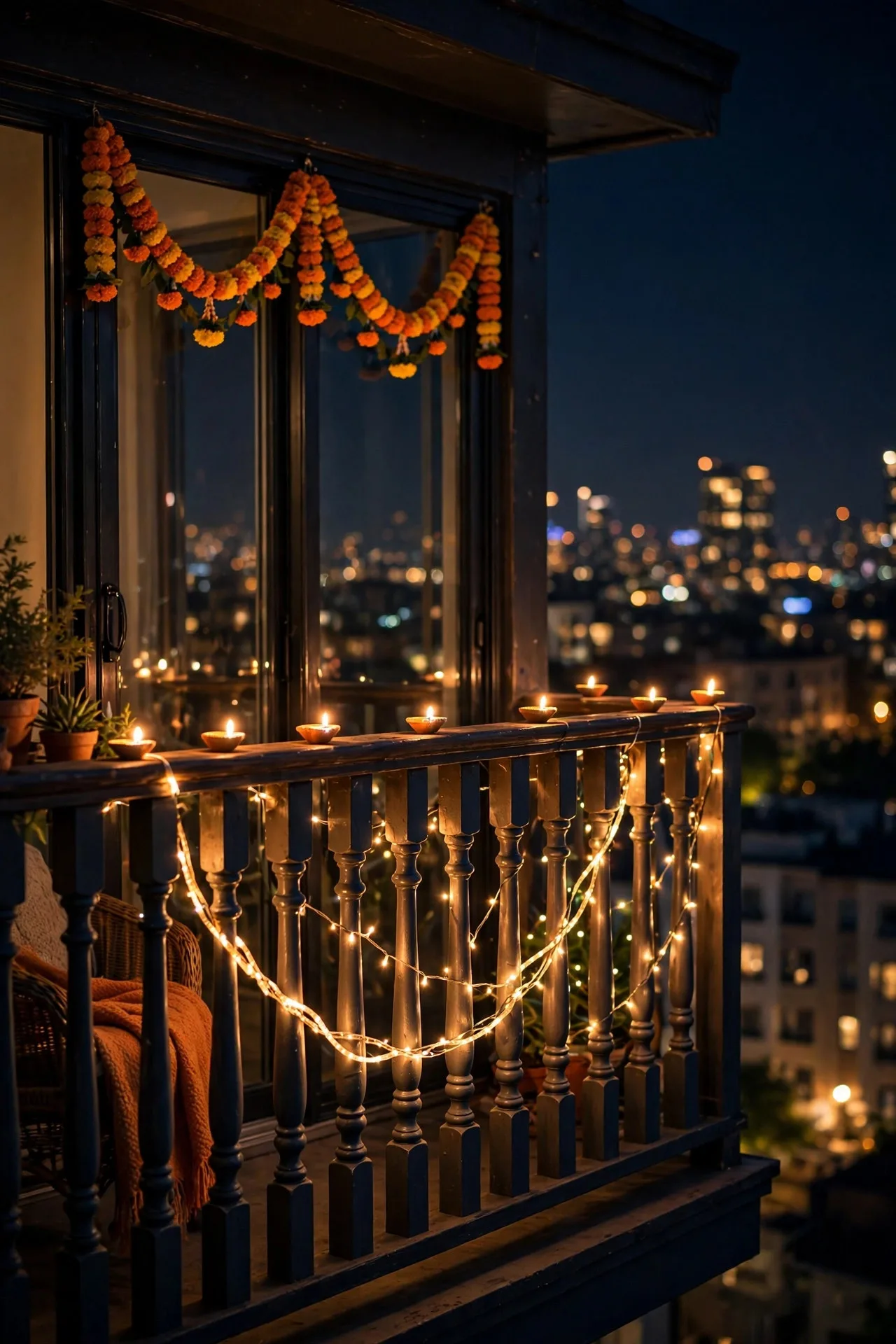
Apartments and townhouses get a full Diwali too — the balcony railing is your canvas. Weave a strand of warm string lights through the railing balusters, looping it in and out every 12 inches so it reads as a continuous glowing ribbon from the street below. Then set LED diyas along the railing's top rail every 8–10 inches. The combination of the horizontal light ribbon and the dotted diya line is simple and incredibly effective.
Check your building's rules before you start — some HOAs and apartment complexes restrict what's visible from outside, though Diwali displays are usually welcomed. Use removable adhesive clips or zip ties (snipped off afterward) rather than anything that marks the railing. Battery-operated strands avoid the whole extension-cord-through-the-sliding-door problem; just keep spare batteries on hand. If your balcony is small, resist the urge to add more — one clean light ribbon plus diyas beats a cluttered railing every time. A single marigold toran across the balcony door completes the look and ties it to the traditional entry decor.
Suggested budget range: $18 – $55.
17. Line the Driveway with Luminaria Bags
Luminarias — paper bags with lights inside, weighted with sand — are a Southwestern US tradition that fits Diwali like it was invented for it. Fold down the top inch of each brown or white paper bag for a finished cuff, pour in 2 inches of sand, and nestle an LED tea light or LED diya into the sand. Line both sides of your driveway, spacing bags 3–4 feet apart, starting at the street and running to the garage. At night, the whole driveway glows like a runway.
Use LED lights only — never real flames in paper bags, no exceptions. Choose bags rated as flame-retardant if you can find them, and skip this idea entirely on windy nights unless each bag has enough sand to stay planted (a gust-tipped bag with any light inside is a mess you don't want). White bags give a clean, modern look; brown kraft bags glow warmer and more rustic. For a 40-foot driveway you'll need about 20–24 bags, and the whole project takes under an hour to set up. They also work beautifully along the curb in front of the house, welcoming the whole street.
Suggested budget range: $15 – $40.

18. Hang a Cluster of Moroccan-Style Lanterns in the Garden
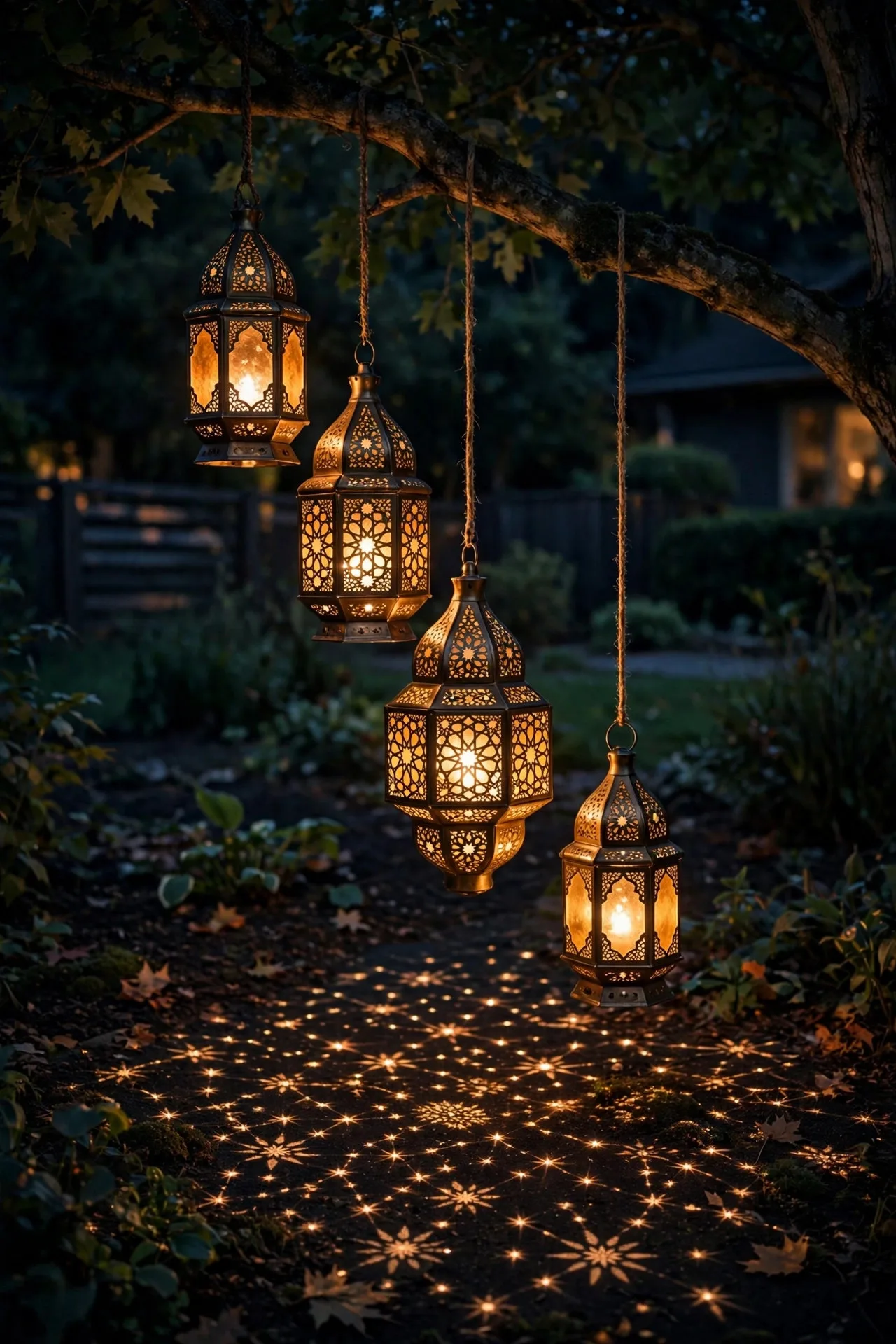
For the side yard or garden corner that never gets decorating love, hang a cluster of pierced-metal lanterns from a tree branch or a shepherd's hook stand. The pierced patterns throw constellations of light onto the ground and nearby walls — it's the most romantic light source on this whole list. Hang three to five lanterns at staggered heights (5–7 feet), each holding an LED pillar candle or a string of fairy lights coiled inside.
Moroccan-style lanterns in brass, copper, or colored glass fit Diwali's jewel tones perfectly — deep red, emerald, and amber glass look stunning against dark garden foliage. Because they're metal and glass, they handle weather far better than paper lanterns; just bring them in for the winter. Hang them where they'll be seen from your main entertaining area — a gorgeous garden corner nobody can see is wasted effort. If you don't have a suitable tree, a tall shepherd's hook (72 inches) staked firmly into the ground works just as well. One cluster is a destination; scatter single lanterns and they disappear.
Suggested budget range: $35 – $110.
19. Automate the Whole Display with Timers and Smart Plugs
Here's the finale, and honestly the idea that makes all 18 others actually enjoyable: automate everything. Diwali runs five days, and nobody wants to spend 30 minutes every evening plugging and unplugging strands. Put every plug-in element — roofline lights, fairy curtains, fence lanterns — on outdoor-rated timers or smart plugs, all set to switch on 15 minutes before sunset and off at midnight. Group them in your smart home app as one "Diwali" scene so the entire house ignites with a single tap or voice command.
Keep it simple and safe: use only outdoor-rated timers and plugs (indoor ones in a damp porch outlet are a fire risk), don't daisy-chain more strands than the manufacturer allows, and run cords where feet and lawnmowers won't find them. Smart plugs with energy monitoring are a nice bonus — you'll see exactly what the display costs to run (spoiler: LEDs sip power; a full display typically costs pennies per night). Set a second timer for the "midnight off" so you're not lighting an empty street at 3 a.m. This is the difference between a display you love and a display that becomes a chore by day three — and a chore never looks magical.
Suggested budget range: $25 – $80.

Frequently Asked Questions
What color lights are best for Diwali outdoor decorating?
Warm gold and amber tones — think 2200K to 3000K color temperature — are the classic Diwali palette because they echo the glow of real diya flames. Warm white string lights, amber fairy lights, and golden lantern light all work beautifully together. Avoid cool white or blue-toned LEDs, which read as winter-holiday rather than Diwali. If you want accent color, add it through marigold orange, deep red, and jewel-tone lantern glass rather than through colored bulbs.
Are real diyas or LED diyas better for outdoor use?
Both have their place, and I use both every year. Real clay diyas with oil or ghee give the most authentic flicker and scent, but they need wind protection, a fire-safe surface, and supervision. LED diyas are safer, reusable, and work anywhere — in garlands, on railings, near kids and pets, and in paper lanterns. My rule: real flames only in open, supervised, non-flammable spots (stone steps, metal trays, urli bowls), and LED everywhere else.
How do I keep outdoor Diwali lights safe in rain or wind?
Choose outdoor-rated lights (look for IP44 or higher on the packaging) for anything that stays up all five days, keep all plugs and connections off the ground, and plug everything into GFCI-protected outlets. Bring paper lanterns, luminaria bags, and non-weatherproof LED diyas inside if heavy rain or strong wind is forecast. For real-flame diyas, glass hurricane covers are the single best wind and safety upgrade.
How far in advance should I set up Diwali outdoor lights?
Diwali 2026 falls in early November, and I recommend doing the semi-permanent work — roofline string lights, tree wraps, timers — the weekend before, when you can work in daylight. Save the fresh elements for Diwali eve or the first day: marigold torans, rangoli, real-flame diyas, and floating urli arrangements all look best within 24 hours of setup. LED diyas and lanterns can go up days early on timers so the house glows the moment the festival begins.
Conclusion
The best diwali outdoor lighting ideas all come back to one principle: layer your light the way the festival layers its meaning. A base of warm string lights for glow, a middle layer of lanterns and garlands for texture, and the soul of it all — rows of small diyas, real or LED — flickering at ground level to welcome light into your home. You don't need every idea on this list; pick the three or four that fit your space, automate them with a timer, and spend Diwali evening enjoying your family instead of fussing with extension cords.
If this got you in the decorating spirit, browse our backyard lighting ideas and outdoor lighting guides for more ways to keep your home glowing long after the festival ends. Happy Diwali — may your home shine bright all five days.