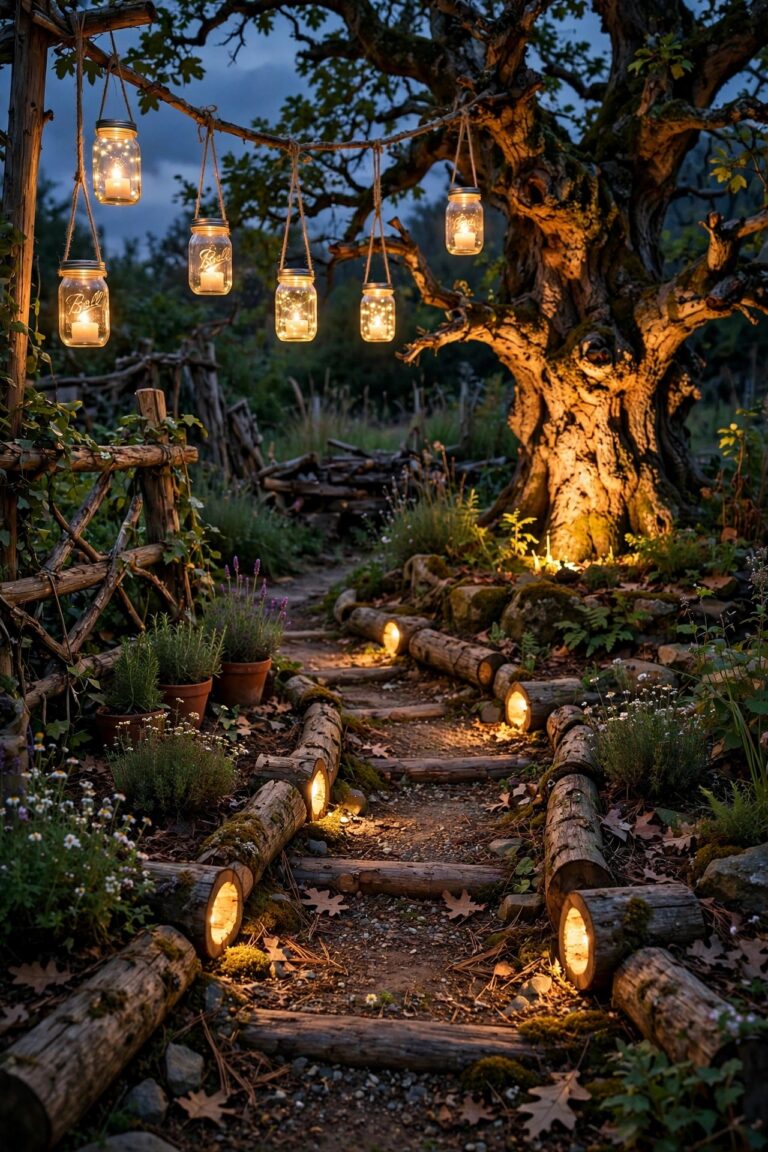
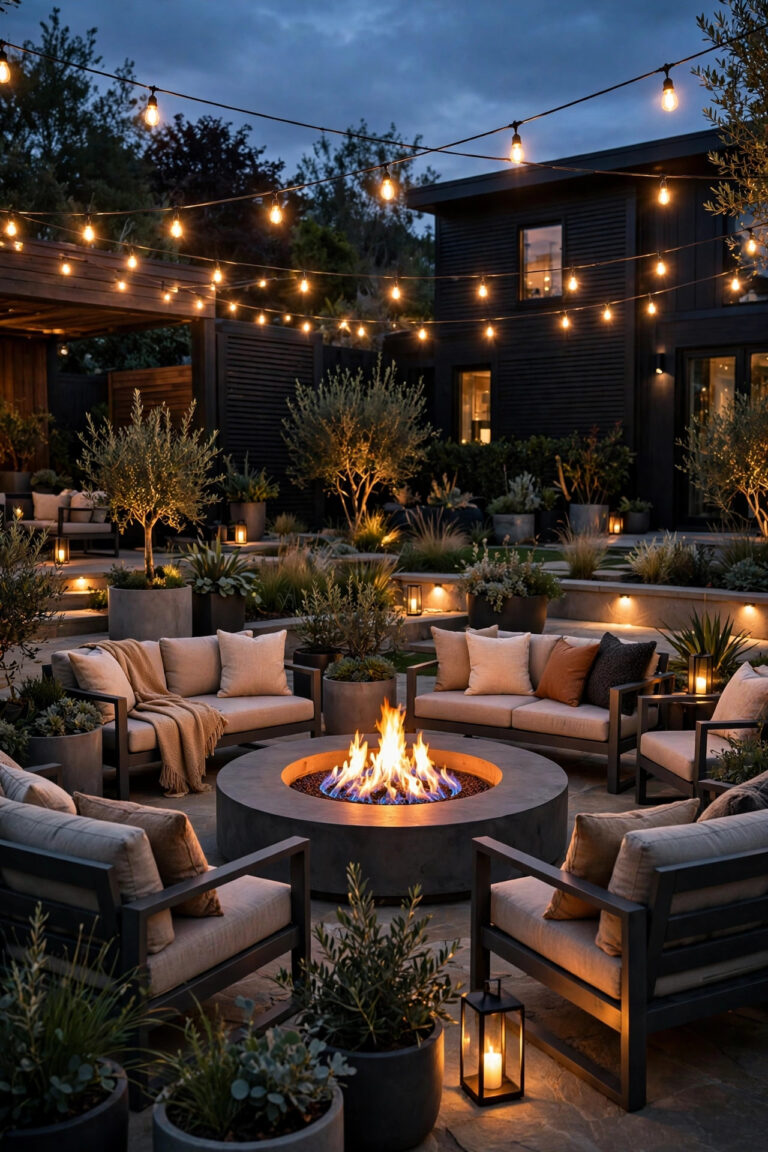
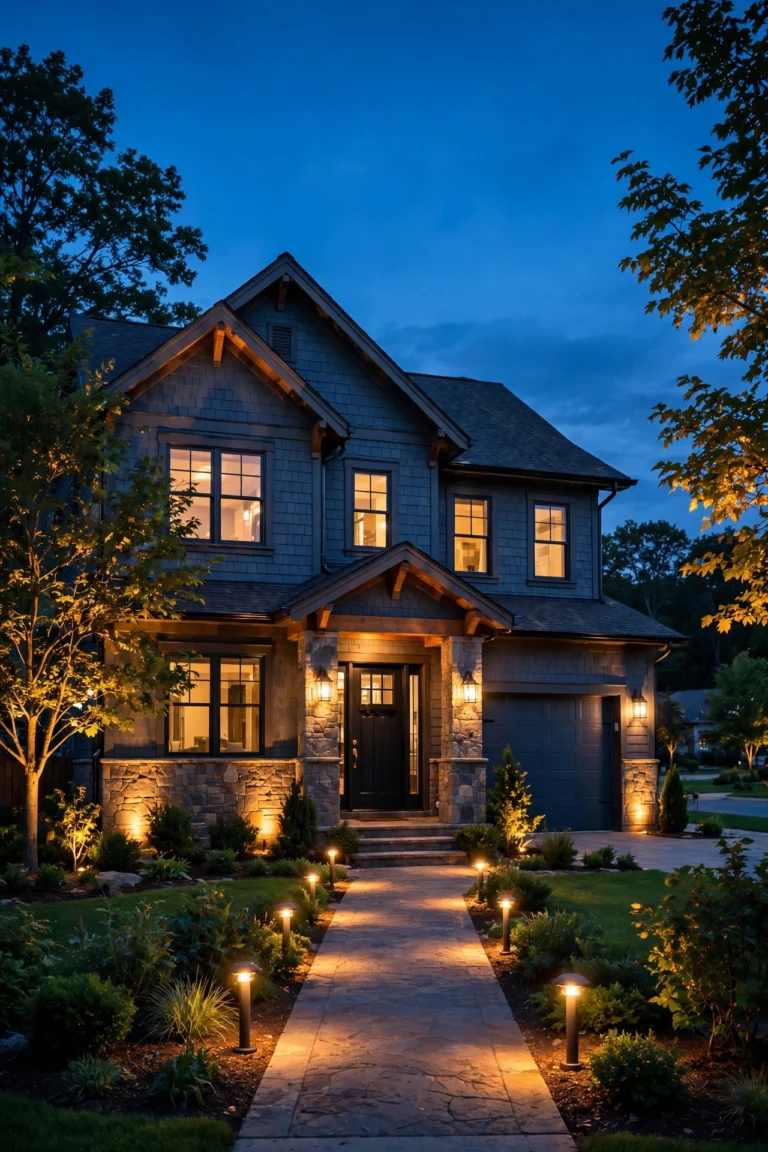
Every outdoor party has two versions: the one in your head, all golden light and easy laughter, and the one where a guest trips over a dark step while you hunt for a flashlight with a plate in your hand. The difference is rarely money. Honestly, it is one focused weekend. This party outdoor lighting checklist walks you through the exact order I use before hosting: a Friday night audit and shopping run, a Saturday of cleaning, aiming and layering, and a five-minute Sunday reset once the last guest leaves. You will test every bulb, walk the guest journey from the street to your front door in real darkness, set timers for party hours instead of midnight, and tape down every cord before the first car pulls up. Nothing here needs an electrician or a big budget — just a small ladder, a roll of tape, a few spare bulbs and two days of easy daylight work. By Saturday night your yard will not just be lit. It will feel ready, and you will feel like the host instead of the repair crew.
The Short Answer: Your Party Outdoor Lighting Checklist at a Glance
Work in this order. Audit after dark on Friday and shop for bulbs, batteries, tape and hooks. Saturday morning, clean lenses and solar panels, straighten leaning fixtures and replace every dead bulb. Saturday afternoon, light the guest journey from curb to door, then hang the string lights and set the party layers. Before guests arrive, switch timers to party hours and flip motion lights near seating to stay on. Tape every cord, test the GFCI outlets, and mark steps and pool edges. On Sunday, spend five minutes resetting timers and storing the extras for next time.
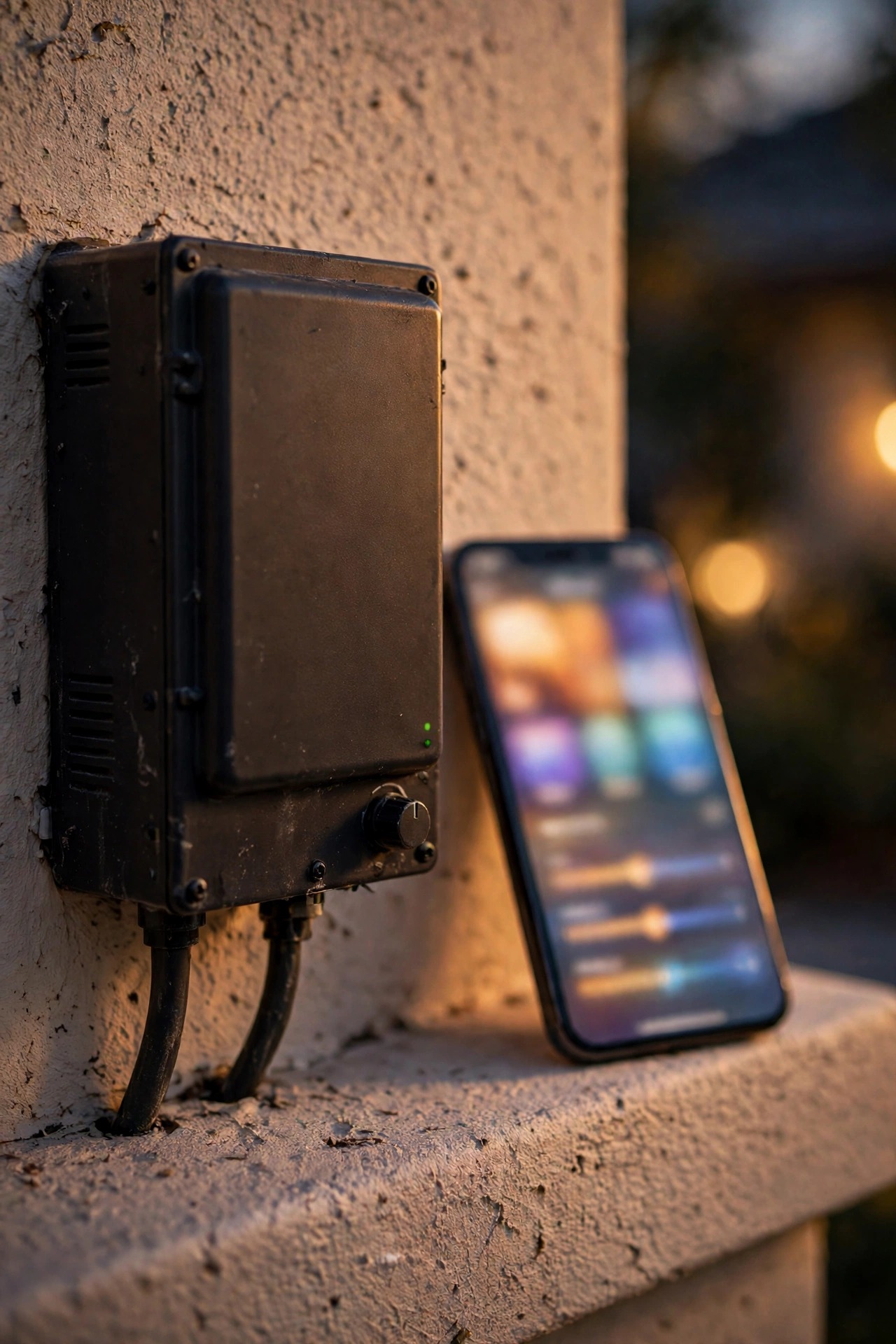
Friday: Walk the Yard After Dark and Audit Every Light
Wait until it is properly dark on Friday, then walk your whole property with your phone open to a notes app and a pen in your pocket. Flip every switch and timer override you have and simply watch what happens. In my experience, every yard has at least three surprises: a porch bulb that died in March, a path light tipped over by the mower, and a solar stake that glows for exactly forty minutes before giving up. Write each one down instead of trusting your memory, because Saturday-you will forget at least two of them.
Walk the route your guests will take, not the route you take. Start at the street where cars will park, cross the driveway, follow the walk, climb the steps and stand at the front door. Note every dark gap at a transition — those in-between spots are where ankles roll. Check whether your house number is readable from the street, whether the driveway edge disappears into shadow, and whether a hose, sprinkler head or garden edge hides in the dark along the walk.
Finish by checking your supplies against the list you just made: spare bulbs in the right base size, fresh batteries for lanterns and remotes, outdoor tape, cord covers, spare stakes and a handful of hooks. That list becomes tomorrow morning's ten-minute shopping run instead of three frustrated trips.
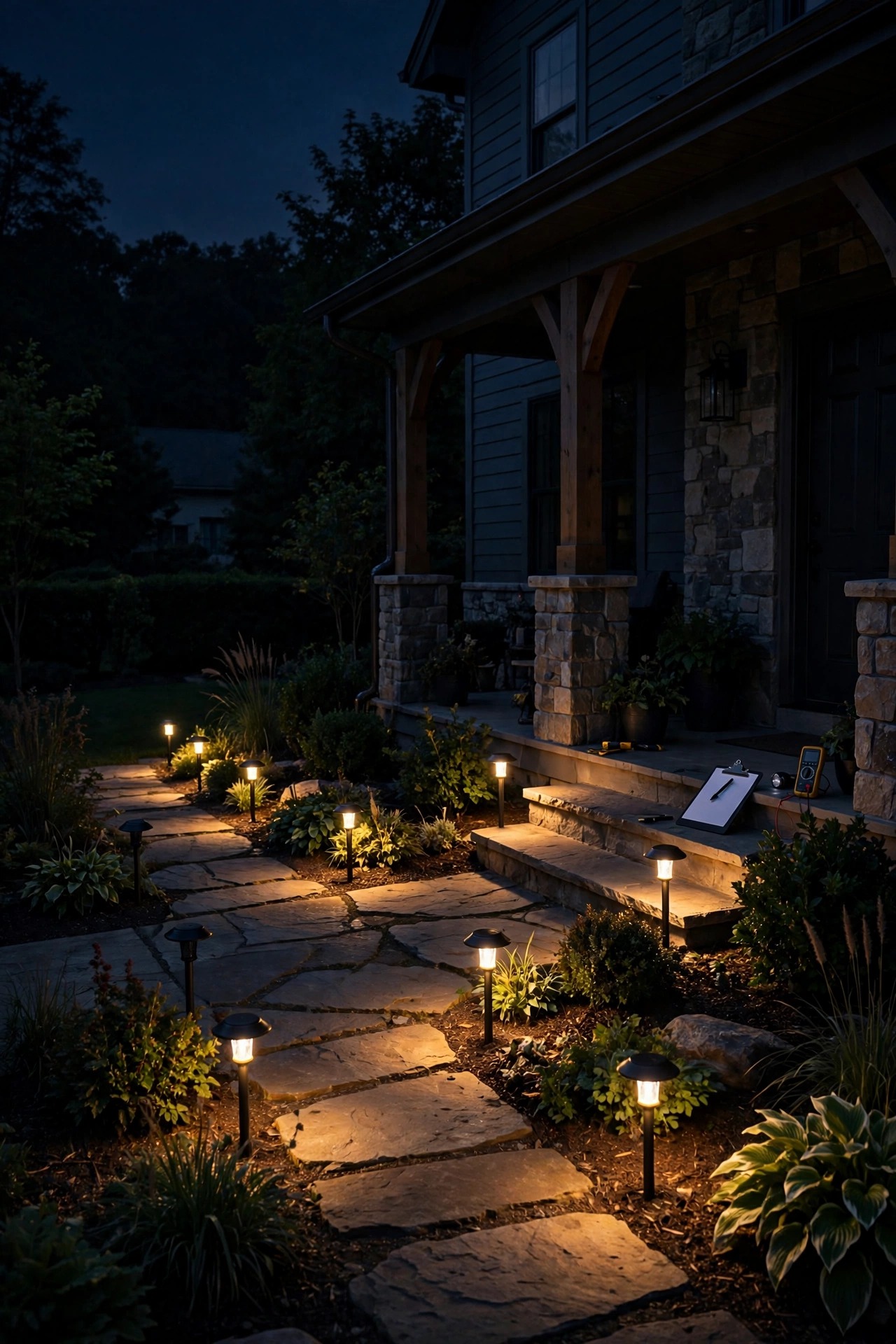
Friday Night: The Shopping Run — Small Parts, Big Saves
The shopping run for a party weekend is boring on purpose: you are buying reliability, not new fixtures. Start with bulbs. Match the color temperature of what you already own — most warm, flattering yards sit between 2700K and 3000K — and buy two spares beyond the dead ones you counted, because one more always fails during the week. If your porch or patio fixtures take standard screw-in bulbs, LED filament styles give that candle-warm look guests read as expensive.
Next, batteries. Rechargeables go in lanterns on Friday night so they are full by Saturday; single-use spares cover remotes, timers with battery backup and flameless candles. Then the unglamorous aisle, which matters most: gaffer-style outdoor tape for cords, a rubber cord cover for the one unavoidable walkway crossing, cup hooks and eye screws for string lights, zip ties, and adhesive cable clips for the porch rail.
Round it out with solar rescue supplies: a microfiber cloth and gentle cleaner for panels (more on that Saturday), replacement rechargeable cells for stakes that faded early, and a small multipack of solar path lights if your audit found a dark stretch on the guest walk. One trip, one basket, done — keep the receipt, because unopened spares go back on Monday if the weekend goes perfectly.
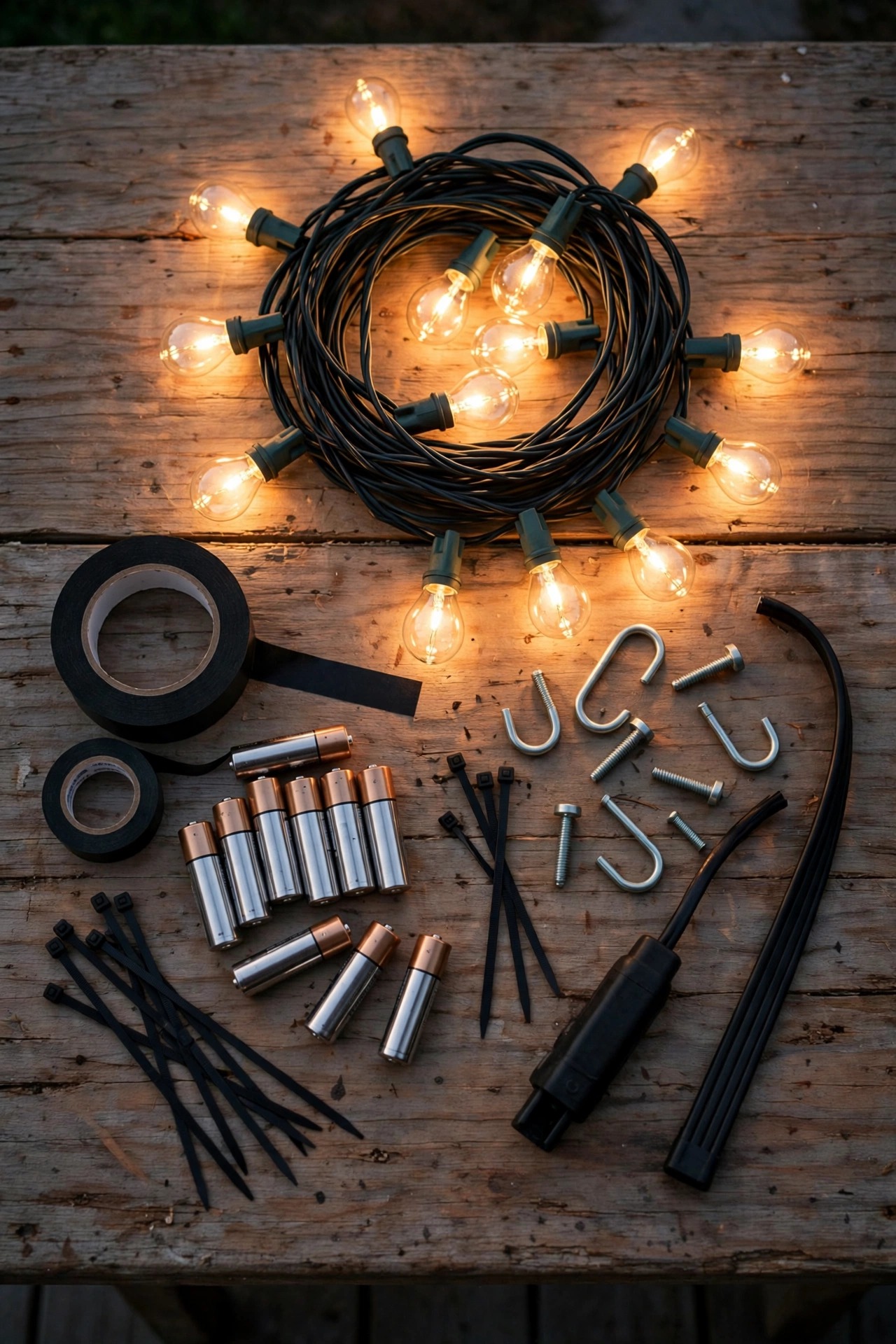
Saturday Morning: Clean, Aim and Fix Every Fixture
Saturday morning is for making the lights you already own look new again, and it is the highest-value hour of the whole weekend. Start with glass and plastic: wash porch lantern panes, wipe landscape fixture lenses, and scrub the small solar panels on every stake and string set with a damp cloth. A season of pollen and sprinkler spots can steal a third of a solar light's charge and make a clean bulb look tired. Dry everything before you move on so dust does not paste itself back on.
Then walk the yard with a gentle hand and fix the leaners. Straighten path lights, push tilted stakes fully back into the soil, and re-seat any fixture that wobbles. Re-aim uplights so they wash tree canopies and house walls instead of blasting windows or the street, and angle motion lights down their driveways rather than into a neighbor's bedroom. Trim the shrub branches that have swallowed a fixture since spring — plants grow quietly and steal light all summer.
Finally, replace every dead bulb from Friday's list and switch everything on for two minutes, even in daylight, to confirm each socket works. A bulb that flickers in the morning gets replaced now, not negotiated with at dusk.
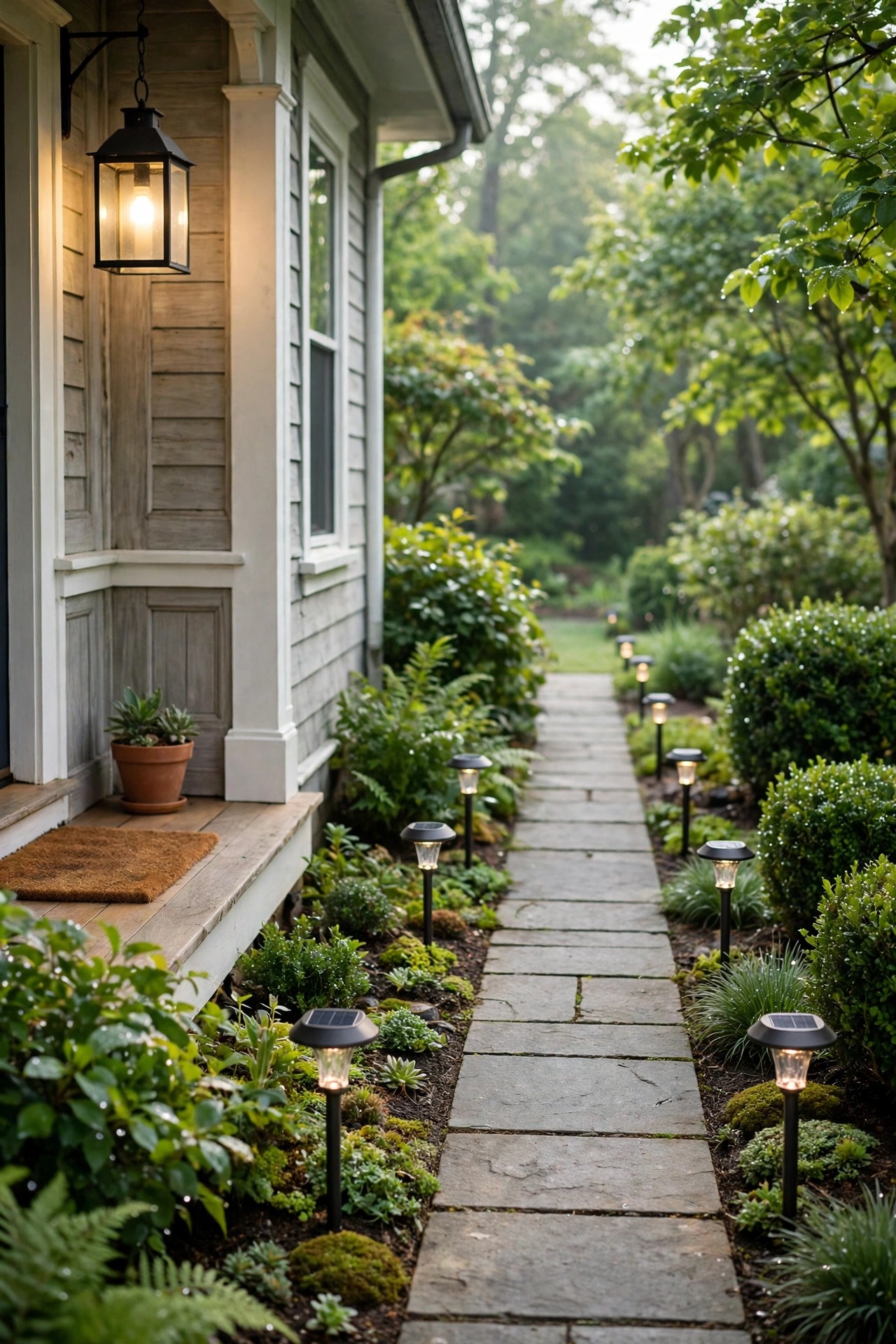
Saturday Afternoon: The Party Outdoor Lighting Checklist Guest Journey, Curb to Door
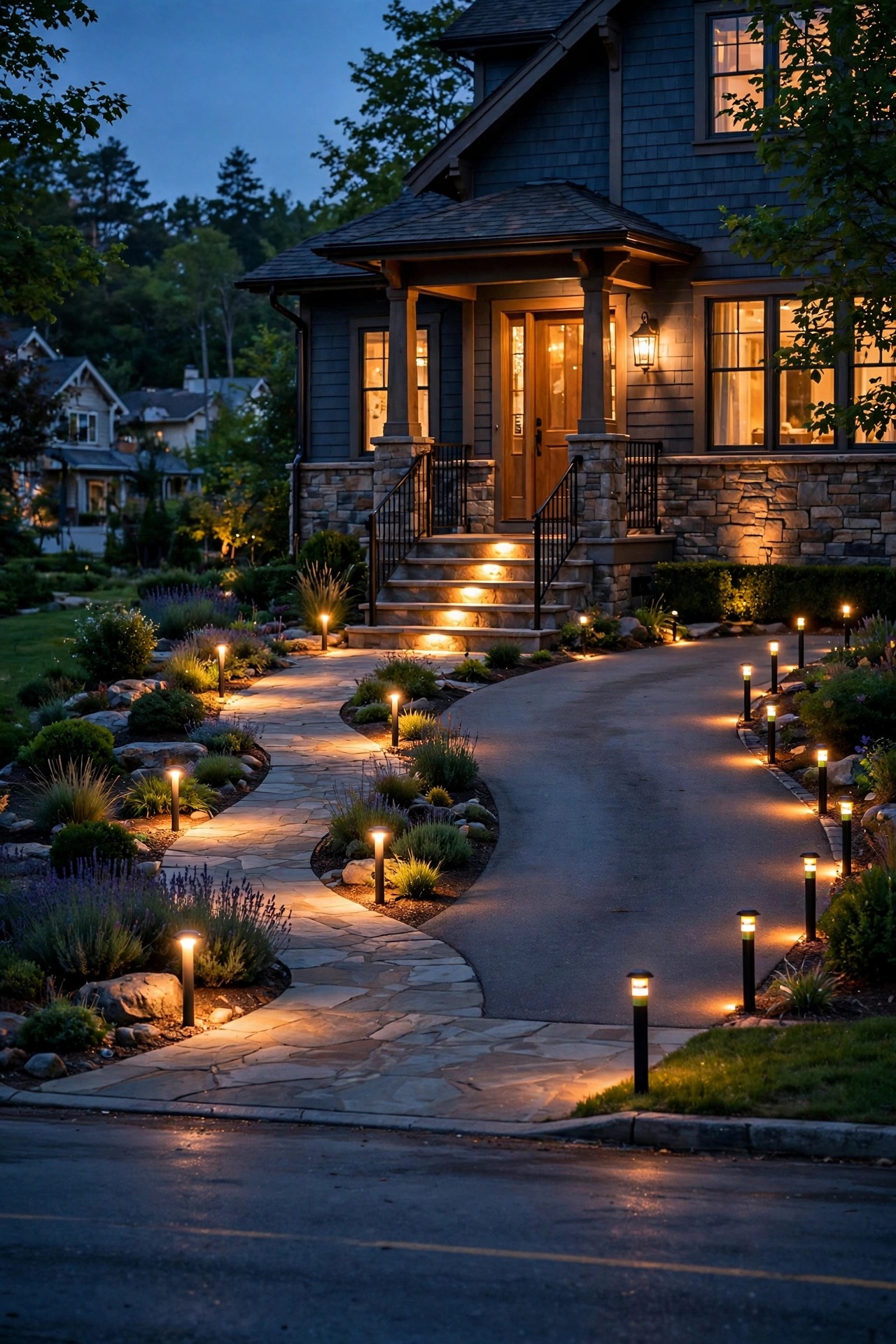
Guests experience your lighting as a journey, not a yard, so spend Saturday afternoon walking it in daylight and fixing each leg. Leg one is the street and driveway: drivers need to see the driveway edge and any curb cut, and walkers need a hint of light where they step out of the car. A pair of path lights or a low solar marker at the driveway corners does more for first impressions than any patio upgrade.
Leg two is the walk. Lights should pool every six to eight feet, low and warm, with no bright-dark-bright stutter that makes eyes work. Fill the gaps your audit found with the spare stakes you bought, and make sure no fixture aims up into faces — path light belongs on the ground, not in anyone's eyes.
Leg three is the steps and the door. Steps need light on the treads themselves, from a rail light, a step light or a lantern set to one side at tread height. At the door, the porch light should be warm and on before the first guest arrives, the house number readable, and the doorbell area free of shadow. Stand where a guest stands, holding a dish, in nice shoes. If you feel confident there, the journey works.
Saturday Evening Setup: Layer the Light — Strings, Candles and the Grill Zone
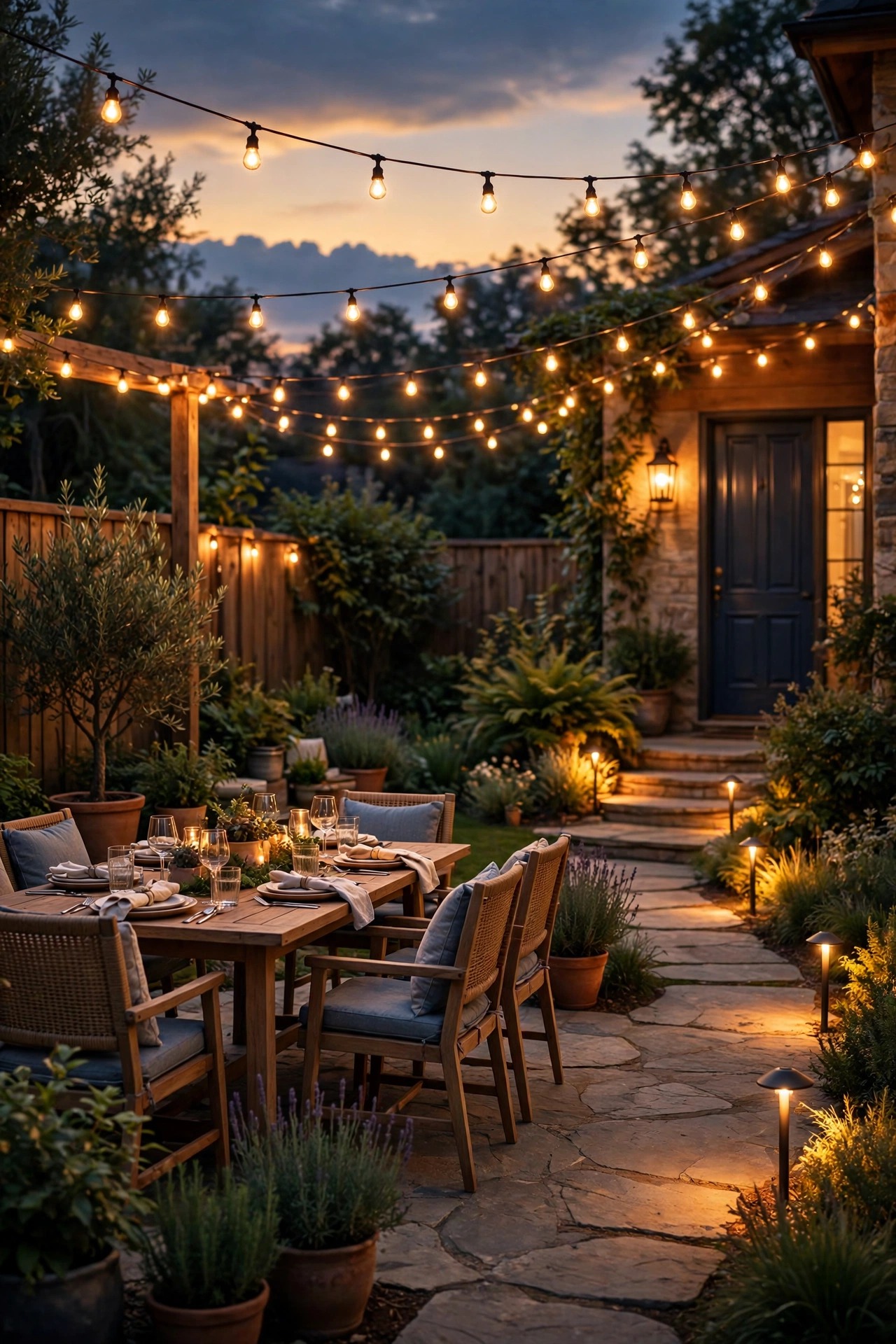
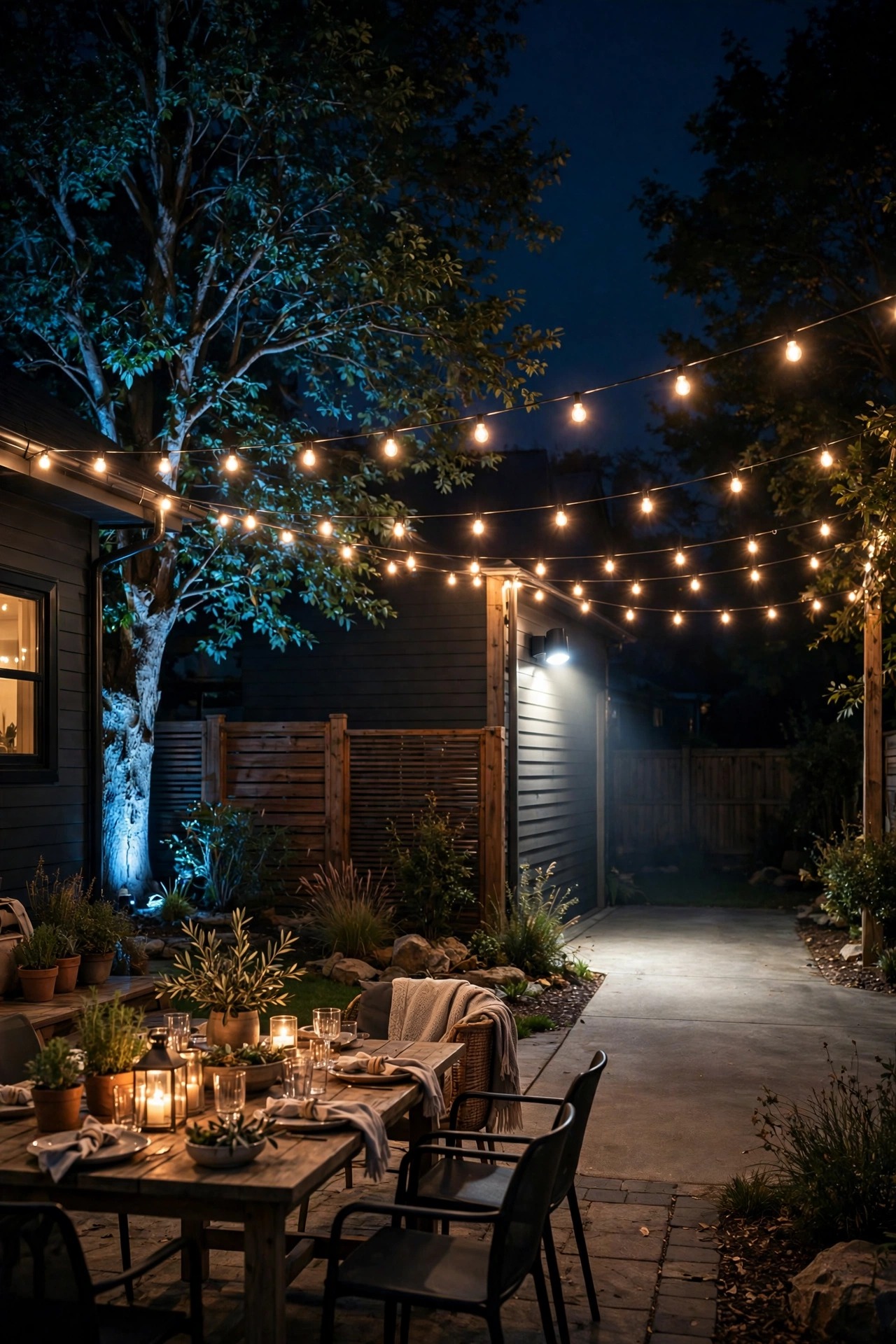
With the bones fixed, Saturday's last job is the fun layer, and this is where a good checklist of outdoor party lighting ideas earns its keep. Hang string lights first, while there is still light to see hooks by. Use real hardware — eye screws into studs or joists, cup hooks on the porch, proper poles where there is no structure — and let the strands swag in gentle dips rather than pulling them guitar-string tight. My full outdoor string lights guide covers spacing and poles, but the party rule is simple: strings define the ceiling of the room, so hang them over where people will actually gather, not over the empty lawn.
Second layer: low, warm fill. Lanterns with real or flameless candles on tables, along the porch rail and beside steps add the flicker that overhead light cannot. Keep real flames inside glass and well away from napkins, paper decor and trailing fabric — flameless versions go anywhere, including the kids' table.
Third layer: task light with manners. The grill, the drink tub and the serving table each need honest light, so angle a focused fixture or a clip light there, then dim or switch off the big floodlight. One harsh wall flood flattens everything and sends guests squinting; three soft sources make faces look wonderful.

Night-Of Settings: Timers, Motion Lights and Color Accents
An hour before guests arrive, walk the house and set every control the way the party needs it — not the way an ordinary Tuesday needs it. Timers that normally shut the yard down at ten should run until an hour after you expect the last guest to leave; my notes on outdoor lighting timers and automation explain the programming patterns, but tonight the goal is simply that nothing switches off mid-conversation. Set path and porch lights to come on at dusk rather than on a fixed clock time, because a garden party in long summer twilight fools fixed schedules.
Motion lights need a decision each. The driveway and side-yard sensors stay in motion mode — they welcome late arrivals and light the way to cars. But any motion light covering the patio, deck or seating should be switched to stay-on for the evening. Nothing kills a toast like the yard plunging dark because everyone sat still for four minutes, then strobing back on when someone reaches for a drink.
Finally, accents. If the occasion calls for color — a birthday, a holiday, a team game — keep it to one zone, like the pool, a single tree or the photo corner, and keep faces and food in warm white. Color everywhere reads carnival; color in one place reads intentional.
The Safety Pass: Cords, GFCI Outlets, Pool and Step Edges
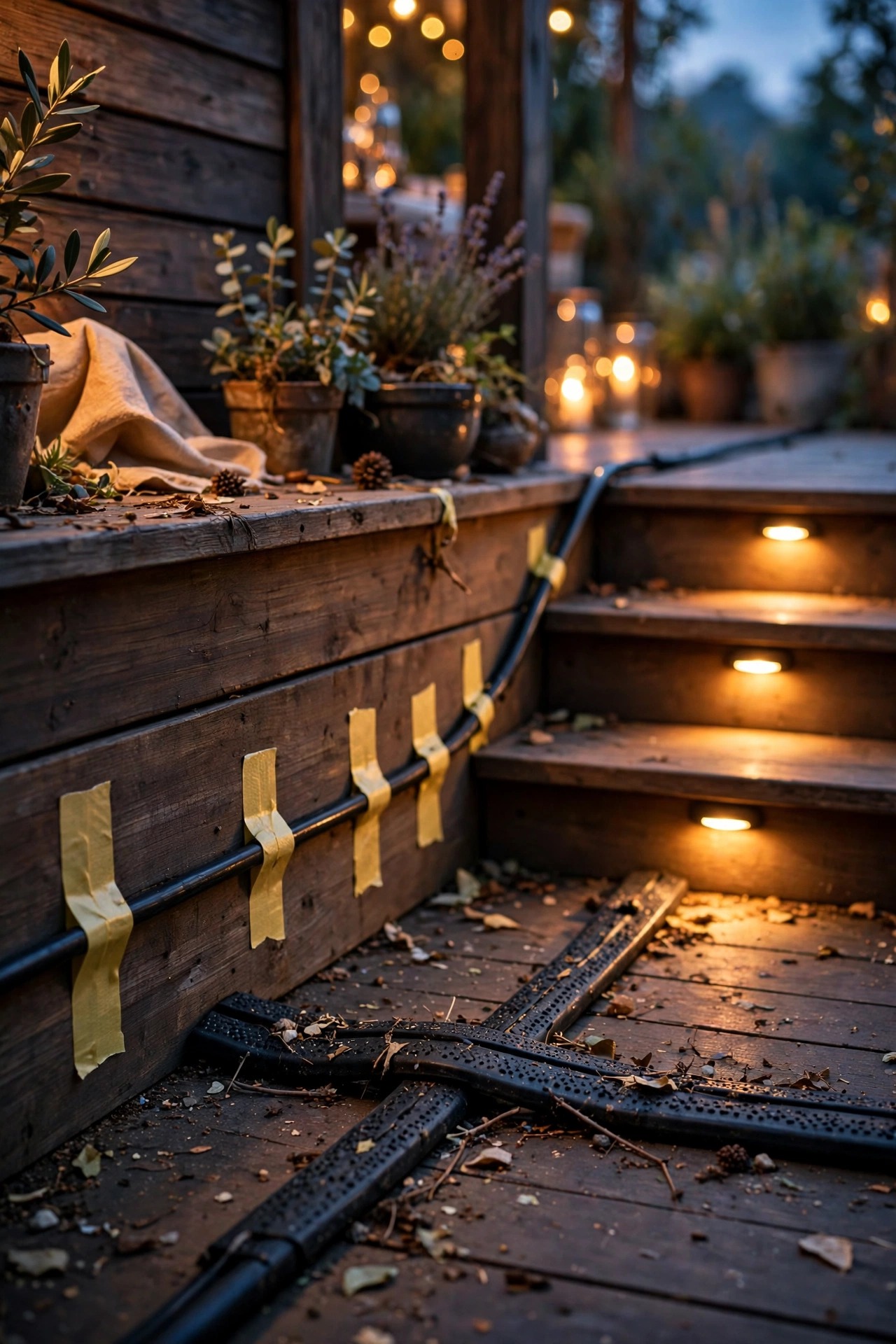
Do this pass in daylight, after the layers are hung and before you set a single drink down. Trace every cord with your eyes from outlet to fixture. Cords should hug walls, run behind planters and disappear along edges — never cross a walkway bare. The one crossing you cannot avoid gets the rubber cord cover from Friday's run, taped at both ends. Across grass, press cords flat and mark the run with two solar stakes so nobody drags a heel through it in the dark.
At the outlet, press the test and reset buttons on every GFCI you plan to use; a receptacle that will not reset gets retired for the night and its load moved. Use only outdoor-rated extension cords, keep connections off wet ground and slightly elevated, and never run a cord through a doorway where the door will pinch it. Everything on one circuit has a limit, so spread the string lights across two outlets if you are running several long strands.
Close the pass at the edges: pool coping, deck steps, retaining wall drops and the garden pond all get a visible line of light — a lantern, a step light, a short run of rope-style light tucked along the edge. Guests look at faces and drinks, not at their feet. Your lighting has to do the watching for them.
What It Costs in 2026
If your audit found a healthy system, this weekend is mostly labor, and the shopping basket stays small. A realistic parts-only run looks like this: two to four warm LED replacement bulbs run $10 to $25 total, a pack of rechargeable batteries $12 to $20, outdoor tape and a rubber cord cover $15 to $30, and hooks, eye screws and zip ties another $10 to $15. Call it $50 to $90 for a refresh weekend with no new fixtures.
Adding one new element stays gentle too. A 48-foot strand of outdoor string lights runs $25 to $45, a set of four to six flameless candles in lanterns $20 to $40, and a multipack of six solar path lights to fill walkway gaps $30 to $55. A clip-on task light for the grill is $15 to $25. Mix and match two of those and the whole weekend lands between $100 and $180.
Running costs are nearly a rounding error: a full evening of LED string lights, path lights and lanterns draws so little power that five party hours typically cost well under a dollar in electricity. Solar additions cost nothing to run. The real investment is the two days of attention — and unlike most party spending, every dollar of it is still working for you at the next gathering.

5 Mistakes That Sabotage a Party at Dusk
First, hanging the string lights on party day itself, in the wind, on a ladder, with guests texting that they are early. Strands tangle, hooks go in crooked, and you start the evening flustered and sweaty. Strings go up Saturday afternoon at the latest, with time to step back and adjust the swag.
Second, testing nothing until guests arrive. The single dead strand, the tripped GFCI, the timer set to the wrong day — every one of them is a two-minute fix at noon and a fifteen-minute drama at eight. The pre-party flick of every switch is the cheapest insurance in this whole checklist.
Third, lighting the yard beautifully and forgetting the journey. Hosts polish the patio where they will stand, then leave the street dark, the driveway edge invisible and the front steps in shadow. Guests remember the arrival and the walk back to the car as much as the party itself — light the whole route, not just the destination.
Two quieter mistakes deserve mention: buying emergency replacement bulbs in whatever color temperature the store has left, which leaves one blue-white beacon in a warm yard, and over-lighting everything to full brightness so the evening feels like a stadium. Soft, warm and layered always wins after dark.
Sunday: The Five-Minute Reset
The party is over, the chairs are stacked, and five honest minutes now will make the next gathering twice as easy. Set a timer on your phone so it stays five minutes. First, walk the controls: timers go back to their everyday schedule, motion lights near the patio return to sensor mode, and the stay-on overrides get cleared while you still remember setting them. Nothing annoys future-you like a porch light burning at noon in July because of a party in June.
Second, gather the party-only gear while it is still where you left it. Coil the extension cords loosely, pull the flameless candles and lanterns back to their storage bin, and wipe the solar panels one more time — party weekends leave them dusty with pollen and candle soot. Rechargeable batteries go straight onto the charger so they are full and findable next time.
Third, write three lines in the same notes app you used Friday: what failed, what guests complimented, and what you wished you had. That little list is gold. Next party, your audit starts from real knowledge instead of from scratch, and the weekend shrinks from a project into a routine. That is the whole secret — the checklist gets shorter every time you run it.
Frequently Asked Questions
How far ahead should I start before a party?
One weekend is genuinely enough if your system basically works. Do the audit the Friday before, or even Friday evening of party weekend for a Saturday event, and keep the shopping list to parts and small additions. If your audit finds a dead transformer, a buried-cable fault or a whole dark zone, that is a repair project — start two weekends out or call an electrician for the wiring fault and light the rest with solar and strings in the meantime.
What color temperature looks best for a party?
Warm white, between 2700K and 3000K, flatters faces, food and skin tones and matches candlelight, which is why restaurants live in that range. Match every bulb and fixture you add to the temperature you already have; a single 5000K daylight bulb in a warm yard reads as a mistake no matter how bright it is. Save saturated color for one accent zone only.
Can I leave the string lights up after the party?
Yes, if they are outdoor-rated and hung on proper hardware rather than tape and hope. Commercial-grade strands with sturdy sockets handle seasons of weather; lightweight indoor strands do not. Check the run every month or so for sagging, cracked sockets and water sitting in upward-facing bulbs, and take them down for storm season if your area gets serious wind.
What if rain is forecast for party day?
Move the plan, not the party. Bring lanterns and flameless candles under the porch or a canopy, confirm every connection is outdoor-rated and off the wet ground, and lean harder on covered fixtures and porch light. Skip anything with an open flame, keep cords out of puddles entirely, and light the guest journey extra carefully — wet steps and walkways are exactly where guests need to see.
Conclusion
A great party yard is not bought in a weekend; it is revealed in one. Audit honestly on Friday, fix and layer on Saturday, set the controls for people instead of schedules, and reset on Sunday — that rhythm is the entire party outdoor lighting checklist, and it runs faster every time you repeat it. Your guests will never know you followed a checklist at all. They will just remember that your place felt warm, easy and somehow a little bit magical after dark. Browse the rest of the site for your next upgrade, and enjoy being the house everyone hopes hosts again.