A gas fire pit is already the easiest fire you will ever own — one click and the flames are dancing. But honestly? On its own, that blue-and-gold flame leaves everything beyond a two-foot ring in total darkness, and in a clean, modern yard that harsh contrast looks unfinished. The best gas fire pit lighting ideas treat the flame as just one layer, then add soft light at three heights: low for paths and steps, mid-height for faces and seating, and a gentle glow overhead or behind. In my experience, that layering is what turns a sleek fire feature into a room you actually live in. Below are 15 ideas that suit modern yards especially well — linear fixtures, hidden light sources, warm 2700K color, and nothing fussy. Every idea includes realistic spacing, bulb, and safety notes plus a budget range, so you can pick two or three and build your own layered plan this weekend.

1. Gas Fire Pit Lighting Ideas That Start With an Under-Rim LED Strip
My favorite modern trick hides the light source completely. An outdoor-rated LED strip tucked under the coping or metal rim of the fire pit washes the base and the patio beneath it with a soft halo, so the whole structure looks like it is floating. Choose a 2700K strip in a silicone or aluminum channel — the channel protects it from radiant heat and diffuses the diodes into one clean line. Keep the strip at least 6 inches back from the flame ring and use a low-voltage 12- or 24-volt system so the wiring stays simple and safe. Because the glow points down, it never competes with the flames or glares into anyone's eyes. It also quietly lights the ground right where people set down drinks and shuffle their feet in the dark. For a linear gas pit, run the strip the full length; for a round bowl, a flexible strip follows the curve beautifully. This is the single idea I recommend first for a modern yard, because clean lines are the whole point.
Suggested budget range: $40 – $150.

2. Low-Voltage Path Lights Around the Seating Circle
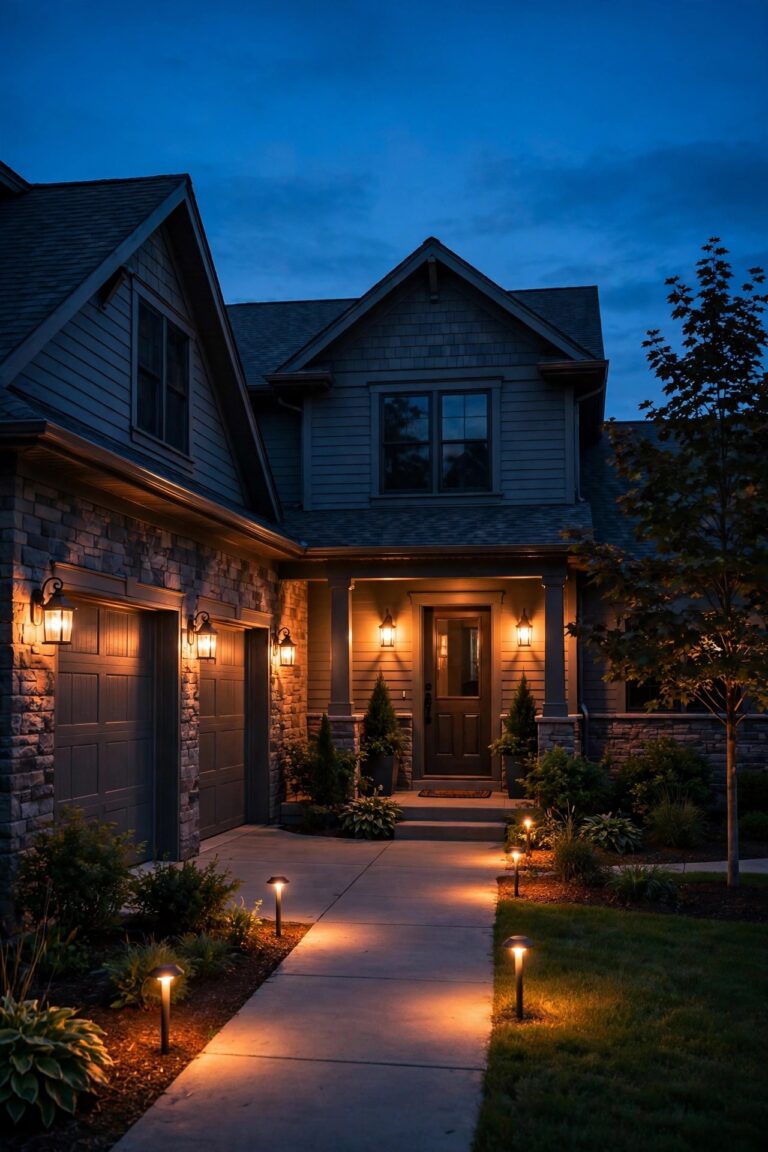
The walk from the house to the fire pit is where guests trip, so I always ring the approach with low-voltage path lights. In a modern yard, skip the pagoda styles and pick slim mushroom or minimalist stake fixtures in matte black or brushed steel. Space them 6 to 8 feet apart along the path edge and around the outer edge of the seating area, angled so the light pools downward in overlapping ellipses rather than in faces. A 3000K bulb reads clean against stone and concrete; 2700K feels warmer against wood decking. Run them off the same transformer as your other landscape lights and put the fire pit zone on its own timer. I cover more layout options in my guide to lighting a fire pit area, but the short version is: light the ground people walk on, not the sky. These fixtures sip power — most draw 2 to 4 watts each — so a dozen of them barely move your electric bill.
Suggested budget range: $120 – $350.

3. Recessed Step Lights for Tiered Seating and Patio Levels
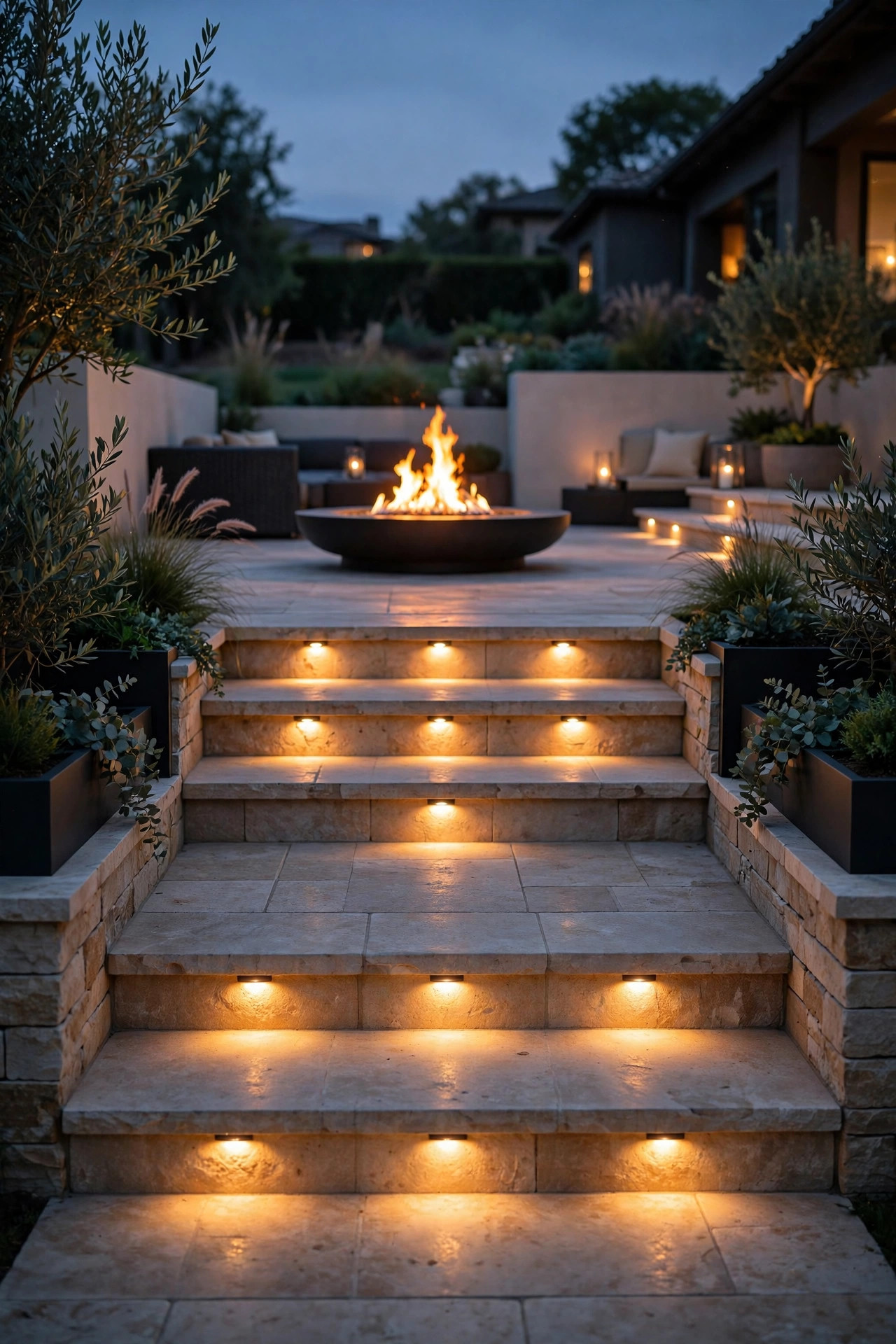
Modern yards love levels — a raised fire pit terrace, two wide steps down to the lawn, a sunken conversation area. Every level change is a trip hazard after dark, and recessed step lights are the cleanest fix I know. Mount them in the riser face of each step, centered or in pairs on wide steps, about 3 to 4 inches above the tread. The louvered or eyelid styles throw light straight down across the step surface with zero glare, and because they sit flush, nothing sticks out to catch a toe or ruin the architecture. Wire them on the same circuit as your path lights so the whole route from door to fireside lights up as one system. Choose fixtures rated for direct burial or concrete pour if you are building new, and always confirm they are wet-location rated. In my experience, two lights per wide step looks intentional and even; one centered light on a narrow step is plenty. This is functional lighting, yes, but done right it doubles as a design line that emphasizes the geometry of the yard.
Suggested budget range: $90 – $300.
4. Sleek Bollard Lights for a Sculptural Edge
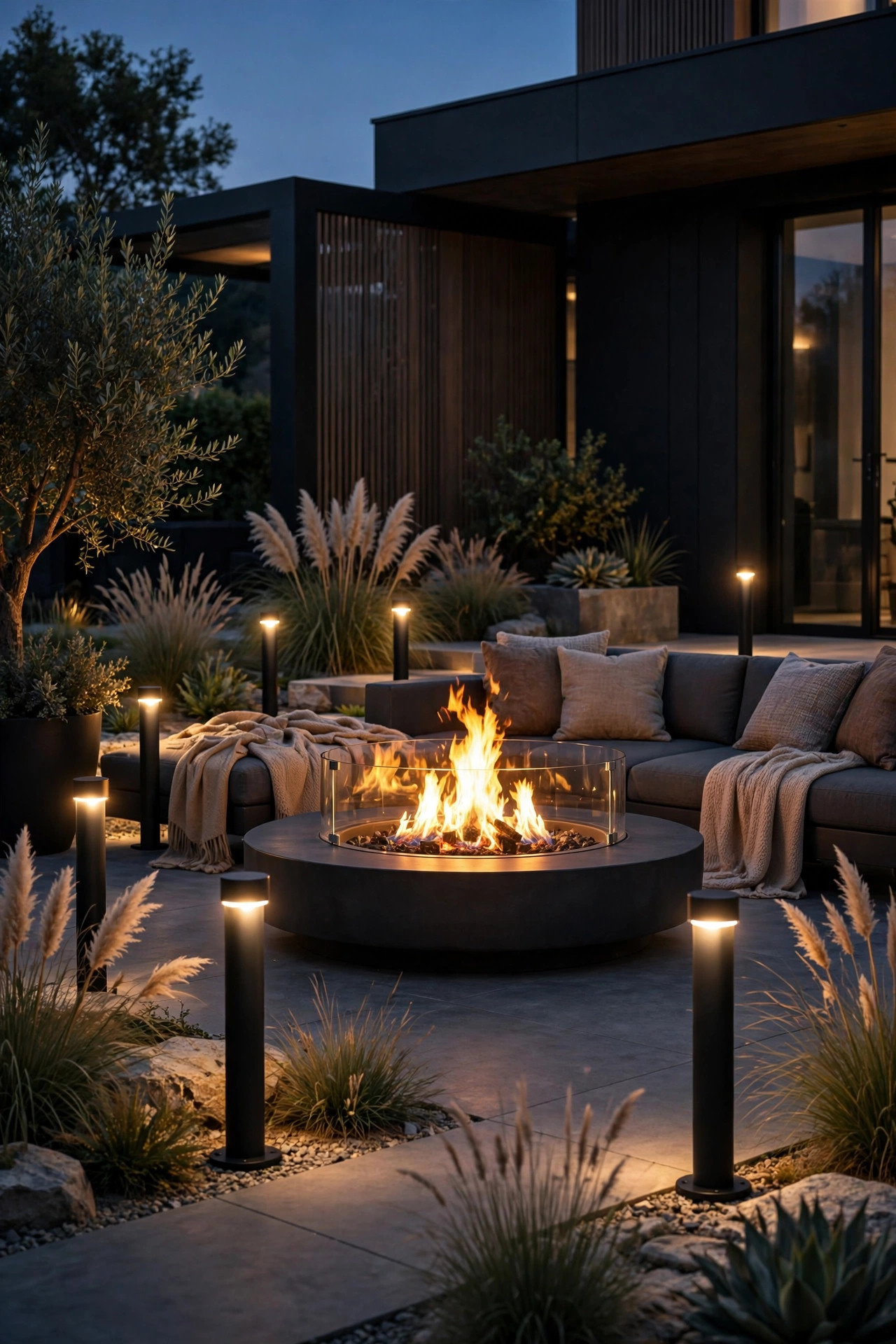
If your yard leans modern, bollards are the hardest-working pretty thing you can add. These short posts — usually 18 to 30 inches tall — cast a wide, low pool of light that defines the seating zone without a single visible bulb. Place three or four around the outer curve of the fire pit area, roughly 8 to 10 feet apart, and they read like sculpture by day and pure function by night. Rectangular bollards with a narrow light slit feel the most contemporary and pair beautifully with a linear gas fire table. Look for powder-coated aluminum in charcoal or black, an IP65 rating, and integrated LED modules in the 2700–3000K range so there are no bulbs to change. Keep them at least 4 feet from the fire pit itself so heat and knees both stay clear. I like bollards most on gravel or decomposed granite seating areas, where path lights on stakes can look cluttered — the bollard's solid footprint suits loose surfaces and holds its line.
Suggested budget range: $150 – $450.
5. Downlights From a Pergola or Overhead Beam
Overhead light is the layer most fire pit areas are missing, and it is the one that makes faces look good. If your gas fire pit sits under a pergola, shade structure, or even a sturdy patio beam, mount two or three small downlights 8 to 10 feet up, aimed at the seating — never directly at the flame. A narrow 30- to 40-degree beam keeps pools of light on laps and side tables while the fire stays the visual star. Dimmable fixtures matter here: I run mine at about 40 percent so the firelight still flickers across everyone. Keep fixtures at least 3 feet horizontally from the flame's heat plume, and use metal housings rated for outdoor use. No structure overhead? A galvanized cable or a simple modern light post at the edge of the seating area can carry one downlight just as well. Honestly, this one layer is the difference between squinting at your guests and actually seeing them smile across the fire.
Suggested budget range: $100 – $320.

6. Uplighting the Wall or Fence Behind the Fire
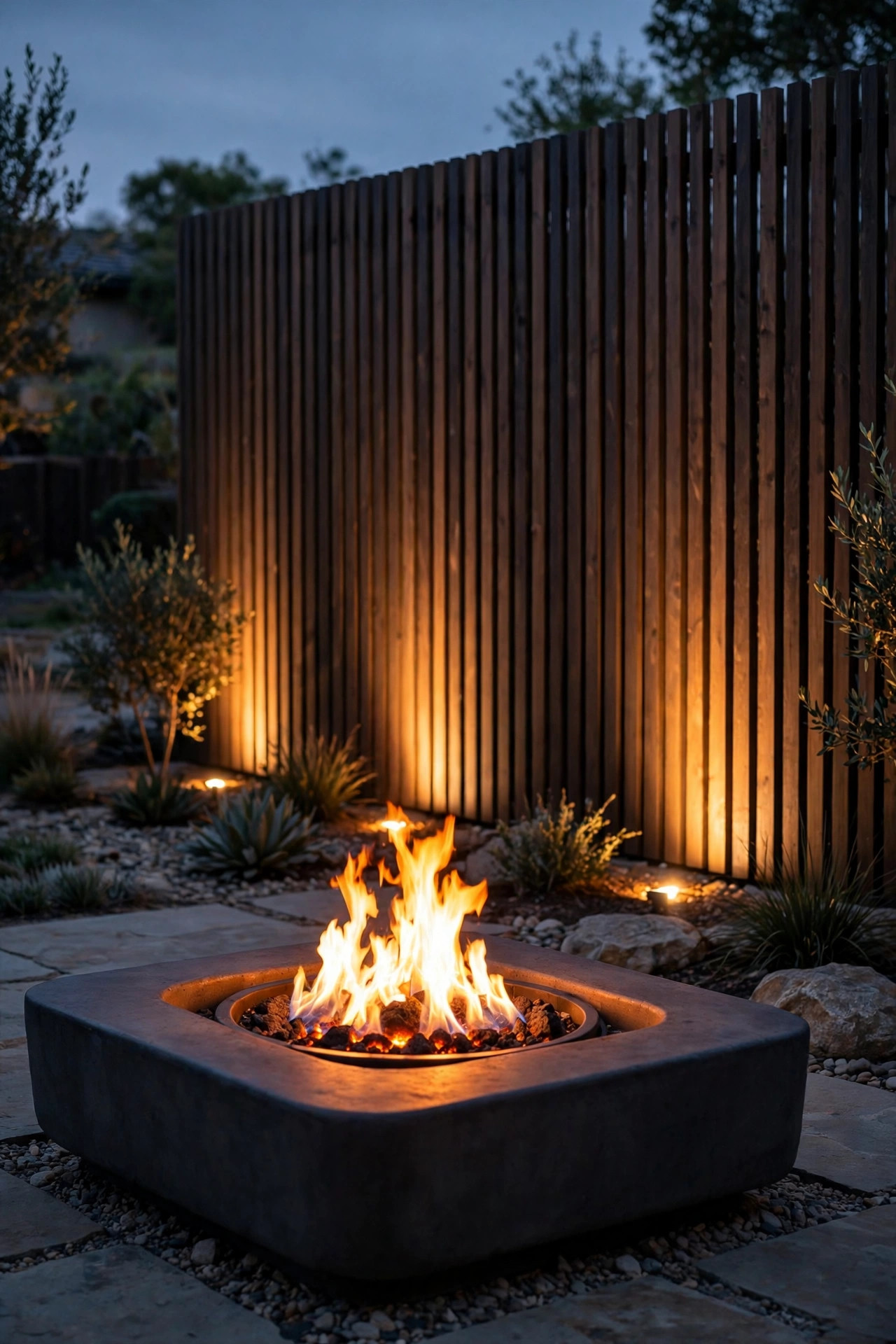
A modern yard usually has one strong backdrop — a stucco wall, a horizontal cedar fence, a row of ornamental grasses. Washing that backdrop with light gives the fire pit depth so it does not look like it is floating in a black void. Set two or three low-voltage uplights 12 to 18 inches from the base of the wall, tilted up at about 30 degrees, and the texture of stucco, stone, or wood grain comes alive. Well lights buried flush in the ground keep the look cleanest in gravel and planting beds. Warm 2700K light flatters foliage and wood; keep the beams wide and soft rather than spotlight-tight, or you will get hot spots. This backdrop glow also bounces a little ambient light back into the seating circle, which helps faces without any visible fixture near the fire. My fire pit landscaping ideas go deeper on pairing plantings with light, but the simple rule stands: light what is behind the fire, and the whole scene gains a backdrop instead of a black hole.
Suggested budget range: $80 – $260.
7. A Single Swag of String Lights Overhead
Yes, string lights work in modern yards — the secret is restraint. One clean swag, or two parallel runs, of commercial-grade string lights with simple black sockets and warm LED filament bulbs reads deliberate instead of festival. Span them 9 to 11 feet high across the seating area, anchored to the house, a pergola, or slim steel poles set in the corners. Keep every strand at least 3 feet above and to the side of the flame plume; gas fire pits throw steady heat upward, and vinyl sockets will thank you for the distance. Use shatterproof LED bulbs in the 2200–2700K range and put the strand on a dimmer plug so you can drop it to a whisper. In my experience, one swag over a round pit or two straight runs over a linear fire table is plenty — the moment you zigzag three or four directions, the clean modern feel evaporates. Guy wires or cable kits keep long spans from sagging into the sightline.
Suggested budget range: $60 – $200.

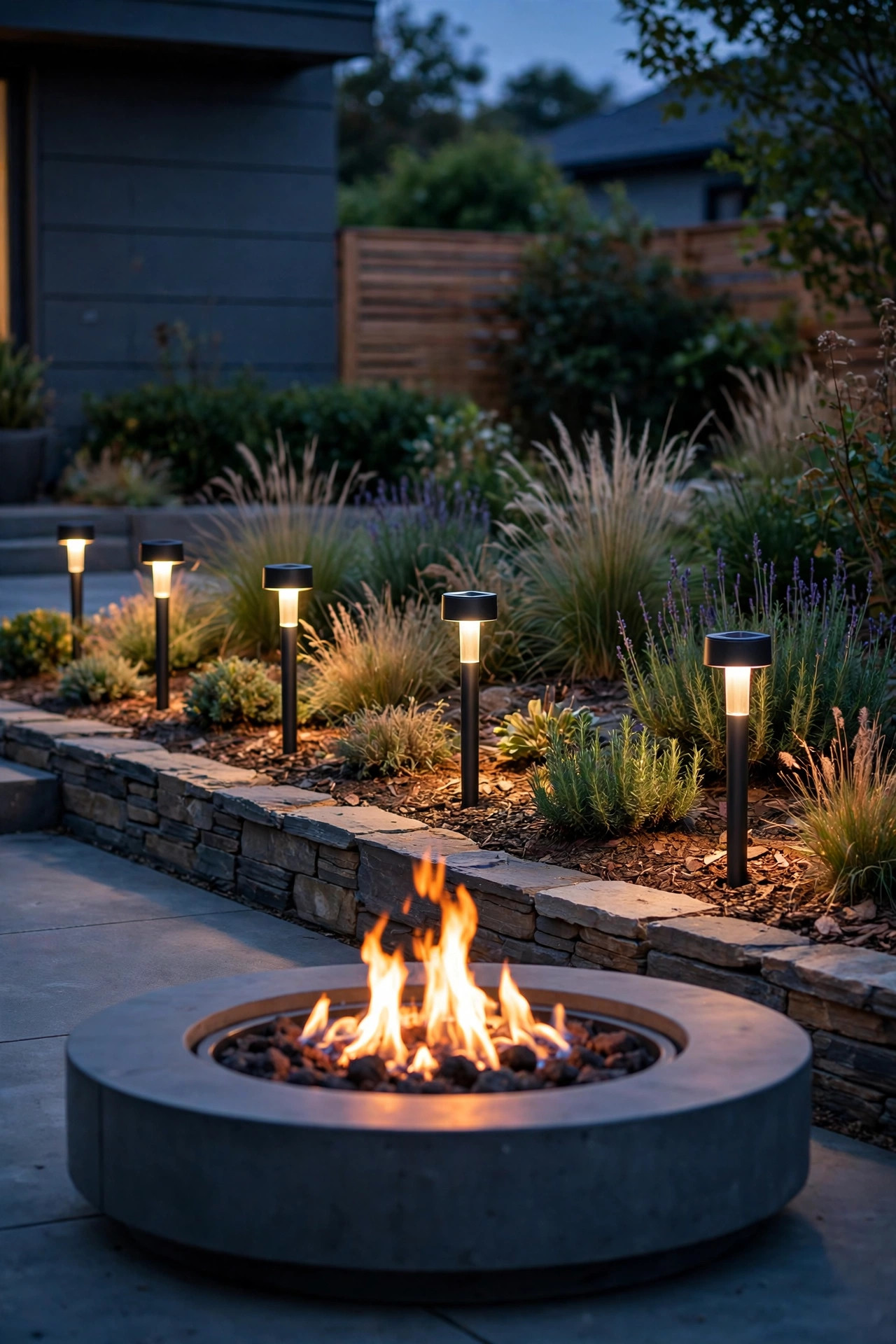
8. Solar Stake Lights for the Garden Edge
Not every layer needs wiring. Along the planting beds and lawn edges that frame a modern fire pit area, solar stake lights add a dotted line of orientation light with zero trenching. Modern styles — slim cylinders and small cubes in black metal — look far better than the plastic mushrooms of a decade ago. Push them 5 to 7 feet apart where the bed meets the path or patio edge, and pick models with the solar panel integrated on top and a warm-white 2700–3000K LED. Be honest with yourself about sun exposure: a stake in full shade will fade by 10 p.m., so reserve solar for edges that catch at least six hours of sun. The better models now run 8 to 10 hours on a charge and cost little enough that replacing one is painless. I use solar only for the outermost ring of guidance light and let wired fixtures do the real work near the fire — that division has never let me down.
Suggested budget range: $35 – $120.
9. Smart Dimmable Spotlights You Control From the Couch
A gas fire pit already lights with a remote or an app, so your lighting should keep up. Smart low-voltage spotlights — or smart bulbs in standard fixtures — let you dim the whole seating area to movie level, warm the color for a dinner party, or brighten everything for cleanup, all from your phone. Set two adjustable spotlights on the house wall or in the beds aimed across the seating circle, and group them with the fire pit in one scene called, at my house, Fire Night. Voice control through a smart speaker is genuinely useful when your hands hold a drink and a blanket. Choose fixtures and bulbs rated for outdoor use, and confirm your Wi-Fi reaches the yard or use a system with its own hub. One caution from experience: put smart lights on a normal wall switch you leave on, or the automation dies every time someone flips it off. Start with two smart fixtures in key spots rather than converting everything at once.
Suggested budget range: $90 – $300.
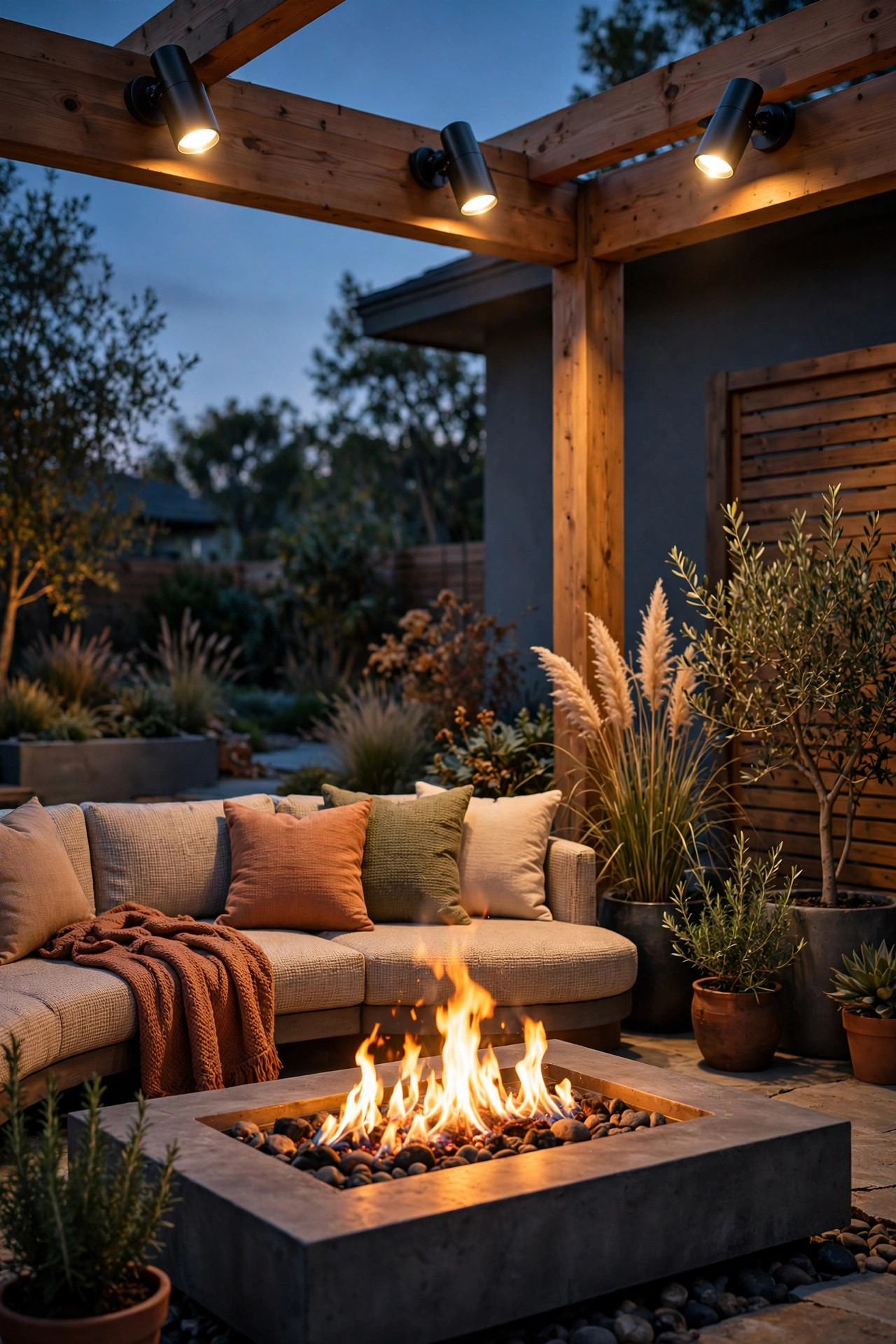
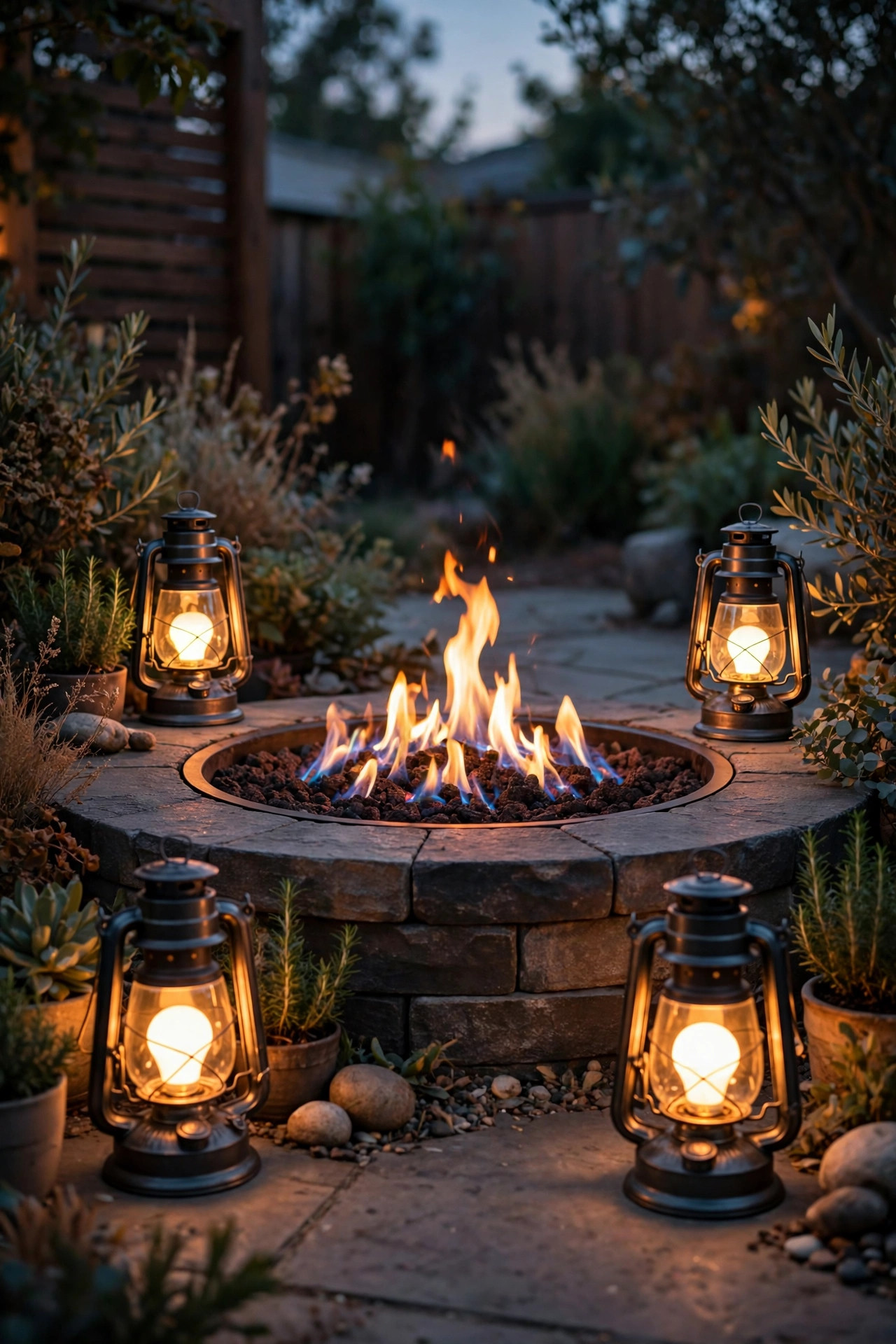
10. Flameless Candle Lanterns on Side Tables
Real candles near a gas fire pit are redundant; flameless ones are pure charm. Modern black metal or matte ceramic lanterns with LED candles give you flicker at table height — the exact layer that makes faces glow — with no wax, no wind worries, and no open flame near cushions or throws. Set one lantern on each side table and maybe a trio of mixed heights on a low ledge or the wide arm of a bench. Look for candles with a realistic moving wick or a soft flicker chip, a timer function so they switch on at dusk on their own, and a warm 2200K tone that mimics candlelight rather than a bulb. Battery life on the good rechargeable ones runs a whole season of evenings. Because there is no real flame, they are safe on wooden tables and near the outdoor rug. Honestly, this is the cheapest idea on the list and the one guests comment on most — firelight at eye level is simply flattering.
Suggested budget range: $25 – $90.
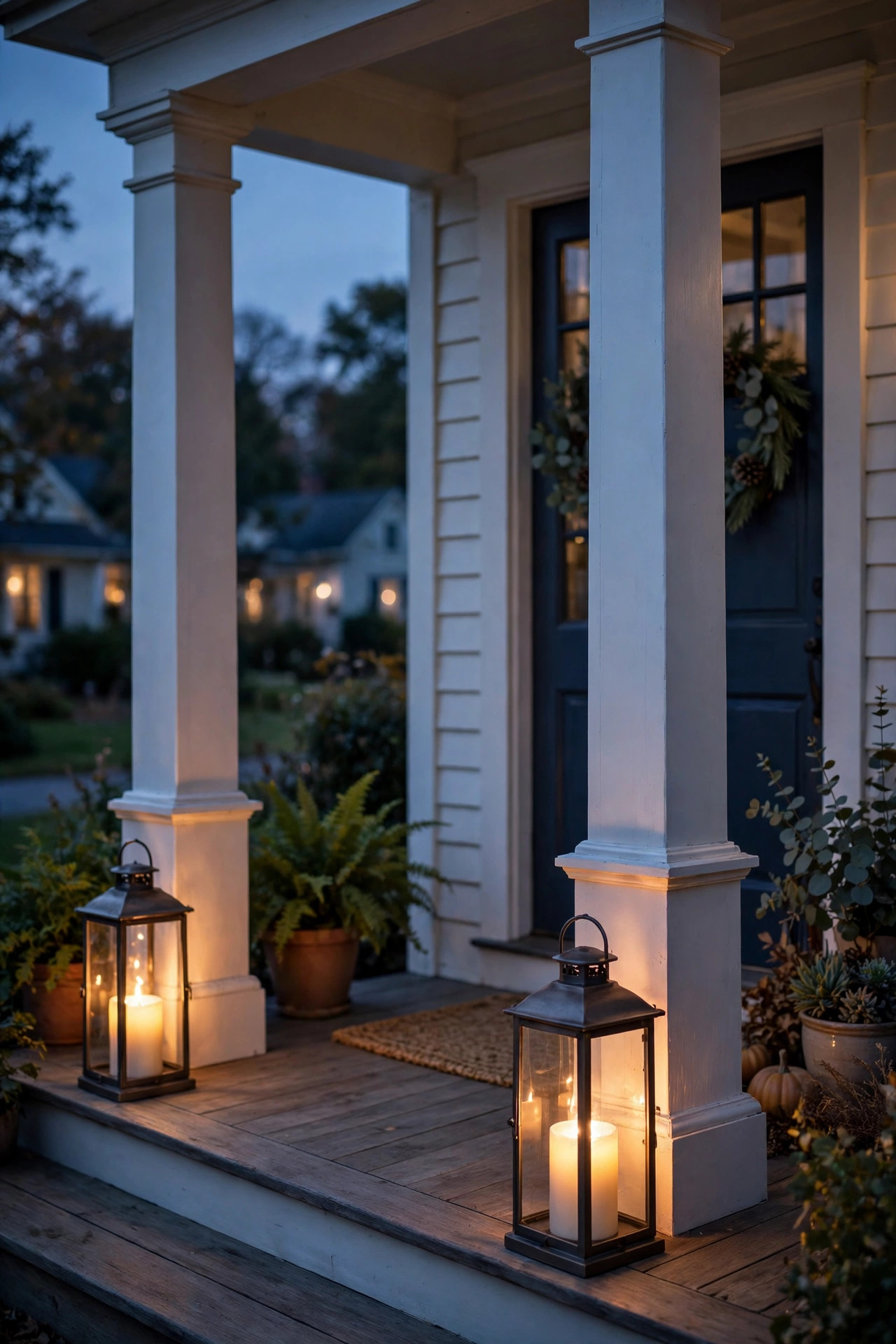
11. Moonlighting From a Nearby Tree
Moonlighting is the designer trick that makes a fire pit area feel like a resort. A single fixture mounted 15 to 25 feet up in a mature tree shines down through the branches, dappling the seating area with soft, shifting light that mimics a full moon. The effect is magical next to firelight because the two light sources move — branches sway, flames flicker. Use a shielded downlight with a soft 3000K LED and a wide beam, mounted with tree-friendly straps rather than screws that wound the trunk. If your yard has no tree, a tall slim pole at the back corner of the patio gets you 80 percent of the effect and suits the modern look even better. Keep the intensity low; moonlighting should be the faintest layer, just enough to see the ground pattern. Hire an arborist or lighting pro for the tree mount if heights make you nervous — it is a one-time install that lasts for years with an LED module.
Suggested budget range: $120 – $380.
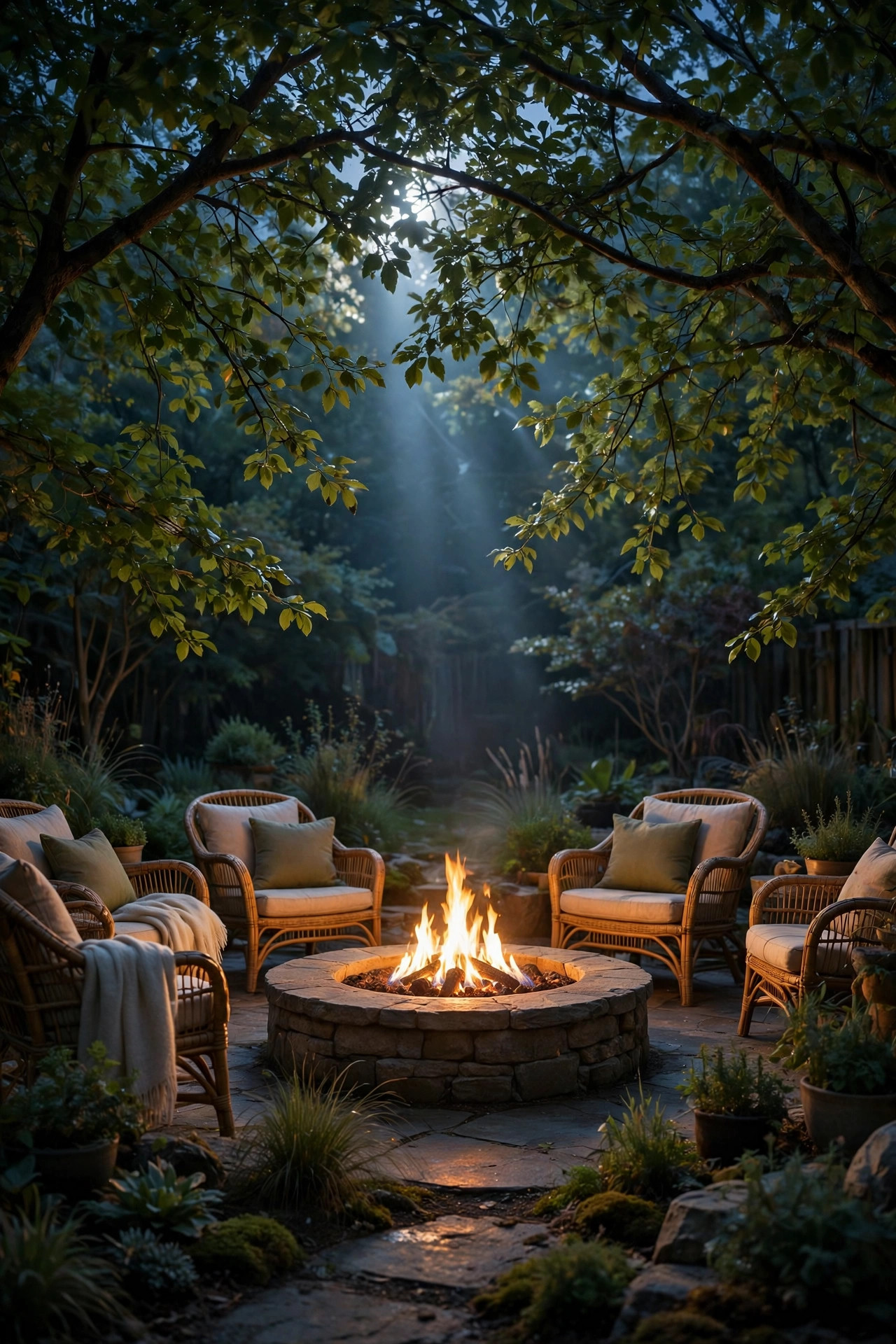
12. LED Strip Under Built-In Bench Seating
Built-in benches and low seat walls are everywhere in modern fire pit design, and the underside of that bench is prime hidden-light territory. A waterproof LED strip mounted under the bench lip throws a ribbon of light across the floor, defining the seating footprint and keeping shins and toes safe after dark. It pairs beautifully with the under-rim strip on the fire pit itself — two floating outlines, one warm scene. Use an aluminum channel with a frosted diffuser for a clean, dot-free line, and pick 2700K to match the firelight. Route the low-voltage wire through the bench structure during the build if you can; retrofit installs can hide wire in a shallow groove or behind the bench back. Add a simple inline dimmer so the bench glow can drop to ember level late in the evening. Keep strips and drivers well away from the fire pit's heat and gas line, and let your gas installer confirm clearances if the bench wraps close to the burner.
Suggested budget range: $50 – $180.
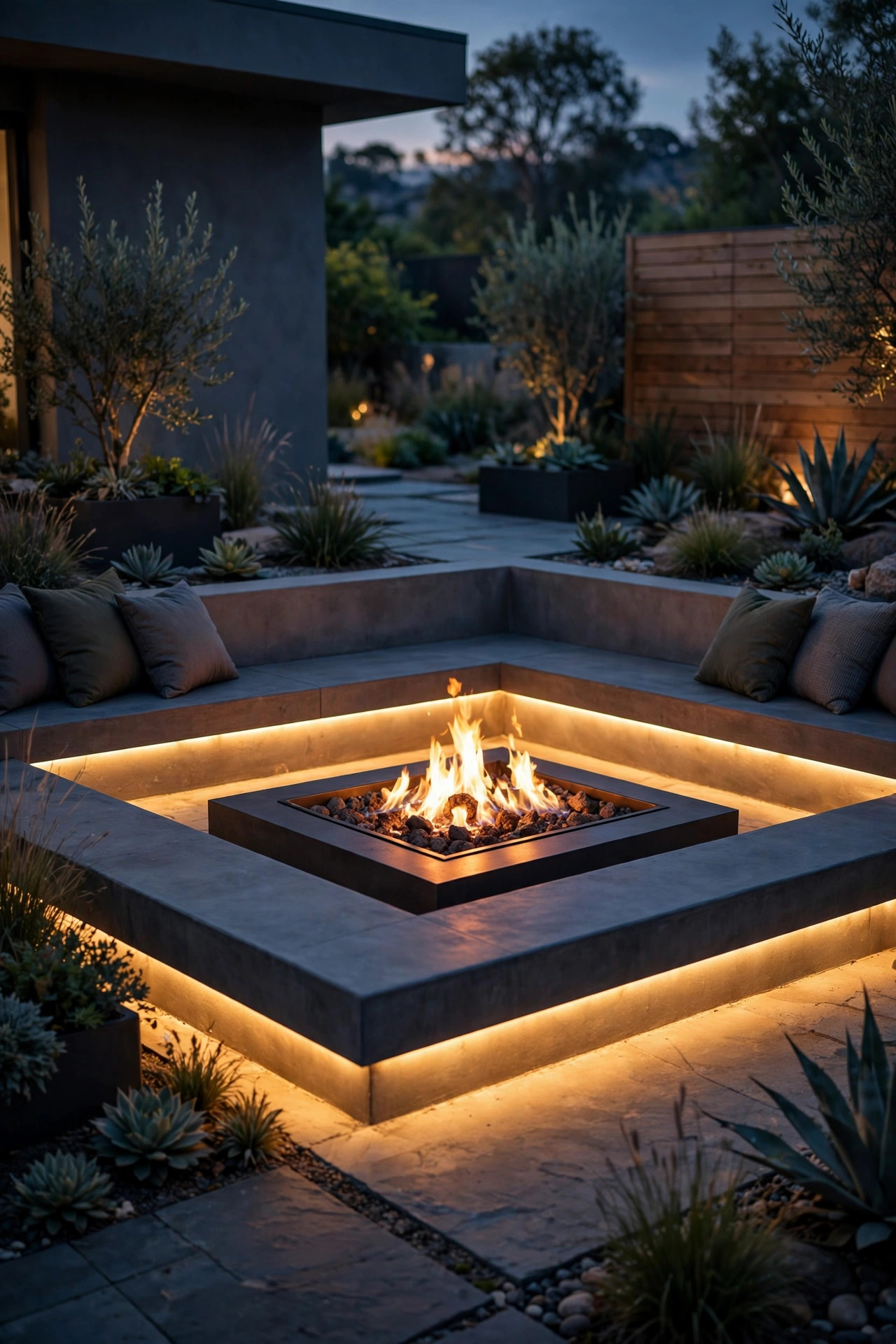
13. Flush In-Ground Well Lights Marking the Perimeter
For the cleanest possible look, bury the fixture. In-ground well lights sit flush with pavers, concrete, or gravel and shoot a soft uplight that grazes low walls, marks the perimeter of the seating pad, or rims the fire pit terrace. Four to six of them placed at the corners and edges of the patio create a subtle runway effect that says modern like nothing else. Choose fixtures with a tempered glass lens rated to be walked on, an IP67 or IP68 seal, and a honeycomb louver or frosted lens if any will sit where people walk barefoot — bare lenses can glare upward. Plan drainage beneath each fixture; a small gravel pocket under the housing keeps water from pooling and fogging the lens. Because they are flush, mowing and sweeping pass right over them. I like well lights best combined with one taller layer, since uplight alone can feel stark — but as the perimeter definition in a layered plan, they are unbeatable for a minimalist yard.
Suggested budget range: $140 – $400.

14. Color-Changing Smart Bulbs for Game Day and Parties
Ninety percent of the time, my fire pit lighting is warm white. The other ten percent — game day, a birthday, the Fourth of July — a little color is pure fun, and smart color-changing bulbs make it effortless. Put them in just two or three fixtures: the pergola downlights, a pair of sconces, or lanterns you can carry. Deep amber and soft gold settings actually enhance firelight for autumn evenings, while team colors on the sconces keep the theme without turning the whole yard into a light show. Stick with fixtures where the bulb is shaded or diffused, because raw colored light looks harsh in a modern space. The same bulbs return to perfect 2700K white the rest of the year, so there is no compromise. A word of restraint from experience: color the accents, never the path or step lights — safety lighting should stay warm, bright, and boring so nobody misjudges a step in blue light.
Suggested budget range: $40 – $130.
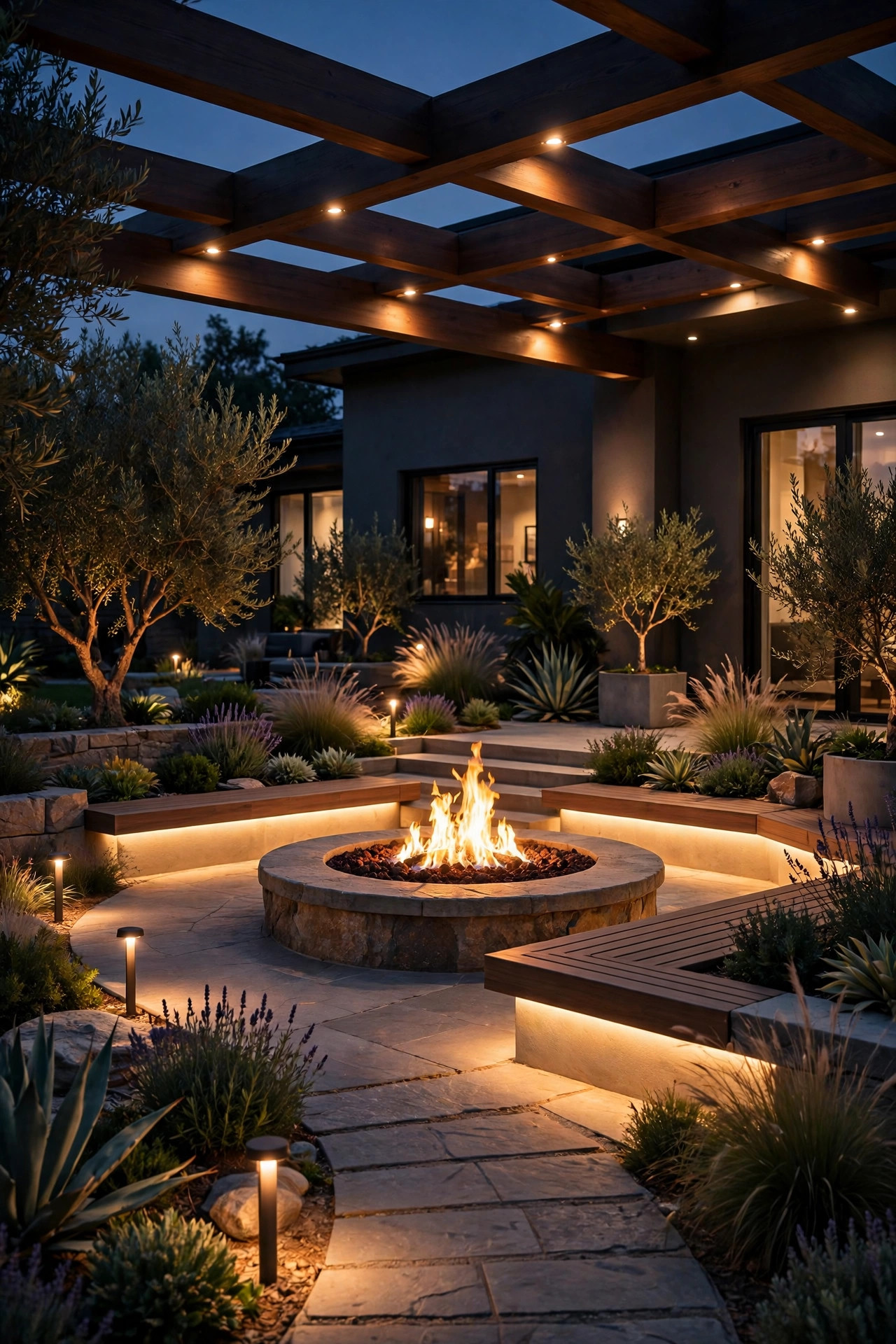
15. Gas Fire Pit Lighting Ideas Layered Into One Evening Plan
Here is how it all comes together at my house, and it is the plan I hand to friends. Layer one, guidance: path and step lights on a timer from dusk to midnight so arrivals are safe. Layer two, glow: the under-rim strip on the pit and the bench strip on low, giving the whole structure that floating outline. Layer three, faces: pergola downlights at 40 percent plus flameless lanterns on the tables. Layer four, backdrop: uplights washing the fence so the scene has depth. Each layer is dim on its own; together they frame the flame without fighting it. If your fire pit is an open-flame style rather than gas, my patio fireplace lighting ideas use the same layering logic. The best gas fire pit lighting ideas are never one fixture — they are a few modest layers on separate controls, so the yard can shift from bright arrival mode to ember-level lingering as the night winds down.
Suggested budget range: $300 – $1,200.
Frequently Asked Questions
What color temperature looks best around a gas fire pit?
Warm white, 2700K, is my recommendation for almost every fixture near the fire because it blends with the natural flame color instead of fighting it. Up to 3000K still looks clean and modern, especially against concrete and stone. Anything above 4000K reads blue-white and makes firelight look orange and cheap by comparison, so I keep cooler light far from the seating area, if I use it at all.
Can I put string lights or LED strips close to a gas fire pit?
Keep any fixture, wire, or socket at least 3 feet from the flame and out of the direct heat plume rising above the burner. LED strips belong under rims, benches, and steps — never above the fire. Always use outdoor-rated, low-voltage products near a gas feature, and if a fixture will sit within a few feet of the burner, check the clearances in your fire pit manual or ask your gas installer before mounting anything.
How bright should lighting be around a fire pit?
Much dimmer than you think. The flame itself provides the focal brightness, so surrounding fixtures work best at low levels — path lights around 100 to 200 lumens each, downlights dimmed to roughly half, and accent strips at their lowest comfortable setting. If you can read a book easily, it is too bright. The goal is to see faces, steps, and drink tables while the fire stays clearly in charge.
Should fire pit lighting be solar, battery, or wired?
Wired low-voltage lighting wins for the layers closest to the fire because it is consistent, dimmable, and timer-controlled. Solar works well for the outermost garden edges that get strong sun. Battery and rechargeable pieces — flameless lanterns especially — are perfect for tabletops. Most good-looking setups I see, including mine, mix all three, matching the power source to how much each layer actually matters.
Conclusion
A gas fire pit already gives you instant flame; the lighting around it decides whether the yard feels finished. Start with one guidance layer and one glow layer, keep everything warm and dimmable, and let the fire stay the star. Of all the gas fire pit lighting ideas here, the layered plan in idea 15 is the one that turns a sleek modern feature into the room everyone drifts toward. Browse the rest of the site for more outdoor lighting inspiration, and I will see you out by the fire.