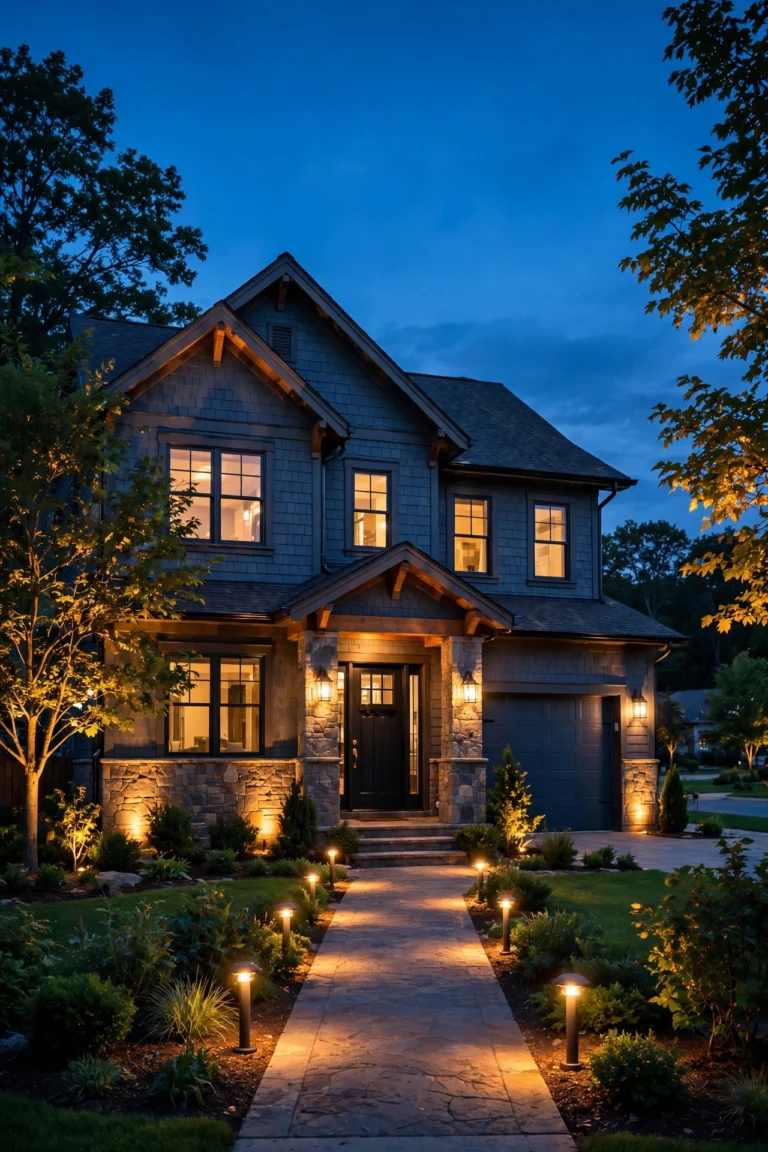
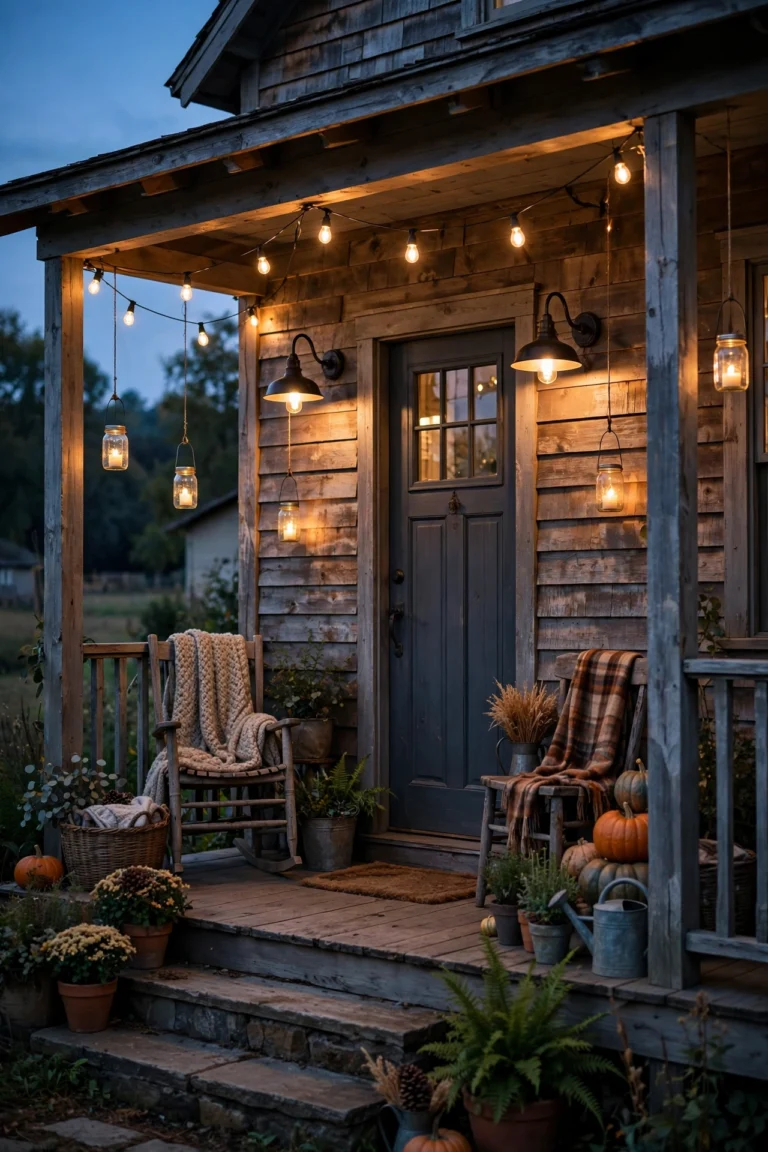
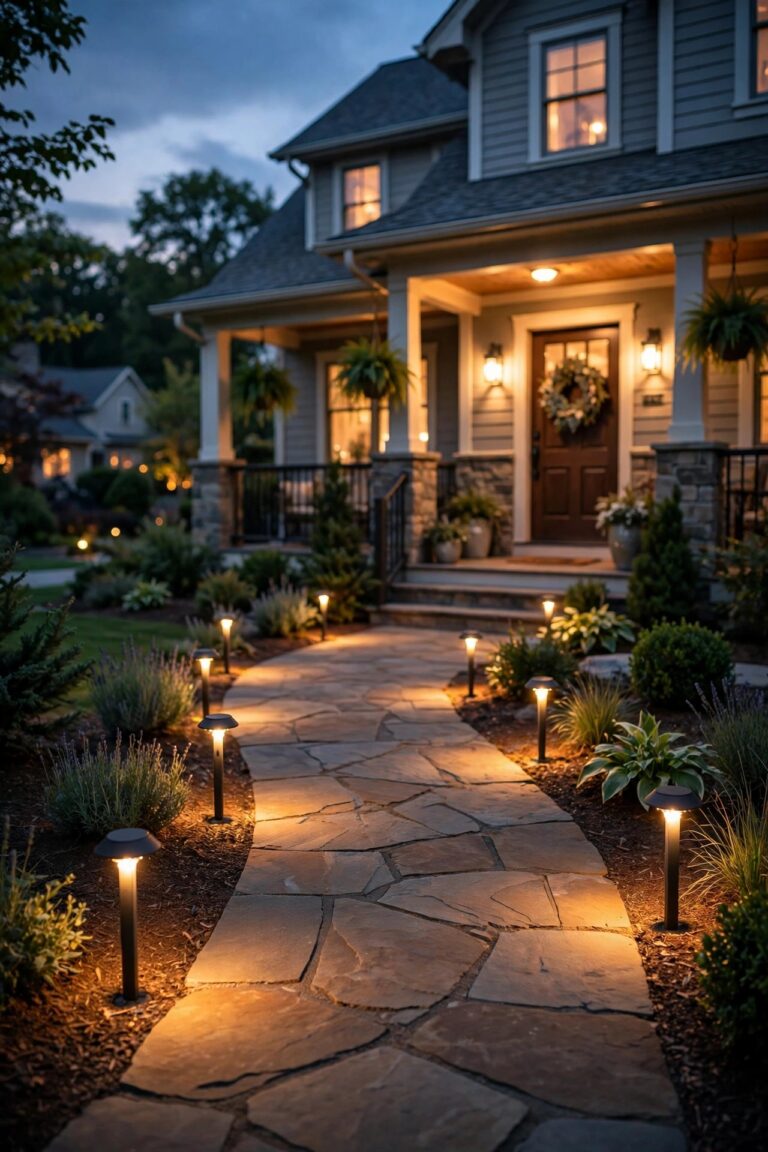
Somewhere around 3 a.m. on a Tuesday, I got up for a glass of water and looked out the kitchen window. The whole backyard was lit up like a garden center — path lights, tree spots, the pergola string lights, all glowing beautifully for an audience of exactly no one. That night I started treating our outdoor lighting schedule the way I treat the grocery budget: as something worth actually looking at. Because most yards run on one of two defaults. Either everything burns from dusk to dawn out of habit, or a timer clicks the whole system off at 11 p.m. and the house goes black as a cave. Neither one is really a plan. In this guide I will walk you through what each schedule means in real hours, where all-night light earns its keep (your entries), where it is pure waste (the garden at 3 a.m.), the hybrid schedule I landed on, how to give every zone its own hours, and why the sunset itself keeps moving your best-laid plans around the calendar.

The Short Answer
Dusk-to-dawn means your lights follow the sun: on at sunset, off at sunrise — roughly 11 hours a night averaged across the year. Part-night means they clock out early, usually around 11 p.m. or midnight, or after a set number of hours. For most homes the honest answer is neither one everywhere. Run dusk-to-dawn only where light does a safety job all night: entries, steps and the driveway apron. Run the pretty layers — garden accents, trees, string lights — part-night, and bridge the gap with a dim or motion-only setting once the household goes to bed. You keep the safety and lose the waste.
The Two Schedules, in Plain English
A dusk-to-dawn schedule is the oldest one there is: a photocell, or simple habit, turns lights on when daylight fades and off when it returns. Because nights stretch and shrink with the seasons, that averages about 11 hours a night across the year — closer to 9 hours in June and 14 or more on a December night up north. Nothing to set, nothing to remember; the lights simply keep sun hours. A part-night schedule puts an end time on the evening. The lights still come on at dusk, but they switch off at a chosen hour — 10:30, 11, midnight — or after a countdown of four, six or eight hours, the way many solar fixtures and plug-in timers work. The garden gets its show during the hours someone is awake to enjoy it, then the yard goes properly dark. Neither schedule is wrong. They are answers to different questions: one asks "is it dark?" and the other asks "is anyone still up?" The rest of this guide is about matching each fixture you own to the question it should be answering.
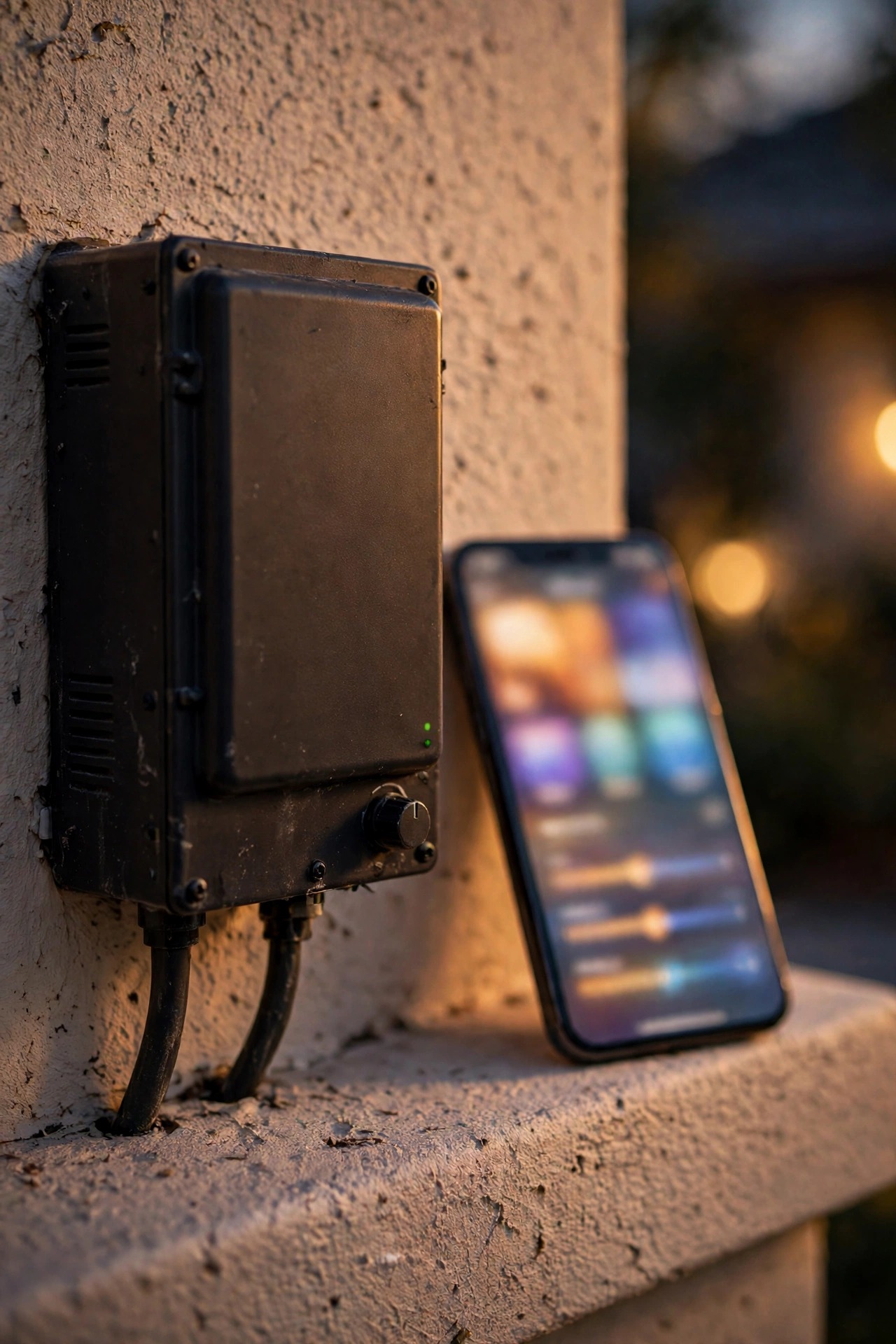
Plenty of fixtures blend the two: a photocell turns them on at dusk, then a built-in timer counts four, six or eight hours and shuts them off — part-night with a dusk-to-dawn start. Low-voltage transformers offer the same choice as mode settings on the dial. Knowing which mode each of your fixtures is actually in, and it surprises people, is the first step to a schedule you chose on purpose.
The Safety Case for Dusk-to-Dawn at Entries
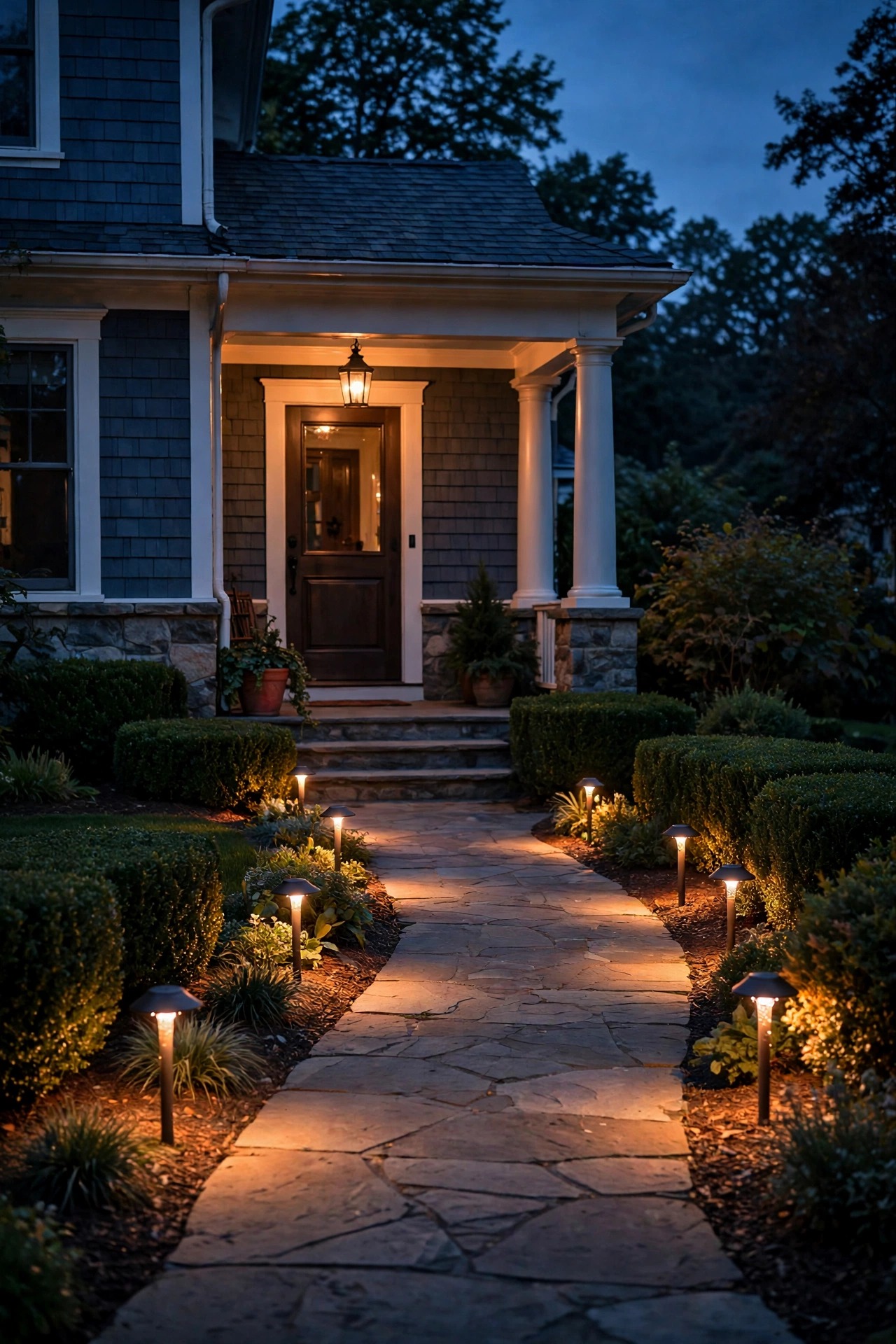
Here is where I defend the all-night burn, because at your entries it genuinely earns it. Steps, stoops, uneven pavers and the driveway apron are exactly where a sprained ankle happens at 6 a.m. in February, and a lit entry works while you sleep: the teenager home late, the early-shift spouse, the delivery driver at dawn, a visitor who has never seen your front steps before. A softly lit doorway also removes the deep shadows where someone could stand unseen, and it keeps your house number readable for anyone who needs to find you in a hurry. The discipline is in the dosage. Entry lights should be warm, shielded and aimed down at the walking surface — a gentle pool on the steps, not a bare bulb glaring into the street. My rule: the lights that guard movement get the long schedule, and they are few — the porch lantern, a step light or two, one fixture over the driveway apron. Everything else in the yard has to justify its hours, and most of it cannot.
Do not forget the secondary entries either: the side door off the kitchen, the garage service door, the gate you come through carrying groceries. They deserve the same treatment in miniature — one warm, shielded fixture each, on the same long hours. These are not decorative decisions. They are the lights a babysitter, a home-health nurse, or your future self on a sprained ankle will be grateful for on the darkest night of the year.
The Case for Part-Night: Dark Skies, Sleep and Sanity
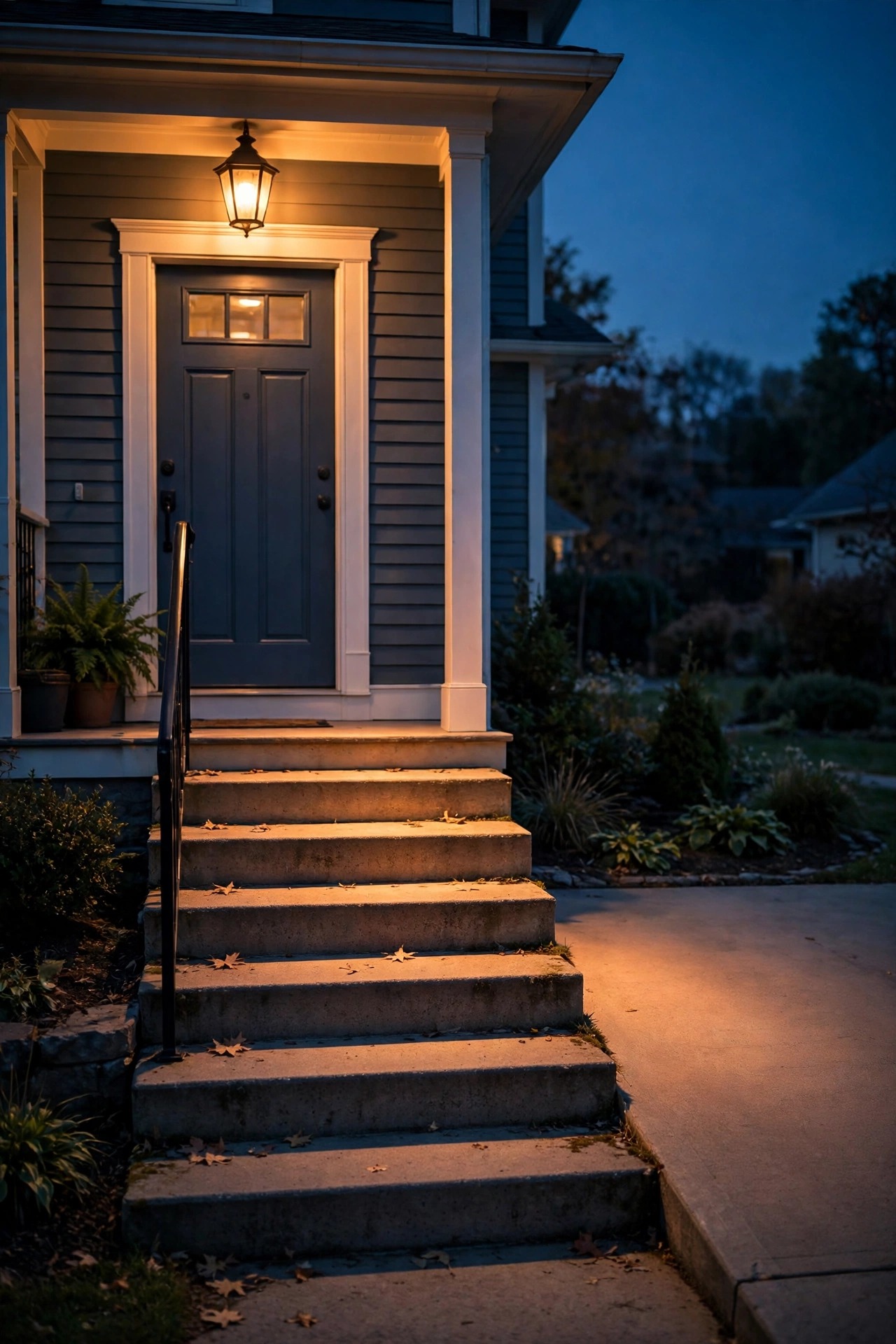
Now the other side, because a yard that never goes dark has real costs that are not on the electric bill. Light trespass is the big one: a garden flood or a row of bright path lights pouring into a bedroom window — yours or the neighbors — genuinely disrupts sleep, and I say that as someone who once blackout-curtained her own guest room against her own landscape lighting. Steady all-night light also pulls in insects by the thousands, confuses nesting and migrating birds, and washes out the very thing most of us lit the garden for in the first place: the evening. A garden at midnight does not need its audience lighting. Nobody is sipping coffee on the patio at 3 a.m. The fireflies are trying to hold a conversation out there, and our lights are shouting over it. Part-night scheduling gives the yard a closing time, and honestly the house looks more cared-for, not less — intentional glow in the evening, honest darkness after. Beautiful, then done.
There is a smaller, selfish pleasure in it too: a yard that goes dark lets the night itself back in. Moonlight on the lawn, actual stars instead of a washed-out orange dome, the garden cooling and quieting the way gardens are supposed to. The first week we ran part-night, I kept stepping out at midnight just to look at it — the house felt settled, like a shop closed up for the night with everything put away.

The Hybrid Outdoor Lighting Schedule Most Homes Actually Need
The schedule I run now, and the one I talk most friends into, is a hybrid with three acts. Act one, evening: everything on, full glow, from dusk until about 11 p.m. — this is dinner, dog walks, guests arriving, the garden showing off. Act two, late: the decorative layers go off or drop to a dim ember — accents, strings and tree spots clock out, while paths and the porch fall to a low setting if your fixtures dim. Act three, overnight: only the security layer stays awake, and it sleeps with one eye open — motion-activated floods and a soft porch light that brightens when something moves, dark and quiet when nothing does. The easiest way to build this is to split your lights into groups on separate controls: one timer or smart plug for the pretty layer, one for the safety layer, so each keeps its own hours. If you are shopping for the hardware, our guide to the best outdoor smart plugs and timers walks through the options I trust outdoors. Three acts, two controls, no 3 a.m. garden center.
Weekends get a small amendment at our house: act one runs an hour later when we are entertaining, and the string lights are first on the clock-out list — they are party lights, not security. And if you travel, a hybrid with a slightly randomized off-time looks lived-in in a way a rigid 11 p.m. blackout never does.

Build Your Outdoor Lighting Schedule Zone by Zone
Once you stop thinking of "the lights" as one thing, scheduling gets easy — every zone gets the hours its job requires:
| Zone | Schedule | Why |
|---|---|---|
| Porch, entries, steps | Dusk-to-dawn or motion-boosted | Safe footing and a readable address all night |
| Driveway apron | Hybrid | Bright for arrivals, motion-only after bedtime |
| Paths and walkways | Part-night or low-dim | Guidance matters in the evening, not at 4 a.m. |
| Garden accents and trees | Part-night, off by 11 | Pure enjoyment — no audience, no hours |
| String lights and patio | Part-night, evenings only | Social light; the first thing to clock out |
| Security floods | Motion-only, always armed | A flood that is always on stops meaning anything |
Physically, zones follow your controls: fixtures that share a transformer circuit, a smart plug or a switch will share a schedule, so it is worth re-grouping before you program anything. Moving two garden spots onto the porch circuit because the wire was handy is exactly how accents end up working the all-night shift. Regroup first — it is an afternoon of small changes — then set each control to its zone hours. Renters and solar users, take heart: stake lights with their own timers are natural zones already.
Walk your own yard at dusk with this table in mind and sort every fixture into a row. Most people find their yard is roughly one part safety to three parts decoration — which means three quarters of their lights were burning all night for no reason. The porch keeps the long shift. The daylilies do not need it.

Seasonal Drift: Why Fixed Clock Times Fail
The sneakiest problem with a timer set to clock times is that the sun refuses to keep them. Across most of the country, sunset swings about four hours through the year — near 4:35 p.m. in early December, near 8:35 p.m. in late June. A timer that switches your lights on at 6 p.m. feels perfect in October. By December, your family has been coming home to a dark house for almost an hour and a half before it triggers; by June, the lights burn pointlessly through more than two hours of bright evening daylight. Part-night end times drift too: an 11 p.m. shutoff is five and a half hours of light in December and barely two and a half in June, which may be exactly backwards from how you use the yard. The fixes, in order of laziness: a photocell simply watches the sky and adjusts daily; an astronomical timer knows your location and the date and recalculates sunset for you — our walkthrough of outdoor lighting timers and automation explains how each type works. If you keep plain clock timers, tie a two-minute reset to the equinoxes and the daylight-saving changes. Drift is slow, but it always wins. It is also why two neighbors with identical timers can have yards an hour out of sync by spring — one of them reset in March, and the other has not touched the dial since installation day.
Wildlife and Neighbors: The Courtesy Layer
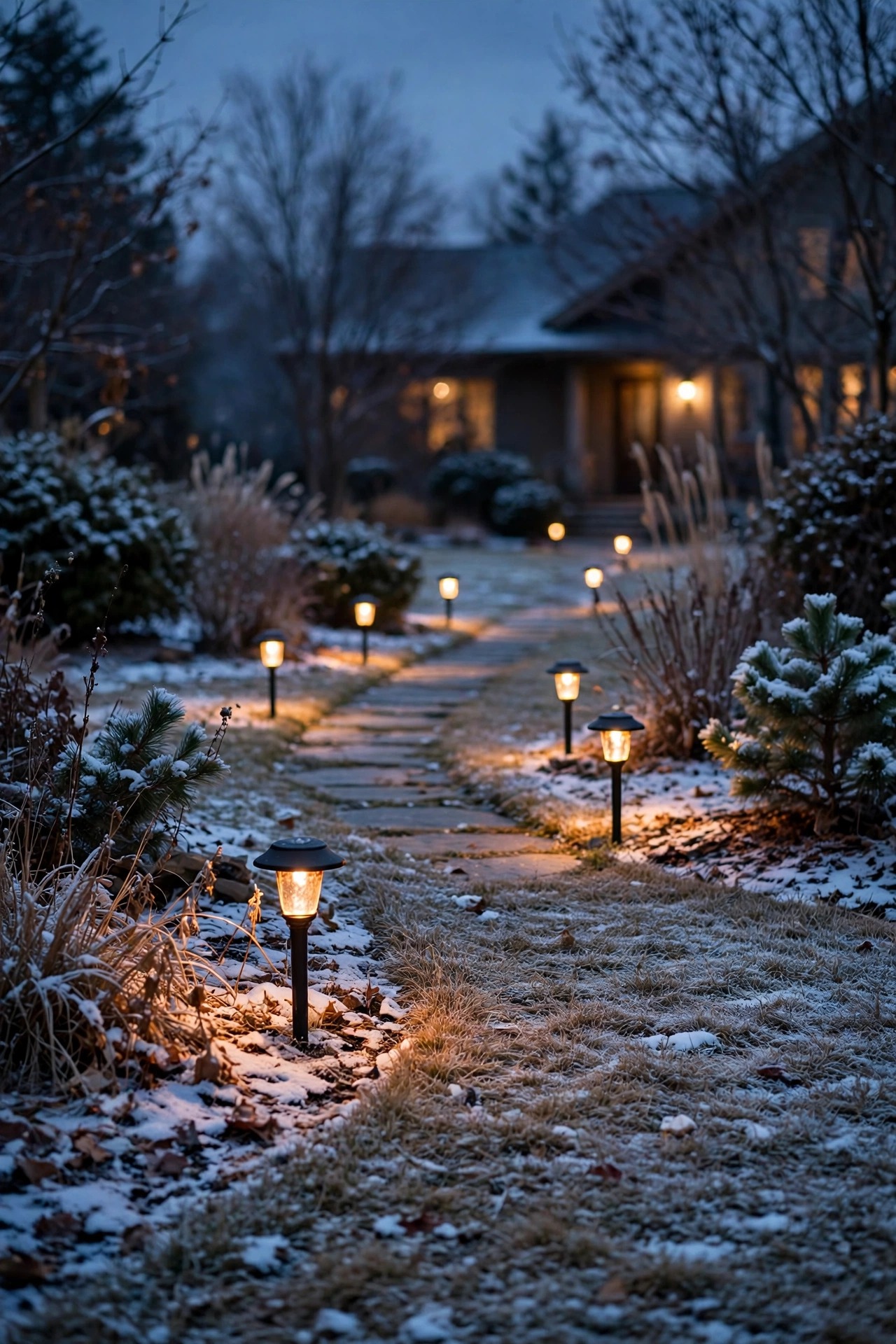
A good schedule is also good manners, to everything living nearby. Fireflies signal with flashes of light, and a yard flooded all night drowns their conversation out — part-night darkness in the garden beds is a genuine kindness in June and July. Nesting birds sleep poorly under constant light, and night-migrating birds can be drawn off course by bright, upward-spilling fixtures. The rules that help wildlife are the same ones that help neighbors: choose warm 2700K light or warmer, shield every bulb so the source itself is hidden, aim floods down into your own yard and never across a fence line, and let motion do the work at the property edges instead of a constant burn. Then walk across the street one evening and look back at your house the way your neighbors see it. If a fixture is glaring at their windows, an earlier shutoff or a dimmer setting usually fixes it more completely than re-aiming alone. And honestly, a quick word with the folks next door before you change the lighting goes further than any fixture ever will.
Bats, it is worth saying, are the exception that proves the rule — a few will happily hunt the insects gathered at a lamp. But they hunt just as well around a motion light that fires a few times an hour, and the moths an all-night lamp pulls in are food taken out of the wider food web, night after night.

5 Mistakes That Ruin a Good Schedule
One schedule for the whole yard. The porch and the petunias have different jobs; giving them identical hours wastes most of the night. Split the controls first, then schedule. Fixed clock times, set once and forgotten. October perfection is June nonsense — seasonal drift quietly undoes every fixed timer, as the section above shows. Security floods on dusk-to-dawn. A flood that burns all night becomes wallpaper; nobody glances at it, and its glare can actually hide movement at the edges. Motion-only keeps it startling and meaningful — our motion sensor outdoor lights guide covers placement and sensitivity. Stacked controls that fight. A timer feeding a photocell feeding a motion sensor gives you a light that obeys whichever device is most confused; pick one brain per fixture. Never checking after an outage. Many timers and smart plugs come back from a power cut in always-on or always-off mode and stay that way for months. After any storm outage, take one dusk walk and confirm the yard is keeping the hours you set. And a bonus one I learned the smug way: scheduling lights you never actually look at. Stand outside at 11:15 some night and audit the yard with your own eyes — the schedule on paper and the schedule in the garden are often two different things, and only one of them is saving you anything.
What It Costs in 2026
Here is the math, using an average residential rate of about $0.17 per kWh — check your own bill, because rates run well below and above that. Dusk-to-dawn burns roughly 4,000 hours a year; a part-night schedule ending near 11 p.m. burns about 1,800. A single 10-watt LED porch light costs about $6.80 a year dusk-to-dawn and about $3.10 part-night. Scale up to a typical 12-fixture LED yard drawing 60 watts total: dusk-to-dawn runs about $41 a year, part-night about $19, and the hybrid — full glow to 11, then a dim quarter-level layer on motion watch — lands near $24, most of the savings with the safety layer intact. The real outlier is one forgotten 150-watt halogen flood on dusk-to-dawn: about $102 a year, more than the whole LED yard combined, while the same flood on motion-only, firing maybe 20 minutes a night, costs about $3. Hardware is modest: plug-in timers and photocell sockets run $8 to $25, smart plugs $12 to $25 each, astronomical in-wall timers $25 to $60. Solar fixtures cost $0 to run, so for them a schedule is about battery life, not money. Swap one all-night flood to motion and the hardware pays for itself within the season.
Frequently Asked Questions
What time should outdoor lights turn off at night?
For the decorative layers, 10:30 to 11 p.m. suits most households — after the last dog walk and the last guest, before the deep night. Entries and steps can stay on a softer setting or switch to motion-boosted mode instead of going fully dark. If your household keeps later hours, slide everything an hour; the right off-time is when your yard stops being used, not a number on a chart.
Do dusk-to-dawn lights use a lot of electricity?
Each LED fixture sips, but dusk-to-dawn means roughly 4,000 hours of burn time a year, and that multiplier is what adds up across a whole yard. I ran the full numbers in the cost section above: an all-LED yard is modest either way, but one old halogen flood left on all night can outspend the entire system. The schedule matters most exactly where the wattage is highest.
Is part-night lighting less safe?
Not if the safety layer keeps working. What protects a home is light at entries, steps and the driveway when someone approaches — a dim or motion-activated layer does that job all night without a full burn. A yard that goes completely black at 11 p.m. is the unsafe version of part-night. Keep the porch and one motion flood armed, and part-night is a savings plan, not a risk.
How do I make my lights follow the sunset automatically?
Two ways: a photocell senses darkness directly and adjusts every single day, while an astronomical timer calculates sunset from the date and your location and needs no light sensor at all. Either beats a fixed clock time, which drifts hours out of step with the sun by mid-season. Many smart plugs and low-voltage transformers offer one of the two built in.
Conclusion
The best outdoor lighting schedule is not the longest or the shortest one — it is the one where every fixture keeps hours that match its job. Safety lights guard the entries all night, the garden puts on its show while anyone is awake to see it, and the sunset itself, not a stale clock setting, decides when the evening starts. Pick the hybrid as your default, sort your yard zone by zone, and let the pretty layers clock out at a decent hour. Your sleep, your neighbors and your fireflies will all notice the difference. Browse our other lighting guides for more ways to make every hour your yard glows a deliberate one.