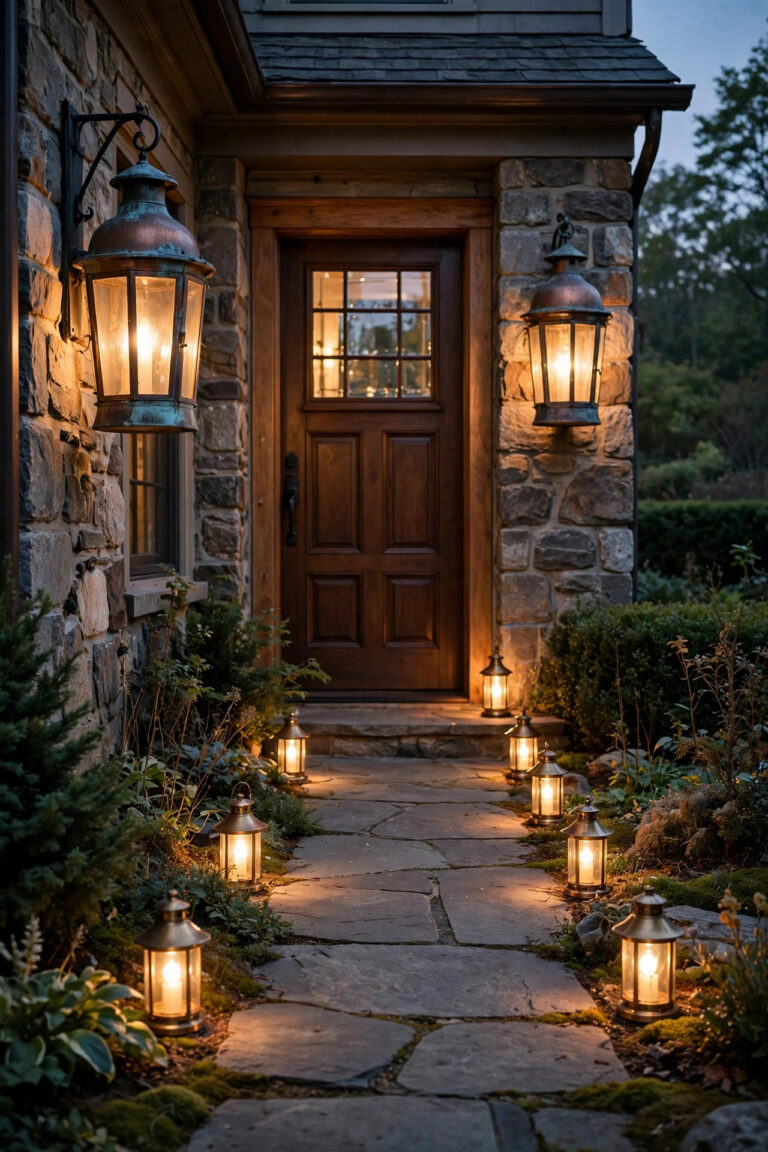
The front porch is the handshake of your home, and honestly? Most porches fumble it with one tired builder-grade fixture beside the door. The entries that stop me mid-walk — the ones that feel like a boutique hotel or a grand old estate — never rely on a single light. They layer. When I pulled together these luxury porch lighting ideas for my own entry refresh, I worked in three heights: something low to guide the feet, something at eye level to welcome, and something high to give the whole facade presence. That layering is the real secret behind every expensive-looking porch, far more than the price of any one fixture. In this list I will walk you through fifteen ways to get that layered, deliberate glow: statement sconces and oversized lanterns, solid brass that patinas beautifully, light tucked into steps and columns, and warm dimmed scenes that make guests slow down at the gate. Start with the plan, add the pieces that fit your architecture, and finish with a dusk walk-through. Your entry is about to make an entrance of its own.
1. Layer Luxury Porch Lighting Ideas in Three Heights
Every luxury entry I admire follows the same quiet formula, and once you see it, you cannot unsee it. Light lives at three heights. Down low, path and step lights pool on the treads so guests watch their footing instead of hunting for a fixture. At eye level, sconces and lanterns do the welcoming — this is the layer faces read as warm and intentional. Up high, a pendant, chandelier, or gentle wash of light on the facade gives the porch its architecture and keeps the ceiling from going black. In my experience, most porches only have that middle layer, which is why they feel flat no matter how pretty the fixture is. Sketch your entry on paper and mark one light source for each height before you buy a single thing. Keep every bulb at 2700K, put the eye-level layer on a dimmer, and aim for pools of light that overlap softly rather than one bright blast at the door. The plan itself costs nothing, and it is the difference between a porch that happens to be lit and one that was composed. Everything else in this list simply fills in one of the three layers, so keep coming back to your sketch as you shop.
Suggested budget range: $25 – $75.
2. Flank the Door With a Symmetric Sconce Pair
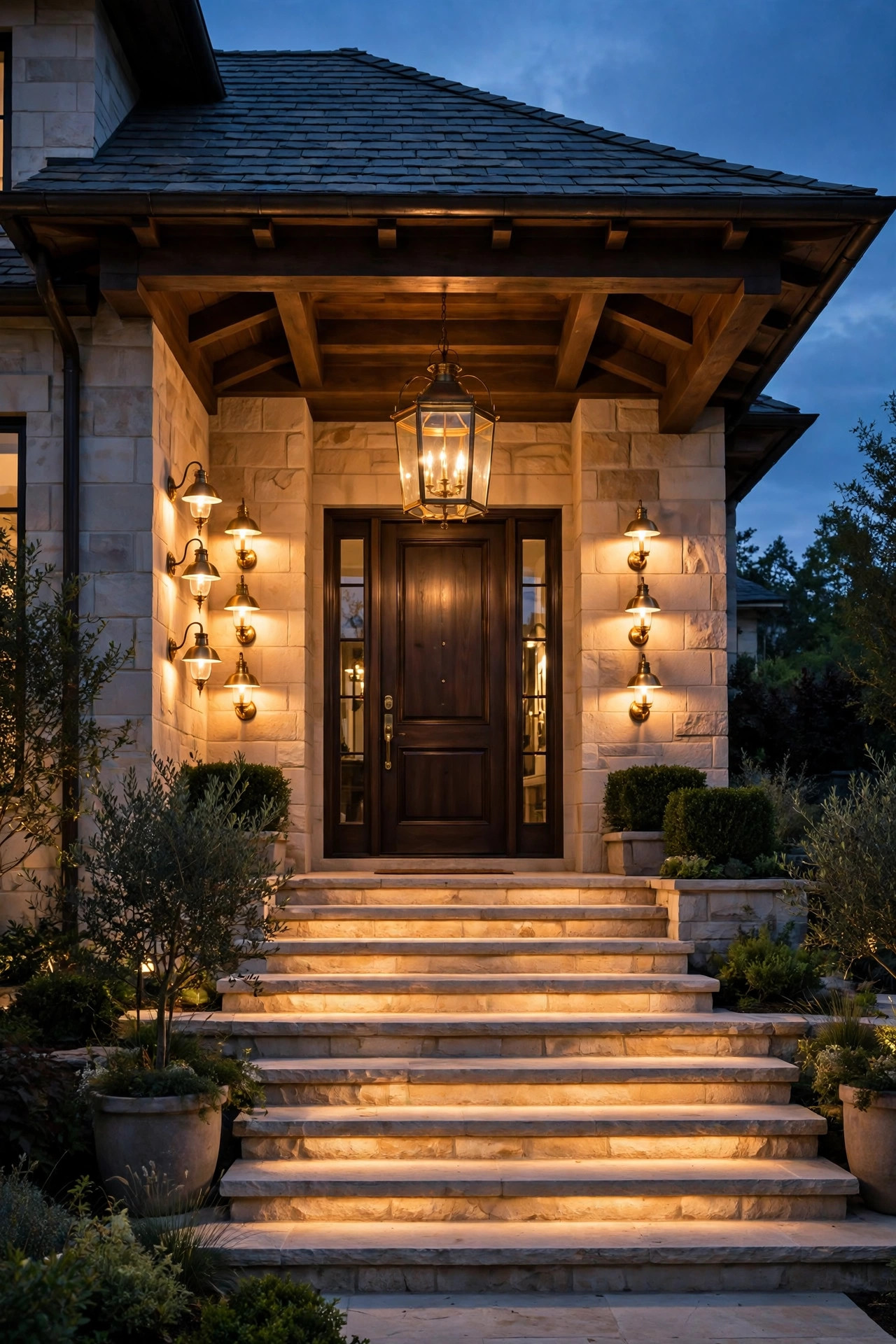
Symmetry is the oldest luxury trick there is, and the front door is where it works hardest. Two matching sconces, one on each side of the door, instantly make an entry feel designed rather than decorated. I always recommend mounting the pair so the center of each fixture sits 66 to 72 inches above the porch floor, roughly at eye level for a standing guest, with the bulbs themselves a few inches above or below that line. Scale matters more than detail here: each sconce should measure about one quarter to one third the height of your door including its frame, which is bigger than most people guess. Two undersized sconces read as an apology; two generous ones read as architecture. Choose a lantern silhouette with clear or seeded glass so the warm filament shows, load both with 2700K LED filament bulbs around 800 lumens each, and put the pair on a dimmer so you can soften them for evenings on the porch. My guide to choosing a front door sconce pair walks through the sizing math in more detail. If your door sits off-center, center the pair on the door itself, not the wall — the door is the star.
Suggested budget range: $250 – $900.

3. Go Oversized With One Statement Lantern
If a pair is not in the budget or your entry has room for only one fixture, go bigger — much bigger. A single oversized lantern beside or above the door does the work of three ordinary fixtures, and scale is what separates a luxury entry from a builder basic one. For a wall lantern, look for a height of at least 18 to 24 inches on a standard 7-foot door, and do not be afraid of 30 inches on a two-story facade. For a hanging lantern over the door, keep the bottom at least 7 feet above the porch floor for head clearance, and let the fixture fill the visual space between the door top and the ceiling. In my experience, people almost always buy too small because a big lantern looks enormous in the store aisle; hold a cardboard cutout of the fixture against your house at dusk before you commit, and you will see how quickly the house swallows it. I rounded up the proportions that work in my oversized outdoor sconce ideas post if you want more examples. One dramatic piece, warm 2700K light, and a dimmer — that is an entrance.
Suggested budget range: $300 – $1,200.
4. Hang a Chandelier or Statement Pendant Over the Porch
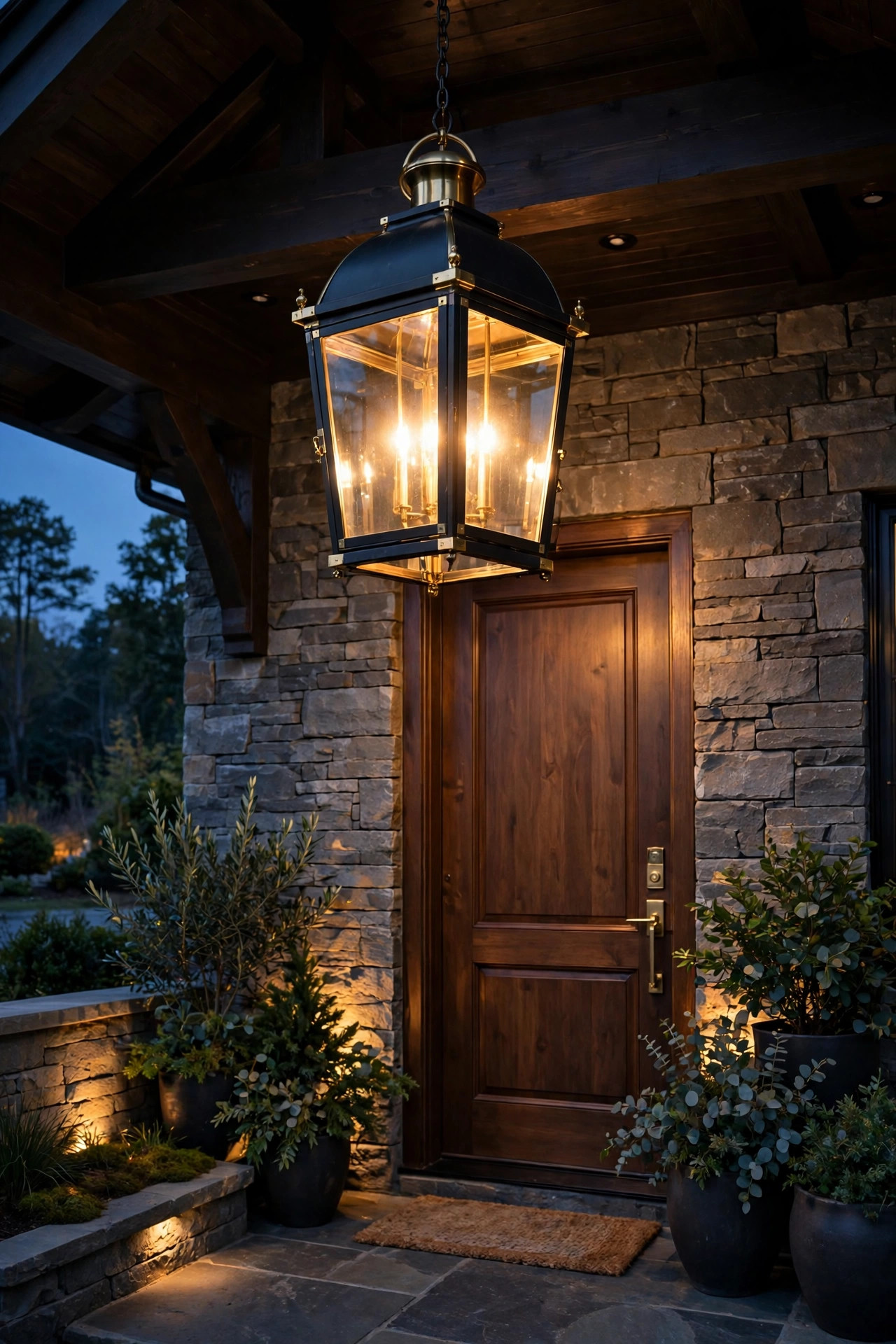
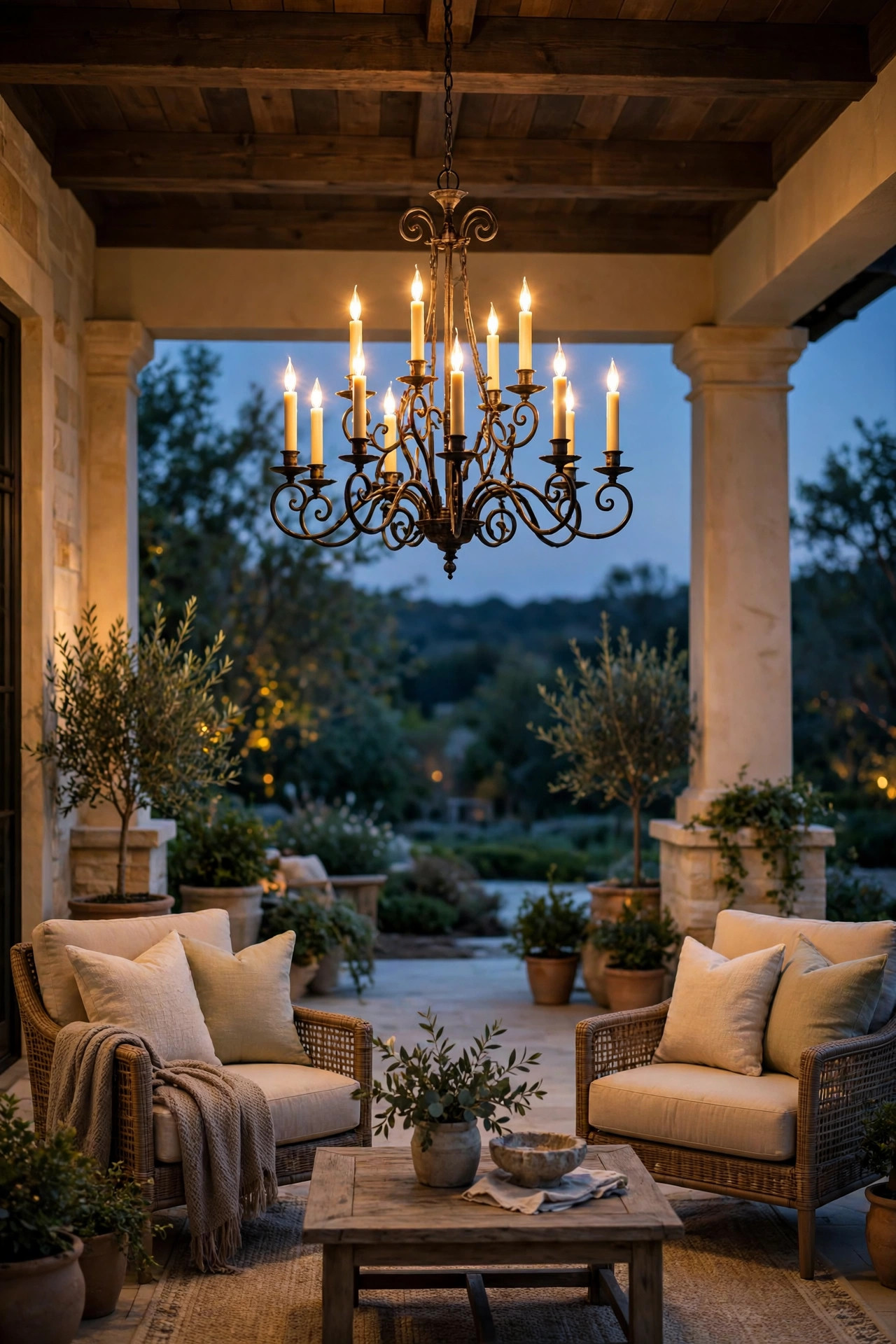
A covered porch with a ceiling of 9 feet or higher is quietly begging for a chandelier, and answering that call is the fastest route to a hotel-worthy entry. Center the fixture on the axis of the front door — or over a seating grouping if your porch is deep — and hang it so the bottom sits at least 7 feet above the floor, higher if doors swing beneath it. Candle-style LED bulbs at 2700K give you the flicker-adjacent warmth of real flame without the fire risk, and a multi-arm silhouette in blackened iron, aged brass, or bronze reads expensive from the street. Mind the rating: a fixture tucked under a deep roof can often be damp-rated, but anything near the porch edge where wind drives rain needs a true wet-location rating. Hardwire it on its own dimmer, because a chandelier blazing at full brightness looks like a showroom, while the same fixture at sixty percent looks like a magazine. Honestly, this is the single piece my guests comment on most, and it photographs like a dream for holidays. Measure your ceiling height twice before ordering, and buy the chain long — you can always shorten it.
Suggested budget range: $350 – $1,500.
5. Invest in Solid Brass and Copper Fixtures
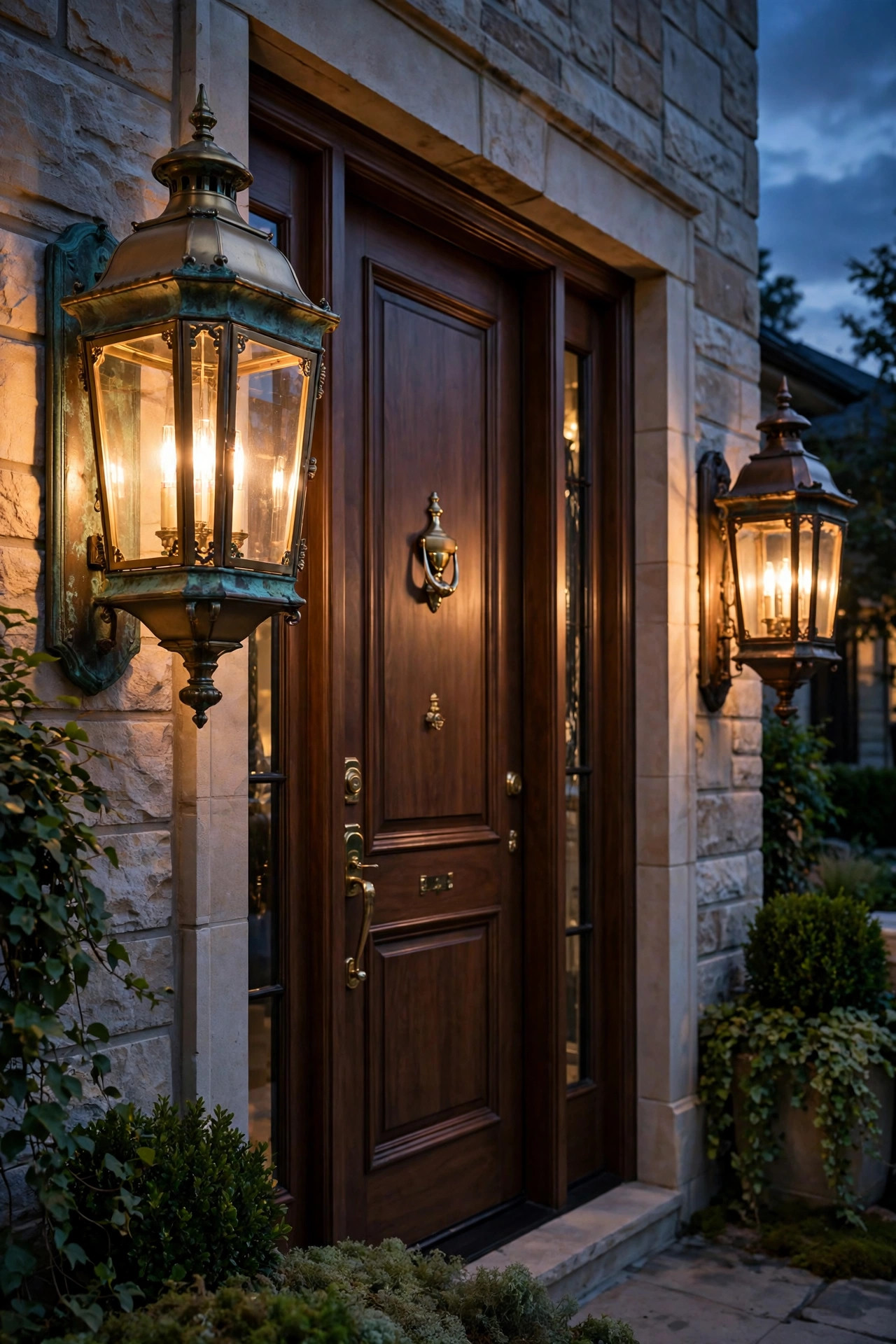
Here is where luxury stops being a look and becomes a material. Solid brass and copper fixtures cost more than coated aluminum, sometimes three times more, but they age in the opposite direction: instead of peeling and fading, they deepen into a rich patina that actually looks better in year five than year one. Unlacquered brass darkens to a warm bronze-brown, copper eventually blooms with soft green verdigris at the seams, and both shrug off coastal air that destroys painted finishes. Feel the weight before you buy — a solid brass lantern is satisfyingly heavy, with thick cast walls and real glass instead of plastic panes. Because these are buy-once pieces, I suggest spending here first and saving on the simpler layers like step lights. I keep a running list of finishes and care notes in my copper and brass outdoor lantern ideas post. A quick wipe with a soft cloth twice a year is all the maintenance they ask for, and skip the polish unless you love the bright look — most of us let the patina do its slow, gorgeous work.
Suggested budget range: $300 – $1,400.
6. Uplight the Columns and Let the Architecture Glow
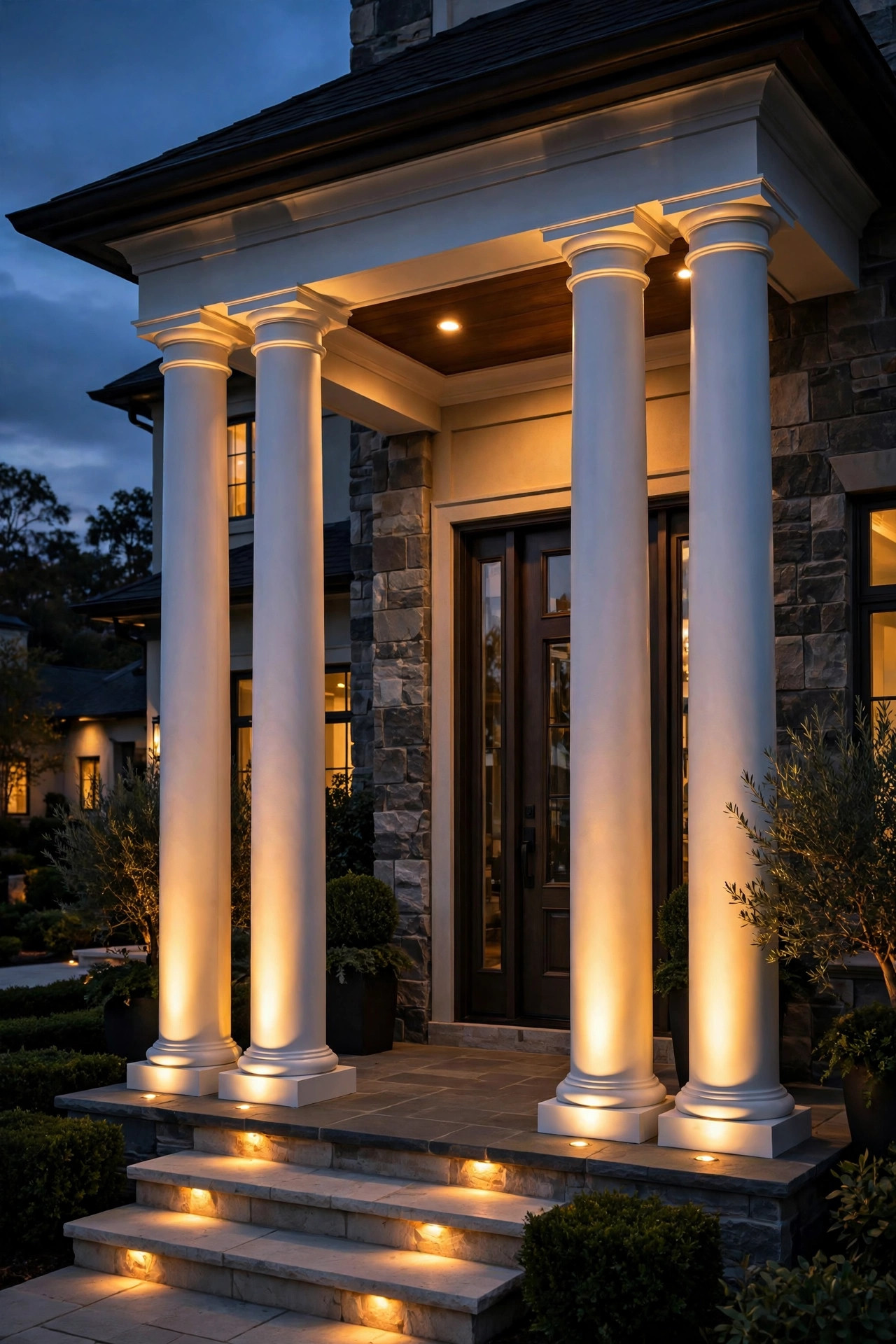
If your porch has columns, a portico, or stone piers, uplighting them is the closest thing to instant grandeur I know. Small low-voltage spotlights or in-ground well lights tucked at the base of each column send a soft column of light upward, and the whole entry suddenly looks taller, grander, and deliberately designed. Aim each fixture straight up the face of the column with a narrow to medium beam — around 15 to 36 degrees — so the light grazes the surface and reveals every bit of texture in fluted wood, brick, or stacked stone. Keep the source hidden: a glare shield or a well light flush with the mulch line means guests see the glow, never the hardware. Run these on a low-voltage transformer at 2700K and tie them to the same timer as your sconces so the architecture wakes up with the rest of the entry. Two warnings from my own mistakes: fixtures aimed too wide will splash light into the porch ceiling and ruin the drama, and anything within reach of a string trimmer needs a sturdy metal housing. Start with the two columns nearest the door and add outward if you want more.
Suggested budget range: $200 – $800.
7. Add Backlit House Numbers and a Lit Mailbox Moment
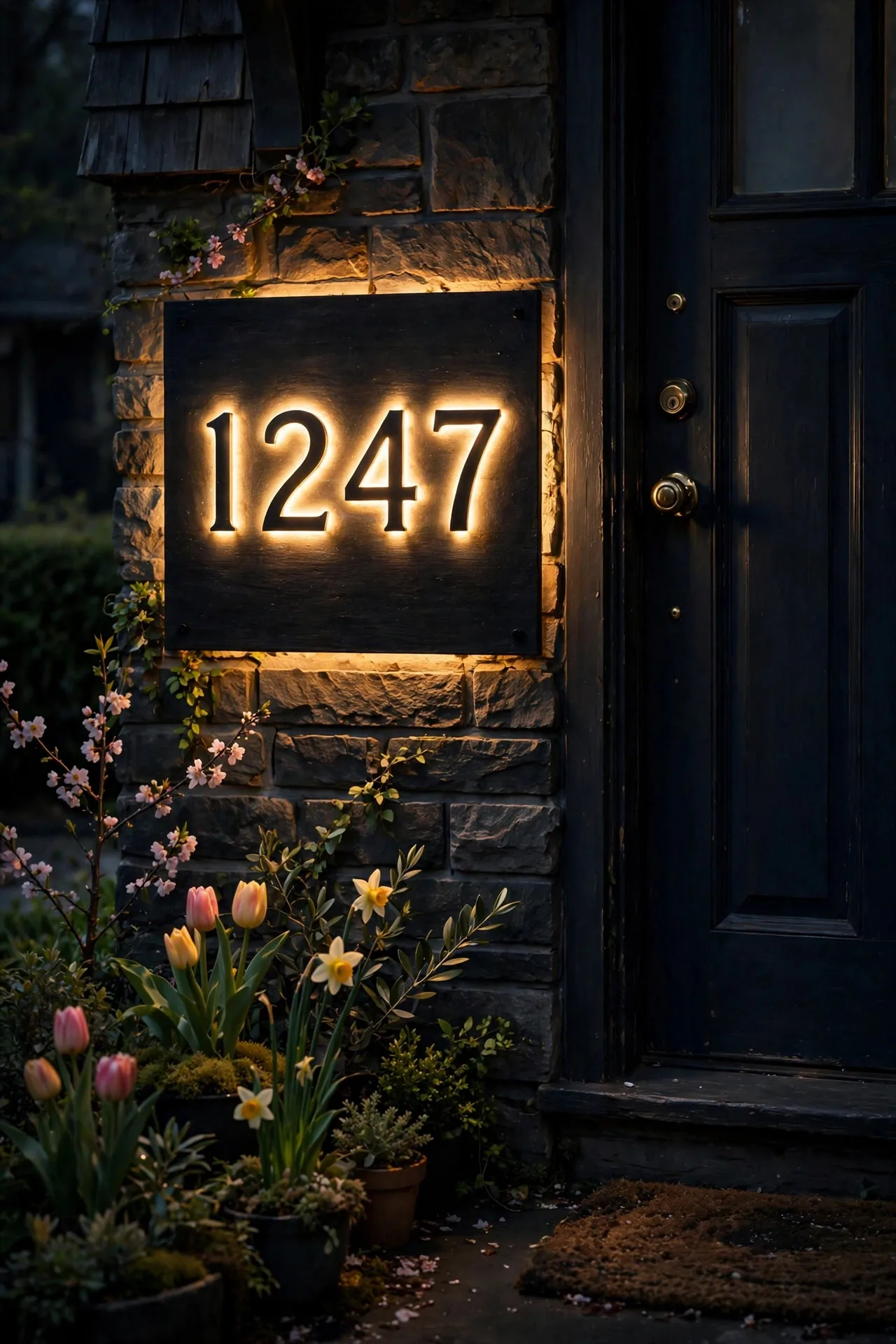
The smallest details often carry the luxury message furthest, and glowing house numbers are my favorite example. Backlit or halo-lit numerals in brushed brass or matte black look like they belong on a boutique hotel, and they solve a real problem — delivery drivers and dinner guests can actually find you after dark. Choose numbers at least 5 to 6 inches tall so they read from the street, mount them on the wall plane that faces traffic, and keep the glow warm white at 2700K rather than icy blue-white, which reads commercial. Extend the same thinking to the mailbox: a small lantern on the post or a softly lit number plaque turns a curbside chore into part of the composition. Most backlit number sets run on low voltage or a small transformer with a photocell, so they switch themselves on at dusk without you thinking about it. In my experience this is the upgrade neighbors ask about most, precisely because it is unexpected. Keep the font classic — simple sans-serif or traditional serif numerals both work — and resist novelty shapes. Quiet, crisp, and legible from forty feet is the whole assignment.
Suggested budget range: $100 – $450.
8. Tuck Recessed Lights Into the Steps and Stoop
Nothing says considered design like light that appears exactly where a foot is about to land. Recessed step lights — set into the riser of each step, tucked under the tread nosing, or mounted low on the side walls of the stoop — wash each tread in a soft pool that makes a wide stone staircase feel like the entrance to a grand hotel. Space one fixture per step on narrow stairs, or every other step on wide ones, and choose hooded or louvered styles that throw light downward so there is no glare in a guest's eyes as they climb. Low-voltage LED versions run cool, sip electricity, and last for years without a bulb change. This is a layer worth hiring out if your steps are masonry: cutting into stone or brick risers is a job for a pro with the right saw, though surface-mount fixtures on wooden steps are a comfortable weekend project. Tie the step lights to the same photocell or timer as your path lights so the whole route from street to door wakes up together. Safe, subtle, and quietly spectacular — that is the combination luxury is made of.
Suggested budget range: $150 – $700.

9. Choose Seeded or Beveled Glass for Quiet Sparkle
Glass is the jewelry of a porch fixture, and it is where mid-range entries give themselves away. Plain clear glass shows a harsh bare bulb; plain frosted glass can look flat and institutional. Seeded glass — full of tiny bubbles caught in the pane — scatters the light into a soft sparkle that hides the bulb just enough while still letting a warm filament glow through, and beveled or water glass does a similar trick with more formality. I always recommend pairing seeded glass with a visible LED filament bulb at 2200K to 2700K, because the combination mimics candlelight behind antique panes. If you already own fixtures you love with clear glass, you can often swap just the bulb to a softer filament style and gain half the effect for twenty dollars. When you shop, hold the fixture up to a lit bulb in the store if they will let you; glass that looks charming unlit can glare badly once powered. For coastal or dusty porches, seeded glass has a bonus talent: it camouflages salt film and dust between cleanings far better than crystal-clear panes. Small pane, enormous difference — this is the detail that makes guests lean in.
Suggested budget range: $200 – $900.

10. Line the Walkway With Substantial Lanterns
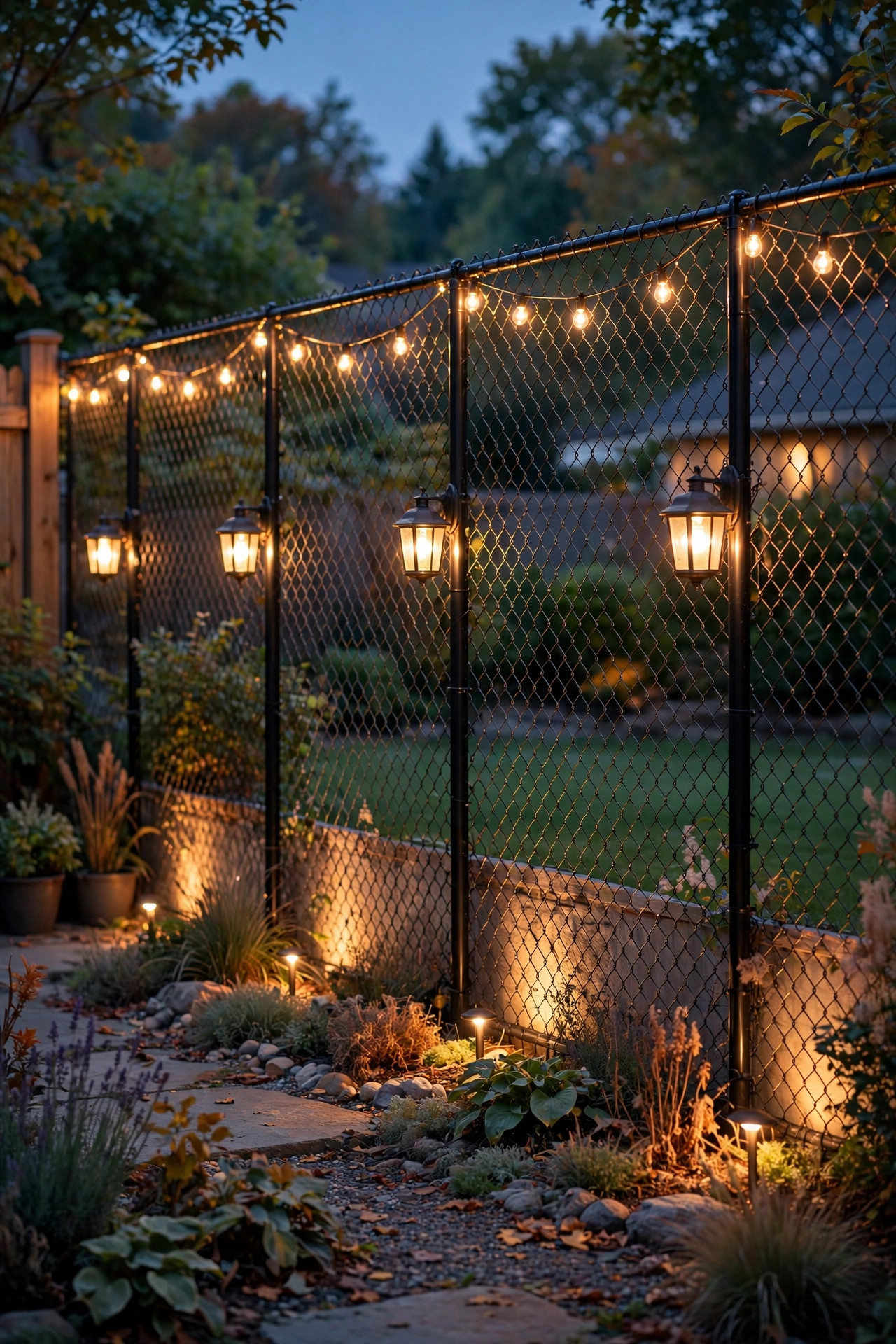
An entrance begins at the street, not at the door, and the walkway is your opening sentence. Skip the little solar mushrooms and choose substantial path lanterns — 24 to 30 inches tall, in cast brass, bronze, or matte black — that look like smaller cousins of your porch fixtures. Matching the walkway family to the entry family is what makes the whole front of the house feel composed rather than collected. Space the lanterns 6 to 8 feet apart, staggered on alternating sides of the path rather than in a rigid runway line, so the pools of light overlap in a gentle scallop that guides without glaring. Aim for fixtures with shielded, downward light: guests should see the path glow, not a row of bright bulbs. Low-voltage wired lanterns will outlast and outshine solar at this scale, and they can share the transformer and timer with your step and column lights. Honestly, the evening this layer went in at my house, the porch finally made sense — it had a beginning. Keep plantings trimmed below the lantern heads so the light reaches the path instead of dying in the daylilies.
Suggested budget range: $300 – $1,100.
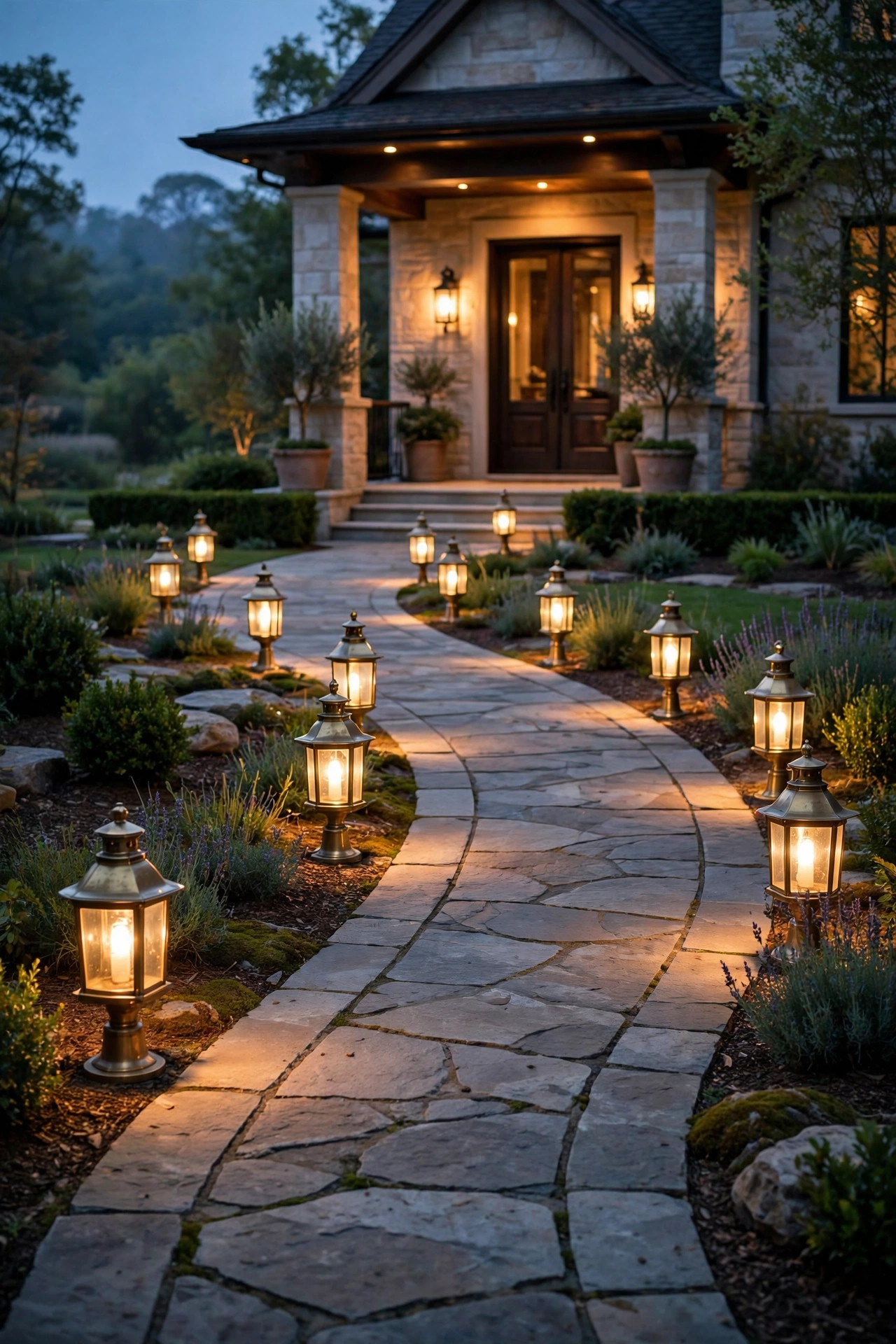
11. Keep One Warm Temperature and Dim Everything
If I could enforce one rule across every porch in America, it would be this: every bulb at the entry burns the same warm color, and almost none of them run at full brightness. Mixed temperatures — a blue-white porch bulb beside amber path lights — read as accidental no matter how much the fixtures cost. Settle on 2700K everywhere, with 2200K reserved for flame-effect accents, and look for bulbs with a high color rendering index, 90 or above, so skin tones, wood doors, and fall wreaths all look rich instead of washed out. Then dim. Eye-level sconces and chandeliers belong around sixty to seventy percent for everyday evenings; the glow should feel like candlelight, not an interrogation. Dimmers also stretch bulb life and cut the electric bill, which is a nice bonus on top of the mood. In my experience, dimming is the single cheapest luxury upgrade in this entire list — a pair of dimmers transformed fixtures I already owned. Do a final check from the street at dusk: if you can see individual bright bulbs rather than soft sources of light, dim another notch.
Suggested budget range: $75 – $350.
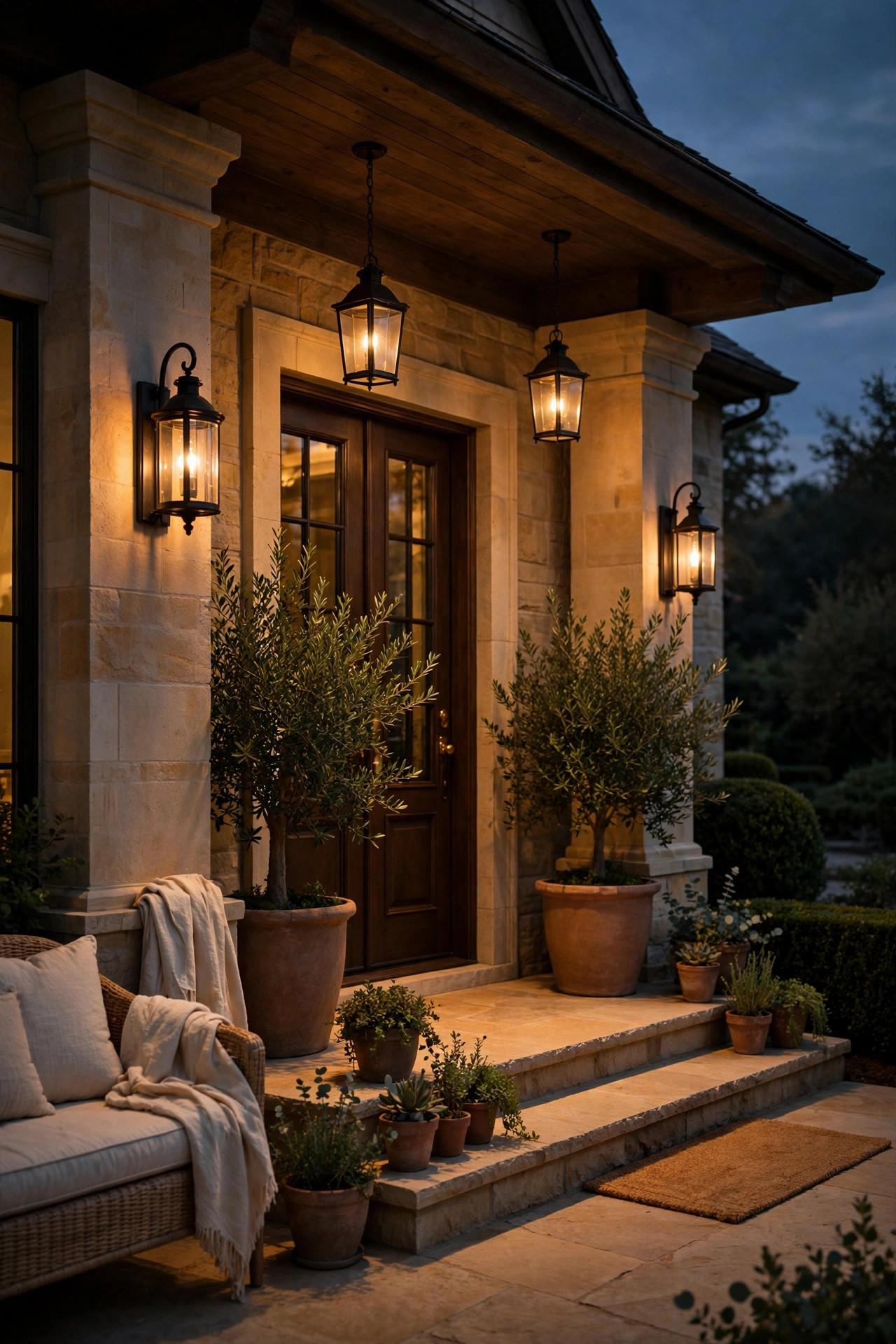
12. Program Smart Scenes for an Effortless Arrival
True luxury feels effortless, and that is exactly what lighting scenes deliver. An astronomical timer knows sunset all year long, so your entry wakes up on its own — no photocell guesswork, no 4 p.m. lights blazing in June. From there, a smart dimmer or a simple scene controller lets you stack settings: an everyday scene at seventy percent, an entertaining scene with the chandelier and walkway up and the facade wash on, and a late-night scene that drops everything to a whisper except the step lights. Add a motion trigger at the gate or driveway and the arrival scene blooms as your car turns in, which never stops feeling a little magical. Keep it guest-proof, though: label a physical switch or leave one old-fashioned override so nobody has to download an app to turn on the porch light. I always recommend setting the vacation mode too, varying the on-times slightly while you travel. Start simple — one timer and one scene you love beat a dashboard of options nobody uses. The goal is a house that greets you like a good hotel does: lights already warm, path already glowing, keys already found.
Suggested budget range: $150 – $600.
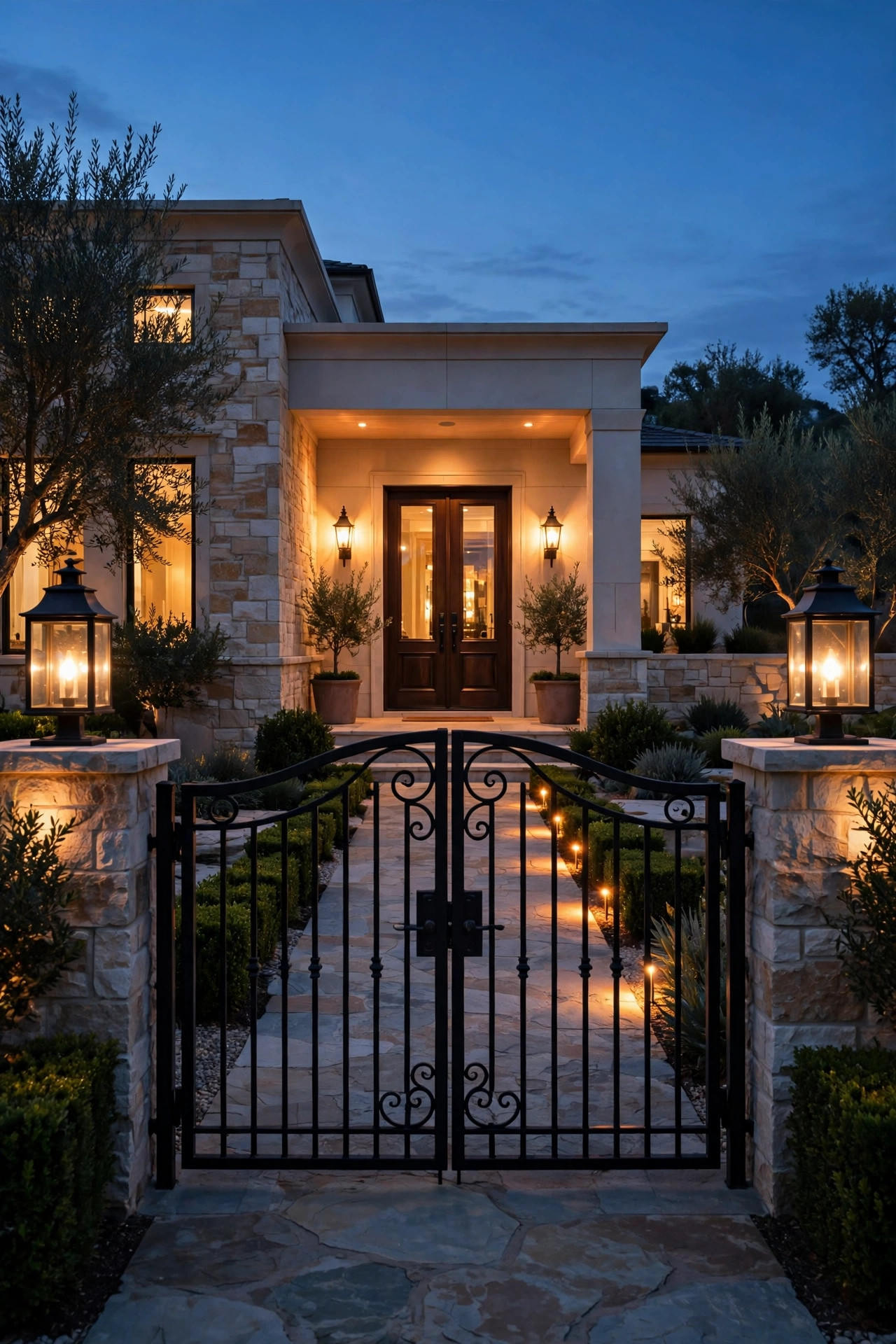
13. Let Sidelights and the Transom Glow From Inside
Some of the most beautiful entry light is not on the porch at all — it is inside the house, shining out. Sidelights and a transom window around the front door turn the whole doorway into a lantern after dark when the foyer is warmly lit, and that layered depth is something no single exterior fixture can fake. The trick is coordination: the bulb in your foyer pendant or hall sconces should match the porch at 2700K, so inside and outside read as one composition instead of two competing ones. If privacy matters, sheer or linen curtains inside the sidelights diffuse the glow into a soft panel of light while hiding silhouettes — genuinely the best of both worlds. Keep the foyer fixture on the same timer schedule as the porch so the doorway lights as a unit, and dim it slightly lower than the exterior sconces so the door itself stays the focal point. This costs almost nothing if your door already has glass; it is mostly bulb-matching and curtain-hanging. Stand outside at dusk and look at your entry the way a guest does. When the glass glows, the house looks occupied, warm, and quietly grand.
Suggested budget range: $50 – $300.
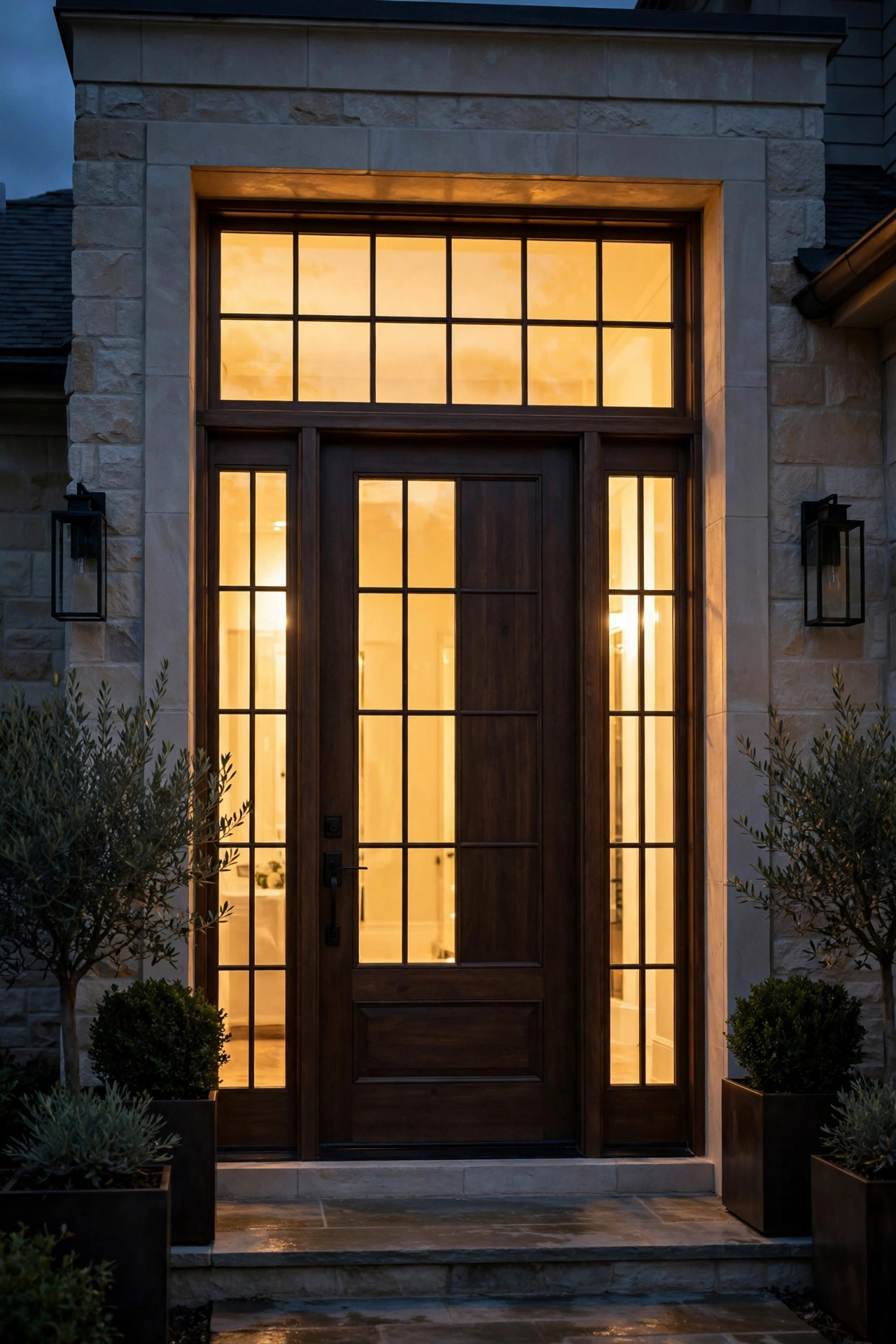
14. Dress the Porch Seasonally, the Luxury Way
Luxury porches change with the seasons, but they change their clothes, not their bones. Once your fixed lighting is layered and warm, a few dressed-up accents keep the entry feeling current all year: oversized hurricane lanterns with flameless candles flanking the door in winter, a fresh magnolia or eucalyptus wreath with one narrow spotlight trained on it in spring, copper lanterns and heirloom pumpkins in fall. Flameless candles are non-negotiable near dried greenery and woven baskets — the LED versions flicker convincingly now, and no wreath is worth a fire call. Keep the accents inside the same warm palette as your fixtures so the scene stays coherent, and scale them up: two large hurricanes beat six small ones every time. I store my seasonal pieces in one labeled bin, which makes the swap a ten-minute ritual instead of a project. Resist the urge to add colored bulbs or novelty string lights at the door; restraint is what keeps the look expensive. Think of the fixed lighting as the architecture and the seasonal layer as the outfit — and just like an outfit, one statement piece per season is plenty.
Suggested budget range: $75 – $400.

15. Finish With a Dusk Walk-Through of Your Luxury Porch Lighting Ideas
When everything is installed, resist the urge to admire it from the porch swing. The final step of every set of luxury porch lighting ideas I have ever installed is a slow walk, taken at dusk, from the street to the door and back again — because that is the only view your guests will ever get. Start at the curb and look for the story: does the walkway lead your eye in, do the columns stand tall, does the door glow like a destination? Then climb the steps and squint. Any bare bulb shining straight into your eyes gets a shield, a softer bulb, or another notch down on the dimmer. Sit in a parked car at the curb and check the driver's view too, since that is where first impressions actually happen. Look for dark gaps between pools of light and one or two hotspots to soften, then set your timers for the season and note what time the scene should start as the days change. I do this walk twice a year, in spring and fall, with a coffee in hand. It takes ten minutes, and it keeps a beautiful entry tuned instead of slowly drifting out of balance.
Suggested budget range: $0 – $100.
Frequently Asked Questions
How much does luxury porch lighting cost altogether?
For most homes, a full layered entry — sconce pair, statement fixture, step and path lights, and controls — lands between $1,500 and $5,000 in fixtures, plus installation if you hire the wiring out. The good news is that layering phases beautifully: start with the eye-level pair and dimmers, add the walkway next season, then steps and columns. Spreading it across a year or two costs the same in the end and lets you live with each layer before choosing the next.
What color temperature looks most luxurious outdoors?
Warm white at 2700K is the classic choice — it flatters wood, stone, brick, and skin tones, and it matches the glow people associate with candlelight and gas lanterns. Reserve 2200K for flame-effect accent bulbs where you want an extra amber flicker. Avoid anything 4000K or higher at an entry; blue-white light reads as commercial and security-grade, which is the opposite of the mood a luxury porch is going for.
Are solid brass fixtures worth the extra money?
In my experience, yes — especially anywhere near the coast or in harsh sun. Solid brass and copper do not rust, peel, or fade the way painted aluminum does; they develop a patina that most people find more beautiful over time. Because entry fixtures are the ones you see up close every single day, the front door is the last place I would economize. Buy the pair once and they will likely outlast the door they flank.
Can I get a luxury look without rewiring?
You can get surprisingly far. Swap every bulb to matched 2700K high-CRI LEDs, add plug-in dimmers or smart bulbs where fixtures allow, hang battery lanterns with remote timers for accents, and use solar only for low-stakes spots like garden edges — solar still struggles to match wired brightness at the door itself. The layered plan, the warm palette, and the dimming do most of the luxury work; new wiring simply makes it permanent.
Conclusion
An entry that makes people pause on the walkway is never an accident, and it is rarely about one expensive fixture. It is layers — guidance at your feet, welcome at eye level, presence up high — all burning the same warm 2700K and dimmed to a glow. Start with the pieces in these luxury porch lighting ideas that fit your architecture and budget, phase the rest in over a season or two, and keep the palette disciplined. Then take that dusk walk from the street and enjoy the view your guests have been getting. For more ways to light the rest of your home's exterior, browse the other porch and landscape ideas here on the site — your front door has set a standard the backyard will want to meet.