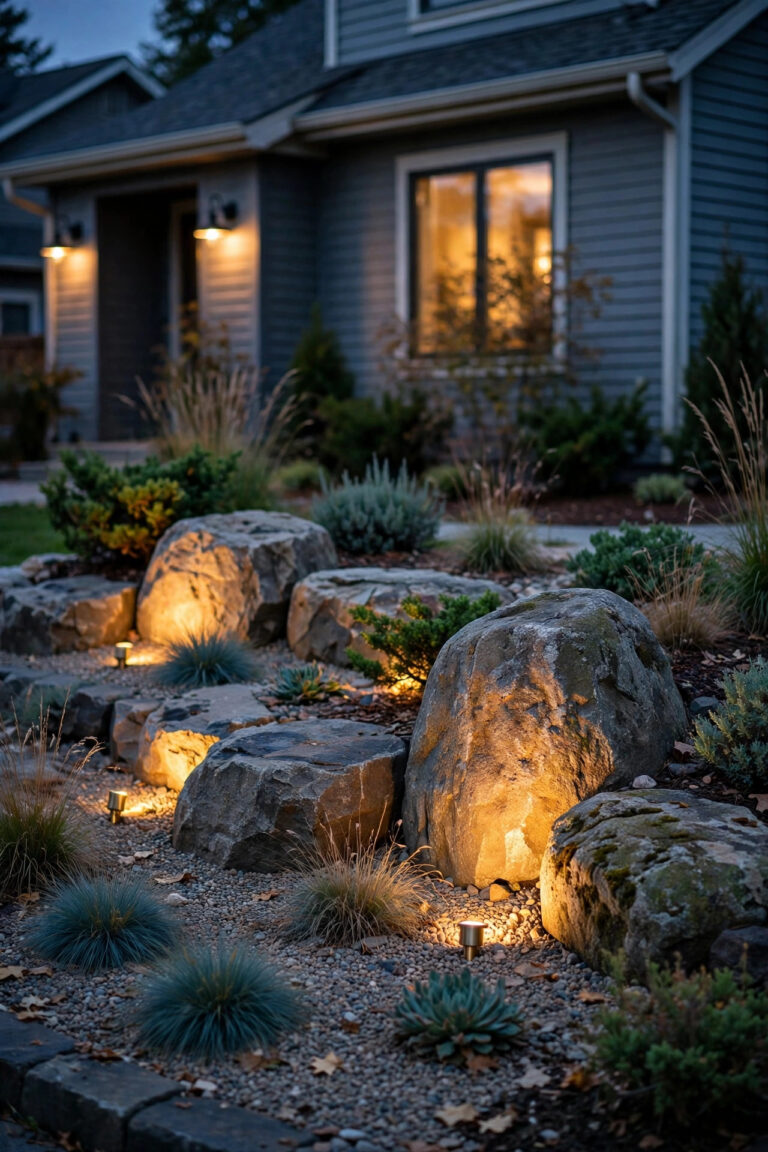
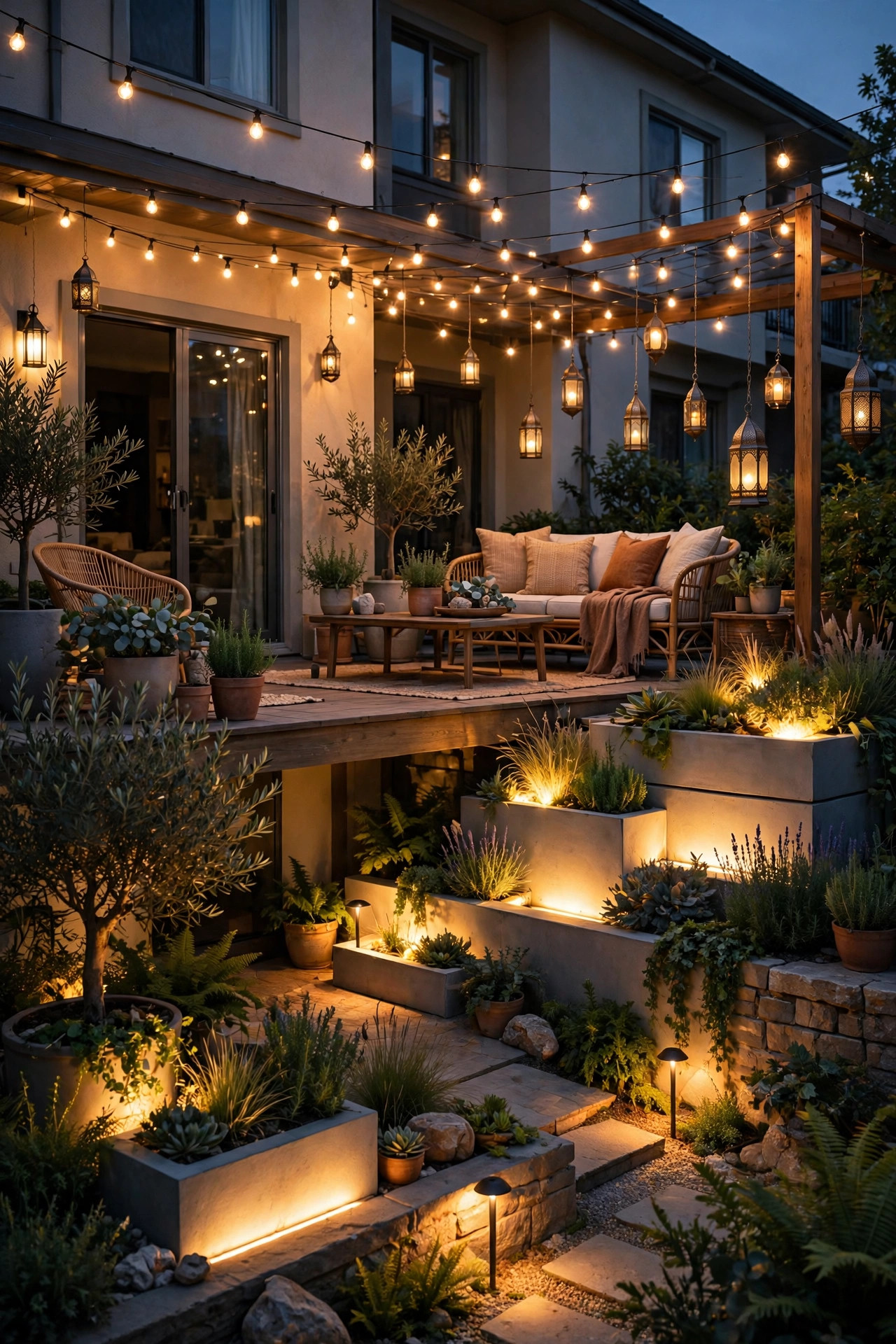
When we rented a ground-floor unit a few years back, our patio was a plain concrete slab, one sliding door, and a strip of tired grass — and I was determined to make it the prettiest little outdoor room on the block anyway. The good news is that apartment patio lighting ideas are almost all renter-friendly by nature: solar, battery, clip-on, and plug-in pieces that go up in an afternoon and come down clean when you move. The trick is layering. I always build three soft layers: a gentle overhead glow so the space feels like a room, warm light at sitting height for faces and drinks, and low light along the ground so nobody trips over the slab edge or the garden hose in the dark. Ground-floor living adds two twists your upstairs neighbors never think about — people walk right past your patio, and the unit above you sees your lights from their windows — so everything below keeps the glow low, warm, and pointed down. Here are the 15 setups that worked hardest for us.
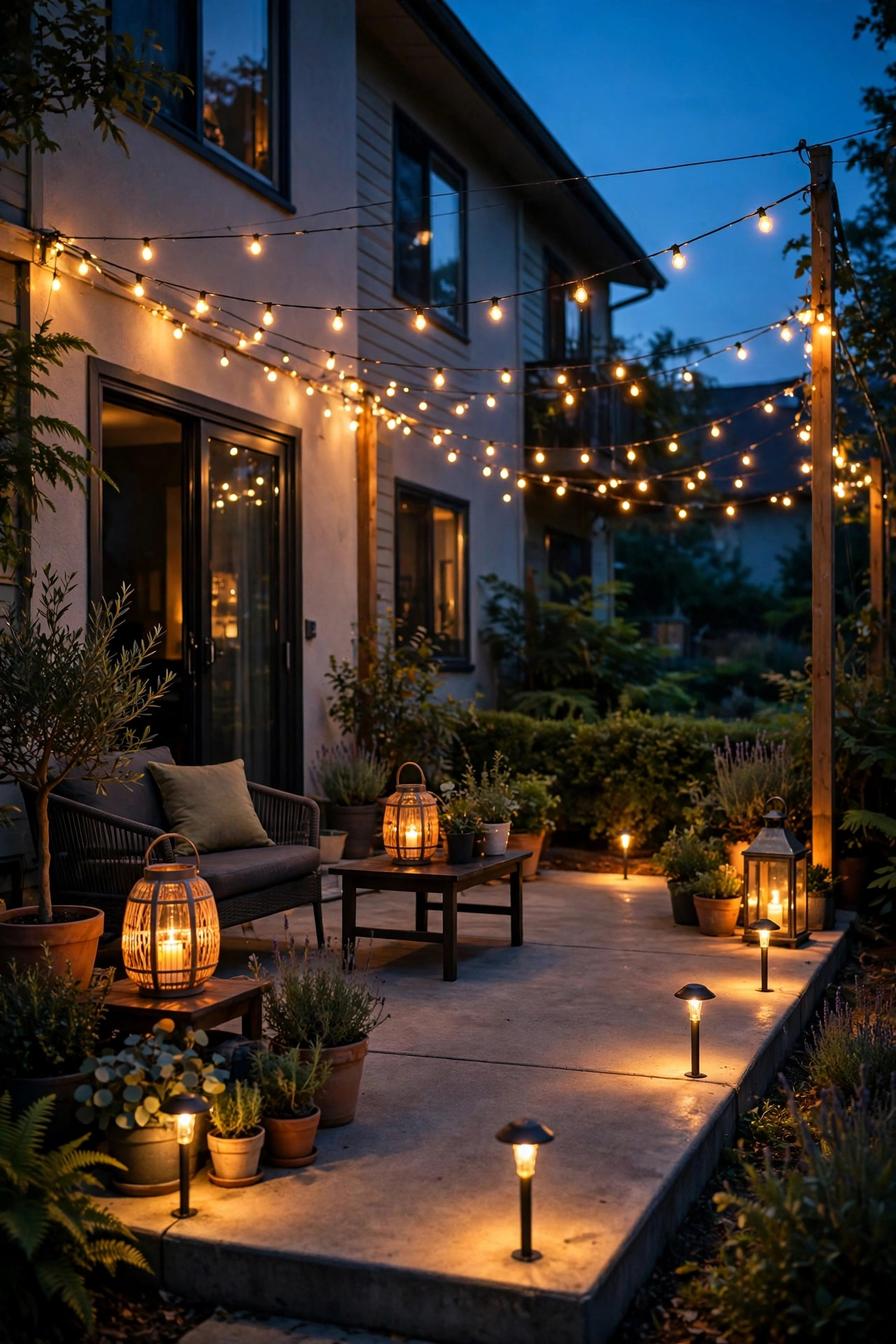
1. Start With Solar Strings, the Easiest of All Apartment Patio Lighting Ideas
If I could only pick one purchase for a rental patio, it would be a strand or two of solar string lights. There is no outlet to hunt for, no cord snaking through the sliding door, and the little solar panel just stakes into your garden strip or clips to the fence where it can catch afternoon sun. Run one strand along the fence line and a second from the building corner out to a shepherd's hook or a weighted planter pole, and suddenly the slab has a ceiling. Space the bulbs about 12 inches apart as they come, and let the swag dip gently — 6 to 8 inches of drape looks relaxed instead of sloppy. Warm white (2700K) is the color that makes a small patio feel expensive; daylight-white strands will make your patio look like a parking lot, honestly. Give the panel a full sunny day before your first evening out there, and wipe it clean every few weeks, because a dusty panel is the number one reason solar strings go dim by 9 p.m.
Suggested budget range: $20 – $45.
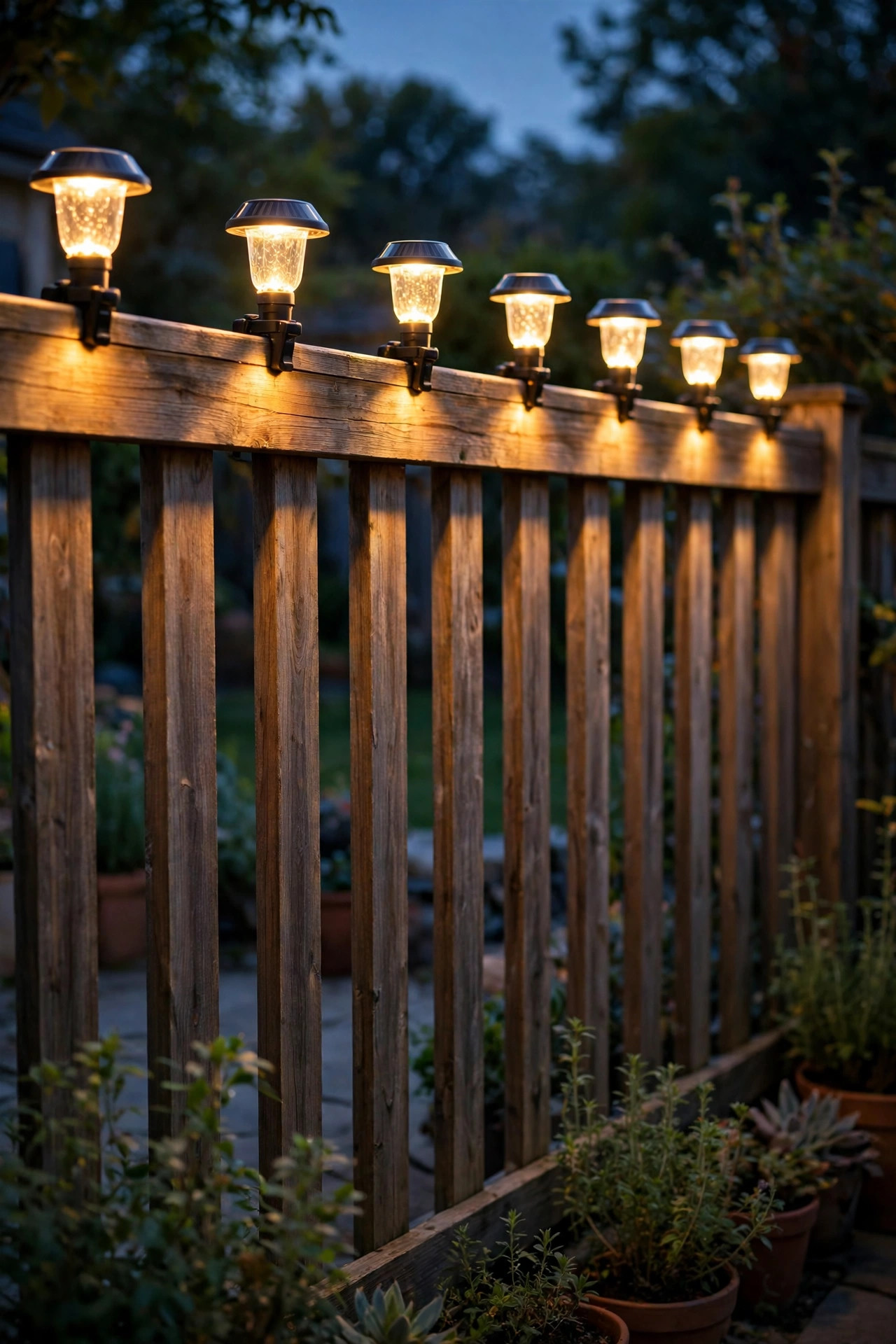
2. Clip Solar Cap Lights Along the Fence
Most ground-floor patios end at a short fence or railing, and that fence line is prime lighting real estate you do not have to drill into. Solar cap lights clip, clamp, or slide right onto fence posts and horizontal rails, no screws required, and they wash a soft pool of light down the boards that reads as a glowing boundary for the whole patio. I space them every other post, roughly 4 to 6 feet apart, so the light overlaps gently instead of spotting. Because each one is self-contained solar, a shaded section is easy to fix — just move that light to a sunnier post and let a plug-in piece cover the dark corner. These are also the lights your upstairs neighbors will love you for: the glow stays low and downward, so nothing beams up into their windows. If your lease is strict about attachments, choose the clamp style with padded jaws; they grip tight, leave zero marks, and pop off in seconds at move-out.
Suggested budget range: $25 – $60.
3. Keep a Basket of Battery Lanterns by the Door
Battery lanterns are the workhorses of every rental patio I have ever styled, because they go wherever the evening goes — the bistro table, the step, the cooler, the little reading chair. I keep three in a basket just inside the sliding door: two smaller ones for the table and one taller statement lantern for the corner by the door. Look for dimmable warm-white LEDs, a real on-off switch you can find in the dark, and a hook on top so you can hang them from a branch or a hook when you want the light higher. Rechargeable models save a fortune over a summer; I plug ours in on Sunday nights with the phone chargers. And if your unit has no outdoor outlet at all, lanterns plus solar carry the whole patio beautifully — my guide to backyard lighting with no outlet is full of setups built exactly on that idea. Just bring lanterns in during heavy rain unless they carry an IP65 rating.
Suggested budget range: $20 – $55.

4. Edge the Walkway With Solar Path Stakes
Ground-floor units usually come with a little walkway or grass strip between the patio and the parking lot or sidewalk, and that route goes pitch black at night. A short run of solar path stakes — four to six is plenty for an apartment — turns the trip from the car into a guided landing. Push them along the edge every 3 to 4 feet, alternating sides slightly so the pools of light overlap and there are no dark gaps where a curb or sprinkler head can ambush an ankle. Choose low, soft models in the 30 to 80 lumen range; you are marking a path, not landing planes, and modest stakes will not glare into your own sliding door. Because they sit in shared-looking ground, check your lease or ask the office first — in my experience most complexes are fine with removable stakes, especially when they make the walkway safer. Pull them up before the lawn crew comes if your complex mows on a schedule.
Suggested budget range: $15 – $40.

5. Cluster Flameless Candles in Glass Hurricanes
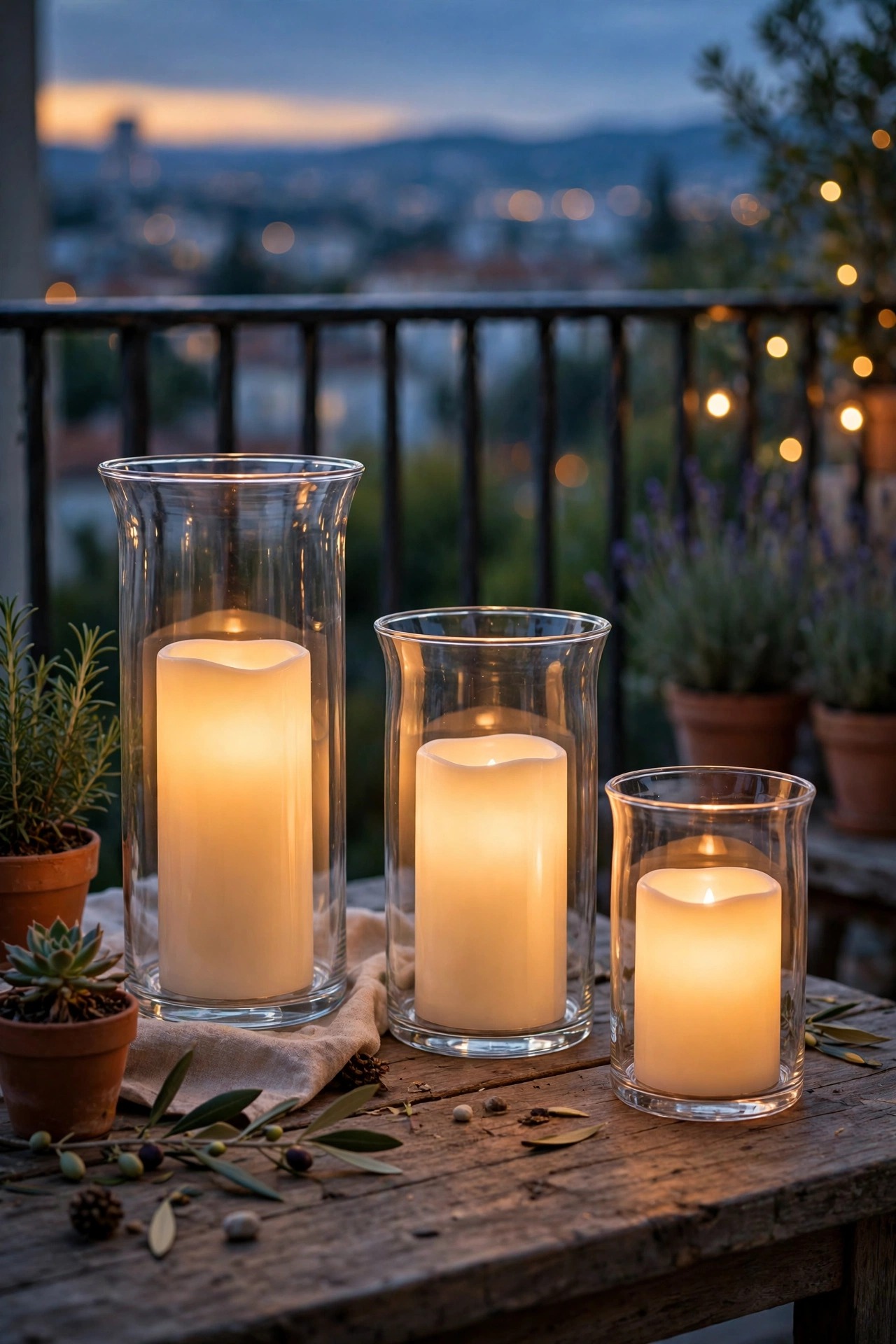
Real candles and rental patios are a nervous combination — one tipped pillar near a cushion or a curtain and you have a real problem, plus most leases ban open flame outright. Flameless candles inside glass hurricane holders give you the same flicker with zero risk, and the glass does double duty: it keeps the breeze from making battery candles look fake, and it bounces the glow into a bigger, softer halo. I group three hurricanes of different heights on a tray for the table, and set two more on the ground flanking the door. Timber-style or matte ceramic holders suit a modern building; clear glass suits everything. Put them on a timer if the candles offer one — the 5-hours-on setting means your patio greets you glowing when you get home from work, which is a small luxury I never got tired of. LED only, always, and bring the set inside for winter if your patio is uncovered.
Suggested budget range: $15 – $45.
6. Run Plug-In Café Lights From the Door Outlet
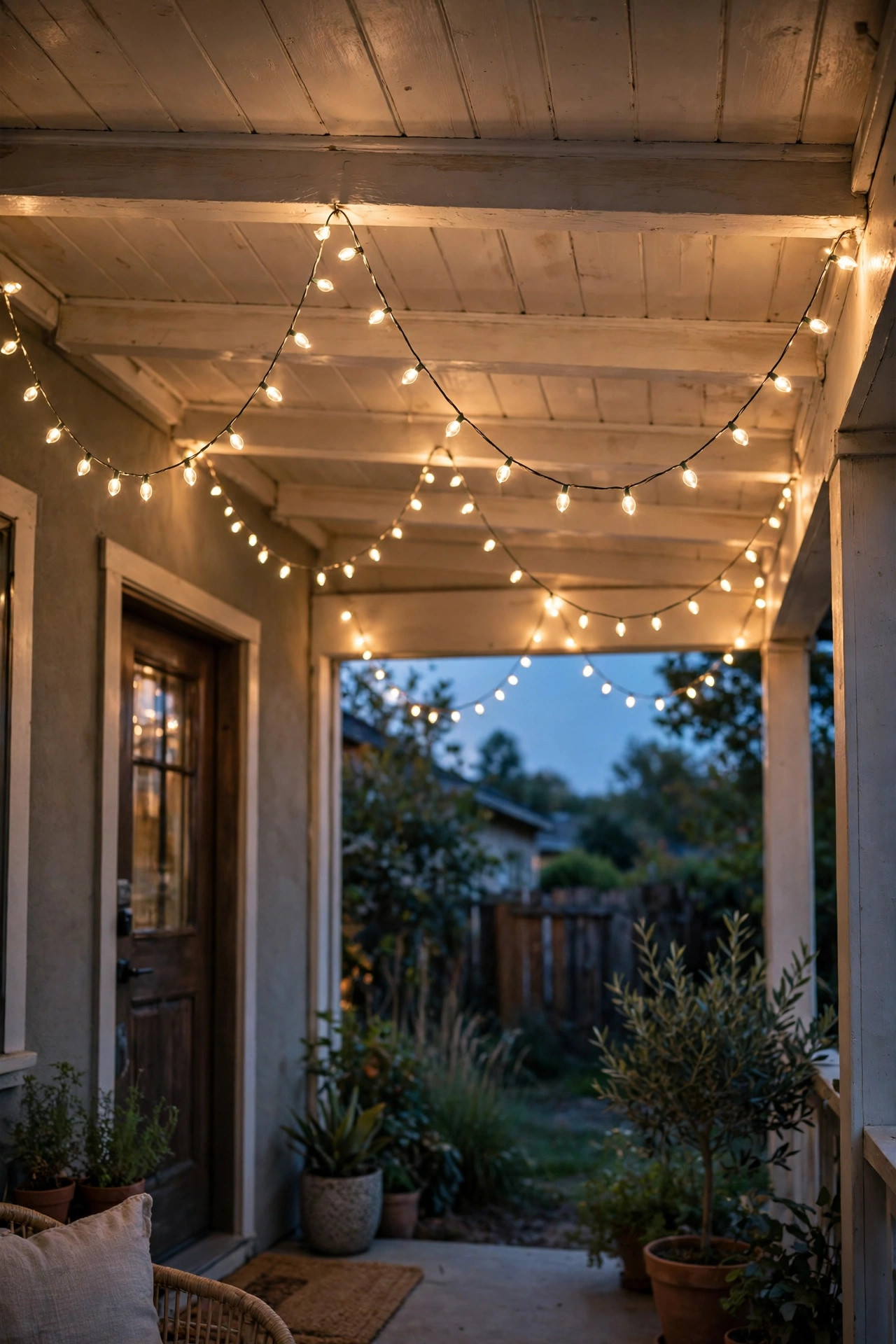
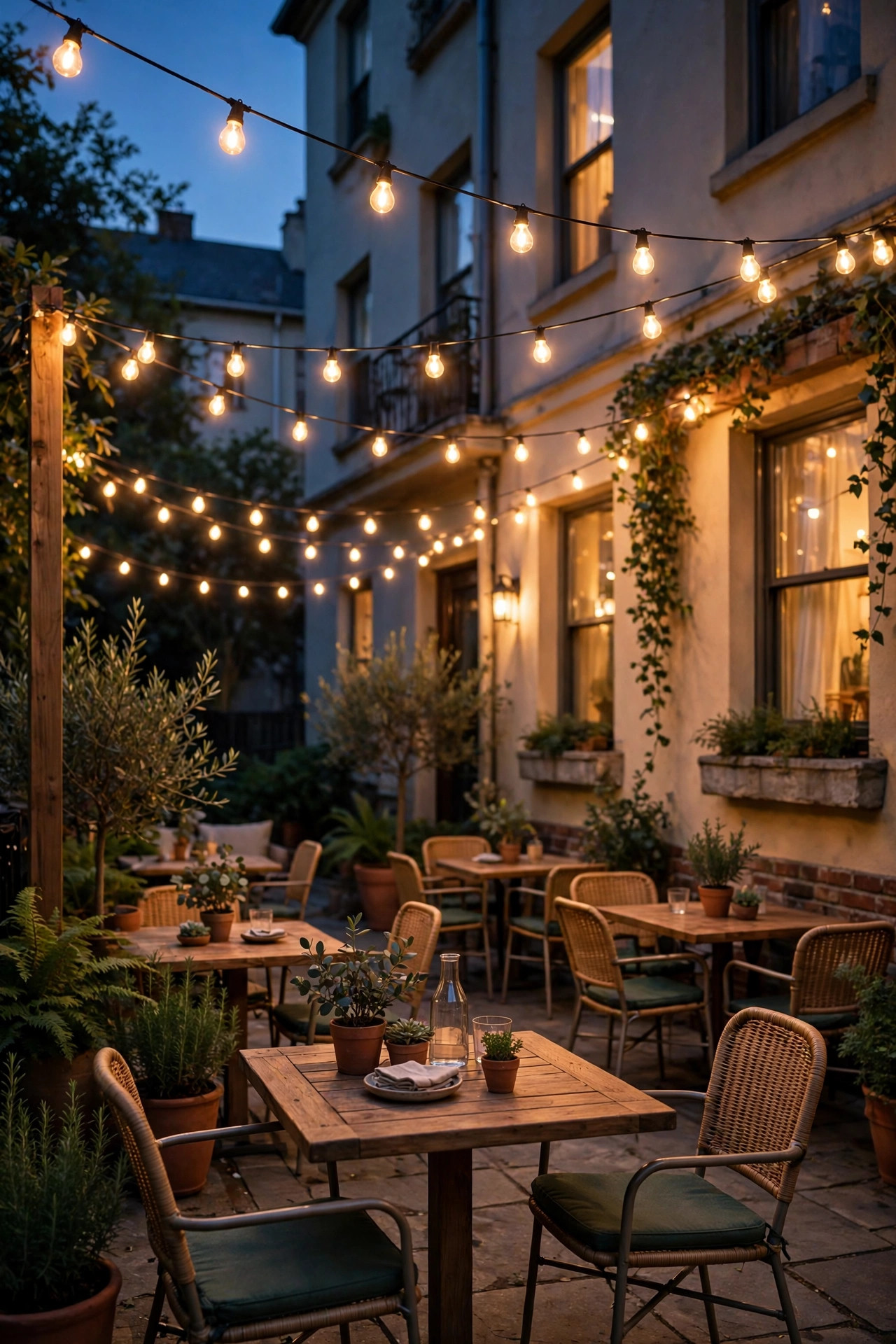
If your patio has even one accessible outlet — many ground-floor units have one by the door or just inside it — plug-in café string lights give you the brightest, steadiest glow of any option here. Heavy-duty outdoor strands with shatterproof LED bulbs shrug off weather and the occasional bumped chair, and on a simple plug-in timer they light themselves every evening at dusk. Route the cord flat along the wall with adhesive cable clips, never across the walking path, and always plug into a GFCI outlet with a weatherproof in-use cover. Keep the first bulb at least a few inches from siding and fabric. One 24-foot strand covers most apartment patios with a graceful double swag; for a bigger slab, two strands end to end still draw less power than one old porch bulb. Because they are brighter than solar, aim the swags over your own slab only — your ceiling of light should stop at your fence line so it stays cozy instead of broadcasting into the windows above you.
Suggested budget range: $25 – $70.
7. Uplight One Privacy Shrub With a Solar Spotlight
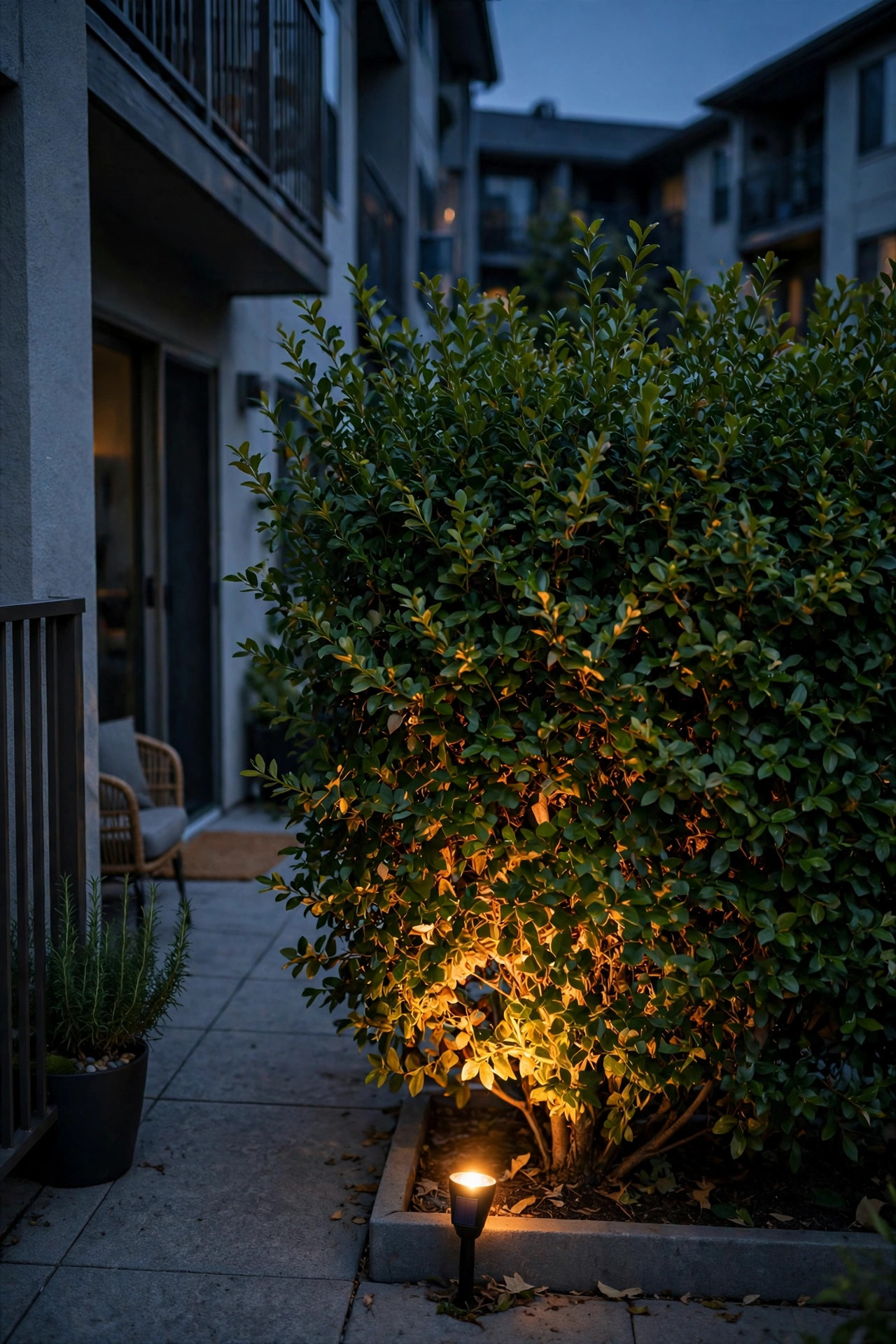
Most ground-floor patios have one shrub, one skinny tree, or one potted plant doing all the privacy work, and a single solar spotlight aimed up through it makes that plant look like a sculpture after dark. Set the fixture 12 to 18 inches from the base, tilt it up at about 30 degrees, and let the light rake through the leaves so the whole canopy glows from inside. This is the layer that makes a tiny patio feel deep — your eye travels to the lit greenery instead of stopping at the fence. Solar spotlights with a separate panel on a short cord are best here, because the panel can sit in sun while the light hides in shade. Warm white again, and modest brightness: you want a glow, not an interrogation. If your privacy planting is a row of pots, one spotlight per main pot, angled slightly inward, gives the same effect and hides the fences of the units on both sides of you.
Suggested budget range: $15 – $40.
8. Add a Motion-Sensor Light by the Door for Security
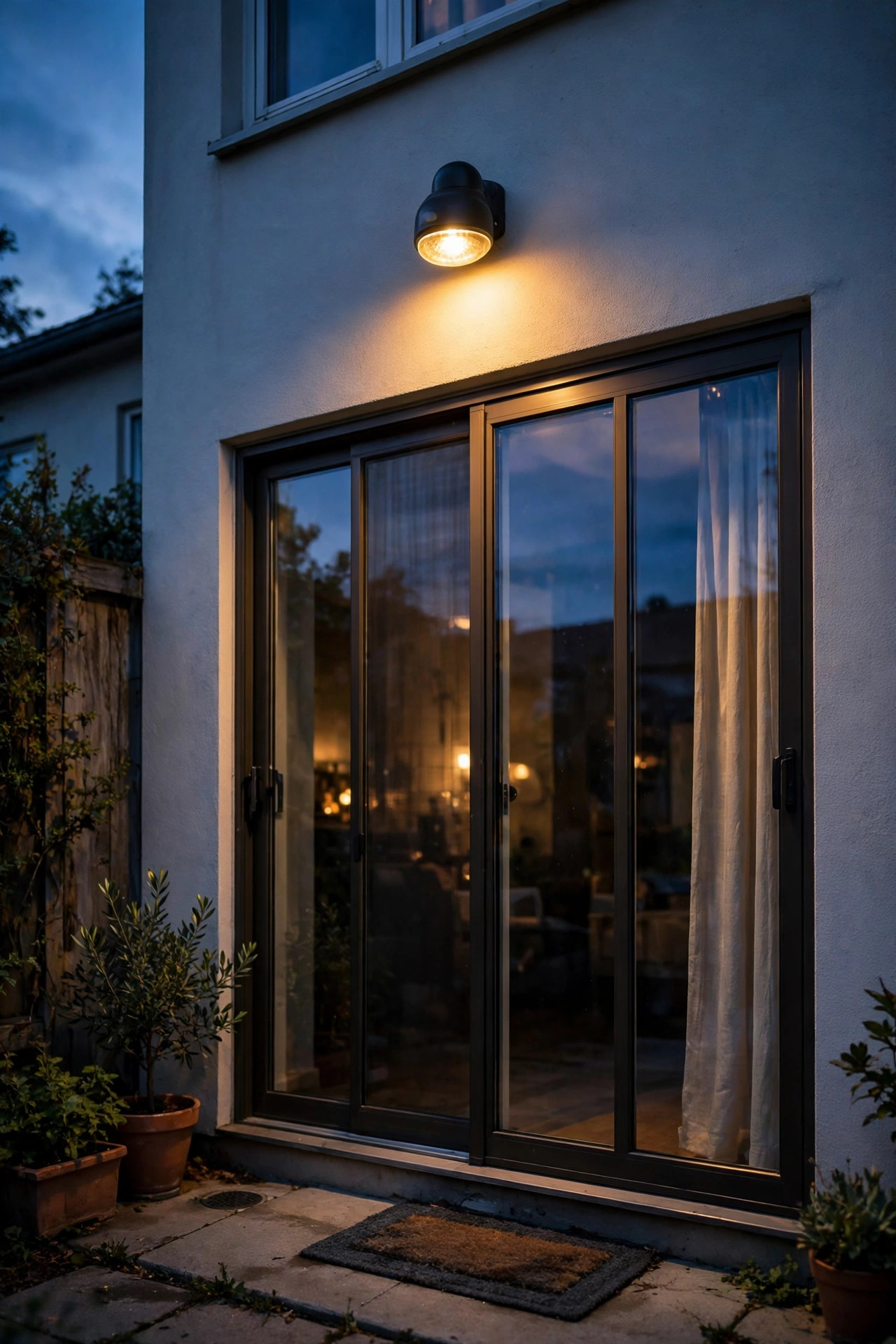
Ground-floor living is convenient, but your patio door is also the most reachable door in the building, and a motion-sensor light is cheap peace of mind. Battery and solar models mount with adhesive pads or a simple clamp — no wiring, no drilling — and pop on for 20 to 30 seconds when anything crosses the patio. Mount it 6 to 7 feet up near the door, angled slightly down so it catches a person-sized shape crossing your slab rather than every cat in the complex. Warm white in the 200 to 400 lumen range lights the lock and your face for the camera without blasting the neighbors. In my experience this light changes how the space feels at night more than any decorative piece: you stop seeing a dark slab outside the glass and start seeing a lit, claimed space. Test the sensor with a slow walk-through at dusk and adjust the angle until your own comings and goings trigger it reliably.
Suggested budget range: $15 – $35.
9. Thread Fairy Lights Through Your Planters
The planters you already own are hiding places for light. A strand of copper-wire fairy lights threaded loosely through a big pot — around a small shrub, a tomato plant, or a cluster of herbs — turns an ordinary planter into a glowing garden sculpture, and copper wire bends and stays exactly where you tuck it. The battery pack hides behind the pot or under the rim; choose a timer pack and the lights will run six hours a night for weeks on one set of batteries. I like one lit planter on each side of the sliding door and a third marking the far corner, which quietly draws the triangle that makes the whole patio feel composed. Keep the wire off the soil surface so watering does not corrode it, and never use plug-in fairy lights where the cord would cross a wet path. These are pure sparkle — they will not light a book — but as the accent layer over your strings and lanterns, nothing beats them for the price.
Suggested budget range: $10 – $30.

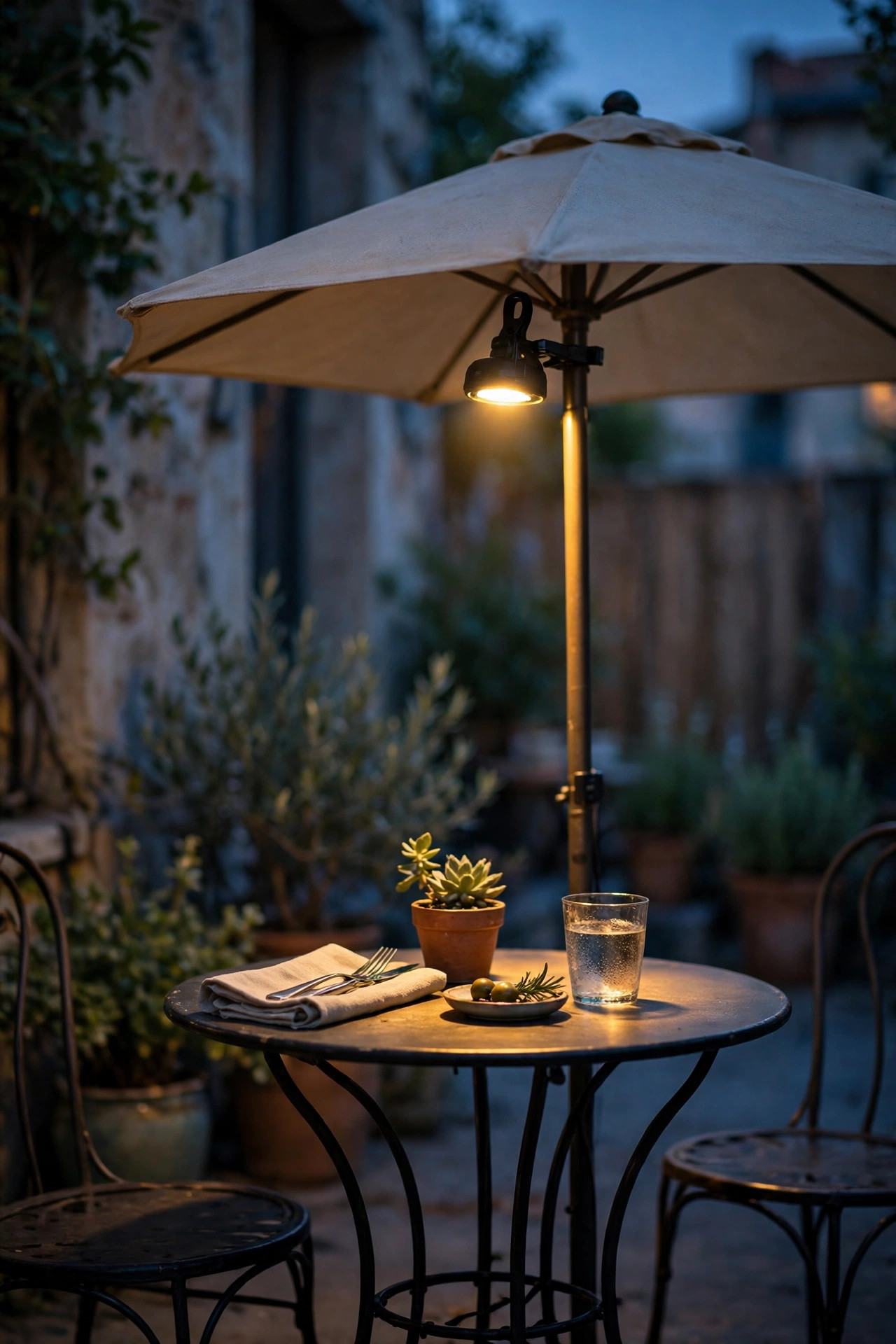
10. Clip an Umbrella Light Over the Bistro Table
Most apartment patios fit exactly one furniture grouping: a little bistro table and two chairs, often under a market umbrella. An umbrella light — a ring or disc of LEDs that clamps around the pole — drops a pool of warm light straight onto the table, which is exactly where you eat, play cards, and set your drinks. Battery models with three brightness settings are the sweet spot; the low setting is plenty for dinner and stretches the batteries for weeks. If your set has no umbrella, the same job can be done by a clamp light on the fence rail behind the table, aimed down at a gentle angle. Either way, task light at the table means the rest of the patio can stay dim and atmospheric instead of evenly bright. I pair ours with the flameless candles from idea 5: the umbrella light does the seeing, the candles do the glowing, and dinner outside suddenly feels like a restaurant patio instead of a rental slab.
Suggested budget range: $15 – $35.
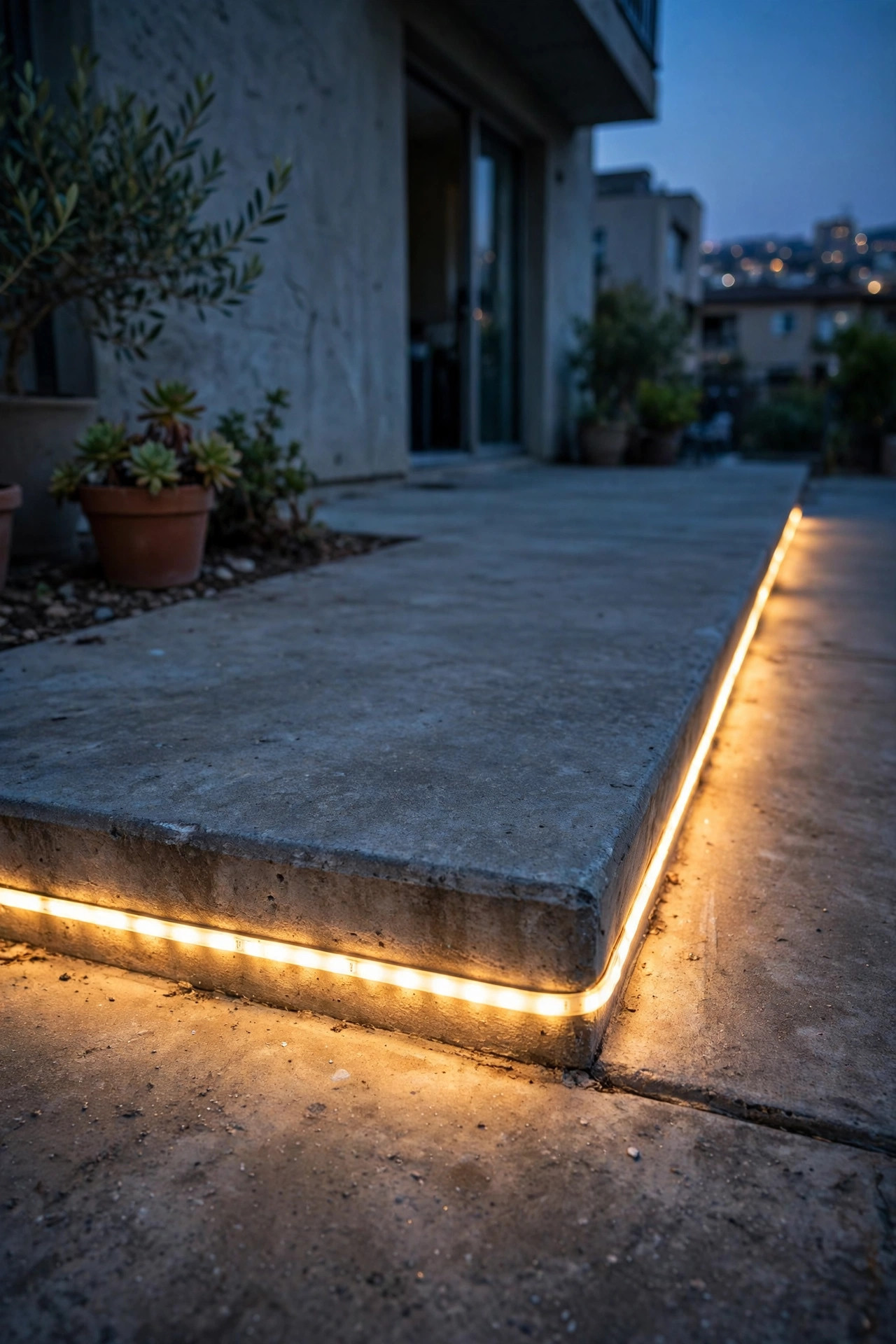
11. Line the Slab Edge With an Adhesive LED Strip
Every ground-floor patio has the same hidden hazard: the 1 to 2 inch lip where the concrete slab meets the grass, invisible at night and perfectly placed to catch a toe. A battery-powered LED strip stuck along the face of that edge — or under the lip of the door threshold — draws a clean line of light that says step here. Removable adhesive backing, the kind sold for posters and hooks, holds fine outdoors for a season and peels off clean at move-out with a slow pull and a hair dryer on low. Choose warm white and a dimmable strip; at full brightness these can look stark, but dialed down they read as a soft runway line that also makes the patio look bigger, because your eye follows the lit border outward. Keep the battery pack tucked in a small waterproof box by the door. This is the least glamorous idea on the list and the one my guests comment on most, usually while not tripping.
Suggested budget range: $10 – $30.
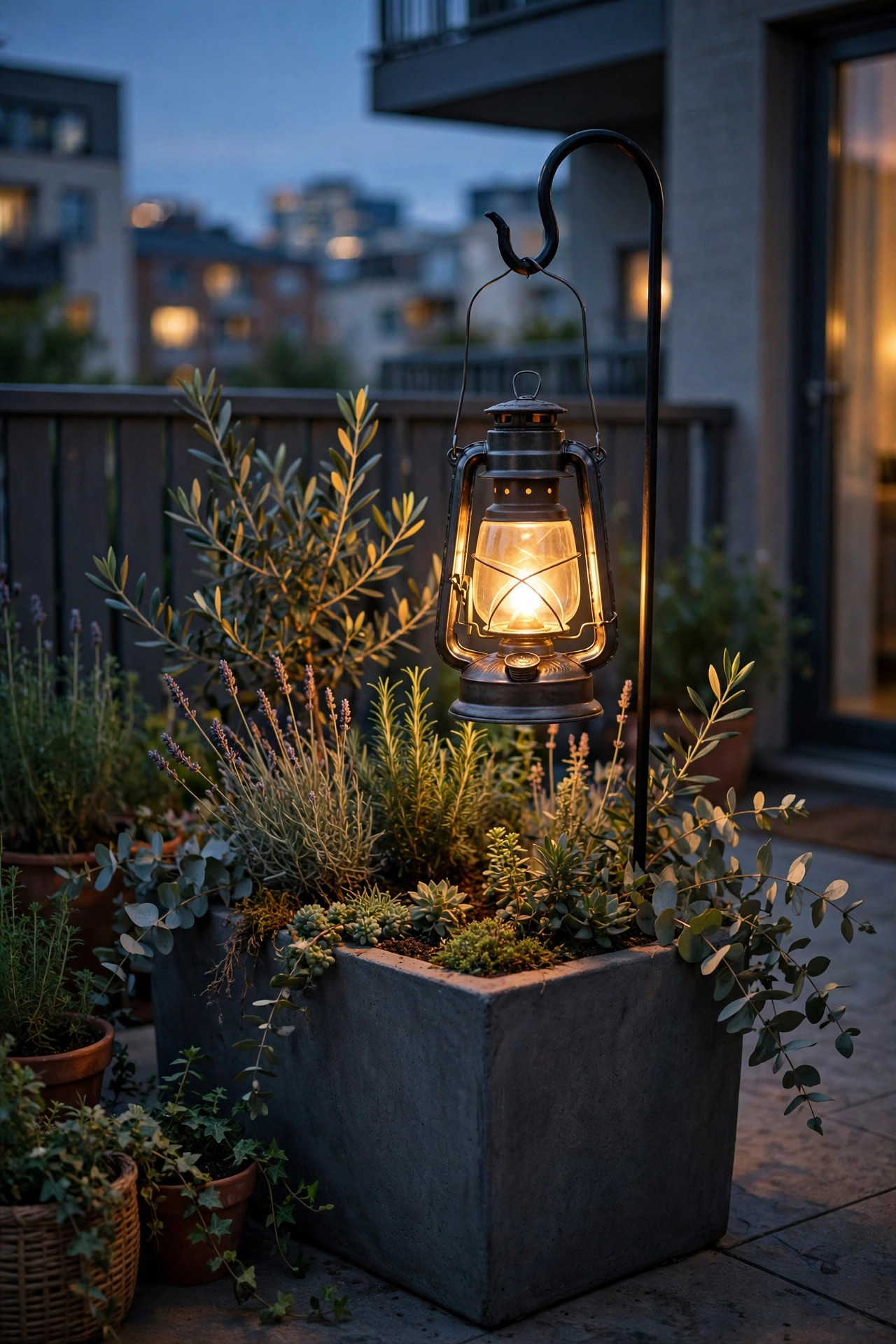
12. Hang a Lantern From a Shepherd's Hook in a Heavy Planter
Hanging light is what separates a lit patio from a cozy one, but renters cannot sink posts or drill brackets. The workaround I use everywhere: a shepherd's hook pushed into a big, heavy planter. The soil and the pot give you all the stability you need, the hook arcs over the seating area, and a solar or battery hanging lantern on the end puts warm light right at sitting height where faces are. A planter of 18 inches or wider works best; add a few rocks at the bottom if your patio catches wind. Plant something trailing around the base and the whole thing looks like intentional garden design instead of a lighting hack. Because nothing touches the building or the ground permanently, it passes even the strictest lease inspection, and at move-out the entire light fixture walks away in the planter. For more tricks in this spirit, my notes on renter-friendly porch lighting apply the same no-marks rules to front entries.
Suggested budget range: $25 – $60.
13. Drape Net Lights Over the Hedge for a Privacy Glow
If your patio borders a walkway, a low hedge or row of shrubs is probably your only privacy screen, and net lights were made for exactly that shape. A net is just fairy lights pre-woven into a grid, so instead of winding a strand branch by branch, you drape the whole net over the top of the hedge, tuck the edges, plug in or switch on, and the entire shrub glows evenly like it is lit from inside. Battery and solar nets exist and are the renter-friendly picks; a 4 by 6 foot net covers a typical apartment hedge section. The effect is gentle background sparkle that also signals this space is occupied and cared for, which politely discourages passersby from treating your patio edge as a shortcut. Keep nets off any plant your complex trims on a schedule, or lift them off the morning the gardeners come. Paired with the uplight from idea 7 on a taller shrub, your green wall becomes the prettiest backdrop on the ground floor.
Suggested budget range: $20 – $45.

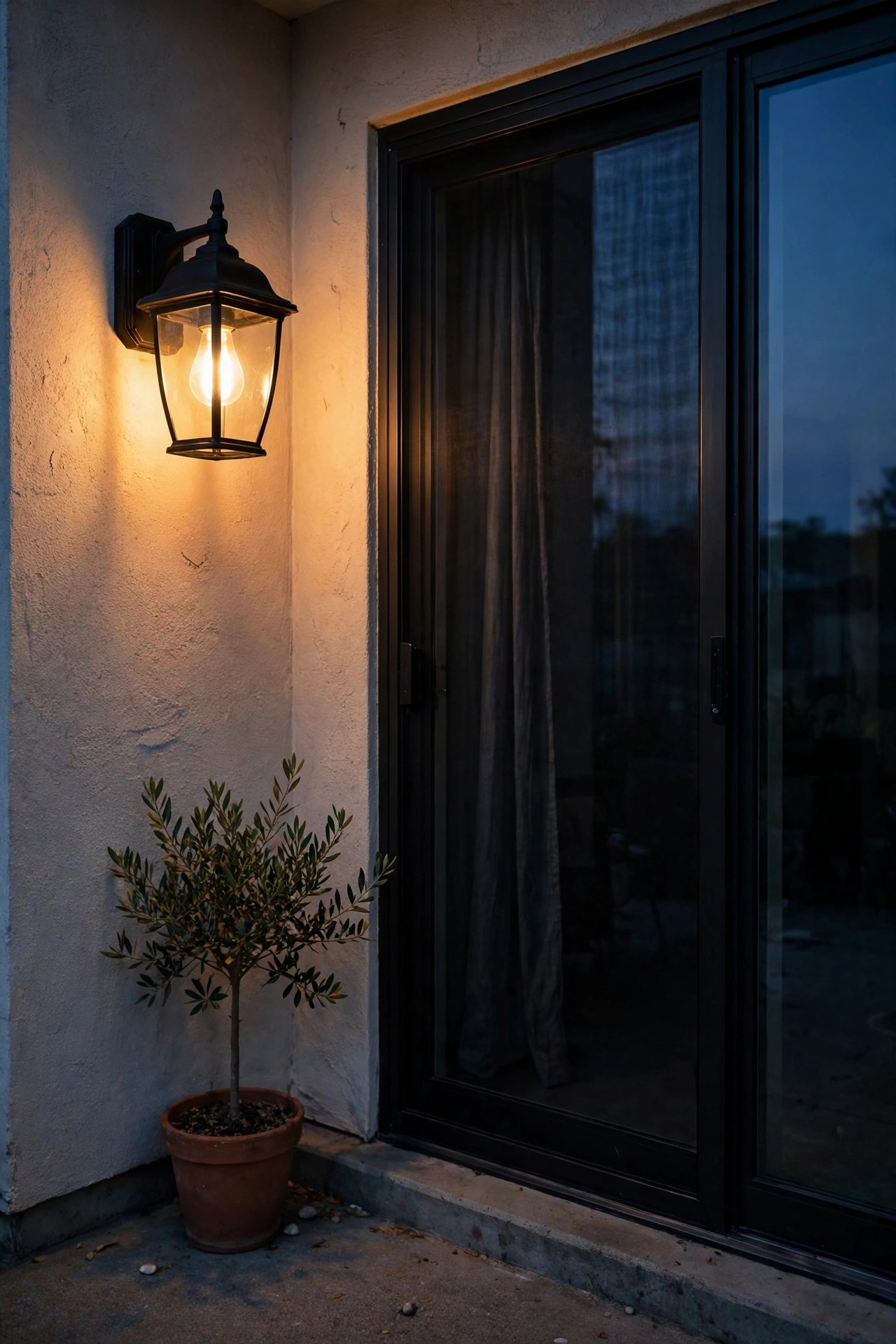
14. Swap the Porch Bulb for a Dusk-to-Dawn Smart Bulb
Your unit almost certainly has one existing fixture by the patio door that you are allowed to use but not replace. You can still upgrade it: unscrew the bulb, keep it in a labeled bag for move-out day, and screw in a dusk-to-dawn or smart LED bulb in warm white. A photocell bulb lights itself every evening and sleeps at sunrise with zero timers or apps, and it makes your entry look cared for even when you are away — a real security plus at ground level. If you go the smart-bulb route, set it to 2700K and about 60 percent brightness on a sunset schedule, and dim it after 10 p.m. so it never bothers the bedroom windows around you. One rule from experience: never swap in a bulb brighter than the fixture is rated for, and check that the bulb is approved for enclosed fixtures if your porch light has a cover. Total install time is genuinely two minutes, most of it finding the step stool.
Suggested budget range: $10 – $25.
15. Finish Your Apartment Patio Lighting Ideas With Timers and One Dusk Walk-Through
The difference between a patio with lights and a patio that glows every single night is automation, because a light you have to remember is a light that stays off. Put plug-in pieces on one timer set to dusk, choose solar with its own sensors for everything else, and set battery lanterns with timer modes to the same evening window, so the whole patio wakes up as one scene. Then do the test that actually matters: stand at the walkway where guests and neighbors approach, and walk your patio slowly at full dark. Look for the dark corner behind the chair, the glare spot at eye level, the step edge you meant to mark. Crouch at sitting height too — that is where your guests will live. Adjust angles, swap one too-bright bulb, add one lantern. Ten minutes of this turns a pile of decent apartment patio lighting ideas into one composed little room, and it is the same walk-through I repeat at the start of every season.
Suggested budget range: $10 – $30.
Frequently Asked Questions
Can I add patio lights if my lease bans drilling and hardwiring?
Yes — nearly every idea on this list attaches with clips, clamps, adhesive, or its own weight in a planter, and solar and battery pieces need no wiring at all. Keep the original porch bulb in a labeled bag, lift adhesive strips off slowly at move-out, and your deposit never knows the lights were there.
What color temperature looks best on a small apartment patio?
Warm white, 2700K to 3000K, makes a small patio feel cozy and expensive, and it flatters faces, food, and plants. Daylight bulbs around 5000K read as harsh and blue on concrete and siding, and they are the ones most likely to draw complaints from the neighbors around you.
How do I light an apartment patio with no outdoor outlet?
Build on solar and batteries: solar string lights and path stakes for the base layer, rechargeable lanterns for the table, and a battery LED strip for the step edge. Charge lanterns indoors on a weekly routine, place solar panels where they get at least six hours of sun, and the patio never misses the outlet.
Will my patio lights bother the upstairs neighbors?
Not if you keep the glow low, warm, and aimed down at your own slab. Choose downward-facing fixtures, skip floodlights, and put brighter pieces on timers that dim or switch off by 10 or 11 p.m. A motion-sensor light by your door is fine too, as long as it is angled down and not aimed at the building.
Conclusion
Ground-floor apartment living hands you the easiest outdoor room in the building — no stairs, no elevator, just a door between the couch and the evening air — and it deserves light that treats it like a real room. Layer it the way you would indoors: strings or café lights overhead, lanterns and candles at sitting height, and a soft line of light along the ground so every step is sure. Keep every piece removable, warm, and pointed down, and your apartment patio lighting ideas will earn compliments instead of complaints. When you are ready for the next project, browse the rest of the lighting ideas here on the site — if your unit has even a small balcony overhead, my balcony lighting ideas pair beautifully with everything on this list.