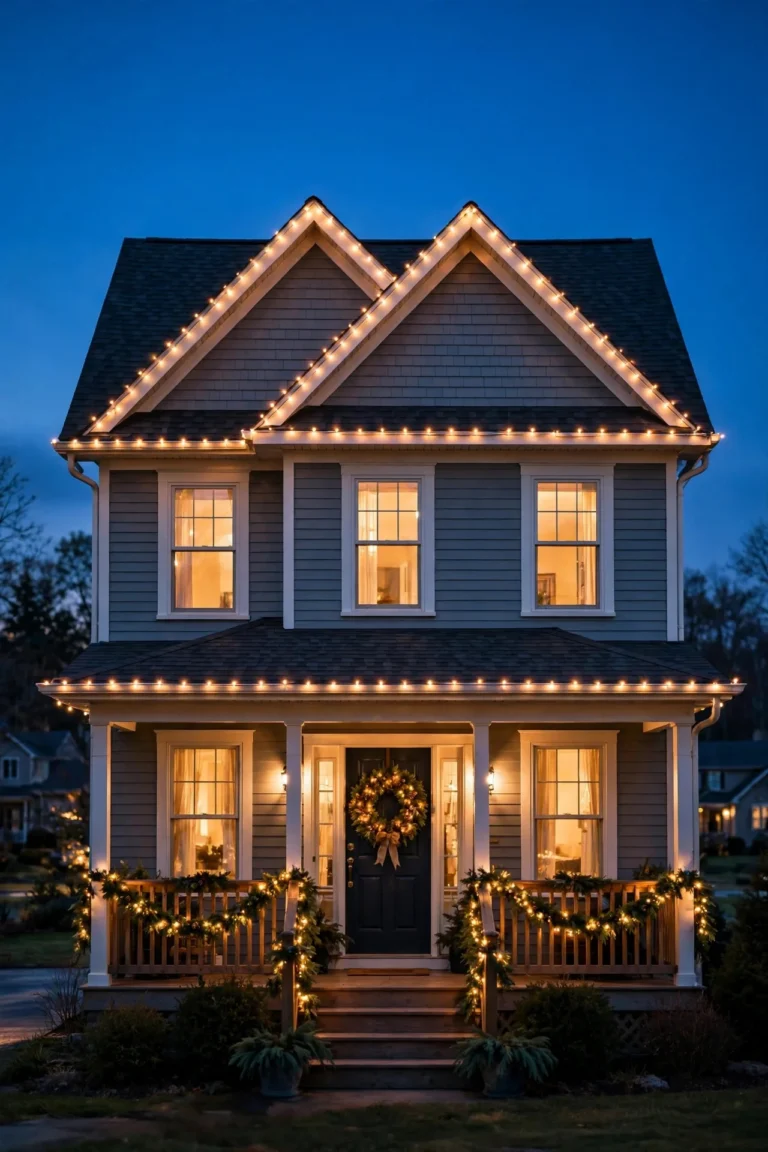
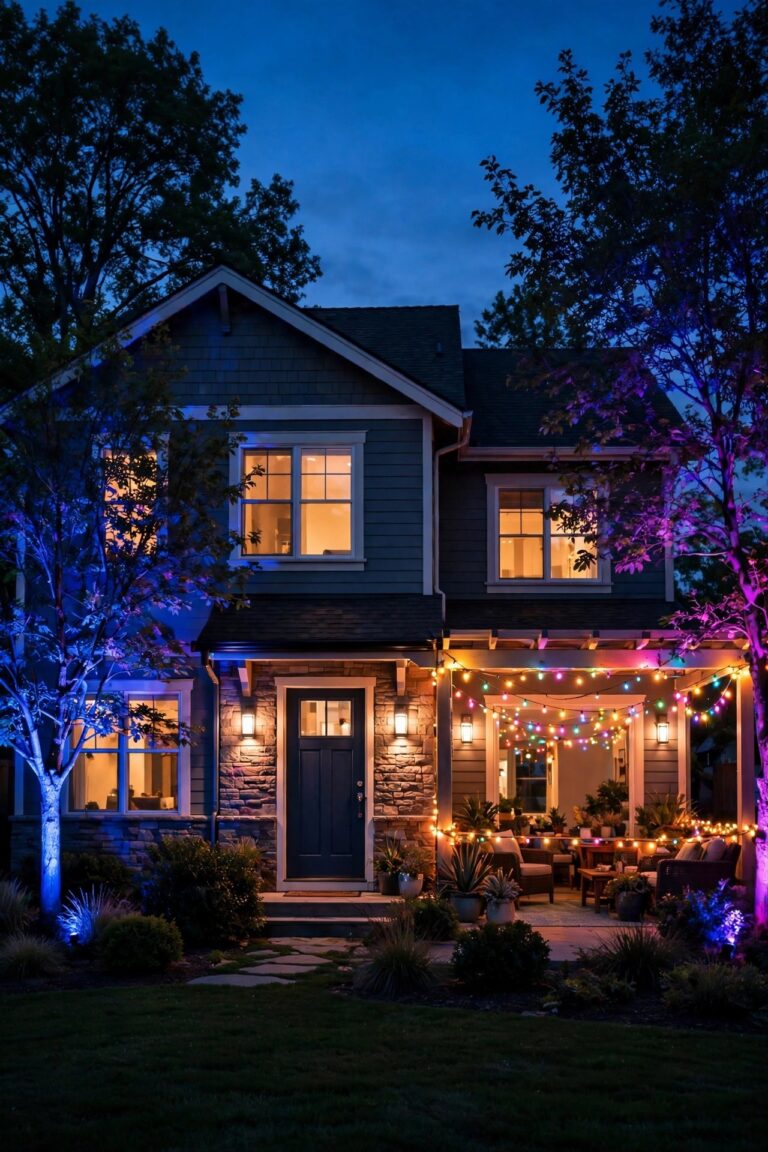
If I had a dollar for every reader who asks me about bollard vs post lights, I could repave my front walk. Honestly? It's the right question to obsess over, because these two fixtures do the same job — lighting outdoor space from a freestanding mount — at completely different heights, and height changes everything. A bollard stands 18 to 42 inches tall and throws its light down in a tidy pool at your feet. A post light puts the lamp 5 to 7 feet in the air on a pole 6 to 9 feet tall, spreading a wide, welcoming glow you can see from the street. Pick by height alone and you'll either squint into glare on the patio or lose a pretty bollard inside an overgrown hydrangea by July. So instead of declaring a winner, I've broken the choice into 17 real placement scenarios — walkways, driveways, beds, pools, slopes, even snow country — with the height, spacing and budget I'd actually use in each spot, plus where layering the two together beats either one alone.
1. Bollard vs Post Lights on the Front Walkway
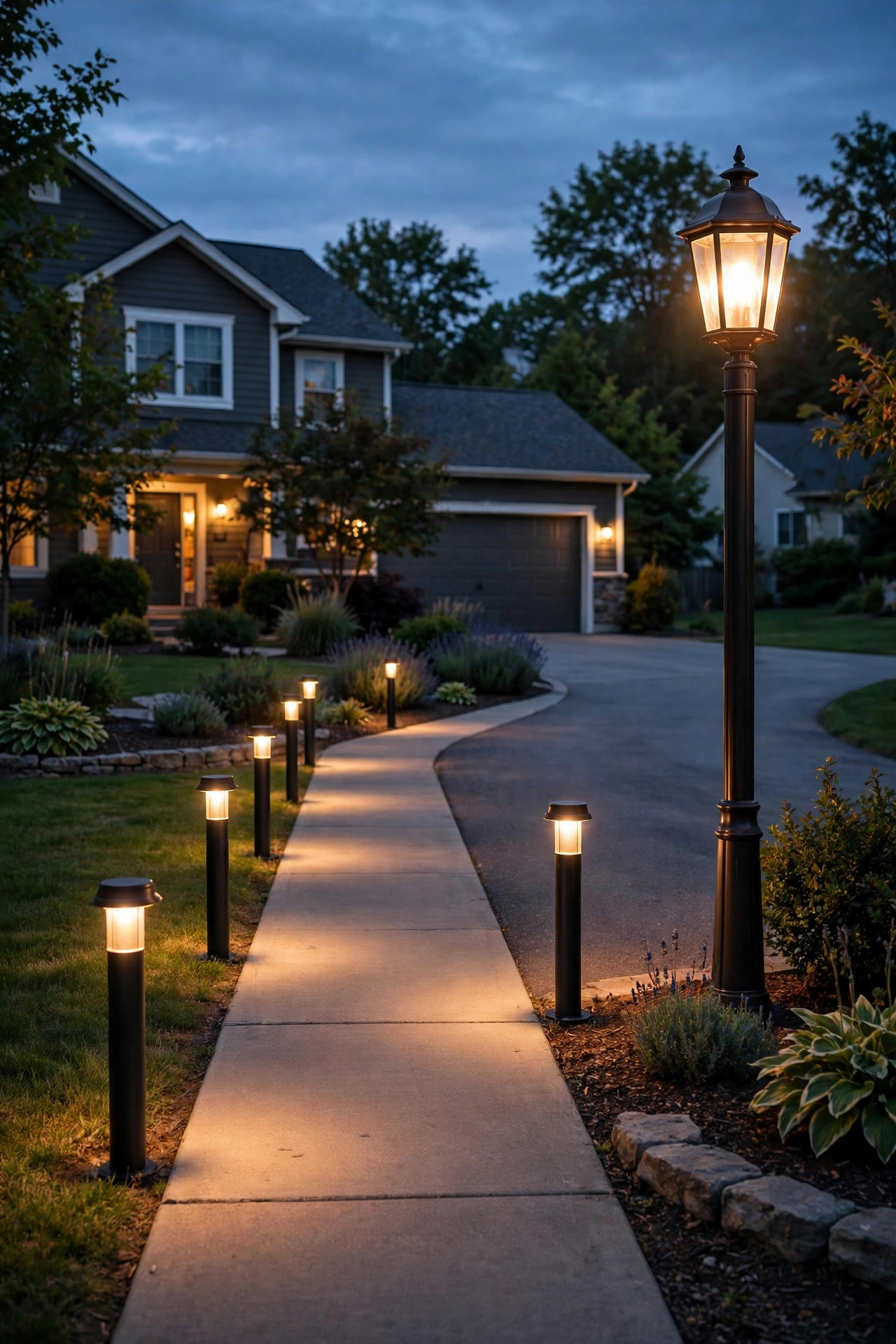
Your front walk is where this debate usually starts, and here's my honest take: for the path itself, bollards win. A 24- to 30-inch bollard throws a scalloped pool of light directly onto the pavers, right where your guests' feet land, and because the lamp sits below eye level, nobody walks toward a bare bulb. Space them 8 to 10 feet apart on alternating sides and the walk reads like a runway of soft circles. A post light at the walk's edge does something different — it announces the entry. One 6-foot post with a warm lantern head near the spot where the walk meets the driveway acts like a greeter, visible from the street and genuinely useful for finding the house number. Where I've seen it go wrong is a tall post mid-walk: the light lands on the tops of shoes and throws faces into shadow. If your budget only covers one style for the path, choose bollards, then add a single post at the end later. Our guide to low-voltage path lights covers the wiring and transformer math if you're planning a run like this.
Suggested budget range: $160 – $420.
2. Along the Driveway: Bollards Built for Bumper Height
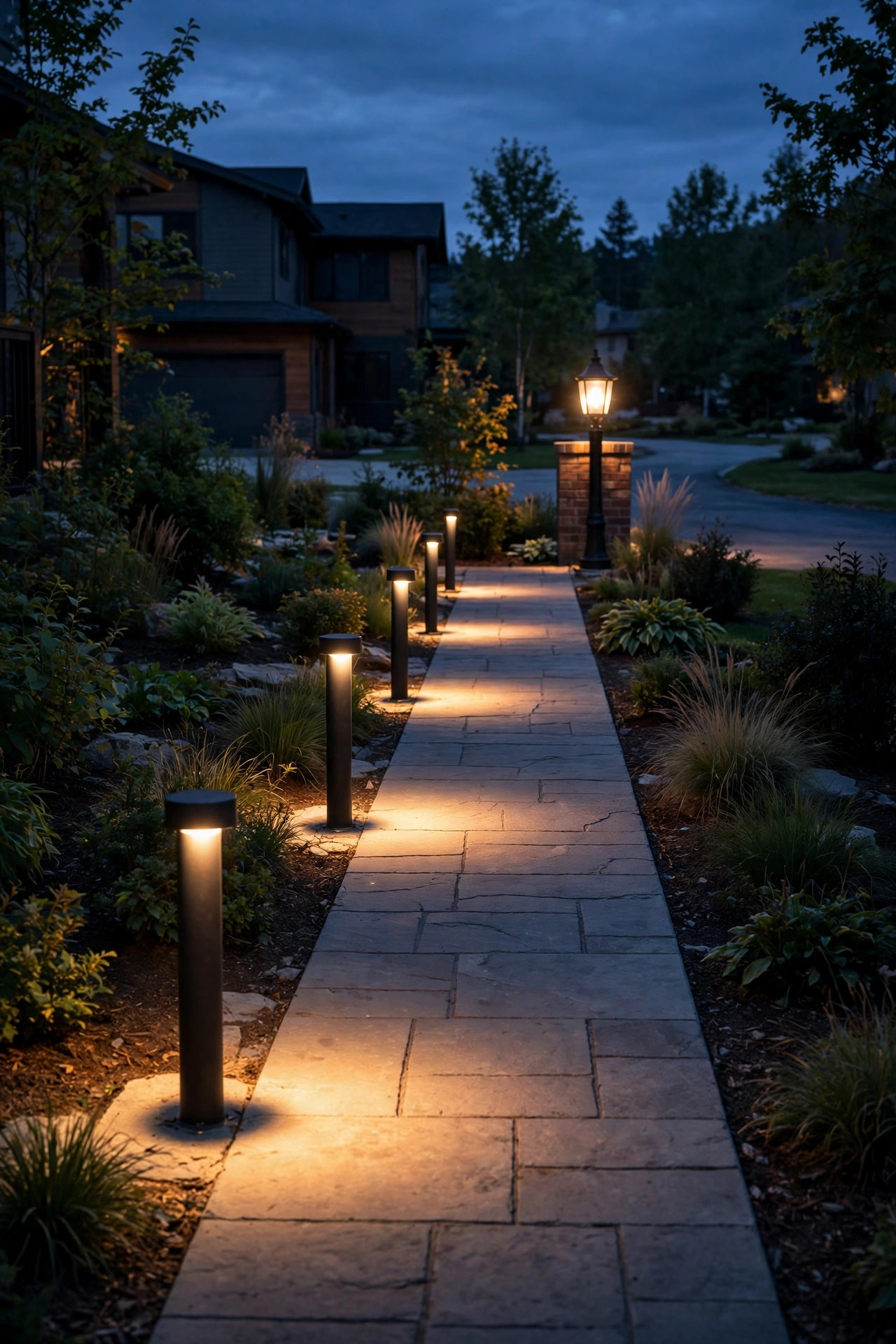
Driveways are hard on tall, skinny things. A post light on a 3-inch pole only needs one distracted guest backing up at Thanksgiving to end up leaning like the Tower of Pisa — ask me how I know. Bollards, especially the sturdier 30- to 42-inch commercial-style ones with a thick aluminum shaft, shrug off the occasional low-speed nudge and, more importantly, they mark the driveway's edge at exactly the height a driver sees in their peripheral vision. Line them 10 to 12 feet apart along one side and the parking pad edge reads clearly in the rearview mirror. That said, if your driveway is a long, dark approach, a pair of post lights at the entrance pillars does the welcoming better than any bollard — height is what carries over distance. My favorite compromise for a standard suburban drive: bollards along the length, one post light where the drive meets the street. Keep every fixture at least 18 inches back from the concrete edge so snowplows and wide mirrors clear them. For more bollard-specific layouts, our driveway bollard lights post digs into spacing and beam patterns.
Suggested budget range: $220 – $560.

3. In Foundation Plantings: The Post Light Rises Above the Shrubs
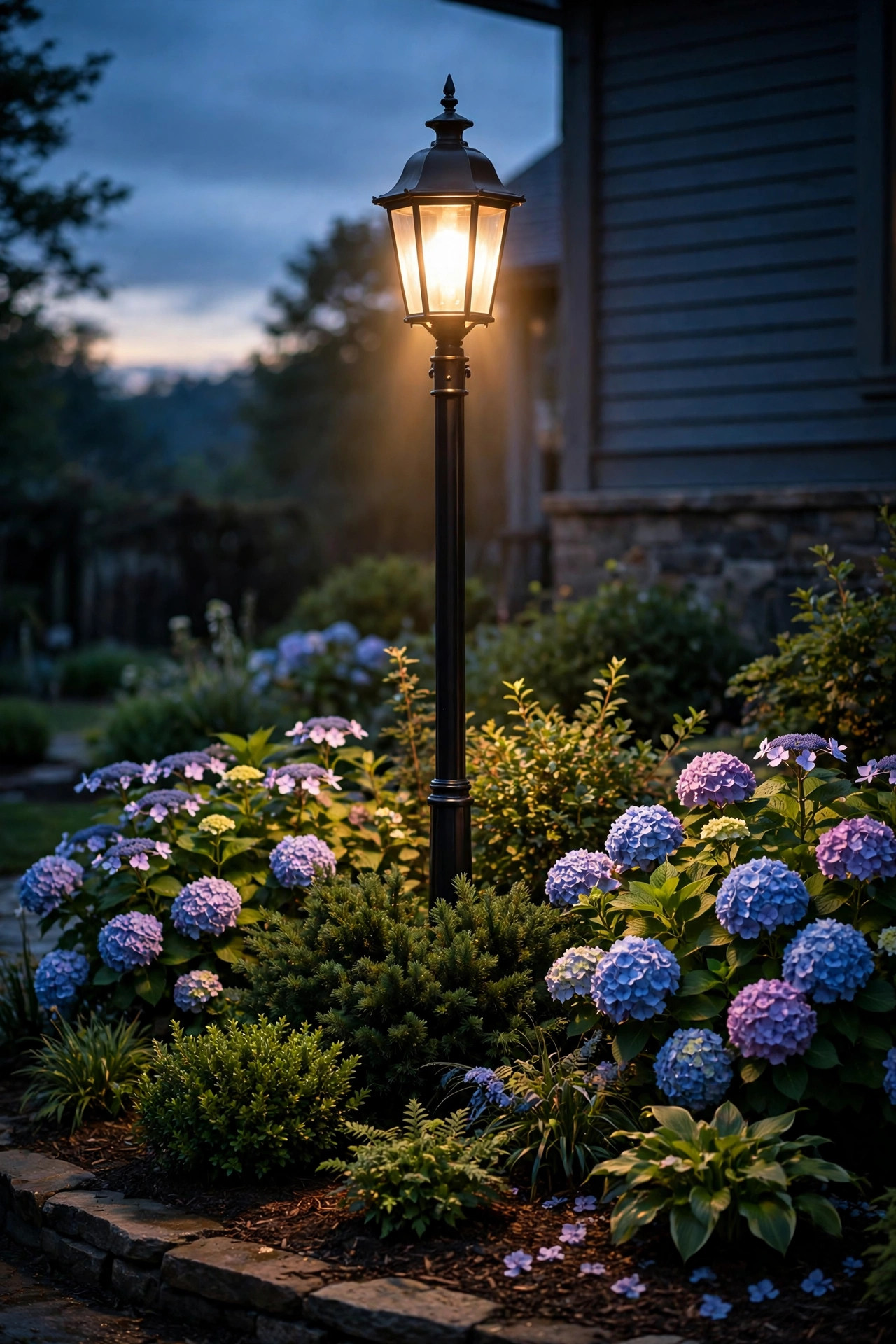
Here's the scenario that converts bollard skeptics. In June, a 24-inch bollard tucked into your foundation bed looks perfect. By August, the hydrangeas, hostas and ornamental grasses have swallowed it whole, and half its light is illuminating the underside of a leaf. Plants grow; fixtures don't. In beds with anything that matures over 2 feet tall, I reach for a post light with the lamp head at 5 to 6 feet — it clears the shrub canopy, washes light down over the planting like moonlight, and gives your house that layered, lit-from-within look from the street. Set the post 12 to 18 inches in front of the shrub line so the foliage gets grazed, not blasted. Bollards still have a role at the bed's front edge, in front of low edging plants under 12 inches, where they outline the bed's curve beautifully. The rule I give readers: if the mature plant is taller than the fixture, the fixture loses. Check the plant tag's mature height before you fall in love with any light for a bed.
Suggested budget range: $140 – $380.
4. At Steps and Stairs: Short Bollards at Knee Height
Steps are a safety problem before they're a style choice, and the goal is light on the treads without light in the eyes of the person climbing. That's a bollard's home turf. A short 18- to 24-inch bollard at the base of the steps, and another at any landing, puts the light source right at knee height, angled down across the tread nosings so each step edge casts a tiny defining shadow. Climbers look down, not into the fixture — no glare, no misjudged step in the dark. A post light at the top of the stairs sounds helpful but usually backfires: it silhouettes the climber and leaves the lower treads in the dark pool behind them. If you already have a post at a top landing, pair it with one low bollard at the bottom and you'll feel the difference immediately. Whichever you choose, keep the color temperature consistent at 2700K to 3000K so the staircase reads as one system, and choose shielded bollard heads that throw light down and out, never up. For three or four steps, one bollard per side, staggered, is plenty.
Suggested budget range: $90 – $260.

5. Around the Patio: Bollards That Stay Below Seated Eye Level
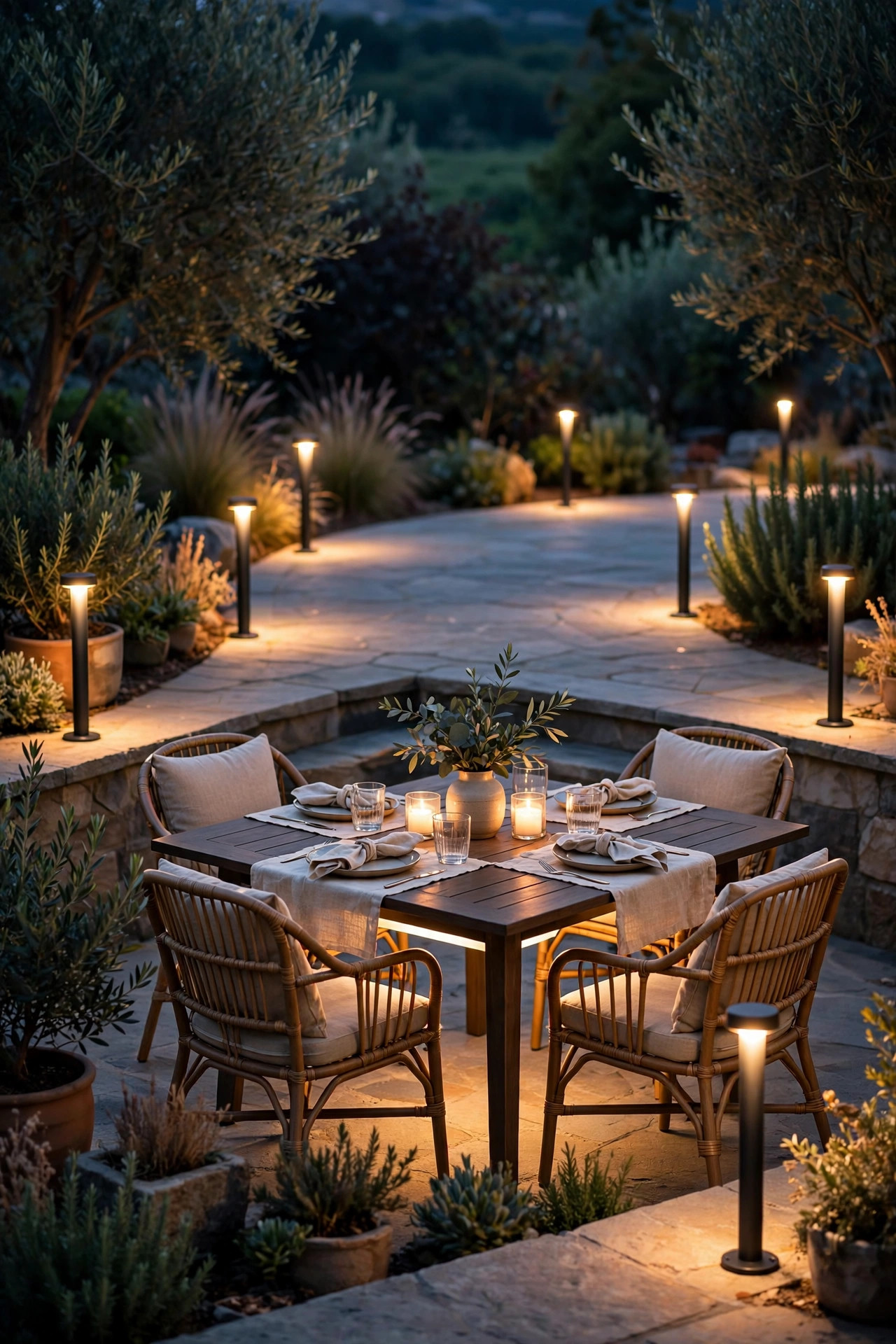
On a patio, everyone is sitting, which drops eye level to about 4 feet — and that single fact settles this matchup. A post light with its lamp at 6 feet hangs right in a seated guest's sightline across the table; you'll spend the evening looking past a glowing lantern instead of at your friends. Bollards of 24 to 30 inches ring the patio edge below sightline, defining the space, lighting the step down to the lawn, and keeping faces lit softly from below table height. Place them at the corners and flanking any step or grade change, roughly 8 feet apart, and let your string lights or a fire feature handle the ambience above. In my experience this is the most common "we already bought the tall ones" regret I hear about. If a post light already lives on your patio, move it to the far corner by the grill where standing is the norm and its height works for task lighting instead. Seated zones want low light; standing zones can have tall light. Match the fixture height to the posture of the people using the space.
Suggested budget range: $150 – $390.
6. Poolside: Low Bollards for Safety and Sightlines
Pool decks have their own rules, and they favor bollards almost every time. Swimmers and loungers are at water level or reclined, so light needs to skim the deck, mark the coping edge, and stay out of eyes that are looking up at the sky. A 24- to 30-inch shielded bollard does exactly that. A tall post light near a pool creates two problems: glare bouncing off the water's surface, and a bright reflection that makes it harder to see the bottom of the pool — a real safety issue when kids are swimming at dusk. Local codes in most areas also require fixtures and wiring near pools to be GFCI-protected and set back a minimum distance from the water's edge, so always check before you dig, and keep any 120-volt work to a licensed electrician. Solar bollards are a legitimately good poolside option since there's no wiring near water at all, though I'd still choose wired low-voltage for the two or three fixtures marking steps and the shallow-end entry. Keep the deck lighting dimmer than you think; the pool's own light should be the star.
Suggested budget range: $170 – $450.

7. The Long Country Driveway: Post Lights Win on Throw
Now flip the script. If your driveway runs 100 feet or more from the road — a rural lot, a farmhouse, a deep suburban setback — bollards will fail you, not because they're bad fixtures but because physics is rude. A light 2 feet off the ground simply cannot throw usable light far or be seen from far; its glow disappears into the first bend. Post lights at 7 to 8 feet, spaced 25 to 40 feet apart along the drive, create a chain of visible beacons a driver can actually navigate by, and each one washes a wide circle of gravel or asphalt. Mount the lamp heads high and choose 800 to 1,200 lumens per fixture so the pools of light just touch. This is also the one scenario where I'll happily specify a dusk-to-dawn photocell and skip the timer fuss — a long drive should just be lit when it's dark. Yes, trenching low-voltage cable that distance is real work and real money; that's the honest cost of height and distance. A solar post light can spot-fill a mid-drive gap, but for the main run, wired posts earn their keep every single night.
Suggested budget range: $480 – $1250.

8. At the Mailbox: A Post Light Puts Your Address in the Spotlight
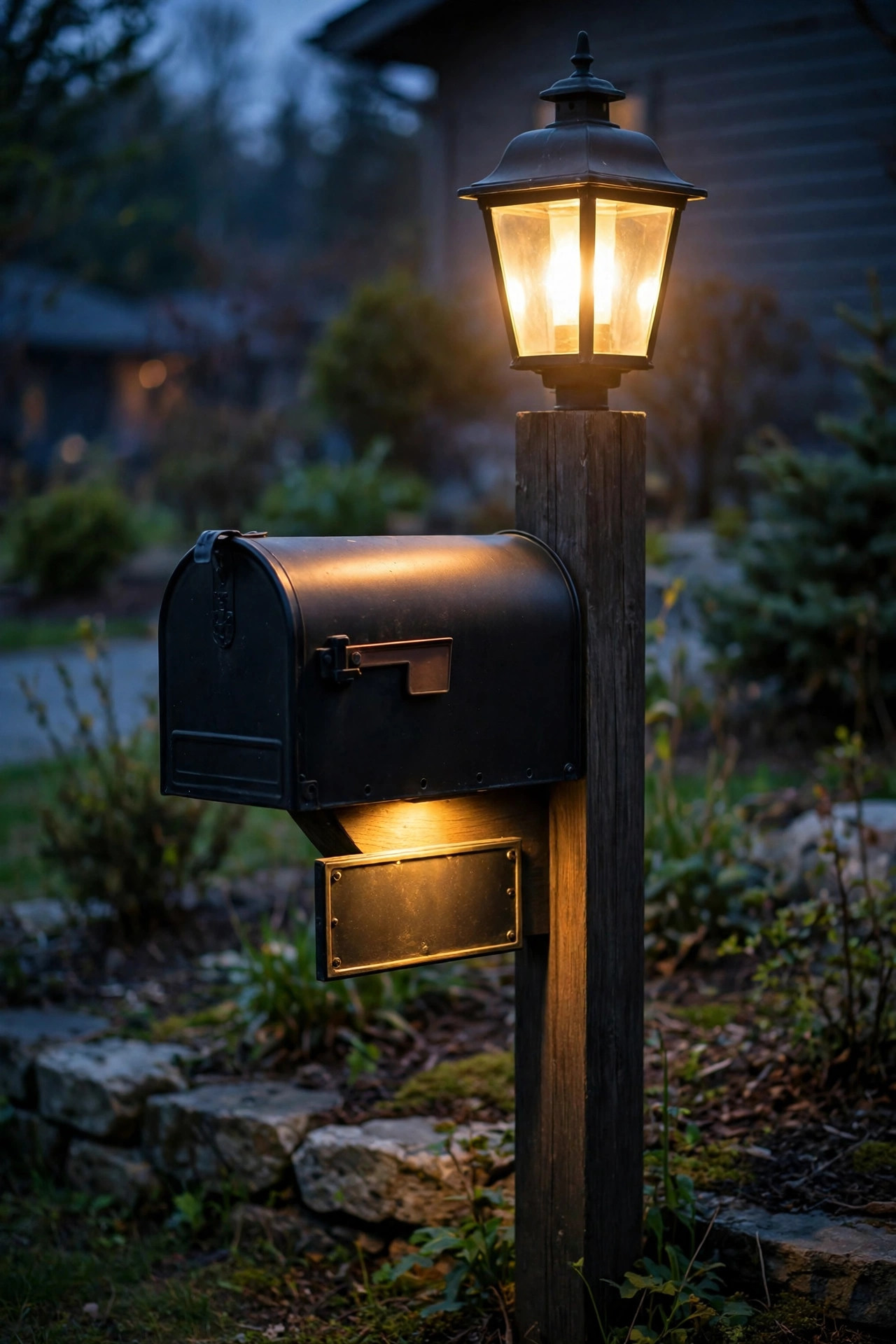
Delivery drivers and first-time guests judge your whole lighting plan by one moment: can they find the house number at night? A bollard at the mailbox washes the grass and the bottom of the post in lovely light — and leaves the address plaque itself in darkness, because the numbers sit 4 feet above its lamp. This is a post light's easiest win. A lamp head at 5 to 6 feet, mounted on the mailbox post itself or a matching post beside it, lights the plaque, the mailbox door, and the patch of ground where the mail carrier stands, all in one fixture. It also quietly improves security: a lit address helps emergency vehicles find you faster, which is the least glamorous and most important reason on this whole list. Keep it warm white, 2700K, and modest — 400 to 600 lumens is plenty; you're lighting a mailbox, not landing planes. If your mailbox sits across the street or far from power, a quality solar post cap light is the practical pick here. Please skip the bollard for this job entirely.
Suggested budget range: $60 – $210.
9. The Front Door Statement: One Post Light as a Focal Point
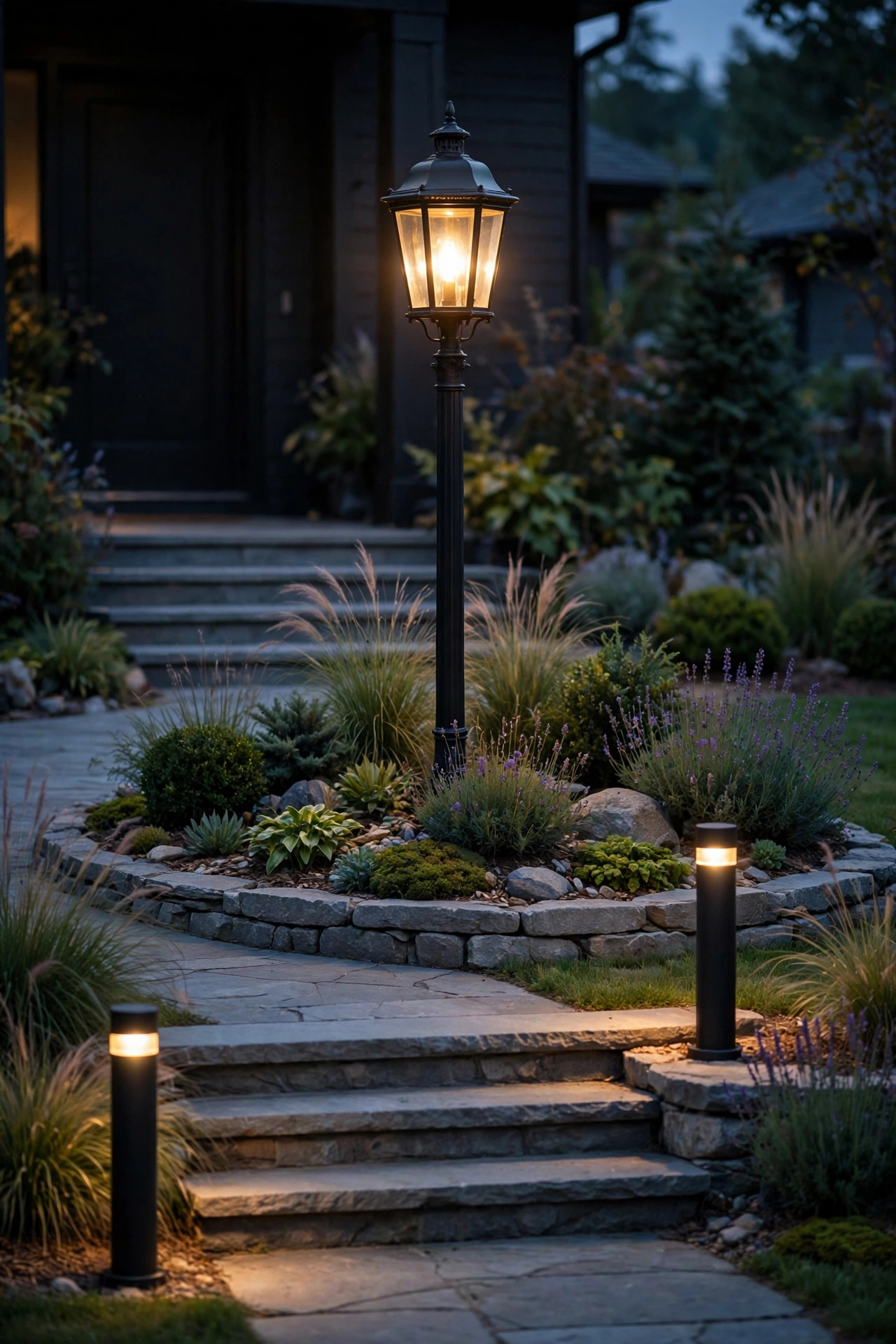
Every front yard wants a focal point after dark, and height is what makes one. A single handsome post light — a lantern head on a 6- to 7-foot post, planted in a small island bed where the walkway bends toward the porch — becomes the exclamation point of the whole entry. Neighbors' eyes land on it first; everything else organizes around it. A bollard, by design, recedes. That's its virtue on a path and its limitation as a statement: at 2 feet tall and aimed at the ground, it will never anchor a composition. So for this scenario I don't just prefer the post light, I plan the bed around it: post centered, low plantings radiating out, and two small bollards flanking the walk's final steps as supporting actors. Choose the lantern head to echo your porch fixture's style — same finish family, same glass texture — so the yard reads as one designed system. And put it on the same timer or photocell schedule as the porch light, because a focal point that forgets to turn on is just a pole.
Suggested budget range: $130 – $360.
10. On Slopes and Terraces: Bollards That Follow the Land
Sloped yards break tall fixtures. On a hillside, a post light planted on the high side towers and glares down at the neighbors below, while one planted on the low side gets visually swallowed by the grade above it — and every post on a slope eventually leans as soil creeps. Bollards handle terrain gracefully because they're already low and read as part of the landscape rather than objects stuck into it. On terraced beds, one 24- to 30-inch bollard per terrace level, set just behind the retaining wall, lights each tread of the garden like a staircase of glowing landings. On an open slope along a switchback path, short bollards on the uphill side of each turn skim light across the path without any fixture standing taller than the hill itself. Choose sturdy ground stakes or surface mounts rated for the soil movement, and give extra attention to drainage — a bollard sitting in a slope's runoff path needs a proper gravel base or it will tilt by spring. Follow the land's lead: the more the grade changes, the lower your lights should sit.
Suggested budget range: $180 – $440.
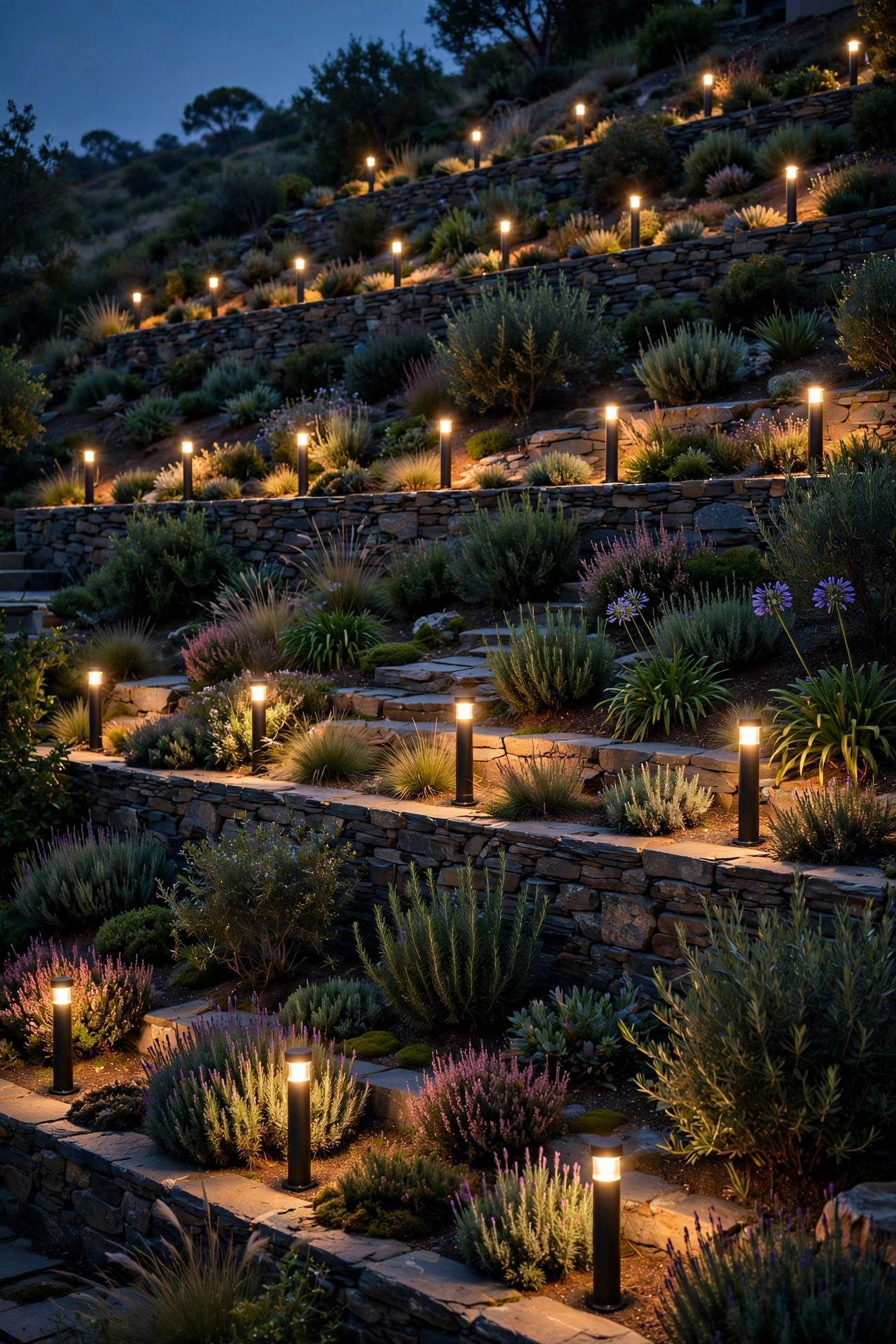
11. The Narrow Side Yard: Bollards That Spare the Neighbors
The strip between your house and the fence — the gate run, the path to the trash bins and the AC unit — is where good lighting manners matter most. Your neighbor's bedroom window is often 10 feet from that path. A post light there, lamp at 6 feet, shines straight over the fence and into that window every time it runs, and it puts your own walk in a weird top-lit glare. Bollards are the polite answer: at 18 to 24 inches, shielded and aimed down, they light your feet and the gate latch while the fence itself blocks nearly all spill. Space them 6 to 8 feet apart — side yards are dim, enclosed spaces, so the light bounces and you need less than you think, around 100 to 200 lumens per fixture. I'll go further: put side-yard bollards on a motion sensor so they're dark 95 percent of the night. Nobody's admiring the view of the recycling bins at 2 a.m. This is also one of the few places I endorse the cheap solar bollard without hesitation; the run is short, the need is brief, and the wiring isn't worth it.
Suggested budget range: $70 – $230.
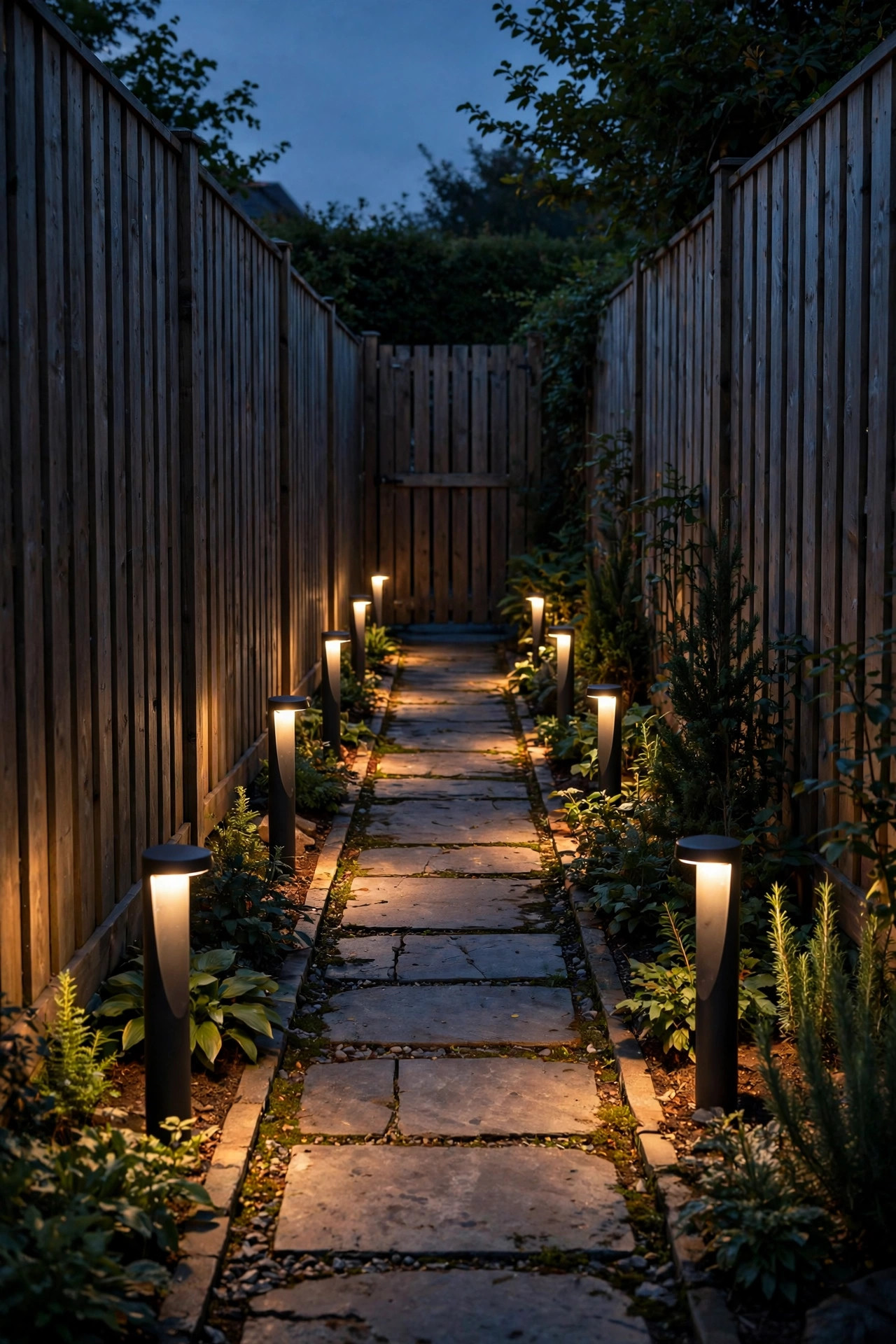
12. In Snow Country: Post Lights Stay Visible All Winter
If you live where the plow builds a 3-foot snowbank along your driveway and walk, I have unfortunate news about your 24-inch bollards: from December to March, they are under the snowbank. Buried fixtures don't light anything, and the freeze-thaw shove of packed snow bends more bollards than cars do. In serious snow country, post lights are the honest choice for driveways and walks. With the lamp at 6 feet, a post light shrugs off all but the most historic drifts, marks the driveway entrance for guests driving in at night, and stays findable when you need to service it in January. Compromise positions exist: tall 36- to 42-inch bollards survive moderate-snow regions fine, especially set back 2 feet from the plow's throw line, and solar path stakes can simply be pulled and stored for winter. But if your street's snowbanks regularly swallow a mailbox, buy height. One more cold-climate note: choose fixtures with sealed, gasketed heads and LED modules rated for sub-zero starts, because cheap drivers sulk at -10°F exactly when you need them most.
Suggested budget range: $150 – $420.
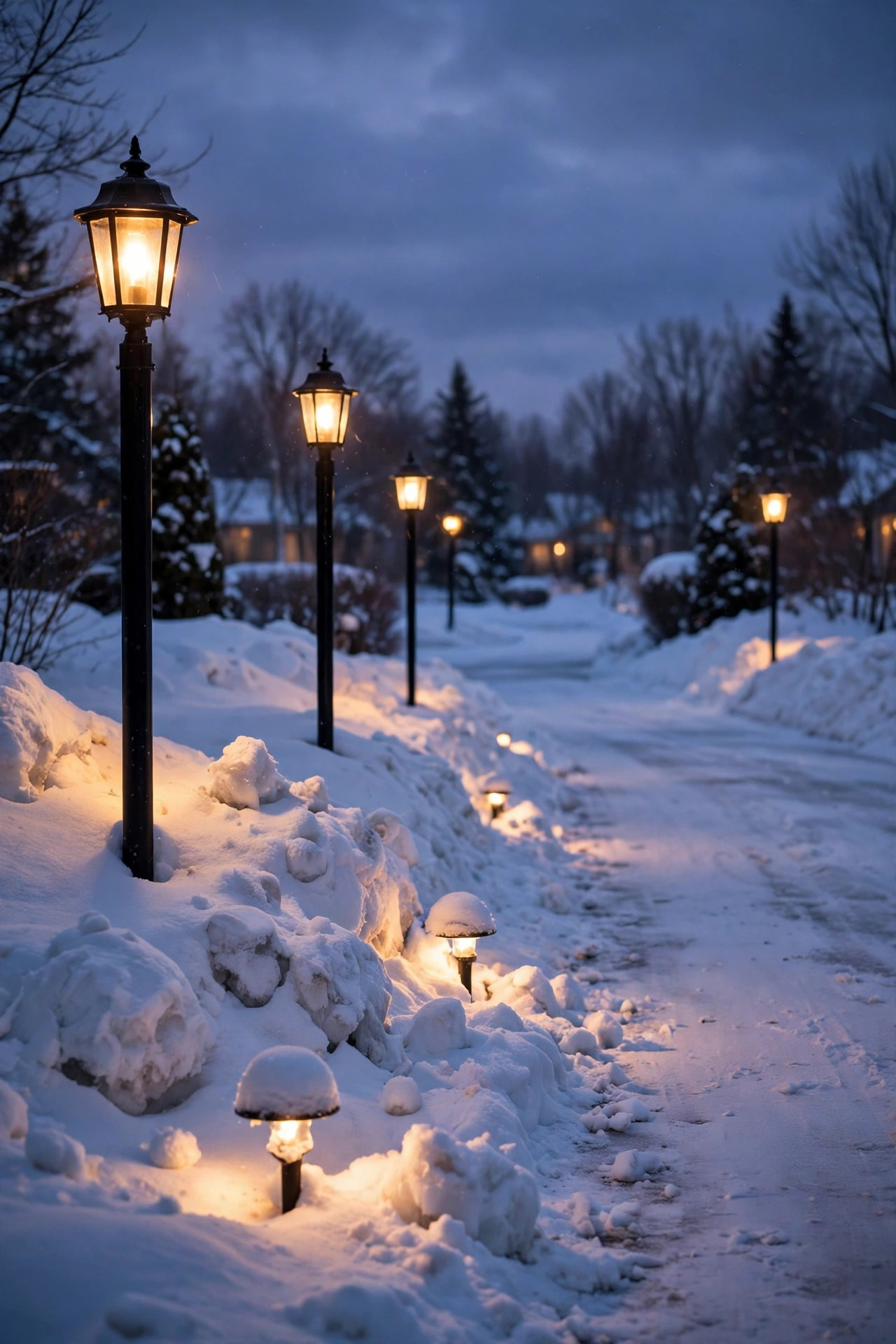
13. Reading From the Street: Post Lights for Nighttime Curb Appeal
Stand across the street from your house at 9 p.m. and look honestly. What reads from that distance isn't the pretty scallops on your walkway — those are for people already in the yard. What reads is vertical light: the warm windows, the porch lantern, and any fixture tall enough to hold its own in the composition. This is why one or two post lights transform nighttime curb appeal out of proportion to their cost. A pair of 6-foot post lights flanking the driveway entrance or framing the front walk gives the house a lit "gateway," raises the perceived care level of the whole property, and — real-estate agents will tell you — photographs beautifully for listings. Bollards contribute from the street too, but as a dotted line of ground glow, a supporting rhythm rather than the melody. My formula for a typical suburban front: post lights own the street-facing punctuation marks (driveway entrance, walk start, mailbox), bollards handle everything inside the yard. If the budget forces one splurge, splurge on the posts the street can see and let the in-yard lights be simpler.
Suggested budget range: $260 – $680.
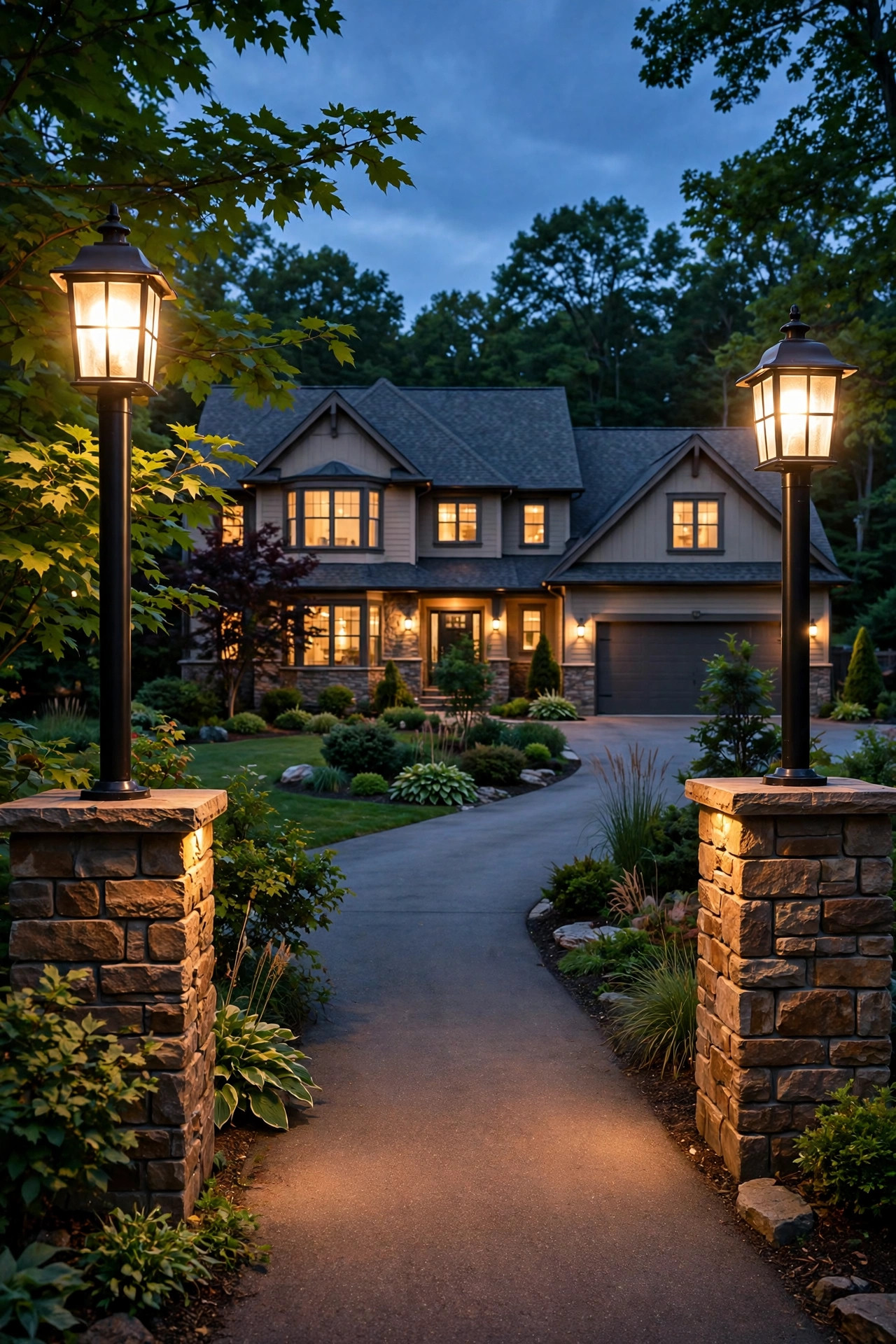
14. Style Match: Sleek Bollards for Modern Yards, Lantern Posts for Traditional Ones
Sometimes the height question is really an architecture question. Bollards are inherently modern objects — clean cylinders and rectangles, no ornament, light that appears from a slot or a frosted band. They belong with flat-front contemporary homes, gravel-and-grass landscapes, and anything with strong horizontal lines. Dropping a faux-colonial lantern post into that yard reads like a costume. Traditional, craftsman, farmhouse and colonial homes pull the other way: a post light with a lantern or carriage-style head, seeded glass and a black or bronze finish speaks the same language as the porch columns and divided-light windows, and its height echoes the verticals of the house itself. The middle styles — ranch, transitional, cottage — can honestly go either way, and there I'd decide by the scenarios elsewhere on this list instead of the style book. One caution that applies to both camps: match the finish and color temperature across every fixture you can see in one glance. A yard with brushed-nickel bollards, an oil-rubbed bronze post and 4000K light in one and 2700K in the other looks accidental no matter how good each fixture is alone.
Suggested budget range: $120 – $400.
15. Layering Both: Bollards for the Path, a Post Light as the Anchor
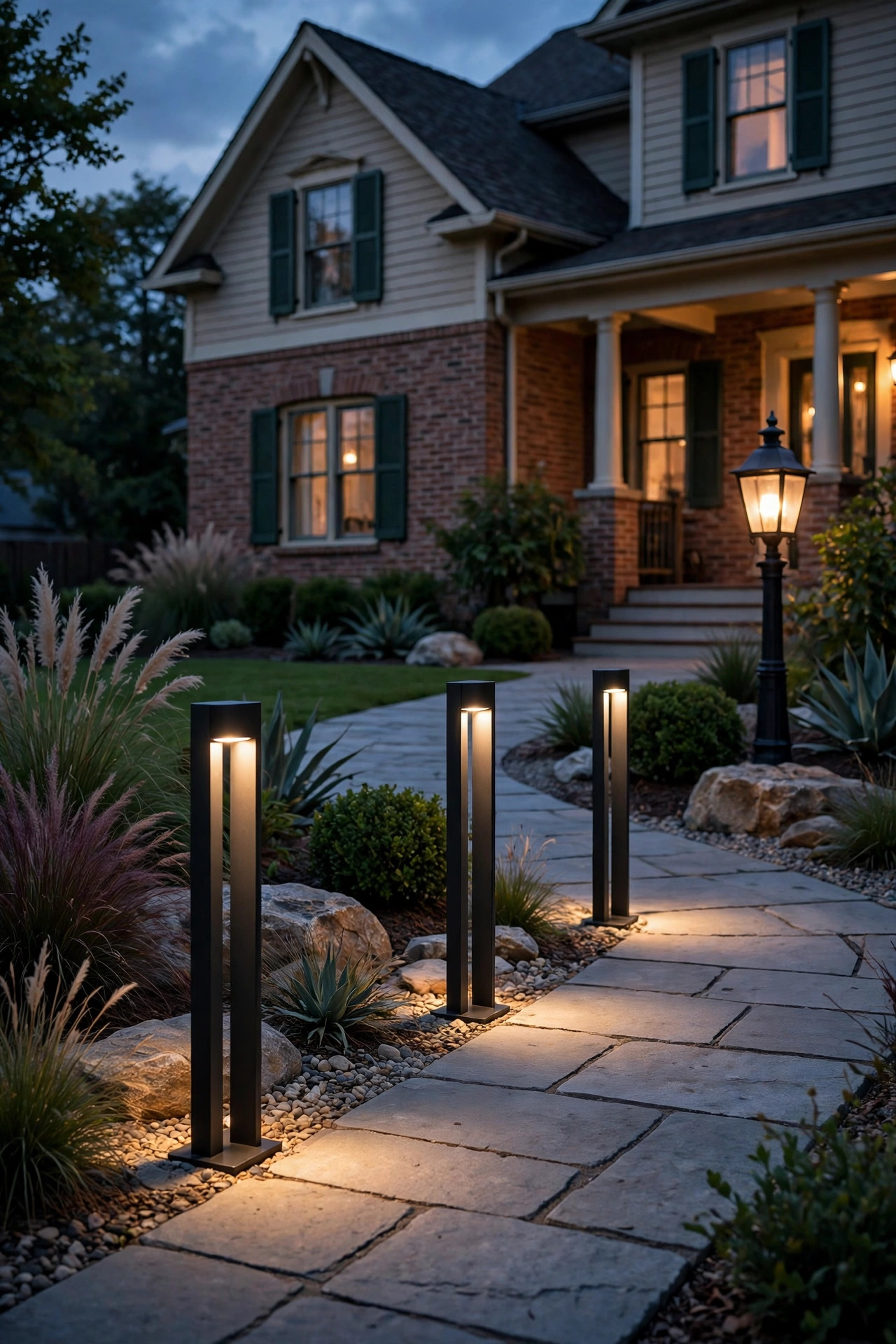
After fourteen scenarios of versus, here's the truth I layer into almost every yard I help with: the best plans use both, on purpose, at different jobs. Bollards are your ground layer — they mark the walk, edge the drive, ring the patio, all below knee-to-waist height, all throwing light down where feet go. A post light is your beacon layer — one, maybe two, placed at the yard's decision points: where the driveway meets the street, where the walk turns to the porch. That two-height structure is exactly how professional landscape lighting works, scaled down: low light for navigation, a little height for orientation and welcome. Practically, it also stretches a budget, because you only pay post-light prices and trenching for two fixtures while a row of affordable bollards does the nightly work. Wire them on the same low-voltage transformer if the wattage math allows, keep both at 2700K, and put the bollards on the same schedule. When readers send me "why does my yard look flat?" photos, nine times out of ten every fixture is the same height. Vary the height and the yard gets depth for free.
Suggested budget range: $340 – $780.
16. Counting the Cost: More Bollards vs Fewer, Taller Posts
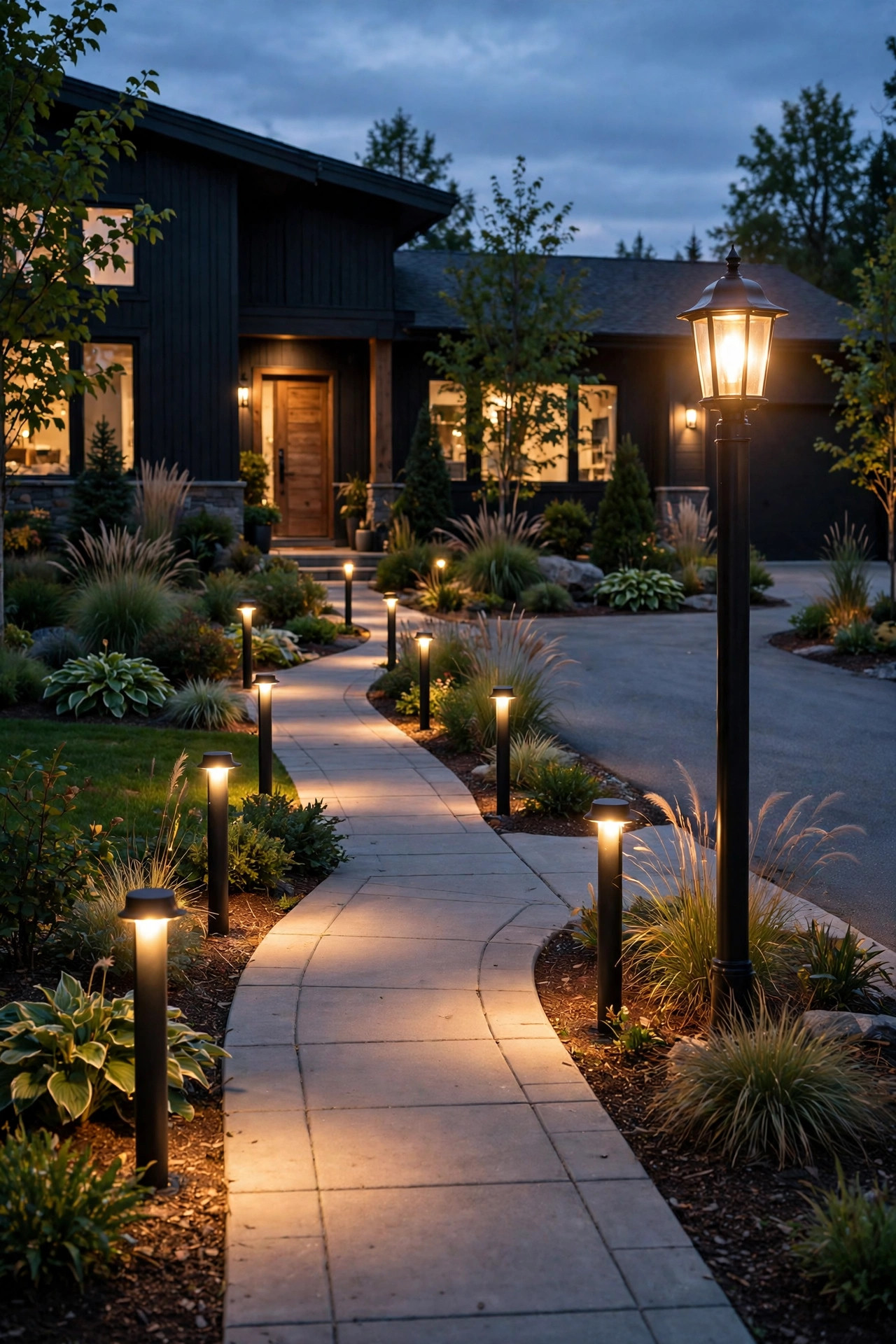
Let's do the honest math, because these two fixtures budget very differently. A decent LED bollard runs $40 to $120, but you need one every 8 to 10 feet, so a 40-foot walk wants four or five of them plus cable and a transformer share — call it $250 to $500 for the run. A quality post light costs more per fixture, $120 to $300 with the post, but one fixture covers the area of three bollards, so a driveway entrance pair lands around $300 to $700 installed on an existing circuit. Installation flips the advantage again: bollards on low-voltage cable are a genuine DIY weekend, while post lights at line voltage — or tall posts that need a concrete footing and a level, plumb set — push toward an electrician's invoice. Solar skews it once more: solar bollards are cheap and wire-free but dimmer and shorter-lived; solar post lights exist but the good ones cost nearly what wired ones do. My rule of thumb: if the run is long and straight, price it per foot with bollards; if the job is one or two focal points, price it per fixture with posts. Never compare sticker to sticker — compare lit result to lit result.
Suggested budget range: $250 – $700.
17. My Height Cheat Sheet: Bollard vs Post Lights by the Numbers
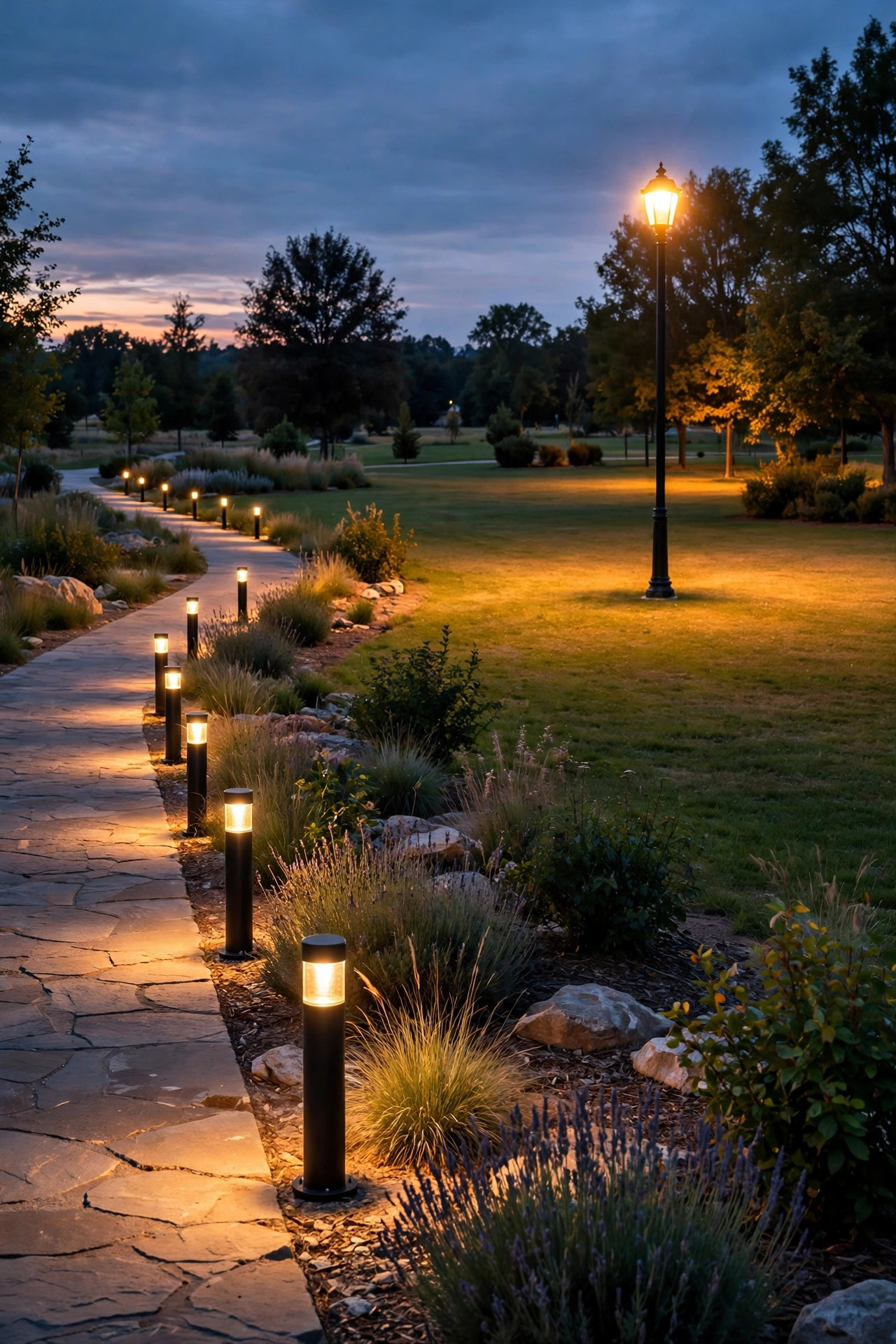
When readers want the short version, this is the cheat sheet I recite. Bollard vs post lights comes down to three numbers: fixture height, light spread, and spacing. Bollards: 18 to 42 inches tall, a useful pool of light 6 to 10 feet across, spaced 8 to 10 feet apart, 100 to 400 lumens each. Post lights: lamp at 5 to 7 feet on a 6- to 9-foot post, a useful glow 12 to 20 feet across, spaced 15 to 40 feet apart depending on the job, 400 to 1,200 lumens each. Choose bollards when the light's job is at ground level — paths, steps, patio edges, side yards — and when people will be sitting or swimming near it. Choose posts when the job involves distance or visibility — long drives, street presence, addresses, beds with tall plants, snow. And never mount any of either with the bare bulb visible at eye level from where people stand or sit; shielded heads and frosted lenses are non-negotiable in my yard. Print those ranges on a sticky note, walk your yard at dusk with a flashlight held at bollard height and then at post height, and the right choice for each spot will honestly just announce itself.
Suggested budget range: $100 – $500.
Frequently Asked Questions
How tall are bollard lights compared to post lights?
Bollards typically stand 18 to 42 inches tall, with most residential models in the 24- to 36-inch range — roughly knee to hip height. Post lights put the lamp head 5 to 7 feet in the air, on poles that run 6 to 9 feet overall depending on how much is buried or mounted. That height gap is why bollards light the ground at your feet while post lights light an area, and why the choice matters more than the fixture's style or finish.
How far apart should I space bollard lights and post lights?
For bollards, 8 to 10 feet apart gives you overlapping pools of light with no dark gaps on a walkway or driveway edge; go closer, around 6 to 8 feet, in enclosed side yards. Post lights cover far more ground, so 15 to 25 feet works for general yard lighting and up to 40 feet for beacon-style spacing along a long driveway. In both cases, stagger or alternate sides on paths rather than lining both sides in matched pairs, unless you want a runway look.
Are bollard lights or post lights brighter?
Per fixture, post lights usually win — 400 to 1,200 lumens is common, versus 100 to 400 for a typical residential bollard. But brightness at the fixture isn't brightness at the task. Because a bollard sits 2 feet from the path it's lighting, its modest lumens land almost entirely on the walking surface, while a tall post spreads its output over a wide circle, much of it on shrubs and lawn. For lighting a path well, four bollards often outperform one brighter post light.
Can I mix bollard and post lights in the same yard?
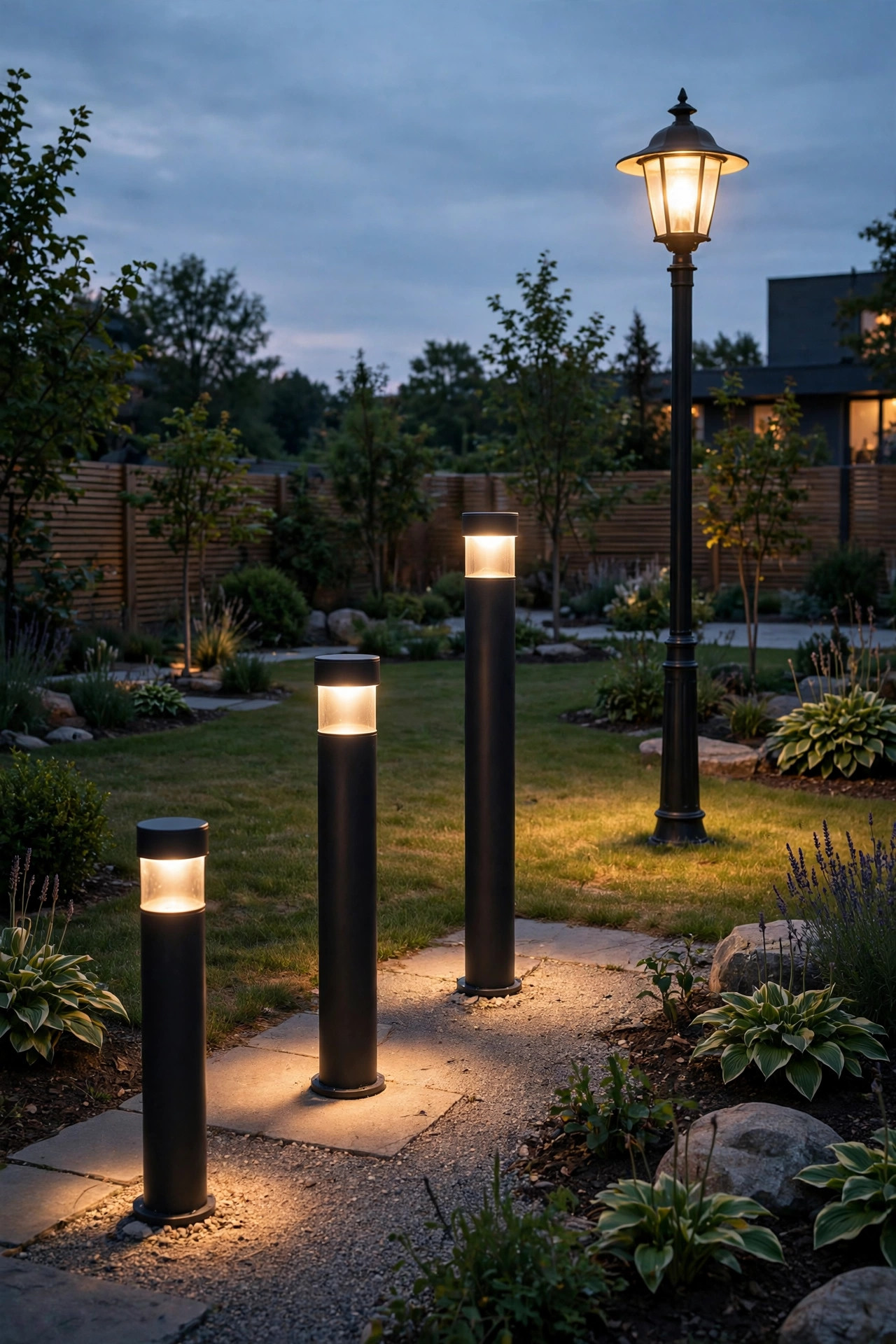
Please do — it's what I recommend in most yards. Use bollards as the ground layer for paths, steps and patio edges, and one or two post lights as beacons at the driveway entrance or walkway turn. The keys to making the mix look designed rather than random: one finish family across all fixtures, one color temperature (2700K is my default), and one control schedule so everything comes on together at dusk. Our walkway lighting ideas show several mixed-height layouts in action.
Conclusion
If you remember one thing from this whole bollard vs post lights tour, make it this: height follows the job. Ground-level jobs — walking, stepping, sitting, swimming — want low, shielded bollards that light the surface and stay out of eyes. Distance jobs — long driveways, street presence, tall plantings, deep snow — want the reach and visibility only a post light's height can give. And the yards that make neighbors slow down at night almost always layer both, bollards doing the quiet work at your feet while a post light or two stands up and says welcome. Measure your space, hold a flashlight at both heights after dark, and you'll know. Then come browse more of our outdoor lighting ideas here on the site — your yard's best version is usually one well-chosen fixture away.