Picture this: a summer thunderstorm rolls through at dinner, and by dessert your whole front yard is dark — porch light out, path lights out, the transformer silent. The breaker in the panel looks fine, and you're standing in the rain with a flashlight wondering what died. Honestly? Nine times out of ten, nothing died. Your GFCI outlet tripped, and it was doing exactly what it was designed to do. GFCI outdoor lighting setups are the unsung safety heroes of our yards, but they can also be the most confusing part of the whole system. I spent my first two summers in this house resetting ours weekly before I understood what it was telling me. This guide walks you through everything: what a GFCI actually does, where the code requires one, why yours keeps tripping, how to test it properly, and the small fixes that stop nuisance trips for good. By the end, you'll know exactly what's safe, what's not, and when it's time to call an electrician.

The Short Answer
A GFCI (ground fault circuit interrupter) watches the electricity flowing out to your outdoor lights and back; if even a tiny amount leaks somewhere it shouldn't — through water, a cracked cord, or a person — it cuts power in about 1/40th of a second. Every outdoor outlet your lighting plugs into should have this protection, either at the receptacle, at the breaker, or upstream. If yours trips repeatedly, that's information, not a defect: moisture and damaged cords cause most trips. Never bypass or remove GFCI protection to stop the tripping — fix the leak instead.
What a GFCI Actually Does, in Plain English
A regular breaker and a GFCI solve two completely different problems, and confusing them is where most of the mystery starts. Your breaker watches for too much current: if a circuit pulls more than its rated 15 or 20 amps, it trips to keep the wiring from overheating. That protects your house. A GFCI protects you. Electricity is supposed to flow out on the hot wire and return on the neutral wire in exactly equal amounts. A GFCI compares those two flows constantly, and if as little as 5 milliamps goes missing — about what a tiny night-light bulb uses — it assumes the current found another path. That path might be water inside a fixture, a cord with cracked insulation, or a person standing in wet grass. The GFCI cuts the power in as little as 1/40th of a second, long before that leak can do serious harm. Two things surprise most people. First, a GFCI doesn't need a ground wire to work; it compares current rather than listening to the ground, which is why electricians use them to make old two-wire outlets safer. Second, when it trips, it isn't being dramatic. It's reporting a real leak, every single time.
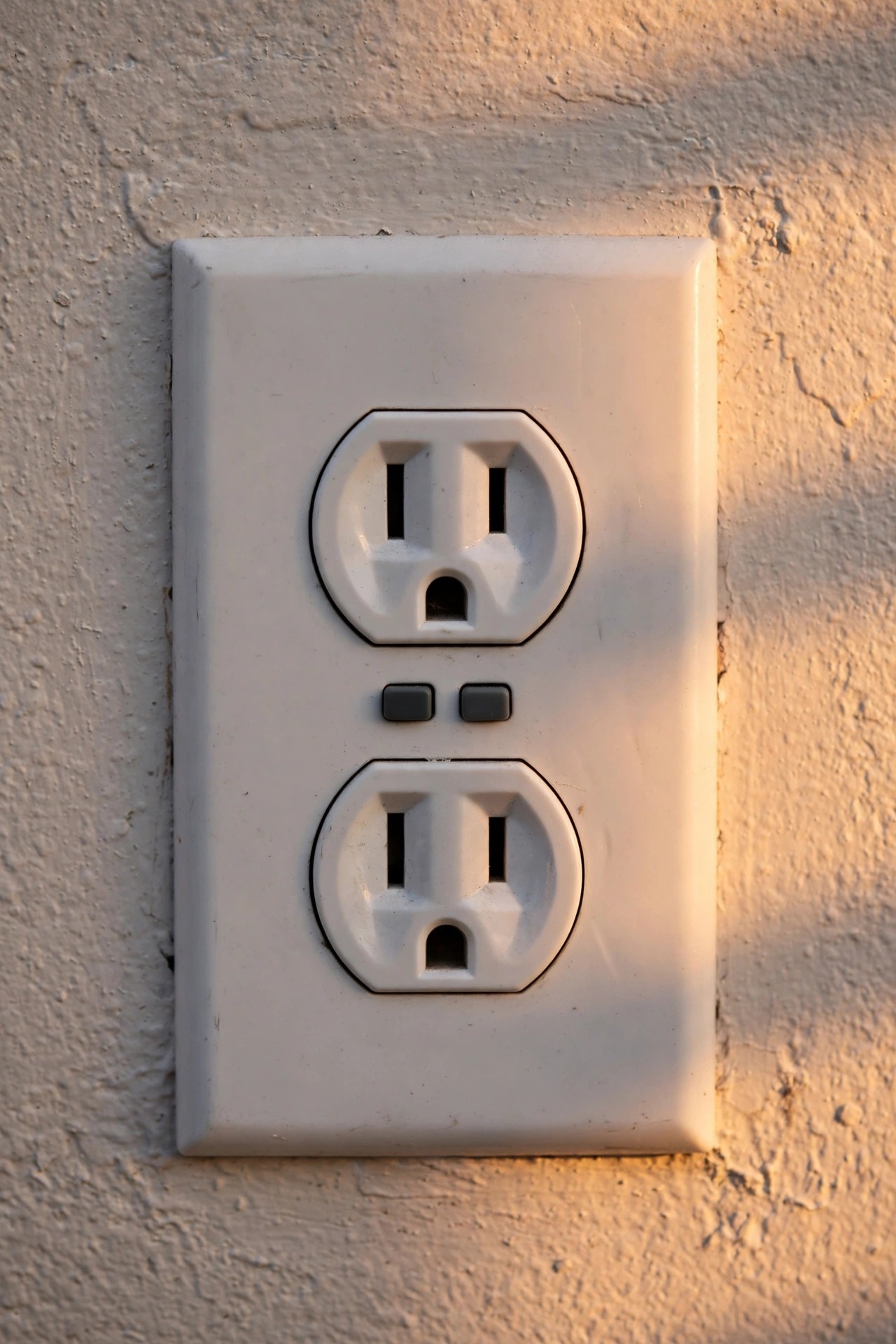
GFCI Outdoor Lighting: Where Protection Is Actually Required
The national electrical code used across most of the US requires GFCI protection on outdoor receptacles — essentially, any outlet outside your home's walls, plus the ones in garages and unfinished basements that so often feed outdoor gear. That matters for lighting because nearly everything in a typical yard plugs in somewhere: the low-voltage transformer mounted on the side of the house, string lights over the patio, the smart plug running your porch lanterns. If the outlet itself has GFCI protection, everything plugged into it inherits that protection. One protected outlet can also guard plain outlets wired downstream from it, which is why you sometimes find a dead patio outlet whose reset button turns out to live in the garage. Hardwired fixtures — porch sconces, floodlights, lamp posts wired straight into a junction box — follow slightly different rules depending on the circuit and your local code amendments, but the principle is the same anywhere water and electricity share space. Anything near a pool or hot tub plays by stricter rules again, and in my book that's firmly electrician territory. If your home predates these requirements, your outdoor outlets may have no protection at all. Nothing forces you to upgrade a grandfathered setup, but it's one of the simplest safety upgrades in the whole house. When in doubt, your local code office or a licensed electrician can tell you exactly what applies at your address, because rules do vary a little by state and city.
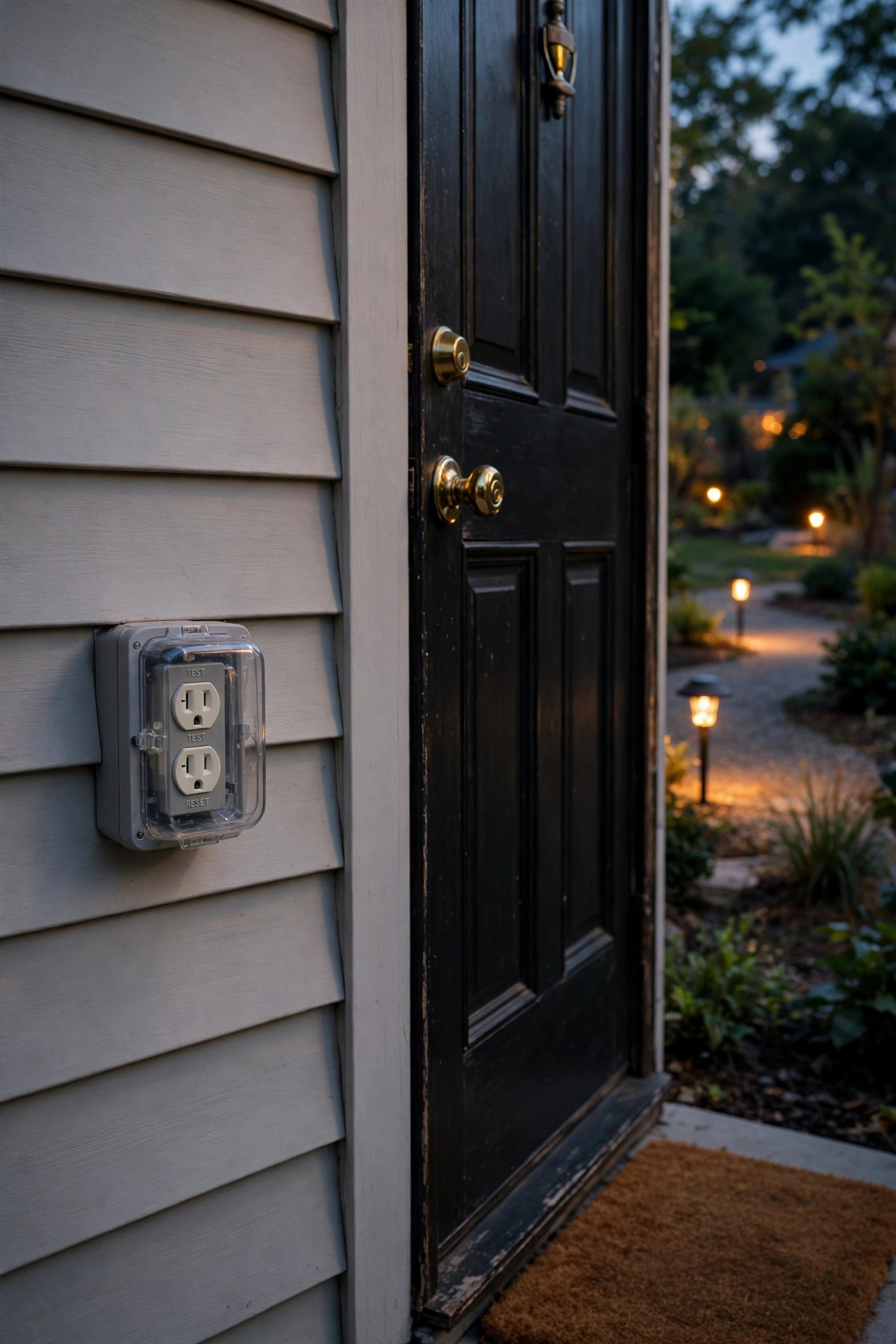
Three Ways to Get GFCI Protection, Honestly Compared
You have three real options, and the right one depends mostly on where your lights plug in. A GFCI receptacle puts the sensor and the reset button right at the outlet — this is the most common setup, and my favorite for lighting because when something trips at 10 p.m., you reset it where you stand instead of trekking to the panel in your slippers. Wired correctly, it also protects any plain outlets downstream of it. A GFCI breaker moves the protection into the panel and guards the entire circuit, including hardwired fixtures on that run. It's a tidy solution for older homes, but the reset lives indoors, and panel work is where many homeowners happily hire out. A plug-in GFCI adapter is the renter-friendly option: it sits between the outlet and your plug, needs zero wiring, and works beautifully for holiday lights or a temporary setup — just know it only protects what's plugged into it, and it walks away easily. Here's the honest comparison:
| Type | What it protects | Effort | Best for |
|---|---|---|---|
| GFCI receptacle | That outlet, plus outlets wired downstream | Swapping one outlet | Most outdoor outlets |
| GFCI breaker | The whole circuit from the panel | Panel work, often hired out | Hardwired fixtures, whole runs |
| Plug-in GFCI adapter | Only what's plugged into it | None — just plug it in | Renters, holiday lights, temporary setups |
Whichever you choose, the protection has to sit between the panel and the light. Everything downstream of the device is protected; everything upstream is not. And a mix is perfectly fine — a receptacle guarding the patio, a breaker guarding the hardwired porch lights — because protection is protection, wherever it happens to live.
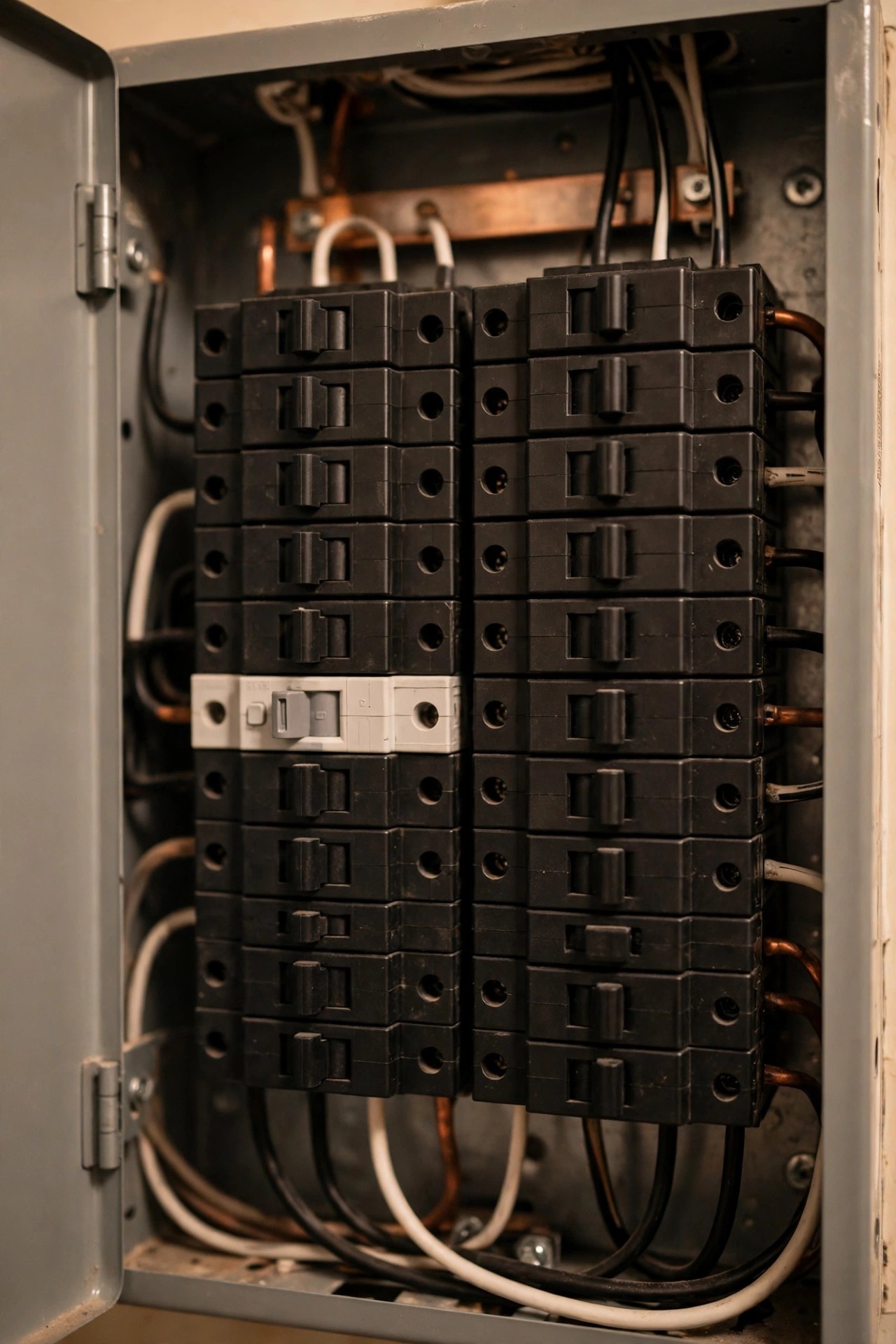
Step-by-Step: Testing Your GFCI Like You Mean It
A GFCI only protects you if it still works, and these devices can fail silently — especially older ones that have weathered a decade of storms and surges. Testing takes about ten seconds, and I do it on the first of every month, right after I change the porch light timer. Here's the routine:
1. Plug something obvious into the outlet — a small lamp, a radio, or a plug-in outlet tester — and turn it on.
2. Press the TEST button. You should hear a click, the RESET button should pop out slightly, and your lamp should go dark. That's the device simulating a ground fault and cutting power.
3. Press RESET firmly. Power should come back and the lamp should light again.
4. Repeat from any downstream outlets that rely on this one for protection — they should lose power at step 2 as well.
If the outlet won't trip, trips but won't reset, or the buttons feel mushy and dead, the device has failed and needs replacing — it may still deliver power while offering no protection at all, which is the worst of both worlds. Newer self-testing models check themselves and lock out when they die, but millions of older outlets don't. After any big lightning storm, I test ours again even if the month isn't up. Surge damage is invisible, and the test button is the only way to know.

Why GFCI Outdoor Lighting Keeps Tripping
Here's the mindset shift that saved my sanity: a trip is a clue, not a malfunction. Read the pattern and it usually points straight at the culprit. If the GFCI trips the instant you reset it, you likely have a hard fault — a cord pinched or cut through, water sitting in a socket, or a fixture with damaged wiring making direct contact where it shouldn't. If it holds for minutes or hours and then lets go, you're usually chasing cumulative leakage: several devices each leaking a trickle — an aging transformer, a damp smart plug, a long cable run — that adds up past the trip threshold. Trips that arrive with rain are moisture, almost every time, and I'll dig into that next. Trips at dusk suggest whatever wakes up at dusk: the photocell switching the transformer on, the timer starting the string lights. The most reliable diagnostic costs nothing: unplug everything from the circuit, reset the GFCI, then plug devices back in one at a time, waiting a few minutes between each. The one that trips it is your problem child. In my experience, the cause is a damaged cord or a wet connection far more often than a "bad" GFCI. Devices do wear out, but convict them last, not first.
Moisture: The Sneaky Cause Behind Most Trips
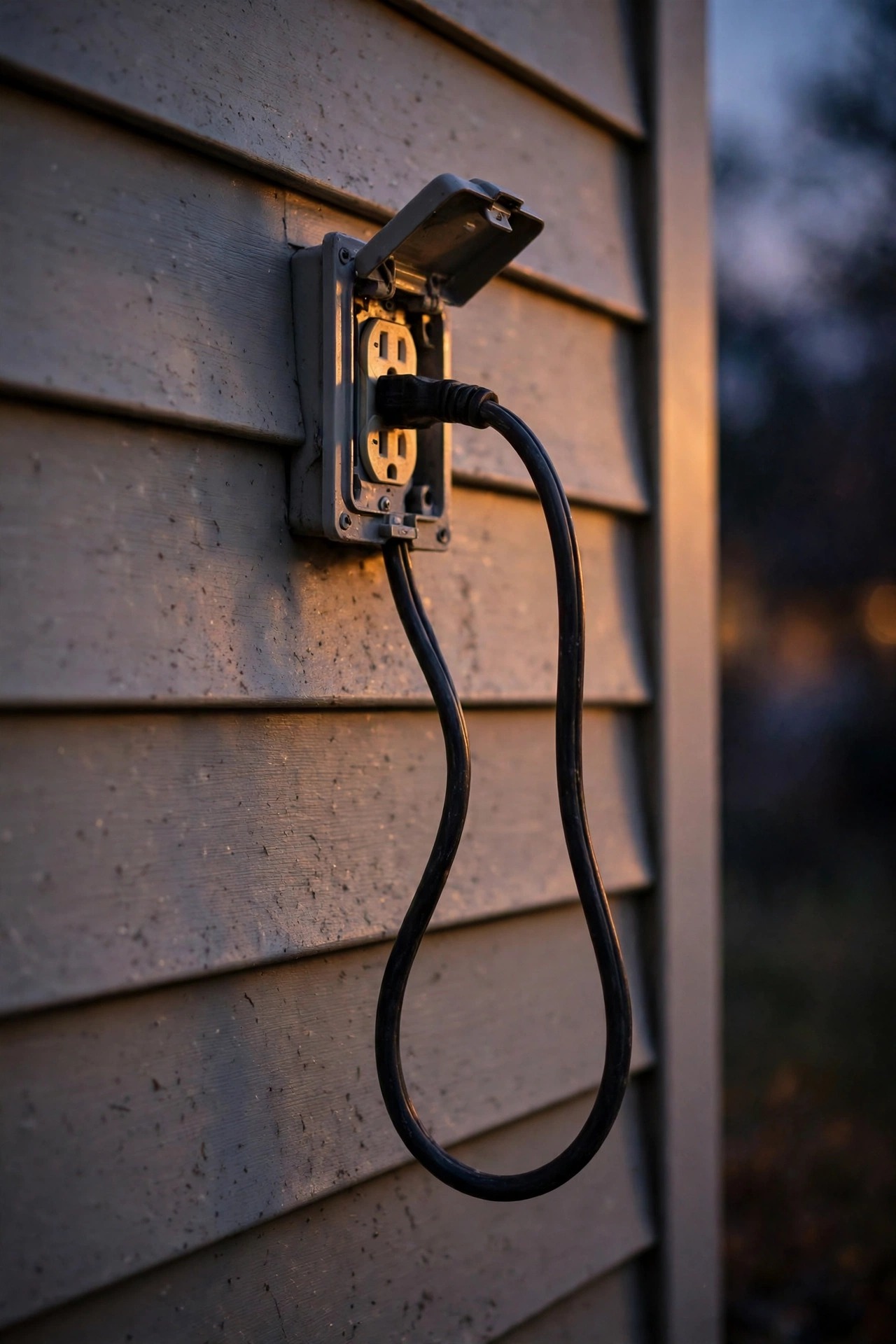
If I had to bet on one cause of repeat tripping, I'd bet on water every time — and not dramatic water, either. Dew condensing inside a fixture at dawn. A sprinkler that kisses the same shrub — and the splice buried behind it — every morning. Rain driven sideways under a cover that was never rated for weather. Moisture creates exactly the kind of slow, tiny leak a GFCI is built to catch, and it explains the classic pattern: trips after storms, trips in the morning, behaves perfectly on dry weekends. The defenses are humble but they work. Keep every connection up off the soil and out of mulch, where damp lingers longest. Give cords a drip loop — a gentle U-shape below the outlet — so water runs down and drips off instead of tracking along the cord into the plug. Use gel-filled, waterproof connectors on low-voltage splices rather than the twist-on kind meant for dry indoor boxes. Check fixture gaskets when you change bulbs; a cracked rubber seal is an open invitation. And when a trip follows a storm, let things dry before you convict any hardware: a GFCI that resets happily after a dry day has told you the whole story.
Transformers, Timers and Smart Plugs on a GFCI Circuit
Low-voltage landscape lighting is wonderfully safe out in the yard — 12 volts won't hurt you — but remember that the transformer itself plugs into a full 120-volt outlet, and that plug-in point is exactly where GFCI protection belongs. Everything after the transformer inherits protection from the outlet, which is one more reason I like the receptacle style: it's right there at the system's front door. A few quirks worth knowing. A transformer switching on can draw a brief inrush of current, and a very old, tired GFCI occasionally objects to it — if a brand-new system trips only at startup, that's a conversation to have before replacing parts at random. Timers and smart plugs should plug into the protected outlet, never between the panel and the GFCI in some improvised arrangement; protection lives at the outlet and flows downstream, full stop. Make sure smart plugs carry a genuine outdoor rating and still fit under the outlet's weather cover. And think about eggs and baskets: one trip darkens everything on that circuit. I split our front and back yards onto two different protected outlets, so a single fault leaves us with half a lit yard instead of a blackout. If you're planning a system from scratch, my walkthrough on installing low-voltage landscape lighting shows how the transformer and outlet relationship works in practice.

Weather Ratings, Covers and Boxes That Keep Water Out
Protection is a team effort: the GFCI catches leaks, but good hardware keeps the leaks from happening. Start with the receptacle itself — outdoor outlets should be marked WR, for weather-resistant, with corrosion-resistant contacts built to survive damp air. Then the cover. Those flat flip-up lids only protect an outlet when nothing is plugged in, which for lighting that stays connected all season means they protect it never. What you want is an in-use cover — the deeper "bubble" style that closes completely over a plugged-in cord — rated for wet locations. Fixture ratings matter too: a sconce listed for damp locations belongs under a porch roof, while anything rained on directly needs a wet-location listing; my guide to wet vs. damp location fixtures breaks down which goes where, and the companion piece on IP ratings for outdoor lights decodes those two-digit numbers on the box. Seal the top and sides of the mounting box with exterior caulk, but leave the bottom edge open so any water that does get in can escape instead of pooling. None of this is glamorous. All of it is the difference between a system that trips twice a year and one that trips twice a week.

What It Costs in 2026
The parts, honestly, are refreshingly reasonable. A weather-resistant GFCI receptacle runs $20–$35 at most home centers. A good in-use wet-location cover adds $10–$25. A GFCI breaker for the panel typically costs $45–$90 depending on your panel type. A plug-in GFCI adapter — the no-wiring option — runs $25–$45, and a plug-in outlet tester with a GFCI test button is $15–$30 well spent if you have several outlets to check. Hiring it out is where the range widens. Electricians commonly charge $75–$150 per hour, and a straightforward like-for-like GFCI outlet swap usually lands between $150 and $300 total, parts included. Adding a brand-new outdoor outlet where none exists is a bigger job — often $250–$500 depending on how far the wiring has to run. A dedicated troubleshooting visit to hunt a mystery trip typically runs $100–$250, though a good electrician finds most faults within the first hour. Running costs, happily, are a non-issue: a GFCI draws a trickle of standby power, well under a watt for most models, so protecting your whole yard costs pennies a year. My honest take: if you're comfortable swapping an outlet with the power off and verified, the DIY route is genuinely easy. If the job involves the panel, a new circuit, or anything near the pool, that's pro money well spent.

5 Mistakes That Leave Your Yard Unprotected
After years of my own trial and error — and plenty of error — these are the mistakes I see most often, including in my own yard's early days. One: swapping a tripping GFCI for a plain outlet to make the tripping stop. This silences the alarm while the leak carries on, and it's the single most dangerous fix on this list. Two: leaving a flat flip cover "protecting" an outlet with lights plugged in for months at a time — the cover does nothing while a cord is connected. Three: resetting the button without ever asking why it tripped. The third reset should always come with an investigation. Four: never testing. An untested GFCI might have died years ago; you'll only find out the hard way. Five: outdoor power strips and indoor extension cords pressed into permanent yard duty. They're not rated for weather, they collect water beautifully, and they leak current like it's their job. Every one of these mistakes is cheap and easy to correct — which is exactly why there's no excuse to live with them. Pick the one that stings a little (we all have one, honestly) and fix it this weekend; it takes less time than a whole summer of resetting the button.
Seasonal GFCI Care: A Five-Minute Routine
None of this asks much of you — five minutes, a few times a year, keeps the whole system honest. Monthly, press TEST and RESET on every outdoor GFCI; I tie it to the first of the month so I don't have to remember it separately. Label each protected downstream outlet with a small "GFCI Protected" sticker and note where its reset lives — future you, standing in the dark, will be grateful. Every spring, walk the yard before the season starts: open each cover, look for cracked plastic, tired gaskets, wasp nests and standing water, and check that bubble covers still latch. After any major storm, test again and eyeball the fixtures for water inside the lenses. In fall, before the holiday lights go up, test once more and retire any cord with cracked or chewed insulation — no exceptions, no "one more season." Winter asks the least: keep covers closed on unused outlets and let the system be. That's genuinely it. A GFCI is a quiet little guardian, but like anything mechanical, it only guards you well if you check on it now and then. Five unhurried minutes, a few times a year, and you can go back to enjoying the glow without ever thinking about what's standing guard behind it.

Frequently Asked Questions
Can I just replace a tripping GFCI with a regular outlet?
Please don't. A GFCI trips because current is leaking somewhere it shouldn't, and swapping in a plain outlet removes the protection while the leak continues — the shock hazard stays, the warning goes. It's also a code violation for outdoor receptacles. Find the leak instead: unplug everything, reset, and add devices back one at a time. If the outlet trips with nothing plugged in, the device itself or the wiring needs an electrician's eyes.
Does low-voltage landscape lighting still need GFCI protection?
The low-voltage side of the system — the 12-volt cable and fixtures out in the yard — is genuinely low-risk to touch. But the transformer plugs into a standard 120-volt outlet, and that outlet needs GFCI protection like any other outdoor receptacle. So yes: protection belongs at the plug-in point, and everything downstream benefits from it. Solar lights, having no connection to house power at all, are the one true exception.
How often should I test my outdoor GFCI outlets?
Manufacturers and safety organizations recommend monthly, and that's the rhythm I keep — it genuinely takes ten seconds per outlet. Test after major storms too, since surges and lightning are leading causes of silent GFCI failure. If the TEST button doesn't cut power or the RESET won't hold, the device has failed and should be replaced promptly; an outlet that delivers power without protection is worse than a dead one, because it lies to you.
Why does my GFCI trip only when it rains?
That's the classic moisture signature, and in a way it's good news: your GFCI is working beautifully and reporting a small, real leak. Water gets into a fixture socket, a splice, or under an inadequate cover, bridges a tiny current path, and the device does its job. The fix is detective work — inspect covers, gaskets and connections, upgrade flat covers to in-use bubble covers, and raise splices out of the mulch. If it resets and holds on dry days, moisture is confirmed as the culprit.
Conclusion
Here's what I hope sticks: GFCI outdoor lighting protection isn't the fussy, temperamental part of your yard — it's the part quietly watching over all the rest. A trip isn't an annoyance to defeat; it's a message to read. Keep the water out with honest covers and ratings, test the little buttons monthly, and fix leaks instead of silencing them, and your lights will glow through storm season after storm season. If this guide got you curious about the rest of the system, browse the site for more outdoor lighting ideas — the pretty stuff is a lot more fun once the safe stuff is handled.