There is a particular kind of magic that happens on a coastal porch about twenty minutes after sunset. The heat finally breaks, the breeze picks up off the water, and if your lighting is right, nobody wants to go inside. Getting that glow took me a few summers of trial and error, because salt air is hard on fixtures and a dark porch is no fun at all. These coastal porch lighting ideas are the ones that actually worked for me: a mix of wall lanterns, rope pendants, solar strings, and low, warm layers that make the whole space feel like a beach-house postcard. My rule is the same one I use in every outdoor space: layer it. One layer of light washes the porch for safety, one layer glows at sitting height where faces are, and one layer sparkles overhead or along the rail. Build those three layers and even a tiny porch feels generous. Every idea below is chosen for salty, breezy reality, with wet-location ratings, flameless options for windy nights, and finishes that will not rust out by Labor Day.

1. Layered Light Is the Base of All My Coastal Porch Lighting Ideas
If you take one thing from this post, take this: a porch lit by a single bare bulb looks like a gas station, and nobody lingers there. I plan every porch in three layers. First, a soft ambient wash — wall lanterns or a ceiling fixture — so the whole space is usable and safe. Second, light at sitting height: table lanterns and low glows that land right where faces are, because that is what makes people look relaxed instead of interrogated. Third, a little sparkle: string lights, post caps, or a pendant with some personality. On a coastal porch I keep every layer warm, around 2700K, so the light echoes sunset instead of fighting it. Start by counting your layers out loud. If you have overhead light but nothing at chair height, add lanterns before you buy anything else. If the porch glows but the steps disappear into shadow, that is a layer problem too. Once the layers balance, the fancier ideas below are just styling — the bones are already right, and the whole porch feels calm, finished, and a little bit luxurious.
Suggested budget range: $40 – $180.
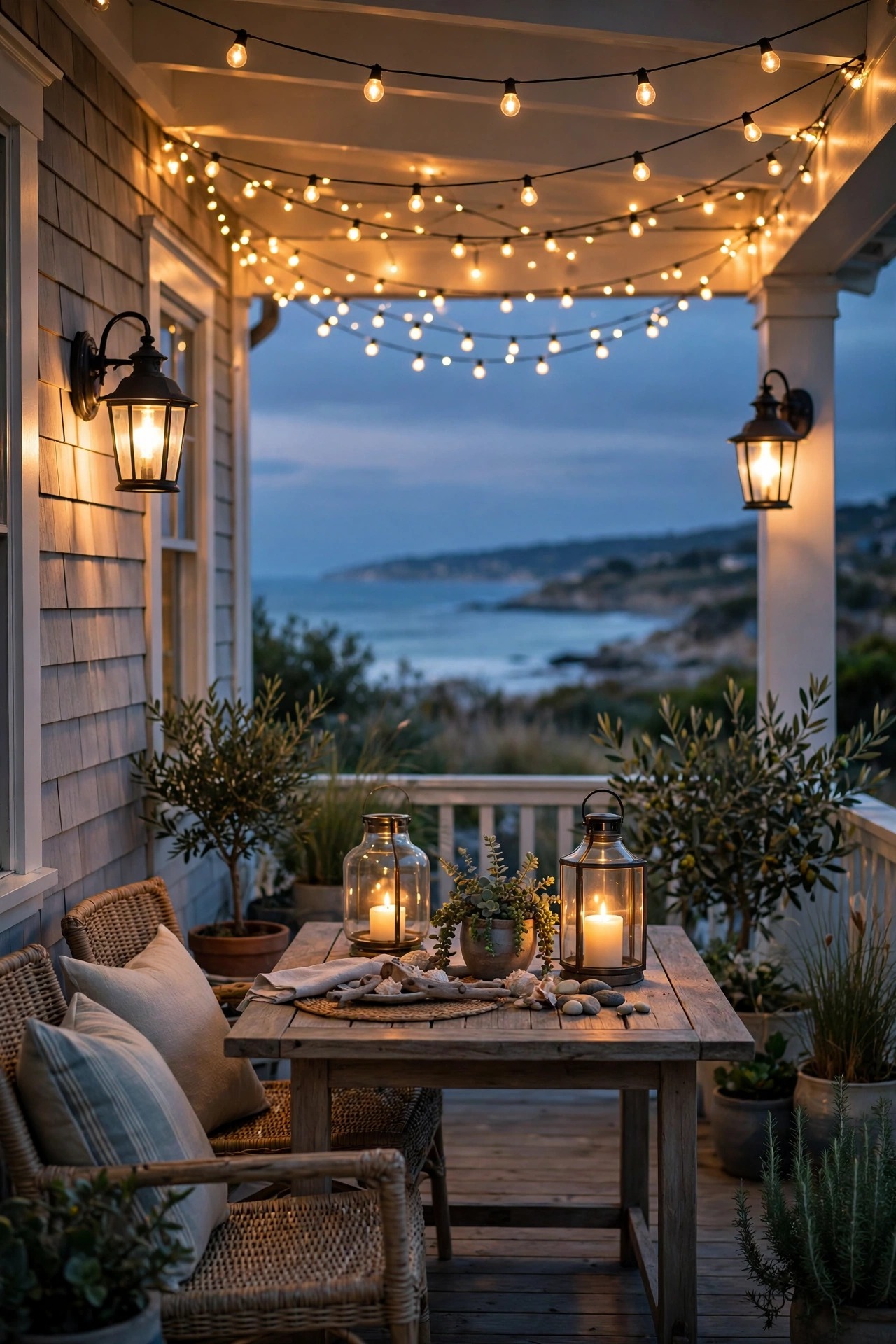
2. Flanking Wall Lanterns in Finishes That Survive Salt Air
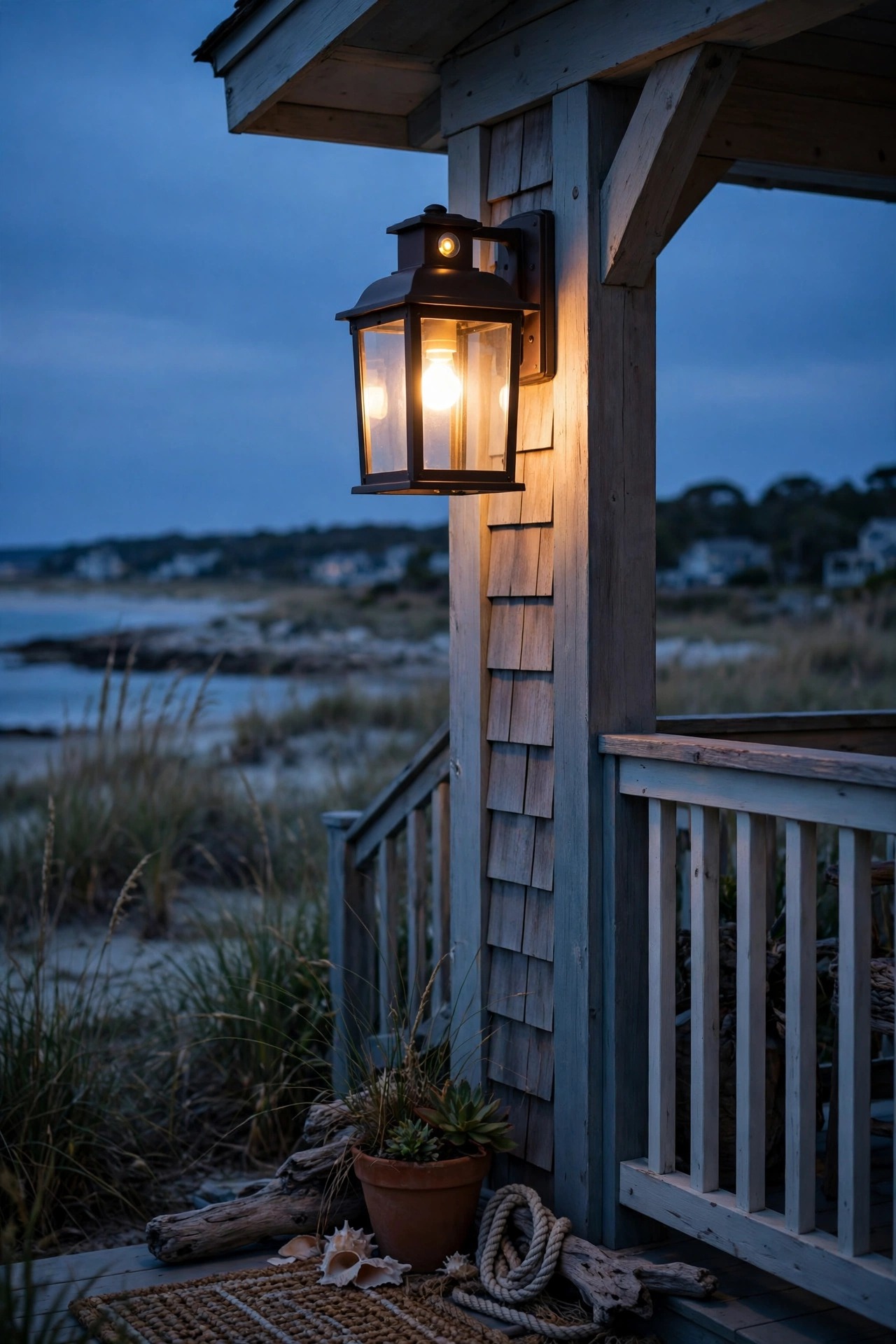
The pair of lanterns beside the front door does more work than any other fixture on my porch — it says welcome home, lights the lock, and frames the whole entry. Mount them so the center of each lantern sits about 66 inches off the porch floor, roughly at eye level, and size them generously: on a coastal home, a lantern that looks almost too big inside the store is usually perfect outside. The finish is where coastal porches punish shortcuts. Salt spray creeps into cheap painted steel and bubbles it within a season. I stick with powder-coated aluminum, solid brass that is allowed to patina, marine-grade stainless, or resin composite that simply cannot rust. Every fixture out here should carry a wet-location rating, not just damp. For bulbs, two LED filament-style bulbs at 2700K, around 800 lumens each, give that warm harbor glow without glare. I break down more finish-by-finish advice in my full guide to coastal outdoor lighting, but the short version is simple: buy the marine-grade version once, or buy the cheap version every two years.
Suggested budget range: $90 – $260.
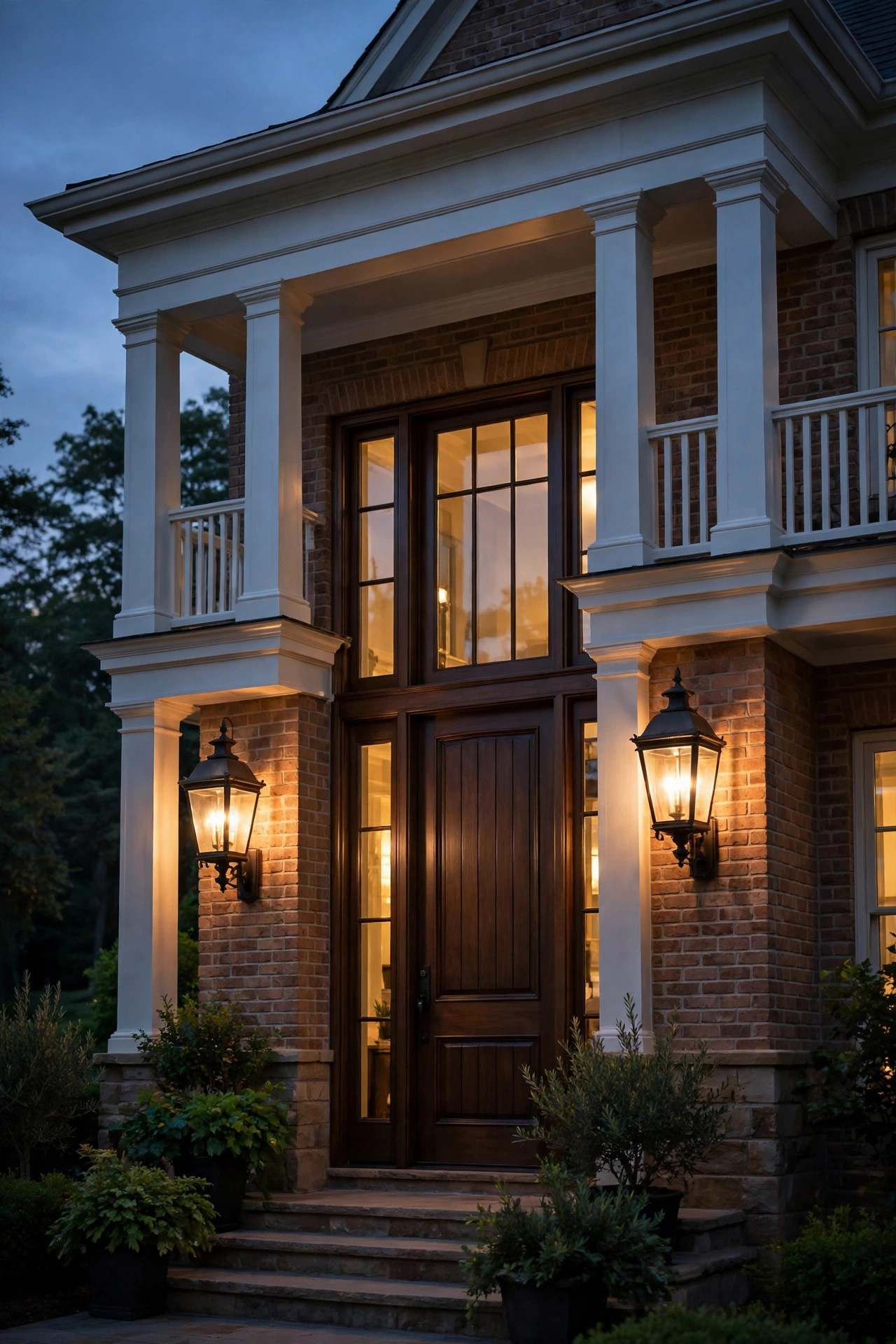
3. A Rope-Wrapped Pendant Over the Seating Area
Over the seating area, I swapped a plain ceiling fixture for a rope-wrapped pendant, and the porch instantly felt like a beach rental you never want to leave. The woven texture does the coastal styling for you, so the rest of the porch can stay simple. Hang it centered over the coffee table or between your two best chairs. Over a table, the bottom of the shade can sit about 30 inches above the tabletop; over open floor, keep the bottom at least 6 feet 8 inches up so tall guests are not ducking. One honest warning from experience: natural jute and rope go mildewy and grey in salty humidity. Look for pendants wrapped in all-weather synthetic rope instead — same look, none of the funk — and confirm the fixture is rated for damp or wet locations. If your porch ceiling has no junction box where you need one, swag the pendant on a hook and plug it into a GFCI outlet with an outdoor-rated cord cover. A single 2700K LED bulb around 800 to 1,100 lumens is plenty; this is atmosphere light, not task light.
Suggested budget range: $60 – $220.

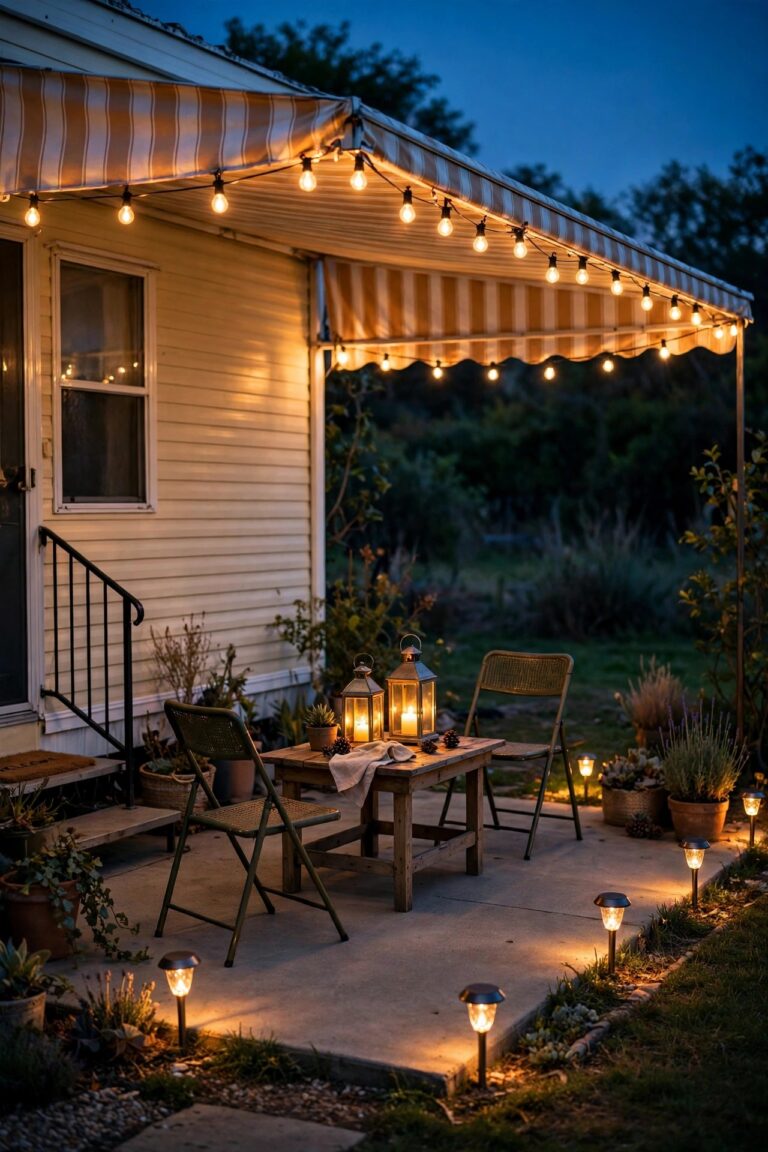
4. Solar String Lights Draped Along the Railing
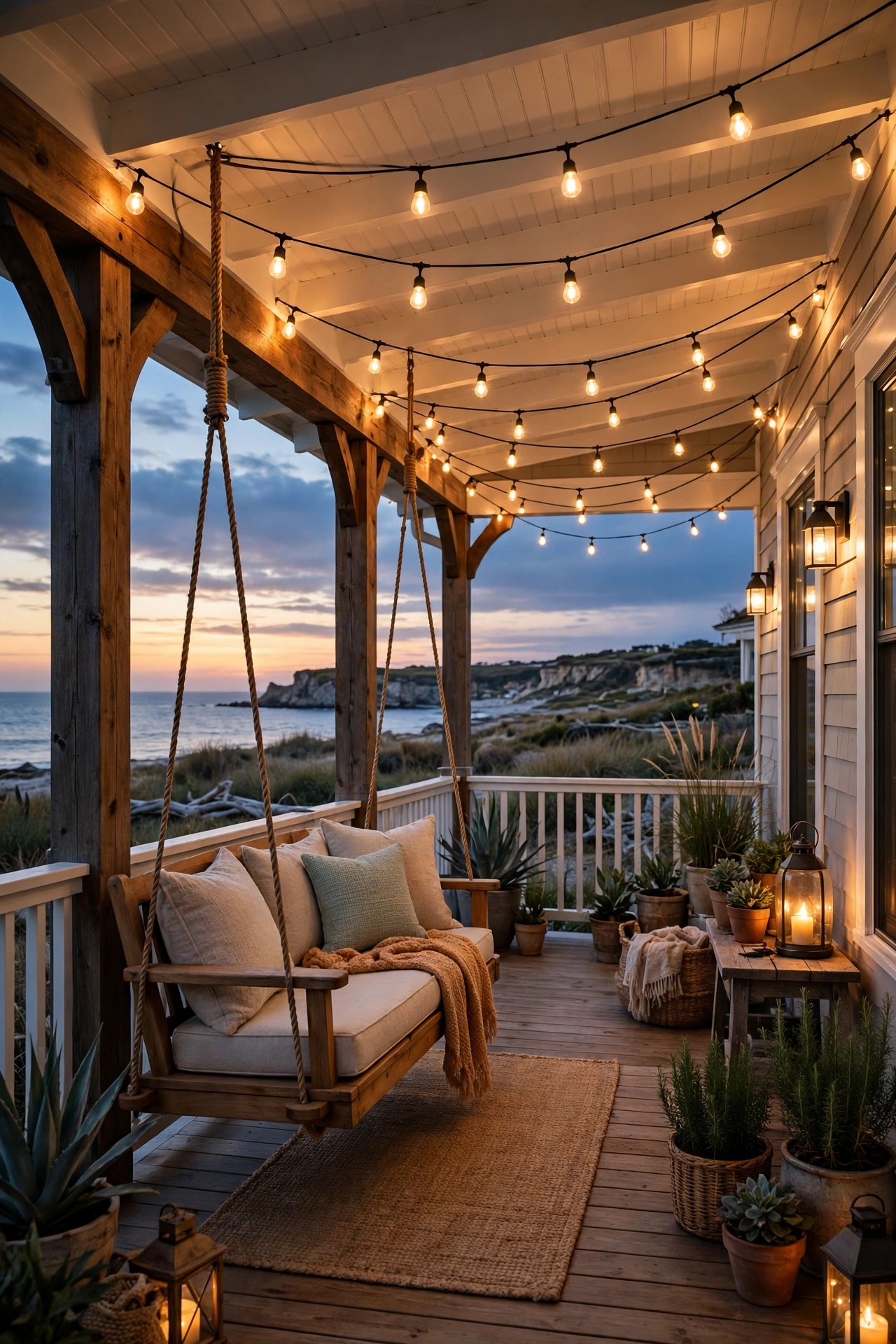
String lights are the fastest way I know to make a porch feel like a party, and the solar versions mean zero wiring on a porch that may have exactly one stingy outlet. I drape them along the top rail in gentle swags, letting each span dip about 6 to 8 inches, and secure them with UV-rated zip ties or cup hooks every couple of feet so the sea breeze does not turn them into jump ropes. The panel placement matters more than the lights themselves: clip the little solar panel on the sunniest end of the rail, angled toward midday sun, and wipe it down every few weeks because salt film quietly steals your runtime. Look for strands with replaceable batteries and shatterproof plastic bulbs — glass and gusty porches are a bad marriage. Most solar strings glow at a soft warm tone and run 6 to 8 hours after a full charge, which covers dinner through last drinks. I keep a whole list of my favorite ways to hang them in my post on solar string light ideas, including the zigzag ceiling pattern I use over my own porch swing.
Suggested budget range: $25 – $70.
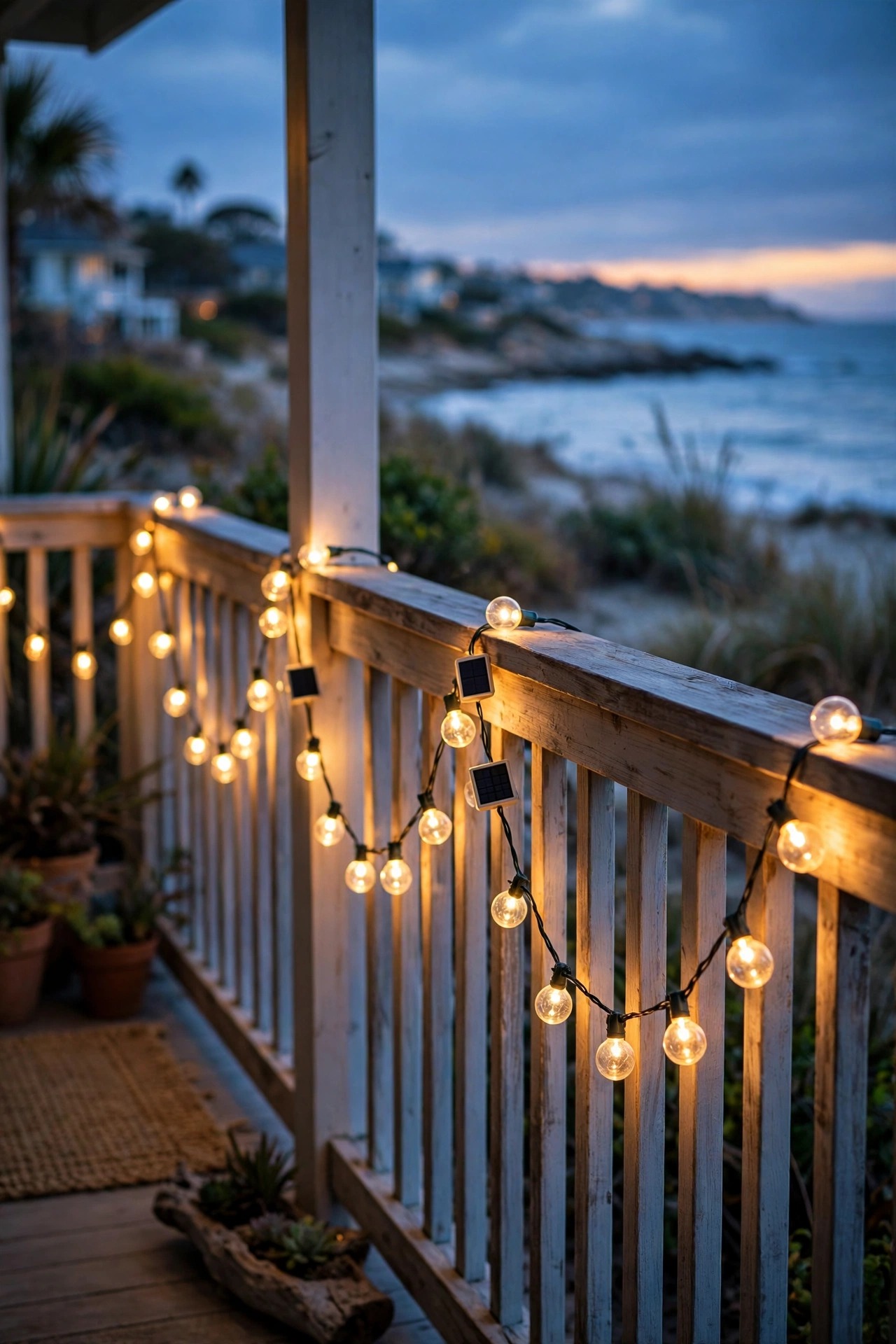
5. Hurricane Lanterns With Flameless Candles
Real candles and sea breezes are natural enemies, so my porch tables and steps are full of hurricane lanterns holding flameless candles instead. The glass chimney that once shielded a flame now shields the look — and the LED candle inside flickers convincingly without ever blowing out, dripping wax on the deck boards, or asking me to hunt for a lighter. I group them in threes at different heights: a tall one by the door, a medium on the side table, a short one on the step. Metal lanterns out here should be powder-coated or galvanized; the pretty raw-tin ones rust at the seams by August. Timer candles are the real luxury — set them once and they wake up at dusk every evening for five hours, so the porch is glowing before I even think about it. Battery life usually runs a full season. On the windiest nights these become my only table light, and honestly they are enough: three flameless candles in glass throw a pool of warm light about 6 feet across, right where the conversation is.
Suggested budget range: $30 – $120.

6. A Seeded-Glass Ceiling Light for Covered Porches
If your porch has a ceiling, a flush or semi-flush fixture with seeded glass is the hardest-working upgrade on this list. Those tiny bubbles in the glass scatter the light so the whole ceiling glows softly instead of throwing one harsh pool straight down — it is the difference between a porch that feels like a lantern and one that feels like a porch light. Under a deep overhang a damp-location rating is fine; if your ceiling edge catches wind-driven rain, step up to wet-location. I aim for a fixture around 12 to 16 inches wide with two LED bulbs totaling roughly 1,200 to 1,600 lumens, all at 2700K. Semi-flush mounts that drop a few inches read more coastal and cottage-y than true flush mounts. The breeze bonus nobody mentions: a ceiling fixture sits out of the gust path, so it is the one light that never rattles, swings, or gets knocked over by a dog tail. Keep a step stool handy and dust the glass monthly — salt haze dulls it faster than you would guess.
Suggested budget range: $70 – $240.
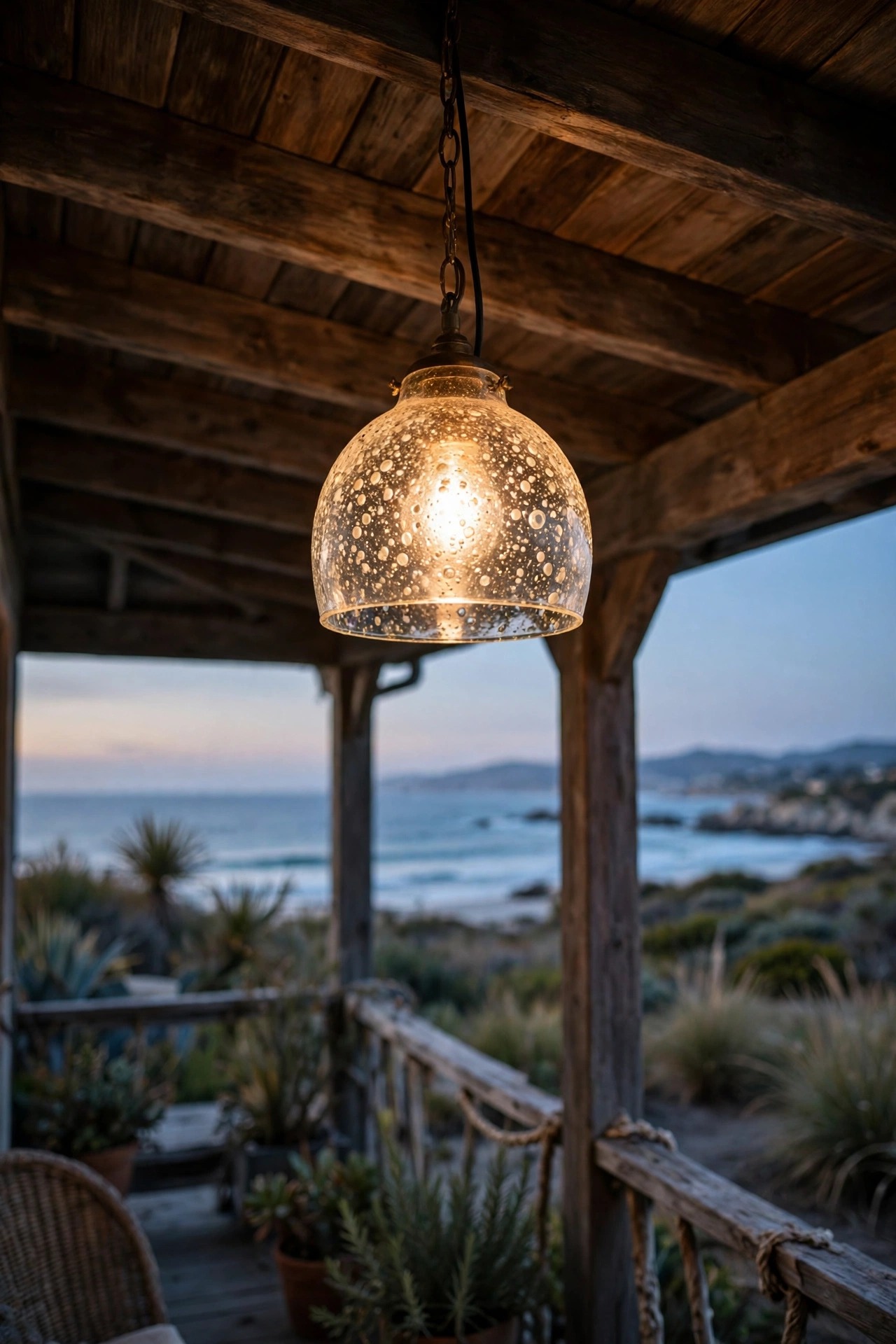
7. A Soft Glow Just for the Porch Swing
The porch swing is where the best evening conversations happen at my house, and it deserves its own little layer of light. A swing in darkness feels like a boat drifting off; a swing with a low glow nearby feels like the best seat in a beach bar. I keep it indirect: a small sconce on the wall behind the swing, a lantern on the side table, or a short run of string lights along the beam above, angled so nothing shines in anyone's eyes while swinging. Bright light overhead makes faces shadowy and kills the mood, so stay low and warm. Motion is the practical catch — chains swing, so keep cords and strands at least a foot clear of the chain's arc, and choose battery or solar pieces for anything mounted close. If your swing faces the water, keep the light behind the sitters so the view stays dark and the stars stay visible. I collected more setups, from canopy strings to reading sconces, in my guide to porch swing lighting ideas — the swing is worth the extra thought, I promise.
Suggested budget range: $35 – $150.
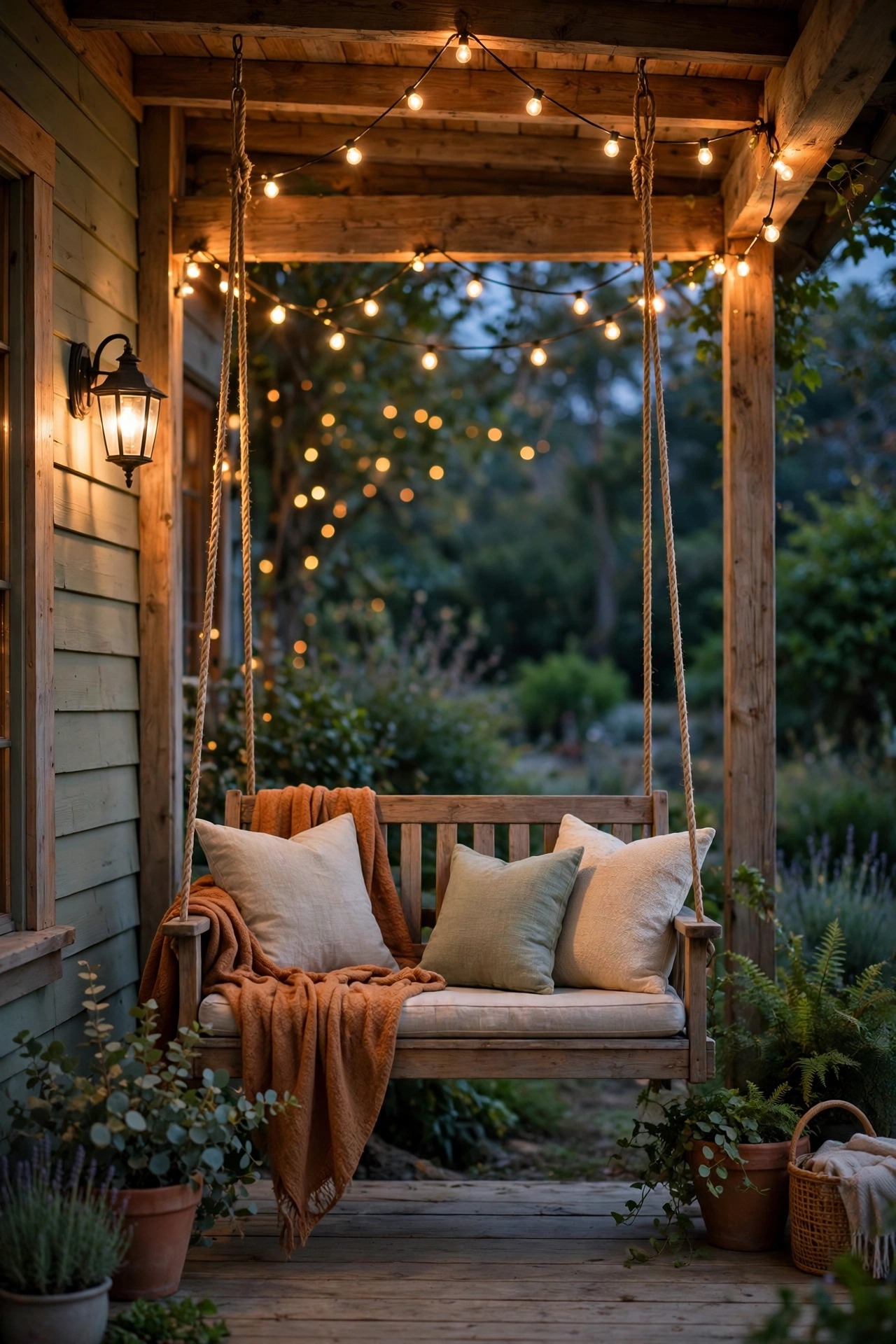
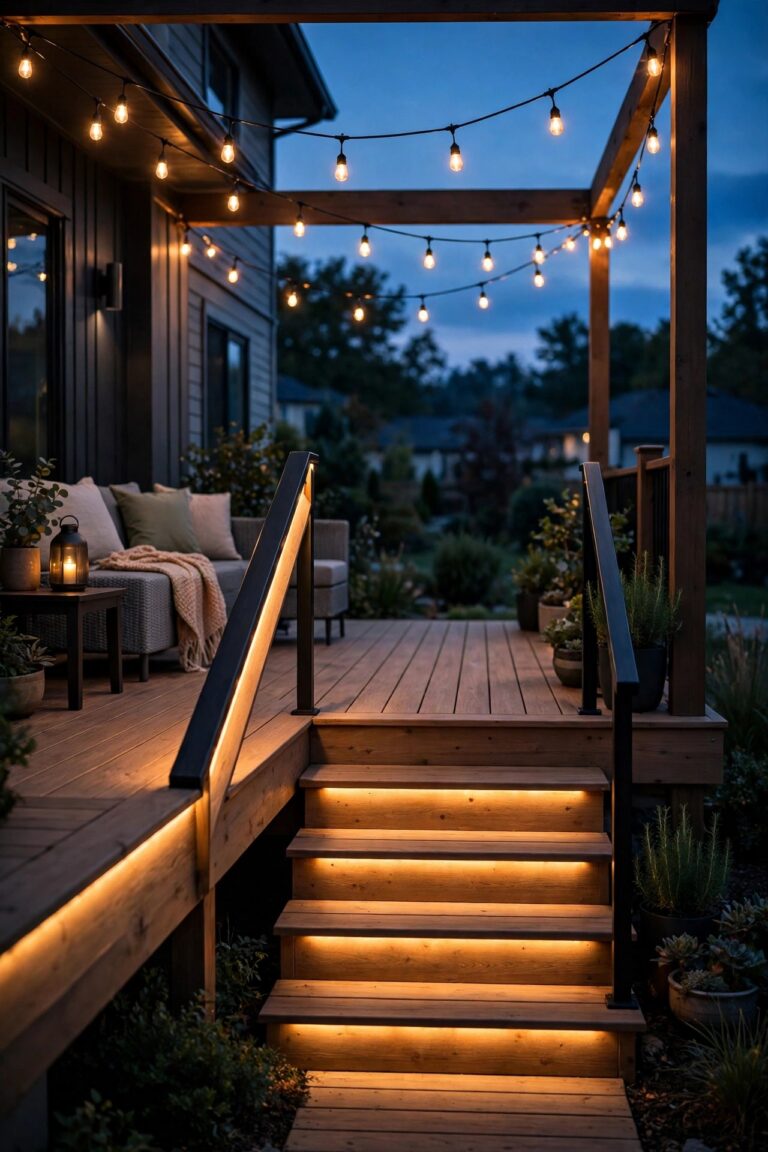
8. Low Step Lights So Nobody Misses a Tread
Porch steps are where the evening magic meets the emergency room if you skip this layer. Two or three low step lights — recessed into the risers, mounted on the side stringer, or as small solar caps on the railing posts — turn a shadowy staircase into a clearly readable one. Place them so every tread gets some light: usually one fixture per two or three steps, aimed down at the tread below, never up into eyes. Solar step lights are the easy button here since steps rarely sit near an outlet; give the panels a south or west-facing spot and expect a gentle marker glow rather than true task light. For wired low-voltage, the transformer can live under the porch with cable run along the stringer in conduit — a weekend job, honestly. Keep the color temperature matched to the rest of the porch at 2700K; mismatched blue-white step lights make a warm porch look like an airport. This is the least glamorous idea on the list and the one your ankles, your guests, and your insurance agent will thank you for.
Suggested budget range: $30 – $160.

9. A Nautical Bulkhead Light by the Door
Bulkhead lights — those oval or round fixtures with a protective cage — were born on ships, which makes them the most honest coastal fixture you can buy. I mounted one beside my side door where the wind funnels through, and it has shrugged off three storm seasons without a flicker. The caged, gasketed design keeps driven rain and salt spray off the bulb, and the chunky profile reads instantly nautical without tipping into theme-park territory. Look for die-cast aluminum or marine-grade polymer housings with a real rubber gasket and stainless screws; the screws are the part cheap versions cheap out on, and rusty screw heads streak the siding. Most bulkheads take a standard bulb, so drop in a 2700K LED around 800 lumens. They throw a wide, even wash, which makes them perfect for the working end of the porch — near the hose bib, the outdoor shower path, or the door everyone actually uses. One per wall is plenty; two starts to look like a ferry deck, and not in the charming way.
Suggested budget range: $45 – $140.

10. Under-Rail LED Strips, the Sneakiest of My Coastal Porch Lighting Ideas
This is the trick I steal from boat docks and boardwalks: an outdoor LED strip tucked under the handrail, washing the porch floor and steps with light you can see but a source you cannot. It makes the whole railing glow like the edge of a pier at night, and because the strip is shielded by the rail itself, there is zero glare in your eyes while you sit. Buy strip rated IP65 or better, with a silicone sleeve, and stick it with the included adhesive plus a few stainless clips — salt air defeats adhesive alone by midsummer. Run it the full length of the rail, including down the stair rail, and it quietly solves your step lighting too. A plug-in strip with a remote dimmer costs little and draws almost nothing; mine sips about 10 watts for the whole rail. Choose 2700K and resist the color-changing versions unless it is the Fourth of July. The effect is modern but soft, and on a breezy night, when every candle-style light is struggling, the rail glow just calmly stays.
Suggested budget range: $25 – $90.
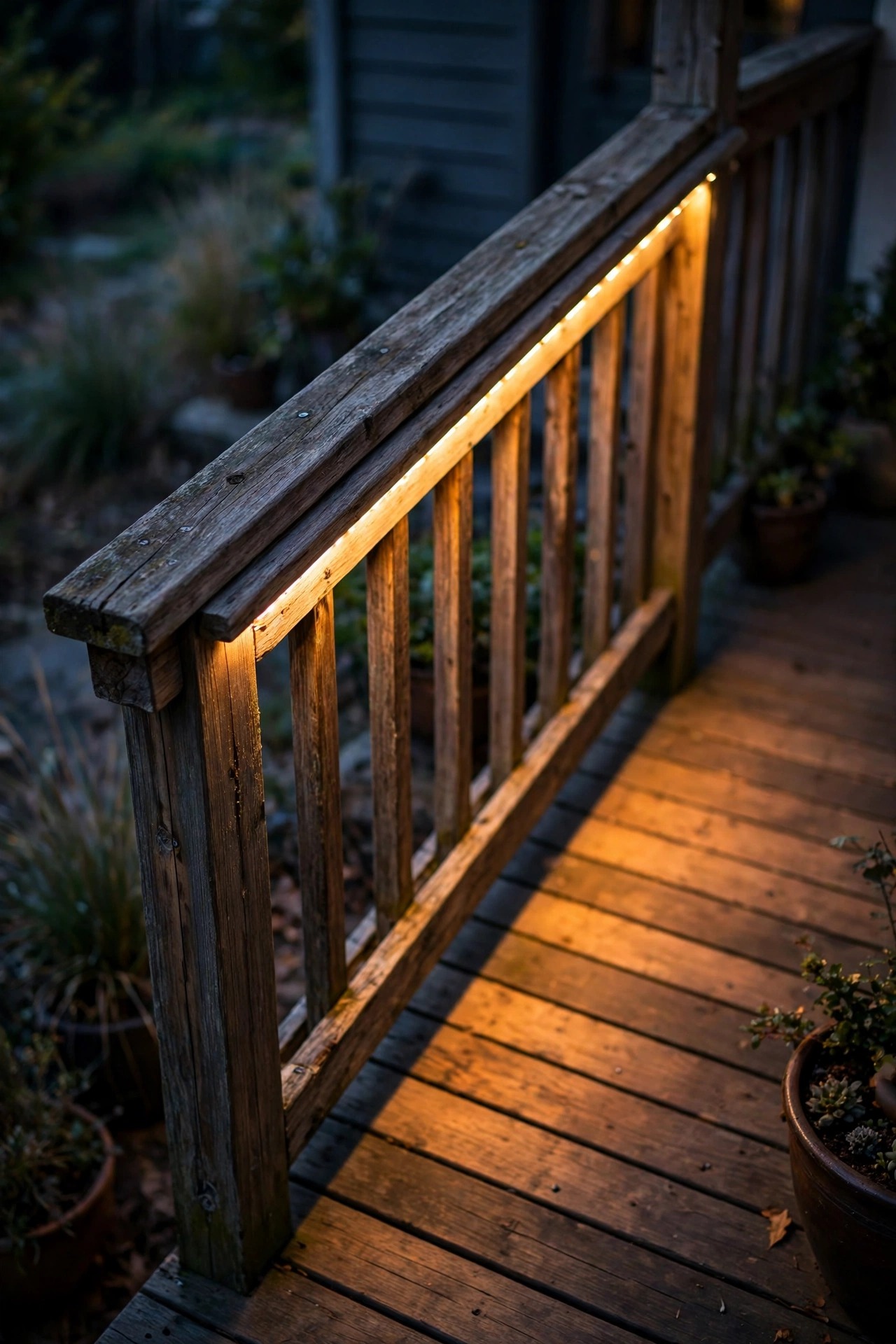
11. Solar Post Caps on the Porch Posts
If your porch has chunky posts or a railing with newel posts, solar post caps are the closest thing to free light I know. They drop onto standard 4×4 or 6×6 posts — measure before you order, because nominal lumber sizes lie — and they charge all day from the same sun that bleaches your cushions. By dusk each cap throws a small pool of light down the post, marking the porch edges like runway lights for your evening landing. The coastal catch is the clear plastic lens: salt film and UV turn cheap lenses cloudy within a year, so I look for caps with glass or UV-stable lenses and replaceable batteries, and I give the tops a quick wipe whenever I water the porch plants. Expect a marker glow, not reading light — about 10 to 30 lumens each — which is exactly right for edging. Mix one cap per post, all the same model so the brightness matches. Mismatched caps in slightly different whites are the kind of detail you cannot unsee once you notice it at your own dinner party.
Suggested budget range: $40 – $120.
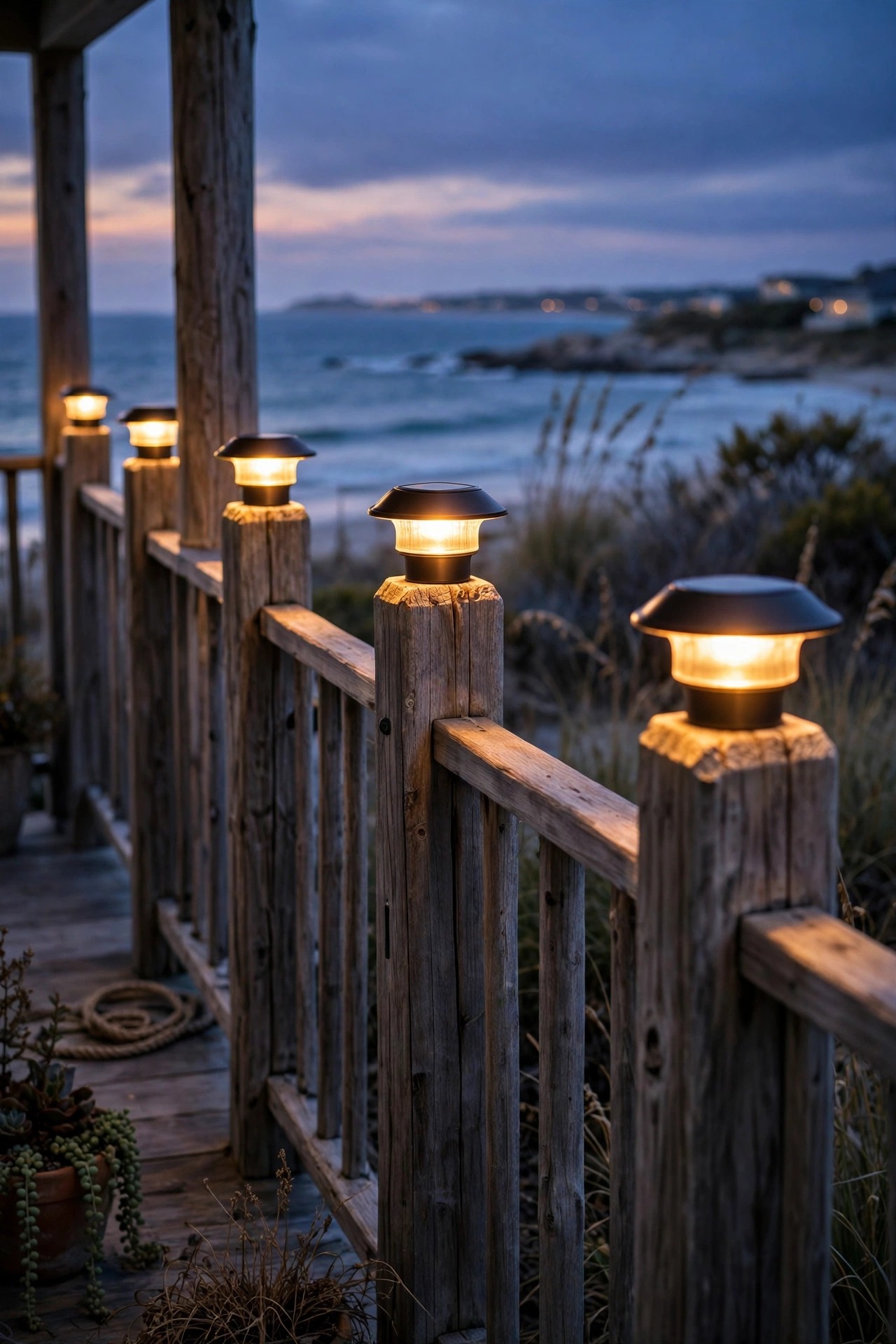
12. A Motion-Sensor Light for Arriving Home
For the door everyone actually uses — mine is the side door nearest the driveway — a motion-sensor light earns its keep every single night. It greets you with arms full of groceries, lights the keyhole, and politely switches itself off. The coastal upgrades matter here: choose a fixture with a sealed sensor lens, because salt creep fogs cheap sensors until they either never fire or fire at every passing gull. Set the range to about 15 to 20 feet so it catches the walkway but not the street, and aim the sensor slightly down. I set mine to stay on for one minute, which is enough to get inside without lighting the porch like a stadium for the neighbors. Warm 2700K at around 1,200 lumens reads welcoming rather than interrogation. If your porch is wired for a standard wall lantern, many now come with a built-in sensor and a dusk-to-dawn low mode that idles at 20 percent and brightens when someone approaches — that two-stage behavior is my favorite porch technology of the last five years, full stop.
Suggested budget range: $50 – $180.
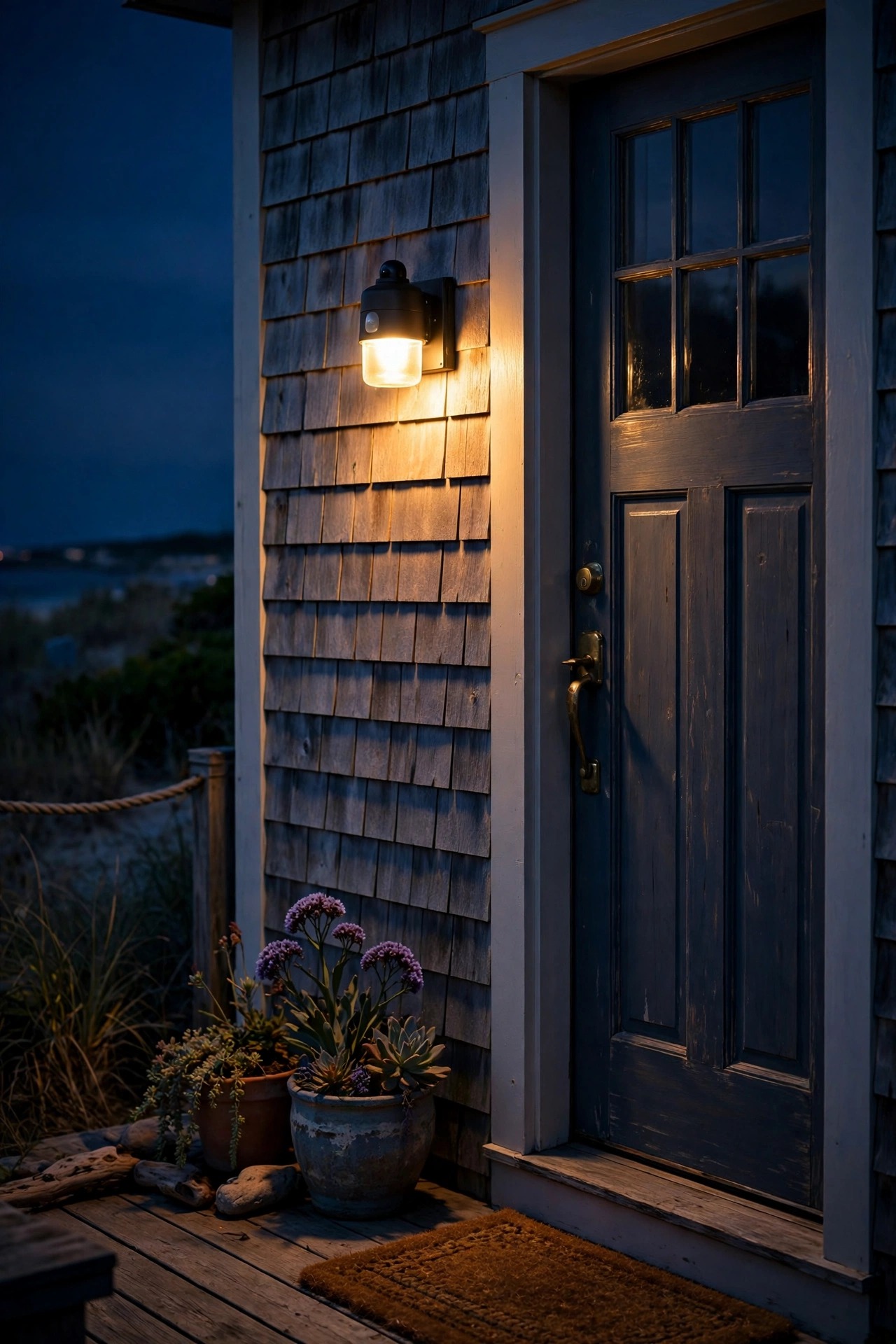
13. Dimmers and One Warm Bulb Temperature Everywhere
Half the porches I visit have great fixtures ruined by a bulb mismatch — one blue-white bulb screaming from the ceiling while everything else glows amber. Pick one temperature, 2700K, and buy every bulb on the porch to match: lanterns, pendant, ceiling fixture, even the flameless candles (most are made warm already). Then put the main wired lights on a dimmer, and suddenly the same porch does bright for board games, medium for dinner, and barely-there for stargazing with your feet on the rail. An outdoor-rated smart dimmer or a simple plug-in dimmer for lamps costs little and changes everything. Keep spare bulbs from the same purchase batch in a labeled box — LED color drifts between production runs, and a replacement from a different batch can be visibly off. This is also the cheapest idea on the list if your fixtures are already fine: sometimes the whole renovation is six matching bulbs and one dimmer switch. Honestly, if a friend told me they only had fifty dollars for their porch, this is exactly where I would tell them to spend it.
Suggested budget range: $30 – $110.

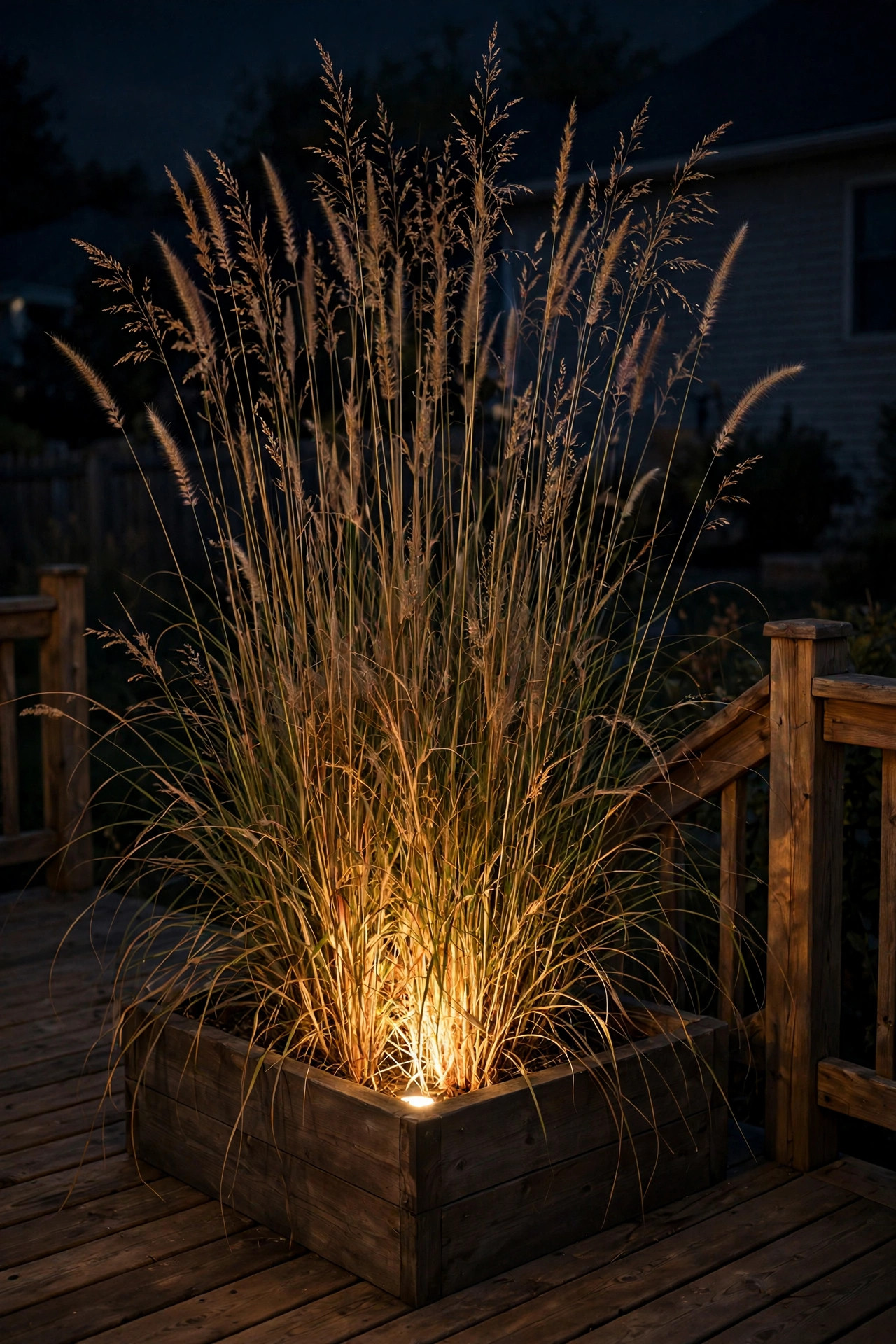
14. Gentle Uplights for Palms and Porch Planters
The edge of the porch is where a little landscape light doubles your space. One or two low uplights aimed into a potted palm, a banana leaf, or the planter boxes along the rail make the greenery glow from within, and suddenly the porch feels twice as deep after dark. Keep the fixtures small and mostly hidden — a well light or a short stake spot tucked behind the pot — and aim for the foliage, not through it, so you get soft bounce instead of a spotlighted trunk. Low-voltage wired lights are the reliable route here; solar spots fade by midnight and rarely match your 2700K porch bulbs. Watch the angles from your favorite chair: if you can see the bare lens, your guests can too, so tilt the fixture down a touch or add a glare shield. Breezy porches mean moving leaves, which means moving light and shadow on the ceiling — in my experience that gentle flicker is the single most relaxing thing on this whole list. Nature's own candlelight, no flame required.
Suggested budget range: $60 – $200.
15. Timers and Photocells That Beat the Breeze to It
The best porch light is the one that is already on when you come home with sandy feet and a cooler. I run my wired porch lights on a photocell adapter — a little sensor that screws between socket and bulb — so they wake at dusk and sleep at dawn without me thinking about it. For plug-in pieces like string lights and strips, an outdoor mechanical timer or a smart plug rated for exterior use does the same trick; set the string lights for dusk to 11 p.m. and let the lanterns run all night at low cost. This matters more at the coast than anywhere: a porch that lights itself looks lived-in during storm weeks when you are away, and timer-driven lights are a gentle burglar deterrent that costs pennies. LEDs sip so little power that my whole porch — lanterns, pendant, ceiling light, and rail strip — runs for roughly the cost of a coffee per month. Do buy exterior-rated gear and plug timers into GFCI outlets, ideally under a weatherproof in-use cover. Electricity and salt air respect each other when you give them the right hardware.
Suggested budget range: $15 – $60.
16. Amber Bulbs That Let You Keep the Breeze, Not the Bugs
Here is the coastal porch dilemma: you open everything up for the breeze, and every moth in the county RSVPs. Amber and yellow-toned bulbs are my truce. Insects are far less drawn to warm amber light than to white or blue-rich light, so swapping the bulb in the fixture nearest the door — and only that one, if you like — can cut the swarm around your seating noticeably. True bug bulbs are coated yellow and dimmer than standard, so I use them in the door lantern where I want guidance, not a reading light, and keep my main sitting lights standard 2700K a few feet away from the door swing. It also helps to keep bright lights off the door itself: put the welcome glow on a post or rail a few steps away, and bugs gather there instead of at the threshold you keep opening. A small fan is the other half of this trick — moving air grounds weak fliers — but the amber swap alone took my porch from swatting to sitting. Fewer bugs, same breeze, better evenings.
Suggested budget range: $10 – $35.

17. The Full Glow: My Coastal Porch Lighting Ideas Working Together
On a good night, here is how it all stacks up at my house. The photocell wakes the door lanterns at dusk. The ceiling light comes on low, the rail strip hums along the steps, and the post caps blink awake one by one like a tiny harbor. I flip the pendant over the chairs, set the hurricane lanterns flickering on their timers, and the swing gets its soft sconce glow. Nothing is bright, yet everything is visible — that is the whole secret of good layered porch light: many small, warm, weather-tough lights instead of one heroic fixture fighting the dark. You do not need all seventeen ideas. Pick one from each layer — one wash, one sitting-height glow, one sparkle — and add a coastal-proof finish and a timer, and your porch is ninety percent there. The rest is seasoning. Then sit down, feel that breeze come up off the water, and notice how nobody reaches for their phone. That is how you know the lighting is doing its job.
Suggested budget range: $150 – $450.
Frequently Asked Questions
What color temperature looks best on a coastal porch?
Warm white, right around 2700K, wins every time at the coast. It echoes the last of the sunset, flatters skin tones, and matches the glow of flameless candles and string lights, so every layer blends into one calm wash. Cooler bulbs at 4000K and above read blue-grey outdoors — more like an overcast morning than a breezy evening — and they make warm wood and wicker look washed out. Whatever you choose, buy every bulb on the porch at the same temperature.
Which finishes actually survive salt air?
The survivors are powder-coated aluminum, marine-grade 316 stainless steel, solid brass (which slowly patinas instead of failing), and resin or composite fixtures that cannot rust at all. Painted steel and raw iron are the heartbreakers — salt creeps under the finish and bubbles it within a season or two. Whatever you buy, look for a wet-location rating, rinse fixtures with fresh water a few times each season, and wipe salt film off lenses and solar panels monthly so the light stays bright.
Are solar lights bright enough for a porch?
For the sparkle layer, absolutely — solar string lights, post caps, and step markers have plenty of glow for edging and atmosphere, and they run about 6 to 8 hours on a full charge. Where solar falls short is true task light: lighting a keyhole, a grill, or a book. For those spots, go wired or choose a motion-sensor fixture. Keep panels angled toward midday sun and wiped clean, because a salty film can quietly cut your runtime in half.
How do I keep porch lights from attracting so many bugs?
Start with an amber or yellow bug bulb in the fixture nearest the door, since insects are far less drawn to amber light than to white light. Then move the welcome glow a few feet away from the doorway itself — a post cap or rail light a few steps out pulls the crowd away from the threshold you keep opening. A gentle ceiling or floor fan helps too, because most flying insects are weak fliers in moving air. Warm 2700K bulbs also attract noticeably fewer bugs than cool blue-white ones.
Conclusion
A coastal porch asks a lot of its lights: salt in the air, wind that tests every candle, and evenings so pretty you want them to last forever. Meet it with layers — a warm wash for safety, a glow at sitting height for faces, and a little sparkle overhead — in finishes that can take the weather, and these coastal porch lighting ideas will carry you from the first warm night of spring to the last breezy one of fall. Start with the layer you are missing, keep every bulb at 2700K, and let a timer do the remembering. Then pour something cold, settle into the swing, and enjoy the porch you always meant to have. For more ways to light the rest of your outdoor spaces, browse the other lighting ideas here on the site — your yard deserves the same treatment.