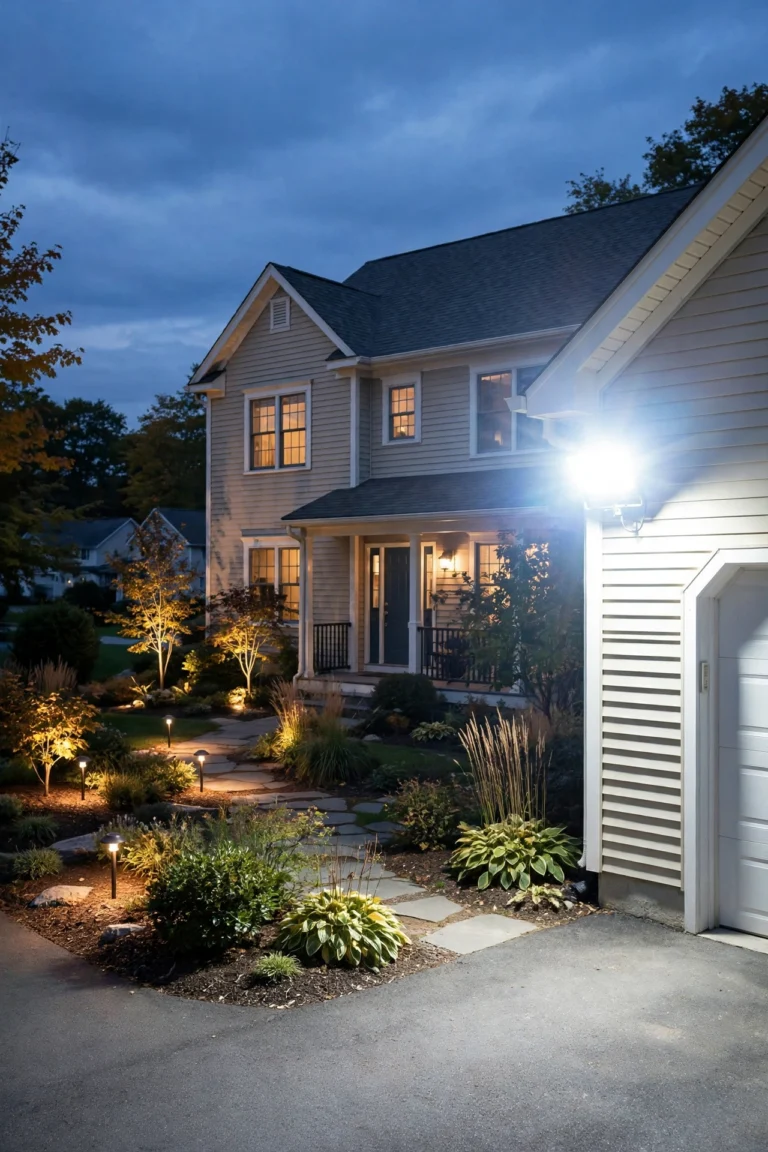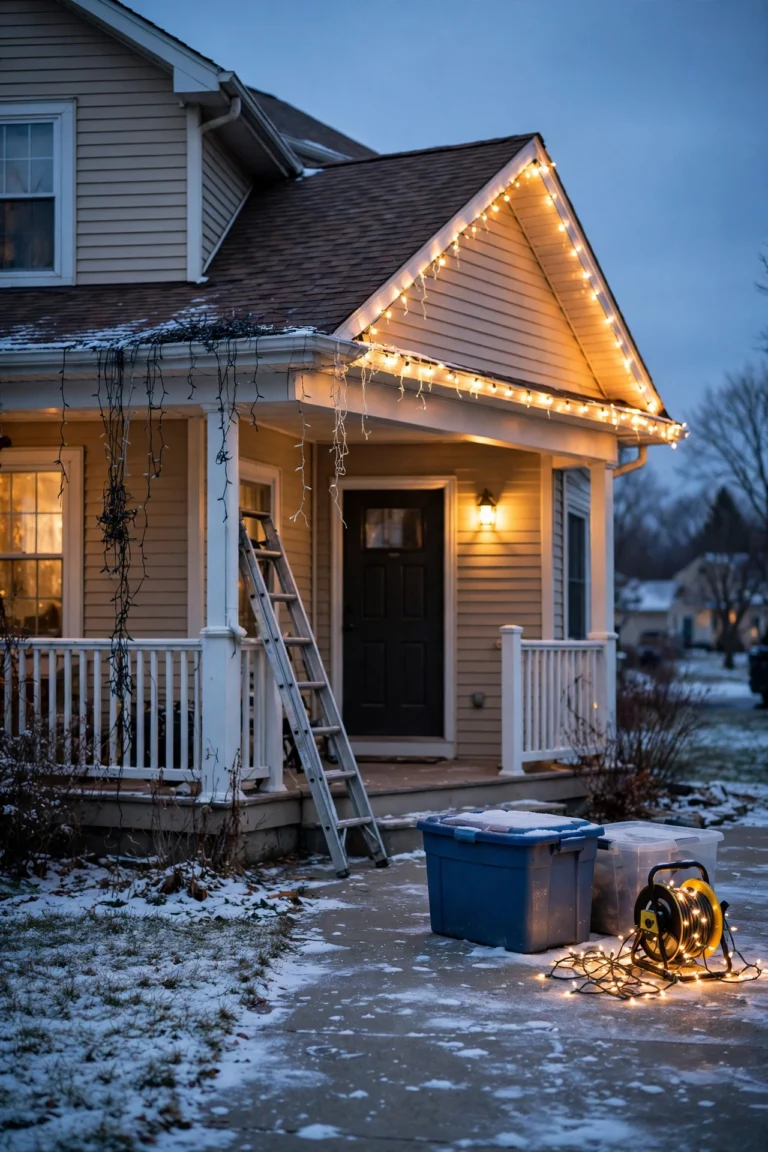
You know that one house on the street — the one where the porch light looks like an interrogation room and the backyard glows the color of a hospital hallway? Honestly, I used to think outdoor lighting was just about brightness until I learned the truth: it's about *warmth*. In my experience, nothing kills curb appeal faster than harsh bluish-white LEDs, and nothing rescues it faster than switching to 2700K warm white.
If you're shopping for 2700k outdoor lighting and feeling confused by all the numbers on the boxes, you're in good company. What even is a Kelvin? Why does "soft white" look different from "daylight"? And does a tiny number like 2700 really make that much of a difference? (Spoiler: yes — a dramatic one.)
By the end of this guide, you'll know what color temperature means, how 2200K through 5000K compare, where warm white shines and where it falls short, how to keep every fixture matching, and the five bulb-temperature mistakes I see people make over and over. Let's fix that glow.

The Short Answer
For most homes, 2700K warm white is the sweet spot for outdoor lighting. It mimics the golden glow of candlelight and old incandescent bulbs, flatters skin tones, blends seamlessly with the light spilling from your windows, and attracts fewer bugs than cooler bulbs. Reach for 3000K if you need a slightly crisper look for security-heavy areas like a side gate or a long driveway. Go down to 2200K — a deep amber — for pure ambiance around fire pits and string lights. Anything 4000K and up reads as bluish-white and harsh in a residential setting; save it for a workshop or a commercial parking lot, not your porch.
What Color Temperature Actually Means (The Kelvin Scale in Plain English)
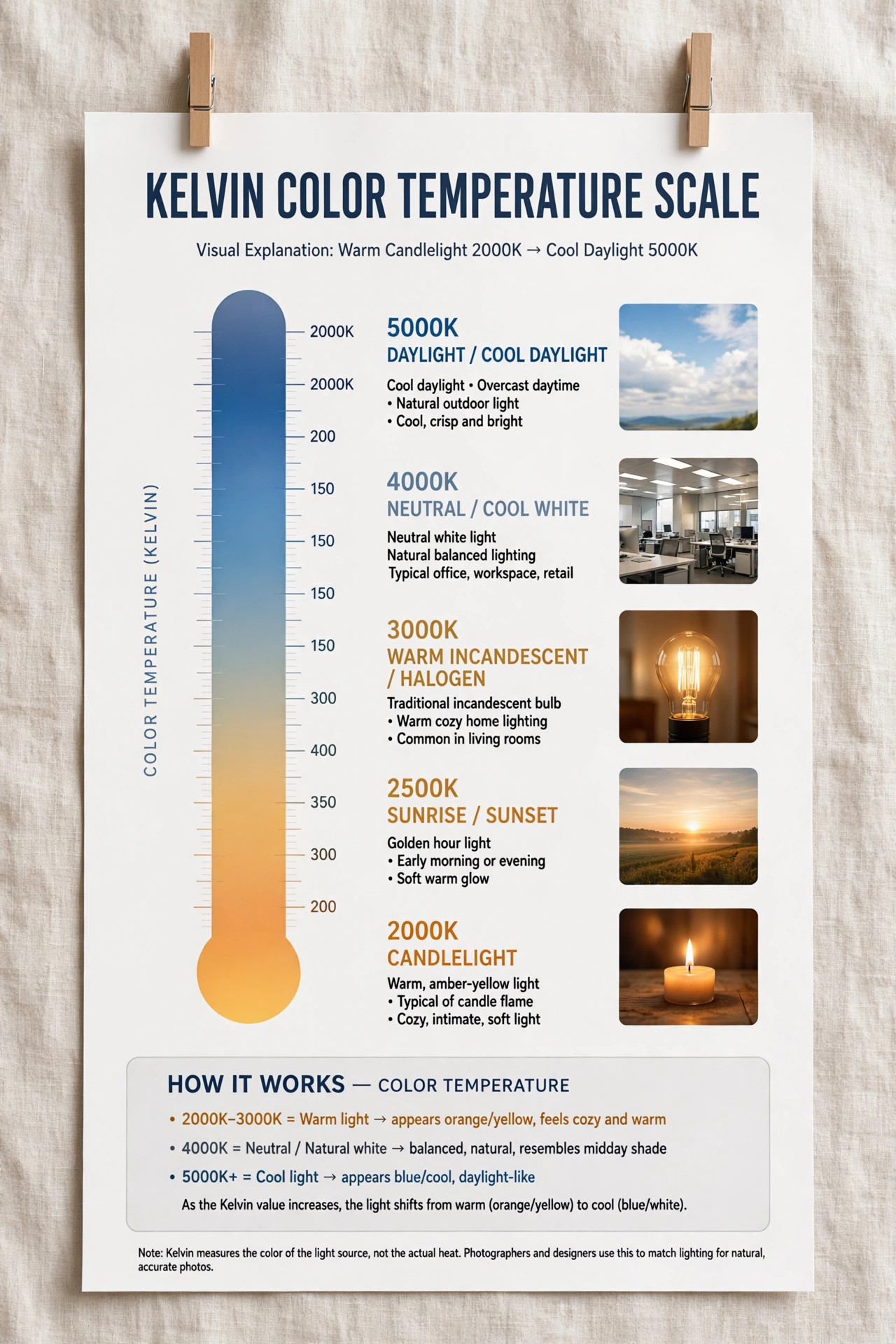
Here's the simplest way I explain it to friends: color temperature is just a number, measured in Kelvins (K), that tells you whether a light looks warm (golden, cozy) or cool (bluish, stark). The scale runs from about 1000K (the orange flicker of a candle flame) up to 10,000K (the harsh blue of a clear midday sky — way too blue for any bulb).
The confusing part is that the numbers run *backward* from what you'd expect: lower numbers are warmer, higher numbers are cooler. Think of it like a piece of metal heating up in a forge — it starts glowing deep red, turns orange, then yellow, then eventually white-hot and bluish. That glow is literally what the Kelvin scale describes. So a 2200K bulb glows like firelight, while a 5000K bulb glows like noon on a cloudless day.
For outdoor residential lighting, you'll only ever need to think about the 2200K–5000K slice of the scale. In my experience, once you learn to read these five numbers — 2200, 2700, 3000, 4000, 5000 — bulb shopping stops being guesswork. The box will say something like "2700K Soft White" or "5000K Daylight," and you'll know exactly what you're bringing home before you ever twist it into a socket.
One more thing that trips people up: color temperature has *nothing* to do with brightness. A 2700K bulb and a 5000K bulb can both put out the same 800 lumens — one just glows honey-gold and the other glows ice-white. Brightness is lumens; color is Kelvins. Keep those separate and you're already ahead of most shoppers.
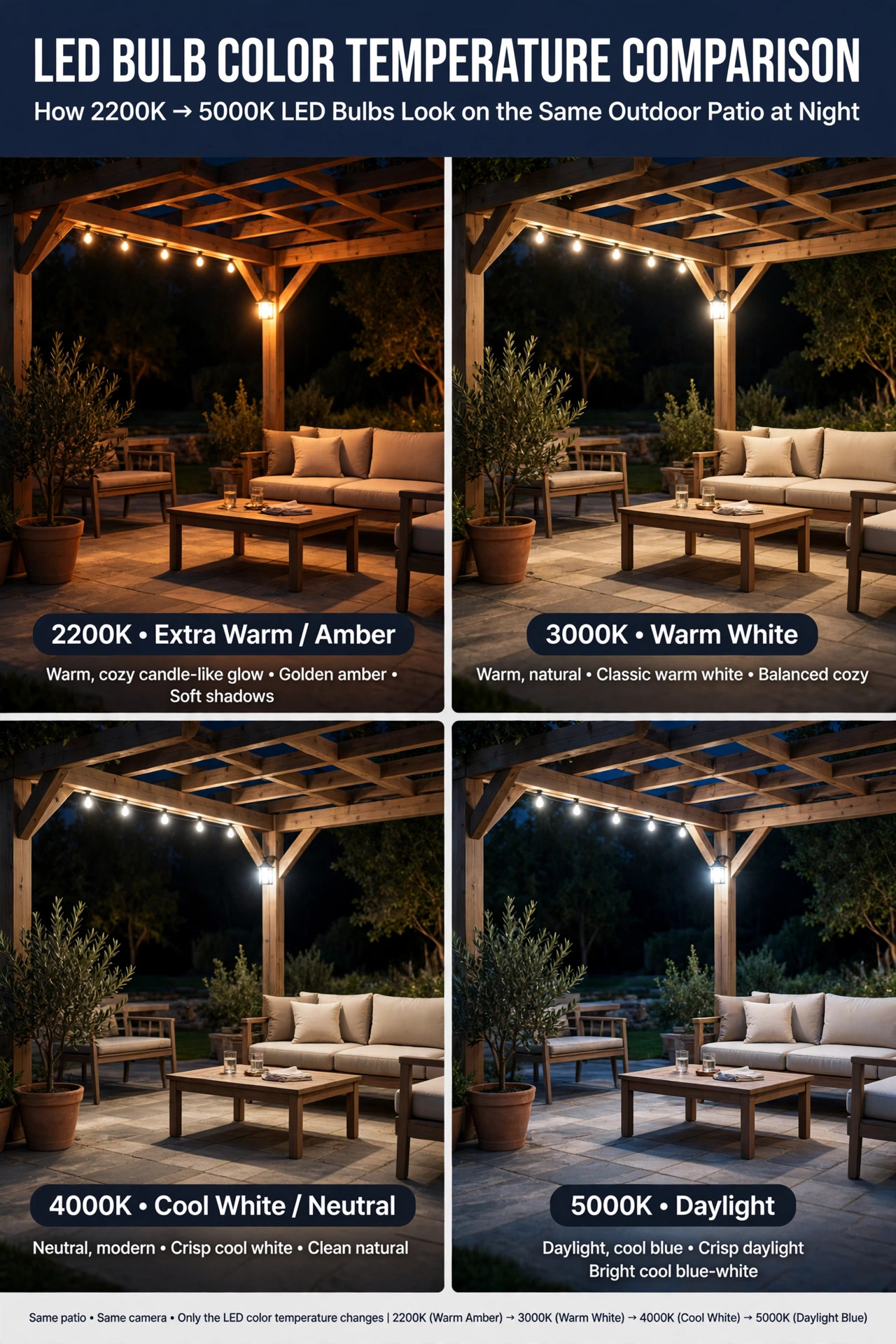
2200K vs 2700K vs 3000K vs 4000K vs 5000K, Compared Honestly
Let me lay the whole range out so you can see exactly where each temperature lands, how it feels, and where it actually belongs outdoors. I wish someone had shown me a chart like this years ago — it would have saved me from at least one terrible "daylight" porch-light purchase.
| Temperature | Feel | Best Outdoor Use | Avoid When |
|---|---|---|---|
| 2200K (amber/candlelight) | Deep golden firelight, intimate, almost nostalgic | String lights, lanterns, fire-pit zones, tiki torches | You need to actually see details — steps, house numbers, grilling |
| 2700K (soft warm white) | The classic cozy glow of old incandescent bulbs | Porches, patios, landscape uplights, deck lights — nearly everywhere | Security cameras (image looks dimmer), task-heavy zones |
| 3000K (warm-to-neutral white) | Crisp but still friendly, like a bright kitchen | Driveways, side paths, garage doors, entry steps | You want maximum coziness or want to match indoor warm light |
| 4000K (cool/bright white) | Clean and clinical, like an office or gas station | Workshops, tool sheds, utility areas | Front porches, patios, anywhere ambiance matters |
| 5000K+ (daylight) | Bluish-white, harsh, interrogation-room vibes | Almost never residential — commercial security lots | Always for homes, in my opinion — it reads sterile and cold |
The big dividing line in my mind is between 3000K and 4000K. At 3000K and below, light feels *inviting*. At 4000K and above, it feels *institutional*. Your home's exterior should feel like a home, so for nearly every fixture a guest or neighbor will see, stay at 3000K or under. And honestly? If you just commit to 2700K everywhere and never think about it again, you'll be right 90 percent of the time.
Why 2700K Wins for Homes
So why does 2700K specifically — not 2200K, not 3000K — get crowned the king of residential outdoor lighting? Three reasons, all practical.
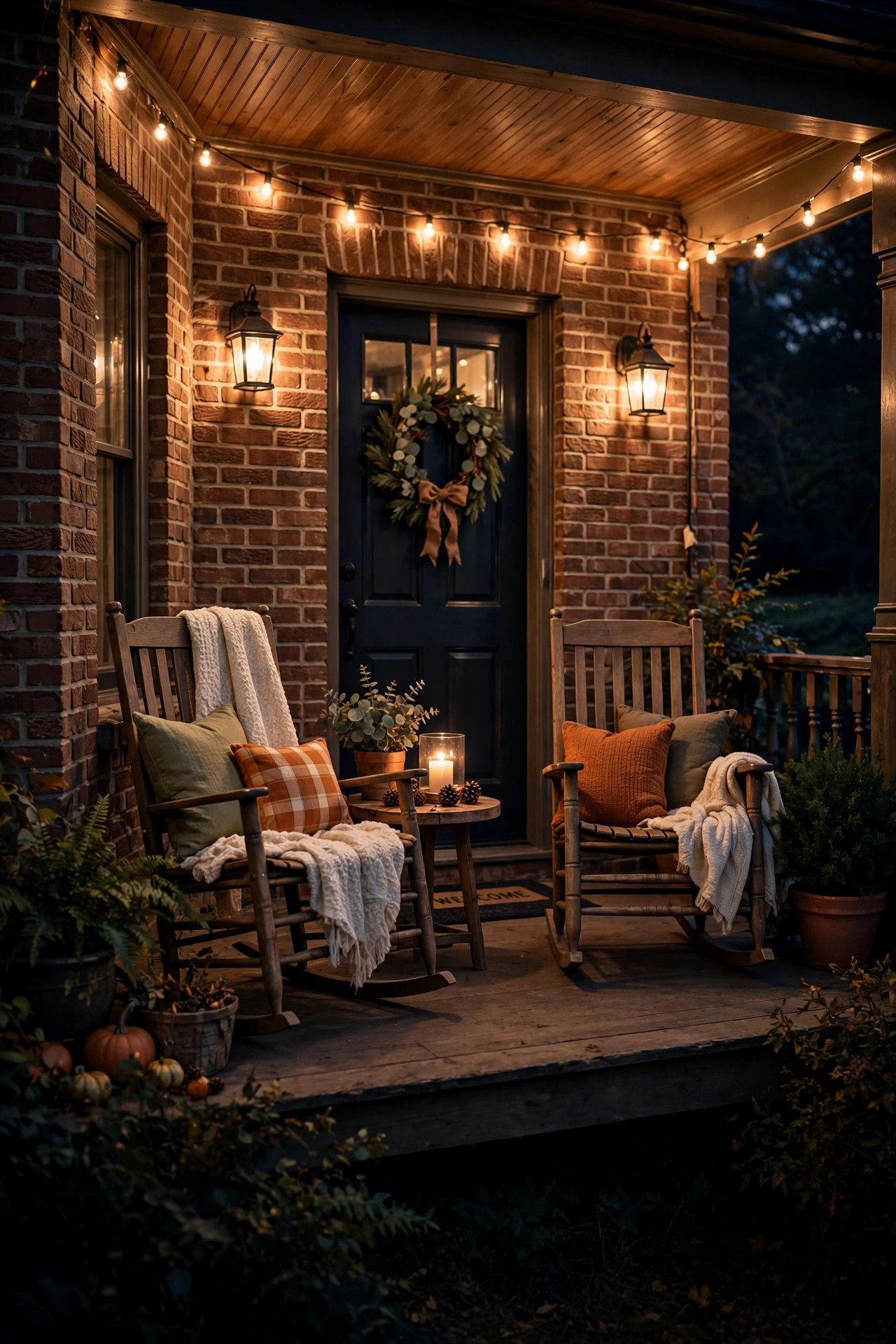
First, it's the temperature of nostalgia. For nearly a century, American homes were lit by incandescent bulbs that glowed right around 2700K. Our eyes and brains were trained, generation after generation, to read that golden glow as "home." When your porch light hits 2700K, visitors feel welcomed on an almost subconscious level — it signals warmth, safety, and hospitality. It's the reason candlelit restaurants feel romantic and fluorescent-lit diners feel, well, like diners.
Second, it flatters everything it touches. Warm white makes skin tones look healthy instead of washed out (your porch selfies will thank you), turns brick and wood siding rich and glowing instead of flat, and makes landscaping look lush at night rather than ghostly. Cooler light, by contrast, makes green foliage look slightly blue-gray and dead — I've seen beautiful Japanese maples look positively sickly under 5000K floodlights.
Third, it blends with your indoor light. This one matters more than people realize. When your porch is bathed in 2700K but your living-room lamps are 3000K and your kitchen is 4000K, the whole house reads as visually noisy from the street. But when your exterior matches the warm glow spilling from your windows, your home reads as one cohesive, glowing unit. That's the difference between a house and a home you want to come back to — and it's free, because you just buy the same temperature everywhere.
Where Warm White Goes Wrong
Now the honest part: 2700K is not a universal hammer, and treating it like one creates real problems. I love warm white, but I've learned — sometimes the hard way — where it falls short.
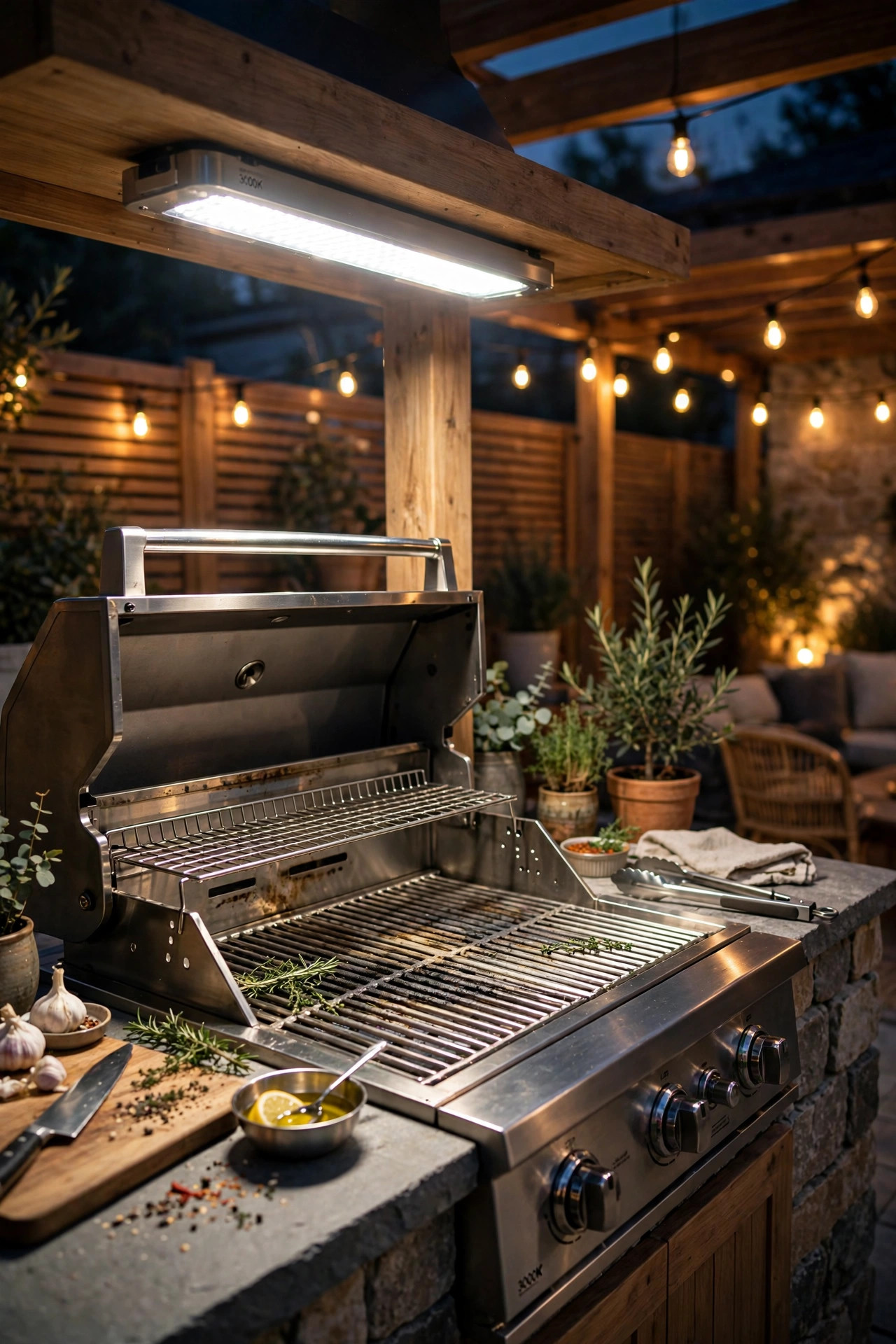
The biggest trouble spot is task areas. Try grilling burgers at 10 p.m. under 2200K string lights and you'll be serving hockey pucks; you need enough color clarity to see what you're doing. Steps, walkways with tripping hazards, and the grill station all benefit from slightly brighter, slightly cooler light — 3000K is usually my recommendation here, sometimes even 3500K right over a work surface. Warm white is flattering, but flattery is the enemy of seeing whether that steak is medium-rare or charcoal.
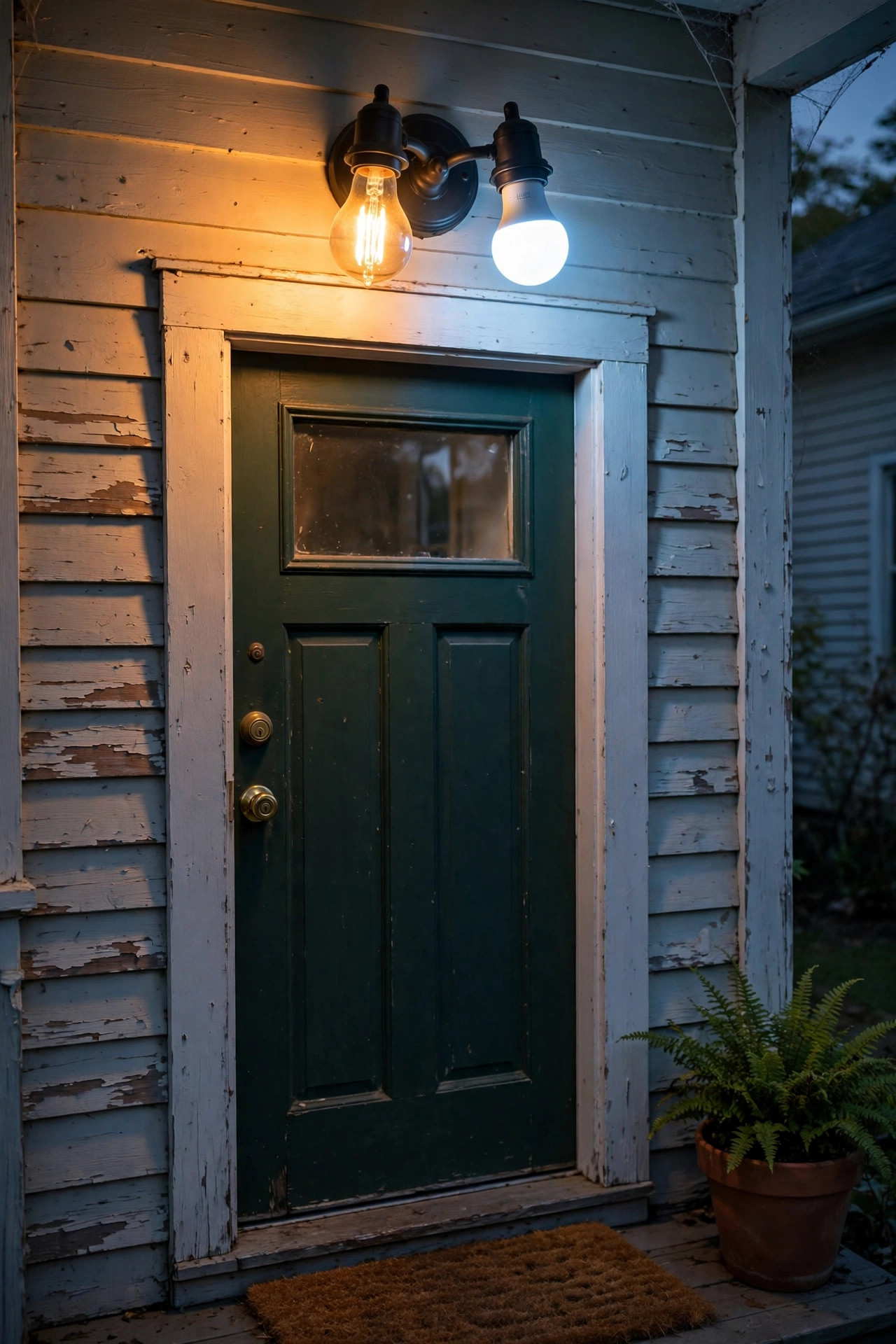
The second problem is mixing temperatures by accident. This is the single most common mistake I see, and it usually happens when people replace one burnt-out bulb with whatever's in the junk drawer. A 2700K porch sconce next to a 4000K motion light above the garage looks broken, like your house has two different moods. If you're going to be strict about one thing in outdoor lighting, be strict about this.
Third, security cameras suffer under very warm light. That gorgeous 2200K amber glow looks moody to you, but to a camera it's just dim — warm light renders detail poorly on most sensors, and footage gets grainy. If you have cameras covering the driveway or entry, keep those zones at 3000K minimum.
The rule of thumb: ambiance zones get warm, task and security zones get slightly cooler. They're allowed to differ — just never mix them *within sight of each other*.
Matching Temperatures Across Fixtures
Here is my golden rule, the one I'd tattoo on a landscaper's forehead if I could: pick one color temperature for everything a visitor can see at once, and commit. For most homes, that means all 2700K. Your porch sconces, your path lights, your deck step lights, your landscape uplights, your string lights — all of it, 2700K.
The reason this matters so much is that your eyes are absurdly good at noticing mismatched light. Humans can detect a temperature difference of about 200–300K side by side. So when one wall lantern is 2700K and its twin is 3000K, you won't necessarily think "ah, a Kelvin mismatch" — you'll just think something looks *off*, like a picture hung slightly crooked. Multiply that across six fixtures and your whole exterior feels unsettled.
How to actually pull this off: read the box. Every quality LED bulb or fixture lists its color temperature in Kelvins somewhere on the packaging, often near the lumens. Also watch for the marketing words: "soft white" almost always means 2700K; "warm white" usually means 2700K–3000K (check the number); "bright white" means 3500K–4100K; and "daylight" means 5000K–6500K. Honestly, "daylight" is the one that ruins more porches than any other word in lighting — it sounds pleasant and natural, but on your front steps at night it looks like a crime scene.
One more tip: buy in batches from the same product line when you can. Even two bulbs labeled 2700K from different manufacturers can render slightly differently. And if you're replacing bulbs over time, jot down the exact model — your future self will thank you.

Warm White and Smart Color-Changing Lights
Smart bulbs have changed the game, and honestly? They're the best workaround for the warm-white-purist's dilemma. A tunable smart bulb can sit at 2700K for 95 percent of its life — giving you that consistent golden glow — and then shift to 4000K or brighter when you actually need it, like when you're searching for your keys in the driveway at midnight or checking on a noise outside.
In my experience, the sweet spot is a tunable white smart bulb (sometimes labeled "adjustable white" or "2700K–5000K") rather than a full color-changing one. Tunable whites give you every shade along the Kelvin scale so you can fine-tune the exact warmth, and they're cheaper and less gimmicky than RGB party bulbs. I keep mine on 2700K and set a routine that bumps the entry to 3500K when the motion sensor fires — best of both worlds.
A few cautions, though. First, warm dimming vs. regular dimming: some smart bulbs shift *warmer* as they dim (mimicking incandescents, down to 2200K or so), which is gorgeous for ambiance. Others just dim at the same temperature, which can look a little flat. If cozy dimming matters to you, look for "dim-to-warm" or "warm glow" on the box. Second, verify the smart bulb is rated for outdoor use — enclosed porch fixtures especially need bulbs rated for damp or enclosed locations, or they'll fail early. And third, don't let the app become the project: if you find yourself tweaking color temperature every night, just lock it at 2700K and go enjoy your patio.

What 2700K Costs and How Available It Is in 2026
Good news: warm white is the people's choice, and the market treats it that way. In 2026, 2700K is the default color temperature for residential outdoor LEDs — it's the most widely stocked option at big-box stores and online, and it typically sits at the baseline price for any given product line. You're not paying a premium for coziness.
Here's what I'm seeing for typical prices right now: a standard 2700K LED replacement bulb (A19, 800 lumens) runs about $3–$6 each in multi-packs, sometimes under $2 at the big warehouse stores. Outdoor-rated PAR38 floodlights in 2700K are $8–$15 each. Low-voltage LED path light bulbs in 2700K run $5–$10, and integrated-fixture path lights are $25–$60 each depending on build quality. LED string lights in 2200K–2700K (the warm ones everyone wants for patios) range $25–$80 per 50-foot strand.
Running costs are genuinely trivial. A 9-watt 2700K LED running five hours a night costs roughly $1.50–$2 per *year* in electricity at average US rates. Swap a whole exterior of old 60-watt incandescents for 2700K LEDs and you could save $50–$100 a year while getting light that lasts 15,000–25,000 hours — that's a decade or more of evenings.
Availability-wise, the only thing I'd flag: true 2200K bulbs are a little harder to find in standard shapes (they're common in string lights and decorative filaments, less so in floodlights), and anything below 2700K in integrated landscape fixtures is a specialty order. If 2200K is your dream for the fire-pit zone, shop early and buy spares.

5 Mistakes That Ruin the Warm White Look
1. Mixing color temperatures on the same view. I said it before and I'll say it again because it's the number-one offender: a 2700K sconce beside a 4000K floodlight makes your house look like it's having an identity crisis. Pick one temperature per sightline. If you must have cooler light for a task zone, hide it where guests won't see it side-by-side with the warm stuff — under a grill hood, inside the garage, around back.
2. Buying "daylight" bulbs for the porch. The marketing makes it sound fresh and natural, but 5000K on a front porch at 9 p.m. looks like a dentist's office. Porches, patios, and entries want 2700K — always. If the box says daylight, put it back on the shelf and keep walking.
3. Ignoring CRI (Color Rendering Index). Color temperature tells you the *shade* of the light; CRI tells you how *accurately* it shows colors, on a scale of 0–100. A cheap 2700K bulb with a CRI of 70 will make your red front door look muddy and your landscaping look flat. Look for CRI 80+ as a minimum, and CRI 90+ if you care about how your garden or siding really looks at night. This is the spec most people skip and most lighting designers obsess over — now you're in on the secret.
4. Forgetting dimmer compatibility. Warm white LEDs don't all dim gracefully. Pair a non-dimmable 2700K bulb with a dimmer switch and you'll get flickering, buzzing, or a bulb that snaps off at 30 percent. Worse, an incompatible combo can shorten bulb life dramatically. Always check for "dimmable" on the bulb *and* check the dimmer manufacturer's compatibility list. If your dimmer is from the incandescent era, budget $25–$40 for an LED-rated replacement — it's worth every penny for smooth, flicker-free dimming down to a candlelit glow.
5. Mismatching old and new fixtures. You're replacing half your landscape lights and the old ones are 3000K? Don't buy 2700K for the new half and call it a day — the difference will show. Either match the existing temperature (check the old boxes or the fixture labels) or bite the bullet and relamp everything at once. A clean sweep to uniform 2700K is one of the cheapest exterior upgrades with the biggest visual payoff — often under $75 for a whole yard of bulbs.
Testing Before You Commit
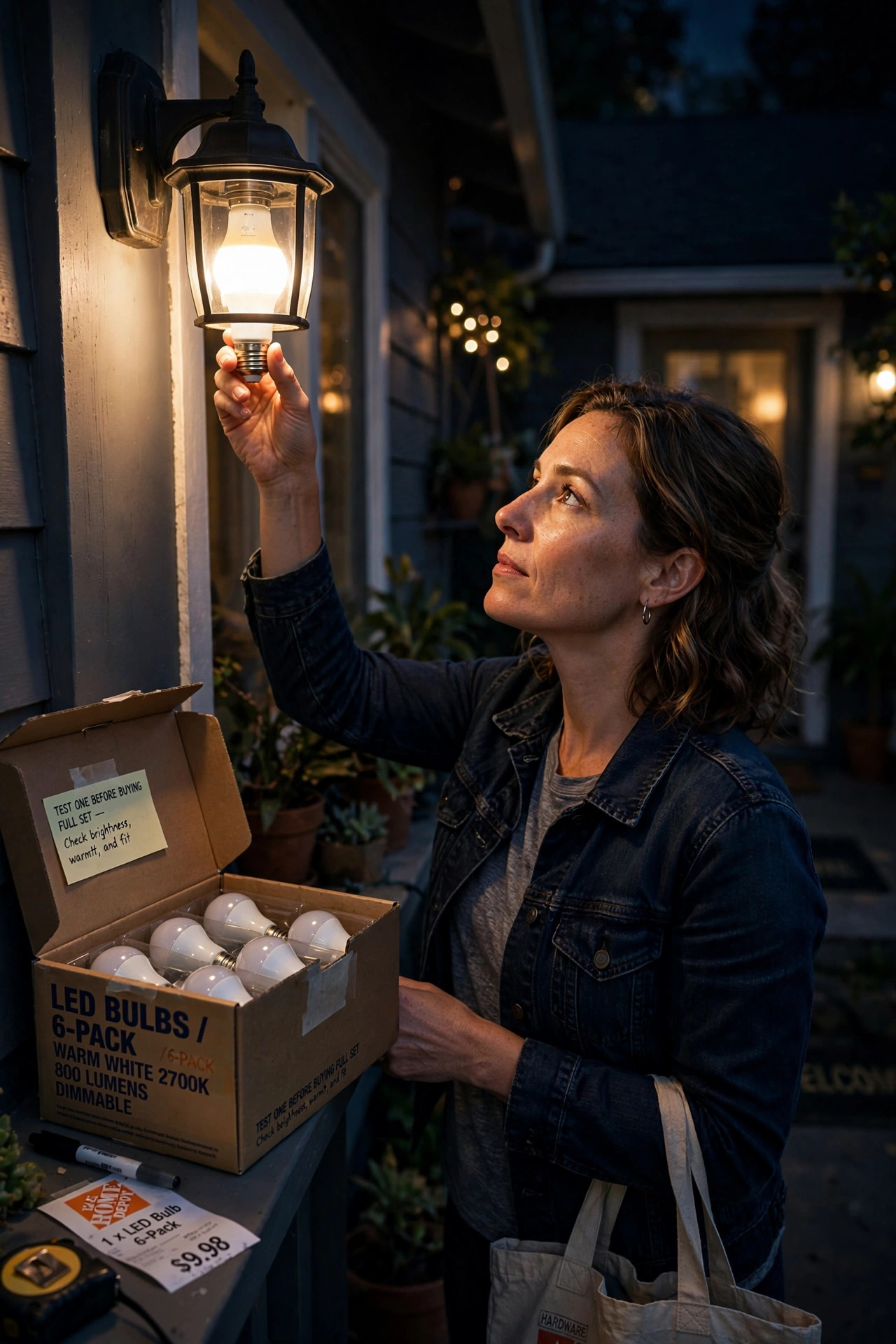
Here's my favorite piece of advice, and it costs almost nothing: buy one bulb first and test it at night. Bulbs look completely different in your actual fixtures, against your actual siding, under your actual night sky, than they do in a store aisle or a phone photo. What reads as "cozy warm" on a spec sheet might read as "murky yellow" bouncing off your particular shade of beige vinyl — you won't know until you see it.
The test is simple. Buy a single bulb in the temperature you're considering — say, 2700K — and install it in your most visible fixture. Wait until full dark, then step out to the curb and look at your house the way a guest would. Walk the path. Stand on the porch. Sit where you'd sit with a glass of wine. Give it ten minutes; your eyes need time to adjust before you can judge honestly.
Then compare. Screw in your old bulb (or a different temperature) in the neighboring fixture and look at both at once — this side-by-side is where mismatches scream at you. Take a phone photo too, but don't trust it completely; phone cameras auto-white-balance and lie about warmth. Your eyes are the judge.
If the temperature sings, go buy the whole batch — and buy them from the same product line, ideally in one order, so they match. If it feels off — too yellow, too flat, too dim — you've spent five bucks to learn something valuable instead of $80 on a yard full of regret. In my experience, the one-bulb test is the difference between lighting you love for a decade and lighting you resent every evening.
How Dimming Changes the Warm Look
Dimming and warm white are a match made in heaven — but only if you understand what's happening. Here's the beautiful bit of physics: old incandescent bulbs didn't just get dimmer when you turned them down, they got *warmer*, shifting from 2700K down toward a candlelit 2200K or lower. Our brains learned to associate that deepening amber with evening winding down, relaxation, intimacy. It's baked into us.
Standard LED dimming doesn't do this. A regular dimmable 2700K LED at 20 percent brightness is still 2700K — just dimmer. It can look a little gray and lifeless compared to the rich amber of a dimmed incandescent. That's why dim-to-warm (also sold as "warm glow" or "warm dim") LEDs exist: they mimic the incandescent trick, sliding from 2700K down to 2200K or even 1800K as you dim. On a patio at 30 percent, the effect is pure magic — firelight without the fire.
For outdoor use, this matters most in entertaining zones: patios, decks, porches, and pergolas where you actually sit after dark. Pair dim-to-warm bulbs with a compatible LED dimmer or a smart plug with dimming, and your 8 p.m. dinner-party glow can melt into an 11 p.m. nightcap glow without anyone touching a thing — or set it on a schedule and let it happen automatically.
Two practical notes: dim-to-warm bulbs cost a few dollars more than standard dimmables (figure $8–$12 each versus $4–$6), and they're still a niche product in outdoor-specific shapes, so they're easiest to find as A19 bulbs for porch fixtures and string-light replacements. Also, never put a non-dimmable bulb on a dimmer circuit — not even "just to test." The flicker will drive you mad and you'll shorten the bulb's life.

Light Pollution, Bugs, and Neighbors: The Warm White Advantage
Here's a benefit of warm white that has nothing to do with looks: cooler, bluer light is worse for the night sky, worse for bugs, and worse for your neighbors. If any of those matter to you, 2700K is doing quiet good while it makes your yard pretty.
Start with bugs. Insects are strongly attracted to blue and ultraviolet wavelengths — exactly what 4000K–5000K bulbs pump out. Switch a porch light from 5000K to 2700K and you'll notice the difference within a week: fewer moths battering the fixture, fewer spiders setting up shop to eat them, fewer bites at the patio table. Warm light isn't bug-*proof*, but it's dramatically bug-*reduced*, and on a summer evening that matters.
Then there's light pollution. Blue-rich light scatters more in the atmosphere, which is why cool-white security lights contribute disproportionately to skyglow — that orange-gray dome that hides the stars over every suburb. The International Dark-Sky Association specifically recommends 3000K or warmer for outdoor lighting, and many towns are now writing 3000K maximums into their lighting ordinances. Choosing 2700K keeps you ahead of the regulations and keeps the Milky Way visible on clear nights.
And neighbors: a 5000K floodlight blasting sideways into the bedroom next door is how feuds start. Warm 2700K light at modest brightness, aimed *down* with shielded fixtures, is simply a kinder neighbor. Add motion sensors so it isn't burning all night, and you're the best-lit — and best-liked — house on the block.

Warm White Room by Room: Porch, Path, Patio, and Pool
Let's make this concrete with a walk around a typical house, because "use 2700K" is good advice but placement is everything.
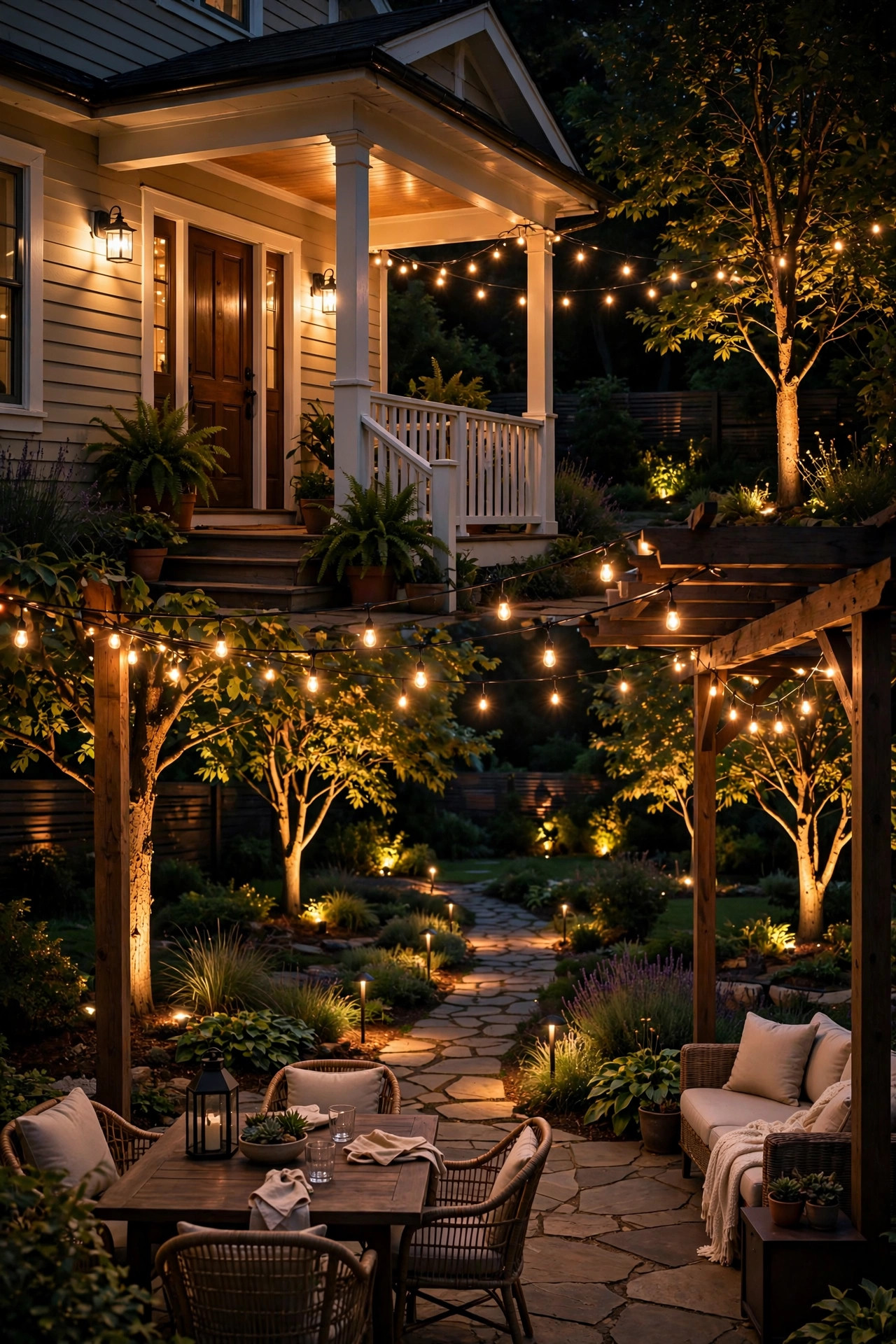
Front porch: 2700K wall lanterns or sconces flanking the door — the classic welcome. If your front door sconce pair is dimmable, even better; full brightness when guests arrive, a low ember glow the rest of the night. Avoid cool white here at all costs — this is your home's handshake.
Pathways: 2700K low-voltage path lights, spaced 6–8 feet apart and staggered (not in a runway line — offset them left and right for a natural look). Our full breakdown of low-voltage path lights covers spacing and wiring in detail, but the temperature rule is simple: warm, always. Cool path lights make a garden feel like an airport taxiway.
Patio and deck: 2700K is your base, with 2200K string lights overhead for pure magic. Put the string lights on a dimmer so you can go from lively dinner brightness to late-night ember glow. Step lights and stair risers stay at 2700K too — consistent with everything else, just aimed where feet land.
Pool and water features: This is the one zone where I'll bend the rule slightly. Underwater pool lights in warm white look gorgeous and resort-like, but many people prefer 3000K–4000K in the water itself for visibility and that crisp aqua pop. Compromise: keep the *surrounding* landscape and patio at 2700K and let the pool water be a touch cooler. The contrast actually looks intentional and stunning.
Landscape uplights: 2700K, no exceptions. Warm uplighting makes trees look majestic and architectural; cool uplighting makes them look like a crime scene. Aim for 90+ CRI here if your garden is the star — the colors will thank you.
Frequently Asked Questions
Is 2700K too dim for outdoor use?
No — and this is the most common confusion in lighting. 2700K describes *color*, not *brightness*; brightness is measured in lumens. A 2700K bulb putting out 1,600 lumens is just as bright as a 5000K bulb at 1,600 lumens — it simply glows golden instead of icy. If your porch feels dim, you need more lumens (or more fixtures), not a higher Kelvin number. For reference, a welcoming porch sconce is usually 400–800 lumens, while a driveway floodlight might be 1,500–3,000 lumens — both can be 2700K.
2700K vs 3000K for pathways — which is better?
For most homes, 2700K. It keeps the garden feeling natural and cohesive with the rest of your warm exterior, and it renders foliage in rich, healthy tones. Choose 3000K if your path doubles as a security corridor (a long dark side yard, for instance) or if you have cameras covering the area — the slightly crisper light reads as brighter and films better. Either way, don't mix: every path light in one visible run should be the same temperature.
Can I mix color temperatures in different areas of my yard?
Yes, with one rule: never mix temperatures *within the same view*. It's fine to have 2700K on the front porch and 3000K around the back for the grill station — nobody sees both at once. What looks broken is a 2700K sconce glowing next to a 4000K floodlight on the same wall, or alternating temperatures along one path. Think of your yard in "scenes": each scene gets one temperature, and scenes that are visible together must match.
What does CRI mean for outdoor LEDs, and what should I look for?
CRI — Color Rendering Index — scores how accurately a light shows colors compared to natural sunlight, on a 0–100 scale. Two bulbs can both be 2700K but render your red door and green shrubs completely differently if one has CRI 70 and the other CRI 95. For outdoor use, treat CRI 80 as your minimum and aim for 90+ for anything showcasing landscaping, stonework, or siding color. It's usually printed right next to the Kelvin rating on the box, and the price difference between CRI 80 and 90+ is often just a dollar or two per bulb.
Do warm white LEDs cost more than cool white ones?
No — in 2026, 2700K is the standard residential temperature and it's priced at the baseline for every product line. A 2700K bulb costs the same as (or sometimes less than) its 5000K twin. The only warm temperatures that carry any premium are specialty ones: 2200K amber bulbs and dim-to-warm LEDs run a few dollars more per bulb because they're made in smaller volumes. Standard 2700K is the cheapest, most available option on the shelf — coziness is free.
The Warm White Verdict
After years of tweaking, testing, and one regrettable "daylight" phase I'd rather forget, I've landed exactly where the lighting designers live: 2700k outdoor lighting is simply the right default for a home. It's the temperature of candlelight and old incandescents, it flatters your house and everyone in it, it keeps bugs and light pollution down, and it costs nothing extra. Buy one bulb, test it at night, then commit to matching 2700K across every fixture your guests can see at once — and enjoy the best-looking house on the street. For more ways to layer that glow, browse our outdoor wall lantern ideas and our fall porch lighting ideas to keep the warmth going all season.