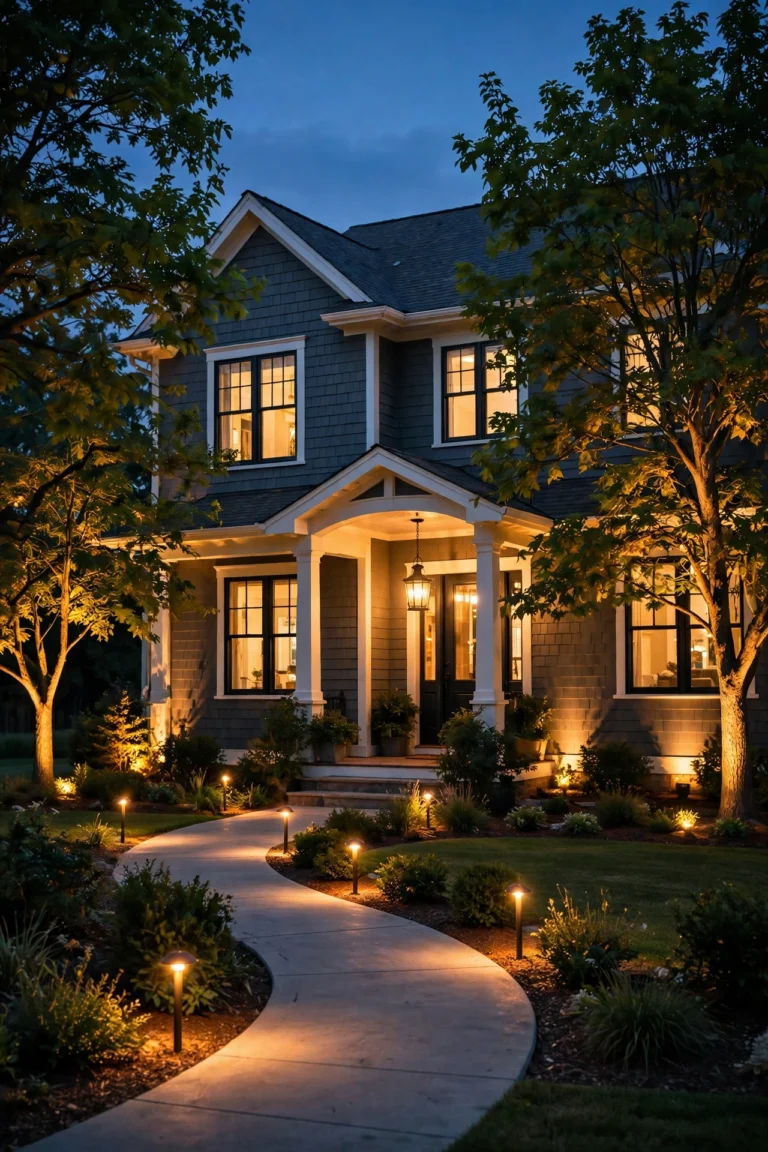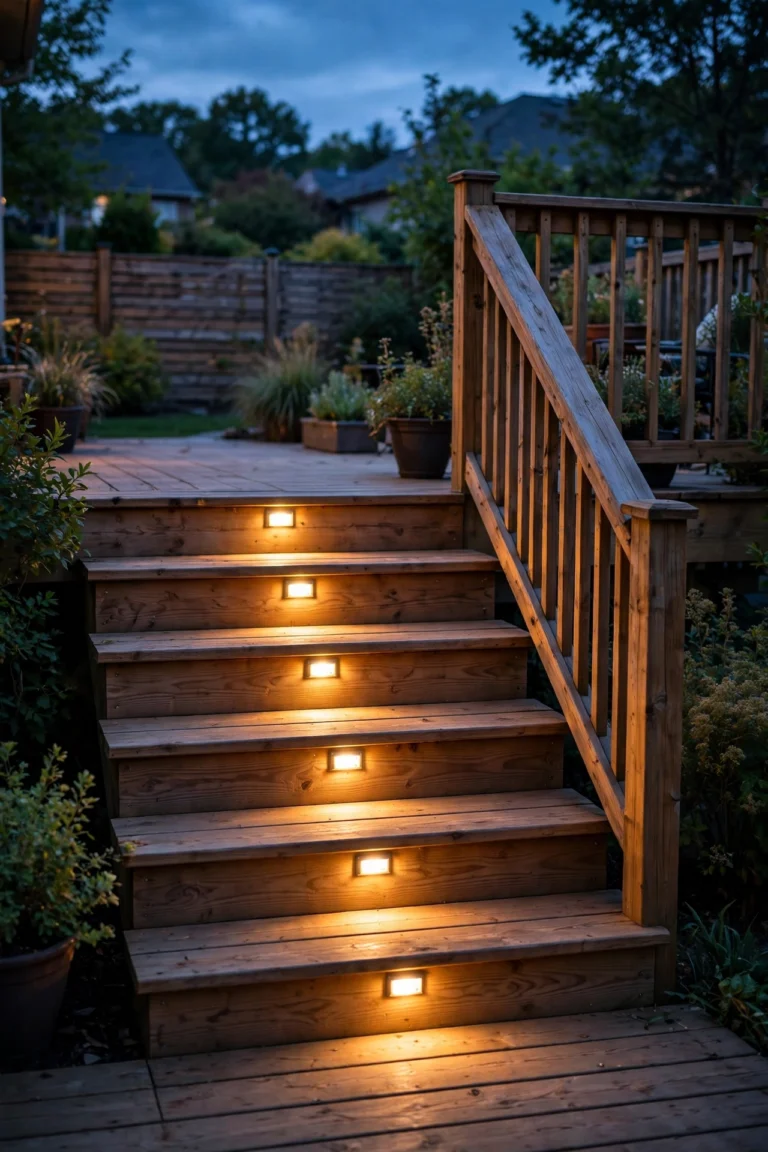
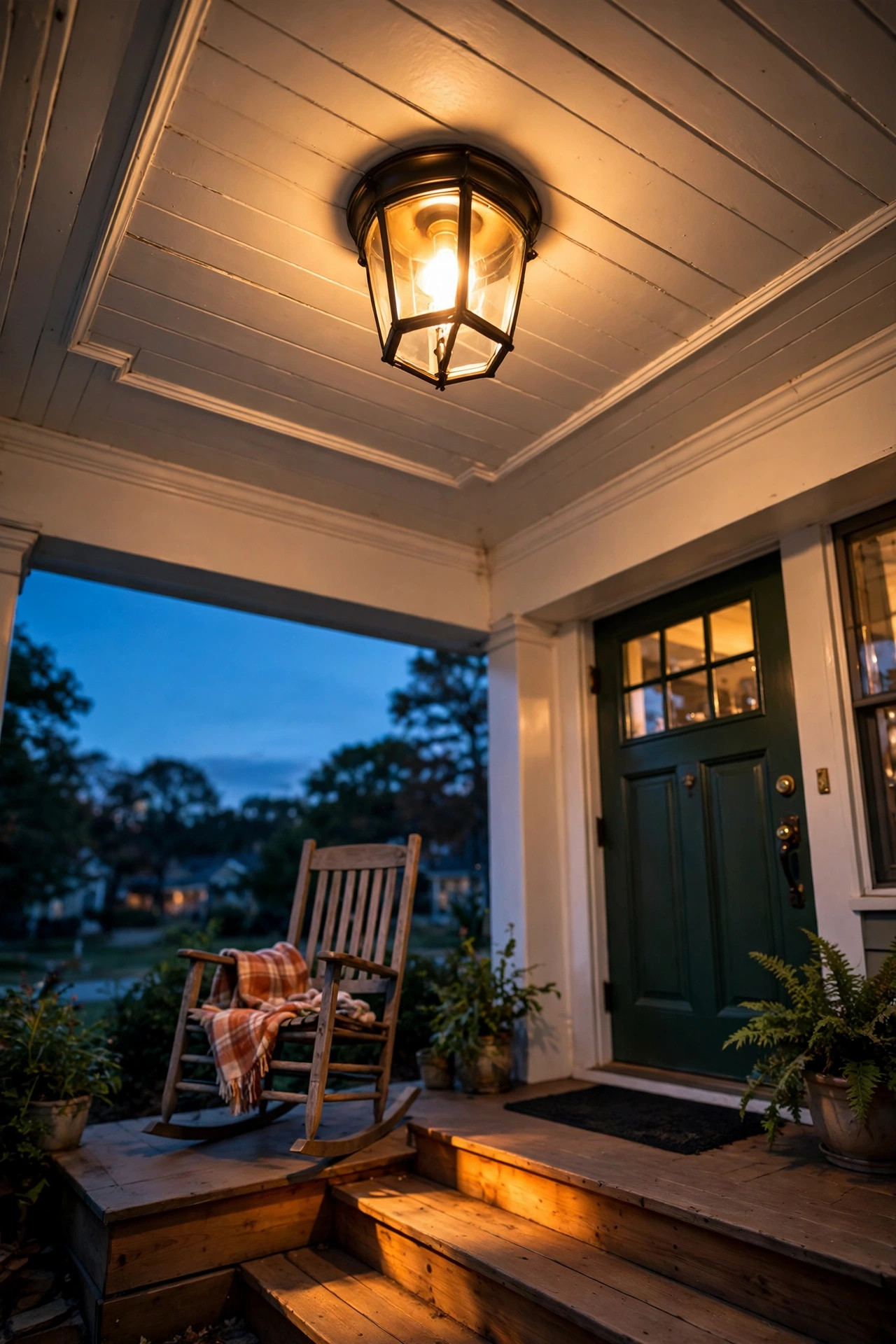
Your porch ceiling light is the first thing guests notice when they arrive — so it deserves more thought than a bare bulb in a builder-grade fixture. If you're hunting for porch ceiling light ideas, here's what I've learned after restyling my own entry (and half the neighborhood's): the ceiling fixture sets the entire mood of your porch. A warm, well-chosen flush mount makes your entry feel safe and finished, while a harsh or missing one makes even a pretty porch feel flat.
In my experience, great porch lighting is all about layering — the ceiling light is your foundation layer, and everything else (lanterns, string lights, candles) plays off it. A flush mount gives broad, even illumination overhead without stealing headroom, which is exactly what most porches need. Below are 15 porch ceiling light ideas covering every style from farmhouse to modern, with guidance on ceiling heights, shade styles, bulb choices, damp ratings, and installation safety. Whether your porch is a tiny stoop or a wraparound dream, there's a look here for you — and if you're decorating seasonally, don't miss my fall porch lighting ideas for pairing your new fixture with autumn decor.
1. Clear-Glass Drum Flush Mounts — The Brightest Porch Ceiling Light Ideas
Clear glass and a simple drum frame might sound plain, but honestly? This is the hardest-working of all porch ceiling light ideas. A clear-glass drum lets every lumen escape in all directions — up onto the ceiling for a soft bounce, down onto your steps, and out to the street. It's the look I always recommend for porches with low ceilings (under 8 feet), because the slim profile — usually just 4 to 6 inches deep — keeps everything feeling airy.
Go for a drum in a matte black or brushed nickel frame with exposed LED filament bulbs inside for that warm café glow, or a sealed version with a frosted inner diffuser if bugs are an issue in your area (clear glass does invite moths, I'll be real with you). For brightness, aim for a fixture rated around 800 to 1,100 lumens with a warm 2700K color temperature — that's plenty for a standard 8-by-10-foot porch. Mount it centered on the porch ceiling, or centered over the front door if your porch is narrow. One caution: clear glass shows every speck of dust and every dead bug, so choose a fixture whose glass drops down or twists off easily for cleaning.
Suggested budget range: $45 – $130.

2. Frosted-Glass Flush Mounts for Soft, Glare-Free Glow
If your porch doubles as your evening wind-down spot — sweet tea, rocking chair, the whole deal — a frosted-glass flush mount is your friend. Frosted or opal glass diffuses the light so you never get that harsh spotlight-in-the-eyes feeling when you look up. In my experience, this is the most forgiving style if your porch ceiling is painted a bold color, because the soft wash of light shows off the color instead of blasting it out.
These fixtures typically have a simple metal rim in white, bronze, or black with a glass dome or square lens that hugs the ceiling. Look for a lens that sits slightly proud of the rim rather than fully recessed — it throws light sideways too, which is what lights your walls and railing nicely. A 12-inch diameter fixture works for porches up to about 100 square feet; go up to 15 inches for larger spaces. Because the glass is frosted, you can use a slightly brighter bulb (1,000 to 1,600 lumens) without glare, and I always recommend a dimmable setup so you can drop it to a whisper of light late at night.
Suggested budget range: $35 – $110.
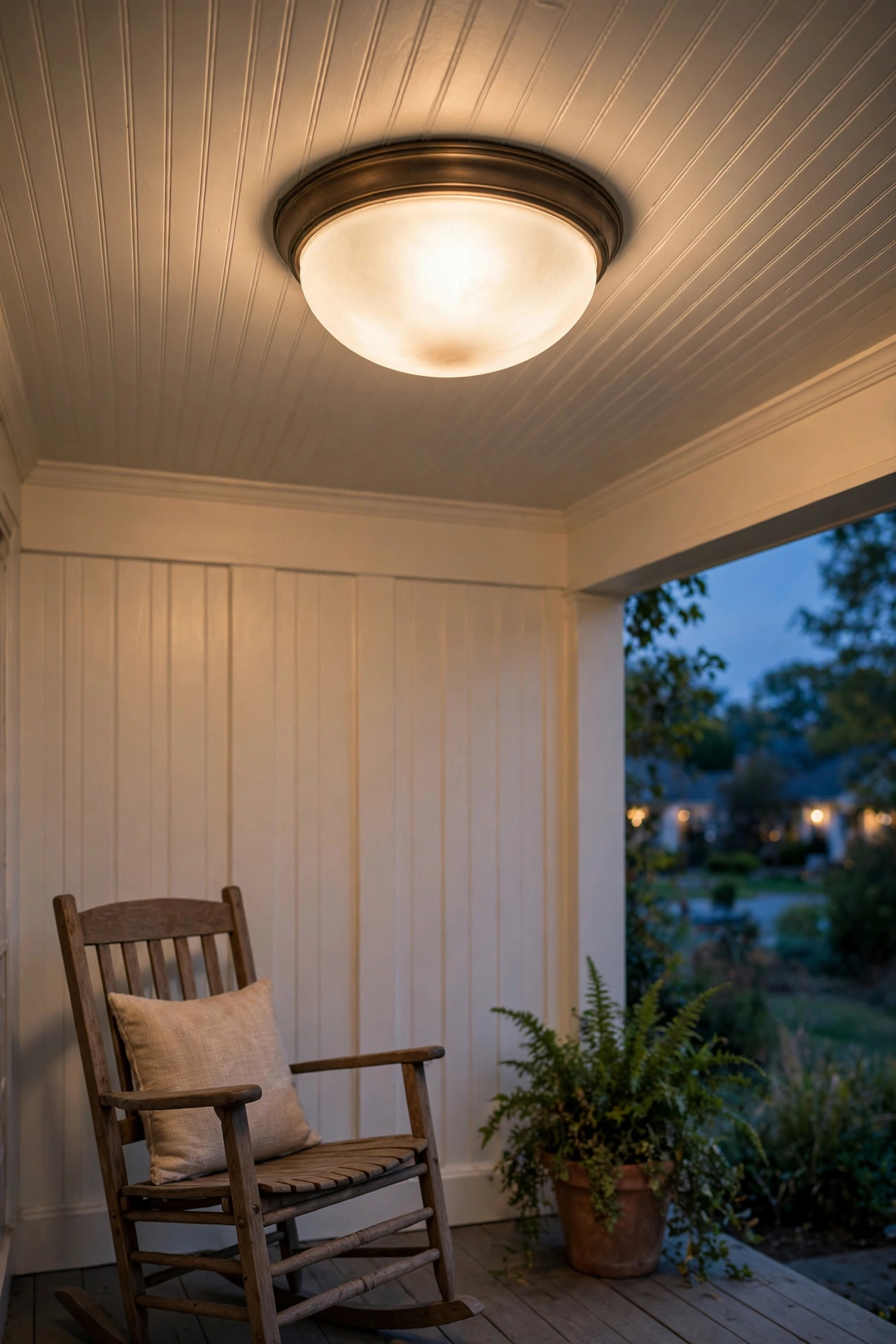
3. Dome Semi-Flush Mounts for Low Ceilings
Here's a distinction worth knowing: a flush mount sits flat against the ceiling, while a semi-flush mount drops down on a short stem — usually 4 to 8 inches. If your porch ceiling is 8 feet or lower, stay with true flush mounts to protect headroom. But if you've got 9 feet or more, a dome semi-flush adds a touch of elegance without crowding anyone's head, since the bottom of the fixture still clears 7 feet easily.
The classic dome — think a rounded bowl of milk-white or seeded glass on a short stem — suits traditional and colonial-style homes beautifully. Seeded glass, with its tiny bubbles, is my personal pick for older homes because it catches the light in the prettiest way and hides fingerprints between cleanings. Installation-wise, semi-flush fixtures need the same ceiling-rated electrical box as any fixture, but check the canopy diameter: on beadboard or tongue-and-groove ceilings, you may need a flat mounting block so the canopy sits level. Pair with a warm 2700K dimmable bulb at around 800 lumens and you've got timeless.
Suggested budget range: $50 – $150.
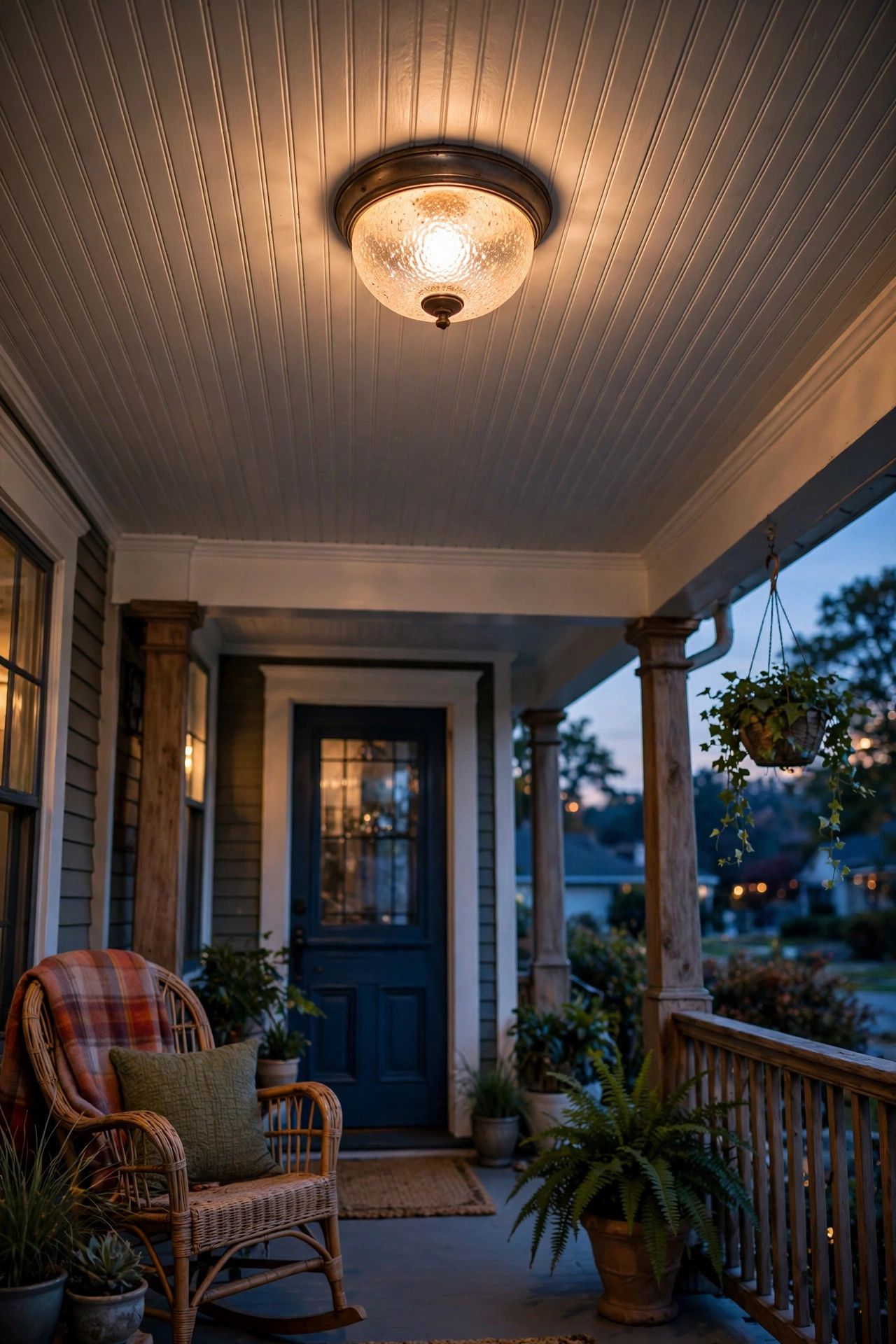
4. Integrated LED Flush Mounts for a Sleek, Modern Look
Integrated LED fixtures — where the light source is built in, no bulb to change — have come a long way, and honestly? For a clean modern porch, they're hard to beat. The profiles are incredibly slim, sometimes under 2 inches deep, with a smooth opal lens that glows evenly. No visible hardware, no bulb changes for 15 to 20 years.
Choose one with a selectable color temperature (2700K/3000K/4000K switch on the back) so you can dial in warmth without committing at the store — I always recommend setting it to 2700K for that golden porch feel. Many models are also dimmable, but here's the catch: they only dim smoothly with a compatible LED dimmer switch, so check the fixture's spec sheet before you buy a dimmer. Look for at least 1,000 lumens for a medium porch. One honest downside: when the integrated LED eventually dies, you replace the whole fixture — so buy from a maker with a solid 5-year warranty and keep your receipt in a drawer.
Suggested budget range: $60 – $180.
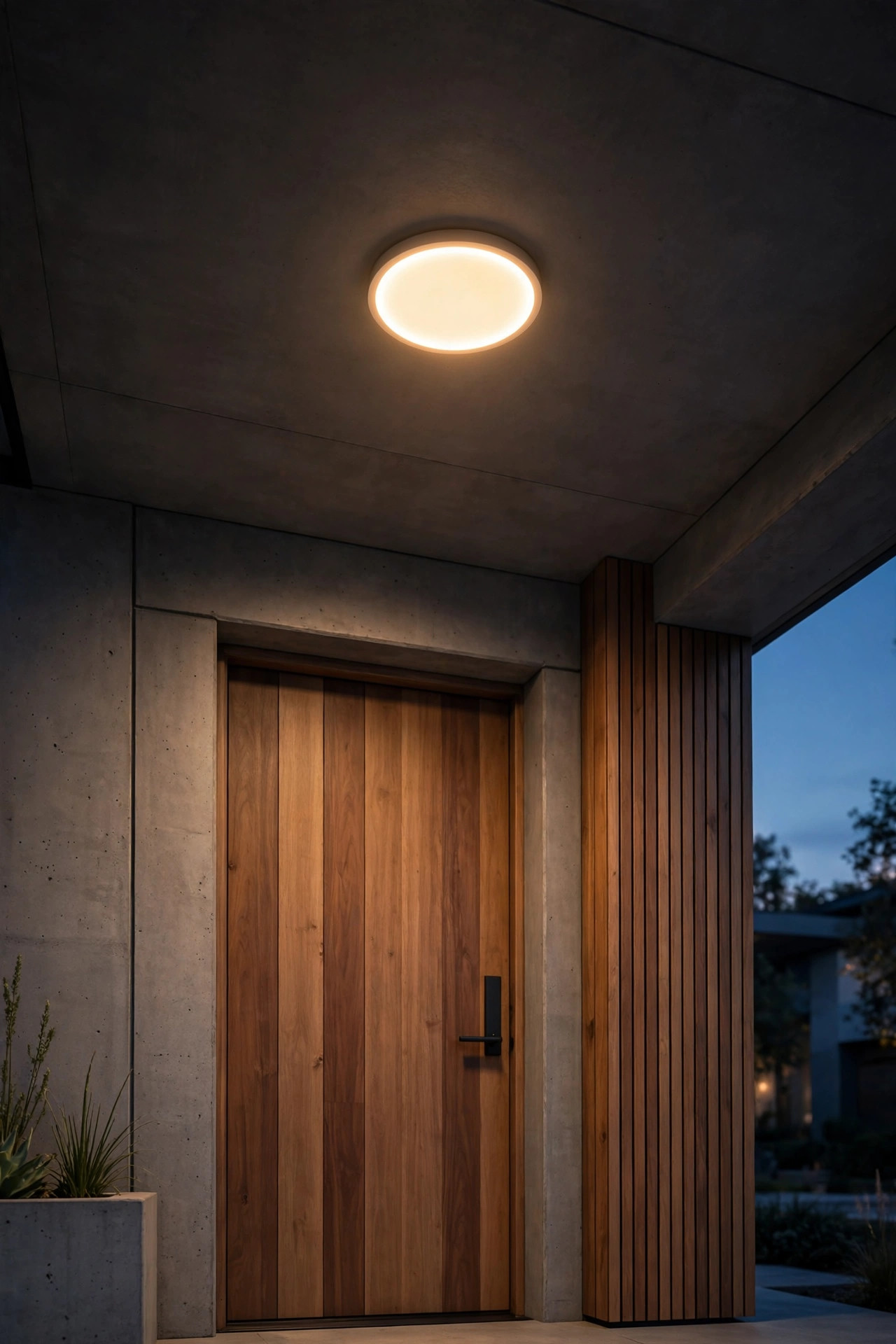
5. Schoolhouse Milk-Glass Shades (Timeless Porch Ceiling Light Ideas)
Of all the vintage porch ceiling light ideas out there, the schoolhouse shade is my forever favorite. That classic opal milk-glass globe on a simple brass or bronze fitter has been around for a century for a reason — it throws the most flattering, old-fashioned glow, and it looks right on everything from a 1920s bungalow to a new-build farmhouse.
The trick is proportion: a 10-inch globe suits a small entry, while 12 to 14 inches works for a proper front porch. Hang it as a flush mount (globe tight to the ceiling) on porches under 8.5 feet, or on a short 6-inch stem if you have the height — the stem version reads more "pendant" and adds charm. Because milk glass is opaque, all the light goes downward and outward through the opening, so you get a lovely pool of light on the floor and a soft halo on the ceiling. I always recommend pairing it with a warm LED filament bulb visible through… actually, with milk glass you can't see the bulb, so save money and use a standard dimmable A19 LED at 800 lumens. Just make sure the shade is rated for enclosed or semi-enclosed use with your bulb's wattage.
Suggested budget range: $55 – $160.

6. Lantern-Style Flush Mounts for Farmhouse Charm
Want the lantern look without the hanging chain? Lantern-style flush mounts give you that classic four-sided lantern silhouette — glass panels in a metal frame — squashed up against the ceiling. It's the best of both worlds for farmhouses, cottages, and craftsman homes, and it plays beautifully with the rest of your exterior lighting.
Look for frames in oil-rubbed bronze or matte black with clear or seeded glass panels. Clear panels show off a pretty filament bulb and maximize light; seeded panels soften it and hide dust. Size matters here: a 13-inch square lantern suits most porches, but measure your ceiling first — these run 8 to 10 inches deep, so they're better for ceilings 9 feet and up. My styling tip: repeat the lantern motif in smaller doses, like matching wall lanterns flanking the door, for a pulled-together entry. And always check the damp rating (more on ratings in idea #14) — under a covered porch roof, damp-rated is fine, but if your fixture sits near the porch edge where rain blows in, step up to wet-rated.
Suggested budget range: $70 – $200.
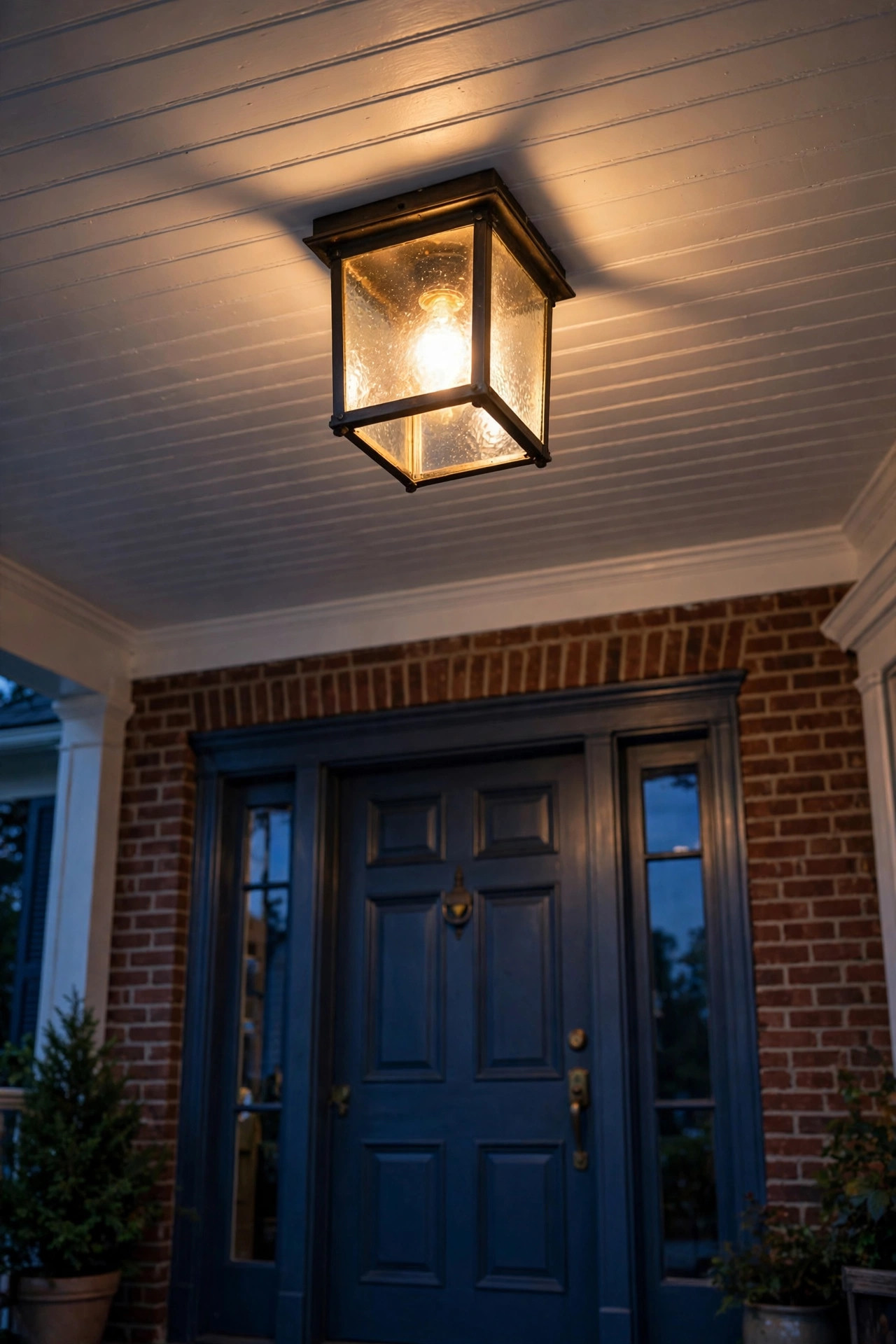
7. Motion-Sensor Flush Mounts for Security and Convenience
A porch light that greets you when you pull in the driveway is one of life's small luxuries — and a genuine security upgrade. Motion-sensor flush mounts look like ordinary ceiling fixtures but have a discreet sensor built into the trim that switches the light to full brightness when it detects movement, then dims back down after a set time.
In my experience, the sweet spot is a fixture with adjustable sensitivity and a "dusk-to-dawn plus motion boost" mode: it glows softly all night at about 20 percent brightness, then jumps to full when someone approaches. That way your porch never looks abandoned, but you're not blasting the neighbors. Mount it centered where the sensor has a clear view of the walkway — most sensors cover a 180-degree field up to about 25 feet. One practical note: don't aim the sensor at a busy street or a swaying tree branch, or you'll get false triggers all night. And keep the fixture on a switch you can reach, so you can override it to "on" when you're expecting guests.
Suggested budget range: $65 – $170.

8. Rattan and Woven Flush Mounts for Coastal-Boho Warmth
If your style leans coastal, boho, or tropical, a woven rattan or wicker flush mount brings instant texture to a plain porch ceiling. The light filters through the weave in the prettiest dappled pattern, and during the day the fixture reads as decor, not hardware. I always recommend these for covered porches with a relaxed vibe — they look especially good against white beadboard.
Here's the practical side: natural rattan is for covered, dry porches only — it won't survive direct rain or heavy humidity without mildew. For exposed spots, choose a fixture woven from synthetic rattan or resin wicker, which looks nearly identical but shrugs off weather. Because the weave blocks some light, go brighter than you think — 1,100 to 1,600 lumens with a warm 2700K bulb — and pick an open-weave design so light escapes downward. These run 14 to 18 inches wide typically, so they suit medium to large porches best. And please: LED bulbs only near natural fibers — they run cool, which matters around anything woven.
Suggested budget range: $80 – $220.

9. Black-and-Brass Semi-Flush Mounts for Modern Contrast
Matte black plus warm brass is the color combo that keeps showing up in my saved inspiration folders, and on a porch ceiling it looks sharp against both white paint and stained wood. A black-and-brass semi-flush — say, a black metal shade with a brass interior or brass accents on the fitter — gives you a tailored, jewelry-box moment overhead.
This style works best on porches with 9-foot-plus ceilings since most designs drop 8 to 12 inches. The brass interior isn't just pretty; it reflects warm light downward, which actually boosts the perceived brightness — a nice trick on porches with dark-stained ceilings that swallow light. For balance, echo the brass in your door hardware or house numbers so the fixture doesn't feel like a one-off. Bulb-wise, a warm dimmable LED at 2700K and 800 to 1,000 lumens is ideal, and honestly? A visible filament-style bulb through an open or clear-glass design completes the look. Keep the glass or shade clean — black finishes show dust and pollen more than you'd expect.
Suggested budget range: $90 – $250.
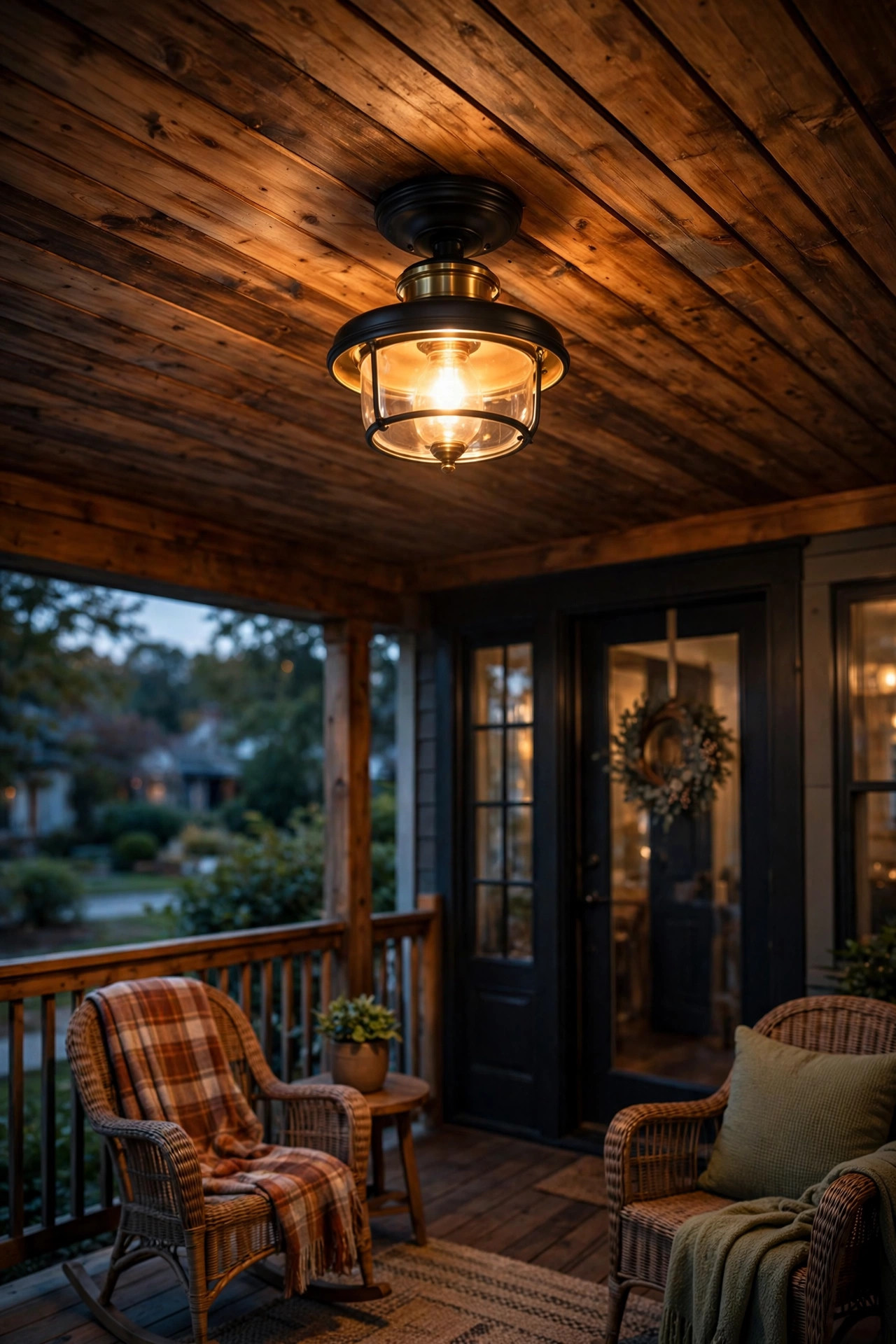
10. Minimalist Flush Panels for a Clean Contemporary Entry
For modern and contemporary homes, sometimes the best fixture is the one you barely notice. Ultra-slim LED flush panels — round or square discs of evenly glowing opal acrylic, often under an inch thick — disappear into the ceiling by day and provide beautiful, shadowless light by night. No shade to clean, no frame to dust.
The key decision is size and brightness: a 12-inch round panel at 1,500 lumens handles a standard porch, while a 15-inch version covers larger entries. Many come with selectable color temperature — choose 2700K or 3000K for warmth; 4000K will make your porch feel like a parking garage, trust me on this one. If your porch ceiling is white, the fixture blends in completely; if it's a darker color, a panel with a slim white trim ring still looks intentional. Most are damp-rated and dimmable with a compatible LED dimmer. My one caution: because the light is so diffuse, a panel alone can feel a little flat — layer it with a warm lantern or candlelight at seating level for depth.
Suggested budget range: $40 – $120.
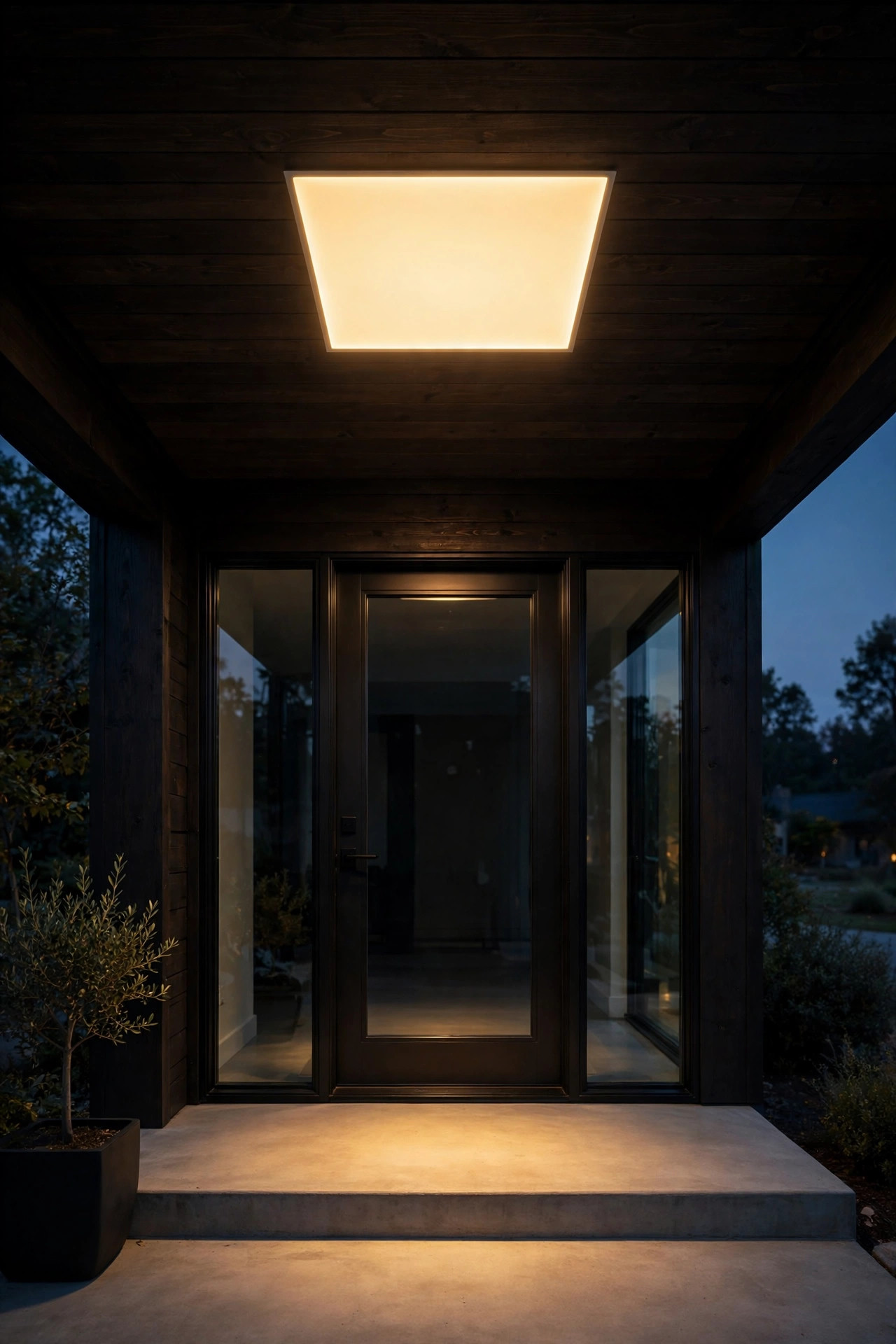
11. Pairing Porch Ceiling Light Ideas with Stained Wood Ceilings
A stained tongue-and-groove or beadboard ceiling is the crown jewel of a porch — but dark wood eats light, so your fixture choice matters more here than anywhere. The rule I always recommend: go one step brighter and one step warmer than you think you need. A fixture that would be perfect on a white ceiling will feel dim and moody (in the bad way) under dark stain.
Finish-wise, warm metals are your best friends: aged brass, copper tones, oil-rubbed bronze, or even a warm wood-tone fixture that blends in. Avoid cool chrome or stark white, which clash with the wood's warmth. For shade style, clear or seeded glass beats opaque here — you want maximum light escaping, and the sparkle of glass against wood grain is gorgeous. Aim for 1,200 to 1,800 lumens on a dark-wood porch, and absolutely put it on a dimmer so you can tune the mood. Pro tip: mount the fixture on a small wooden mounting block stained to match the ceiling — it gives the canopy a finished look instead of a metal plate floating on wood.
Suggested budget range: $70 – $210.

12. Wide-Porch Spacing: Two or Three Fixtures, Done Right
Got a wide porch — say 20 feet or more across? One lonely fixture in the middle leaves the corners dark and looks lost. The fix is a row of two or three matching flush mounts, and the spacing math is simple: divide the porch width into equal sections and center a fixture in each. For a 24-foot-wide porch, that's three fixtures spaced 8 feet apart, each centered in its 8-foot zone.
Keep every fixture identical — same style, same finish, same bulb — for a clean, intentional rhythm. And here's the part people forget: put them all on one dimmer switch so they behave as a single layer of light. Mixing and matching fixtures along one ceiling almost always looks accidental rather than eclectic. For brightness, you don't need each fixture to be a powerhouse; three 800-lumen fixtures give you 2,400 total lumens of beautifully even light, which beats one harsh 2,000-lumen fixture every time. If your porch is L-shaped or wraps a corner, add one more fixture around the bend so nobody walks into a dark zone.
Suggested budget range: $120 – $400 (for two to three fixtures).
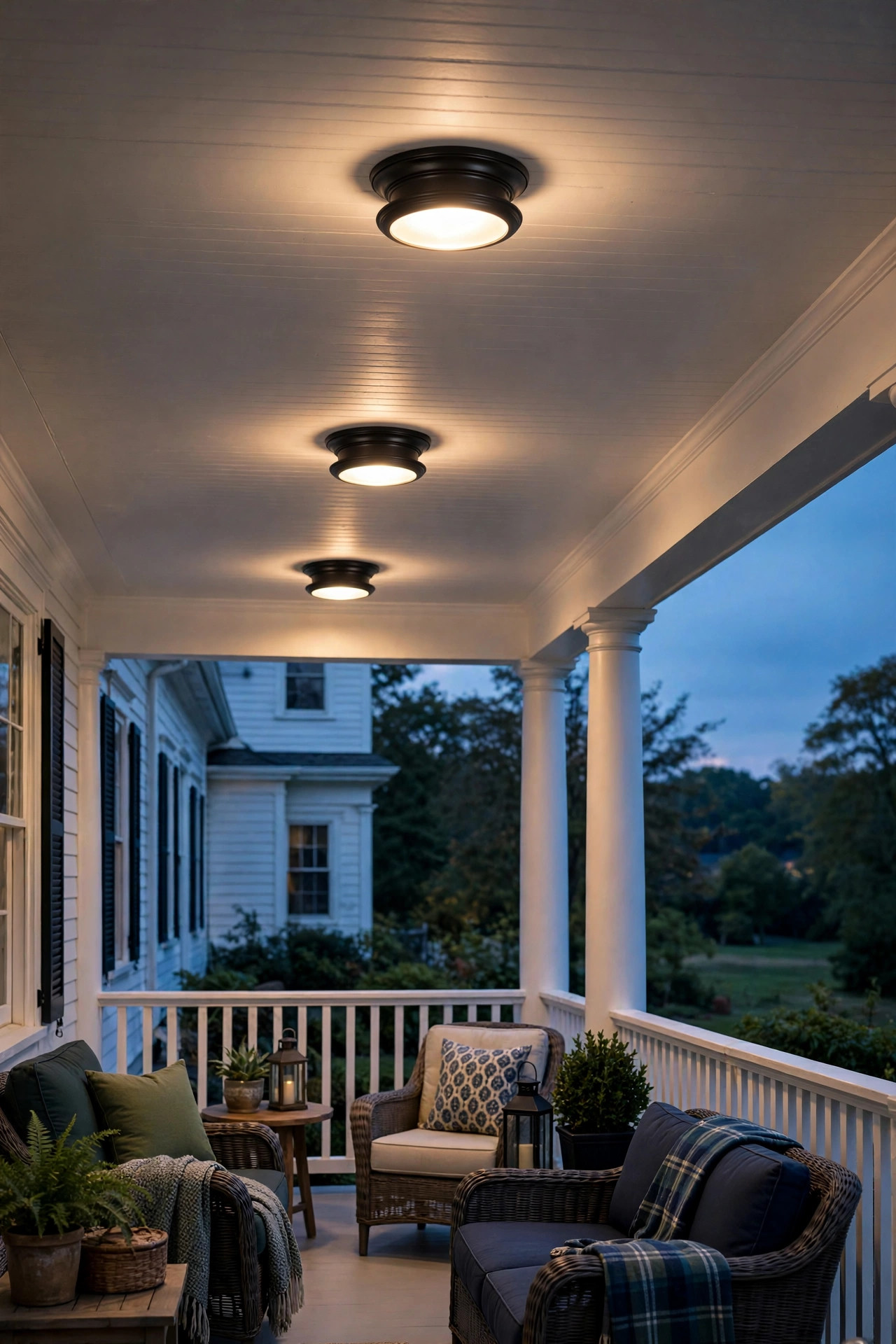
13. The Bulb Recipe: 2700K, Dimmable, and the Right Lumens
The fixture is only half the story — the bulb makes or breaks your porch ceiling light. After years of trial and error, here's my go-to recipe: 2700K color temperature (warm white with a golden cast), dimmable, LED, and 800 to 1,100 lumens per fixture for a standard porch. That combo flatters skin tones, makes paint colors look rich, and feels welcoming from the street.
A quick glossary so you can shop confidently: lumens measure brightness (higher = brighter), Kelvins measure color (lower = warmer), and "dimmable" only works if your wall switch is an LED-compatible dimmer — an old incandescent dimmer will make LEDs flicker or buzz. For exposed-bulb fixtures, LED filament bulbs give you that vintage Edison look with modern efficiency; for enclosed fixtures, a standard A19 LED is fine and cheaper. Skip "daylight" 5000K bulbs outdoors — they make your porch look like a gas station. And if your fixture is enclosed or the glass sits tight to the bulb, check that your LED is rated for enclosed fixtures, since heat buildup shortens the life of bulbs that aren't.
Suggested budget range: $8 – $25 per bulb.
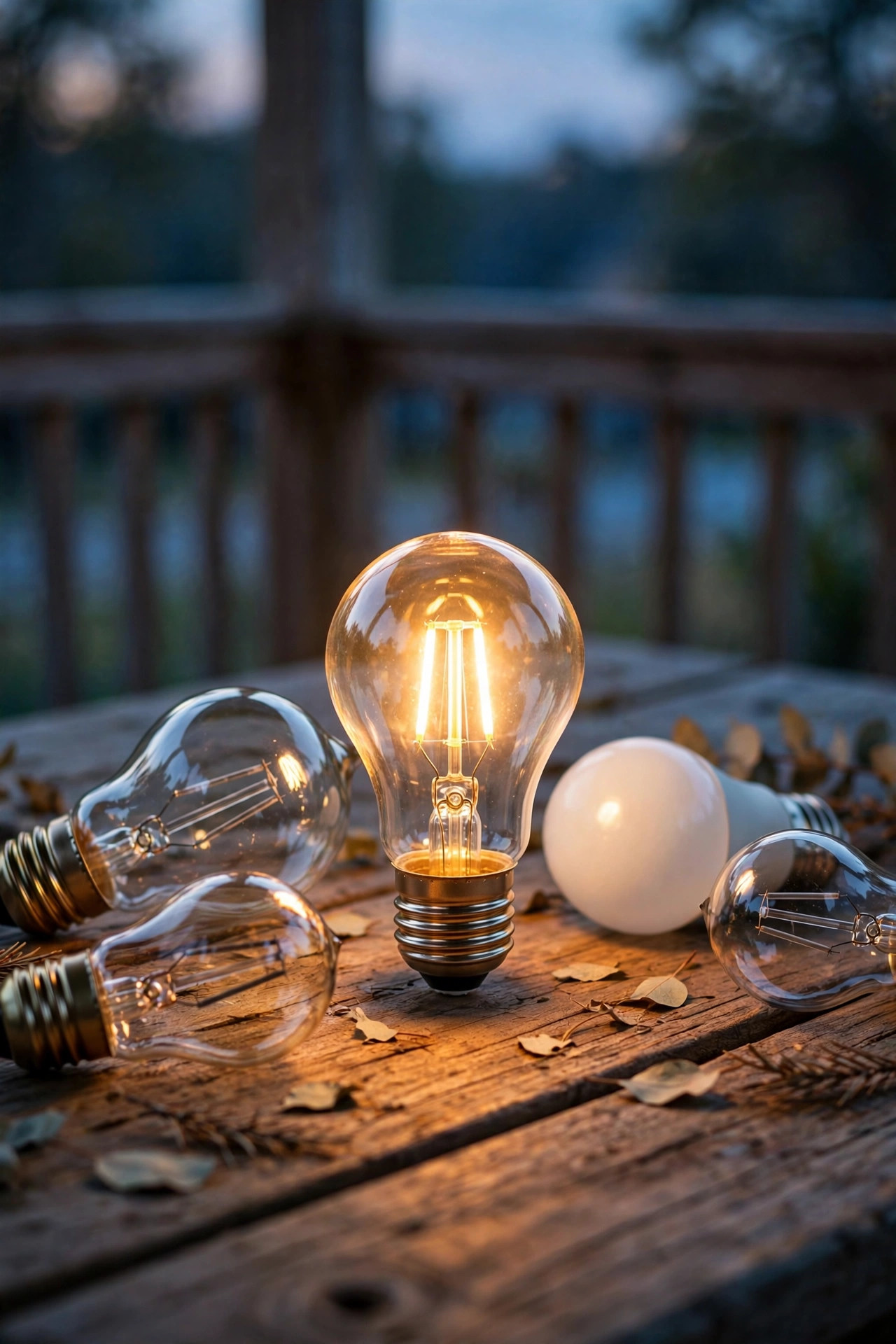
14. Damp vs. Wet Ratings: Buy the Right Fixture the First Time
This is the least glamorous of these ideas and the one that saves you the most money: outdoor fixtures carry damp or wet ratings, and buying the wrong one is how you end up replacing a rusted fixture in two years. Here's the plain-English version. Damp-rated fixtures are built for covered areas with moisture in the air but no direct water contact — that's most porch ceilings under a roof. Wet-rated fixtures are sealed against direct rain and splashing.
So which do you need? If your fixture hangs under a solid porch roof, well back from the edge, damp-rated is perfectly fine and gives you more style options. But if your porch is partially open, the fixture sits near the roof edge where wind drives rain sideways, or you live somewhere with serious coastal spray, go wet-rated for peace of mind. Look for the UL or ETL listing mark on the box — that's your proof it was actually tested, not just labeled. In my experience, spending a little more on a properly rated fixture with sealed gaskets and stainless hardware beats buying twice, especially in humid climates where cheap metal fixtures corrode fast.
Suggested budget range: $50 – $180.
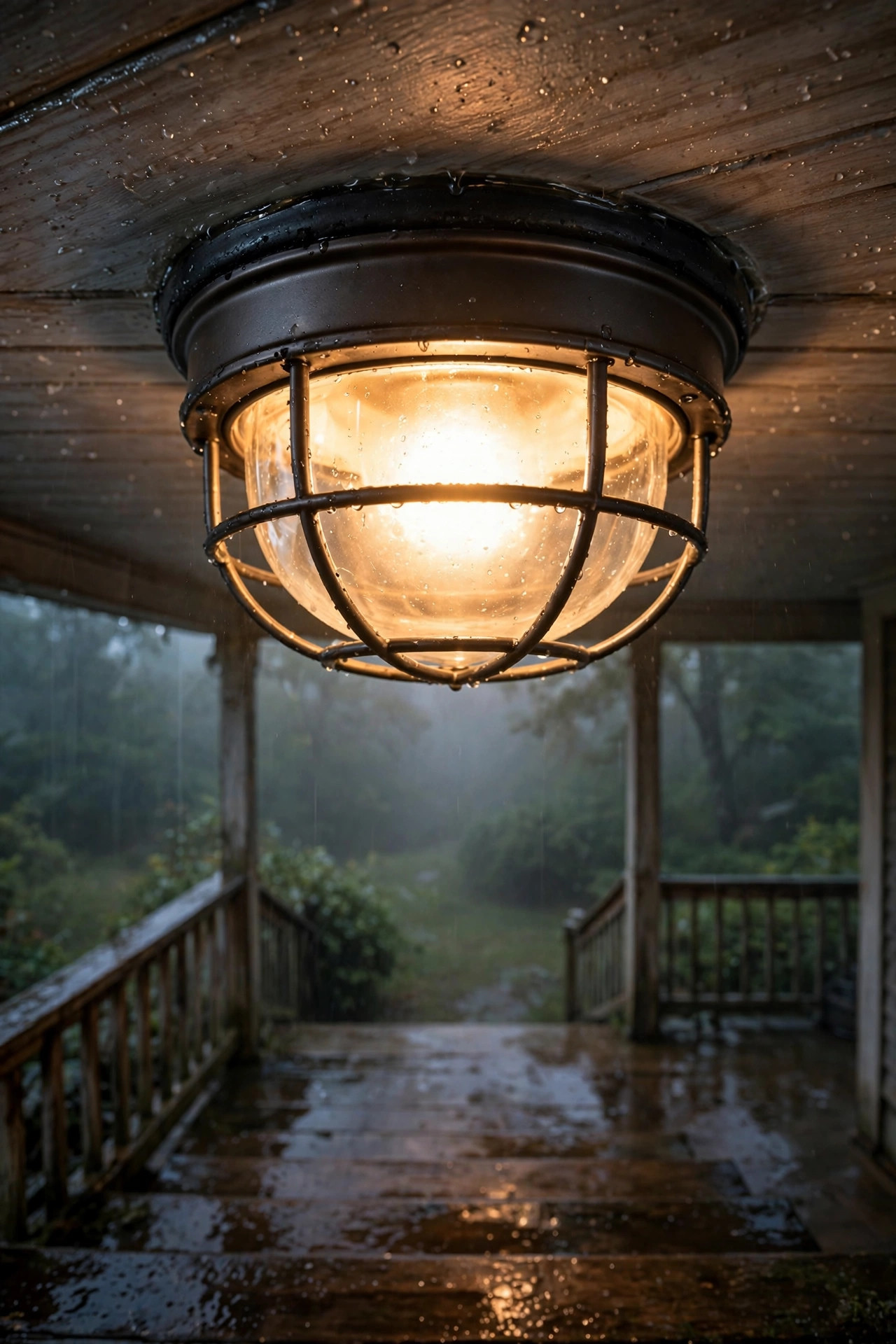
15. Electrical Safety: Boxes, Wiring, and When to Call a Pro
Let's end with the unglamorous-but-essential part: the electrical box behind your fixture. A ceiling fixture must mount to a box that's rated to support its weight — standard ceiling boxes handle up to 50 pounds, which covers nearly all flush mounts, but if you're hanging something heavy (some lantern-style flush mounts hit 15 to 20 pounds), confirm the box is fan- or fixture-rated and screwed into framing, not just drywall. Old porches sometimes have shallow "pancake" boxes that won't fit modern wire connectors — a quick peek before you buy saves a return trip.
Always turn off the breaker (not just the wall switch) before touching any wiring, and test with a non-contact voltage tester. Outdoor circuits should be GFCI-protected, and all wire connections need to sit inside the box with proper wire nuts — never buried in the ceiling. Honestly? If your wiring is old cloth-insulated cable, if there's no ground wire, or if anything looks corroded, call a licensed electrician. A fixture swap on existing sound wiring is a confident DIY job; troubleshooting mystery wiring is not. For more on safe exterior installs, see these exterior wall light installation tips.
Suggested budget range: $0 – $200 (DIY) or $150 – $350 (electrician install).

Frequently Asked Questions
What color temperature is best for a porch ceiling light?
2700K to 3000K — warm white — is the sweet spot for porches. It feels welcoming, flatters your home's exterior colors, and matches the glow of interior lights spilling through windows. Cooler temperatures like 4000K–5000K look harsh and institutional outdoors. If your fixture has a selectable color temperature, start at 2700K and only go up to 3000K if your porch has very dark finishes that need a touch more clarity.
Can I use an indoor flush mount light on my porch?
Only if your porch is fully enclosed and climate-controlled like an interior room. For any open or covered porch exposed to humidity, temperature swings, and insects, use a fixture that's at least damp-rated with a UL or ETL listing for damp locations. Indoor fixtures lack sealed gaskets and corrosion-resistant finishes, so they'll rust, yellow, or fail quickly outdoors — and using one can void your home insurance coverage if it causes an electrical issue.
How bright should my porch ceiling light be?
For a standard 8-by-10-foot porch, 800 to 1,100 lumens per fixture is plenty. Larger porches (150+ square feet) do better with 1,200 to 1,800 lumens or multiple fixtures spaced 8 to 10 feet apart. Brighter isn't always better — an overly bright single fixture creates harsh shadows and glare. I always recommend putting your porch light on a dimmer so you can have full brightness for finding keys and a soft glow for evening relaxing.
Should my porch ceiling light be on a timer or smart switch?
Yes — a timer, dusk-to-dawn sensor, or smart switch is one of the best upgrades you can make. A dusk-to-dawn photocell turns the light on automatically at sunset and off at sunrise, so your porch never looks dark and unoccupied. Smart switches add scheduling and dimming from your phone, which is perfect for vacations. If you go the smart route, make sure the switch is rated for your fixture's load and installed on a circuit with a neutral wire, which most smart switches require.
Conclusion
The right fixture turns your porch from an afterthought into the warmest spot on the block — and as you've seen, these porch ceiling light ideas prove you don't need a big budget or a high ceiling to get there. Pick a style that echoes your home's architecture, match the rating to your exposure, dial in that 2700K glow, and put it on a dimmer. That's the whole recipe.
In my experience, the ceiling light is the single highest-impact change you can make to a porch — everything else you add, from seasonal decor to seating, looks better under good light. If you're dreaming up the rest of your setup, browse my summer front porch setups for styling inspiration that pairs beautifully with a fresh ceiling fixture. Now go make your entry glow — you (and your guests) will feel the difference the very first night.
Word count: ~4,350 words | Images: 16 placeholders defined