Every spring I stand in the hardware store aisle and watch the same quiet panic happen. Someone is holding a pretty new porch fixture in one hand and their phone in the other, searching whether they are allowed to install the thing themselves. I have been that person. The honest truth is that needing an electrician for outdoor lighting is not about how handy you are or how brave you feel with a screwdriver. It comes down to one bright line, and once you know where that line sits, almost every outdoor lighting job sorts itself into two obvious piles: call a pro, or pour a lemonade and do it yourself this weekend. This guide walks you through both piles, job by job. I will show you the work that legally and safely belongs to a licensed electrician, the satisfying list of projects that are genuinely safe to DIY, the murky gray zone in the middle, and the warning signs that mean stop right now and pick up the phone. No scare tactics, no upsell, just the straight answer I wish someone had handed me years ago.

The Short Answer
Here is the whole guide in one breath: if the job touches your home's 120-volt wiring, you need an electrician; if it runs on 12 volts after a plug-in transformer, you can almost always do it yourself. New circuits, new outlets, hardwired fixtures and anything inside a junction box belong to a licensed pro, and in most towns the permit office agrees. Plugging in a transformer, running low-voltage cable, swapping bulbs and hanging solar lights are weekend work. Learn which side of that voltage line your project sits on, and you will never guess wrong again.
The Bright Line: It Is All About Voltage
If you remember one thing from this guide, make it this: voltage draws the line. Your home's wiring carries 120 volts, and that is enough power to seriously hurt you, start a fire inside a wall, or fail an inspection years later when you sell the house. Everything connected to that system — the breaker panel, the wall switches, the junction boxes, the hardwired fixtures by your front door — lives on the professional side of the line. Permits, local code and your homeowner's insurance all treat 120-volt work as electrician territory, and in many jurisdictions a homeowner is not legally permitted to do much of it at all, especially anything beyond a simple swap.
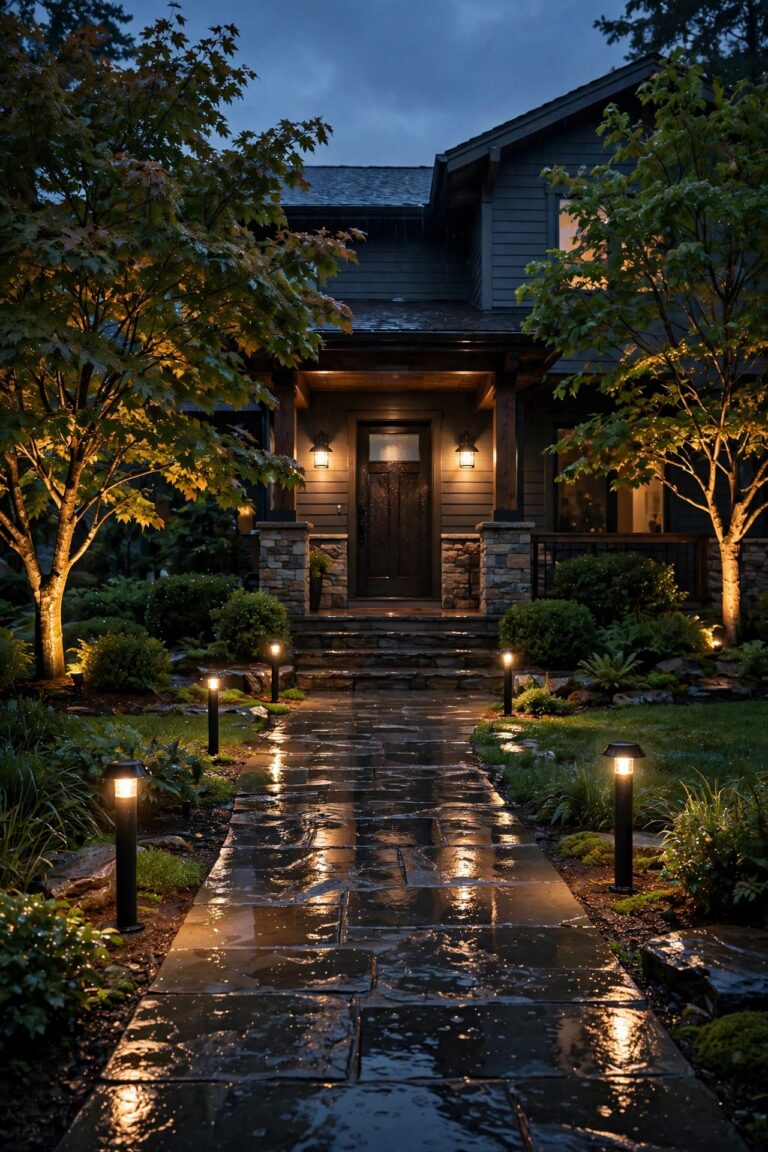
Now step across the transformer and everything changes. A landscape lighting transformer plugs into an ordinary outlet and steps that 120 volts down to a gentle 12 volts. Twelve volts will not shock you through garden soil and damp mulch; you can hold the cable in your hand while the system is on. That is why low-voltage lighting is the great DIY equalizer — all the beauty, almost none of the danger. Solar lights and battery lights never touch house power at all, so they sit even further into the safe zone. When a neighbor asks me whether a project needs a pro, my first question is always the same: where does the power come from, and what voltage is it when it gets there?

The Legal Line: Permits, Code and GFCI Rules
Let me talk about the rules for a moment, because "I did not know" is an expensive sentence. Most towns require a permit for new circuits, new outdoor outlets and hardwired fixture work, and permits exist for a good reason: an inspector checks the work once, and you sleep well for thirty years. Skipped permits tend to surface at the worst possible moment, usually when a buyer's inspector finds creative wiring during a home sale and your closing gets complicated.
The other rule that matters outdoors is GFCI protection. Any receptacle outside your home needs ground-fault protection, which is the technology that cuts power in a split second if electricity strays somewhere it should not, like through water or through you. Outdoor fixtures and outlets also need weatherproof, in-use covers and boxes rated for wet locations — not indoor parts pressed into outdoor service. My own guide to GFCI protection for outdoor lighting walks through the outlet side of this in detail if you want to check what you already have.
Here is my honest framing: code is not red tape invented to sell permits. It is a written record of every way a job has gone wrong before. Where the code says a licensed electrician pulls the permit and does the work, that is the law doing you a favor. Knowing this line also makes you a smarter customer, because you will recognize instantly when a handyman offers to "just tie it into the porch circuit" — that sentence should end the conversation.

When You Absolutely Need an Electrician for Outdoor Lighting
Here is the always-call list, and I do not bend on any of it. First, anything at the breaker panel: adding a new circuit for a patio or a long driveway run, replacing a breaker, or tapping power where none exists. Panels are unforgiving, and the inside of one is live even with the main switch off in ways that surprise people.
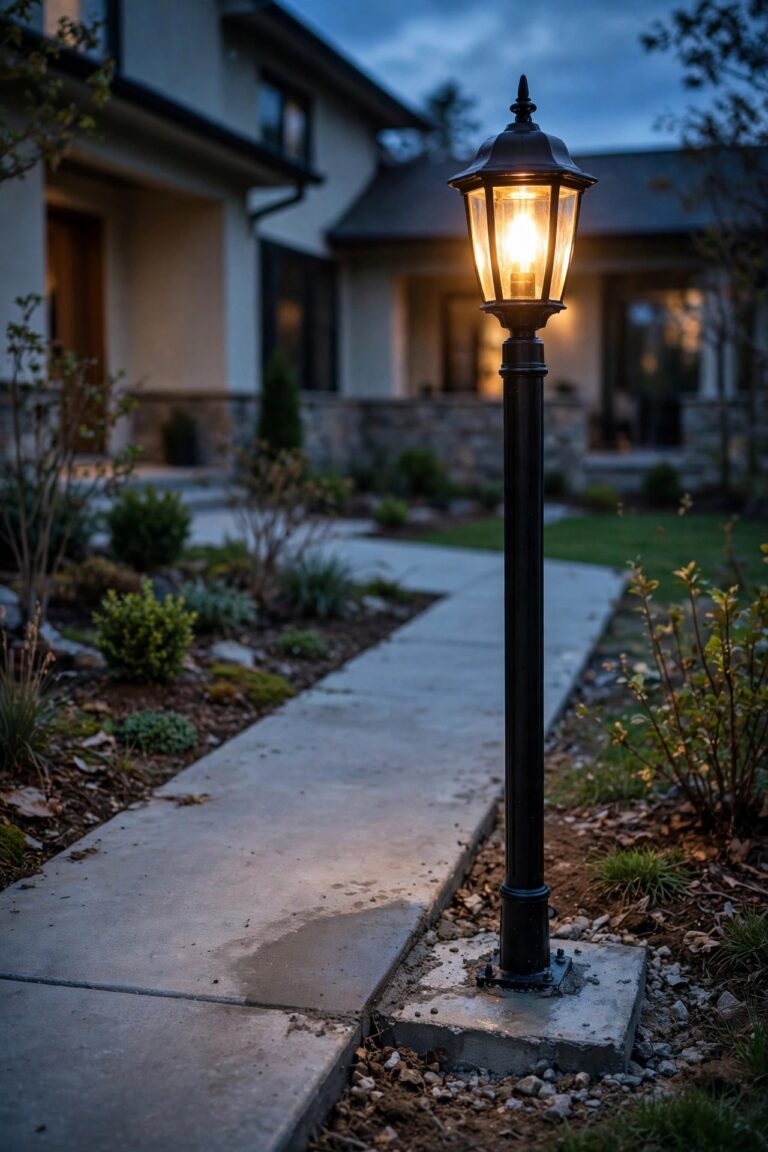
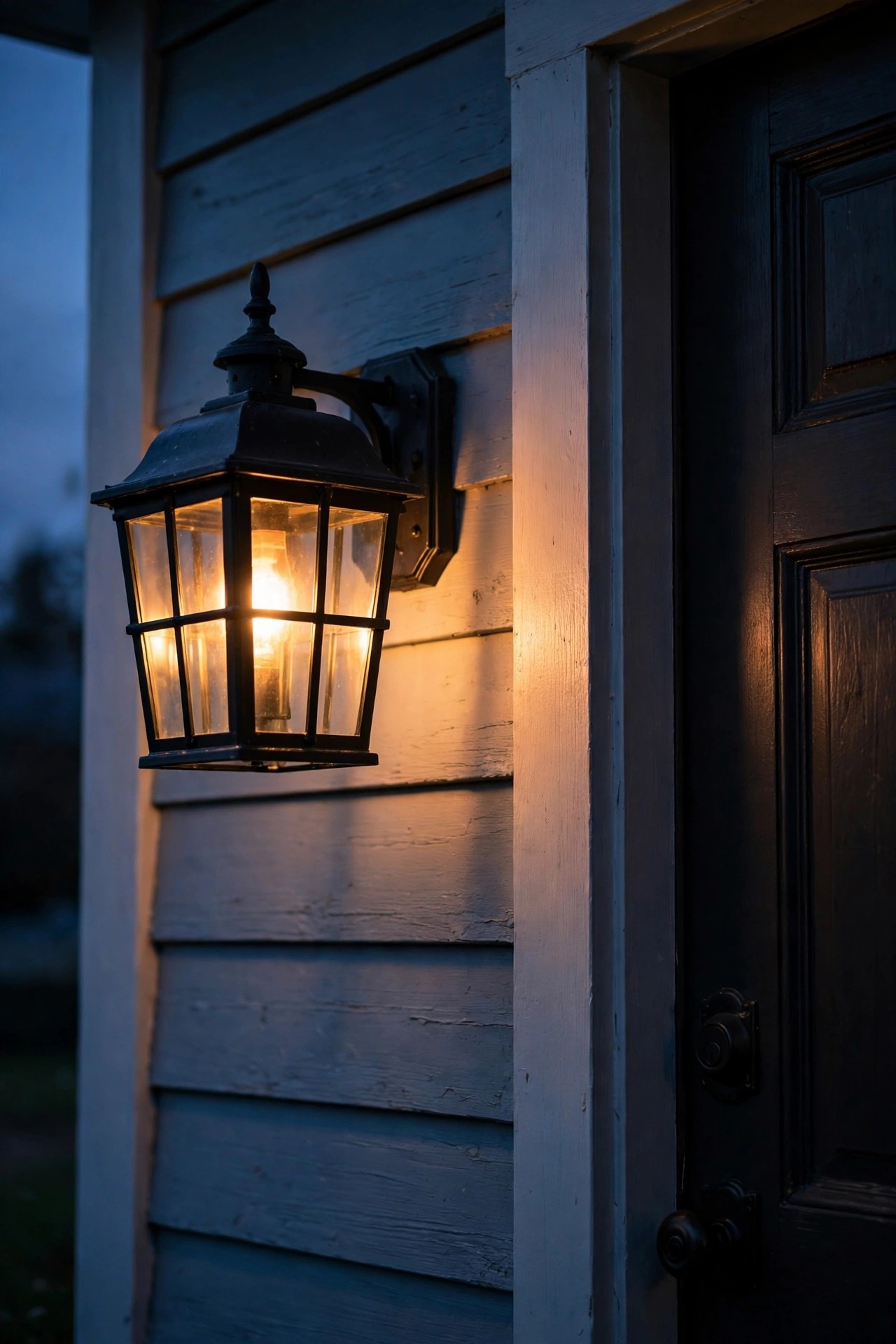
Second, hardwired fixtures tied to house wiring. Your porch lantern, garage sconces, eave-mounted floodlights and lamp posts wired into the home all run on 120 volts. Installing new ones, moving them, or replacing one whose wiring is old or damaged is pro work.
Third, outlets. Adding a new outdoor receptacle, relocating one, or extending a circuit out to a garden bed or pergola means opening boxes and making 120-volt junctions — electrician territory everywhere I know of.
Fourth, any junction work at line voltage: splices in walls, buried junction boxes, repairs to damaged house wiring. And fifth, the mystery category. If you open a box in an older home and find cloth-wrapped wire, a rainbow of mystery splices, or circuits nobody can explain, close it back up and call. Old wiring has earned professional respect. None of this is about your skill level, truly — it is about voltage, permits and liability, and those three do not care how many tutorials you have watched.

Jobs You Can Safely Do Yourself
Now for the happy side of the line, because it is a long, satisfying list. Everything downstream of a plug-in transformer is yours. That means laying out a full low-voltage system — cable runs, path lights, spotlights, well lights — is a legitimate weekend project for a beginner. My step-by-step walkthrough on how to install low-voltage landscape lighting covers the whole process if you want company your first time.
Also firmly in DIY land: plugging that transformer into an existing GFCI-protected outlet (plugging in an appliance is not electrical work in any jurisdiction I know), swapping bulbs in any fixture after switching it off, and replacing plug-in timers or photocell adapters that simply screw or plug in. Solar lights, battery lights and string lights that plug into an existing outlet are all yours too, as are low-voltage repairs like cutting out a corroded connector and crimping on a fresh one.
One honest caution inside the good news: "safe to DIY" still asks for basic respect. Switch fixtures off before changing bulbs, keep connections out of standing water, bury low-voltage cable a few inches down so the aerator does not find it, and never defeat a GFCI outlet that keeps tripping — it is telling you something. Within those simple rules, this side of the line is where outdoor lighting gets fun, affordable and genuinely creative.

The Gray Zone: Replacing a Fixture Like-for-Like
Between the two clear piles sits one genuinely murky job: taking down a hardwired porch fixture and putting up a nearly identical one in its place. In many towns a homeowner may legally swap a fixture on their own home; in others, that work is reserved for license holders, and rentals and condos often forbid it outright. So the first step is a two-minute call to your local building department — they answer this question all day.
If it is legal where you live, the swap itself looks simple: kill the breaker (not just the switch), test that the wires are truly dead, match wire to wire, mount, seal. My guide on how to install a porch light shows the mechanics. But here is where I get honest with you: the fixture swap is where old houses hide their surprises. Heat-brittle insulation that crumbles in your fingers, a junction box packed past full, aluminum branch wiring from the 1970s, no ground wire at all — any of these turns a Saturday swap into a stop-and-call situation.
Smart switches inside the house sit in the same gray zone. Swapping one means working in a 120-volt box, and many need a neutral wire your older switch loop may not have. My personal rule: if the box contains exactly what I expected and my permit office says yes, I will swap a fixture. The moment anything looks unfamiliar, I am delighted to pay a professional to be the one surprised instead of me.
Warning Signs That Mean Stop and Call
Some discoveries are not decisions at all — they are instructions. If you find any of the following, the project is over until a professional looks at it.
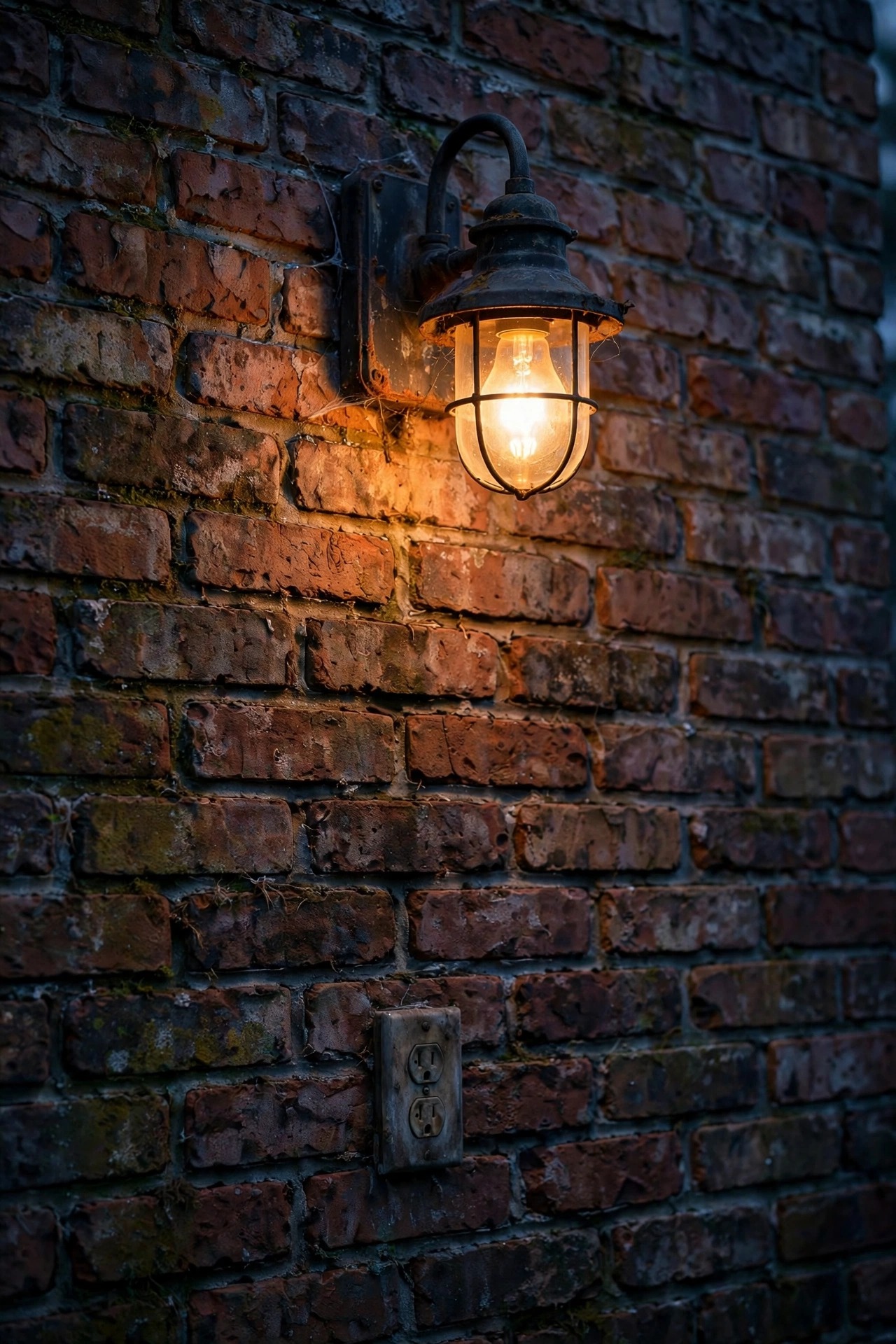
Scorch marks, melted insulation or a burning smell near any fixture, outlet or box. A breaker that trips repeatedly, especially the moment an outdoor light comes on. A tingle or buzz when you touch a metal fixture, a lamp post or even a faucet near new wiring — that one means stop touching things and call today, because something is energizing something it should not. Water inside a junction box, an outlet cover or a fixture, or green corrosion creeping across connections. Lights that flicker in rhythm with appliances, or a whole run that glows dim and orange despite good bulbs, which can point to a failing connection heating up somewhere hidden.
I keep this list taped inside my own toolbox lid, because the temptation in the moment is always to rationalize: it is probably nothing, it has always done that, I will deal with it later. Electricity does not reward optimism. Every one of these signs is cheap to have checked and expensive to ignore, and a good electrician would rather find a loose wire on a Tuesday than read about your garage. When in doubt, let the doubt win.
What an Electrician Visit Typically Involves
If you have never hired an electrician, the process is friendlier than you might expect. Most start with a short visit or a photo exchange to scope the job, then give you a written quote — either a flat price per task (per fixture, per outlet) or an hourly rate with a minimum. Get the quote in writing, and make sure it says who pulls the permit and whether patching and cleanup are included.
On the day, the electrician kills power at the panel, tests to confirm it, does the work, and then usually walks the whole related circuit with a tester: outlet polarity, GFCI trip test, breaker labeling. This is your golden window. A good pro will happily tell you what else they noticed — the aging outlet by the steps, the porch box that needs a proper gasket — with no obligation attached.
Ask questions while they are there. Which breaker controls what, whether your panel has room for the patio circuit you are dreaming about, whether the old lamp post wiring is worth saving. You are paying for expertise by the hour, so use the hour. Expect the visit to end with everything restored, labeled and working, plus paperwork for the permit file. That paperwork matters more than you think: it is gold when you sell the house.

How to Save Money When Hiring an Electrician for Outdoor Lighting
Since you are paying for expertise, a few habits stretch it a long way. The biggest is batching. Electricians charge a trip or minimum fee, so one visit that swaps two porch fixtures, adds the patio outlet and labels your panel costs far less than three separate calls. Keep a running list on the fridge and book when it reaches three or four items.
Second, prep the stage. Move the planters and the grill, clear the attic or crawl access if the run goes there, unlock the gate, and know where your panel is. Every minute the electrician spends moving patio furniture is a minute on your invoice.
Third, arrive with decisions made. Have fixtures bought and on-site, bulbs included, and know exactly where you want the new outlet. Changing your mind about placement mid-visit is the most expensive sentence in home improvement.
Fourth, ask about the split. Many pros are happy to do the 120-volt portion — set the outlet, wire the switch — and leave the entire 12-volt layout to you. That hybrid is honestly my favorite way to build a system: the pro handles everything on their side of the line, you handle everything on yours, and the bill lands where it should. Finally, get two quotes for anything big, and never apologize for it; the good ones expect it.

What It Costs in 2026
Now the numbers, all in one place so you can budget with your eyes open. Most electricians charge a service or trip fee of $75 to $150, which often covers the first hour, with hourly rates running $65 to $130 depending on your region. Swapping a hardwired porch or garage fixture typically lands between $150 and $300 per fixture when the wiring is healthy, because much of that is the minimum visit doing the talking. Adding a new outdoor GFCI outlet usually runs $250 to $450 if it taps a nearby circuit, and more if drywall or a long run is involved. A brand-new circuit from the panel for a patio or driveway project generally falls between $500 and $1,200, driven by distance and panel space. Troubleshooting a fault — the tripping breaker, the dead run — is usually billed hourly at those same rates, and simple causes often resolve inside the first hour. Permits, where required, commonly add $50 to $250. For comparison, that is why the hybrid approach shines: a $300 professional visit to place one outlet can unlock a $400 do-it-yourself low-voltage system that a full-service install would quote at $2,500 or more. Pay for the voltage, save on everything else.

5 Mistakes That Make the Problem Worse
Burying a splice. The classic. A cable gets nicked by a shovel, someone twists the ends together, wraps them in tape and buries the evidence. Underground splices in line-voltage cable are illegal and dangerous, and even in low-voltage cable they corrode and kill the run within a season. Use rated connectors above grade or in proper boxes, always.
Extending a circuit with indoor cable. Indoor-rated wire has no business in soil or sun. Its insulation cracks, water wicks in, and the fault shows up on the wettest night of the year. Outdoor and direct-burial cable exists for a reason.
Working live because the switch was off. A wall switch interrupts one leg of the circuit, and in older switch loops the fixture can still be holding power with the switch off. Breaker off, tester on the wires, every single time — or leave it to the pro.
Ignoring the tripping GFCI. Resetting it six times is not a repair strategy. It is reporting a fault, faithfully, and the fix is diagnosis, not persistence.
Hiring the cheapest unlicensed offer. If someone offers to do panel work for cash with no permit, the savings are an illusion — you inherit the liability, the insurance risk and the rework. License, permit, paperwork. It is boring because boring is safe.
Frequently Asked Questions
Can I replace my porch light myself, or do I legally need an electrician?
It depends on where you live. Many towns allow a homeowner to swap a fixture on their own home, others reserve it for license holders, and most rentals and condos forbid it. Call your building department before you start — and if the wiring inside the box looks old, brittle or unfamiliar, treat that as your answer and hire it out.
Is low-voltage landscape lighting really safe to install myself?
Yes, that is the beauty of it. Once a plug-in transformer steps power down to 12 volts, the cable and fixtures carry a gentle current you can handle while the system runs. The only 120-volt moment is plugging the transformer into an existing GFCI outlet, which is no different from plugging in a lamp.
What does it cost to have an electrician add one outdoor outlet?
For most homes in 2026, expect a few hundred dollars when the outlet can tap a nearby circuit, plus a permit fee where one applies — the full breakdown lives in the cost section above. Long runs, panel work or tricky access push it higher, which is why getting the written quote first matters.
My outdoor lights keep tripping the GFCI. Can I just replace the outlet?
Please do not treat that as step one. A tripping GFCI is reporting a ground fault — often water in a fixture or a nicked cable — and swapping the outlet without finding the cause just silences the messenger. If a quick visual check shows nothing obvious, that diagnosis is exactly the kind of visit an electrician is for.
Conclusion
So, do you need an electrician for outdoor lighting? Sometimes, gloriously, no — and sometimes there is no responsible alternative. Let the voltage decide. If the job lives on the 120-volt side — panels, circuits, outlets, hardwired fixtures, mystery wiring — hire the licensed pro, get the permit, and keep the paperwork. If it lives on the 12-volt side of a plug-in transformer, roll up your sleeves and enjoy one of the most satisfying weekend projects a homeowner can do. The homeowners who get into trouble are never the ones who lacked skill; they are the ones who guessed which side of the line they were on. Now you do not have to guess. Start with the job in front of you, ask where its power comes from, and let that answer tell you whether to reach for your toolbox or your phone. Either way, your yard ends up glowing — and it ends up safe, which is the part that lets you sit on the porch and simply enjoy it.