Our backyard sits under a mature maple and two oaks, and for years I treated that shade like a death sentence for solar lighting. I bought the same cute stake lights everyone buys, watched them glow bravely until about 8 p.m., and gave up. What changed everything was one simple realization: the light and the panel do not have to live in the same spot. The best solar lights for shady yards separate the two, or sip power so slowly that even a gray day fills the tank. In my experience, a shady yard does not need more lights — it needs the right types, layered on purpose. A remote-panel spotlight handles the tree, low-draw accents trace the beds, and a motion flood covers the gate. Below are the eleven types that have honestly earned their place in our shade, what each one costs, and where each one still falls short. Whether your yard gets dappled light, long cloudy stretches, or full canopy, there is a pick here matched to your level of shade.

1. Remote-Panel Path Lights: The Best Solar Lights for Shady Yards, Honestly
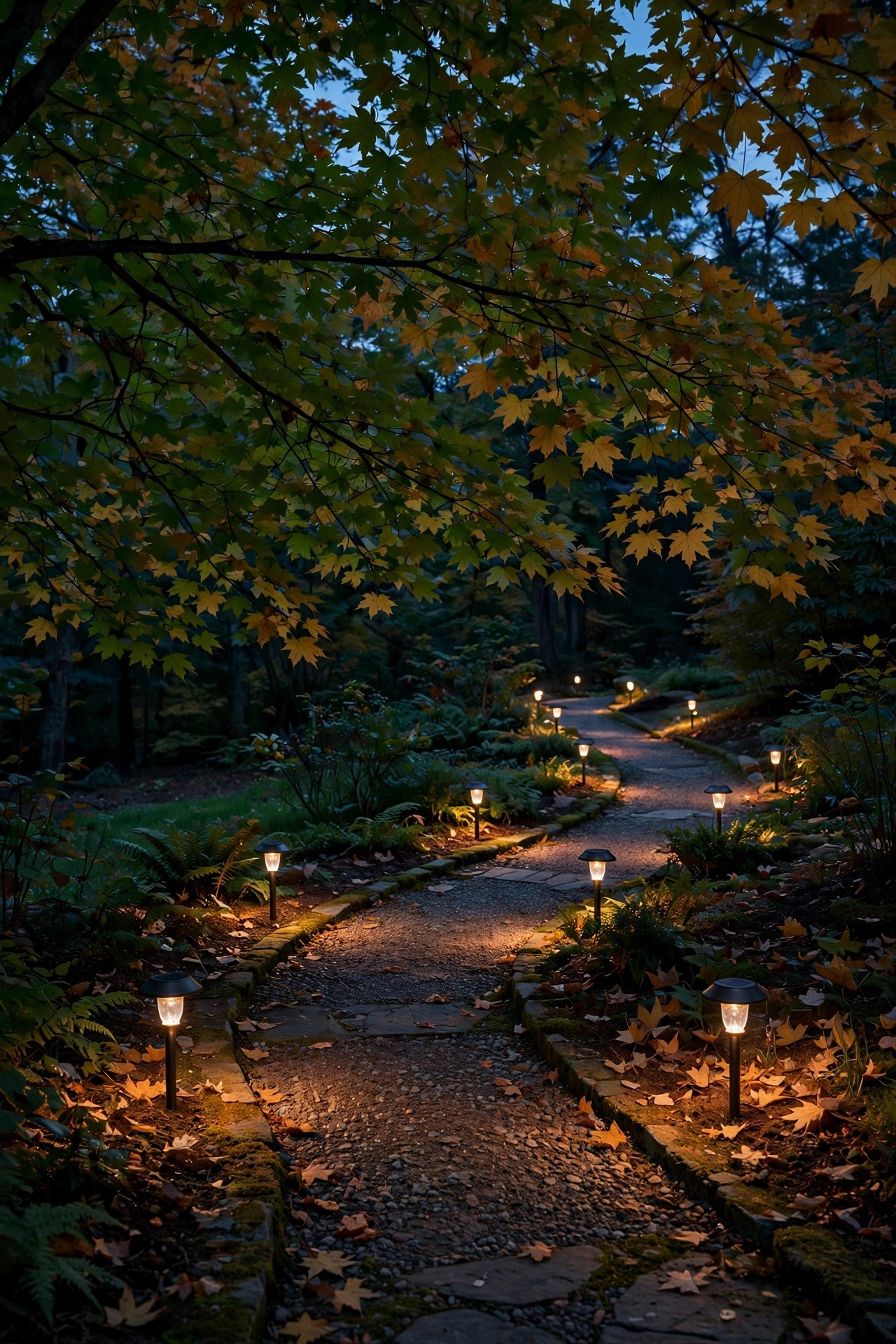
If you only buy one type from this list, make it this one. Remote-panel path lights connect the fixture to a separate solar panel on a cable, usually 9 to 16 feet long, so the panel stakes into your one reliable sun patch while the lights stay put in the shade where you actually need them. It completely sidesteps the core problem: an all-in-one light under a maple is asking a shaded panel to do a sunny job. Look for a panel noticeably larger than the little squares on cheap stakes, a ground stake plus a fence or post clamp in the box, and enough cable to reach your sun without crossing a walkway. I angle the panel toward midday sun and rinse it monthly, because a dusty panel in a shady yard is a double penalty. I walk through panel sizing and spacing in my solar path lights guide if you want the full breakdown. The honest limits: cable length dictates your layout, so measure before you buy, and one shared panel means the whole set dims together on a bad week. For shaded front walks and north-side beds, though, nothing else solar comes close.
Suggested budget range: $30 – $75.

2. Spotlights With Cabled Panels for Uplighting Trees From the Shade
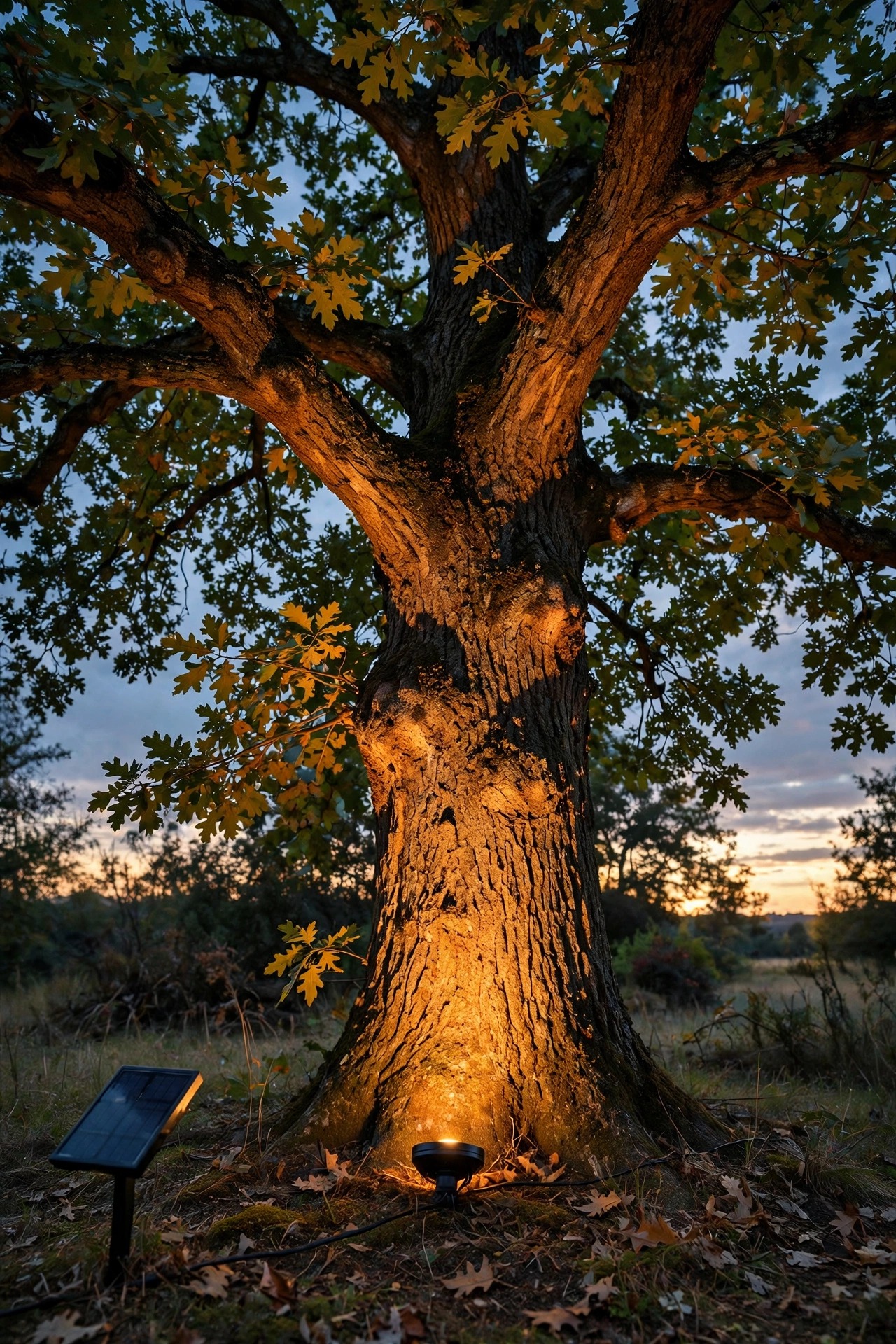
Uplighting is where shaded yards usually fail hardest, because the spotlight sits at the base of the tree — the shadiest spot in the whole yard — while its tiny built-in panel stares at the trunk. Cabled-panel spotlights fix that the same way the path lights do: the fixture nestles into the mulch at the trunk, and the panel rides a cable out to the edge of the canopy where real sun lands. Aim the head up through the branching for that sculptural night look, or graze it across a stone wall or fence for texture. Because a spotlight draws more power than an accent stake, give the panel the best seat in the yard and re-aim it a couple of times a year as the sun angle shifts with the seasons. The limits are real: one panel generally feeds one fixture, so lighting three trees means three panels to place and hide, and loose cable is a trip hazard until you bury it an inch or two under the mulch. Suits anyone with a specimen tree, a shaded facade, or a dark back corner that needs one strong pool of light rather than a general glow.
Suggested budget range: $20 – $45.
3. Monocrystalline Panel Lights That Squeeze More From Dim Days
When a remote panel is not practical — a short path, a few steps, a small bed — panel efficiency becomes your lever. Solar cells come in two common types, and monocrystalline panels convert more of whatever light reaches them, including the diffuse, bounced light of an overcast day. In plain terms, on a bright gray afternoon a monocrystalline panel might harvest a meaningful slice more charge than a cheaper polycrystalline one, and in a shady yard those slices add up to an extra hour or two of light. You can spot them by their uniform dark, almost black cells with clipped corners, and listings usually name the panel type outright. Here is the honesty I wish someone had given me: efficiency helps at the margins, it does not perform miracles. A high-efficiency panel parked in deep, all-day shade still starves, just slightly slower. These lights shine in dappled and part-day shade — under high-canopy trees, beside a fence that shadows the morning but not the afternoon. If your spot gets maybe four hours of direct sun, this is the all-in-one style most likely to reward you. Pair them with the low-draw picks below for the darkest stretches of the yard.
Suggested budget range: $15 – $35.

4. Big-Battery Lights That Bank Sunshine for Cloudy Stretches
Shady yards rarely fail on one bad day — they fail on the third gray day in a row, when a small battery that barely filled on Tuesday has nothing left for Friday. Oversized-battery lights solve the pattern instead of the day: they carry two to three times the storage of a bargain stake, so one genuinely sunny afternoon can bank enough charge to coast through a cloudy stretch. When you shop, look at the battery capacity in milliamp-hours and, just as important, whether the cell is a standard replaceable rechargeable you can swap in a few years instead of landfilling the whole fixture. A removable battery door is a quiet sign the maker expects the light to outlive its first battery. The trade-offs: these lights cost more per fixture, big capacity numbers on no-name listings are often optimistic, and cold weather shrinks any battery, so a January runtime will never match a June one. I always recommend them for regions famous for gray weeks — the Pacific Northwest, the Great Lakes, anywhere spring means a week of drizzle. In dappled shade with a decent panel, a big-battery light is the closest solar gets to set-and-forget.
Suggested budget range: $20 – $45.

5. Low-Draw Accent Stakes That Sip Power
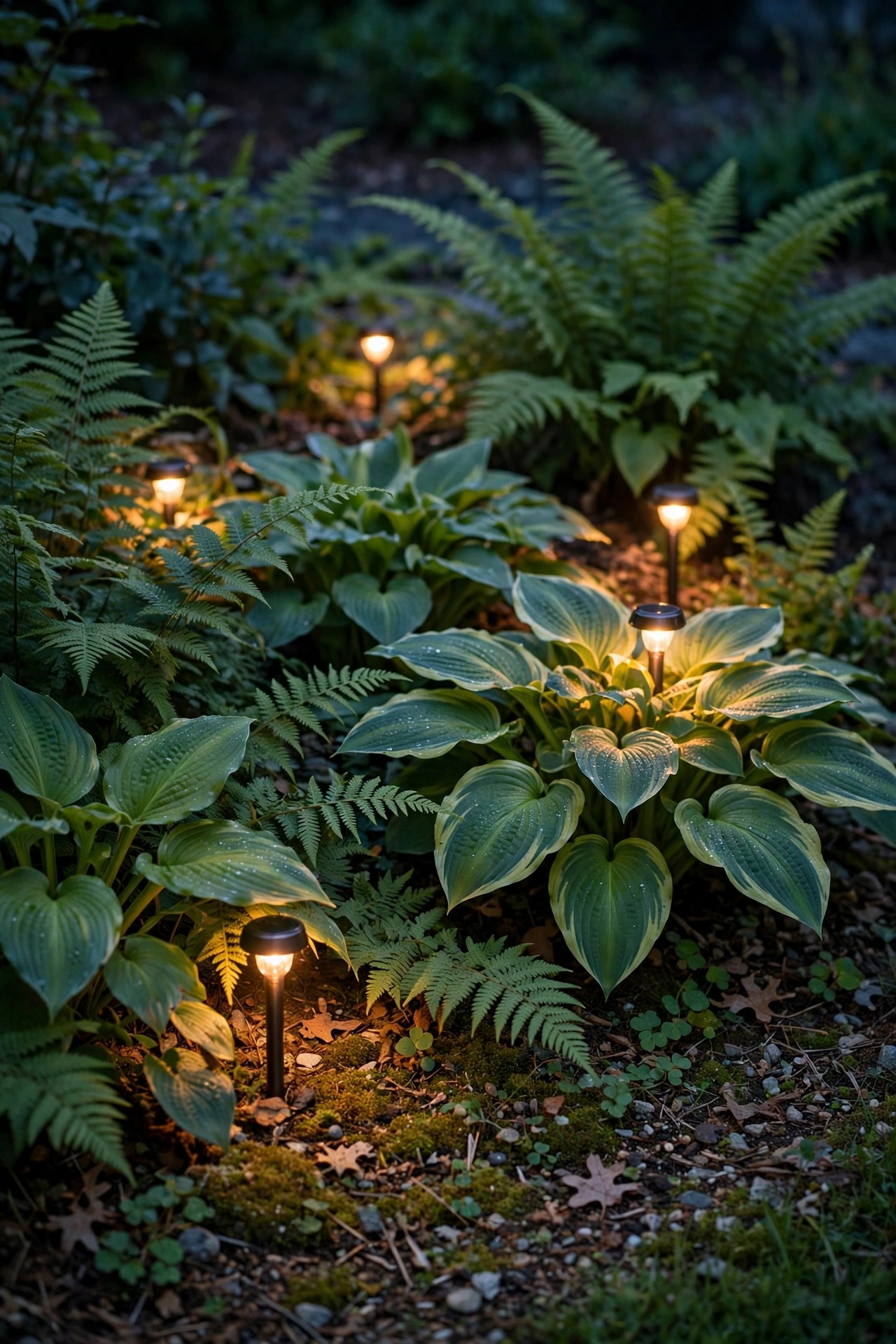
Not every light needs to be bright, and in a shady yard the dim ones are often the survivors. Low-draw accent stakes run a single tiny LED that asks almost nothing of the battery, which means even a panel catching mostly bright shade and overcast sky can keep them fed. They will not light a path for safe footing — let me be clear about that — but they outline a bed edge, dot a curve of border, and give a dark garden depth and shape from the porch. Because the draw is so small, a set can run dusk to dawn even in December, long after brighter lights in the same yard have quit at nine. They are also the cheapest experiment on this list: a multipack lets you test how a truly shaded corner behaves across a cloudy week before you invest in bigger fixtures. The limits are brightness and build — at this price, expect plastic stakes that resent frozen ground, so push them in before the soil hardens. I use ours among the hostas and along the fence bed, layered under the trees with brighter remote-panel lights on the actual walking route. Glow where you look, real light where you step: that layering is the whole trick.
Suggested budget range: $12 – $30.
6. String Lights With a Remote Panel You Can Park in the Sun
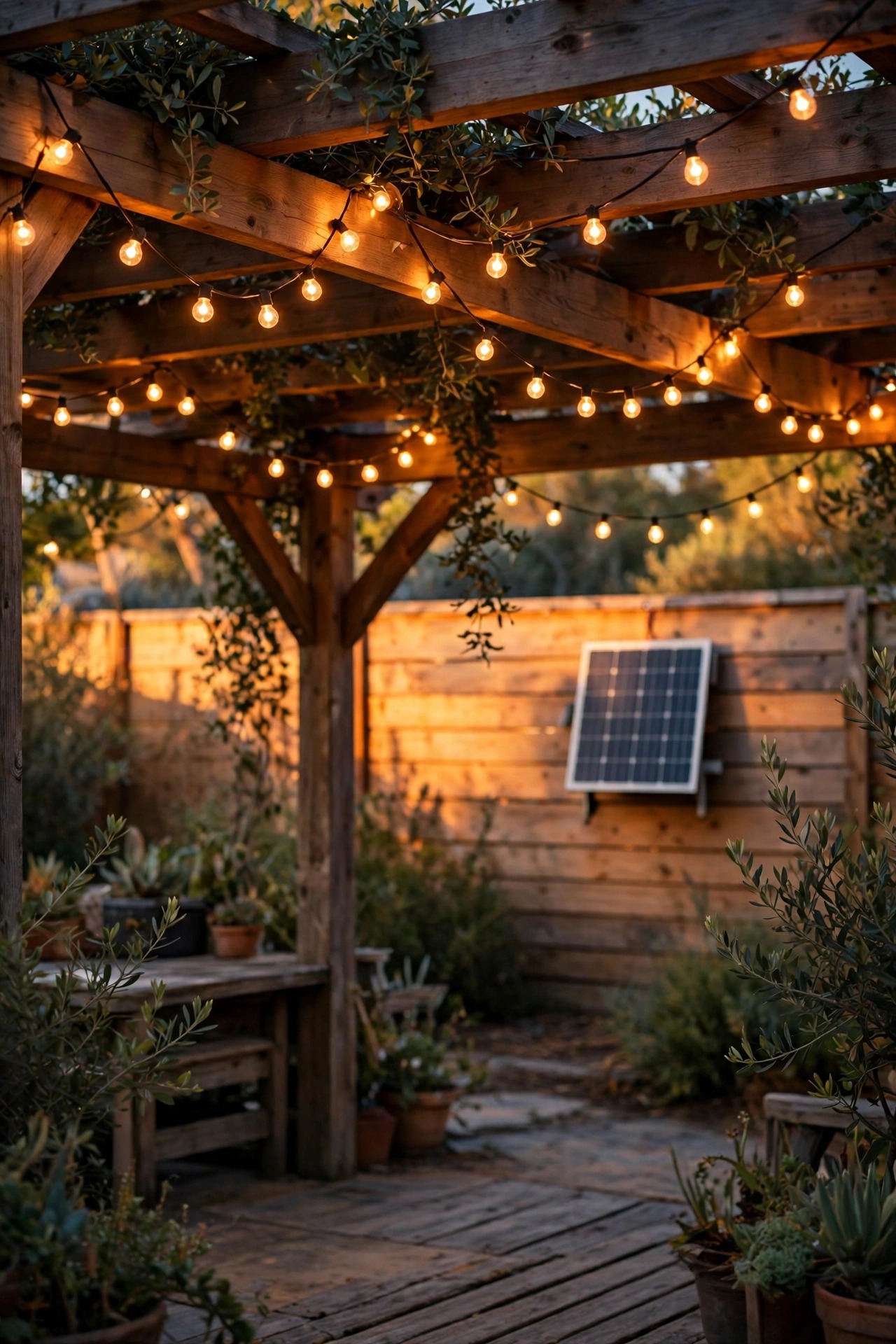
String lights are the pick people most want to work in shade — over the pergola, through the tree, above the patio table — and the remote-panel versions genuinely can. The strand drapes exactly where the party is, while the panel mounts high on a fence post, a shed roof edge, or a sunny railing, connected by a lead cable of around 6 to 10 feet. That height matters twice: the panel clears the shadows that pool at ground level, and nobody trips over it. When you compare strands, match panel size to strand length — a long strand on a thimble-sized panel is a strand that dies by ten. My full roundup of solar string light ideas covers draping patterns and spans if you are planning a bigger run. Honest limits: even a well-placed panel cannot bank a week of storms, so expect earlier fade after several sunless days, and in winter these are ambience for dinner, not all-night lighting. For renters and anyone who cannot run wire, though, a sunny panel plus a shaded strand is the single most satisfying upgrade on this list.
Suggested budget range: $25 – $55.
7. Motion-Activated Lights That Only Spend Power When It Counts
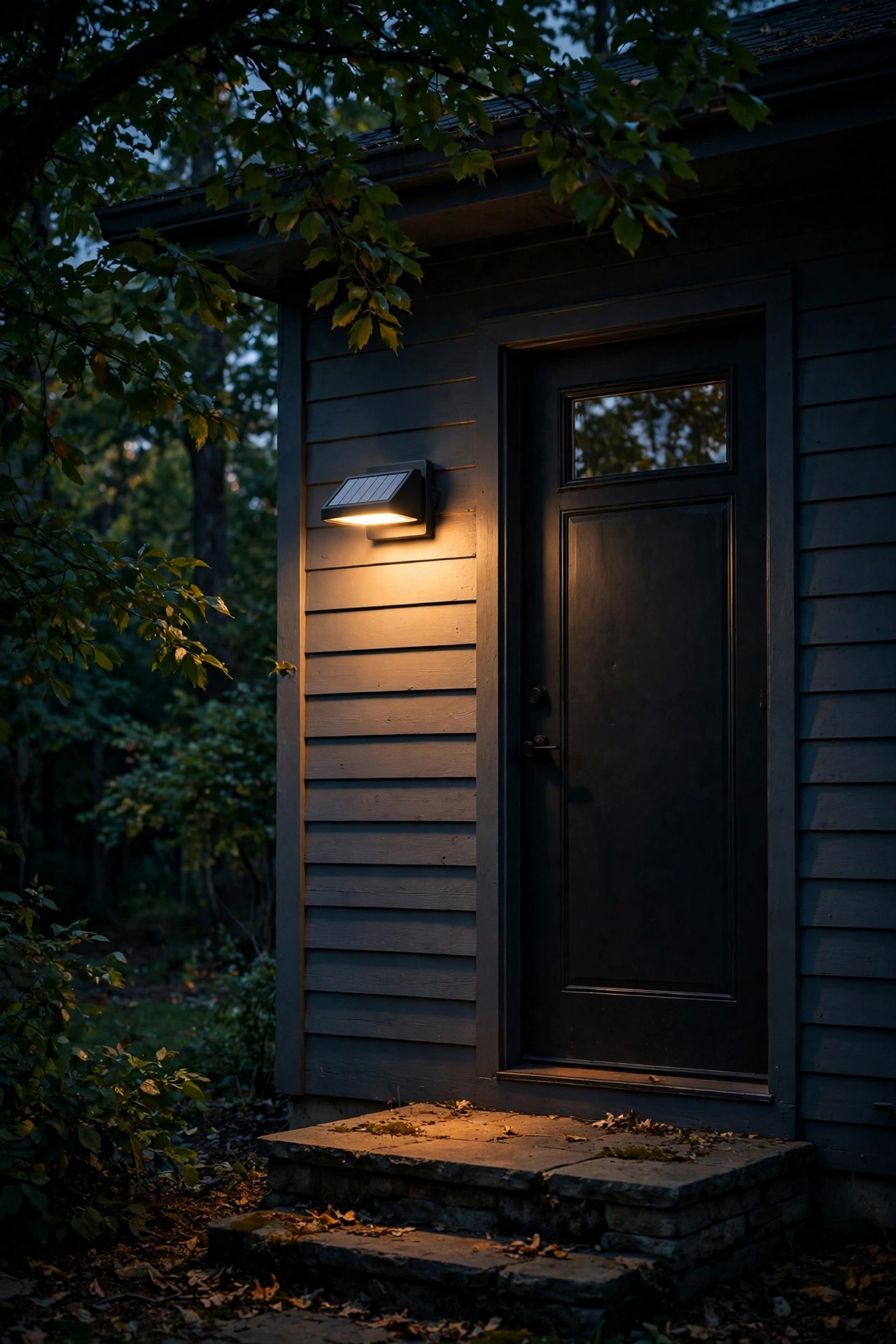
A light that is off 95 percent of the night has a tiny appetite, and that is why motion-activated solar lights punch so far above their weight in shade. The panel can be mediocre, the day can be gray, and it hardly matters — the battery only spends itself in short, bright bursts when someone walks the side yard, opens the gate, or takes out the trash. Mount the fixture where it sees the approach, and give its panel the clearest slice of sky you can, even if that means a few feet of cable or an angled bracket on a fence post. Look for adjustable sensitivity and duration, because raccoons and swaying branches will happily drain a naive sensor all night in false alarms. The trade-off is written into the design: you get security and wayfinding light, but no ambient glow, so these never replace the pretty layer of a yard. I pair ours at the gate with low-draw stakes nearby, so the path reads as intentional instead of interrogation-room. For driveways under trees, basement doors, and the dark run between house and garage, this is the most dependable solar type a shady yard can own.
Suggested budget range: $20 – $45.

8. Dimmable Solar Lights With a Low-Glow Mode for Long Nights
Here is a small truth from our yard: a dim light that lasts until dawn beats a bright light that dies at nine, every single time. Dimmable solar lights and two-mode fixtures — a soft all-night glow that jumps to full brightness when the sensor trips — stretch a weak charge across the whole evening instead of spending it in the first hours. On the darkest weeks, I switch our path lights to their low setting and they simply last; in summer, with longer days feeding them, I bump them back up. When you shop, look for a physical mode switch or a clearly described dual-mode sensor rather than vague brightness claims, and be skeptical of huge lumen numbers paired with tiny panels — the math never works in your favor. The limits are obvious: low mode is for orientation and atmosphere, not for reading a keypad or lighting grill work, so keep one brighter pick where tasks happen. These suit long paths, bed borders, and steps in part-shade, and they are merciful for light-sensitive neighbors too. Think of dimming as a dimmer on your electric bill in reverse — you are budgeting stored sunshine, and a budget is what a shady yard runs on.
Suggested budget range: $15 – $35.
9. Hybrid Solar Lights With a Backup Top-Up Plan
Hybrid lights are the pragmatic middle child of this list: they charge from the sun like any solar light, but they also accept a top-up from a standard charging cable indoors. In June they behave like pure solar. In the second week of a gray November, you carry two or three of them inside on a Sunday, charge them over coffee, and your shaded path works again that night. I know some readers feel that is cheating, but honestly? A light that works is better than a principled light that does not. These are also the smartest choice for the worst spots in the yard — the north side of the house, the ground under a deck — where no panel trick fully succeeds. Look for a weather-sealed charging port, a battery you can replace, and a charge indicator so you are not guessing. The limits: the routine is on you, and a fixture that needs weekly indoor charging all winter is really a rechargeable light with solar assistance, so buy it at that price and with that expectation. For a few problem corners, that trade is absolutely worth it.
Suggested budget range: $20 – $50.
10. Portable Solar Lanterns You Carry to the Sun
The simplest shade hack in my yard required no installation at all: lanterns that spend their days charging where the sun is and their evenings glowing where the people are. A portable solar lantern or table light sits on the sunny porch step or the driveway edge all afternoon, then moves to the shaded patio table, the dark garden bench, or the hammock corner at dusk. Portability quietly solves the placement problem every other pick negotiates — you are the cable. Choose lanterns with a real handle, a panel that faces up when set down, and a warm color temperature around 2700K so the glow feels like candlelight rather than a flashlight. Some even flatten or hang from a branch, which makes them lovely impromptu tree decor for a dinner outside. The limits are honest ones: small lanterns give a small circle of light, and the whole system depends on your remembering the morning move — though in our house it became a pleasant ritual, coffee in one hand, lanterns in the other. For deep-shade seating areas and renters who cannot mount anything, portables deliver atmosphere that fixed solar lights simply cannot reach.
Suggested budget range: $15 – $40.
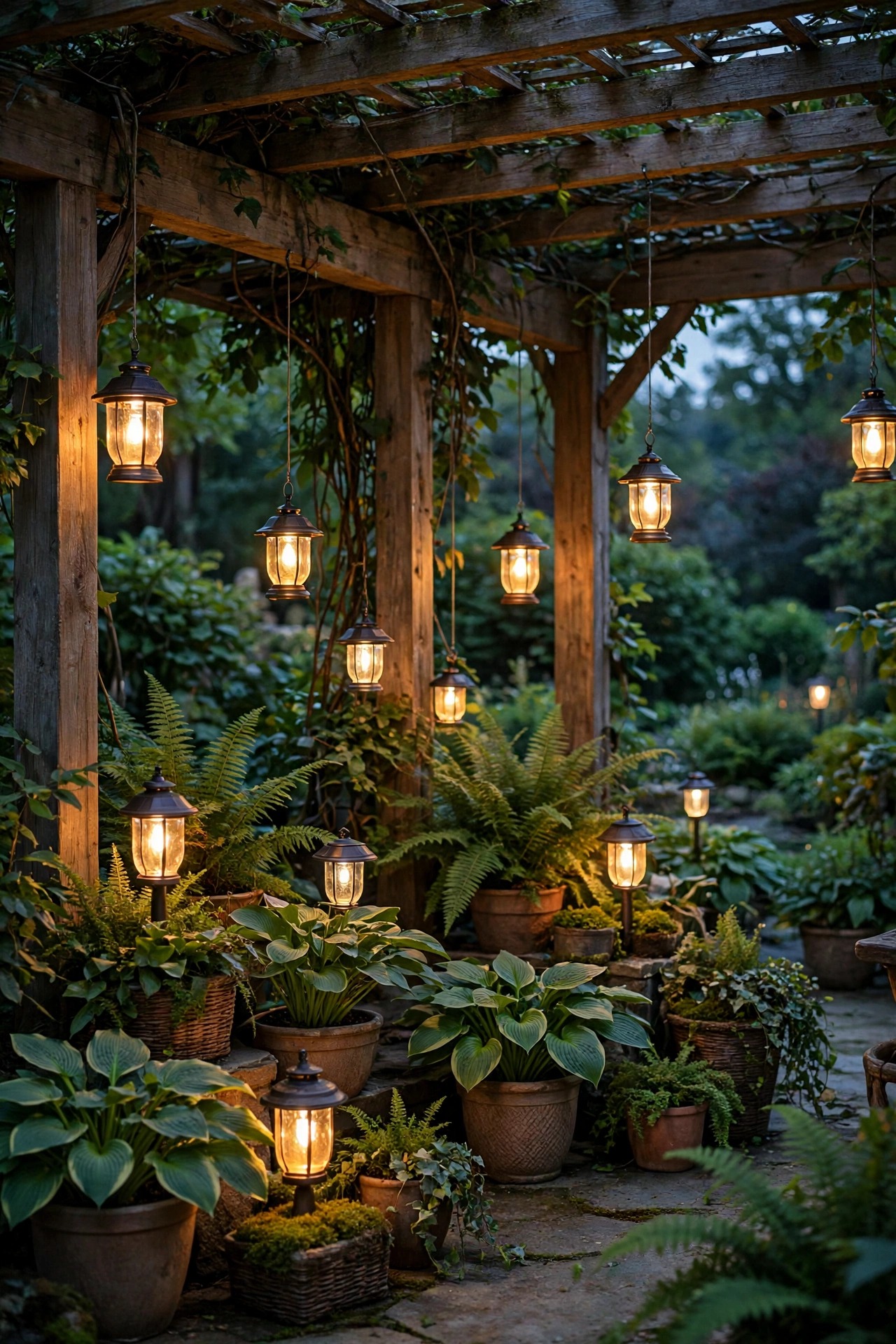
11. When the Best Solar Lights for Shady Yards Are Not Solar at All
I love solar, but I love working light more, so here is the pick nobody selling solar lights will give you: some yards should go low-voltage wired. If your light spot sits under a dense, mature canopy — a big oak that shades the ground from ten in the morning onward, the north wall of a two-story house — no panel placement trick fully rescues it, and you will spend years swapping tired fixtures. A low-voltage wired run asks for one weekend, a transformer on a timer, and cable buried a few inches down, and then it simply works: brighter, even, identical every night of the year, in every season, under every tree. I keep a side-by-side of solar vs wired landscape lighting if you want to weigh running costs and effort before deciding. My honest rule: solar for dappled and part shade, wired for the two or three truly dark anchors — the front path, the steps, the entry — and solar everywhere else. The starter cost below covers a small transformer and a handful of fixtures; think of it as buying back every cloudy evening from here on.
Suggested budget range: $150 – $400.

Frequently Asked Questions
Can solar lights really charge on a cloudy day?
Yes, but partially — and that word does a lot of work. On a bright overcast day, a decent panel might take in roughly a quarter to half of what it would gather in full sun, which is plenty for low-draw and motion-activated lights. Under a dense tree canopy the number drops much further, because the leaves take their cut before the clouds do. That is why shady-yard shopping is really about matching the draw of the light to the charge your sky can honestly deliver, and why remote panels matter more than any other feature.
How many hours of sun does a solar panel need in a shady yard?
Aim for four to six hours of direct sun on the panel itself — not on the yard, and not on the light. Dappled light through high branches counts for something, maybe half credit, which is why part-shade setups often work better than you fear. The easiest test costs nothing: check your intended panel spot at breakfast, lunch, and mid-afternoon on a clear day. If it is sunlit at two of the three checks, most picks on this list will serve you well.
Why do my solar lights only last two hours at night?
Four culprits explain almost every case. The panel is dirty or shaded more than you think, the rechargeable battery has aged out after a couple of seasons, the light is set to a bright mode its charge cannot support, or it is simply winter, when short days and a low sun starve everything. Wipe the panel, try the low-glow mode, and if the fixture allows it, replace the battery before you replace the light — that one fix revives more solar lights than any other.
Are remote-panel lights better than all-in-one lights for shade?
For genuinely shaded spots, yes, and it is not close. An all-in-one light forces one location to be both the prettiest place for light and the sunniest place for charging, and in a shady yard those are rarely the same square foot. A remote panel lets each half live where it belongs. The only real costs are the cable run and a little planning, so if a fixture you love offers a remote-panel version, that is the one to buy.
Conclusion
Shade is not a verdict on your yard — it is a design brief. The best solar lights for shady yards succeed because they respect one rule: put the panel where the sun is, keep the draw honest, and layer a few modest lights instead of demanding one heroic one. Start with a remote panel on your main path, add low-draw accents for shape, and let motion lights guard the dark corners. Your trees gave you the coolest seat in the neighborhood; now they can have the prettiest light, too. Browse the rest of the site for more outdoor lighting ideas matched to every corner of your yard, sunny or not.