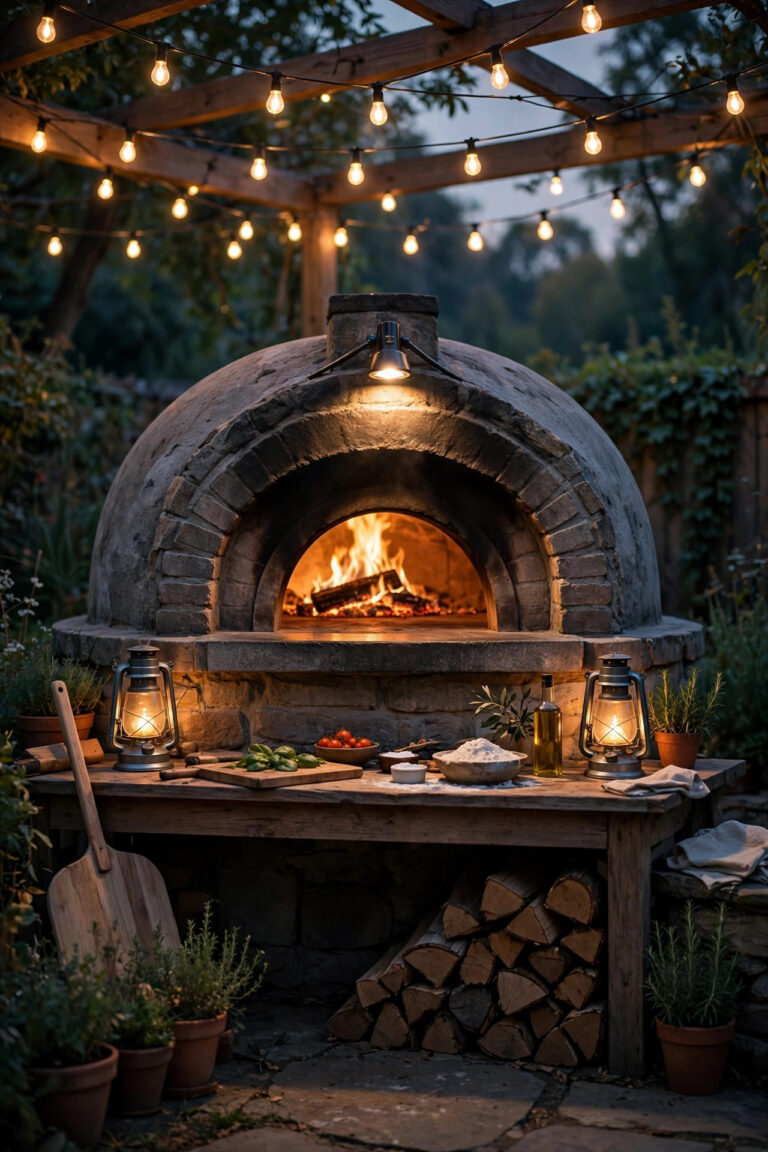
If you have ever bought a pack of solar spotlights, stuck them under your prettiest tree, and watched them fade to a sad little glow by nine in the evening, you are not alone. I have tested more of these lights in my own yard than I can count, and here is the honest truth I have learned: there is no single winner. The best solar spotlights for your trees depend on shade, tree size, and the effect you actually want. A light that makes a Japanese maple look magical will barely kiss the trunk of a forty-foot oak. In this roundup I am skipping the hype and sorting eleven types by what they genuinely do well: separate-panel lights for shady corners, narrow beams that carve out trunk texture, wide floods that wash a hedge in gold. For each type you will get the real strengths, the limits nobody prints on the box, who it suits, and what it should cost. By the end, you will know exactly which style belongs under your trees, and your evenings outside are about to get a whole lot prettier.
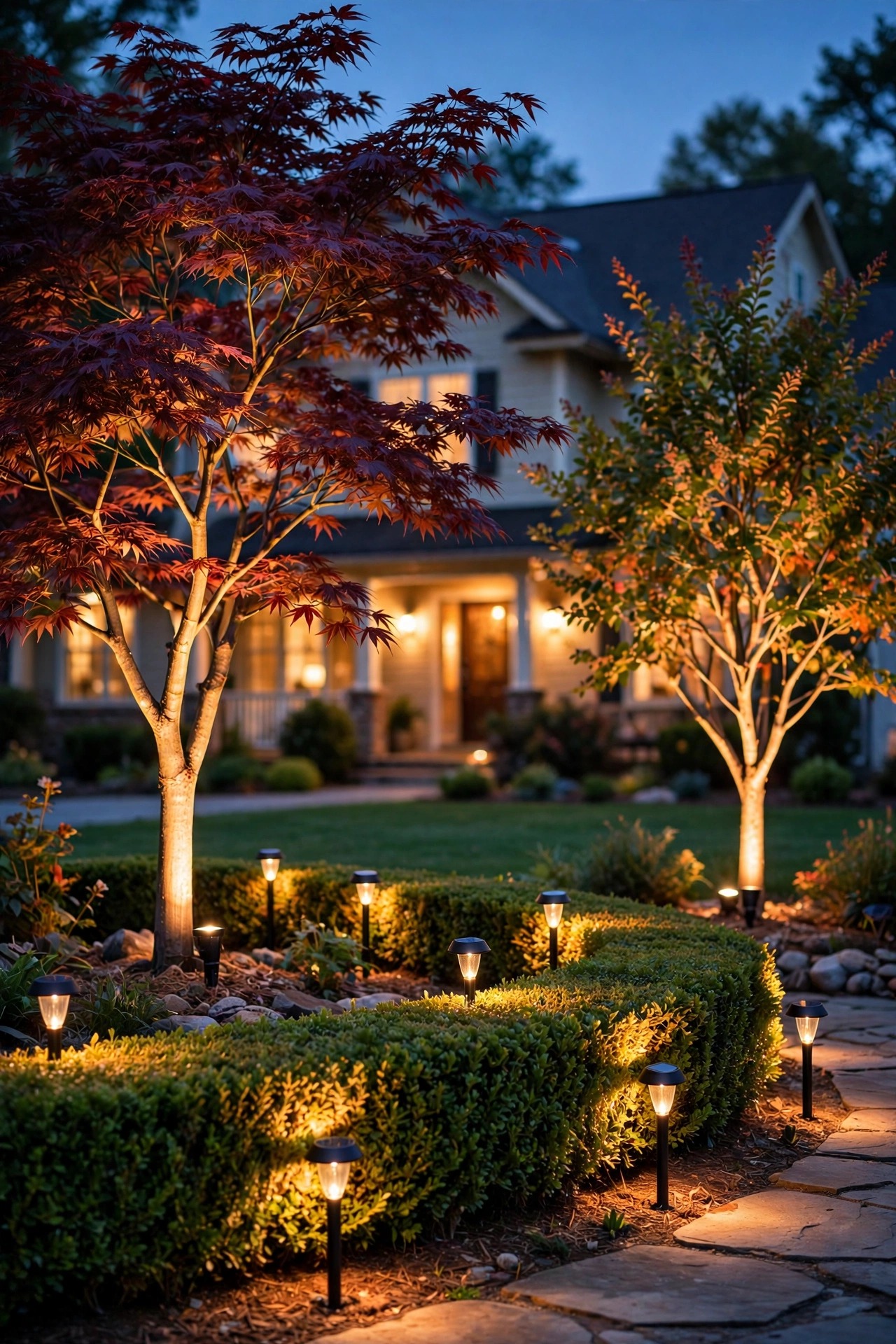
1. Separate-Panel Spotlights: The Best Solar Spotlights for Shady Yards
Here is the problem nobody warns you about: the spot at the base of a leafy tree is exactly where an ordinary solar light starves. Separate-panel spotlights solve it by splitting the fixture in two. The light head stakes in at the base of your tree, right where you want the beam, while the solar panel sits on its own small stake connected by roughly nine to fifteen feet of thin cable, so you can park the panel in a sunny patch of lawn or along a fence line. In my experience, this is the single biggest upgrade for shaded yards, because a panel getting six honest hours of sun charges fully even in December, while a panel hiding under a canopy gives up by Halloween. The honest limits: you have a cable to bury shallowly or tuck along edging so the mower misses it, and the setup looks slightly less tidy than an all-in-one light. These suit anyone lighting trees, statues, or shrubs that sit in shade most of the day, especially in north-facing beds. If you want to compare shapes and styles first, browse my full roundup of solar spotlight ideas for more inspiration.
Suggested budget range: $30 – $55.
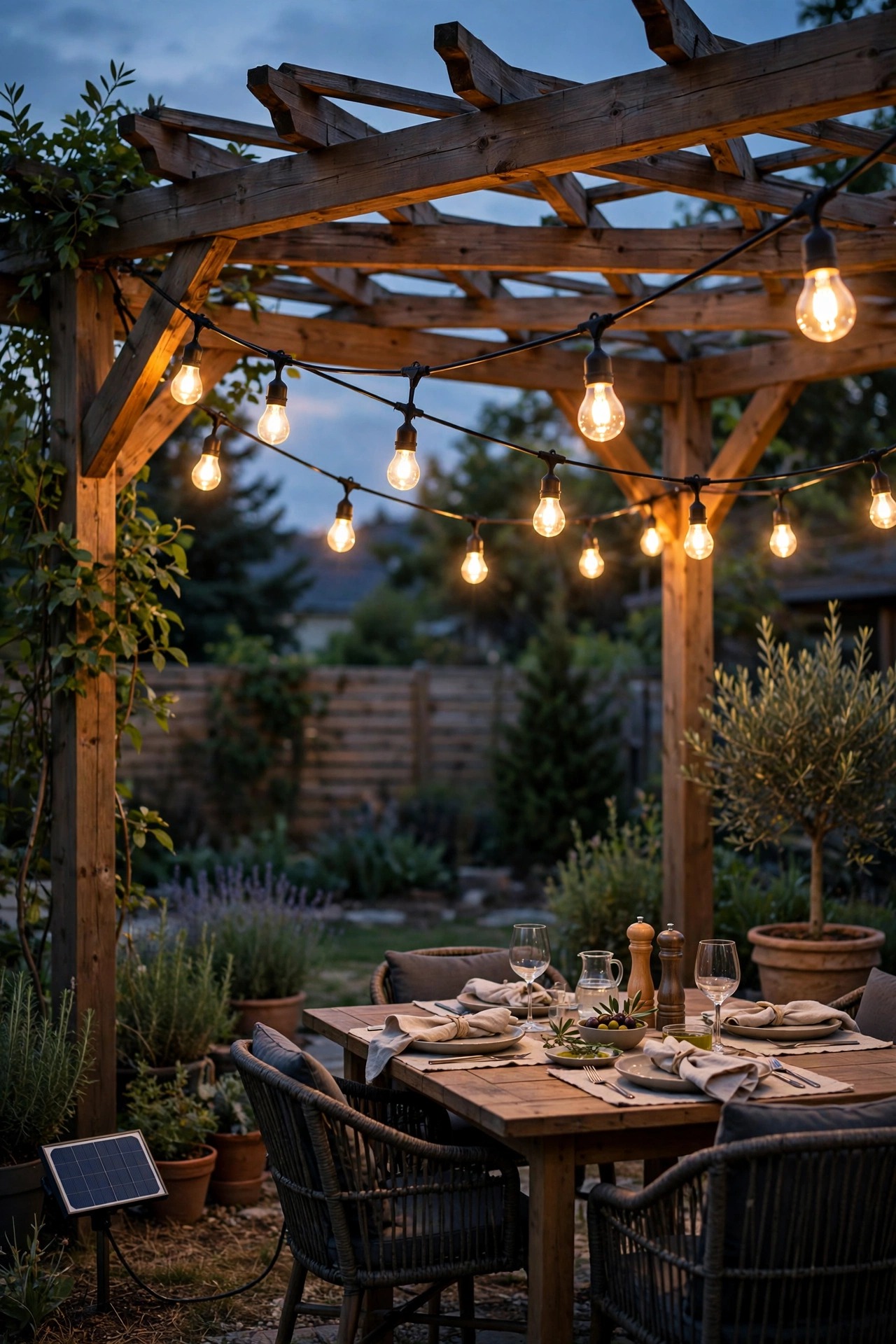
2. Adjustable-Head Uplights for Canopy Spread
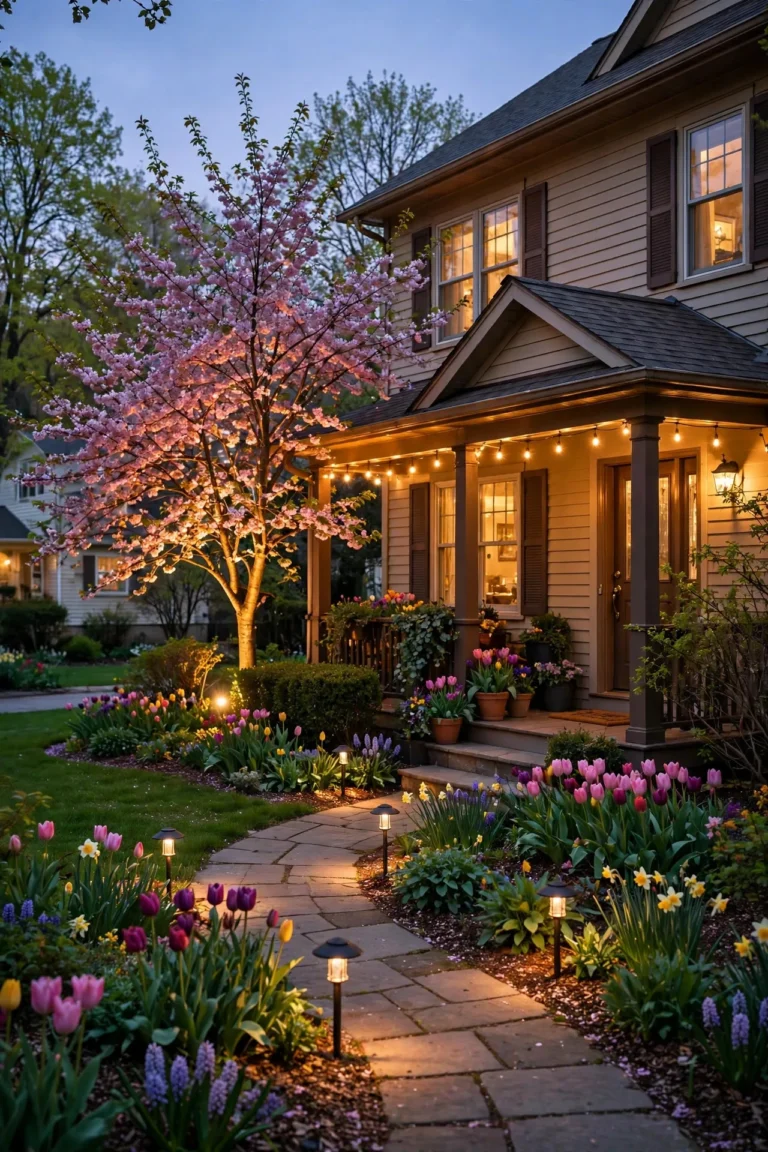
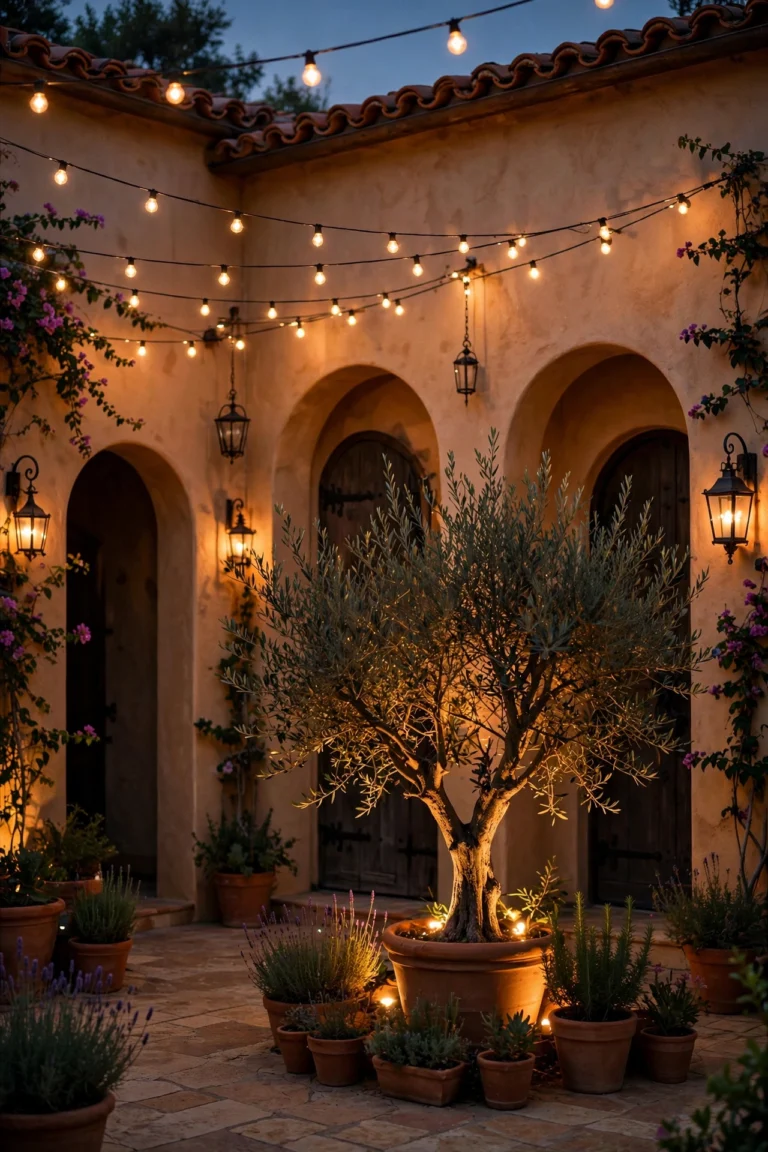
If your goal is that classic landscape look, a glowing trunk rising into a softly lit canopy, an adjustable-head uplight is your tool. These have one or two heads on a ground stake that tilt and swivel, so you can aim each beam exactly where the branches need it. I place mine about eighteen to twenty-four inches from the trunk, just inside the drip line, angled up at roughly thirty to forty-five degrees. One head grazes the trunk while the second, on dual-head models, fans wider into the lower canopy. The result on a fifteen to twenty-five foot ornamental tree is genuinely beautiful. Now the honesty part: no solar light, however good, will light the crown of a forty-foot oak. Expect a lit trunk and lower canopy with the top fading into darkness, which honestly looks natural, almost like moonlight. These suit medium ornamental trees, crape myrtles, and small maples in reasonably sunny yards. For aiming angles and spacing in more depth, my tree uplighting guide walks through the whole technique.
Suggested budget range: $35 – $60.
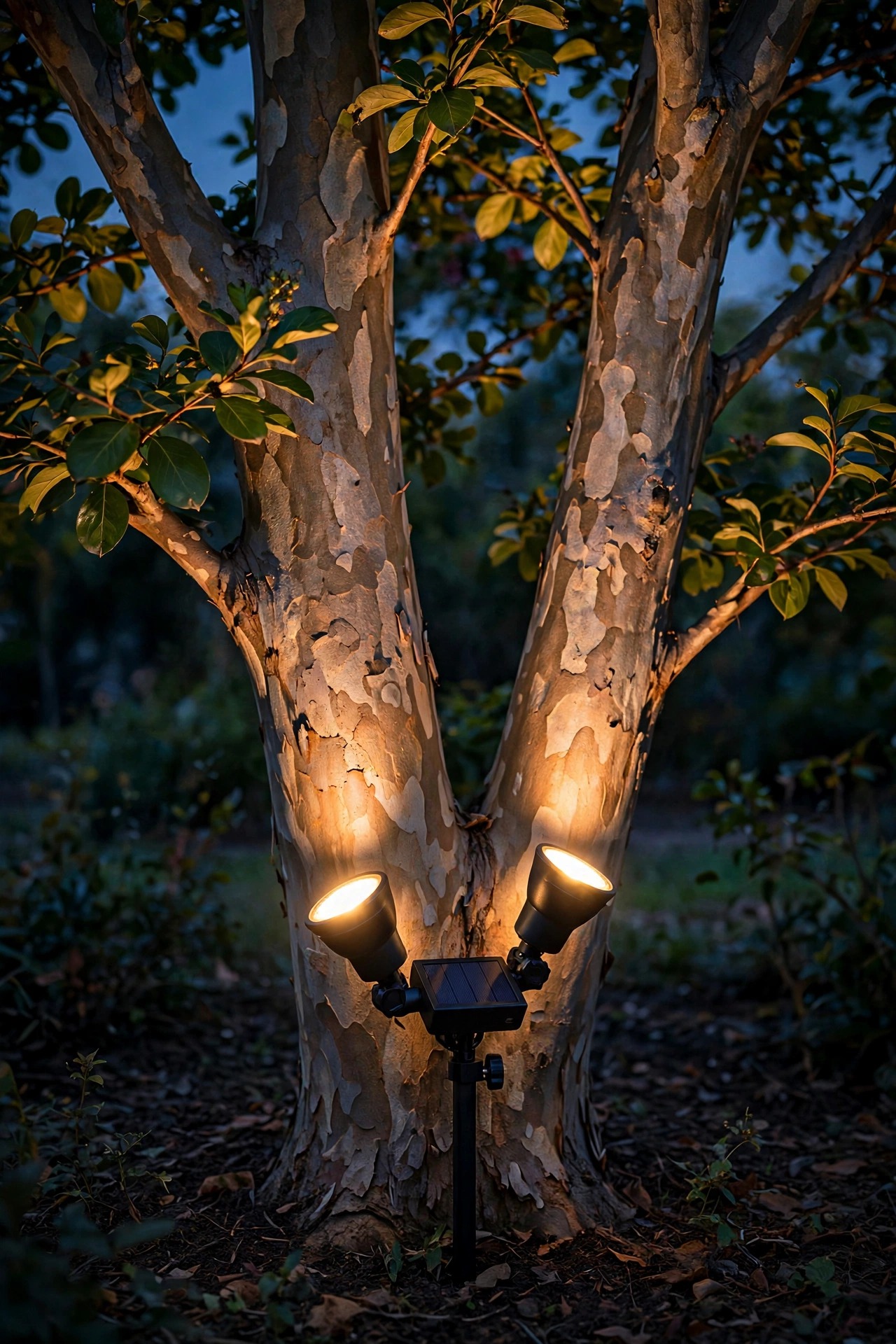
3. Narrow-Beam Spotlights for Trunks and Columns
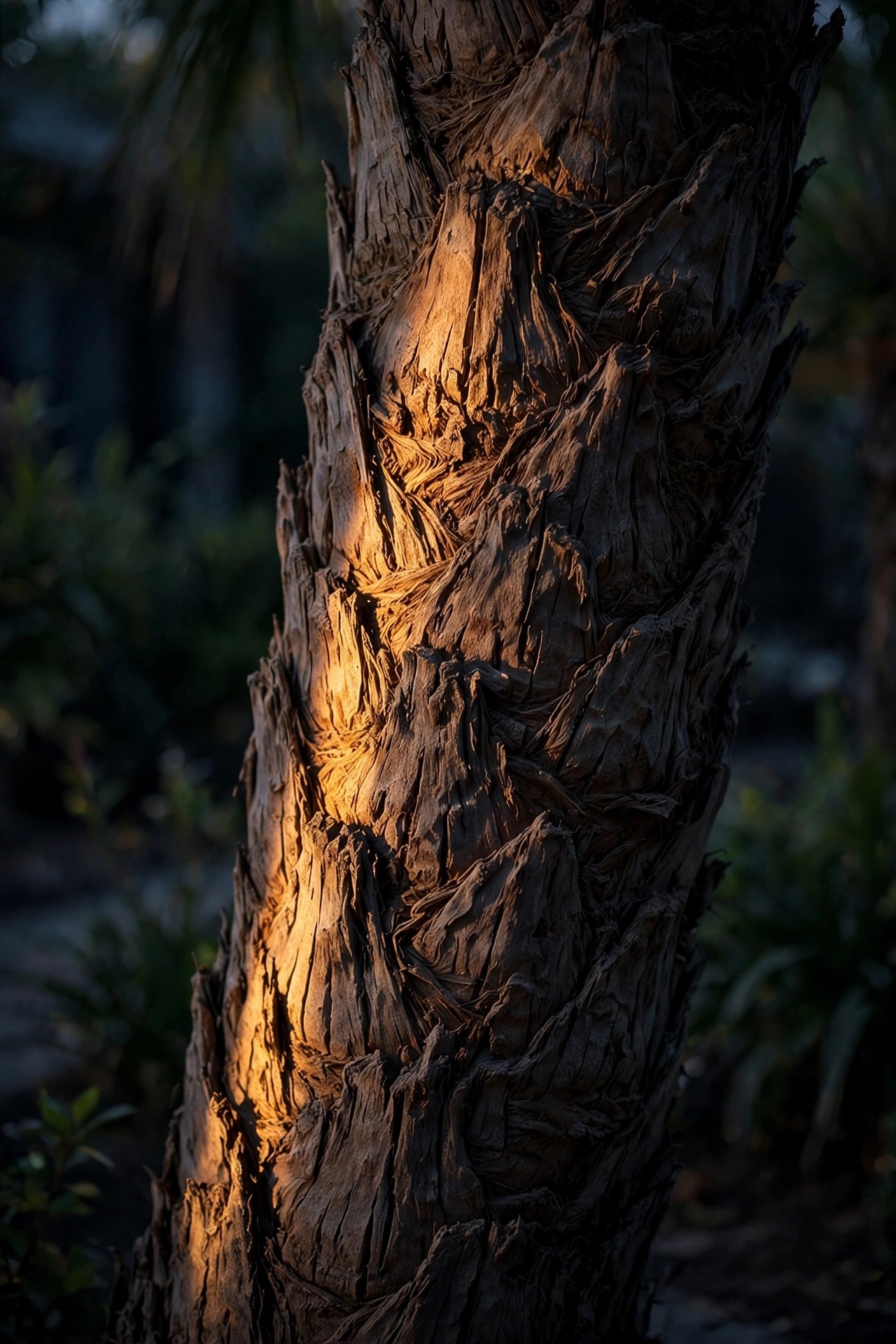
A narrow-beam spotlight throws a tight, punchy cone of light, usually fifteen to thirty degrees, and it is the most dramatic tool in this whole list. Placed twelve to eighteen inches from a trunk and aimed almost straight up, that tight beam rakes across the bark and turns every ridge and furrow into shadow and gold. It is my favorite trick for palms, birch trunks, porch columns, and garden statues, anywhere the surface itself is the show. Because the light is concentrated, these often look brighter than wider lights with the same output, which makes them a smart pick when you want impact from a modest solar fixture. The limits are real, though: a beam this tight creates a hot spot if you place it too close, and it will do almost nothing for a leafy canopy, since most of the light slips straight through the branches. Aim carefully and step back at dusk to check the effect before you commit to the placement. These suit feature trunks, columns, obelisks, and anyone who loves that theatrical, gallery-style accent.
Suggested budget range: $25 – $45.
4. Wide-Beam Flood Spotlights for Walls and Hedges
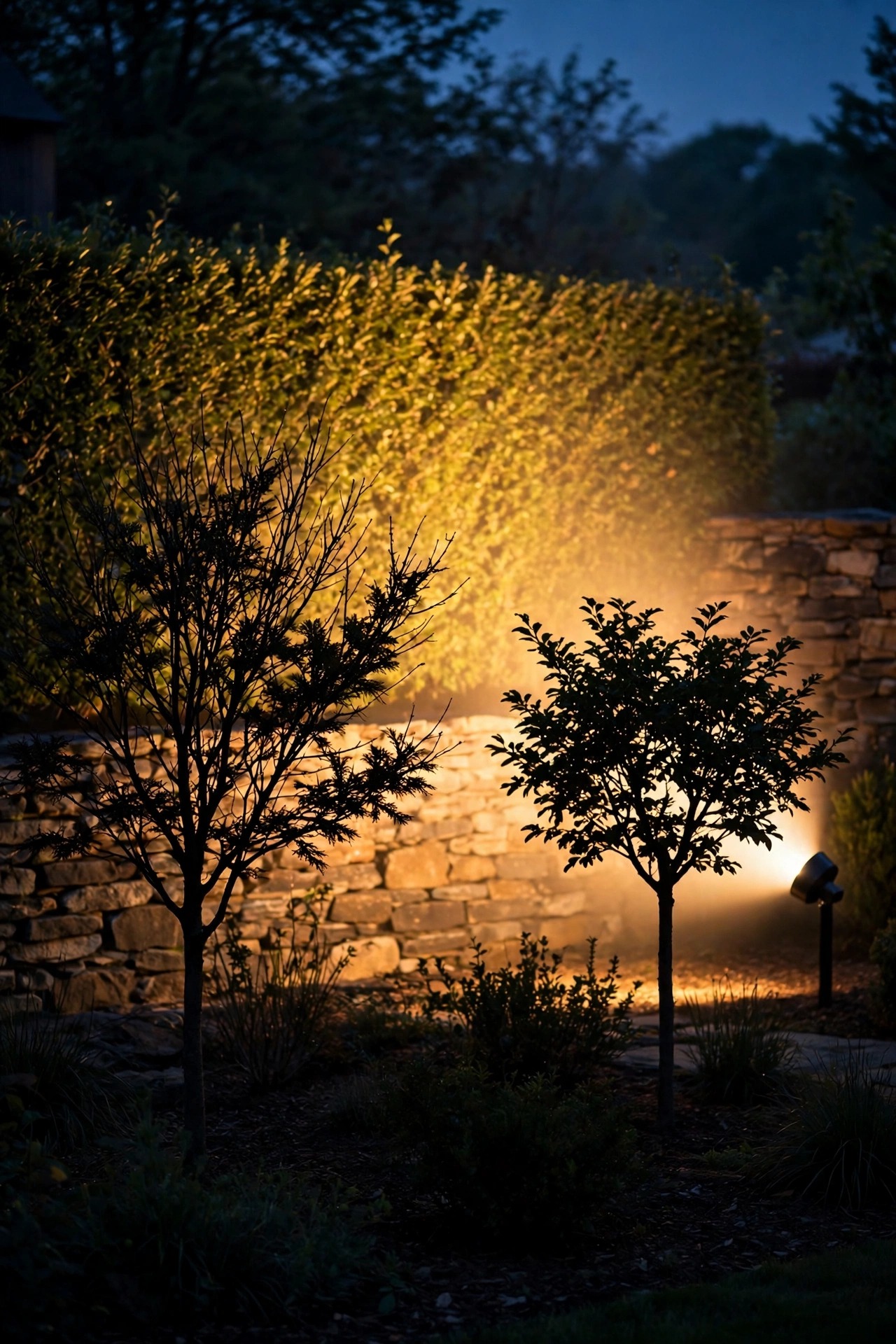
Think of the wide-beam style as a wash rather than a beam. With a spread of ninety to one hundred twenty degrees, these lights bathe a broad surface in soft, even light: a hedge behind your trees, a fence line, a brick or stone wall, the front of the house itself. I use them as the background layer of my lighting, because a gently lit backdrop makes the trees in front of it look twice as dramatic. Place them two to three feet out from the surface and tilt the head up slightly. The honest trade-off is intensity: the same output spread over a wide area looks dimmer than a focused beam, so these rarely impress on their own, and a carelessly aimed one will spill light into a window or a neighbor's yard. Keep the tilt low and walk across the street to check for glare. These suit layered designs, privacy hedges, and anyone whose trees stand in front of a wall or fence that deserves its own soft glow. They are the supporting actors that make the stars look good.
Suggested budget range: $28 – $50.
5. Classic Ground-Stake Spotlights With Integrated Panels
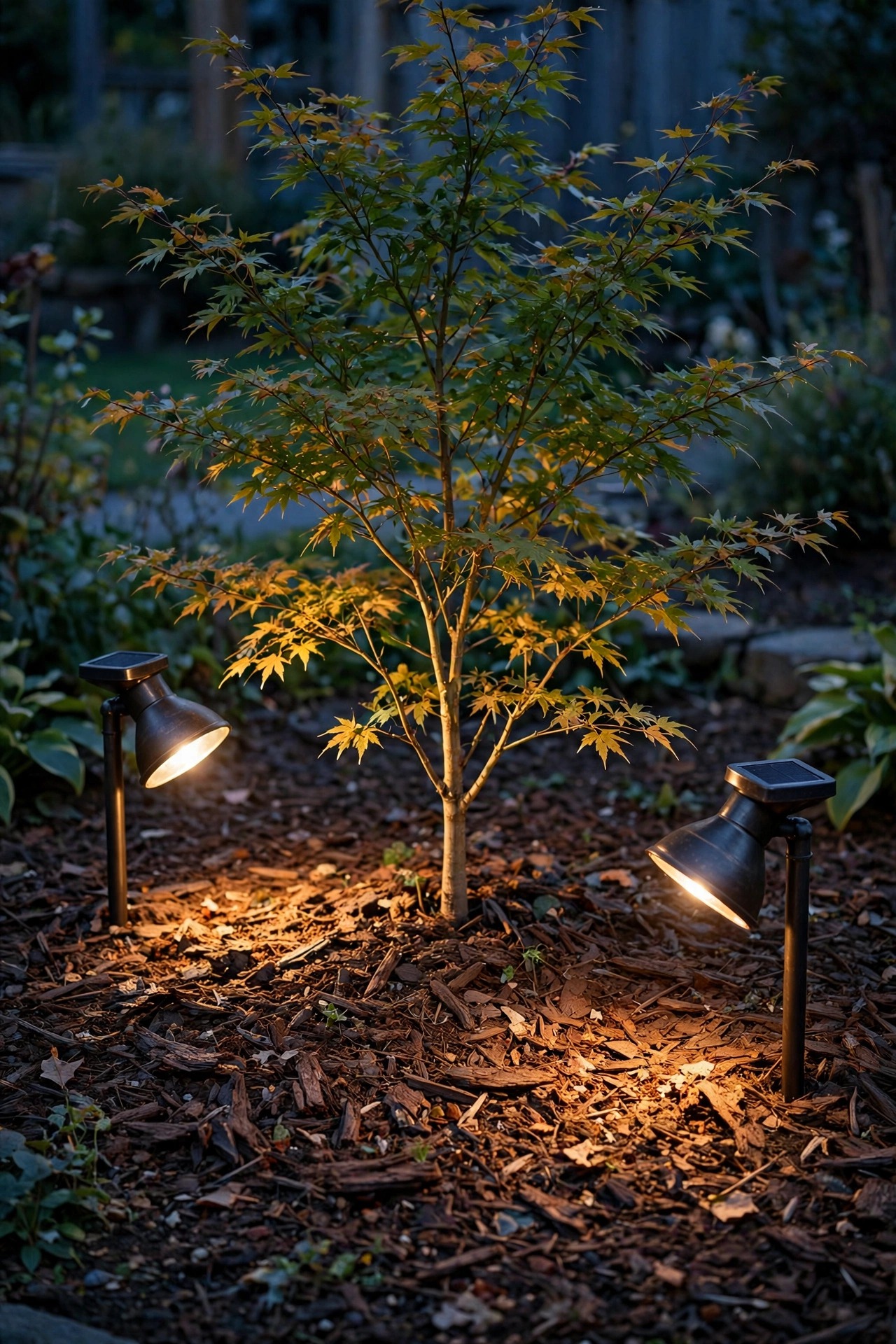
This is the light most of us buy first: a single unit on a spike, panel on top, head that tilts a little, sold in cheerful multi-packs. Push it into a mulch bed, angle it at a small tree or shrub, done in ninety seconds. For sunny beds and modest accents, that simplicity is a genuine strength, and the low price means you can experiment freely and move things around as plants grow. I still use a few around my youngest trees. But go in clear-eyed about the limits. The fixed panel angle rarely matches the sun, mulch and low plants creep over it and steal the charge, and freeze-thaw cycles heave the stakes so they lean like tiny drunks by spring. After heavy rain, soft soil lets them tilt off aim too. These suit beginners, renters, sunny flower beds, and small shrubs or young trees under about ten feet. If your yard is sunny and your ambitions are gentle, start here without a bit of shame, then graduate to the stronger types where it counts.
Suggested budget range: $20 – $40.
6. Surface-Mount Spotlights for Fences, Decks, and Walls
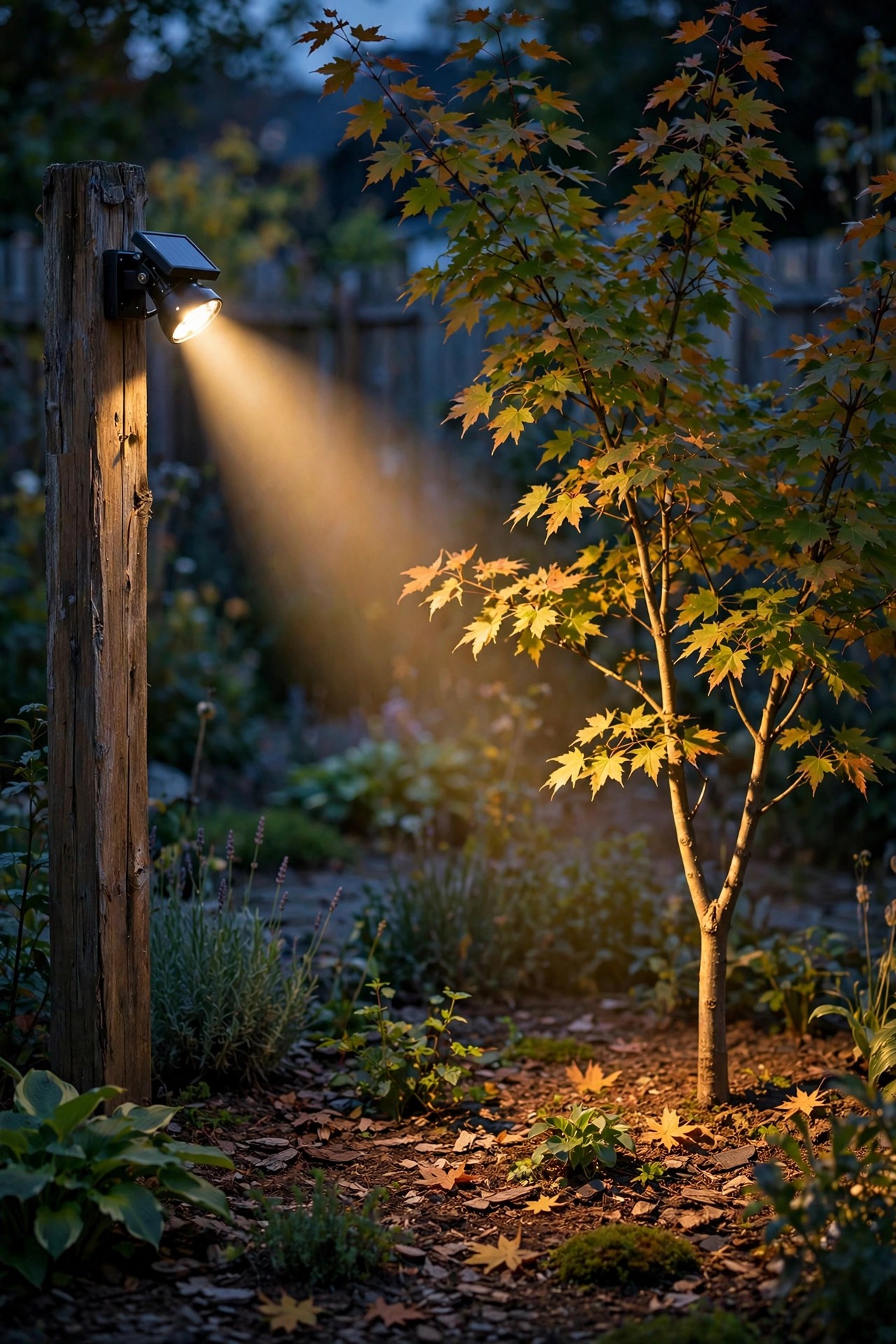
Sometimes the ground is the worst place for a light: deep mulch swallows it, snow buries it, the mower finds it. Surface-mount spotlights screw onto a fence post, deck rail, retaining wall, or a short wooden stake you set yourself, which holds the head up where it stays clean, dry, and on aim all year. I mounted a pair on my fence posts aimed at the red maples just inside the yard, and they have not needed adjusting in two seasons. The elevated position also helps the integrated panel catch sun above plant height. The limits: you need a suitable surface within aiming distance of the tree, the install involves actual screws (so renters, ask first), and once mounted, repositioning leaves holes behind. Cordless solar versions keep this simple, with no wiring to run from the mounting point. These suit fenced yards, raised beds, snowy climates, and anyone tired of straightening stakes after every storm. If your trees stand near a fence or wall, this style quietly outperforms fancier options.
Suggested budget range: $25 – $48.
7. High-Capacity Spotlights With Big Panels and Replaceable Batteries
If your past solar lights all died by ten in the evening, this is your category. High-capacity spotlights pair a noticeably larger panel with a bigger battery, often one you can unscrew and replace in a couple of years instead of throwing the whole fixture away. That extra storage is the difference between a light that fades in December and one that genuinely runs dusk to dawn through the shortest nights of the year. In my northern-facing test bed, these were the only solar accents still glowing at midnight in January. The limits are cost and looks: they run pricier, and the generous panel makes the fixture chunkier, so tuck them behind a shrub where you can. Before you buy, keep expectations honest, because even the best panel cannot charge on a sunless day; a string of gray weather dims everything. Pair these with the simple habits in my guide to make solar lights brighter, like wiping the panel monthly. These suit northern climates, serious tree lighting, and anyone who wants solar to behave like wired.
Suggested budget range: $40 – $75.
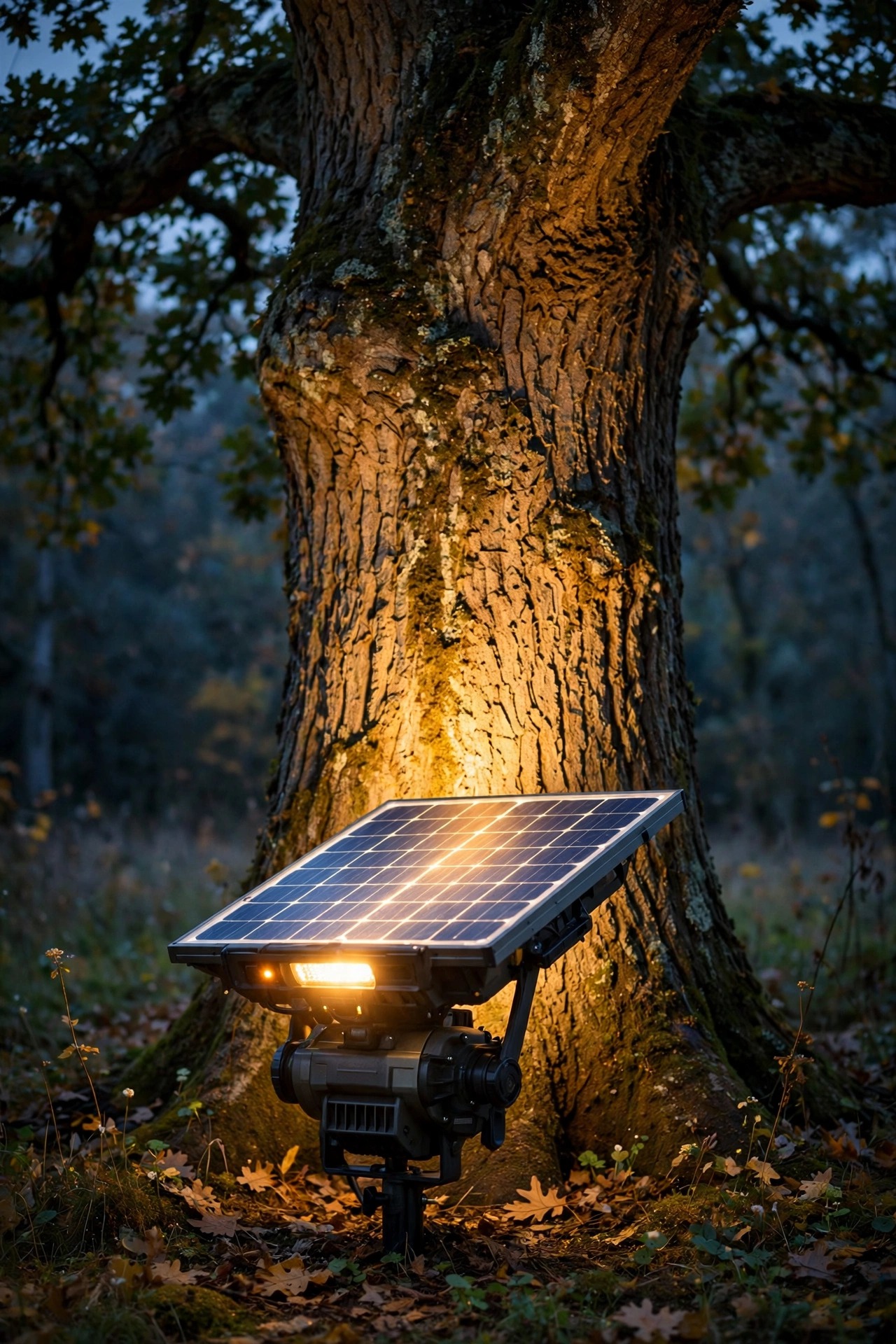
8. Warm-White Spotlights for Bark, Brick, and Autumn Color
Color temperature changes everything, and warm white, roughly 2700 to 3000 Kelvin, is the shade I reach for most. It is the color of candlelight and sunset, and it flatters almost everything in a residential landscape: brown bark looks richer, brick glows, stone warms up, and autumn foliage positively catches fire under it. Warm light also feels calmer to live with, which matters when the fixture shines toward your own windows or patio. If your evenings are about sitting outside with a drink and admiring the yard, this is your temperature. The honest limits: warm white renders greens a touch yellow and can look slightly softer or dimmer than a cool light of the same output, because our eyes read cooler light as crisper. For pure visibility on a dark path edge, cool has a small edge, but for trees and accents, warmth wins on beauty nearly every time. These suit traditional and cottage-style homes, wooden fences, warm stone, and anyone building a cozy layered look rather than a crisp modern one.
Suggested budget range: $22 – $42.
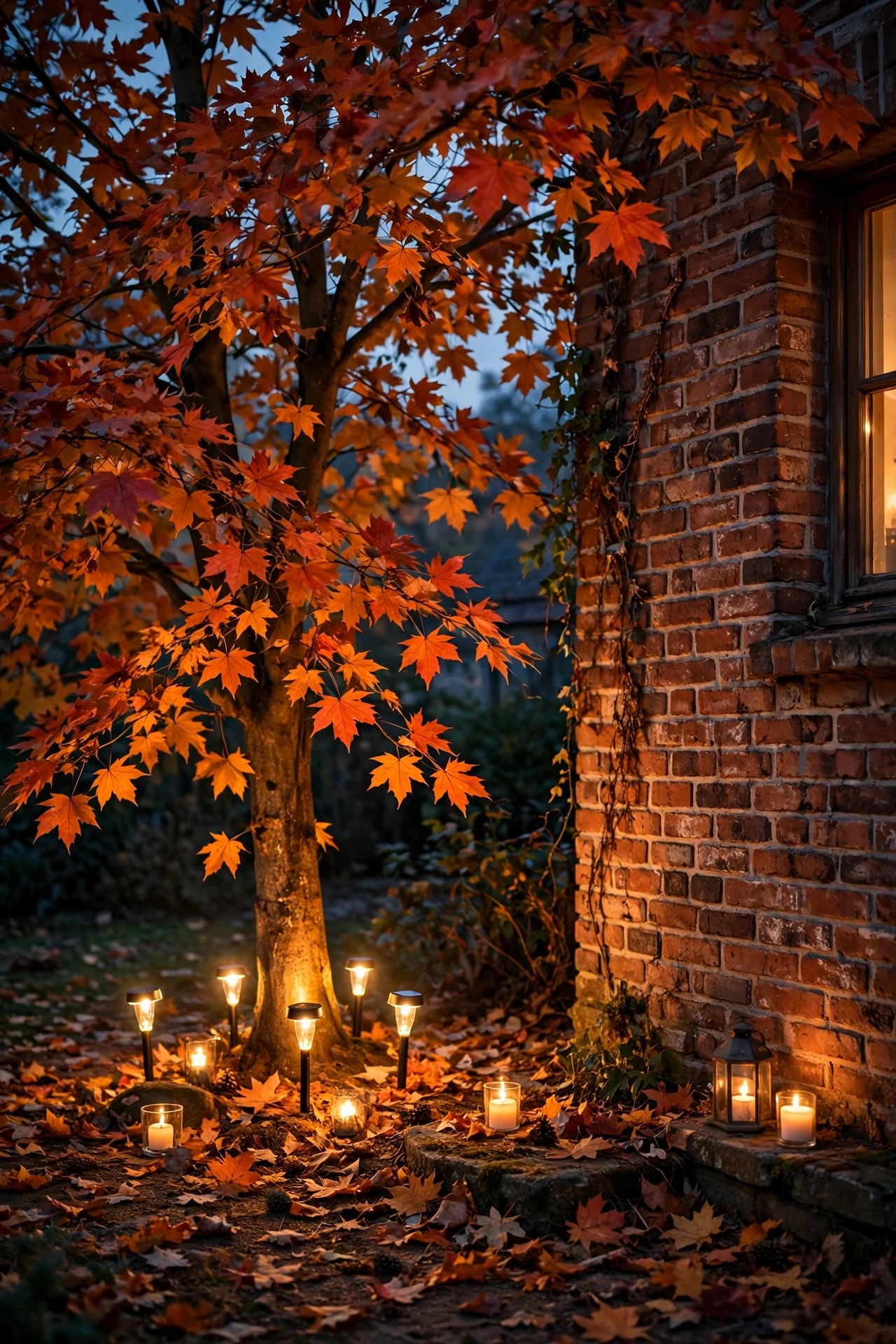
9. Cool-White Spotlights for Modern Homes and Silvery Foliage
Cool white, from about 4000 up to 6500 Kelvin, is the crisp, moonlight end of the spectrum, and used deliberately it can look stunning. It makes blue spruce and silvery foliage genuinely sparkle, keeps green lawns looking vivid emerald at night, and suits contemporary architecture with gray stone, black trim, and clean lines. There is also a practical side: cooler light reads as brighter to our eyes at the same output, so a modest fixture can feel more powerful. Now the honest limits, because this temperature is unforgiving. On warm brown bark or a red brick wall it can look bluish and clinical, like a parking lot wandered into your garden, and it is the temperature most likely to bother neighbors and wash out the night sky. My rule: match the light to the house. If your exterior palette is cool and modern, lean in; if your home is warm-toned, sample one fixture before committing to a set. These suit modern homes, blue and silver plantings, pale stone, and anyone who prefers a moonlit look to a candlelit one.
Suggested budget range: $22 – $42.
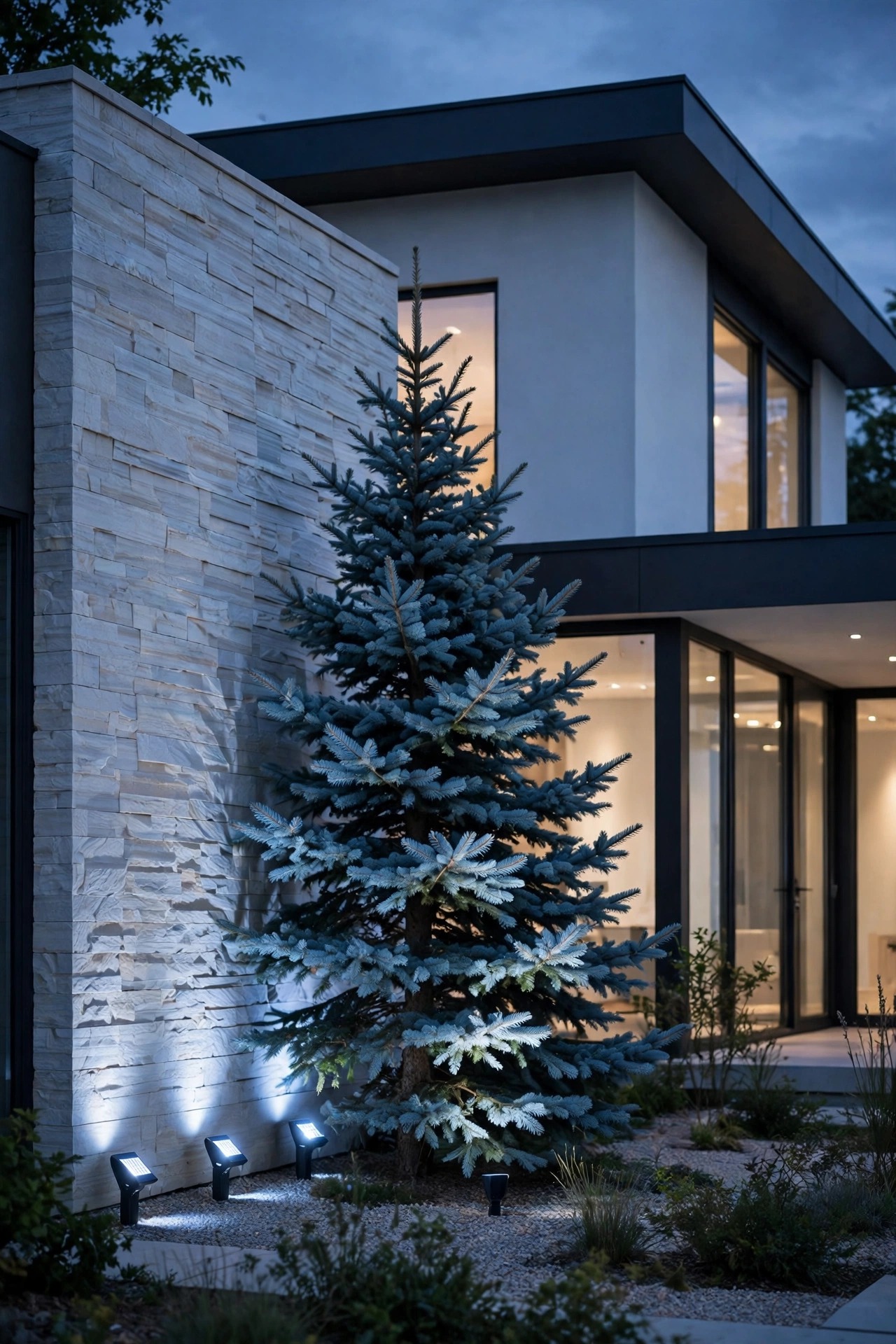
10. Dusk-to-Dawn Spotlights With a Photocell Sensor
This is the set-and-forget behavior most of us picture: a small photocell eye watches for darkness, the light clicks on by itself at dusk, and it holds a steady accent glow until dawn or until the battery gives out. No apps, no remotes, no remembering. For trees and accents, that steady, predictable glow is exactly right, because accent lighting should feel like part of the landscape, not an event. I rely on photocell models around my front trees so the house looks welcoming every single night without me touching a thing. The honest limits are about stamina: a light determined to run all night will drain a small battery by two in the morning in midwinter, and many quietly dim themselves halfway through the night to stretch the charge, which is fine once you know to expect it. Pair this behavior with a decent-sized battery if all-night matters to you. These suit front yards, anyone who travels often, and every gardener who wants beautiful trees on autopilot.
Suggested budget range: $26 – $46.
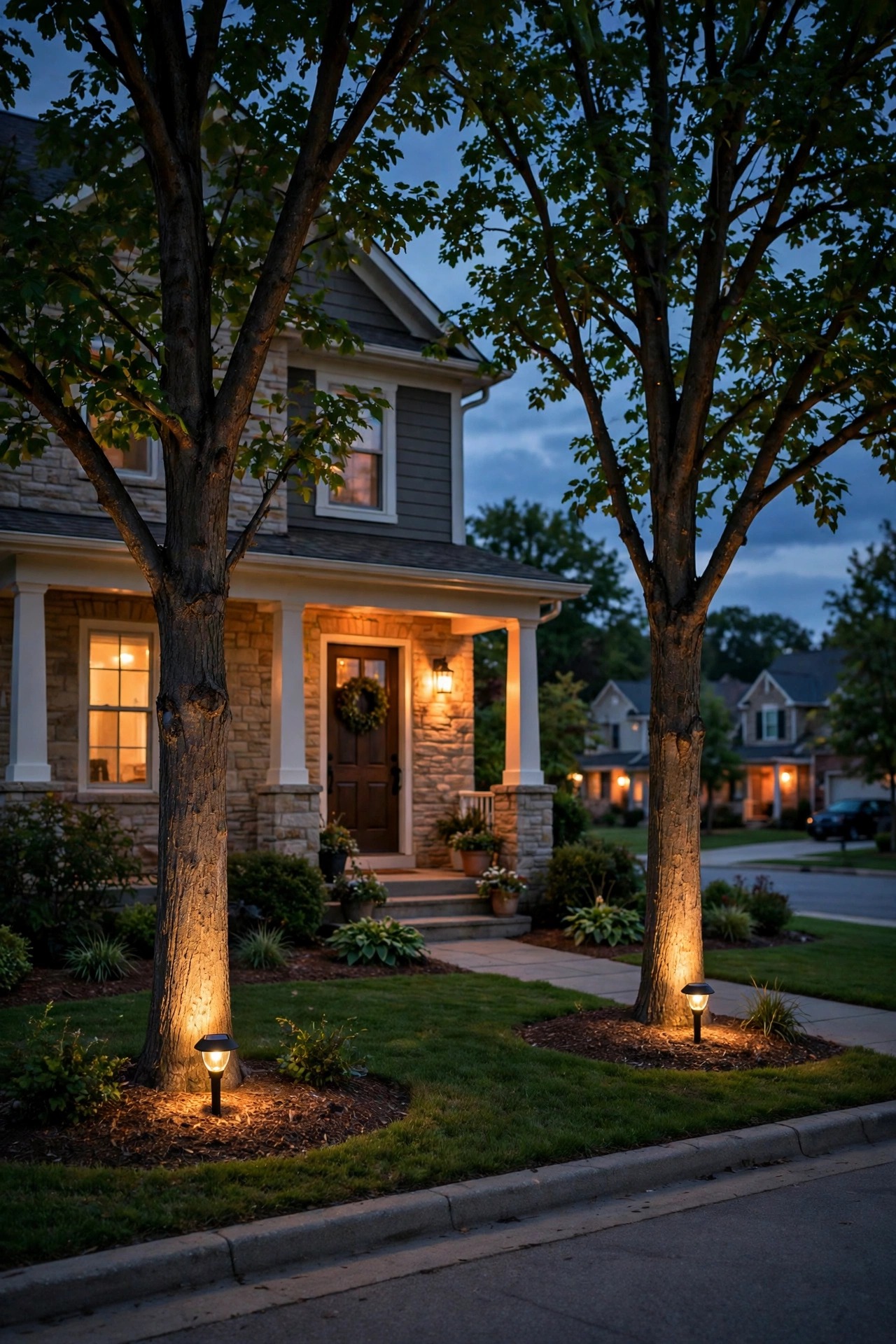
11. Motion-Activated Picks: Best Solar Spotlights That Double as Security
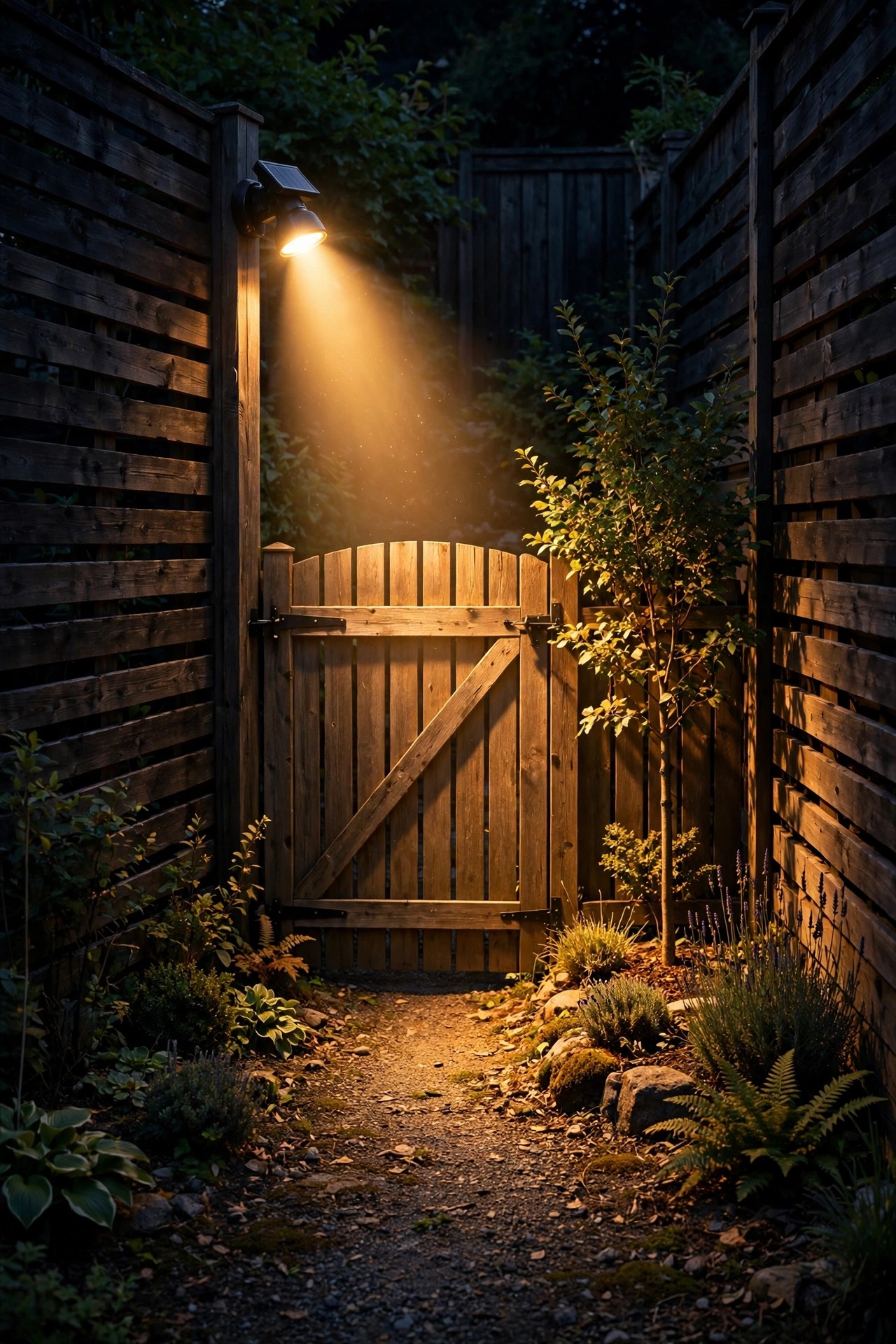
Motion-activated spotlights play a different game: they idle dark or at a faint glow, then burst to full brightness when something moves within their sensor range, usually twenty to twenty-six feet. That burst is startling in the best way near a gate, a side yard, or the dark corner by the trash bins, and because the light only works hard in short bursts, the battery lasts for many nights on a single charge. Many models offer a dim-idle mode that keeps a whisper of accent light on your trees and jumps to full power when triggered, which is the best of both worlds. The honest limits: if you want a constant, steady glow on a specimen tree for evening entertaining, motion lights will frustrate you, since they rest between triggers, and wind-blown branches or wandering cats can set them off. These suit side yards, gates, driveways, and anyone whose accent lighting should also earn its keep as security. Think of them as guards that moonlight as decorators.
Suggested budget range: $28 – $52.
Frequently Asked Questions
How many lumens do solar spotlights need to light a tree?
For a small ornamental tree or shrub, 100 to 200 lumens per light is plenty for a soft accent. Medium trees in the fifteen to twenty-five foot range look best with 200 to 400 lumens, ideally from two lights at different angles. Remember that placement and beam angle matter as much as the number: a focused 200-lumen narrow beam will outshine a scattered 400-lumen flood on a trunk every time.
Can a solar spotlight really light a tall tree?
Honestly, only the lower half. Even the strongest solar spotlights light a trunk and lower canopy beautifully, but the crown of a forty-foot tree will fade into darkness, and I have never seen a solar fixture change that. If you need full height on a mature oak or pine, that is a job for a wired low-voltage system. For trees under about twenty-five feet, solar does a genuinely lovely job.
How long do solar spotlights stay on at night?
Most run six to ten hours on a full charge in summer. In winter, shorter days and longer nights cut that down, and basic models may fade after four or five hours. High-capacity models with larger panels and replaceable batteries hold up best, and simple habits help too: keep the panel clean, keep it in direct sun, and replace tired batteries every one to two years.
Should I choose warm white or cool white for trees?
Choose warm white, 2700 to 3000 Kelvin, for most trees and most homes. It flatters bark, brick, and foliage and feels like candlelight. Choose cool white only if your home has a modern, cool-toned palette or you are lighting blue spruce and silvery plants, where it adds a crisp sparkle. When in doubt, buy one fixture first and live with it for a week before ordering the set.
Conclusion
After years of swapping fixtures around my yard, my advice comes down to one sentence: match the type to the tree, the shade, and the job. Separate-panel lights rescue shady corners, narrow beams carve out beautiful trunks, wide floods build the backdrop, and big batteries keep the show running past bedtime. The best solar spotlights are not the most expensive ones on the shelf; they are the ones chosen honestly for the spot they will actually live in. Start with your favorite tree, get one zone right, and build outward from there. Then browse the rest of my outdoor lighting ideas here on the site for the next corner of the yard that deserves a little glow.