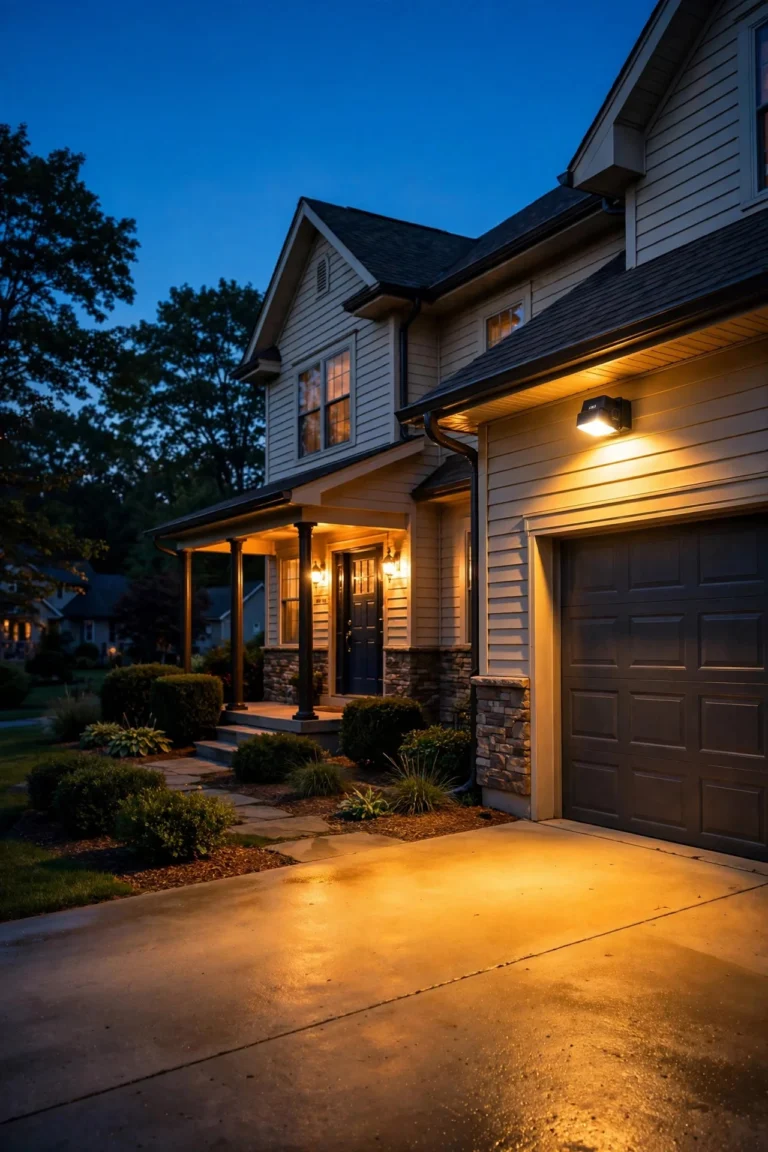
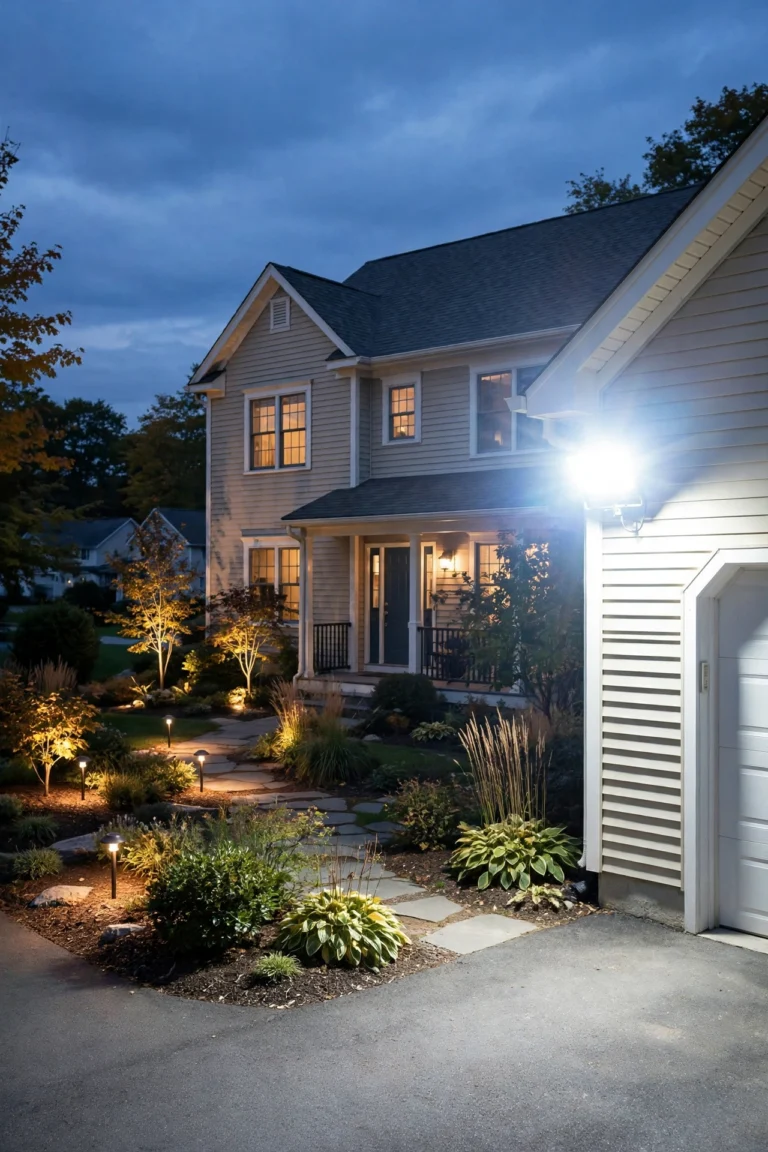
A modern porch lives or dies on restraint. Clean lines, honest materials, and nothing fussy — that is the look, and lighting either sharpens it or quietly ruins it with one ornate lantern too many. The modern porch lighting ideas I reach for all share the same discipline: simple geometric fixtures, one finish repeated with intention, and warm 2700K light that keeps the whole entry feeling current rather than cold. In this post I am sharing the 19 ideas I use on contemporary and updated-traditional entries alike, all built on the layering method I trust everywhere: a soft ambient base, clear task light at the door, lock, and steps, and a few sculptural accents that give the porch its after-dark personality. You will get mounting heights, spacing numbers, bulb temperatures, and an honest budget range for every single idea, so you can shop with a plan instead of a guess.

1. Start With a Layered Plan for Modern Porch Lighting Ideas
Every crisp entry I have lit started with a sketch, not a shopping cart. I draw the porch and mark three layers: ambient light for a soft overall wash, task light where hands and feet need it at the door, lock, and steps, and accent light for the one or two pieces that carry the style. Modern design punishes clutter, so the plan matters more here than in any other style — decide now which fixtures earn a place and let everything else go. Note your door width, ceiling height, outlet locations, and the direction guests approach from. I also settle the finish palette at this stage, because a modern porch usually reads best with a single finish, matte black being the workhorse, repeated across every fixture. If you want to see the layered approach carried across a whole contemporary exterior, my roundup of modern outdoor lighting ideas walks through it room by room. Twenty minutes with a tape measure saves you from the classic modern mistake: a beautiful sconce that is two inches too small for the wall it hangs on.
Suggested budget range: $0 – $40.
2. Flank the Front Door With Slim Vertical Bar Sconces
If one fixture defines the modern entry, it is the slim vertical bar sconce — a clean tube or rectangular column of light with no ornament at all. A matched pair flanking the front door gives you symmetry, real task light for the lock and keypad, and that crisp architectural line the style is built on. I mount the pair with their centers 60 to 66 inches above the porch floor, roughly eye level, and keep at least 6 inches between the fixture edge and the door casing so the bars read cleanly. Length matters: on a standard 80-inch door, bars in the 18 to 24 inch range look intentional, while stubby 10-inch versions get lost. If you are torn between a single fixture and a pair, my front door sconce pair guide covers the sizing and spacing math in detail. Choose frosted or opal diffusers to hide the LED source and kill glare, and pick wet-location rated models if your porch roof is shallow or open on the sides.
Suggested budget range: $110 – $340.

3. Wash the Wall With Up-Down Sconces
Up-down sconces throw two clean triangles of light, one up and one down, and turn a flat porch wall into architecture. They are my favorite trick on entries with tall blank walls beside the door, where a single bar sconce would leave the upper wall in darkness. The grazing light picks up texture beautifully — brick, board-and-batten, and smooth stucco all gain depth once the beams rake across them. Mount them around 66 to 72 inches high so the upward beam has room to bloom, and keep the fixture body small and cylindrical for the truest modern read. I have a whole breakdown of styles and beam angles in my up-down wall sconce ideas if you want to compare narrow versus wide beams before buying. One caution from experience: aim matters near windows, because an unshielded upward beam can spill glare into a front room. Many models include baffles or let you cap one direction, which is handy when the porch ceiling is low and you only want the downward wash.
Suggested budget range: $90 – $280.

4. Hang a Geometric Pendant Over the Entry
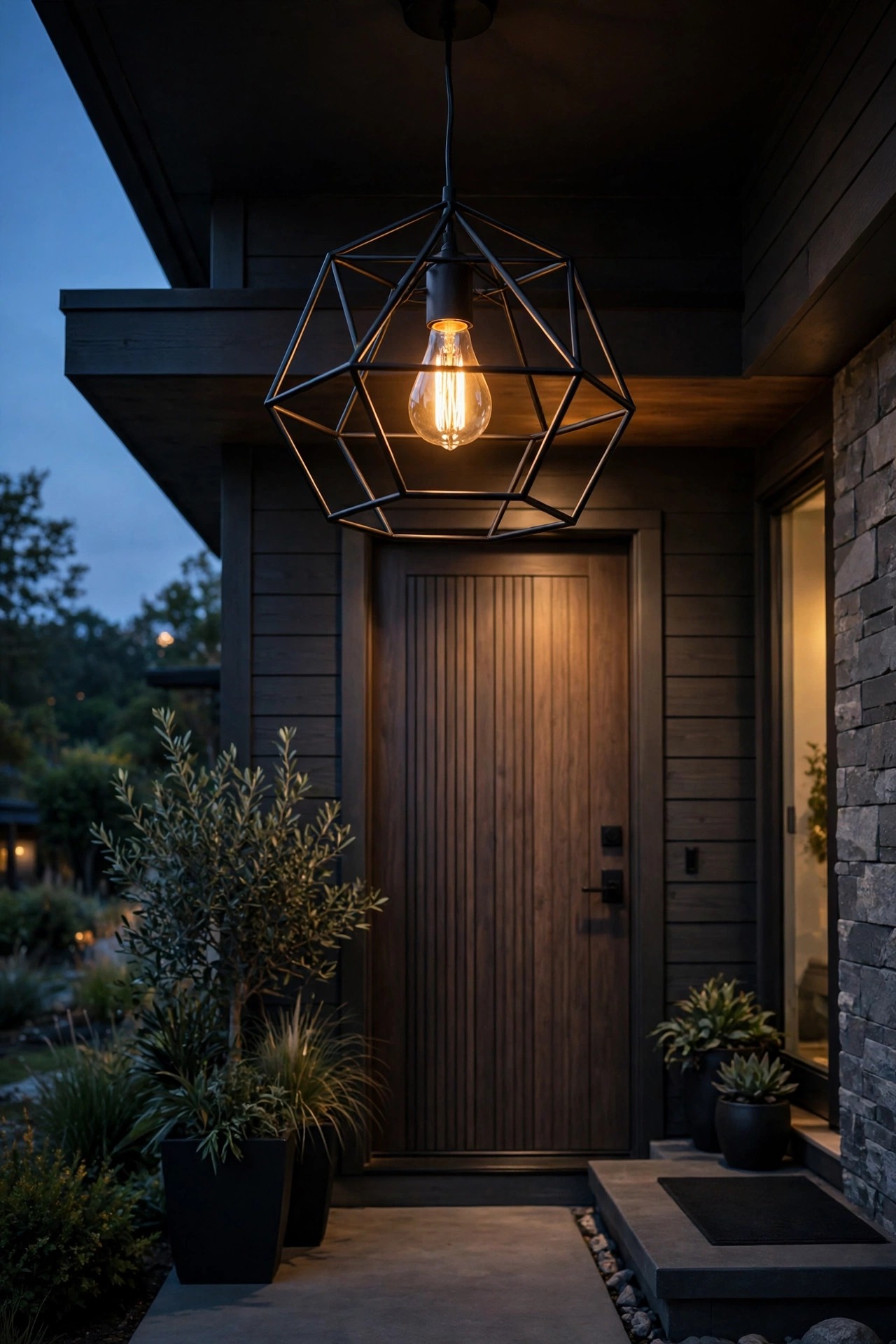
A covered porch ceiling is prime real estate, and a geometric pendant — a cube, a halo, an open-frame polyhedron — gives the entry a focal point you can see from the street. I center mine on the door rather than the porch as a whole, since that is where eyes land, and I keep the bottom of the fixture at least 7 feet above the porch floor so tall guests and raised arms clear it easily. Scale up more than feels safe: a pendant that looks large in the store usually reads just right outdoors, and 16 to 20 inches across suits most single-door entries. Open-frame designs with a warm filament-style LED bulb inside keep the look light and airy, while a frosted globe version softens everything. Put it on a dimmer if you can. Full brightness is for finding keys and cleaning; about 70 percent is where the fixture turns sculptural and the porch feels like an outdoor room. Just confirm a damp-location rating, because porch ceilings trap humid air even when rain never reaches them.
Suggested budget range: $130 – $420.
5. Use a Flush Mount When the Ceiling Is Low
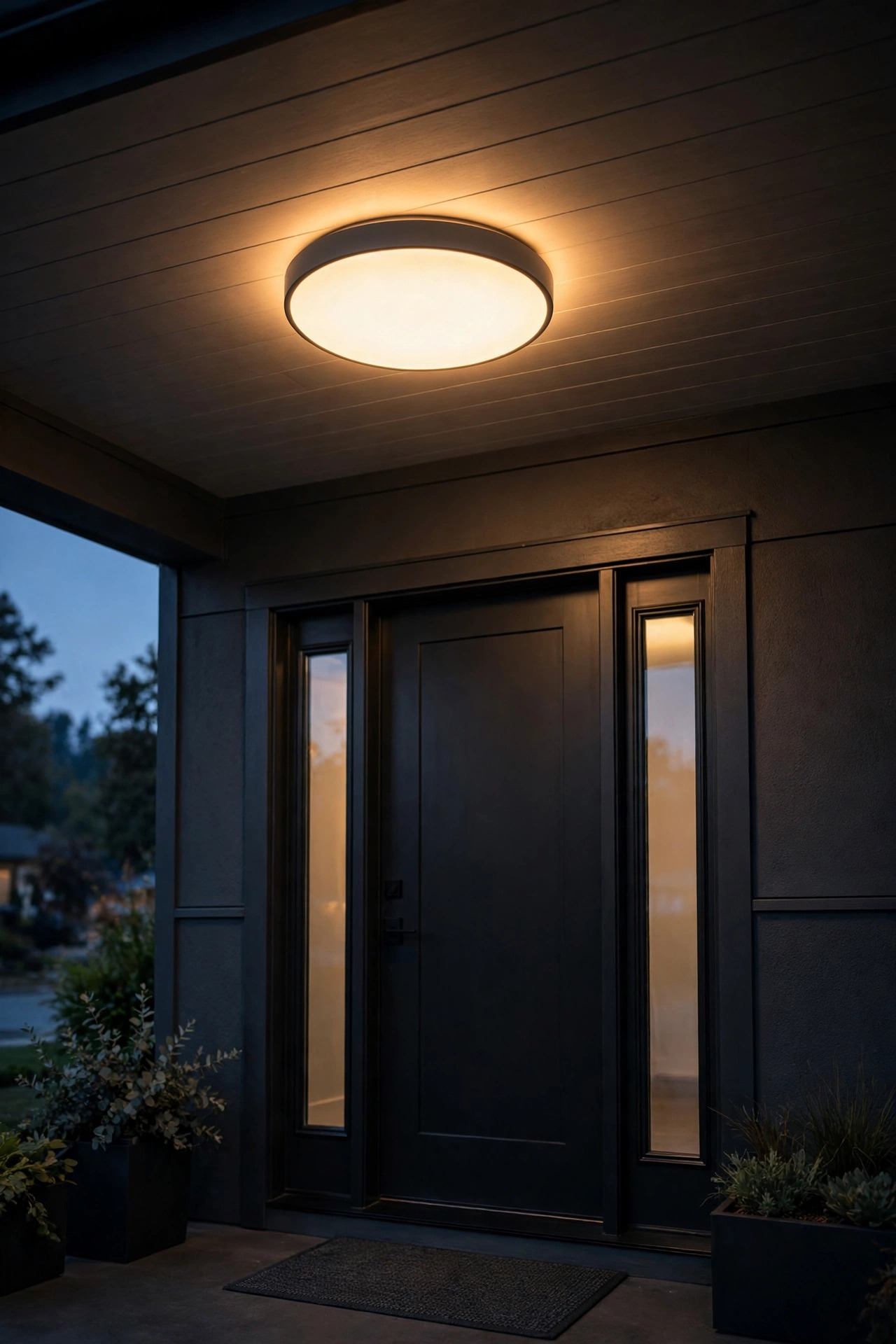
Plenty of modern porches, especially on ranch and split-level homes, have ceilings too low for a pendant. A slim flush mount solves that without giving up the style: look for a low-profile disc, halo, or square panel that sits tight to the ceiling and spreads light evenly across the whole porch. I keep the profile under 4 inches deep so it never crowds headroom, and I choose a diameter of 12 to 16 inches for a typical entry landing. Integrated LED panels are ideal here because there is no bulb to change on a ladder every year, and many offer selectable color temperature — set it to 2700K and leave it there so it matches your sconces. Edge-lit panels give the cleanest look, with no visible hot spots when you glance up. If your porch has a ceiling fan, coordinate finishes so the two ceiling pieces read as a set rather than rivals. One honest note: a single flush mount can feel flat on its own, so pair it with wall sconces whenever the budget allows, even small ones.
Suggested budget range: $70 – $240.
6. Recess Step Lights Into the Porch Stairs
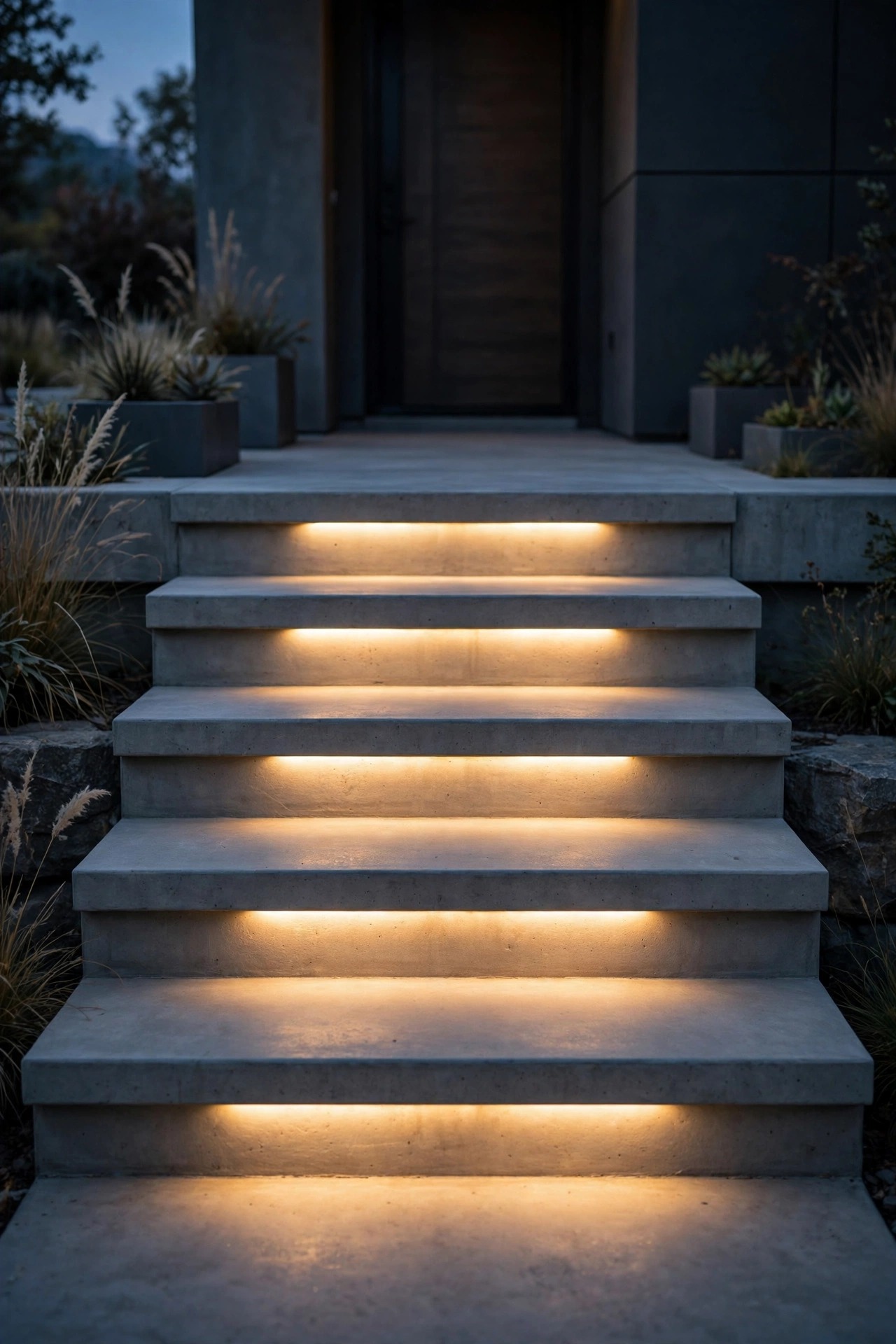
Nothing makes an entry feel more professionally finished than light that comes from the architecture itself, and recessed step lights are the purest version of that idea. Small louvered or eyelid fixtures set into the riser or the side wall of each step wash the tread below in a soft pool, so guests see every edge without a single visible bulb. I light every step on wide stairs and every other step on narrow ones, keeping the fixtures 8 to 10 inches above the tread surface when they mount in an adjacent wall instead. Low-voltage LED versions are the DIY-friendly route, and the louvers keep glare out of eyes as people climb. These are easiest to add during a porch build or remodel, but surface-mount versions with the same low profile work well as a retrofit on concrete and wood alike. Keep them on the same circuit or timer as your sconces so the whole entry wakes up together. It is a safety feature that looks like a design feature, which is the best kind.
Suggested budget range: $120 – $380.
7. Hide an LED Strip Under the Handrail
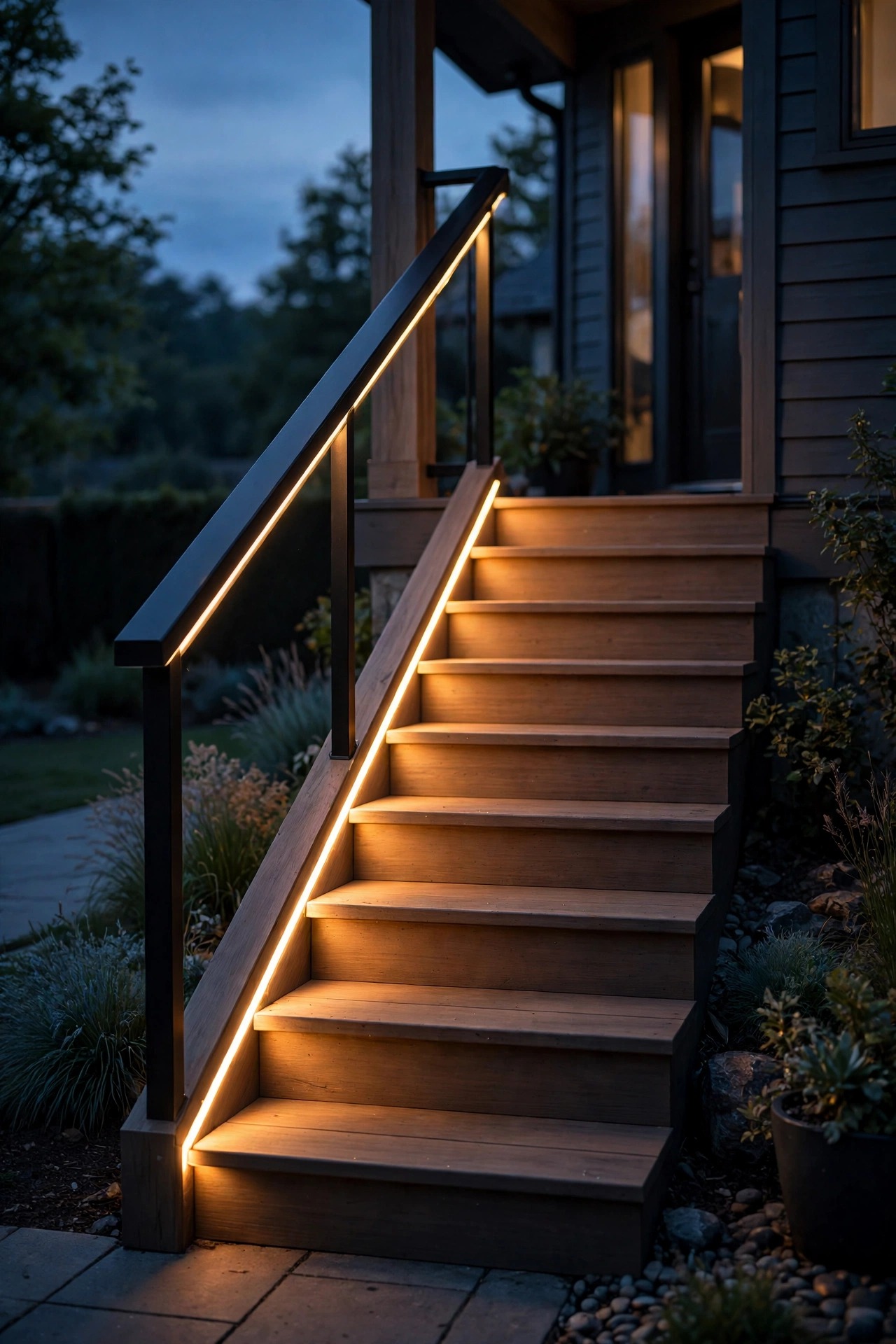
The most modern light on my porch is one nobody can find. A waterproof LED strip tucked into a channel under the handrail throws a continuous ribbon of light down the steps and railing, with no visible fixture at all. I use an aluminum channel with a frosted diffuser, because bare strips show dotted reflections and read as decoration rather than architecture. The channel also protects the strip and acts as a heat sink, which stretches its life outdoors. Run low-voltage cable inside the rail post or along the stringer so the install stays invisible, and power it from the same transformer as your step or path lights if you have them. Choose 2700K tape to match the rest of the entry, and resist the color-changing versions — a modern porch lives on discipline, and a rainbow rail breaks the spell instantly. This is also the kindest light for older guests, since the whole stair run glows evenly with no dark gaps between fixtures. Honestly, once you have lit a rail this way, exposed bulbs on stairs look unfinished forever after.
Suggested budget range: $60 – $180.
8. Backlight the House Numbers
House numbers are the one porch element every visitor, delivery driver, and paramedic actually needs to find, and a backlit plaque turns that chore into a design moment. Modern versions are simple floating numerals or a slim plaque with a warm halo of light spilling from behind each digit, readable from the street without a spotlight aimed at the wall. I mount numbers at eye level, around 60 inches, on the wall beside the door or on a porch column, and I size them at least 6 inches tall — bigger if your house sits far back from the road. Low-voltage and solar models both exist; in my experience the wired low-voltage versions stay consistently brighter through winter, while solar works fine on sunny south-facing walls. Match the numeral finish to your sconces so the entry reads as one composed set. Keep the glow warm, around 2700K to 3000K, since cool blue-white backlighting makes numbers look like a gas station sign. It is a small project, usually under an hour, with an outsized effect on how finished the entry feels at night.
Suggested budget range: $45 – $160.
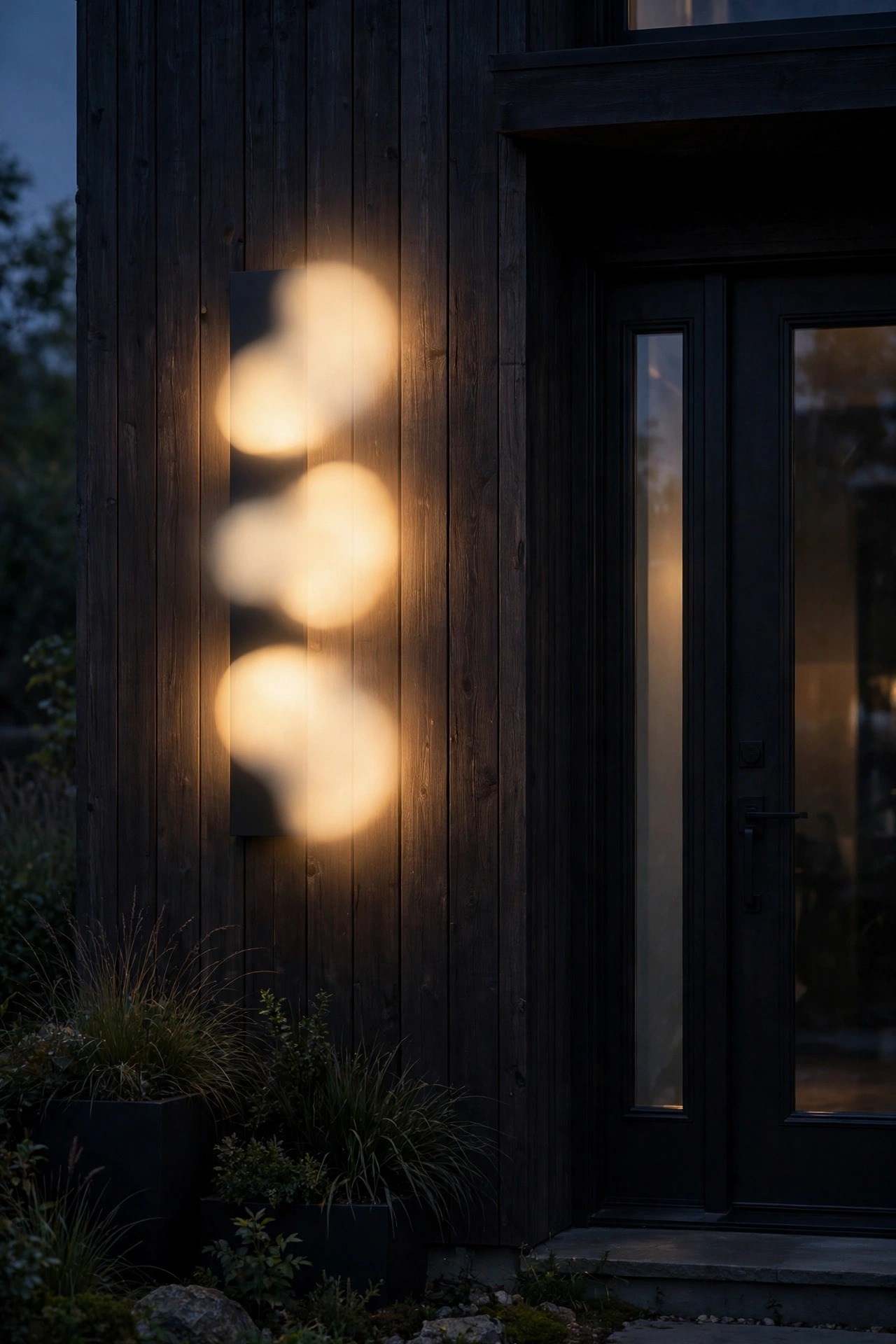
9. Add Motion-Sensor Sconces for a Smart Welcome
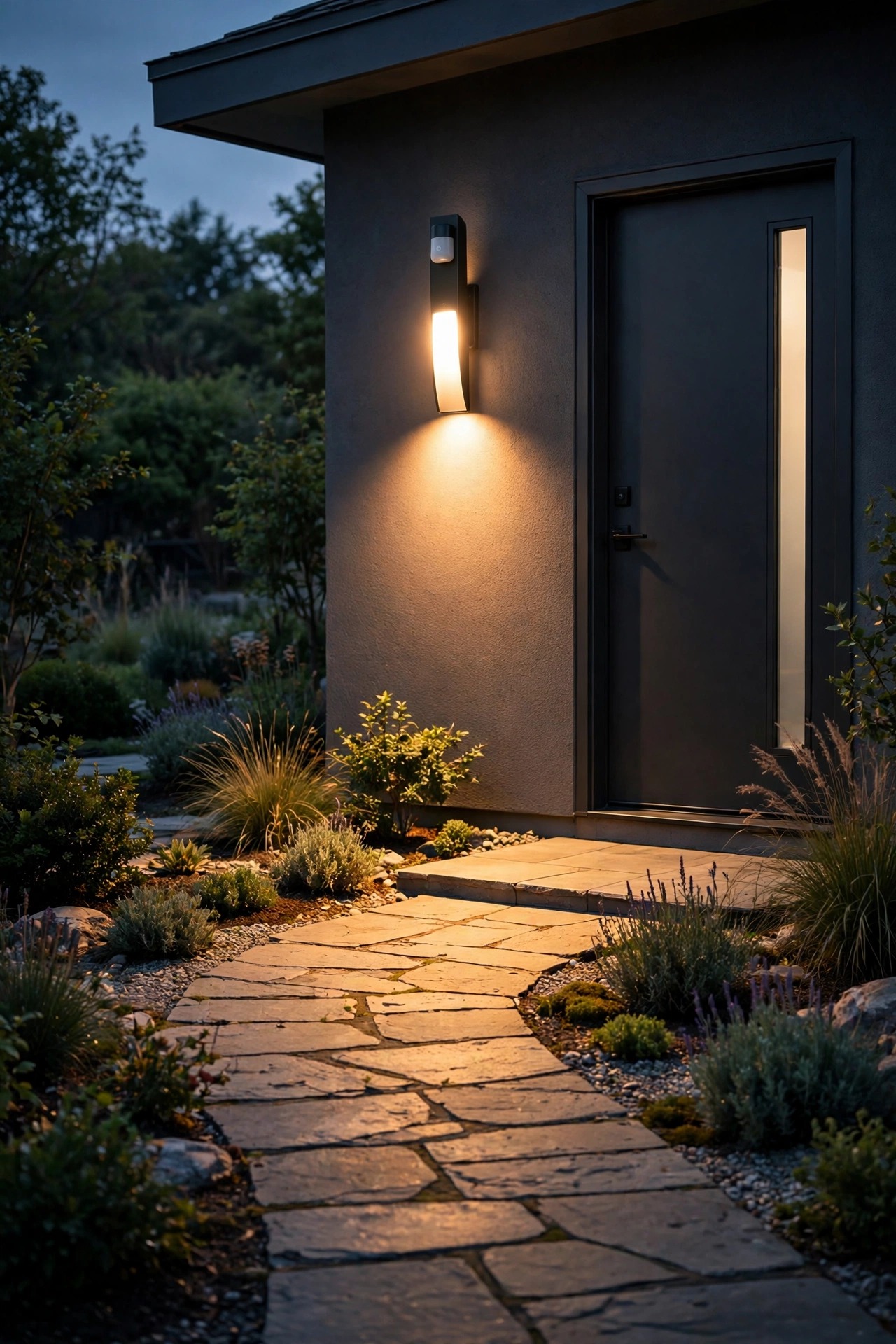
A modern porch should work a little, not just glow, and motion-sensor sconces are the hardest-working fixtures on mine. They idle at a low ambient level or stay dark, then brighten smoothly as a guest, a package, or I approach the door. Look for models with an adjustable sensitivity dial and a dusk-to-dawn photocell, so the sensor only arms itself after dark. I set the range to about 15 to 20 feet, which catches the walkway but ignores passing cars on the street. The styling has caught up, too — slim bars and clean cylinders with the sensor hidden behind frosted glass, nothing like the bulky floodlights of a decade ago. Position the fixture so the sensor has a clear view of the approach path, and avoid aiming it at a busy sidewalk unless you want it firing all evening. Battery and solar versions make this a renter-friendly upgrade with no wiring at all. For security cameras and doorbells, that brightening pool of light is also the friendliest, least prison-yard way to say the house is paying attention.
Suggested budget range: $80 – $260.
10. Guide Guests In With Minimalist Path Lights
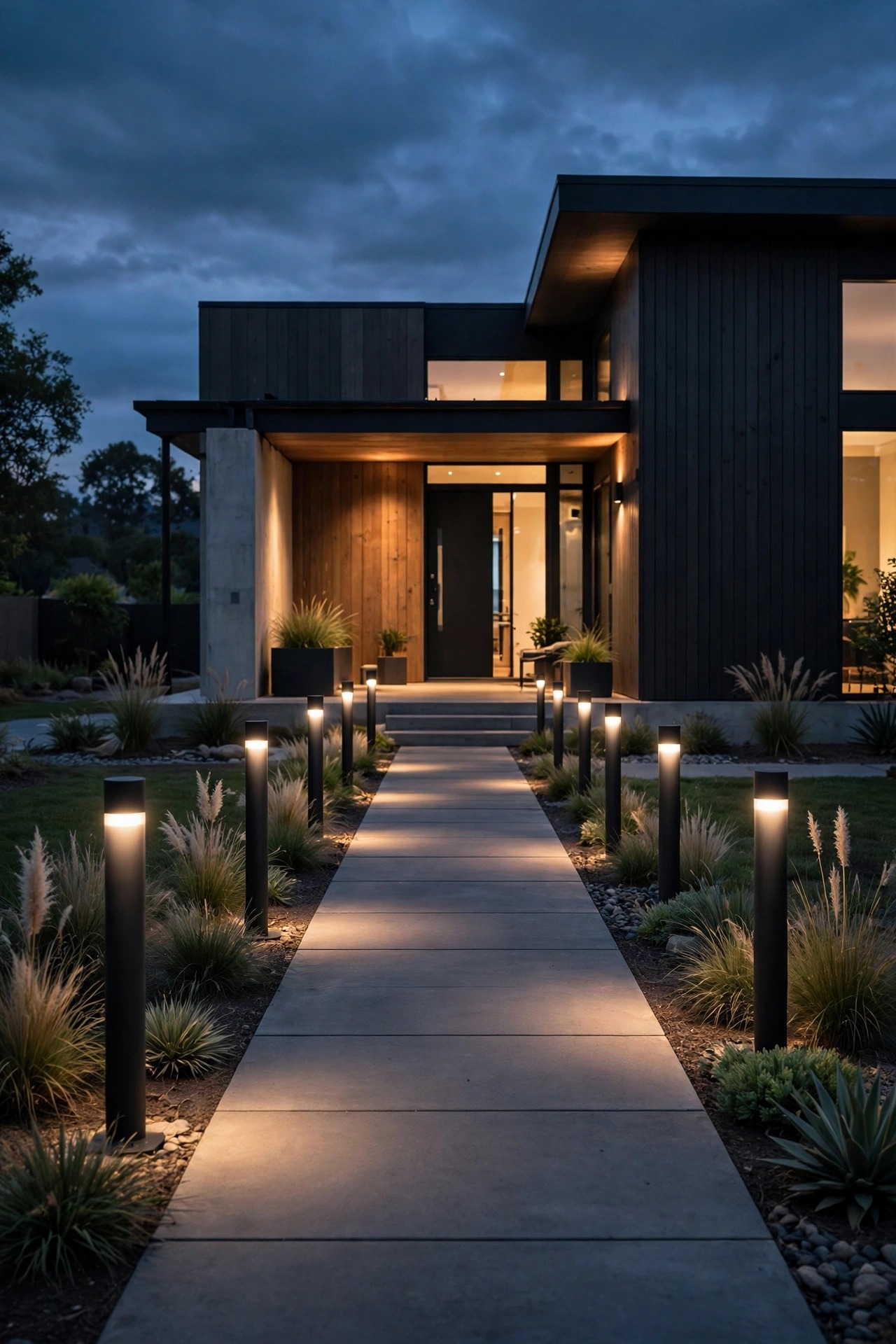
The porch does not start at the door — it starts at the sidewalk, and a short run of minimalist path lights ties the whole approach together. For a modern entry I skip the pagoda and mushroom shapes and choose simple bollards, slim rectangles, or low cylinders in the same finish as the sconces. Space them 6 to 8 feet apart along one side of the walk rather than marching pairs down both edges; asymmetry reads more contemporary and costs half as much. Stagger them slightly toward planting beds so the light pools on the path edge and greenery instead of glaring straight ahead. Three to five fixtures usually cover a standard suburban walk. Low-voltage sets with a small transformer are the reliable route, and modern solar stakes have improved enough to earn a place on sunny walks. Keep the light low and shielded — the goal is a visible path edge, not a runway. When the path fixtures echo the porch fixtures in finish and temperature, the whole front of the house reads as one designed composition.
Suggested budget range: $90 – $300.
11. Pick One Finish and Repeat It Everywhere
This is the cheapest idea on the list and the one that does the most visual work. A modern porch coheres when every metal element — sconces, pendant, house numbers, door hardware, even the mailbox — shares one finish. Matte black is the default for a reason: it disappears against most siding, frames warm light beautifully, and never argues with brick or stone. Brushed nickel and graphite suit cooler-toned homes, and a single restrained brass can work if it repeats at least three times. What breaks the look is the accidental mix: black sconces, a chrome ceiling light, and an oil-rubbed bronze handle set, each fine alone, chaos together. When I shop, I put every candidate fixture on one list and check the finish column before I check the price. If a piece you love only comes in the wrong finish, a can of matte spray paint rated for metal often fixes it for a few dollars. Restraint is the entire modern aesthetic, and nowhere is it easier to practice than in the finish schedule.
Suggested budget range: $0 – $120.
12. Keep Every Bulb at One Warm Temperature
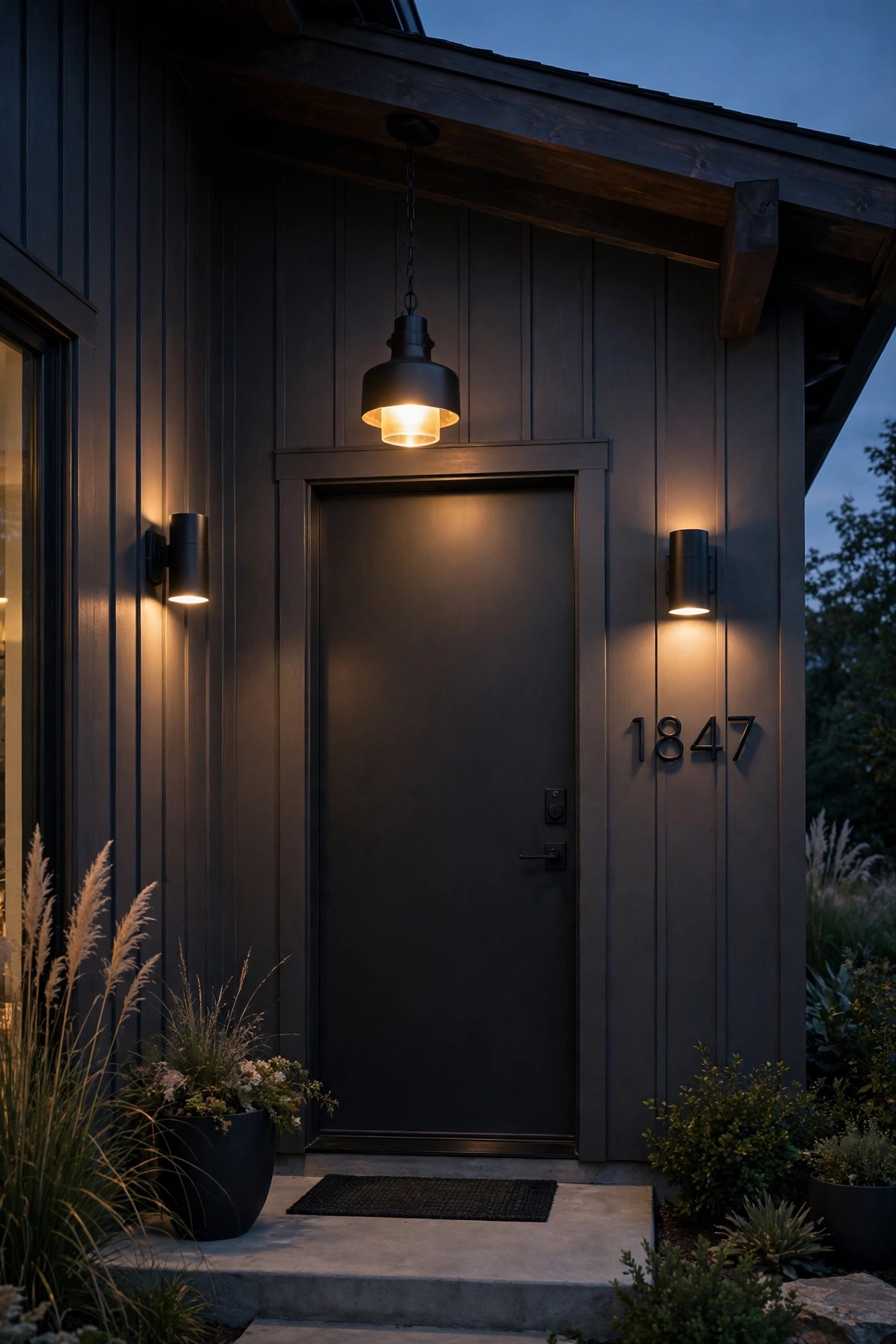
Modern gets confused with cold all the time, and mismatched bulb temperatures are usually why an entry feels sterile. My rule is simple: every light on the porch lives at 2700K, the warm white that flatters skin, wood, and brick while still looking clean against contemporary lines. The moment one fixture glows daylight-blue at 5000K beside a warm sconce, the whole composition looks like a mistake, because it is one. When you buy integrated LED fixtures, the temperature is fixed, so check the box before it goes on the wall — most modern lines offer 2700K or 3000K, and either works as long as it matches everywhere. For replaceable bulbs, I keep a small labeled stash of matching spares so a midnight replacement never introduces a stranger. Warm light also plays better with the evening sky and with any landscape lighting beyond the porch. Crisp does not have to mean clinical: clean fixture shapes give you the modern read, and warm light gives you the welcome. You want both, and temperature discipline is how you get them.
Suggested budget range: $15 – $60.
13. Go Oversized With One Statement Sconce
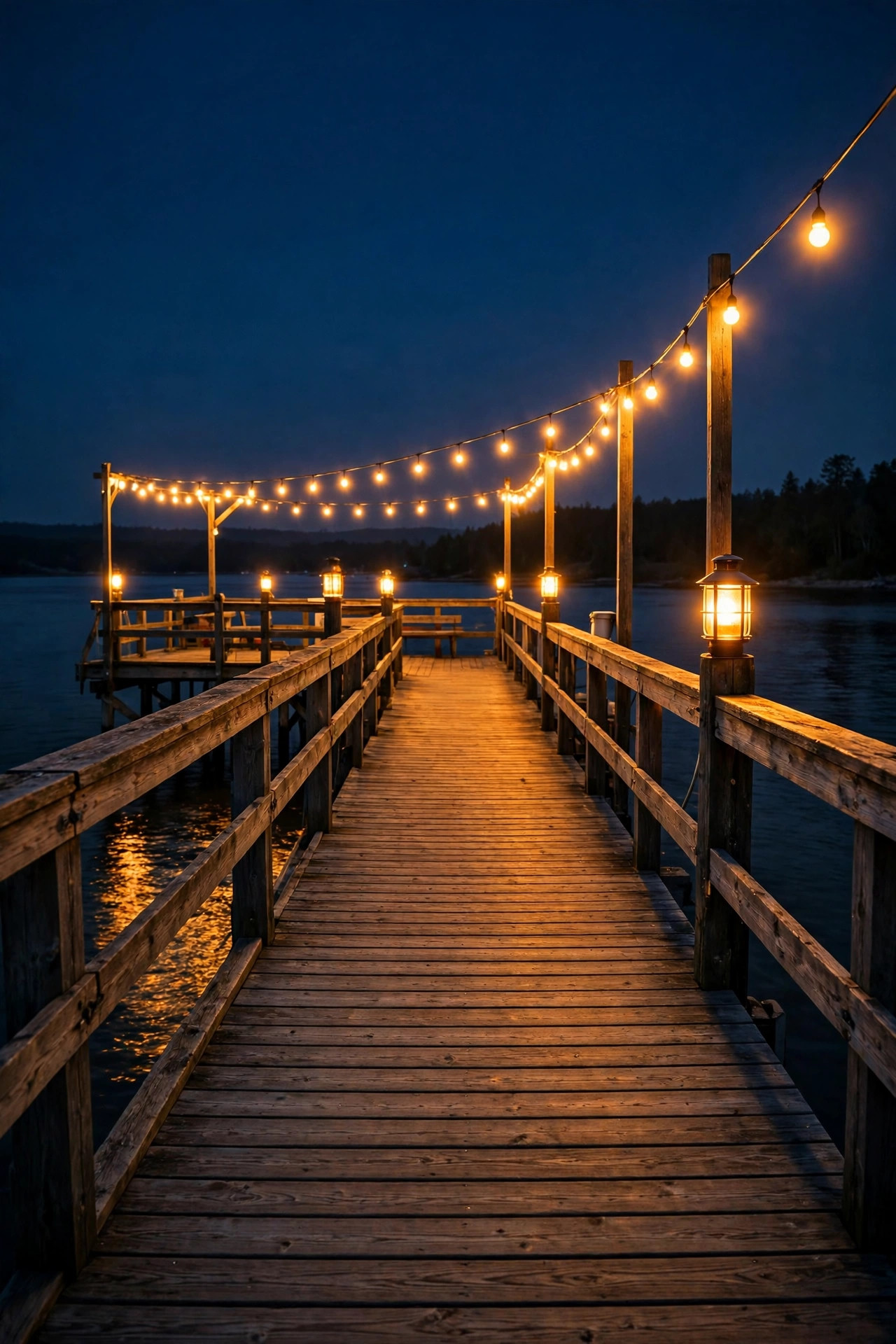
Modern porches tolerate — and reward — one bold gesture, and an oversized sconce is mine. A single large-scale fixture, 24 inches tall or more, on the wall beside the door turns the entry into a composition instead of a collection. This works especially well on asymmetrical facades and entries where the door sits to one side, because a forced pair would crowd the casing. Scale is the whole game: a fixture that would look theatrical indoors reads as confident outdoors, where walls are bigger and sightlines are longer. I pair the statement sconce with quiet supporting players — a flush mount or hidden step lights — so it never competes for attention. Keep the shape simple even at large scale: a tall cylinder, a broad halo, a long frosted bar. Check the wall space honestly before ordering, and mock the size up in painter's tape for a day if you are unsure. In my experience, nine out of ten porches that feel underwhelming are simply under-scaled, and this is the fix.
Suggested budget range: $160 – $480.

14. Uplight a Pair of Architectural Planters
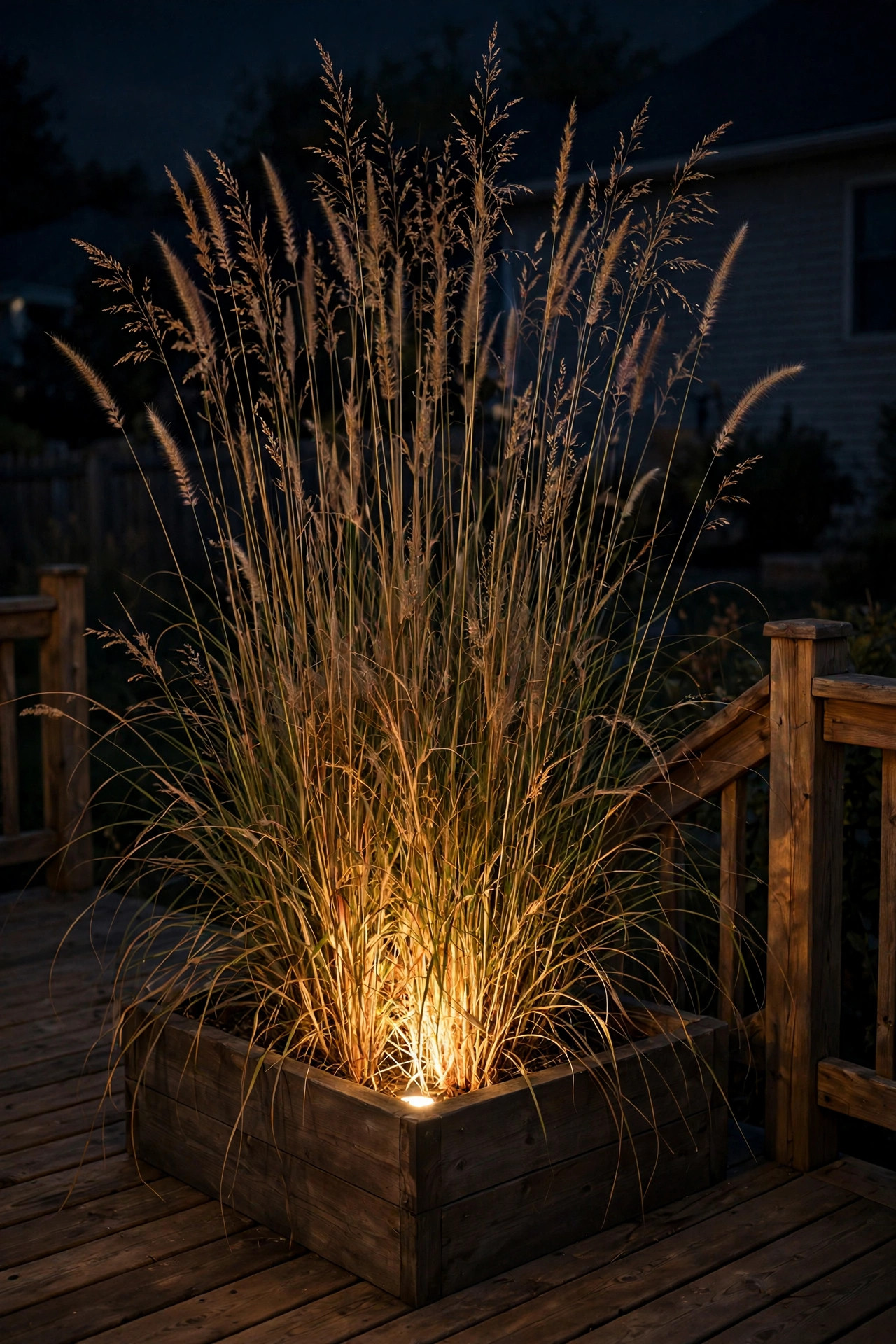
Planters are standard porch furniture, but a small uplight tucked into each one turns them into sculpture after dark. I flank the door or the steps with two matching planters — tall, simple, matte — planted with something structural like a grass, a small evergreen, or a snake plant in warm climates. A low-voltage spike light or a solar uplight nestled in the soil aims up through the foliage, throwing soft moving shadows on the wall behind. The effect is modern because it is about form and shadow, not color or clutter. Keep the beam narrow and the brightness low; you are sketching the plant, not interrogating it. Solar puck uplights make this a ten-minute, no-wiring project, though wired spikes stay brighter on cloudy stretches. Water the plants, not the fixtures — most are weather resistant, but a direct hose blast into the lens shortens any light's life. Swap the plantings seasonally if you like, but keep the planters and lights constant, and the entry keeps its composed look all year.
Suggested budget range: $40 – $150.
15. Put It All on Smart Timers and Dimmers
A modern porch should turn itself on, and smart controls are what separate a styled entry from a managed one. I run my sconces and pendant on a smart switch with an astronomical timer, which tracks sunset in your zip code and adjusts all year, so the porch is lit when it should be without a single thought from me. Dimmers matter just as much: full brightness for arrivals and package hunting, then a drop to 40 percent for the late-evening glow that looks expensive and bothers no neighbors. Smart bulbs work too, but a smart switch keeps the wall control normal for guests and family, which I strongly prefer. Set a vacation schedule that varies the on-times slightly if you travel. Everything LED keeps the running cost almost laughably small — a whole porch of modern fixtures often draws less than one old incandescent porch bulb. The honest truth is that automation is what makes the other eighteen ideas actually happen every night, instead of on the nights someone remembers the switch.
Suggested budget range: $35 – $150.

16. Graze a Brick or Stone Wall With Light
Texture is a modern porch's secret ornament, and wall grazing is how you show it off. The technique places a fixture very close to the wall — within a few inches — and aims the beam straight up or down so it rakes across the surface, exaggerating every bump in brick, stone, or textured stucco. A slim bar sconce mounted tight, or a small recessed uplight at the base of a column, both do the job. The shadows do the decorating, which is why this suits modern restraint so well: nothing added, everything revealed. I use grazing on one wall only, usually the one beside the door, and leave the rest of the porch in softer ambient light so the effect stays special. Smooth drywall-style siding gains little from grazing, so save the trick for real texture. Keep the fixture finish quiet and the beam warm, and stand back at the street to check that you have glow rather than glare. Guests may not name what changed, but they always notice that the entry suddenly looks like a magazine photo.
Suggested budget range: $70 – $220.

17. Add One Clean Strand of Globe String Lights
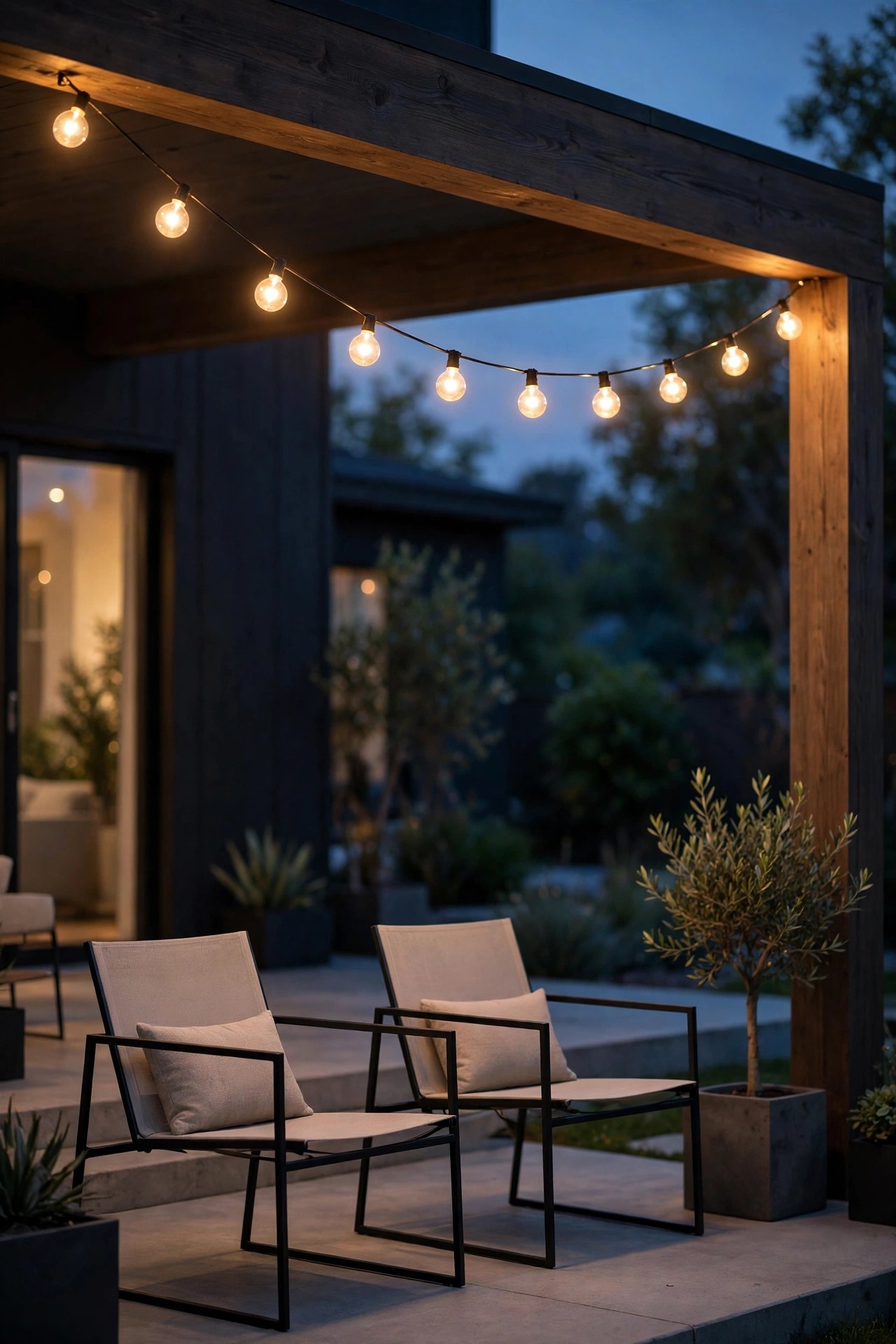
Yes, string lights can be modern — the trick is editing. One single strand of globe lights, hung in a clean straight run or one shallow swag along the porch beam, reads as intentional design. Five tangled strands read as a dorm room. I choose large opal or clear globes on a black cord, spaced evenly, and I keep the line taut enough to look drawn rather than draped. Commercial-grade cord with suspended sockets survives weather and lets you replace a single bulb instead of the whole strand. Warm 2700K filament-style LED globes match your sconces and sip power. Anchor the run with proper hooks into the beam, never staples through the cord, and route the plug to a GFCI outlet with a weatherproof cover. On a porch with a seating area, one strand over the chairs gives the space a destination feel after dark. If your porch is small, this single strand plus a good door sconce might honestly be all the light you need — restraint again, which is the whole modern point.
Suggested budget range: $35 – $110.
18. Give the Seating Corner Its Own Soft Glow
If your porch holds a bench, a swing, or a pair of chairs, give that corner its own low, soft light instead of borrowing the door fixtures' glare. Task light at the door is bright and forward-facing; seating light should be lower, warmer in feel, and aimed at laps and tabletops, not faces. A small modern table lantern with a frosted shade, a rechargeable LED orb on the side table, or a low sconce behind the bench all work beautifully. I keep this layer on its own switch or a smart plug so the corner can glow after the main entry lights dim for the night. Rechargeable lanterns have become genuinely good — USB charging, three brightness levels, and designs clean enough for a modern porch — and they move to the backyard when you do. Keep real candles out of it; flameless versions near cushions and throws are the safe call, and the good ones flicker convincingly now. A lit corner invites people to actually use the porch in the evening, which is the entire reason the porch exists.
Suggested budget range: $30 – $140.

19. Finish With a Dusk Walk-Through of Your Modern Porch Lighting Ideas
The last step costs nothing and catches everything. Once your modern porch lighting ideas are installed, wait for full dark, then walk the route a guest walks: from the street, up the path, onto the steps, and to the door. Look for the failures fixtures hide at noon — a sconce glaring at eye level, a dark tread in the middle of the stairs, numbers lost in shadow, one bulb glowing a different color from its neighbors. I bring my phone and photograph the entry from the sidewalk, because the camera shows imbalance your eyes forgive. Adjust aim, swap the odd bulb, dim the pendant a notch, and move a path light a foot if a pool of light lands wrong. Stand across the street, too, since curb view is the one your house presents to the world every night. This twenty-minute ritual is what separates porches that were decorated from porches that were designed. Then set the timer, pour something cold, and enjoy the fact that your entry now greets everyone — guests, family, and future you at midnight — exactly the way you planned.
Suggested budget range: $0 – $30.
Frequently Asked Questions
What color temperature is best for a modern porch?
I recommend 2700K warm white for nearly every modern porch. It keeps clean-lined fixtures from feeling cold or clinical, flatters wood doors and brick, and matches most landscape lighting. If your home has very cool gray tones throughout, 3000K can work — the key rule is consistency. Every fixture, from sconces to step lights, should share one temperature, because a single mismatched bulb is the fastest way to make an entry look unfinished.
How high should I mount porch sconces?
Mount the center of door sconces 60 to 66 inches above the porch floor, roughly eye level, and keep at least 6 inches between the fixture and the door casing. For up-down sconces, 66 to 72 inches gives the beams room to spread. If your fixtures have a visible bulb or light source, position them so the source sits slightly above eye level for most adults, which keeps glare out of faces at the door. When in doubt, tape the outline on the wall and live with it for an evening before drilling.
Can I mix solar and wired lights on the same porch?
Yes, and I do it myself — wired fixtures for the door sconces and ceiling light where brightness and reliability matter most, solar for path lights, planter uplights, and accents. The two things to manage are color temperature and expectations. Choose solar models labeled warm white so they blend with your 2700K wired lights, and accept that solar dims on cloudy winter stretches. A hybrid plan keeps the install cost and wiring effort low while the important light at the door never depends on the weather.
How much does a modern porch lighting refresh cost?
A focused refresh — a pair of sconces, a ceiling fixture, and matching bulbs — typically runs $250 to $700 in fixtures if you install them yourself on existing wiring. A fuller layered update with step lights, path lights, and smart controls lands between $700 and $1,800. Hiring an electrician to add new fixture locations adds roughly $150 to $300 per location depending on your region. Because everything is LED, the ongoing electricity cost is only a few dollars a year.
Conclusion
A great modern porch is not about owning the most fixtures; it is about choosing a few clean ones and placing them with intent. Layer your light, repeat one finish, hold every bulb at one warm temperature, and let the architecture do the showing off. Start with the door sconces and a ceiling fixture, then add steps, path, and accents as the budget allows — modern porch lighting ideas reward patience and restraint more than any other style. When you are ready to keep going, browse the rest of my lighting ideas here on the site for the walkway, garden, and backyard, and build the same calm, composed glow all the way around your home.