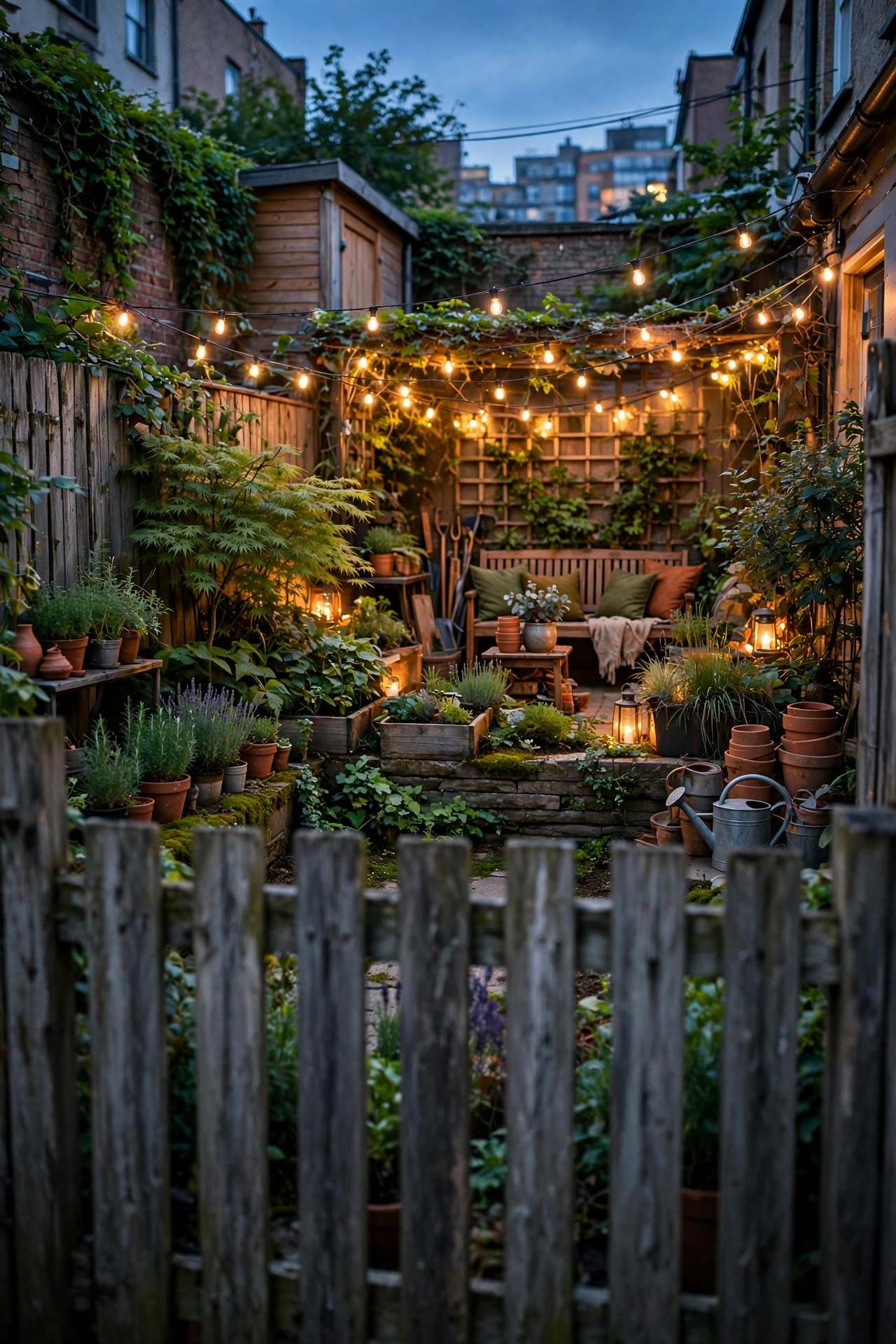
Our city backyard is barely 20 feet wide, hemmed in by a brick wall on one side and a neighbor close enough to wave at from the kitchen window. For the first summer, it felt like a dim little corridor after dark, and we barely used it. Everything changed once I started hunting for urban backyard lighting ideas that actually respect a small lot: light that stays low and warm, fixtures that do double duty, and nothing that blasts the neighbors bedroom window. The secret, as always, is layering. A soft canopy overhead, a gentle glow at sitting height, and low light that traces the ground so nobody trips on a planter. In a tight urban yard, every layer has to earn its footprint, and honest measurements matter more than big fixtures. Below are the 15 setups that turned our narrow city lot into the place we spend every warm evening, each one renter-conscious, neighbor-friendly, and kind to a small budget.
1. Start With a Layered Plan for Your Urban Backyard Lighting Ideas
Before you buy a single bulb, stand in the yard at dusk with your phone flashlight off and just look. In a city lot, the layers have to be ruthless: overhead sparkle, eye-level glow, and ground-level guidance, with zero wasted light spilling over the fence. I sketched our rectangle on paper and marked three things: where we sit, where we walk, and what we want to show off, which in our case is one scrappy Japanese maple and a wall of planters. Every fixture I bought afterward had to serve one of those three jobs. Measure your runs honestly; most city yards need under 40 feet of string lights and six to eight path fixtures, not the jumbo packs. Also note what already glows: a streetlight or a lit alley can argue with your warm bulbs, so plan your seating in the darkest corner and build your layers there. This ten-minute plan is honestly the difference between a curated little retreat and a yard full of random glowing objects competing with each other.
Suggested budget range: $0 – $20.

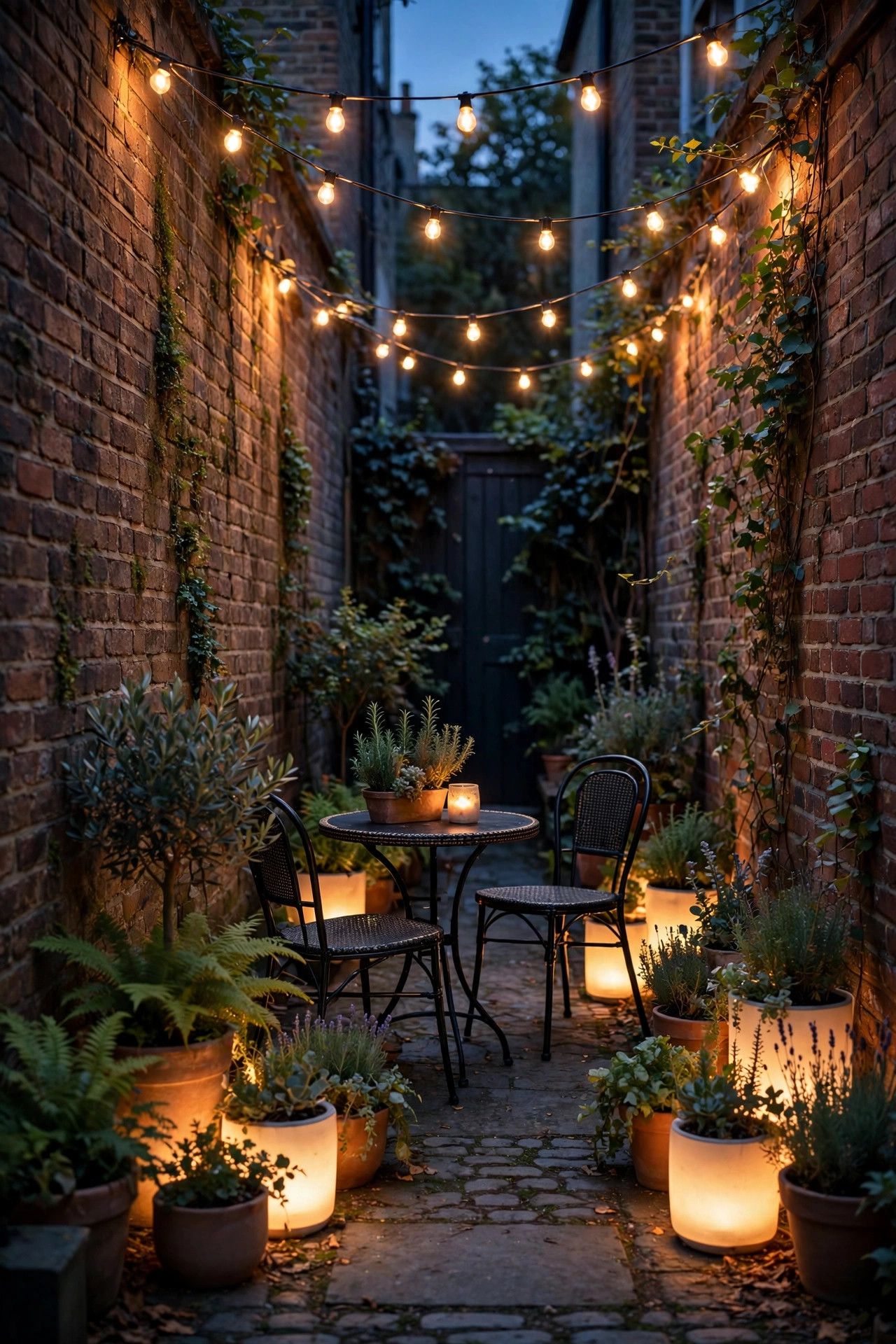
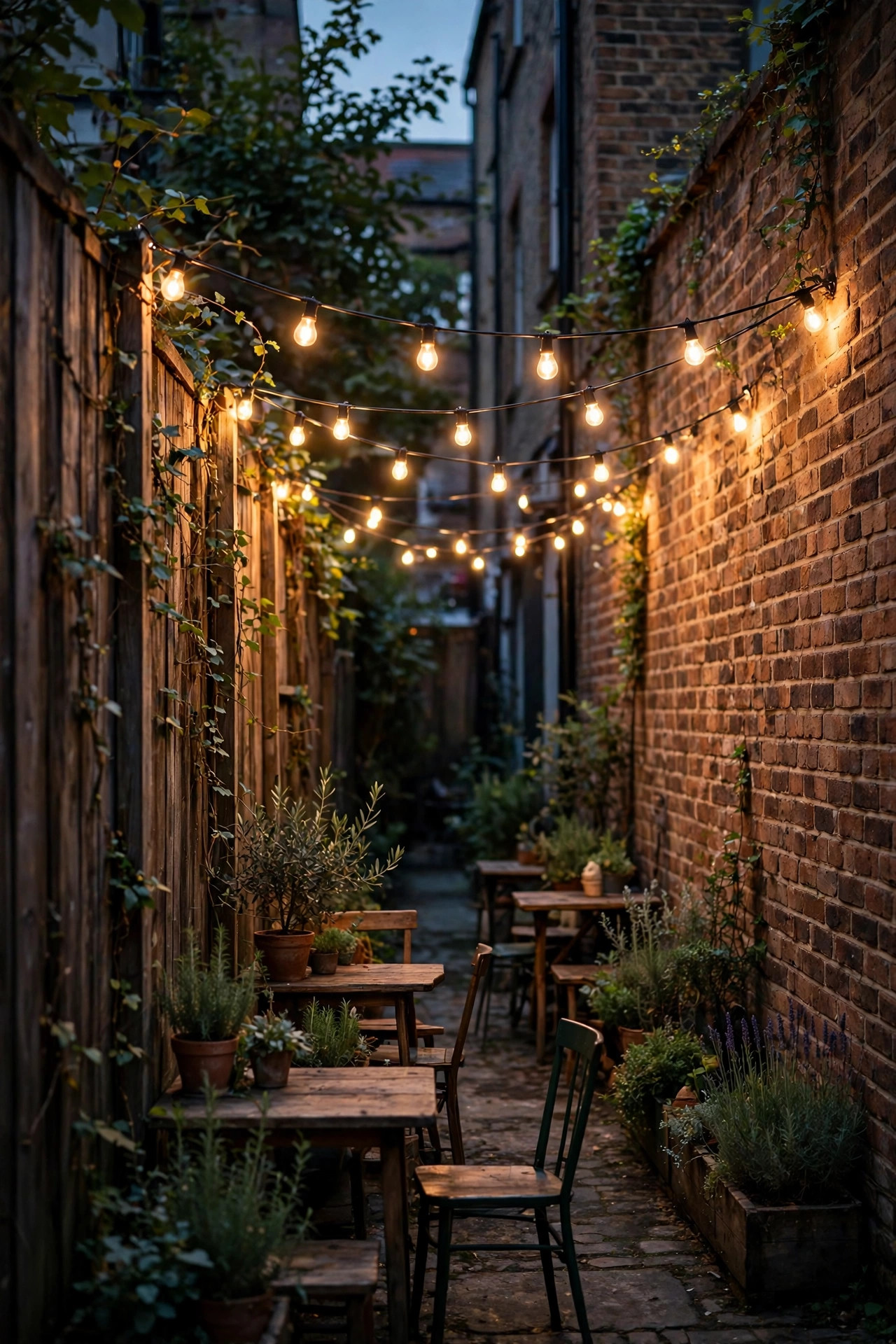
2. String Lights Across the Short Span
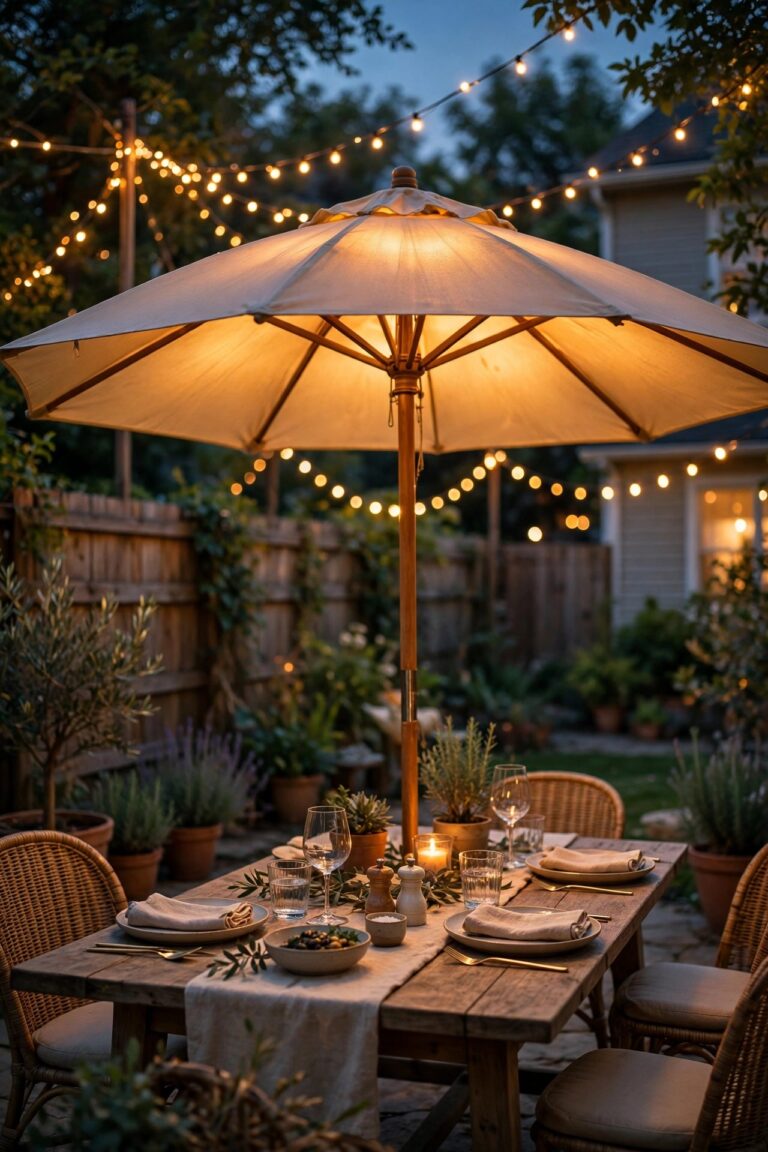
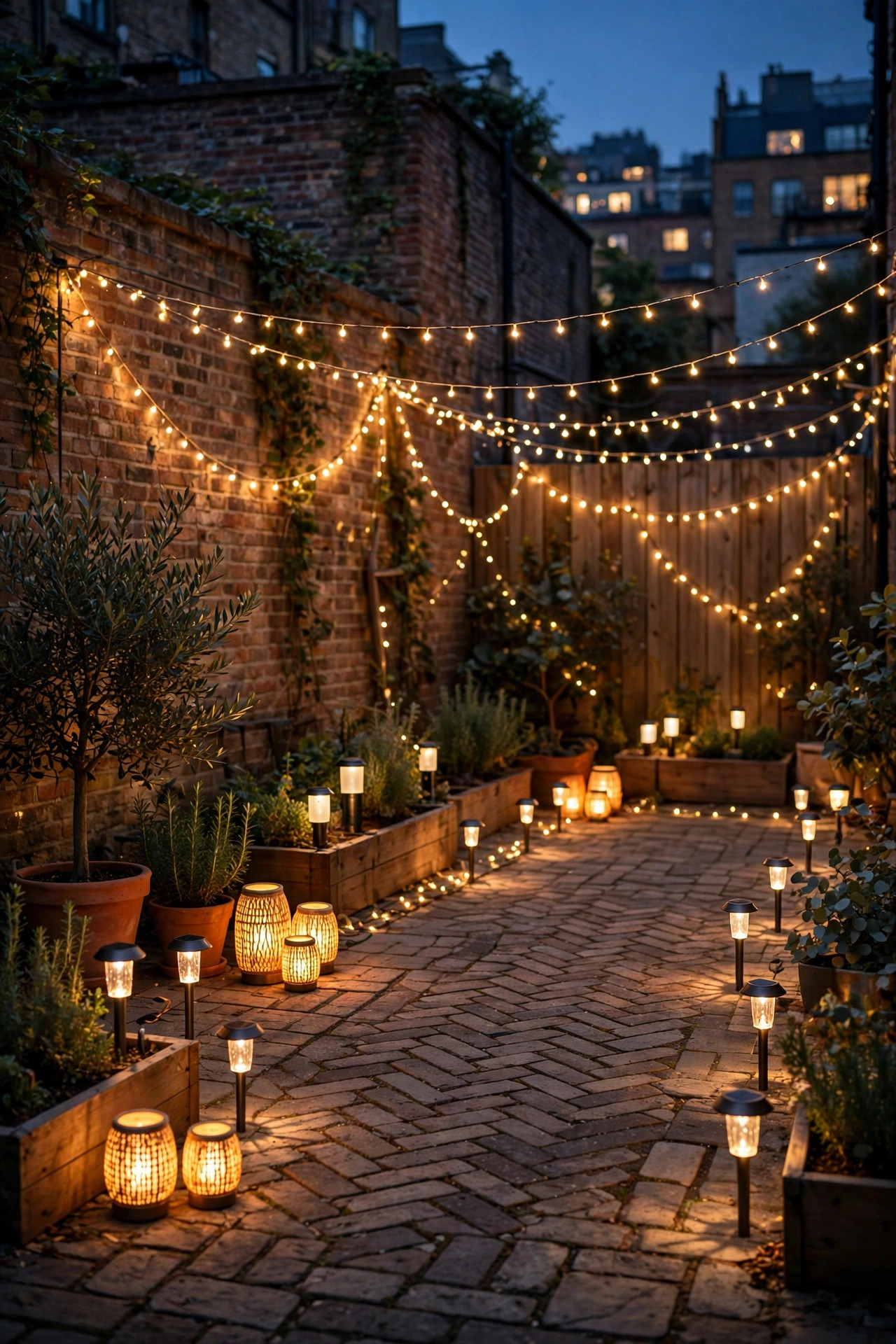
The one gift of a narrow yard is that string lights actually reach. Our fence-to-wall span is 18 feet, so a single strand of commercial-grade café lights crosses it without sagging into head-bump territory. I run two parallel strands about 4 feet apart, anchored with screw hooks into the fence posts and the brick mortar joints, keeping the lowest dip at least 7 feet off the ground. Choose shatterproof LED bulbs in warm white, 2700K, because one broken glass bulb over a small paved yard is a barefoot disaster. Outdoor-rated strands with sealed sockets shrug off city rain, and a strand rated for wet locations will outlast three bargain sets. If you have no second anchor point, a single strand swagged in two gentle dips still gives you that canopy feeling. Plug into a GFCI outlet with a weatherproof in-use cover, and put the strand on a plug-in timer so it lights itself at dusk. In a small space, this one layer does more mood work than everything else combined.
Suggested budget range: $30 – $80.
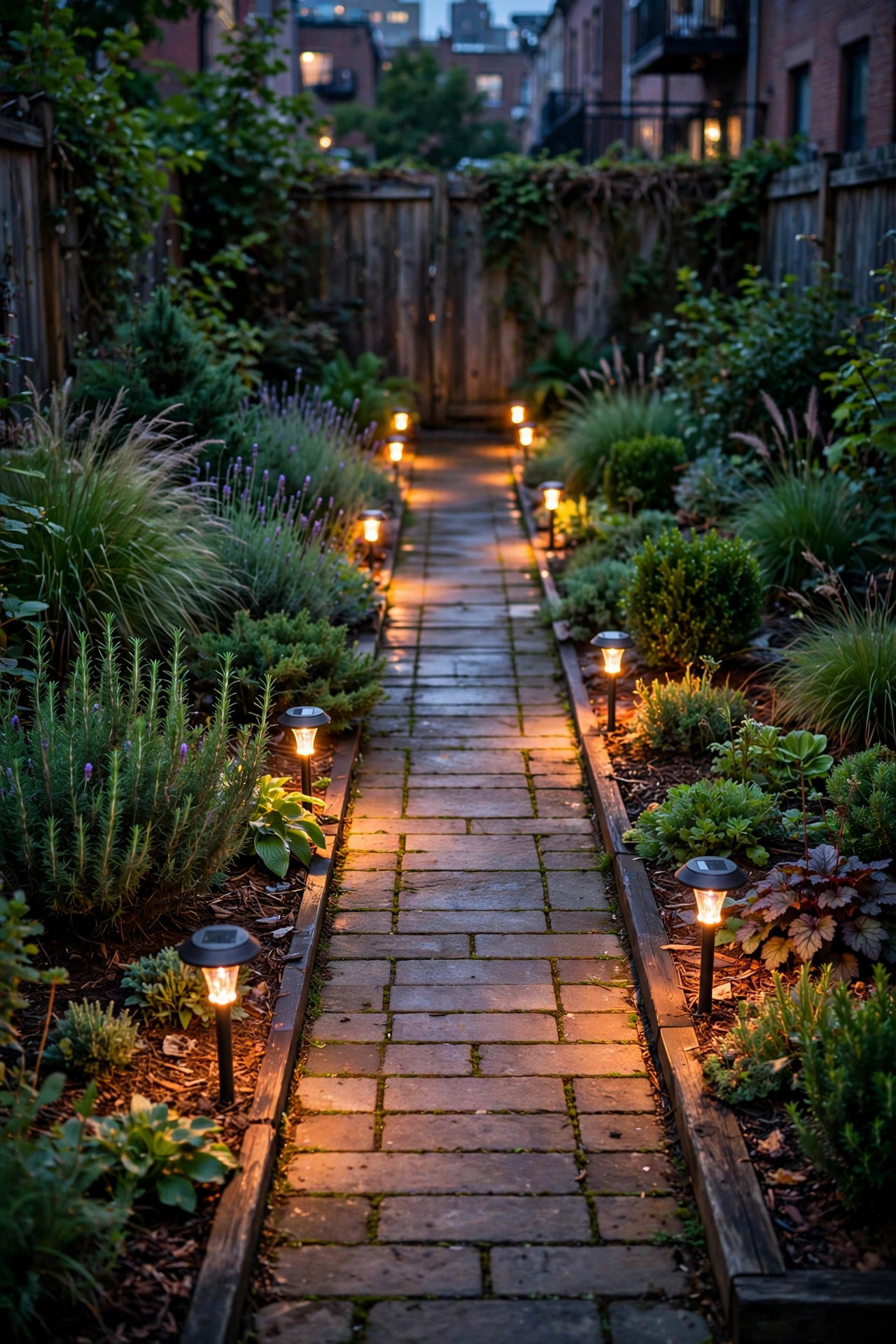
3. Solar Path Lights Down the Narrow Walkway
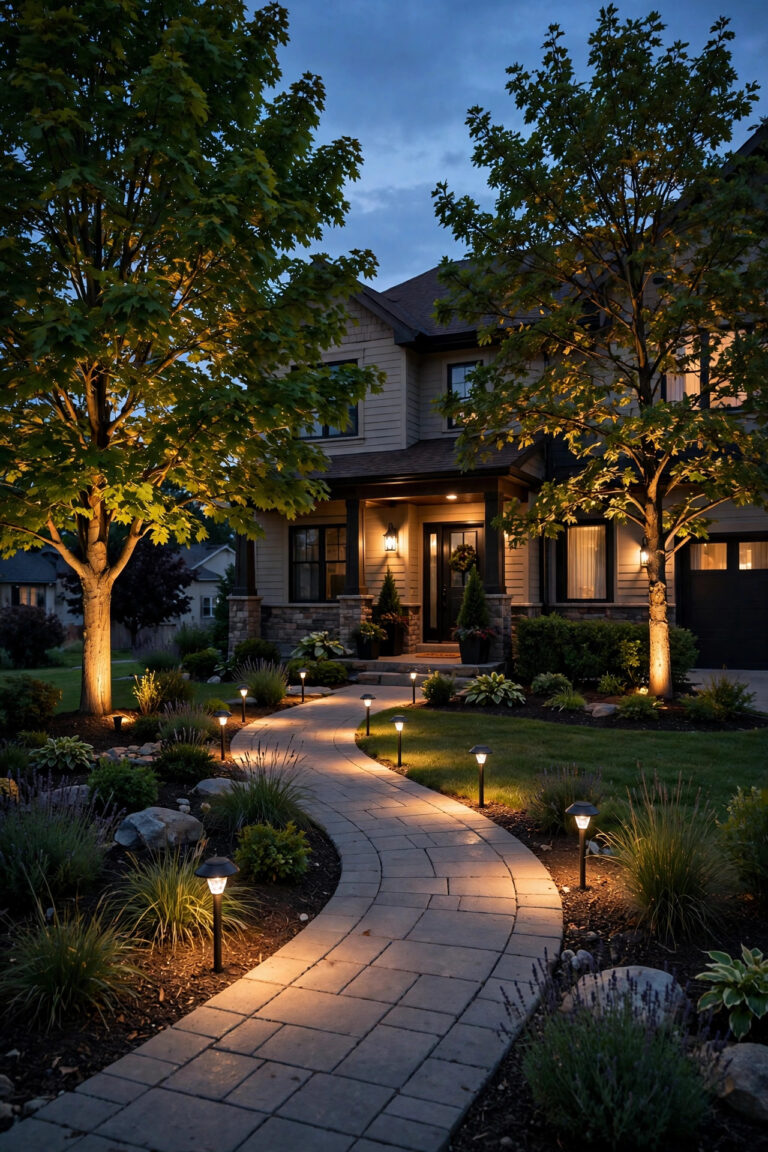
City lots usually have one skinny route: gate to back door, often a strip of pavers barely 3 feet wide between planting beds. That route gets lights first at my house. Solar path stakes pushed in every 5 to 6 feet, staggered on alternating sides, throw overlapping pools of light so there are no dark gaps where a step hides. Look for 40 to 100 lumens per stake; anything brighter in a tight corridor just glares. Plastic or powder-coated stakes survive being clipped by trash bins and delivery carts, which is real life in an urban yard. The honest catch: buildings shade city lots hard, so check that each stake gets roughly six hours of direct sun. Where a shadow wins all day, swap in one low-voltage wired fixture on a small transformer instead and let the solar stakes handle the sunny stretch. Wipe the little panels with a damp cloth every month or two; city grime and pollen dim them faster than you would expect.
Suggested budget range: $25 – $60.
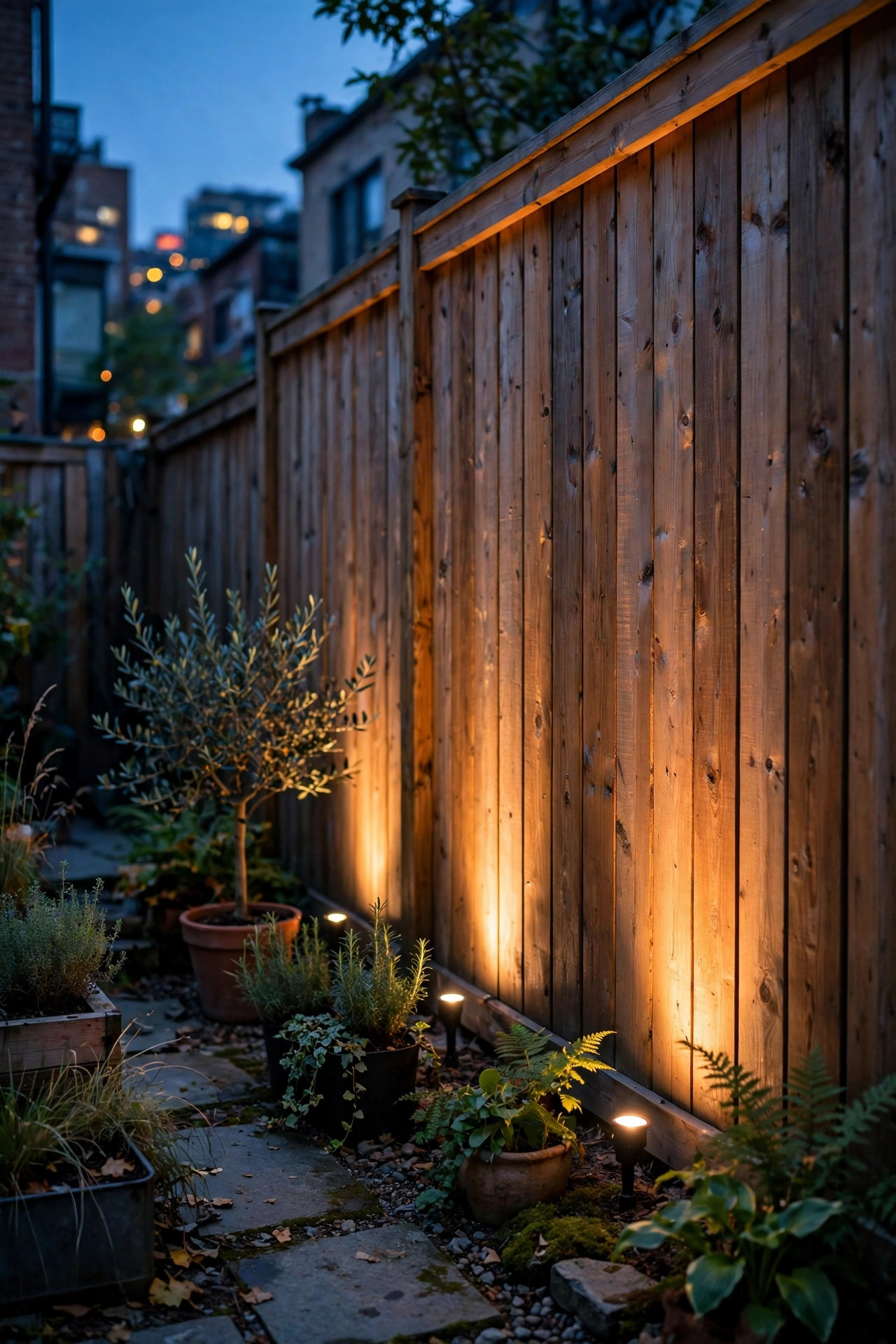
4. Uplight the Privacy Fence Instead of the Sky
In a suburban yard, uplights aim at trees. In a city yard, the tallest beautiful thing you own is often the fence itself, and lighting it is pure magic. Two or three low-voltage spotlights at the base of a wood fence, aimed straight up with a narrow beam, turn flat boards into a warm textured backdrop that makes the whole yard read as a room. Keep the fixtures small, 200 to 300 lumens each, and tuck them behind planters so you see the wash, not the hardware. Gravel or mulch at the fence line catches the light beautifully. This trick also solves the city problem of staring at a blank wall: graze light across brick and it becomes art. Just keep beams inside your own lot; angle them tight to the surface so nothing spills into the windows above. If your fence is chain link, grow a vine or hang outdoor fabric panels first, then graze those instead, because light through open chain link mostly lands in the neighbors yard.
Suggested budget range: $35 – $90.
5. Take Light Vertical With Slim Wall Sconces
Ground space is gold in a city lot, so I steal light from the walls. A pair of slim solar or low-voltage sconces flanking the back door gives you eye-level glow without eating a single square foot of patio. Mount them about 5 to 6 feet up, shields down, so the light pools where faces are instead of glaring into eyes. Solar sconces with a separate little panel work surprisingly well on a south or west wall; on a shaded north wall, wired low-voltage is the honest choice. Match the finish to your door hardware and the pair instantly looks architectural, like the yard was designed rather than accumulated. If you rent, heavy-duty outdoor adhesive mounts and battery sconces exist now and come off clean. Keep the color temperature at 2700K to match your string lights, because mismatched temperatures are the fastest way to make a small space feel chaotic. Two sconces, fifteen minutes, and the back door stops being a dark hole you fall out of with a tray of drinks.
Suggested budget range: $30 – $75.

6. Fairy Lights Through the Container Garden
No soil, no problem. Most urban yards I know are really container gardens on pavement, and every big pot is a lighting opportunity. A strand of copper-wire fairy lights woven through a tall planter or wrapped loosely around a small potted tree gives you sparkle exactly at sitting height, which is the layer small yards forget. The battery packs hide under the pot rim or behind the planter, and solar versions charge on the rim all day. I run one strand through three clustered pots by our bench, and the effect is a soft constellation at knee height that makes the pavement disappear. Use warm white wire lights, not multicolor, unless a party says otherwise. One caution from experience: keep battery packs out of standing water in saucers, and bring the cheapest strands in for winter, because freeze-thaw cycles kill the thin wires. My deeper notes on lighting tight planted spaces live in my roundup of small courtyard lighting ideas, which covers the same close-quarters tricks.
Suggested budget range: $15 – $40.

7. Choose Shielded, Dark-Sky Friendly Fixtures
City lighting has an etiquette problem: your gorgeous glow is your neighbors glare. The fix is shielding. Fixtures with a cap or hood that pushes light down and keeps it in your lot let you run a welcoming yard while the bedroom windows ten feet away stay dark. Look for fully shielded path lights, down-aimed spotlights, and sconces that hide the bulb from any side view. Then do the test I always recommend: stand in the neighbors typical sightline, or as close as you can get, and look back. If you can see a bare bulb, it is too bright or aimed wrong. Warm temperatures help too, since 2700K light reads as gentle at a fraction of the perceived glare of daylight-white. Timers that shut everything down by 11 p.m. keep the peace on weeknights. Honestly, the best compliment an urban yard can earn is a neighbor saying they never notice your lights, only that your place looks cozy. The shielded approach also keeps light on your plants and people instead of washing out the actual night sky.
Suggested budget range: $25 – $70.
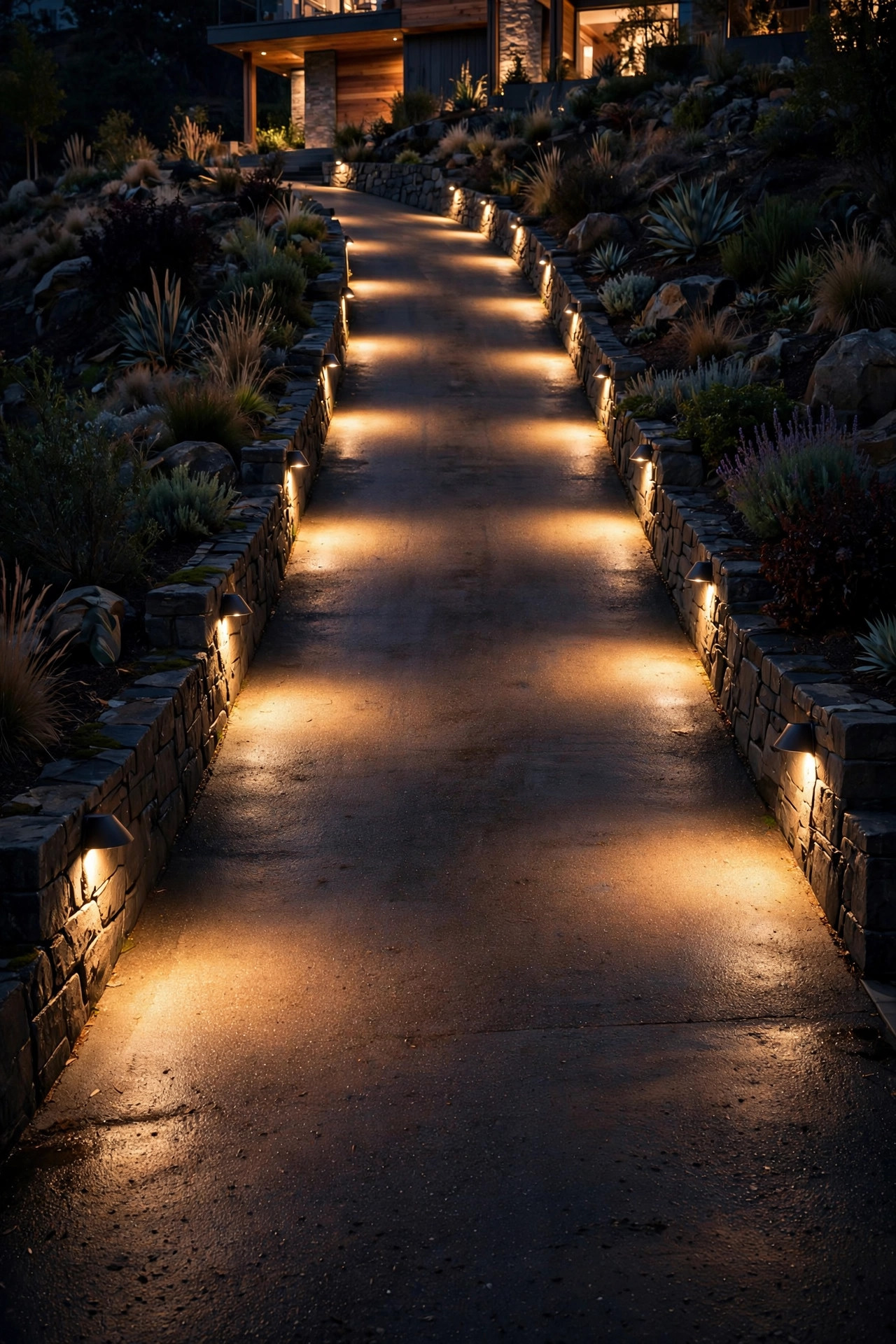
8. Motion-Sensor Light at the Side Gate and Alley
Every city lot has one spot that is more about nerves than mood: the side gate, the alley edge, the gap beside the bins. A solar or battery motion-sensor light mounted 6 to 7 feet up handles it quietly. It pops on for 30 seconds when someone passes, lights the latch and the path, and tells you from the patio that something moved over there. Aim the sensor slightly downward so it reads people at the gate rather than every passing cat, and angle the light into your lot, never down the alley into traffic. Warm white at 200 to 400 lumens is plenty; a harsh blast feels like an interrogation and annoys the whole row of houses. Choose IP44 or better for weather, and check the battery twice a year. This is also the one fixture I let run all night on sensor mode while everything else sleeps on timers, because a dark gate in the city is an invitation nobody wants to send.
Suggested budget range: $20 – $55.
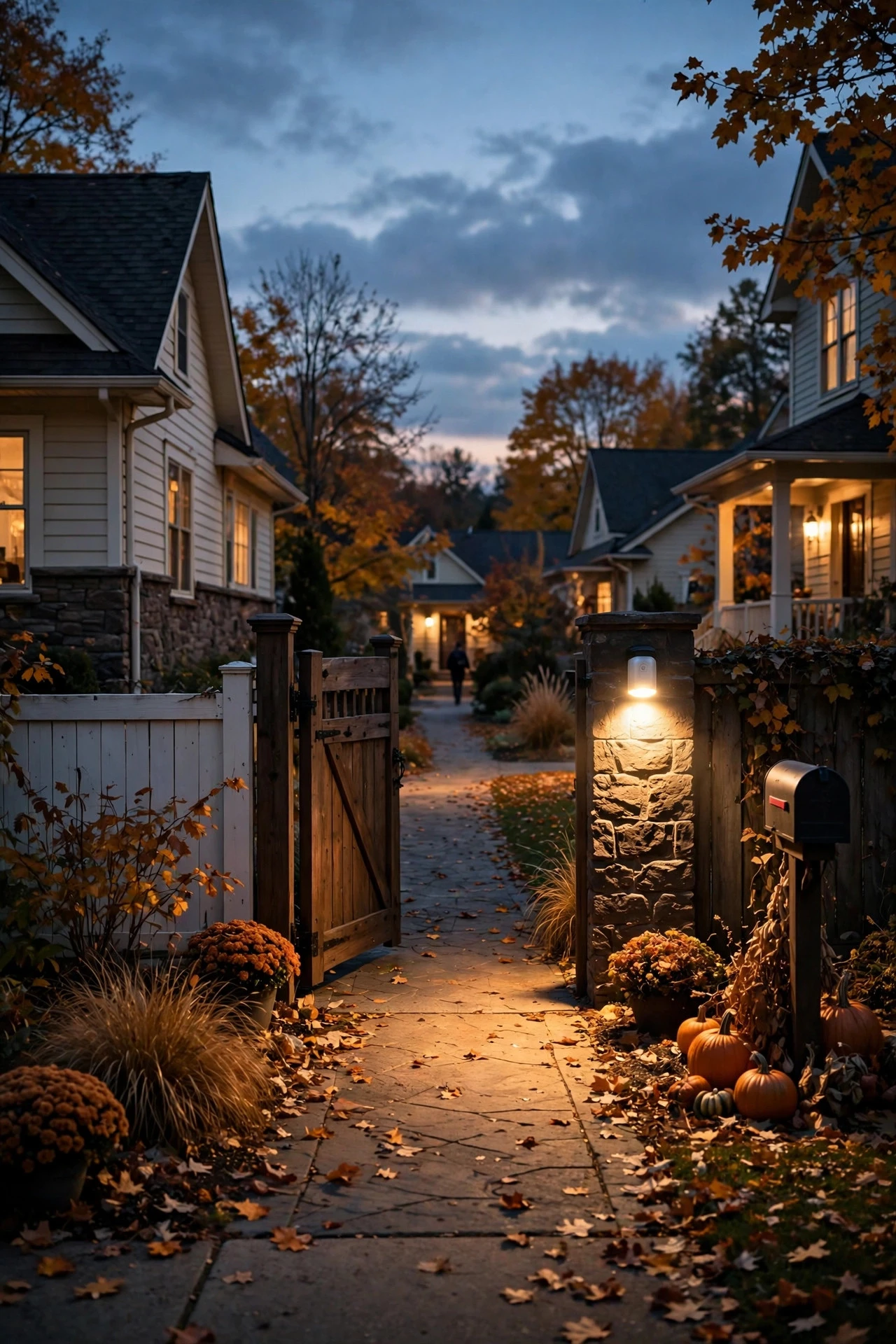
9. String Light Poles in Heavy Planters
No trees, no fence post in the right spot, no problem. The renter-friendly anchor I reach for constantly is a string light pole dropped into a big planter: a sturdy pot filled with gravel and soil, a 9-foot pole set in the center, and plants around the base to hide the mechanics. Two of these define a dining corner anywhere on pavement, and the swag between them hangs at a civilized 7 to 8 feet. Use poles with a proper hook or fork at the top and strands rated for outdoor use, and keep tension gentle so a gust does not take the whole planter for a walk. In my experience, a planter of at least 20 inches across stays put in normal wind; add a few bricks in the bottom if your lot funnels gusts between buildings. The whole setup moves when you move, which is why half the renters I know light their yards exactly this way. My guide to small yard lighting tricks has more no-dig anchors like these.
Suggested budget range: $40 – $110.
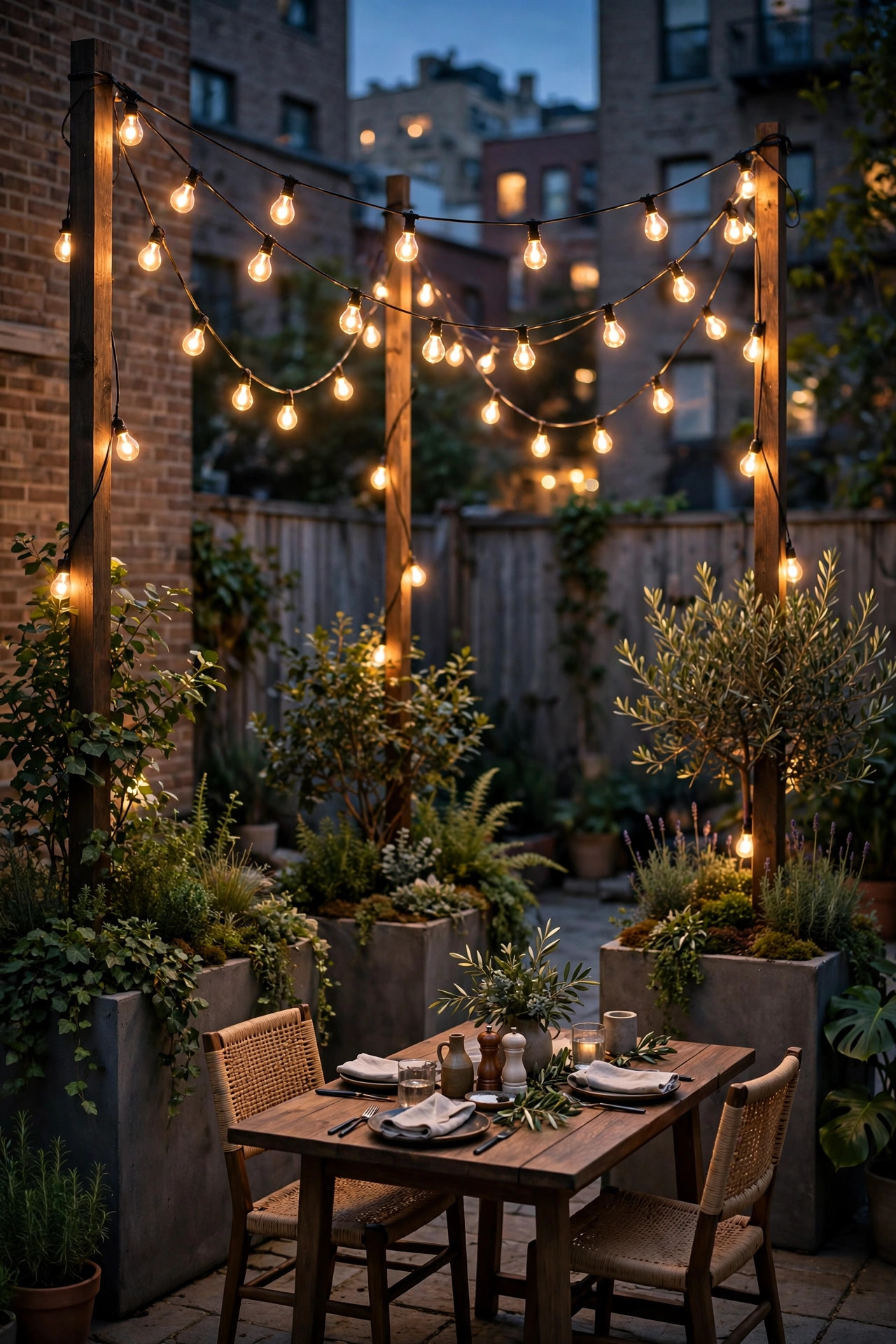
10. Hold One Warm Color Temperature Against the City Glare
City nights come pre-lit: orange streetlights, blue-white security floods, the flicker of a neighbors porch. Your yard will feel calm only if your own lights agree with each other. Pick 2700K, warm white, for everything you control: strings, sconces, path lights, lanterns. The consistency is what makes a small space read as designed, because the eye stops noticing individual fixtures and just relaxes into the glow. When a bulb dies, replace it with the same temperature; a single 4000K bulb in a warm yard shouts. Amber bulbs around 2200K are a lovely exception at the seating area, since insects mostly ignore them and the tone flatters faces and food. Also think about brightness balance against the street: if a streetlight floods one end of your lot, do not fight it with more light. Seat people with that glare behind them and build your warm layers in the naturally darker end, where modest fixtures suddenly look generous.
Suggested budget range: $10 – $45.
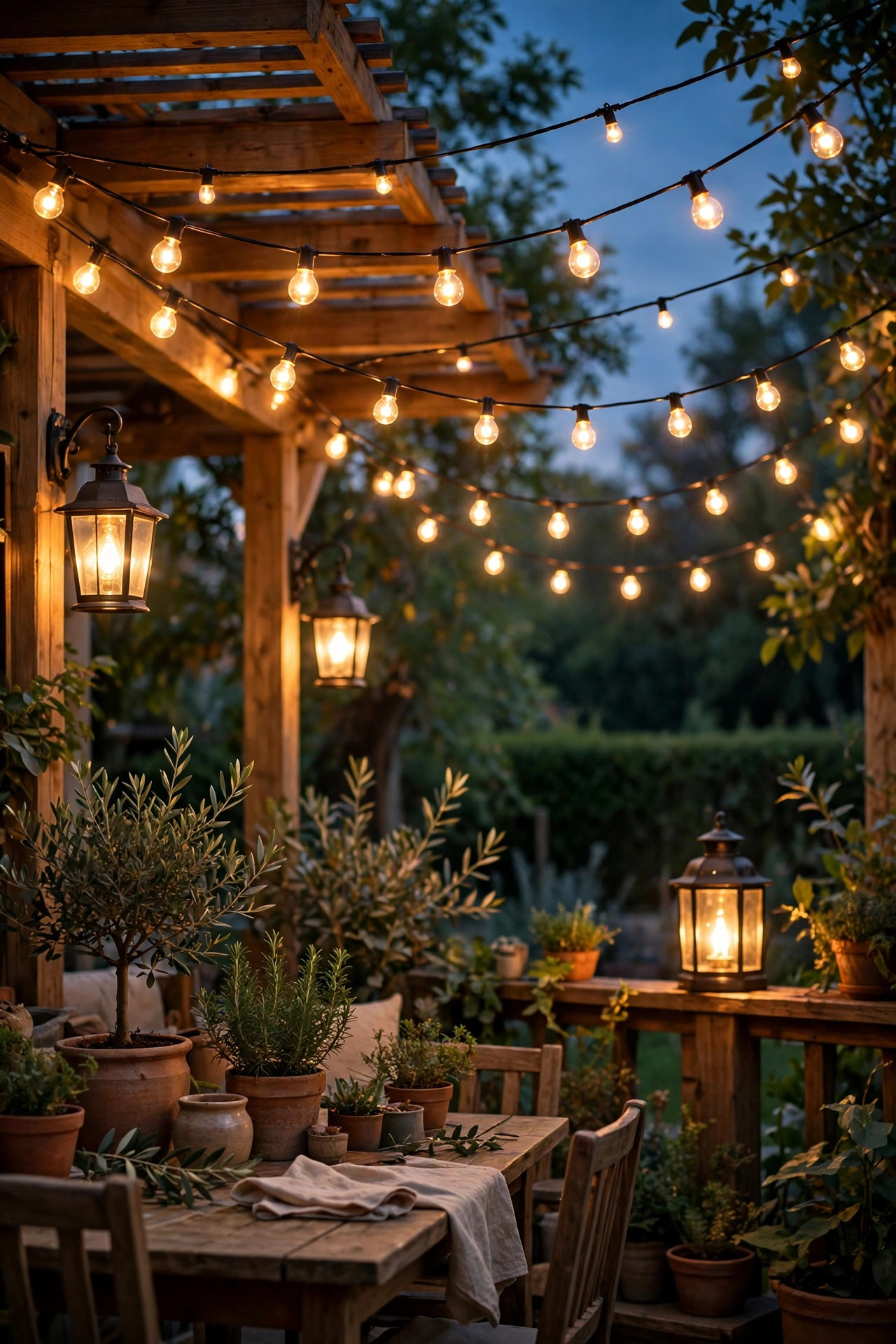
11. Flameless Lanterns for the Tiny Bistro Set
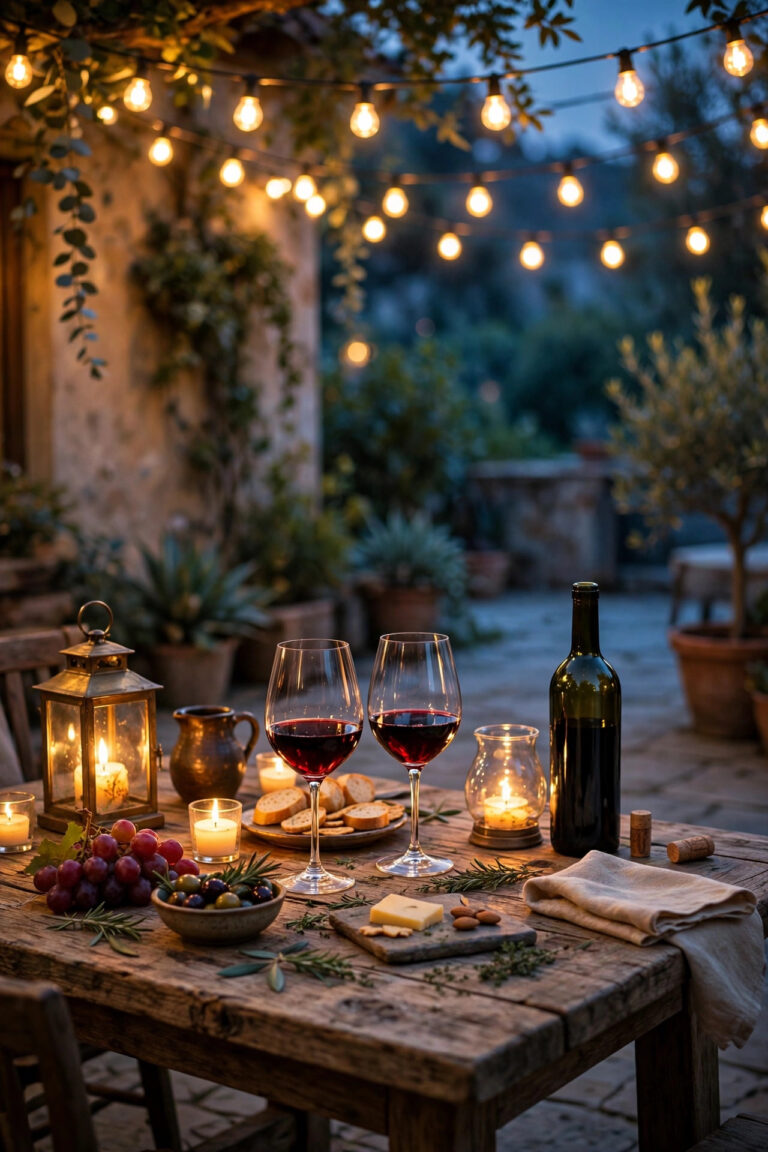
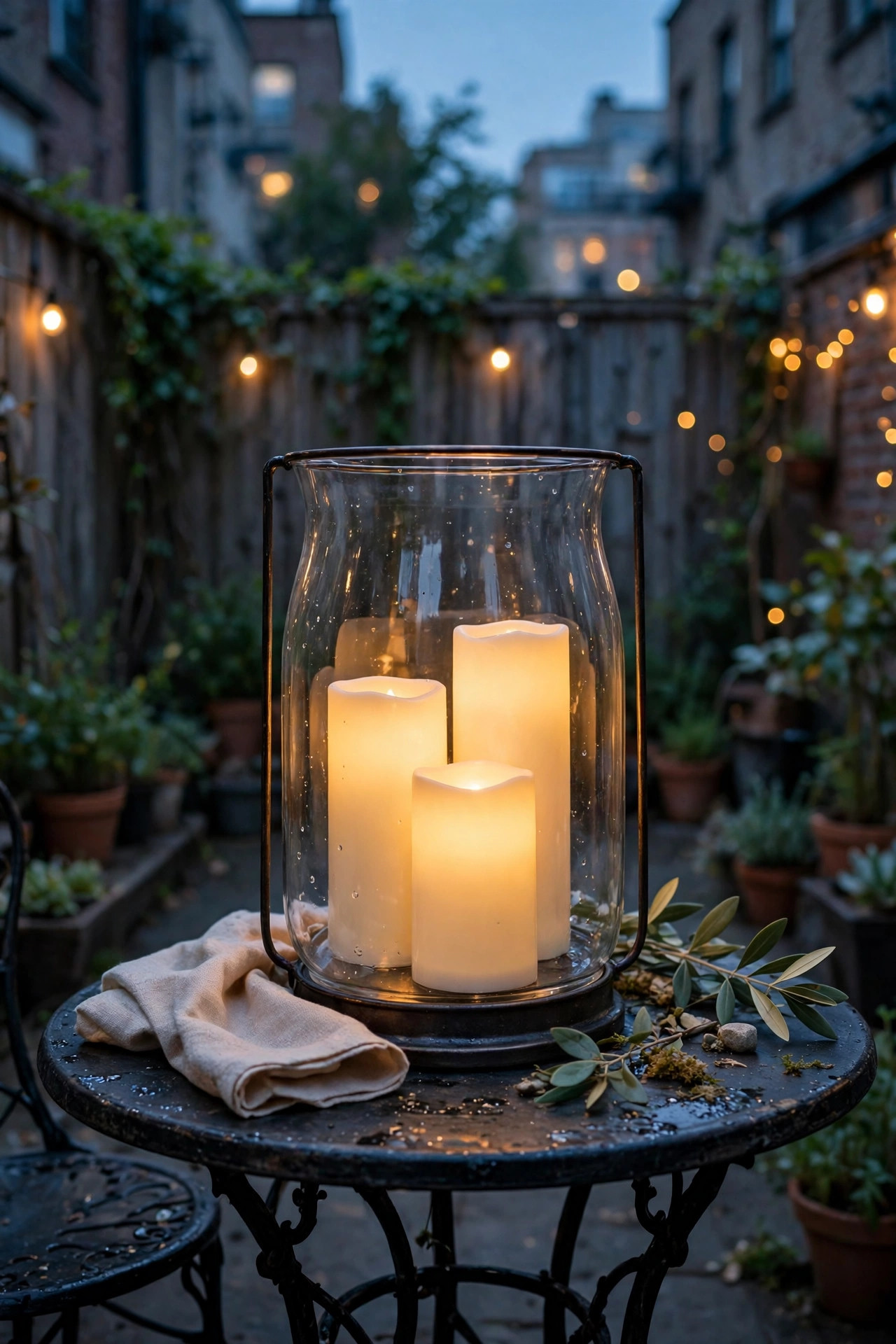
A two-person bistro set is the standard furniture of the urban backyard, and it deserves its own little pool of light. I cluster three flameless LED candles at staggered heights inside one glass hurricane on the table, and the whole seating nook turns intimate without a single real flame near chair cushions or the fence. Flameless is not a compromise in the city; between wind funnels and close neighbors, it is simply the safe call, and good LED candles now flicker convincingly. Off the table, a pair of battery lanterns on the ground flanking the set widens the pool so the nook feels like a destination instead of a lit island. Look for lanterns with timers, set once to come on at dusk for five hours, and you will stop thinking about them entirely. Keep a spare set of batteries in the kitchen drawer, because the night a lantern dies mid-dinner is, in my experience, always the night you have guests.
Suggested budget range: $20 – $50.
12. Step and Edge Lights for Raised Decks and Stoops
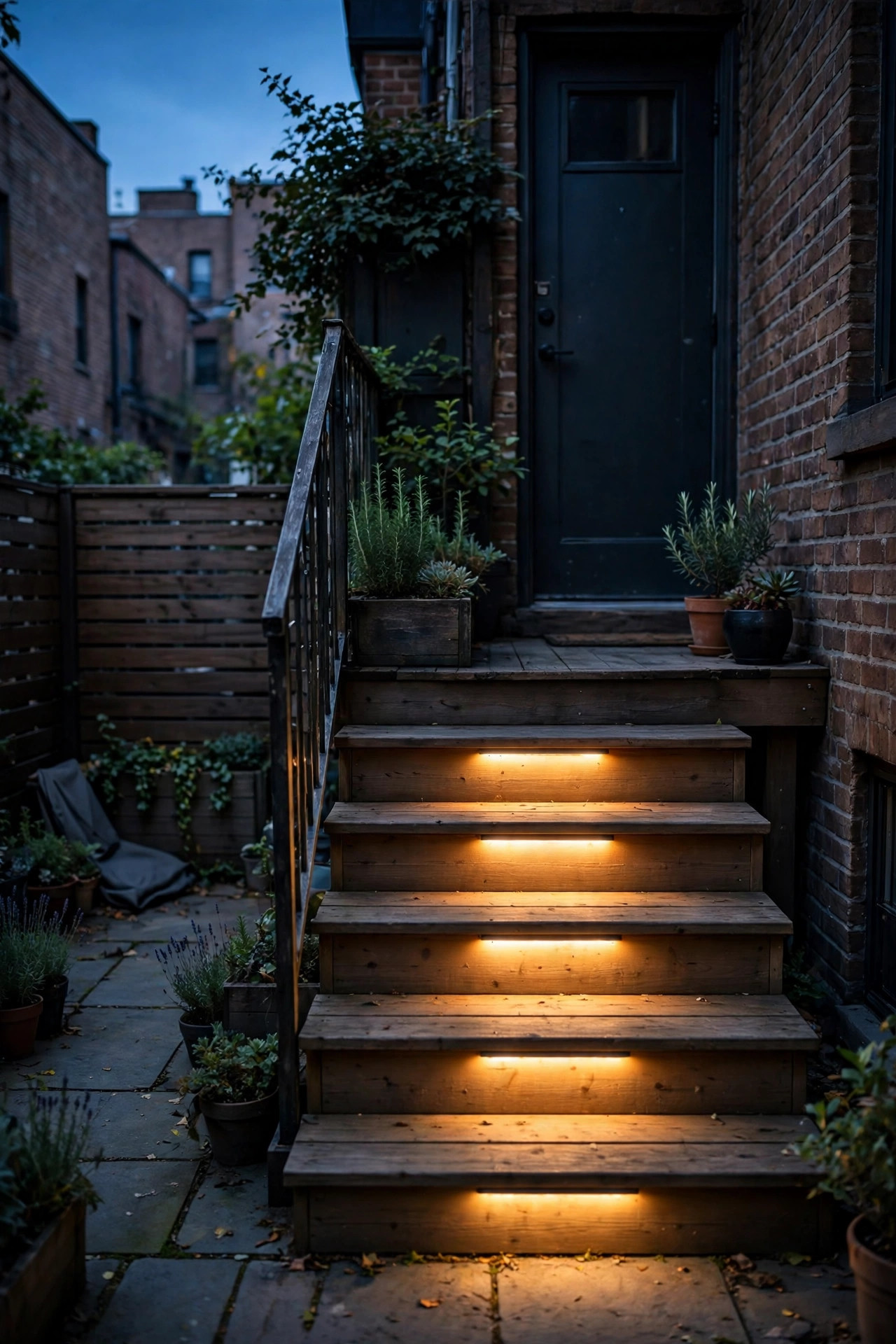
City yards stack levels: a stoop, a raised deck squeezed against the house, one step down to the pavers. Every level change is a trip waiting for a dark evening. Slim LED step lights mounted on each riser, or a low-voltage strip tucked under the deck edge, draw a clean line of light exactly where feet need information. Two fixtures per step is generous; one centered fixture per riser usually does it on a narrow stoop. Solar step lights work if the risers catch sun, but on shaded north-facing steps, wired low-voltage wins and it is not close. Diffused lenses matter here, because a bare LED at ankle height in a small yard is right in your seated sightline. While you are at it, mark the edge of any raised planter or retaining wall the same way; in tight spaces, guests back into things. It is the least glamorous lighting on this list and the kind visitors unconsciously thank you for every single visit.
Suggested budget range: $25 – $70.
13. Bounce Light Off Brick and Light-Colored Walls
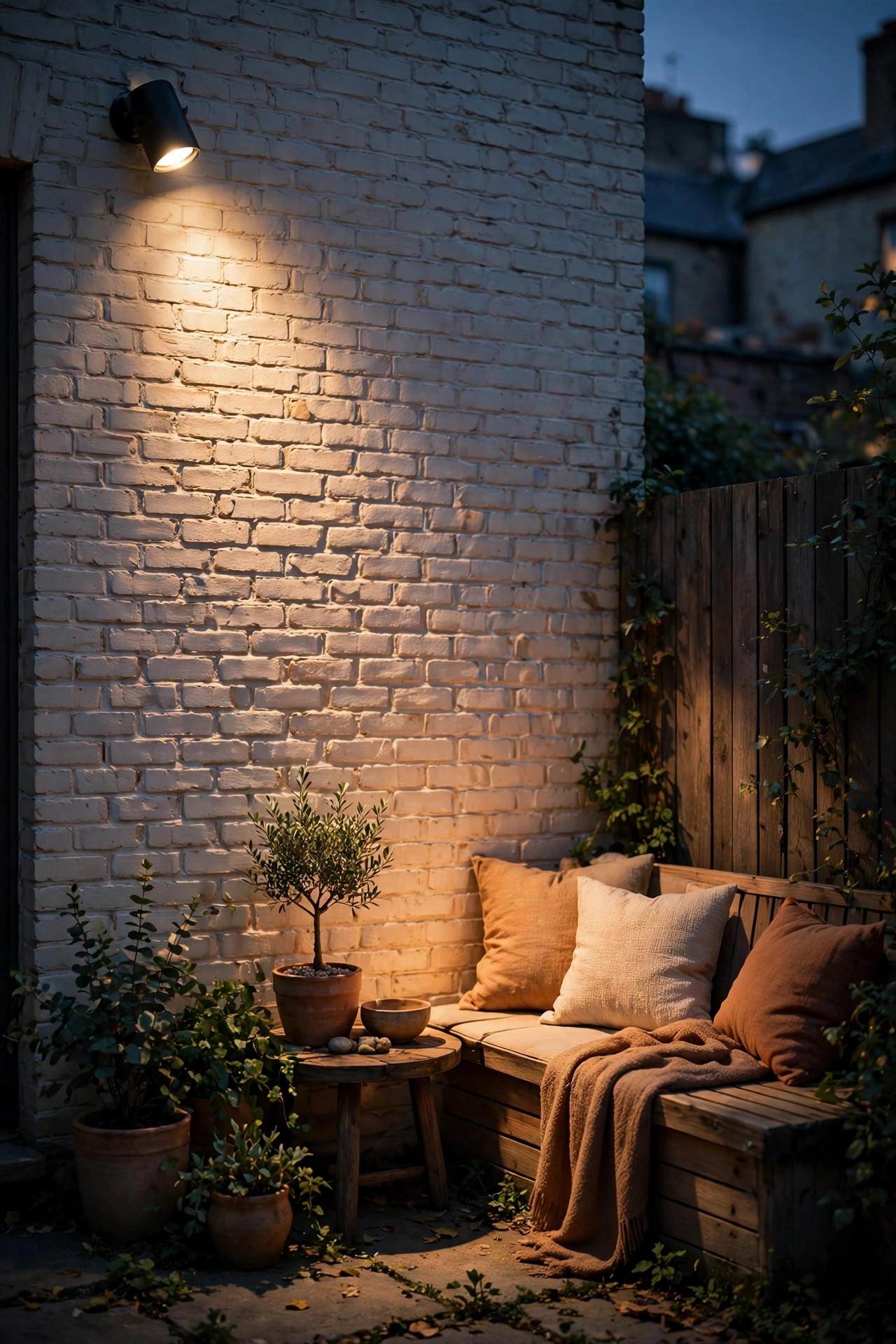
Here is the small-space secret nobody charges for: light-colored surfaces are free fixtures. A single spotlight aimed at a pale brick or painted wall bounces back a soft, shadowless wash that can carry a whole seating corner, and it does it without a single visible bulb to glare at anyone. Our back wall is old cream brick, and one 300-lumen ground spotlight grazing it from 2 feet away lights our whole dining nook more pleasantly than an overhead strand would alone. The bounce also stretches your layers, because the wall glow counts as both backdrop and eye-level light. Dark fences absorb light instead, so if your lot is all dark wood, hang a light outdoor panel, a pale trellis, or even a cream-colored shade sail fragment where you want the bounce. Experiment before you commit: prop the fixture, live with it two evenings, then mount. In a yard this small, one well-aimed bounce beats four new fixtures scattered in hope.
Suggested budget range: $20 – $60.
14. Go Cordless Where the Outlet Situation Is Hopeless
Old city houses are famous for exactly one outdoor outlet, usually in the worst place, and sometimes none at all. That is not a dead end anymore. Solar stakes, solar sconces, battery lanterns, and USB-powered strands off a chunky power bank can layer a whole small yard with zero wiring. I run our planter fairy lights and two lanterns on rechargeables, charge day is Sunday, and the system has not failed us yet. For anything plug-in, run one outdoor extension cord neatly along the fence base to a weatherproof power strip with a cover, never across the walking route, and always into a GFCI outlet. The full playbook lives in my notes on backyard lighting with no outlet, which walks through the solar-first layout I copied. Honestly, a cordless yard also changes how you use it: you stop planning evenings around where the cord reaches, and the far corner finally joins the party.
Suggested budget range: $30 – $85.
15. Finish With a Street-Level Check of Your Urban Backyard Lighting Ideas
When everything is installed, do the two walks that tell the truth. First, the inside walk at sitting height: settle into each seat with a drink and look for bare bulbs in your eyeline, dark gaps on the walking route, and any fixture your knees meet in the dark. Second, the outside walk, the one most people skip: step into the alley or onto the sidewalk and look at your yard the way the neighborhood sees it. You want a warm glow behind the fence line, not searchlights. Any beam escaping upward or outward gets re-aimed or shielded tonight, not someday. Check your timers against the actual sunset, since a strand blazing at noon in July makes the whole street think you forgot. Then invite the toughest critic you know, which in a city lot is usually the neighbor whose window faces you, and ask if it ever bothers them. Great urban backyard lighting ideas all end the same way: a yard that glows for the people inside it and stays invisible to everyone else.
Suggested budget range: $0 – $25.
Frequently Asked Questions
What color temperature works best in a small city backyard?
Warm white, 2700K, is my recommendation for every fixture you control. It flatters faces and food, reads as cozy against brick and wood, and produces far less perceived glare for close neighbors than daylight-white bulbs. Use amber 2200K bulbs only as an accent at the seating area if bugs are a problem.
Are solar lights bright enough for a shaded urban lot?
For paths and accents, yes, modern solar stakes in the 40 to 100 lumen range handle wayfinding well after a sunny day. The honest limit is shade: a stake under a building shadow all day will underperform. Put solar where it truly gets about six hours of sun and use one low-voltage wired fixture as the anchor in the permanently shaded stretch.
How do I keep my lights from bothering close neighbors?
Shield and aim. Choose fixtures that hide the bulb and push light downward, keep beams inside your lot lines, and run everything on timers that shut off by about 11 p.m. Then check from the sidewalk or alley yourself. If you can see a bare bulb from outside your fence, your neighbors can too.
How much does it cost to light a small urban backyard?
Most city lots come together for $150 to $400 total. A string light canopy, six to eight path lights, two sconces, and a lantern set cover the three layers in a typical 20-by-30-foot yard. Spend first on the walking route and the seating glow; decorative accents can arrive one paycheck at a time.
Conclusion
Every one of these urban backyard lighting ideas comes back to the same principle: layers, held low and warm, inside your own fence line. Trace the walking route, pool light where people sit, add one sparkle layer overhead, and a 20-foot city lot stops feeling like a corridor and starts feeling like a room. Start with the path and the bistro nook this weekend, then let the fence uplights and wall bounce join as the season goes on. Browse the rest of the ideas here on the site when you are ready for round two; there is a whole small yard left to glow up, and yours is next.