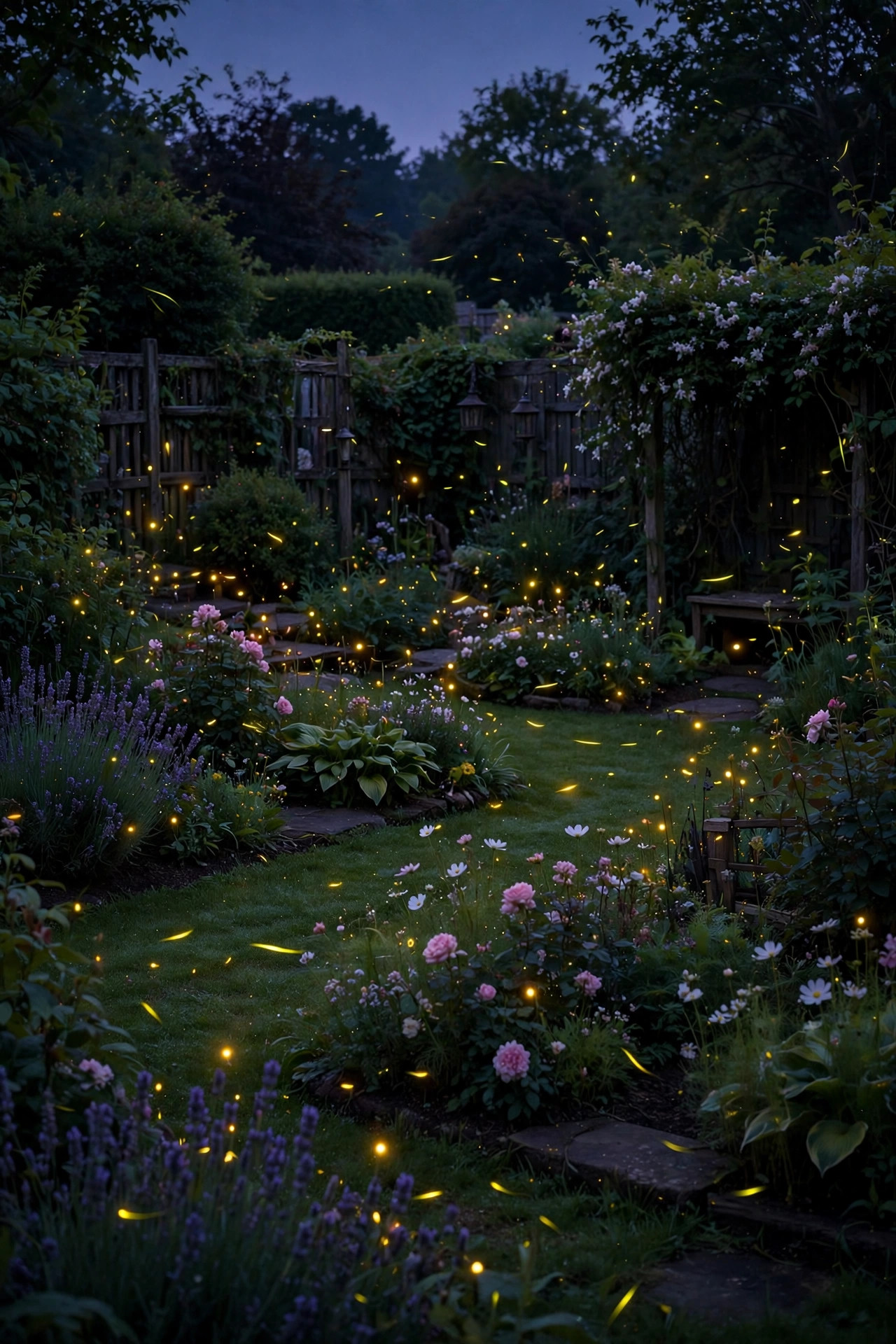
There is a moment every June when my garden does something no fixture can imitate: the fireflies rise out of the grass at dusk and the whole yard starts to twinkle. Honestly, it is my favorite show of the summer, and I plan my garden lighting around not ruining it. That is exactly what firefly friendly garden lighting is about. Bright white light washes out the little flashes males use to signal females, so a garden lit like a parking lot can go strangely quiet. The fix is not giving up garden lighting — it is layering it gently: warm amber tones instead of cool white, light aimed down and only where feet actually go, and timers that hand the night back to the bugs by ten. Below are the 15 setups I use to keep paths safe, seating cozy, and the firefly show running from June through July. Most are cheap, many are solar, and every one leaves room for the magic.

1. Firefly Friendly Garden Lighting Begins With a Dark Zone
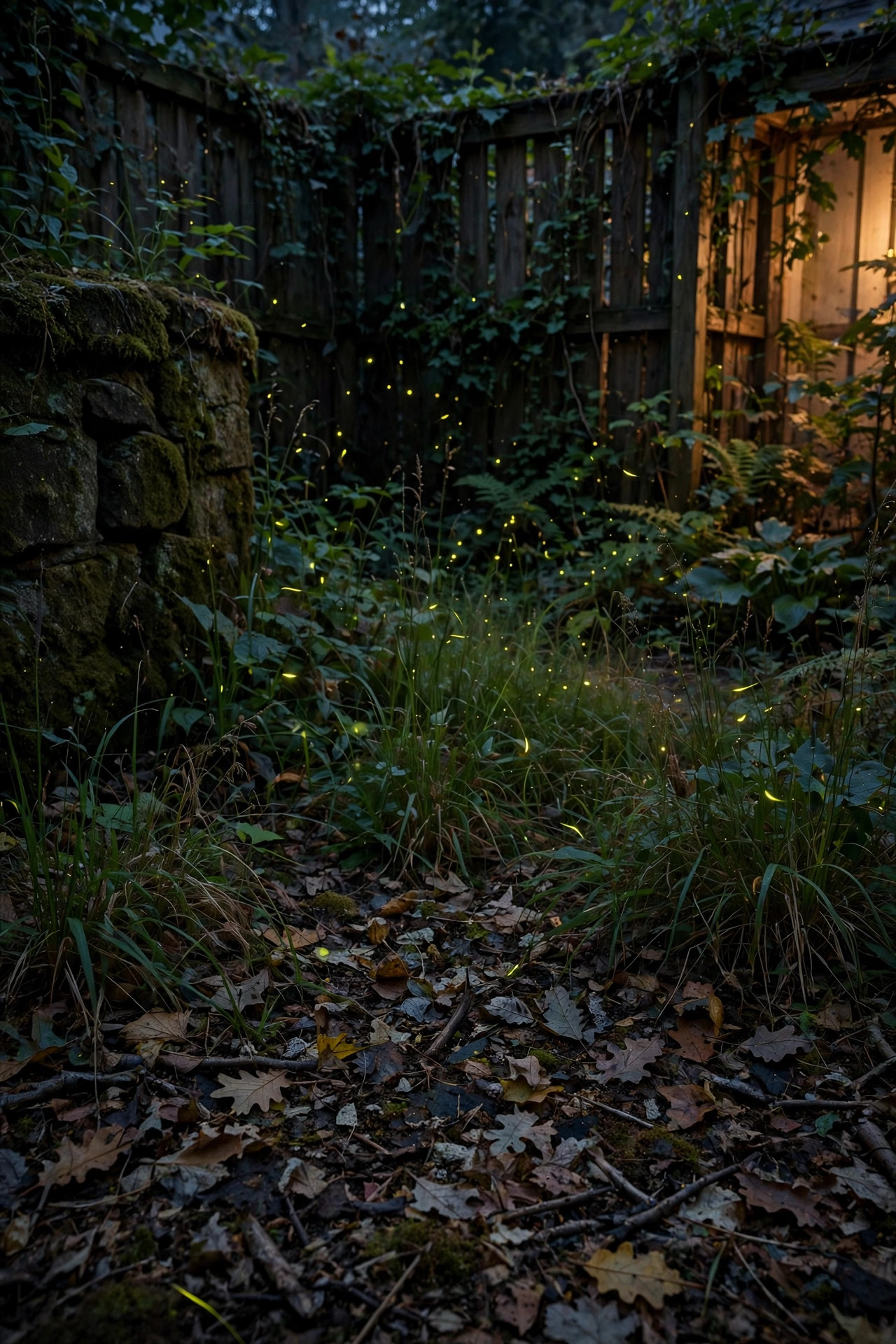
Before I place a single fixture, I walk the yard at dusk and choose the corner the fireflies already love — usually the least tidy spot: unmowed grass along the fence, a leaf-litter bed under the shrubs, the damp low patch by the compost. That corner becomes my dark zone, and no light goes in it, ever. Fireflies spend most of their lives as larvae in leaf litter and moist soil, and the adults gather where it is darkest to flash their signals. A completely unlit refuge means the show survives no matter what I light elsewhere. I leave the grass long there from May through July, skip raking the leaves out from under the shrubs, and never spray that patch. If you garden on a small lot, even a 6-by-10-foot strip along the back fence works. I think of it as reserving the best seats for the performers. Everything else in this list exists to light the people areas — paths, patio, steps — while this corner stays wild, dim, and full of tiny green flashes.
Suggested budget range: $0 – $25.
2. Swap Cool White Bulbs for Amber and Warm White
Fireflies flash in yellow-green, and their eyes are most confused by blue-rich light — which is exactly what cool white and daylight bulbs pour out. Warm light is far gentler. In my garden, every bulb that stays on during firefly season is 2700K or warmer, and the fixtures closest to the beds get true amber bulbs, the deep honey-colored ones around 2200K. Amber barely registers to a firefly, and honestly it makes the garden look like candlelight. Swapping is simple: check the Kelvin number on the box, choose 2700K or below, and keep lumens modest, 200 to 450 per bulb for accent fixtures. My full breakdown of warm tones lives in my guide to 2700K warm white outdoor lighting, including how to spot the blue-spike bulbs hiding behind pretty packaging. One caution: avoid ultraviolet bug zappers anywhere near the garden. They do not distinguish moths from fireflies, and a single zapper can empty a corner of the yard in a week. Warm, low, and amber always wins.
Suggested budget range: $15 – $50.
3. Put Every Light on a Timer That Quits at Ten
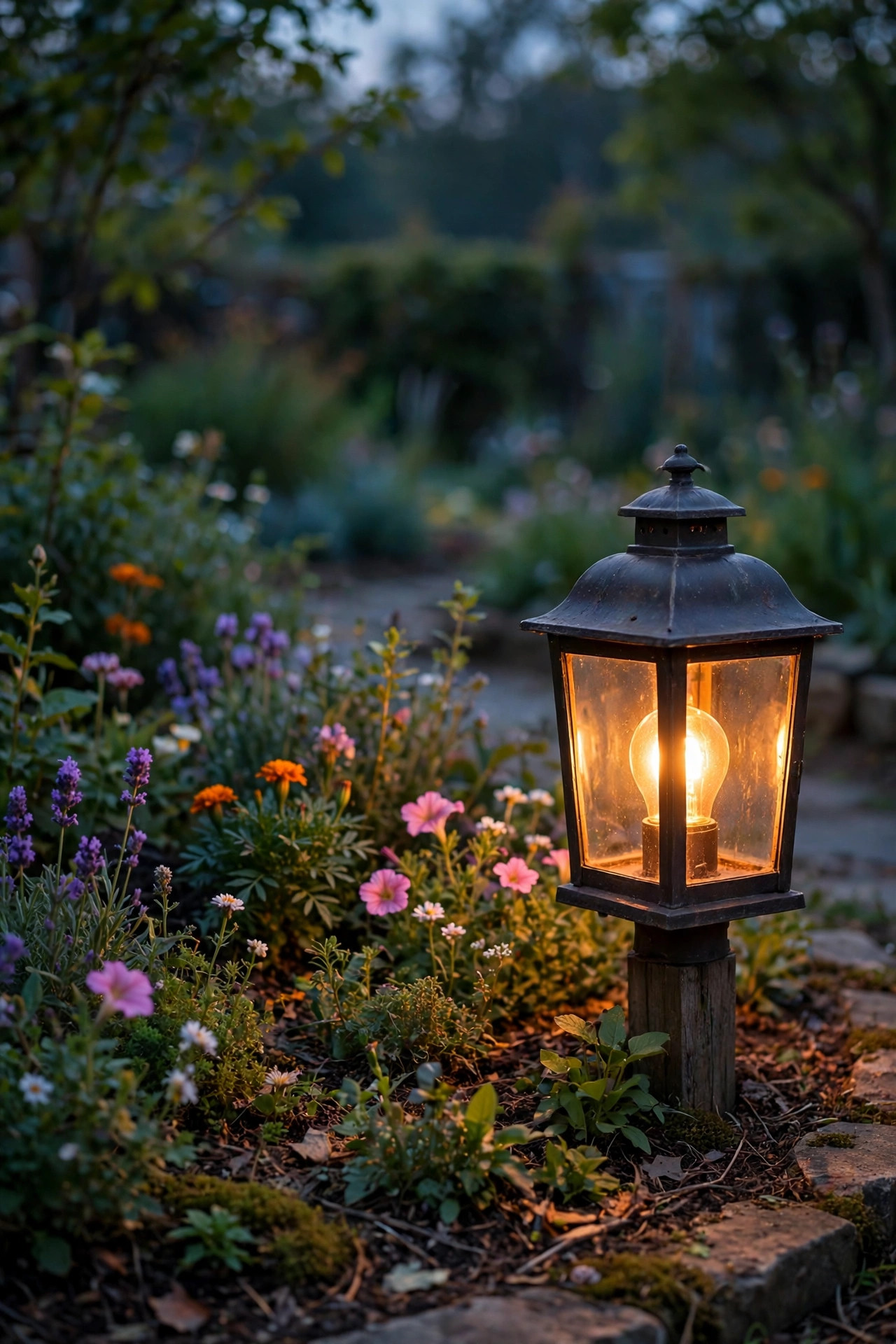
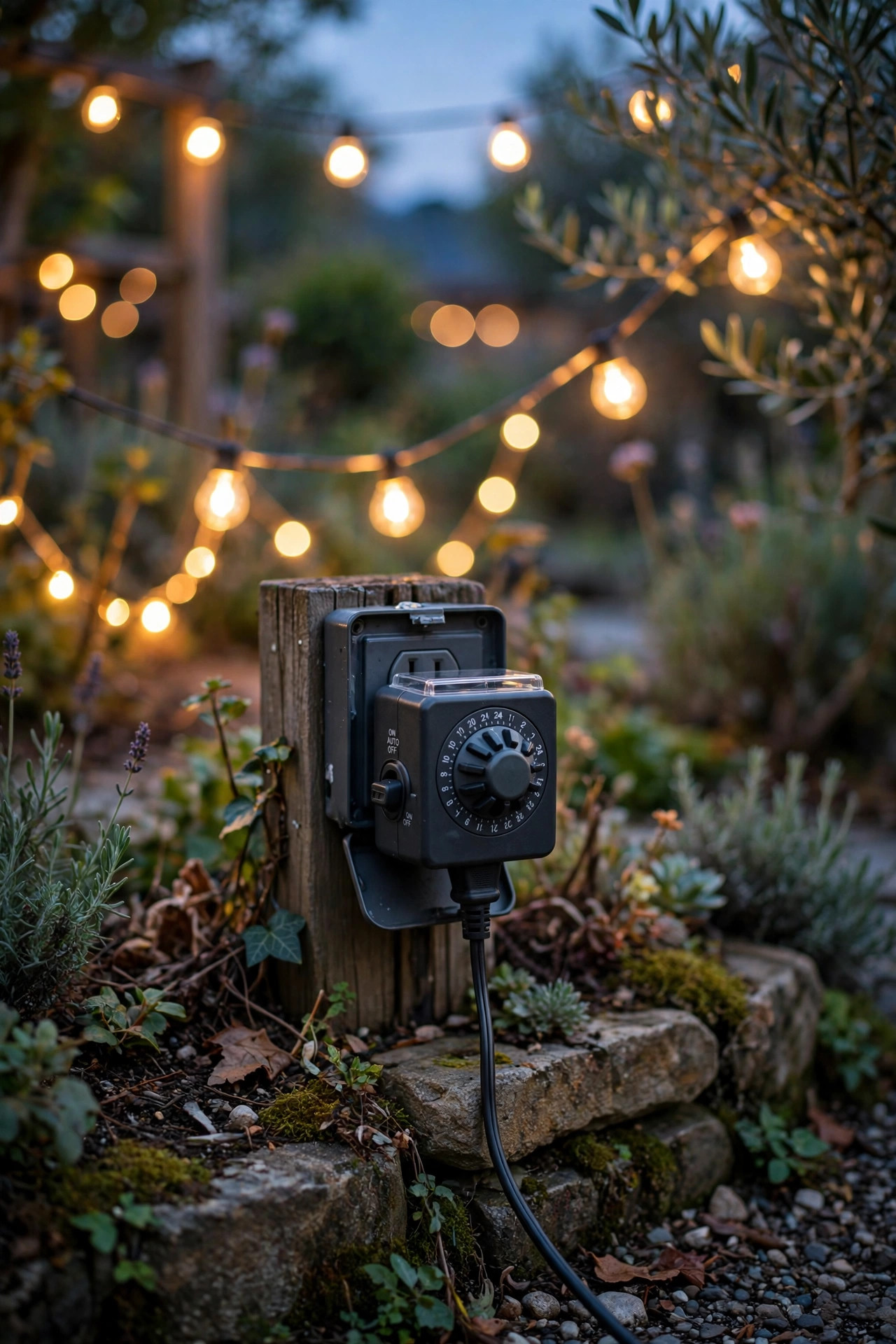
Fireflies do their courting in the first few hours after sunset, roughly dusk to about 10 or 11 p.m., depending on the species. That gives us a lovely compromise: enjoy the garden lights at dinner, then let the yard go dark for the main event. Every circuit in my garden runs on a timer set to switch off at 10 p.m. sharp during June and July. A simple plug-in mechanical timer costs a few dollars and handles string lights and low-voltage transformers; an astronomical timer is even better because it tracks sunset as the days shift. If your lights are solar, choose models with an off timer or a remote, since the always-till-dawn kind keep glowing right through peak flashing hours. I keep one exception: a single dim lantern by the back steps, on a motion sensor, for late trips with the dog. Everything else rests. Honestly, the 10 p.m. lights-out has become a ritual at our house — we pour something cold, sit on the steps, and watch the yard take over the lighting design.
Suggested budget range: $10 – $40.
4. Choose Shielded Fixtures That Aim Down, Never Out
Where a fixture points matters as much as how bright it is. An exposed bulb throws light in every direction — into the trees, across the lawn, and straight into the eyes of every beetle trying to find a mate. Shielded fixtures fix this by hiding the bulb inside an opaque cap or housing so the light only goes down, where feet and steps actually need it. When I shop, I look for full-cutoff or hooded designs and I check the fixture at arm's length at night: if I can see the bare bulb from the side, the fireflies can too. My post on dark sky outdoor lighting goes deeper on shielding, and the same habits that please astronomers please fireflies. For existing fixtures, screw-in bulb shields, metal barn-style shades, and even a simple strip of opaque tape across the top half of a globe can cut the spill dramatically. Aim spotlights at trunks and stone, never out across open grass. The goal is pools of light on the ground, with darkness in between for the show to happen in.
Suggested budget range: $30 – $120.

5. Pick Deliberately Dim Solar Stakes
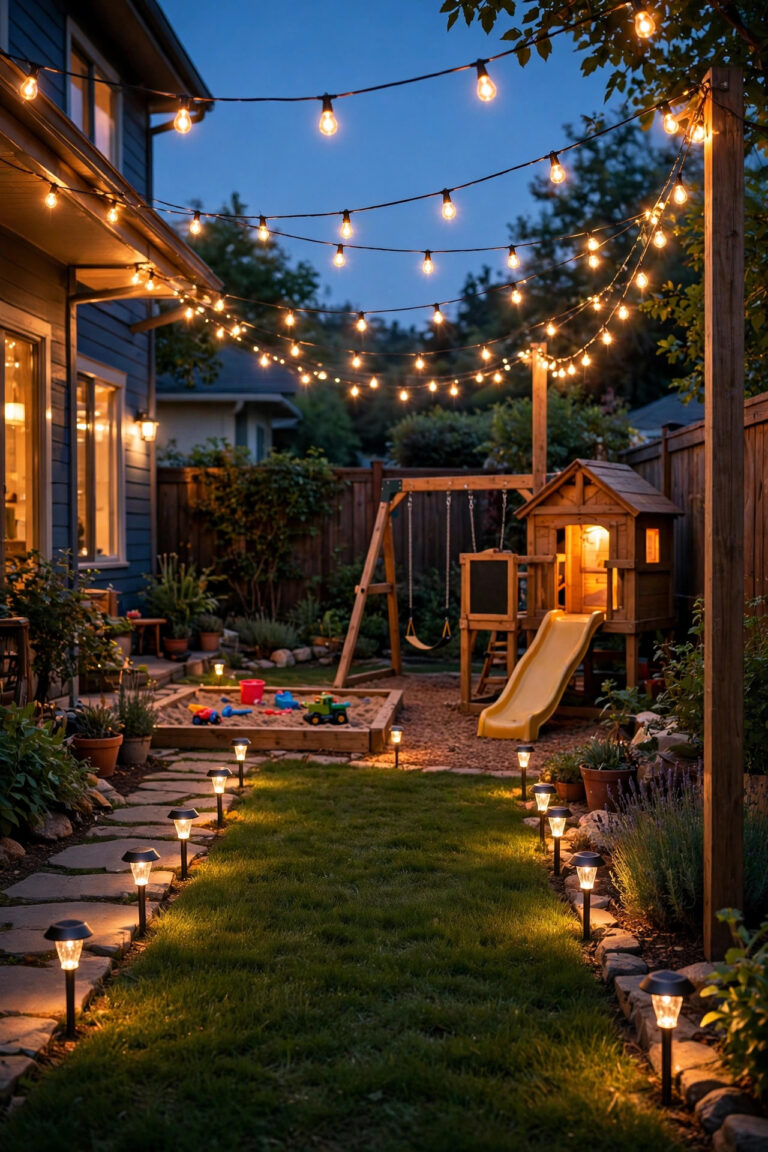
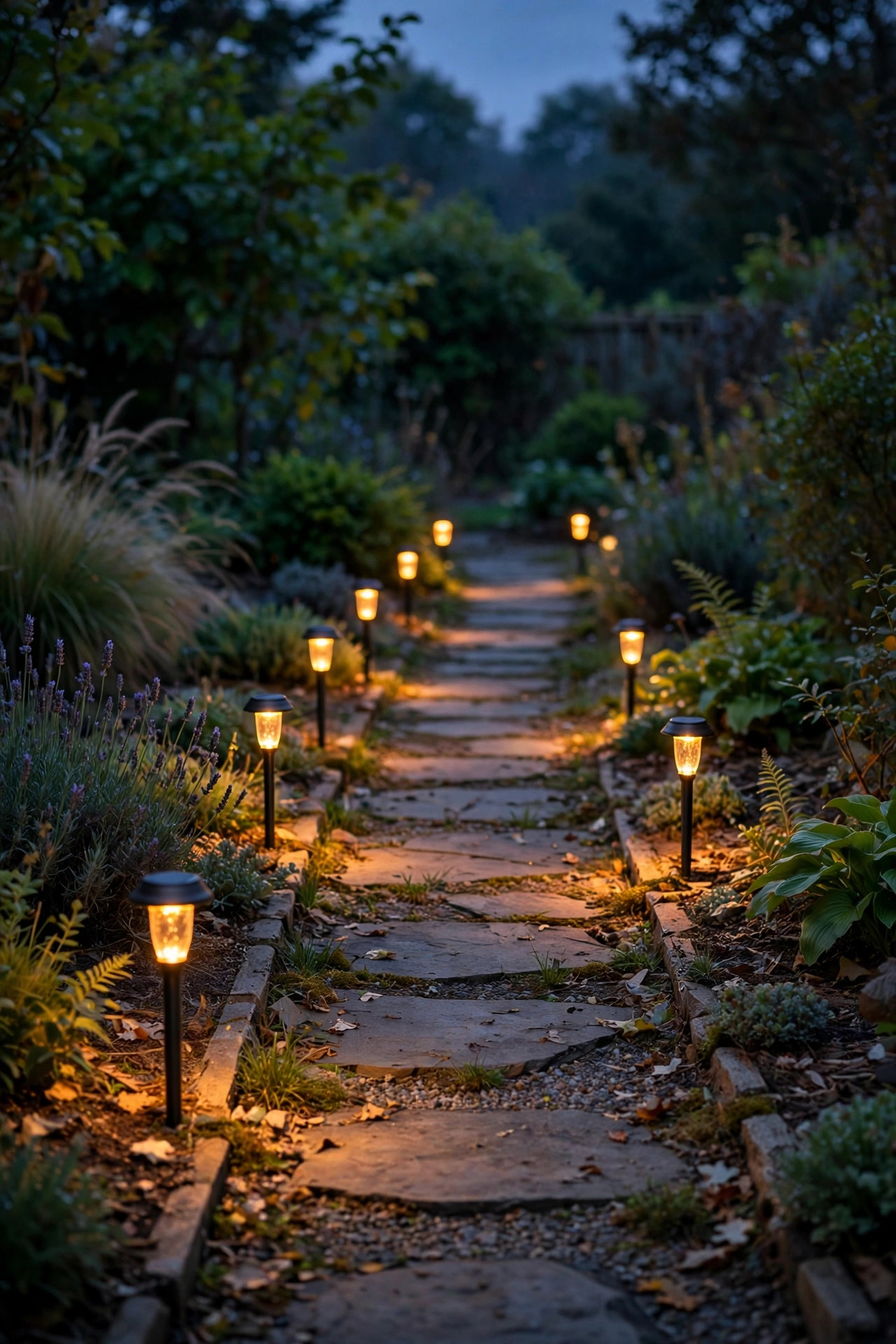
Garden-center solar stakes vary wildly — some are gentle 5-lumen glows, others are 100-lumen mini floodlights that blaze until dawn. For firefly season I deliberately choose the dim ones, and I mean that as a compliment. A stake in the 5 to 30 lumen range marks a path edge beautifully without flooding the beds beside it. I space mine 8 to 10 feet apart, staggered on alternating sides of the path, so walkers get a dotted rhythm of light instead of a runway. Warm white or amber-toned models only; the cool blue-white stakes that come in bargain multipacks are the single worst offenders in most gardens I visit. Two more habits help: pull the stakes closest to the dark zone entirely during June and July, and choose solar lights whose charge fades after four to six hours, so they politely dim themselves as the night deepens. If a favorite stake is too bright, a small square of amber gel film over the lens, the kind sold for stage lights, warms and softens it for pennies.
Suggested budget range: $20 – $60.
6. Let Motion Sensors Handle the Safety Lighting
Some light in a garden is pure safety — the step down from the deck, the gate latch, the uneven flagstone. That light does not need to burn for six hours; it needs to burn for six minutes while someone passes. Motion-sensor fixtures are the perfect firefly compromise, because a dark garden that lights up briefly and goes dark again barely interrupts the flashing. I use sensor lanterns at the deck steps, the side gate, and the trash-bin run, all in warm white and all aimed down. Set the sensitivity so a passing cat does not trigger them, keep the on-time short, one to three minutes, and choose fixtures with a dusk-to-dawn off option or a manual switch so you can silence them during a firefly-watch evening on the patio. Battery and solar sensor lights make this a ten-minute, no-electrician upgrade almost anywhere. The one place I skip sensors is near bedroom windows — a raccoon at 2 a.m. does not need to light up anyone's night, firefly or human.
Suggested budget range: $25 – $80.

7. Keep Fixtures Low With Bollards and Mushroom Lights
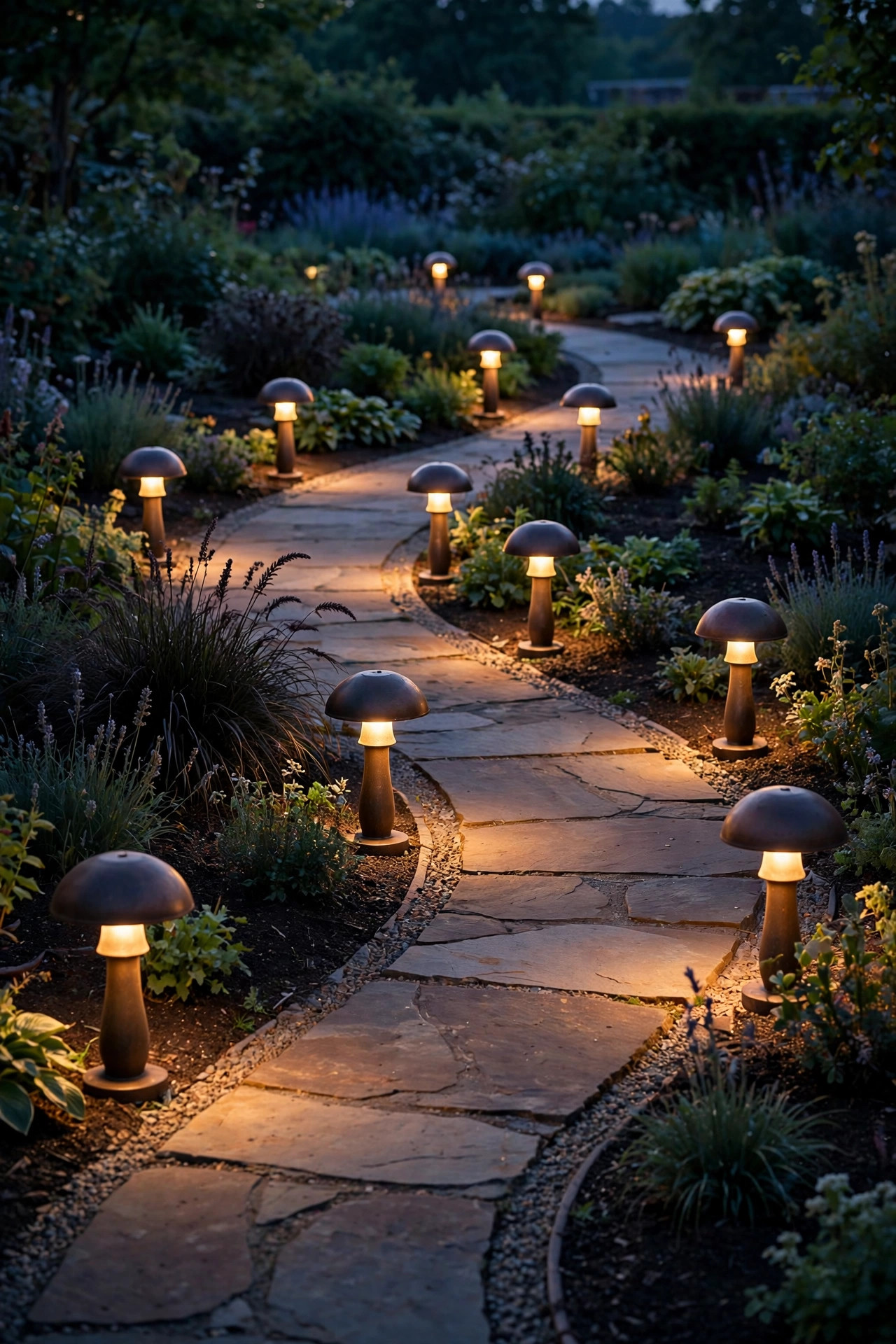
Height is glare. A porch fixture at six feet throws its light across the whole yard; the same bulb at fourteen inches paints a small, useful pool and stops. That is why low bollards and mushroom-style path lights are the backbone of my evening garden. I look for fixtures 12 to 18 inches tall with the bulb tucked up under a cap, so the light spills down and out at ankle height only. Along a 30-foot path, five or six of them spaced 6 feet apart give walkers plenty of guidance while the beds two feet away stay nearly dark. Set bollards back 12 to 18 inches from the path edge so mower wheels and shovels miss them, and keep them out of the planting beds themselves — the dark zone between fixtures is where fireflies drift. Low-voltage wired bollards give the steadiest, dimmest-friendly light, and on a dimmer they are perfect. Solar mushrooms work too in sunny paths. Either way, low and hooded beats tall and bare every single time.
Suggested budget range: $40 – $150.
8. Aim Firefly Friendly Garden Lighting at Paths, Not Beds
Here is the simplest rule in this whole list: light the hardscape, not the habitat. Paths, steps, patios, and driveways are people places, and they get the fixtures. Flower beds, shrub borders, the vegetable garden, and the lawn are firefly places, and they stay dark. When I catch myself wanting to uplight a pretty shrub, I ask whether anyone needs to see it to walk safely, and the honest answer is almost always no. If a bed absolutely needs definition, I edge it from the path side with the dimmest stake I own, pointed back at the path so the light never enters the planting. Tree uplighting gets the same treatment during June and July — my favorite oak's spotlight simply goes off for two months, and I find I do not miss it, because the tree full of fireflies is better than the tree full of lumens. This one habit, zoning light to pavement, does more for the firefly population in my yard than any product I could buy.
Suggested budget range: $30 – $100.

9. Dim Smart Bulbs to a Whisper
Dimmers might be the most underrated firefly tool there is. A bulb that feels modest at full power becomes nearly invisible to insects at 15 percent, while still giving you a warm outline of the patio. In June I set every smart bulb in the garden to a firefly scene: 2200K, 10 to 20 percent brightness, off at ten. If your fixtures are not smart, an inline dimmer on a low-voltage transformer or a simple plug-in dimmer for string lights does the same job for very little money. The trick is dimming before you judge — most people install lights, find them harsh, and blame the fixture, when the fixture at one-fifth power would have been perfect. Dimming also stretches solar and battery runtimes and is gentler on your own night vision, so the fireflies actually look brighter to you. Start at the lowest setting and walk the path; raise it one notch at a time only until the steps feel safe. That stopping point is almost always lower than you expect.
Suggested budget range: $20 – $90.

10. Trade Overhead Glare for Lantern Glow at the Table
The patio is where I refuse to sit in the dark, and lanterns are my peace treaty. A cluster of flameless candle lanterns on the table and steps gives all the glow a dinner party needs — faces lit, plates visible, glasses sparkling — while throwing almost no light beyond a six-foot circle. Fireflies cruise right past the edge of that circle, unbothered. I group lanterns in threes at different heights, choose warm flicker-mode candles, and set their built-in timers for five hours from dusk. Real candles in glass hurricanes are fine for a special night, though I keep them on the table and never near dry mulch or paper goods; flameless is simply easier and safer around kids and tablecloths. What I never use on the patio anymore is the overhead string of bare 40-watt-look bulbs at full blast — it lit the whole yard like a used-car lot. If you love your cafe string lights, keep them, but on a dimmer and over the patio only, which is idea thirteen. Small, warm, and close beats big and bright.
Suggested budget range: $25 – $75.

11. Bounce Light Off Walls Instead of Flooding the Yard
Indirect light is the softest light there is, and fireflies barely notice it. Instead of pointing fixtures out into the yard, I point them at something solid — the house wall behind the patio, a fence panel, a stone retaining wall — and let the surface bounce a gentle wash back toward the seating. The trick works with small uplights placed 6 to 12 inches from the wall, aimed nearly straight up so the beam grazes the texture and spills very little past the top edge. Brick and stone are wonderful at this; the warm bounce reads like firelight. Because the source stays hidden and the glow stays local, the lawn ten feet away remains properly dark. This is also my favorite way to light a garden statue or a water feature in season: one dim, well-aimed spot, tight beam, off by ten. Just be honest about aim — a bounced fixture pointed a few degrees too far out becomes a floodlight again, so I always do my final adjusting after dark, standing in the beds, checking what the fireflies see.
Suggested budget range: $35 – $110.

12. Screw Amber Bug-Light Bulbs Into the Porch Fixture
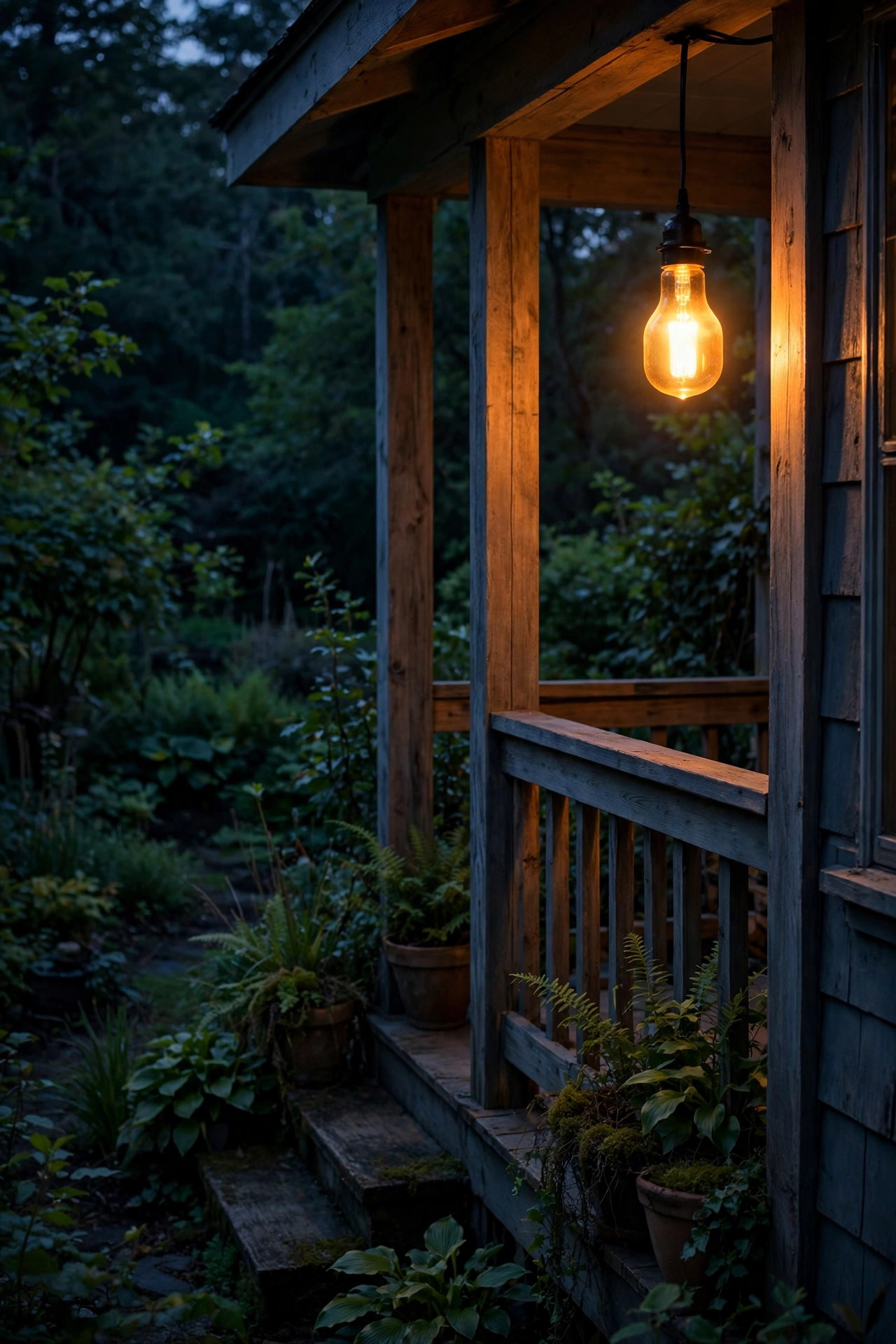
The yellow bug-light bulb has been around forever, sold to keep moths off the porch, and it turns out the same physics protects fireflies. Those amber bulbs simply leave out the blue and green wavelengths that insects see best, so the porch glows for people while staying nearly invisible to the bugs flashing ten feet away. I screw one into the porch fixture and one into the garage sconce every May and swap back to brighter warm white in September, when guests need the steps more than the fireflies need the dark. Cost is a few dollars a bulb. Two honest notes: amber bulbs make colors read oddly, so do not judge paint or plant colors under them, and they are not dim by themselves — pair them with the timer habit from idea three so the porch also goes dark at ten. If your fixture takes a specialty bulb, amber LED filament bulbs now come in candelabra and globe shapes too. It is the cheapest experiment on this entire list, and for a lot of porches it is the only change that matters.
Suggested budget range: $8 – $30.
13. Keep Fairy Lights Over the Patio, Not the Lawn
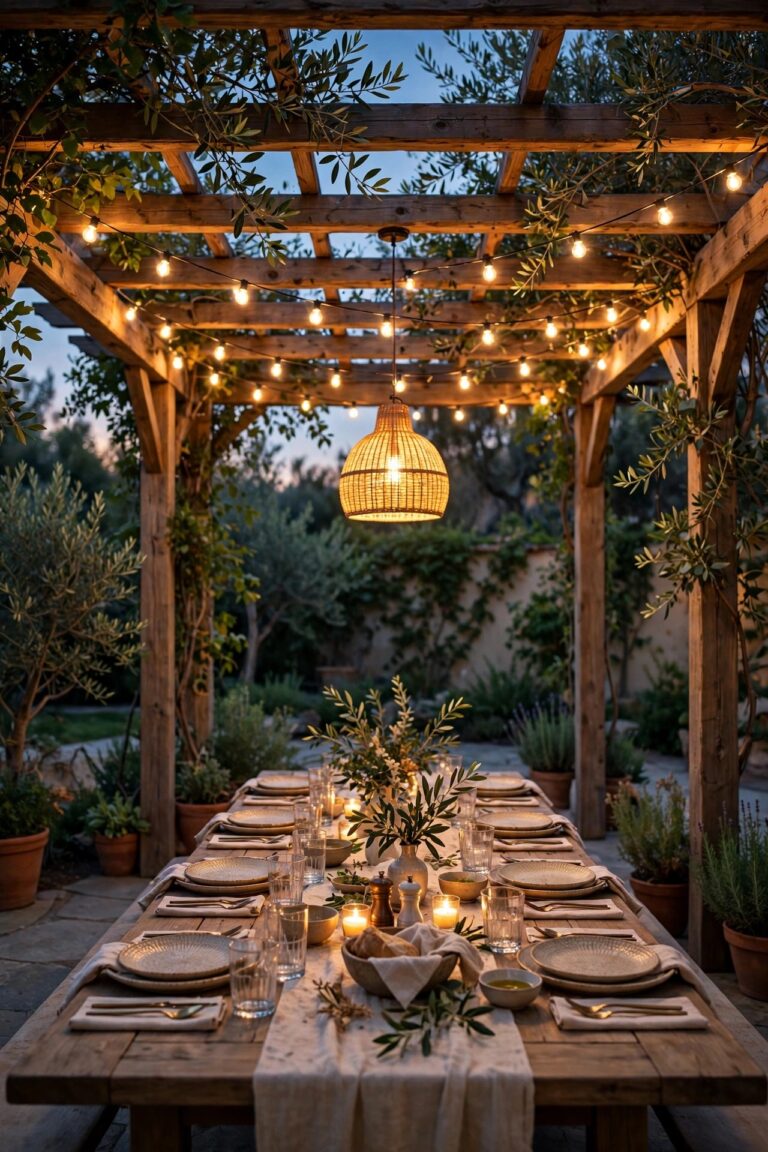
String lights are where most gardens go wrong for fireflies — not because the bulbs are evil, but because they get strung across open lawn, right through prime flashing airspace. My fix is zoning: fairy lights live over the patio and only the patio, swagged between the pergola posts where people sit, and the strings stop dead at the patio edge. Copper-wire fairy lights are my pick here because the individual points are tiny and warm; run at dusk-to-ten on a timer, they read as a ceiling of stars without flooding anything. Keep strands at least 10 feet from the dark zone and out of the trees in summer — a tree wrapped in lights is a tree no firefly will court in, which is why my tree wraps come down in May. If you must cross the yard with light, cross it at knee height with the bollards from idea seven instead. Zoning feels strict on paper, but in practice it means the party glows in one place and the magic happens everywhere else, and honestly, both are better for the boundary between them.
Suggested budget range: $15 – $45.

14. Choose Solar Lights That Fade by Midnight
Most people complain that cheap solar lights fade by midnight. During firefly season, I call that a feature. A stake that burns gently for four or five hours after dusk and then quietly dies is almost perfectly matched to a garden that should belong to the bugs after ten. When I buy solar now, I actually read the runtime on the box and choose the shorter numbers — five to six hours instead of ten — for anything near the beds. I also skip the color-changing and cool-white models entirely, and I avoid the solar spotlights marketed for flags and signs, which are far brighter than they look in the listing photos. Place solar fixtures where the panel gets full afternoon sun so the evening glow is warm and steady rather than flickery, and wipe the panels monthly; a dusty panel means a dim, greenish light that helps nobody. If a beloved solar light runs too long and too bright, moving it to the driveway edge, far from the habitat beds, usually solves the problem without a replacement.
Suggested budget range: $20 – $55.

15. Make Firefly Friendly Garden Lighting a June Ritual
Everything above condenses into one seasonal ritual at my house. On the first warm weekend of June, I walk the garden with a tote: amber bulbs go in, the oak spotlight goes off, tree wraps come down, timers get set to ten, and the dark corner gets left gloriously alone. Then, most evenings, we do the easiest part — we go outside. Fireflies need three things from us: darkness at the right hours, a little wild habitat, and a yard free of broad insect sprays, and in exchange they put on a show no fixture can match. I tell every neighbor who asks about our yard the same thing: start with one evening. Turn everything off at dusk, sit on the steps for twenty minutes, and count the flashes. Most people are converted by the second night. Kids especially lose their minds, in the best way. The lights will still be there in August, ready to take the night shift back. For two months, though, the garden belongs to the original lighting designers, and all I have to do is keep the stage dark and watch.
Suggested budget range: $0 – $20.
Frequently Asked Questions
What color of light is least harmful to fireflies?
Amber and deep warm white are the safest choices. Fireflies signal in yellow-green and are most disrupted by blue-rich light, so bulbs at 2700K or below — and true amber bulbs around 2200K — interfere the least. Red light is even gentler, though most people find it too moody for paths. The worst offenders are cool white and daylight bulbs, plus ultraviolet bug zappers, which I keep out of the garden entirely during summer.
How bright is too bright for fireflies?
As a rule of thumb, keep fixtures near beds and lawn under about 200 lumens, and dim accent lighting far below that. If a light lets you read a book from ten feet away, it is bright enough to wash out firefly flashes nearby. Dimming to 10–20 percent, shielding the bulb, and aiming light down all matter as much as the raw lumen number. Fireflies can signal fine under moonlight; aim to stay in that neighborhood.
When is firefly season, and when should lights go off?
In most of the US, fireflies peak from late May through July, with June usually the best month. They court in the first hours after sunset, so a lights-out time of 10 or 11 p.m. protects the busiest part of the show while still letting you enjoy the garden at dinner. Timers make this automatic. Outside peak season, I relax the schedule a little but keep the warm, dim, downward habits year-round.
Do solar garden lights bother fireflies?
It depends on the light. Dim, warm white solar stakes that fade after a few hours are among the friendliest options — I use them on purpose. The problems are the bright, cool-white, all-night models and solar spotlights, which flood beds with blue-rich light for hours. Choose low lumens, warm color, and shorter runtimes, and pull the stakes nearest to habitat areas during June and July.
Conclusion
Keeping fireflies is not about giving up a lit garden — it is about choosing where light belongs and where darkness does the magic. Warm it down, aim it down, dim it, and let it clock out early, and firefly friendly garden lighting stops being a compromise and just becomes good garden lighting. If you are planning a bigger refresh of your beds and borders, my broader garden lighting ideas will help you layer the people spaces beautifully — then apply the firefly rules from this list to keep the summer sky-on-the-ground show running for years.