Every yard deserves a little after-dark magic, and honestly, nothing delivers it faster than color changing solar lights. I started with one set of rainbow path stakes on a whim — my kids immediately named it "the disco walkway" — and by the end of that summer I had glowing orbs tucked into the flower beds, a color-shifting spotlight on the maple, and a wind chime sparkling over the patio. The beauty of solar is that there is no wiring, no transformer, and no electric bill: you push a stake into the soil, let the little panel drink up the sun all day, and the show starts by itself at dusk. The trick, as with every kind of outdoor lighting, is layering. Keep low color along the paths, mid-height glow in the beds, and one or two bold accents up high, and the yard reads playful instead of carnival midway. In this post I'm sharing 17 ways I actually use them, from holiday color swaps to a pond that glows turquoise, with honest notes on brightness, battery life, and what each idea really costs.
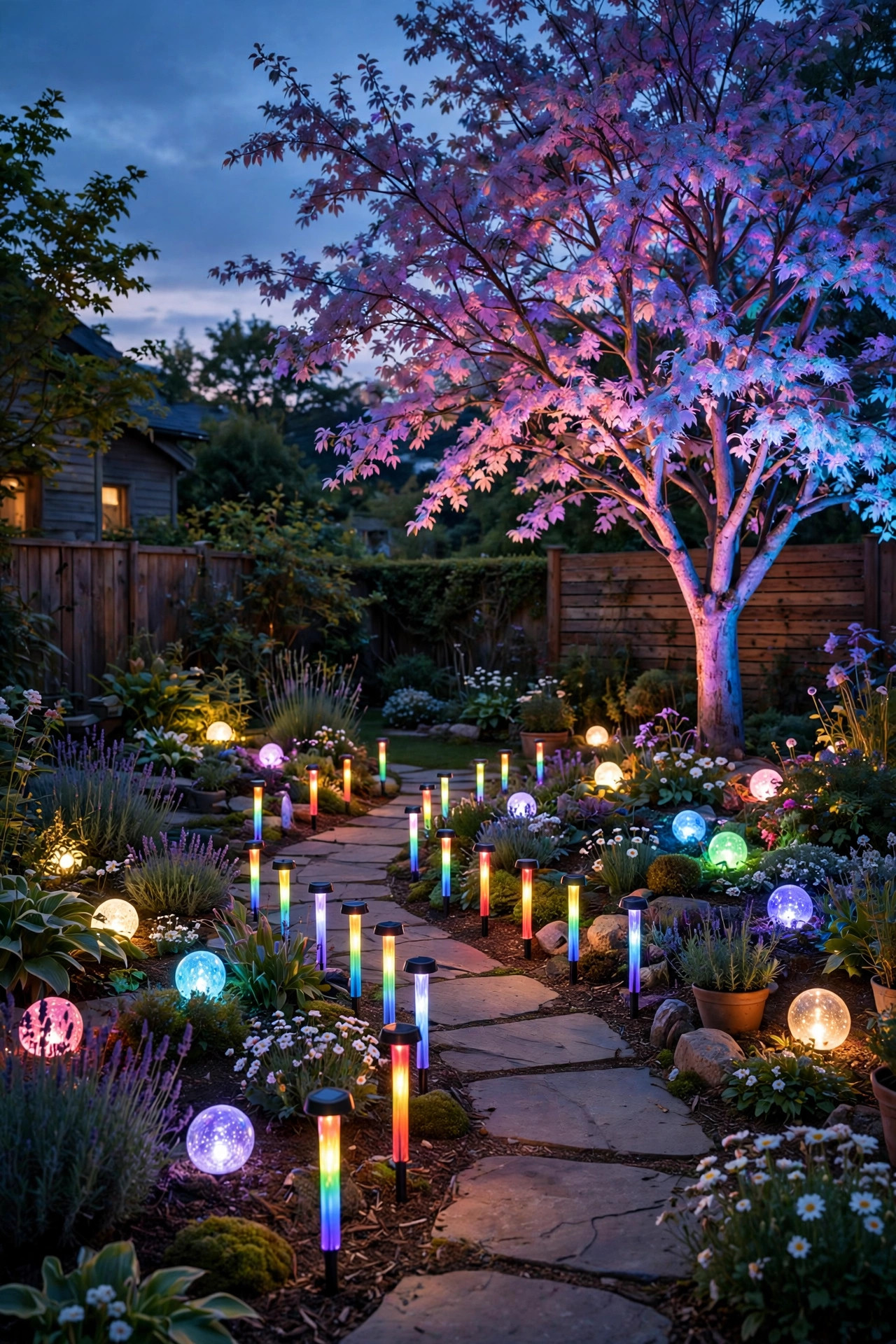
1. Line the Front Walk With Color Changing Solar Lights
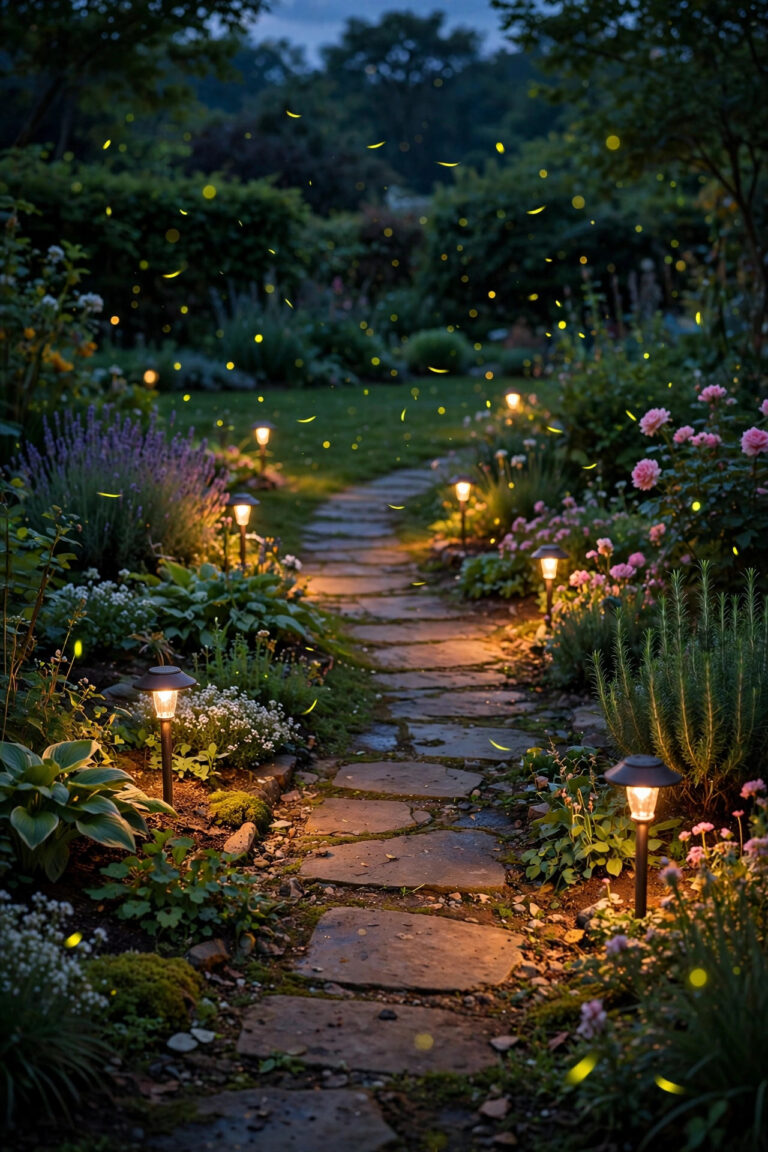
This is where almost everyone starts, and it's still my favorite first move. A set of eight to twelve color-cycling stake lights along the front walk turns a plain path into a rainbow ribbon the minute the sun goes down. Space them about 4 to 6 feet apart, staggered slightly rather than in a stiff soldier line, and push them into softened soil so the stakes sit straight. Almost every set I've tried offers two modes: a steady warm white and a slow color fade. Choose the fade — a gentle drift from pink to teal to violet feels magical, while a fast strobe just looks like a store display. Be honest with yourself about brightness, though: most of these put out only 10 to 20 lumens, so they're cheerful markers, not task lighting. If your walk is genuinely dark, pair them with one brighter fixture near the steps. Keep the little panels wiped clean and out of sprinkler spray, and they'll reward you nightly. My solar path lights guide covers spacing and panel placement in more detail if you're planning a full path.
Suggested budget range: $25 – $45.

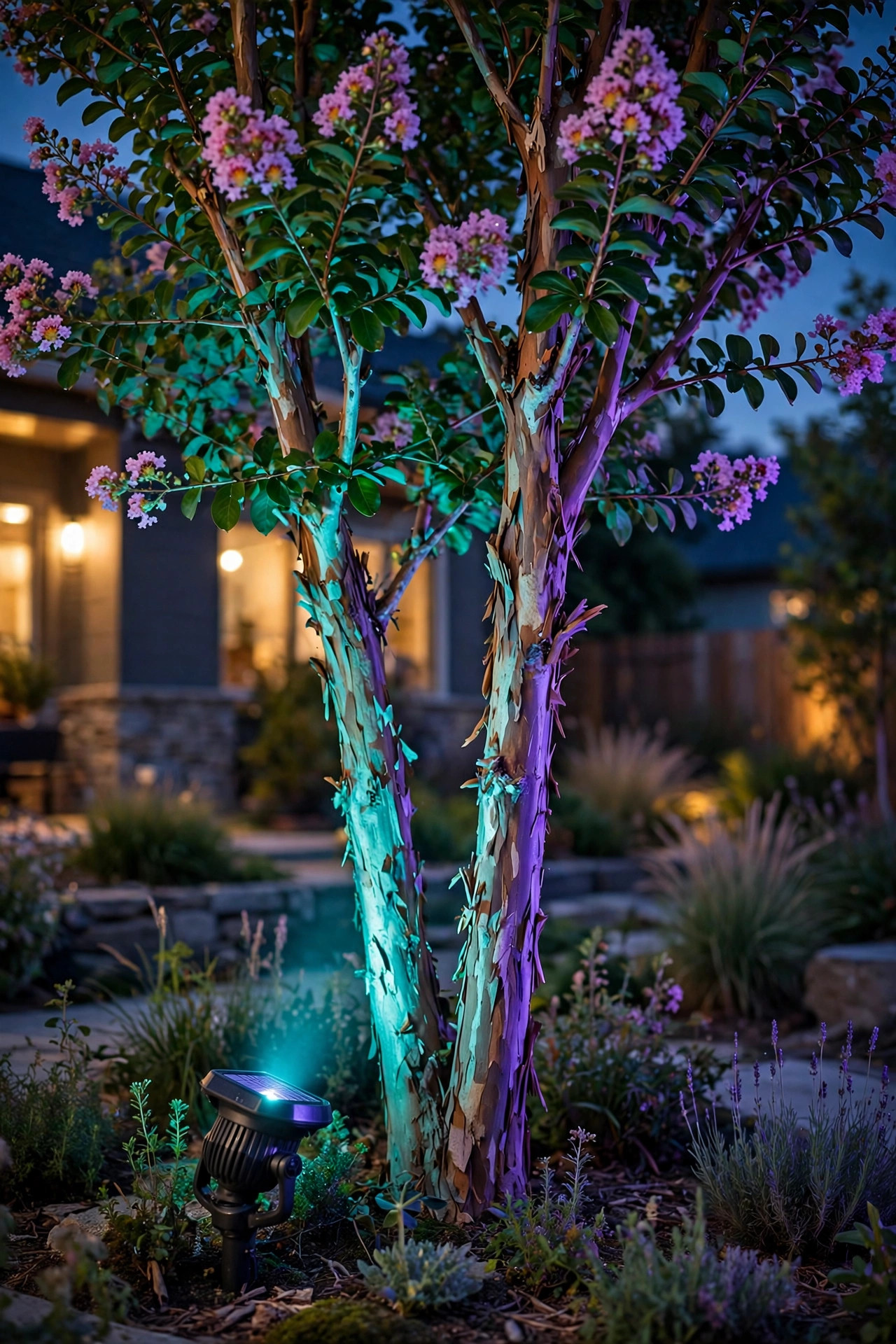
2. Wash a Favorite Tree in Slowly Shifting Color
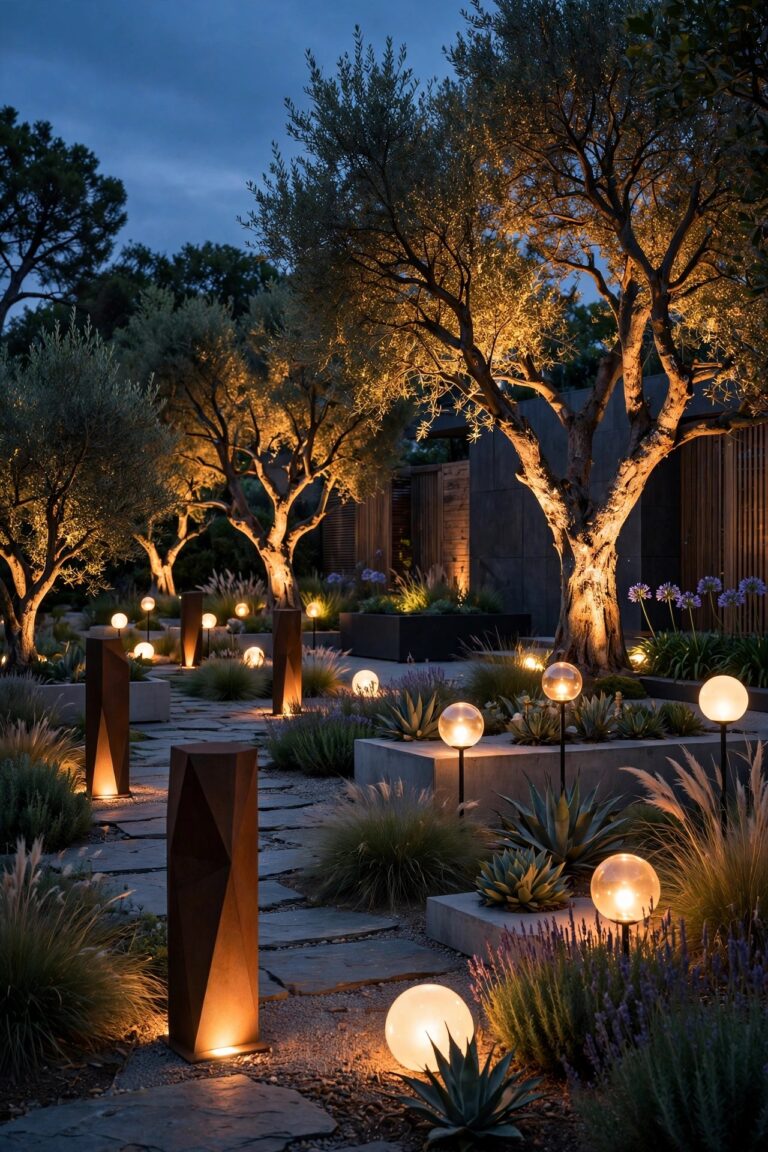
A single RGB solar spotlight aimed up into a tree canopy is the cheapest drama in the whole yard. Look for a spotlight with the solar panel on a short cable rather than fixed to the back of the lamp — that way you can hide the light at the trunk while the panel sits out in full sun. Set the fixture about a foot from the trunk and angle it up at roughly 30 to 45 degrees so the beam rakes across the bark and into the branches. Pale-barked trees like birch and crape myrtle take color beautifully; a deep teal or violet wash on white bark stops neighbors on their evening walks, I promise. Most of these run 50 to 100 lumens, bright enough to tint foliage without flattening it. For a really polished look, use two lights crossed from opposite sides so the canopy glows evenly. Set the mode before dark — crouching around with a remote at 9 p.m. is less fun than it sounds — and let the slow fade run all evening.
Suggested budget range: $20 – $40.
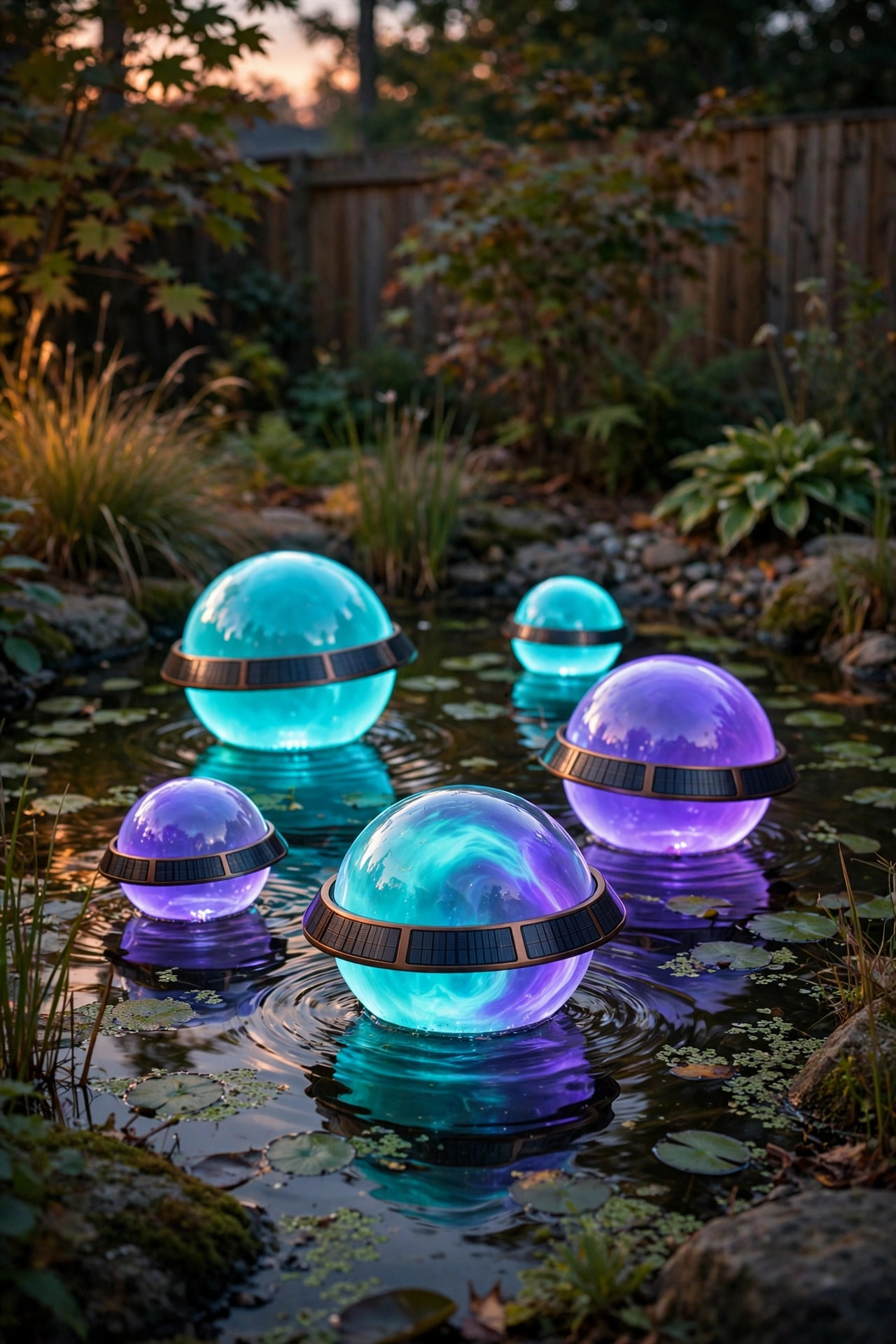
3. Float Color-Changing Orbs on the Pool or Pond
Floating solar orbs might be the single most complimented thing in my backyard. They're sealed spheres, usually 4 to 6 inches across, that sit on the water charging all day and then drift through slow color changes all night — turquoise melts into blue, then violet, then a soft green that makes a plain pond look like a lagoon. Only buy ones rated IP68, since they'll live in the water full time, and check that the listing says they're safe for chlorinated pools if that's where they'll float. A loose tether of fishing line tied to a small weight keeps them from migrating into the skimmer or piling into one corner of the pond. Three orbs suit a small water feature; five to seven look right scattered across a pool. One honest caution: bring them inside before the first hard freeze, because ice expansion can crack the shells. In summer, though, there's nothing easier — no cords near water, nothing to plug in, just a floating light show.
Suggested budget range: $15 – $35.
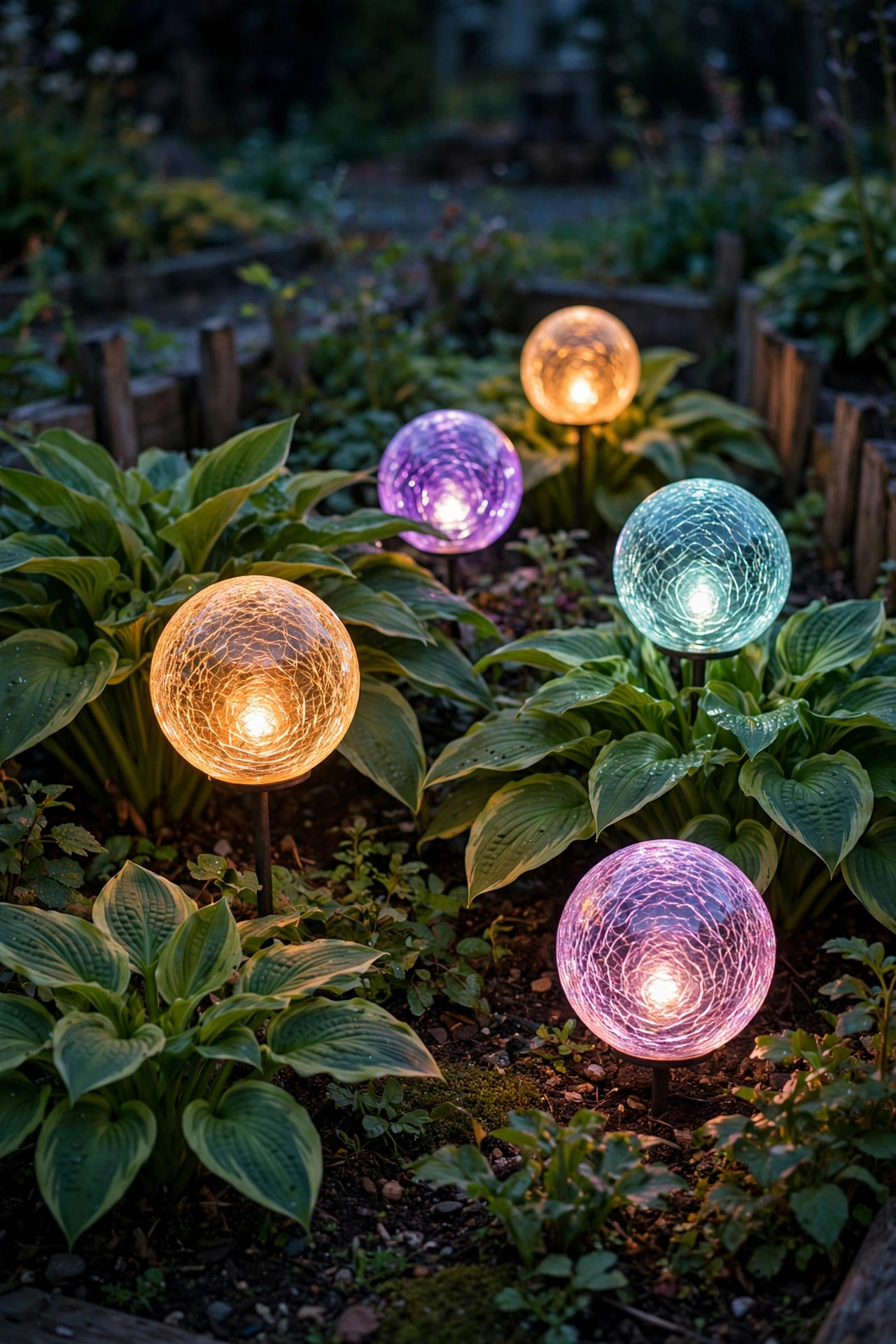
4. Tuck Glowing Globes Into the Flower Beds
Crackle-glass globe lights on short stakes are my secret weapon for tired flower beds. By day they're unassuming glass balls; after dark they glow from within, and the crackled glass breaks the color into a hundred soft sparkles as it shifts. Nestle them down among hostas, daylilies, or ornamental grasses so the light seems to rise out of the planting itself — the effect is far prettier than a globe standing alone on bare mulch. I always group in odd numbers, threes and fives, and vary the heights slightly if the stakes allow it. Keep leafy growth trimmed back from the small solar panel on each stake, because a shaded panel is the number one reason these disappoint. Expect a gentle 5 to 15 lumens per globe: this is pure atmosphere, a wash of living color at ankle height. In a long bed, a globe every 3 to 4 feet keeps the rhythm going without looking dotted. Honestly, on a warm night with the beds glowing slow rainbow, the whole garden feels enchanted.
Suggested budget range: $20 – $40.
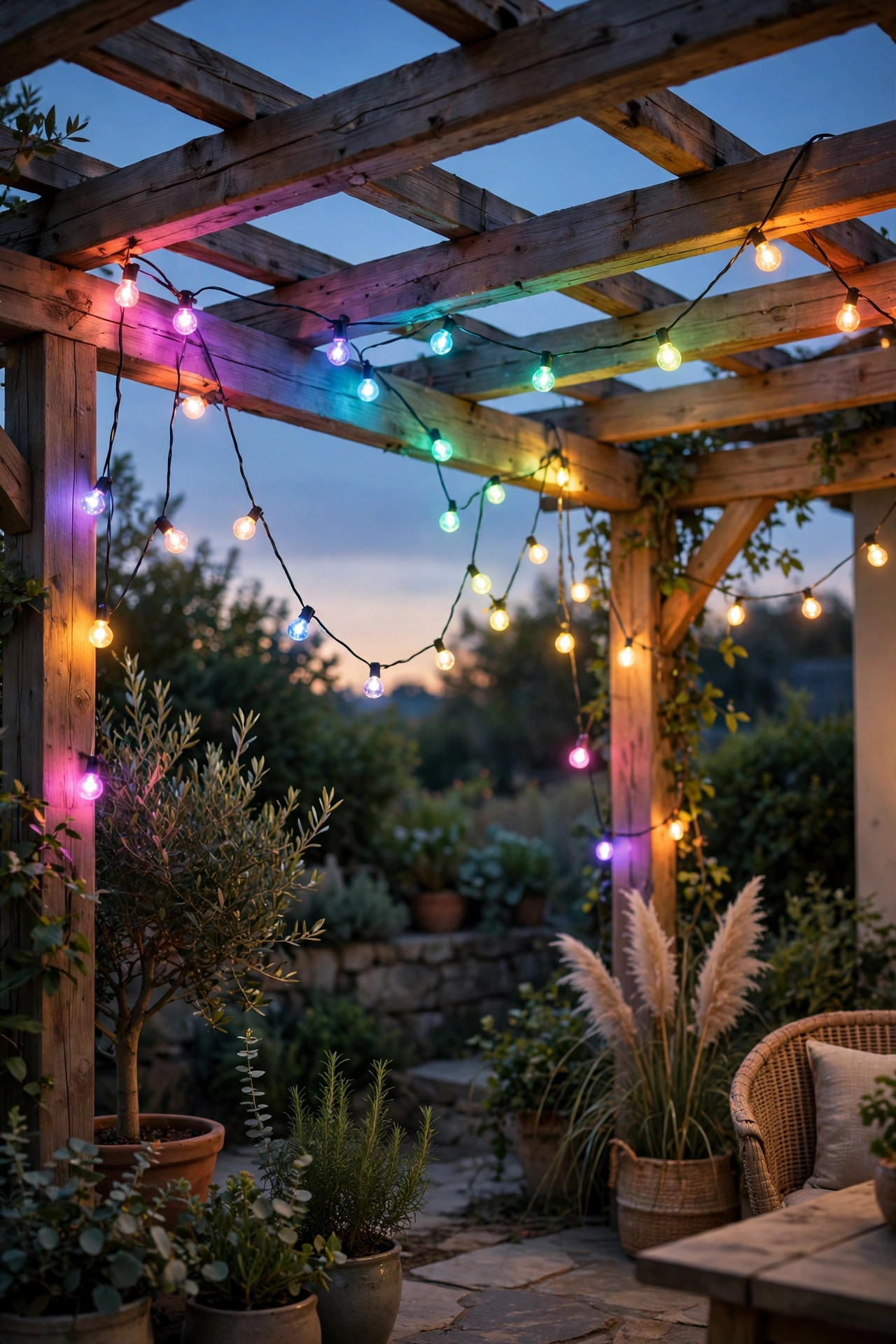
5. Drape Color-Changing Solar String Lights Over the Patio
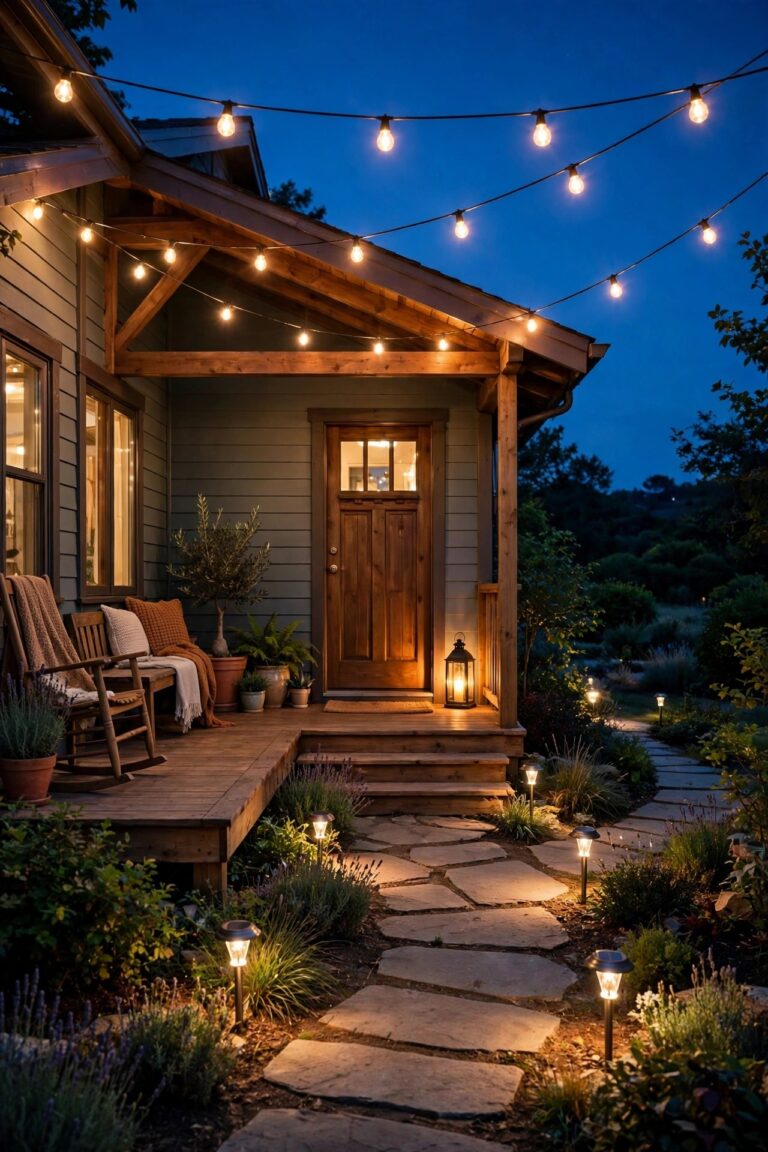
For the patio, café-style string lights with color-changing bulbs give you a party ceiling you can recolor on a whim. Run a 25- to 30-foot strand from the house to a pole or pergola corner, clip the solar panel to a sunny railing or fence top, and let the bulbs do the rest. The remote-controlled sets are worth the small premium: you can lock them to a warm amber for weeknight dinners, then let them cycle through the rainbow when the grandkids visit or it's a birthday on the deck. Shatterproof plastic bulbs matter outdoors — one dropped glass bulb over a patio is a barefoot hazard. Give the strand a gentle swag, about a foot of dip between attachment points, so it looks relaxed rather than strung tight like a clothesline. Brightness is modest, so think of these as your ambient layer and keep a lantern or two on the table for actual light. I collect far more string-light inspiration in my roundup of solar string light ideas if you want layouts for pergolas and fences too.
Suggested budget range: $18 – $35.
6. Wrap Shrubs and Small Trees in Color-Shifting Fairy Lights
Copper-wire fairy lights are the ones that bend, twist, and disappear into the planting until dusk reveals them. A color-shifting strand wrapped loosely around a shrub or the trunk and main branches of a small ornamental tree makes the whole plant twinkle from inside, like it's full of fireflies that went to art school. Work from the trunk outward, keep the wrap relaxed rather than corset-tight, and stake the solar panel at the sunny edge of the bed facing up. Because the LEDs run cool, they're safe nestled against foliage — something I'd never say about old incandescent strings. One strand per shrub is plenty; the goal is a constellation, not a outline you could see from space. Do plan to unwrap before heavy pruning season, since wire and pruners are enemies. In my experience these look best on plants with fine, dense branching — boxwood, spirea, and dwarf conifers glow like little sculptures. It's the most romantic look on this whole list, and it costs almost nothing to try.
Suggested budget range: $12 – $25.

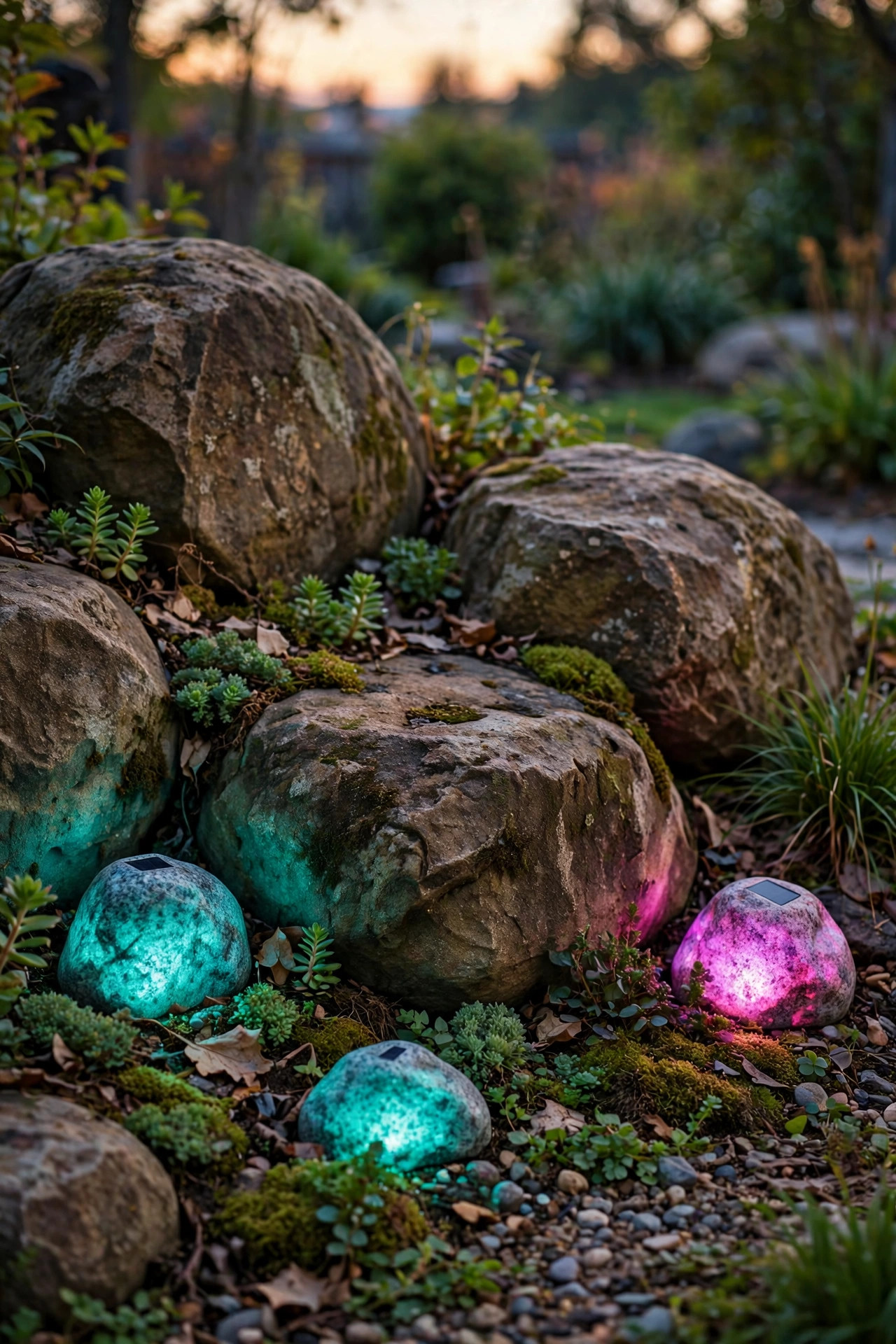
7. Hide Color-Changing Rock Lights Among the Stones
Rock lights are for anyone who loves the glow but hates seeing the fixture. These are small color-changing lamps molded into faux-stone shells — gray or tan resin that vanishes into a rock garden or mulch bed by day. Tuck them at the base of real boulders, along the front edge of a bed, or flanking a garden statue, angled so the wash of color rakes across the mulch rather than beaming straight up into the sky. Because the solar panel is usually built into the top of the "rock," placement matters twice: the stone needs real sun by day and a good angle by night. A set of four covers a small bed nicely. Wipe the lenses every few weeks, since they're ground-level and collect splashed soil — a dirty lens can cut the color in half. In my rock garden they make the whole border feel like it's lit from inside the earth, and guests genuinely cannot find the fixtures until I point. Sneaky, pretty, and zero wiring.
Suggested budget range: $22 – $38.
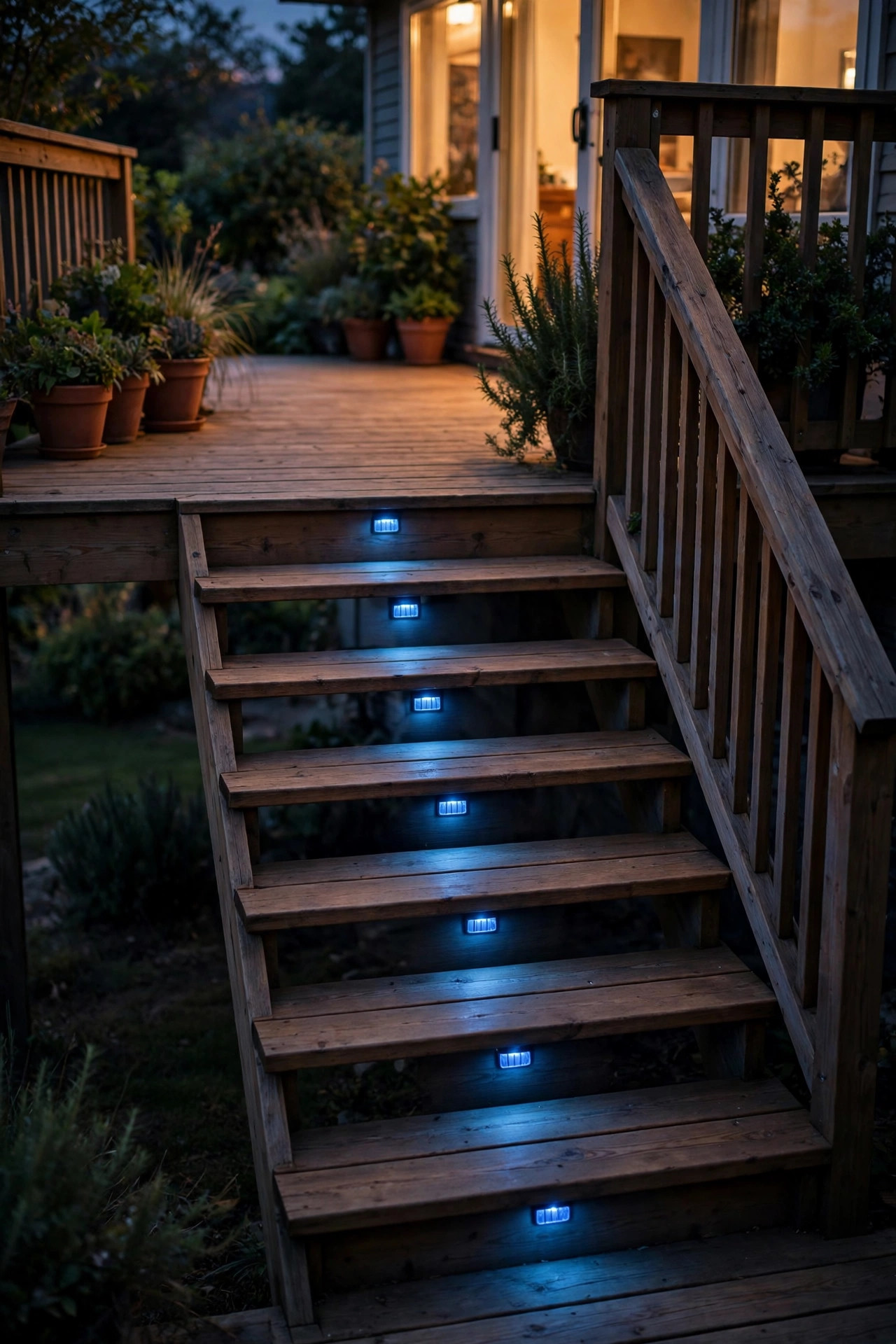
8. Add Rainbow Step Lights to the Deck Stairs
Deck and porch steps deserve light for safety, and color-changing step lights let you have the fun without giving up the function — with one honest caveat I'll get to. The lights themselves are small rounds or squares that screw onto stair risers, mount on short stakes beside the steps, or sit on the deck edge, charging from a built-in panel. Space one per step or every other step, and keep the beam aimed down at the tread where feet actually land. Now the caveat: a color that cycles mid-step can play tricks on your depth perception in the dark, so on stairs I always lock mine to one steady color — a soft blue or warm amber — and save the rainbow cycling for the beds and paths where nobody's footing depends on it. The solar rail-post versions are renter-friendly since they need no wiring at all. Clean the panels when you sweep the deck, and check screws each spring, because frost heave works them loose. Safe, cheerful, and done in an afternoon.
Suggested budget range: $20 – $36.
9. Set Color-Changing Solar Lanterns on Porch Tables
A pair of color-changing solar lanterns is the fastest centerpiece I know. The pierced-metal styles throw patterned stars and diamonds across the table as the color shifts inside, while frosted-glass versions give a soft all-over glow like a candle that never blows out. Set one in the middle of the porch table, hang another from a shepherd's hook by the steps, and you've layered the porch in about ninety seconds. During the day, park them where they'll actually charge — mine live on the sunny end of the railing until dinner, then move to the table. That's the one habit that makes portable solar pieces work: charge in the sun, glow where you sit. Look for lanterns with a real on/off switch and a mode button on the base, so you can flip between warm white and color without an app. At 10 to 30 lumens they're mood light, not reading light, but paired with the string lights overhead the porch feels like a little bistro. They also travel beautifully to campsites and picnic shelters.
Suggested budget range: $15 – $30.

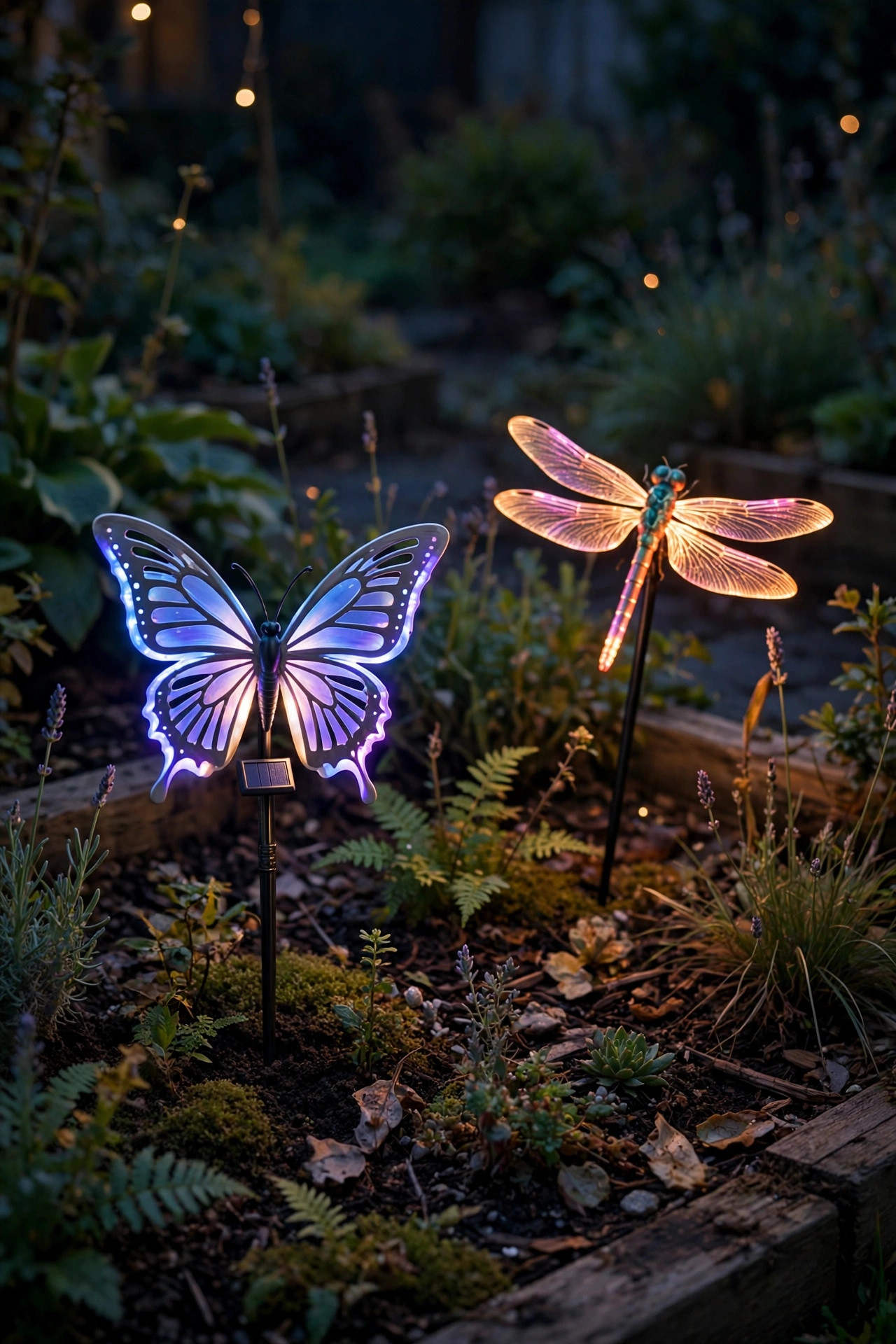
10. Plant Whimsical Color-Changing Stakes in the Garden
Butterflies, dragonflies, hummingbirds, and little fiber-optic flowers on solar stakes — yes, they're playful, and yes, that's exactly the point. The acrylic figures glow and shift color after dark, bobbing gently in the bed on thin stems, and grandchildren absolutely lose their minds over them. In my experience they work best at the front edge of beds and along a child's garden path, placed in small clusters of three rather than scattered singly, which can look random. Keep expectations realistic: the figures are delicate, the stakes are thin, and a hailstorm or an enthusiastic dog can end one, so I bring mine in during severe weather and store them over winter. The solar panel sits at the base or on the stake itself, so keep bed plants trimmed from shading it. One figure per square foot of bed front is plenty. If your style runs more elegant, skip to the globes and rock lights — but if there's a kid in your life, a row of color-changing dragonflies along the path to the porch is pure joy for under twenty dollars.
Suggested budget range: $16 – $28.
11. Top Fence Posts With Color-Changing Cap Lights
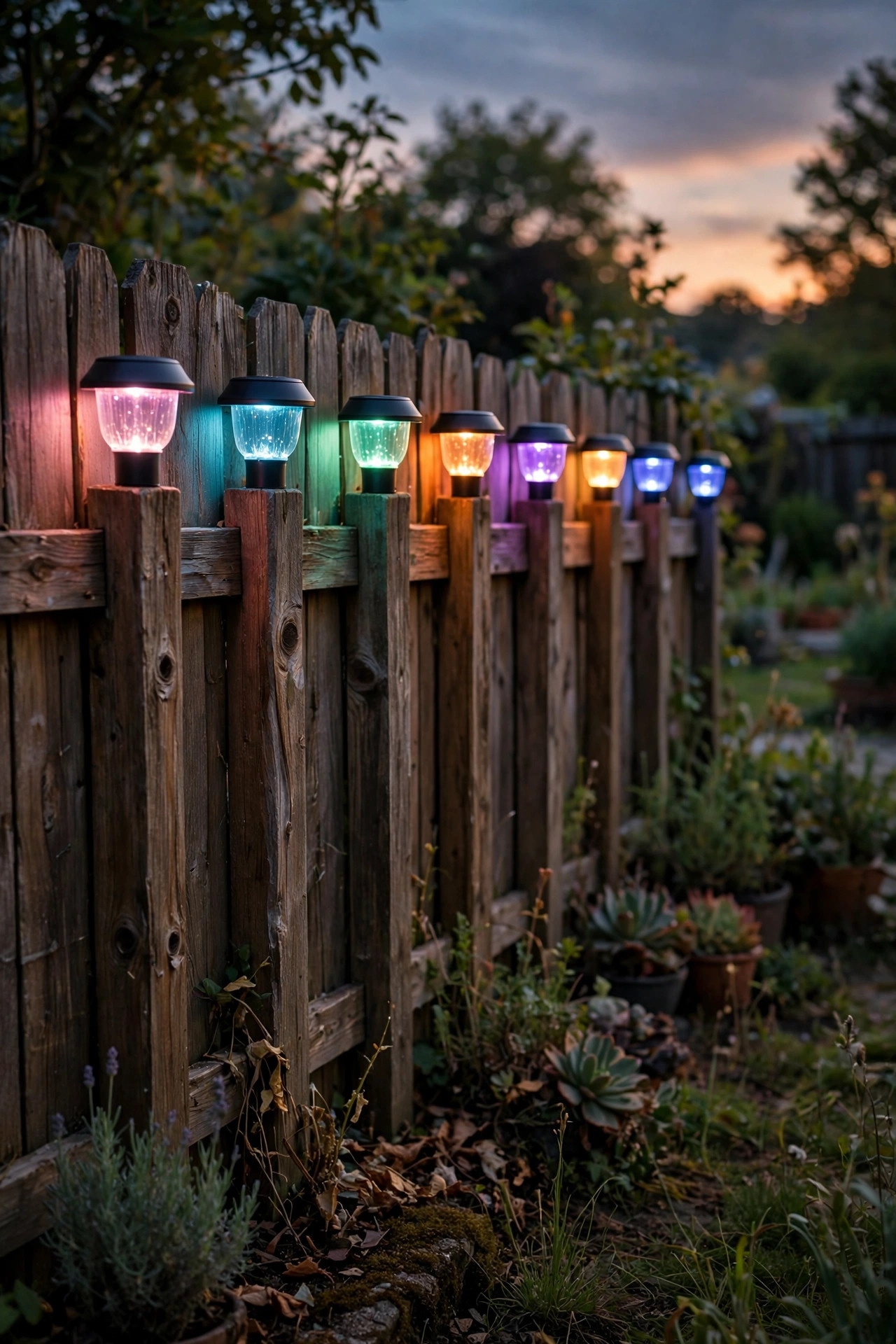
Fence post caps turn the whole back fence into a slow-moving ribbon of color, and the yard suddenly feels twice as deep at night. These caps sit directly on top of 4×4 or 5×5 posts — measure your actual posts before ordering, because nominal lumber sizes lie — and most attach with two small screws, though some renters use outdoor mounting putty instead. Because the caps line up at a uniform height all the way down the fence, the color changes rolling along them look genuinely choreographed, especially with remote sets that sync. Run them down the full fence if the budget allows, or light just the gate posts and corners for a subtler version. A word of neighborly advice: if your fence borders a bedroom window, choose the slow-fade mode and skip the fast party strobe. Check your HOA rules before lighting a front-facing fence; back fences are rarely an issue. Expect each cap to need direct sun on its small top panel, so caps under a big shade tree will always run dimmer than their sunny neighbors.
Suggested budget range: $24 – $48.
12. Aim a Spotlight at the Flag or House Numbers
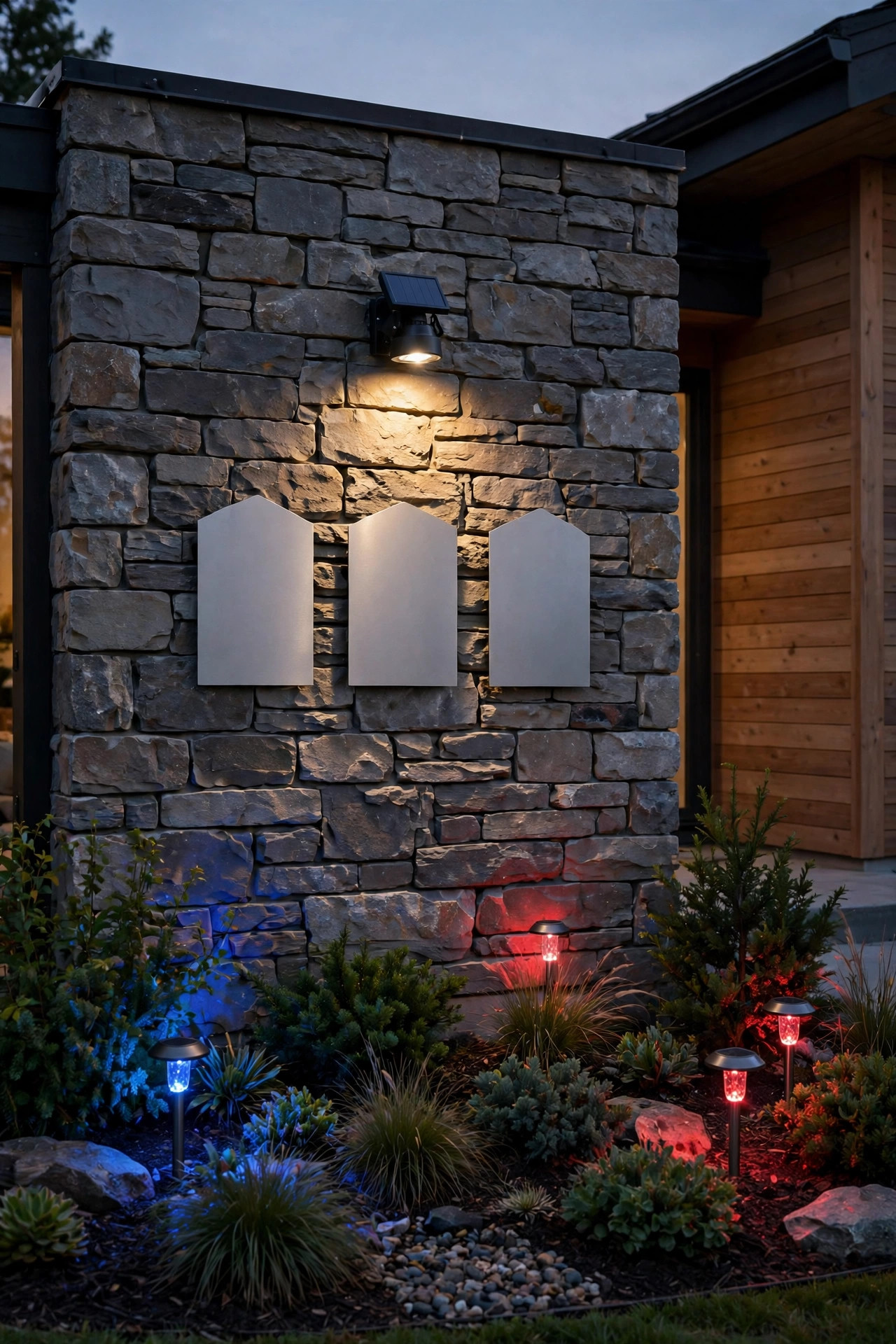
A color-changing spotlight gives you one flexible accent you can aim wherever the season demands. For most of the year mine washes the front of the house near the entry, but it earns its keep at gatherings: pointed at the house numbers in a bright, steady color, it helps party guests and delivery drivers find us on a dark street. Around the Fourth of July I set red and blue accents glowing in the beds on either side of the porch — festive without a single extension cord. One thing I feel strongly about: if you fly a flag at night, keep the flag itself lit in warm white, the way flag etiquette intends, and put the colors in the surrounding planting instead. It looks classier and it's the respectful choice. These spotlights usually match the tree-wash models, with a panel on a cable you can stake in the sun up to a few feet away. Angle the head slightly off direct view so guests see the lit surface, not the glare of the lamp itself.
Suggested budget range: $15 – $30.
13. Press Color-Changing Disk Lights Flush Along Paths
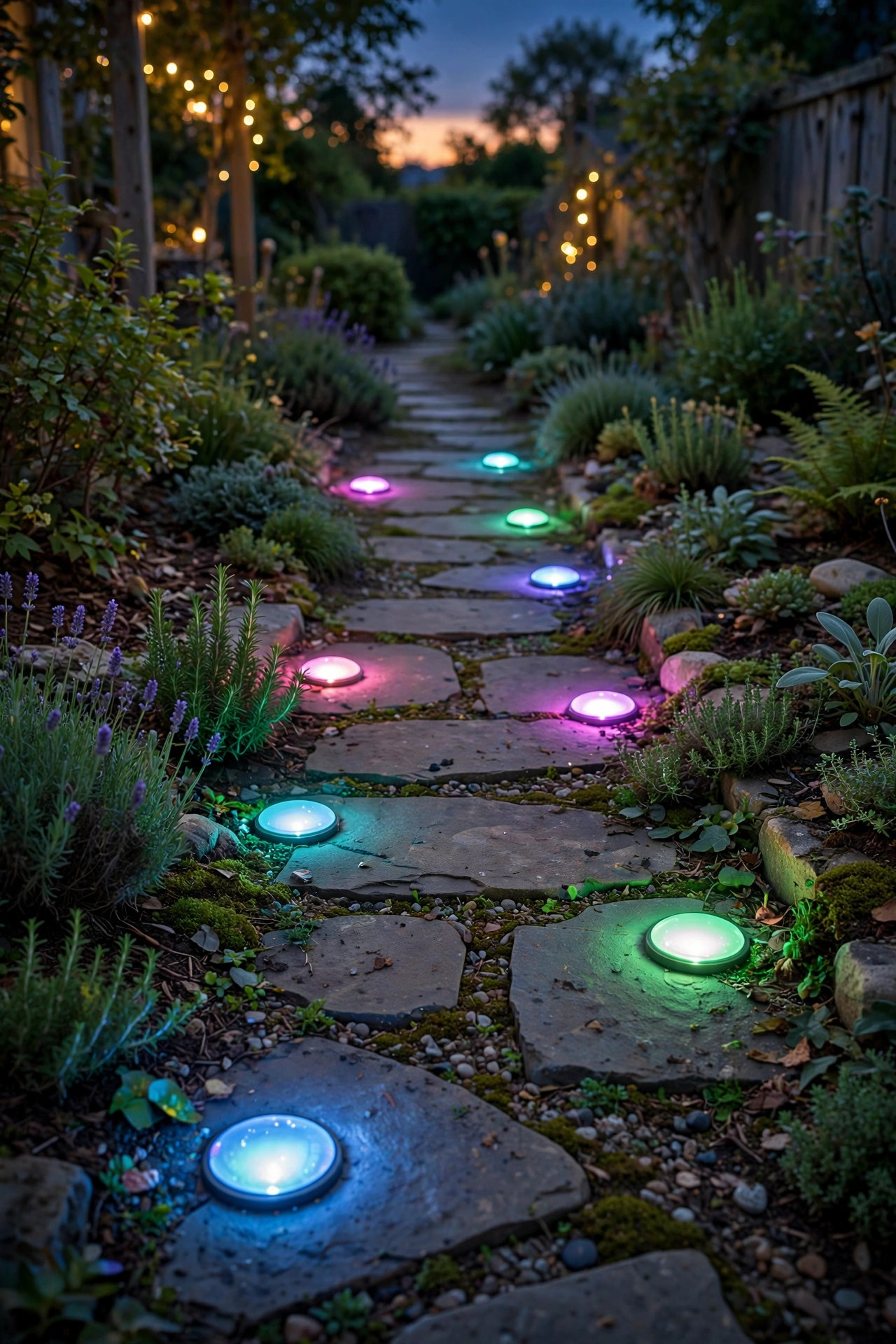
Disk lights are the flat, round cousins of the path stake — they sit flush with the ground, you can mow and even drive right over the driveway-edge ones, and after dark they bloom into little pools of shifting color. An eight-pack scattered along a path edge or pressed around a patio border gives you a dotted constellation effect that stakes can't match, because there's no visible hardware at all. Installation is genuinely just pressing them into soft soil or setting them on pavers with the panel side up. That top panel is also their weakness: it's underfoot, so it collects dust, pollen, and sprinkler grit, and a neglected disk can fade to half brightness by midsummer. I hose mine off whenever I water the beds. Keep them off stair treads — flush or not, they don't belong underfoot on steps — and don't count on them as your only path light, since each disk throws just a few lumens. As a color accent woven between brighter fixtures, though, they're wonderful, especially ringing a fire pit patio.
Suggested budget range: $24 – $42.
14. Swap Colors for Every Holiday With One Remote
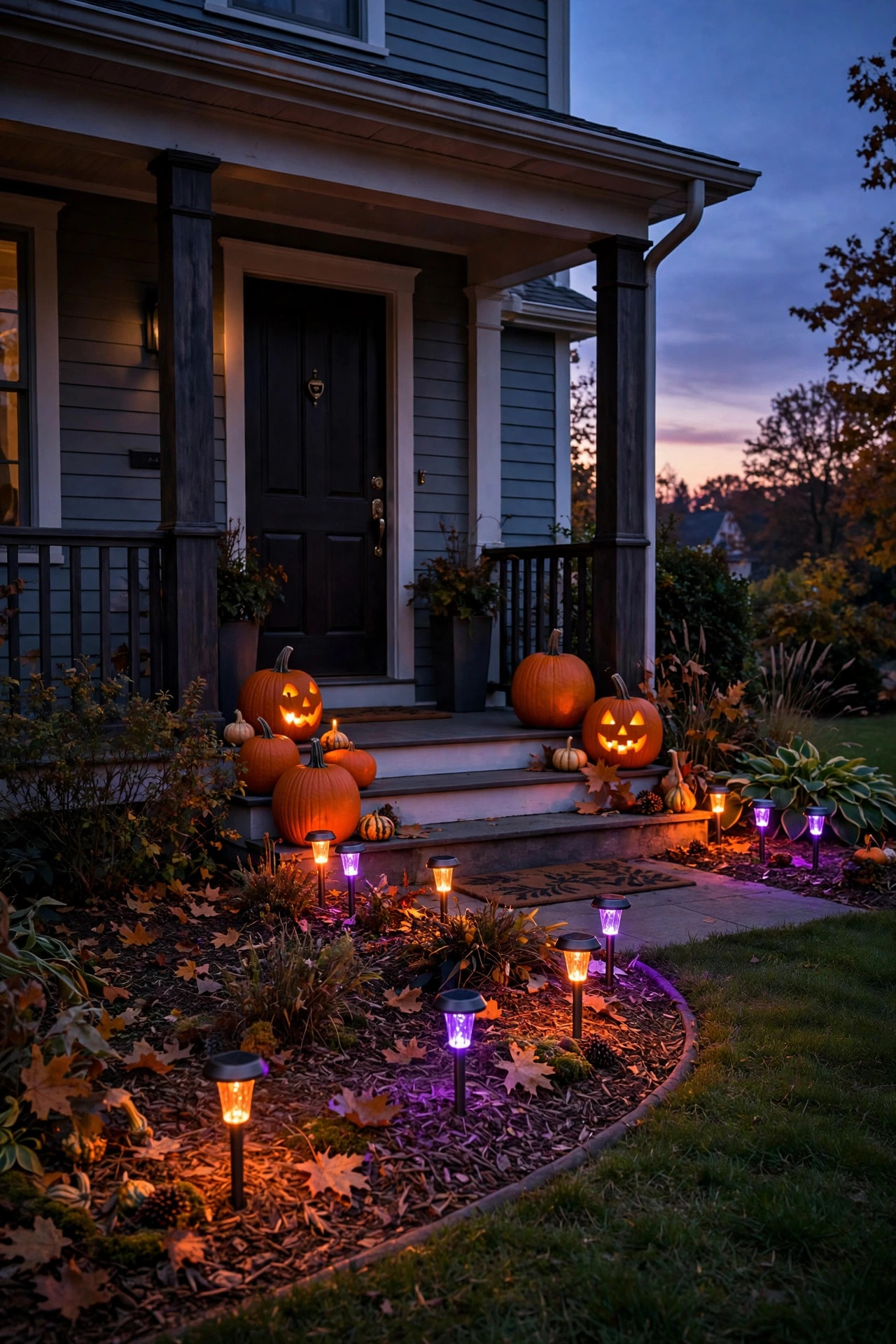
Here's the money-saving secret of this whole list: one good set of remote-control color changing solar lights replaces four bins of holiday decorations. October, I lock the path and bed lights to orange and purple for Halloween. December, it's red and green. Spring gets soft pastels for Easter, and the Fourth of July runs red, white, and blue along the fence caps. The hardware never changes — only the color story does. Remote sets cost a little more than basic cycle-only models, and in my experience they're worth every penny, because the remote usually also controls brightness and lets you freeze one color instead of living with the default fade speed. Keep the remotes in one labeled drawer, since each product line uses its own. When you buy, grab one spare set in the same line so a dead unit in year three doesn't orphan your matched colors. This single-hardware approach is also a storage blessing: my entire year of "holiday lighting" now fits in the space one wreath used to take.
Suggested budget range: $20 – $40.
15. Glow the Pond From Below With Submersible Solar Lights
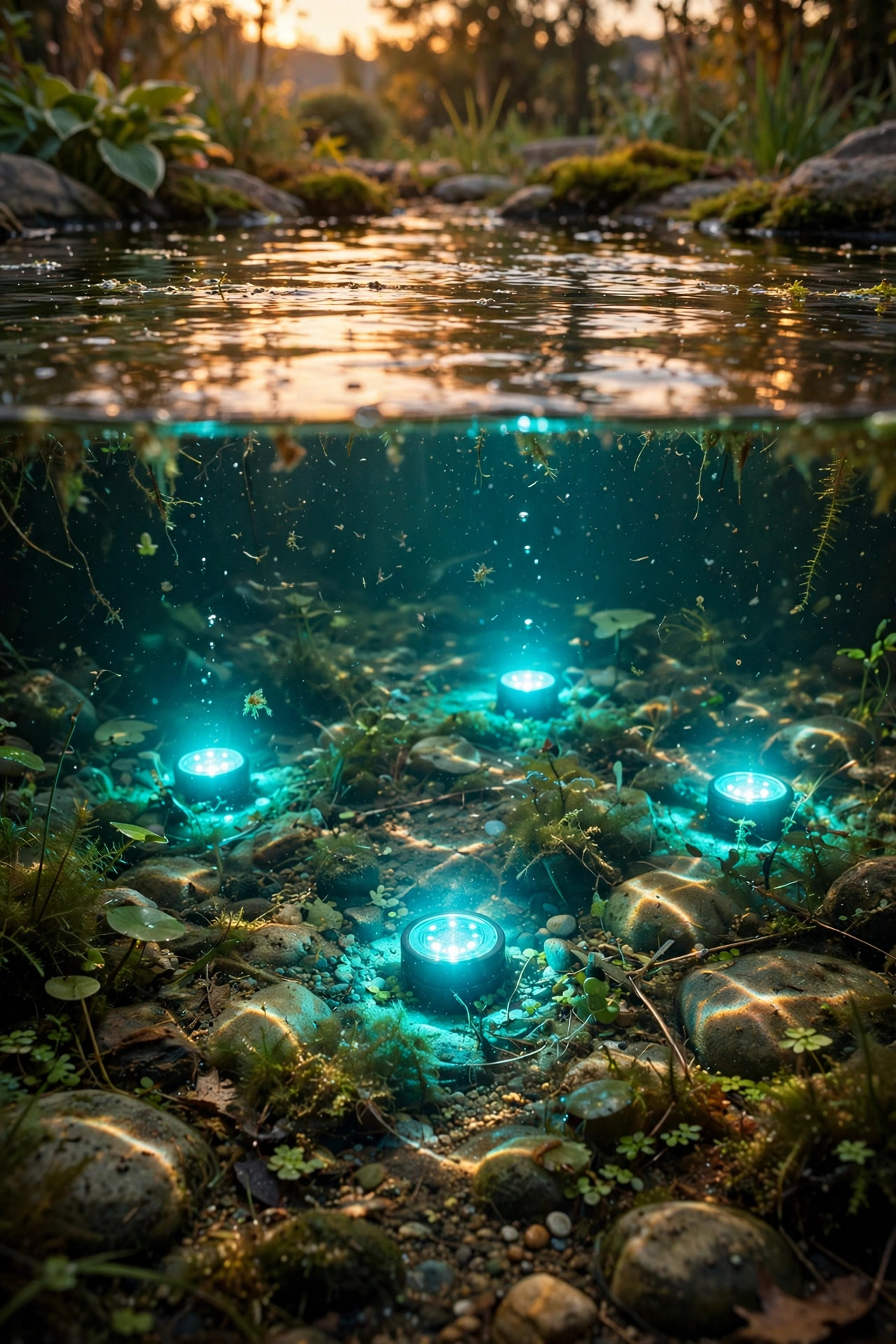
Submersible pond lights take the floating-orb idea one layer deeper. These are small sealed spotlights on weighted bases or suction cups that sit on the pond floor, connected by cable to a solar panel that stays on the bank in the sun. The light rises up through moving water, so the colors shimmer and ripple across the surface and any fountain spray turns into falling jewels. Greens and turquoises read most natural underwater, like sunlight in a lagoon, while a slow cycle through blue and violet feels properly magical on a still night. They're fish-safe — the LEDs run cool and the housings are sealed — but do wipe algae film off the lenses monthly or the glow dulls fast. One firm rule: pond lights are for ponds. Never put a fixture in a swimming pool unless it's specifically listed and rated for pool use; for pools, stick with the floating orbs from idea three. A set of two or three lights covers a typical backyard pond up to about 8 feet across.
Suggested budget range: $25 – $45.
16. Hang a Color-Changing Solar Wind Chime Over the Porch
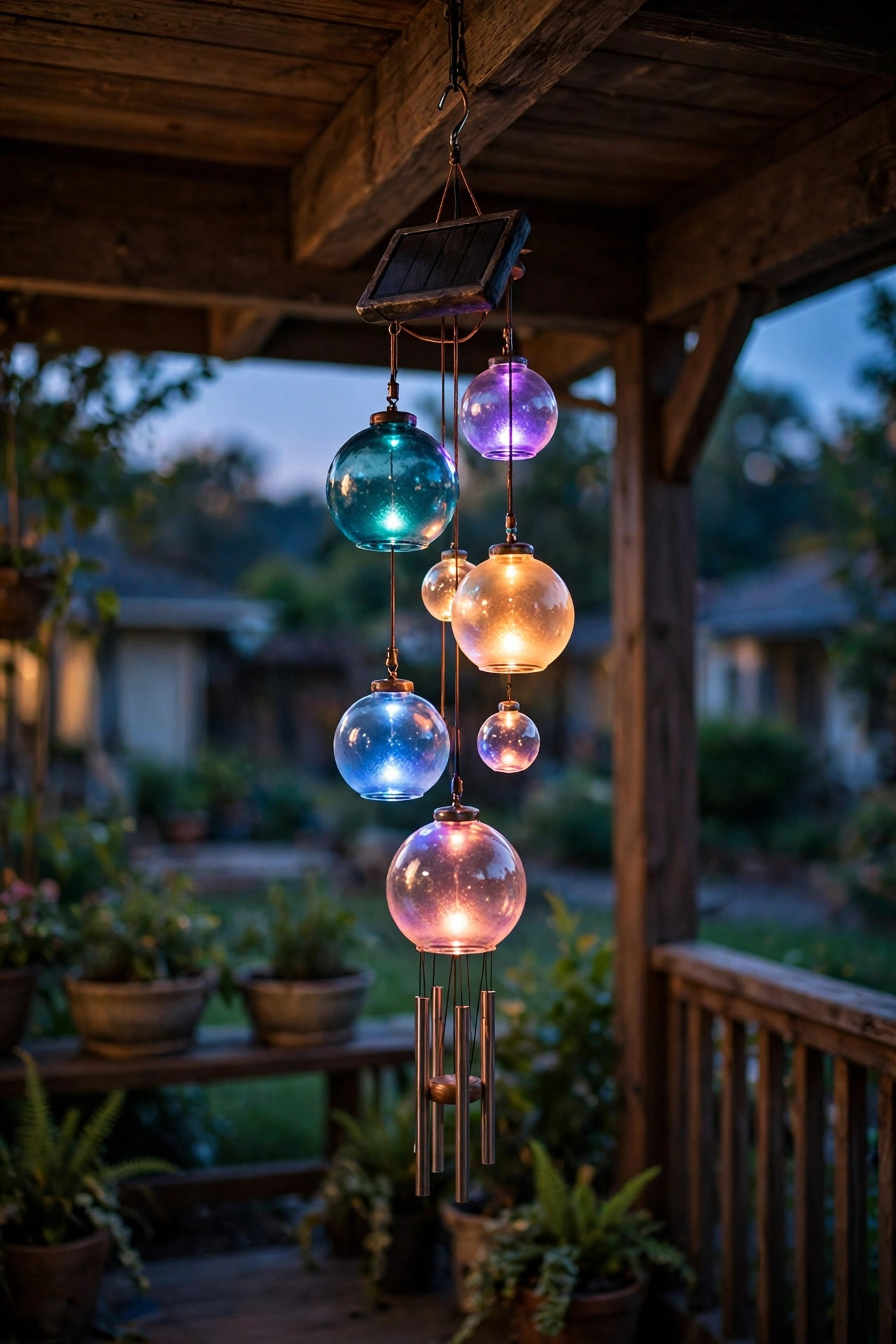
A solar wind chime gives you color in the one place garden lights never reach: up high, moving. The common designs hang a cluster of small glass globes, acrylic butterflies, or crystal-style drops from a solar top unit, and each one glows and drifts through its color changes independently, so the whole chime shimmers like a slow mobile while it tinkles. Hang it from a porch hook, a shepherd's hook, or a low tree branch where the top panel still catches a few hours of direct sun — that's the placement puzzle, since shade-loving spots starve it. Mine hangs at the sunny corner of the porch roof and catches the last of the afternoon light. Sound-wise, choose a small-chime design with a soft tone if your porch sits near a neighbor's window; the deep tubular chimes carry farther than you'd think at 2 a.m. Bring it in during high winds and ice storms, since the hanging pieces are glass or thin acrylic. It's a tiny thing, but a glowing chime over the porch swing is the detail guests ask about most.
Suggested budget range: $18 – $32.
17. Zone the Whole Yard With Color Changing Solar Lights on Remotes
Once you've tried a few pieces, the real fun is zoning: giving each part of the yard its own color identity, all running on solar. In my yard the pond zone stays in slow blues and teals, the flower beds get the warm end of the cycle — magenta, coral, soft gold — the patio locks to amber for dinner, and the path stakes fade through everything to tie it together. Zoning works because your eye reads color as place, so the yard feels designed rather than random. The practical key is buying within one or two product lines that share a remote style, so you're not juggling five different clickers; label each remote with painter's tape, trust me. Set your zones at dusk on the first night and then leave them alone — solar takes over from there, charging by day and performing by night. If your yard is mostly shade and solar struggles, my comparison of solar vs wired landscape lighting will help you decide which zones deserve a wired upgrade. Start with two zones and grow; that's exactly how my yard got here.
Suggested budget range: $30 – $60.

Frequently Asked Questions
Do color changing solar lights also have a plain warm white mode?
Most of them do. The majority of sets I've used offer at least two modes — a steady warm white around 2700–3000K and a color mode, either a fixed color or a slow fade. Remote-control models usually add individual colors plus brightness settings. If warm white matters to you for everyday use, check the listing for "dual mode" or "white/color switchable" before buying, because the cheapest cycle-only stakes sometimes skip white entirely.
How long do color changing solar lights stay on at night?
With a full day of sun — roughly 6 to 8 hours of direct light on the panel — expect 6 to 10 hours of glow in summer, which easily covers dusk to bedtime and beyond. In winter, shorter days and a lower sun angle can cut that to 3 to 5 hours. Placement is everything: a panel shadowed by the house after 2 p.m. will never fully charge, no matter how good the light is.
Are color changing solar lights waterproof enough to leave out all year?
Most garden models are rated IP65, which shrugs off rain and sprinklers fine. Floating and submersible pond lights should be IP68. I leave my stakes, rocks, and caps out through the warm months and bring in the delicate pieces — fairy-light figures, chimes, orbs in freezing climates — before hard winter weather. Ice, not rain, is what actually kills solar fixtures, so in cold regions a garage shelf from December to March doubles their lifespan.
Why did my solar lights get dim or stop changing color?
Nine times out of ten it's the battery or a dirty panel, not the LED. Scrub the panel with a damp cloth first — pollen film alone can halve charging. If that doesn't fix it, the rechargeable battery is probably tired after two or three seasons; better models have a replaceable AA NiMH battery under a screwed-down cover. Also check for "shade creep": a shrub that grew six inches this year may now be shadowing the panel every afternoon.
Conclusion
Color changing solar lights are the most forgiving lighting project you'll ever try: no wiring, no electrician, no bill — just sunshine in, rainbow out. Start small with path stakes or a tree spotlight, learn how your yard's sun behaves, then layer in orbs, globes, and zones as the ideas grab you. Keep favorites on a steady color where feet and faces need honest light, and let the beds, water, and fence lines play. Browse the rest of my solar and garden lighting ideas here on the site, and your yard will be the one the neighbors slow down for.