There is something about a back porch at dusk that front porches just can't compete with — nobody's walking by, the yard is quiet, and the whole space feels like it's yours alone. These back porch lighting ideas are how I make that feeling happen, whether I'm out with a glass of sweet tea or hosting a backyard cookout. In my experience, the trick isn't buying one big bright light; it's layering smaller warm glows so the space feels cozy instead of like a stadium.
Here's my philosophy after years of tweaking my own patio: you want three layers — an ambient base that keeps the space safely walkable, a task layer over the spots where you actually eat or read, and a little sparkle that makes it feel magical. Warm white light (2700 to 3000 Kelvin) is non-negotiable for me, because cooler light makes a back porch feel like a parking lot. So grab a coffee, and let's walk through 19 back porch lighting ideas I genuinely use, recommend to friends, and keep coming back to every single summer.
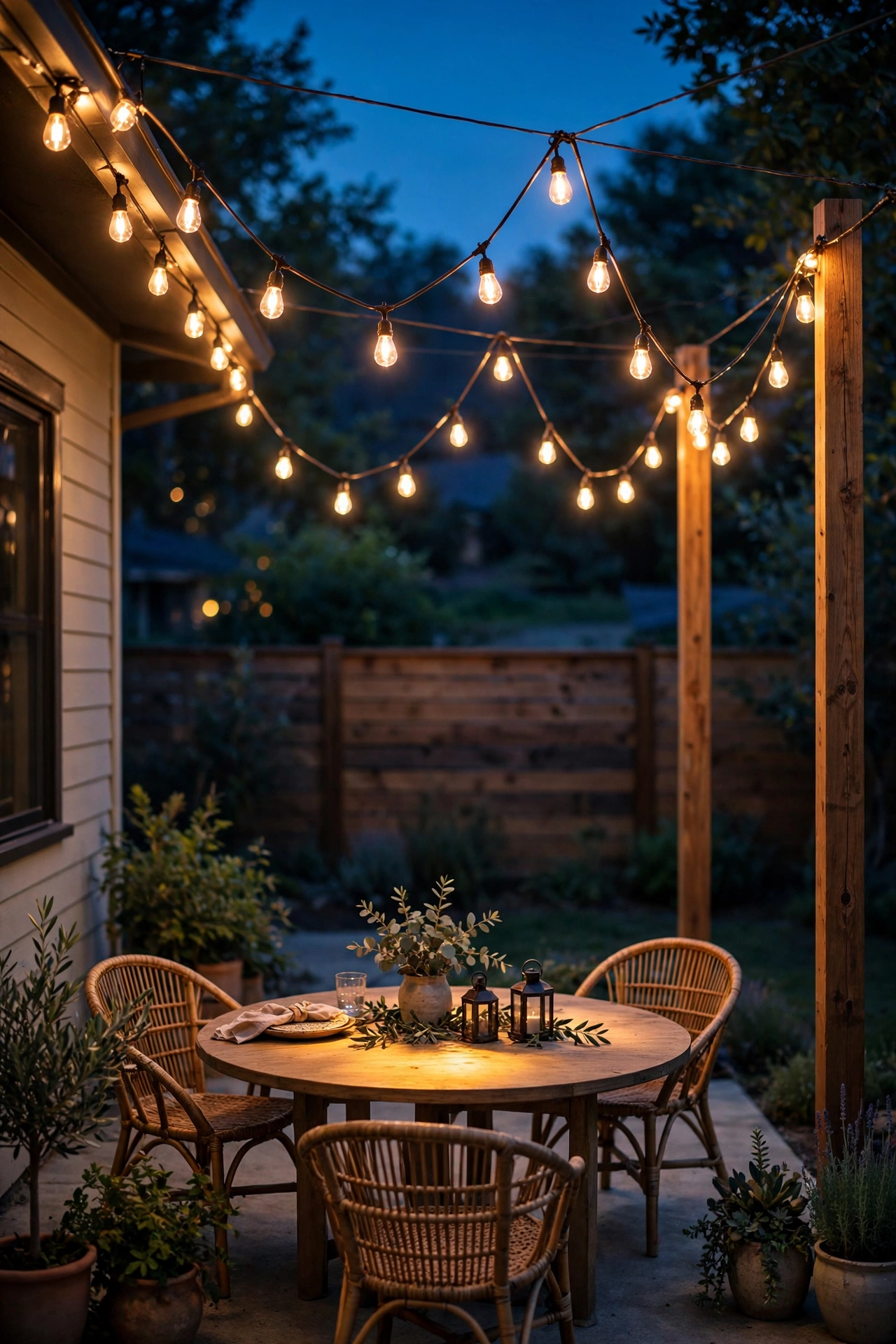
1. Drape a Zigzag String-Light Canopy for Instant Back Porch Lighting
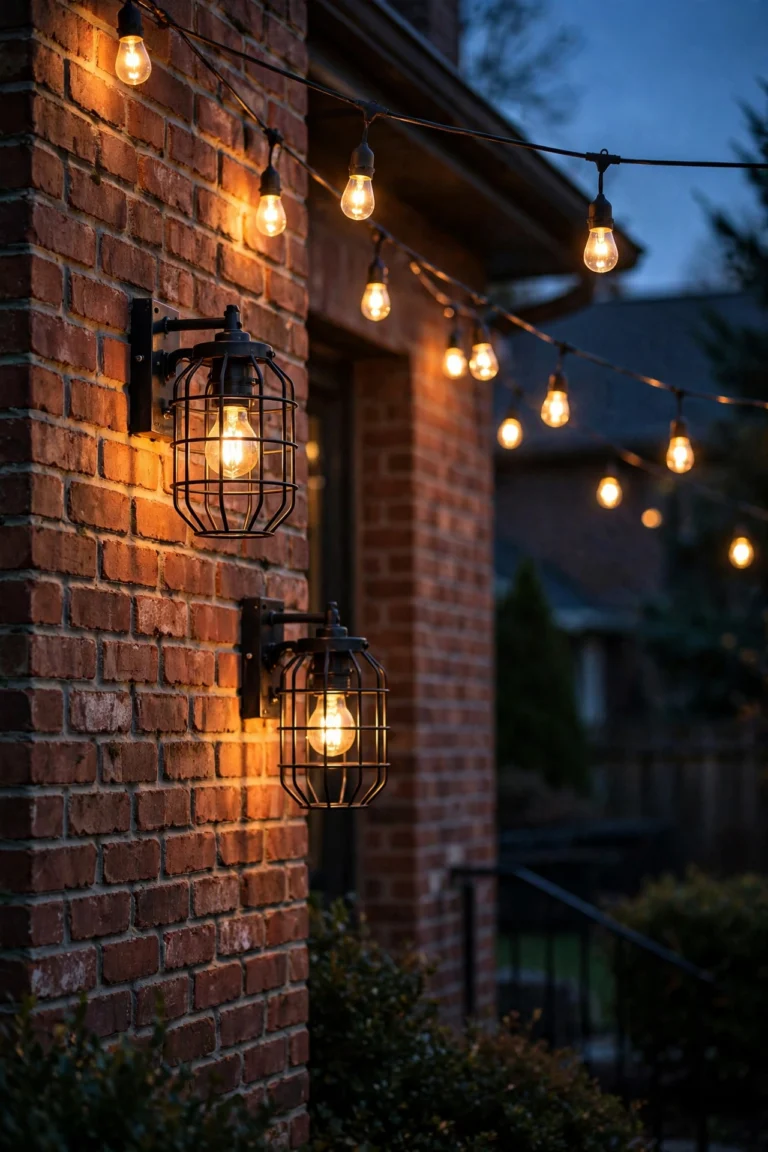
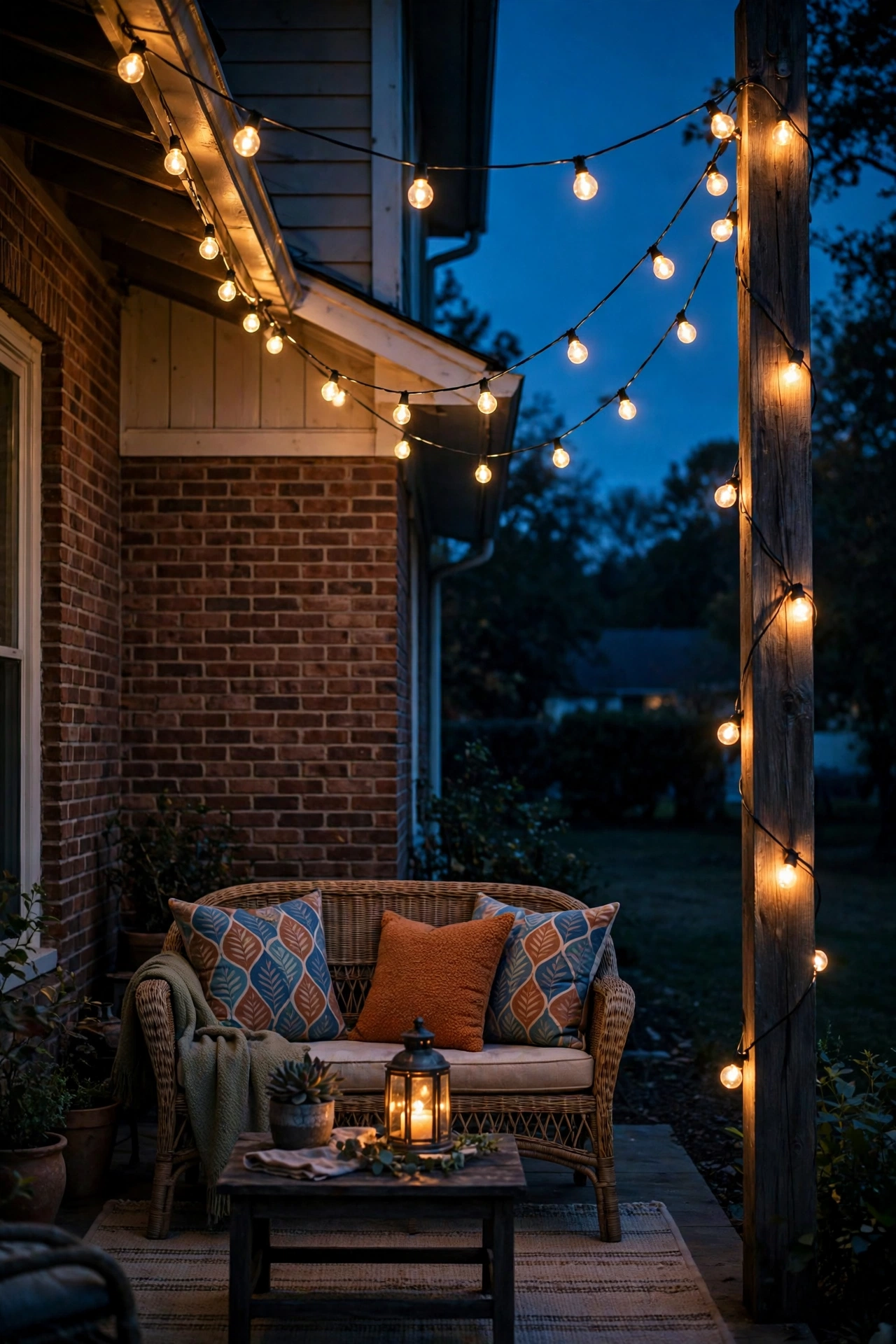
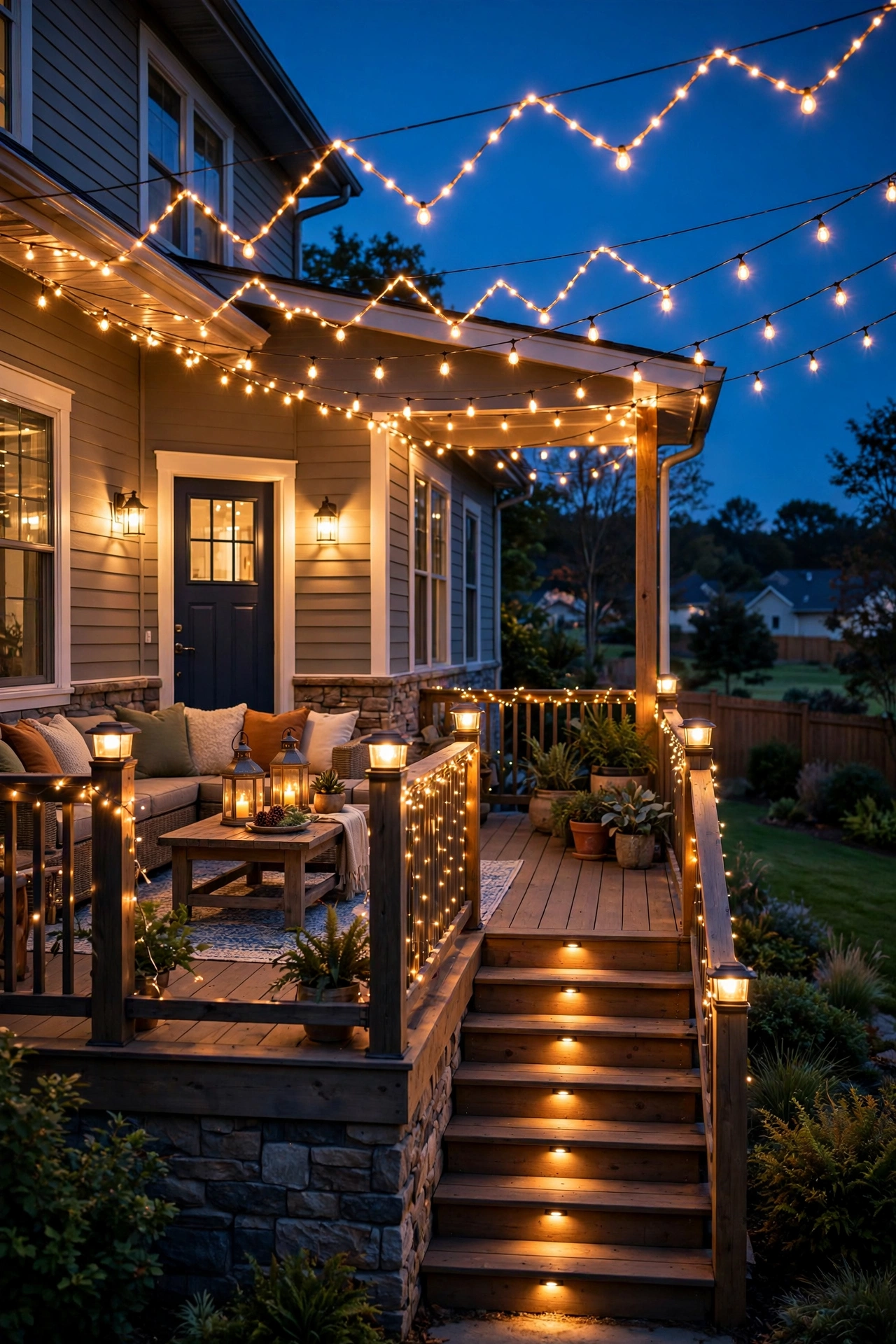
Honestly? If you do only one thing on this list, make it this. A zigzag canopy of outdoor string lights turns an ordinary slab patio into something that feels like a Tuscan café the second the sun drops. I run mine from the house's fascia board out to sturdy posts or the fence, crisscrossing back and forth so the lines make a loose "W" shape. Keep the low points around 8 to 9 feet off the ground so tall guests don't bonk their heads, and hang the middle strands a foot or two higher for that billowy sail look.
Here's the practical part: always buy outdoor-rated, shatterproof bulbs, and keep the total wattage under 80 percent of your extension cord's rating. I use commercial-grade strands spaced 1 foot apart with warm white LED bulbs. One common mistake is stringing everything from one outlet without checking the math — a second outdoor outlet or a heavy-duty splitter solves that. Put the whole canopy on an outdoor smart plug with a sunset timer and you'll never have to remember to flip it on. This one idea changes the entire mood of the porch more than anything else I've tried.
Suggested budget range: $60 – $140.
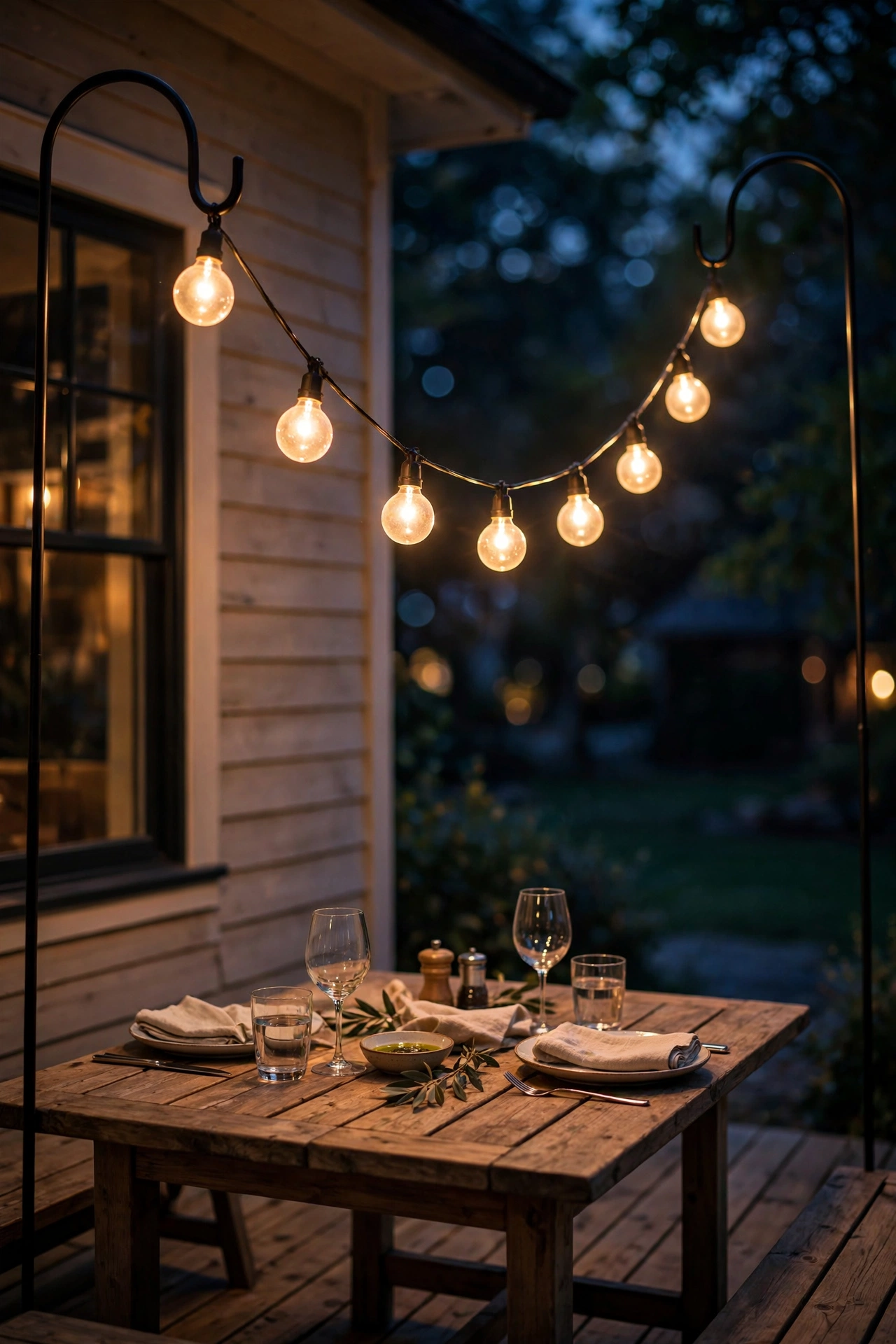
2. Hang Bistro Globe Lights Low Over the Dining Table
While a canopy covers the whole porch, hanging globe lights low over your outdoor dining table gives you that intimate restaurant feel. I love a single strand (or two, parallel) swagged between two shepherd's hooks or porch posts so the bulbs sit about 30 to 36 inches above the tabletop. Any higher and the light floats away from the food; any lower and you'll block everyone's view across the table.
Use larger globe bulbs — the G40 size is my go-to — in warm white, and pick LED versions so nobody gets a hot bulb near their forehead. In my experience, five to seven bulbs per 6-foot table is the sweet spot: enough to read a menu by, dim enough that faces stay flattering. If your table has an umbrella, drape the strand around the umbrella's ribs for the same effect without any hooks. Honestly, this setup has made more of my backyard dinners feel special than any fancy tablecloth ever has.
Suggested budget range: $40 – $90.
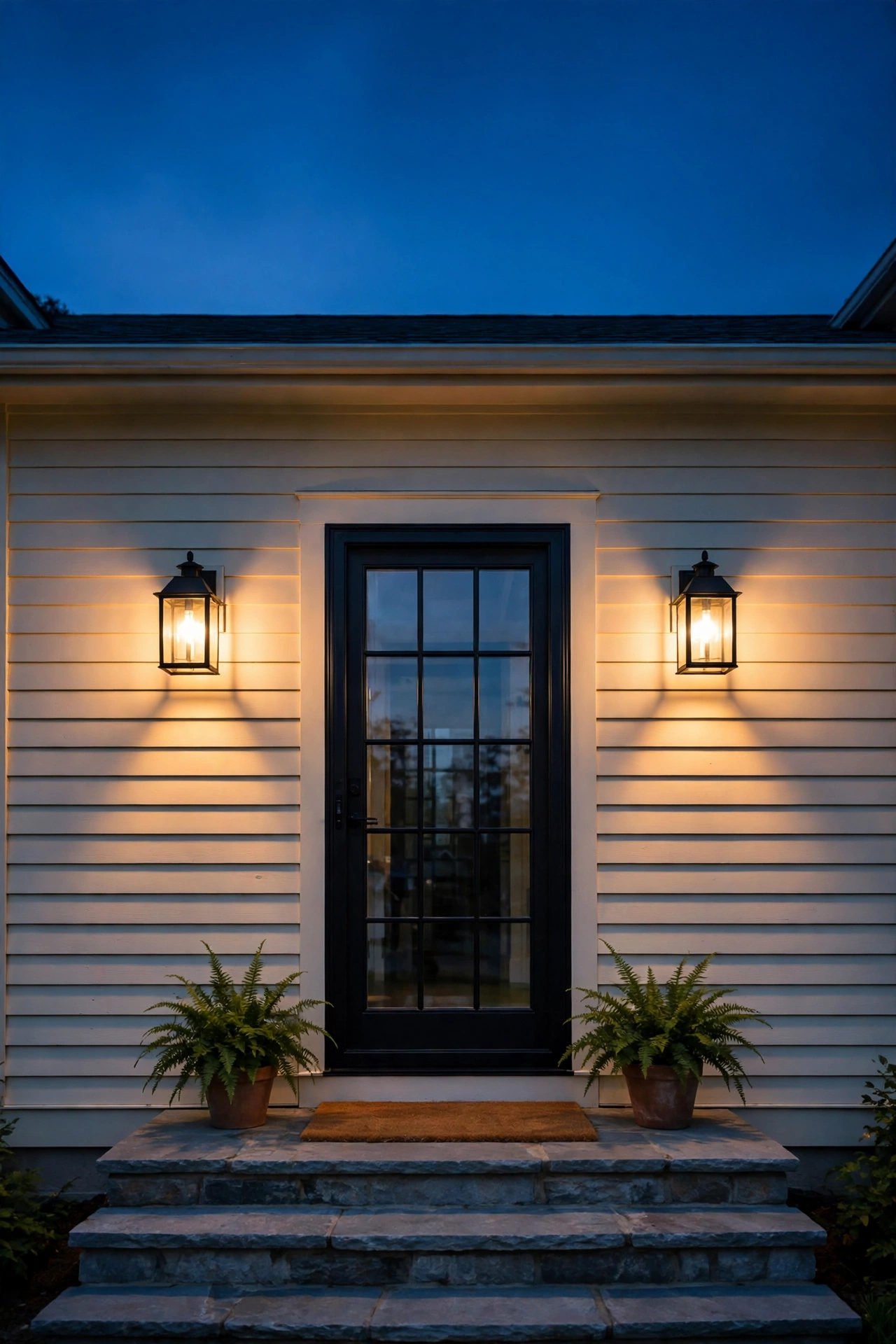
3. Flank the Back Door with a Matched Sconce Pair
A pair of matching sconces flanking the back door is the one lighting choice that makes the house itself look finished. I mounted mine about 5 and a half feet off the ground (measured to the center of the fixture), and I always center them about 6 to 10 inches from the door trim on each side. The symmetry does something psychologically — guests walk up and think, "oh, this place is put together."
Choose fully enclosed, wet-rated fixtures so driving rain can't reach the bulb, and stick with warm white 2700K bulbs that echo the rest of your porch lighting. If your door has a window or sidelights, pick clear-glass sconces so the light throws cleanly instead of getting muddy behind frosted glass. One thing I always recommend: put them on a separate switch or a motion sensor (more on that in idea 6) so they can double as security lighting on quiet weeknights. It's practical, pretty, and honestly the easiest curb — well, backyard — appeal win here.
Suggested budget range: $70 – $180.
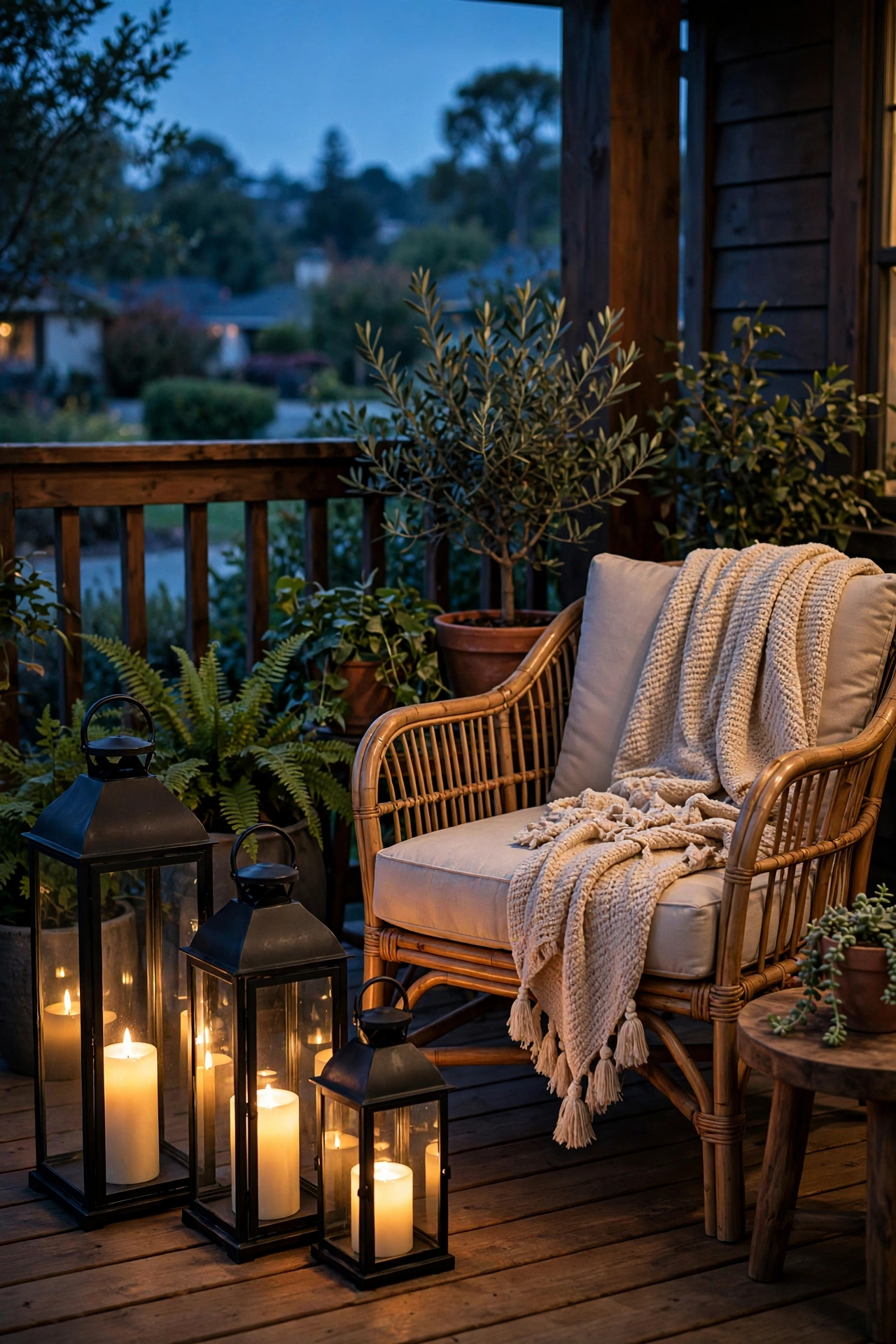
4. Cluster Oversized Lanterns in a Corner Seating Nook
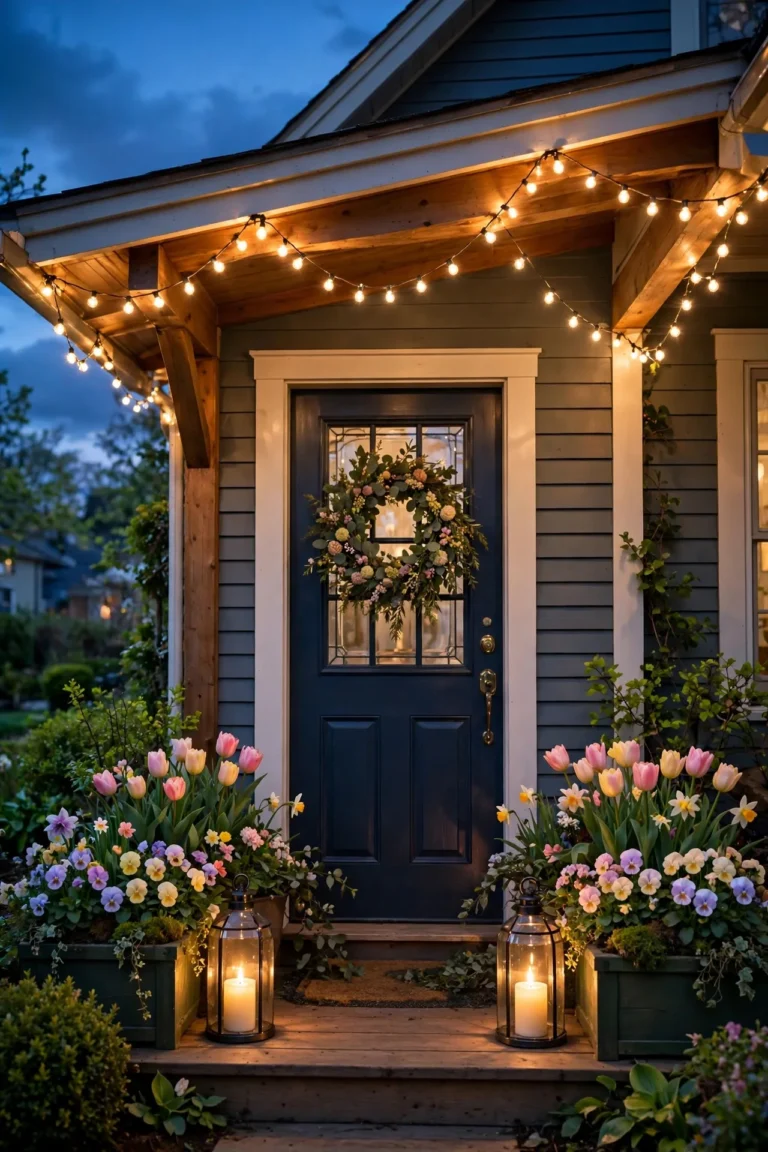
Every cozy back porch needs at least one lantern moment. I group three oversized lanterns of different heights — say 12, 16, and 22 inches — in a corner next to my favorite chair, with LED flameless candles inside. The mix of heights is what makes it look designed instead of random, and the warm flicker reads as actual candlelight from ten feet away.
Use outdoor-rated LED pillar candles only (real flames and breezy porches are a bad combo), and look for candles with built-in timers so they click on at dusk and off around midnight. If your porch gets rain, choose lanterns with glass panels that close fully or a covered overhang above them. I refresh mine seasonally — plain linen colors in summer, deep green or plaid ribbon accents in fall — which makes this the cheapest decor refresh on the list. Browsing different outdoor wall lantern styles can help you match the lanterns to your sconces before you buy.
Suggested budget range: $50 – $130.
5. Line the Path with Solar Back Porch Lighting Stakes
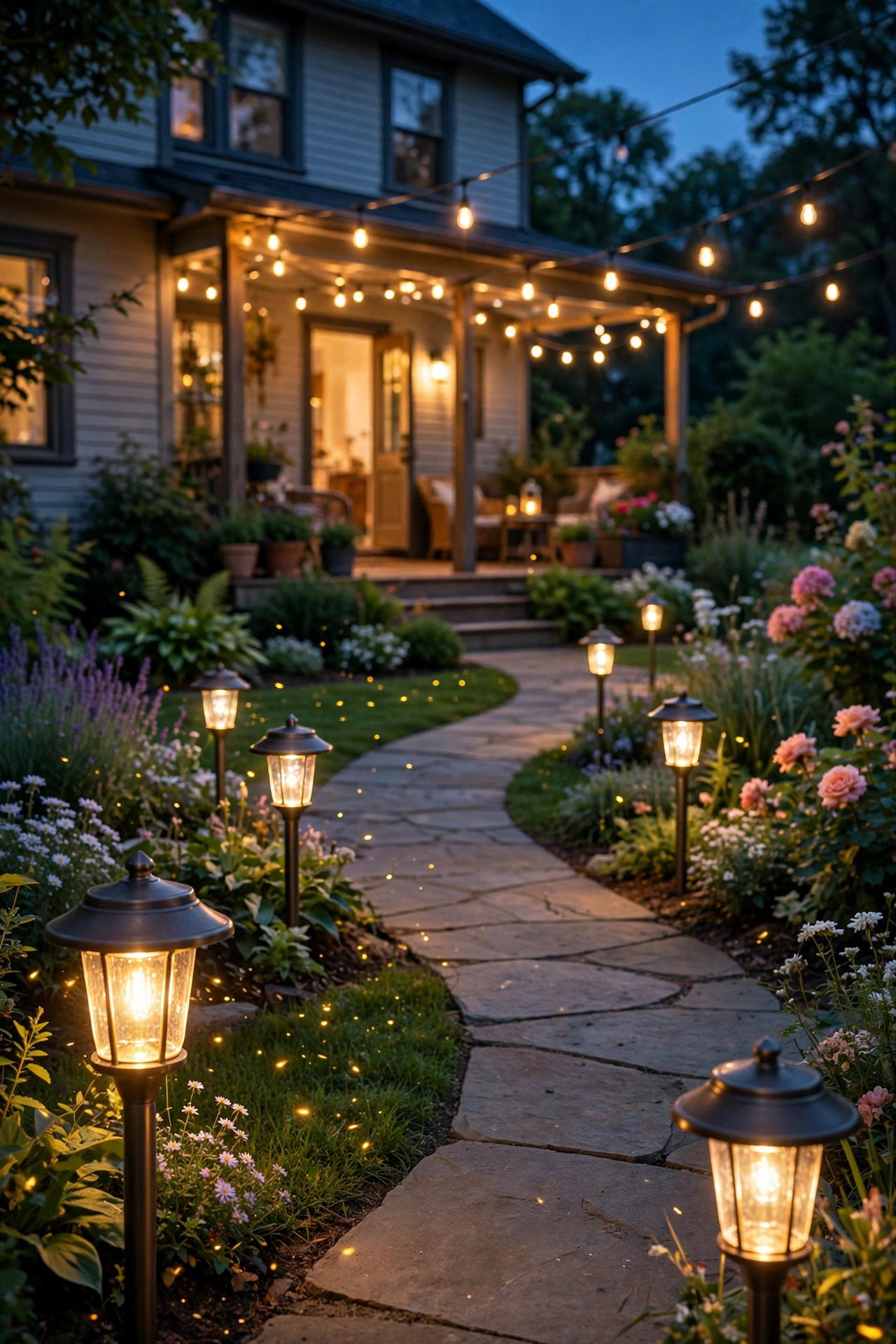
The walk from the back door to the yard, grill, or shed needs light — but running wire there is a whole project. That's where solar pathway stakes earn their keep. I space mine 6 to 8 feet apart on alternating sides of the path, which gives you a gentle rhythm of light without a runway effect. Press them into soil (not pavers) so they stay put, and give the little solar panels full sun during the day or they'll fade out by 10 p.m.
In my experience, the cheap ones die by August, so I spend a bit more for metal-bodied stakes with replaceable rechargeable batteries — they last two to three seasons instead of one. Aim for 10 to 15 lumens per stake; more than that and they're glaring little beacons. And wipe the panels with a damp cloth every couple of weeks — porch dust and pollen absolutely kill charging. If you're on the fence about solar vs wired LED lights will help you decide which fits your porch better.
Suggested budget range: $30 – $80.
6. Add a Dual-Brightness Motion Sensor for Safety
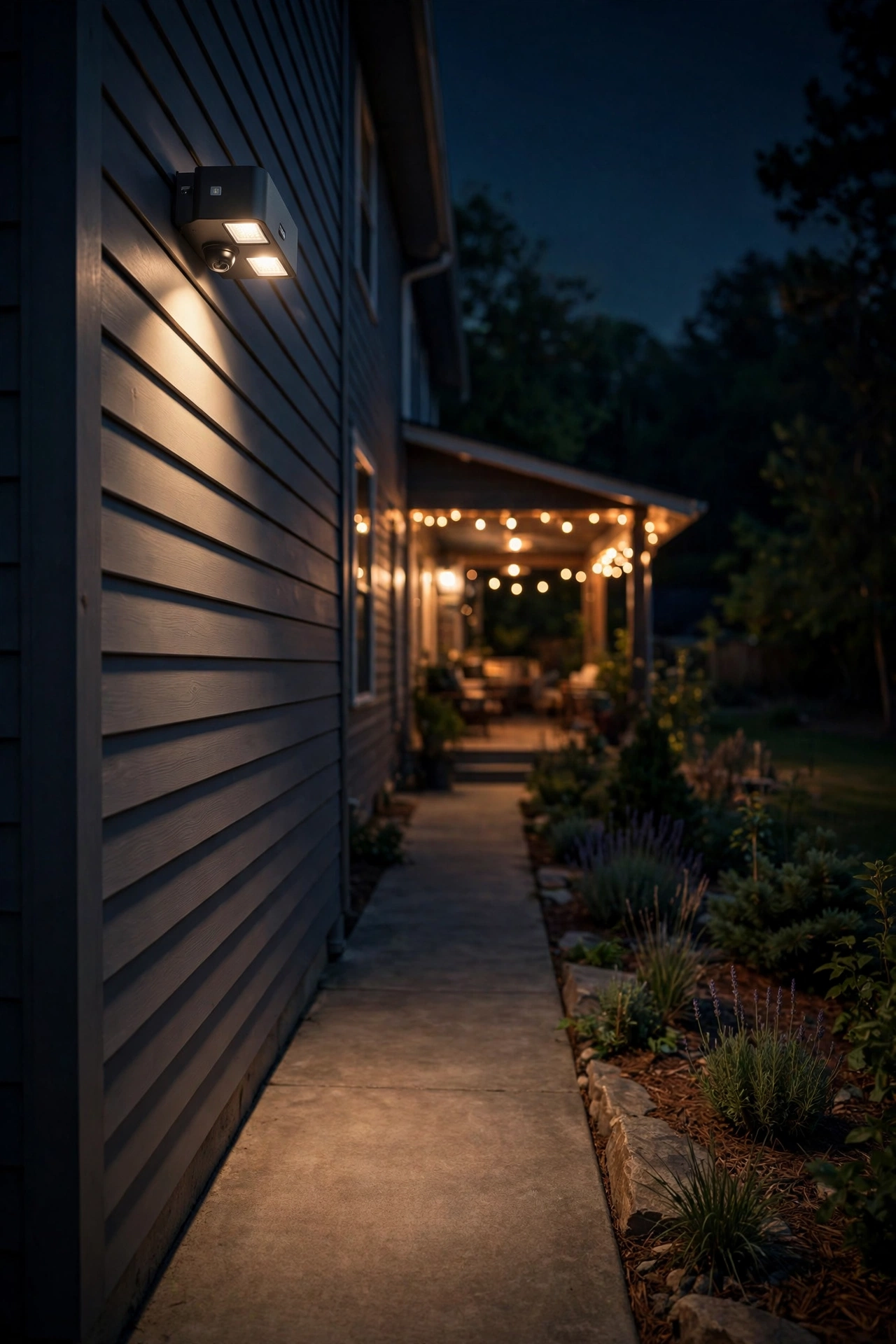
Here's the thing nobody admits: the coziest back porch still needs to feel safe. I added a motion-sensor flood to the back of the garage, but here's my trick — I use a dual-brightness model that glows at a low 20-percent dim all night and jumps to full brightness when it senses motion. You get that welcoming background glow plus genuine security without your yard flashing like a crime scene every time a squirrel visits.
Mount it 8 to 10 feet high and aim it down the walkway or driveway, not at your seating area (blinding your guests mid-conversation is a mood killer). Set the sensitivity to "medium" so pets don't trigger it, and choose 3000K so the security light doesn't clash with your warm porch layers. Many newer models run on solar or battery, so there's no wiring at all. Test the detection zone during the day by walking the paths you actually use — five minutes of testing saves weeks of annoyance.
Suggested budget range: $35 – $100.
7. Light the Deck Stairs with Recessed Step Lights
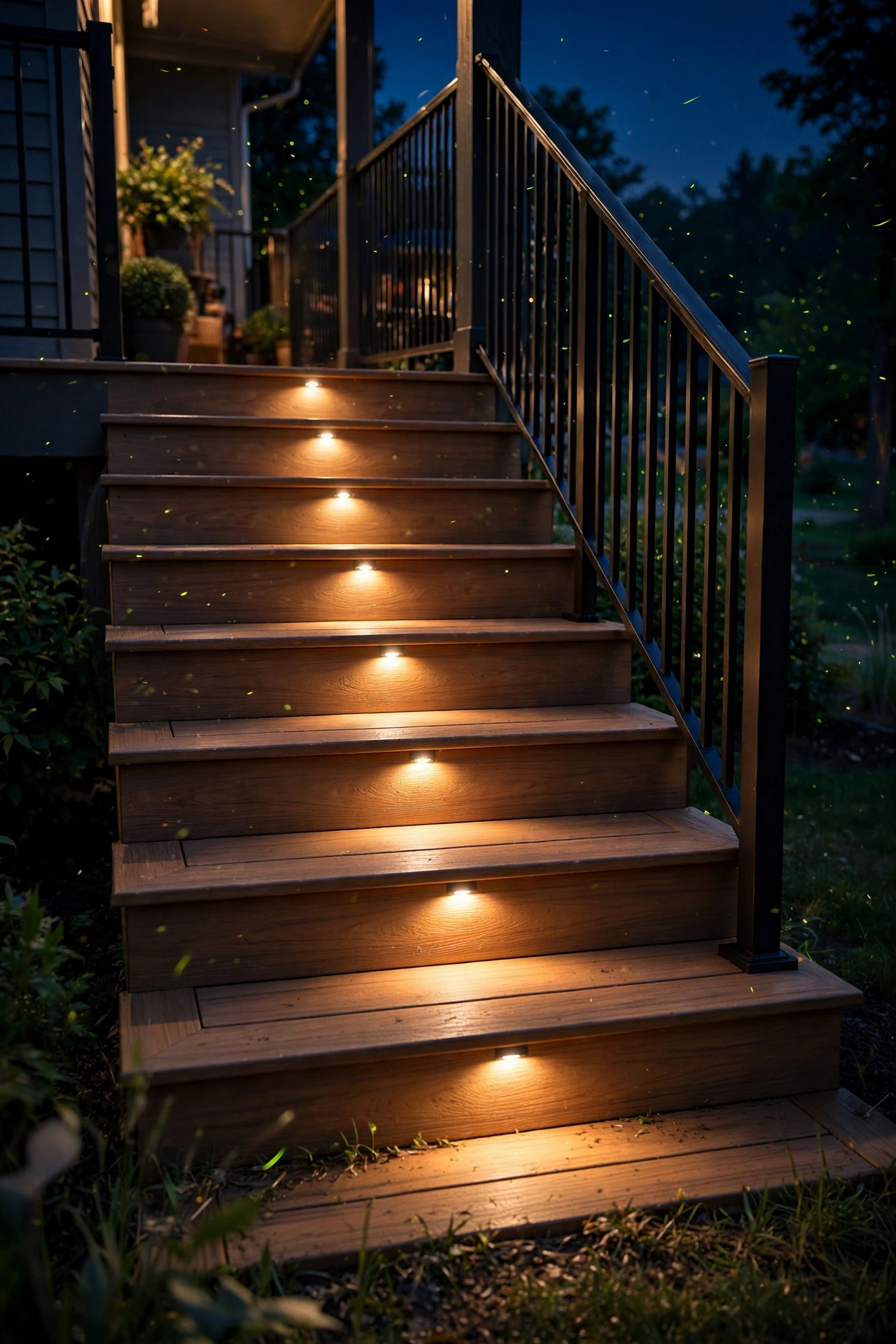
Step lights are one of those upgrades you don't think you need until someone misses a stair with a tray of burgers. I use recessed LED step lights set into the risers — one per stair, centered — on my deck steps, wired on the same timer as the rest of the porch lighting. They wash light downward across the tread, which is exactly what you want: visible footing, zero glare in anyone's eyes.
You can also surface-mount small step lights if you don't want to cut into the risers — they look nearly as clean and install with two screws. Look for fixtures rated for wet locations (not just damp), and keep them to 2 to 4 watts each; this is a safety job, not a showpiece. I always tell people to stagger them left-center-right if they want a designer look, but centered is perfectly fine and honestly easier to wire. Solar options exist for stairs, but in my experience hardwired wins here because you need them every single night, rain or shine.
Suggested budget range: $45 – $120.
8. Ring the Fire Pit Area with Low-Glow Accent Lights
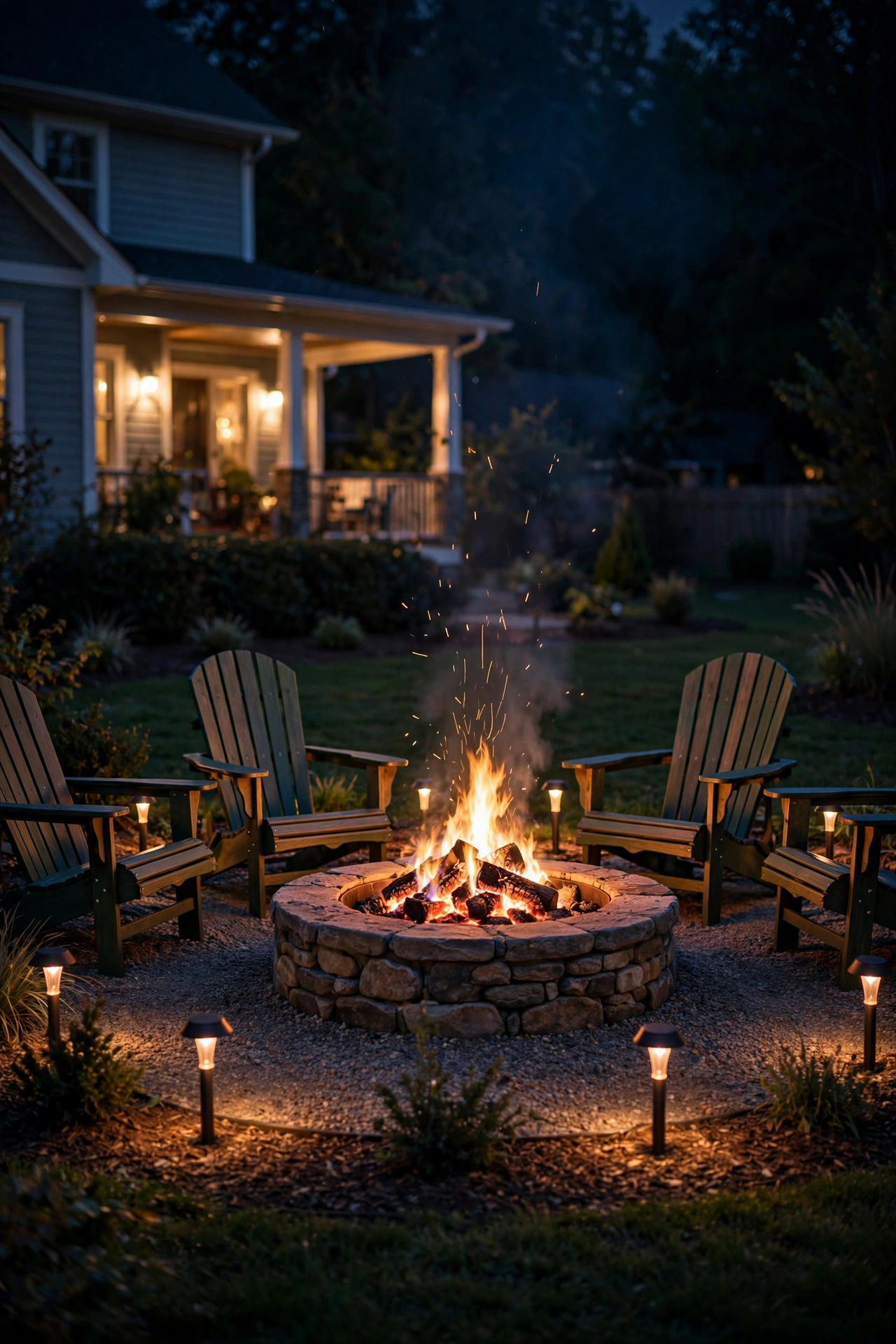
Nothing ruins a fire pit evening like someone tripping over a chair leg on the way to the flames. My fix is a ring of low-profile accent lights — I use small solar bollards set about 10 to 12 feet from the fire pit's center, one roughly every 8 feet around the circle. They mark the seating zone, light up feet and bags, and stay dim enough that they never compete with the fire itself.
Keep everything low voltage or solar here, and never run 120-volt wiring near an open flame area unless an electrician routes it properly. In my experience, warm white 2200 to 2700K works best — it blends with the firelight instead of fighting it. If you have a built-in stone fire pit with a cap rail, tuck small LED strip lighting under the cap overhang so the whole thing glows from within — it looks incredible in photos. And when you're planning the layout, pairing your lighting with proper backyard fire pit seating makes the whole area feel like a destination instead of a hazard. Honestly, this ring of light is what makes people stay out an extra hour.
Suggested budget range: $50 – $150.
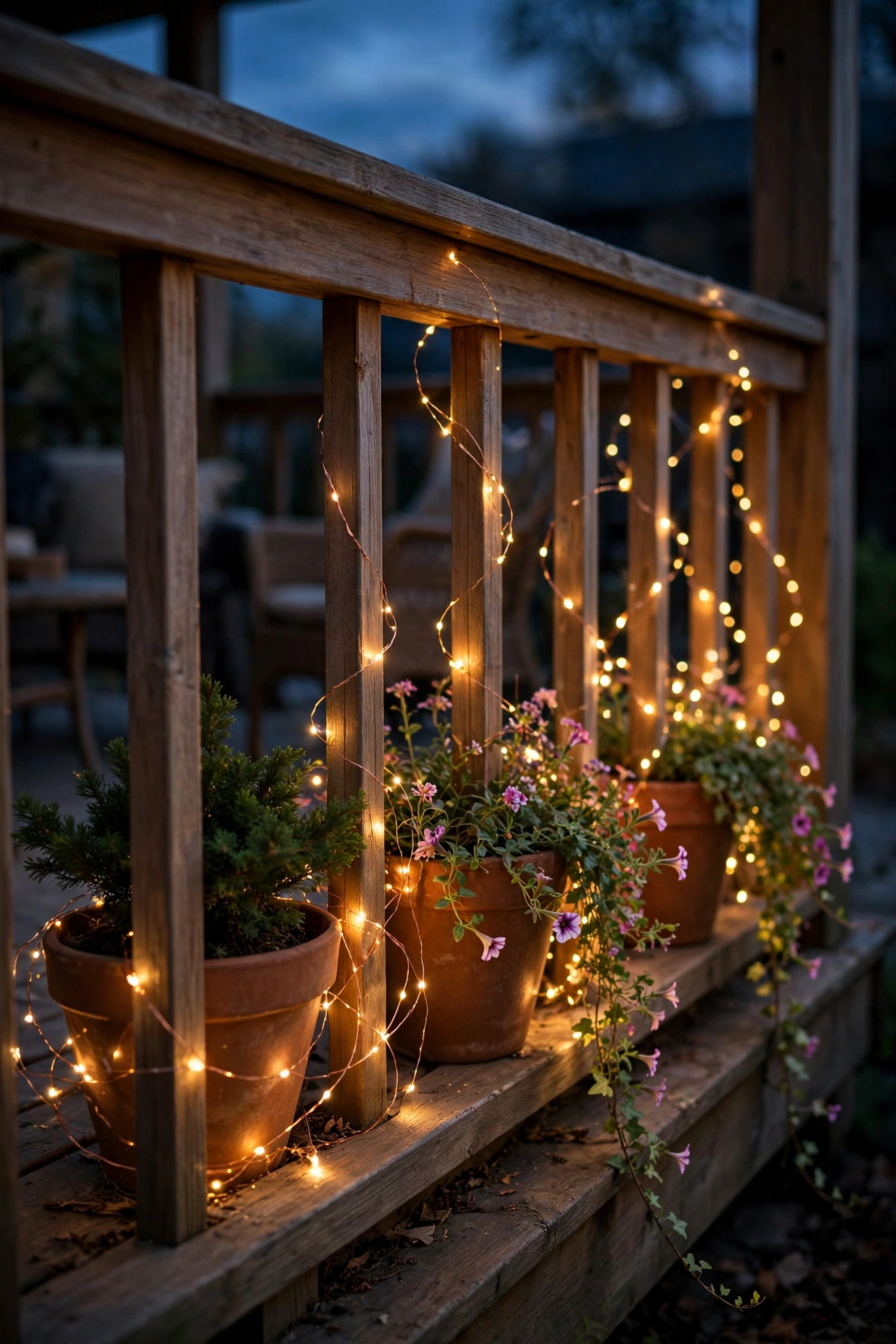
9. Weave Fairy Lights Through Railings and Planters
This is my favorite five-minute trick. Take a strand of copper-wire fairy lights — the bendy kind on a hair-thin wire — and weave it through your porch railing balusters, around planter pots, or up through the branches of a potted plant. In my experience, two strands of 33 feet each cover a standard 10-foot railing section with enough density to look lush, not sparse.
The micro LEDs are safe to touch and barely use any power, so one strand can run for months on a couple of AA batteries or a small solar panel. Tuck the battery pack inside the planter or behind a post where you can't see it, and set the strand's built-in timer to 6 hours so it turns off automatically. Rain won't hurt them (they're wire, not fixtures), but I bring mine in for hurricanes and deep freezes. The effect is pure magic — a twinkling railing edge that makes the whole porch perimeter glow softly without a single harsh bulb.
Suggested budget range: $15 – $40.
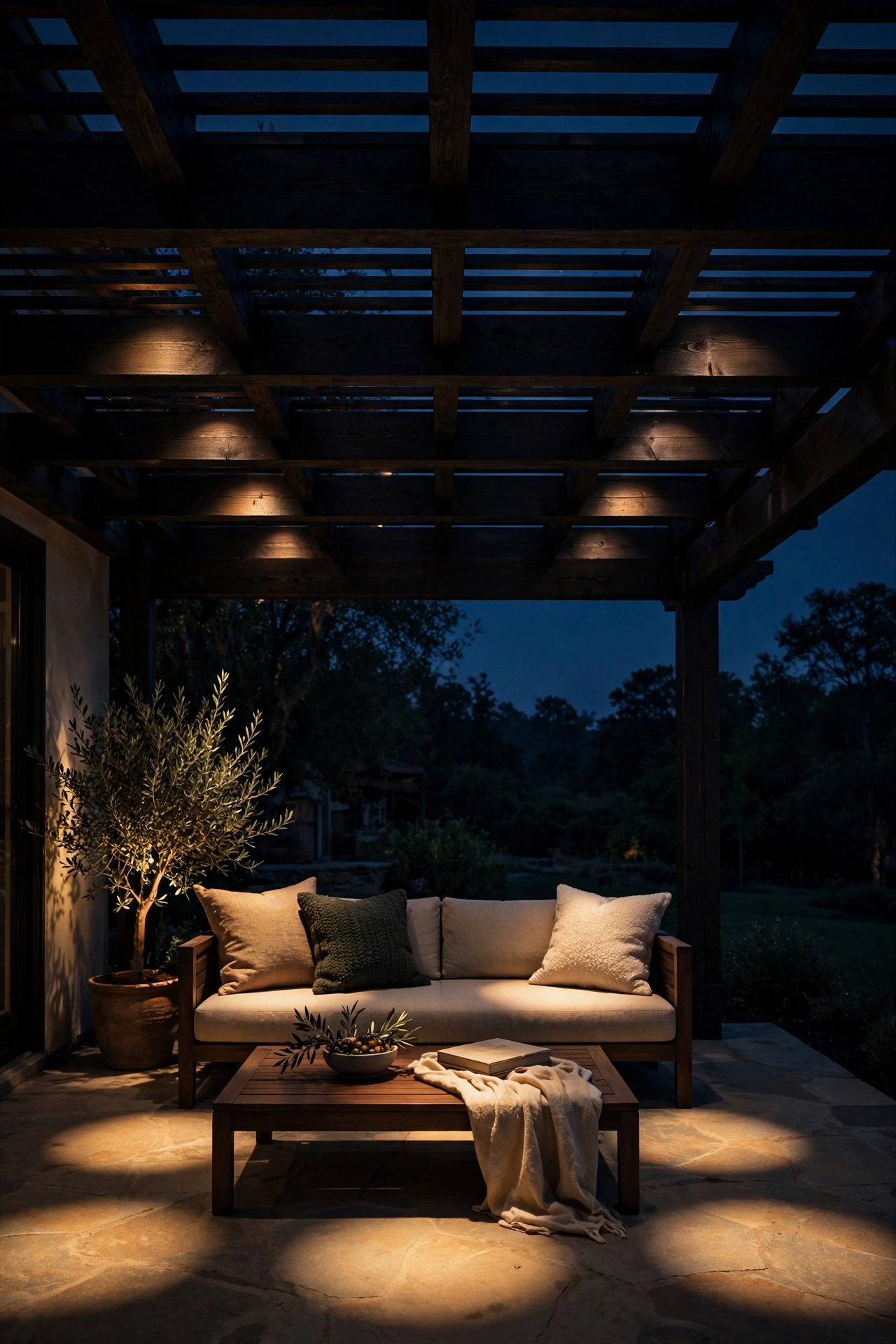
10. Install Recessed Downlights in the Pergola Beams
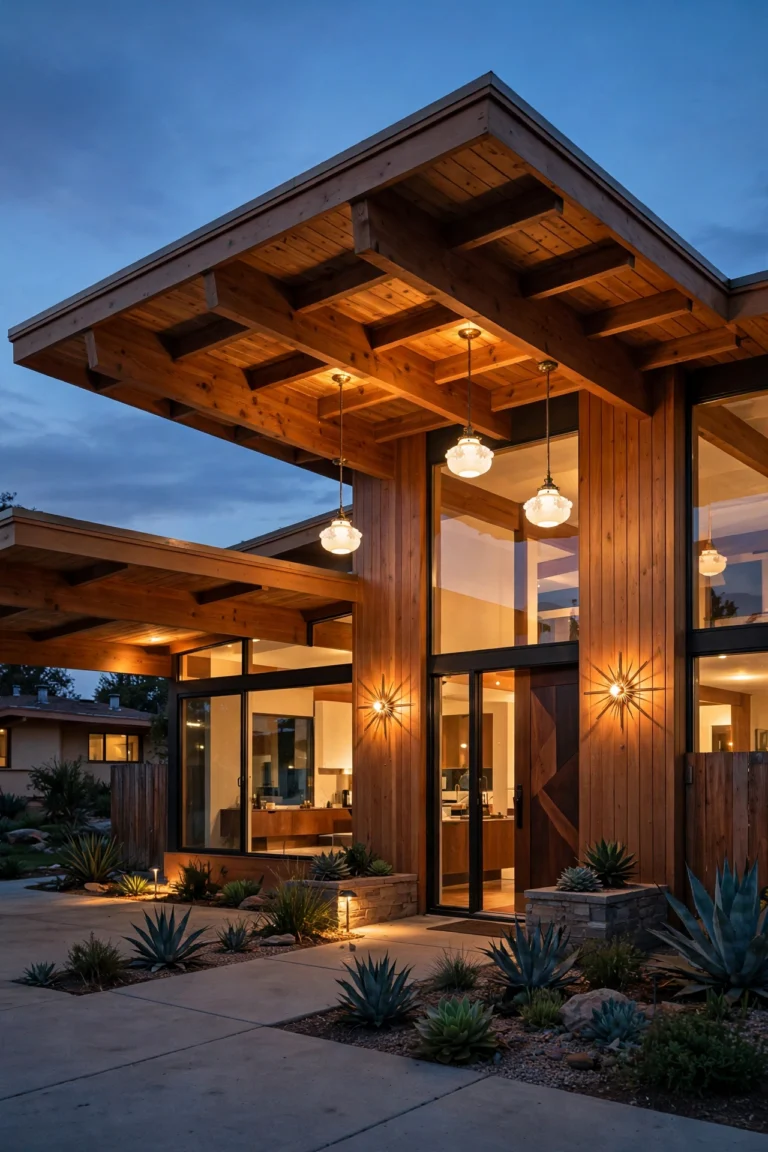
If you have a pergola over your back porch, recessed downlights in the beams are, in my opinion, the single most polished back porch lighting upgrade you can make. I had six small LED downlights recessed into my pergola's cross beams — one every 4 feet or so — and they wash perfect pools of warm light down onto the seating area. No visible fixtures, no bulbs to stare at, just glow.
Go with low-voltage 12-volt recessed lights so the wiring is a simple DIY run from a transformer near the house, and choose fixtures with a trim you can paint to match the pergola wood. Aim for about 300 to 400 lumens each — enough to read by, not enough to feel interrogated. This is one project where hiring an electrician for an hour to make the final connections is worth it if you're nervous around wiring. The result looks like something from a design magazine, and the fixtures basically disappear during the day.
Suggested budget range: $150 – $350.
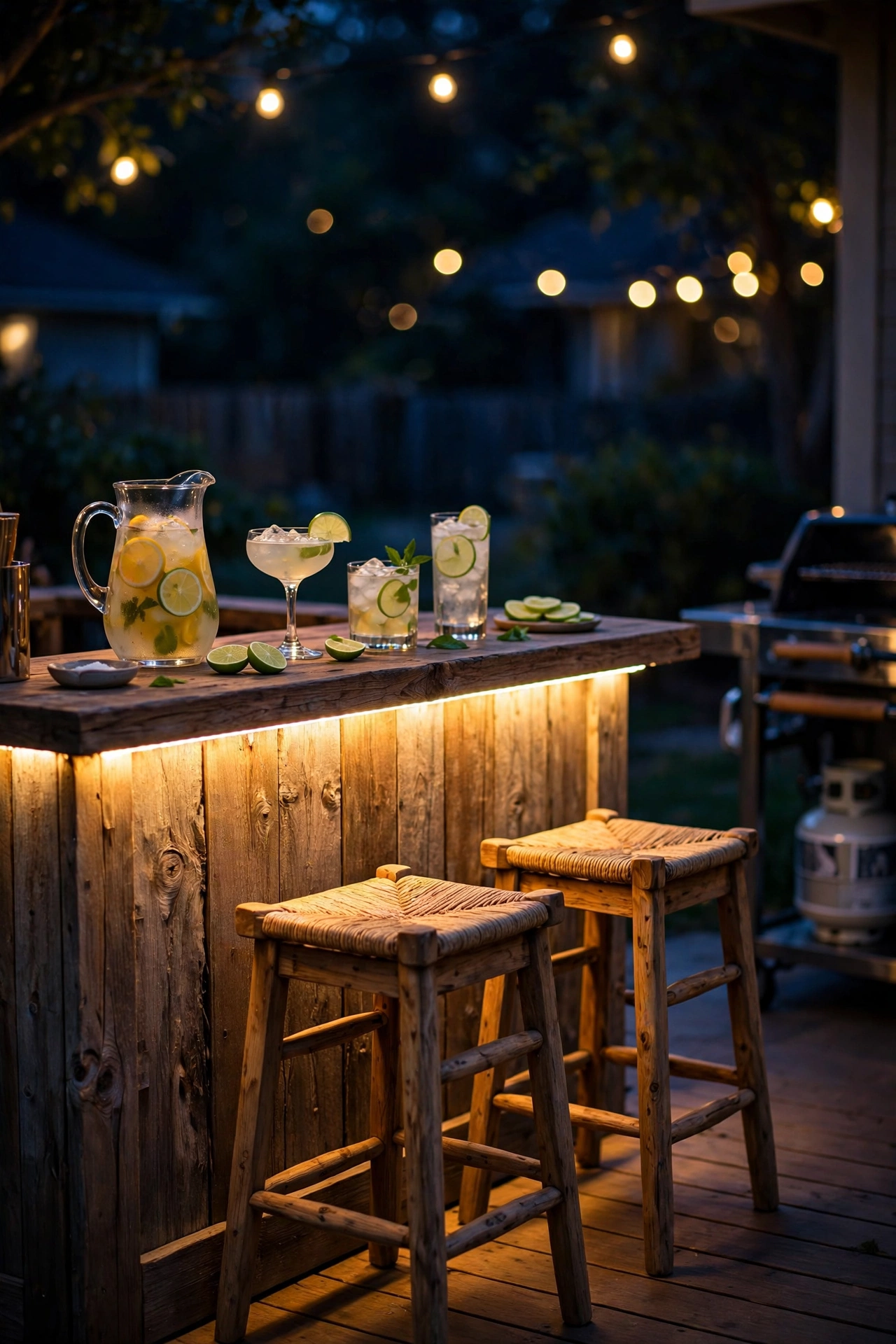
11. Tuck LED Strips Under the Outdoor Bar or Serving Ledge
Under-counter lighting is huge indoors, but almost nobody does it outside — and it's fantastic. I ran a strip of warm white LED tape under the lip of my outdoor serving ledge, and the soft downward glow makes the whole porch feel like a cocktail bar after dark. It also genuinely helps when you're mixing drinks or cutting limes, which overhead-only lighting never does.
Use outdoor-rated silicone-coated LED tape (IP65 or better), and stick it to the underside of the lip so you see the light, never the source. A 2700K strip dimmable to about 50 percent is the sweet spot for ambiance. Power it with a low-voltage driver tucked in a weatherproof box nearby, and put it on the same smart plug as your other porch lights so everything fires together at sunset. One strip usually covers a 6 to 8 foot ledge. Just keep the strips and power supplies a few feet from the grill's heat — heat is the one thing that kills LED tape fast.
Suggested budget range: $25 – $75.
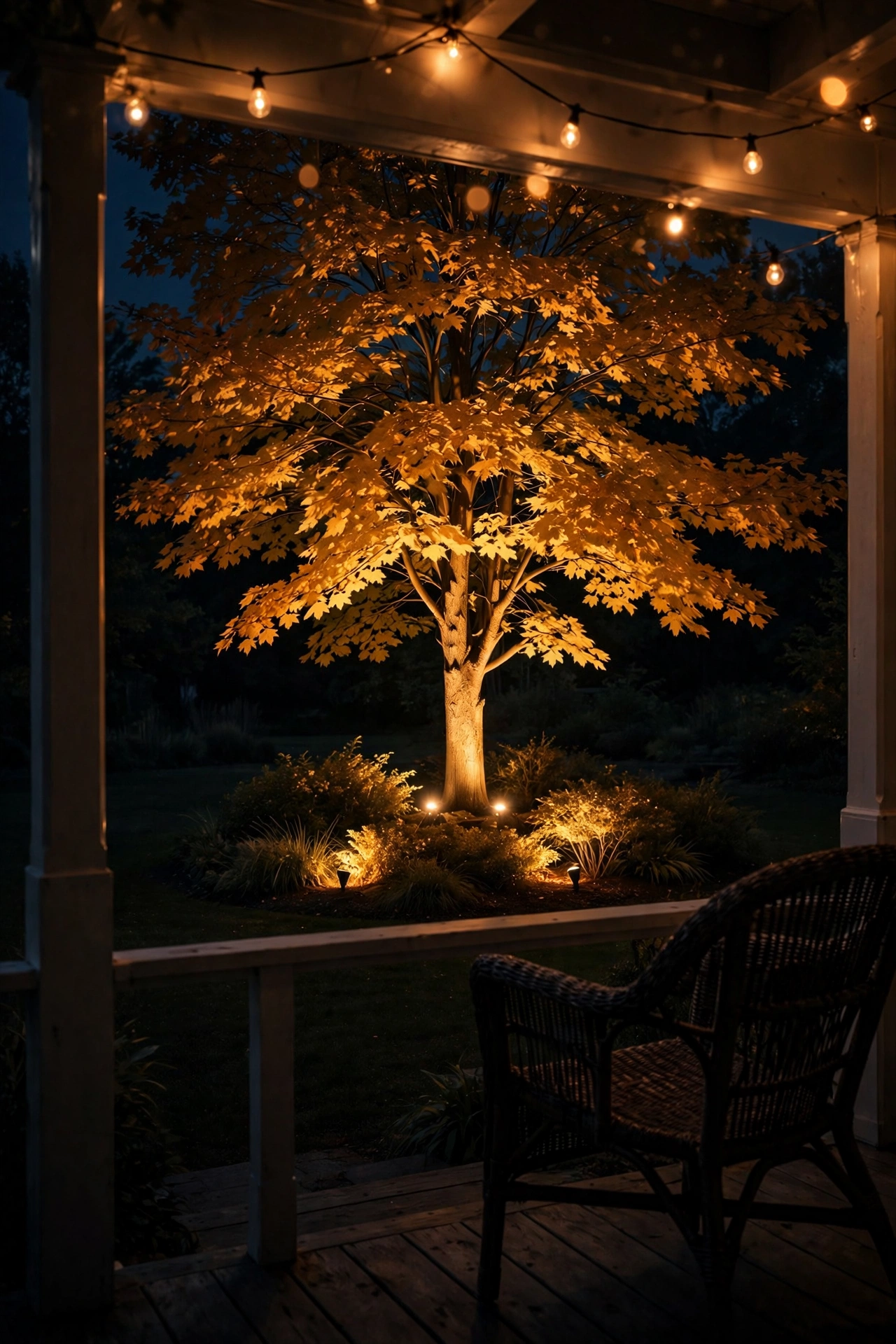
12. Up-Light Trees and Garden Beds for Depth
A back porch floats in blackness without something lit beyond it. I use two or three well lights or adjustable spotlights at the base of a favorite tree or shrub bed, angled up into the canopy, and it instantly gives the yard depth — like stage scenery behind the porch. In my experience, the "less is more" rule matters here: light one or two features, not every plant you own.
Choose narrow-beam spotlights (about 35 degrees) for trees so the light climbs the trunk, and wider floods for shrub beds. Set them 1 to 2 feet back from the base of the feature, tilted slightly, and use 2700 to 3000K warm white so the foliage glows golden instead of alien-green. Solar versions work for beds that get daytime sun, but hardwired low-voltage spots are brighter and more reliable for a big tree. Honestly, this is the idea that makes guests say "wow" when they look past the porch into the yard.
Suggested budget range: $60 – $160.
13. Set Cordless Table Lanterns on Every Surface
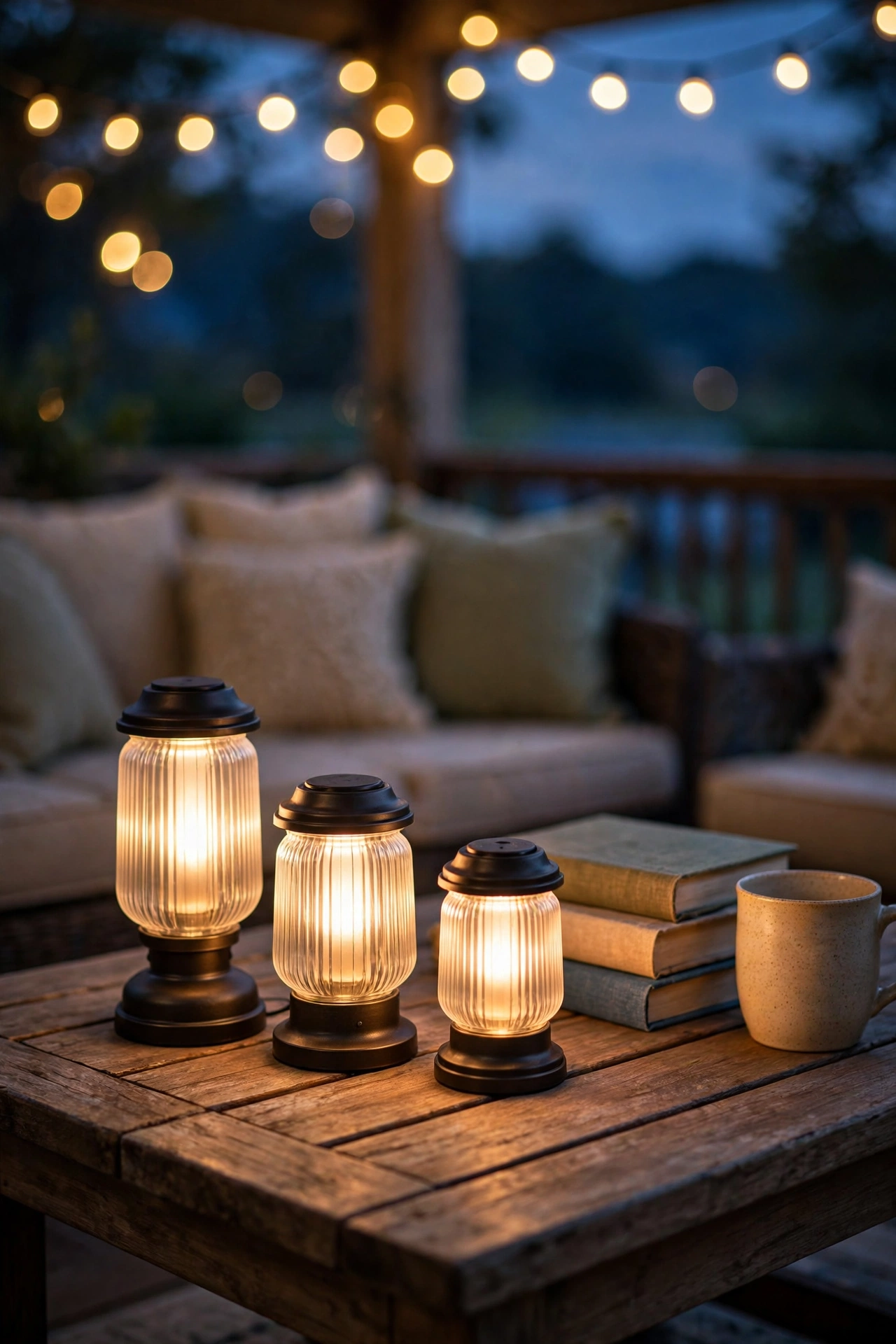
Big fixtures are great, but real coziness happens at tabletop level. I keep small cordless lanterns — the rechargeable LED kind that run 8 to 12 hours per charge — on the coffee table, the side tables, and even the grill cart. At about 8 to 10 inches tall, they're the perfect scale for tabletops, and they put a flattering warm glow right at face level where people actually gather.
Look for ones with a dimming button (a gentle low mode is all you need for ambiance) and a frosted or ribbed glass shade that diffuses the light softly. Charge them on a USB strip in the kitchen during the day and carry them out at dusk — honestly, the ritual of setting them out has become part of my evening. Mix a couple of sizes or shapes for a collected look, and bring them inside during storms since most cordless models are only splash-resistant. Three lanterns usually cover a full conversation set.
Suggested budget range: $40 – $110.
14. Wash the Back Wall with a Warm Graze Light
If your porch backs onto brick, stone, or even wood siding, wall washing (also called grazing) is a designer trick that looks incredible and costs little. I mounted two small adjustable spotlights at the base of my brick wall, angled up at a steep 10 to 15 degrees so the light "grazes" the surface — and the texture of the brick just pops. It turns a flat dark wall into the backdrop of the whole evening.
Place the fixtures 6 to 12 inches out from the wall for a true graze effect on textured surfaces; on smooth siding, back them off a couple of feet so you get a softer wash. Warm white is essential — 2700K on brick reads like candlelight. I put mine on the same sunset timer as everything else, and honestly this might be the best dollars-to-drama ratio on the whole list. One caveat: skip this if your wall has stained or uneven siding you don't want spotlighted — grazing shows everything, good and bad.
Suggested budget range: $50 – $130.

15. Cap the Deck Posts with Solar Post-Cap Lights
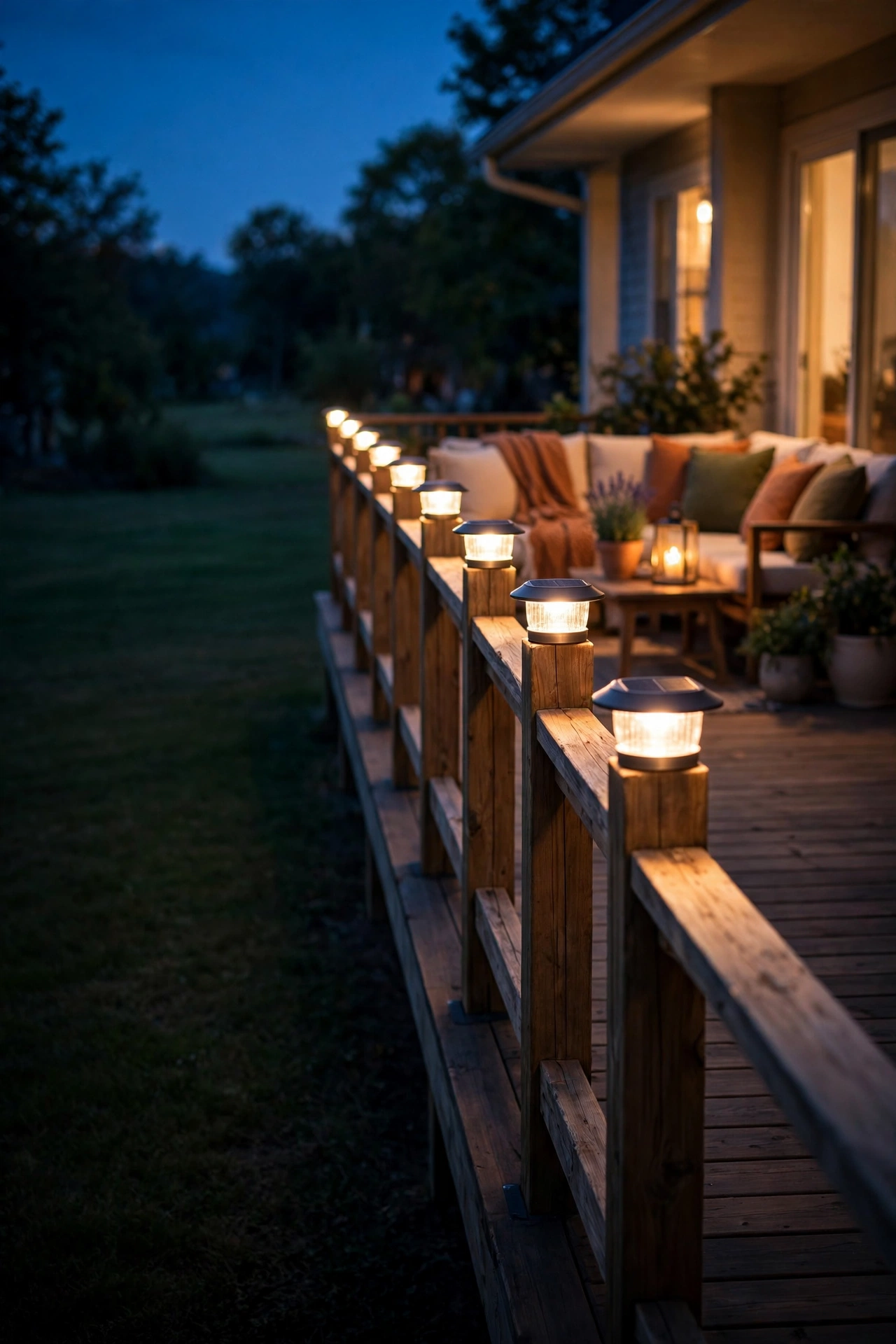
Deck posts are just begging for little lights, and solar post caps are the easiest win on this list — they press-fit onto standard 4×4 posts, take thirty seconds each, and need zero wiring. I put one on every post around my deck perimeter, and they give the whole porch a finished, framed look at night while marking exactly where the deck edge is.
Match the cap size to your posts (most fit 4×4 or 6×6 nominal lumber — measure before ordering), and pick warm white LEDs, not the bluish "bright white" ones that scream cheap. In my experience, caps with larger solar panels on top charge faster and stay lit longer than the slim decorative ones. Wipe the panels monthly and replace the rechargeable batteries once a year; that's the entire maintenance routine. A full set of six to eight caps usually runs under a hundred bucks, and honestly the daytime look is an upgrade too — they finish the posts like jewelry.
Suggested budget range: $30 – $90.
16. Try a Smart Color-Changing Wash Light for Party Mode
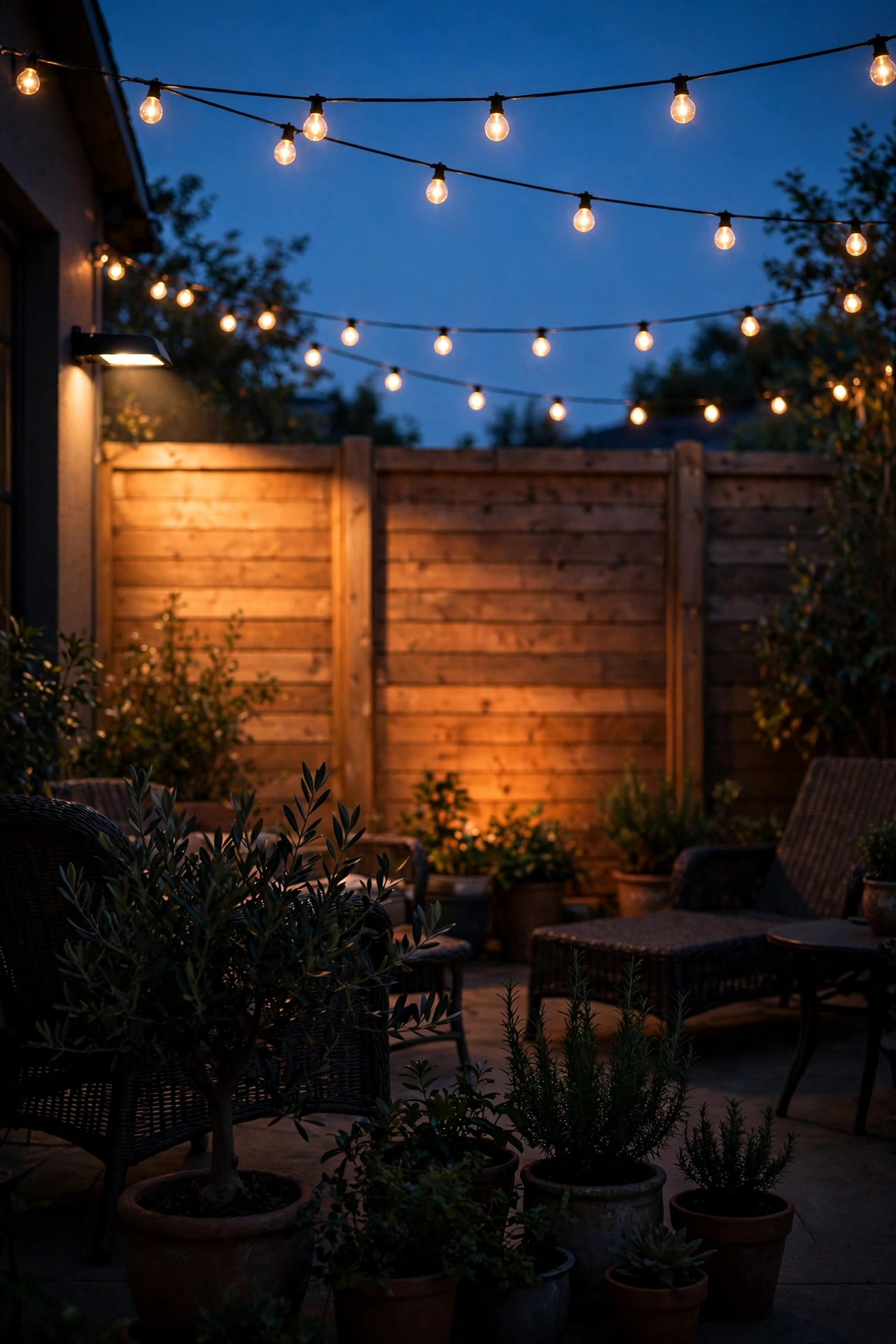
Ninety percent of the time I want warm white — but for the occasional party night, a smart color-changing wash light is ridiculously fun. I have one weatherproof smart flood aimed at the back fence: warm white 2700K most evenings, deep orange in October, festive red and green in December. It's the only light in my setup that does colors, and keeping it to one fixture keeps the effect tasteful.
Set brightness to no more than 50 percent in color mode so it reads as ambiance rather than a nightclub, and use the app's scheduling so it snaps back to warm white at 10 p.m. automatically. Look for IP65 weatherproofing and a bulb or fixture that remembers its last setting after a power outage — nothing kills the mood like a reset to blinding daylight white at 2 a.m. If you're already using a smart home system, choose a compatible protocol so voice control works from the porch. This is pure play, but it makes holiday evenings feel intentional instead of accidental.
Suggested budget range: $45 – $120.
17. Hang a Pendant Light Over the Porch Swing or Lounge Chair
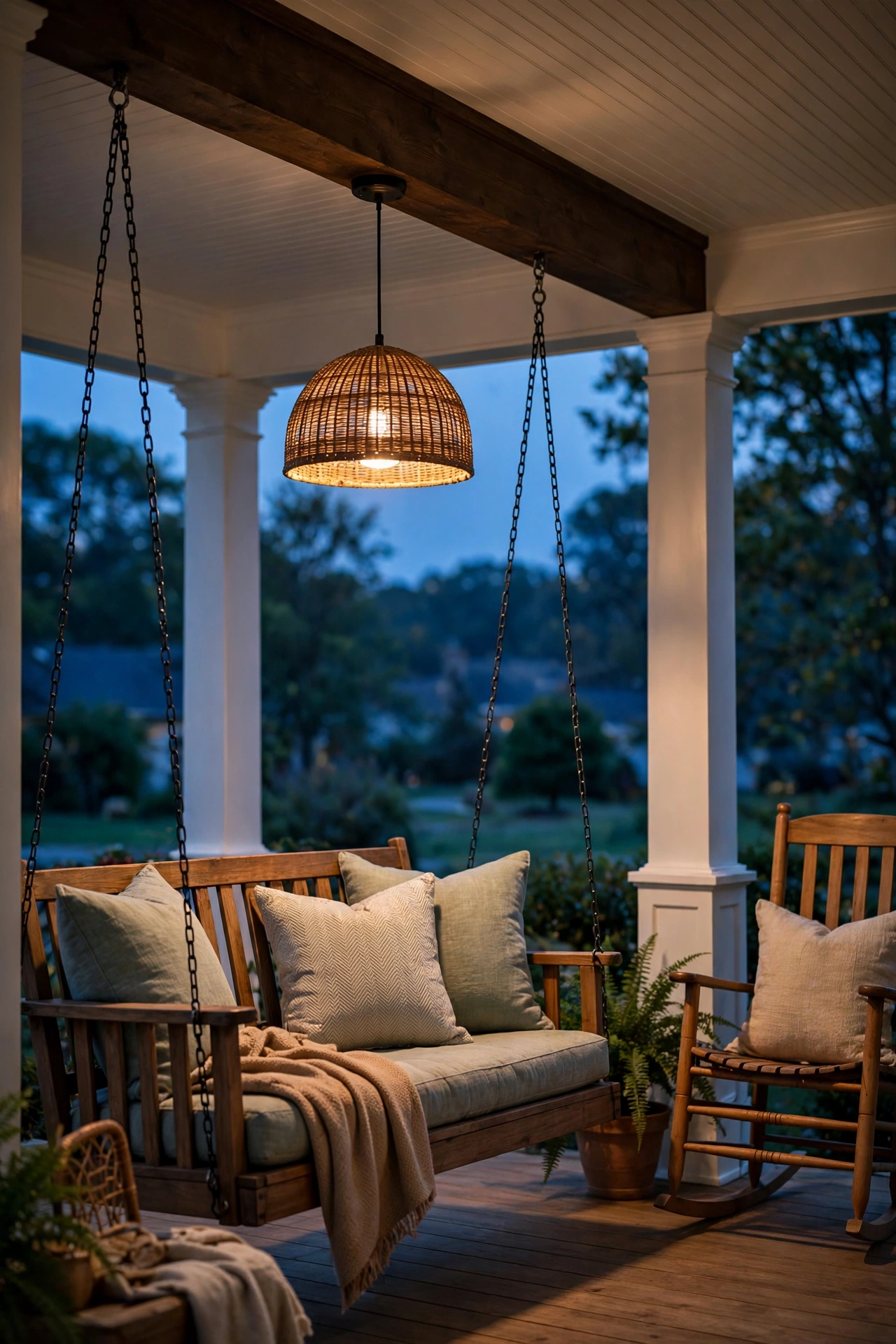
A pendant over the swing is my personal favorite reading spot on the entire property. I hung a single outdoor-rated pendant from a beam above my porch swing — the bottom of the fixture sits about 6 and a half feet off the floor, so it's overhead but still feels close and cocooning. The light pools right on the swing seat, perfect for a book, and the fixture itself becomes a little piece of jewelry for the porch.
Choose a pendant with an enclosed shade (drum or dome shapes work beautifully) and a wet rating if it's anywhere rain can reach; damp-rated is fine under a fully covered roof. A 40-watt-equivalent warm LED bulb is plenty — this is a reading nook, not a workspace. I wired mine to a simple pull chain so I can click it on independently of the sunset timers when I'm out late reading. If you have a rocking chair instead of a swing, the same idea works over a small side table — the rule is just: put the light exactly where your book is.
Suggested budget range: $60 – $160.
18. Run LED Tape Under the Deck Railing Cap
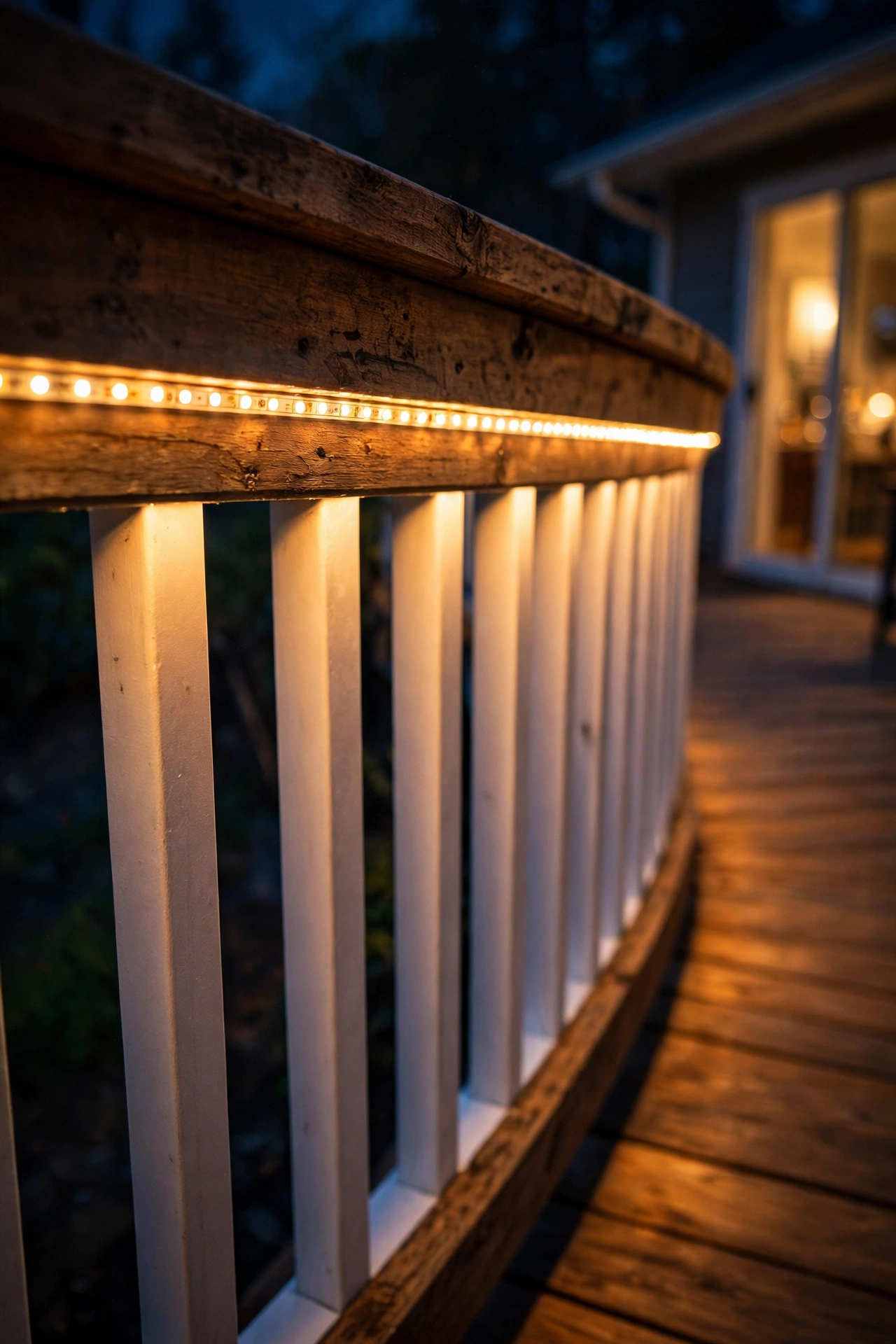
The underside of a deck's top rail is dead space during the day and pure potential at night. I ran outdoor LED tape along the underside of my railing cap — light washes down the balusters and onto the deck boards, outlining the entire porch perimeter in a soft glow. It reads as incredibly high-end for how simple it is, and it makes the deck edge visible from the yard, which is a safety bonus.
Clean the underside of the rail thoroughly before sticking the tape (dust is the enemy of adhesive), and run the tape in the aluminum channel made for it — the channel diffuses the light and protects the strip from bumps. Power with a low-voltage driver in a weatherproof enclosure, and use 2700K tape at about 50 percent brightness for that gentle restaurant-deck feel. A typical 20-foot railing run needs one 16-foot reel plus a short jumper for the return side. Put it on the master sunset timer and forget about it — this one runs itself.
Suggested budget range: $40 – $110.
19. Put Every Light on a Sunset-to-Sunrise Timer System
After eighteen ideas, here's the one that ties them all together: automate everything. I run my back porch lights through a combination of outdoor smart plugs and one astronomical timer — lights click on at sunset and off around 11 p.m. (or sunrise for the security layer). Walking out to a porch that's already glowing is genuinely one of the small joys of my life, and it happens every single night without me lifting a finger.
The practical setup: one heavy-duty outdoor smart plug per circuit, grouped in the app as "Porch Lights," with a sunset routine plus a hard off-time. Solar lights handle themselves, and battery candles have their own built-in timers. Total power draw for my whole porch — string lights, steps, railing tape, sconces — is under 150 watts, which costs me pennies per night. Do this step and your lighting goes from a chore to a habit you never think about, and honestly, consistency is what makes a porch feel loved. Set it once, enjoy it nightly.
Suggested budget range: $35 – $100.
Frequently Asked Questions
How many lumens do I need for a cozy back porch?
Less than you'd think. For a 12 by 16 foot back porch, aim for 1,000 to 2,000 total lumens spread across multiple fixtures — not one blinding 3,000-lumen flood. Coziness comes from many small, warm sources at different heights, not raw brightness. If you can read comfortably but your guests' faces still look soft and warm, you've nailed it.
What's the best color temperature for back porch lighting?
Stick with 2700K to 3000K warm white for everything you sit under. This range mimics candlelight and sunset, which is why it feels relaxing. Save 4000K-plus "daylight" bulbs for task areas like the grill or walkway edges if you need them there — and even then, I keep them dimmed. Mixing temperatures on the same porch looks sloppy, so pick one and commit.
Solar or wired — which is better for a back porch?
Wired (or low-voltage) wins for anything you rely on every night: steps, sconces, pergola downlights. Solar is perfect for accents that just need to look pretty: pathway stakes, post caps, fairy lights in planters. My rule is simple — if a light's job is safety, wire it; if its job is sparkle, solar is fine.
How much does it cost to light a back porch well?
A cozy, layered back porch typically costs $300 to $800 in total if you do it yourself over a few weekends: string lights and stakes for the base, a sconce pair or pendant for the middle layer, and tabletop lanterns for the finish. Add a pergola downlight project or an electrician visit and you might touch $1,000 to $1,500. The electricity is almost nothing — a full LED porch setup usually runs under 200 watts total.
Conclusion
The best back porch lighting ideas all share one secret: they layer warm, small glows instead of blasting one big light. String a canopy, flank the door, light the steps, tuck in some sparkle — and then put it all on a timer so the magic happens by itself every night. Your porch becomes the room you never want to leave. If this got you inspired, browse the rest of our outdoor lighting guides for more ways to make every corner of your home glow — and honestly? Start with just one idea tonight. You'll wonder why you waited.