Stand in any garden center this spring and you'll face the same fork in the road I stood at three summers ago: a wall of $4 solar stake lights that promise glowing paths by tonight, or the pricier-looking low-voltage wired kits that swear they'll still be shining in ten years. The solar vs wired landscape lighting debate isn't really about technology — it's about what you want your yard to feel like after dark, and how much of your money and weekends you're willing to spend getting there.
In my experience, almost every homeowner who asks me this question is really asking two things: "Can the cheap solar ones actually look good?" and "Is wired really worth the hassle?" The honest answer to both might surprise you, because the answer depends entirely on the job you're asking the lights to do.
By the end of this guide, you'll know exactly how each system works, what brightness numbers actually mean at night, what both options really cost over five years, which one survives winter, and the five mistakes I see people make again and again when choosing. No fence-sitting — just what I've learned from lighting my own yard both ways.
The Short Answer
Solar wins when you want cheap, easy accent light — marking a path edge or twinkling around a flower bed — with zero wiring and almost no upfront cost. Wired (low-voltage) wins for everything else: real brightness, reliable all-night performance, lighting that shows off trees and architecture, and a system that still looks great a decade from now. If you want your yard to genuinely glow rather than just glimmer, wire it. If you want $40 of path markers by tomorrow, go solar.
How Solar Landscape Lights Actually Work
Strip away the marketing and a solar path light is beautifully simple: a small photovoltaic panel on top, a rechargeable battery (usually AA-size NiMH or lithium) inside, an LED, and a light sensor that switches the whole thing on at dusk. All day, the panel converts sunlight into electricity and trickles it into the battery. At night, the LED draws on that stored charge until the battery runs dry — or until morning.
Here's why they're dim, honestly. That little panel, maybe 2 inches square, can only harvest a limited amount of energy in a day. A typical budget stake light stores roughly 1–2 watt-hours of energy. Spread over 8 hours of darkness, that's about 0.2 watts of continuous power — enough to drive an LED to maybe 5 to 15 lumens. A premium solar fixture with a bigger panel and battery might reach 50 lumens on a full sunny charge, but that's the ceiling physics allows in this form factor.
In my experience, the bigger issue isn't the first night — it's night number 400. Rechargeable batteries in a sealed plastic stake baking in summer sun and freezing in winter lose capacity fast. By year two, many cheap solar lights run 2–3 hours instead of 8, and by year three the battery barely holds a charge at all. That "set it and forget it" promise is real, but the forgetting part cuts both ways.
How Wired Low-Voltage Systems Work
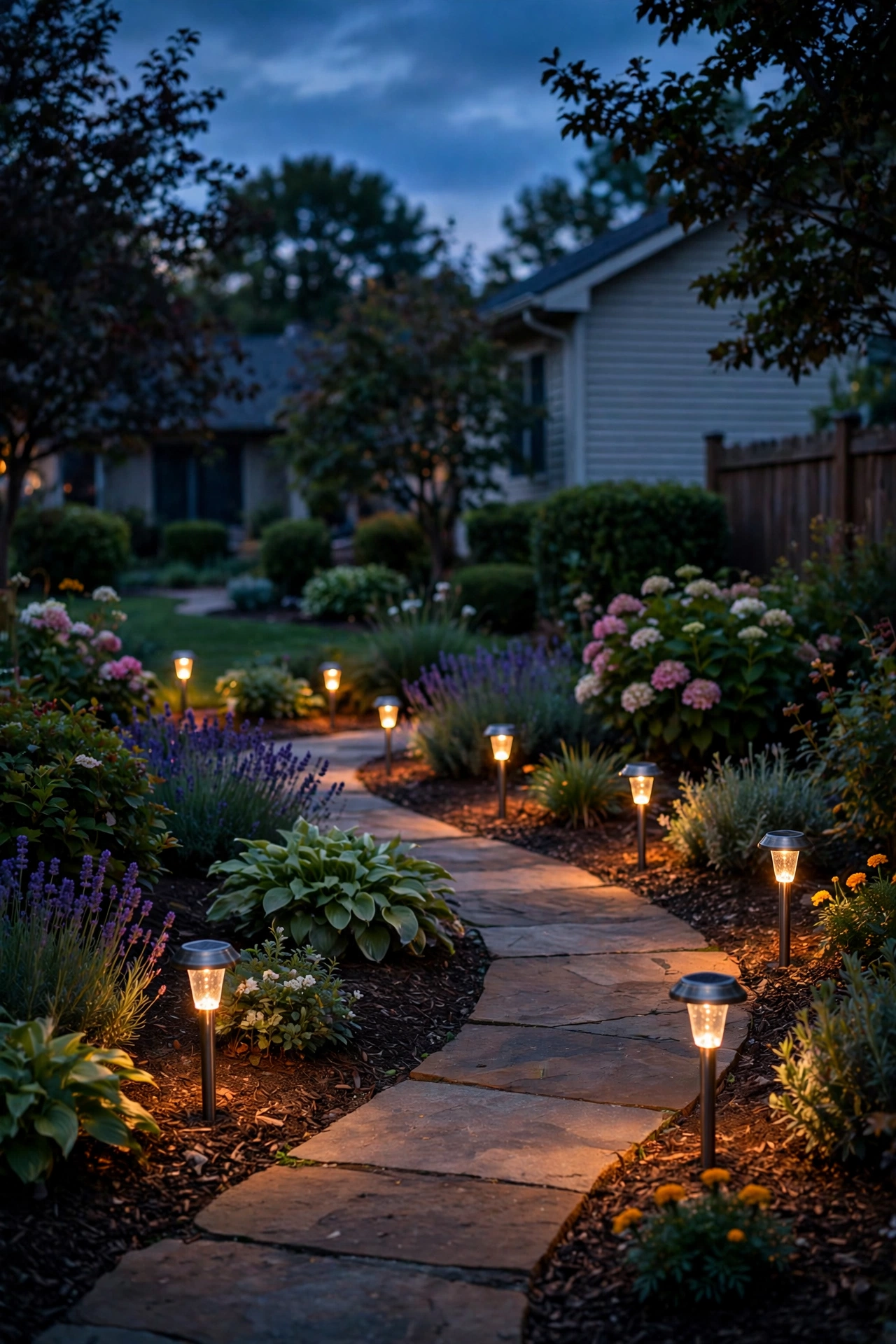
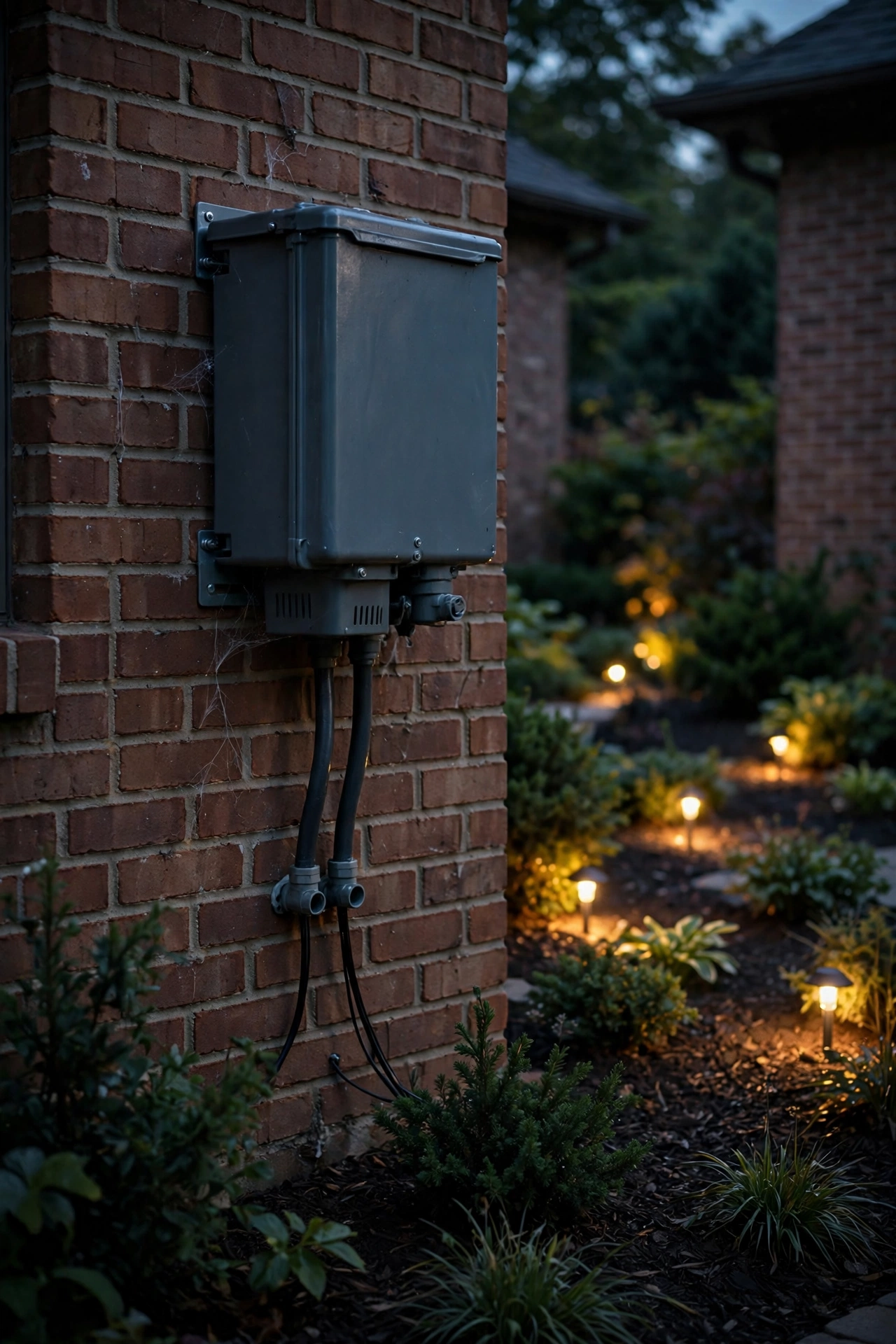
A wired low-voltage system is a tiny electrical grid for your yard, and it's simpler than it sounds. One weatherproof transformer plugs into a standard outdoor GFCI outlet (or mounts near your panel) and steps your 120-volt house current down to a safe 12 volts. From the transformer, a single main run of direct-burial cable — typically 12- or 14-gauge — snakes through your beds and lawn, and each fixture taps into that cable with waterproof connectors. Each fixture holds a real LED bulb (often a replaceable MR16-style lamp), so you get genuine, fixture-grade brightness.
The magic word is 12 volts. At 12V, the cable is safe to bury just 6 inches deep, safe to touch while powered, and safe to install yourself without an electrician. The fixtures themselves are the difference-maker: solid brass, copper, or powder-coated aluminum housings with quality optics that shape light onto trees, walls, and paths — not just a bare LED poking out of a plastic cap.
I always recommend people think of it this way: solar is a battery-powered toy philosophy, and low-voltage wired is a lighting-design philosophy. A typical 100-watt transformer runs 8 to 12 fixtures at 60 to 80 percent of capacity (you size it about 25 percent above your total fixture wattage so it runs cool and lasts). When one of my wired fixtures flickers, I replace a $6 bulb. When a solar stake dies, I replace the whole fixture.
Solar vs Wired Landscape Lighting: Head-to-Head Comparison
Numbers cut through marketing faster than adjectives. Here's the honest scorecard, based on what you'll actually buy at a home center or landscape supplier in 2026.
| Solar | Wired (Low-Voltage) | |
|---|---|---|
| Typical brightness | 5–50 lumens per fixture | 100–500+ lumens per fixture |
| Upfront cost | $3–$15 per fixture | $25–$80 per fixture + $60–$150 transformer + cable |
| Reliability | Fades after a few hours on cloudy days; dies in winter | Steady, full brightness all night, every night |
| Lifespan | 1–3 years before batteries/fixtures fail | 10–20 years for fixtures; bulbs last 25,000+ hours |
| Installation effort | Push a stake in the ground — 30 seconds each | Plan layout, trench 6 inches, run cable — a weekend project |
| Best for | Accent markers, temporary setups, renters | Whole-yard design, security, entertaining, curb appeal |
Look at that brightness row again, because it's the whole argument in one line. A good solar stake at its absolute best puts out about what a single wired fixture puts out at its dimmest. Everything else on the table follows from that physics gap.
Brightness and Performance: The Honest Numbers
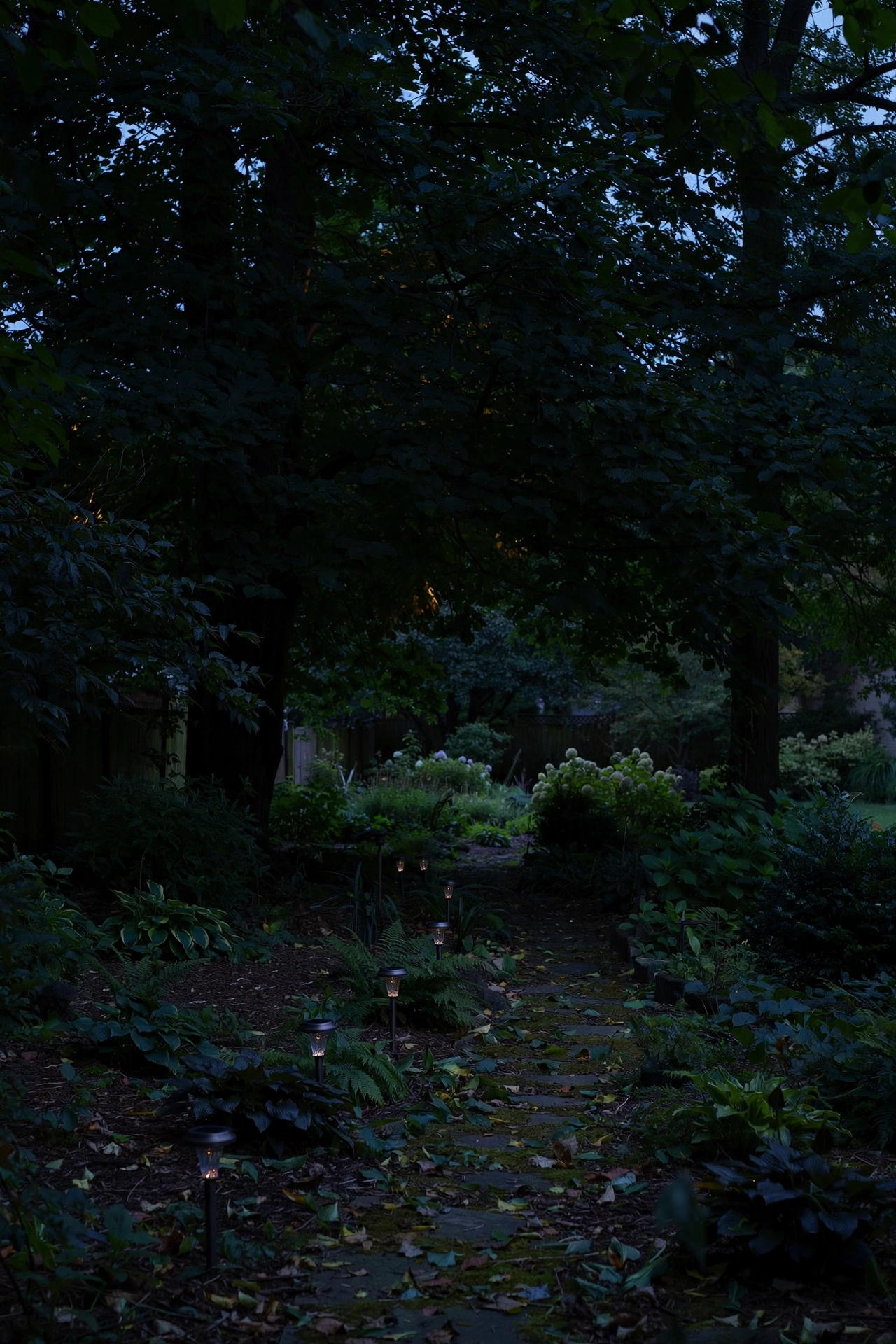
Let's translate lumens into what your eyes actually see, because nobody lies awake at night thinking in lumens. A 5-lumen solar stake — the $4 kind — throws a soft pool of light about a foot wide at the base of the stake. From the street, it reads as a twinkle, a hint that something glows down there. Ten of them in a row along a walkway look charming for the first hour, honestly — like fireflies someone arranged. By 11 p.m. on an October night, half of them have faded to a ghostly blue whisper.
A 35-lumen solar light, the premium end, can genuinely mark a path edge all evening. It's enough to see the curb of your walkway and not trip on the first step. But it will never throw light *up* — it won't wash your oak tree's canopy, it won't bounce off your brick facade, it won't let you read a menu on the patio table.
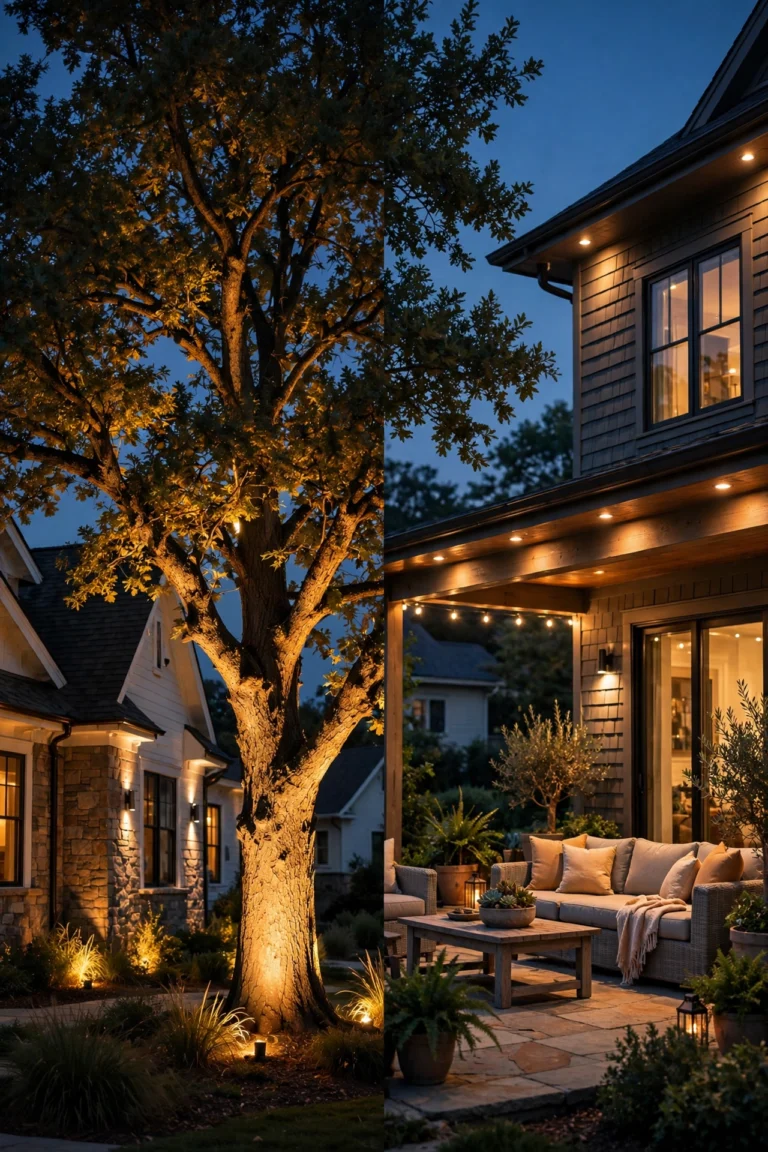
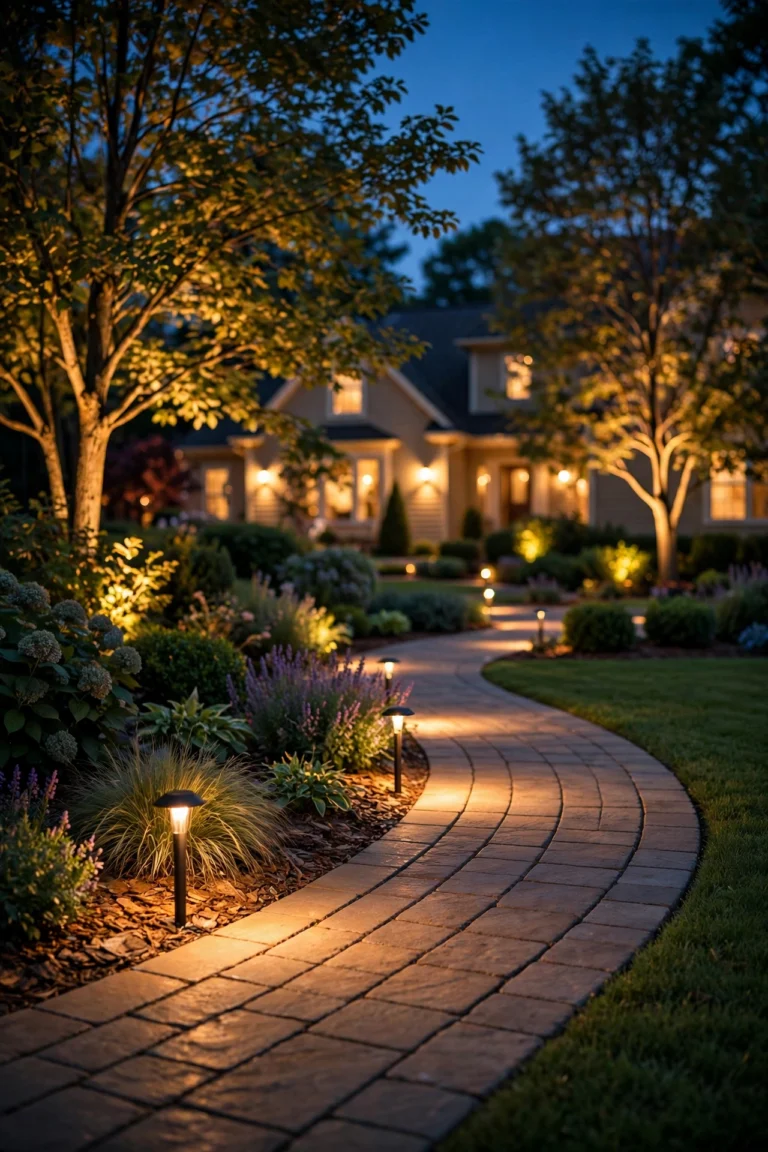
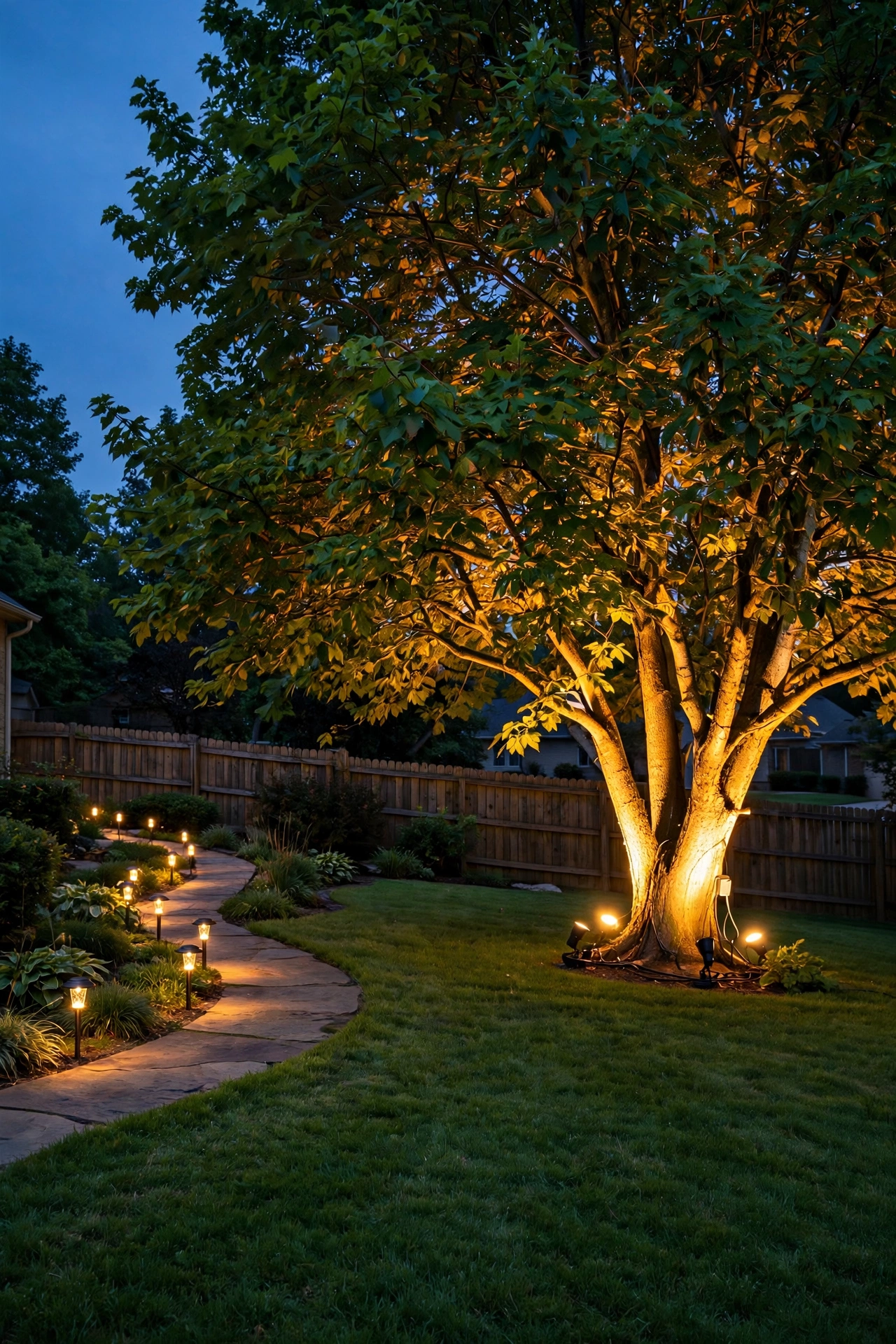
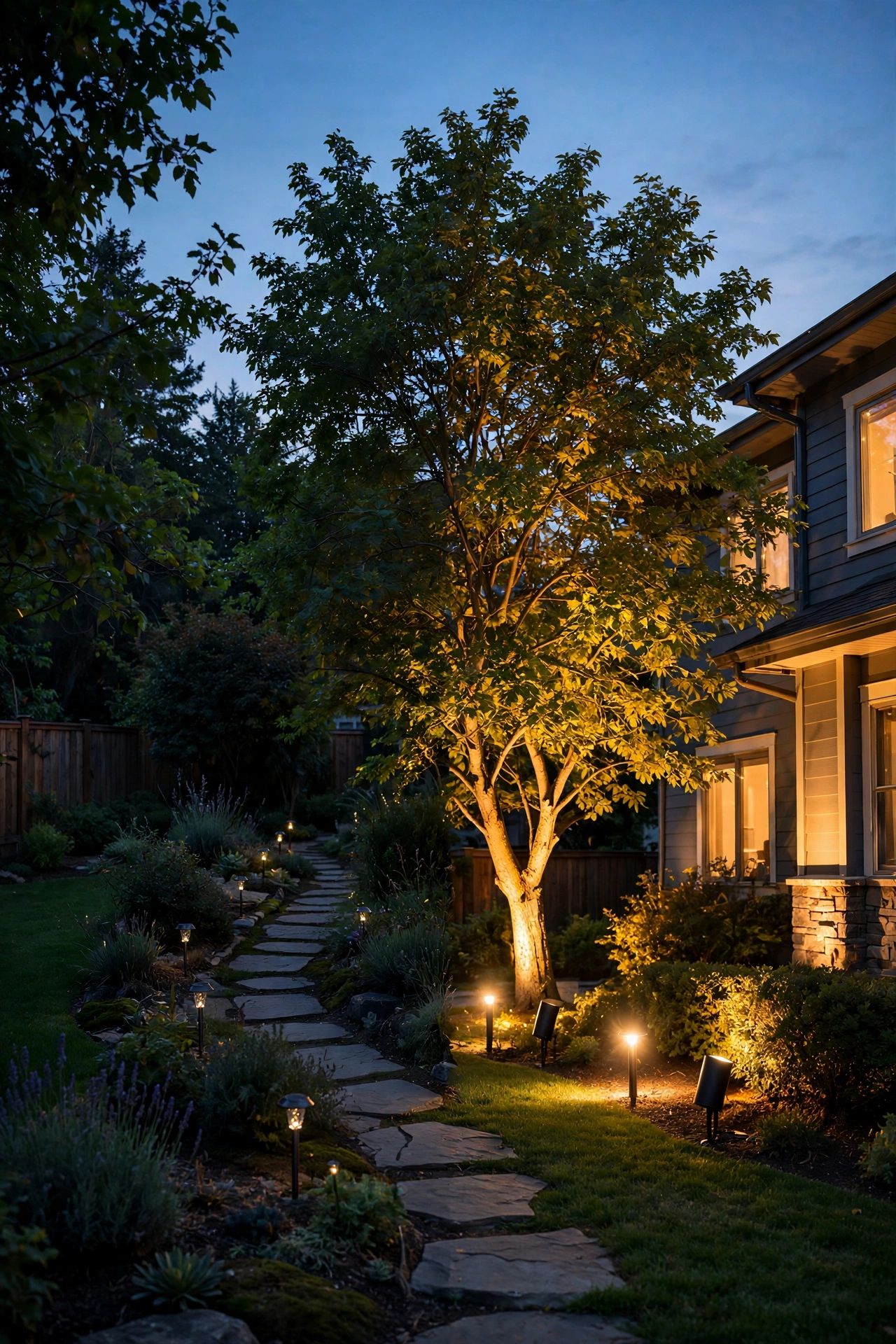
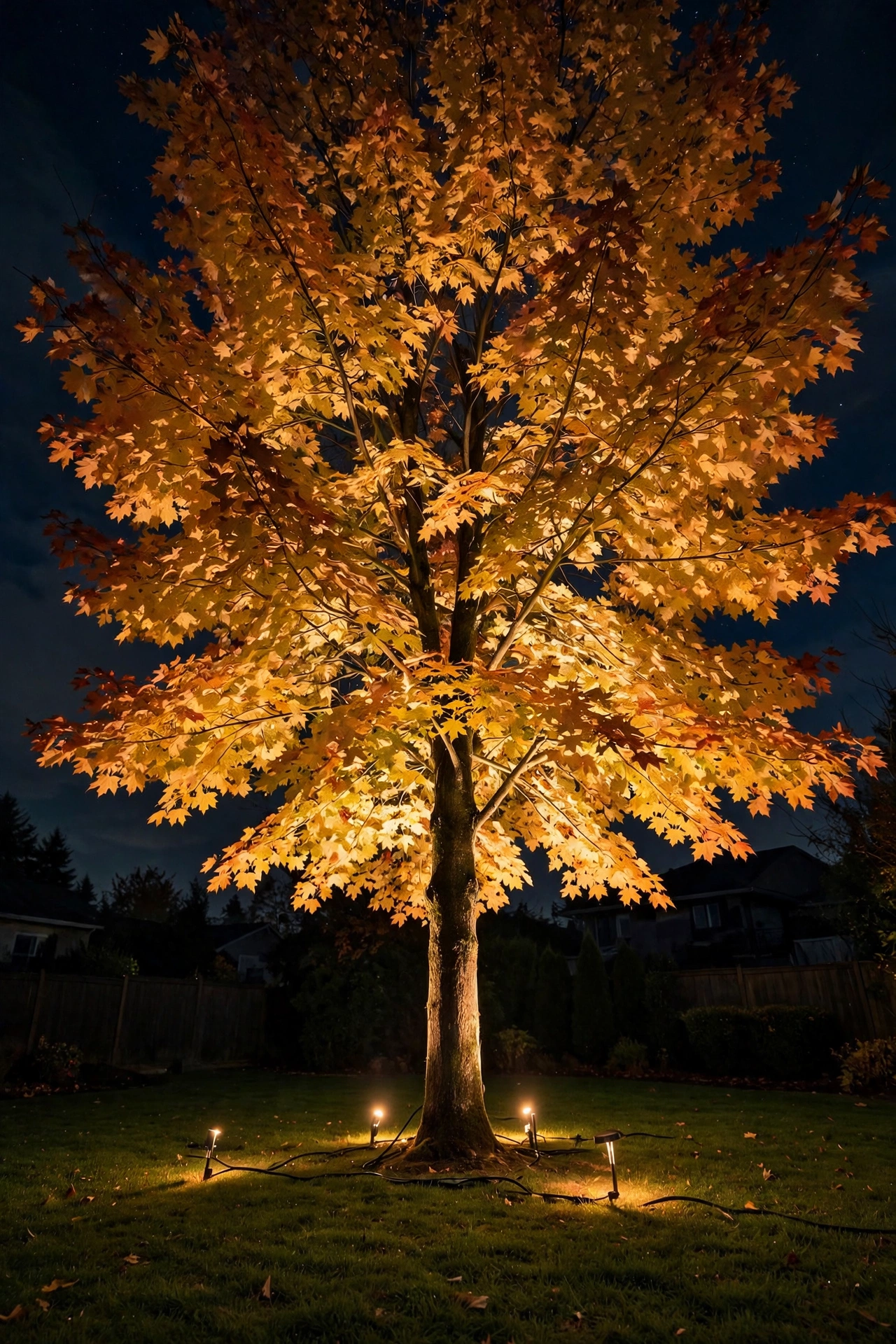
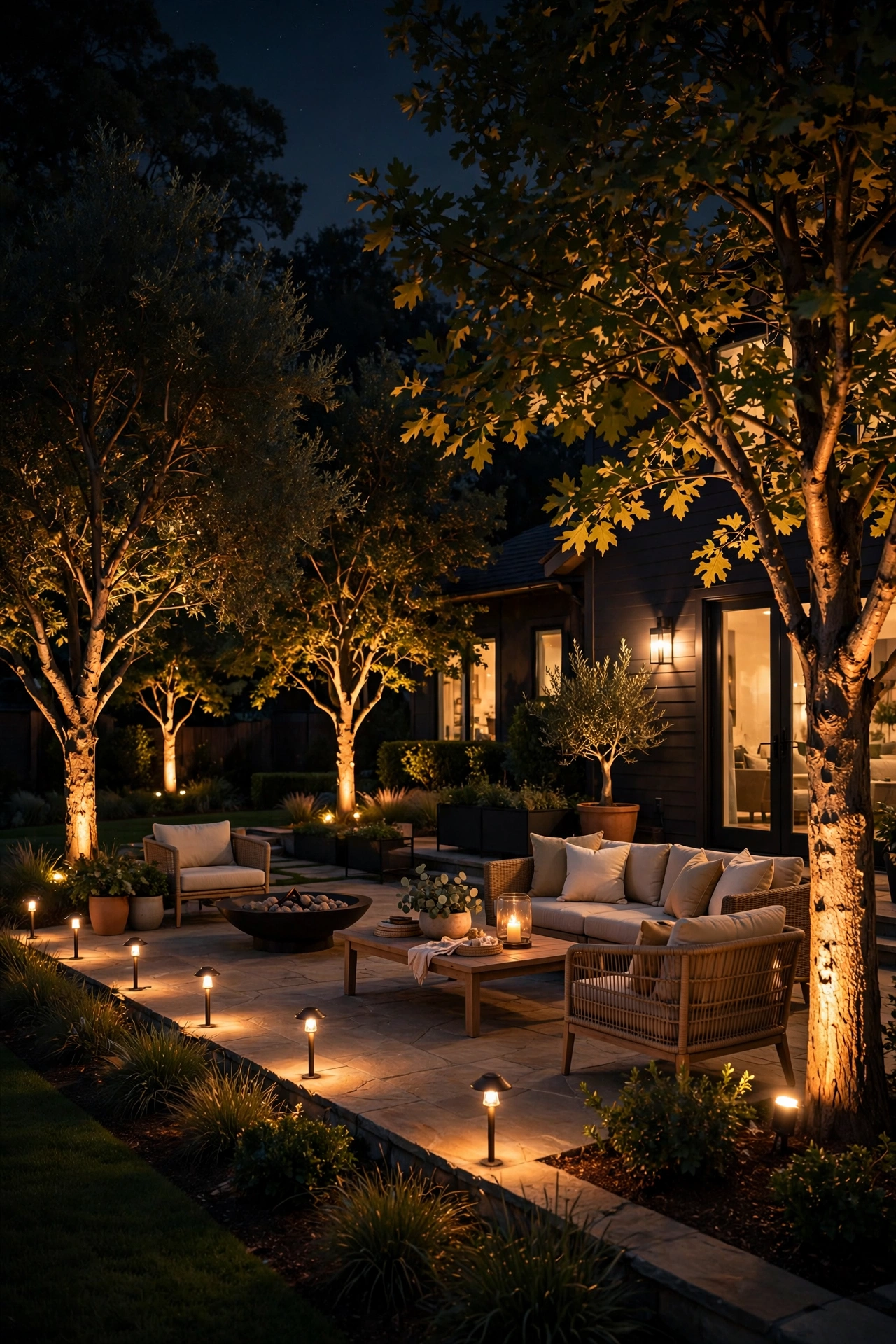
Now the wired side. A 150-lumen wired path light (about 3 watts) throws a clean 8- to 10-foot pool of warm light. A 300-lumen uplight (6 watts) aimed at a 20-foot maple turns the whole tree into a sculpture — leaves glowing from within, trunk dramatic against the sky. A 500-lumen wall-wash fixture grazes your stone facade so the texture pops like it's museum-lit. That's the difference between decorating with light and *designing* with light.
Here's my rule of thumb from three years of tinkering: if the fixture's job is to be *seen* (a glowing marker), solar is fine. If its job is to *show you something* (the tree, the stairs, the patio), you need wired brightness. There is no solar fixture that up-lights a tree convincingly — the physics just won't allow it.
Solar vs Wired Landscape Lighting: Upfront Cost vs Long-Term Cost
The sticker shock runs the wrong direction at first. Let's do the math honestly, because this is where I see the most regret.
The solar path: Ten decent solar path lights at $12 each = $120. Stake them in an afternoon and you're done. But those batteries start fading within 18 months. Realistically, you'll replace half the fixtures by year two ($60) and the rest by year three ($60). Over five years, that charming $120 setup costs roughly $300–$360, and at any given moment half your lights are dimmer than the day you bought them.
The wired path: Ten quality low-voltage path lights at $35 each = $350. A 150-watt transformer at $120. A 100-foot spool of 12-gauge cable at $45. Waterproof connectors, maybe $20. Total: about $535 for a permanent installation — roughly four times the solar starting price.
But here's the other half of the ledger. Year two: $0. Year three: $0. Year five: maybe $15 to replace a couple of LED lamps. Those fixtures will still be going strong at year ten and likely year fifteen. Amortized over a decade, the wired system costs about $55 per year; the solar system, replaced twice, costs $60–$70 per year — and the wired yard looks dramatically better every single one of those nights.
And there's the hidden cost I never hear mentioned: electricity for a low-voltage system is almost nothing. Ten 4-watt fixtures running 8 hours a night draw about 10 kilowatt-hours a month — roughly $1.50 to $2 on a typical US electric bill. I've spent more on the ice in my cooler.
Installation: Weekend Project or Pro Job?
Solar installation is the easiest home project that exists. Push the stake into soft ground, make sure the panel faces roughly south with a clear view of the sky, and walk away. Twenty lights, twenty minutes, done — including the trip back inside for lemonade. There is no planning, no trenching, no math. If you can push a fork into mashed potatoes, you can install solar lights.
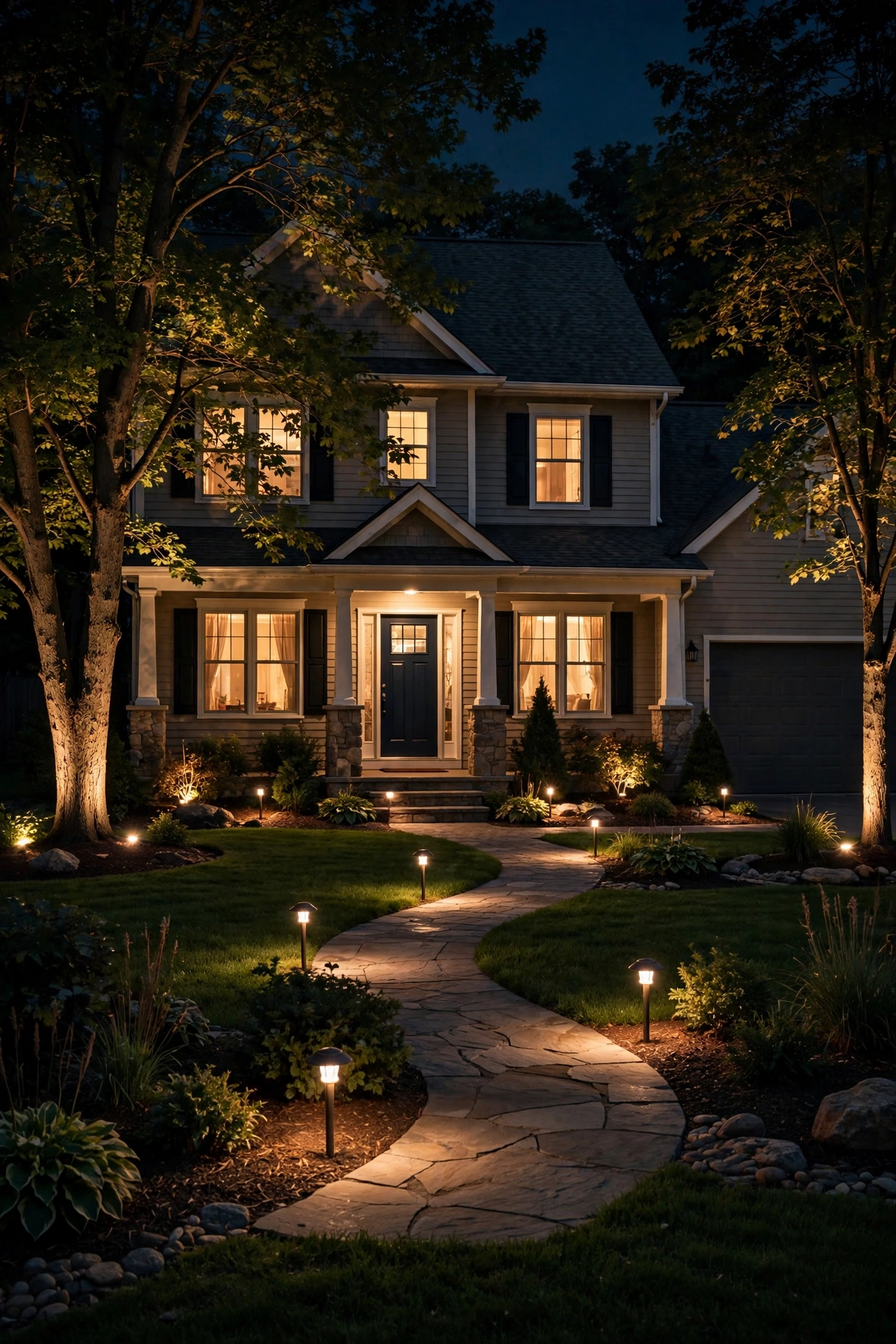
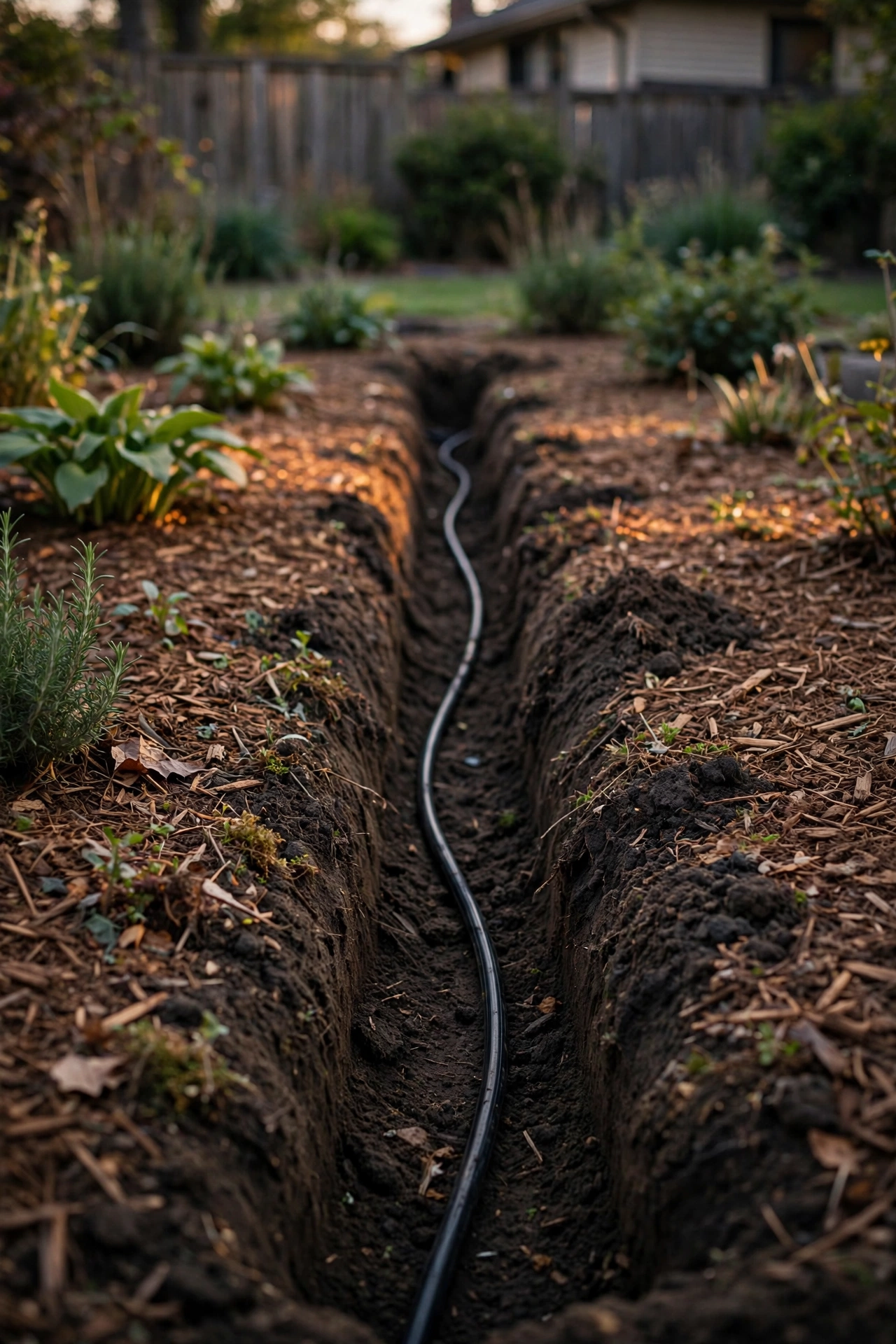
Wired installation is a genuine weekend project, but it's firmly in DIY territory — no electrician required, and I've watched neighbors with zero electrical experience pull it off. The honest breakdown: spend Saturday morning sketching where fixtures go (rule of thumb: path lights every 6 to 8 feet, uplights aimed at the prettiest thing in each bed). Lay the cable on top of the ground along your planned route to check the layout at night before you bury anything — this is the step everyone skips and everyone regrets skipping. Then dig a 6-inch-deep trench with a flat spade, lay the cable in, connect fixtures with the included waterproof wire nuts or quick-connects, and backfill. Sunday is for fine-tuning the aim of each fixture after dark.
The whole thing for a typical front yard — 8 to 10 fixtures — takes most homeowners one full day or two easy half-days. If trenching through established turf sounds miserable, hire a landscaper for that part only; many will trench and backfill for $150 to $250 while you handle the fun part of placing and aiming fixtures yourself. Full professional installation of a designed system runs $1,500 to $4,000, which buys you a designer's eye — worth it for larger properties, overkill for a starter bed.
Reliability Through the Seasons
This is where solar's report card gets ugly, and I say that as someone who genuinely likes solar for the right jobs. Solar lights are weather reporters — they perform exactly as well as the sky above them did that day.
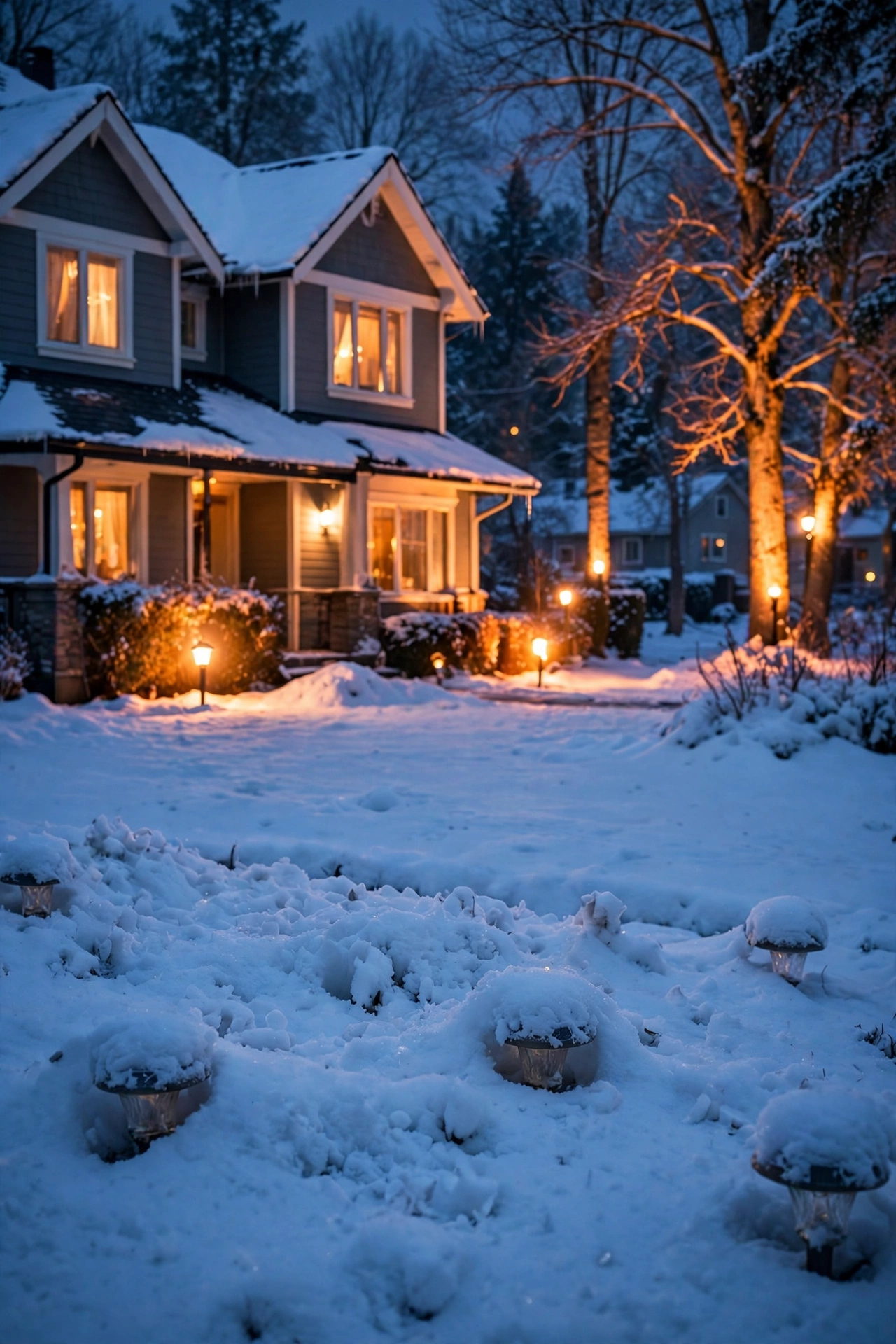
A week of overcast November days? Your solar lights might manage 2 hours of dim glow before dying by 8 p.m. December, with 9 hours of weak daylight and long nights? Forget it — many solar fixtures won't even switch on at full strength, because the light sensor never saw a proper charge cycle. And snow is the knockout punch: a quarter inch of snow on the panel means zero charging until it melts or you brush it off. I spent one January dutifully brushing snow off 14 solar stakes with a broom, and by February I'd given up and ordered a transformer.
Shade is the silent killer people never consider. That panel needs direct sun, not "bright shade" under your maple. A solar light tucked under a tree canopy or on the north side of the house might charge to 30 percent on a perfect summer day — and to nothing on a cloudy one. I've watched homeowners return whole boxes of solar lights convinced they were defective, when the real defect was the planting bed they'd put them in.
Wired systems, meanwhile, are gloriously boring through the seasons. The transformer doesn't care about clouds, snow, or your maple's canopy. You can put most wired fixtures on a photocell or timer so they click on at dusk and off at 11 p.m. (or dawn — your call), and they'll hit full brightness on night one and night one thousand. A January blizzard buries the cable under a foot of snow? The lights still burn. That's what you're paying for: light that shows up regardless of the weather's mood.
Maintenance and Lifespan
Let's talk about what ownership actually feels like year to year, because the brochures skip this chapter.
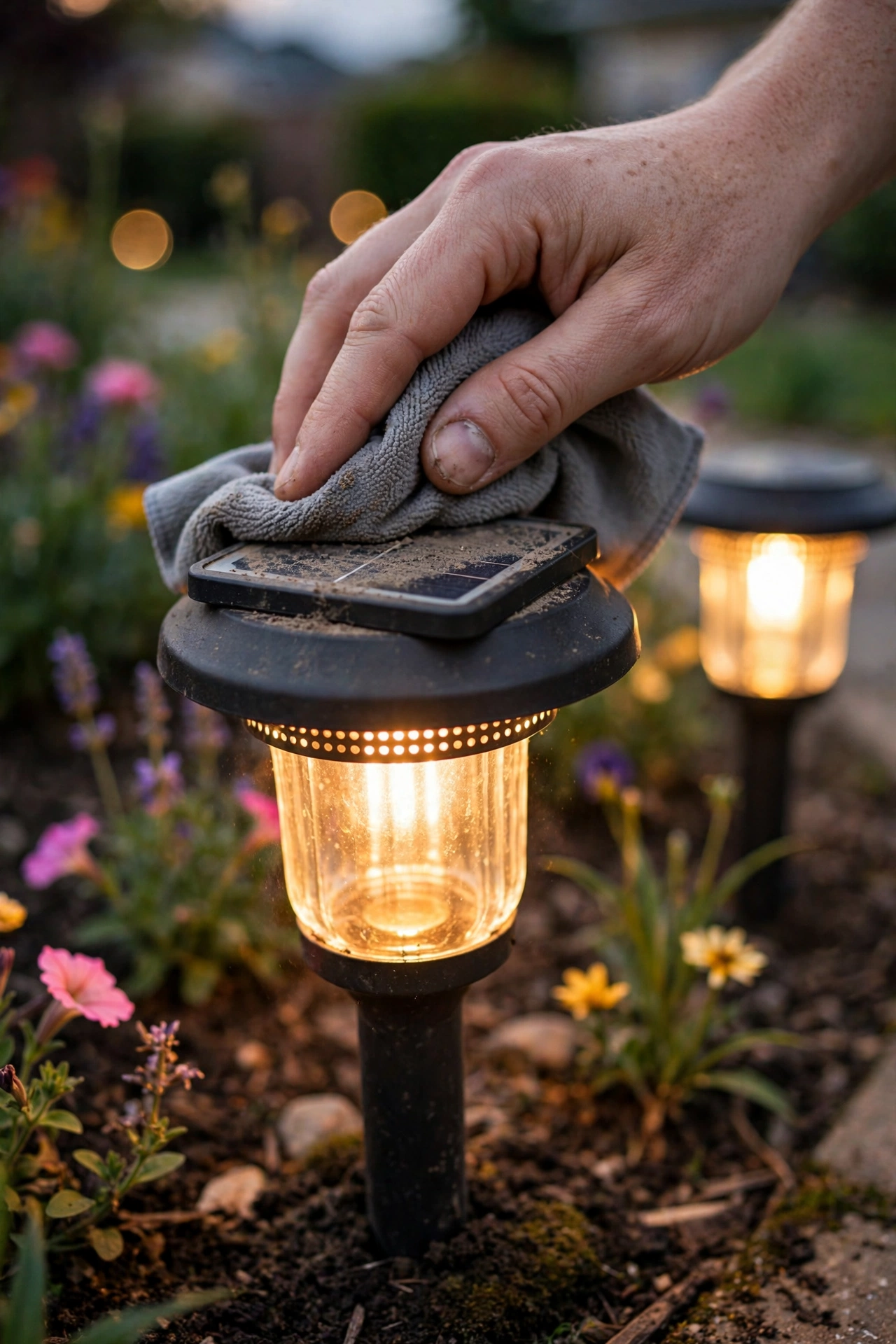
Solar maintenance is a treadmill. Every few months, wipe the panels with a damp cloth — dust, pollen, and bird gifts cut charging efficiency more than you'd think. Every 12 to 24 months, the rechargeable batteries give up; some fixtures let you swap in fresh AA rechargeables ($8 for a 4-pack), but most budget stakes have sealed battery compartments that are glued, soldered, or just designed to be thrown away. The plastic housings go brittle and yellow in the sun, the stakes snap off in frozen ground, and the little solar cells themselves degrade about 1 percent per year. Real-world lifespan for a budget solar stake: 1 to 3 years. Premium ones with replaceable batteries: maybe 4 to 5 with care.
Wired maintenance is almost meditative by comparison. Twice a year, walk the system after dark: check that mulch hasn't buried a fixture, trim back the plant that grew over your uplight, wipe any lenses with a damp cloth. The LED lamps inside quality fixtures are rated 25,000 to 50,000 hours — that's 8 to 17 years of nightly use. The brass and copper fixtures develop a patina that honestly looks better with age. The transformer, mounted under an eave and out of direct weather, typically runs 10 to 15 years. The cable in the ground? Effectively forever — it's the same stuff buried for decades in commercial installations.
One more honest note: wired fixtures can be repaired. A chewed cable gets a waterproof splice. A cloudy lens gets replaced. A dead lamp gets a new $6 bulb. Solar stakes, when they die, become plastic trash — something that bothers me more every year I do this.
When Solar Landscape Lighting Makes Sense
After all that, you'd think I'd tell you to skip solar entirely. I won't — because there are absolutely situations where solar is the smart call, and I use solar fixtures in my own yard for exactly these.
You're renting. Nothing you bury or bolt down survives a lease. A dozen solar stakes come with you to the next place in a tote bag.
It's temporary. Holiday-adjacent accents, a summer party path, lighting a garden bed you're about to redesign — solar is perfect for the "let's try it for a season" experiment. If you love the effect, wire it properly later.
The spot is far from any outlet. That far corner of the lot, the mailbox at the end of a 200-foot driveway, the back fence line — running 12-gauge cable that far means voltage drop math and a lot of trenching. A couple of solar markers there are pragmatic, not cheap.
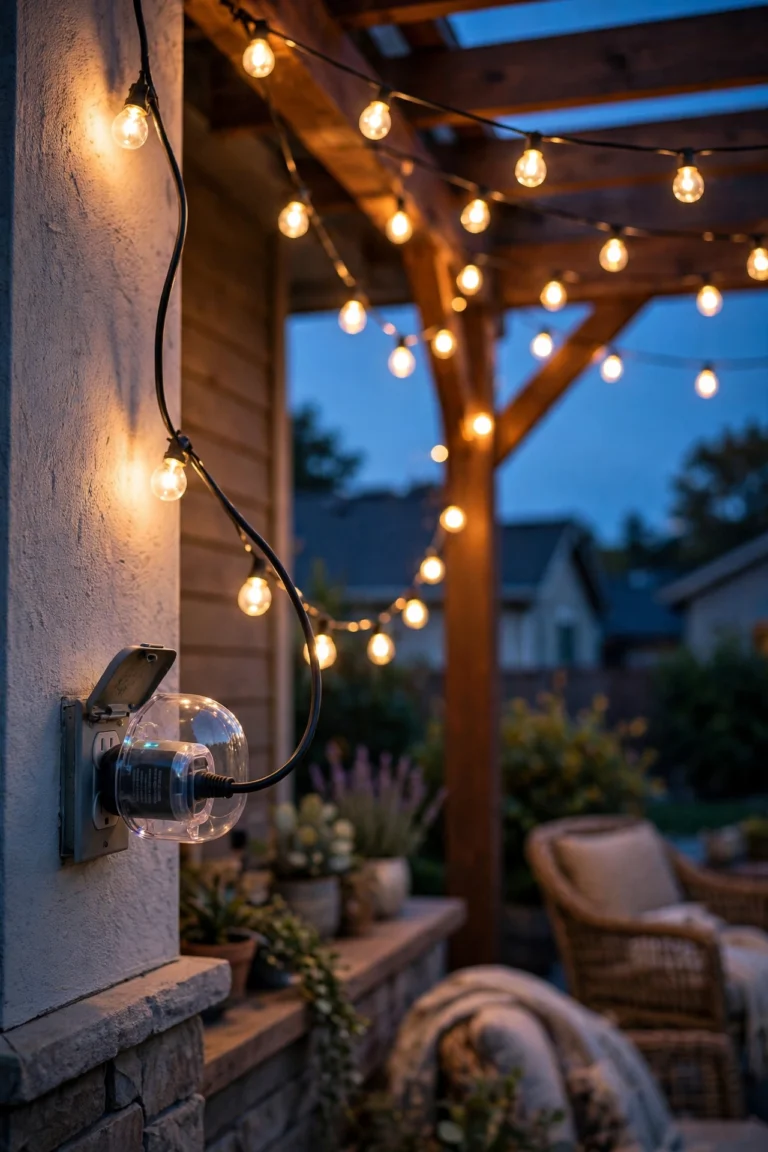
You want sparkle, not illumination. Fairy-light-style solar strings draped over a pergola or woven through a planter are pure ambiance, and honestly they look magical. I have solar string lights over my own patio table — they're not trying to light anything, they're trying to feel like fireflies, and they nail it. (If you love that look, my solar string light ideas post has 25 ways to style them.)
The budget is real and the need is tonight. Sometimes you just need the front walk visible for the party tomorrow. Solar gets you there for forty bucks by dusk. No shame in that — just know you're renting the effect, not buying it.
When Wired Landscape Lighting Wins
Flip the script, and wired wins everywhere the light has a real job to do. If any of these sound like you, wire it and don't look back.
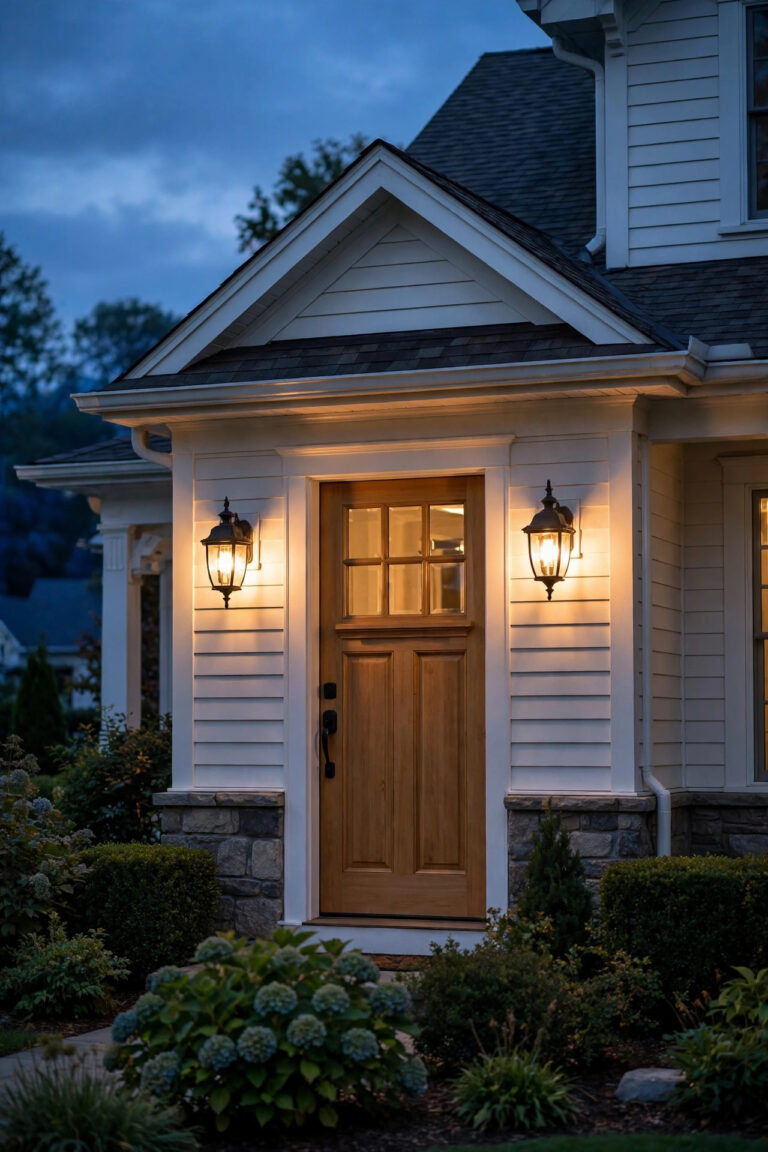
You want curb appeal that photographs. Real estate photographers will tell you: the houses that glow on Zillow after dark have wired systems. Uplighting your two best trees and washing the front facade is the single highest-impact exterior upgrade under $1,000, in my opinion — it makes a $300,000 house look like a $500,000 house from the curb.
Security matters. Motion-sensor floods aside, a yard that's genuinely lit all night is a yard burglars skip. Solar can't promise all-night coverage; wired can. Path lights that actually illuminate the walkway (not just twinkle at its edges) mean fewer stumbles and a safer trip from the driveway to the door.
You entertain outside. Dinner on the patio, kids playing in the yard after dark, the fire pit on a Friday night — these need real, reliable, flattering light. Layering is the secret: warm path lights for the walkways, uplights for the trees, a few well lights grazing the stone wall. My low-voltage path light guide walks through spacing and placement if you're planning this.
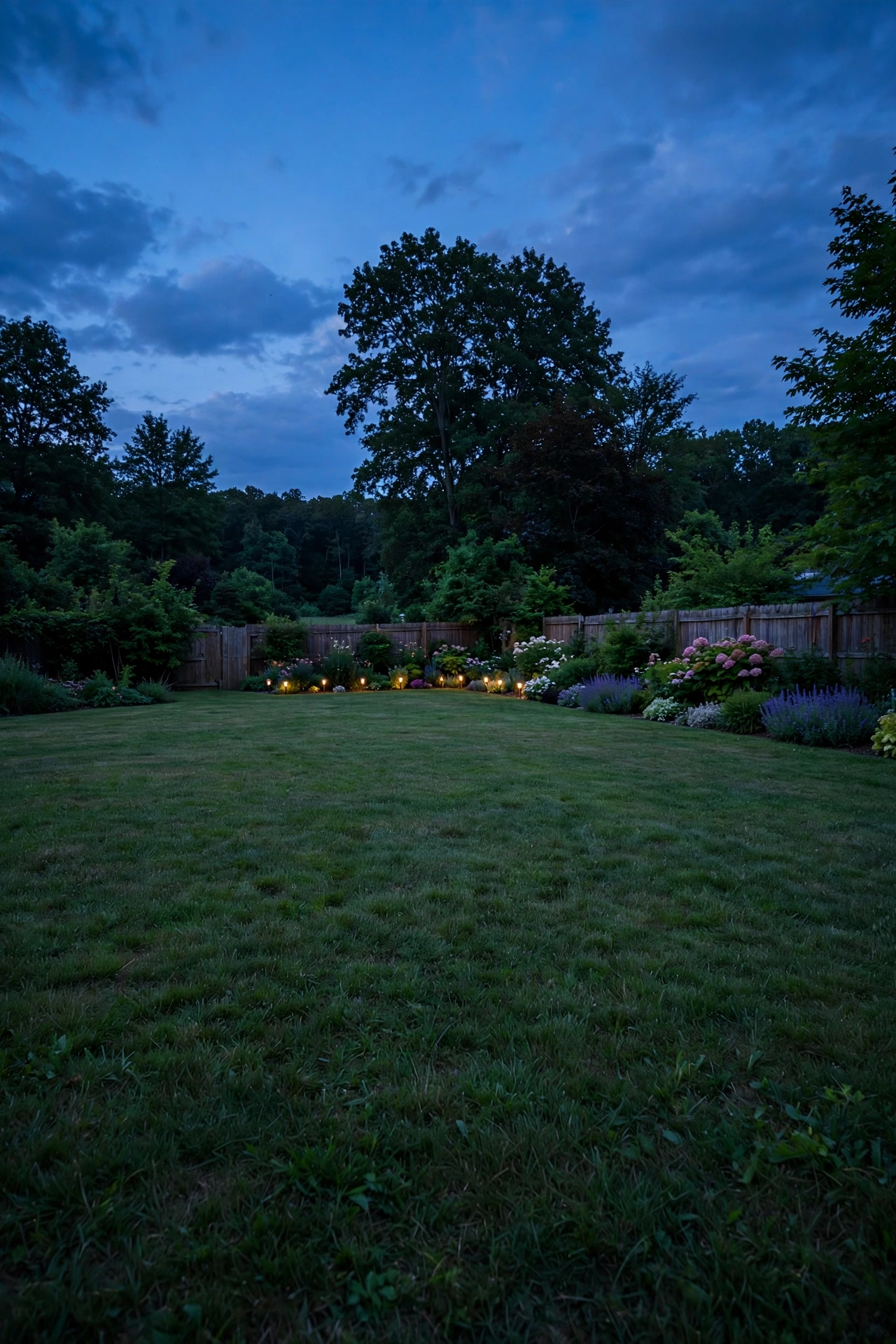
You're building a whole-yard design. Five or more fixtures with a unifying look — matching finishes, consistent 2700K color temperature, deliberate aiming — reads as landscape architecture. A scattered army of mismatched solar stakes reads as… a scattered army. Design needs consistency, and consistency needs a system.
You live somewhere with real winter. If your Decembers involve snow, short days, and weeks of gray, solar is a summer hobby. Wired is a four-season installation.
5 Mistakes People Make When Choosing
I've made most of these myself, so consider this the chapter I wish someone had handed me first.
1. Buying solar for a shady spot. The number-one reason solar lights "don't work" is placement, not product. If the panel can't see direct sun for most of the day, the light will never perform. Walk your yard at noon before you buy — if the spot is in shade then, put solar there never.
2. Judging brightness in the store. Big-box stores are fluorescent-bright, so every display light looks anemic and you can't compare honestly. Check the lumens on the box instead: under 15 is a twinkle, 30-plus can mark a path. And remember that store demo units are fully charged — yours at home in November won't be.
3. Mixing color temperatures. This one quietly ruins yards. Solar stakes tend to run cool-white (5000K+) while your porch light is warm (2700K). The result is a yard that looks half moonlit, half interrogation room. If you go solar, look for "warm white" on the box and keep every fixture the same temperature.
4. Scattering instead of designing. Ten solar stakes evenly spaced along every edge of the lawn looks like an airport runway. Light has the most impact in odd-numbered clusters aimed at something specific — three uplights on one great tree beat twelve stakes lining the sidewalk. Restraint photographs better than coverage.
5. Ignoring the long game. The cheapest option today is rarely the cheapest option over five years. Before you buy twenty $5 solar stakes, price out what replacing them twice costs — then compare that to a starter wired kit. Do the five-year math I walked through above with your own numbers. Future-you, standing in a yard that still glows in 2031, will be grateful.
Frequently Asked Questions
Are solar landscape lights bright enough to actually light a path?
For marking the *edge* of a path, yes — a 20- to 40-lumen solar light every 6 feet gives you enough glow to follow the walkway. For genuinely illuminating the path surface so you can see steps, uneven pavers, or ice, no — that takes 100+ lumens per fixture, which means wired. Think of solar as reflective lane paint and wired as headlights.
Do solar lights work in winter or in shade?
Poorly, honestly. Short winter days mean less charging for longer nights, and snow on the panel means zero charging until it's cleared. In shade, a solar light may charge to a fraction of its capacity even in summer. If your yard has mature trees or a northern exposure, expect dramatically reduced performance — or skip solar for those spots entirely. For a deeper dive on how the two technologies compare, see my LED vs solar exterior lights comparison.
How long do solar landscape lights last?
Budget solar stake lights typically last 1 to 3 years before the battery stops holding a useful charge or the plastic housing fails. Premium solar fixtures with replaceable rechargeable batteries can stretch to 4 or 5 years with regular panel cleaning. By contrast, quality wired fixtures last 10 to 20 years, with only the occasional $6 LED lamp replacement.
Which costs more over time — solar or wired?
Solar costs less upfront ($3–$15 per fixture, no wiring) but needs replacing every 1 to 3 years, so a 10-fixture setup runs roughly $300–$360 over five years. A comparable wired system costs about $500–$550 upfront but near-zero after that, working out cheaper per year over a decade — while looking dramatically better the whole time.
Can you mix solar and wired landscape lighting?
Absolutely, and it's often the smartest move. Use wired fixtures for the heavy lifting — uplighting trees, washing the house, lighting paths and entertaining areas — and sprinkle solar accents where wiring is impractical: the far corner of the lot, the mailbox, or temporary seasonal decor. Just keep the color temperature consistent (warm white, 2700–3000K) so the two systems blend instead of clash.
Conclusion
So, solar vs wired landscape lighting — which wins in 2026? For accent sparkle on a budget, solar earns its place. For everything that matters — real brightness, all-night reliability, winter performance, and a yard that looks designed instead of decorated — wired low-voltage wins by a mile, and the five-year math backs it up.
My advice after lighting my own yard both ways: start wired for the areas you use and see every day, and let solar handle the far corners and experiments. Your future self, sipping coffee on the patio under trees that glow like lanterns, will thank you. If you're ready to keep planning, browse more lighting ideas on the site — your yard's best nights are ahead of it.
*Sarah*