If you have ever bought a solar flood light based on the giant lumen number printed on the box, you already know the disappointment: a weak, bluish glow that gives up by ten o'clock. I have mounted enough of them on my own barn wall and back fence to learn what actually separates the best solar flood lights from the junk drawer. Honestly? It is never the advertised lumens, because those numbers are inflated across the whole category. Real performance comes from two unglamorous specs: the wattage of the solar panel and the capacity of the battery behind it. A generous panel refills the battery fast, even on short winter days, and a big battery is what lets a light hit hard when something trips the sensor at 2 a.m. So this list is organized by type and by job, not by fantasy numbers. You will find the separate-panel setups I trust on shady walls, motion bursts that genuinely startle, and the honest limits of every style. If you want layout inspiration before choosing hardware, browse my solar flood light ideas first, then come back and pick your type.
1. The Best Solar Flood Lights With Separate Panels for Shady Walls
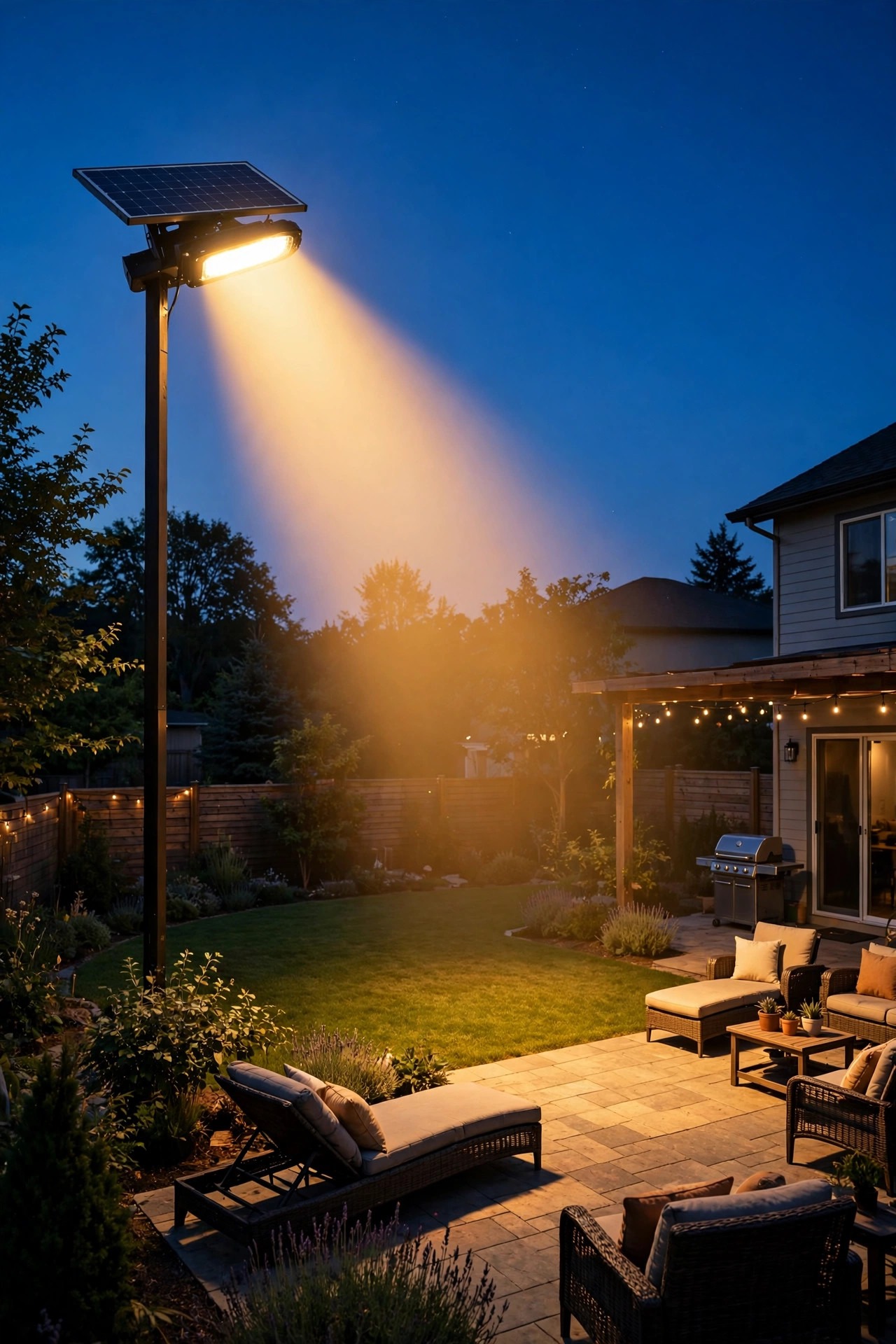
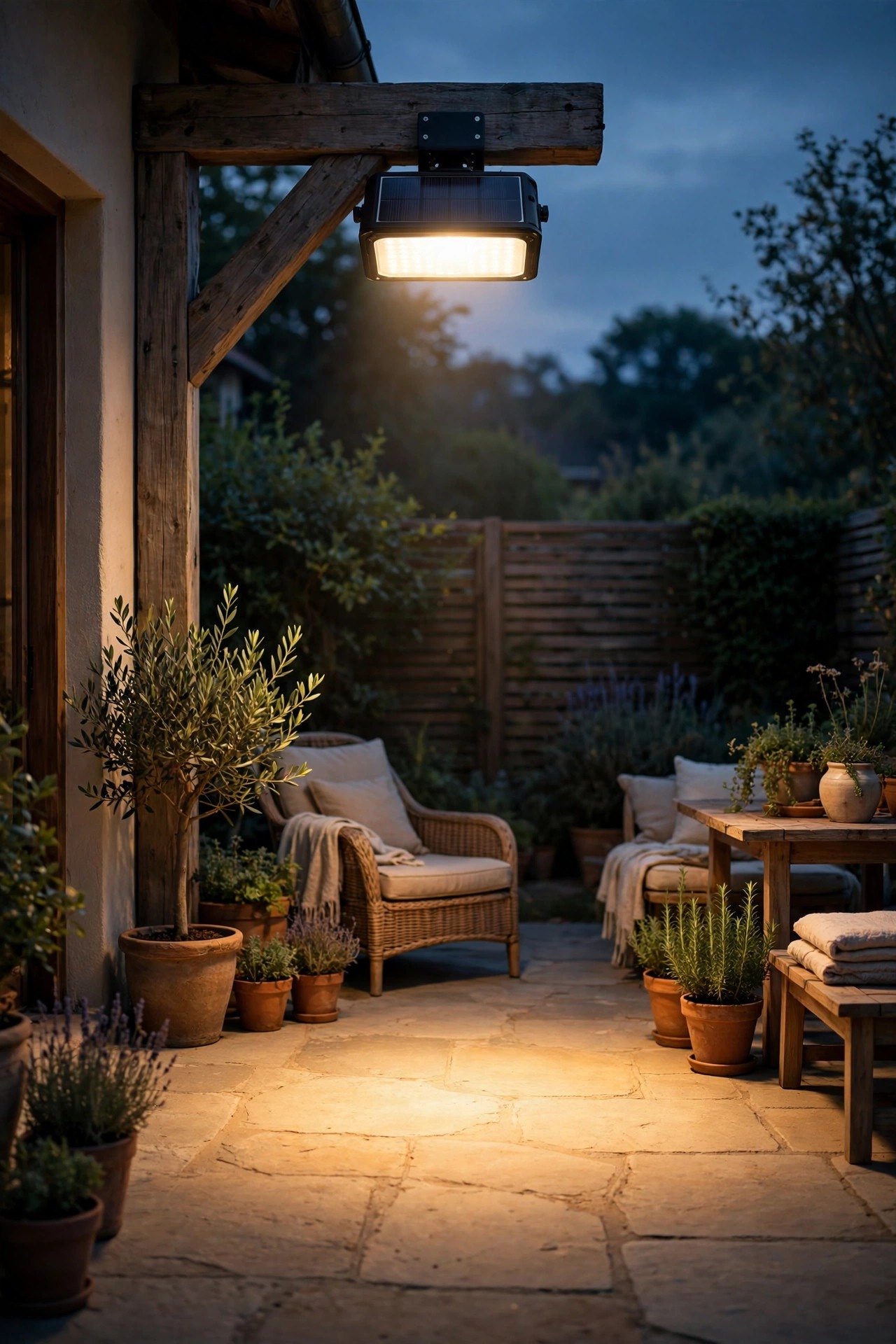
This is the style I recommend most, because it solves the oldest solar problem: the place you need light is rarely the place that gets sun. The lamp head mounts on your wall, under an eave, or on a shaded north-facing fence, while the panel sits up on the roofline or a sunny fence post, connected by 10 to 16 feet of cable. That separation changes everything. The panel can harvest a full day of direct sun while the light guards a doorway that never sees a ray. In my experience, these are the solar floods that still perform in December, because a properly placed panel charges in five or six good hours. Look for a panel of at least 5 watts and a battery you can actually replace when it ages out in three to five years. The trade-offs are real: you will drill a few holes, route a cable neatly, and spend a little more than the all-in-one styles. Cable runs also need a drip loop so rain does not follow the wire into the housing. But if your target spot is shaded, no integrated light will ever beat this setup, no matter what its box promises.
Suggested budget range: $35 – $70.
2. Motion-Activated Floods for Security Bursts
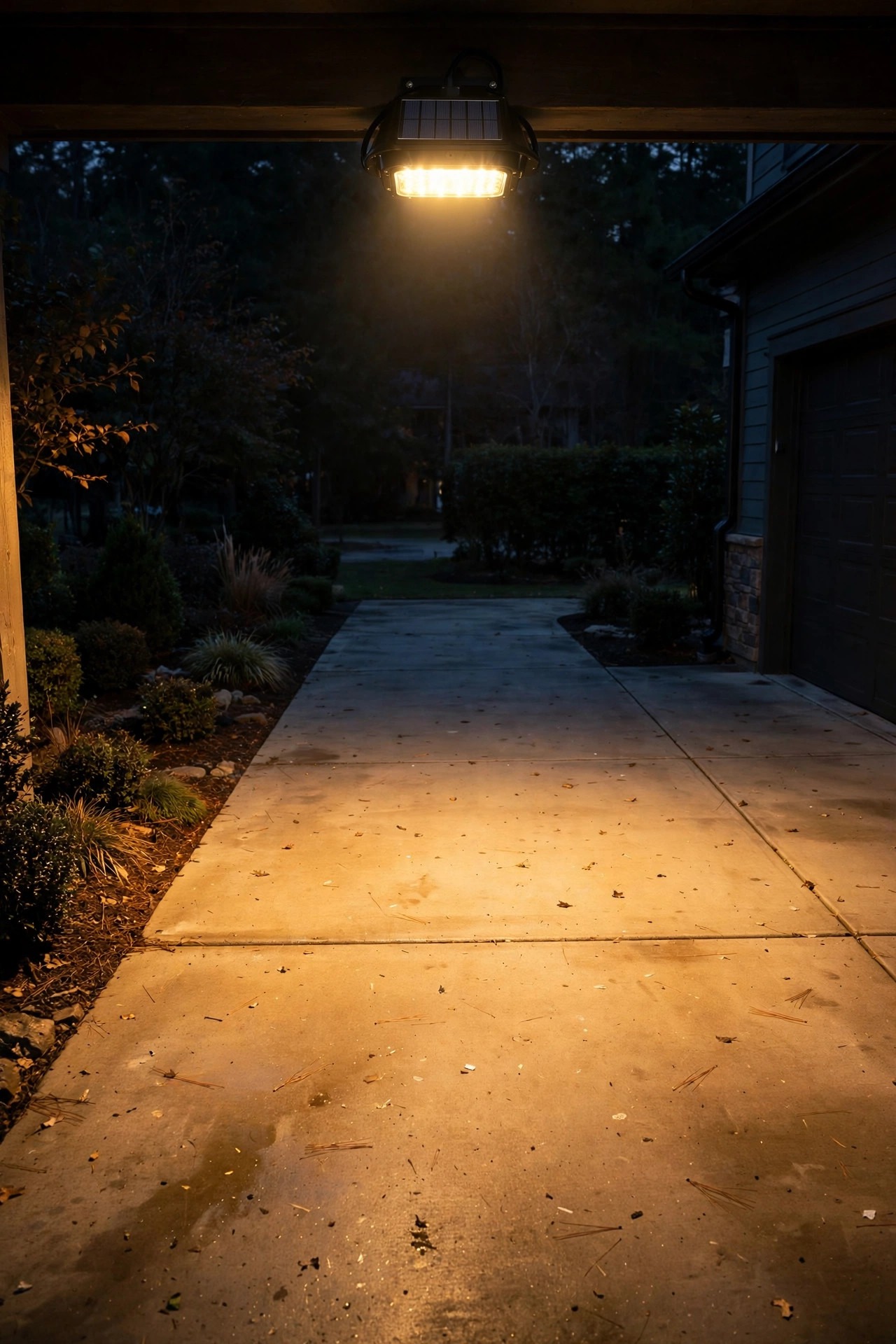
A motion-activated solar flood spends its day asleep and its night waiting, which is exactly why it can afford to be genuinely bright. Instead of rationing power across ten hours, it saves everything for the moment the sensor trips, then dumps the battery into a 20-to-30-second blast that lights a driveway or side yard like a stage. That burst model is the honest strength of solar security lighting: startling, effective, and cheap to run, because the light is off 95 percent of the night. Mount these 8 to 10 feet up, where the passive infrared sensor gets a clean sweep of the approach, and angle the head down so the beam pools where feet land rather than blasting into the street. Detection ranges of 16 to 26 feet are realistic; claims much beyond that are marketing. The limits matter too. A busy sidewalk can trip the light forty times a night and flatten a small battery by morning, and the glow is purely reactive, so it does nothing for the steady, pretty lighting a patio needs. Choose this type for driveways, gates, trash-pad corners, and any dark approach you want defended rather than decorated.
Suggested budget range: $25 – $55.
3. Dusk-to-Dawn Floods With a Dim Idle and a Motion Boost
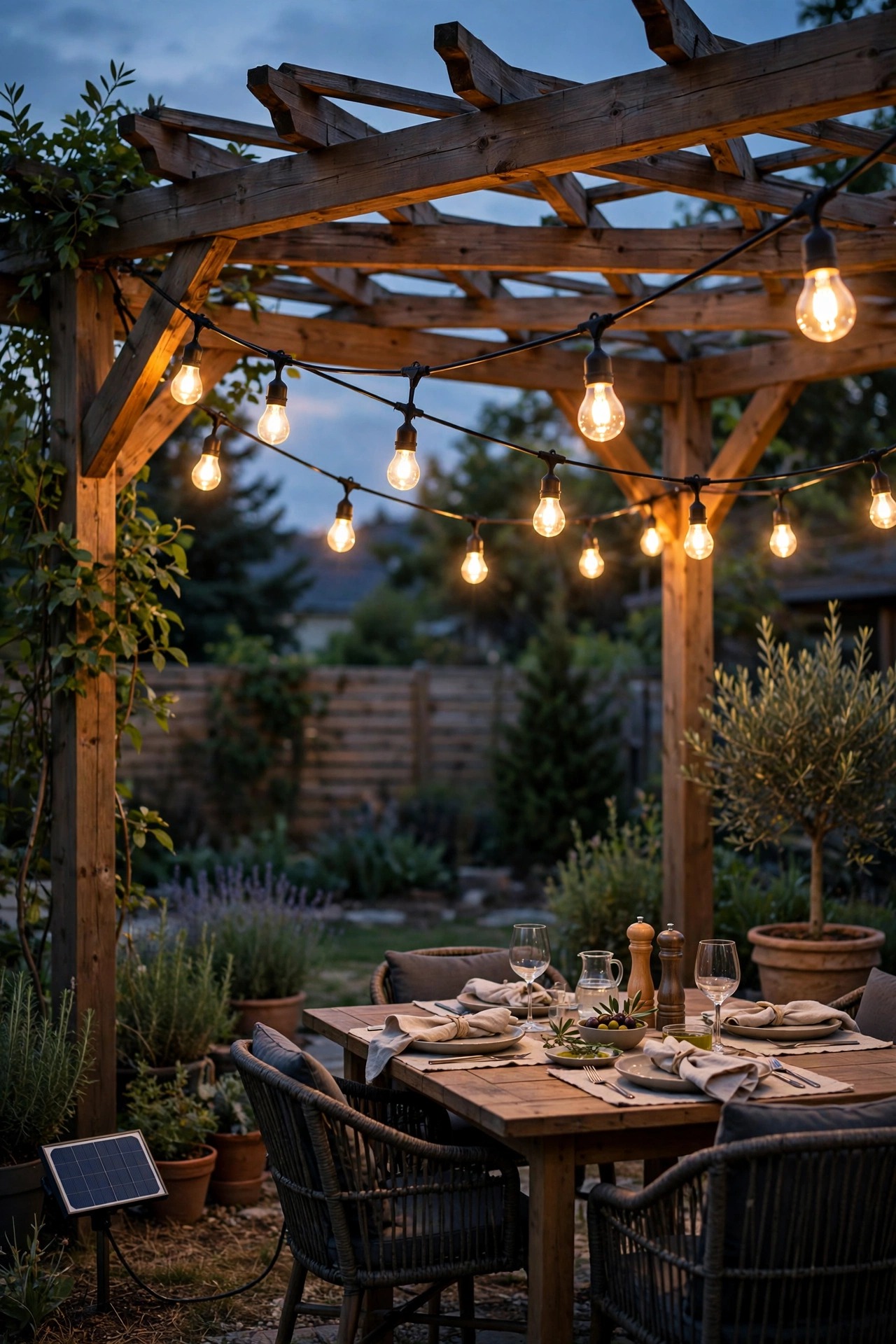
This hybrid style is my favorite compromise for places people actually use after dark. From dusk, the light holds a soft idle glow, maybe 10 to 20 percent of full power, just enough to outline a patio edge, a barn door, or the path to the chicken coop. The moment the sensor sees movement, it jumps to full brightness for half a minute, then settles back down. You get the welcoming, layered look of a light that is visibly on, plus the security punch of a flood, without asking the battery to run full blast all night. In my experience, the better versions sip power so efficiently in idle mode that they still have a strong boost left at 4 a.m. The honest limits: that idle glow is ambiance, not task lighting, so do not expect to read a combination lock by it, and on heavily overcast winter weeks the idle may cut out before dawn as the light protects its reserve. Check that the idle level is adjustable if you can, because a fixed bright idle is the number one reason these disappoint. For porches, patios, and farm doors that see evening foot traffic, nothing else balances charm and coverage this well.
Suggested budget range: $30 – $60.
4. Dual- and Triple-Head Floods for Corners and Wide Yards
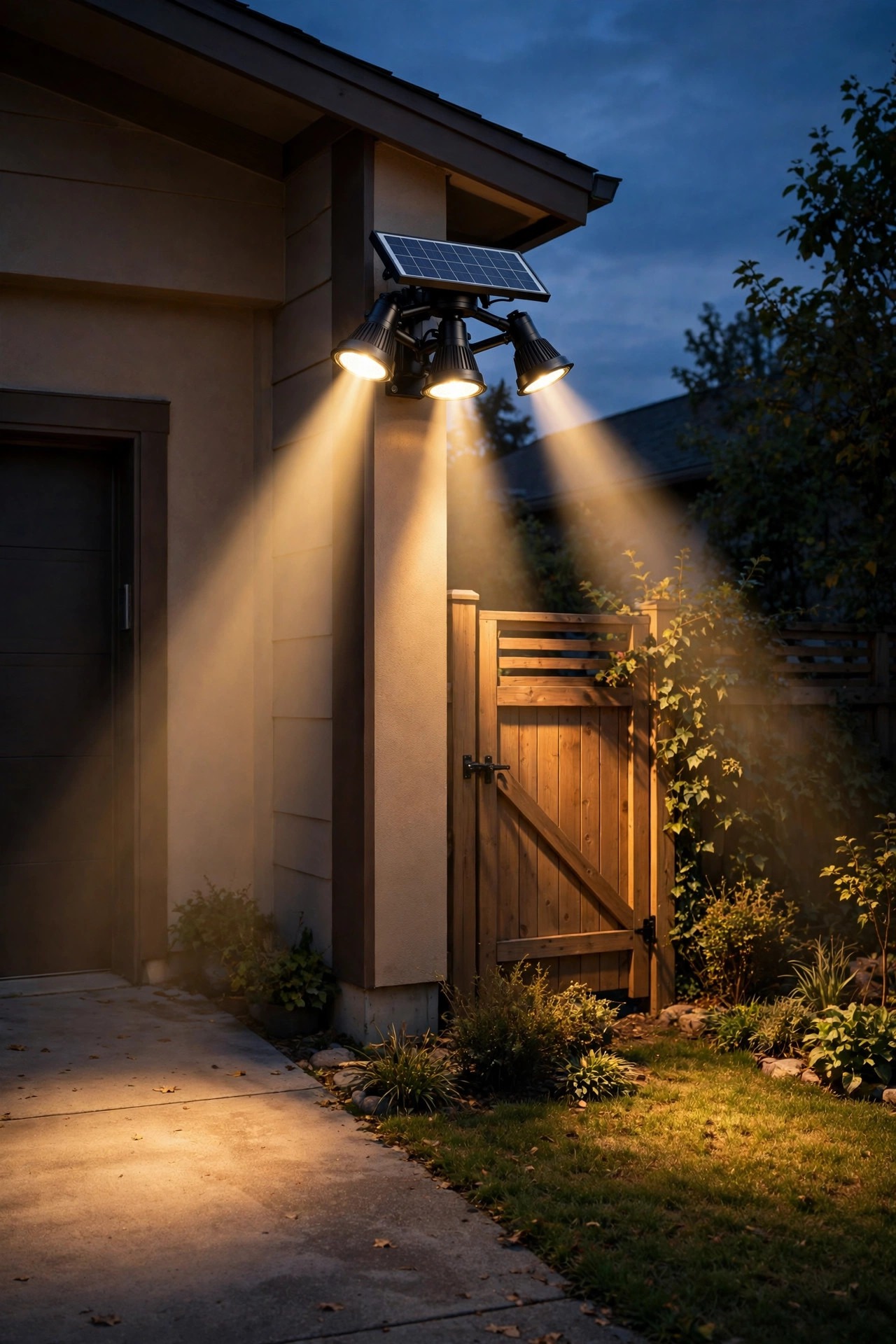
One lamp head throws one cone of light, and big spaces laugh at a single cone. Multi-head floods put two or three adjustable heads on one body, so a single mounting point on a garage corner can wash the driveway, the side gate, and the trash pads all at once. I aim the heads like stage lights: one straight down the drive, one raking along the fence line, one covering the walk to the door. The spread is the whole point, and on a corner mount it is genuinely transformative. You will pay for it in battery terms, though. Three heads at full blast drain a shared battery three times as fast, so these shine brightest in motion mode and dimmest in any all-night setting. Panel size matters enormously here; a multi-head light fed by a tiny panel is a decoration by midwinter. Look for heads that tilt and swivel independently, seals rated for driving rain, and a mounting plate sturdy enough that a winter storm does not re-aim your lights for you. If one fixture must defend a wide, awkward corner lot, this is the type that earns its keep.
Suggested budget range: $40 – $85.
5. Ground-Stake Floods for Yards, Gardens and Courts
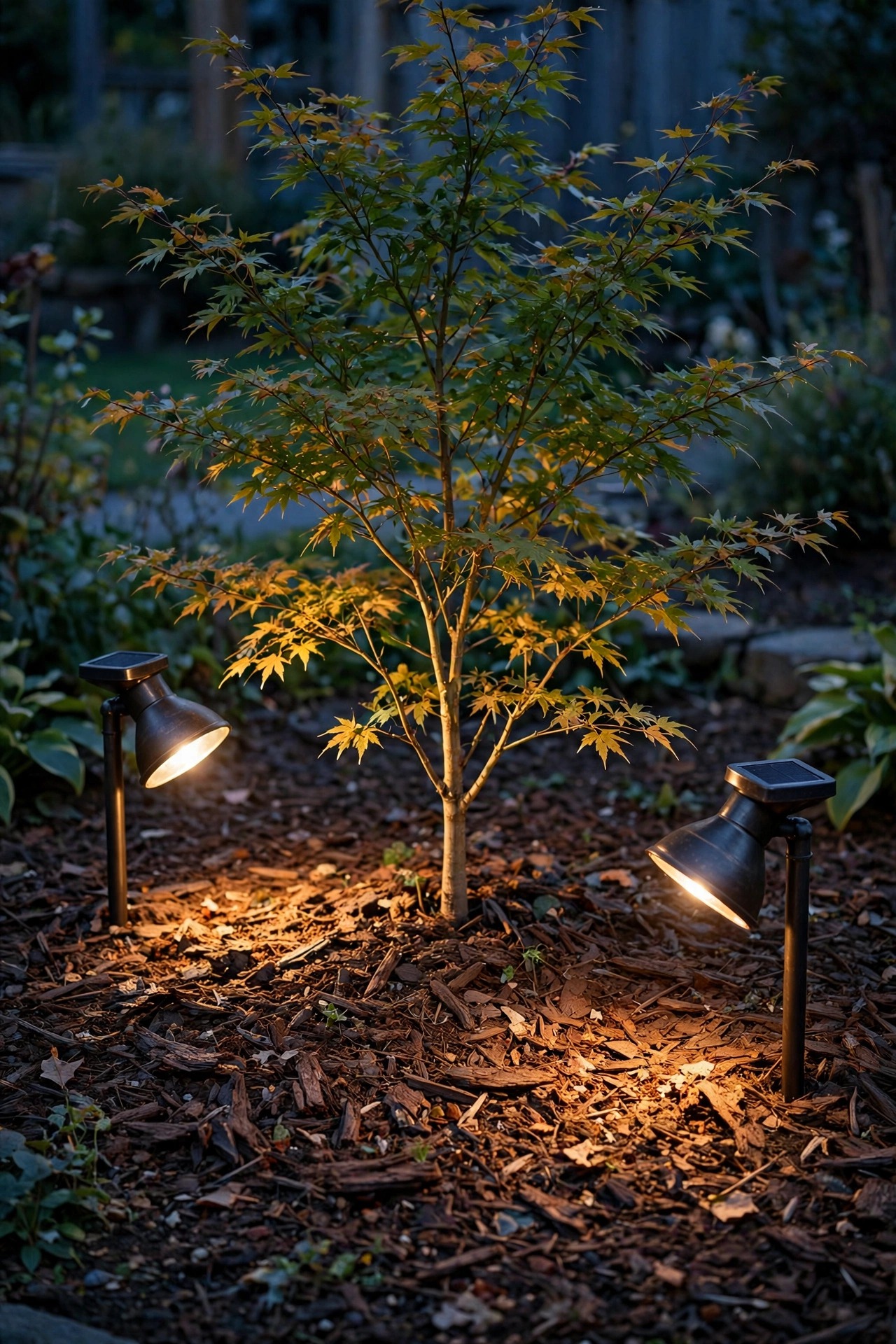
Not every flood needs a wall. Ground-stake floods push into the soil on a sturdy spike and aim up or across, which makes them the fastest way to flood a volleyball lawn, a garden bed, or a backyard court without touching a ladder or a drill. I use them as temporary muscle: extra coverage for a party, a pool build, or the dark month before a permanent fixture goes up. Because they sit low, they light from below, which flatters trees and house facades but can glare if you walk straight into the beam, so angle them across traffic, never along it. The better versions have metal stakes, because plastic spikes snap in frozen or rocky ground, and panels that tilt independently of the head. Portability is also their weakness. They get kicked, nudged by mowers, and stolen more easily than anything screwed to a wall, and a shaded garden bed starves an integrated panel. Runtime is modest, so treat them as evening and event lighting rather than all-night security. For renters and garden lovers who want serious brightness with zero installation, though, nothing else comes close.
Suggested budget range: $20 – $45.
6. High-Capacity Battery Floods Built for Winter
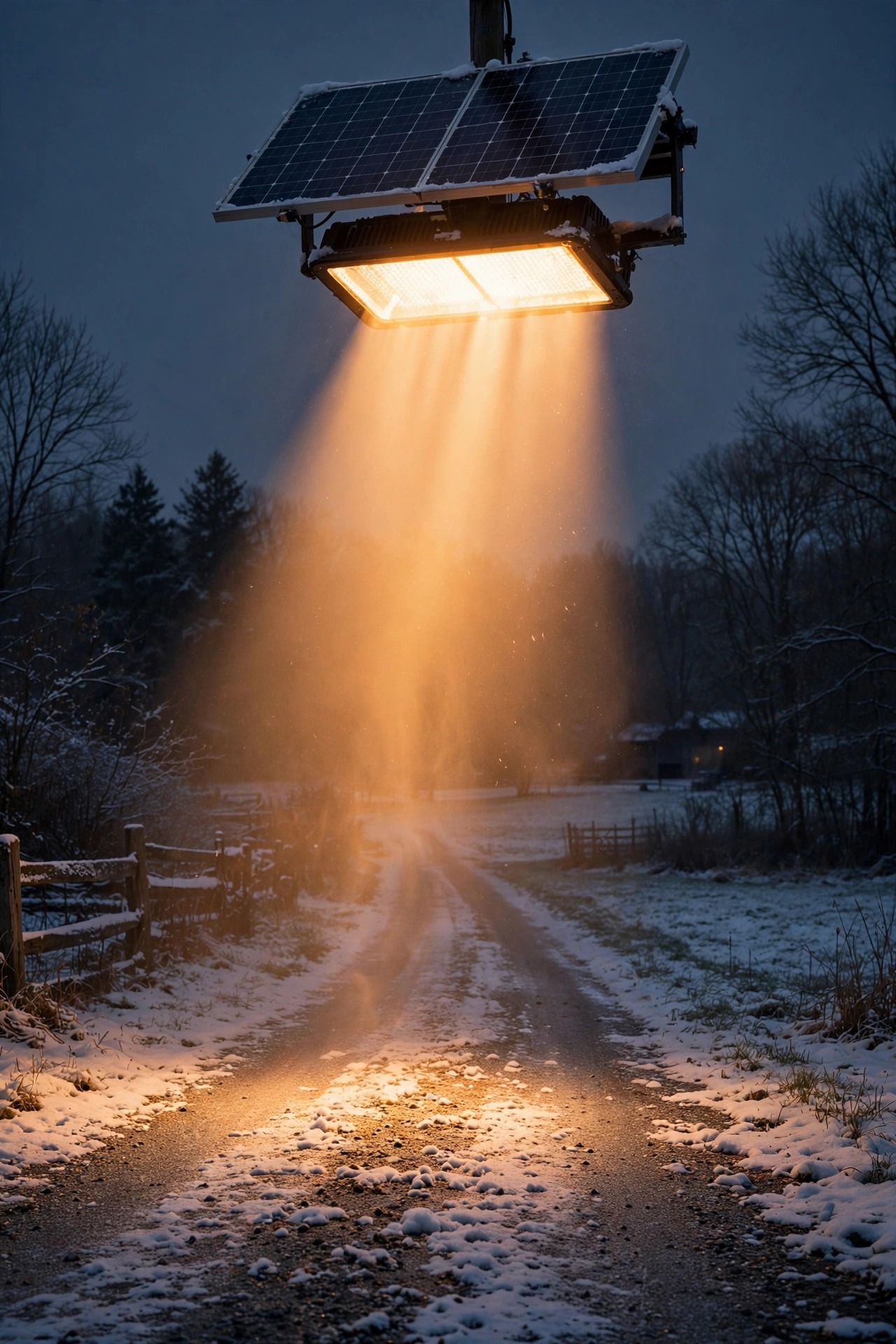
December is where ordinary solar floods go to die. The panel gets five weak hours of sun, the night runs fourteen hours long, and a small battery simply cannot bridge that gap. High-capacity models attack the math from both ends: oversized panels, often 8 watts or more, paired with batteries two or three times the usual size. The result is a light that still delivers strong motion bursts at 6 a.m. in January and survives two or three gray days in a row without going dark. When you compare these, ignore the lumen headline and read the battery capacity in milliamp-hours and the panel wattage; those two numbers predict real life far better. These lights are heavier and chunkier, and the big panel needs a genuinely sunny seat, angled toward the winter sun and brushed clear of snow after storms. They cost more, too, though in my experience one winter-proof light is cheaper than replacing a disappointing one twice. If you live up north, run a rural driveway, or simply refuse to think about your lights after installing them, this is the category to buy from.
Suggested budget range: $55 – $110.
7. Remote-Control Floods You Can Adjust From the Ground
A flood light mounted 12 feet up is a wonderful thing until you want to change its mode, and then every adjustment means dragging out the ladder. Remote-control models hand those settings to a small handheld remote: brightness levels, color temperature from warm to daylight, motion sensitivity, and timer modes that hold full brightness for two, four, or six hours before dropping to sensor duty. That timer mode is quietly brilliant for workshop yards and holiday evenings, when you want real working light for a set stretch and security coverage after. I also use the remote to tame lights aimed near a neighbor's windows, dialing down instead of remounting. The honest downsides: remotes get lost, cheap ones need line of sight from 20 feet or less, and a light whose settings live entirely in the remote is a problem when the remote dies. Keep the remote in a labeled drawer by the back door, and favor models that keep basic controls on the fixture body too. For high mounts, shop buildings, and anyone done with ladders, the convenience is worth every penny.
Suggested budget range: $35 – $75.
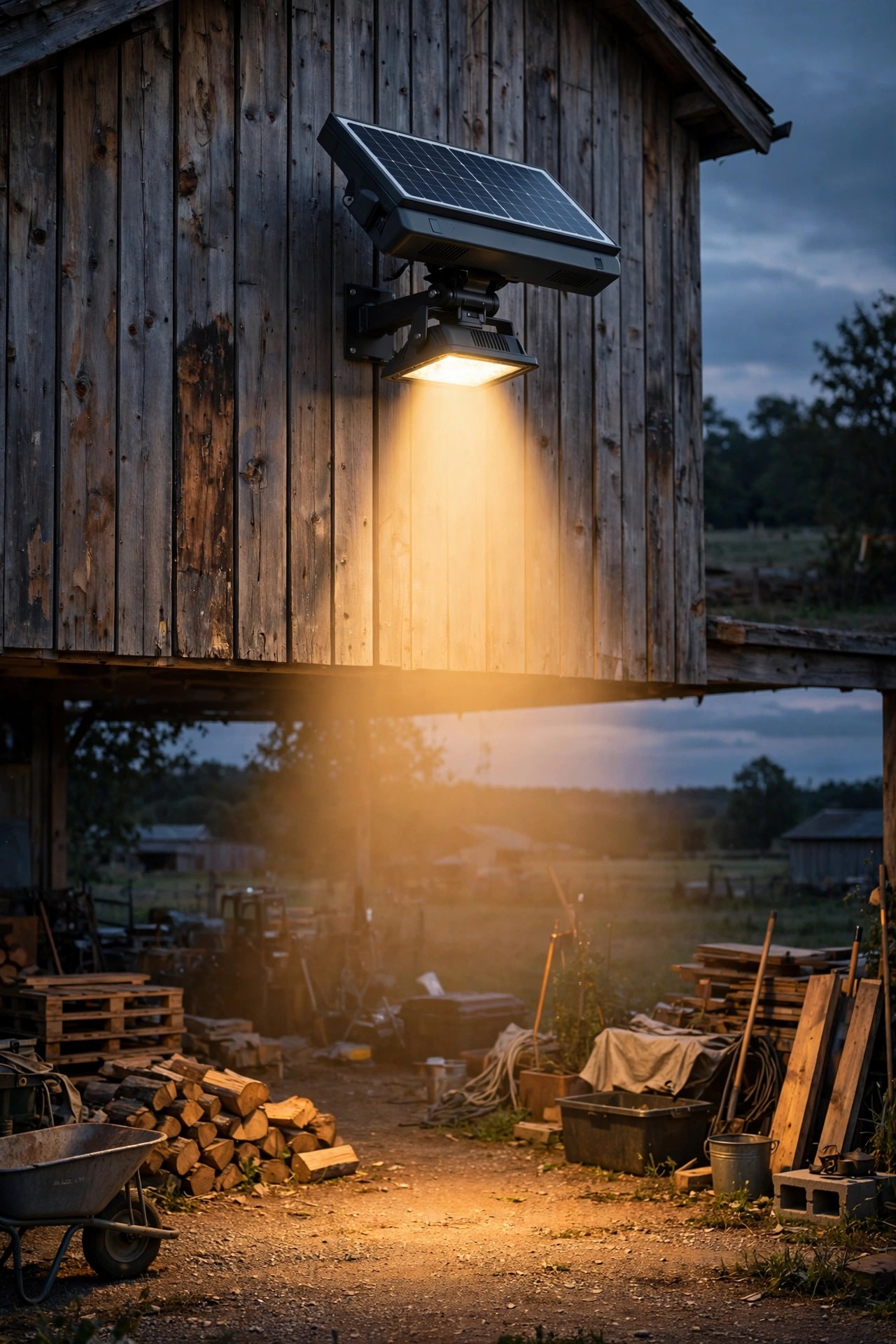
8. Pole- and Barn-Mount Area Floods for Serious Coverage
At the top of the solar flood family sit the area lights: big fixtures designed to hang on a pole, a barn gable, or a tall post and wash a genuinely large space, the way a streetlight covers an intersection. Mounted 10 to 14 feet up, a good one throws a broad, even pool across a barnyard, a parking pad, a riding arena, or a long rural driveway, and most run a dusk-to-dawn program with a dim overnight level and motion boost, because their panels and batteries are sized for it. This is the one solar category that honestly approaches wired area lighting for coverage, though a hardwired fixture still wins on raw, all-night, full-power output. Installation takes real work: a solid pole or gable mount, a lift or tall ladder, and hardware torqued for wind. In return you get years of set-and-forget service over spaces that would otherwise need trenching and an electrician. Check that the battery is replaceable and the housing is metal, because at this price a sealed throwaway design makes no sense. For farms, big lots, and shared driveways, this is the grown-up choice.
Suggested budget range: $60 – $130.
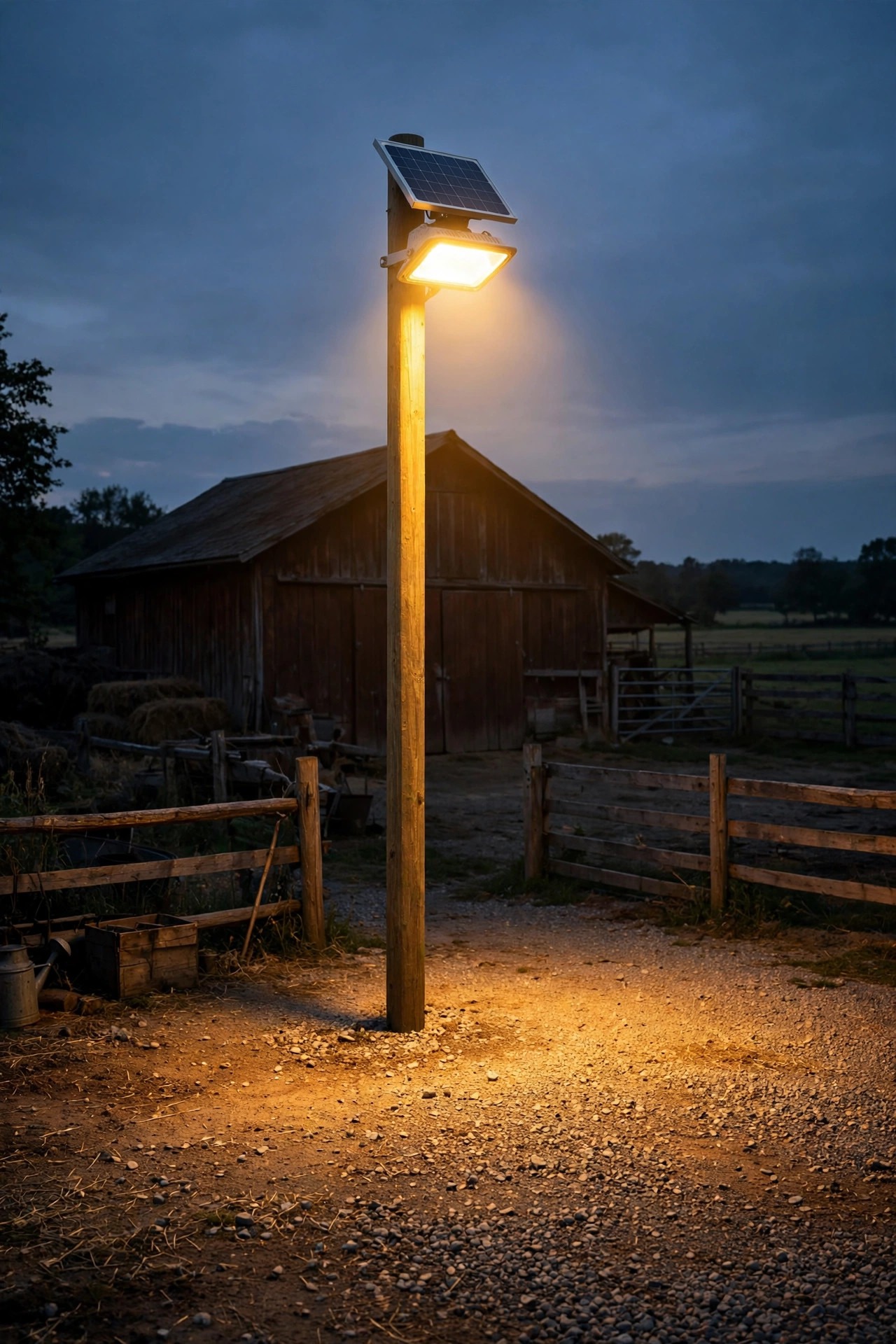
9. Budget Twin-Packs: The Best Solar Flood Lights for Two Spots at Once
Sometimes the smartest buy is not one great light but two decent ones. Budget twin-packs pair two matched motion floods in one box, and that changes the coverage math completely: one guards the driveway while its twin covers the back gate, so no approach sits in darkness between beams. Two smaller pools of light almost always beat one big pool with a black hole beside it. Expect honest compromises at this price. Batteries are smaller, so bursts are shorter and mid-winter performance fades sooner, housings are plastic, and the printed lumen numbers are the most fictional in the whole category. Judge the pack by panel size and battery capacity, just like the premium lights, and treat any single glowing review about brightness with suspicion. Mount them a touch lower, 7 to 8 feet, where their modest beams stay useful, and plan on replacing batteries or units in two to three years. For a first solar security setup, a rental, or a tight budget that still deserves real coverage, a twin-pack is the purchase I recommend without hesitation. Two defended spots will always beat one.
Suggested budget range: $25 – $45.
Frequently Asked Questions
How many lumens do I actually need from a solar flood light?
Far fewer than the box brags about. Printed claims of 10,000 lumens or more are fantasy; a real output of 800 to 1,500 lumens in a motion burst lights a two-car driveway beautifully. Judge a light by its panel wattage and battery capacity instead, because those decide how bright it can be at 2 a.m. in February, not just at dusk in July.
Will a solar flood light stay on full brightness all night?
No, and any listing implying otherwise is bending the truth. A solar battery holds a few hours of full-power light at best, so smart designs ration it: dim idle modes stretch coverage to dawn, and motion bursts deliver full brightness only when it matters. For true all-night full power, you need hardwired electricity.
Do solar flood lights work in winter and through cloudy weeks?
The good ones do, with help from you. Choose a bigger panel and battery, angle the panel toward the low winter sun, and brush snow off after storms. Expect shorter runtimes in December than in June, and give a separate-panel model the sunniest seat you have. Two gray days in a row will dim anything; three should not kill a well-sized light.
Where should I mount a solar flood light for the widest coverage?
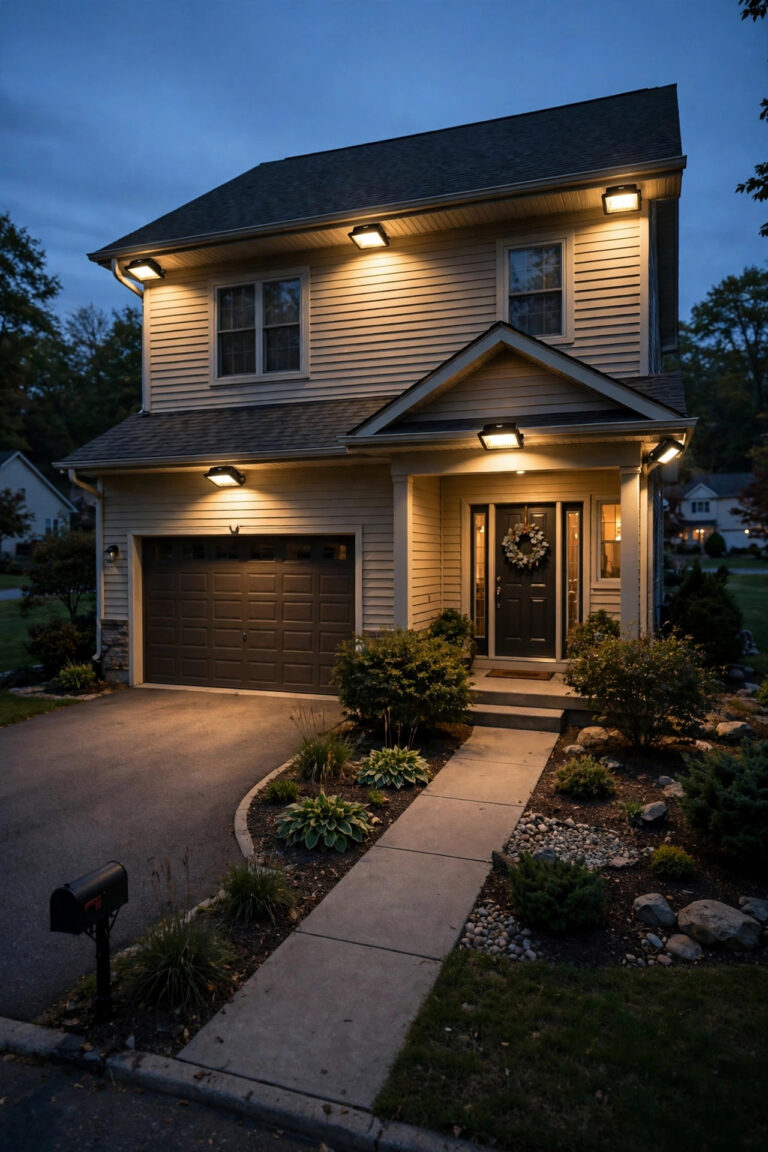
Height and corners win. Mount 8 to 12 feet up, aim the head down at roughly 30 to 45 degrees so the beam pools on the ground instead of glaring into eyes, and let the sensor face the approach path at a slight angle. My full flood light placement guide walks through heights and angles for garages, yards, and barns.
Conclusion
Big, bright coverage from the sun alone is absolutely possible, as long as you shop by panel wattage and battery capacity instead of the fairy tale printed on the box. Match the type to the job: separate panels for shaded walls, motion bursts for security, dim-idle hybrids for lived-in spaces, and high-capacity or pole-mount models where winter and distance raise the stakes. Do that, and the best solar flood lights will guard your yard for years with no wiring and no electric bill. Still weighing power sources? My honest breakdown of solar vs wired landscape lighting will help you decide, and the rest of the site is full of ideas for layering floods with path and porch light.