If you have ever unboxed a set of solar porch lights, stuck them up with high hopes, and watched them fade to a sad little glimmer by nine in the evening, this list is for you. Honestly? I have done exactly that, more than once. The idea itself is sound — a porch is the perfect place for solar, with no wiring, no electrician, and no hunting for a free outlet. What goes wrong is the match. A covered porch starves a built-in panel, a December sky delivers a fraction of the charge a June sky does, and a ten-lumen toy gets asked to do a hundred-lumen job. So I reviewed the main types the way I would for a friend: what each one genuinely does well, where it disappoints, and who should buy it. You will get lumen numbers that mean something, battery sizes worth paying for, and the placement rules that decide whether your porch glows until bedtime or quits before dinner is over.
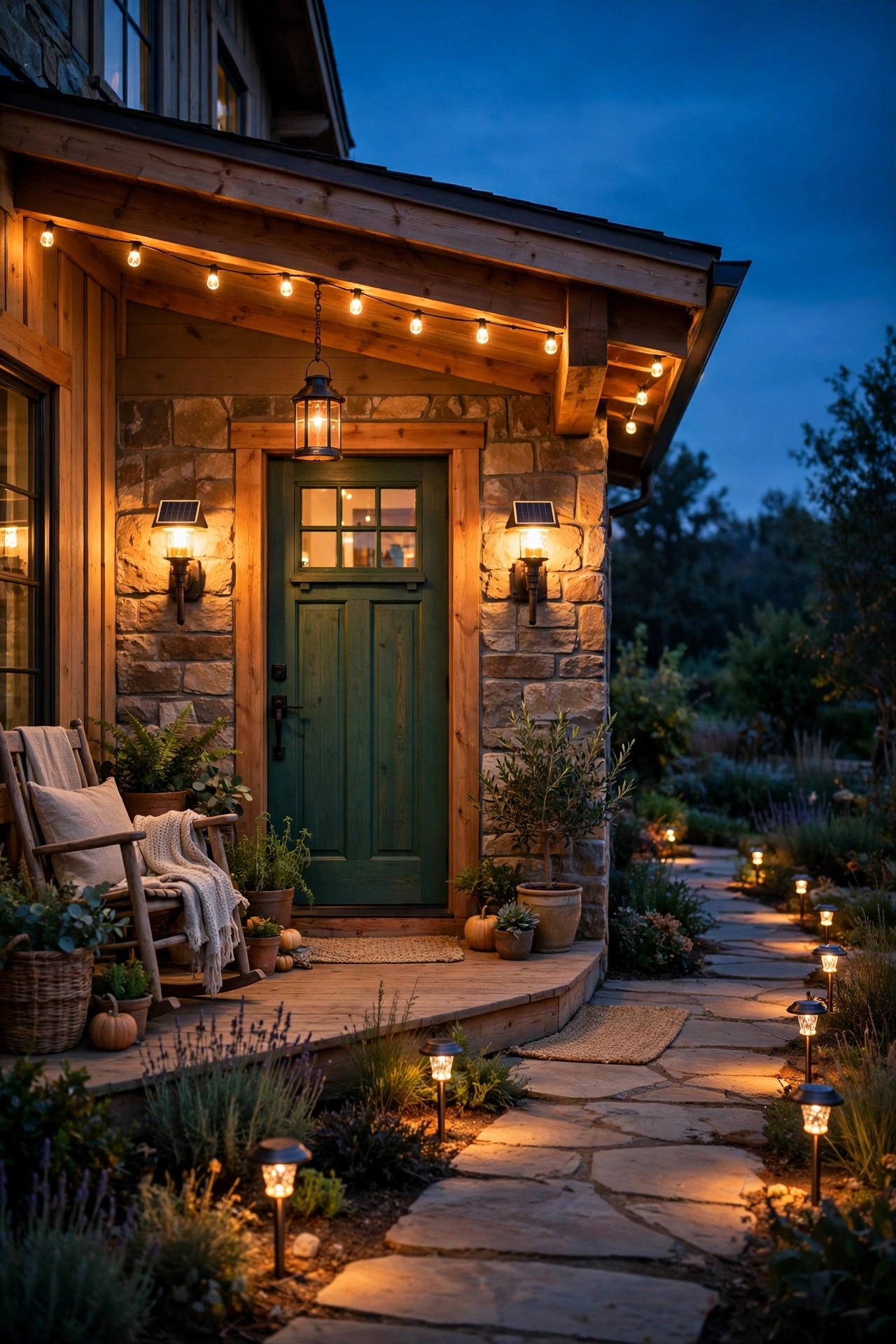
1. Classic Solar Porch Lights: Sconces Beside the Front Door
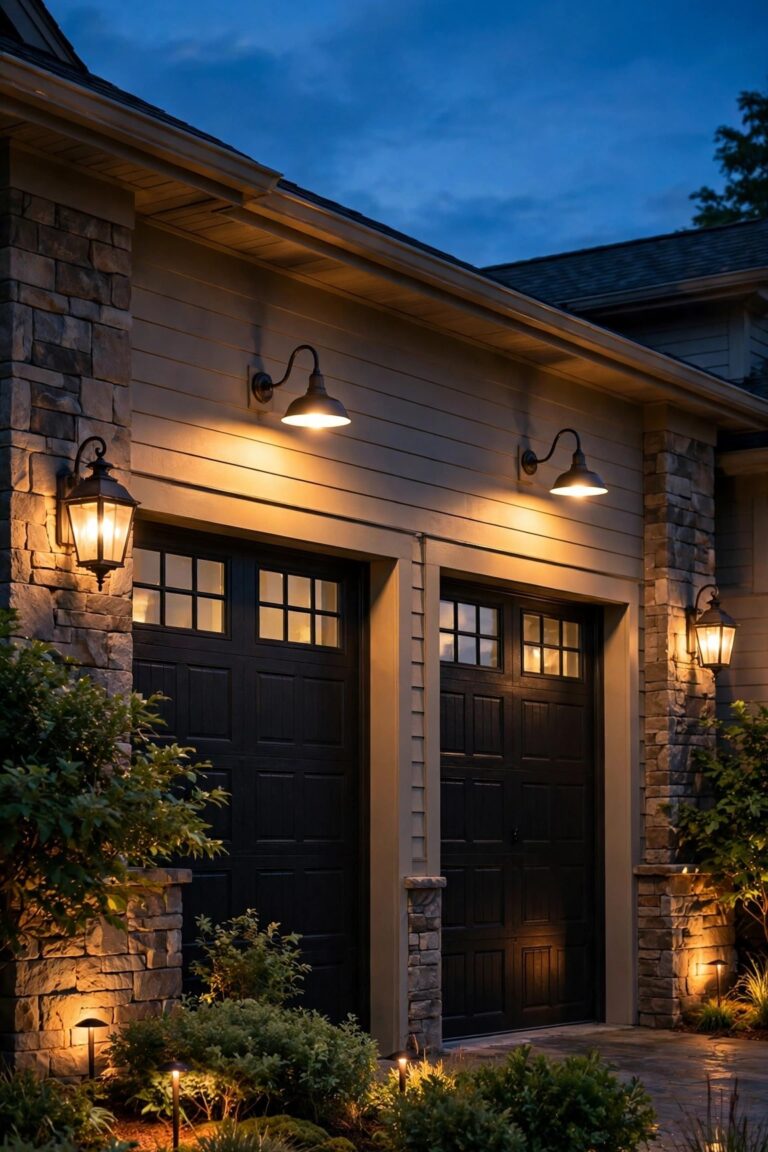
This is the type everyone pictures first — a lantern-style sconce on each side of the door, panel on top, no wires anywhere. When they work, they are the best-looking solar on this whole list, and a decent pair throws a real welcome: look for 100 to 200 lumens per fixture, a battery of at least 1,500 mAh, and a monocrystalline panel, which charges noticeably better on gray days than the cheaper polycrystalline kind. Now the honest part. The panel sits on top of the fixture, so a deep porch roof or a north-facing wall can shade it for most of the day, and a shaded sconce is a dim sconce by eight in the evening — in winter, sometimes by six. On an open porch that catches five or six hours of direct sun, expect six to eight hours of light in summer and three to four in winter. Skip the rock-bottom pairs; at fifteen dollars you are mostly buying twenty lumens and regret. My full roundup of solar wall sconce ideas covers finishes and sizing in more detail.
Suggested budget range: $30 – $90.
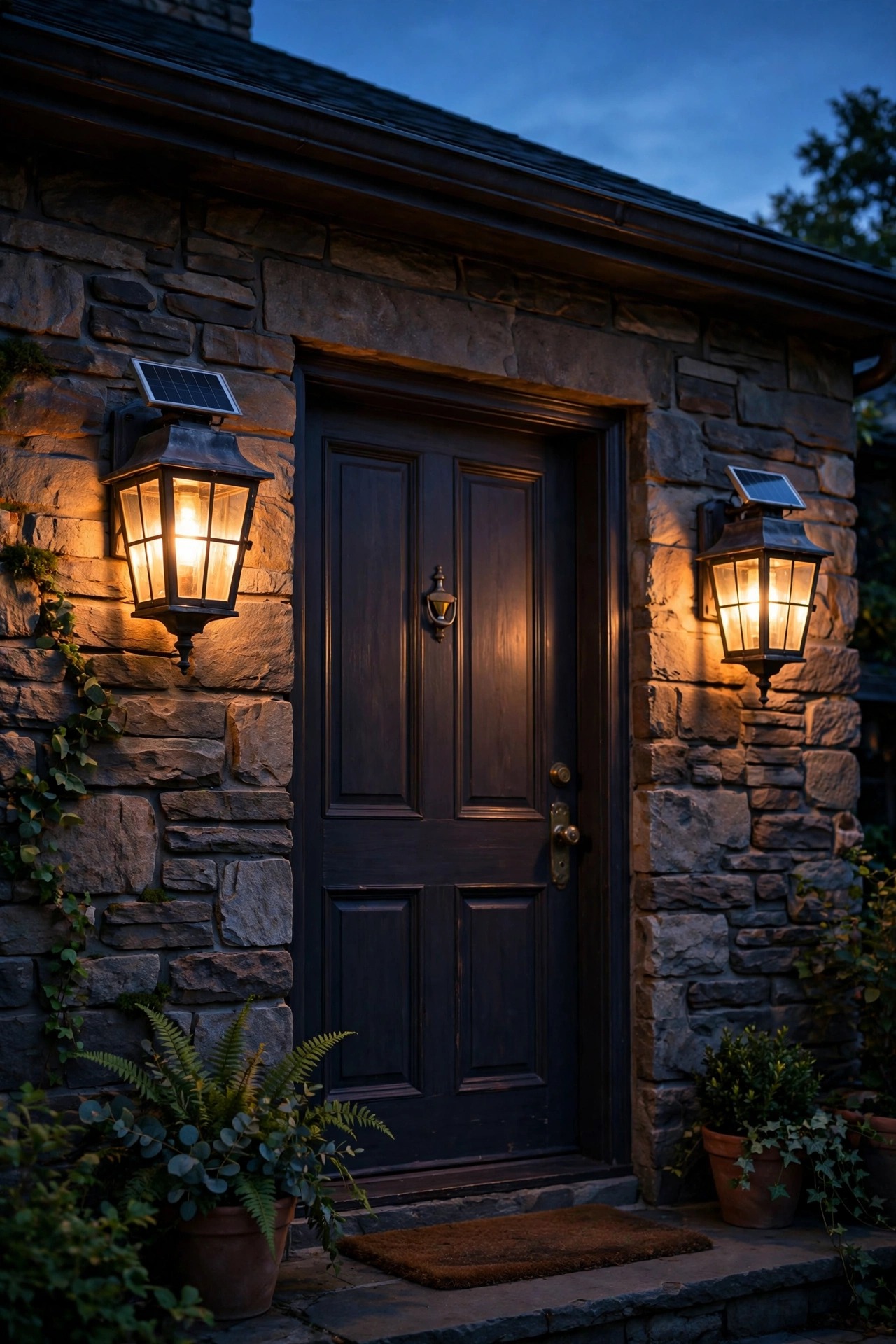
2. Solar Sconces With a Remote Panel for Covered Porches
If your porch has a real roof over it — and most of the porches I hear about do — this is the type I steer people to first. The fixture looks like a normal sconce or pendant, but its solar panel lives at the end of a cable, usually nine to sixteen feet long, so the panel can sit on the porch roof edge, a railing, or a sunny stretch of siding while the light itself glows in the shade below. That one change fixes the number-one reason porch solar fails. The honest downsides are small but real: you have to hide or neatly run a thin cable, and finding the sunniest mounting spot takes one afternoon of watching where the light actually falls. Batteries tend to be bigger in these sets, often 2,000 mAh or more, and many let you swap in fresh rechargeable cells when the originals tire after two or three years. If your entry sits in shade all day, read my notes on lighting a porch with no overhang for more shade-friendly tricks before you buy anything at all.
Suggested budget range: $45 – $120.
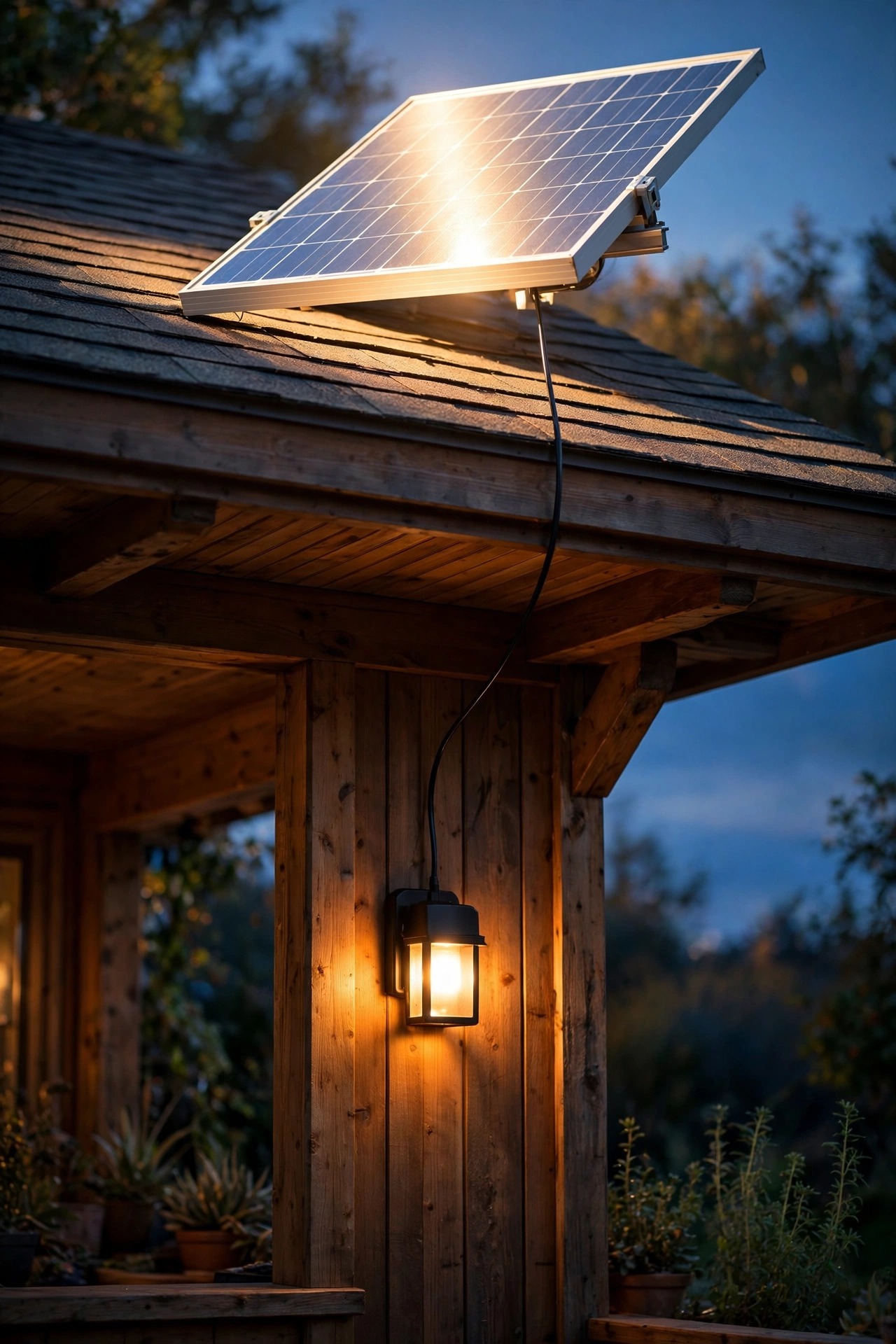
3. Solar Motion-Sensor Floodlights for the Steps and Side Door
A motion floodlight is not ambiance, and I will not pretend otherwise. It is a greeter and a guard: a wide, bright burst — 500 to 1,500 lumens on the better models — that fires when someone crosses the sensor, with a range of about ten to twenty-five feet. Over porch steps, a side door, or the gate end of a wraparound porch, that burst is genuinely useful and honestly safer than a dim steady glow. The better units idle at a low dusk-to-dawn level and jump to full brightness on motion, which is the setup I recommend. Now the catch nobody mentions: a sensor aimed at a busy sidewalk or a street can trigger hundreds of times a night, and even a big battery cannot keep up — angle it at your own walkway and steps, not the neighborhood. Panels on these are larger, which helps, and most housings carry an IP65 rating for driving rain. Buy for the sensor quality and battery size, not the headline lumen claim on the box.
Suggested budget range: $25 – $70.
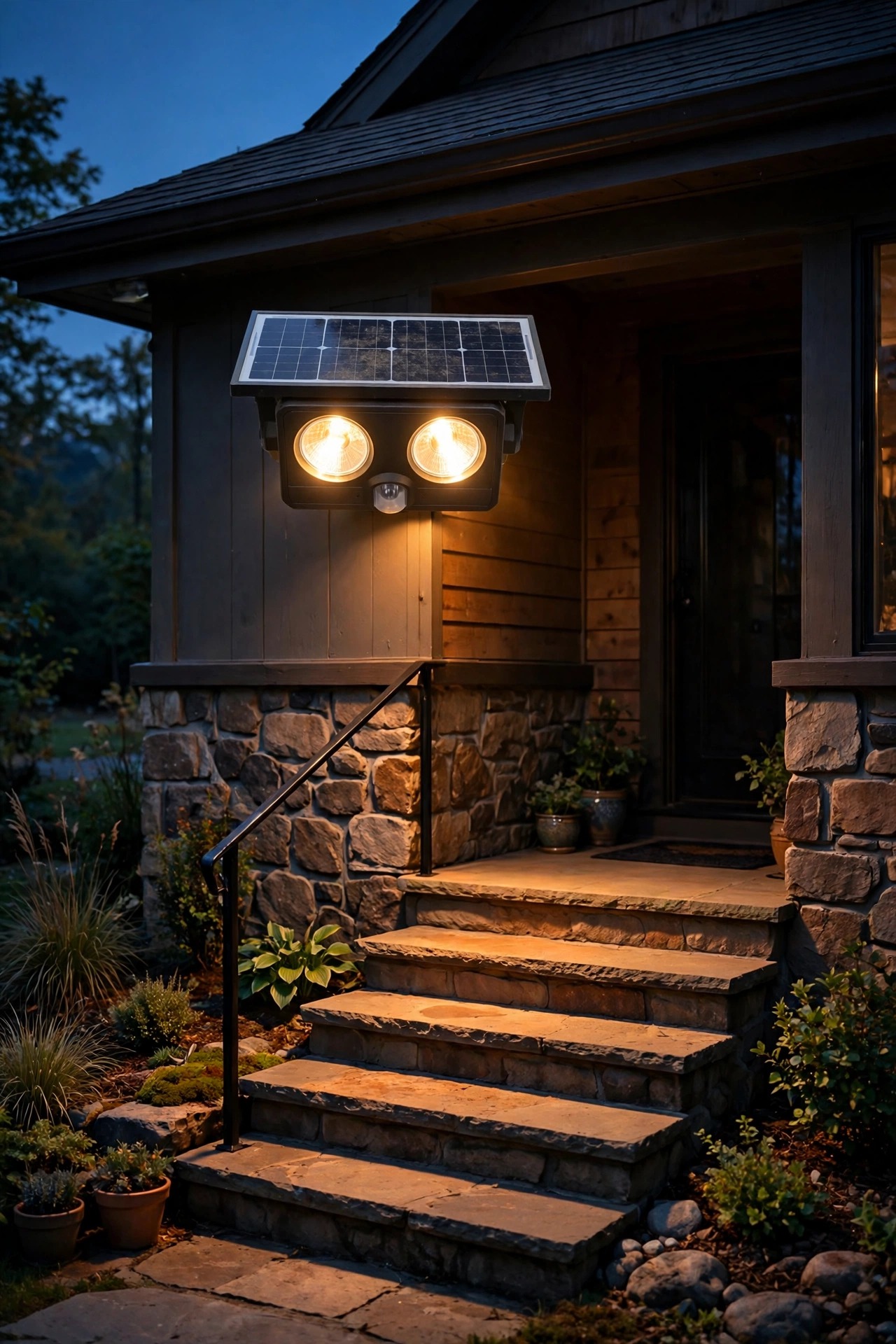
4. Hanging Solar Pendant Lanterns for a Soft, Low Glow
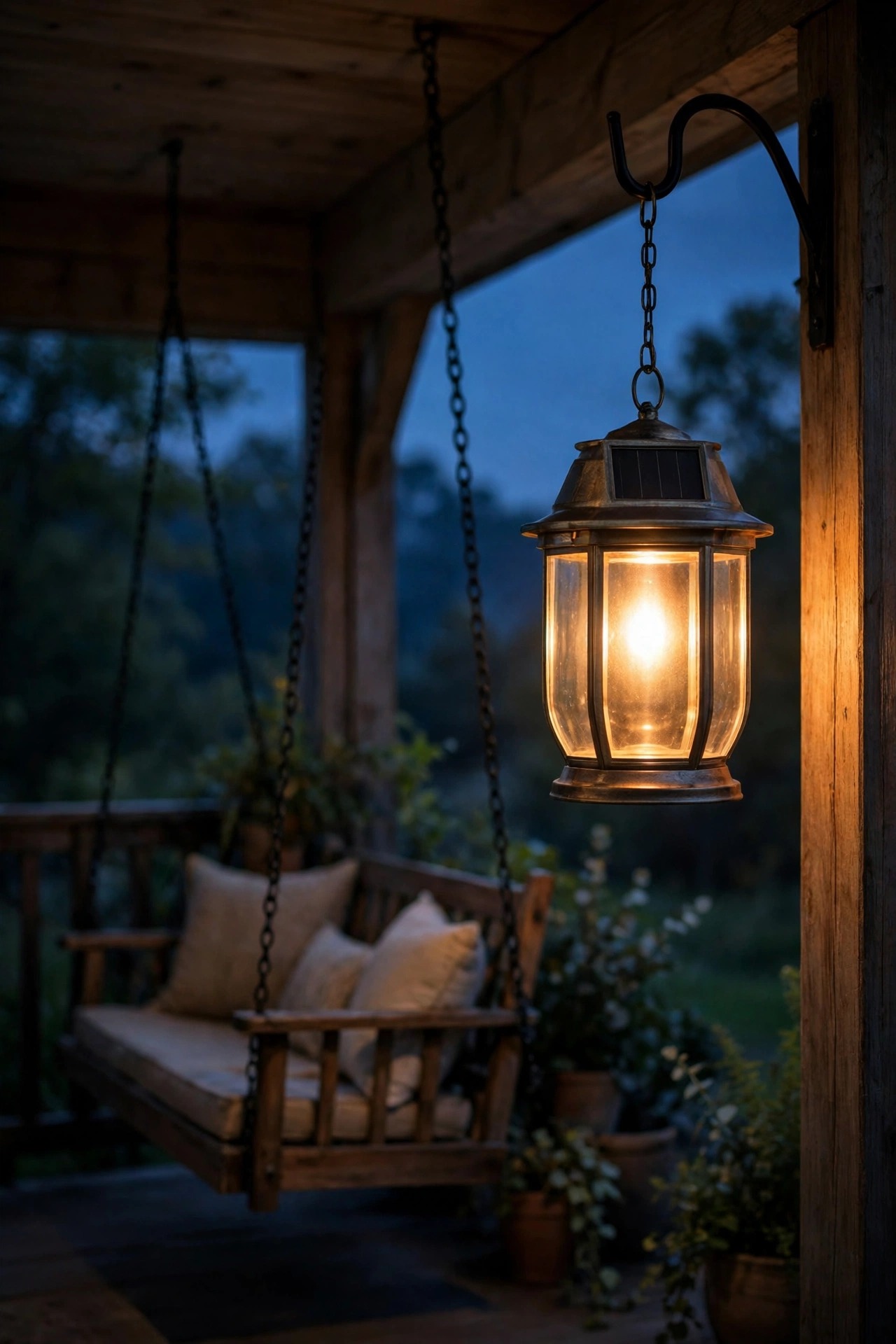
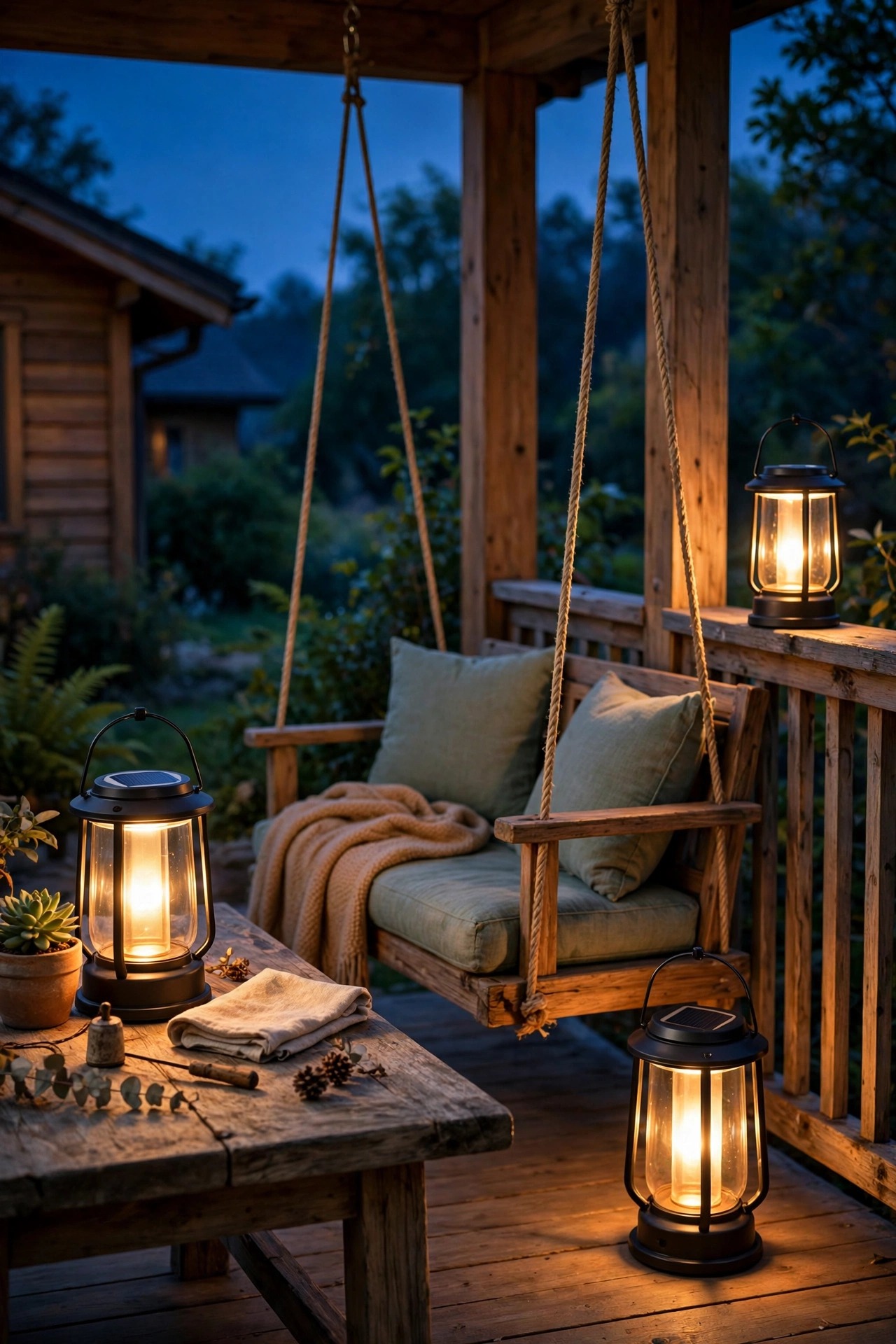
A hanging solar lantern — shepherd's hook by the door, chain from the porch beam, or two flanking a porch swing — gives the prettiest light on this list and some of the weakest. Most manage only twenty to sixty lumens, which is candlelight territory: lovely over a seating corner, useless for finding a keyhole. I say that with love, because I own three. The practical catch is the panel, which usually sits on the lantern's cap. Hang the lantern deep under a roof and the panel never sees the sky, so hang pendants at the porch edge where sun reaches them for part of the day, or choose a version with a separate panel. Lightweight plastic housings swing in the wind and can tap against siding all night; metal lanterns with a little heft behave better. Look for warm white around 2700K — some cheap pendants glow an icy blue that ruins the mood completely. Treat these as the welcome layer, and let a sconce or step light do the actual work nearby.
Suggested budget range: $20 – $60.
5. Solar String Lights Draped Along the Porch Ceiling Edge
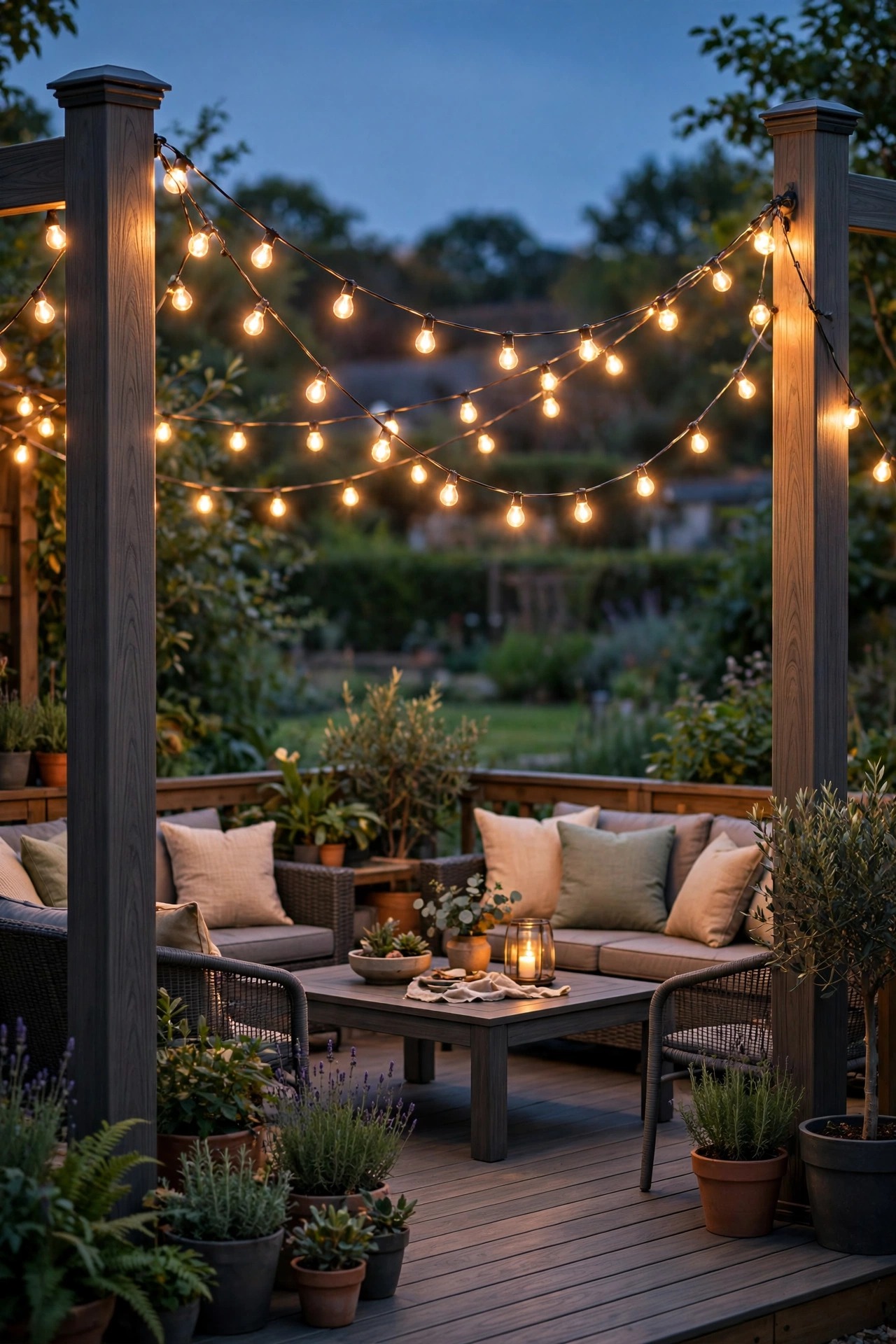
String lights turn an ordinary porch into the place everyone drifts toward after dinner, and the solar versions have gotten genuinely decent. A good strand runs twenty to forty feet with shatterproof plastic bulbs — choose those over glass near doors and steps — and the panel stakes into a sunny bed or clips to the railing. That panel placement is the whole game: the strand lives in shade under the porch roof, so the panel has to live somewhere sunny, and the cable is rarely as long as you wish. Brightness is mood-level, not reading-level, and a cloudy week in December can cut runtime to two or three evening hours. In summer, a well-sited panel gives you six to eight. In my experience, warm white strands around 2700K look like café lighting, while the blue-white ones look like a parking lot — check the color temperature before ordering. I collected my favorite hanging patterns in my solar string light ideas post if you want layout inspiration.
Suggested budget range: $25 – $65.
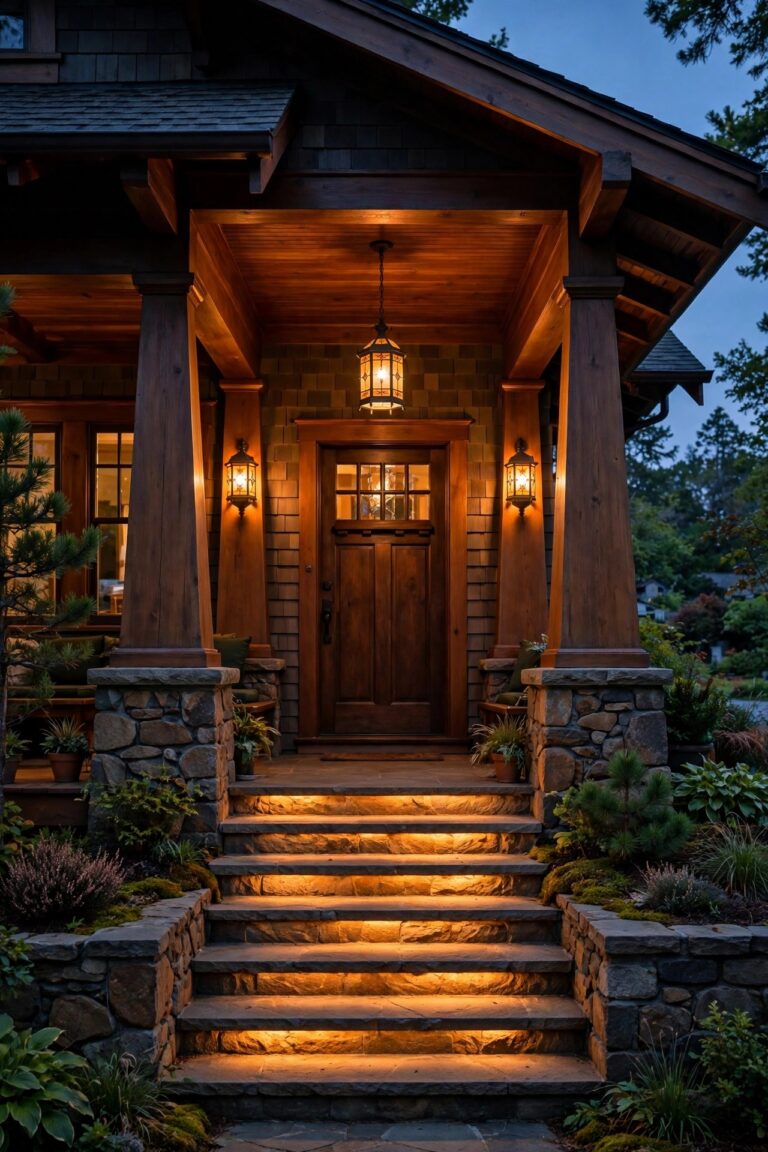
6. Solar Step Lights for Safer Porch Stairs
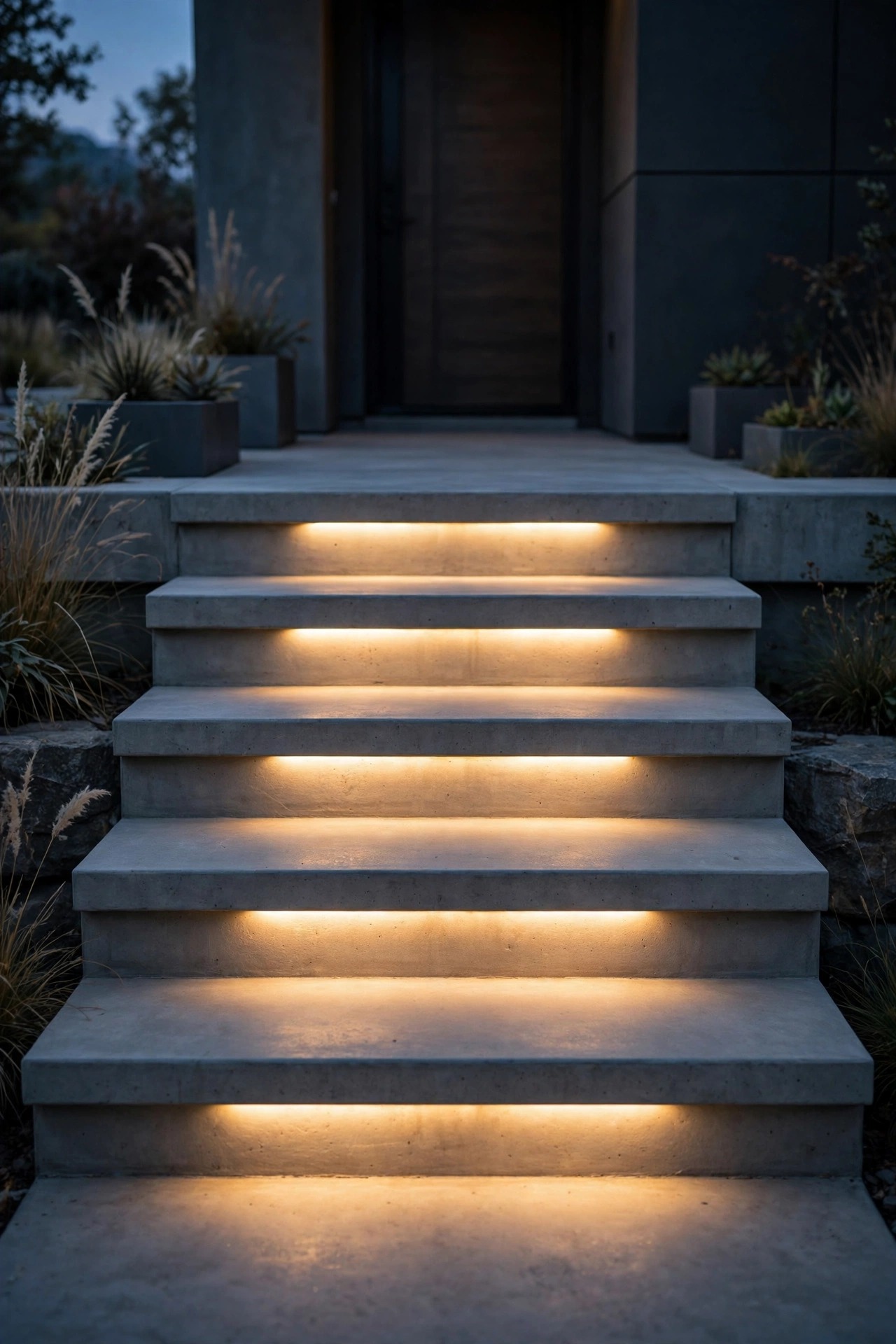
Steps are where guests trip, and small solar step lights — mounted on the riser, tucked beside the tread, or screwed to the stringer — wash each step in a low pool of light that makes the edge readable. They are marker lights, not floodlights, and judged that way they succeed. The honest limitation is arithmetic: a step light has a tiny panel, often under a square inch of charging surface per lumen it owes you, so runtime is modest. Expect three to five hours on a winter night — enough for arrivals and evening porch time, not enough to burn until dawn — and place them where afternoon sun lands if your steps face east. Stainless or metal housings outlast brittle plastic through freeze and thaw, and screws beat adhesive pads outdoors every time. One per step is the minimum rhythm; on wide steps, one at each end looks intentional. If your steps curve or switch back, add one extra light at the turn — a landing is exactly where a misread edge does its damage.
Suggested budget range: $20 – $45.
7. Solar Path Lights Lining the Walk to the Porch
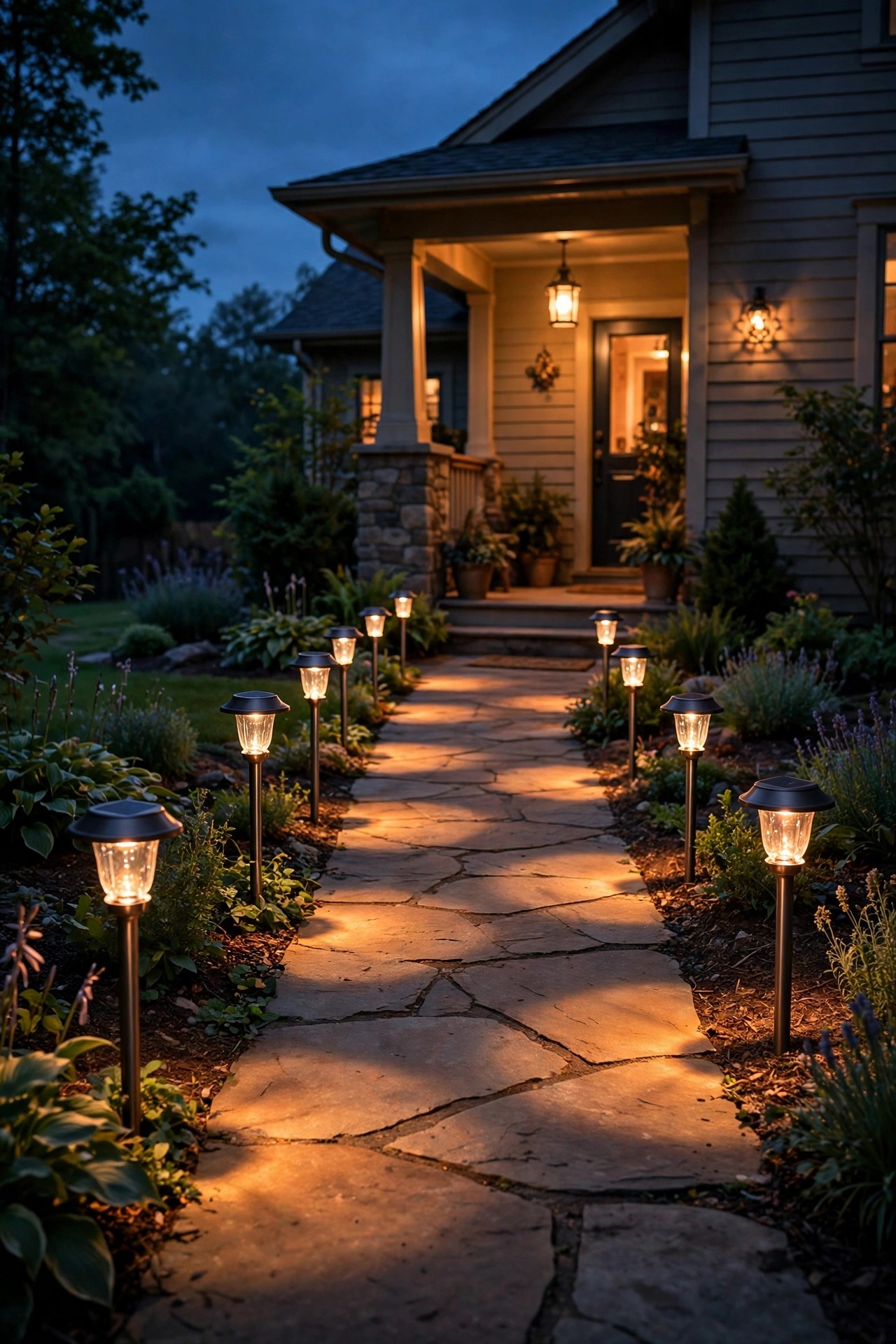
The porch glow should start at the sidewalk, and a row of solar path lights is how you connect the street to the door. Here is the honest spread: the two-dollar stake light is a toy that makes about five lumens and dies by ten. Step up to the midrange — fifteen to thirty lumens each, metal stakes, glass or quality plastic lenses — and a line of them genuinely defines a walk in the dark. Space them six to eight feet apart and stagger them slightly rather than marching them in a rigid line, so the pools of light overlap without a runway effect. Path lights have one big advantage over every fixture under the porch roof: their panels sit in the open sky, so they charge reliably even in yards with big trees. Expect them to be the most consistent performers in winter, too. Keep fixtures below knee height so the light stays on the path instead of in your guests' eyes, and pull them before the season's first hard freeze if your winters are severe.
Suggested budget range: $30 – $80.
8. Solar Porch Lights That Cap Your Railing Posts
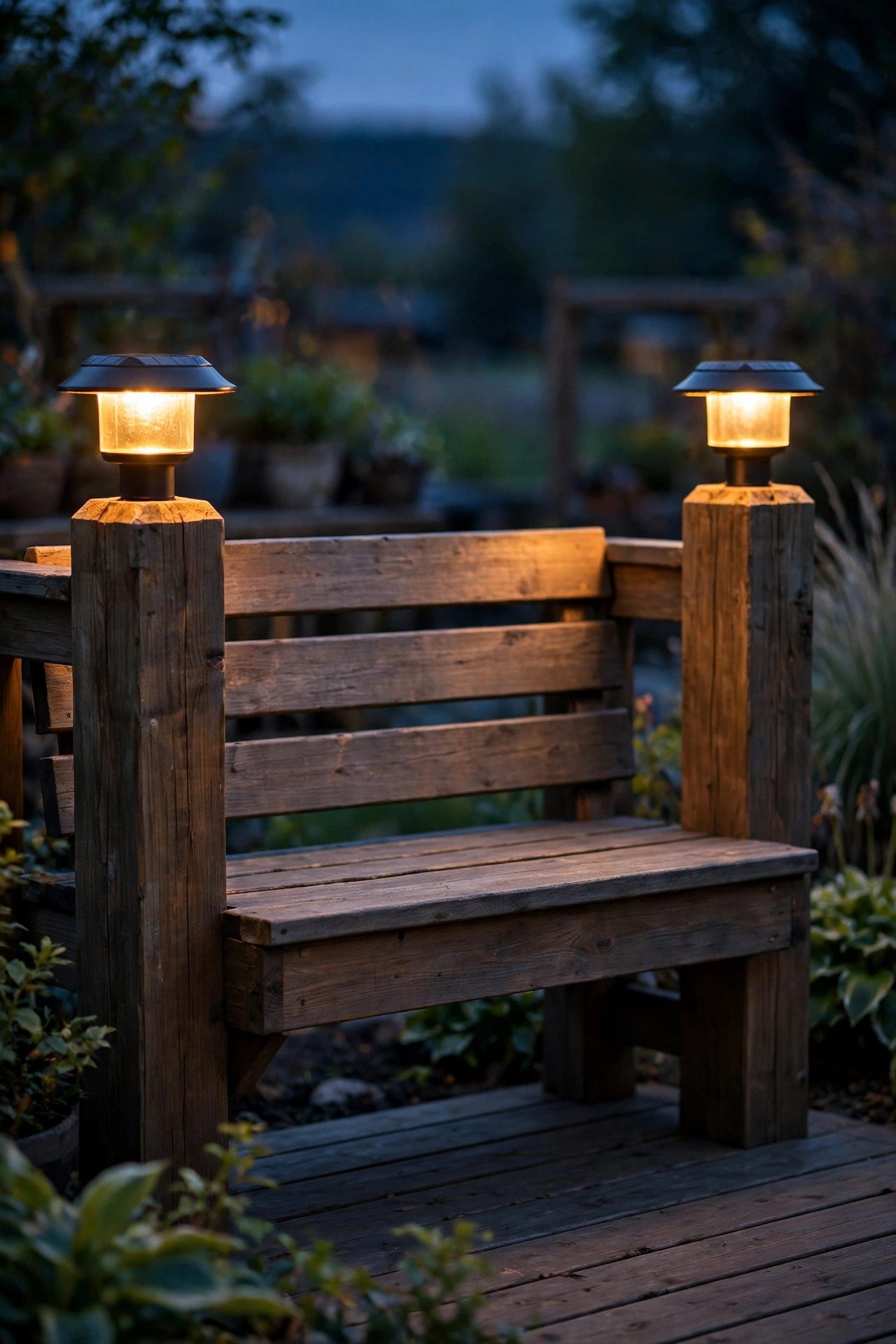
If your porch has a railing, post cap lights might be the most reliable solar you can buy, for one simple reason: the panel faces straight up at the open sky, so even a partly shaded yard charges them well. Each cap glows at ten to forty lumens — decorative, yes, but run a cap down every post and the railing line reads beautifully from the street, like a string of low lanterns marking the edge of the porch. Honest notes before you order: measure your posts first, because caps are sized for 4×4, 5×5, or 6×6 posts and the wrong size rattles or will not seat at all, and check whether an adapter base is included. Two caps on a short railing usually look better than four crowded together. Batteries in caps are small but the draw is smaller, so runtime is surprisingly strong — many of mine outlast the sconces on a December night. Wood-look and matte black finishes blend with most railings; glossy white plastic yellows in the sun within a couple of seasons.
Suggested budget range: $25 – $60.
9. Solar House Number Lights So Guests and Drivers Find You
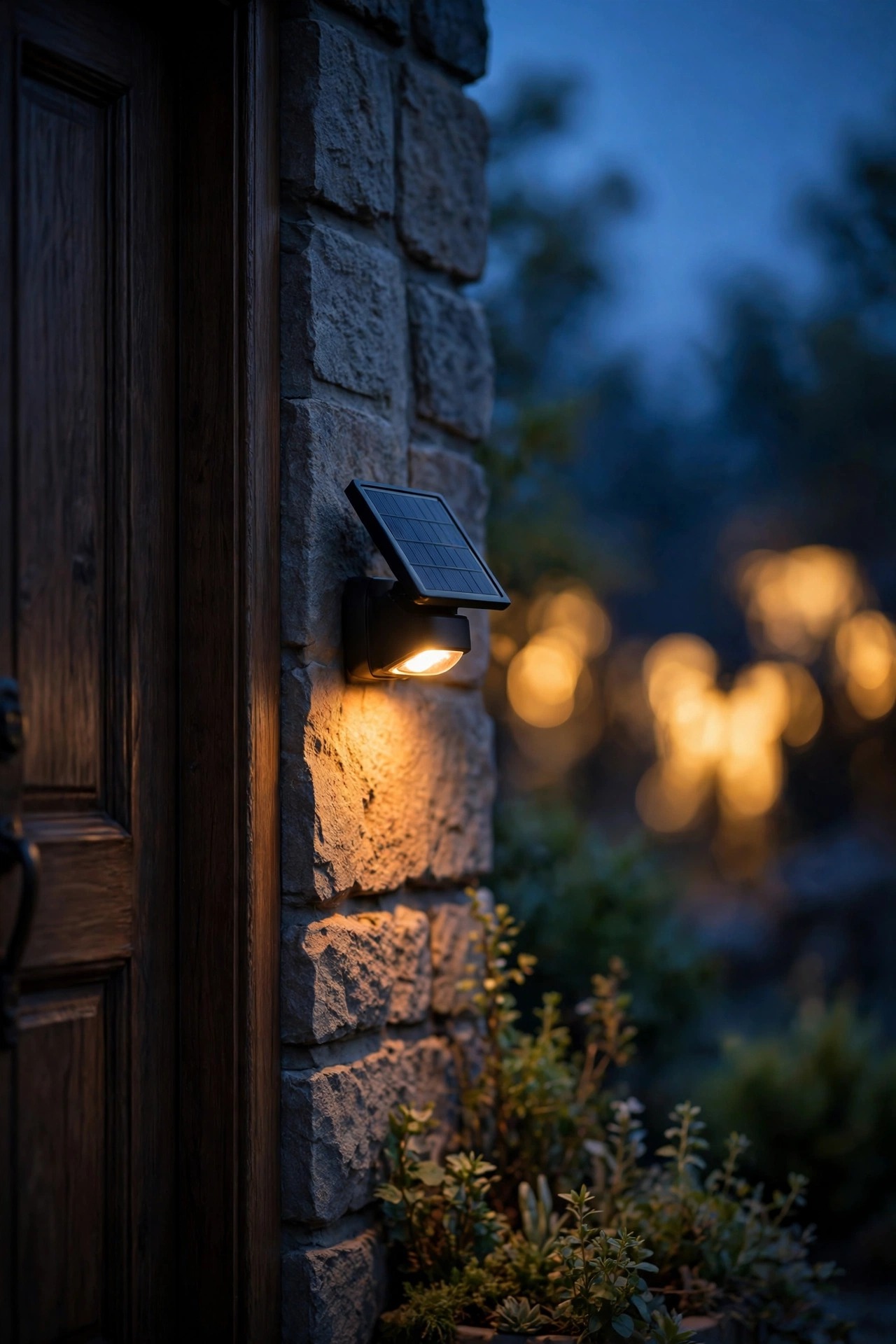
This is the smallest light on the list and, lumens for dollar, maybe the most useful. A little solar plaque light, number sign, or mini spotlight aimed at your house numbers draws so little power that it is the one solar fixture I trust to run all night, all winter, almost anywhere. Delivery drivers and first-time guests will thank you silently every single time. The details that matter: numbers need contrast, so a light raking across them from the side reads far better than one shining flat from the front, and a panel that catches morning sun is perfectly fine here — the battery is small and the demand is smaller. Solar address stakes for the edge of the walk are the renter-friendly version, no screws into the siding required. My honest caution is about the painted-number plaques with a light built in: the light usually outlives the paint, so plain numbers with a separate small light age better. Keep the glow warm and modest — this is a whisper, not a billboard.
Suggested budget range: $20 – $50.
10. Flame-Effect Solar Lanterns for Pure Porch Theater
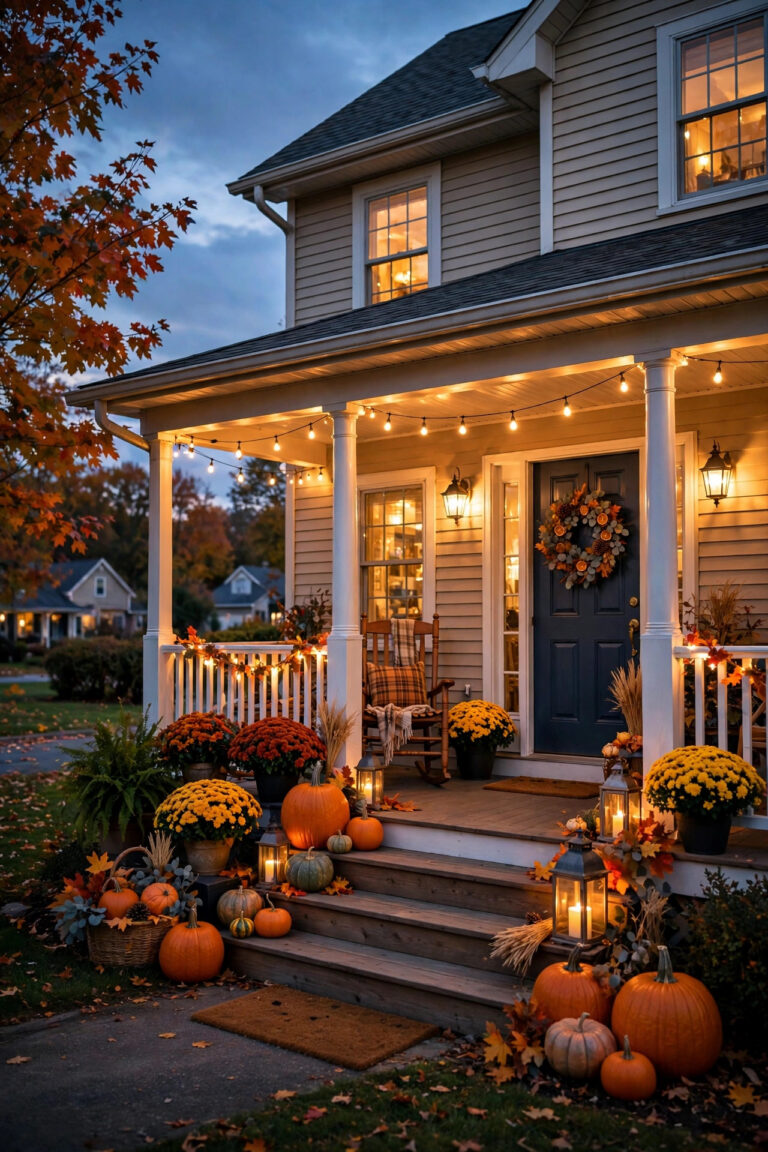
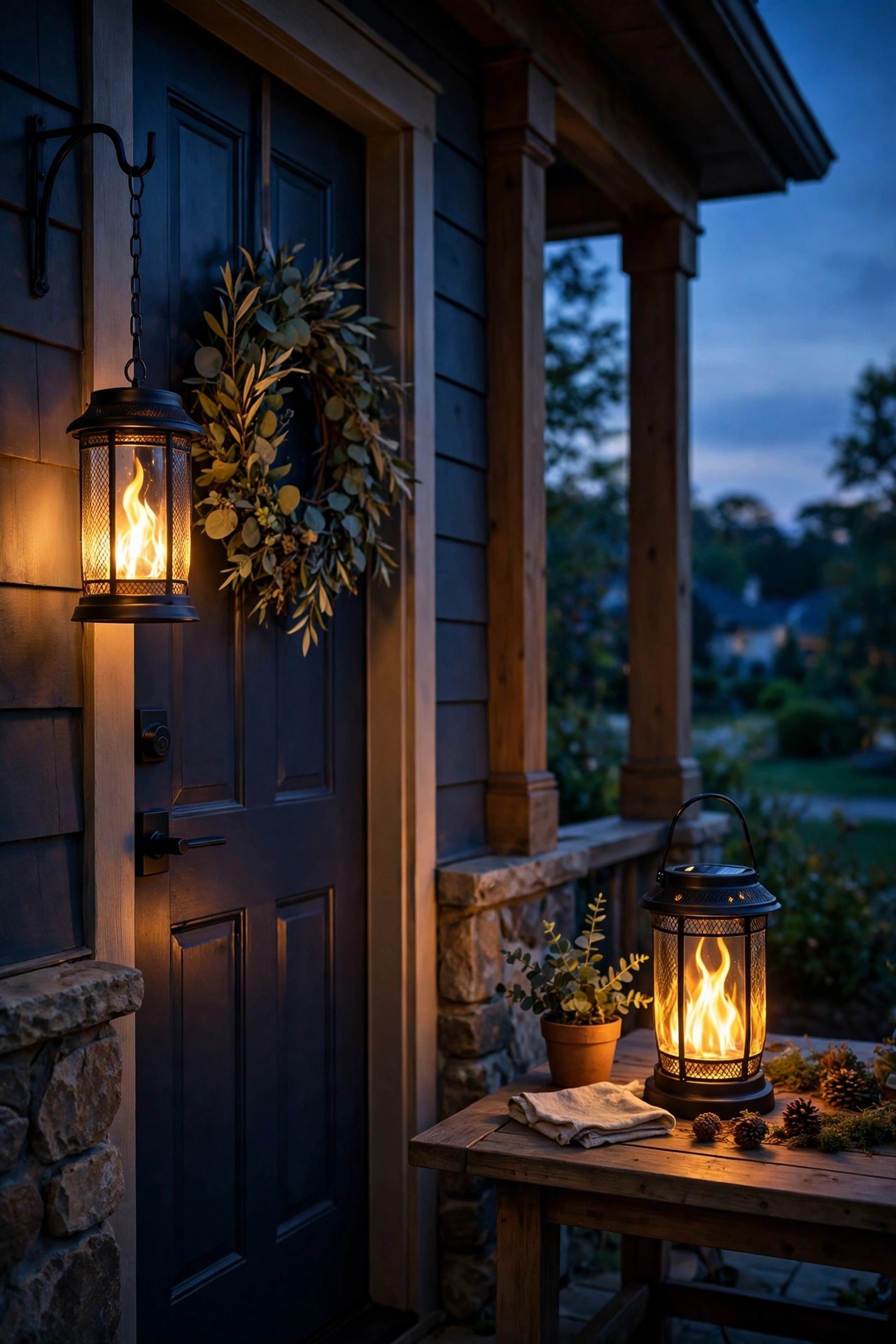
Let me be perfectly honest: a flame-effect lantern produces zero useful illumination. The flickering amber LED behind its cage is theater, and as theater, the good ones are wonderful — at six feet you would swear there is a real flame dancing inside. Hang a pair flanking the door, set one on the porch table, or line them along the railing for a fall evening and the whole porch feels like a storybook. Because the effect uses a handful of tiny LEDs, the power draw is tiny too, which makes these some of the longest-running solar lights I own; a mediocre panel still gets the job done. They are also the safest fake flame you can buy — no heat, no wax, no worry near dried wreaths, pumpkins, or a breeze through the screens. Where they disappoint is up close, where the repeating flicker pattern gives the game away, and in daylight, when cheap plastic cages look like exactly what they are. Buy metal-framed versions and let dusk do the rest.
Suggested budget range: $25 – $55.
11. Copper-Wire Fairy Lights Wound Through the Railing and Wreath
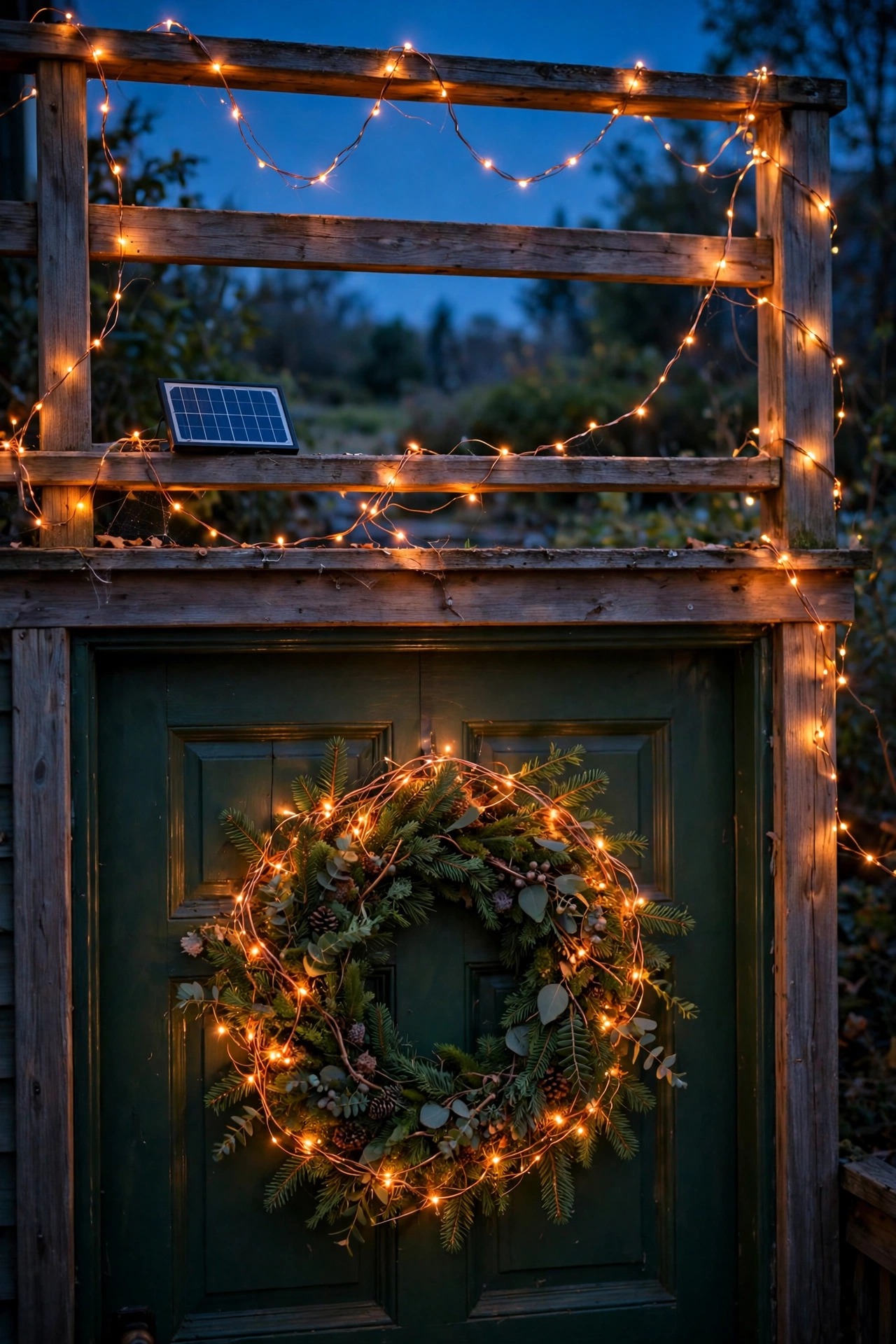
A strand of copper-wire fairy lights is the cheapest mood upgrade on this entire list. I wind them along the porch handrail, through a wreath, and around the planters flanking the door, and for the price of a pizza the porch sparkles. Call it what it is, though: sparkle, not light. Nobody has ever found a keyhole by fairy lights, and that is fine — they are the accent layer, meant to sit on top of a sconce or step light that does the real work. The strand connects to a small separate panel, which makes placement flexible but means one more little panel to stake in a sunny spot — tape it to the railing top where sun lands, if the bed below is shaded. Warm white is the only color I recommend for a front porch; the multicolor sets belong in the backyard if anywhere. The wire tangles enthusiastically in storage, so wind it around a piece of cardboard in January and save yourself the untangling session next fall.
Suggested budget range: $10 – $25.
12. Solar Spotlights Aimed Up at the Door and Columns
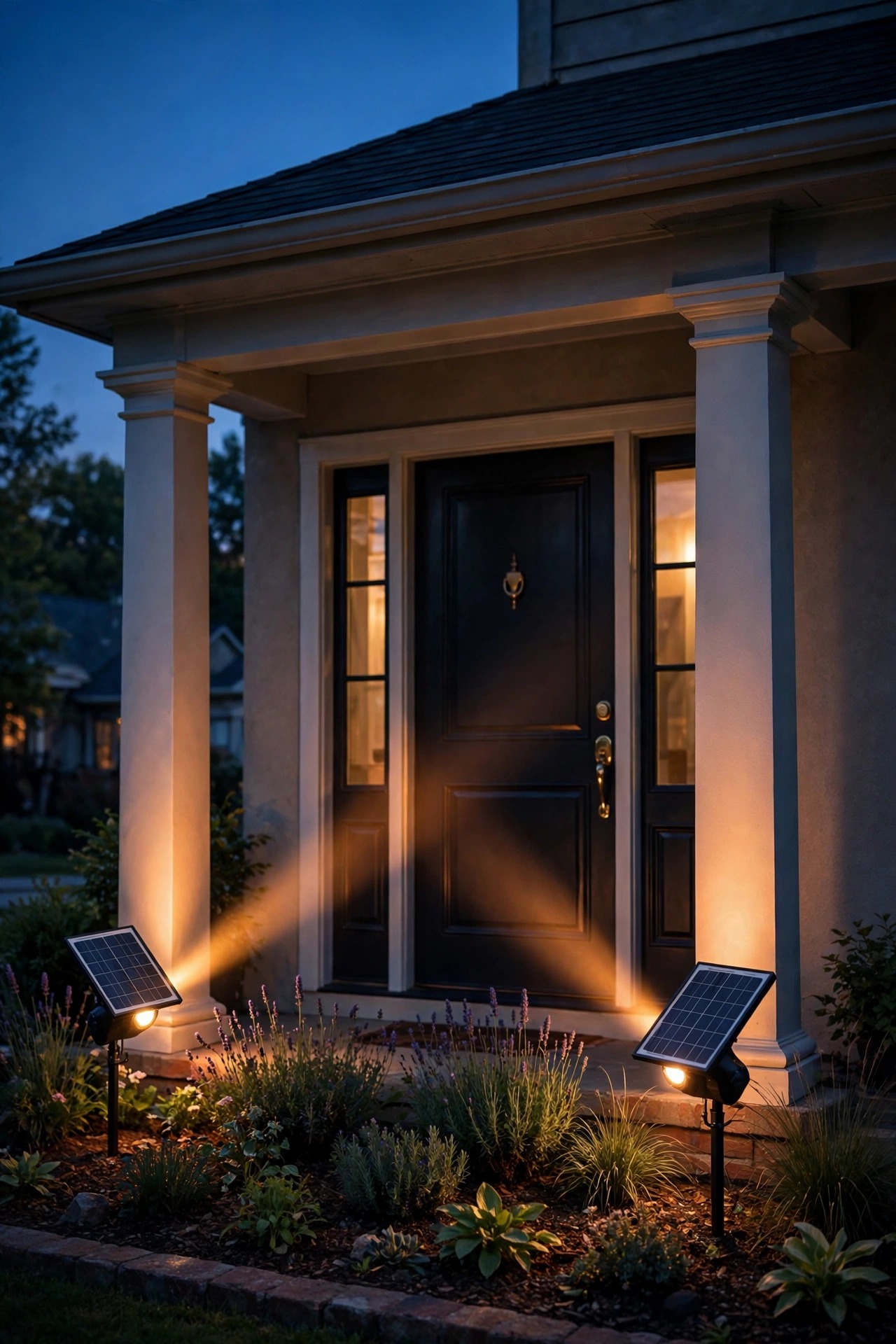
A pair of small solar spotlights staked in the beds, aimed up at the front door, a column, or a porch planter, gives you the layered, designed look that wired landscape lighting does — at a fraction of the cost and none of the trenching. Set your expectations honestly: a good solar spot makes 100 to 300 lumens, roughly a third of a wired fixture, so it washes and accents rather than blazes. Two lights cross-aimed at the entry look dramatically better than one fired straight on, which flattens everything it touches. The feature that matters most is an adjustable panel that tilts separately from the lamp head — in winter, tip the panel steeply toward the low sun and runtime improves more than any other single change makes. Look for ground stakes that are metal or thick plastic; thin stakes snap the first time a boot or a mower finds them. Use spots for architecture and plantings, and leave security to the motion floods.
Suggested budget range: $30 – $75.
13. Solar Gutter Lights That Wash Down the Porch Wall
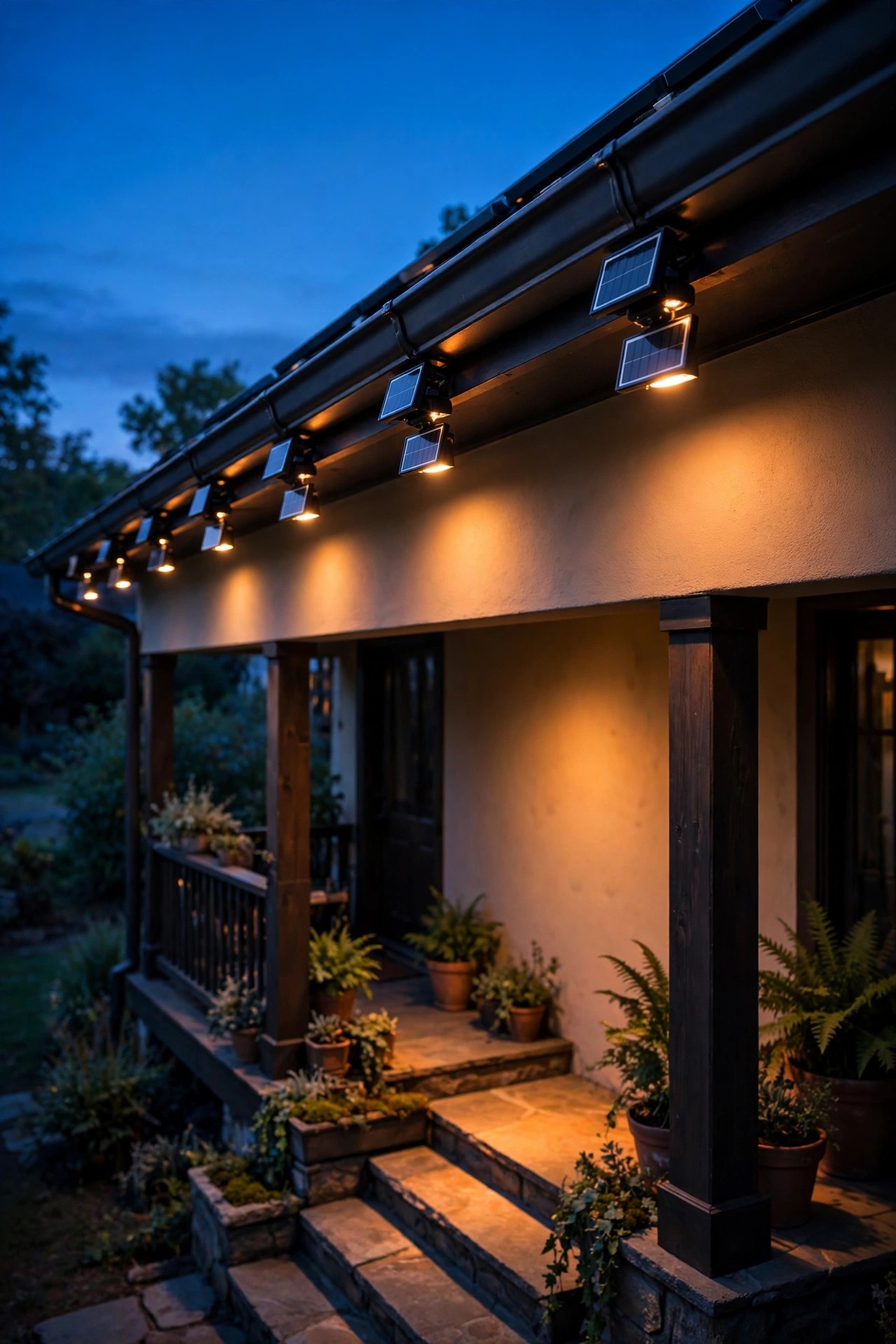
Gutter lights are the clever workaround nobody thinks of: they clip along the gutter or fascia above the porch, where their panels sit in completely open sky — the best charging spot on the whole house — and wash a soft sheet of light down the wall and steps below. The glow is gentle, more definition than illumination, and on a porch with no ceiling fixtures it can be the difference between a black hole and a readable entry. Honest downsides: mounting height matters, because every battery swap for the next decade means a ladder, so choose models with replaceable long-life batteries and realistic expectations. Also check the clip against your gutter profile before ordering a set; most fit standard K-style gutters, and some older half-round gutters will not hold them. Renters should take note — the clips grip without screws or drilling, and the lights lift off on moving day without a mark. Space them four to six feet apart for an even wash instead of stripes.
Suggested budget range: $20 – $50.
14. Portable Solar Table Lanterns You Can Carry Anywhere
The most flexible type on this list is the one that is not mounted to anything. A portable solar lantern lives on the porch table, the swing's side table, or the step where you are sitting, and when it needs a better charge you simply move it — onto the sunny railing for the afternoon, or onto a bright windowsill in a gray week. That mobility quietly solves the covered-porch problem that defeats half the fixtures here. Brightness varies enormously, from twenty-lumen mood jars to lanterns that genuinely light a card game, so read the lumen rating rather than the adjectives. Some include a USB port for a phone top-up, which is handy in a power outage and beside the point the other 360 days a year — buy for light quality first. Handles, flat stable bases, and a real on-off switch all matter more than they sound. These are also my top pick for screened porches and for anyone renting, since they leave the house exactly as they found it.
Suggested budget range: $15 – $45.
15. Solar Porch Lights With Up-and-Down Beams for Modern Entries
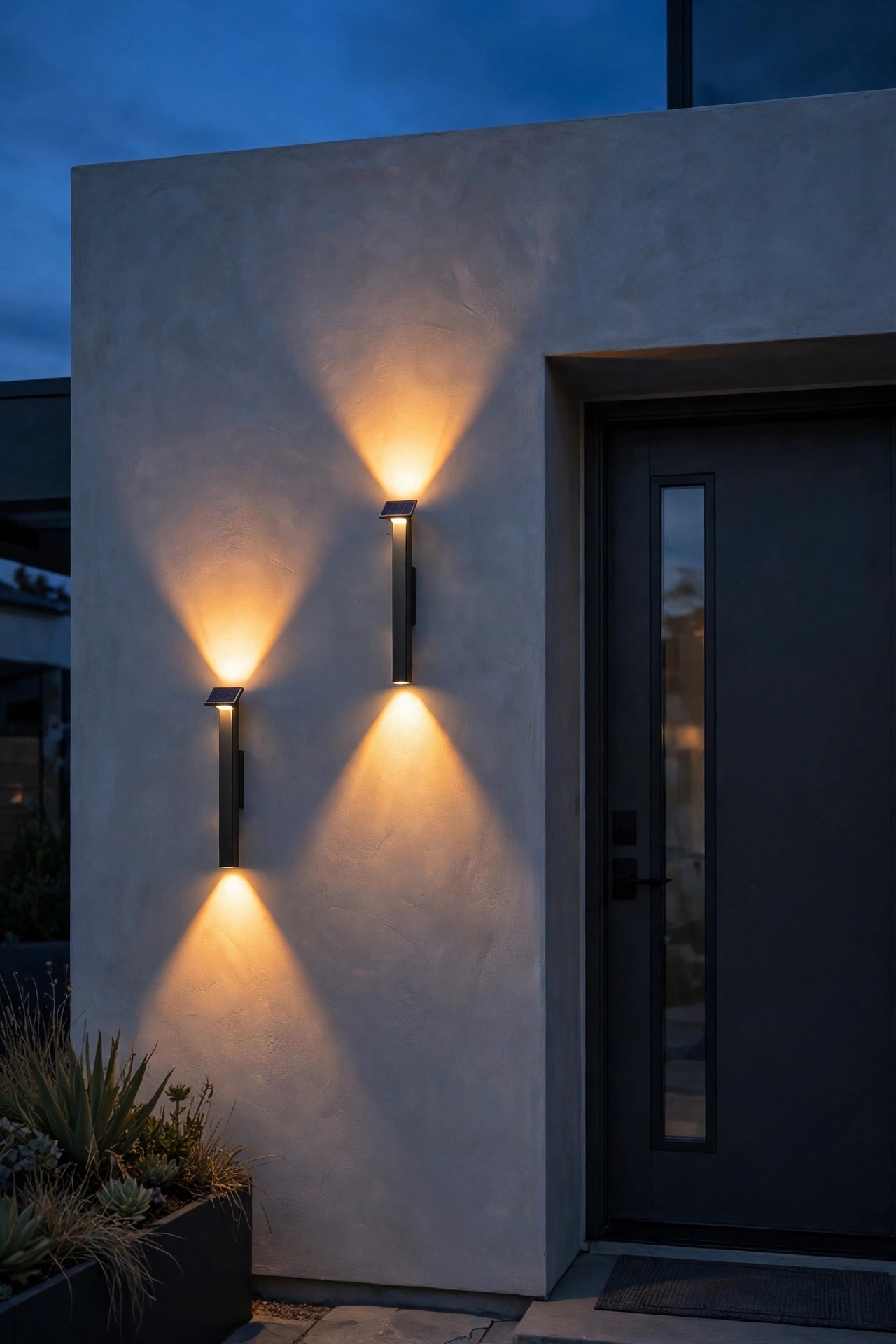
The modern look of the moment is a slim sconce that throws two narrow beams — one up, one down — painting bright triangles on the wall beside the door. Solar versions have arrived, and when the conditions are right they look genuinely high-end, like something from a boutique hotel entry. The conditions are the honest catch: those beams are decoration, not working light, and the small top panel needs the sunniest wall you have. On a shaded facade these are the first lights on the porch to die, sometimes by eight in the evening, because the narrow-beam LEDs still draw steadily all night. On a south- or west-facing entry with open sky, they run respectably and the effect is striking. One more detail worth checking before you buy: beam color. Most of these burn warm white around 2700K to 3000K, but a few run cooler, and a blue-white beam beside your warm sconces will clash every single night. Mount a matched pair at eye level, six to eight feet apart when the wall allows.
Suggested budget range: $35 – $85.
Frequently Asked Questions
Do solar porch lights actually work in winter?
They work, but with shorter hours, and anyone who tells you otherwise is selling something. Shorter days and a low sun angle can cut charging to a third of what a panel collects in June, so a light that runs eight hours in July may manage three in December. You can claw a lot of it back: tilt panels toward the low winter sun, keep them brushed free of snow and leaves, and choose fixtures with replaceable batteries, since tired batteries are the usual reason an older light fades early.
How many lumens do I need beside a front door?
For a welcoming glow and readable faces, aim for 100 to 300 lumens per sconce — less than that reads as a night-light, and much more looks harsh on a small porch. Step and path lights work at 10 to 50 lumens because their job is marking edges, not lighting rooms. Motion floodlights are the exception: 500 lumens and up is reasonable there, because the light is a brief burst rather than an all-evening burn.
Can I replace the batteries in solar lights?
In many fixtures, yes — and it is the first thing to try when a light fades after a year or two. Most open with a few screws and take standard AA or AAA nickel-metal hydride rechargeable cells; larger lights may use a cylindrical lithium cell. Match the chemistry and size, not just the shape. Fully sealed units with no battery door are the exception, and honestly, I avoid buying those now — a light you cannot re-battery is a light with an expiration date.
Why do my solar lights only stay on for an hour?
Almost always it is one of three things: the panel is shaded for most of the day, the panel face is dirty, or the battery is worn out. Clean the panel with a damp cloth, watch where the sun actually lands on it across a full day, and if it still quits early, swap in fresh rechargeable batteries before replacing the fixture. On a covered porch, the real fix is usually a remote panel moved out into the sun.
Conclusion
After all fifteen types, my honest verdict is simple: solar porch lights work beautifully when the type matches the job and the panel gets its sun. Give the covered porches a remote panel, let motion floods handle the steps, keep pendants and fairy lights in the mood-making roles they are good at, and choose fixtures whose batteries you can replace. Do that, and the porch that greets you at night will still be glowing when you lock up. Browse the rest of the lighting ideas here whenever you are ready to take the same honest approach to the yard, the path, and the garden.