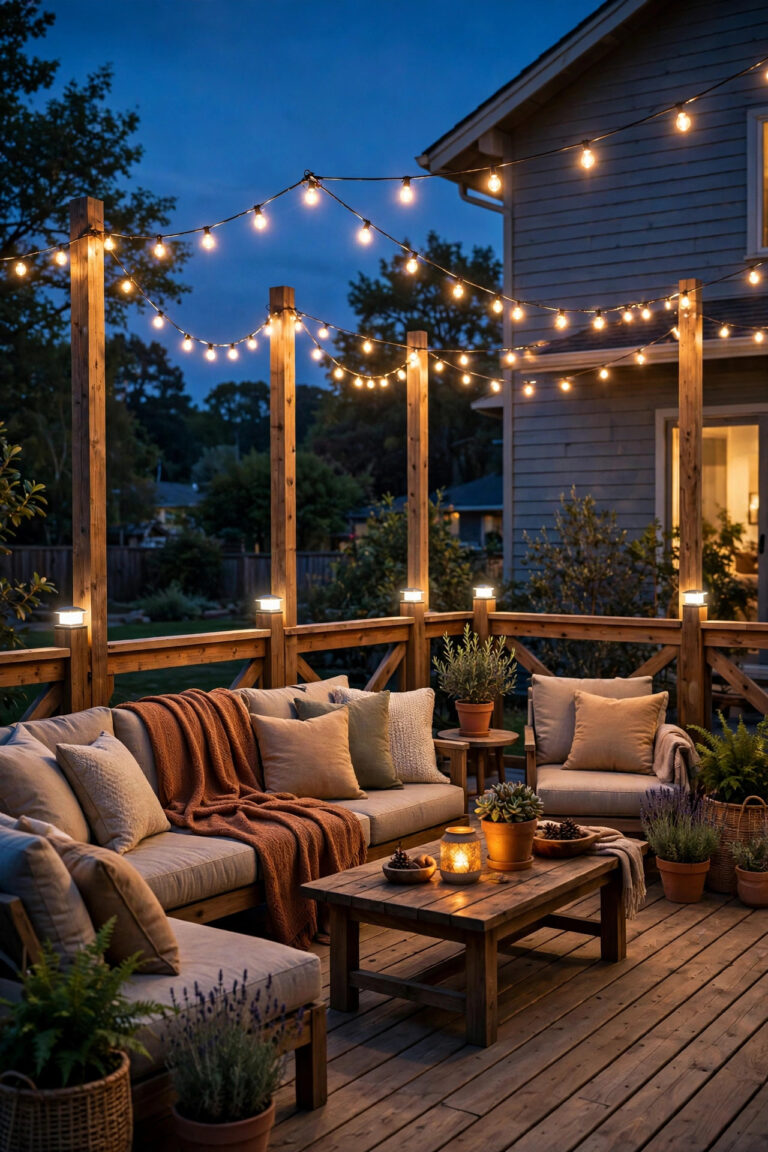
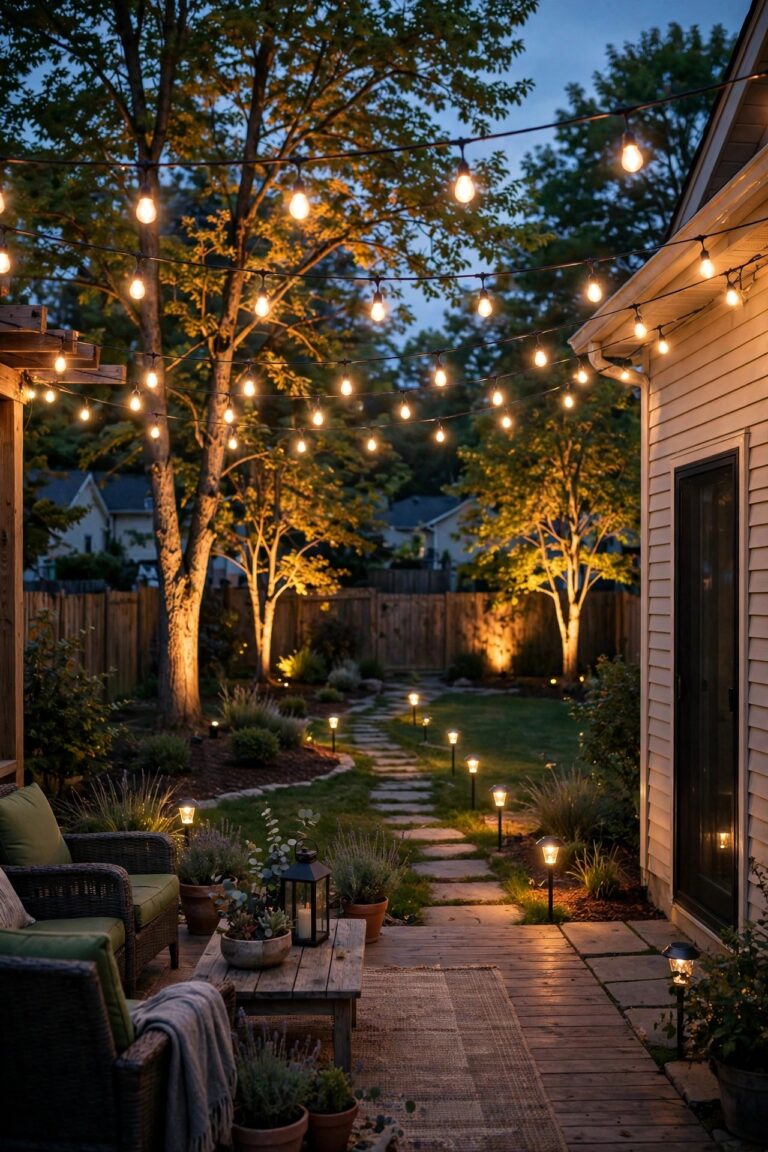
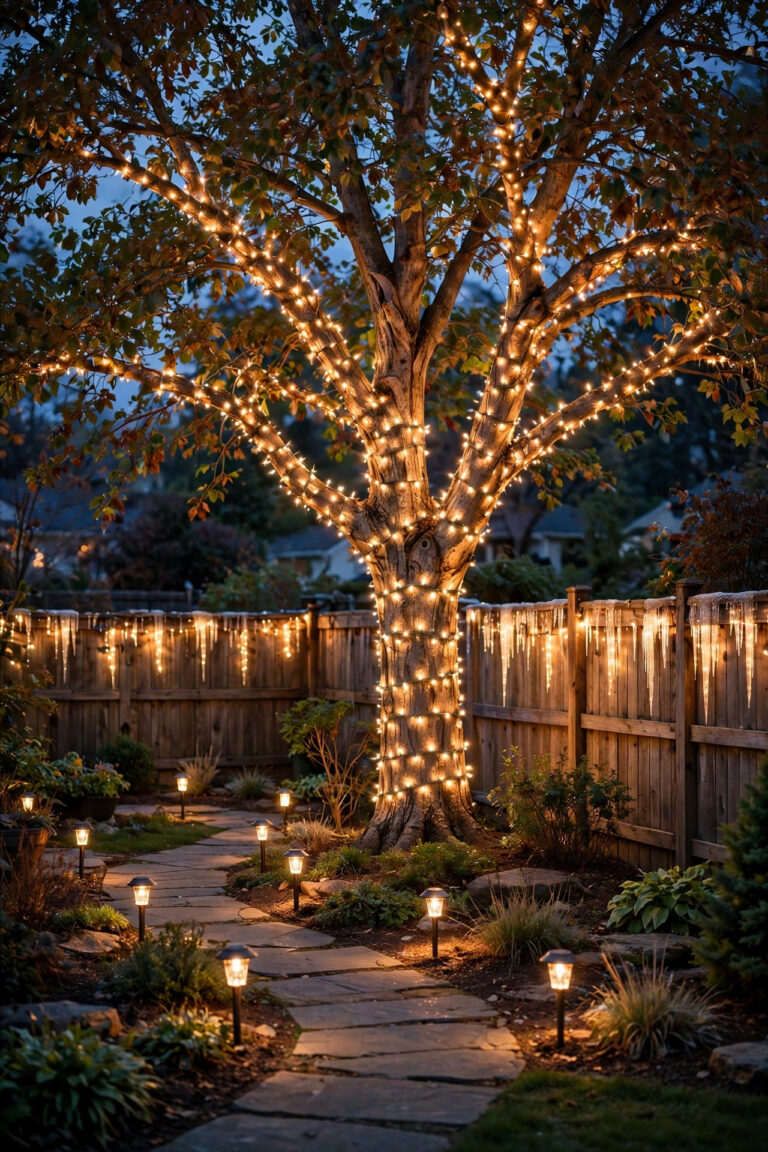
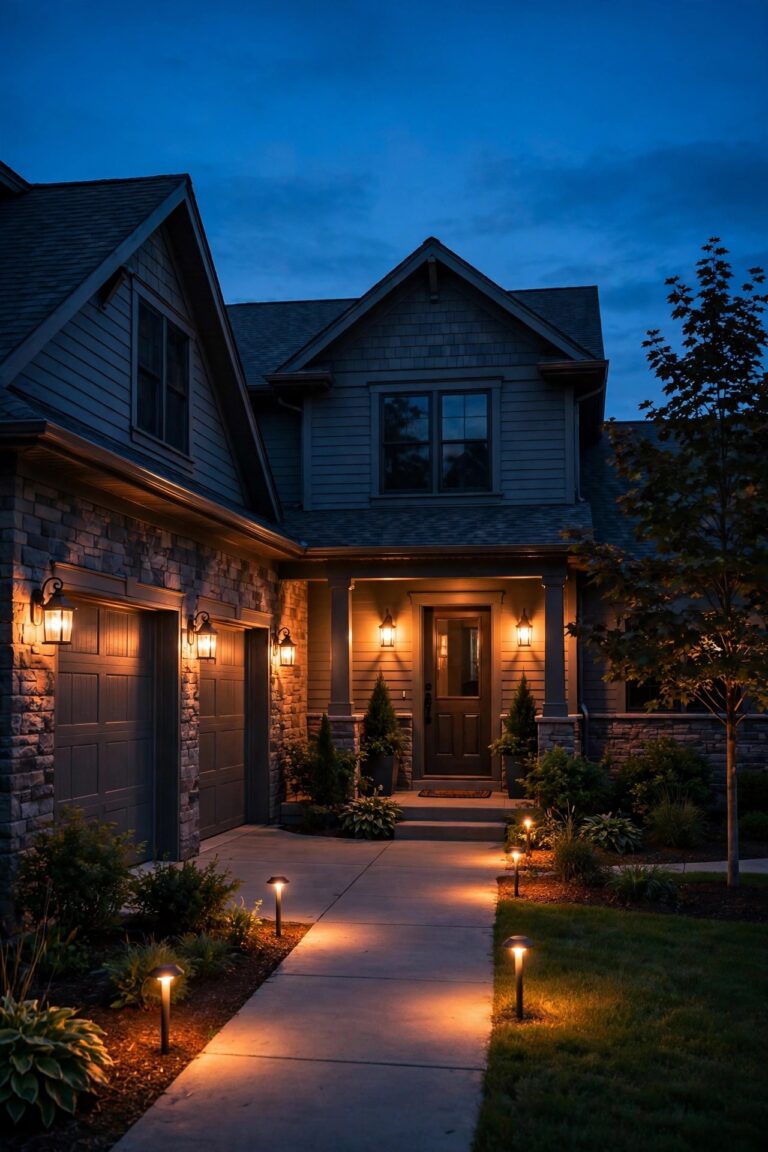
There is a particular kind of magic in stepping onto the patio with a drink in each hand while the yard quietly lights itself around you. No fumbling for switches, no dark walk to the grill, no floodlight glaring at full blast during dessert. That is exactly why I fell for smart backyard lighting ideas: they take the layered lighting I already loved and hand the boring parts — the switching, the dimming, the remembering — to a phone app, a schedule, or a sensor. The glow stays warm and welcoming, but the work disappears. In this list I will walk you through the control pieces that actually earn their keep outdoors: smart transformers, plugs, bulbs, motion sensors, and simple automations anyone can set up in an afternoon. Nothing here needs an electrician for the plug-in options, and everything plays nicely with the low-voltage systems so many of us already own. Pick two or three ideas to start, and your evenings outside get noticeably easier.
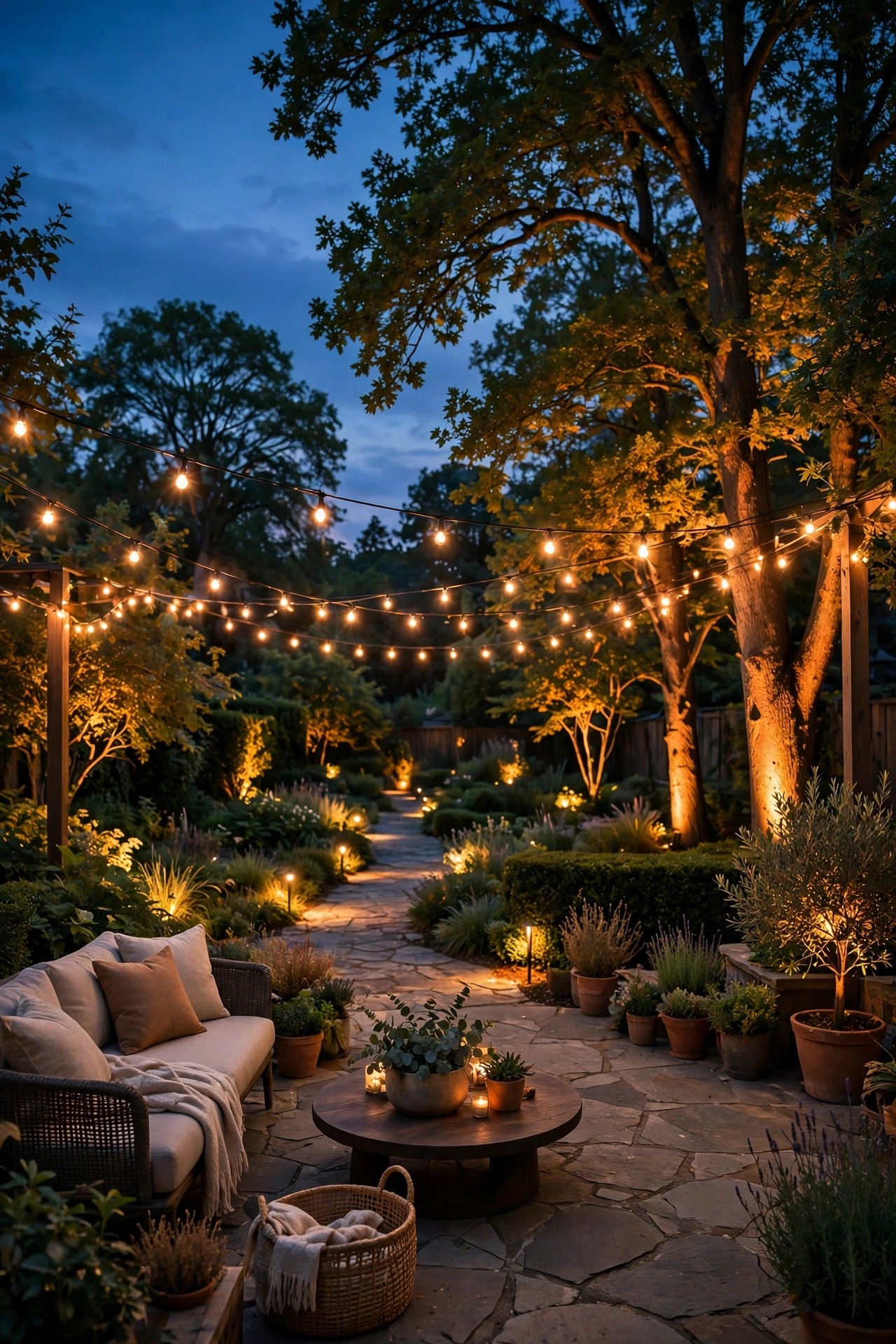
1. Plan Your Smart Backyard Lighting Ideas in Layers, Not Gadgets
Before you buy a single smart gadget, steal the rule I use for every yard I light: think in layers. A path layer for safe footing, a welcome layer around the patio, seating, and grill, and an accent layer for trees, fences, and the far corners that make a yard feel deep. Smart controls work best when each layer gets its own control point, so sketch the plan first: which fixtures belong together, which ones should dim, and which ones only need to switch on at dusk. In my experience, a pencil sketch with three zones marked saves real money, because you stop buying random smart bulbs and start building a system. Decide, too, how each layer will connect — hardwired low-voltage runs on one smart transformer, plug-in pieces on smart plugs, and standalone solar where trenching wire is a pain. Keep the finished plan in your phone so every future purchase already has a home before it lands in the cart. That one habit turns a pile of gadgets into a yard that greets you properly.
Suggested budget range: $0 – $50.
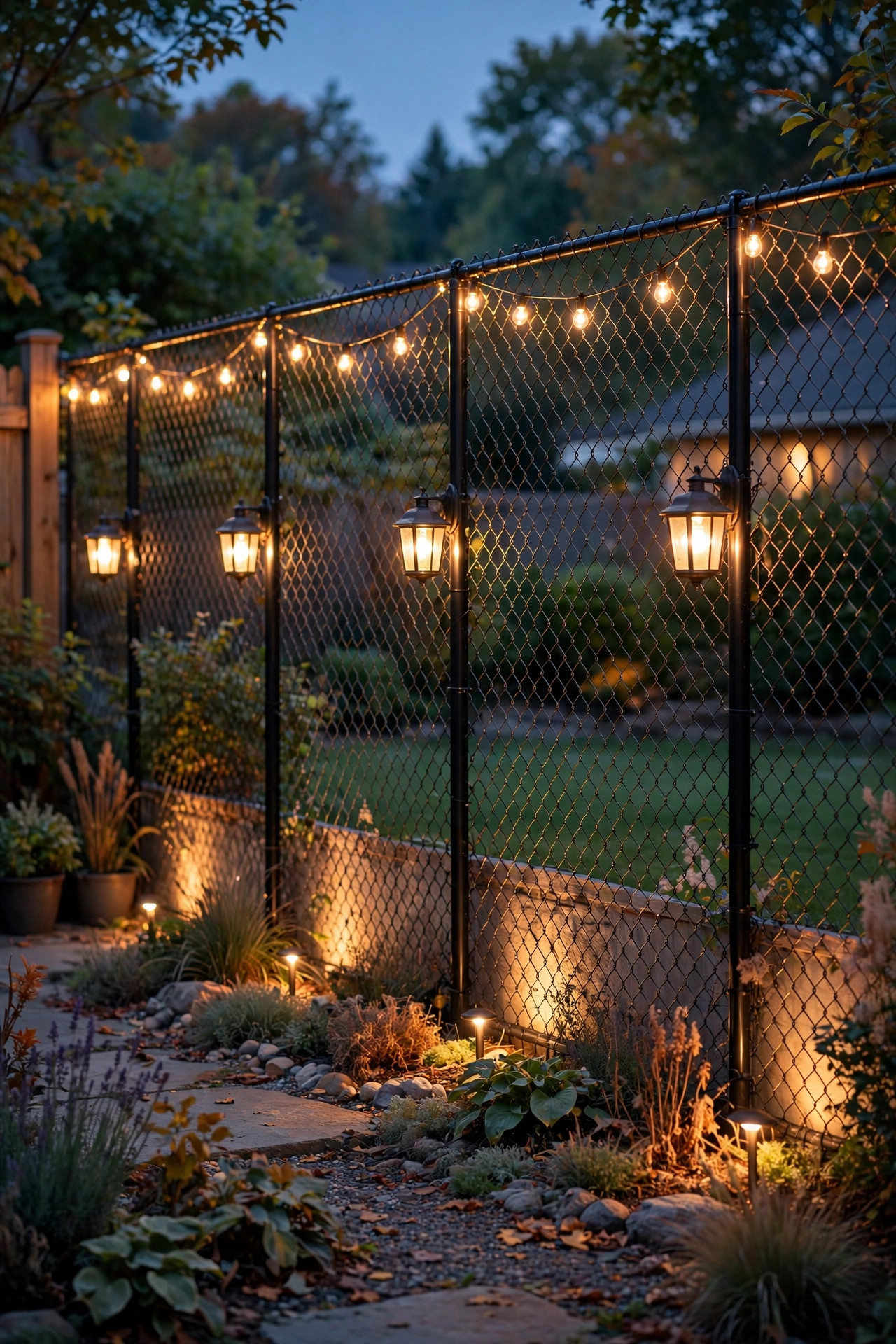
2. Put the Whole Low-Voltage System on One App-Controlled Transformer
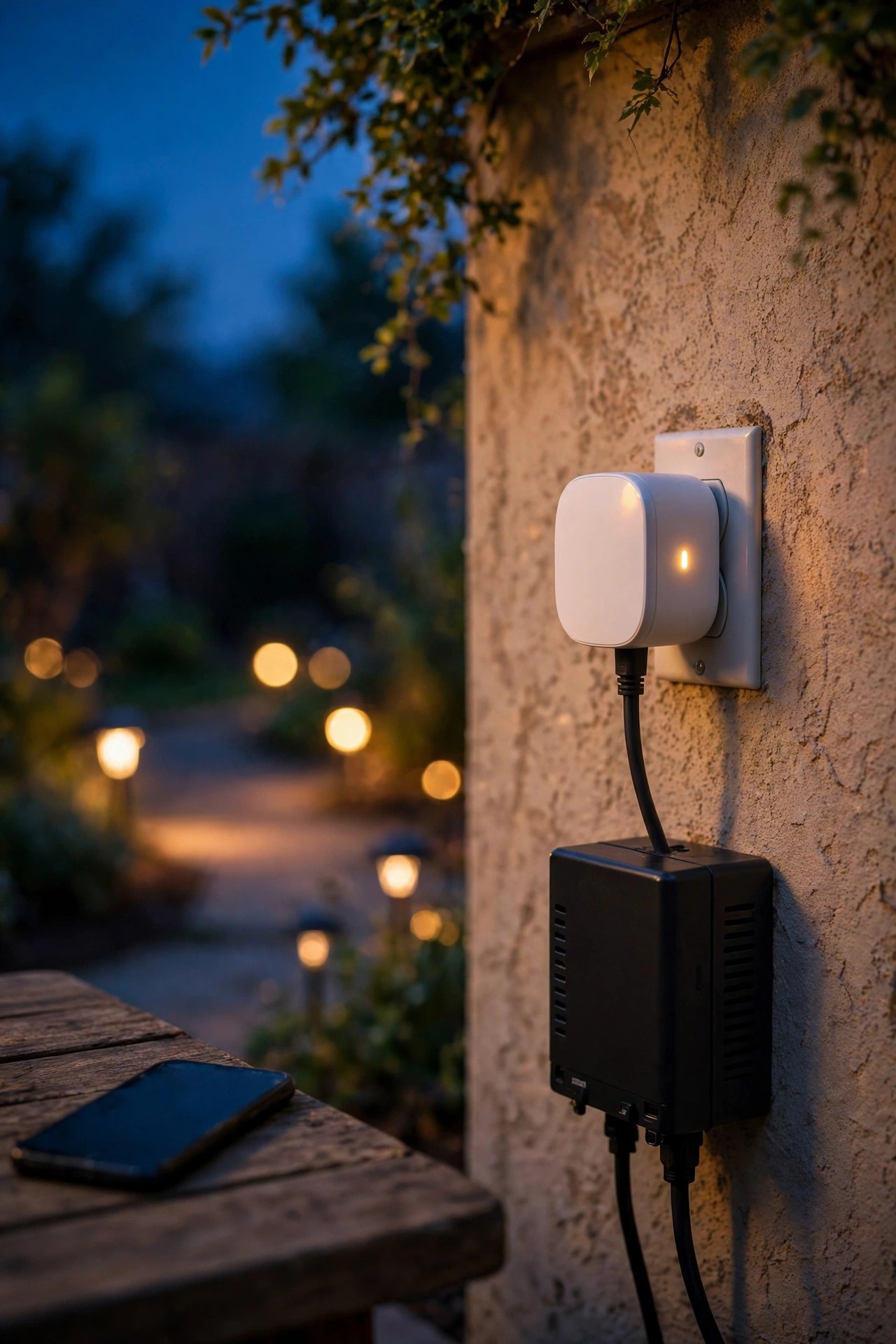
If your yard already runs on a low-voltage transformer, this is the single smartest upgrade on the list. A smart, app-controlled transformer replaces the old dial-and-pin timer and runs every wired path light, uplight, and deck light from one phone app. You set schedules by zone, dim compatible fixtures, and check from the couch whether you left the garden lights burning. When you shop, match the wattage to your existing load with about 20 percent headroom, and choose a unit rated for outdoor use that mounts where your phone signal actually reaches — I always test at the transformer location before drilling anything. Photocell plus astronomical timer modes mean the system tracks sunset through the seasons without you touching it. Honestly, this one box is what turned my own backyard from a nightly chore into a set-and-forget routine, and it keeps every fixture you already own instead of forcing a rip-and-replace.
Suggested budget range: $120 – $300.
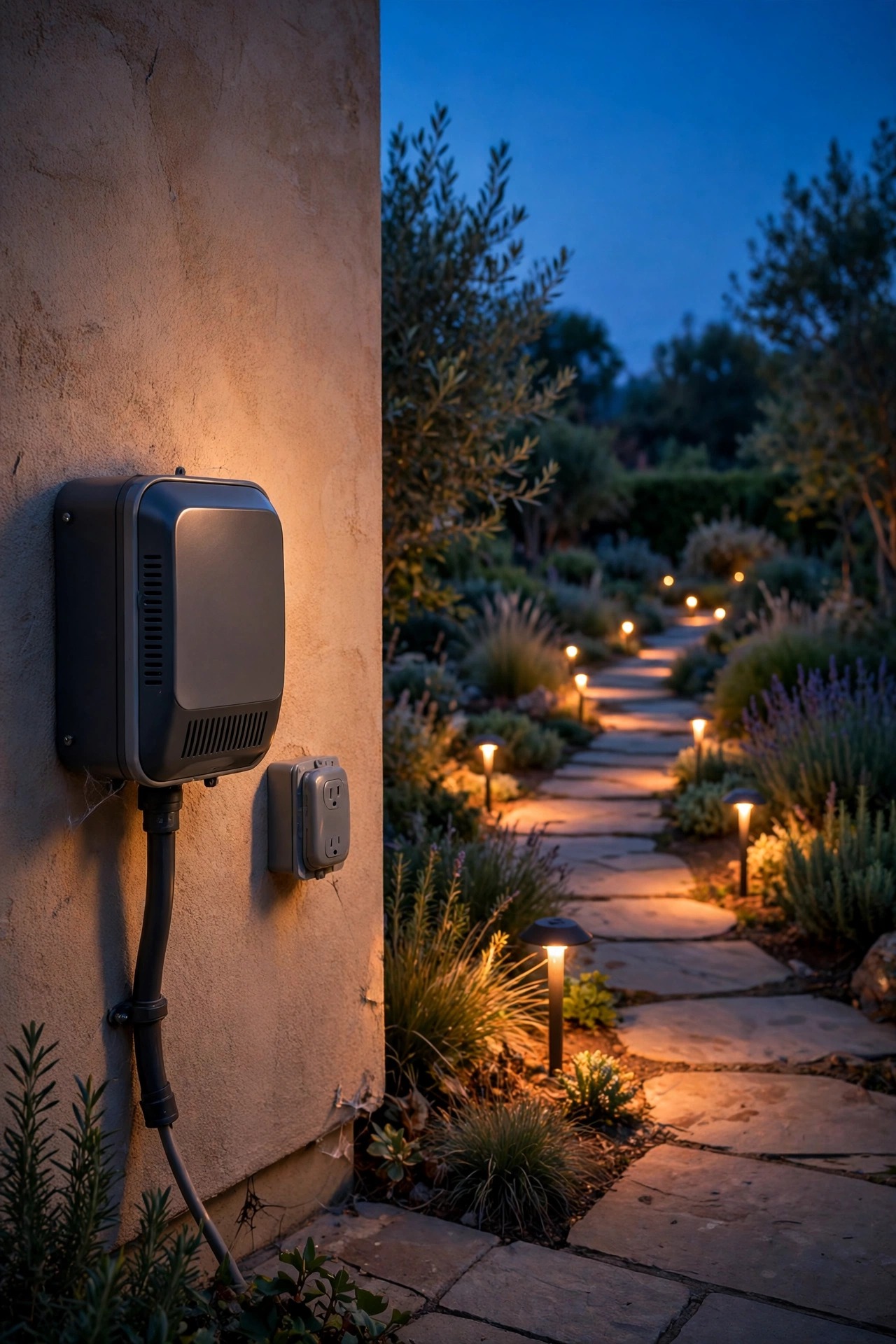
3. Make Plug-In Lights Smart With Weatherproof Smart Plugs
Not everything in a backyard is hardwired, and that is where a weatherproof smart plug quietly shines. String lights over the patio, the lantern on the side table, the rope light along the deck rail — plug any of them into an outdoor-rated smart plug and they obey schedules, voice commands, and scenes like the fanciest fixtures. Look for a plug with a proper outdoor rating, a gasketed cover, and a short cord you can angle downward so rain runs off instead of in. I use mine for the string lights over our dining table, and the sunset schedule has not missed a night in two summers. One caution from experience: a smart plug only switches power on and off, so bulbs that remember their last setting work best, and dimming has to happen at the bulb or not at all. Two plugs, one per zone, cover most patios beautifully.
Suggested budget range: $15 – $40.
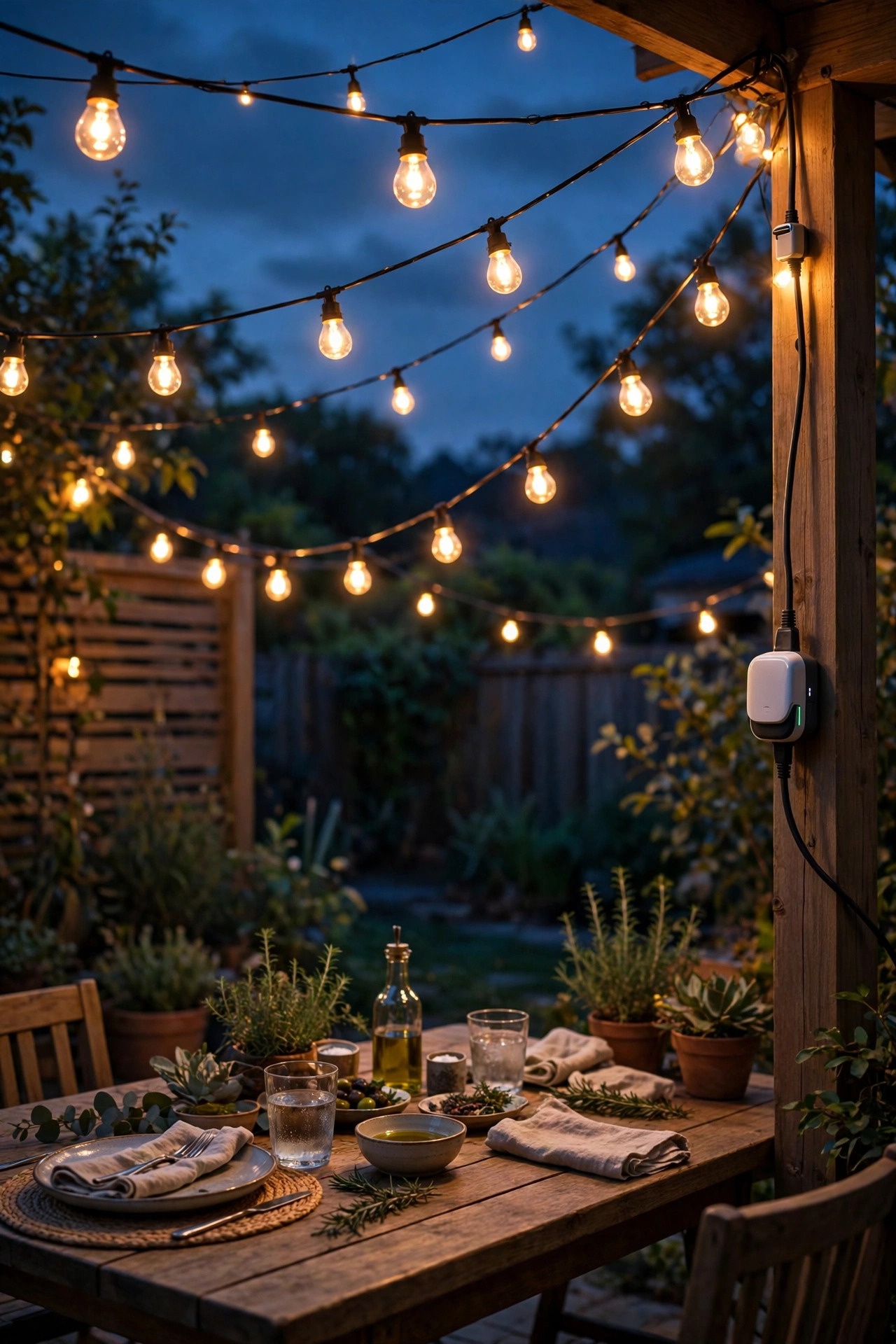
4. Hand the Switch to a Voice Assistant and a Smart Speaker
The first time you dim the patio lights without putting down your tongs, you will understand the fuss. A smart speaker on the porch — or your voice assistant on the phone in your pocket — turns "patio, fifty percent" into a two-second job. Set it up by giving each zone a plain, memorable name: Patio, Path, Trees, Fire Pit. Keep the names short, because guests will use them too, and nobody remembers a zone called "Backyard Group Three." I keep volume expectations realistic outdoors and place the speaker under the eave, out of direct rain, where voices carry from the seating area. Voice control also rescues anyone carrying a tray of drinks through a dark yard — a quick shout lights the path before the first step. It is convenience, yes, but on a slippery winter night it honestly feels like a safety feature wearing a party hat. Setup takes about ten minutes, and the payoff shows up every single night after.
Suggested budget range: $30 – $100.
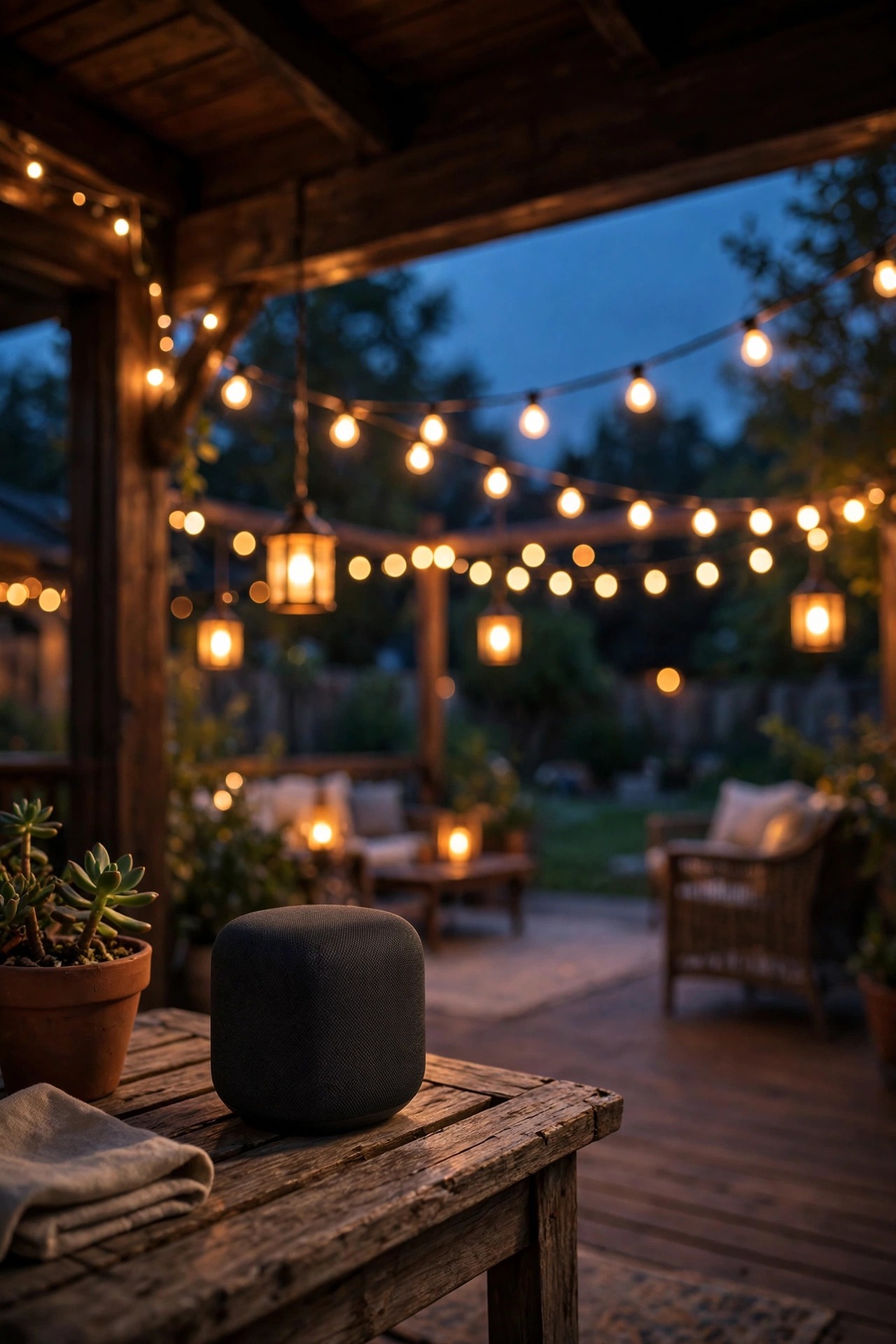
5. Schedule Everything by Sunset Instead of the Clock
Fixed clock timers have one flaw nobody notices until November: the sun does not care about your schedule. Sunset-based scheduling, sometimes called an astronomical timer, fixes that for good. Your lights fade on as the light actually fades — 7:45 in June, 5:10 in December — with zero seasonal fiddling. Most smart plugs, transformers, and bulbs offer it inside their apps, and setup is just your location plus an offset: I run the paths fifteen minutes before sunset and the accent lights right at sunset, which mimics the way a designer stages a yard. Add a gentle off-time rather than running to dawn; midnight suits weeknights here, later on weekends. This one setting is the difference between lighting that feels alive and lighting that feels like a parking lot. If you adopt nothing else from this list, adopt sunset scheduling — it is free, invisible, and quietly perfect every single night of the year.
Suggested budget range: $0 – $25.
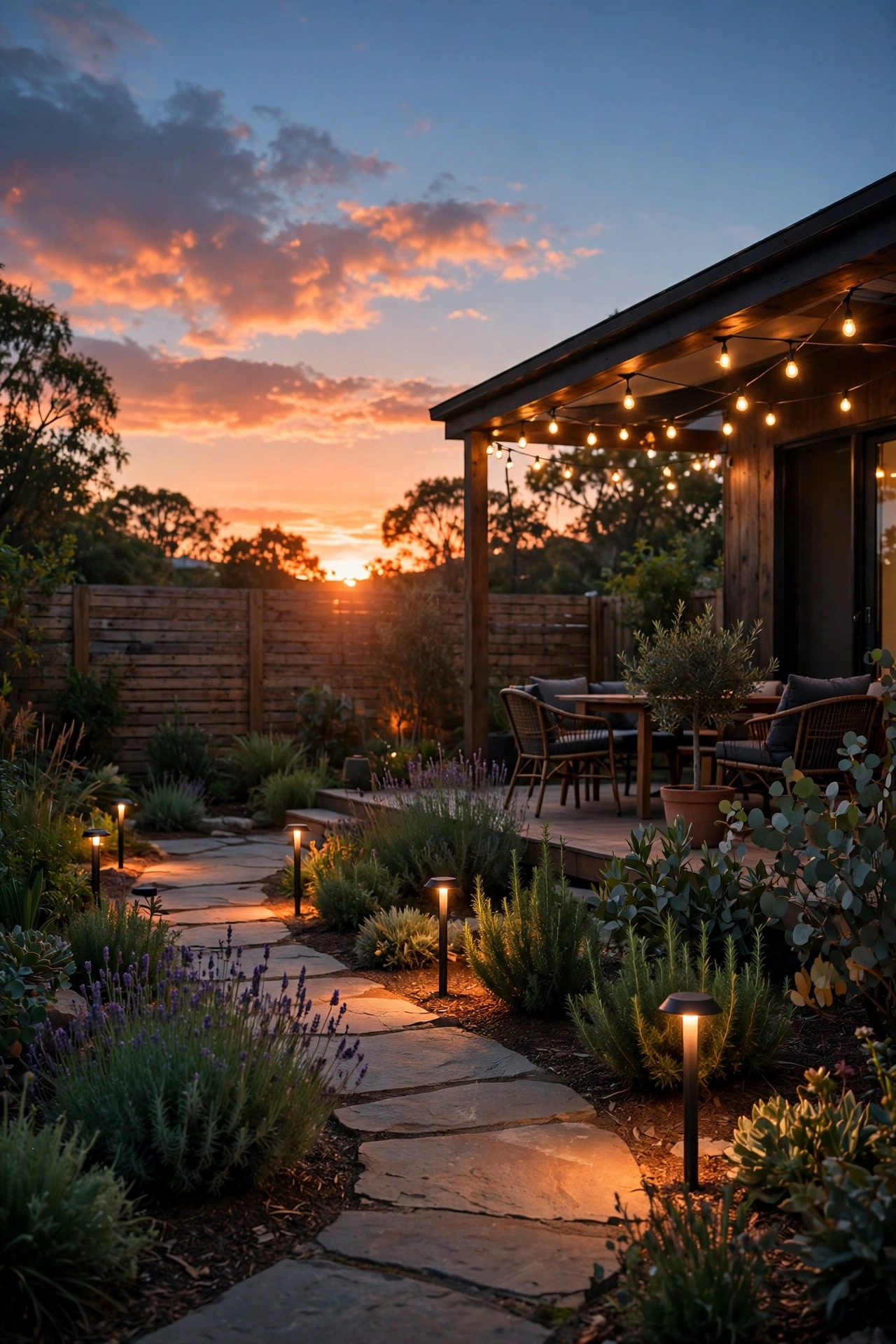
6. Let Motion Sensors Guard the Path and the Gate
A path light that wakes up as you approach feels like the house is paying attention. Motion-sensing fixtures belong where people actually move: the side gate, the garage walk, the steps down from the deck, and the run to the trash bins nobody enjoys in the dark. Aim sensors along the path rather than straight at it, keep them roughly chest height, and give the on-time two to five minutes so nobody gets stranded mid-walk. Sensitivity needs a little tuning — too eager and every moth hosts a disco; too sleepy and the light arrives after you do. In my experience the sweet spot ignores small pets but catches a person at about fifteen feet. Pair motion fixtures with a low, always-on glow elsewhere so the yard never looks like a security yard; the motion layer is for guidance and gentle deterrence, not interrogation. Guests consistently call this the most thoughtful lighting in our whole yard.
Suggested budget range: $25 – $80.
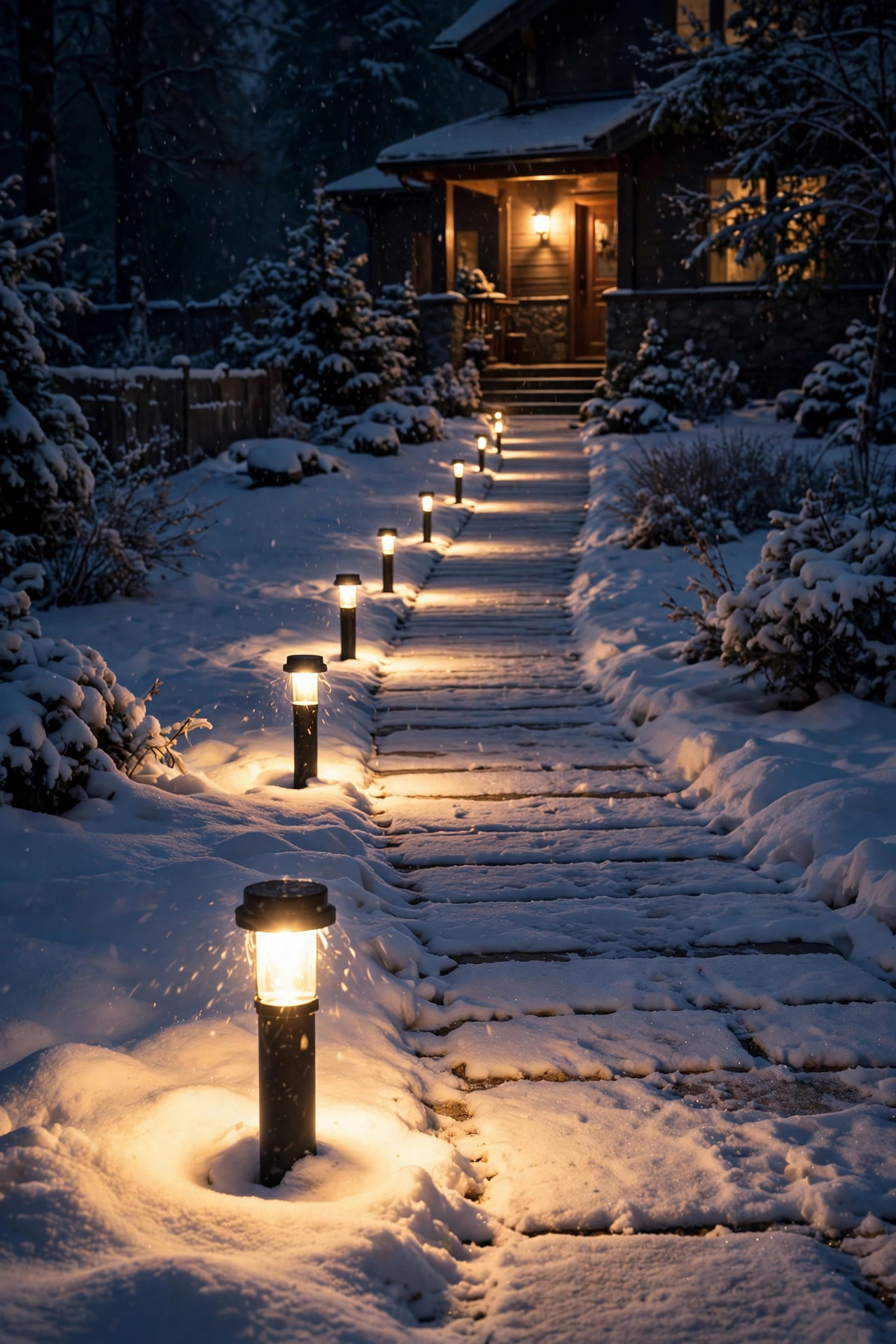
7. Hang String Lights That Dim, Warm, and Remember
String lights are the soul of a backyard evening, and the smart versions fix their two classic flaws: the all-or-nothing glare and the forgotten off-switch. Look for outdoor-rated strands with dimming built in, warm white output around 2700K, and shatterproof bulbs you can replace one at a time. On a smart plug or a smart strand, set the dinner scene at about 70 percent — bright enough to see the food, soft enough to flatter everyone at the table — then let them ease down to 30 percent for fireside lingering. Spacing still matters: swags of five to seven feet between anchor points, hung about eight feet over seating, keep the light overhead instead of in anyone's eyes. My full guide to layouts and pole options lives with my other backyard string light ideas, and every pattern there gets better the moment a schedule runs it for you. Honestly, it is the cheapest mood upgrade I know for a plain patio.
Suggested budget range: $40 – $120.
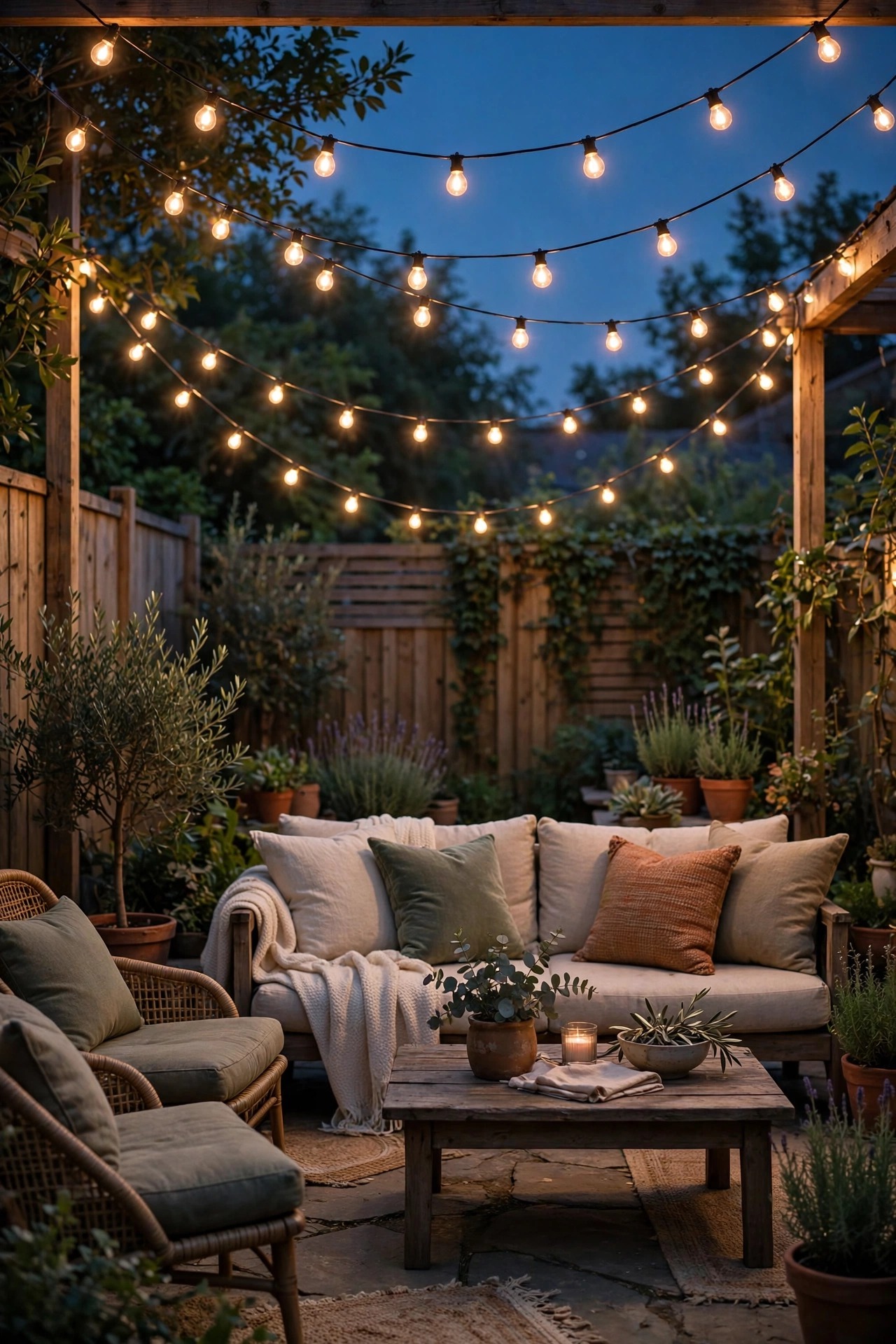
8. Keep One Set of Color-Changing Bulbs for Party Mode
Everyday backyard light should stay warm and calm, but a few color-capable smart bulbs in the right sockets turn a birthday or game night into an event. Keep them where color reads as fun rather than chaos: the porch fixture, two lanterns flanking the patio, or a strand over the outdoor bar. The trick, honestly, is restraint — pick one or two colors that suit the occasion, set them at moderate brightness, and leave the paths and steps warm white so people can still see where they are walking. Team colors for the big game, soft amber for a harvest dinner, a slow fade for a summer party. When the night ends, one tap in the app returns everything to your normal warm scene, which is the real luxury: the party look is a costume, not a commitment. Store the everyday scene as the default so weekday evenings never open with last Saturday's light show.
Suggested budget range: $25 – $90.

9. Use Arrival Detection So the Yard Greets You Home
There is a small daily luxury in pulling into the driveway and finding the path lit, the porch warm, and the patio softly glowing before you reach the door. Arrival-based automation — often called geofencing — uses your phone's location to trigger a welcome scene when you get close to home, then hands control back to your normal schedules. Set the trigger distance generously, a few blocks rather than a few feet, so the lights are settled before you arrive, and always pair it with a sunset condition so nothing blazes on at noon. I also add a quiet condition in the app: the welcome scene only runs when the yard lights were off, so it never stomps on a dinner party already in progress. Guests think we simply have impeccable timing. In truth the house does the hosting, and we just carry in the groceries like people who live in a very thoughtful home.
Suggested budget range: $0 – $30.

10. Split the Yard Into Zones You Can Run Separately
One switch for a whole backyard is how you end up lighting the compost corner to read on the patio. Zoning fixes that: group fixtures by how you actually use the space — Dining, Garden, Pool Deck, Far Trees — and control each group on its own schedule and brightness. Modern apps make this painless; you drag fixtures into groups once and then run the evening like a mixing board. Dining stays bright and warm, the garden runs a soft scenic level, and the far trees glow just enough to give the yard depth. Zoning also saves money in a way you can feel: the big accent uplights only run on the nights you are actually outside, instead of burning for an empty yard until midnight. When we host, I bring every zone up in stages as guests drift outside, and the yard seems to grow with the party. It is the closest thing to a lighting designer on staff.
Suggested budget range: $20 – $150.
11. Add a Smart Floodlight Where Security Actually Matters
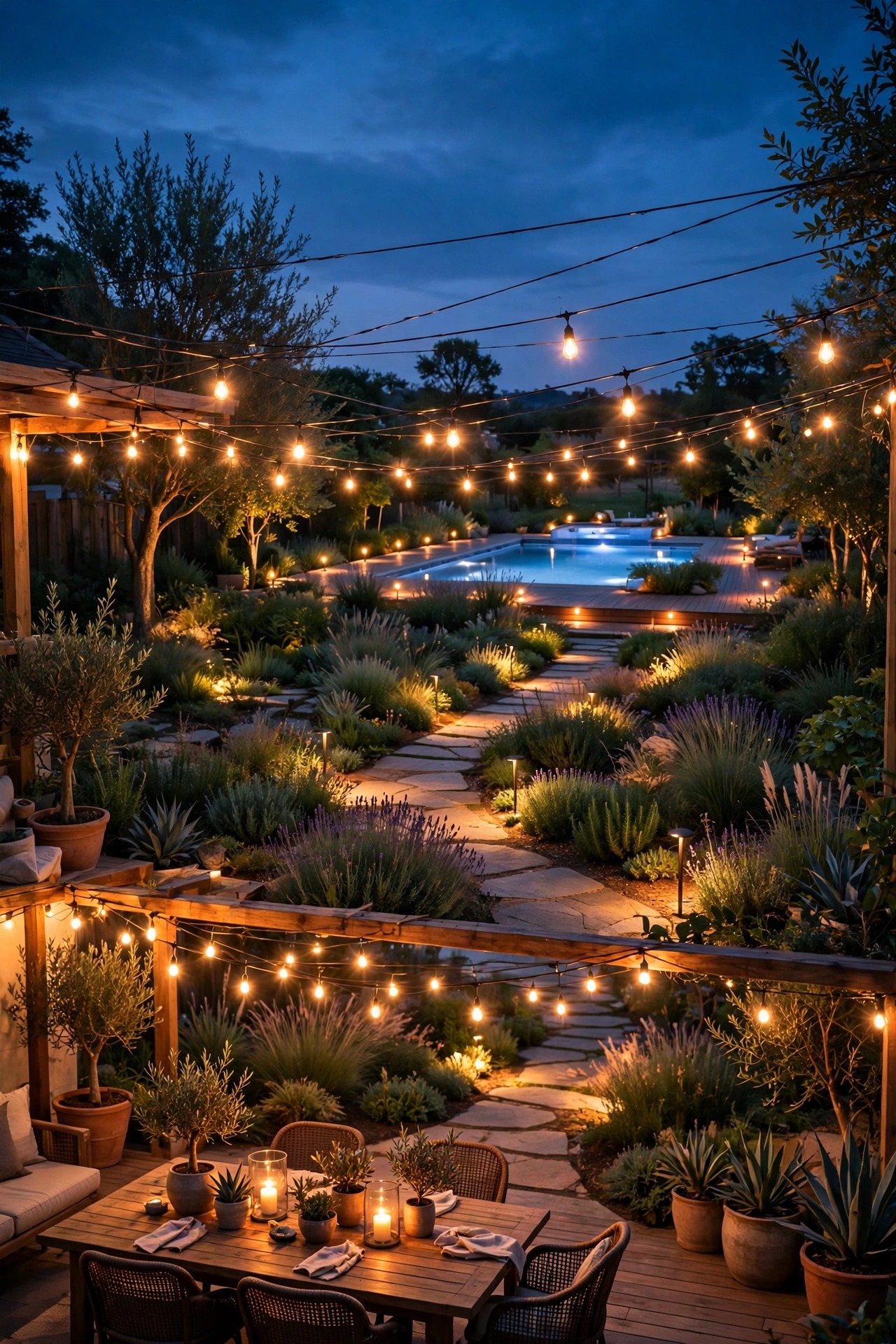
Every yard has one genuinely dark working corner — the woodpile, the side gate, the run behind the garage — and that is where a smart floodlight earns its place. Choose a fixture with a built-in motion sensor, adjustable brightness, and an app that lets you soften it: most nights ours idles at a low glow and only steps up when something moves, which keeps the neighbors and the ambiance intact. Angle the heads down and inward so the light stays on your property, and keep the sensor's view clear of waving branches. The app alerts are genuinely useful too; a notification that the side yard woke up at 2 a.m. tells you plenty, no camera required. During parties I disable the motion trigger and fold the fixture into the patio scene at low level, so security hardware moonlights as party lighting. One fixture, three jobs — that is the whole spirit of this list.
Suggested budget range: $50 – $150.
12. Go Solar Where Wiring Cannot, and Keep It Smart Anyway
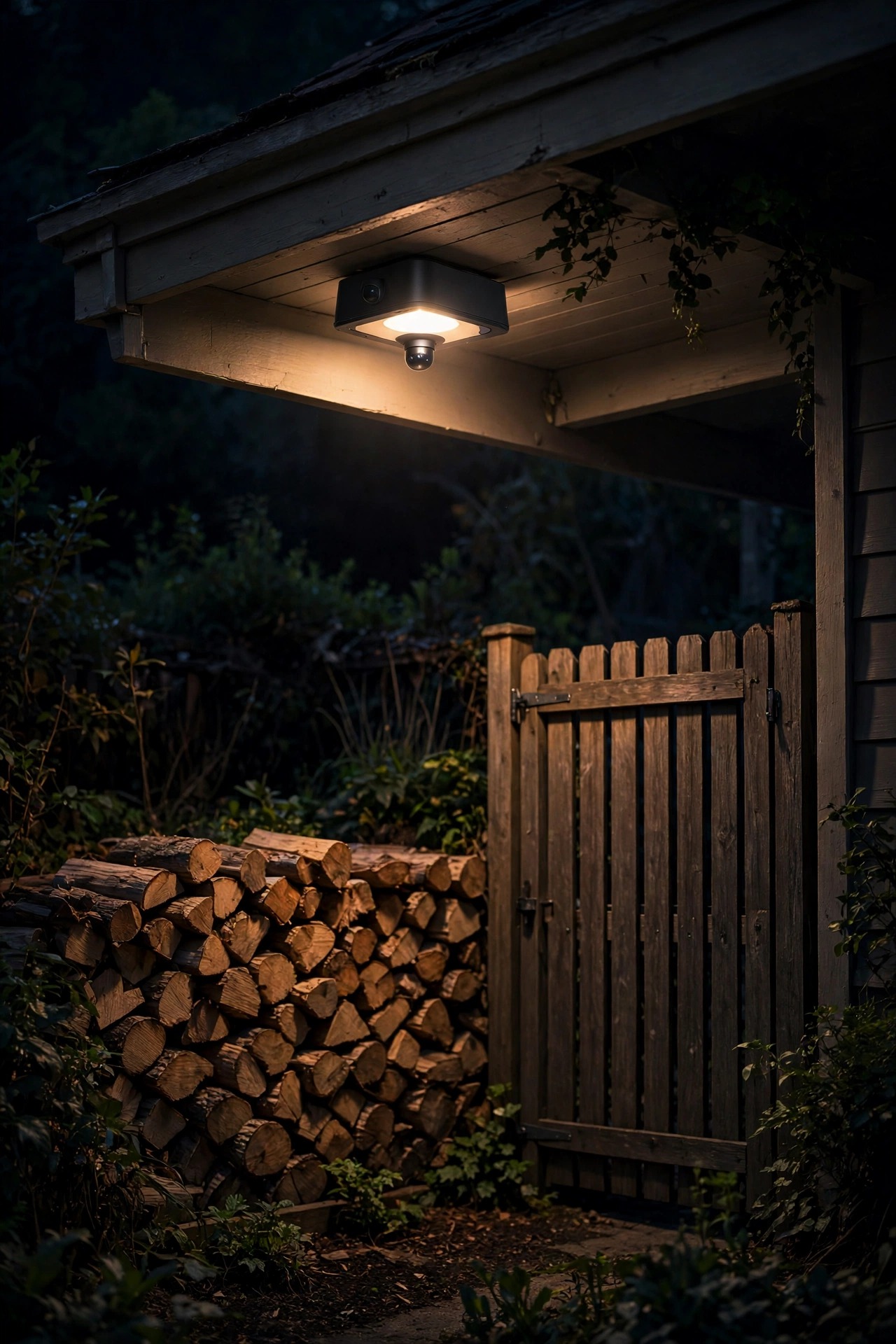
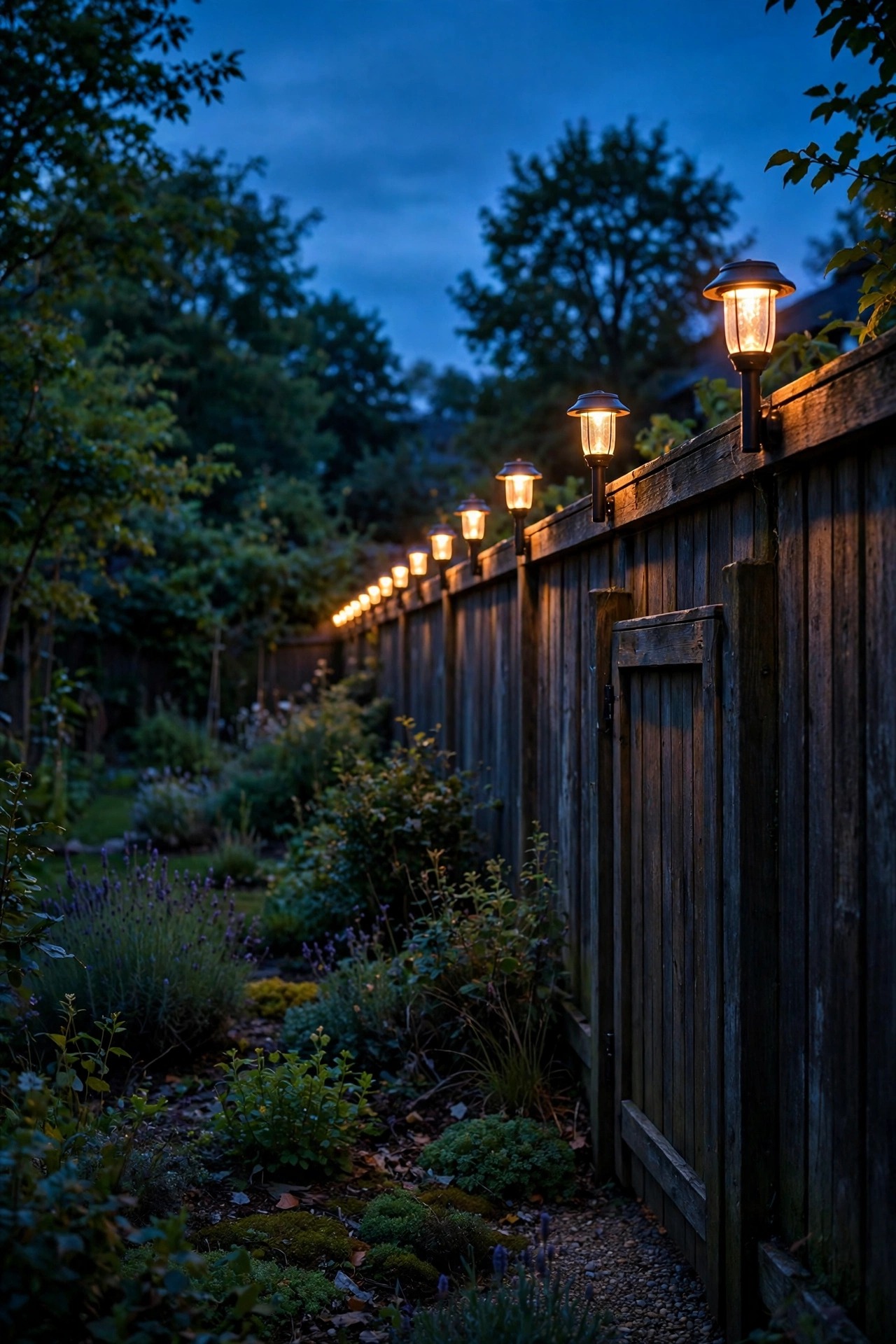
The far garden bed, the fence line, the path to the shed — some spots will never justify trenching cable, and modern solar fixtures have quietly grown up about it. Better panels, replaceable batteries, and honest warm-white output mean solar path lights and stake spots can hold a scene together all evening. The smart angle here is scheduling discipline: choose fixtures with built-in dusk sensing and timers that shut them down after six hours, so they save their charge for the hours you are actually outside, and they still look alive in winter when nights run long. I keep expectations honest — solar accents, wired workhorses — and I have a whole set of tricks for yards with no outdoor outlet at all in my notes on backyard lighting with no outlet. Place panels where midday sun truly lands, not where you wish it did. Two summers in, mine still greet me at dusk right on time.
Suggested budget range: $30 – $100.

13. Turn On Vacation Mode Before You Leave Town
A dark house advertises an empty house, so before any trip I switch the yard to its away routine: paths and porch on at sunset as always, but with the off-times shuffled, a lantern or two running later than usual, and the accent lights taking random evenings off. Most lighting apps call this a vacation or away mode, and it takes two minutes to enable. The randomness is the point — real life never runs on a perfect 7:02 schedule, and a lived-in pattern is far more convincing than a rigid one. I also drop the floodlight to motion-only and let the app send me a note if it wakes repeatedly in one night. Honestly, the peace of mind alone pays for the smart plugs in this house. When we pull back in, one tap restores the normal evening scene, and the yard goes back to being a host instead of a night watchman.
Suggested budget range: $0 – $40.

14. Save Two Scenes You Will Use Every Week: Dinner and Movie Night
Scenes are where smart lighting stops being a gadget and becomes a habit. A scene is one tap that sets every zone at once, and two scenes cover ninety percent of our backyard life. Dinner: string lights at 70 percent, path lights full, the grill area bright, accents low and warm. Movie night: everything off except a faint path glow at 15 percent and the step lights, so the screen rules the yard and nobody trips on the way to the popcorn. Build them once, name them plainly, and put them on the app's home screen where a thumb finds them in the dark. Add a third scene for hosting — full warm, everything on, slightly brighter paths — and you are done collecting. The rule in our house: if a lighting look takes more than one tap, it does not survive the month. Scenes pass that test every time.
Suggested budget range: $0 – $20.

15. Uplight the Trees on a Schedule, Not a Whim
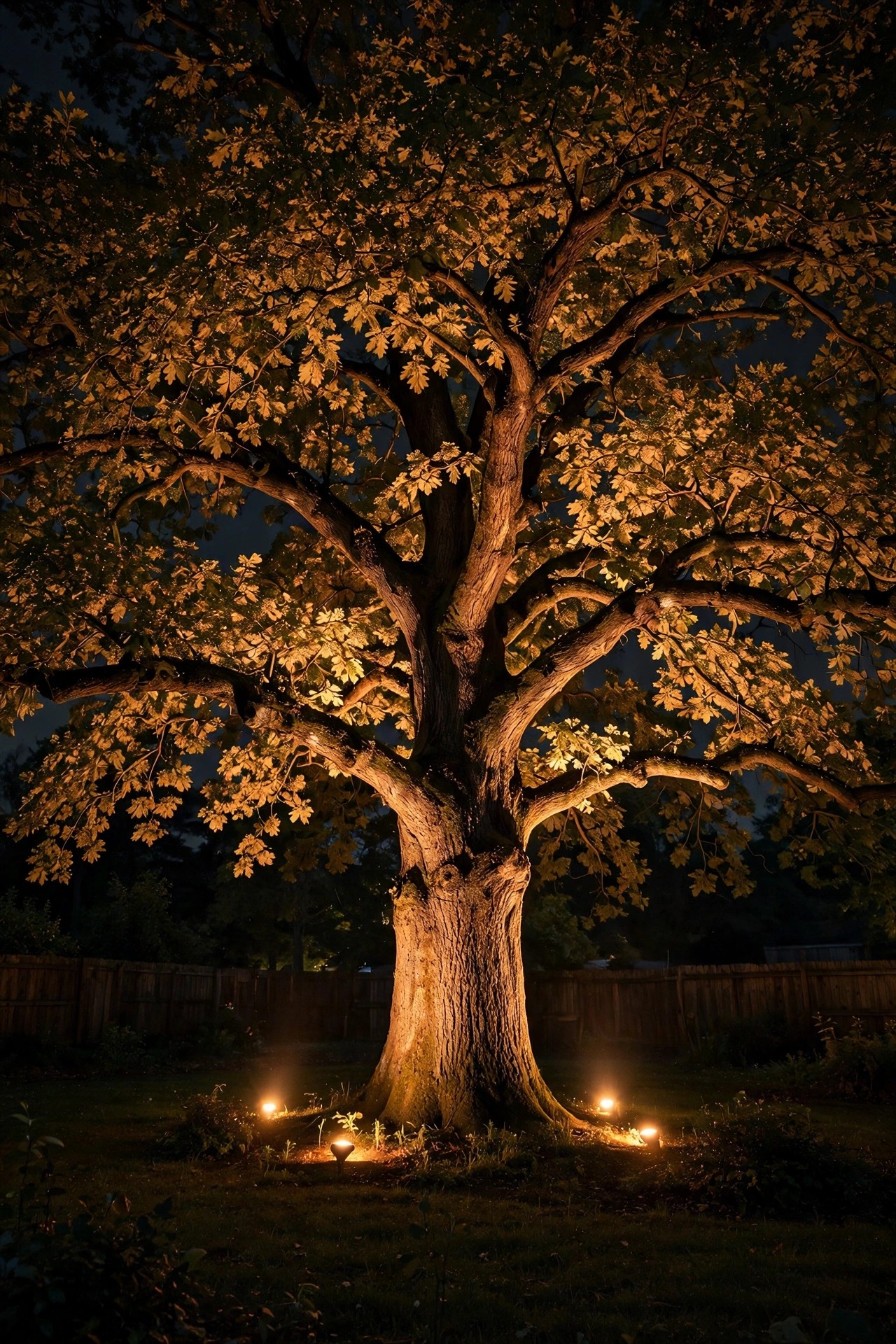
A big tree lit from below is the most dramatic thing in any backyard, and the least necessary at 1 a.m. Scheduling your uplights is how you get the drama without the waste: ours come on at sunset, run full through the evening, and step down to a whisper at ten, off by eleven. Smart control also lets you split the canopy work — one fixture washing the trunk, one catching the high branches — and dim each until the shadows look painted rather than blasted. Keep fixtures a foot or two out from the trunk, aimed up through the branching, and check the effect from the house, not from under the tree; you are lighting it for the audience on the patio. In winter, when the branches are bare, drop the brightness a touch and the sculpture effect doubles. This is the idea neighbors ask about most, and it costs less to run than the porch light you forget every night.
Suggested budget range: $60 – $200.
16. Choose Smart Switches for Fixtures You Already Love
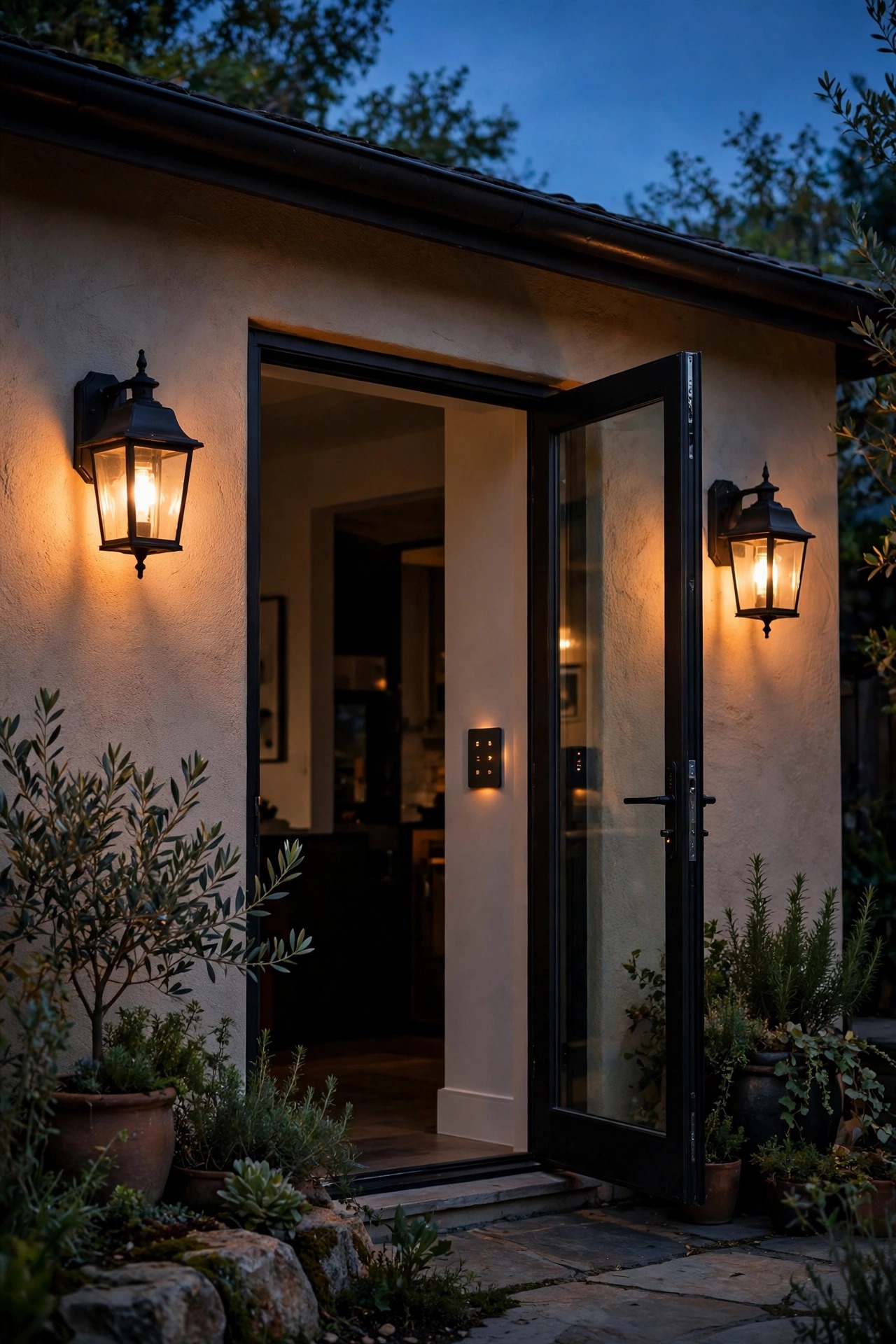
Smart bulbs get the glory, but for permanent outdoor fixtures the smarter money often sits in the wall. A weatherproof smart switch or an inline smart relay controls the whole fixture — porch lantern, coach lights, the pair flanking the garage — while keeping the bulbs, the look, and the dimming behavior you already chose. It also survives the classic smart-bulb headache: nobody can defeat it by flipping the physical switch off at the wall. I weighed the two routes carefully before committing, and my comparison of smart switches versus smart bulbs outdoors lays out where each one wins. The short version: bulbs for lamps and plug-in pieces, switches for anything hardwired and permanent. One honest caution — switch work touches house wiring, so if opening a junction box is not already in your skill set, hire it out and enjoy the result for a decade. Either route beats replacing fixtures you already love.
Suggested budget range: $40 – $120.
17. Set Timer Candles and Lanterns and Forget Them Completely
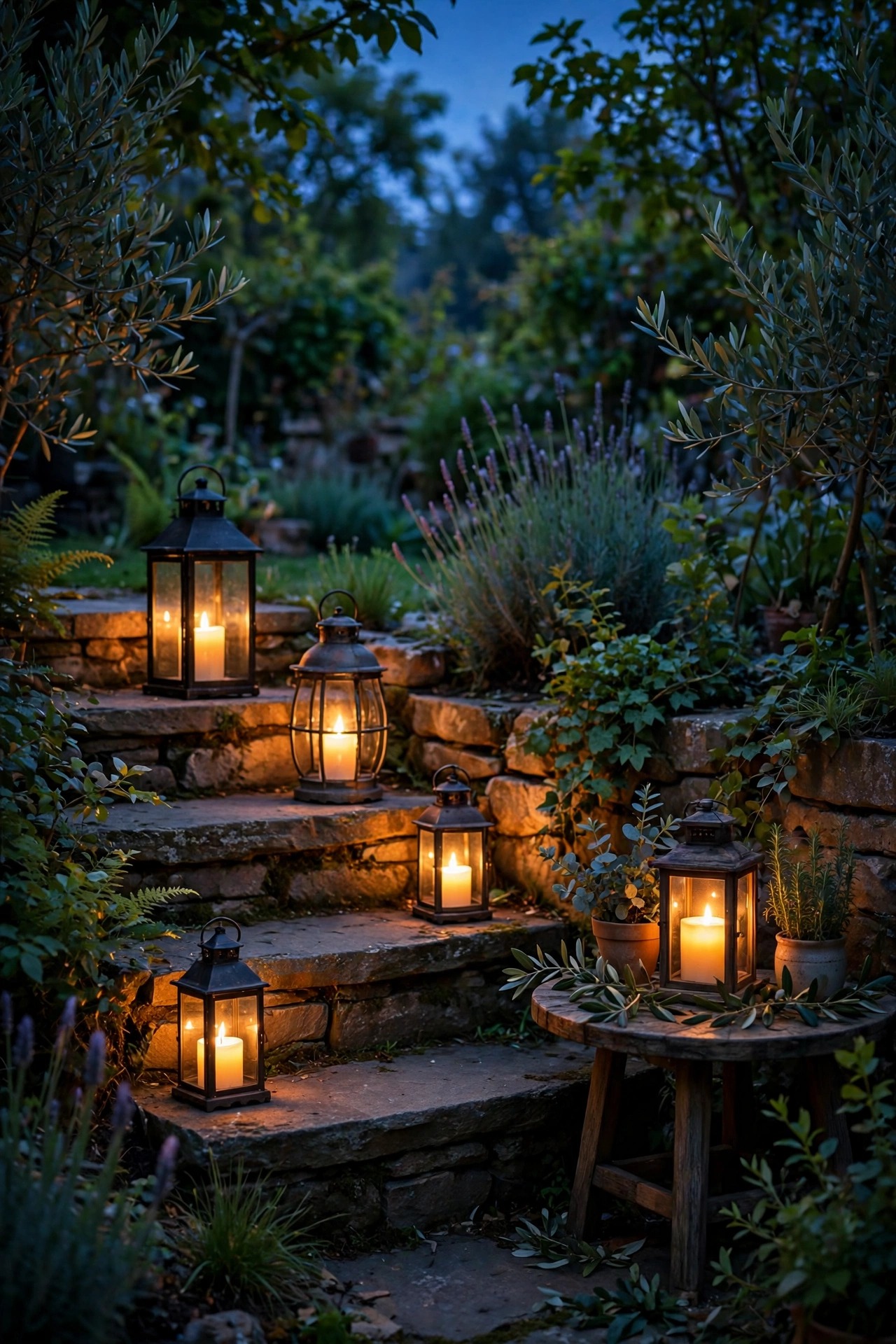
Not every glow in the yard needs an app. Flameless candles and lanterns with built-in timers are the quiet overachievers of evening ambiance: set them once to run five hours from dusk, and they simply appear every night, on the steps, in the hurricane glass on the table, along the low wall. Because they are LED and cool to the touch, they can nestle into wreaths, planter arrangements, and paper luminarias where a real flame would be reckless. Group them in odd numbers and vary the heights; a cluster of three at the foot of the steps does more for the mood than a dozen scattered singles. I mix two candle lanterns into the smart scenes as well — a smart plug handles the larger lanterns, the little timers handle themselves. Honestly, these are the hardest-working five dollars in my entire lighting bin, and guests always ask where the real candles came from.
Suggested budget range: $15 – $60.
18. Pair Dusk-to-Dawn Sensors With Smart Overrides
The humble photocell — lights on at dusk, off at dawn — is the oldest smart trick in the book, and it still earns its keep on the fixtures you never want to think about: the gate light, the garage lantern, the step lights on the far stairs. The modern twist is pairing that automatic base with a smart override, so the app can dim the photocell fixtures into a party scene or hold them off entirely during movie night. Think of the sensor as the default and the app as the exception handler. Place photocells where passing headlights and your own porch light cannot fool them — a sensor that thinks your floodlight is the sunrise will flicker all night. North-facing and shaded spots read the sky most honestly. This hybrid approach is, in my experience, the most reliable setup in the whole list: automation when life is normal, control when it is not.
Suggested budget range: $20 – $70.
19. Watch the Energy Bill With Monitoring Plugs on Big Loads
A backyard full of light can still sip electricity, but a few legacy pieces — an old halogen uplight, a pond pump on the same circuit, a vintage string strand — can drink it. A smart plug with energy monitoring tells you exactly which load costs what, in real numbers instead of guesses, and the results routinely surprise people. Our report showed one beloved old fixture drawing more than the rest of the yard combined; swapping its bulb paid for the plug in a season. Monitoring also catches the silent failures: a transformer running at noon, a schedule that drifted, a zone left on by a helpful guest. Set the app to alert you when a load runs outside its schedule and the system starts auditing itself. This is the least glamorous idea on the list and, dollar for dollar, possibly the most valuable one — knowledge first, then the glow.
Suggested budget range: $20 – $45.
20. Lift the Strings on Poles and Put the Poles on a Scene
The prettiest string light layouts float over open lawn where no tree or eave exists to hold them, and that is what sturdy string light poles are for — planted in the ground or set into weighted planters at the corners of your seating area. Once the strands are up, give the poles' lights their own scene and schedule so the canopy overhead behaves like part of the house: on at sunset, dimmed for dessert, off with the rest. Mind the geometry as you plan: anchor points eight to ten feet high, gentle swags, and a slight sag in the middle of each run keeps tension off the sockets in wind. Keep the lowest bulb at least seven feet over walkways so tall guests and raised glasses pass safely. It is the single change that makes a plain patch of lawn feel like a room, and smart control is what makes that room effortless.
Suggested budget range: $80 – $250.

21. Finish With One Routine: Your Smart Backyard Lighting Ideas on Autopilot
Here is where it all comes together. A routine — one automation that chains your sunset schedule, your zones, and your scenes — is the difference between owning smart lights and living with smart backyard lighting ideas that truly run themselves. Mine reads like a tiny evening story: at sunset, paths and porch fade up; at seven, the dining scene takes over if we are home; at ten, accents step down and the yard goes quiet and low; at eleven, everything but the gate light sleeps. Arrival detection can insert the welcome scene anywhere in that story, and vacation mode rewrites it while we travel. Build yours slowly, one line a week, and resist adding tricks you will not use monthly — the best routine is the one you forget exists. Six months from now, the highest compliment your yard can earn is a guest asking who keeps turning the lights on so perfectly. Nobody. That is the point.
Suggested budget range: $0 – $50.

Frequently Asked Questions
What is the easiest way to make my existing backyard lights smart?
Start with the control point, not the bulbs. If your lights plug in, one or two weatherproof smart plugs give you app control, schedules, and scenes in ten minutes. If they run on a low-voltage transformer, a smart app-controlled transformer upgrades the whole system at once. Save individual smart bulbs for lamps and a few accent fixtures.
Do smart backyard lights need a strong wireless signal outside?
They need a usable one, yes. Test your phone at the farthest fixture before buying; if the signal struggles, moving the router nearer a back wall or adding an outdoor-rated extender usually fixes it. Many schedules and timers run locally once set, so a brief signal drop rarely leaves you in the dark.
How much does it cost to automate a whole backyard?
A plug-and-play start — two smart plugs, a few timer candles, and sunset schedules — runs $50 to $150. A fuller system with a smart transformer, zoned fixtures, motion lights, and a floodlight lands between $400 and $1,200. Running costs stay tiny because nearly everything is LED.
Are smart outdoor lights and plugs really weatherproof?
The good ones are, but check the rating rather than the marketing. Look for plugs and fixtures rated for outdoor or wet locations, mount plugs with the socket facing down, and keep connections off the ground. A covered outlet box with an in-use cover keeps the whole setup safe in serious rain.
Conclusion
What ties every idea here together is simple: the technology should carry the switches so you can carry the evening. Layer the yard first, give each layer a control point, then let sunset schedules, scenes, and one good routine do the nightly work. Your smart backyard lighting ideas do not need to be complicated to feel luxurious — they just need to be consistent, warm, and already on when you step outside. Start with a transformer or two smart plugs this weekend, save a dinner scene you love, and browse the rest of the lighting ideas on this site whenever you are ready to add the next layer. Effortless evenings are closer than you think.