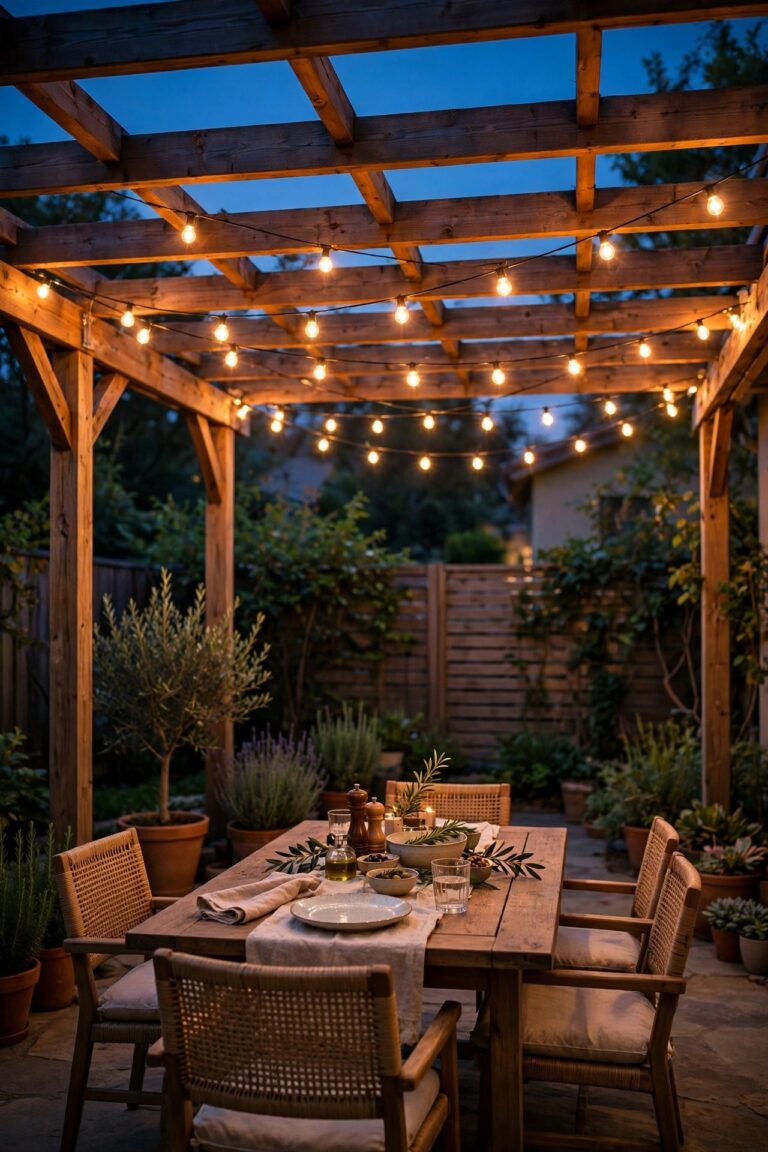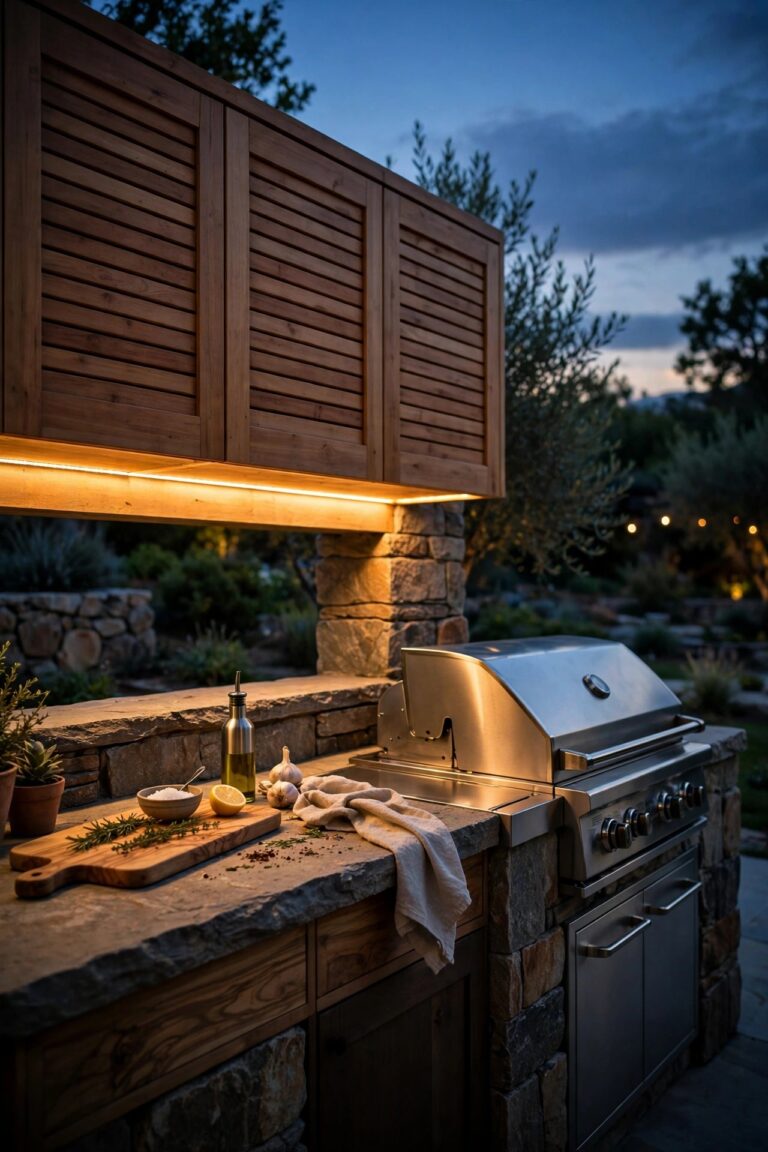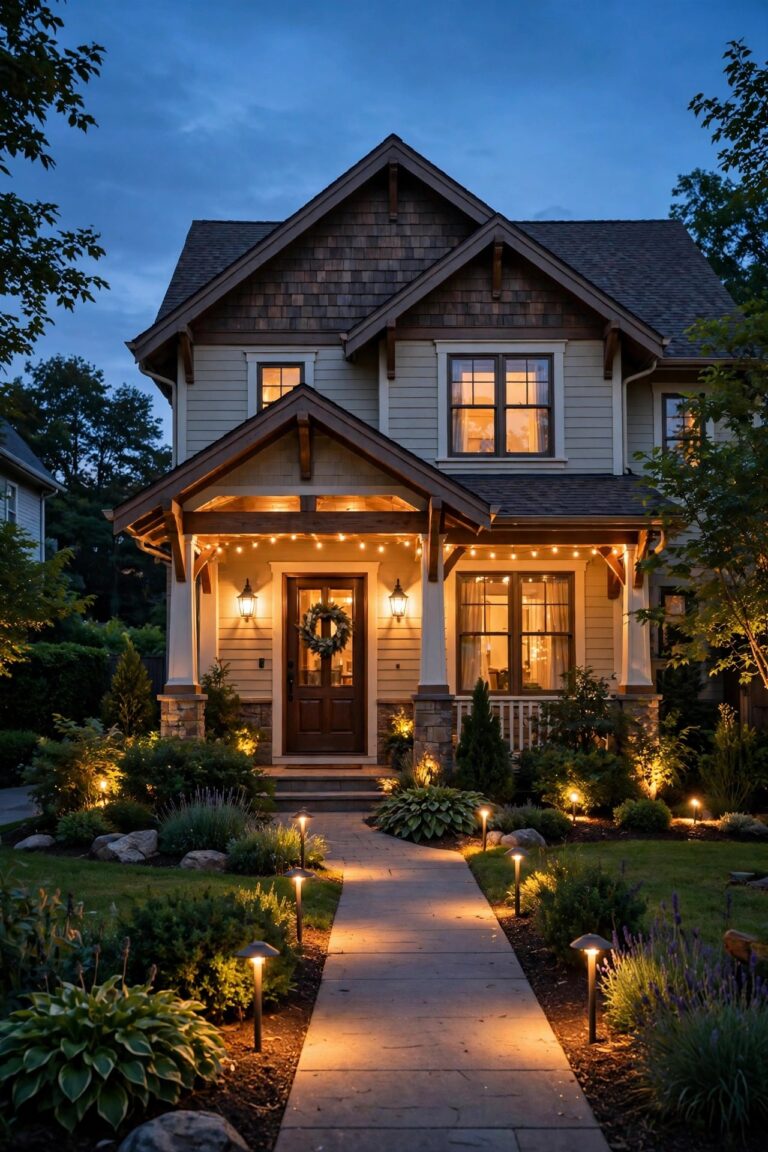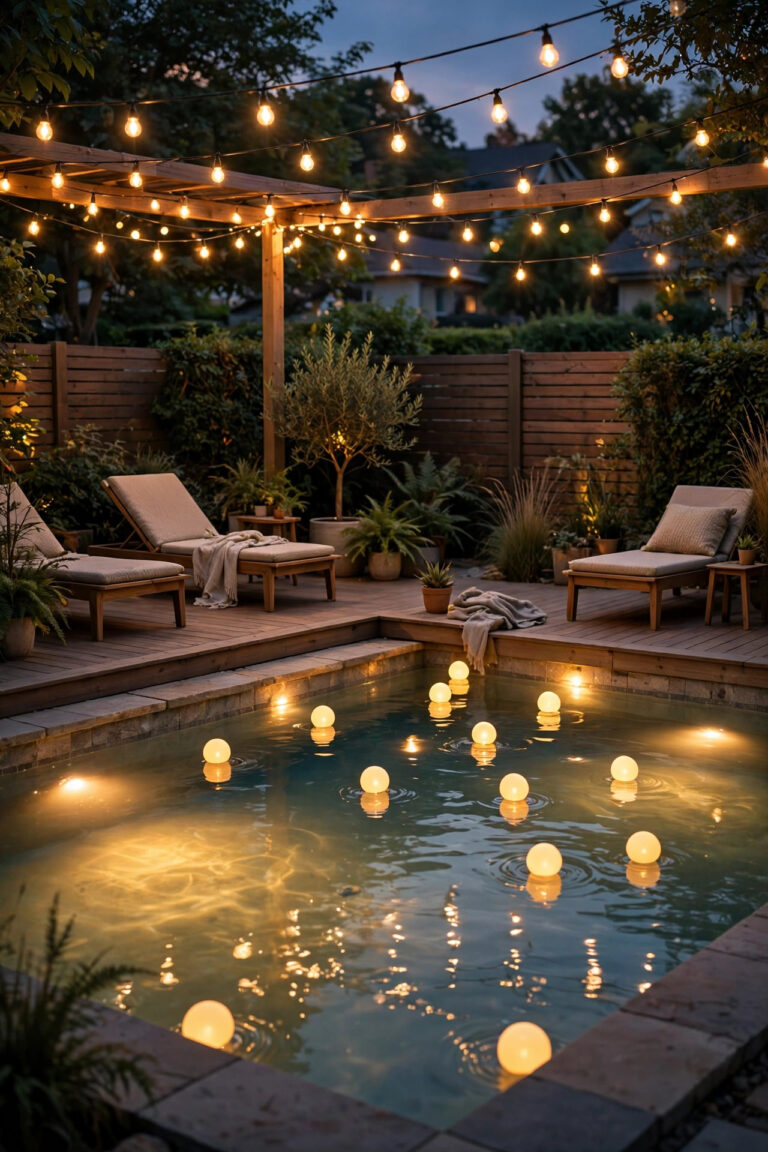
If you've ever gotten a quote for hardwired path lighting, you know the painful part isn't the fixtures — it's the trenching, the conduit, and the electrician's hourly rate. That's exactly why I fell in love with walkway lighting without wiring. Modern solar panels and rechargeable batteries have quietly gotten good enough that you can light a whole front path in a single afternoon, with nothing more than your hands and maybe a rubber mallet. No digging up your lawn, no permits, no accidentally slicing a cable line (ask me how I know).
In my experience, the trick is layering, the same philosophy I use everywhere outdoors: a low, even ribbon of light to show the edges, a few brighter pools where feet actually land, and one or two accents so the path feels designed rather than dotted. Below are the 15 wire-free options I recommend most, from five-minute stake lights to clever low-profile tricks — and if you want the deep dive on choosing fixtures, my solar path lights guide covers brightness and battery sizes in detail.
1. Classic Solar Stake Lights — the Easiest Walkway Lighting Without Wiring
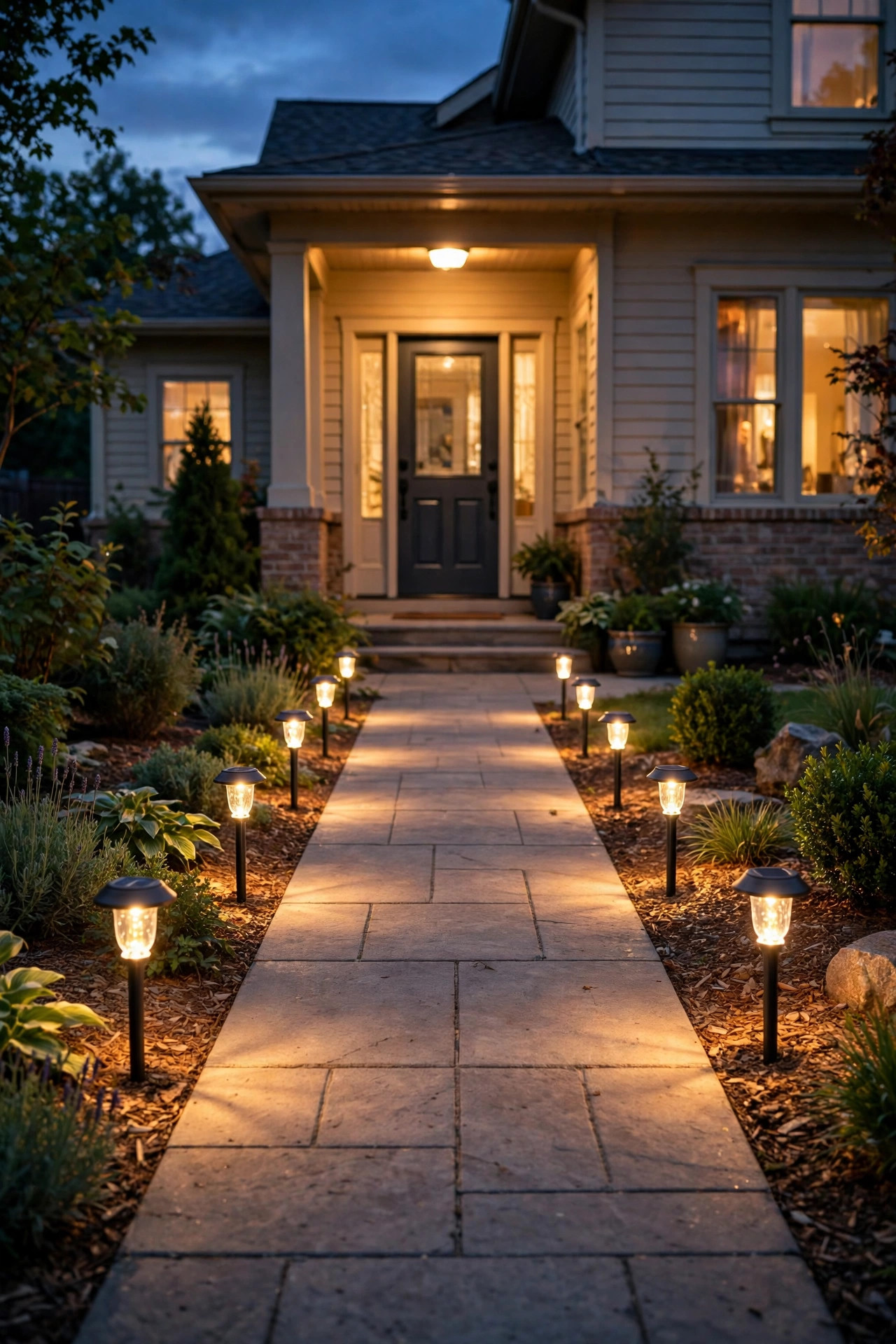
Let's start with the workhorse. Solar stake lights are a fixture, a small panel, and a ground spike in one piece: you push them into the soil and they charge all day, then glow from dusk until the battery fades. For a walkway, spacing is everything. I place mine every 4 to 6 feet, alternating sides or lined up in pairs, about 3 to 4 inches back from the path edge so mower wheels and snow shovels don't clip them.
Look for warm white output around 2700–3000K so the path feels like candlelight rather than a dentist's office, and check the lumen rating — 10 to 30 lumens per light is plenty for guidance. Honestly, the cheapest multipacks are the ones that disappoint: dim blue-ish light and batteries that die by 9 p.m. Mid-priced stakes with replaceable rechargeable batteries last two to three seasons in my yard. In winter, brush snow off the little panels after storms, and if your path sits under a big maple, angle the stakes toward the sunniest side of the walk. It's the fastest win on this whole list.
Suggested budget range: $25 – $60.
2. Flush Solar Disc Lights That Sit Level With the Path
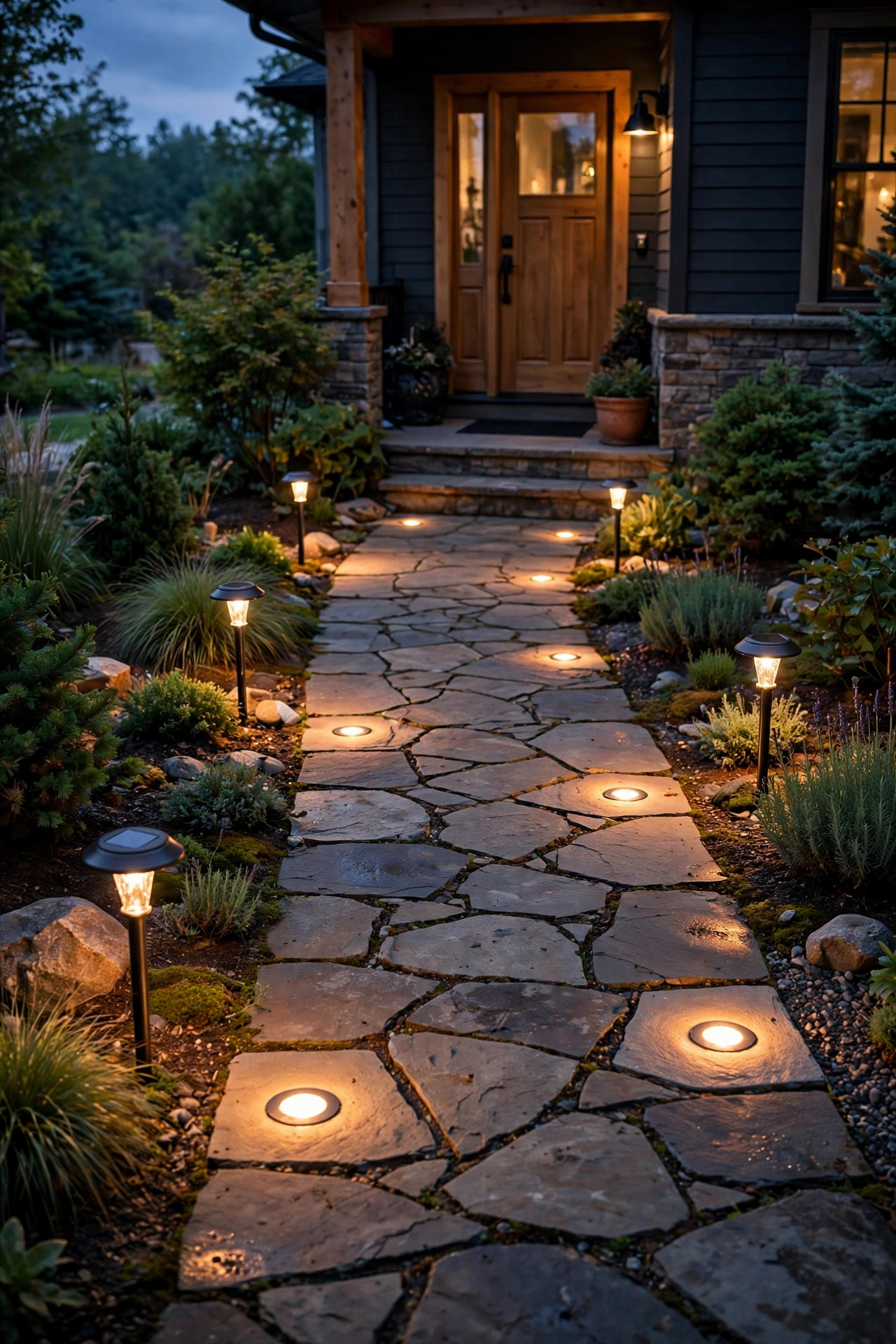
If stakes feel too fussy or your walkway has a clean, modern look, solar disc lights are the answer. These flat, hockey-puck-style lights sit almost flush with the ground — you can set them into mulch or soil right at the path's edge, or rest them on pavers and concrete where there's nothing to spike into. Because there's no stem to snap, they're the most kid-, dog-, and lawn-service-proof option I own.
The light washes downward and outward in a soft disc, which reads as a runway of gentle pools rather than bright dots. I space them 4 to 5 feet apart on alternating sides. One honest warning: discs lying flat collect dirt and leaf slime, which dims them fast, so give the panels a quick wipe every few weeks — it genuinely makes a visible difference. Also check the waterproof rating; you want IP65 or better since these sit right where puddles form. For a rental or a concrete front walk where drilling is out of the question, a row of these plus a charged afternoon is honestly all you need.
Suggested budget range: $20 – $45.

3. Battery-Powered Lanterns You Can Move Anywhere
Battery lanterns are my secret weapon for walkways that change with the seasons. A pair of weatherproof LED lanterns flanking the path — on the ground, on low stumps, on the steps of a raised bed — gives you real, warm, dimmable light with zero installation. When guests come, I carry them closer together; when the garden tour is over, they migrate back to the patio.
Choose lanterns rated for outdoor use with a timer function, because the timer is what makes battery lights practical: set them to run 4 or 6 hours from dusk and a set of batteries lasts weeks instead of days. Rechargeable lanterns you top up by USB are even better — no battery drawer raids in January. Style-wise, matte black metal frames with warm filament-style LED bulbs read "farmhouse porch" beautifully against a stone path. Keep them slightly off the walking surface, tucked beside hostas or along the inside curve of the path, so they light the way without becoming the obstacle. Two to four lanterns handles most front walks.
Suggested budget range: $30 – $80.

4. Low-Profile Solar Bollards for a Crisp, Modern Edge
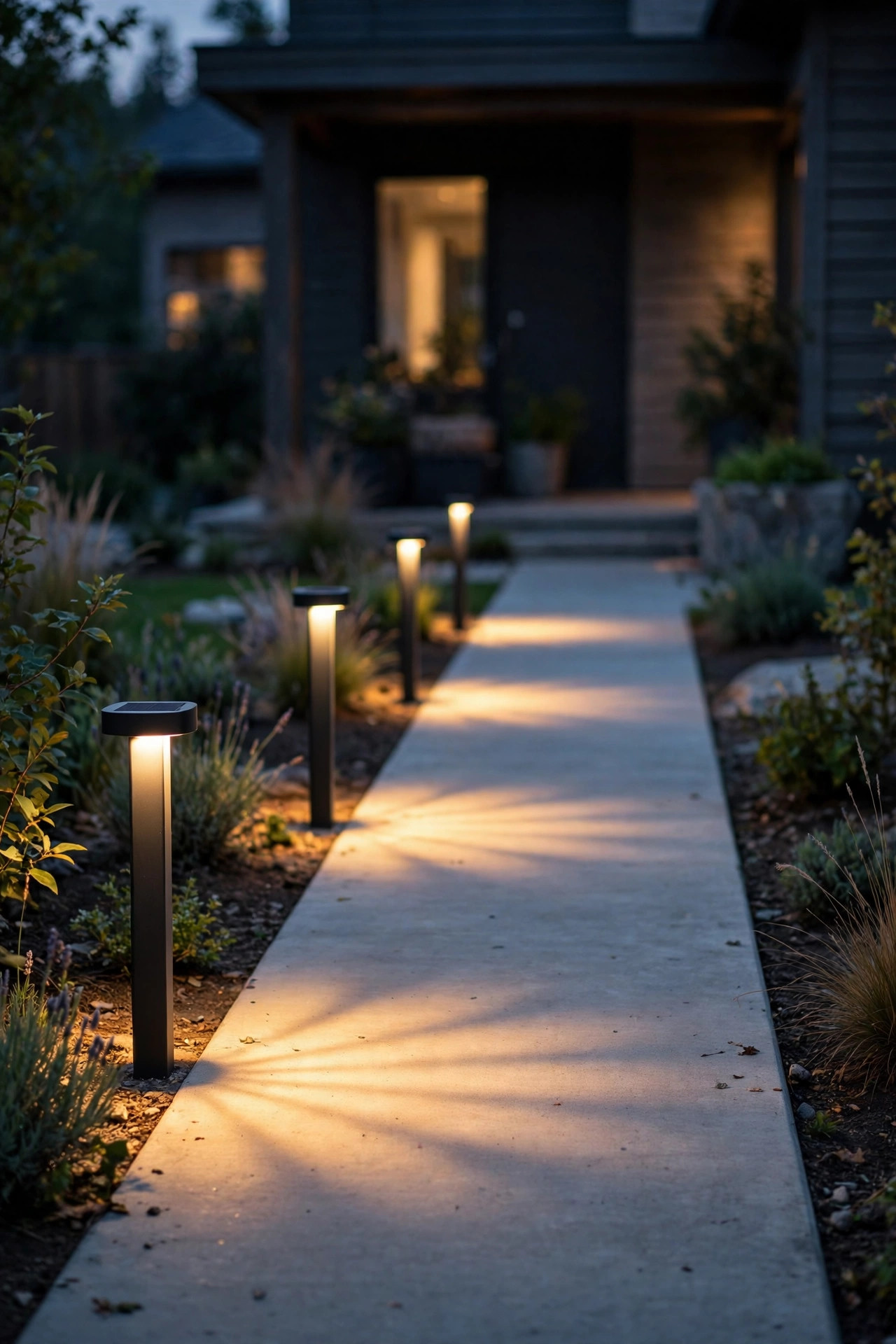
Bollards are the short, post-like lights landscape designers love, and the solar versions have the same tailored look without the low-voltage cable normally buried beside them. At 12 to 18 inches tall, they throw light down onto the path surface in a clean scallop, so you get definition without glare in your eyes — a big deal if your walkway leads straight to a seating area.
Because the solar panel is small and sits on top, bollards perform best in genuinely sunny spots; in my experience a part-shade path gets you a dimmer, shorter night. Space them 5 to 6 feet apart on one side only for a contemporary rhythm, or in pairs flanking the start and end of the walk. The better models have metal housings that survive being bumped by a trash bin, which plastic stakes do not. I love these along straight concrete walks and modern gravel paths especially — they make a plain front entry look like it was professionally designed, and installation is literally pushing them into the ground along a string line to keep them straight.
Suggested budget range: $40 – $110.
5. Solar Rope Lights Along the Border
For curved walkways — the ones that wind through a garden bed — a solar rope light follows the line of the path like a ribbon. The rope is a flexible tube of tiny LEDs powered by a small solar panel on a stake you hide in the planting. Lay it along the very edge of the path, pinned down with landscape staples every couple of feet, and at night the whole curve glows as one continuous line.
Honestly, this is the most "designed" look on the list for the least money, and it's wonderfully low-profile by day. A few practical notes from my own trial and error: place the panel where it gets at least six hours of direct sun, even if that means running the lead wire a few feet into the bed. Rope lights come in warm white and colors; warm white (around 2700K) looks elegant, while colors are fun for holidays only. Expect a gentle guide-light rather than bright task light — pair the rope with a couple of brighter accents at steps or gates where footing matters most.
Suggested budget range: $15 – $35.

6. Motion-Sensor Solar Lights on Short Posts
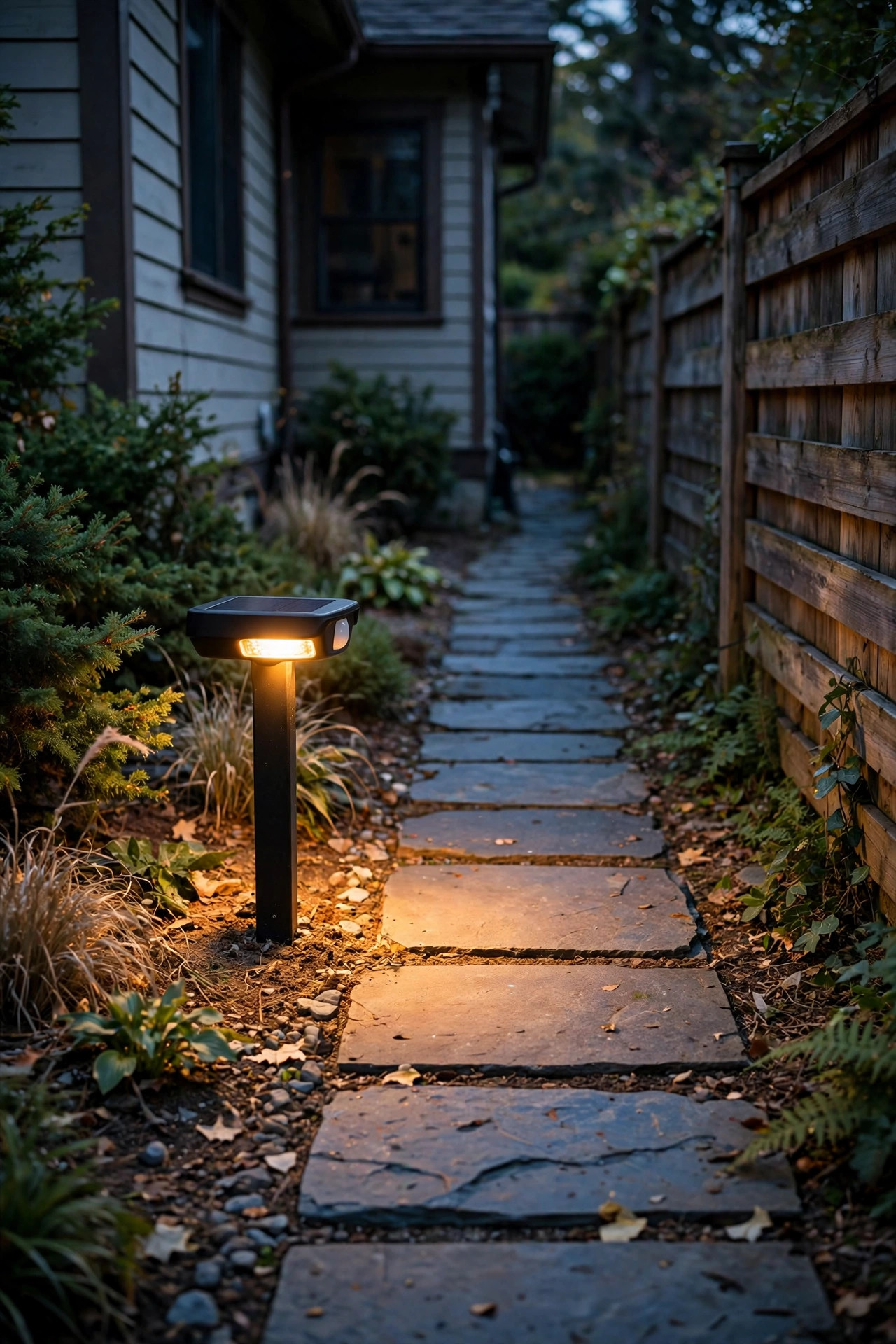
Some stretches of walkway don't need light all night — they need light when someone's actually walking. A motion-sensor solar light mounted on a short post, a fence rail, or the side of a step does exactly that: dark and restful until you approach, then a warm pool of light for 20 to 30 seconds. It's the setup I always recommend for side paths to the trash bins and the stretch between the driveway and the front door.
Look for a detection range of 10 to 16 feet and an adjustable head so you can aim the beam across the path rather than into the street. Mounting height matters: 2 to 3 feet up keeps the sensor pointed at ankles-to-waist height, where it triggers reliably without firing for every passing car. Because these only run on demand, their batteries last far longer between charges, and the solar panel can be smaller. Two lights, one at each end of a long path, will hand you off to each other like runway staff. If you want more detail on sensors and placement, the principles in my walkway projects mirror the broader walkway lighting ideas I use for wired paths too.
Suggested budget range: $20 – $50.
7. Solar Paver Lights That Sit Inside the Walk Itself
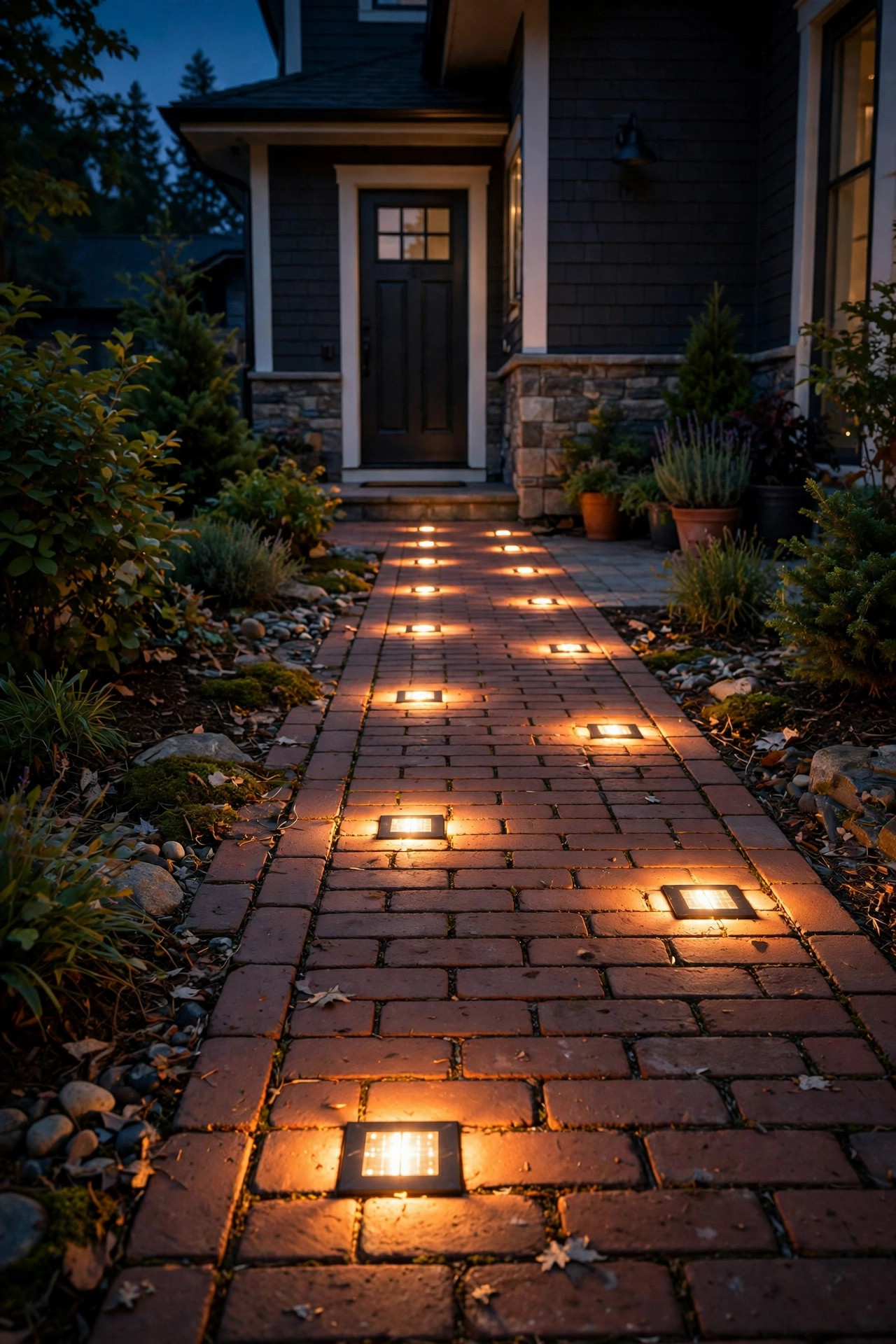
This is the trick guests always ask about: brick-sized solar lights that replace individual pavers in the walkway itself. You lift out a paver, set the solar brick in its place, and the top panel charges by day while the diffused block glows at night — light coming from the path surface, completely flush, nothing to trip on or knock over.
They work best in paver and brick walks where sizes match standard modules; measure yours before ordering, since "brick size" varies. In gravel or stone-dust paths, you can bed them in the same way, tamped level with the surface. The glow is soft and decorative rather than bright, so I treat them as the layer that defines the path's shape, spaced every 3 to 4 pavers, and let lanterns or stakes handle the brightness. Frosted tops hide the LEDs and look like frosted glass by day. One caution: in snowy climates, plows and shovels can catch even a flush light if it heaves with frost, so re-seat them each spring. It takes ten minutes and keeps the effect seamless.
Suggested budget range: $35 – $90.
8. Solar Stepping Stones That Glow Underfoot
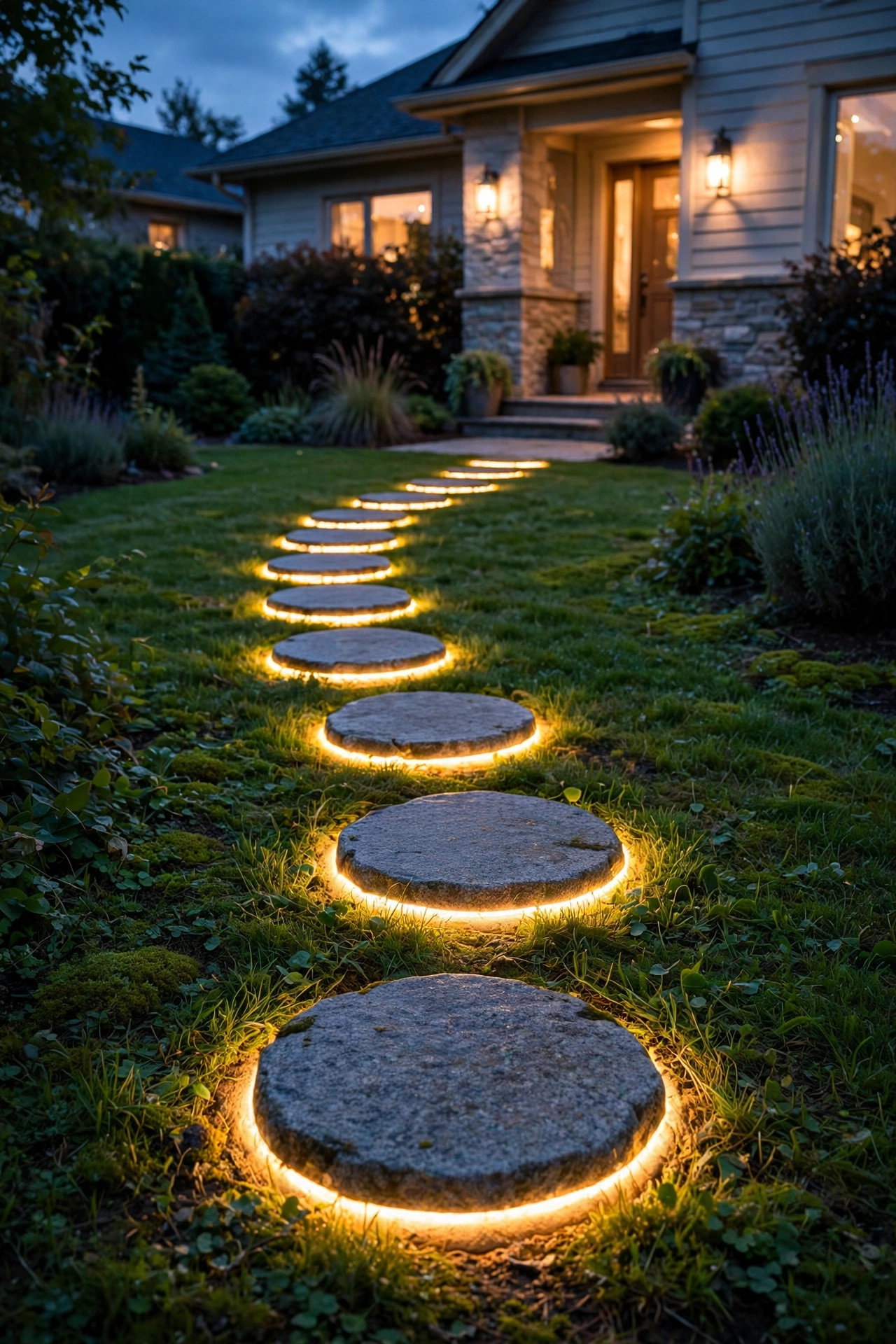
If your walkway is a casual stepping-stone path across lawn or mulch — the kind that leads to a garden gate or a fire pit — solar stepping stones were made for you. Each stone has a panel set into its surface and LEDs around the rim or underneath, so every step lands on its own little halo of light. No wires, obviously, but also no separate fixtures at all: the path is the light.
Set them like ordinary stepping stones, spaced a comfortable stride apart (about 24 inches center to center for most adults), and bed them firmly so they don't rock. The resin and stone-look versions blend in surprisingly well by day. Brightness is gentle — think orientation light, not reading light — which suits a garden path perfectly. In my experience these are the first lights to suffer in deep shade, because the panel is small and partly walked on, so keep the surfaces swept clean. They're a lovely choice for a cottage-style garden, especially paired with low planting spilling over the edges. Kids, I should warn you, will treat the glowing stones as a game.
Suggested budget range: $40 – $100.
9. Hanging Solar Lanterns on Shepherd's Hooks
Not every walkway has soil edges you can stake along the ground — sometimes the prettiest answer is light from just above. Short shepherd's hooks (24 to 36 inches) pushed in beside the path, each holding a small solar lantern, give you that storybook, lantern-lit-lane feeling. The lanterns charge on their hooks all day and flicker or glow steadily at night depending on the style you pick.
I space hooks every 6 to 8 feet on alternating sides so the light pools overlap softly, and I keep the lantern bottom at least 18 inches above the path so nobody brushes it passing with groceries. Flickering flame-effect lanterns are gorgeous for a front walk in fall; steady warm white reads cleaner for year-round use. Because the whole setup is movable, it's also my go-to for renters and for testing a lighting layout before committing to anything permanent. Weight matters — choose lanterns under a pound so the hooks don't lean by August. A row of these down a front path at dusk honestly makes the whole house look loved.
Suggested budget range: $35 – $85.

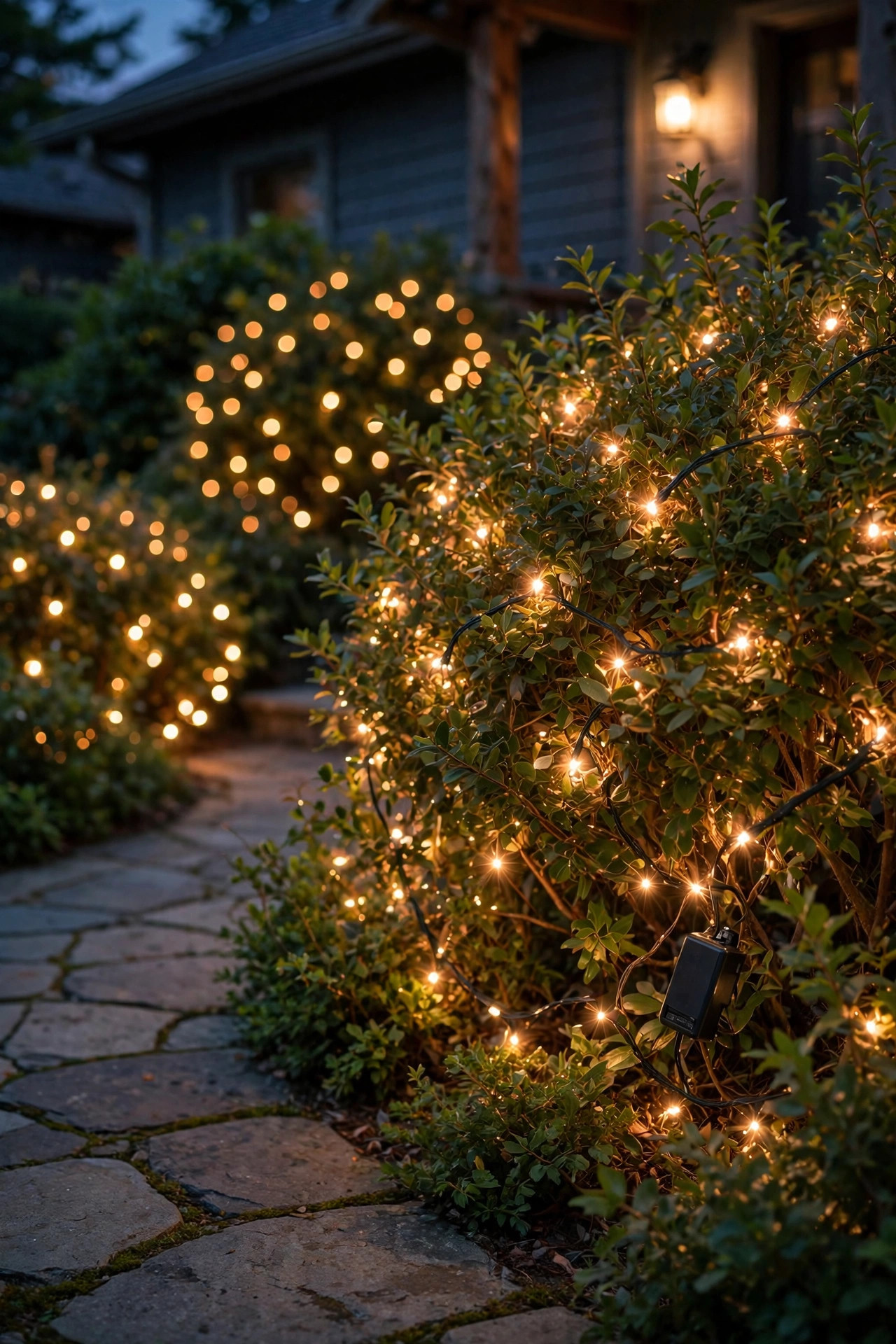
10. Battery Fairy Lights Woven Through Pathside Planting
Here's the low-profile romantic option: a strand of battery-powered fairy lights — the copper-wire kind with tiny warm LEDs — woven through the shrubs, ornamental grasses, or low fence that border your walkway. The wire nearly disappears, the battery pack tucks into the foliage, and at night the planting itself sparkles while spilling just enough light onto the path edge to find your way.
The built-in timer is non-negotiable for me: 6 hours on, 18 off means I set it once in spring and forget it until the batteries fade months later. Choose the outdoor-rated strands; indoor fairy lights corrode fast outside. This is accent light, not safety light, so combine it with one brighter source at the door and any step. I love it along a low boxwood hedge or through lavender flanking a cottage path — the light moves a little in the breeze and feels alive. A 30- to 60-foot strand covers most front walks, and because it's battery rather than solar, shade doesn't matter at all: this is the one idea on the list that works on a fully tree-covered lot.
Suggested budget range: $12 – $30.
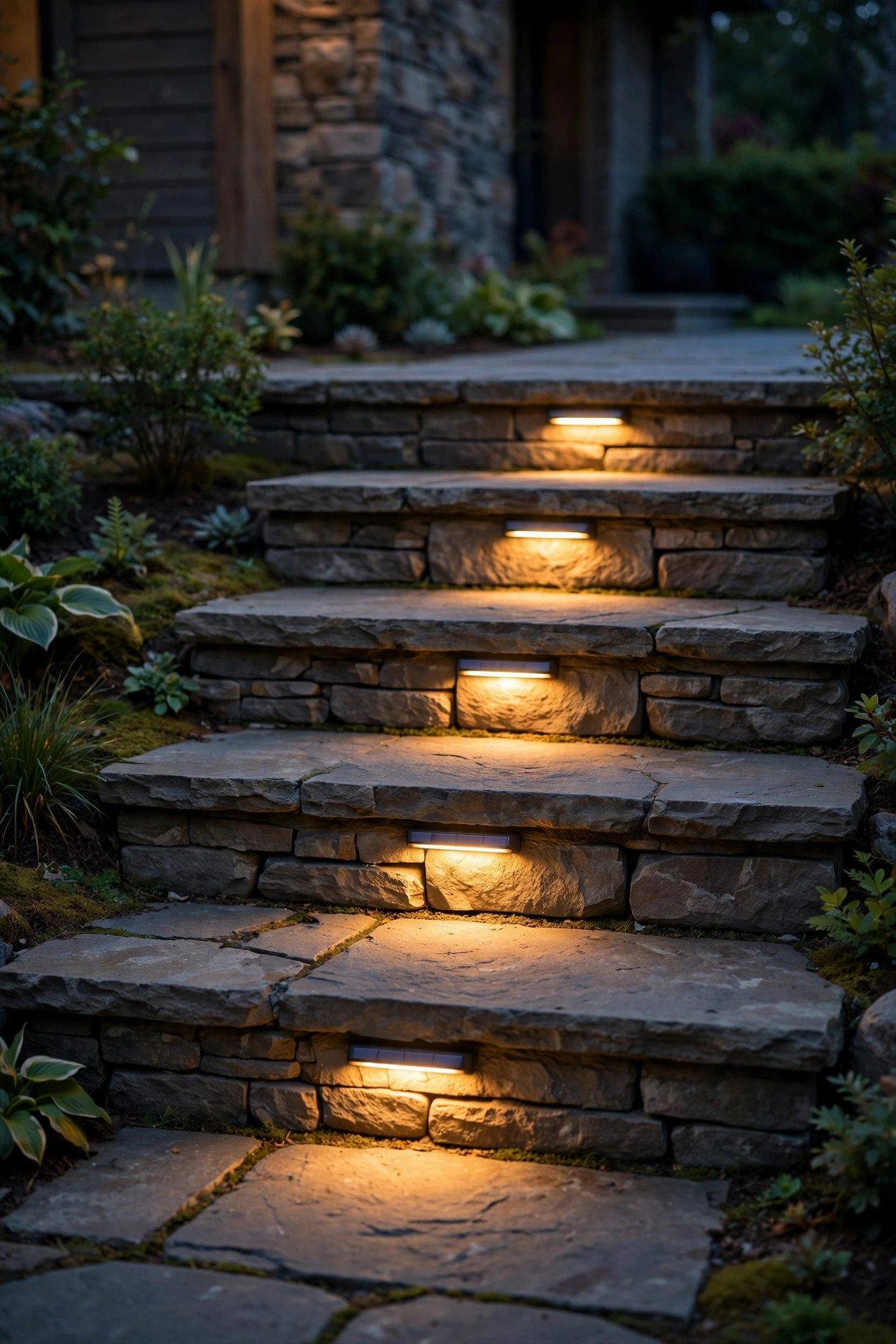
11. Low-Profile Solar Step Lights for Path Stairs and Edges
Anywhere a walkway changes level — two steps up to the porch, a timber edge, a raised stone landing — is where people actually trip, and it's where low-profile solar step lights earn their keep. These small L-shaped or wedge fixtures mount with screws or heavy-duty outdoor adhesive (no wiring, the panel is built in) and wash light down across the tread below.
Mount one at every step, offset to the same side, about 1 to 2 inches below the tread edge, so the light grazes the surface and reveals the edge line — that's the contrast your eyes need at night. They also work beautifully along the vertical face of a timber or stone path border, turning a plain edge into a lit line. Adhesive mounting makes them renter-friendly and lets you test placement for a week before committing to screws. Keep the little panels free of mulch splash after rain, and in shaded stairways consider the battery-powered versions instead, which don't care about sun. This is the least decorative idea here and quite possibly the most valuable one.
Suggested budget range: $18 – $45.
12. Flameless LED Candle Lanterns for a Candlelit Path
For a special-occasion glow — dinner guests arriving, a garden party, honestly just a Friday — flameless LED candles inside hurricane lanterns or glass jars along the walkway are unbeatable atmosphere. Real candles on a path are a fire risk near mulch and a constant relighting chore; the flameless versions flicker convincingly, run on batteries for 100+ hours, and many come with a remote or a daily timer so they light themselves at dusk.
Use real glass or heavy resin lanterns rated for outdoors, and group them in twos and threes at path turns and the foot of the steps rather than in a rigid line — clusters look intentional, lines look like an airport. Ivory candles in black or galvanized lanterns suit almost any house style. Because these aren't weatherproof in a storm-every-night sense, I treat them as fair-weather or covered-porch-to-path lighting and bring them in for winter, which also preserves the batteries. The warm 2200K-ish flicker sits at the cozy end of the spectrum — layered with a few steady solar stakes for actual guidance, a walkway lit this way gets compliments every single time.
Suggested budget range: $25 – $70.

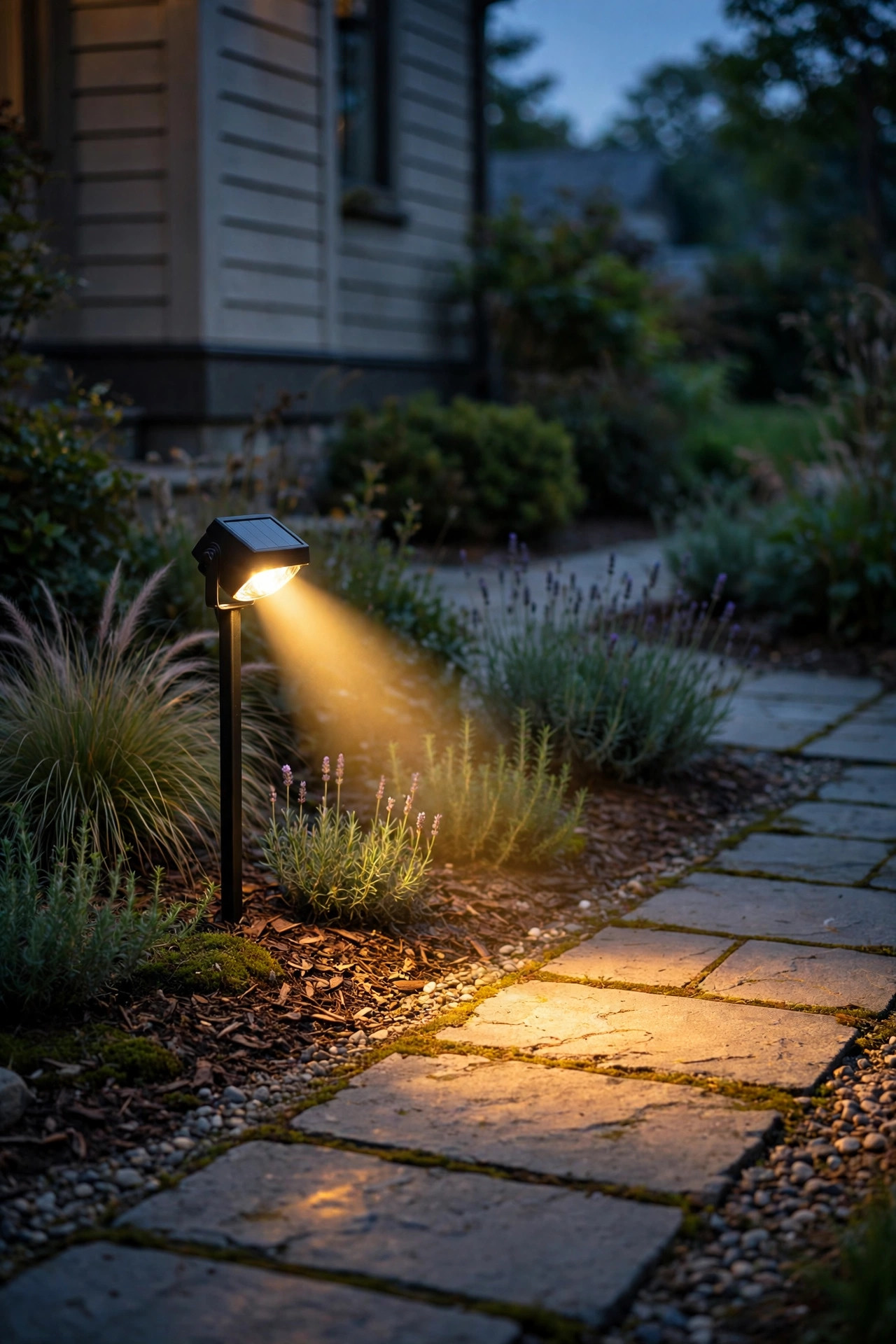
13. Solar Spotlights for Walkway Lighting Without Wiring That Feels Designed
Most people aim path lights straight down, but the most professional-looking trick is cross-lighting: a small solar spotlight set in the planting bed, aimed low across the walkway so the beam grazes the surface and lights the far edge. You see the lit path and the planting beyond it, not the fixture — and grazed light reveals texture and icy patches far better than light from directly above.
Solar spotlights on adjustable stakes are easy to find; choose ones with a separate or tiltable panel so you can angle the panel to the sun while aiming the beam at the path. Place a spotlight every 8 to 10 feet, alternating sides, tilted down so the hotspot lands on the path rather than in a walker's eyes. Two pairs can transform a plain concrete walk, especially aimed past a feature — a small tree, a boulder, a garden gate — so the path lighting doubles as landscape lighting. If you've ever wondered whether solar can genuinely rival wired for effect, this is the technique that settles it; my honest solar vs wired landscape lighting comparison covers where each one wins.
Suggested budget range: $25 – $60.
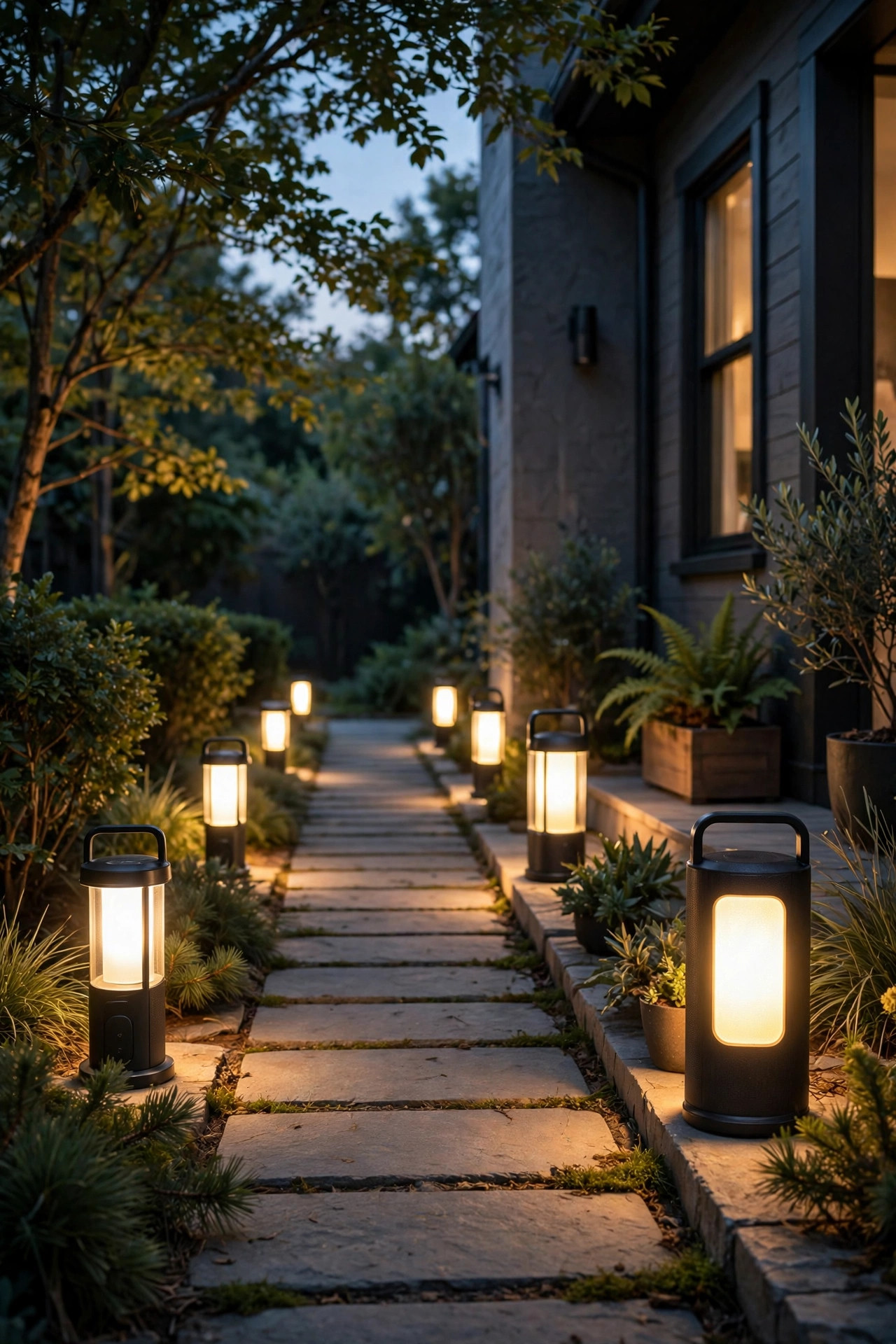
14. Rechargeable Portable Path Lights You Charge Indoors
Here's the newest category, and for cloudy climates it might be the best one: portable path lights with rechargeable batteries you charge indoors by USB, then carry out and set along the walk. Because they never depend on a tiny solar panel in a shady yard, they're consistently bright — 50 to 100 lumens is common — with steady warm light for 8 to 12 hours per charge.
The designs are usually clean little lanterns or pucks, and many have handles, dimming, and even a power-bank port in a pinch. The routine is simple: mine live on a shelf by the back door, get charged on Sunday afternoons, and go out when we have evening plans or expect deliveries after dark. For everyday use, pick models with a dusk sensor so you're not switching each light on nightly. They're pricier per light than solar stakes, so I use fewer — four to six generously bright lights beat ten dim ones. For an apartment balcony walkway, a shady north-facing front path, or anyone tired of solar disappointment, these are the grown-up answer.
Suggested budget range: $45 – $120.
15. Solar String Lights on Mini Stakes for a Festive Line
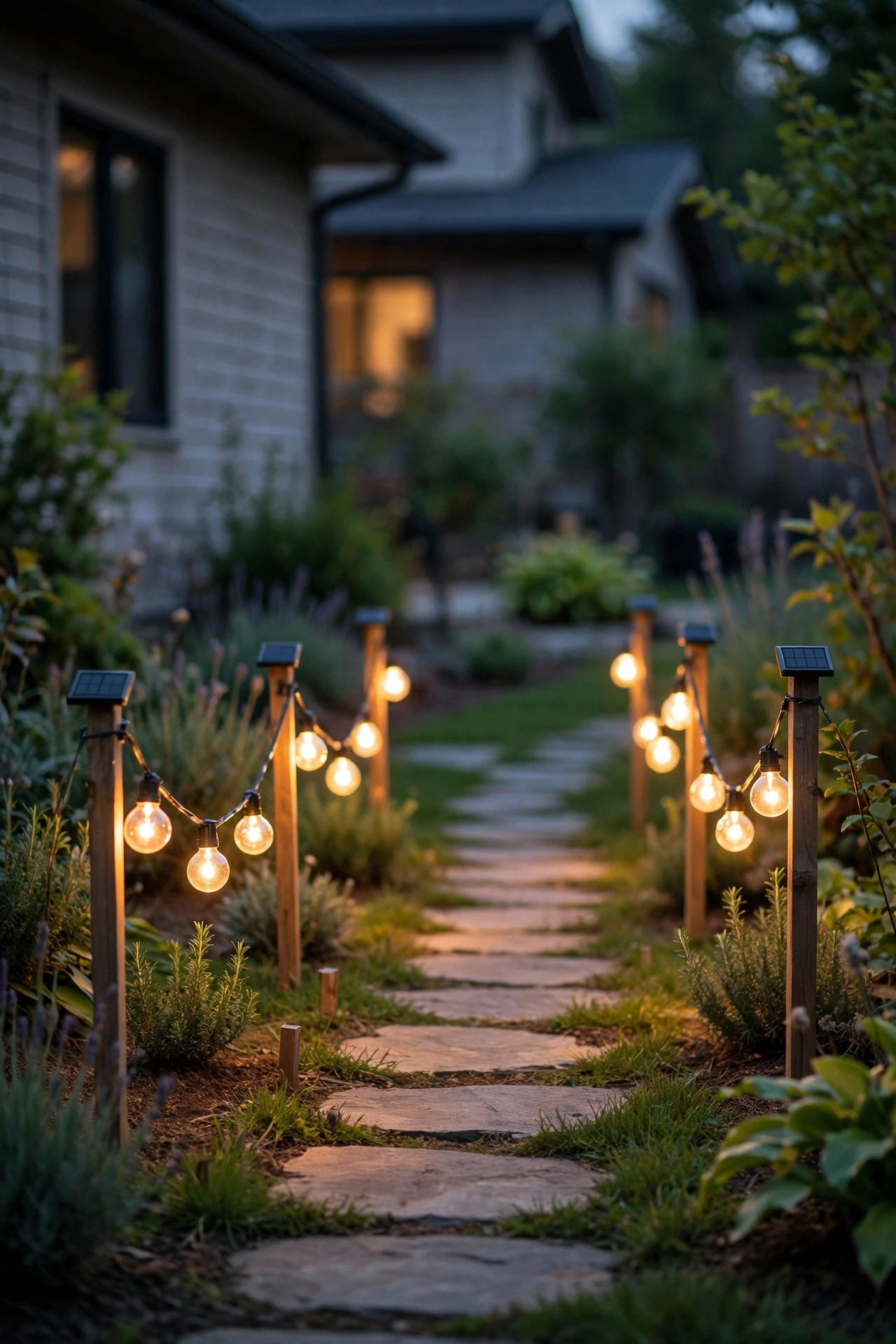
Last, the playful one: bulb-style solar string lights draped between short stakes along the walkway. Instead of stringing them overhead, you run them low — 12 to 18 inches off the ground — from stake to stake, so the bulbs form a gentle swagged line of warm globes defining the path. It looks like a garden party every night, and installation is stakes, string, done.
The solar panel stakes into the sunniest spot nearby, and the better sets let you replace individual bulbs. Keep the swags shallow and taut enough that nobody's ankle catches a low loop, and run them back from the path edge by 6 inches or so, among the planting, where the line reads as a border rather than a trip hazard. Warm white shatterproof bulbs (usually plastic, which is a plus around kids and mowers) at 2700K keep it elegant rather than carnival. This is my favorite for a backyard path to a patio or fire pit, where the goal is mood as much as guidance — pair it with step lights on any level changes and you're fully covered, wire-free.
Suggested budget range: $20 – $50.
Frequently Asked Questions
How bright are solar walkway lights compared to wired ones?
Honestly, it depends on the tier. Budget solar stakes put out 5 to 15 lumens — fine for marking an edge. Mid-range solar and rechargeable lights reach 30 to 100 lumens, which genuinely lights a path surface. Wired low-voltage fixtures still win for raw brightness and consistency in deep shade, but for most front walkways, good wire-free lights are more than enough to walk safely and look beautiful doing it.
How long do walkway lights without wiring last each night?
Most solar lights run 6 to 10 hours on a full day's charge in summer, less in winter when days are short and the sun sits low — sometimes only 3 to 5 hours in December. Timer-based battery lanterns run exactly as long as you set them, typically 4 to 6 hours nightly for weeks per set of batteries. Motion-sensor models stretch a charge the furthest because they only light on demand.
Do solar path lights work in shade or in winter?
They work, just less enthusiastically. A panel that gets fewer than 4 to 6 hours of direct sun will produce dimmer, shorter light. In shady yards I recommend high-panel-separation lights (panel on a lead you can move into sun), battery or rechargeable lights, or motion-sensor models. Wiping panels clean and swapping in fresh rechargeable batteries each year or two restores most lost performance.
How far apart should I space wire-free path lights?
For guidance light, every 4 to 6 feet works for stakes, discs, and bollards; decorative accents like lanterns and spotlights can stretch to 8 to 10 feet. The real test is pools of light that nearly touch without bright-dark zebra striping. Set them out at dusk before final placement and walk the path yourself — your eyes will tell you where the gaps are better than any formula.
Conclusion
The best part of walkway lighting without wiring is that none of it is permanent — you can start with a $25 set of stakes tonight, learn what your path actually needs, and layer in lanterns, discs, or spotlights as you go. Keep the color warm, keep the edges defined, and light the level changes first; everything after that is pure pleasure. If you'd like more inspiration for the rest of the yard, browse the lighting ideas here on the site — your future evening walks will thank you.