
12 Nursery Accent Wall Ideas to Make Your Space Feel Truly Special
Staring at four plain, white walls while you’re preparing for a new baby can feel surprisingly overwhelming. I’ve been there—you want the room to feel magical and “finished,” but you’re also dealing with limited time, a budget that’s already stretched by strollers and car seats, and the nagging fear that whatever you choose will be out of style by the time they’re in kindergarten. It’s easy to get stuck in a scroll-hole of perfect, sterile nurseries on social media that don’t actually feel like a home.
In my experience, the biggest mistake is trying to decorate the entire room at once. It’s too much. Instead, I always recommend focusing on one single “wow” moment: the accent wall. By putting your energy into one surface, you can completely shift the mood of the room without spending a fortune or spending weeks on a ladder. Whether you’re a DIY pro or just want something you can peel and stick during a nap, I’ve put together 27 nursery accent wall ideas that are achievable, stylish, and full of personality. We aren’t going for “showroom perfect” here; we’re going for a space that feels warm, safe, and uniquely yours.
1. Soft Sage Green Board and Batten
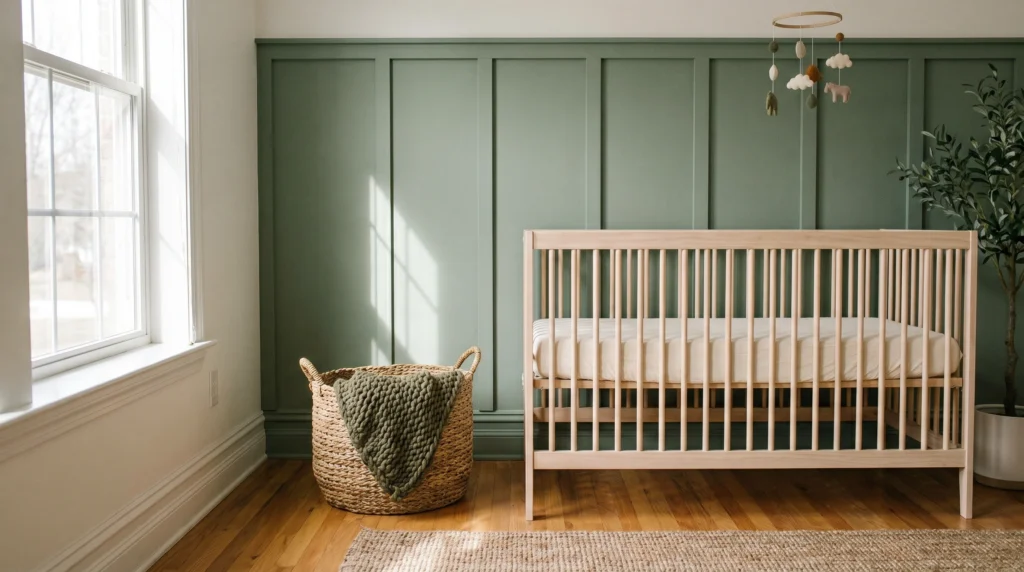
There is something so grounding about a deep, muted green in a nursery. It’s gender-neutral, grows well with the child, and adds a bit of architectural “heft” to a standard builder-grade room. Board and batten creates shadows and lines that make a small room feel much more expensive than it actually is.
To do this, you’ll want to buy MDF strips (usually 2-3 inches wide) and space them about 12 inches apart on the lower two-thirds of the wall. Paint the whole thing—strips and wall—the same sage color in a matte or eggshell finish. A common mistake is making the vertical boards too skinny; go a bit wider for a more modern look. You can get the wood and paint for about $70–$100.
2. Muted Terracotta Color Block
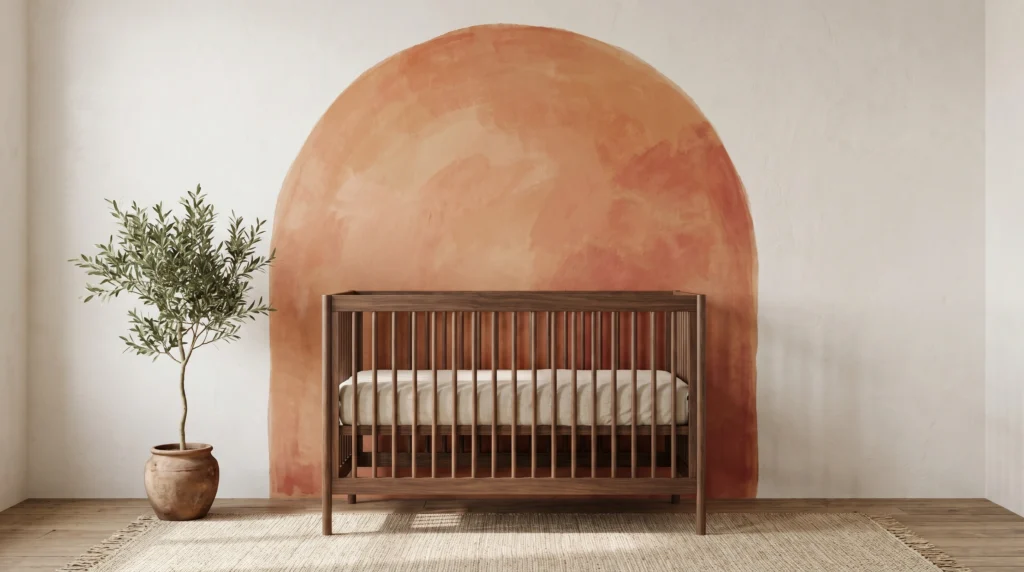
If you aren’t ready to commit to a full wall of color, a large terracotta circle or arch behind the crib is a total game-changer. It creates a “focal point” that anchors the furniture and adds a sun-drenched, warm vibe that feels incredibly cozy during late-night feedings.
To get a perfect circle, use a piece of string tied to a pencil as a makeshift compass. Paint the inside with a flat terracotta or “dusty rose” shade. It works best if the rest of the wall is a warm white. I personally love this because it only takes one quart of paint and about two hours of work. It’s very budget-friendly, usually under $25.
3. Scalloped Paint Borders
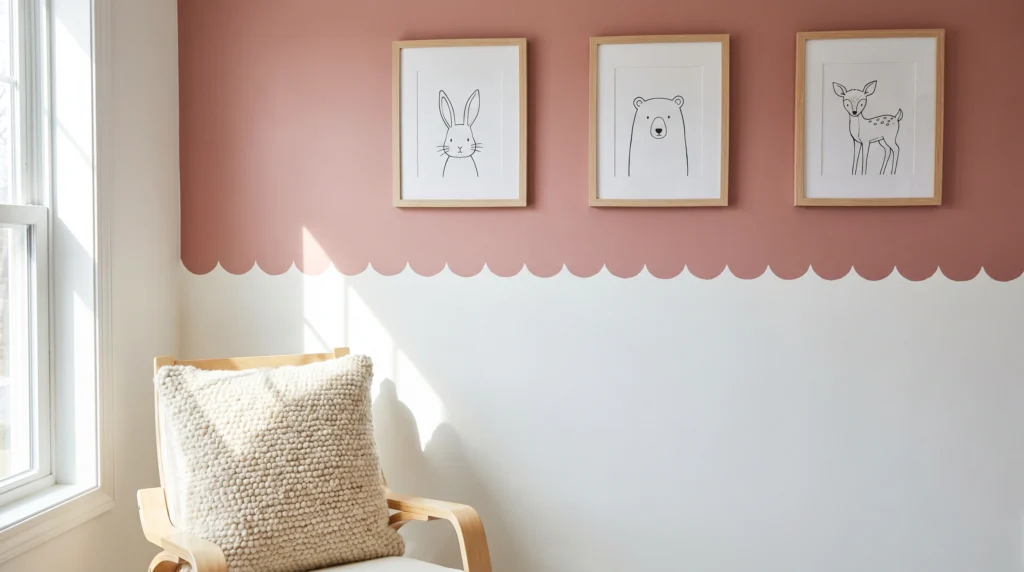
I’ve seen a lot of people skip the “extra” details like borders, but a scalloped edge where the wall color meets the ceiling or a chair rail adds such a sweet, whimsical touch. It breaks up the harsh straight lines of a room and makes the ceiling feel a bit higher.
Use a cardboard template (like the edge of a cereal bowl) to trace your half-circles along the wall before painting. It’s tedious but worth it. My big tip: use a small angled brush for the edges to keep them crisp. This is basically free if you already have the paint!
4. Oversized Peel-and-Stick Floral Murals
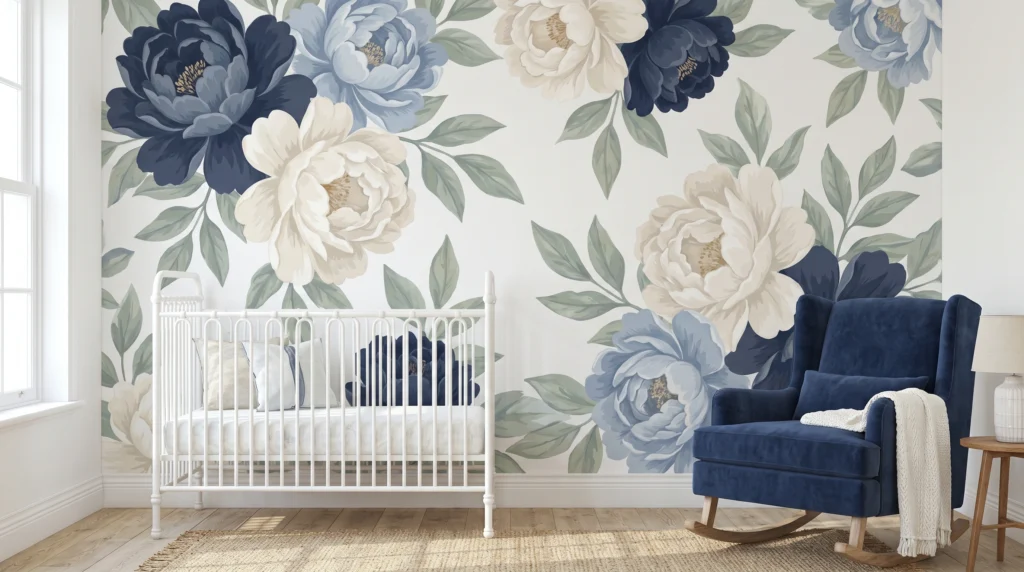
Wallpaper can be scary, especially the permanent kind. Peel-and-stick murals have come a long way; they now look like hand-painted art. A large-scale floral in muted tones (think dusty blues and sage) makes a massive statement without the mess of glue.
Make sure your wall is completely smooth before you start; any bumps will show through the vinyl. I always suggest having a second person help you align the patterns, or you’ll end up with a crooked garden. A full-wall mural usually runs between $150 and $300 depending on the size.
5. Natural Wood Slat Walls
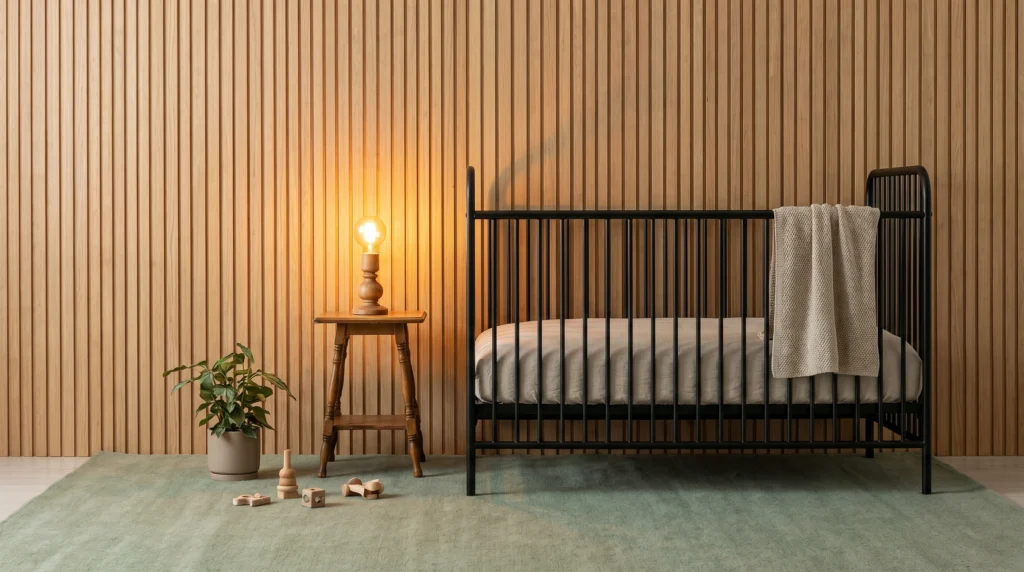
For a more modern or “Scandi” style nursery, thin vertical wood slats are incredible. They add a lot of texture and a natural, “forest” feel that is very calming. It’s a great way to bring some warmth into a room that has a lot of gray or white furniture.
You can buy pre-made slat panels or individual pine strips. Glue and nail them vertically with about a half-inch gap between each. Don’t worry about staining them; the raw wood look is actually much trendier and feels lighter. Expect to spend $120–$200 for a standard accent wall.
6. Hand-Painted Organic Polka Dots
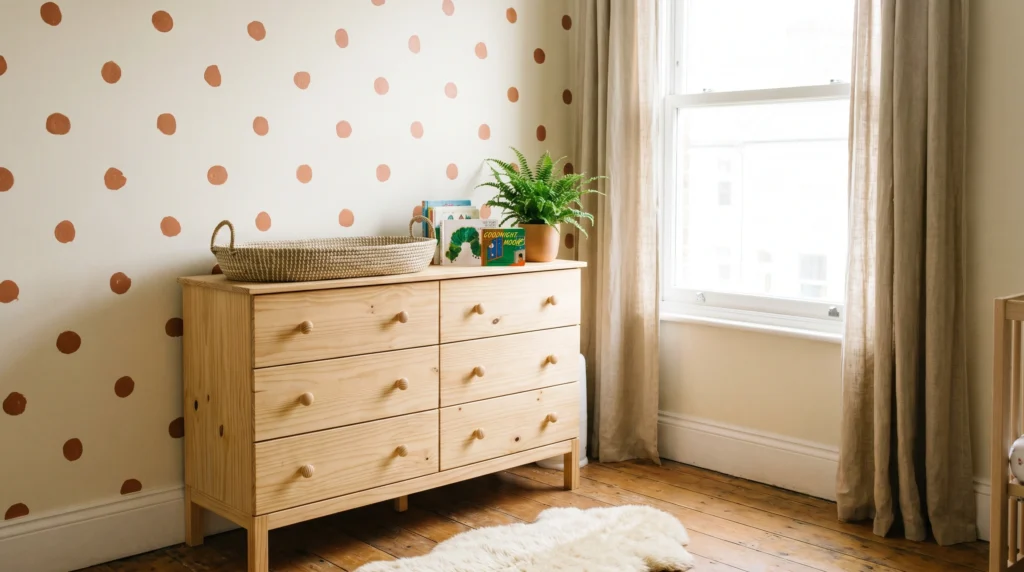
I love this because it’s supposed to look a little “imperfect.” Instead of perfect vinyl decals, painting little irregular dots or “dashes” by hand gives the room a custom, boutique feel. It’s much more personal than a store-bought pattern.
Use a small sponge or a round brush. Don’t overthink the spacing—it should look like a tossed pattern. Stick to one color, like a soft gold or a muted clay, against a neutral background. This is a great “nap time” project that costs less than $15 for a sample jar of paint.
7. Moody Navy Half-Wall
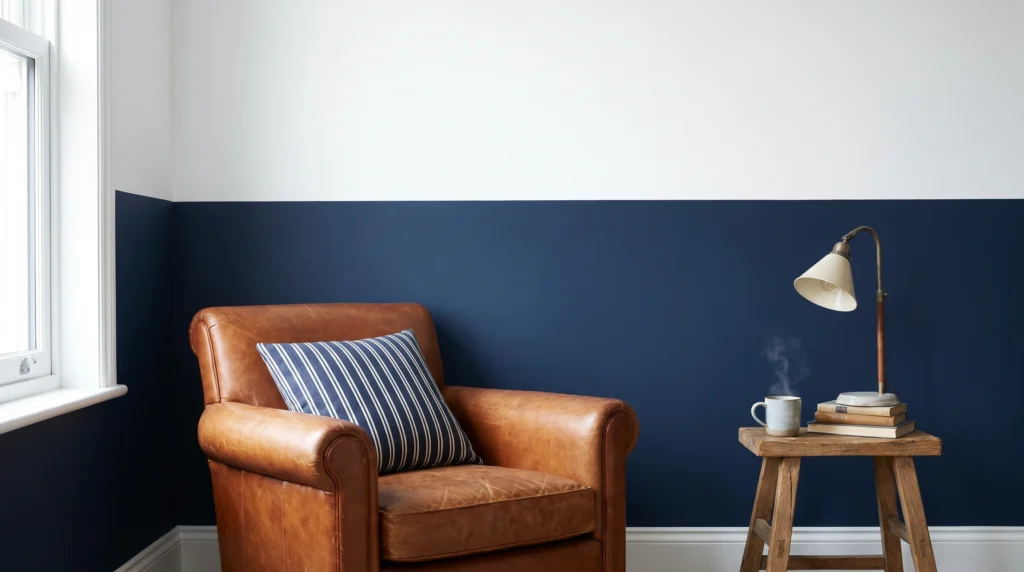
Don’t be afraid of dark colors in a nursery! A navy half-wall (the bottom half of the room) feels very sophisticated and “grounds” the space. It’s also great for hiding the inevitable scuffs and handprints that come as the baby grows into a toddler.
Paint the bottom 48 inches of the wall in a deep navy and keep the top half a crisp white or light gray. Use a piece of painters tape and a level to get a perfectly straight line. My tip: paint over the edge of the tape with the base color first to “seal” it, then the navy. This prevents bleeding. Cost is around $30–$50.
8. Framed Fabric Panels
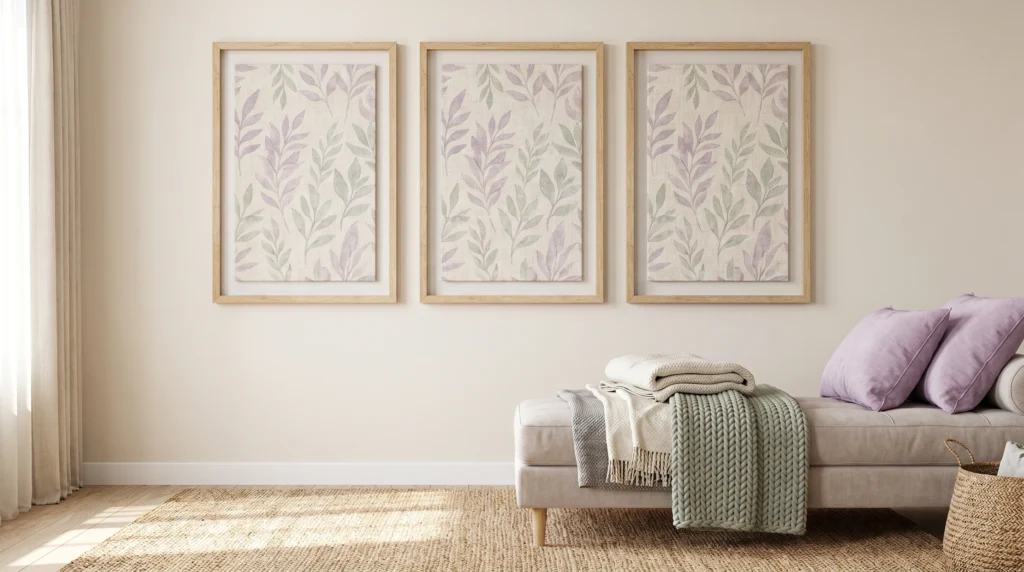
If you find a fabric pattern you absolutely love but can’t afford to upholster a whole piece of furniture, frame it! Large-scale fabric panels act like a soft, textured wallpaper and can be easily changed out as the child’s interests shift.
Stretch the fabric over large wooden canvases or even cheap insulation foam boards. Secure with a staple gun and hang them in a grid of three or four. This adds a “padded” acoustic quality to the room which is great for dampening noise. Budget about $40–$80 for fabric and frames.
9. Subtle Ombre Paint Fade
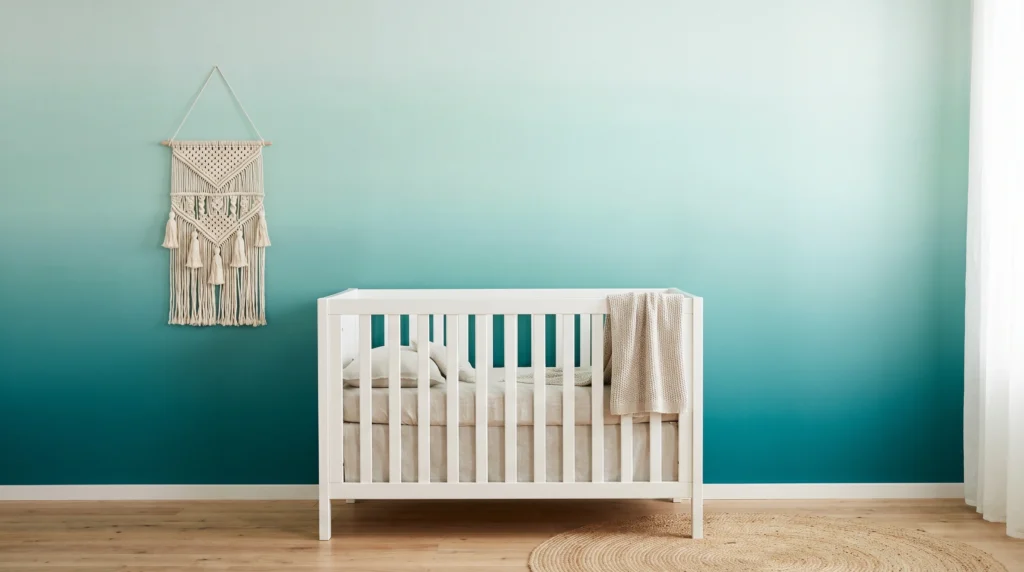
An ombre wall—where color fades from dark at the bottom to light at the top—mimics the sky and feels very ethereal. It’s a great way to use a bold color like teal or coral without it feeling too heavy or “closing in” the room.
The trick is to use a dry brush or a sponge to blend the colors where they meet while the paint is still wet. I recommend using three shades of the same color. It takes some practice, so try it on a piece of cardboard first! Total cost is just the price of three sample cans, roughly $25.
10. Textured Grasscloth Wallpaper
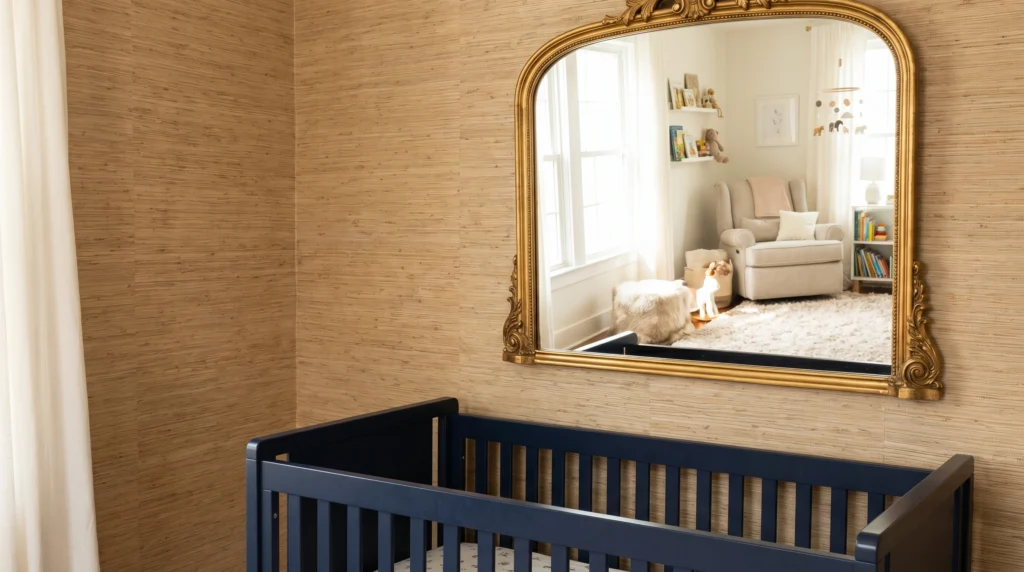
For those who want a “grown-up” nursery that feels like a high-end hotel, grasscloth is the answer. The texture is unmatched—it’s made from real woven fibers and adds a layer of “quiet luxury” to the room that paint just can’t touch.
Keep in mind that grasscloth can be tricky to clean, so I’d recommend it for the wall behind the crib where sticky fingers are less likely to reach it. Use a professional-grade adhesive. This is a splurge, usually $200–$500 per wall.
11. The “Bookshelf Wall” Accent
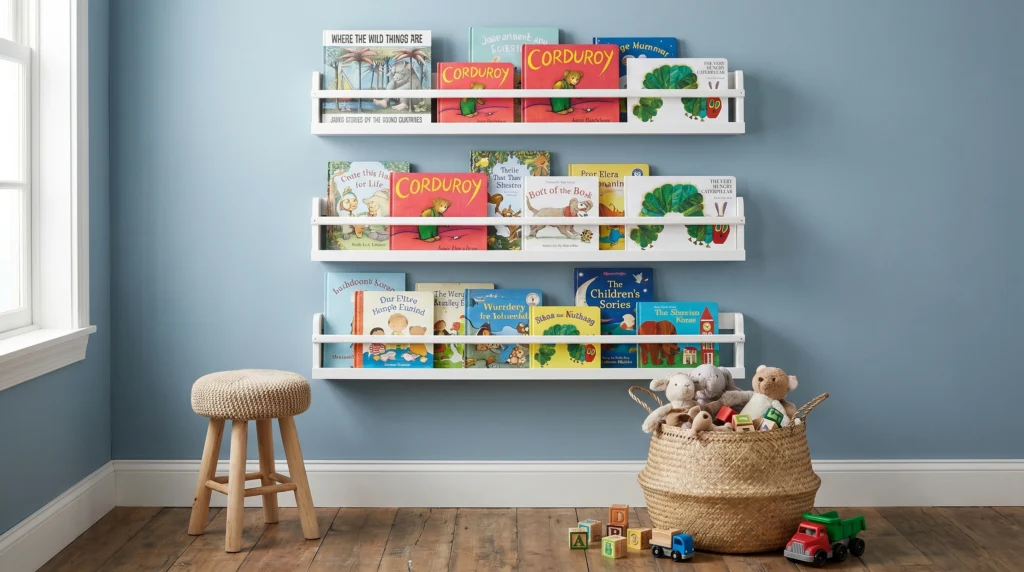
Why not make the accent wall functional? Installing several long, thin picture ledges from floor to ceiling allows you to use colorful children’s books as the “art.” It changes constantly and encourages reading from day one.
Space the ledges about 12-15 inches apart vertically. Use a level! I personally love using white ledges on a colored wall (like a soft blue) to make the book covers pop. You can get these ledges at IKEA or big box stores for about $15 each.
12. Vertical Shiplap in Soft Gray
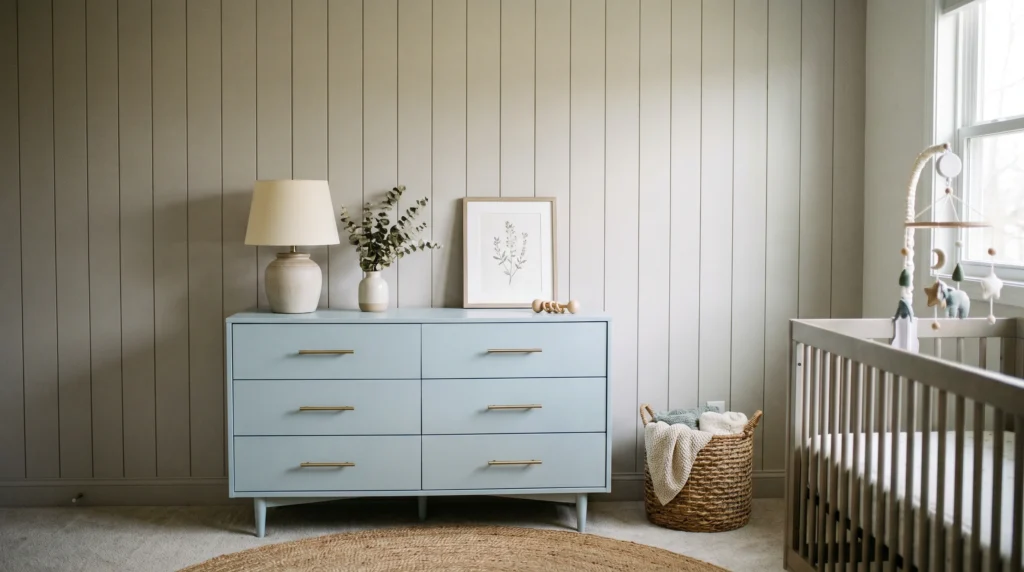
Forget the farmhouse trend for a second; vertical shiplap feels much more modern and “coastal.” It adds height to the room and gives a nice, clean backdrop for any style of furniture, from vintage to ultra-modern.
Use “nickel gap” boards so you get those tiny, consistent shadows between the planks. Painting it a soft, “greige” or light gray makes it feel warmer than a sterile white. This is a bit of a weekend project and will cost around $100–$150 in materials.
Conclusion
Creating a nursery doesn’t have to be a high-stress project that breaks the bank. In my experience, the most “Pinterest-worthy” rooms aren’t the ones where every single item is expensive; they are the rooms where one or two thoughtful choices—like a great accent wall—make the whole space feel intentional.
Start small. Pick one idea from this list that actually excites you and feels doable for your skill level. Whether you’re just painting a simple terracotta arch or going all-in on a wood slat wall, that extra bit of effort will make those late nights in the nursery feel a little bit more magical. Which of these nursery accent wall ideas are you leaning toward trying first? I’d love to hear your plans in the comments—let’s chat!
Frequently Asked Questions
What is the best paint finish for a nursery accent wall?
I always recommend an eggshell or “satin” finish. You might be tempted by “matte” because it looks great in photos, but in a nursery, you need a surface that is easy to wipe down. Eggshell provides a soft look while still being scrubbable when those inevitable crayon marks or spills happen.
How do I choose which wall should be the accent wall?
In a nursery, the “natural” accent wall is usually the one behind the crib. This is where the eye goes first when you walk into the room. If your crib is in the center of the room, look for the longest wall or the wall that is directly across from the door to create the biggest impact.
Are peel-and-stick wallpapers safe for baby nurseries?
Generally, yes, but you should look for “PVC-free” or “VOC-free” options. High-quality fabric decals are usually safer and more breathable than cheap vinyl. Always make sure the wallpaper is securely attached so no corners are peeling off that a curious toddler could pull on.
Can I do an accent wall in a small nursery?
Absolutely! In fact, a dark or textured accent wall can actually make a small room feel larger by adding “depth.” The key is to keep the other three walls a lighter, neutral color so the room still feels airy. A vertical pattern, like vertical shiplap, can also help make low ceilings feel higher.
How much should I expect to spend on a nursery accent wall?
It varies wildly, but you can achieve a great look for anywhere from $25 (for a simple painted arch) to $300 (for high-end wallpaper or custom wood molding). If you’re on a tight budget, paint is always your best tool—it’s the most affordable way to make a huge change.


