
12 Minimalist Nursery Ideas That Feel Calm and Peaceful
We’ve all been there: staring at a spare bedroom or a corner of the master suite, scrolling through endless photos of over-the-top nurseries, and feeling a rising sense of panic. Between the massive plastic toy sets, the neon-colored gear, and the pressure to buy every “must-have” gadget, it’s easy to feel like your home is about to be swallowed whole by clutter. I remember feeling so overwhelmed by the sheer volume of “stuff” recommended for babies that I almost forgot the goal was to create a quiet, restful place for my little one to sleep.
The truth is, your baby doesn’t need a theme park; they need a sanctuary. By focusing on 12 minimalist nursery ideas that feel calm and peaceful, you can create a space that supports rest for both you and your child. Minimalism in a nursery isn’t about having an empty, cold room—it’s about choosing items that serve a purpose and bring a sense of order to the chaos of new parenthood. These ideas are designed to be achievable, budget-friendly, and, most importantly, lived-in. You don’t need a massive renovation budget to make a room feel like a deep breath.
1. Natural Wood Tones for Grounding Warmth
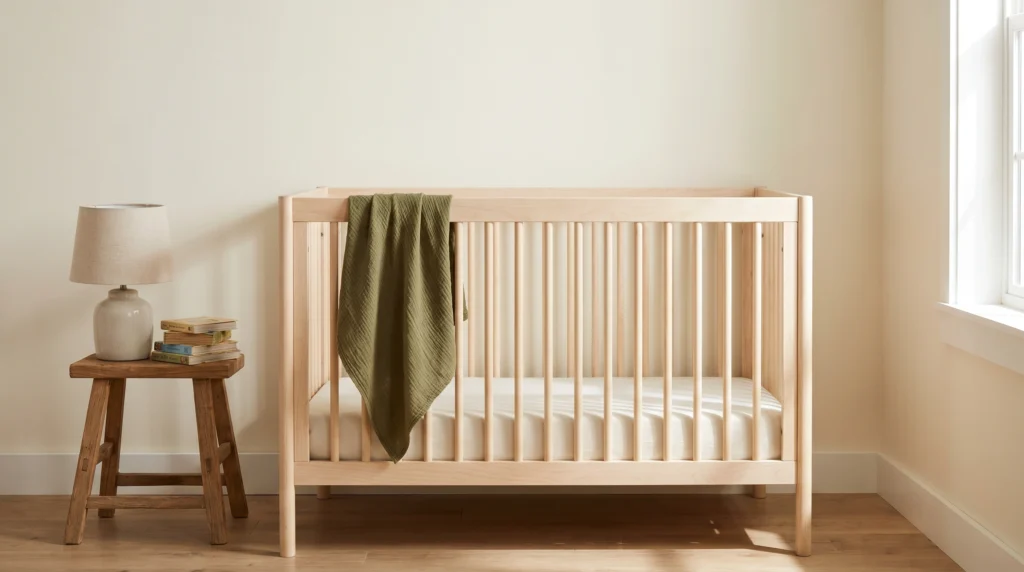
When you strip away the bright plastics and loud patterns, natural wood is what brings the soul back into a room. There is a specific kind of quietness that comes from a light oak or birch crib set against a soft wall. In my experience, the biggest mistake people make with minimalist nurseries is going all-white, which can end up feeling clinical. Adding wood grain provides that organic “weight” that makes a room feel finished without needing extra decor.
To get this right, look for a crib with a clear non-toxic finish rather than a heavy paint. If you already have a painted crib, you can bring in this element through a chunky wooden lamp base or a simple set of floating shelves. I always recommend sticking to one wood tone throughout the room to keep the visual noise low. A solid wood crib can be a splurge ($300+), but you can find beautiful birch shelving units at big-box stores for under $50 that do the exact same job for the atmosphere.
2. The Power of a Muted, Tonal Color Palette
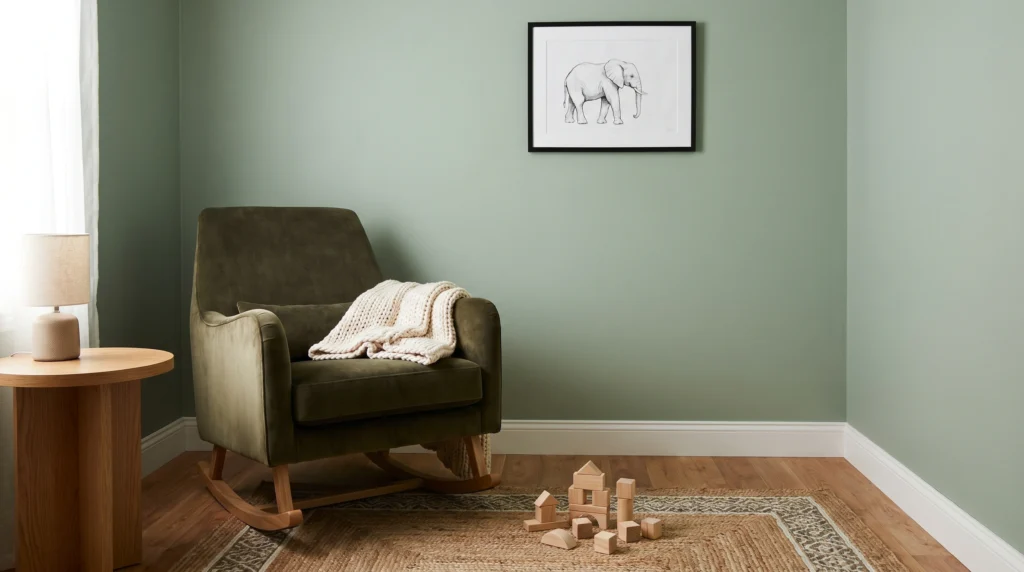
I’m a huge advocate for moving away from “baby blue” or “pale pink” and moving toward colors found in nature. Think sage green, dusty terracotta, or a deep, stormy navy. These colors feel sophisticated and, more importantly, they grow with the child. What I personally love about a tonal palette is that it makes the room feel cohesive even when there’s a stray diaper or a discarded onesie on the floor.
Pick one “hero” color and use three different shades of it. For example, if you love sage, use a very pale tint on the walls, a medium sage for the rug, and a deeper forest green for a single throw pillow. This creates depth without clutter. A gallon of high-quality, low-VOC paint will cost you about $50–$70 and is the most impactful change you can make. Tip: Always test your paint swatches at 8:00 PM under your nursery lamp; colors that look “peaceful” in daylight can look surprisingly muddy or yellow at night.
3. Floor-to-Ceiling Sheer Linen Curtains
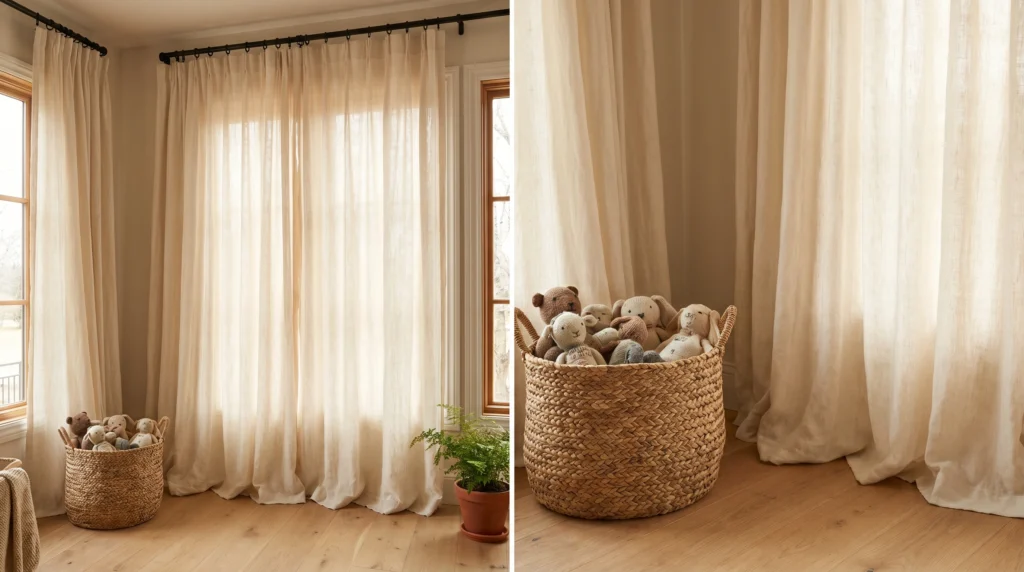
Light is everything in a nursery. While you definitely need blackout shades for nap time, the way the room looks during the “awake” hours matters for your own mental health. Linen curtains allow a diffused, soft glow to enter the room that blurs the harsh edges of furniture. A lot of people skip high-quality window treatments, but they are the “secret sauce” to making a room feel expensive and calm.
Hang your curtain rod about 6 inches above the window frame and let the fabric hit the floor. This draws the eye upward and makes small nurseries feel much larger. You can find decent linen-blend curtains for $40–$80 per pair. A common mistake is buying curtains that are too short; if they stop at the windowsill, they “cut” the room in half visually and ruin the flow.
4. Low-Profile Open Shelving for “Active” Toys
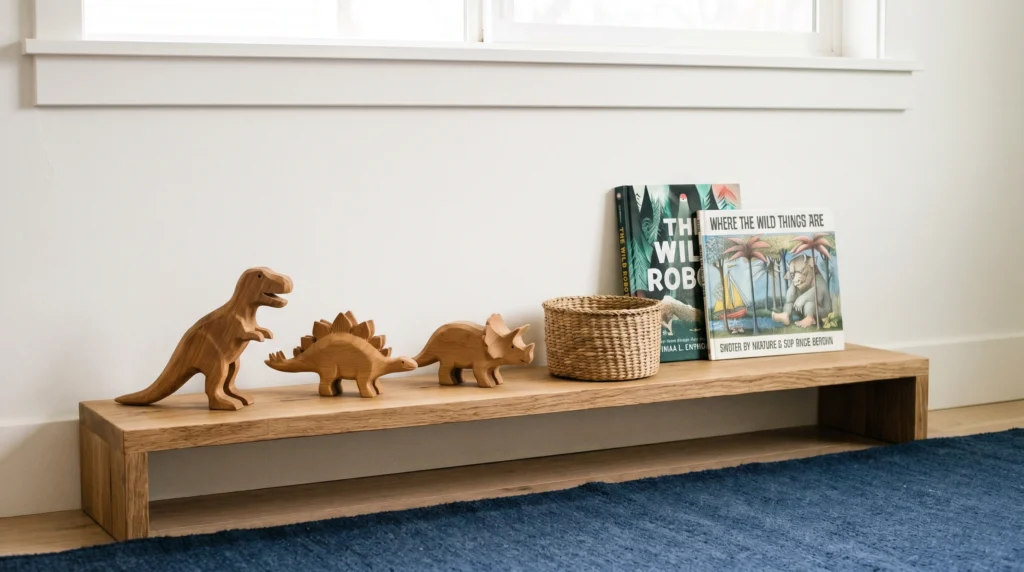
In a minimalist nursery, we want to hide the bulk but celebrate the beautiful items. Instead of a massive toy chest where everything gets lost at the bottom, try a single low shelf. This encourages “toy rotation,” which is a lifesaver for keeping a room tidy. When only five or six beautiful items are visible, the room feels like a gallery rather than a storage unit.
Choose a shelf that is at the baby’s height (once they start crawling). Use it to display a few wooden animals, a soft fabric ball, and maybe two favorite books. This makes the space feel lived-in and functional. You can repurpose a basic bookshelf by laying it on its side for about $30. Tip: If the toy is bright orange plastic and makes loud noises, keep it in a closed drawer or a pretty basket, not on the open shelf.
5. A Single Statement Piece of Meaningful Art
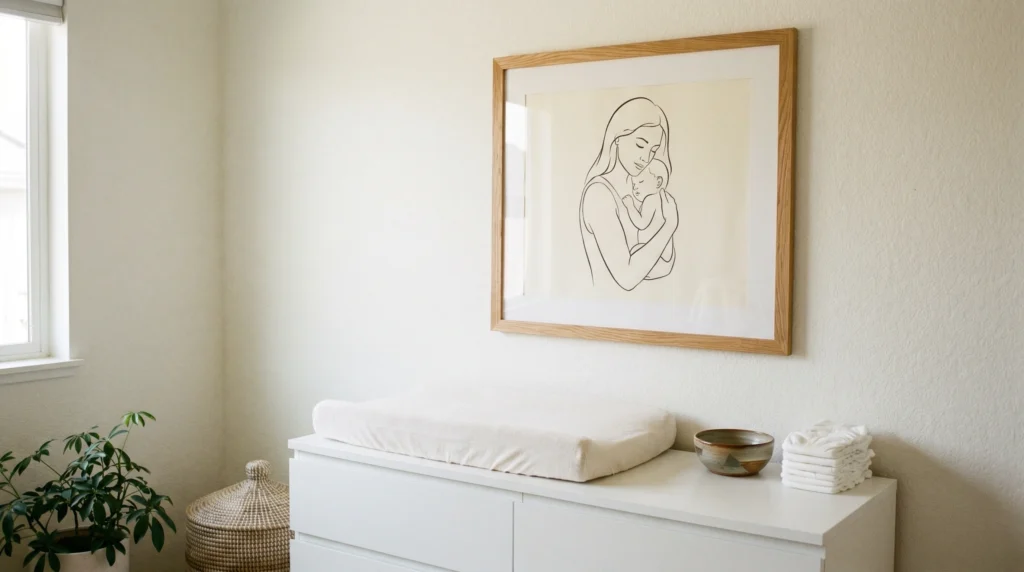
You don’t need a gallery wall of fifteen tiny frames. In fact, in a small nursery, that often feels like “visual clutter.” Instead, go for one large, high-quality piece of art. Whether it’s a vintage botanical print, a framed piece of beautiful fabric, or an oversized photograph of a place that means something to your family, a single focal point provides a place for the eye to rest.
I usually suggest a frame size of at least 18×24 inches. Centering it over the crib (securely fastened!) or over the changing table grounds that specific zone. You can find incredible digital downloads on Etsy for $10 and get them printed locally for another $20. One big mistake to avoid is hanging art too high; it should be at eye level when you are standing, or slightly lower to feel “connected” to the furniture below it.
6. Woven Baskets for “The Daily Mess”
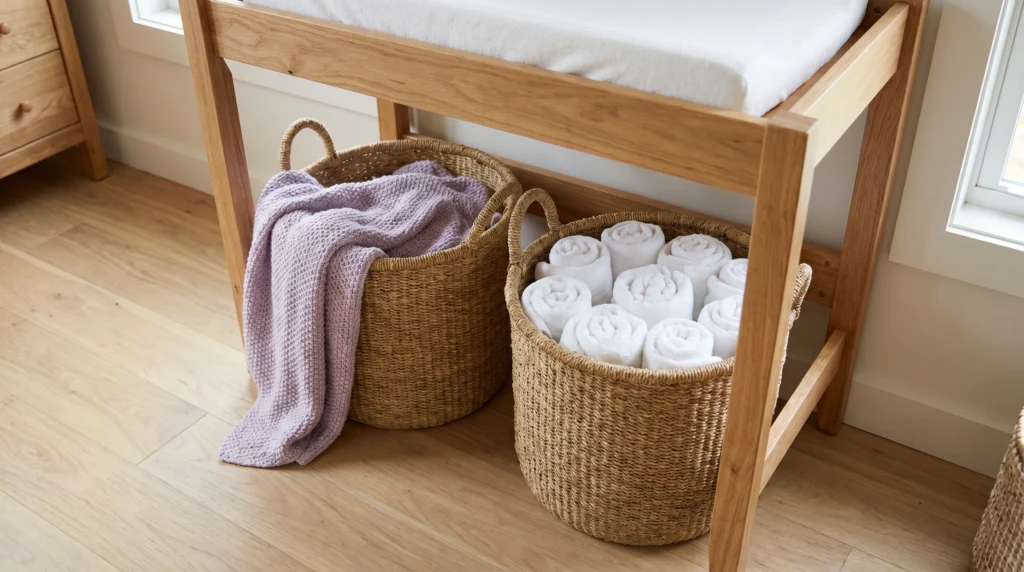
Let’s be real: babies come with a lot of “stuff” that isn’t particularly aesthetic. Creams, wipes, half-used packs of diapers, and burp cloths. The key to a peaceful nursery is having a “landing zone” for these items so they aren’t scattered across every flat surface. Seagrass or wicker baskets add a much-needed texture that contrasts beautifully with smooth furniture.
Get a set of three matching baskets. Use one for diapers, one for laundry, and one for those random toys that end up in the room. This keeps the surfaces clear, which is the hallmark of minimalist design. You can pick up beautiful handmade-style baskets at most home stores for $15–$30. Tip: Avoid baskets with tight lids for things you use daily; if it’s hard to put away, you won’t do it.
7. Strategic Use of “Negative Space”
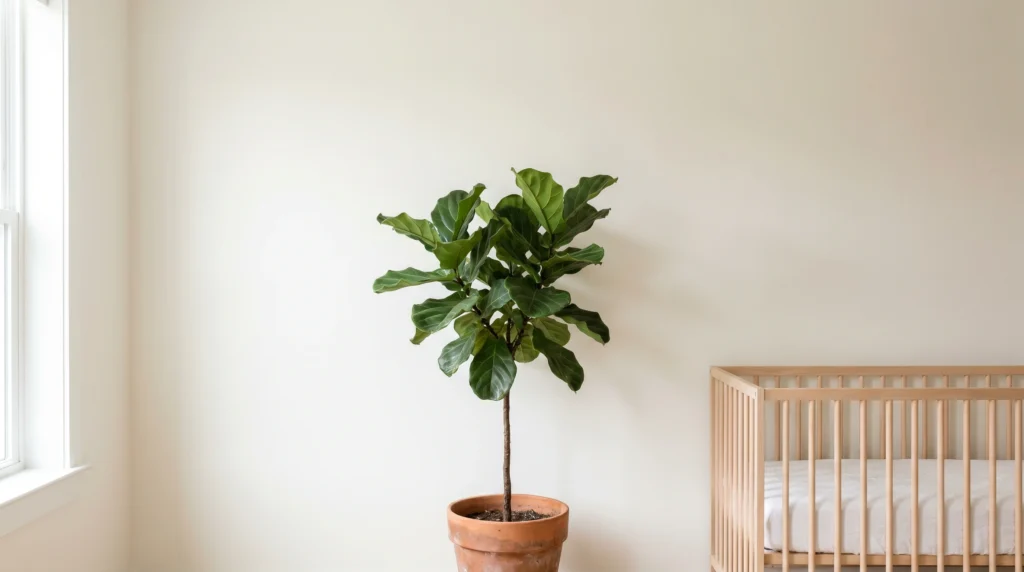
This is more of a mindset than a physical item, but it’s the most important part of minimalist nursery ideas. You do not have to fill every corner. In fact, leaving one corner completely empty—or maybe just containing a single tall plant—allows the room to breathe. When every square inch is occupied, the air in the room feels “heavy.”
Look at your nursery right now. Is there a corner with a pile of boxes or a chair you never actually sit in? Remove it. That empty space is actually a design element in itself. It’s free to do, and the “price” is simply the discipline to not buy more. A common mistake is thinking you need a “theme” that requires matching wallpaper, borders, and decals on every wall. Let the white space be the theme.
8. Soft, Layered Lighting (No Overhead Lights!)
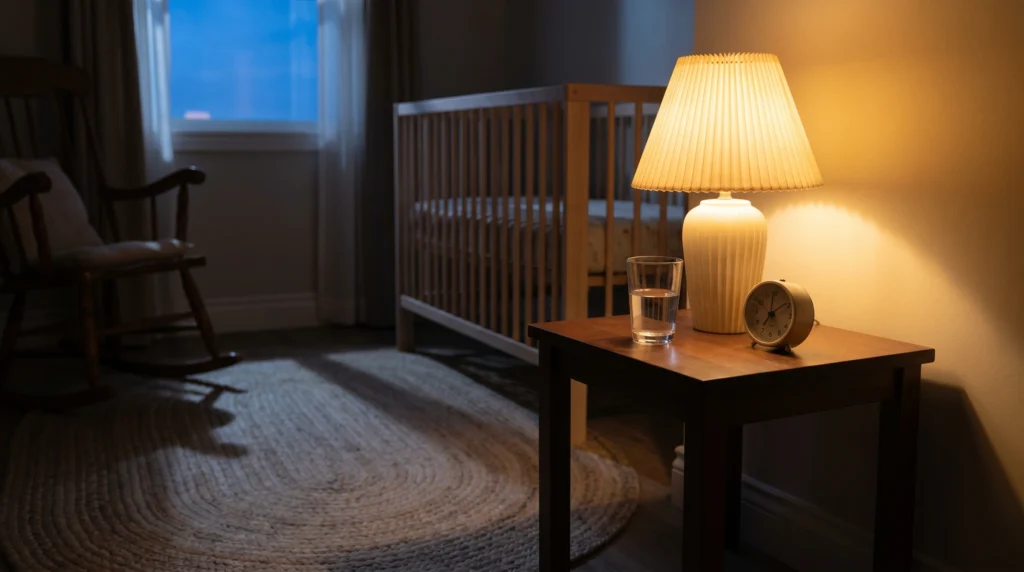
There is nothing less “peaceful” than a bright, buzzing overhead light when you’re trying to soothe a baby at 2:00 AM. In my experience, the lighting makes or breaks the entire vibe of the nursery. You want “pools” of light rather than a flood of it. This creates a cozy, cocoon-like feeling that signals to the baby (and your brain) that it’s time to wind down.
I recommend at least two sources of warm light: a floor lamp next to your nursing chair and a small dimmable nightlight near the changing station. Use “warm white” bulbs (2700K) rather than “daylight” bulbs, which can feel blue and harsh. Budget around $40 for a decent floor lamp and $15 for a dimmable bulb. Tip: Make sure any floor lamp cables are tucked safely behind furniture where a crawling baby can’t reach them.
9. Functional Textiles in Natural Fibers
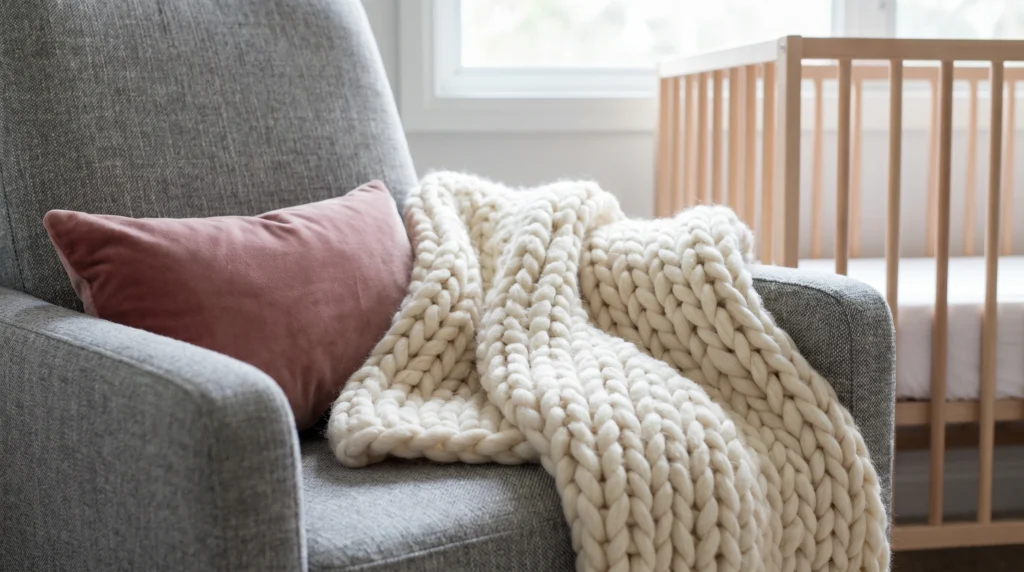
Minimalism doesn’t mean “hard” or “uncomfortable.” To make a room feel peaceful, you need soft things—but they should be high-quality and intentional. Instead of a pile of cheap polyester blankets, invest in one beautiful wool throw or a couple of organic cotton muslin swaddles. Natural fibers breathe better, last longer, and have a visual “honesty” that looks better on camera and in person.
Drape a heavy-knit blanket over the arm of your glider. This adds a layer of texture that makes the room feel “designed” without adding clutter. You can find organic cotton throws for $30–$60. What I personally love about this is that these blankets often end up being the ones the child keeps for years. Avoid “shiny” fabrics; they reflect light in a way that feels cheap and distracting in a calm space.
10. The “Invisible” Changing Station
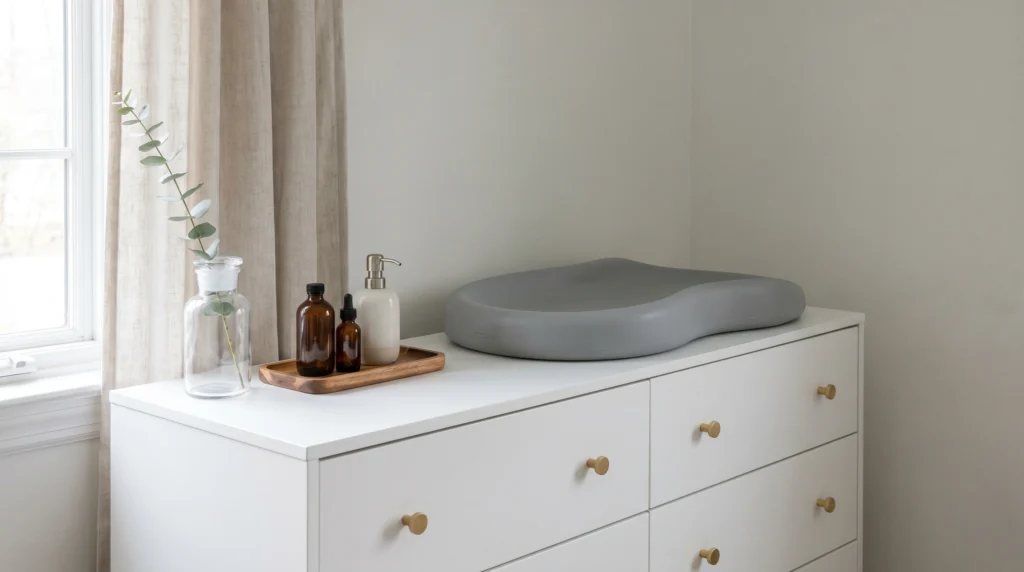
Huge, bulky changing tables are often a waste of space. Most minimalist experts suggest using a standard dresser and adding a removable changing pad on top. This way, when the diaper days are over, you aren’t left with a piece of furniture that screams “nursery.” It keeps the room looking like a cohesive part of your home.
Choose a dresser with clean lines and simple hardware. A 3-drawer dresser provides plenty of storage for clothes while keeping the footprint small. You can get a solid dresser for $150–$300, or find a vintage one and paint it a matte charcoal or navy for a custom look. Tip: Use drawer dividers inside so that the “minimalism” isn’t just on the outside—staying organized behind closed doors reduces your stress more than you’d think.
11. Subtle Wall Textures Instead of Busy Patterns
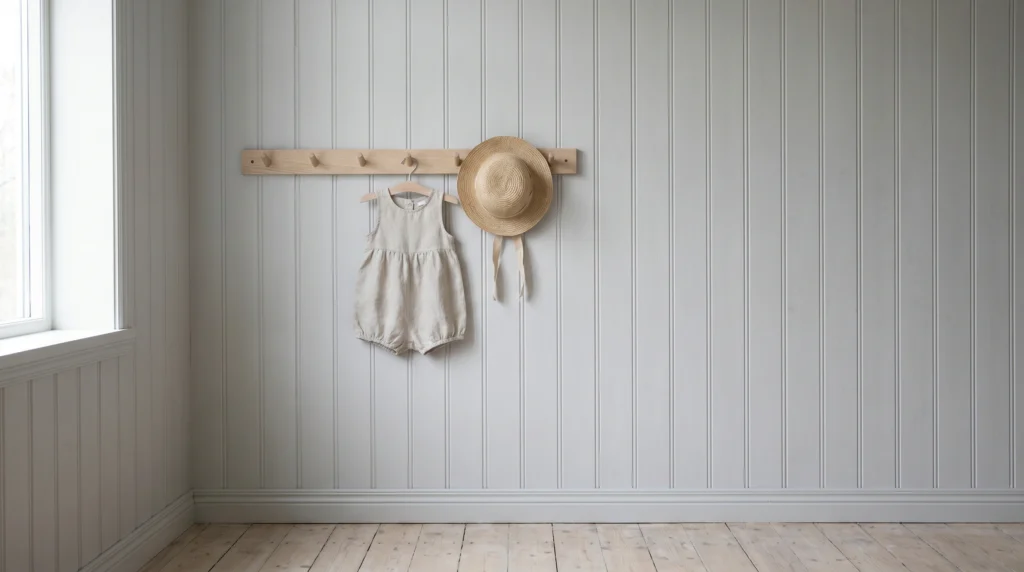
If a room feels too “flat,” your instinct might be to buy more decor. Usually, what you actually need is texture. Instead of a busy wallpaper that might become dated in a year, consider a subtle wall treatment like vertical “beadboard” or a very simple lime-wash paint effect. This adds visual interest through shadows rather than “stuff.”
If you’re renting, you can achieve this with a large, textured wall hanging or a set of high-quality “peel and stick” decals in simple shapes like dots or stars in a color just one shade darker than your wall. This keeps the room feeling “minimal” while providing that designer touch. A DIY beadboard project can cost about $100 in materials, while decals are usually under $20.
12. Bring the Outdoors In with Non-Toxic Greenery
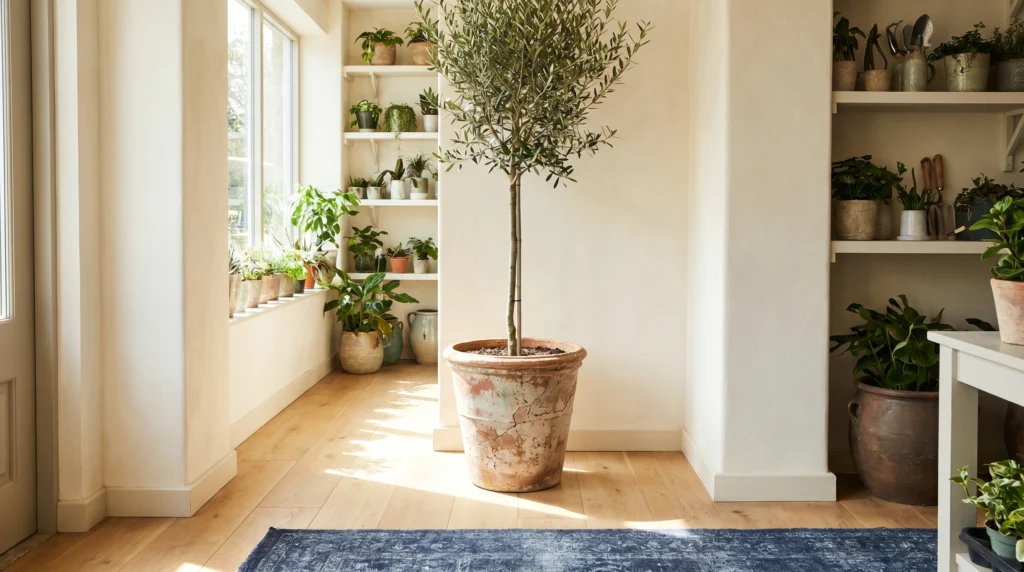
Every peaceful room needs something living. Plants act as a natural air purifier, but more importantly, they provide a connection to nature that is deeply grounding. In a minimalist nursery, a single large plant can take the place of three or four smaller pieces of decor. It’s a “one and done” styling trick that never fails.
Choose “nursery-safe” plants like a Snake Plant or a Rubber Tree (keep them out of reach as the baby grows). If you’re worried about maintenance, even a high-quality faux olive tree can provide that same visual “breath of fresh air.” A real plant in a nice pot will run you about $40–$60. Tip: Avoid plants with “busy” or variegated leaves; solid green leaves feel much more restful to the eye in a small space.
Creating a Space That Breathes
At the end of the day, a minimalist nursery isn’t a set of rules you have to follow to be “aesthetic.” It’s a gift you give to yourself and your baby. When you walk into that room at 3:00 AM, you don’t want to be met with a mountain of toys to trip over or a dizzying array of patterns. You want a space that feels like a hug—warm, quiet, and intentional.
Start small. Maybe you just clear off the top of the dresser today or swap out that harsh lightbulb for a warmer one. You’ll be surprised at how much these tiny shifts impact your mood. By sticking to these 12 minimalist nursery ideas that feel calm and peaceful, you’re creating a foundation for a home that values rest over consumption. Your baby won’t remember the brand of their crib, but they will thrive in the calm environment you’ve built for them.
Which of these ideas are you feeling most inspired to try in your own home? Drop a comment below—I’d love to hear your thoughts or help you troubleshoot a tricky corner!
FAQ: Common Questions About Minimalist Nurseries
Does a minimalist nursery mean I can’t have toys?
Not at all! It just means being more selective about which toys are visible. Minimalism is about “quality over quantity.” Instead of fifty plastic toys, you might have five high-quality wooden or fabric toys that are actually played with. Storing the rest in a closet and “rotating” them every week keeps the room feeling fresh and clutter-free without depriving your child of play.
How do I keep a minimalist nursery from feeling “cold”?
The secret to warmth is texture and lighting. If a room feels cold, it’s usually because there are too many hard, flat surfaces. Add a chunky knit throw, a soft rug, or a textured wall hanging. Most importantly, use warm-toned lightbulbs (2700K) rather than cool, blue-toned ones. Natural wood accents also go a long way in adding organic warmth to a neutral space.
Isn’t it expensive to buy “high-quality” minimalist furniture?
It can be, but it doesn’t have to be. Minimalism is actually very budget-friendly because you are buying less. Instead of buying a changing table, a dresser, and a toy chest, you might just buy one high-quality dresser that serves all three purposes. Shopping second-hand for solid wood pieces and giving them a fresh coat of eco-friendly paint is a great way to get the look for a fraction of the price.
Is a minimalist nursery practical for a real-life baby?
Actually, many parents find it more practical. When there is less “stuff,” there is less to clean, less to organize, and less to trip over during late-night feedings. A minimalist space forces you to stay on top of the clutter, which ultimately reduces the daily “mental load” of parenthood. As long as you have smart storage (like the baskets mentioned above), it’s a very functional way to live.


