15 Black and White Kitchen Ideas That Always Look Stunning
If your kitchen feels a little all over the place right now—too many colors, mismatched finishes, nothing quite tying together—you’re not alone. A lot of people hit that point where the space just doesn’t feel calm or cohesive anymore. That’s usually when they start looking into 15 black and white kitchen ideas that always look stunning, because this combo has a way of instantly simplifying everything without making it boring.
In my experience, the biggest mistake here is going too stark—pure white walls, jet black cabinets, no texture, no warmth. That’s when a kitchen starts to feel cold instead of clean. The goal isn’t contrast for the sake of it—it’s balance.
The good news? You don’t need a full renovation to make black and white work. A few smart changes—lighting, textures, or small styling swaps—can completely shift the feel.
In this post, you’ll get 15 real, practical ideas that make black and white kitchens feel warm, stylish, and actually livable. Let’s get into the ones that truly hold up over time.
Matte Black Cabinets With Soft White Walls
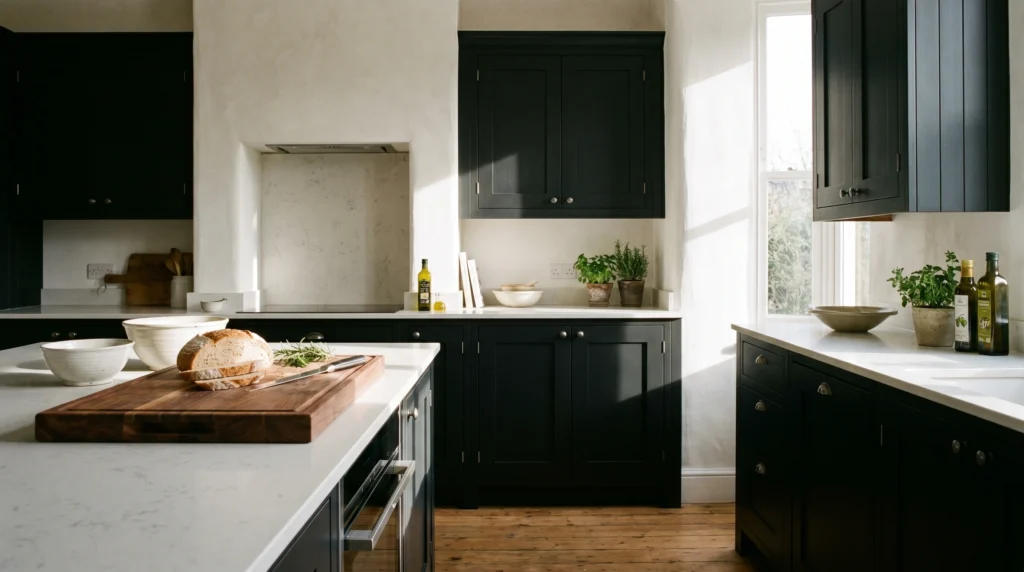
There’s something bold but still grounded about matte black cabinets paired with soft white walls. The black adds depth, while the white keeps everything open and breathable.
To recreate this, go for flat-panel black cabinets with a matte finish and pair them with warm white walls (not bright, blue-toned white). What I personally love about this is how it hides everyday wear better than glossy finishes. Budget can range from $150–$350 per cabinet door.
Tip: Avoid cool white paint—it makes the black feel harsh.
White Cabinets With Black Hardware Accents
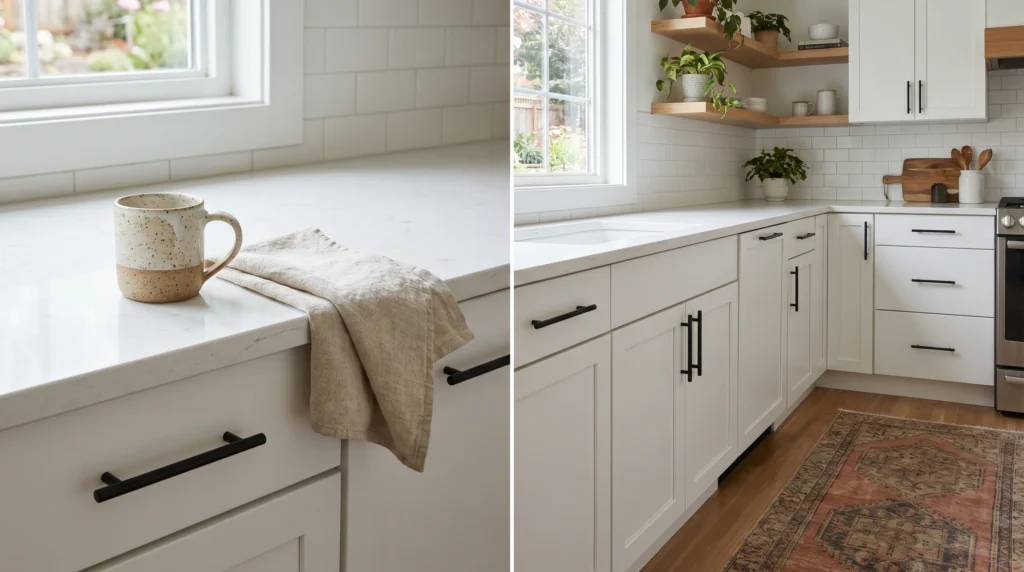
This is one of the easiest ways to try the look without committing fully. White cabinets stay light and classic, while black handles and knobs add contrast.
Swap out your existing hardware for matte black pieces—it’s a quick upgrade that costs around $3–$10 per handle. I always recommend this to anyone on a budget.
Mistake: choosing overly ornate hardware—simple designs work best.
Black Lower Cabinets With White Upper Cabinets
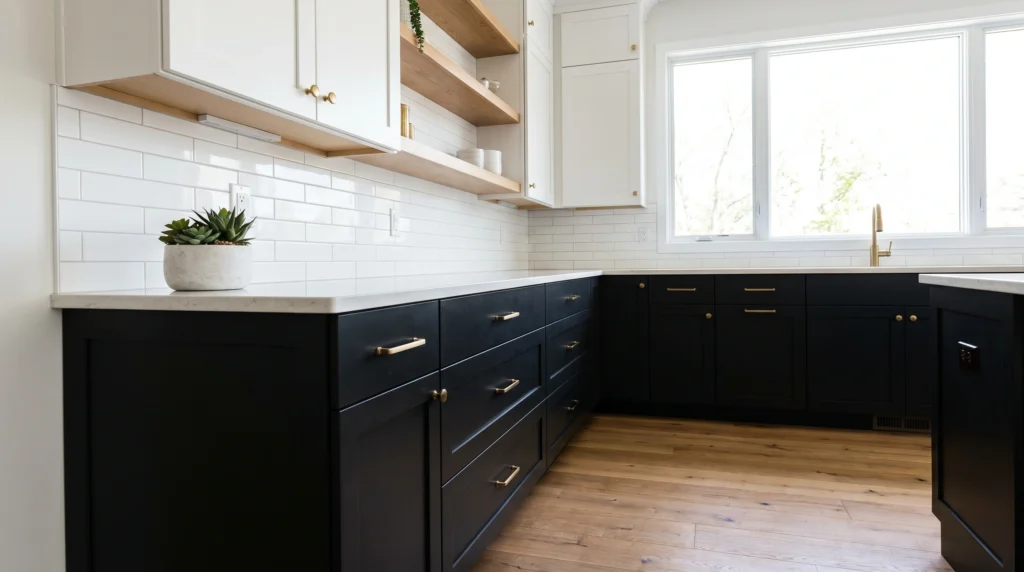
This two-tone approach keeps the kitchen feeling balanced instead of heavy.
Use black on the bottom for grounding and white on top to reflect light. In my experience, this works especially well in smaller kitchens.
Tip: Keep countertops light to connect both tones.
Black and White Tile Backsplash With Subtle Pattern
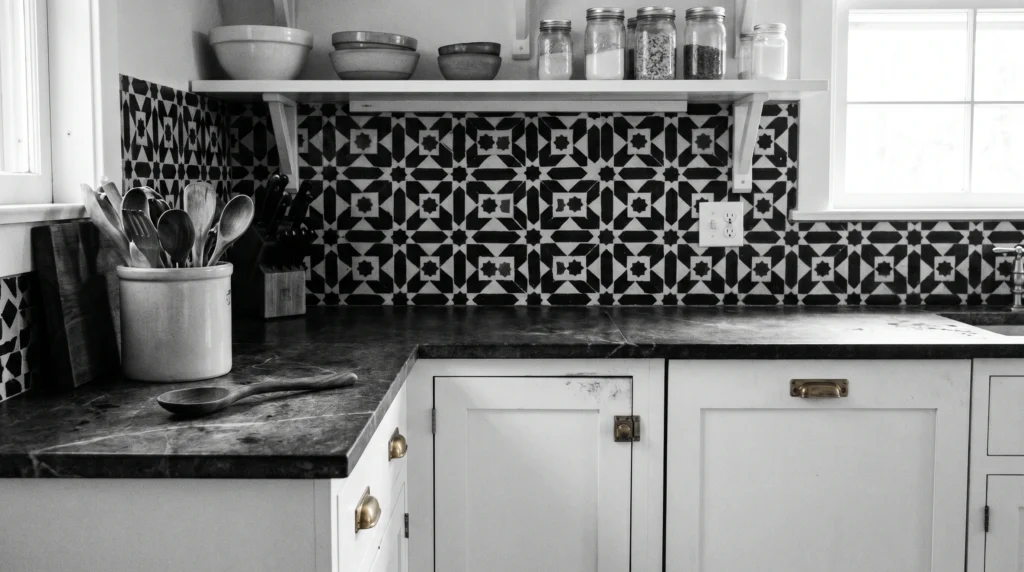
A patterned backsplash adds personality without cluttering the space.
Choose small-scale patterns—like checkerboard or soft geometric designs in black and white. What I personally love about this is how it becomes a quiet focal point. Costs range from $5–$20 per square foot.
Tip: Avoid overly busy patterns—they overwhelm quickly.
Warm Wood Accents to Soften the Contrast
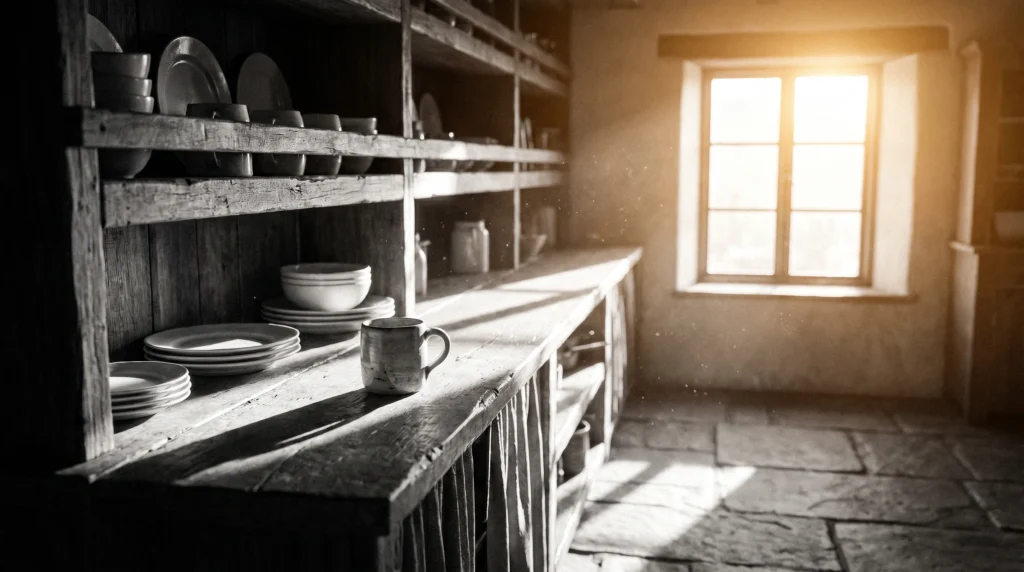
Black and white alone can feel a bit sharp. Adding wood instantly softens everything.
Use cutting boards, open shelves, or bar stools in oak or walnut tones. A lot of people skip this step, but it makes all the difference. Budget: $20–$100.
Tip: Stick to one wood tone for consistency.
White Marble Countertops With Subtle Veining
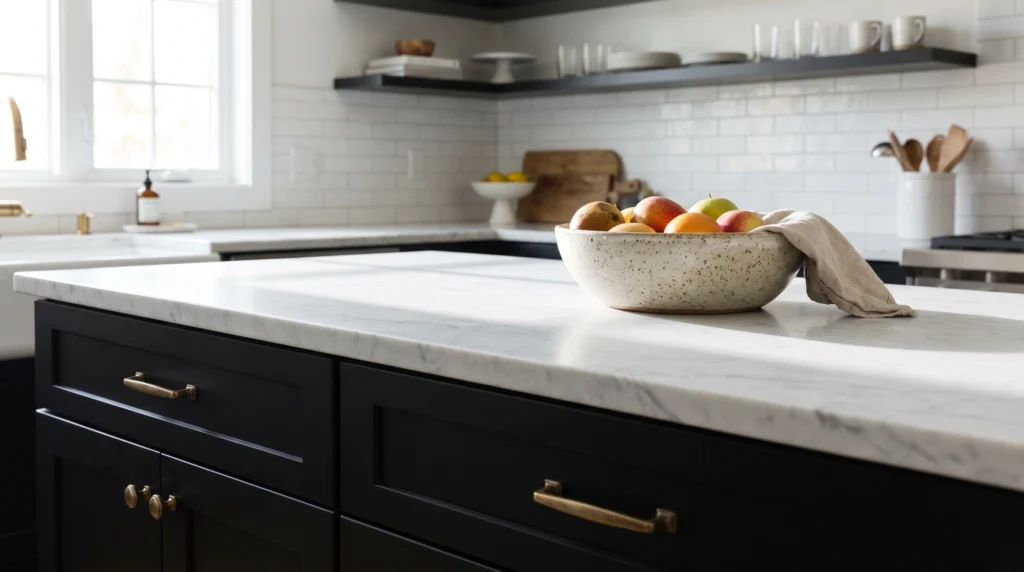
Marble brings a softer, more organic feel to black and white kitchens.
Choose marble or quartz with light gray veining to break up solid colors. In my experience, this keeps the kitchen from feeling too flat. Costs: $50–$150 per square foot.
Tip: Avoid heavy veining—it can compete with other elements.
Black Pendant Lighting for a Clean Statement
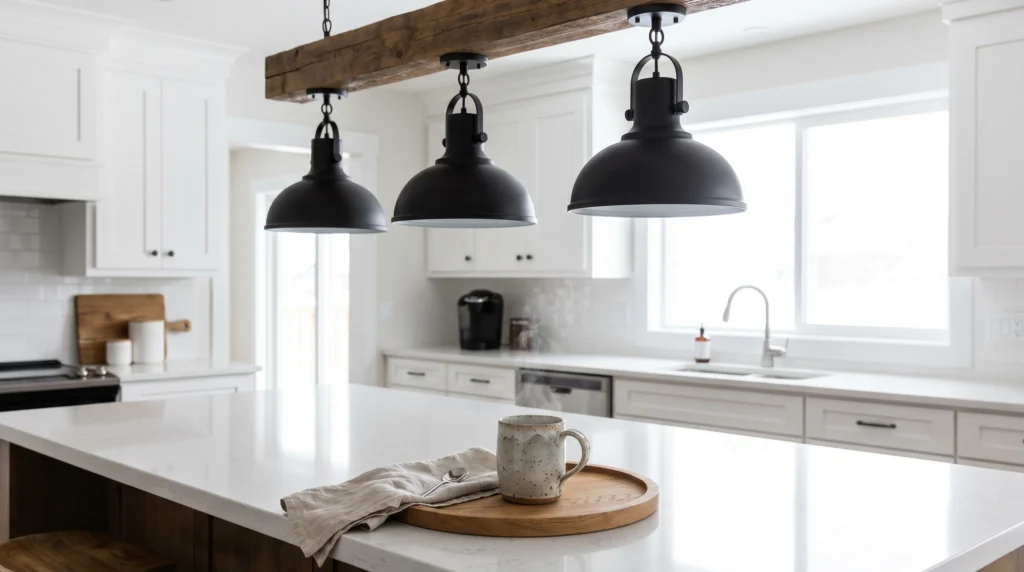
Lighting is one of those details that quietly changes everything.
Add black pendant lights above an island or dining space. Choose simple shapes to keep the look modern. Fixtures range from $40–$150.
Tip: Use warm bulbs to avoid a cold feel.
Open Shelving With a Black Frame
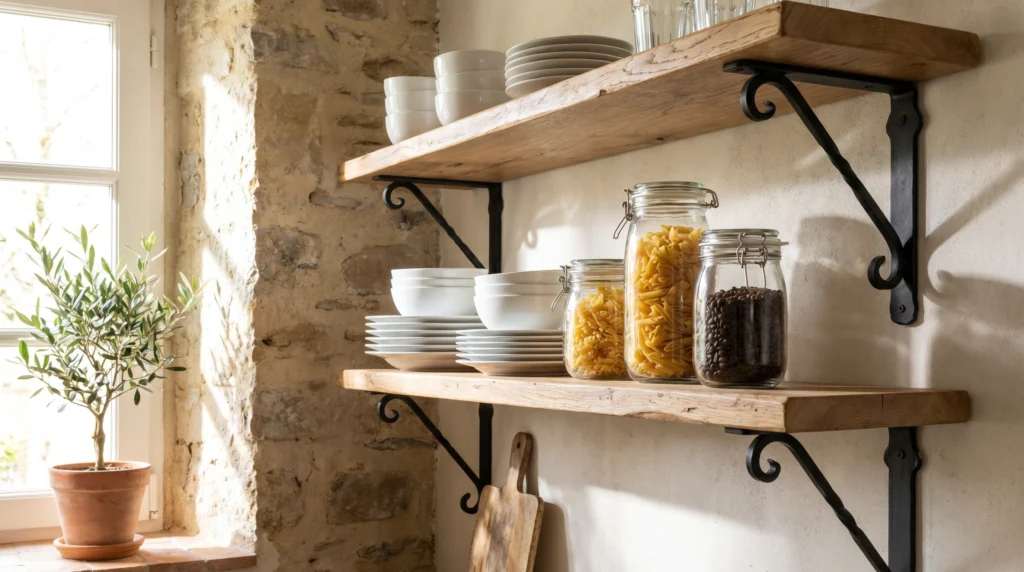
Open shelving can add contrast without bulk.
Use shelves with black metal brackets or frames paired with wood or white boards. I always recommend styling them with everyday items.
Mistake: overcrowding the shelves.
Black Appliances for a Seamless Look
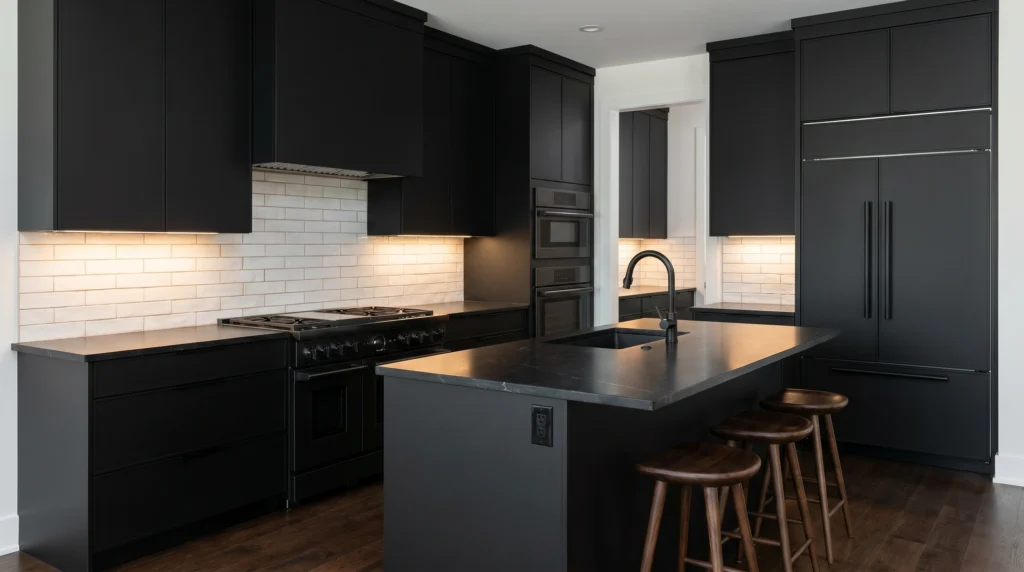
Black appliances blend beautifully into darker cabinetry.
They create a cohesive look without standing out too much. In my experience, this works especially well in modern kitchens.
Tip: Choose matte finishes over glossy ones.
White Walls With Black Trim Details
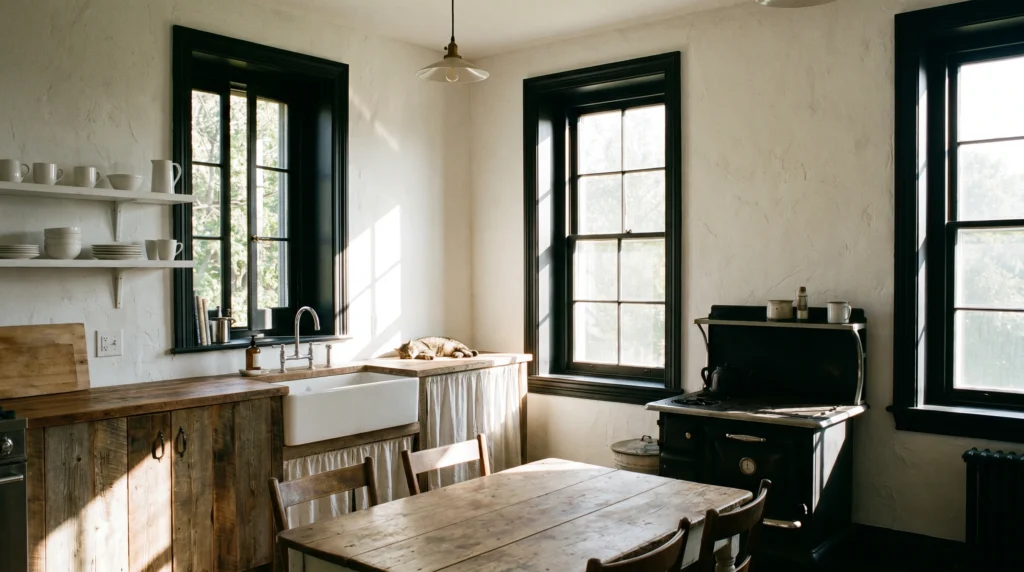
Instead of painting everything, use black trim to frame the space.
Add black to window frames, cabinet edges, or even baseboards. What I personally love about this is how subtle but effective it is.
Tip: Keep lines clean—precision matters here.
Black Kitchen Island With White Surroundings
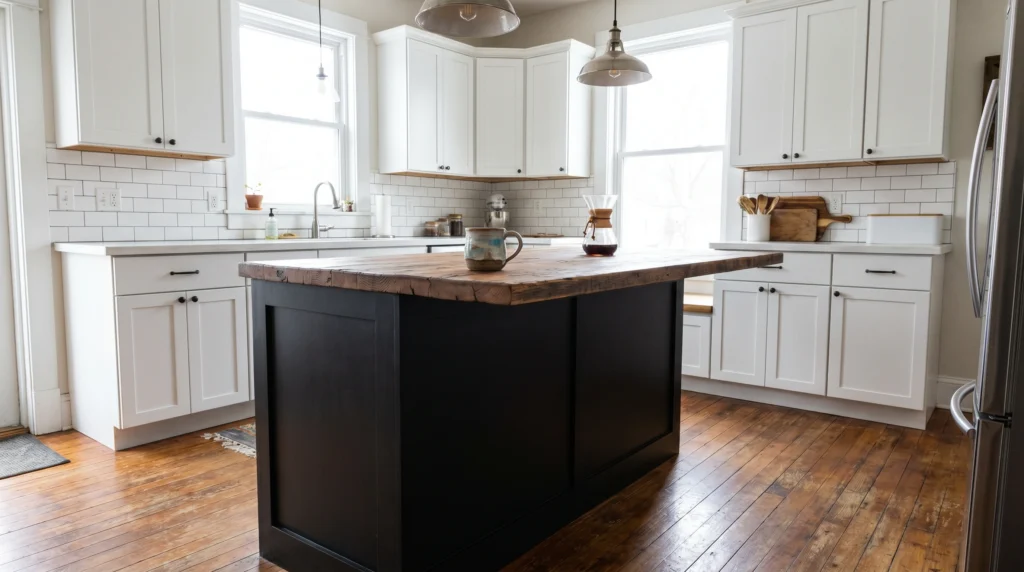
A black island acts as a focal point in an otherwise light kitchen.
Keep surrounding cabinets white to let the island stand out. Budget varies depending on size.
Tip: Add a wood countertop to soften the look.
Layered Textures to Avoid a Flat Look
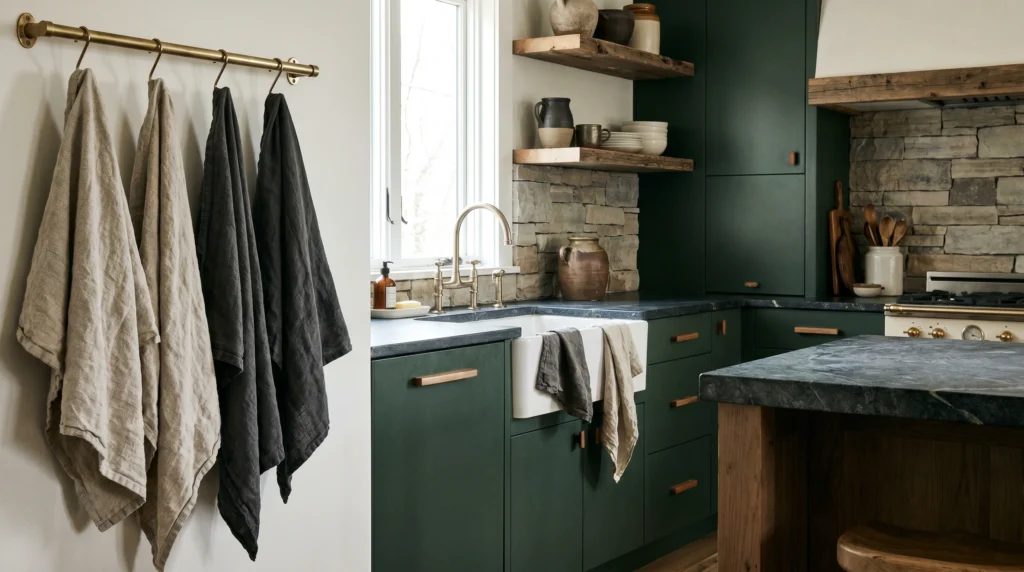
Texture is what keeps black and white from feeling lifeless.
Mix materials like matte cabinets, stone counters, linen textiles, and wood accents. I always recommend this approach.
Tip: Avoid too many shiny surfaces.
Black Sink With White Countertops
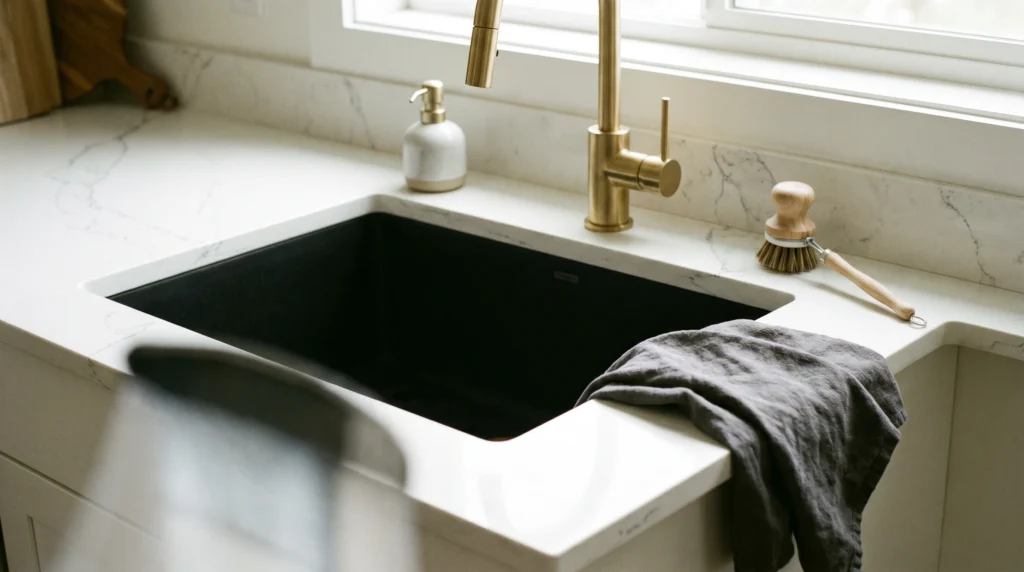
A black sink adds contrast in a subtle, practical way.
It’s a small detail, but it makes the space feel more designed. Costs range from $100–$300.
Tip: Choose durable materials like composite granite.
Minimal Decor With Strong Contrast
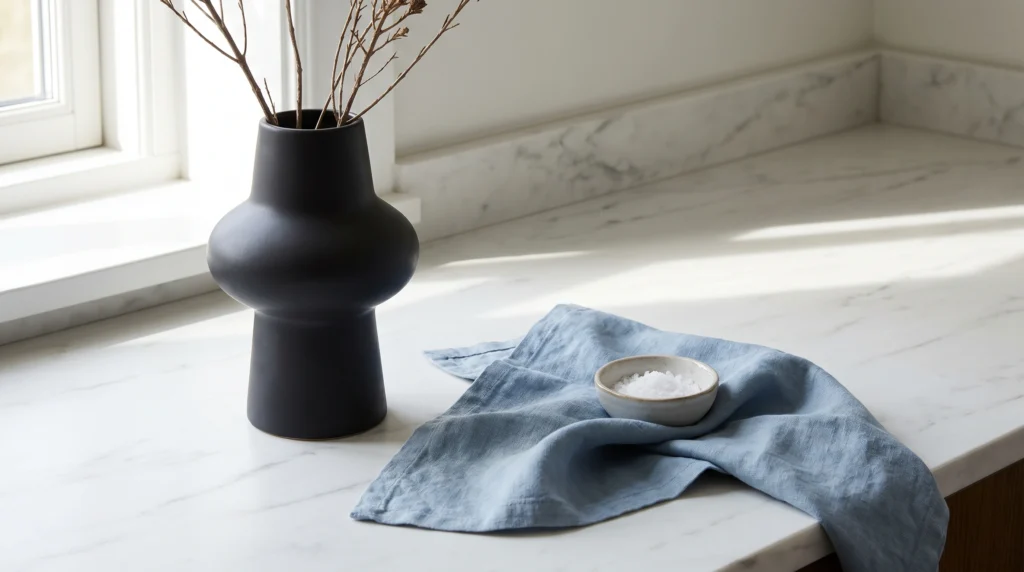
Sometimes less really is more.
Keep decor minimal but intentional—like a single black vase on a white counter. In my experience, this works best when everything else is clean.
Tip: Don’t over-style—it defeats the purpose.
Soft Lighting That Warms Everything Up
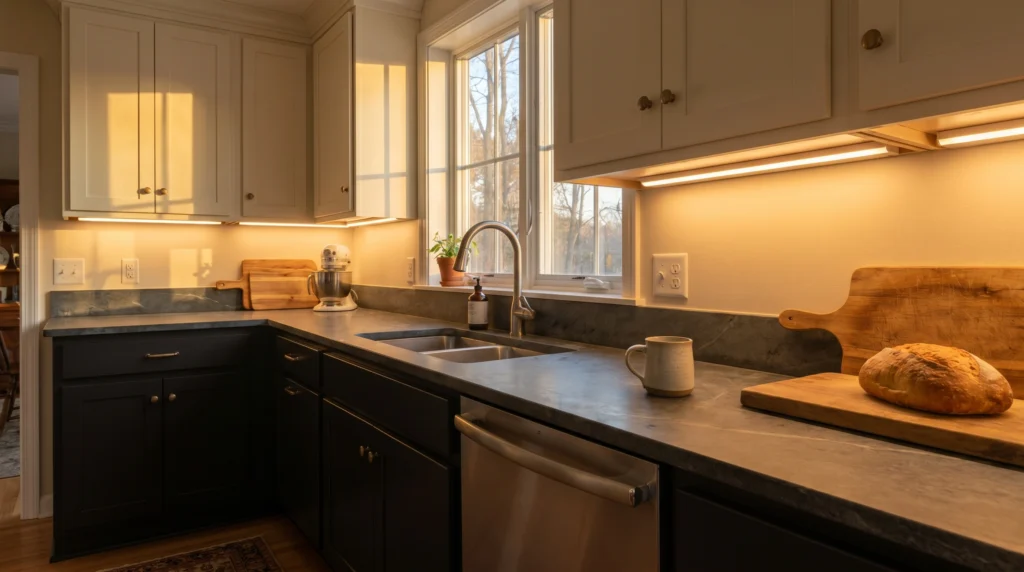
Lighting can completely change how black and white feels.
Use warm LED lighting (2700K–3000K) to soften contrast and create a cozy atmosphere. A lot of people overlook this, but it’s essential.
Tip: Layer lighting—overhead plus under-cabinet works best.
Conclusion
Black and white kitchens stick around for a reason they’re simple, timeless, and incredibly flexible. But the real secret behind 15 black and white kitchen ideas that always look stunning is knowing how to balance contrast with warmth.
You don’t need to change everything overnight. Start with one idea—maybe switching hardware, adding warm lighting, or bringing in a bit of wood. In my experience, those small shifts are what make a space feel completely different.
A stylish kitchen isn’t about chasing trends or getting every detail perfect. It’s about creating a space that feels good to use every day—clean, comfortable, and a little bit personal.
So which of these ideas are you thinking about trying first? I’d genuinely love to hear what caught your eye.