
15 Scandi Nursery Ideas for a Clean, Bright, and Airy Look
I remember exactly how it felt when I started planning my first nursery. I was completely overwhelmed by the “baby blue” and “bubblegum pink” catalogs that seemed to scream for attention. I wanted a space that felt like a deep breath—somewhere calm, where the light actually hit the walls and made the room feel bigger than it was. That’s when I fell in love with the Scandinavian approach. It’s not just about “white furniture”; it’s about creating a functional, peaceful sanctuary that grows with your child.
If you’re currently staring at a spare room feeling stuck or uninspired, please know that you don’t need a massive renovation budget to get that Pinterest-worthy look. Often, the biggest mistake I see people make is trying to buy everything at once from a single big-box store. The result? A room that feels like a showroom rather than a home. In my experience, the best Scandi nurseries are built slowly, focusing on warmth, personality, and light. Today, I’m sharing 15 achievable Scandi nursery ideas that will help you create a space that is clean, bright, and airy without feeling cold or sterile.
1. Warm Wood Tones for Natural Grounding
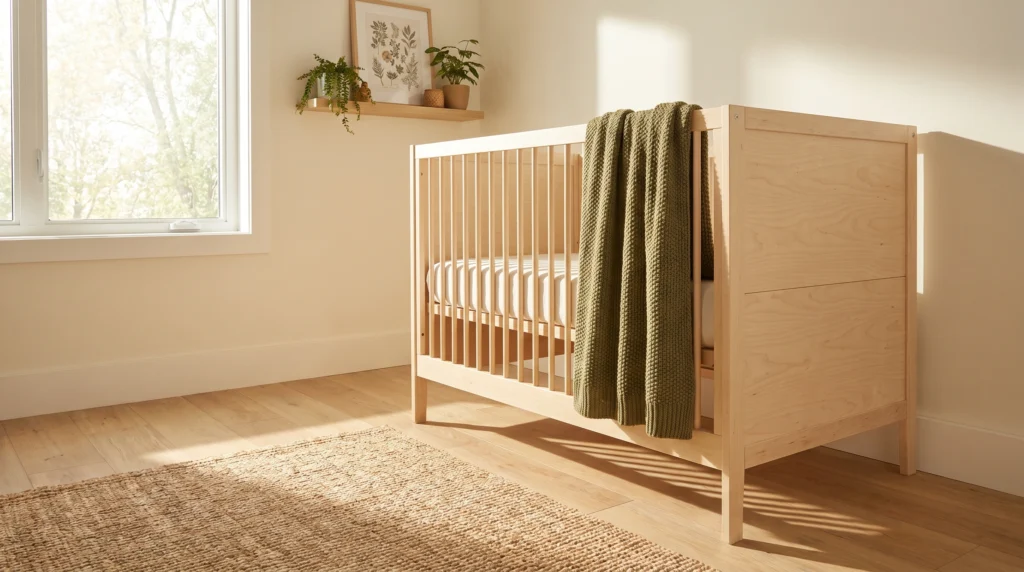
There is a specific kind of magic in light-toned woods like birch, pine, or ash. When you walk into a room with these elements, it feels immediately softer. Unlike dark mahogany or cherry, these lighter woods reflect the sun, making the nursery feel like it’s glowing. It’s a foundational Scandi move that provides a “base” for the rest of your decor to sit on.
I always recommend starting with one “hero” piece in light wood—usually the crib or a dresser. To make this work, don’t worry about matching every single wood grain in the room; a little variation actually looks more “lived-in” and authentic. If you’re on a budget, look for unfinished pine furniture and give it a clear matte seal. This usually costs between $150 and $400 depending on the piece. One common mistake to avoid: buying “honey” or orange-toned oak, which can quickly make the room feel dated rather than modern.
2. Layered Textiles for “Hygge” Comfort
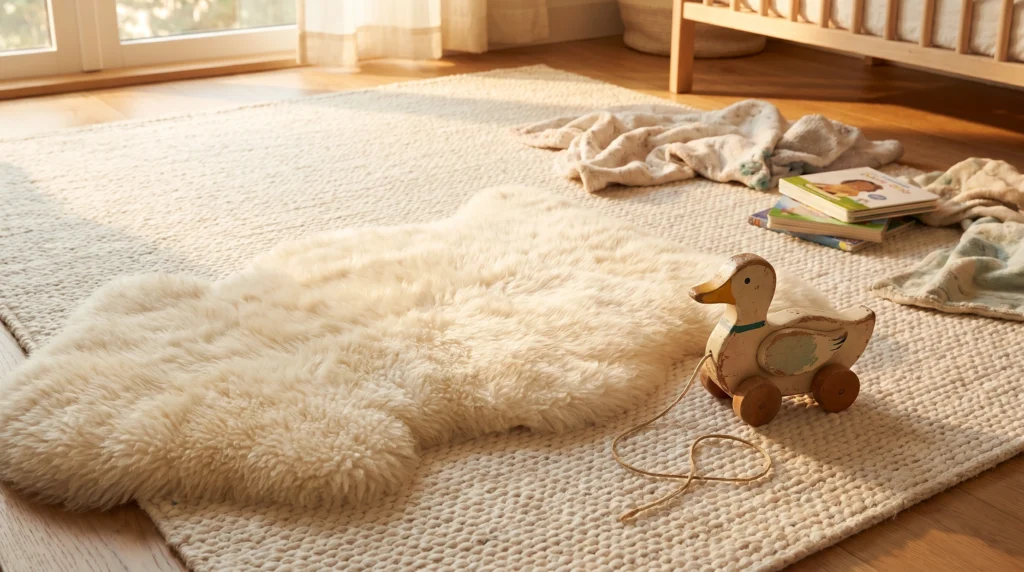
The word “clean” often gets confused with “empty,” but in a Scandi nursery, it’s all about the layers. You want the room to feel cozy enough that you’d actually want to take a nap there yourself. Think chunky wool rugs, muslin swaddles, and linen curtains that puddle slightly on the floor. It’s the tactile experience that stops a minimalist room from feeling clinical.
What I personally love about this is using a variety of weights. Lay a flat-weave cotton rug down first, then throw a smaller faux sheepskin over it near the rocking chair. It adds visual depth and makes the floor a soft place for future tummy time. You can find beautiful cotton rugs for $50–$100. Tip: Stick to a consistent color family (like creams and oatmeal) to keep the “airy” vibe while playing with different textures.
3. Muted Sage and Earthy Accents
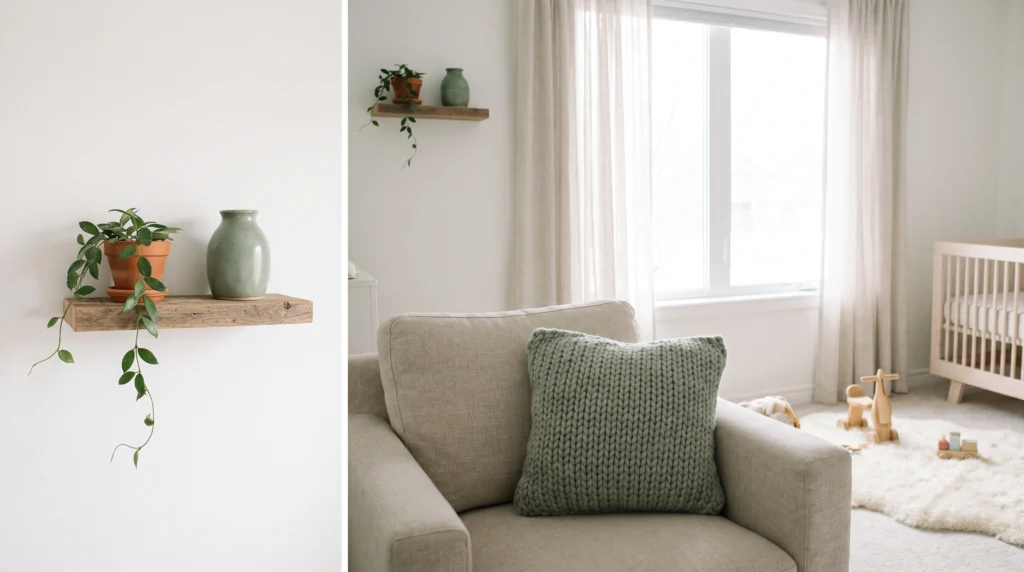
While Scandi style is famous for white walls, a “bright” room doesn’t have to be colorless. Adding a soft, muted sage green or a dusty terracotta can actually make the white walls pop. These colors are inspired by nature, which is a huge part of Northern European design. It keeps the room feeling fresh and connected to the outdoors.
In my experience, the best way to do this is through “low-stakes” items like pillows, a single painted shelf, or a crib sheet. I’ve seen people go overboard with a bright accent wall, but I find that keeping the color “muddy” or “muted” is the real secret to that sophisticated look. Look for items in the $20–$45 range. A lot of people skip this step, but it’s what gives the room its unique character.
4. Front-Facing Floating Book Shelves
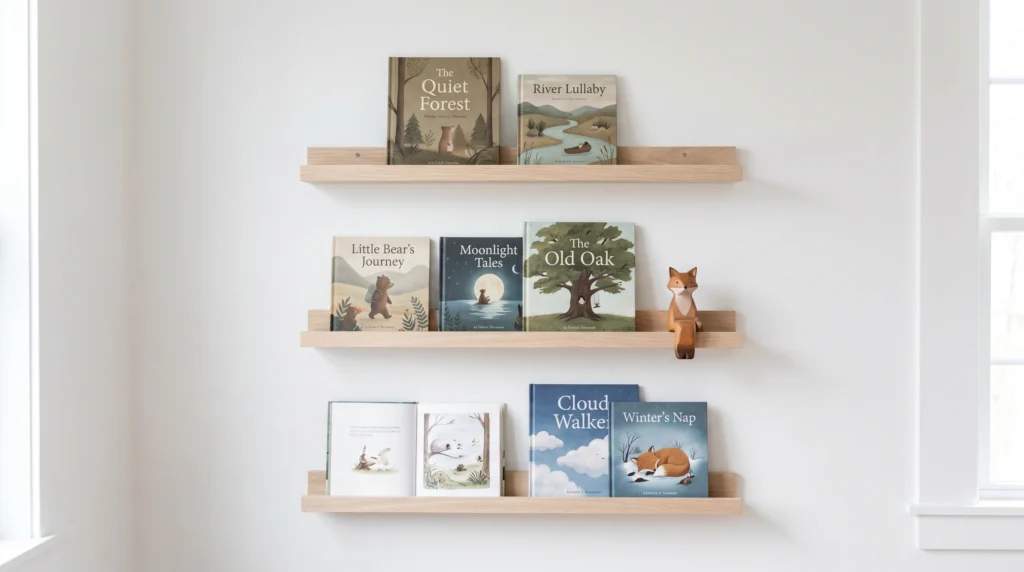
Traditional bookshelves hide the beautiful art on children’s book covers. In a Scandi nursery, the books are the decor. By using slim, front-facing ledges, you turn a plain wall into a rotating art gallery. It’s functional, saves floor space, and encourages reading as your little one grows.
I always recommend installing these at a height where you can reach them now, but your toddler can reach them later. You can use simple spice racks (a classic $10 DIY hack) or dedicated acrylic ledges for a “disappearing” look. One big mistake is overcrowding them; leave some “white space” on the shelf so the covers can actually breathe. This setup usually costs under $40 for a set of three.
5. Paper Lanterns for Soft Ambient Light
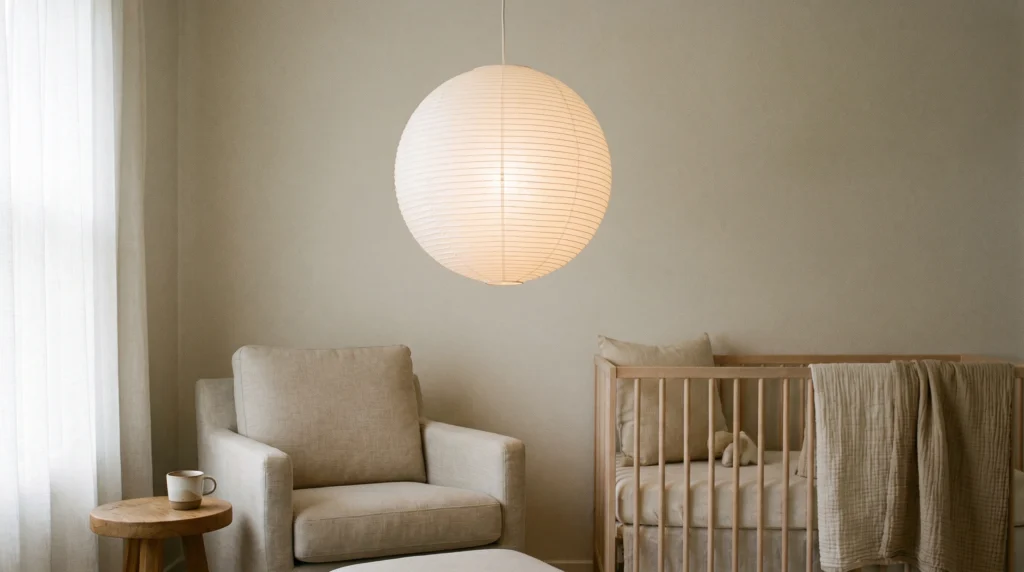
Harsh overhead lighting is the enemy of a calm nursery. Scandi homes prioritize “pools of light.” A large, oversized white paper lantern creates a soft, cloud-like focal point that diffuses light evenly across the room. It’s an incredibly affordable way to fill up “dead air” in a room with high ceilings.
I personally love the oversized versions (24 inches or larger). They look like floating sculptures during the day and glow beautifully at night. You can pick these up for $15–$30. A pro tip: use a warm-toned smart bulb so you can dim the light during those 3 AM feedings. It makes a world of difference for your own circadian rhythm too!
6. Woven Baskets for Stylish Storage
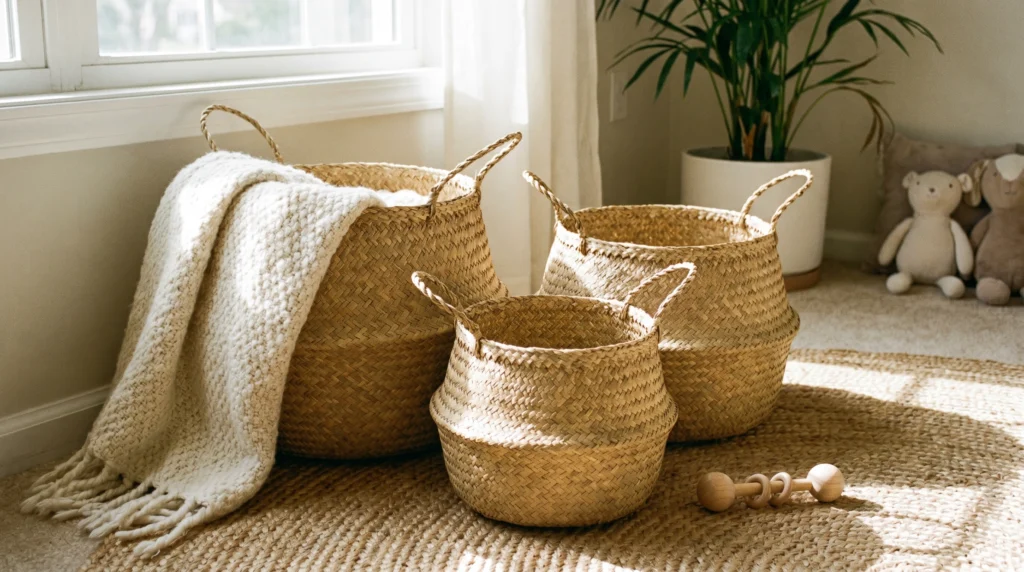
Let’s be real: babies come with a lot of “stuff” that isn’t always pretty. From plastic toys to extra diapers, you need a place to hide the clutter. Woven seagrass or wicker baskets are the Scandi answer to this problem. They add a natural, golden texture to the room while keeping your surfaces clear.
I always tell my friends to get baskets in three different sizes. Use the large ones for blankets, medium for toys, and small ones for diapering supplies on the changing table. It feels much more “intentional” than plastic bins. You can find great sets for $30–$60. One common mistake is getting baskets that are too “scratchy” or have loose fibers that could poke a crawling baby—always feel the texture before buying.
7. The Power of “Negative Space”
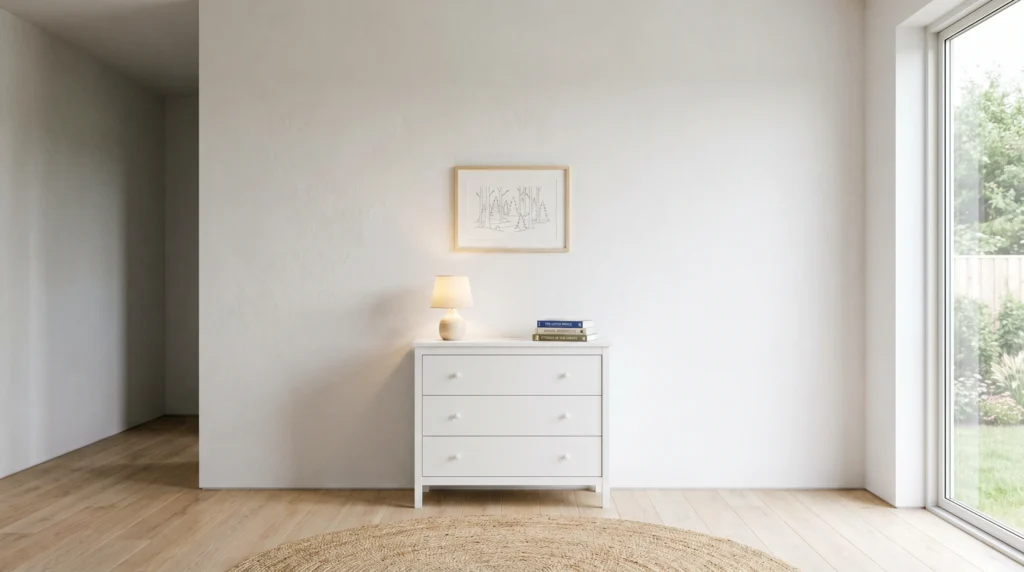
One of the hardest things for new parents to do is leave a wall empty. We feel like we have to fill every square inch with “stuff.” But Scandi design relies on “negative space”—empty areas that allow the eye to rest. This is what actually creates that “airy” feeling you see on Pinterest.
In my experience, if you have a large piece of furniture like a dresser, keep the wall above it simple. Maybe one medium-sized piece of art, or even nothing at all. It feels sophisticated and calm. This “idea” is actually free! The “price” is just your restraint. A lot of people skip this and end up with a room that feels “busy” and stressful, which is the opposite of what a nursery should be.
8. Floor-Length Linen Curtains
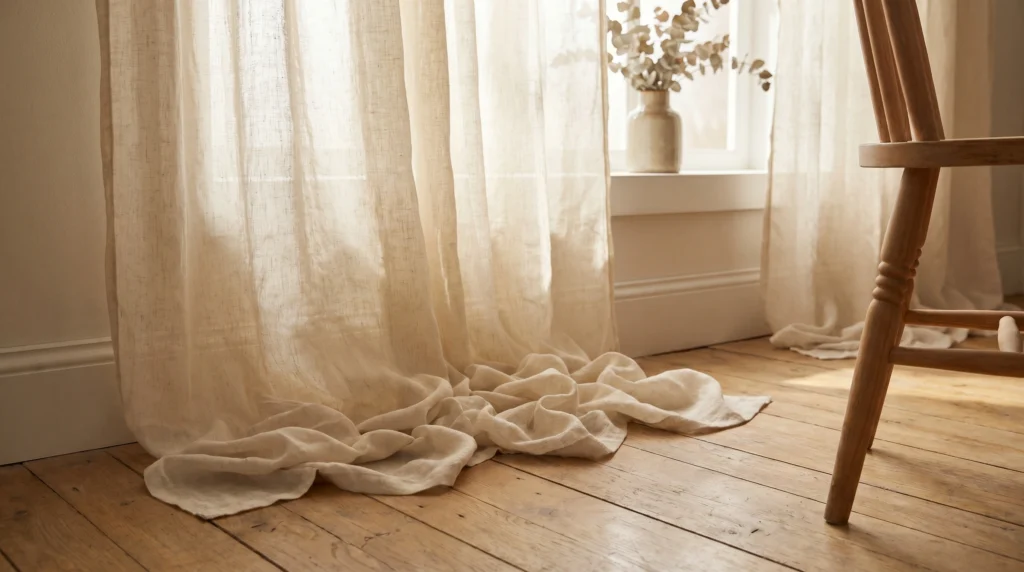
To get that bright and airy look, you need to maximize your windows. Thick, heavy “blackout” curtains in dark colors can make a small nursery feel like a cave. Instead, go for light-colored linen or cotton. If you need it dark for naps (and you will!), use a hidden blackout roller shade behind the pretty linen curtains.
I love the way linen catches the light—it has those tiny imperfections in the weave that feel so high-end. Aim for a “stone” or “off-white” color rather than a stark, clinical white. You’re looking at about $40–$80 per panel. A common mistake is hanging the rod too low. Hang it as close to the ceiling as possible to “draw the eye up” and make the room feel twice as tall.
9. Mobile Minimalism: Natural Elements
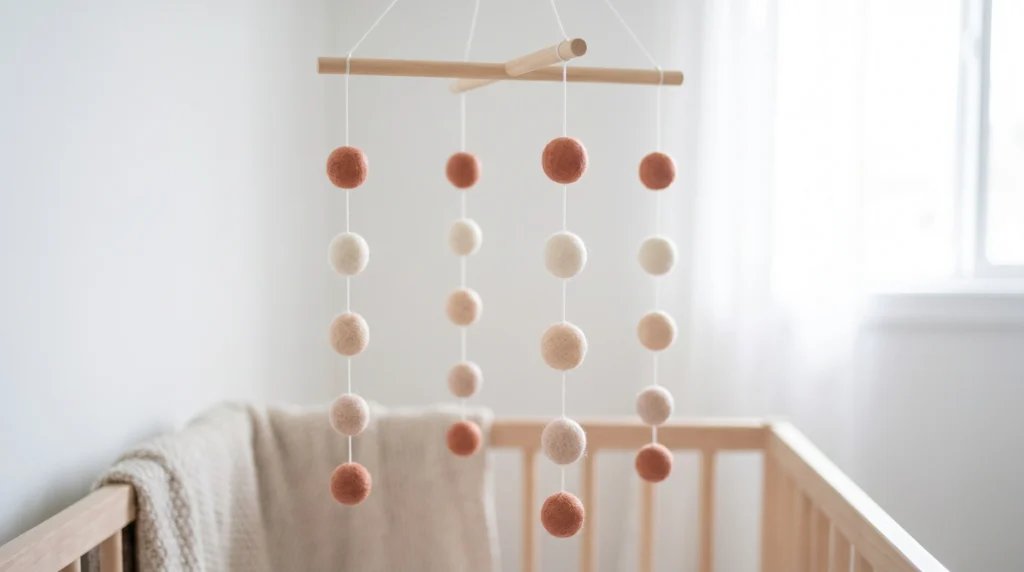
Forget the plastic, battery-operated mobiles that play tinny music. A Scandi nursery calls for something more sculptural and quiet. Think felted wool balls, wooden stars, or simple brass hoops with dried flowers. It’s about gentle movement that doesn’t overstimulate the baby.
I personally love a DIY mobile. You can buy a wooden hoop and some wool felt balls for under $20 and create something truly unique. It’s a great project to do while you’re “nesting.” The key is to keep the colors within your room’s palette. Tip: Make sure it’s hung securely and high enough that a standing baby can’t grab it—safety first, always.
10. Statement Wall Art with a Personal Story
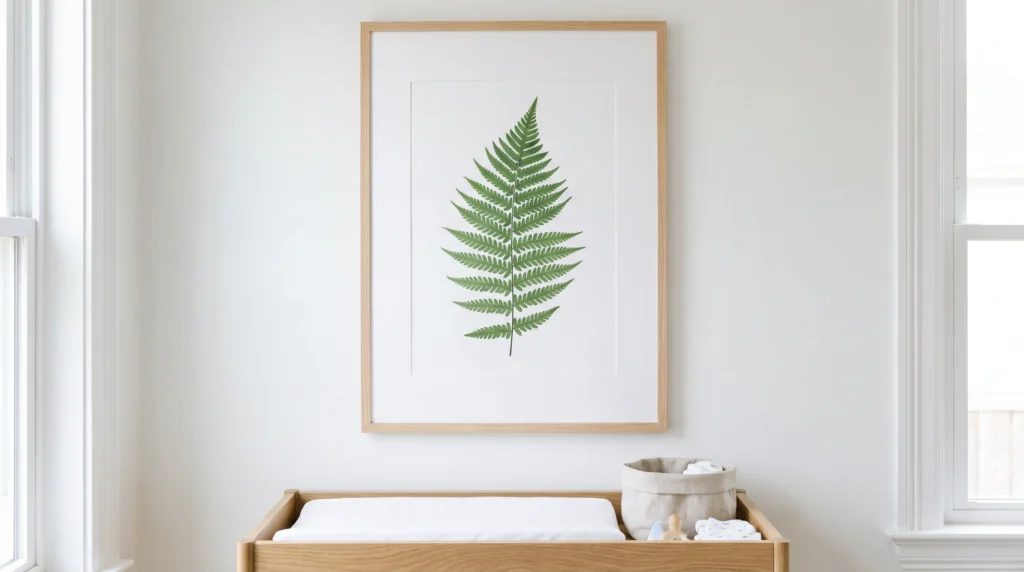
Scandi homes often feature one or two large, impactful pieces of art rather than a “gallery wall” of twenty tiny things. This keeps the look clean. I recommend choosing something that feels personal—maybe a map of the city where you met your partner, or a simple botanical print that reminds you of a favorite park.
What I always suggest to anyone who asks is to use a light wood frame with a large white mat. The mat (the white border inside the frame) adds “breathing room” to the art and makes it look much more expensive than it is. You can find great prints on Etsy for $10 and a frame for $20. One mistake: hanging the art too high. It should be at eye level when you are standing, or centered about 8–10 inches above a piece of furniture.
11. The “Grown-Up” Rocking Chair
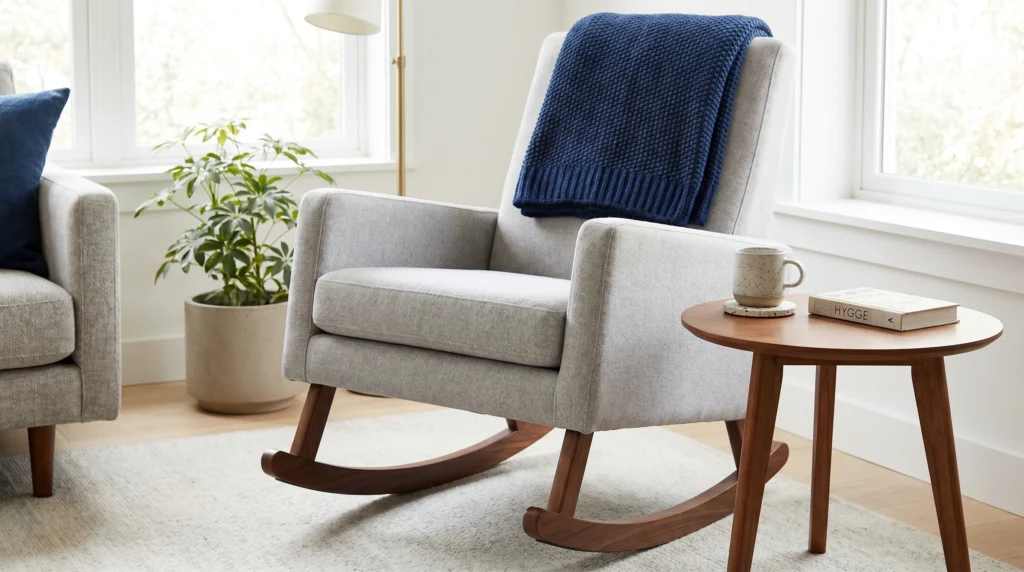
Traditional nursery gliders can be bulky and, frankly, a bit eyesore-ish. A Scandi-inspired nursery often uses a beautiful, mid-century modern armchair or a sleek rocker that could easily live in a living room later. This is a “long-term” investment that keeps the nursery feeling like part of a stylish home.
In my experience, look for a chair with tapered wooden legs and a neutral, durable fabric like performance linen or boucle. It should be comfortable but not “oversized.” This will likely be your biggest expense ($300–$700), but you’ll use it for years. Tip: Add a lumbar pillow in a contrasting texture to make it even more comfortable for those long nights.
12. House-Shaped Elements for Whimsy
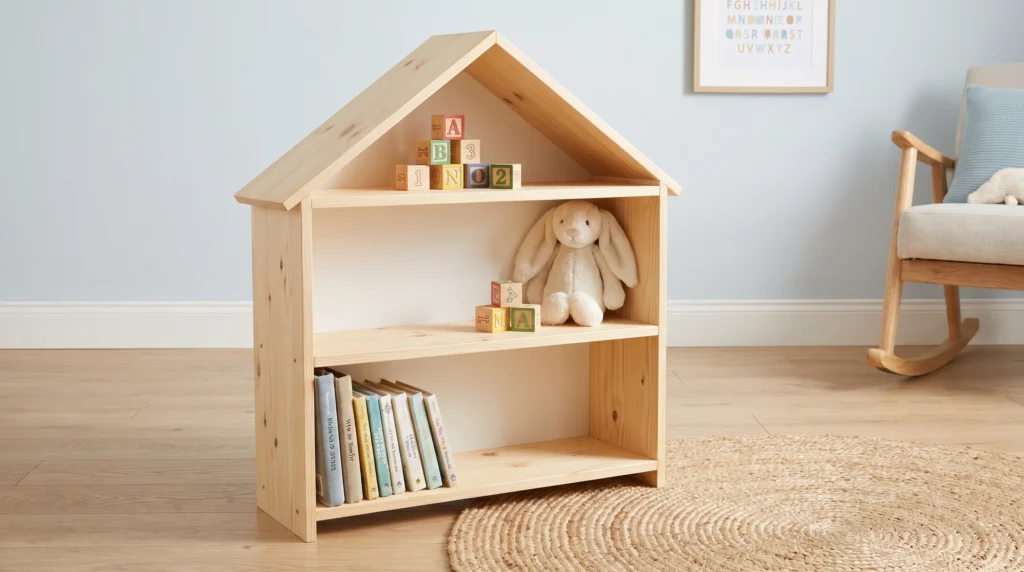
Scandinavian design often incorporates “house” shapes—it’s a nod to the importance of “home” and creates a playful, architectural feel. You might see a house-shaped floor bed, a bookshelf, or even just a simple wooden frame on the wall. It’s a great way to add a “kid-friendly” vibe without using cheesy characters.
I love a house-shaped floor shelf for toys. It defines a “play zone” without needing a bright plastic playmat. You can find these for $50–$100. A lot of people skip this because they think it’s a “trend,” but the clean lines of a house silhouette are actually quite timeless. Just avoid the ones that are painted in bright, primary colors—stick to natural wood or white.
13. Muted Greenery (Real or Faux)
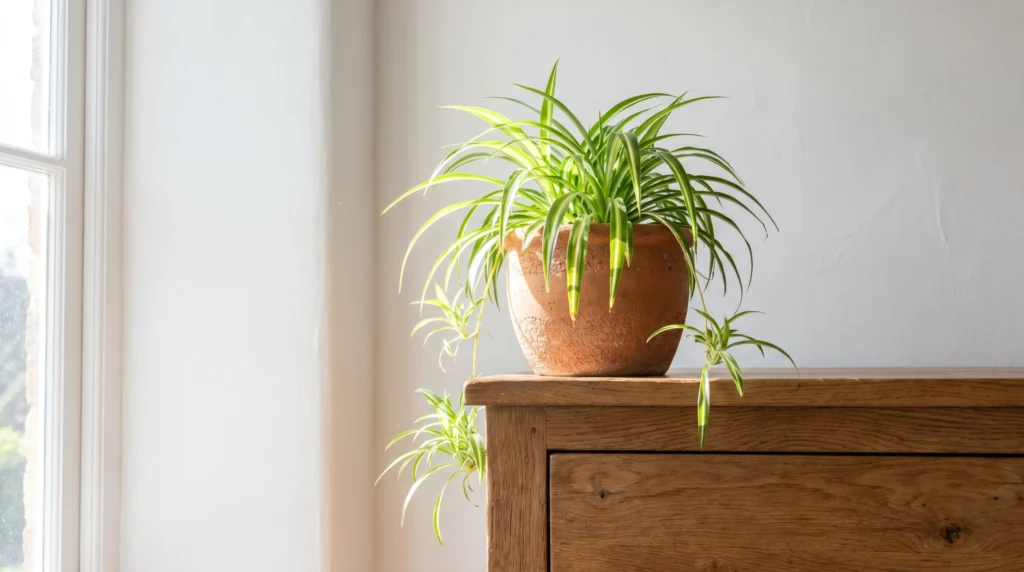
Nothing says “fresh” like a touch of green. Plants help bridge the gap between the indoors and outdoors, which is central to Scandi living. Even a single small plant on a high shelf can “wake up” a neutral room.
If you’re worried about maintenance (or safety!), a high-quality faux plant like an olive tree or a snake plant works wonders. I always recommend placing them in a “pitted” or “stone-look” ceramic pot to add more earthy texture. Small plants are $10–$20, while larger faux trees can be $80–$150. Tip: If using real plants, make sure they are non-toxic to babies and pets—Snake plants and Spider plants are usually safe bets!
14. Functional “Peg Rails” for Daily Use
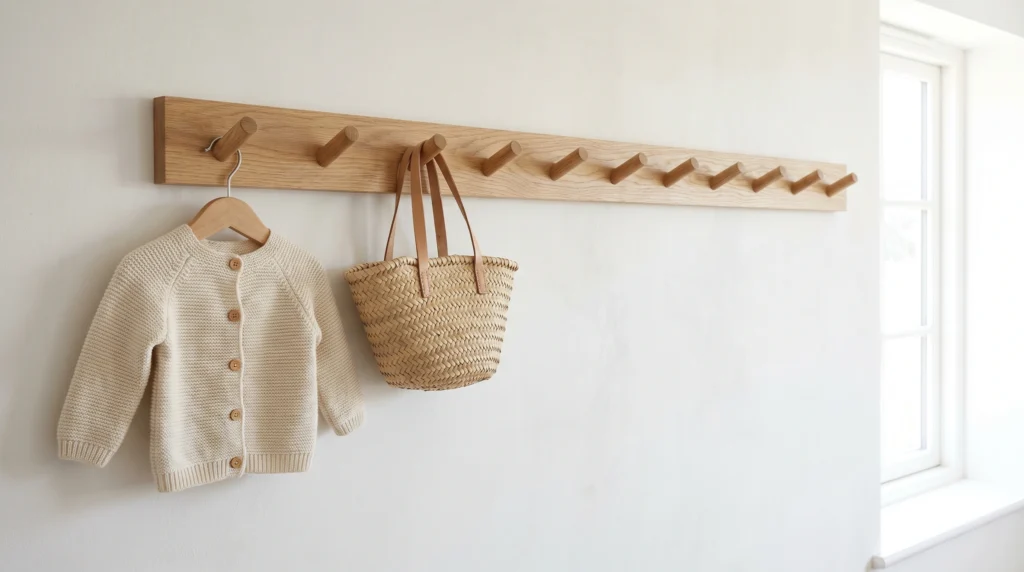
In a Scandi nursery, the items you use every day—the hooded towel, the favorite sweater, the diaper bag—become part of the decor. A simple wooden peg rail is an iconic Scandi element that keeps things off the floor while adding a “practical” beauty to the walls.
I always tell people to hang a peg rail near the changing station or the door. It’s much more “airy” than a heavy wardrobe or a cluttered coat rack. You can buy these for $15–$30. One big mistake is hanging too much on them; if every peg is covered in five items, it looks messy. Keep it to one item per peg to maintain that “clean” look.
15. Round Rugs to Break Up the Lines
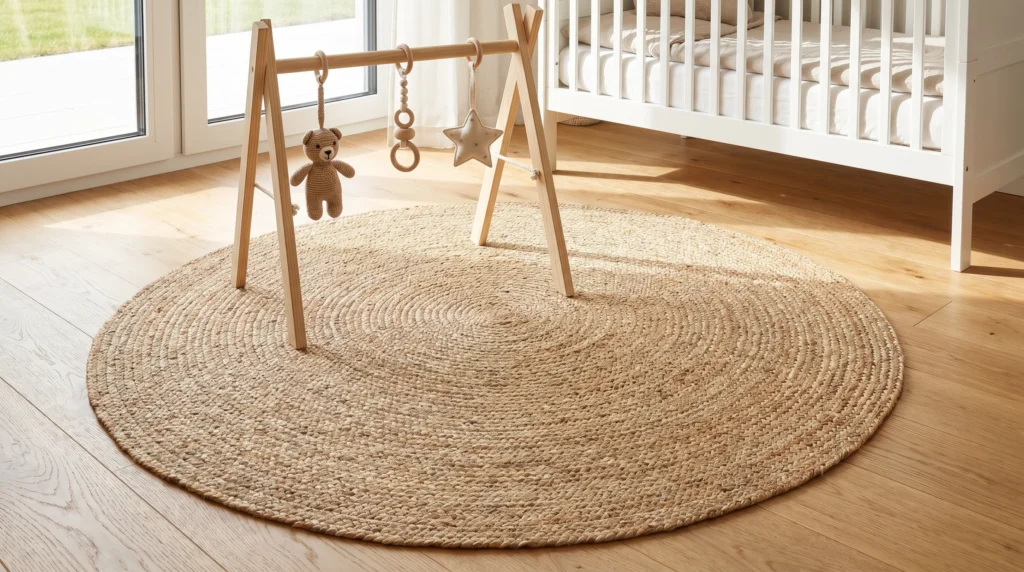
Nursery furniture (cribs, dressers, shelves) is almost always rectangular. If everything in the room is a sharp corner, the space can feel a bit “stiff.” A round rug is a classic Scandi trick to soften the room’s layout and make it feel more organic and inviting.
What I personally love about a round rug is how it “anchors” a specific spot, like a reading nook. It makes the room feel more dynamic. Look for a jute or braided cotton rug in a 4-foot or 5-foot diameter. These usually cost $60–$120. A common mistake is getting a rug that is too small—it should be large enough that at least the front legs of your rocking chair can sit on it.
Conclusion
Creating a Scandinavian nursery is less about following a strict set of rules and more about how the room makes you feel. When you walk in, you want to feel a sense of “lightness”—a space where the air can move and your mind can rest. By focusing on natural materials, muted colors, and intentional “negative space,” you’re building a sanctuary for both you and your baby.
I truly believe that a stylish home doesn’t require a massive budget; it just requires a bit of patience. Start with the “big” pieces like the crib or rug, and then slowly add the textures and colors that speak to you. It’s better to have a half-empty room that feels peaceful than a full room that feels cluttered.
Which of these ideas are you most excited to try first? Are you a fan of the all-white look, or are you leaning toward adding some of those earthy sage and terracotta tones? Drop a comment below—I’d love to hear about your nursery journey!
FAQs
1. Isn’t an “all-white” nursery impossible to keep clean with a baby?
I get asked this all the time, and the answer is actually surprising! While white shows dirt, it is also the easiest to clean because you can often bleach cotton linens or use “magic erasers” on white furniture without worrying about fading a specific dye. The Scandi look also relies heavily on washable textures—like slipcovered chairs and machine-washable rugs—which are actually very parent-friendly.
2. How do I make a Scandi nursery feel “warm” rather than “cold”?
The secret is in the “wood-to-white” ratio. If you have white walls and white furniture, the room will feel cold. You must balance the white with “warm” elements: natural wood, textured wool, woven baskets, and soft “pools” of yellow-toned light. Think of white as the “canvas” and the wood/textiles as the “warmth.”
3. Can I do a Scandi nursery on a tight budget?
Absolutely. In fact, Scandi design is one of the most budget-friendly styles because it embraces “minimalism.” You don’t need to buy a lot of decorative filler. Many of the most iconic Scandi nurseries use affordable IKEA pieces (like the Sniglar crib) or DIY wooden elements. Focus your money on one “quality” item like a good rug or chair, and let the rest be simple and functional.
4. What if my nursery is very small and has no natural light?
This is where Scandi style actually shines. White walls and light woods are specifically designed to maximize what little light you have. Use a large mirror opposite your light source to bounce it around the room. Instead of a single overhead light, use 2-3 lamps at different heights to create depth, which makes a small, dark room feel much more intentional and “airy.”


