
12 Cozy Attic Home Office Ideas for the Ultimate Quiet, Focused Workspace

Trying to find a quiet corner to focus in a busy house can feel like an impossible task. Between the hum of the television downstairs,..

Sarah Avatar

by

16 minutes

Read Time

Cozy Attic Home Office Ideas

Trying to find a quiet corner to focus in a busy house can feel like an impossible task. Between the hum of the television downstairs, kids playing, and the endless traffic through the kitchen, finding real focus is tough. In my experience, the biggest mistake people make is trying to force a workspace into a high-traffic area like the living room or dining table. That is why turning an unused loft space into a dedicated work sanctuary is such a game-changer. By stepping away from the main floor, you create a physical and mental boundary between your work life and home life.

In this guide, we are looking at 12 attic home office ideas for quiet, focused productivity that will help you transform your dusty top floor into a beautiful, functional escape. You do not need a massive budget or a custom architectural design to make this work. Often, it is just about choosing the right desk placement, understanding how to handle sloped ceilings, and layering in textures that make you actually want to sit at your desk. We will explore how to make these unique, angled spaces feel incredibly cozy, warm, and highly functional so you can finally get your best work done in peace.

1. The Low-Profile Under-Eaves Desk Setup
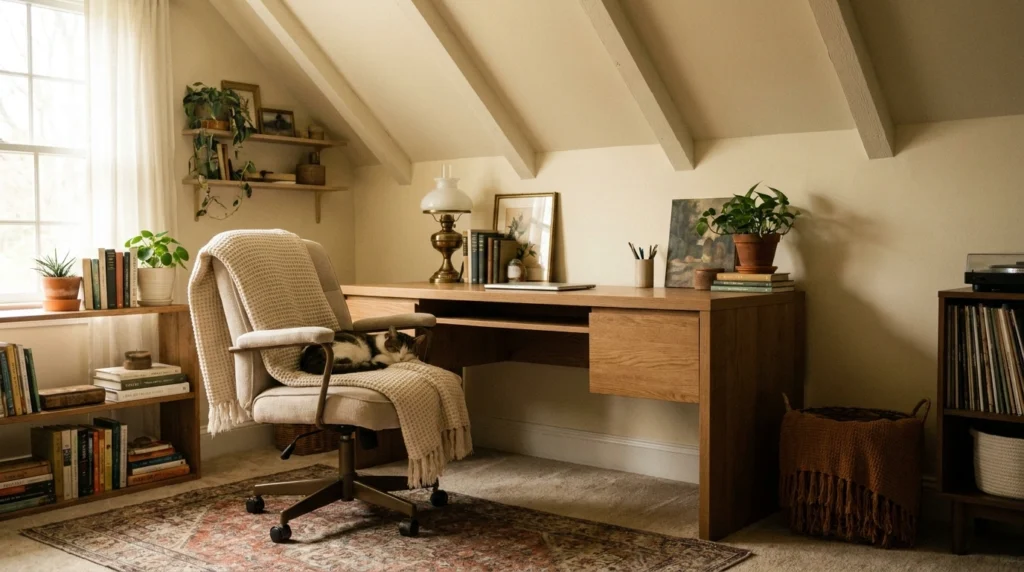
1. The Low-Profile Under-Eaves Desk Setup

There is something incredibly snug about setting up your workspace right under the slope of the roof. This look embraces the unusual architecture of an attic by placing a simple, low-profile wooden desk directly against the knee wall, creating a cozy cockpit feel. When you sit down, the angled ceiling wraps over you, blocking out visual distractions and helping you zone in on your screen. The color scheme here is all about warmth—soft off-white walls paired with light oak or birch wood, accented by a textured waffle-knit throw draped over your chair.

To make this setup work, the most important detail to consider is desk height. I always recommend starting with a low-profile desk that sits around 28 inches high, and picking a sleek office chair without high, bulky backrests so you do not accidentally bump the sloped ceiling when standing up. A common mistake is using a massive, traditional desk lamp here; instead, mount a slim, adjustable LED bar light directly onto the sloped rafter to save valuable desk space. For a budget-friendly option, you can easily replicate this look by using a simple wooden tabletop with short, sturdy hairpin legs. Suggested budget: $150 – $300

2. The Soft Minimalist Skylight Sanctuary
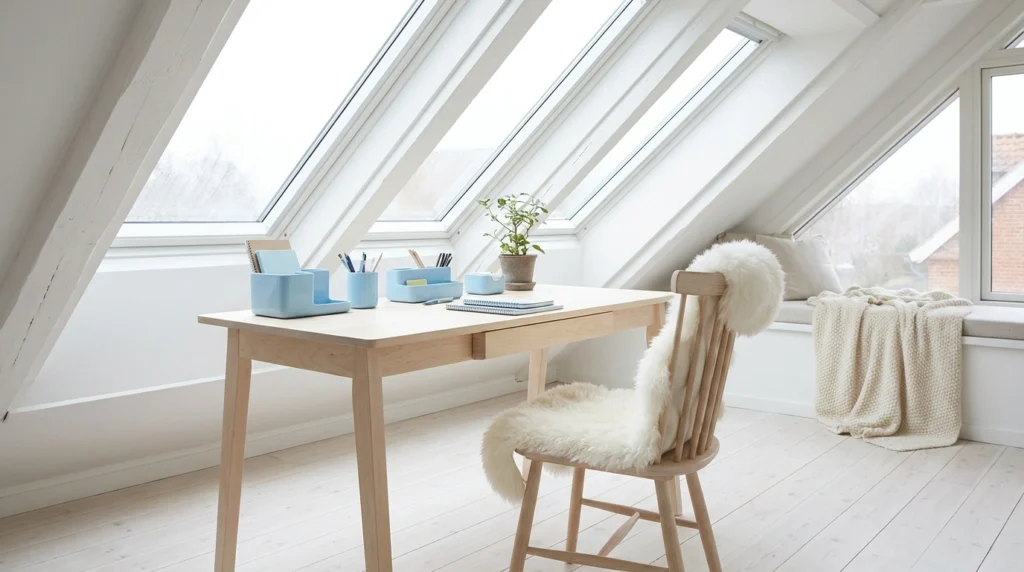
2. The Soft Minimalist Skylight Sanctuary

If you are lucky enough to have a skylight in your attic, placing your desk directly underneath or angled toward it is an absolute dream for productivity. The natural daylight floods your workspace, keeping your mood high and saving you from the eye strain caused by harsh fluorescent bulbs. The look is airy, bright, and calm, using pale linen textures, matte white finishes, and soft sky-blue or sage accents that make the small space feel twice as large. Sitting here feels like working in a light-filled greenhouse, high above the noise of the rest of the world.

What I personally love about this look is how the shifting clouds and daylight keep you connected to nature throughout the workday. However, a lot of people overlook the glare factor when placing a desk under a window. To avoid squinting at your monitor, make sure to position your screen at a 90-degree angle to the light source rather than directly in front of or behind it. I highly recommend investing in a light-filtering cellular shade for your skylight so you can control the light on intense, sunny afternoons. Keep the rest of the styling incredibly clean with a cork desk mat and a simple, comfortable wooden chair. Suggested budget: $200 – $400

3. The Moody Dark-Academia Focus Nook
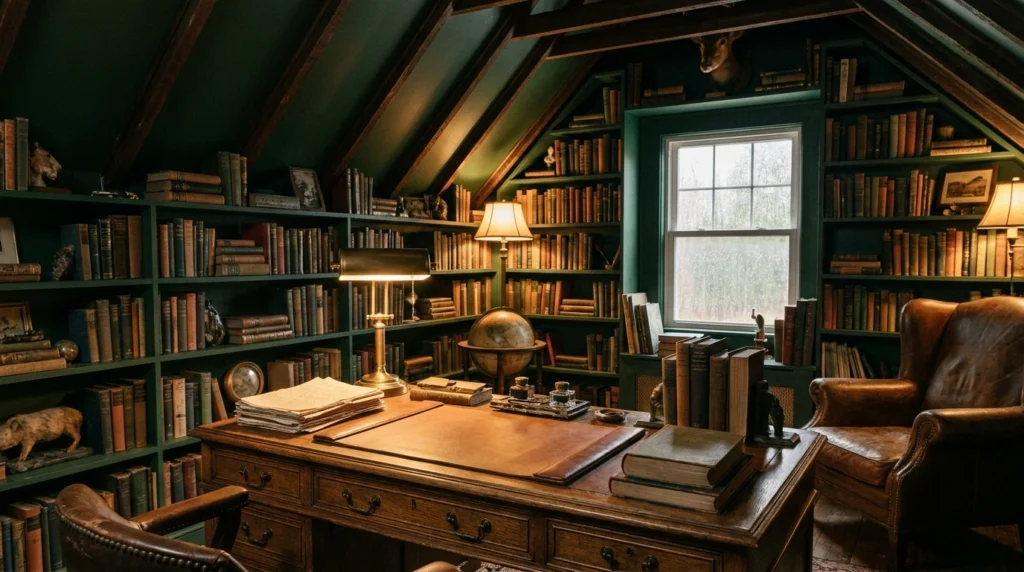
3. The Moody Dark-Academia Focus Nook

If bright and airy is not your style, a deep, cozy dark-academia aesthetic might be exactly what you need for deep, focused work. Think dark forest green, charcoal gray, or warm chocolate brown painted on the walls, paired with a vintage brass lamp and stack of leather-bound books. This setup feels like a secret library hidden away from the world, wrapping you in rich, comforting shadows that keep your eyes naturally locked onto your workspace. It works incredibly well for writers, researchers, or anyone who does their best thinking in a quiet, cozy cave.

The biggest mistake people make with moody colors in an attic is painting the entire room—slopes included—in a dark shade, which can make the space feel claustrophobic and tiny. Instead, paint only the flat knee wall and the back wall dark, and leave the sloping ceilings a warm, cream color to keep some balance. Use a warm-toned 2700K light bulb in a classic brass banker’s lamp to create a warm, inviting glow across your desk. To save money, scout your local thrift stores for an old wooden desk with character and give it a quick coat of dark wood stain. Suggested budget: $120 – $250

4. The Plants-and-Plywood Creative Loft
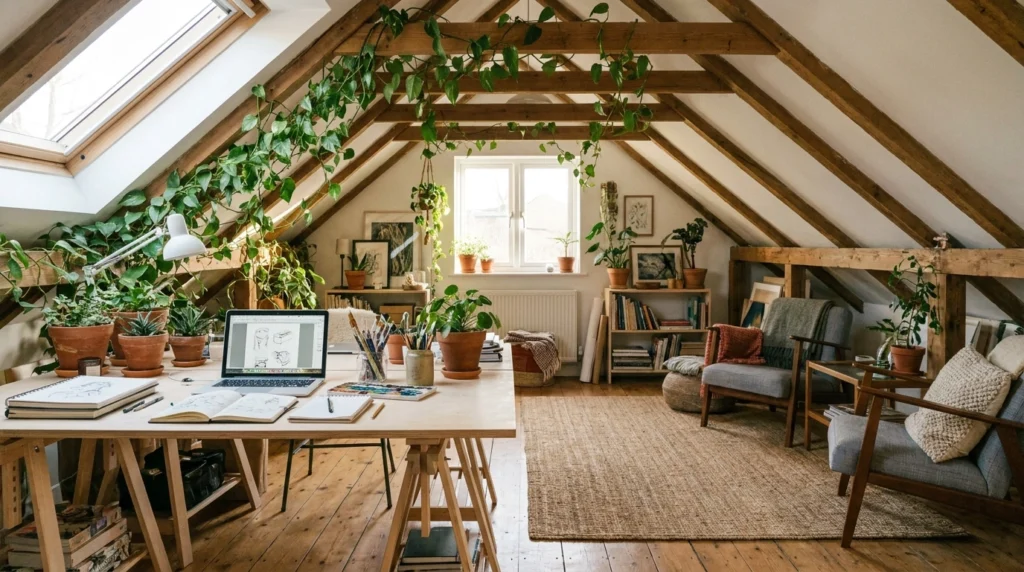
4. The Plants-and-Plywood Creative Loft

Bringing a bit of the outdoors inside is a wonderful way to reduce stress during busy workdays. This design uses light, affordable birch plywood for the desk and shelving, paired with an array of trailing houseplants like pothos or heartleaf philodendron draped along the roof beams. The textures are raw, organic, and highly tactile, featuring woven jute rugs, terracotta pots, and natural cotton accessories. The overall vibe is fresh, creative, and highly energizing, perfect for anyone who wants their workspace to feel alive.

When styling this space, focus on utilizing the unique vertical lines of your attic. You can hang light planters from the exposed collar ties or place trailing vines on top of low shelves built into the eaves so they cascade down the sloped walls. Make sure your plants get enough natural light from your attic windows, and choose low-maintenance varieties if you do not want to worry about watering them constantly. A great budget-friendly hack is using clean sheet plywood cut to size at your local hardware store to make custom, floating shelves that fit your sloped walls perfectly. Suggested budget: $100 – $220

5. The Textured Mid-Century Modern Corner
Trying to find a quiet corner to focus in a busy house can feel like an impossible task. Between the hum of the television downstairs, kids playing, and the endless traffic through the kitchen, finding real focus is tough. In my experience, the biggest mistake people make is trying to force a workspace into a high-traffic area like the living room or dining table. That is why turning an unused loft space into a dedicated work sanctuary is such a game-changer. By stepping away from the main floor, you create a physical and mental boundary between your work life and home life.

In this guide, we are looking at 12 attic home office ideas for quiet, focused productivity that will help you transform your dusty top floor into a beautiful, functional escape. You do not need a massive budget or a custom architectural design to make this work. Often, it is just about choosing the right desk placement, understanding how to handle sloped ceilings, and layering in textures that make you actually want to sit at your desk. We will explore how to make these unique, angled spaces feel incredibly cozy, warm, and highly functional so you can finally get your best work done in peace.

1. The Low-Profile Under-Eaves Desk Setup

There is something incredibly snug about setting up your workspace right under the slope of the roof. This look embraces the unusual architecture of an attic by placing a simple, low-profile wooden desk directly against the knee wall, creating a cozy cockpit feel. When you sit down, the angled ceiling wraps over you, blocking out visual distractions and helping you zone in on your screen. The color scheme here is all about warmth—soft off-white walls paired with light oak or birch wood, accented by a textured waffle-knit throw draped over your chair.

To make this setup work, the most important detail to consider is desk height. I always recommend starting with a low-profile desk that sits around 28 inches high, and picking a sleek office chair without high, bulky backrests so you do not accidentally bump the sloped ceiling when standing up. A common mistake is using a massive, traditional desk lamp here; instead, mount a slim, adjustable LED bar light directly onto the sloped rafter to save valuable desk space. For a budget-friendly option, you can easily replicate this look by using a simple wooden tabletop with short, sturdy hairpin legs. Suggested budget: $150 – $300

2. The Soft Minimalist Skylight Sanctuary

If you are lucky enough to have a skylight in your attic, placing your desk directly underneath or angled toward it is an absolute dream for productivity. The natural daylight floods your workspace, keeping your mood high and saving you from the eye strain caused by harsh fluorescent bulbs. The look is airy, bright, and calm, using pale linen textures, matte white finishes, and soft sky-blue or sage accents that make the small space feel twice as large. Sitting here feels like working in a light-filled greenhouse, high above the noise of the rest of the world.

What I personally love about this look is how the shifting clouds and daylight keep you connected to nature throughout the workday. However, a lot of people overlook the glare factor when placing a desk under a window. To avoid squinting at your monitor, make sure to position your screen at a 90-degree angle to the light source rather than directly in front of or behind it. I highly recommend investing in a light-filtering cellular shade for your skylight so you can control the light on intense, sunny afternoons. Keep the rest of the styling incredibly clean with a cork desk mat and a simple, comfortable wooden chair. Suggested budget: $200 – $400

3. The Moody Dark-Academia Focus Nook

If bright and airy is not your style, a deep, cozy dark-academia aesthetic might be exactly what you need for deep, focused work. Think dark forest green, charcoal gray, or warm chocolate brown painted on the walls, paired with a vintage brass lamp and stack of leather-bound books. This setup feels like a secret library hidden away from the world, wrapping you in rich, comforting shadows that keep your eyes naturally locked onto your workspace. It works incredibly well for writers, researchers, or anyone who does their best thinking in a quiet, cozy cave.

The biggest mistake people make with moody colors in an attic is painting the entire room—slopes included—in a dark shade, which can make the space feel claustrophobic and tiny. Instead, paint only the flat knee wall and the back wall dark, and leave the sloping ceilings a warm, cream color to keep some balance. Use a warm-toned 2700K light bulb in a classic brass banker's lamp to create a warm, inviting glow across your desk. To save money, scout your local thrift stores for an old wooden desk with character and give it a quick coat of dark wood stain. Suggested budget: $120 – $250

4. The Plants-and-Plywood Creative Loft

Bringing a bit of the outdoors inside is a wonderful way to reduce stress during busy workdays. This design uses light, affordable birch plywood for the desk and shelving, paired with an array of trailing houseplants like pothos or heartleaf philodendron draped along the roof beams. The textures are raw, organic, and highly tactile, featuring woven jute rugs, terracotta pots, and natural cotton accessories. The overall vibe is fresh, creative, and highly energizing, perfect for anyone who wants their workspace to feel alive.

When styling this space, focus on utilizing the unique vertical lines of your attic. You can hang light planters from the exposed collar ties or place trailing vines on top of low shelves built into the eaves so they cascade down the sloped walls. Make sure your plants get enough natural light from your attic windows, and choose low-maintenance varieties if you do not want to worry about watering them constantly. A great budget-friendly hack is using clean sheet plywood cut to size at your local hardware store to make custom, floating shelves that fit your sloped walls perfectly. Suggested budget: $100 – $220

5. The Textured Mid-Century Modern Corner

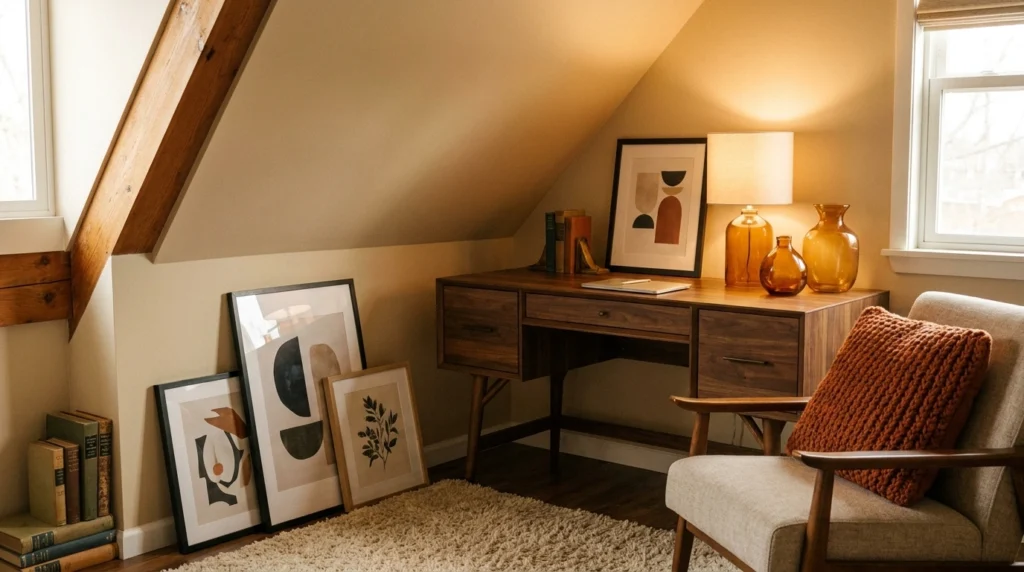
For a look that is structured yet incredibly cozy, a mid-century modern setup is a fantastic option. It features the signature tapered wooden legs, rich walnut finishes, and clean lines of the 1950s, but warmed up with cozy modern textures like a thick wool rug and a rust-colored knit cushion. This style is excellent for those who appreciate design history but still want a space that feels highly usable, comfortable, and inviting. The color palette centers around warm wood tones, amber glass, and soft olive green.

Because attic walls are often uniquely angled, hanging traditional framed artwork can be a real puzzle. A lot of people overlook this, but leaning your favorite framed prints against the knee wall or resting them on a low credenza is a wonderful way to display art without having to drill into sloped plaster. Pair a simple walnut desk with a vintage-inspired upholstered chair that has plenty of lumbar support. To keep things affordable, look for mid-century style desks online that use walnut veneers instead of solid wood, which look beautiful without the hefty price tag. Suggested budget: $250 – $500

6. The Low-Slung Grounded Floor Office
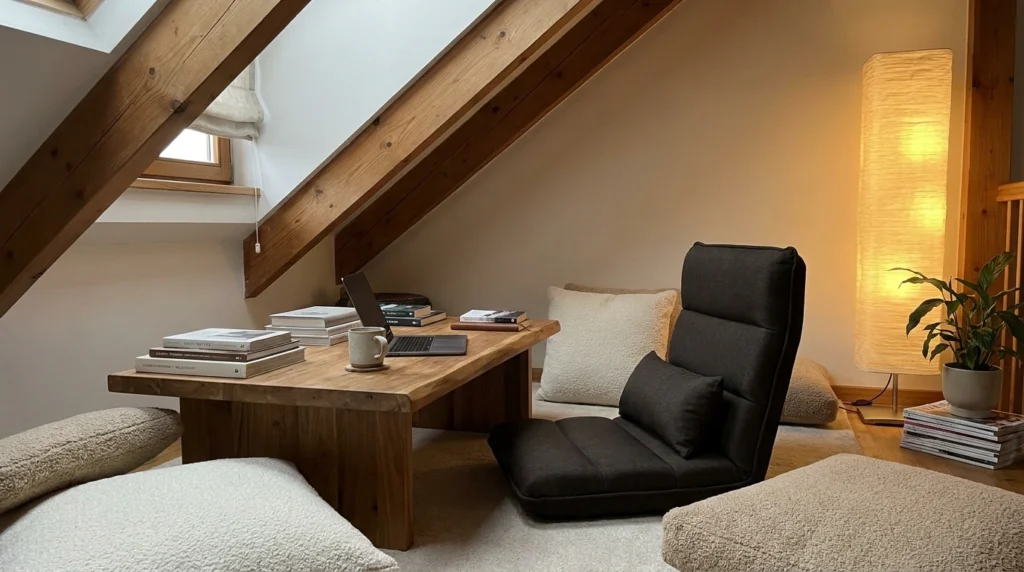
If you have an attic with extremely low rafters where standing up fully is a challenge, do not write off the space just yet. This style embraces a bohemian, Japanese-inspired low-slung setup that puts your work surface closer to the ground. Using a thick, supportive floor cushion, a low-lying solid wood coffee table as a desk, and soft, ambient floor lamps, this office feels incredibly grounding, peaceful, and slow. It is an amazing setup for laptop work, creative brainstorming sessions, or deep reading.

To make a low-slung office comfortable for long hours, you cannot skimp on your seating support. Do not just throw a random pillow on the floor; instead, invest in a proper ergonomic floor chair with back support, or a thick cotton floor futon cushion. Keep your electronics and cords organized by hiding them in woven wicker baskets along the floor so your workspace stays tidy and clutter-free. This works especially well if you want to look more put together without trying too hard, as the low height naturally hides bulky cords and desk legs. Suggested budget: $100 – $200

7. The Scandinavian Soft-White Studio
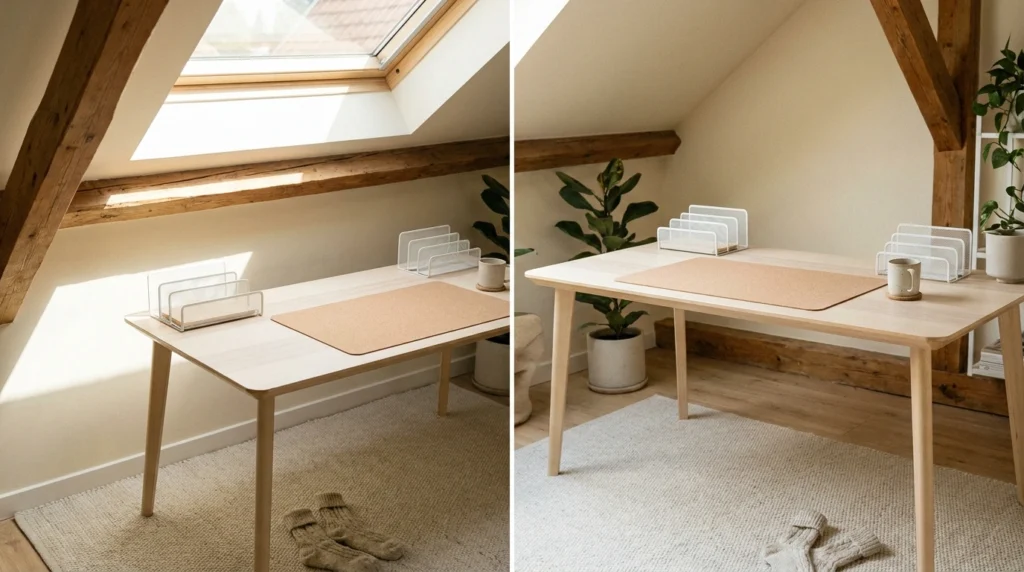
This design is all about maximizing every single drop of natural light using classic Nordic design principles. The floorboards are painted a soft, chalky white, the walls are a warm ivory, and the furniture is made of light ash or birch wood. To prevent the all-white space from feeling cold or clinical, you layer in soft, natural textures like a fluffy sheepskin rug thrown over your chair, a warm cork desk mat, and a simple ceramic mug. It feels incredibly peaceful, organized, and light, allowing your mind to focus completely on the task at hand.

In my experience, the biggest mistake people make with an all-white workspace is choosing cool, blue-toned white paint, which makes an attic feel like a dark, chilly refrigerator on cloudy days. Always opt for a warm white with yellow or pink undertones to keep the light feeling cozy and natural. Keep your desk storage minimal with simple white metal bins and light wood organizers. If you are on a tight budget, you can easily paint an old, mismatched desk with a matte white furniture paint to match the bright, clean room. Suggested budget: $150 – $350

8. The Custom Knee-Wall Double Desk
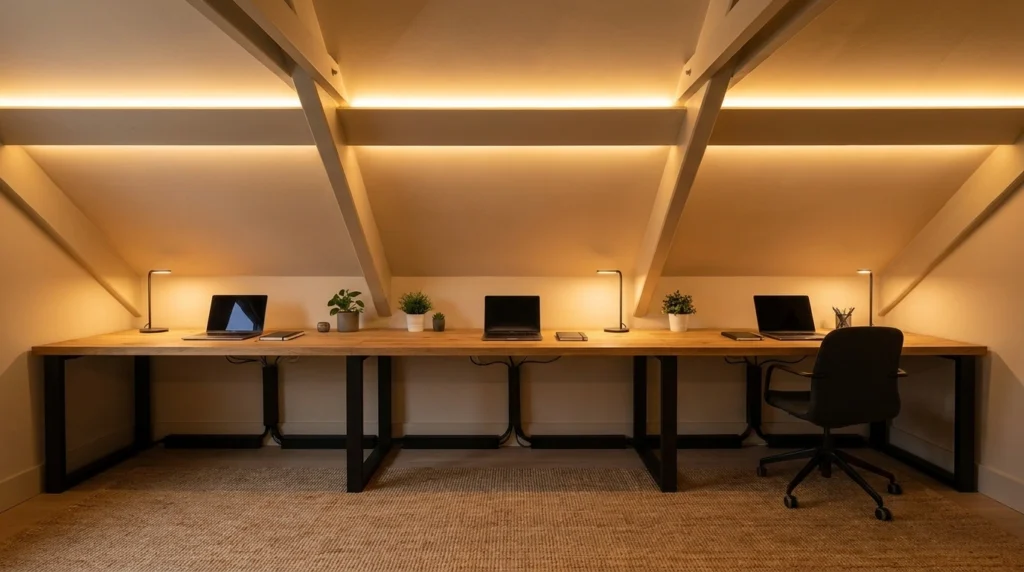
If you share a home office or simply need separate zones for different tasks—like a laptop setup on one side and a crafting space on the other—maximizing your knee wall is the way to go. This design features a long, continuous wooden countertop that stretches across the entire low wall of the attic, supported by simple drawers or legs. It looks custom-made, clean, and highly efficient, giving you plenty of room to spread out your work without cluttering the center of the room.

The secret to pulling off this look on a budget is using a solid wood butcher block countertop from a local home improvement store. You can easily rest it across two budget-friendly drawer units on either end to create tons of storage and a massive workspace without hiring a custom carpenter. Make sure to drill a few neat holes in the back of the countertop to run your computer cables down behind the drawers, keeping your long desk looking clean and tidy. Pair this with matching simple task chairs to keep the long wall looking uniform and cohesive. Suggested budget: $300 – $600

9. The Vintage Secretary Desk Escape
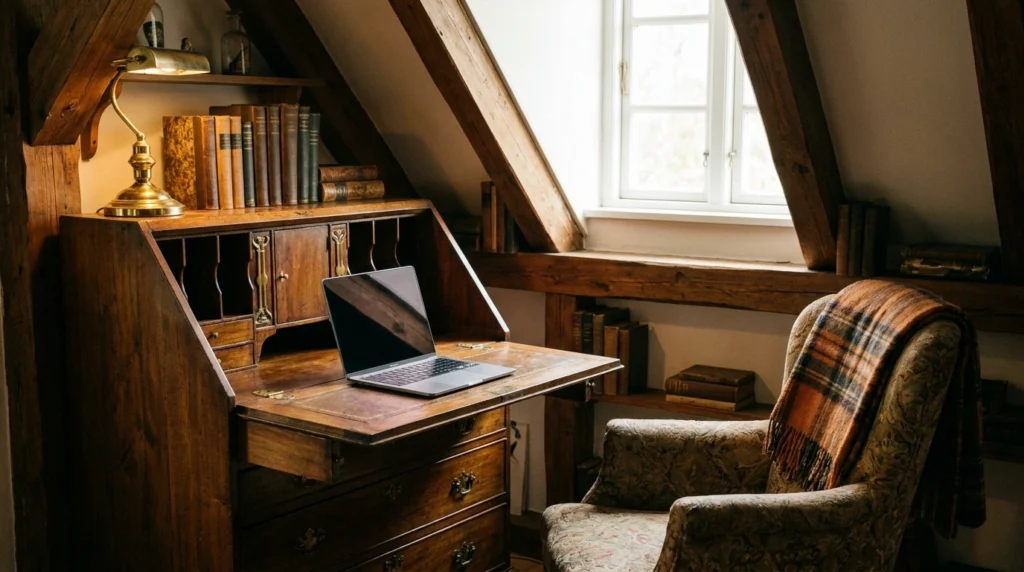
If you love a space with character, history, and a touch of nostalgia, building your office around an antique secretary desk is an amazing option. These desks feature a fold-down front panel that becomes your workspace, revealing tiny drawers and cubbyholes to store your pens and papers. Combined with a comfortable, patterned armchair, a warm plaid blanket, and a brass task light, this setup feels incredibly private, historic, and wonderfully detached from the digital noise of the modern world.

What I personally love about a secretary desk is that when your workday is done, you can simply fold the desk up and shut the doors. This completely hides your work, laptops, and papers from view, which is incredibly helpful for mentally shutting off from work at the end of the day. Because these desks have a small footprint, they fit perfectly into tight attic corners where a standard desk would feel too bulky. Look for vintage oak or mahogany secretary desks on online marketplaces or at local estate sales—you can often find high-quality, solid wood pieces for a fraction of the cost of new furniture. Suggested budget: $120 – $400

10. The Industrial Loft with Exposed Beams

If your attic has beautiful original structural elements like exposed dark wood rafters or brick walls, this style is designed to highlight them. This look pairs the raw, rugged textures of old timber and brick with modern black iron accents, a reclaimed wood desk, and a sturdy leather office chair. It feels grounded, strong, and highly textured, giving your workspace an authentic loft character that inspires creativity and deep focus. The color palette is earthy and natural, focusing on copper, deep charcoal, rust, and warm oak.

Whatever you do, do not paint over beautiful old wood beams. Instead, treat them with a clear, matte sealant to prevent dust and splintering while keeping their gorgeous natural color. If your attic lacks brick, you can bring in that grounded, industrial texture using a woven brick-colored rug or dark terracotta accessories on your desk. For lighting, choose a simple black metal adjustable arm lamp that can clip onto the edge of your desk, giving you excellent directed light exactly where you need it. Suggested budget: $200 – $450

11. The Cozy "Coffice" Closet Conversion

Sometimes you do not have the budget or space to convert an entire attic into an office, which is where the "coffice" (closet office) comes in. This design takes a small recessed closet, an unused alcove, or a crawlspace nook and turns it into a tiny, hyper-focused workstation. By fitting a thick wooden shelf as a built-in desk and adding small shelves above it, you create a incredibly cozy, nested work area that uses absolutely zero extra floor space in the rest of the room.

To make a tiny closet workspace feel comfortable and not cramped, lighting and color are absolutely critical. Paint the inside of the nook a warm, bright cream color to open it up visually, and mount simple, battery-powered puck lights under the shelves to illuminate your keyboard. To save floor space, swap out a traditional swinging closet door for a soft linen curtain that can be drawn closed when you are finished working. A simple, comfortable wooden stool that tucks completely under the desk when not in use is the perfect seating choice here. Suggested budget: $80 – $180

12. The Warm Greige Monochrome Haven

If you love a clean, modern style but find white-walled rooms a bit too cold and sterile, a warm greige (gray-beige) monochrome palette is the perfect middle ground. This setup uses various shades of warm gray, soft taupe, and cream across the walls, desk, and chair, creating a visually quiet, incredibly peaceful workspace. The lack of high-contrast colors allows your eyes to rest, reducing visual fatigue and helping you maintain a calm, steady focus throughout your most stressful workdays.

The biggest mistake people make here is picking a cool gray with blue undertones, which can make a small attic feel gloomy, dark, and uninviting. Always test paint swatches on your attic walls first, looking for warm greiges with yellow, red, or beige undertones that will catch the natural light beautifully. Use a soft, boucle fabric cushion on your chair and a felt desk pad to add cozy tactile layers to the monochrome space. A sleek gray metal desk paired with a matching neutral task chair keeps the lines of the room incredibly clean and cohesive. Suggested budget: $180 – $350

Simple Ideas for Cozy Functionality

At the end of the day, creating an incredible work area is not about spending thousands of dollars on custom renovations or designer furniture. The best attic home office ideas for quiet, focused productivity are the ones that prioritize your comfort, your lighting, and your peace of mind. Your workspace should feel like an inviting retreat, not a sterile chore to sit in.

If you are feeling overwhelmed by all the design choices, I always recommend starting with just one small change. Try moving your current desk closer to a window, or invest in a warmer, more comfortable light bulb for your desk lamp. You will be amazed at how much a few small, intentional changes can improve your focus, your energy, and your entire workday.

Which of these cozy attic workspace setups would you actually want to work in first? I would genuinely love to know in the comments below!

Frequently Asked Questions

How do I stop my attic office from getting too hot or cold?Attics can easily trap heat in the summer and feel drafty in the winter. In my experience, the best thing you can do is seal any drafts around windows, use a quiet space heater in the colder months, and install a sturdy ceiling fan or use a compact, powerful desk fan to keep the air moving when it gets warm.What is the best desk placement for an attic with sloped ceilings?For the best focus, place your desk directly against the lowest knee wall so the ceiling slopes down behind your monitor, or position your desk directly under a skylight. This utilizes the lowest parts of the room for sitting, leaving the higher-ceiling areas clear so you can walk around without bumping your head.How can I make a dark attic office feel brighter?Start by painting your sloped ceilings in a warm, light-reflecting ivory or cream color. Next, layer your lighting by using a bright desk lamp, a warm floor lamp in the corner, and stick-on LED strip lights along the undersides of your shelves to wash the angled walls in a cozy, ambient glow.How do I handle all the messy cords in a small attic workspace?Cords can quickly make a small room feel chaotic. I highly recommend mounting a simple wire management tray to the underside of your desk to hold your power strips, and using matching fabric cord sleeves or zip ties to bundle cables together so they run neatly down a single desk leg.What floor coverings work best for dampening sound in an attic?Because sound can travel easily through attic floorboards to the rooms below, a thick wool or jute area rug paired with a high-quality felt rug pad underneath is essential. This setup looks incredibly cozy and does an amazing job of absorbing footsteps, rolling chairs, and keyboard noise.

For a look that is structured yet incredibly cozy, a mid-century modern setup is a fantastic option. It features the signature tapered wooden legs, rich walnut finishes, and clean lines of the 1950s, but warmed up with cozy modern textures like a thick wool rug and a rust-colored knit cushion. This style is excellent for those who appreciate design history but still want a space that feels highly usable, comfortable, and inviting. The color palette centers around warm wood tones, amber glass, and soft olive green.

Because attic walls are often uniquely angled, hanging traditional framed artwork can be a real puzzle. A lot of people overlook this, but leaning your favorite framed prints against the knee wall or resting them on a low credenza is a wonderful way to display art without having to drill into sloped plaster. Pair a simple walnut desk with a vintage-inspired upholstered chair that has plenty of lumbar support. To keep things affordable, look for mid-century style desks online that use walnut veneers instead of solid wood, which look beautiful without the hefty price tag. Suggested budget: $250 – $500

6. The Low-Slung Grounded Floor Office

6. The Low-Slung Grounded Floor Office

If you have an attic with extremely low rafters where standing up fully is a challenge, do not write off the space just yet. This style embraces a bohemian, Japanese-inspired low-slung setup that puts your work surface closer to the ground. Using a thick, supportive floor cushion, a low-lying solid wood coffee table as a desk, and soft, ambient floor lamps, this office feels incredibly grounding, peaceful, and slow. It is an amazing setup for laptop work, creative brainstorming sessions, or deep reading.

To make a low-slung office comfortable for long hours, you cannot skimp on your seating support. Do not just throw a random pillow on the floor; instead, invest in a proper ergonomic floor chair with back support, or a thick cotton floor futon cushion. Keep your electronics and cords organized by hiding them in woven wicker baskets along the floor so your workspace stays tidy and clutter-free. This works especially well if you want to look more put together without trying too hard, as the low height naturally hides bulky cords and desk legs. Suggested budget: $100 – $200

7. The Scandinavian Soft-White Studio

7. The Scandinavian Soft-White Studio

This design is all about maximizing every single drop of natural light using classic Nordic design principles. The floorboards are painted a soft, chalky white, the walls are a warm ivory, and the furniture is made of light ash or birch wood. To prevent the all-white space from feeling cold or clinical, you layer in soft, natural textures like a fluffy sheepskin rug thrown over your chair, a warm cork desk mat, and a simple ceramic mug. It feels incredibly peaceful, organized, and light, allowing your mind to focus completely on the task at hand.

In my experience, the biggest mistake people make with an all-white workspace is choosing cool, blue-toned white paint, which makes an attic feel like a dark, chilly refrigerator on cloudy days. Always opt for a warm white with yellow or pink undertones to keep the light feeling cozy and natural. Keep your desk storage minimal with simple white metal bins and light wood organizers. If you are on a tight budget, you can easily paint an old, mismatched desk with a matte white furniture paint to match the bright, clean room. Suggested budget: $150 – $350

8. The Custom Knee-Wall Double Desk

8. The Custom Knee-Wall Double Desk

If you share a home office or simply need separate zones for different tasks—like a laptop setup on one side and a crafting space on the other—maximizing your knee wall is the way to go. This design features a long, continuous wooden countertop that stretches across the entire low wall of the attic, supported by simple drawers or legs. It looks custom-made, clean, and highly efficient, giving you plenty of room to spread out your work without cluttering the center of the room.

The secret to pulling off this look on a budget is using a solid wood butcher block countertop from a local home improvement store. You can easily rest it across two budget-friendly drawer units on either end to create tons of storage and a massive workspace without hiring a custom carpenter. Make sure to drill a few neat holes in the back of the countertop to run your computer cables down behind the drawers, keeping your long desk looking clean and tidy. Pair this with matching simple task chairs to keep the long wall looking uniform and cohesive. Suggested budget: $300 – $600

9. The Vintage Secretary Desk Escape

9. The Vintage Secretary Desk Escape

If you love a space with character, history, and a touch of nostalgia, building your office around an antique secretary desk is an amazing option. These desks feature a fold-down front panel that becomes your workspace, revealing tiny drawers and cubbyholes to store your pens and papers. Combined with a comfortable, patterned armchair, a warm plaid blanket, and a brass task light, this setup feels incredibly private, historic, and wonderfully detached from the digital noise of the modern world.

What I personally love about a secretary desk is that when your workday is done, you can simply fold the desk up and shut the doors. This completely hides your work, laptops, and papers from view, which is incredibly helpful for mentally shutting off from work at the end of the day. Because these desks have a small footprint, they fit perfectly into tight attic corners where a standard desk would feel too bulky. Look for vintage oak or mahogany secretary desks on online marketplaces or at local estate sales—you can often find high-quality, solid wood pieces for a fraction of the cost of new furniture. Suggested budget: $120 – $400

10. The Industrial Loft with Exposed Beams

10. The Industrial Loft with Exposed Beams

If your attic has beautiful original structural elements like exposed dark wood rafters or brick walls, this style is designed to highlight them. This look pairs the raw, rugged textures of old timber and brick with modern black iron accents, a reclaimed wood desk, and a sturdy leather office chair. It feels grounded, strong, and highly textured, giving your workspace an authentic loft character that inspires creativity and deep focus. The color palette is earthy and natural, focusing on copper, deep charcoal, rust, and warm oak.

Whatever you do, do not paint over beautiful old wood beams. Instead, treat them with a clear, matte sealant to prevent dust and splintering while keeping their gorgeous natural color. If your attic lacks brick, you can bring in that grounded, industrial texture using a woven brick-colored rug or dark terracotta accessories on your desk. For lighting, choose a simple black metal adjustable arm lamp that can clip onto the edge of your desk, giving you excellent directed light exactly where you need it. Suggested budget: $200 – $450

11. The Cozy “Coffice” Closet Conversion
11. The Cozy "Coffice" Closet Conversion

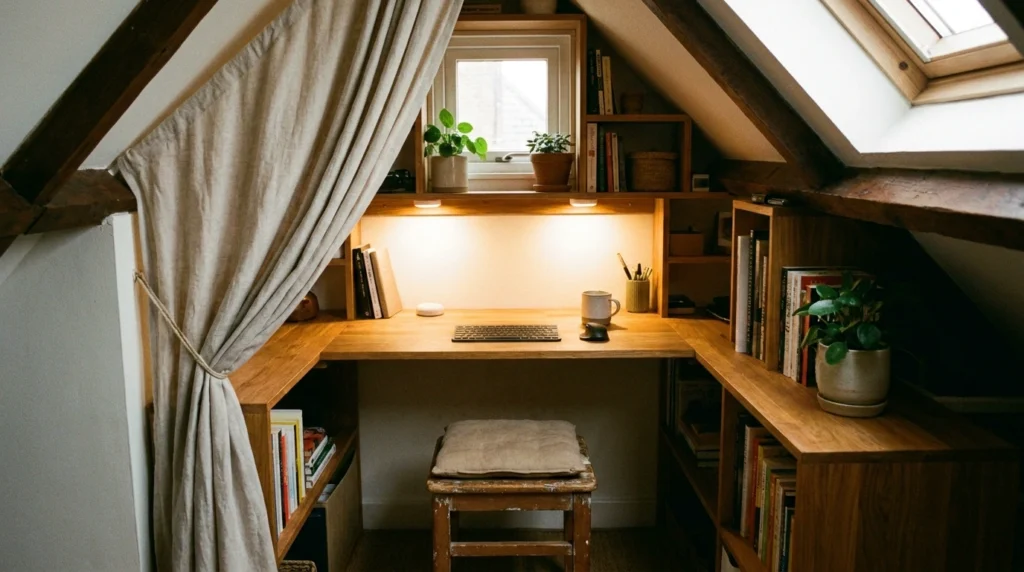
Sometimes you do not have the budget or space to convert an entire attic into an office, which is where the “coffice” (closet office) comes in. This design takes a small recessed closet, an unused alcove, or a crawlspace nook and turns it into a tiny, hyper-focused workstation. By fitting a thick wooden shelf as a built-in desk and adding small shelves above it, you create a incredibly cozy, nested work area that uses absolutely zero extra floor space in the rest of the room.

To make a tiny closet workspace feel comfortable and not cramped, lighting and color are absolutely critical. Paint the inside of the nook a warm, bright cream color to open it up visually, and mount simple, battery-powered puck lights under the shelves to illuminate your keyboard. To save floor space, swap out a traditional swinging closet door for a soft linen curtain that can be drawn closed when you are finished working. A simple, comfortable wooden stool that tucks completely under the desk when not in use is the perfect seating choice here. Suggested budget: $80 – $180

12. The Warm Greige Monochrome Haven
12. The Warm Greige Monochrome Haven

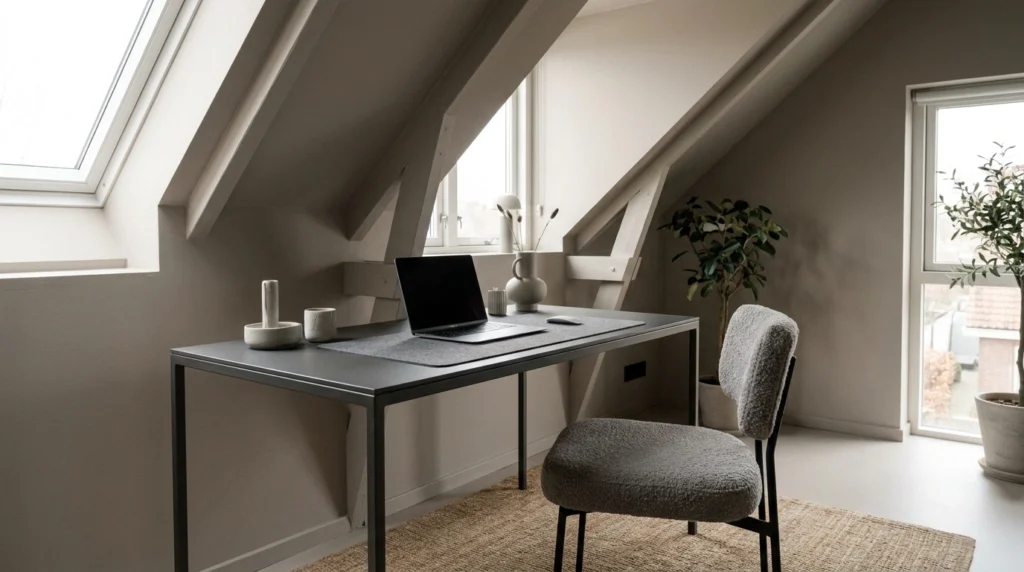
If you love a clean, modern style but find white-walled rooms a bit too cold and sterile, a warm greige (gray-beige) monochrome palette is the perfect middle ground. This setup uses various shades of warm gray, soft taupe, and cream across the walls, desk, and chair, creating a visually quiet, incredibly peaceful workspace. The lack of high-contrast colors allows your eyes to rest, reducing visual fatigue and helping you maintain a calm, steady focus throughout your most stressful workdays.

The biggest mistake people make here is picking a cool gray with blue undertones, which can make a small attic feel gloomy, dark, and uninviting. Always test paint swatches on your attic walls first, looking for warm greiges with yellow, red, or beige undertones that will catch the natural light beautifully. Use a soft, boucle fabric cushion on your chair and a felt desk pad to add cozy tactile layers to the monochrome space. A sleek gray metal desk paired with a matching neutral task chair keeps the lines of the room incredibly clean and cohesive. Suggested budget: $180 – $350

Simple Ideas for Cozy Functionality

At the end of the day, creating an incredible work area is not about spending thousands of dollars on custom renovations or designer furniture. The best attic home office ideas for quiet, focused productivity are the ones that prioritize your comfort, your lighting, and your peace of mind. Your workspace should feel like an inviting retreat, not a sterile chore to sit in.

If you are feeling overwhelmed by all the design choices, I always recommend starting with just one small change. Try moving your current desk closer to a window, or invest in a warmer, more comfortable light bulb for your desk lamp. You will be amazed at how much a few small, intentional changes can improve your focus, your energy, and your entire workday.

Which of these cozy attic workspace setups would you actually want to work in first? I would genuinely love to know in the comments below!

Frequently Asked Questions

How do I stop my attic office from getting too hot or cold?

Attics can easily trap heat in the summer and feel drafty in the winter. In my experience, the best thing you can do is seal any drafts around windows, use a quiet space heater in the colder months, and install a sturdy ceiling fan or use a compact, powerful desk fan to keep the air moving when it gets warm.

What is the best desk placement for an attic with sloped ceilings?

For the best focus, place your desk directly against the lowest knee wall so the ceiling slopes down behind your monitor, or position your desk directly under a skylight. This utilizes the lowest parts of the room for sitting, leaving the higher-ceiling areas clear so you can walk around without bumping your head.

How can I make a dark attic office feel brighter?

Start by painting your sloped ceilings in a warm, light-reflecting ivory or cream color. Next, layer your lighting by using a bright desk lamp, a warm floor lamp in the corner, and stick-on LED strip lights along the undersides of your shelves to wash the angled walls in a cozy, ambient glow.

How do I handle all the messy cords in a small attic workspace?

Cords can quickly make a small room feel chaotic. I highly recommend mounting a simple wire management tray to the underside of your desk to hold your power strips, and using matching fabric cord sleeves or zip ties to bundle cables together so they run neatly down a single desk leg.

What floor coverings work best for dampening sound in an attic?

Because sound can travel easily through attic floorboards to the rooms below, a thick wool or jute area rug paired with a high-quality felt rug pad underneath is essential. This setup looks incredibly cozy and does an amazing job of absorbing footsteps, rolling chairs, and keyboard noise.

About the Author

Sarah Profile image

Sarah

Hi, I’m Sarah a home decor enthusiast and writer passionate about creating spaces that feel both beautiful and lived-in. I believe your home should reflect your personality while still being practical for everyday life. Through simple ideas and thoughtful styling, I share inspiration to help you design a space you truly love.