The Rule of Three: A Simple Design Trick That Changes Everything – Comfy Inspo
Ever look at a well-designed room and wonder why it just works? Why some spaces feel balanced, cozy, and aesthetically perfect without being overdone?
The secret might be simpler than you think: The Rule of Three.
Used by interior designers, stylists, and artists alike, this timeless principle can elevate your home decor instantly—whether you’re styling a shelf, arranging furniture, or picking throw pillows. In this post, we’ll break down exactly what the Rule of Three is, how to use it, and why it makes such a big difference—especially in small or minimalist spaces.

What Is the Rule of Three in Design?
The Rule of Three is a visual design principle based on the idea that objects arranged in odd numbers (especially threes) are more appealing, memorable, and dynamic than even-numbered groupings.
Why?
Odd numbers create asymmetry, which naturally draws the eye. Three items offer just enough variety without overwhelming the space. It’s balanced, yet interesting—perfect for interiors that feel thoughtful and effortless.
Used in:
- Shelf styling
- Color palettes
- Furniture groupings
- Wall art arrangements
- Tablescapes and decor vignettes

Why Does the Rule of Three Work So Well?
The magic lies in visual harmony and balance. Our brains love patterns—but not too much. A trio of objects, tones, or textures strikes the right balance between order and movement.
It works because:
- It guides your eye naturally through the space
- It introduces rhythm without monotony
- It keeps minimalist spaces from feeling sterile
- It adds a subconscious sense of cohesion
Designers use this trick because it’s subtle but powerful.

How to Use the Rule of Three in Interior Design
Let’s dive into real, practical ways you can apply the Rule of Three in your home—no design degree required.
1. Style Coffee Tables with Three Objects
Instead of cluttering your coffee table, try this:
Example combo:
- One tray
- One stack of books
- One decorative item (like a candle or vase)
Tip: Use varying heights, shapes, and textures to make it visually interesting.

2. Use Three Colors in Your Room Palette
A three-color scheme is one of the easiest ways to create a cohesive look.
Formula:
- Main color (60%) – walls, large furniture
- Secondary color (30%) – rugs, curtains, accent chairs
- Accent color (10%) – pillows, art, small decor
This 60-30-10 rule keeps things balanced and layered.

3. Group Wall Art in Threes
Skip the oversized single print and instead use a trio of art pieces.
Best combos:
- Three matching frames with different art
- A vertical or horizontal triptych
- Abstracts, line art, or photography in similar tones
Hang them equidistant for a polished gallery look.

4. Decorate Shelves Using Three Items Per Shelf
Too many knickknacks = clutter. Three items = styled.
Try this:
- One vertical item (e.g., tall vase)
- One horizontal (e.g., stack of books)
- One organic (e.g., small plant or candle)
Repeat the structure on multiple shelves for rhythm.

5. Mix Three Textures or Materials in a Room
Want a cozy space that doesn’t feel flat? Layer three materials.
Example combo:
- Linen sofa
- Leather ottoman
- Woven jute rug
The Rule of Three helps build depth and warmth, even in neutral spaces.

6. Display Three Pillows on a Sofa or Bed
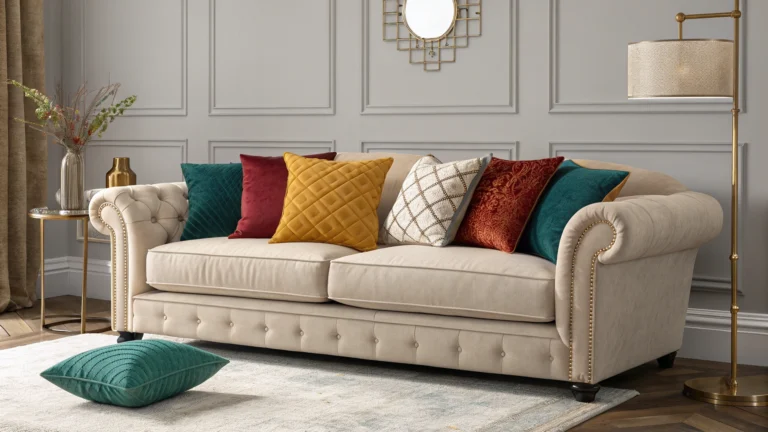
Odd numbers always look better than pairs. Use three pillows in different sizes, patterns, or fabrics to bring comfort and interest.
Styling tip:
Start with a solid color, add a pattern, then a texture (like velvet or knit).

7. Use Three Light Sources in a Room
Lighting isn’t just functional—it’s atmospheric.
Design in threes:
- Overhead light (chandelier or pendant)
- Task light (table or floor lamp)
- Ambient light (wall sconces or candles)
It creates layers that shift with your mood and time of day.

Table: The Rule of Three – Use Cases at a Glance
| Design Area | Rule of Three Application | Why It Works |
|---|---|---|
| Coffee Table | Tray + Book Stack + Decorative Object | Creates height, texture, and balance |
| Color Scheme | 60% Main + 30% Secondary + 10% Accent Color | Keeps palette unified and layered |
| Wall Art | Three-piece gallery wall | Adds symmetry without being rigid |
| Shelves | 3 items per shelf (tall, wide, soft) | Avoids clutter, adds rhythm |
| Texture Layering | Mix 3 materials: wood, metal, fabric | Adds depth and visual warmth |
| Throw Pillows | 3 patterns or textures on sofa/bed | Balanced but cozy |
| Lighting | Overhead + Task + Ambient | Dynamic mood control |
Bonus: Can You Break the Rule of Three?
Of course! Once you understand the principle, you can bend or break it for your own style. Some designers work in groups of five or repeat the rule across the room in multiples of three.
But as a general rule—especially for beginners—the Rule of Three is a fail-safe method for designing stylish, cozy, and well-composed spaces.

Final Thoughts
The Rule of Three is one of those small design secrets that makes a big impact. It’s easy to remember, easy to use, and it works for every room, budget, and style—from cozy boho nooks to sleek minimalist spaces.
Whether you’re styling your living room shelves, choosing paint colors, or arranging lights in your bedroom, keep the Rule of Three in mind. It might just be the trick that changes everything.