12 Minimalist Kitchen Designs That Still Feel Warm and Inviting
There’s a very real frustration that comes up when you try to design a minimalist kitchen: everything starts to feel a little… cold. You clear the counters, simplify the colors, maybe even swap in sleek cabinets—and suddenly the space looks more like a showroom than a place where you actually live. If you’ve been stuck between wanting a clean look and still craving warmth, you’re not alone.
In my experience, the biggest mistake here is thinking minimalism means stripping everything away. It doesn’t. The best minimalist kitchen designs still feel lived-in, comfortable, and personal—they just do it with fewer, better choices.
The good news? You don’t need a full renovation to get there. Small, thoughtful changes can completely shift how your kitchen feels.
In this post, you’ll find 12 minimalist kitchen designs that still feel warm and inviting—each one practical, achievable, and genuinely Pinterest-worthy. Let’s get into the ideas that actually work in real homes.
Soft Wood Cabinets That Add Instant Warmth
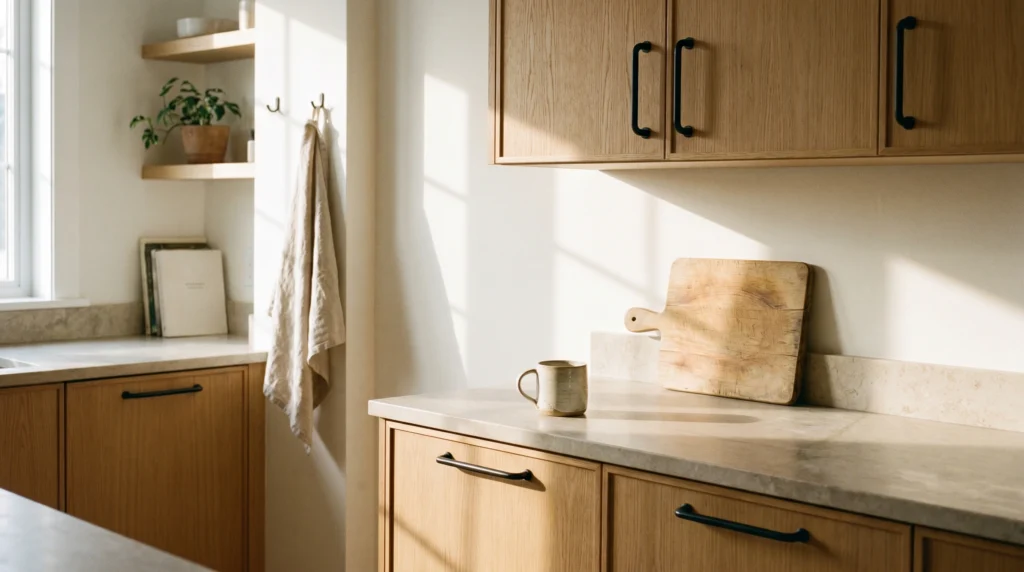
There’s something about light wood cabinetry that makes a kitchen feel calm but never empty. Think soft oak, maple, or ash with a matte finish—the kind of texture that catches sunlight gently and adds subtle depth.
To recreate this, swap out high-gloss cabinets for flat-panel wood fronts or even use peel-and-stick wood veneer for a budget version. Pair with simple black or brushed brass hardware. What I personally love about this is how it warms up even the most basic layouts. Expect to spend anywhere from $80–$300 per cabinet door for real wood, or under $50 for DIY options.
Tip: Avoid overly yellow-toned wood—it can quickly look dated.
Open Shelving With Real Everyday Items
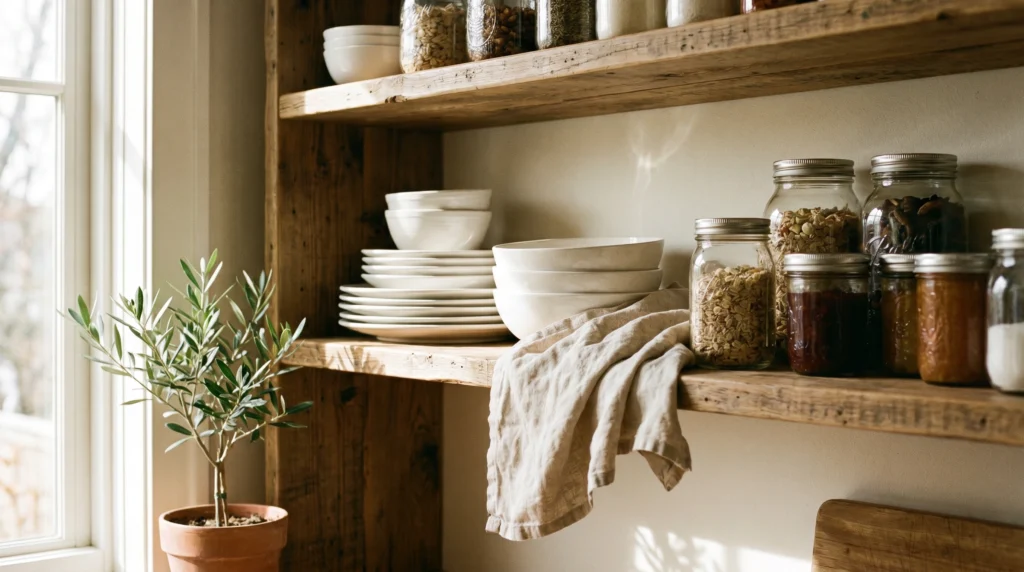
Open shelves can either look amazing—or like clutter chaos. The difference is what you put on them.
Instead of styling with decorative-only pieces, use everyday items: stacked plates, glass jars, a few favorite mugs. It feels natural and keeps the space grounded. I always recommend sticking to a limited color palette (whites, neutrals, soft greens). Shelves cost around $30–$120 depending on material.
Mistake to avoid: overcrowding. Leave breathing space between items.
Warm Under-Cabinet Lighting
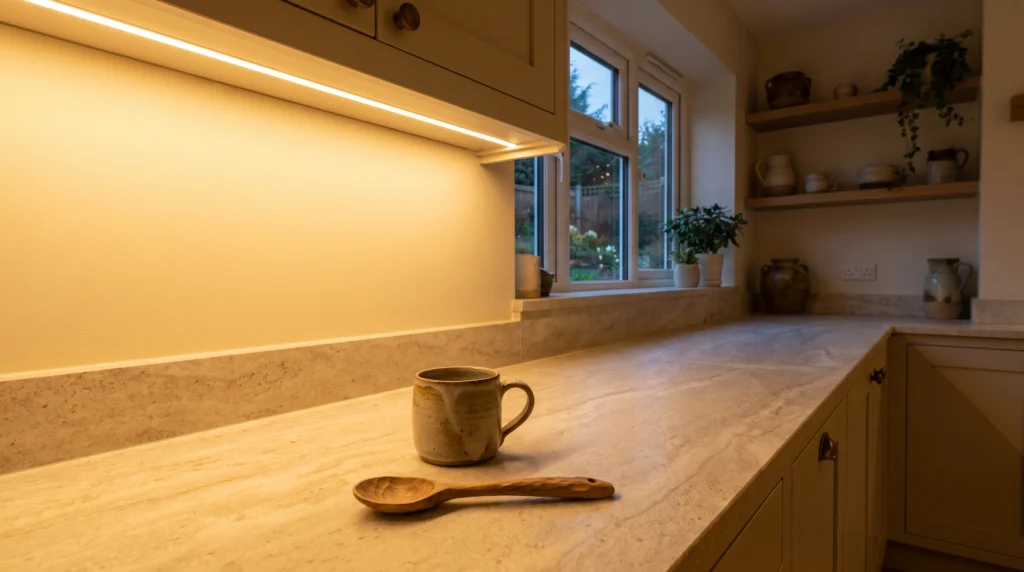
Lighting changes everything. A minimalist kitchen without warm lighting often feels flat.
Install LED strip lights under cabinets with a warm tone (2700K–3000K). It creates a soft glow in the evenings and highlights textures like wood or tile. In my experience, this is one of the cheapest upgrades with the biggest payoff—around $20–$60.
Tip: Avoid cool white lighting—it makes the space feel sterile.
Textured Backsplash Instead of Busy Patterns
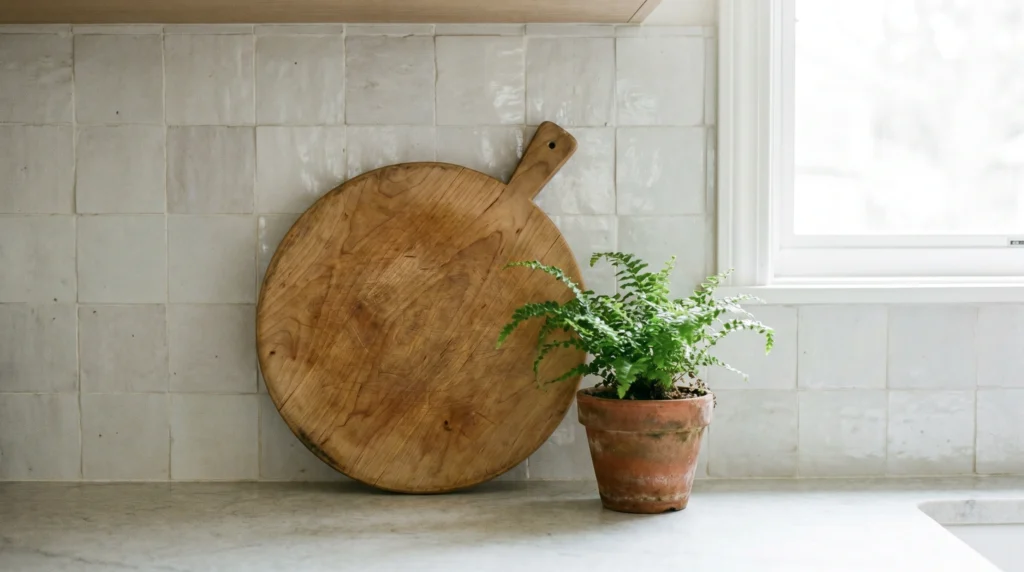
Minimal doesn’t mean boring—it just means controlled.
A textured backsplash (like handmade tiles or subtle stone) adds interest without overwhelming the space. Look for slightly uneven surfaces or matte finishes. Budget ranges from $5–$20 per square foot.
What I personally love about this is how it adds character without needing bold colors.
Tip: Avoid overly glossy tiles—they reflect too much light and feel cold.
Neutral Color Palette With One Warm Accent
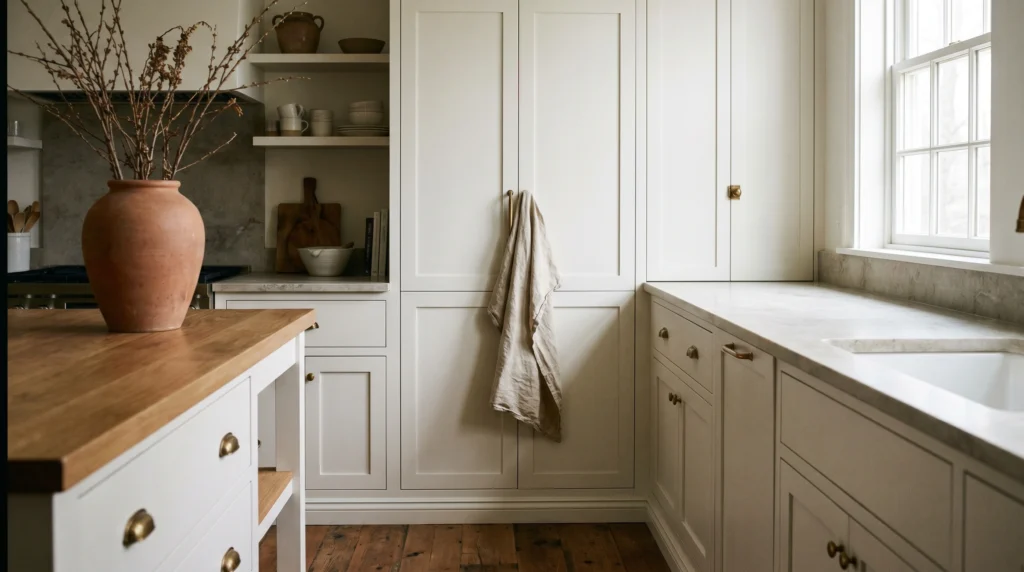
A fully neutral kitchen can feel flat if there’s no focal point.
Add one warm accent—like a muted terracotta vase, olive green stool, or dusty rose dishware. Keep everything else simple. This keeps the minimalist look intact but adds personality. Budget: $15–$80.
A lot of people skip this step, but it makes all the difference.
Tip: Don’t add too many accent colors—one or two is enough.
Hidden Storage That Reduces Visual Noise
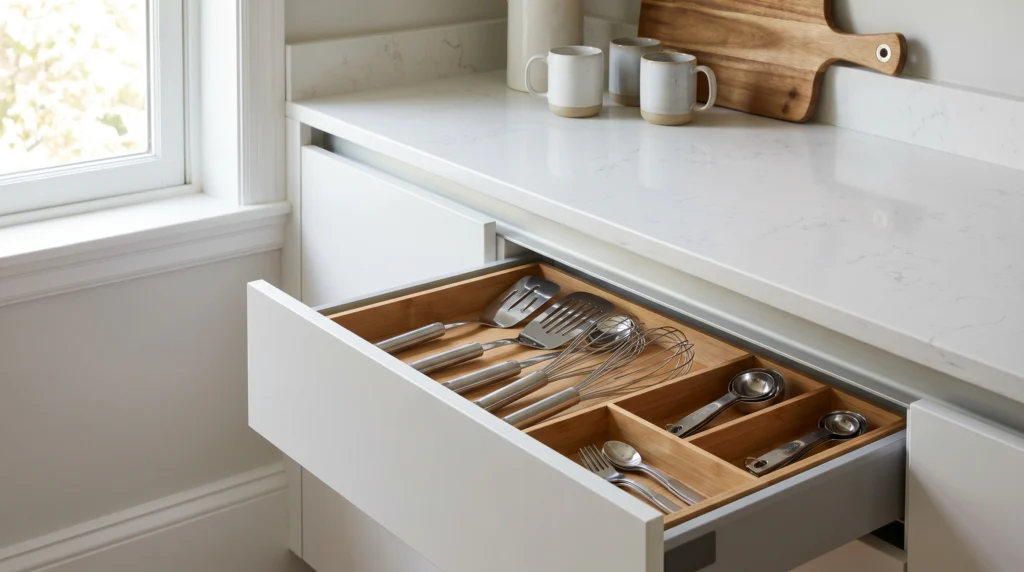
Clutter is the fastest way to ruin a minimalist kitchen.
Use drawer organizers, pull-out cabinets, or baskets inside cupboards to keep everything out of sight. The goal is clean surfaces, not empty homes. Storage solutions can cost $10–$100.
I always recommend this to anyone who feels their kitchen looks messy no matter what.
Mistake: keeping too many items “just in case.”
Matte Finishes Instead of Glossy Surfaces
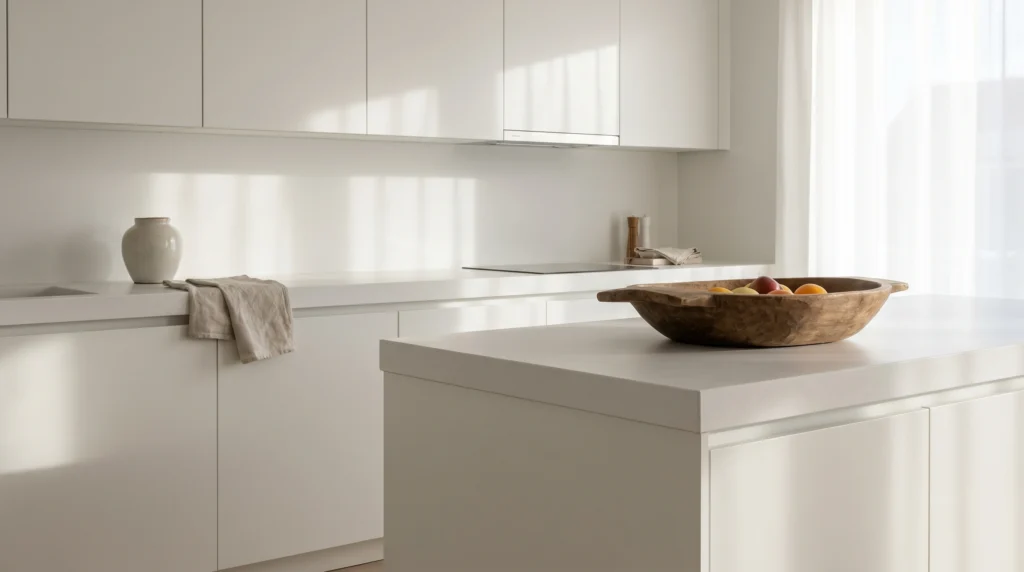
Glossy finishes reflect light harshly and can make a space feel cold.
Switch to matte finishes—on cabinets, tiles, or even appliances if possible. Matte surfaces absorb light softly, making everything feel calmer. Budget varies but even small swaps (like cabinet paint) can cost under $100.
Tip: Matte black or matte white both work beautifully in minimalist kitchens.
Layered Natural Textures
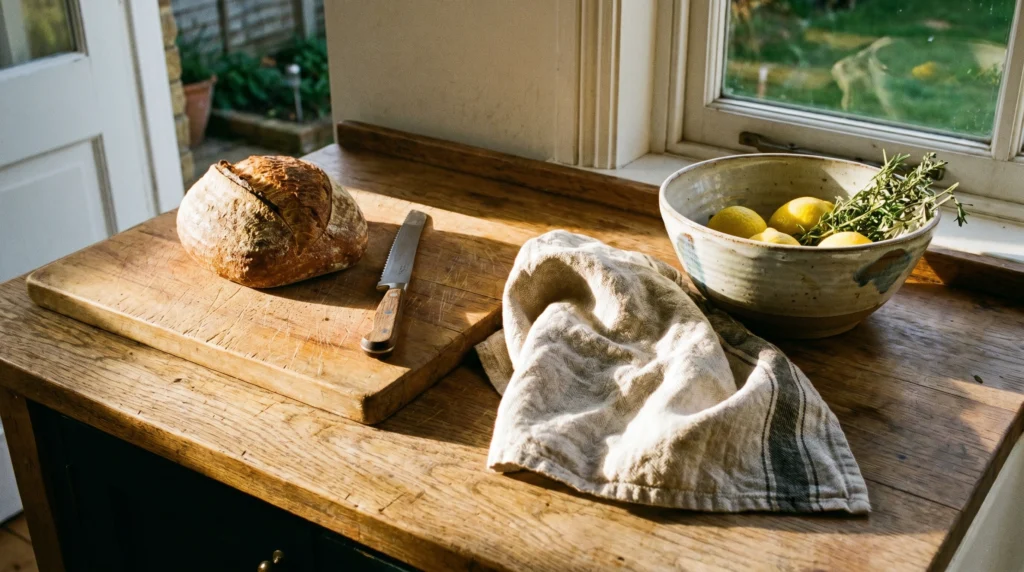
Minimalist kitchens need texture to feel alive.
Mix materials like wood, linen, ceramic, and stone. A wooden board, linen towel, and ceramic bowl can completely change the feel of a space. This is one of the easiest and cheapest upgrades ($10–$50).
What I personally love about this is how effortless it looks when done right.
Tip: Stick to natural materials—avoid plastic where possible.
Simple Pendant Lighting With Warm Bulbs
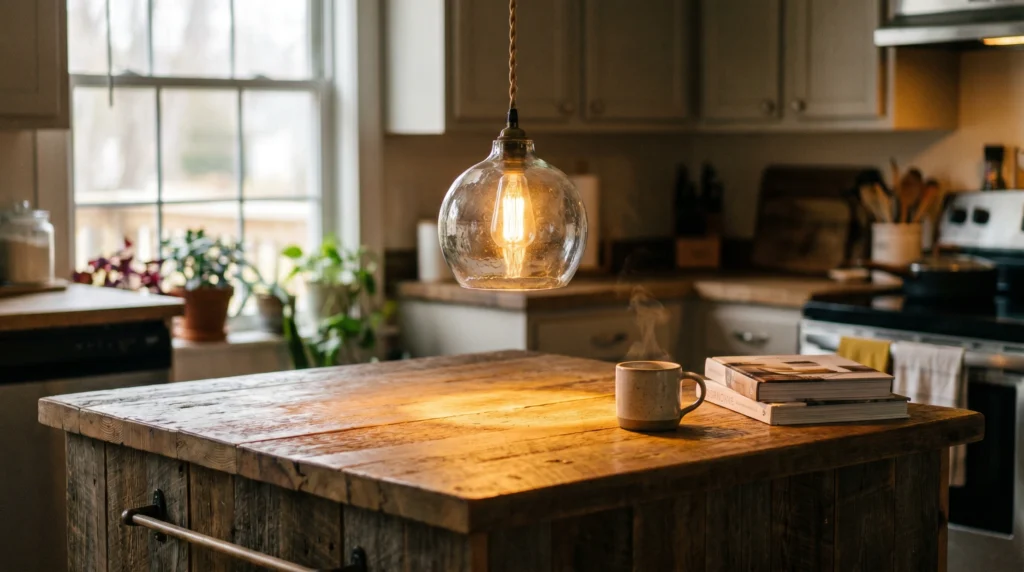
Overhead lighting alone isn’t enough.
Add a simple pendant light above an island or dining area. Choose warm bulbs and soft shapes (glass, fabric, or matte metal). Fixtures range from $40–$200.
Mistake: choosing oversized or overly decorative fixtures.
Minimal Decor That Actually Feels Personal
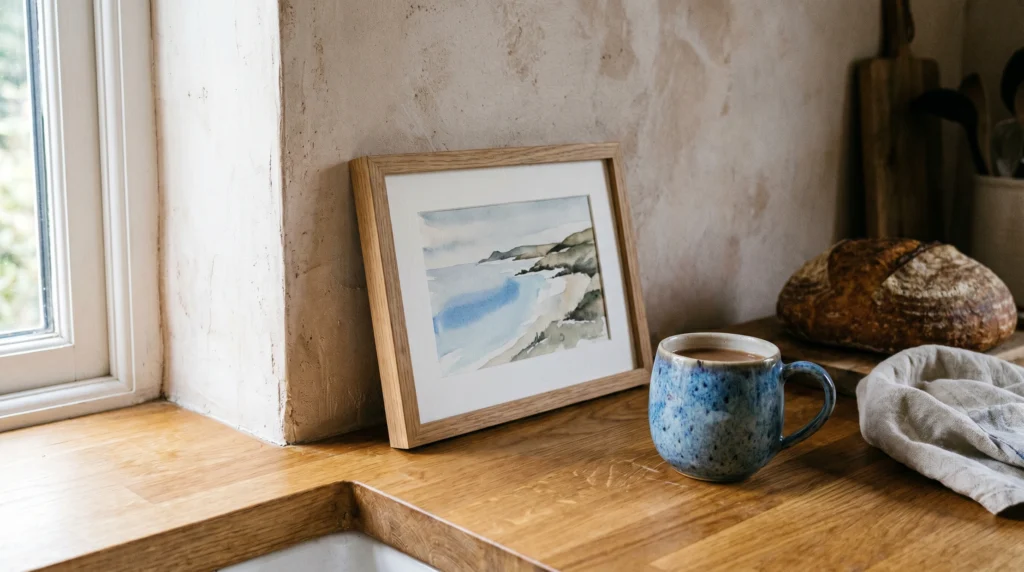
Minimalism doesn’t mean zero personality.
Add one or two meaningful items—a framed recipe, a small artwork, or a handmade piece. It keeps the space from feeling generic. Budget: $10–$60.
In my experience, this is what separates a nice kitchen from one that feels like home.
Tip: Rotate items occasionally to keep it fresh.
Soft Curtains or Linen Shades
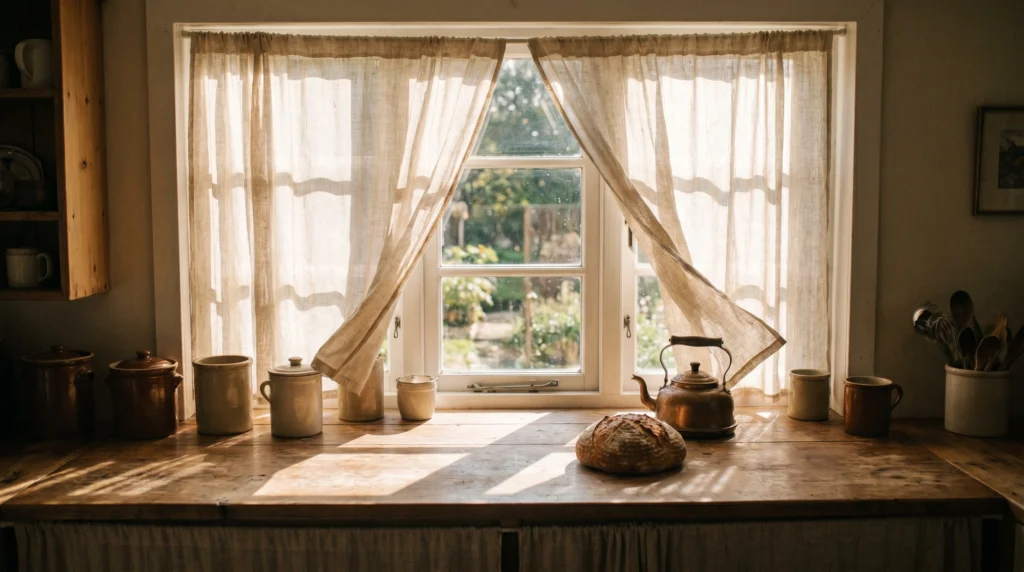
Bare windows can make a kitchen feel unfinished.
Add light linen curtains or simple shades in soft tones. They diffuse light and add softness. Costs range from $20–$80.
A lot of people skip this, but it instantly warms up the space.
Tip: Avoid heavy fabrics—keep it airy.
A Small Seating Corner That Feels Lived-In
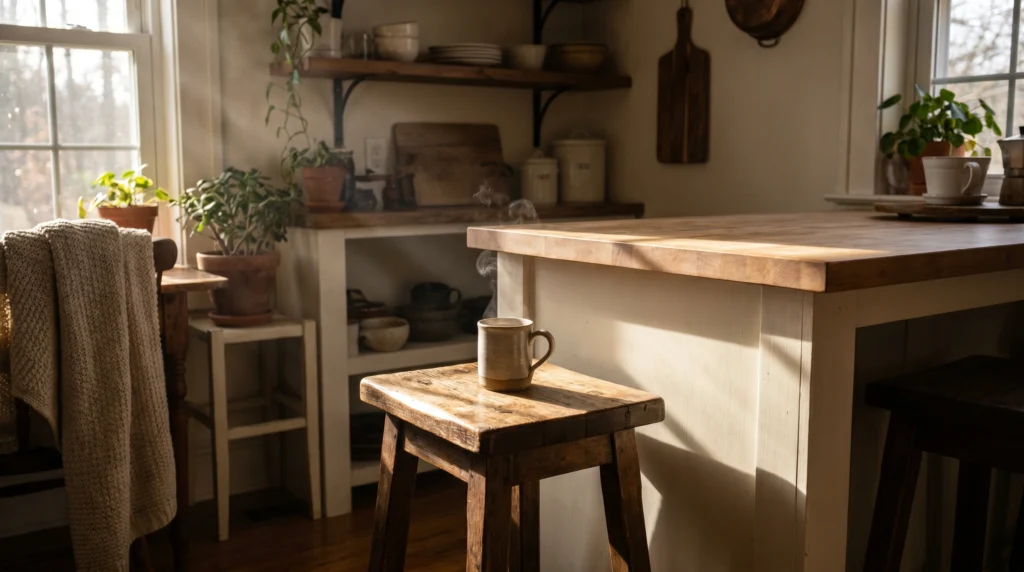
Even a minimalist kitchen benefits from a small “pause” area.
Add a simple stool, bench, or small chair where someone can sit with coffee. It makes the kitchen feel more human and less functional-only. Budget: $30–$150.
What I personally love about this is how it invites you to actually spend time there.
Tip: Keep it simple—don’t overcrowd the area.
Conclusion
Creating a space that feels both simple and warm isn’t about doing more—it’s about choosing better. These minimalist kitchen designs prove that you don’t have to sacrifice comfort to get a clean, uncluttered look.
Start small. Pick one or two ideas that stand out to you—maybe it’s adding softer lighting, bringing in natural textures, or finally clearing off those crowded countertops. In my experience, even the smallest change can shift how your entire kitchen feels.
Remember, a beautiful kitchen isn’t about perfection or spending a lot of money. It’s about creating a space that feels good to be in—one that works for your daily life.
If you’ve been searching for minimalist kitchen designs that still feel warm and inviting, this is your sign to start experimenting.
So tell me—which of these ideas are you trying first? I’d genuinely love to hear what you’re planning.