20 Open Kitchen and Dining Room Combo Ideas That Flow Beautifully
If your kitchen and dining area feel disconnected—even though they’re technically in the same space—you’re definitely not alone. A lot of open layouts look good on paper but end up feeling awkward in real life. Maybe the dining table feels like an afterthought, or the kitchen visually overpowers everything else. In my experience, the issue usually comes down to flow—how the two spaces connect, both visually and functionally.
The good news is, you don’t need to knock down walls or spend a fortune to fix it. Small, smart decor changes can completely shift how your space feels. The right layout, lighting, textures, and color continuity can make your kitchen and dining room feel like one cohesive, welcoming area instead of two competing zones.
In this guide, you’ll find 20 open kitchen and dining room combo ideas that flow beautifully. These are practical, real-life home decor ideas—nothing overly styled or unrealistic. If you want cozy interior inspiration and Pinterest-worthy home styling that actually works day to day, you’ll find plenty here.
Let’s get into it—because once the flow feels right, everything else starts to fall into place.
Use a Consistent Color Palette Across Both Spaces
There’s something instantly calming about walking into a space where the colors just make sense together. When your kitchen cabinets, dining chairs, and walls all sit within the same color family—like warm whites, soft greys, or muted olive—the whole area feels connected instead of divided.
Stick to 2–3 main colors and repeat them across both zones. For example, if your kitchen has white cabinets and wood tones, echo that wood in your dining table. This can cost almost nothing if you’re just adjusting decor. In my experience, the biggest mistake here is adding too many random colors—it breaks the visual flow.
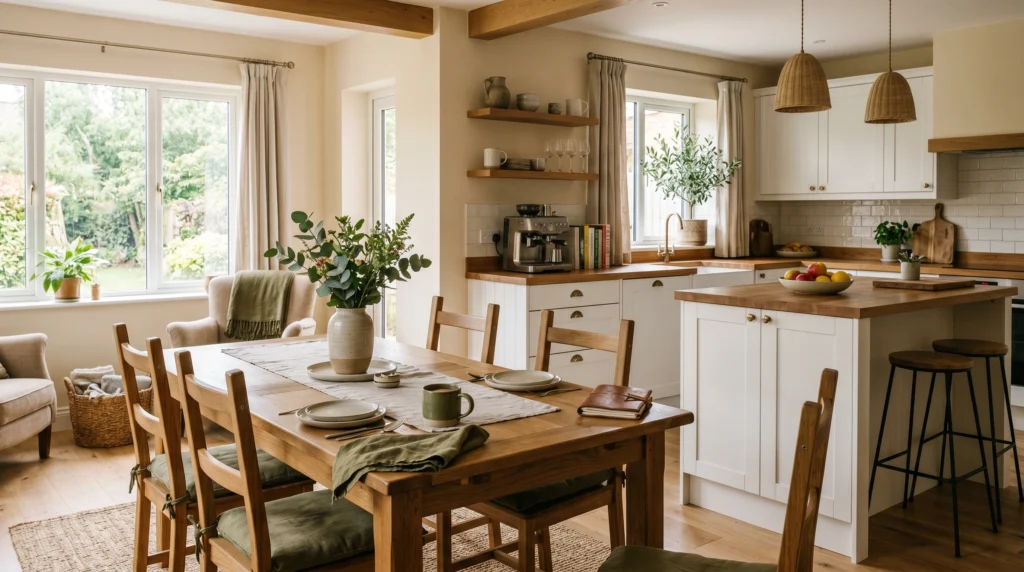
Anchor the Dining Area with a Statement Rug
Without walls, spaces can feel like they’re floating. A rug under your dining table helps define the area and makes it feel intentional.
Choose a rug large enough so chairs stay on it when pulled out—usually at least 24 inches beyond the table edges. Budget ranges from $60–$200. A lot of people skip this step, but it makes all the difference. Avoid rugs that are too small—they make the space look cramped.
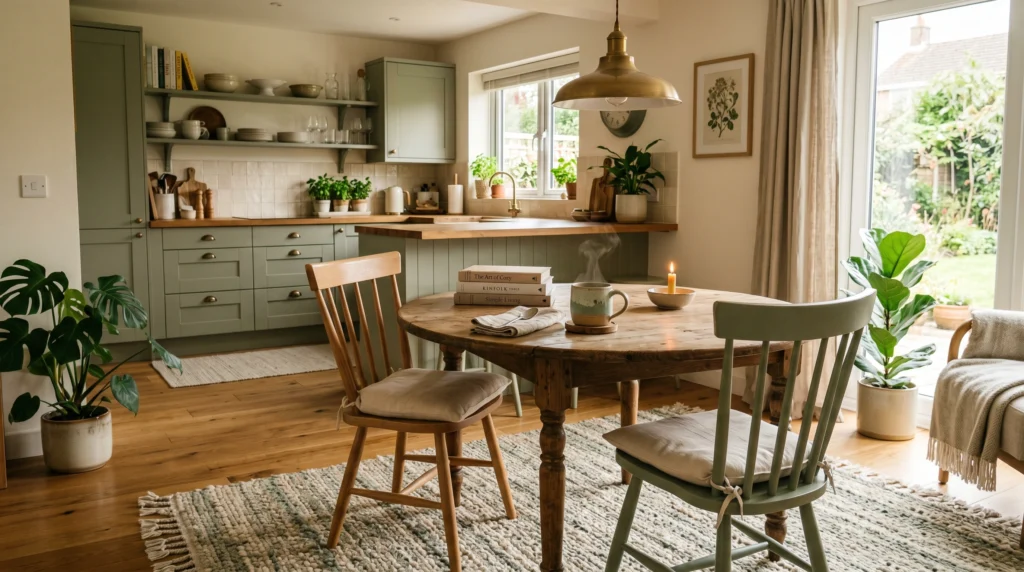
Match Lighting Styles for Visual Flow
Lighting can either unify or divide a space. When your kitchen has modern fixtures and your dining room has something totally different, it feels off.
Choose fixtures with a shared element—like matching finishes (black, brass) or similar shapes. Budget: $50–$250. I always recommend this to anyone who asks me about open layouts—it instantly pulls the space together.
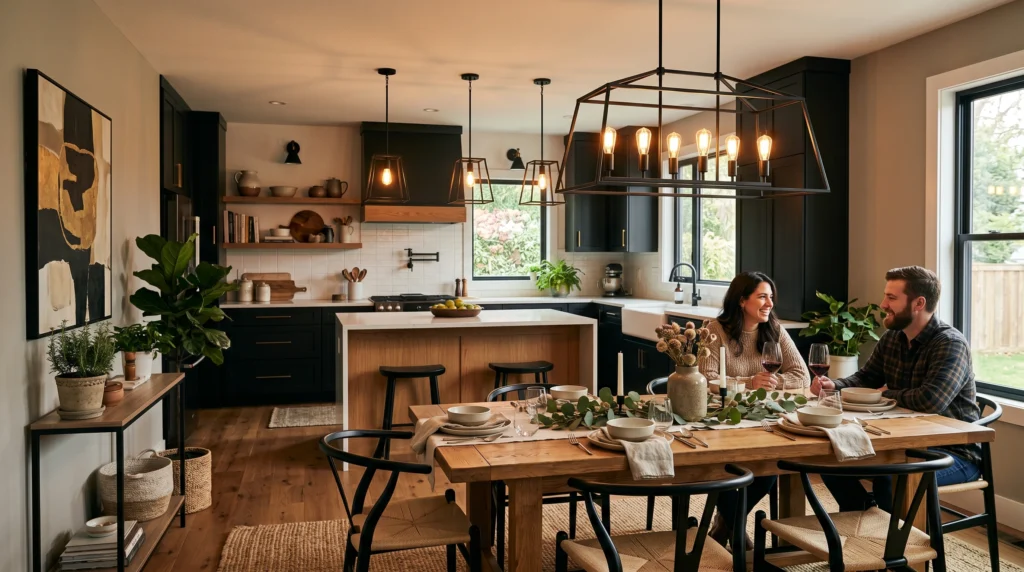
Use a Kitchen Island as a Transition Point
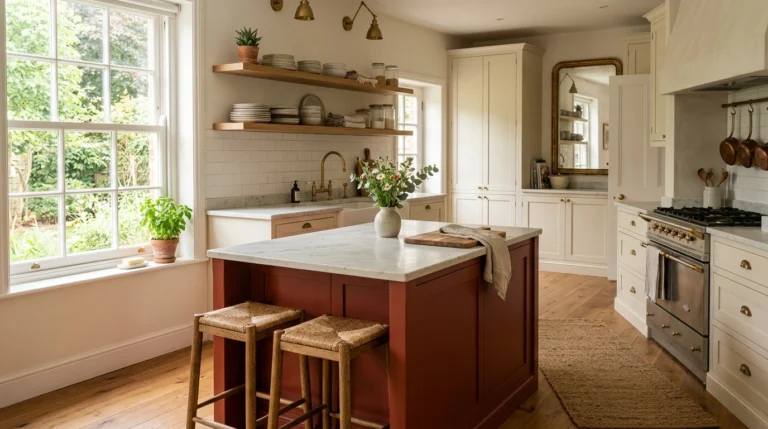
A kitchen island can act as a natural bridge between the cooking and dining areas. It visually separates without closing things off.
Style it simply with stools and maybe a small tray or plant. Islands vary widely in cost, but styling can be under $30. Tip: avoid overcrowding it with decor—it should stay functional.
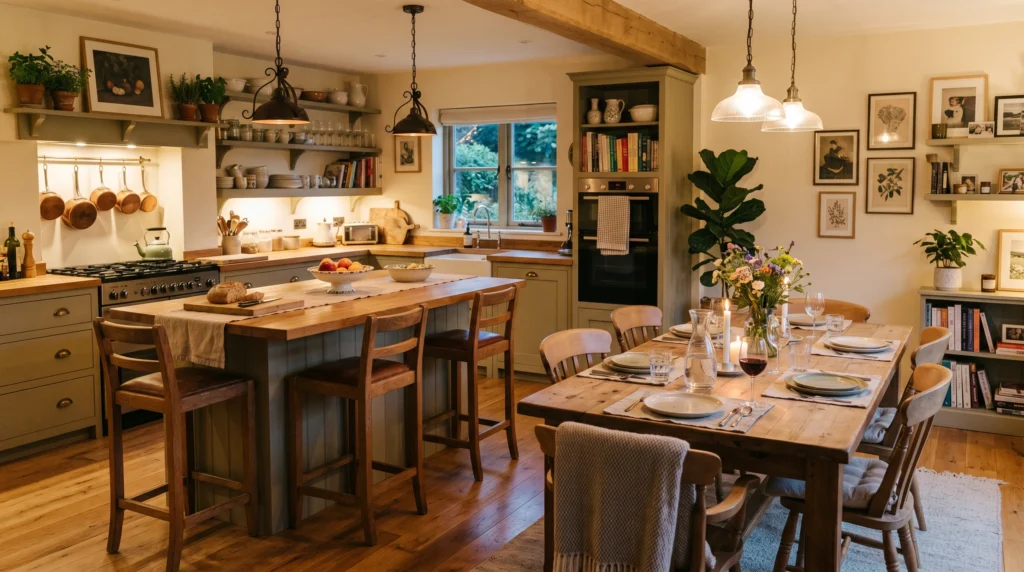
Keep Flooring Consistent for Seamless Flow
Different flooring can visually cut the space in half. Using the same flooring throughout keeps everything connected.
If replacing floors isn’t possible, use similar tones. Budget varies, but small fixes like rugs can help. In my experience, mismatched flooring is one of the biggest flow killers.
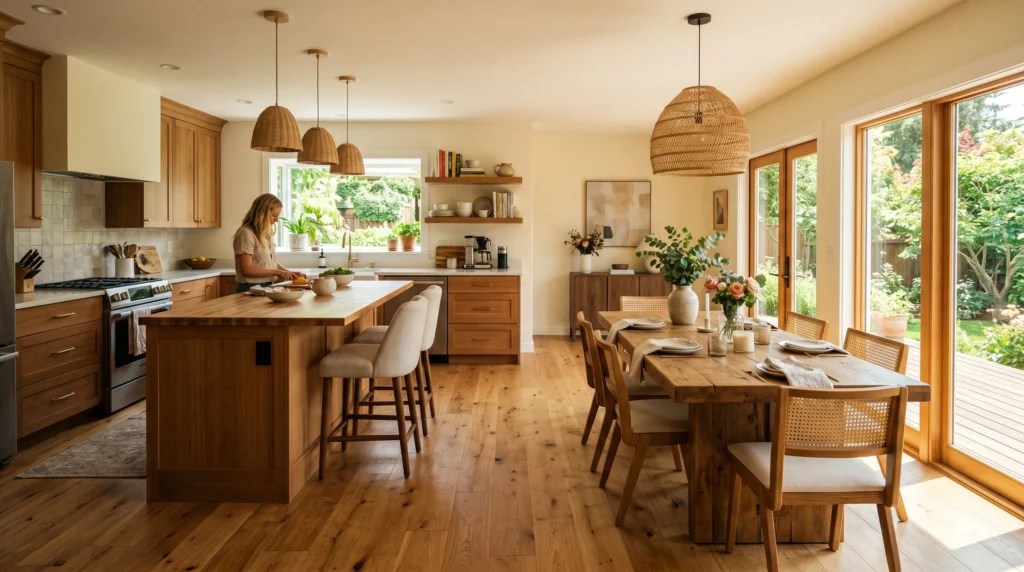
Align Furniture with the Room’s Natural Pathways
If your table blocks movement, the space will always feel awkward. Good flow means you can walk through easily.
Leave at least 36 inches around the table for movement. This doesn’t cost anything—just rearranging can fix it. Tip: avoid pushing everything against walls unnecessarily.
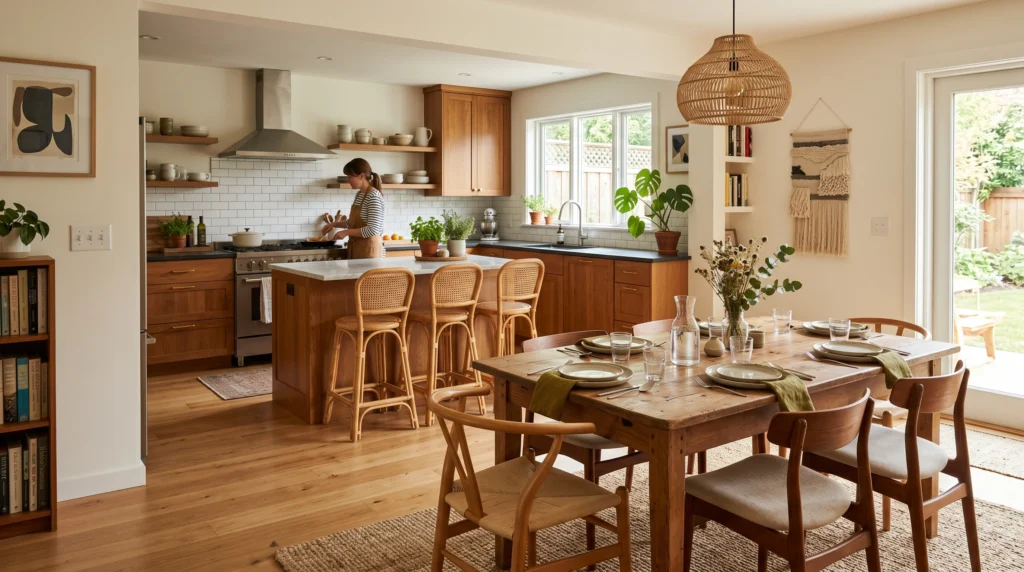
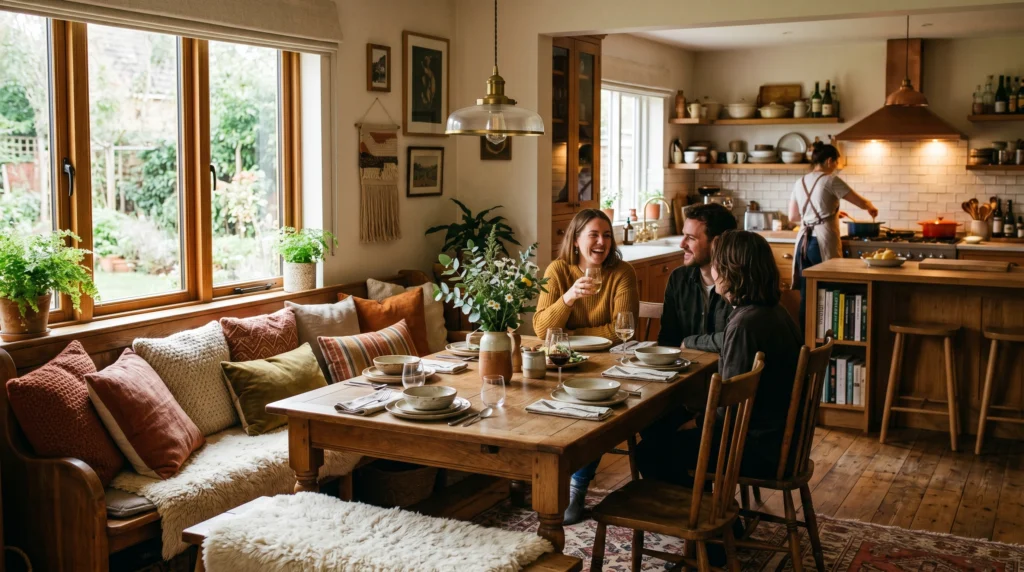
Add a Bench for Flexible Seating
Bench seating softens the dining area and keeps it feeling relaxed instead of formal.
Use it on one side of the table to save space. Budget: $60–$180. What I personally love about this is how easily it tucks away when not in use.
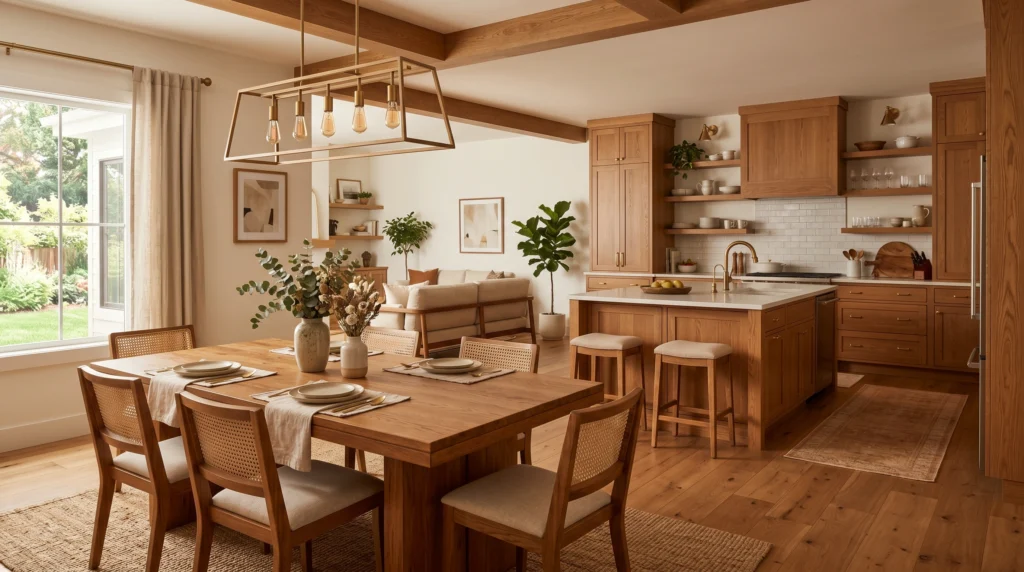
Repeat Materials Like Wood or Metal
Repeating materials helps tie the spaces together visually. If you have wood cabinets, bring wood into the dining table or chairs.
Stick to 1–2 main materials for consistency. Budget depends on swaps. Mistake: mixing too many finishes without a plan.
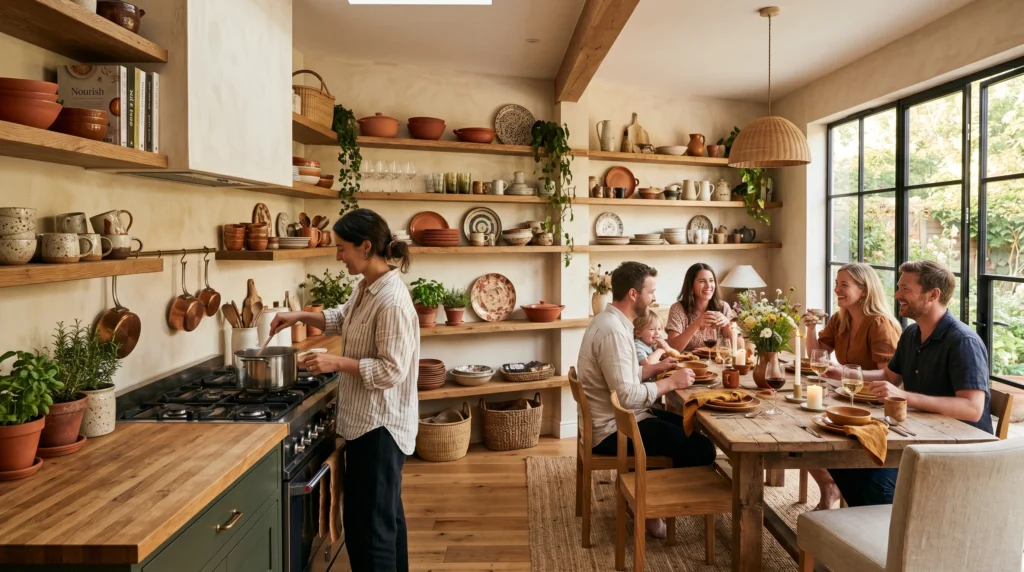
Use Open Shelving to Connect Spaces
Open shelves can visually extend the kitchen into the dining area.
Style them with a mix of dishes and decor. Budget: $30–$100. Keep it minimal to avoid clutter.
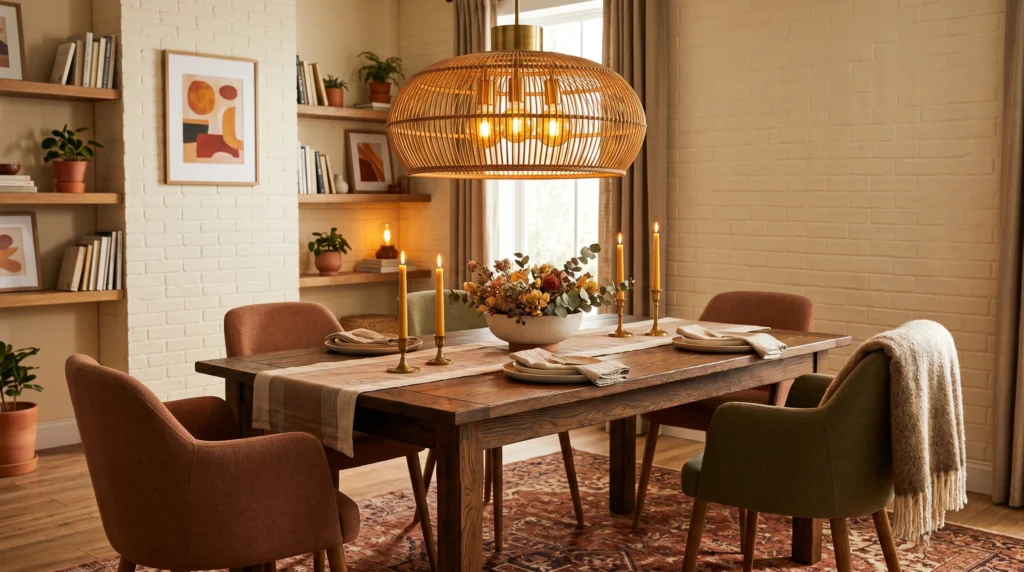
Create a Focal Point in the Dining Area
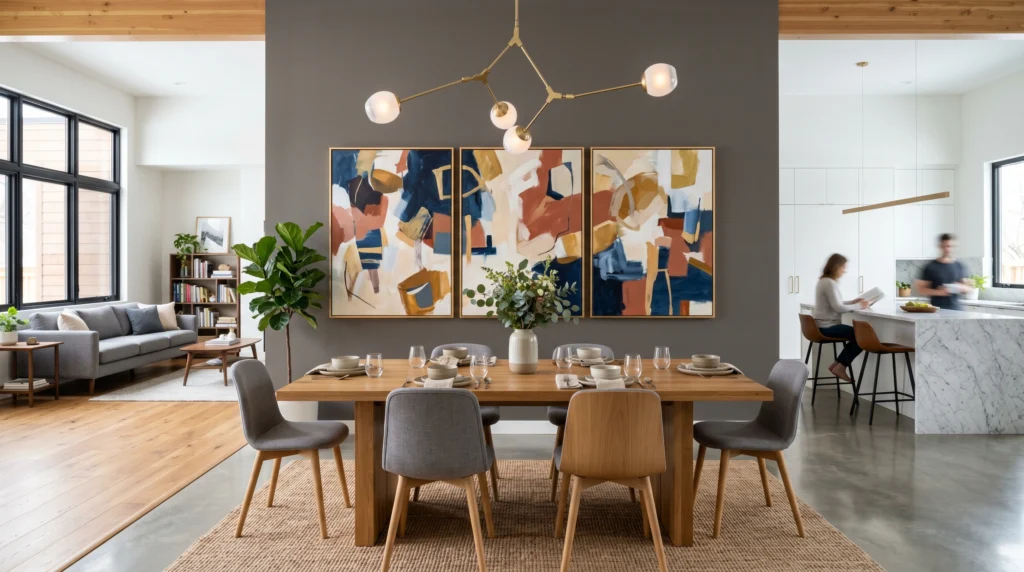
Without a focal point, the dining space can feel secondary. A light fixture or artwork helps anchor it.
Choose one main feature. Budget: $40–$200. Tip: don’t compete with the kitchen—keep it balanced.
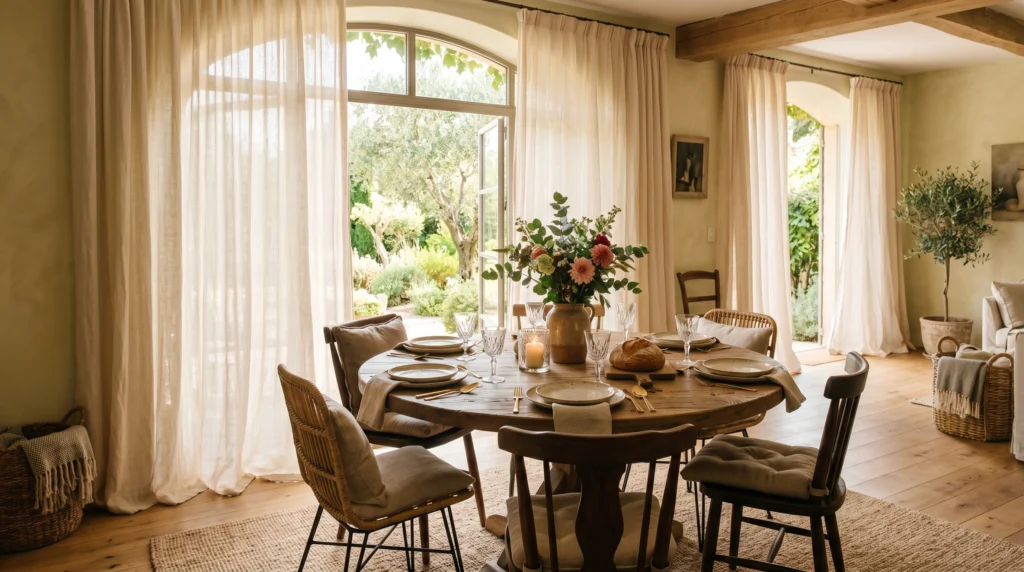
Use Curtains or Panels to Soften Edges
Soft textiles help balance the harder kitchen surfaces.
Add curtains near windows or even wall panels. Budget: $30–$100. It adds warmth instantly.
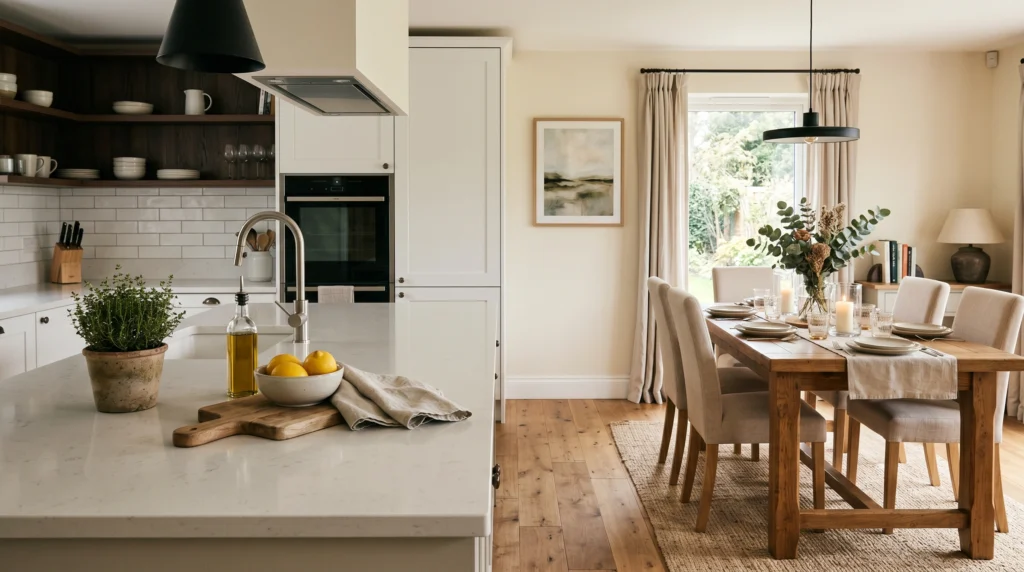
Keep Countertops Clutter-Free
Too much kitchen clutter makes the whole space feel messy.
Limit decor to 2–3 items. Free to implement. I always recommend this—it’s the fastest visual upgrade.
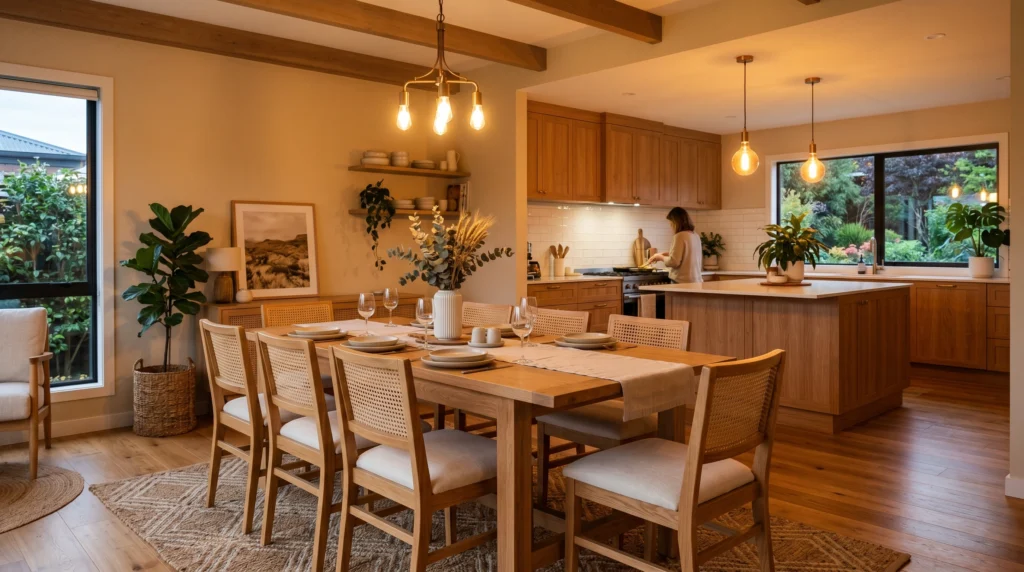
Blend Dining Chairs with Kitchen Style
Dining chairs should feel connected to the kitchen style.
Match tones or materials. Budget: $80–$200. Avoid overly different styles.
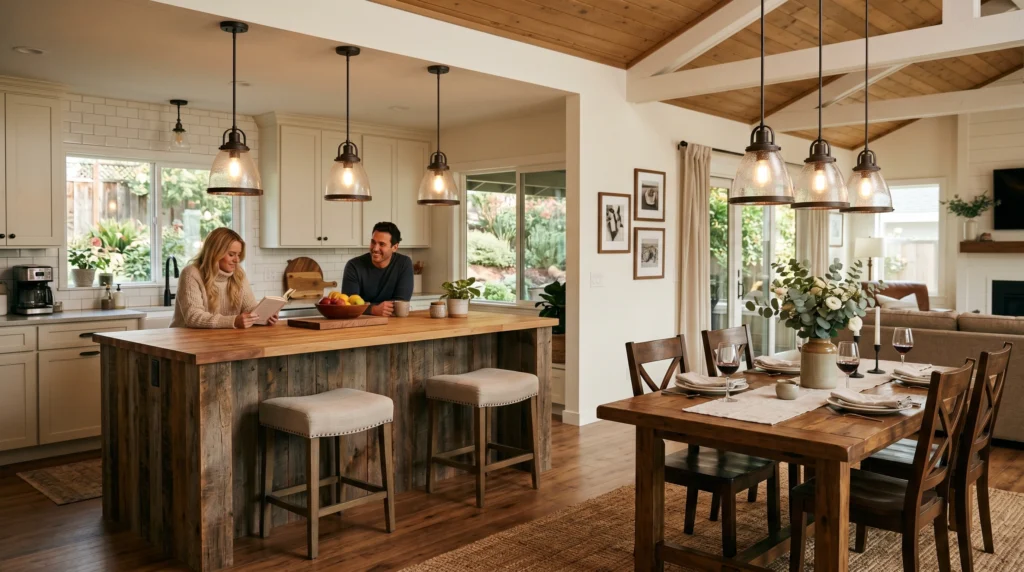
Use Pendant Lighting Over Both Zones
Using pendants in both kitchen and dining areas creates rhythm.
Keep them similar but not identical. Budget: $100–$300. Tip: align heights carefully.
Add Plants to Bridge the Gap
Plants soften transitions and bring life into the space.
Use 1–3 plants across both areas. Budget: $10–$50. What I love is how they instantly freshen the room.
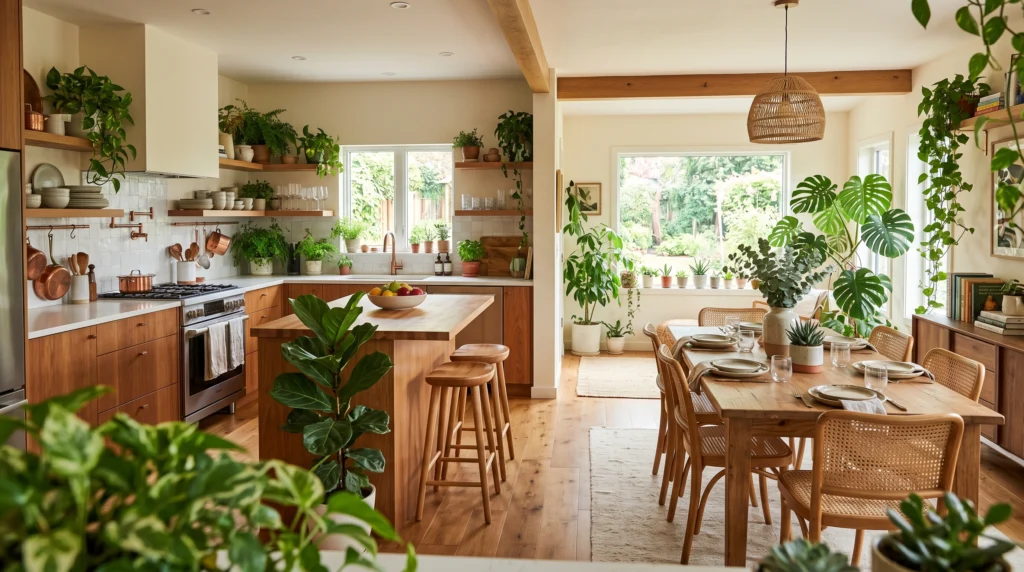
Use a Sideboard for Function and Style
A sideboard anchors the dining area and adds storage.
Keep it simple with decor. Budget: $100–$300. Tip: avoid overdecorating the top.
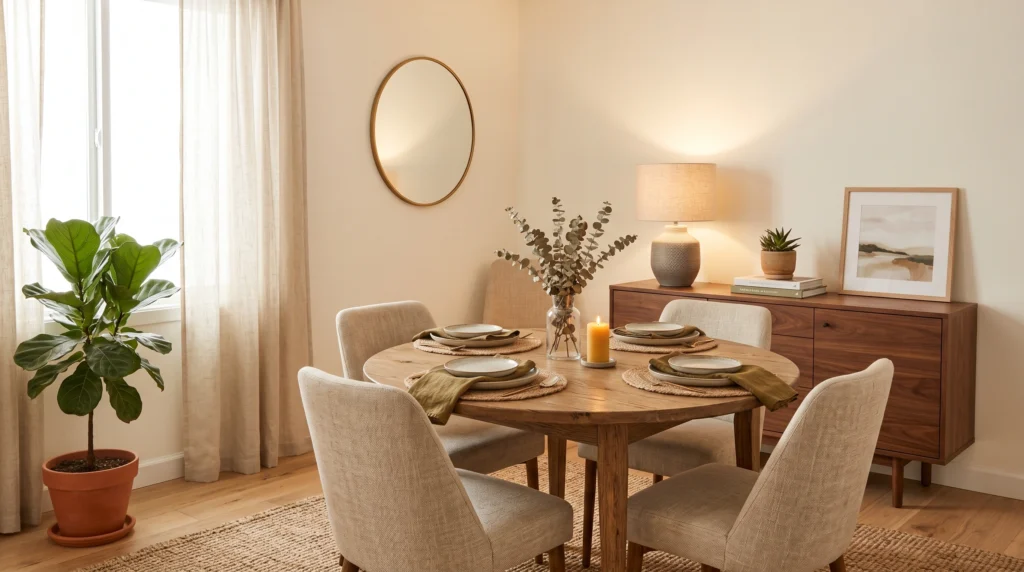
Balance Visual Weight Between Spaces
If one side feels heavy, the space feels off.
Balance cabinets with dining furniture visually. Free adjustment. In my experience, symmetry helps.
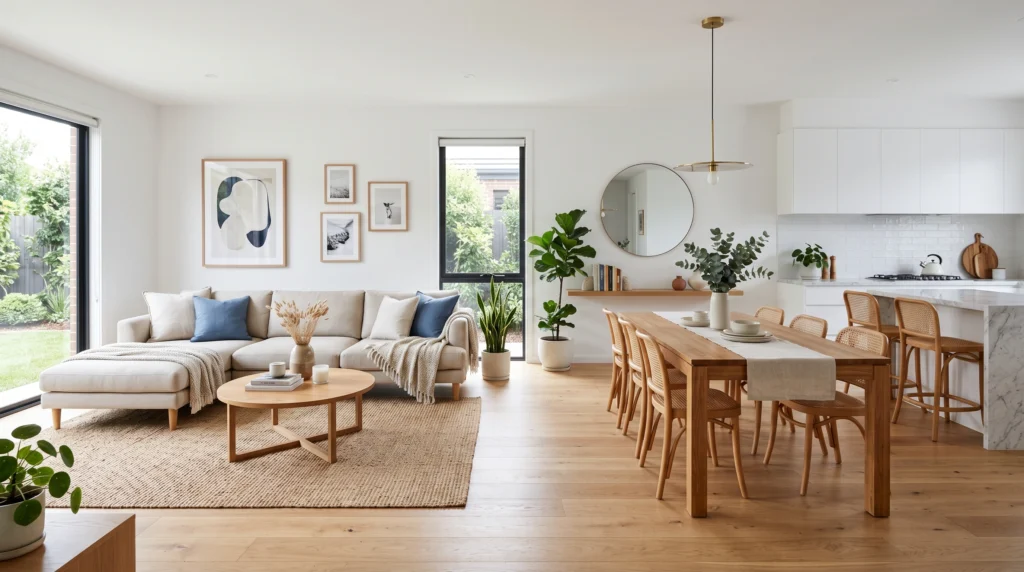
Add Warm Lighting Layers
Lighting should feel soft and layered, not harsh.
Combine overhead with lamps. Budget: $40–$120.
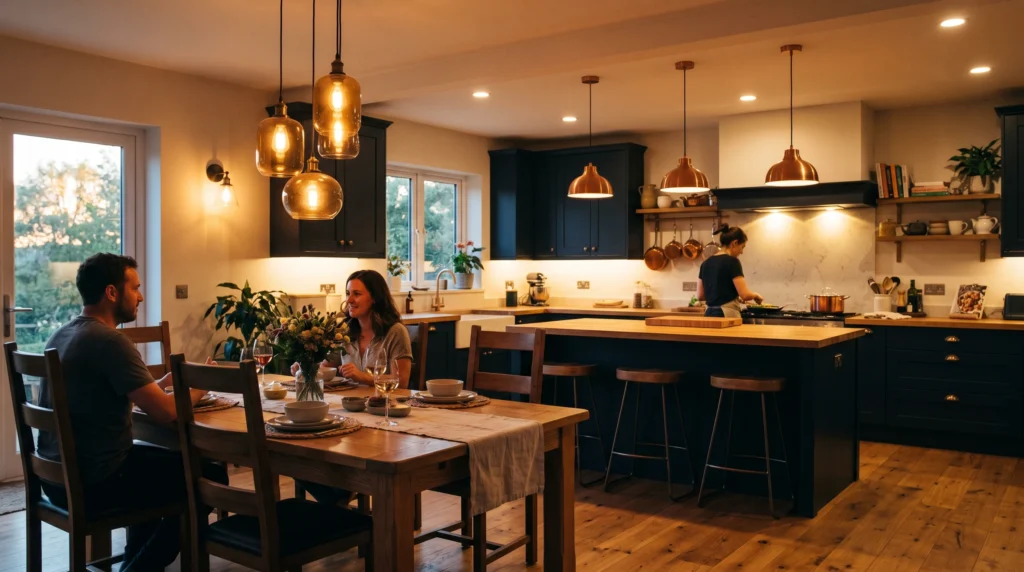
Use Art to Define the Dining Zone
Artwork helps separate the dining area visually.
Hang at eye level. Budget: $30–$120.
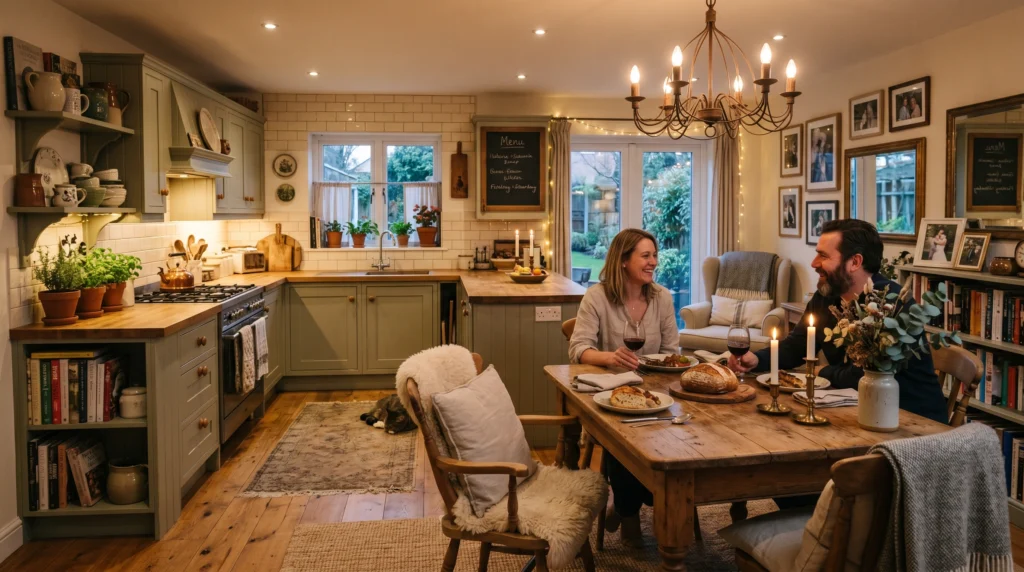
Keep It Personal and Lived-In
The best spaces feel lived-in, not perfect.
Add small personal touches—books, mugs, textiles. Budget: flexible. Tip: don’t over-style.
Conclusion
Creating a space that truly flows isn’t about perfection—it’s about paying attention to how everything connects. In my experience, once you fix the flow between your kitchen and dining area, the whole home starts to feel calmer and more functional.
Start small. Pick one idea—maybe it’s adding a rug, adjusting lighting, or simplifying your countertops—and build from there. These 20 open kitchen and dining room combo ideas that flow beautifully are meant to work in real homes, not just pictures.
Which idea are you trying first? I’d love to hear—drop it in the comments.