21 Japandi Living Room Ideas for a Peaceful Modern Home
Have you ever walked into a room and instantly felt your shoulders drop, your mind quiet down, and a sudden urge to just sit and breathe? That is the exact feeling we are chasing today. If your current living space feels a bit chaotic, cluttered, or just mismatched, you are definitely not alone. In my experience, the biggest mistake people make is trying to decorate their homes by copying rigid, cold showrooms that look beautiful in pictures but feel completely unlivable in reality. We want a home that feels like a warm hug, not an art museum.
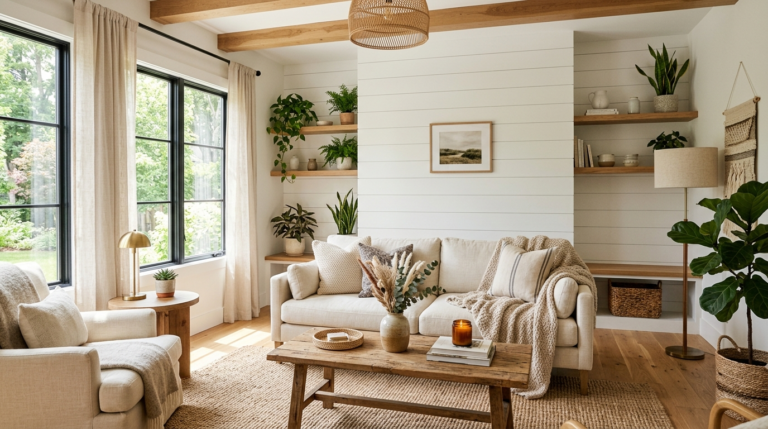
That is where Japandi interior design comes in. By bringing together the peaceful, rustic simplicity of Japanese Wabi-Sabi with the warm, cozy comfort of Scandinavian hygge, this style offers the perfect balance for busy lives. It is all about choosing fewer, better things, celebrating natural imperfections, and setting up your space to support real, everyday living. In this guide to 21 Japandi living room ideas for modern homes, I am going to show you exactly how to mix clean lines with organic textures, swap sterile whites for rich earth tones, and arrange your furniture to create a genuine sense of calm. Whether you are working with a tiny apartment or a spacious family room, these practical tips will help you create a cozy, functional haven without blowing your budget.
The Low-Profile Floor Sofa Setup
What I personally love about this look is how it instantly changes the scale and posture of the entire room. By lowering your seating closer to the ground, you create an open, airy feeling that makes even small apartments feel like they have soaring ceilings. The visual weight of the room shifts downward, encouraging a slower, more grounded way of relaxing. Picture sinking into deep, wide cushions upholstered in a textured, oatmeal-colored linen, surrounded by warm wood tones and soft, diffused natural light pouring through the windows. It feels incredibly relaxed, cozy, and intentionally simple.
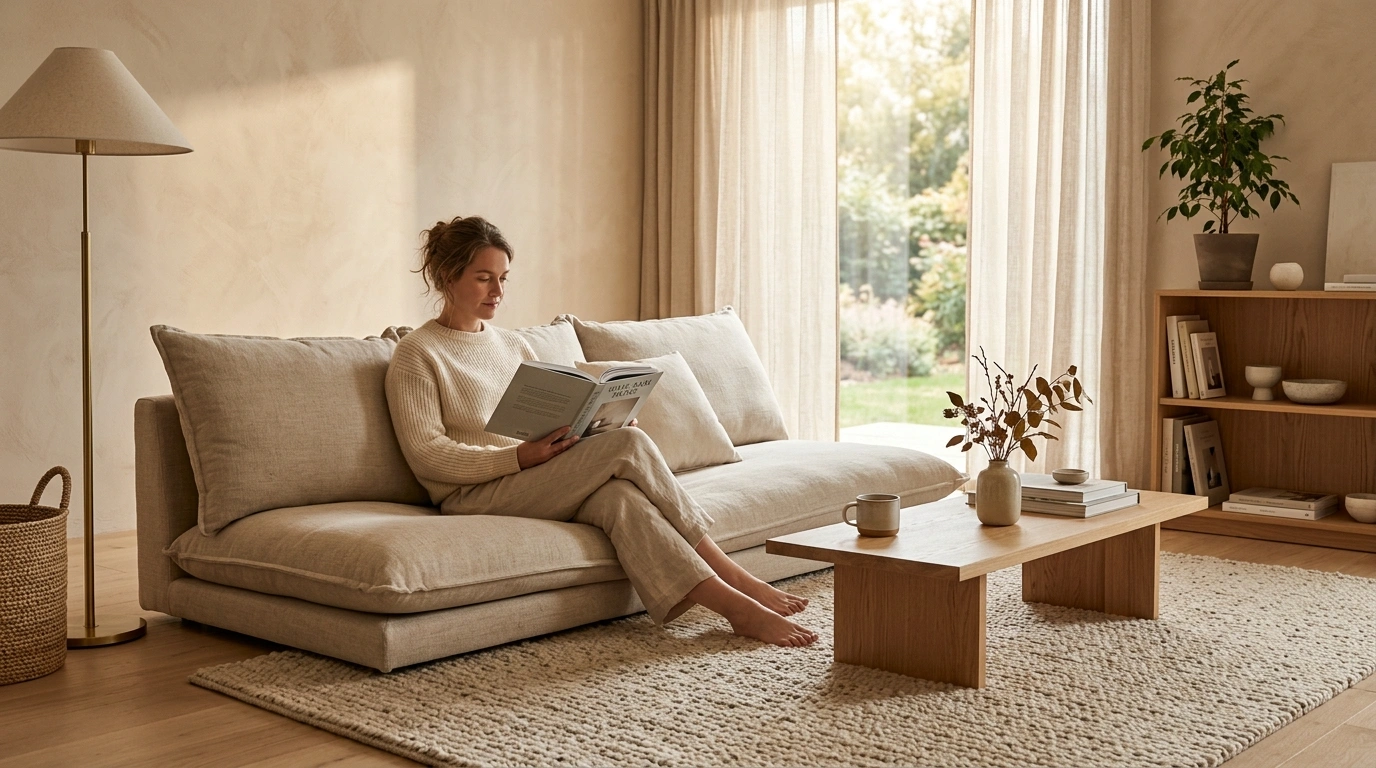
I always recommend starting with a low-slung, modular sofa base made from light oak or ash wood. Look for pieces with deep seats and a minimal frame to keep the lines clean and uncluttered. To style this comfortably, pair the sofa with a low-profile wool rug that extends well past the edges of the seating to anchor the zone. A common mistake to avoid here is buying a coffee table that is too high; your coffee table should sit at or slightly below the height of your sofa cushions to maintain that smooth, horizontal visual line. For a budget-friendly option, you can place high-quality foam cushions directly on a DIY wooden pallet platform that you have sanded and stained in a warm, neutral tone.
Suggested Price Range for Sofa: $1,200 – $2,800
Oak Wood and Rich Bouclé Textures
This combination is the ultimate secret weapon for creating warmth without relying on bright colors or busy patterns. The smooth, structured grain of natural oak wood provides a grounding, earthy structure, while the bumpy, cloud-like texture of cream bouclé fabric softens the hard edges of the room. When you touch these surfaces, there is a lovely contrast between the cool, solid wood and the warm, inviting fabric. It creates a space that feels deeply layered and interesting to look at, even though the color palette is kept entirely neutral and quiet.
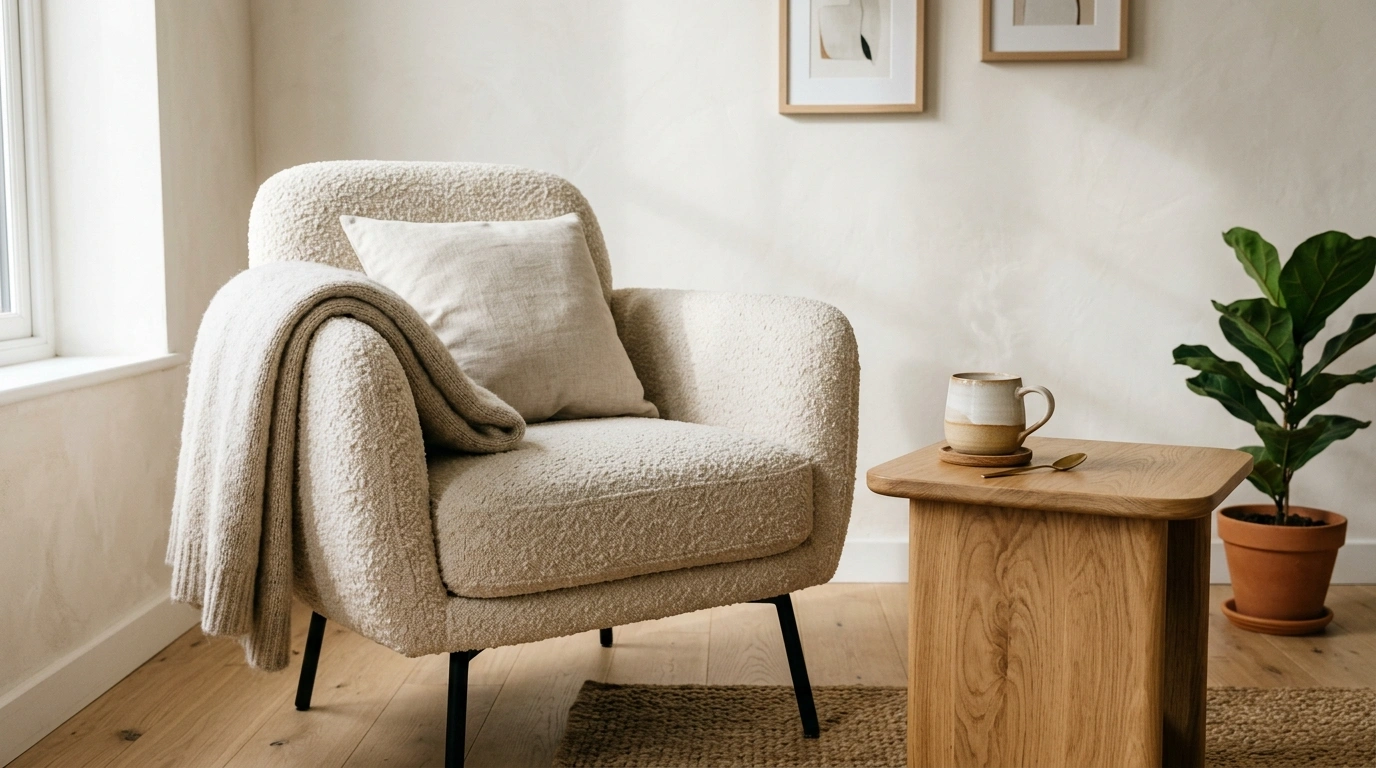
To bring this look to life, pair a simple oak-framed accent chair with a soft bouclé throw pillow, or go bigger with an entire bouclé-upholstered armchair sitting next to an oak side table. Make sure the oak wood has a matte, clear-coat finish rather than a shiny yellow varnish, which can look dated and artificial. If you are on a tight budget, you do not need to buy an expensive new chair; simply find a secondhand armchair with clean lines and drape a thick, textured bouclé throw blanket over the seat. This works especially well if you want to look more put together without trying too hard or spending a fortune.
Suggested Price Range for Chair & Table: $350 – $800
The Paper Lantern Focal Point
A lot of people overlook this detail, but changing your lighting can change the entire mood of a room in seconds. Instead of harsh, directional recessed ceiling lights that cast sharp shadows, a large paper pendant light acts as a soft, glowing sculpture in the center of your space. It mimics the gentle, filtered light that comes through traditional Japanese shoji screens, casting an even, warm glow across your walls. The textured washi paper adds a delicate, organic feel to the ceiling, reminding us of the beauty of handmade, natural materials.
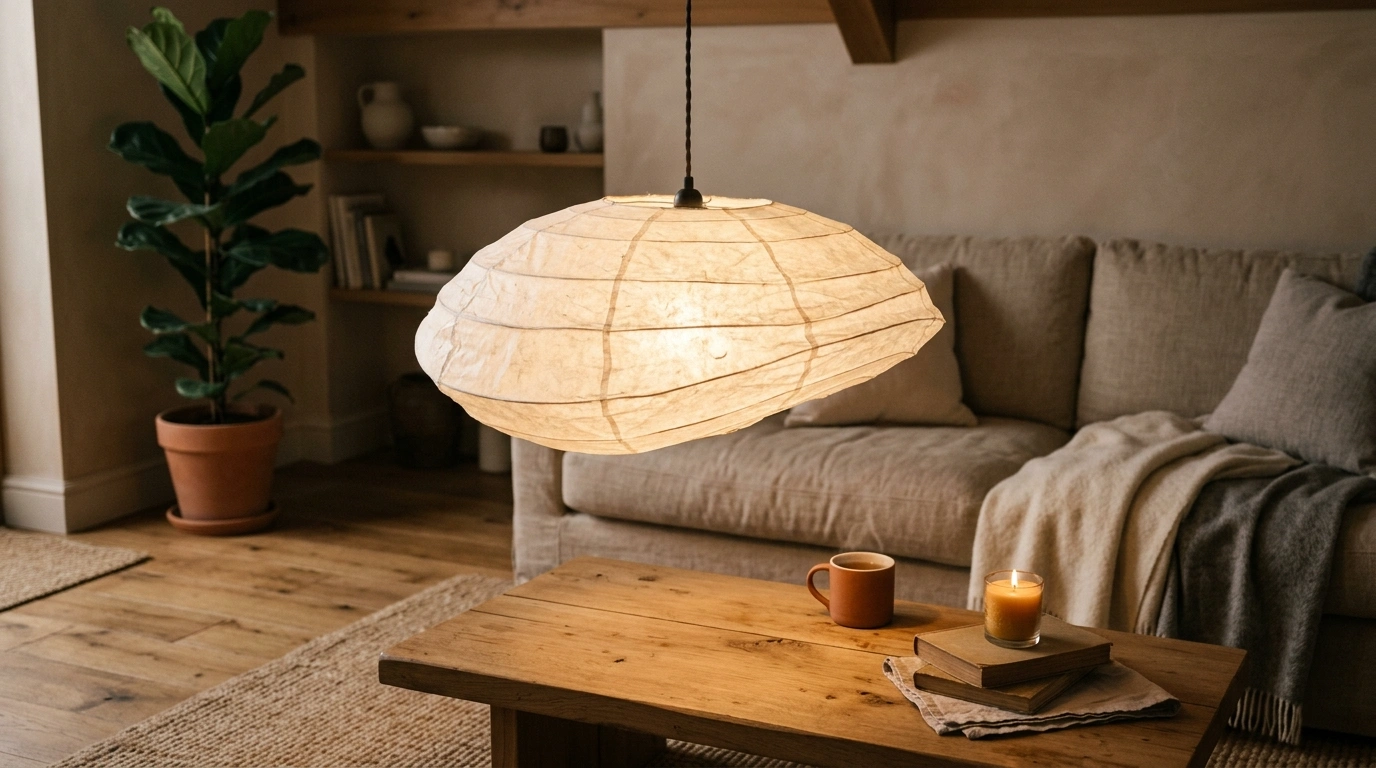
When hanging a paper lantern, position it relatively low over your coffee table to create an intimate focal point that draws people into the seating area. Look for classic sphere shapes or slightly asymmetrical, organic silhouettes that feel like floating clouds. Make sure to use a warm LED bulb (around 2700 Kelvin or lower) to keep the glow cozy and soft rather than cold and clinical. If you are renting and cannot change your ceiling wiring, you can easily buy a plug-in paper lantern cord kit, drape the fabric-covered cable over a simple wooden wall bracket, and plug it into a nearby outlet.
Suggested Price Range for Pendant Light: $60 – $250
Earth-Toned Clay Accent Wall
If you want to add depth to your living room without cluttering it with wall art, a textured plaster or clay accent wall is the perfect solution. Unlike flat paint, a clay finish catches the changing daylight throughout the day, shifting subtly from warm beige to soft, sandy grey. It gives the room an organic, tactile quality that feels deeply connected to the earth, mimicking the plaster walls of traditional tea houses. The matte finish absorbs light rather than reflecting it, which instantly makes the space feel quiet, grounded, and incredibly cozy.
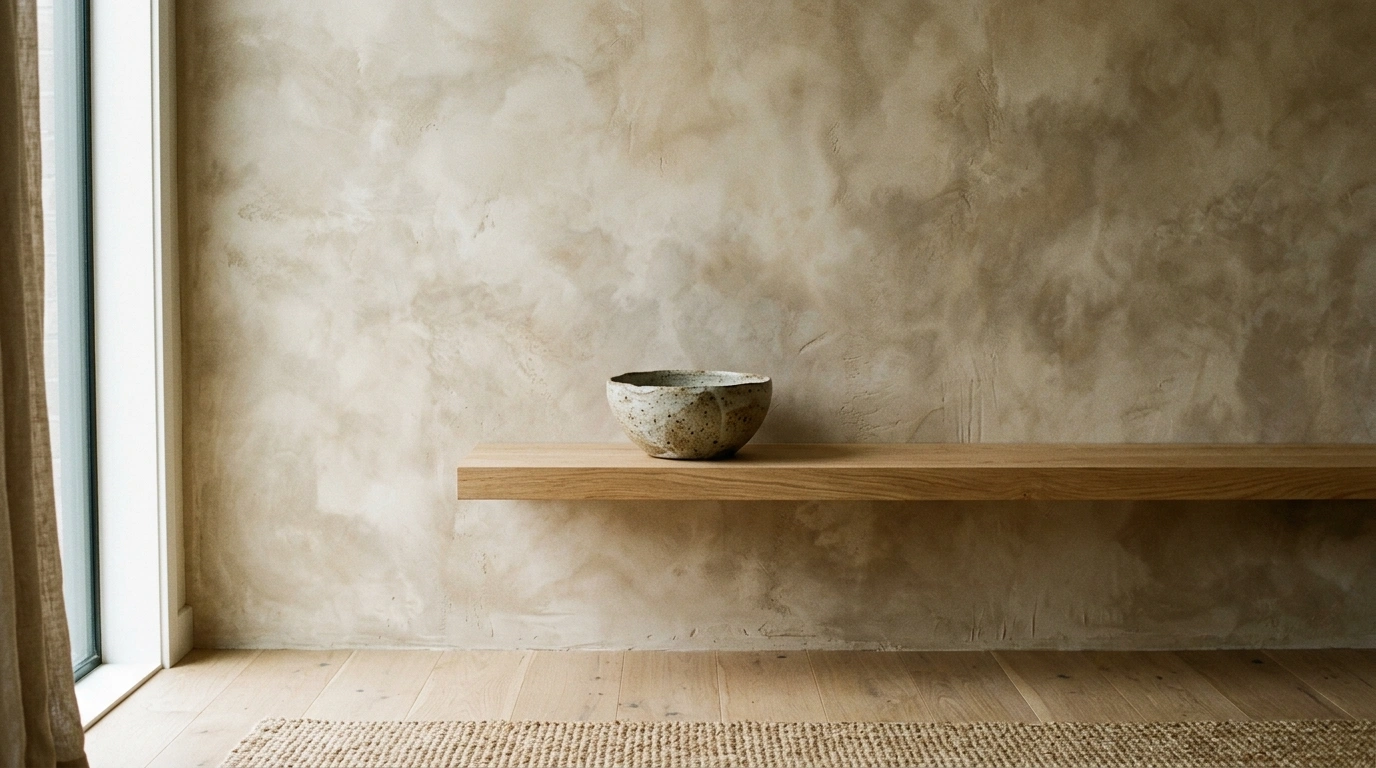
To replicate this, look into Roman clay, lime wash, or textured plaster paint finishes in soft, earthy shades like warm taupe, muted terracotta, or sandy beige. Apply the finish using broad, sweeping brush strokes or a trowel to create a gentle, cloudy texture on just one main wall behind your sofa. Keep the rest of the walls in a matching flat paint color to keep the room cohesive and avoid visual overwhelm. If you are renting, look for textured, peel-and-stick linen wallpapers in a solid sandy shade to get a similar organic, matte look without permanent changes.
Suggested Price Range for Paint Materials: $100 – $300
Asymmetric Ceramic Displays
In traditional Japanese Wabi-Sabi philosophy, true beauty is found in imperfection, transience, and asymmetry. Instead of buying mass-produced, identical decor items to fill your shelves, displaying a small, thoughtful collection of mismatched ceramics brings a quiet, personal story into your room. Think of a rough-textured, hand-thrown clay vase sitting next to a smooth, matte stoneware bowl. The slight wobbles in the shapes, the unique glaze drips, and the earthy colors make these pieces feel like miniature works of art that celebrate the human touch.
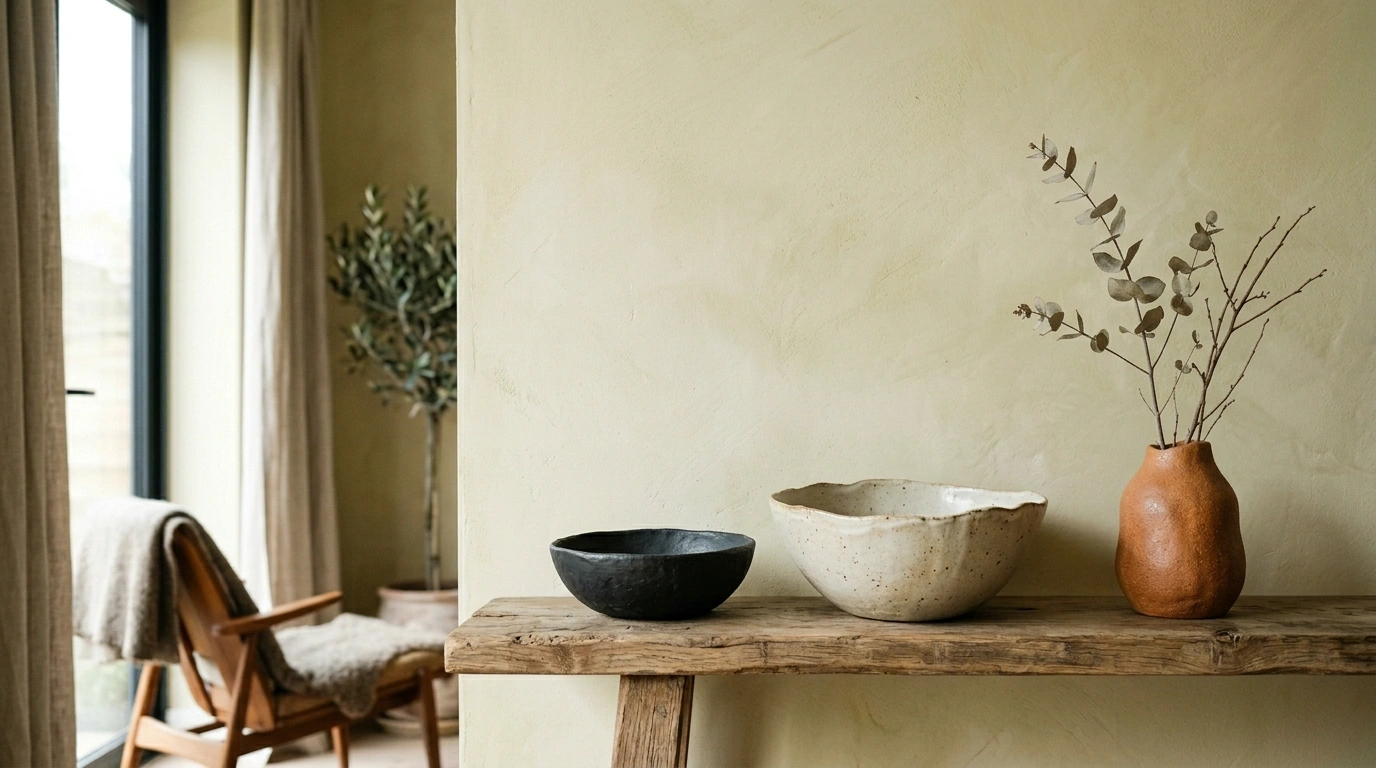
I always recommend starting with a rule of three when arranging your ceramics: choose one tall vase, one medium-sized bowl, and one small, flat dish to create a balanced, organic pyramid shape. Leave plenty of empty space—often called ma in Japanese design—around the collection so each piece has room to breathe. Do not clutter your shelves with dozens of tiny items; three beautiful, slightly imperfect pieces on a single shelf will look infinitely more striking and peaceful. Check local thrift stores, flea markets, or independent pottery studios to find budget-friendly, one-of-a-kind handmade pieces.
Suggested Price Range for Ceramics: $30 – $150 per piece
The Slatted Wood Room Divider
Open-concept living rooms are wonderful for light, but they can often feel a bit cold, vast, and lacking in cozy privacy. A slatted wood screen or room divider is a brilliant way to define different areas—like separating your reading nook or dining space from the main lounge area—without blocking the flow of light and air. The vertical wooden slats cast beautiful, linear shadows across the floor as the sun moves, creating a dynamic, living art piece. It adds a structured, architectural element that feels incredibly clean, warm, and distinctly Japanese.
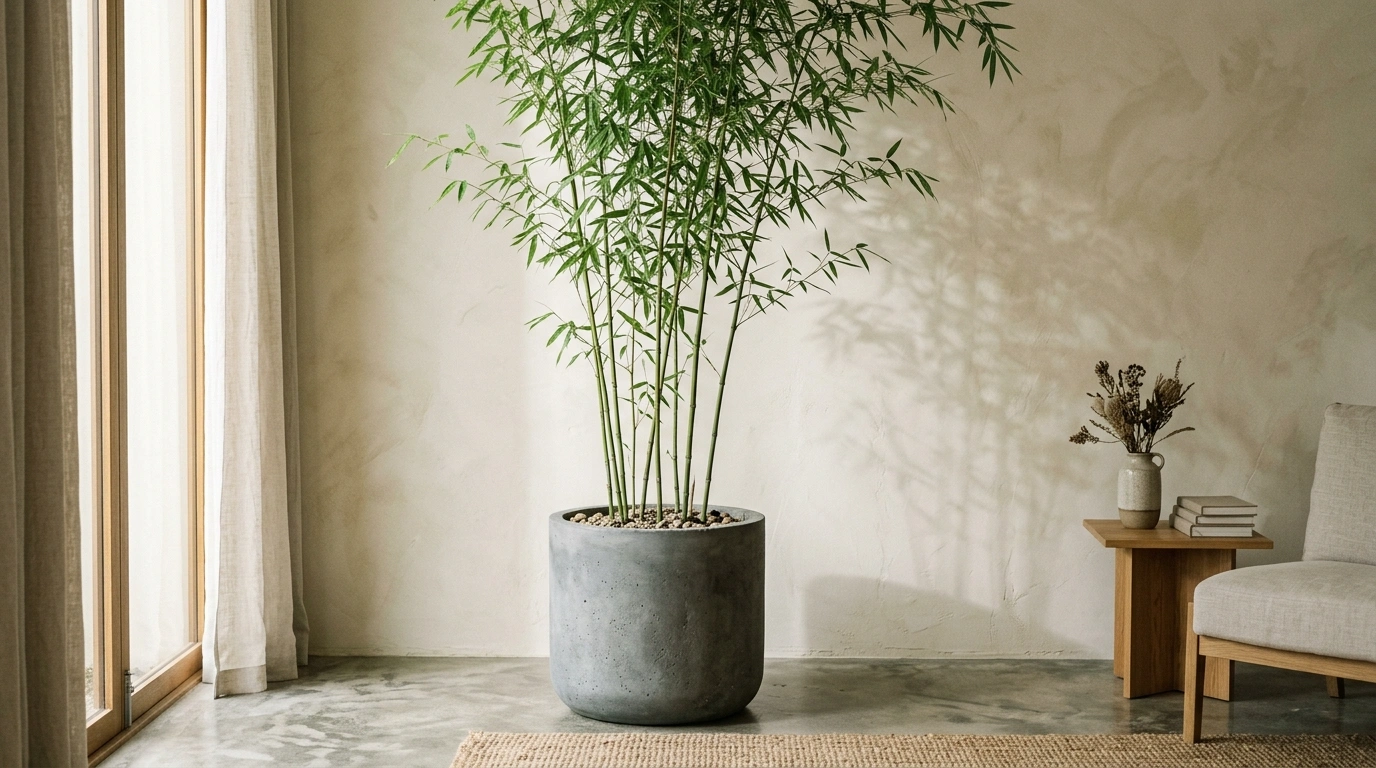
To style this effectively, choose a freestanding three-panel wooden screen made of light oak or bamboo, or install a permanent floor-to-ceiling slatted wall behind your TV console. The wood tone of the divider should match or closely complement the other major wood elements in your room, such as your coffee table or flooring, to keep the space visually unified. A common mistake is buying a divider that is too dark or heavy, which can make the room feel boxed in. If you are on a budget, look for affordable bamboo privacy screens designed for gardens and use them indoors for an organic, breezy partition.
Suggested Price Range for Screen: $150 – $450
Indoor Bamboo and Structural Greenery
While Scandi style loves lush, overflowing potted ivy, the Japanese aesthetic leans toward highly structural, minimalist plants that look like natural sculptures. A single, tall bamboo plant, a delicate Japanese maple, or a carefully shaped bonsai tree adds a vibrant pop of living green without cluttering your visual field. These plants have clean, slender stems and delicate leaves that filter the light beautifully, bringing a sense of peaceful, outdoor tranquility right into your seating area.
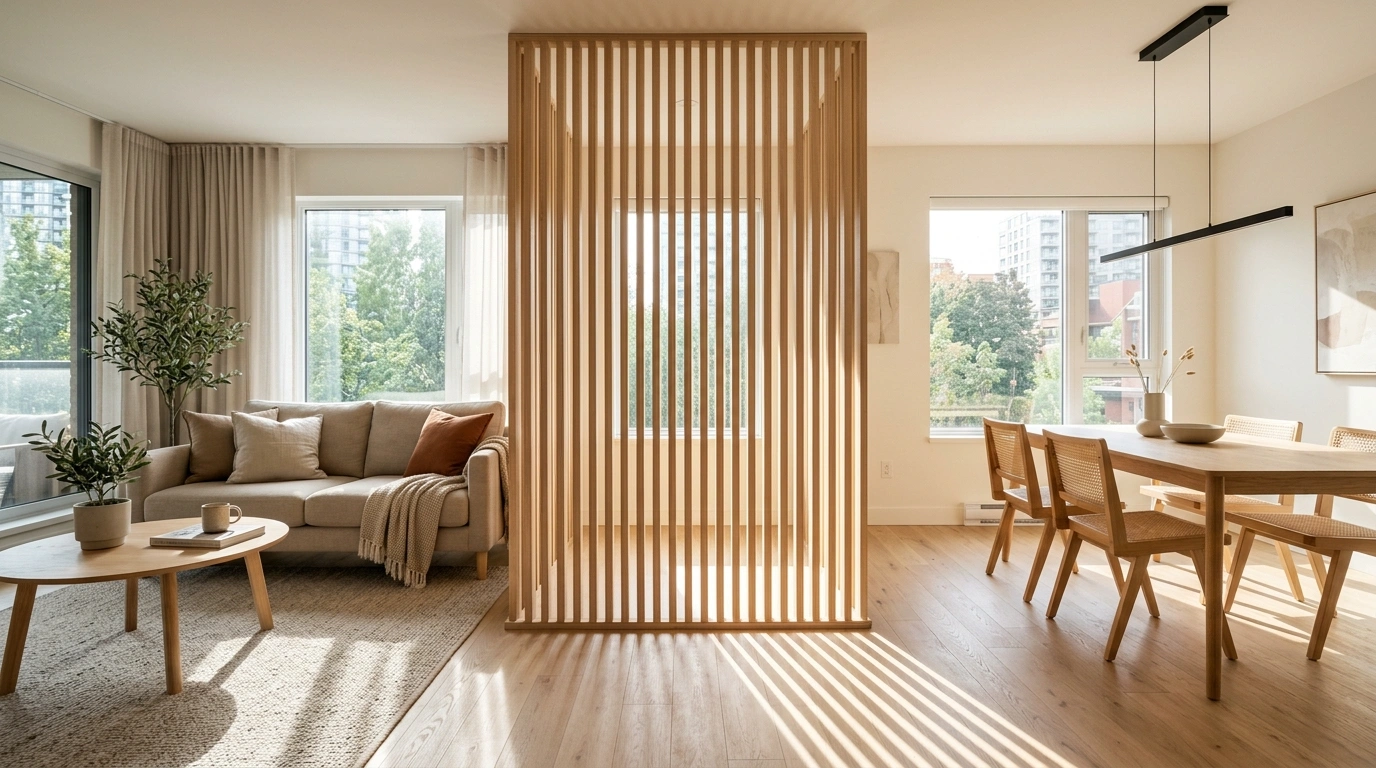
Place your structural plant in a heavy, matte ceramic or concrete pot that matches the neutral tones of your room. Position it in a quiet corner where its silhouette can be clearly seen against a plain wall, turning it into a living focal point. Remember, less is definitely more here; one large, healthy, and beautifully shaped plant in a corner will look much more intentional and serene than a crowded jumble of tiny plastic pots. If you struggle to keep plants alive, high-quality faux branches like faux ginkgo or eucalyptus placed in a tall stoneware jug will give you the same beautiful look with zero maintenance.
Suggested Price Range for Plant & Pot: $80 – $250
Monochromatic Linen Drapery
To make your living room feel soft, cozy, and tucked away from the busy world, swap out heavy, dark curtains or plastic blinds for lightweight, floor-to-ceiling linen drapes. Choosing a shade that matches your wall color—like a soft cream, warm oatmeal, or pale grey—creates a seamless, wrap-around effect that expands the room visually. When the breeze blows, these curtains sway gently, and when the sun shines, they filter the daylight into a dreamy, hazy glow that makes the entire room feel incredibly quiet and peaceful.
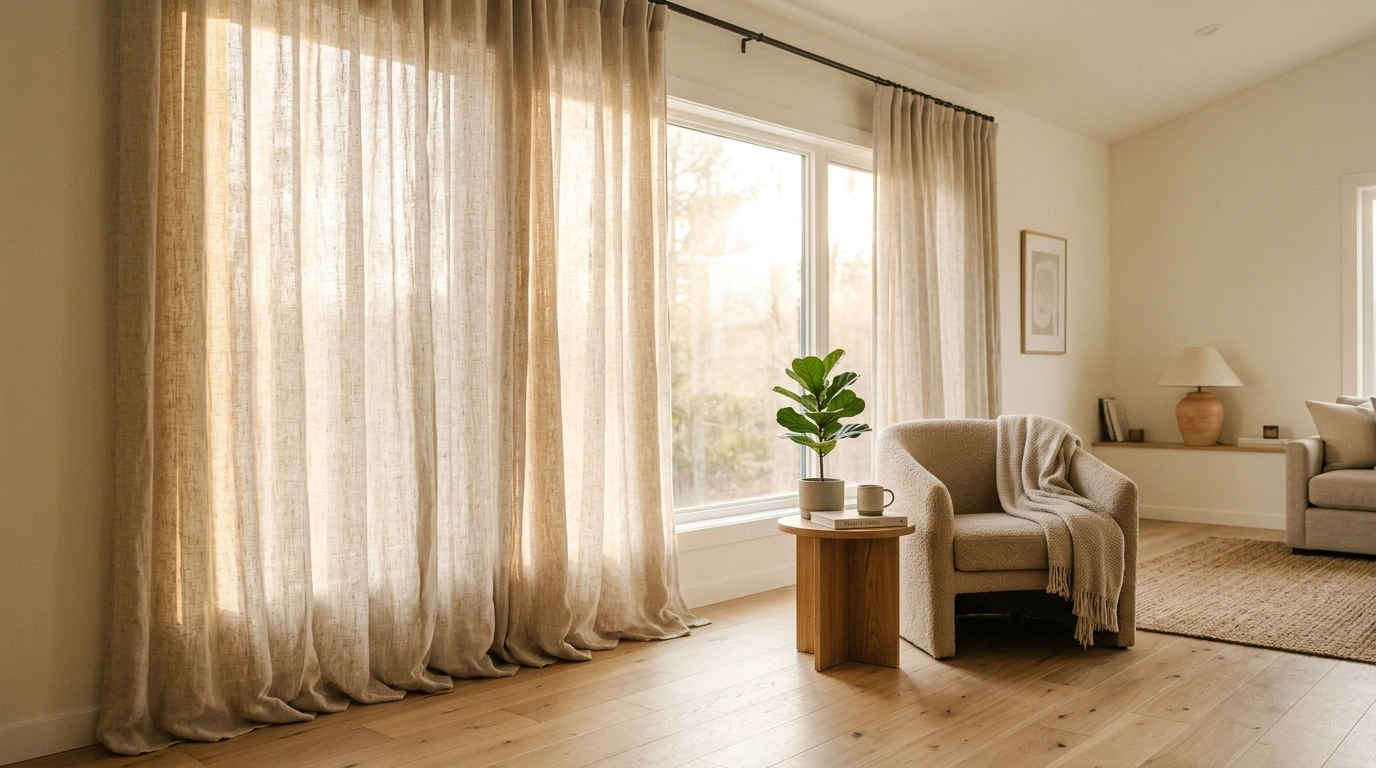
I always recommend buying curtains that are slightly longer than your window height so they pool gently on the floor by an inch or two, creating a relaxed, informal drape. Hang the curtain rod as high as possible, right below the ceiling, to make your room feel taller and more spacious. Avoid shiny metal curtain rings; instead, opt for hidden tabs or a simple black iron rod for a subtle, minimalist contrast. You can find very affordable, high-quality linen-blend curtains online that offer the exact same beautiful texture and drape as expensive pure linen without the high price tag.
Suggested Price Range for Drapes: $80 – $220 per panel
The Solid Wood Low Coffee Table
The coffee table is the literal and figurative anchor of your living room, bringing the seating arrangement together into a cozy, conversational circle. In a Japandi space, a solid, chunky wooden table with clean, blocky legs or an organic, rounded top represents the Scandi love for natural materials and the Japanese appreciation for heavy, grounding furniture. The smooth, wide surface displays the gorgeous natural rings and knots of the wood grain, reminding us of the passage of time and the beauty of the natural world.
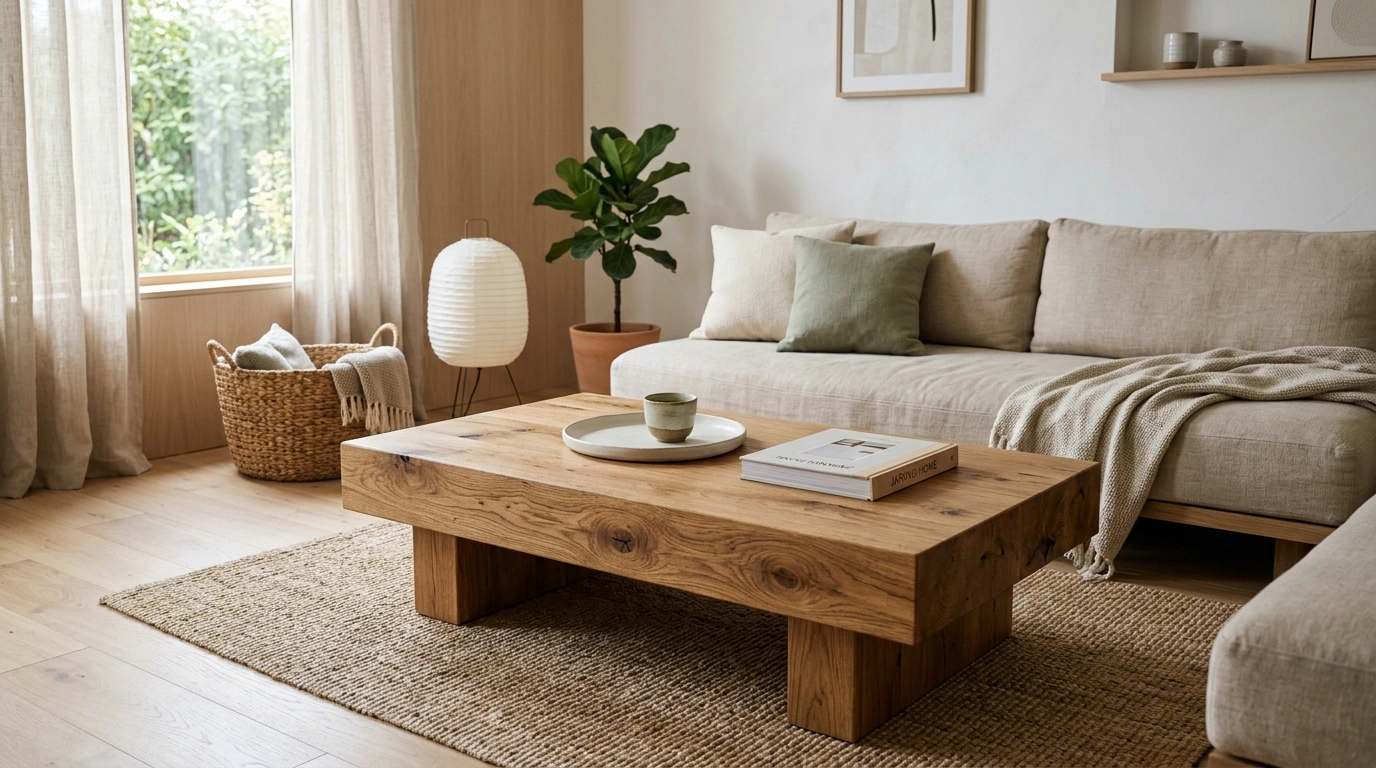
Choose a table made from light oak, ash, or warm walnut with a matte, low-sheen finish that feels smooth and dry to the touch. Keep the styling on top incredibly simple: a single ceramic tray to hold your remote controls, a small stoneware bowl, and maybe one design book. The biggest mistake people make is crowding the coffee table with too many candles, coasters, and magazines, which instantly ruins the calm, open feeling. If you are looking for an affordable alternative, search secondhand markets for solid wood benches or rustic rustic dining tables that you can cut down to a low, coffee-table height.
Suggested Price Range for Coffee Table: $250 – $750
Woven Tatami Mats and Jute Rugs
Grounding your furniture with the right rug is crucial for creating a warm, defined conversational zone. Layering a large, natural-fiber jute rug under a low-profile sofa set brings a wonderful, rustic texture underfoot that feels highly organic and earthy. Alternatively, using woven tatami mats made from traditional rush grass introduces a subtle, herbal scent and a smooth, structured texture that feels incredibly clean and calming. It is a sensory experience that instantly makes you want to kick off your shoes and walk around barefoot.
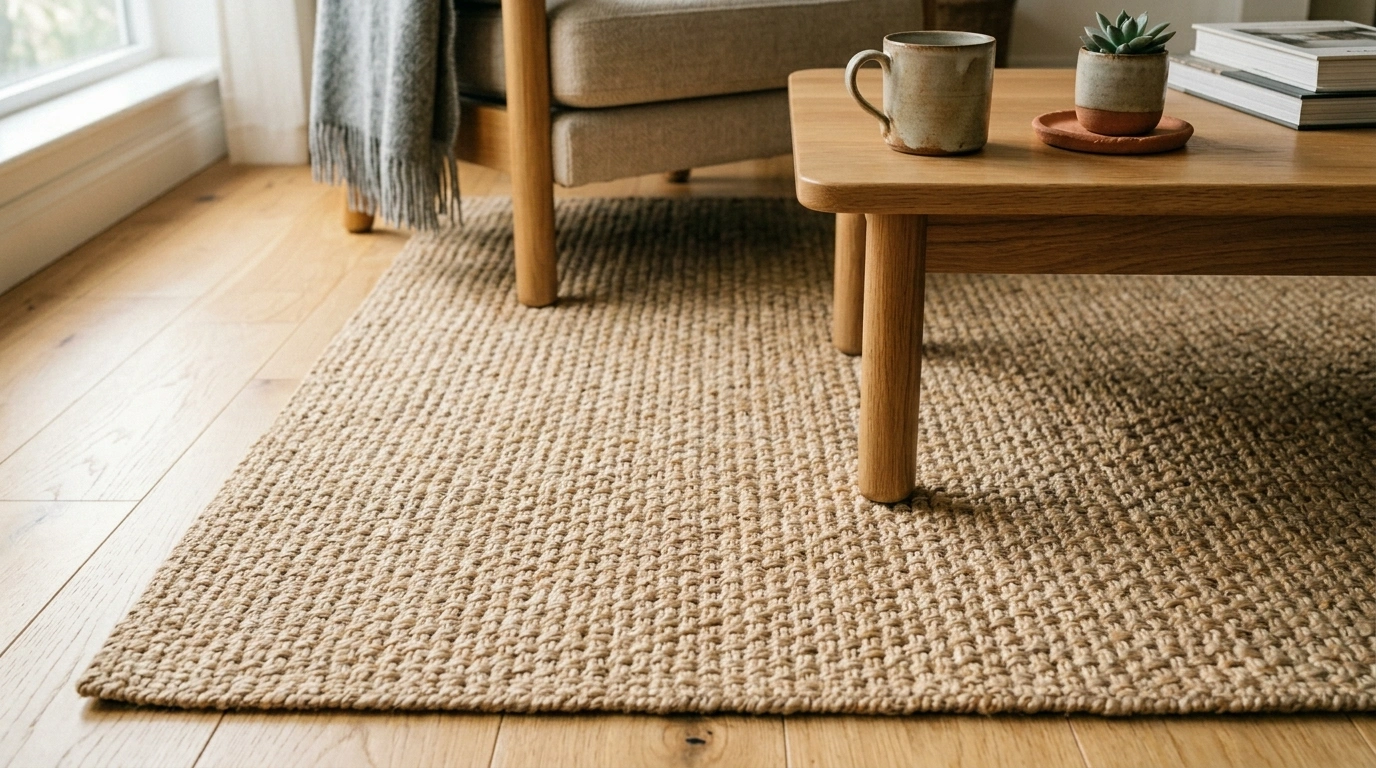
When choosing a jute rug, look for a tight, flat-weave style that is soft underfoot rather than scratchy and rough. Ensure the rug is large enough so that at least the front legs of all your main seating pieces sit comfortably on top of it, which ties the room together beautifully. If you want to use tatami mats, arrange them in a classic T-shape pattern in the center of the room, and use them as a base for a low coffee table and comfortable floor cushions. A simple, high-quality jute rug is one of the most budget-friendly ways to add massive texture and warmth to a cold, hard floor.
Suggested Price Range for Rug: $120 – $400
Floating Wooden Shelves with Minimal Styling
Traditional heavy, dark bookcases can easily make a living room feel crowded, cramped, and visually heavy. Replacing them with light, floating wooden shelves made of oak or pine creates a beautifully open, minimalist display area that keeps your books and favorite objects off the floor. These shelves act as small, architectural ledges on your walls, allowing you to display a few highly cherished items without creating any visual clutter or taking up precious floor space.
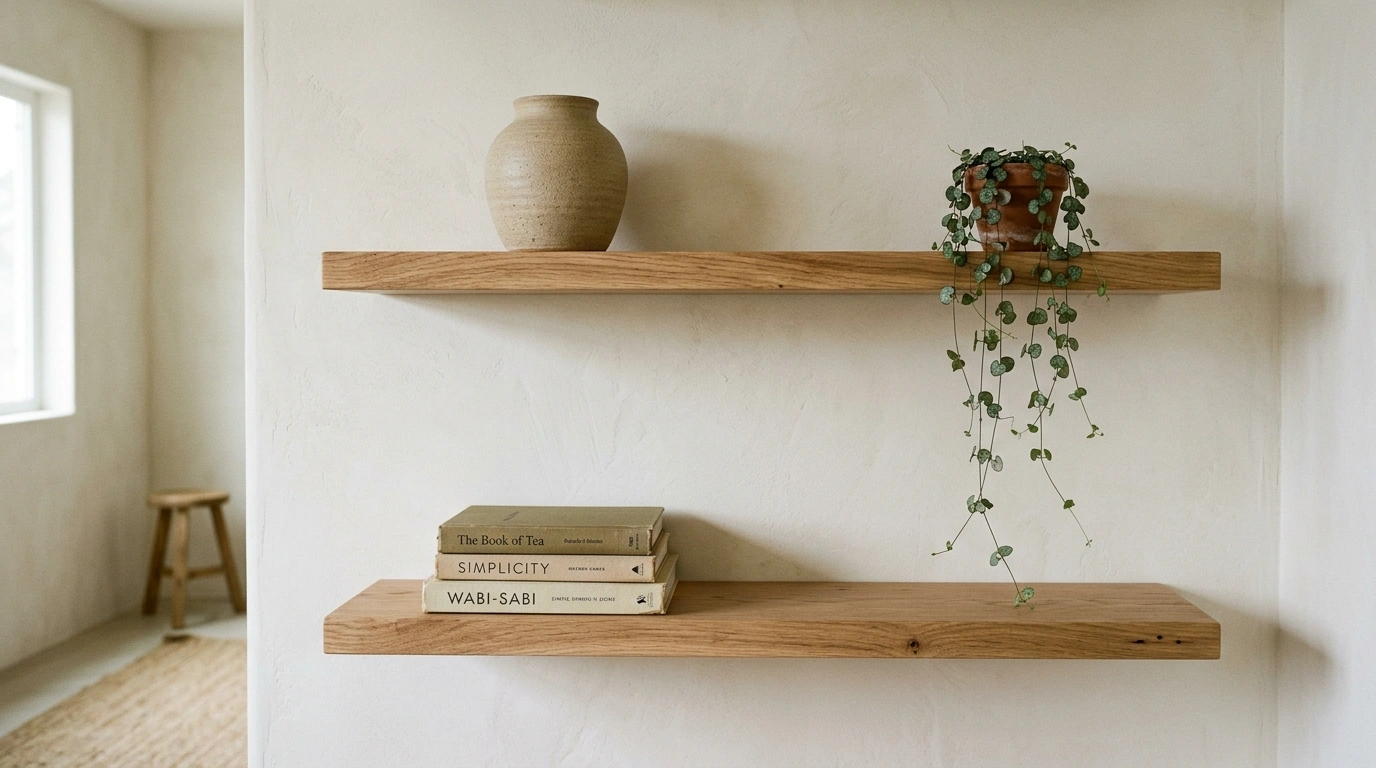
Install the shelves using hidden mounting brackets to keep the lines incredibly clean and seamless. When styling them, remember the golden rule of Wabi-Sabi: leave plenty of empty, quiet space between your items. Alternate between grouping three or four books horizontally, placing a single ceramic vase on another shelf, and letting a small trailing plant cascade gently over the edge. This balanced, asymmetrical styling keeps the eye moving calmly across the wall. You can easily make these yourself using inexpensive oak boards from your local hardware store and basic floating shelf brackets.
Suggested Price Range for Shelves: $40 – $120 per shelf
Matte Black Accent Hardware and Fixtures
While the core of Japandi design is made up of soft neutrals, light woods, and warm creams, adding a few sharp, matte black accents is what keeps the room from looking washed out or boring. These dark details act like clean ink strokes on a beautiful calligraphy painting, providing a modern, grounding contrast that defines the space. Whether it is a slim black floor lamp, a matte black door handle, or a thin black metal picture frame, these subtle touches add a beautiful, quiet strength to the room.
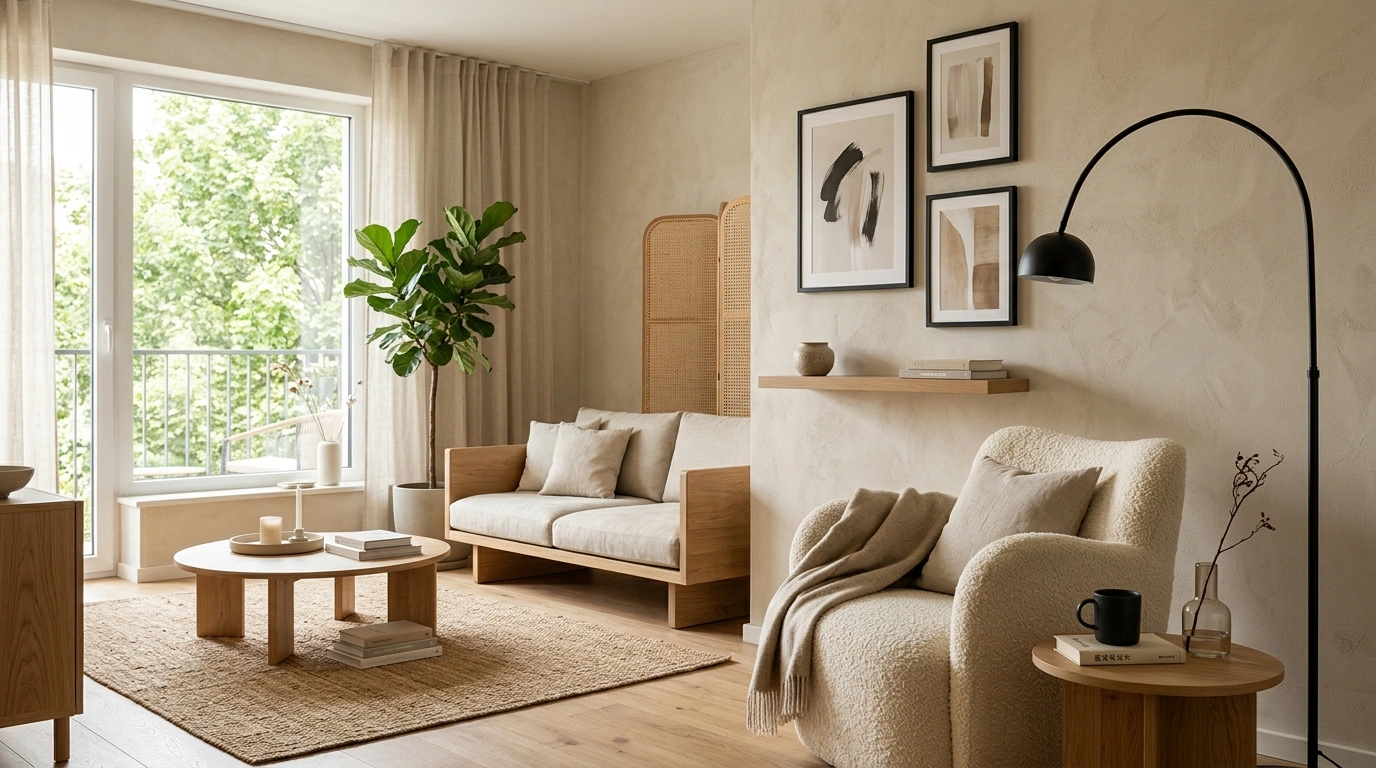
The trick to using black accents is to keep them incredibly thin, delicate, and sparse throughout the space. A slim, arched black metal floor lamp standing next to your cream sofa, paired with a few matte black drawer pulls on your TV console, is more than enough to anchor the room. Avoid heavy, chunky black furniture pieces, which will overpower the delicate, light wood tones of the space. You can easily update your existing metal decor, like picture frames or metal lamp bases, using a cheap can of matte black spray paint for an instant, budget-friendly modern update.
Suggested Price Range for Lighting/Accents: $45 – $180
Soft Curved Bouclé Accent Chairs
If your living room is filled with lots of straight lines, sharp corners, and rectangular furniture, it can end up feeling a bit stiff and unfriendly. Adding a plush armchair with soft, rounded curves and a cozy cream upholstery fabric is the perfect way to break up those rigid angles and make the space feel incredibly inviting and comfortable. The rounded backrest hugs you as you sit, creating a private, cozy little island of comfort that encourages long, lazy afternoons of reading and relaxing.
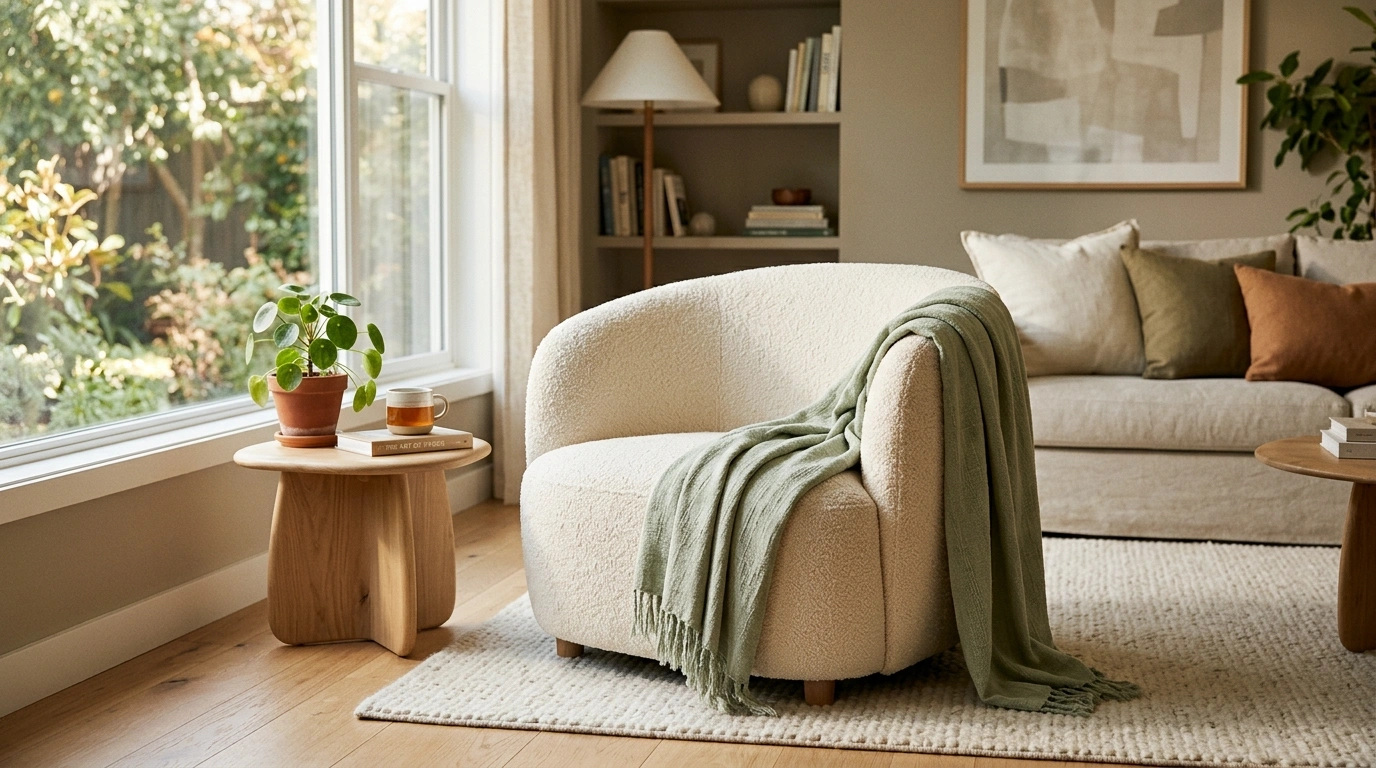
Position a curved accent chair at an angle to your main sofa to create an organic, conversational layout that feels natural and relaxed. Look for chairs with low, hidden legs or a light wooden base that matches the oak or birch tones elsewhere in your room. To style it, simply drape a lightweight waffle-weave linen throw blanket over one arm for a touch of practical, cozy texture. If you are on a budget, look for secondhand round tub chairs or barrel chairs and wrap them in a plush, affordable cream bouclé slipcover to get the exact same high-end designer look.
Suggested Price Range for Accent Chair: $250 – $600
Dried Botanical Branches in Tall Stoneware
Fresh flowers are beautiful, but they require constant maintenance, fade quickly, and can sometimes look a bit too bright and formal for a quiet Japandi home. Instead, placing a few tall, dried botanical branches in a heavy stoneware jug brings a rustic, enduring element of nature indoors that lasts forever. The beautiful, twisted shapes of dried willow, cotton stems, palm leaves, or delicate dried pampas grass create an elegant, sculptural silhouette against a plain wall, celebrating the quiet beauty of changing seasons.
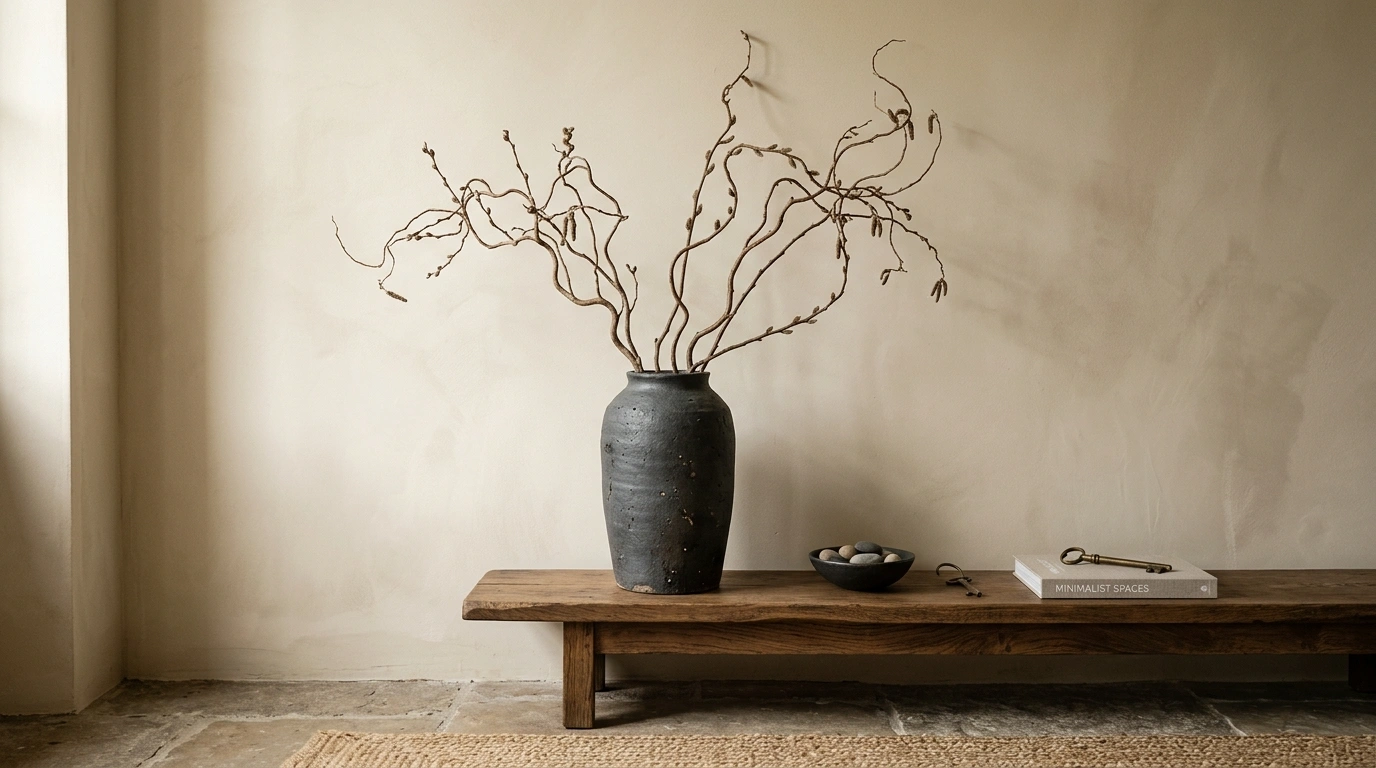
Look for a tall, heavy ceramic vase with a rough, textured stoneware finish in an earthy shade like charcoal grey, sand, or warm terracotta. Cut your dried branches so they are about one-and-a-half times the height of the vase, and arrange them loosely so they fan out naturally and slightly asymmetrical. This works especially well placed on a low entryway console, a wide windowsill, or directly on the floor in an empty corner of the room. Best of all, you can often find beautiful dried branches for free simply by foraging in your local park or backyard during autumn.
Suggested Price Range for Vase & Branches: $30 – $100
Hidden and Low-Profile Storage Solutions
A peaceful mind starts with a peaceful, clutter-free environment. In my experience, the fastest way to ruin a beautiful Japandi aesthetic is to have remote controls, charging cables, kid’s toys, and clutter strewn across every surface. Using long, low-profile media consoles with sliding wooden doors allows you to hide all the modern chaos of life completely out of sight. It keeps the visual horizon of your living room low, clean, and incredibly organized, giving your eyes a quiet place to rest.
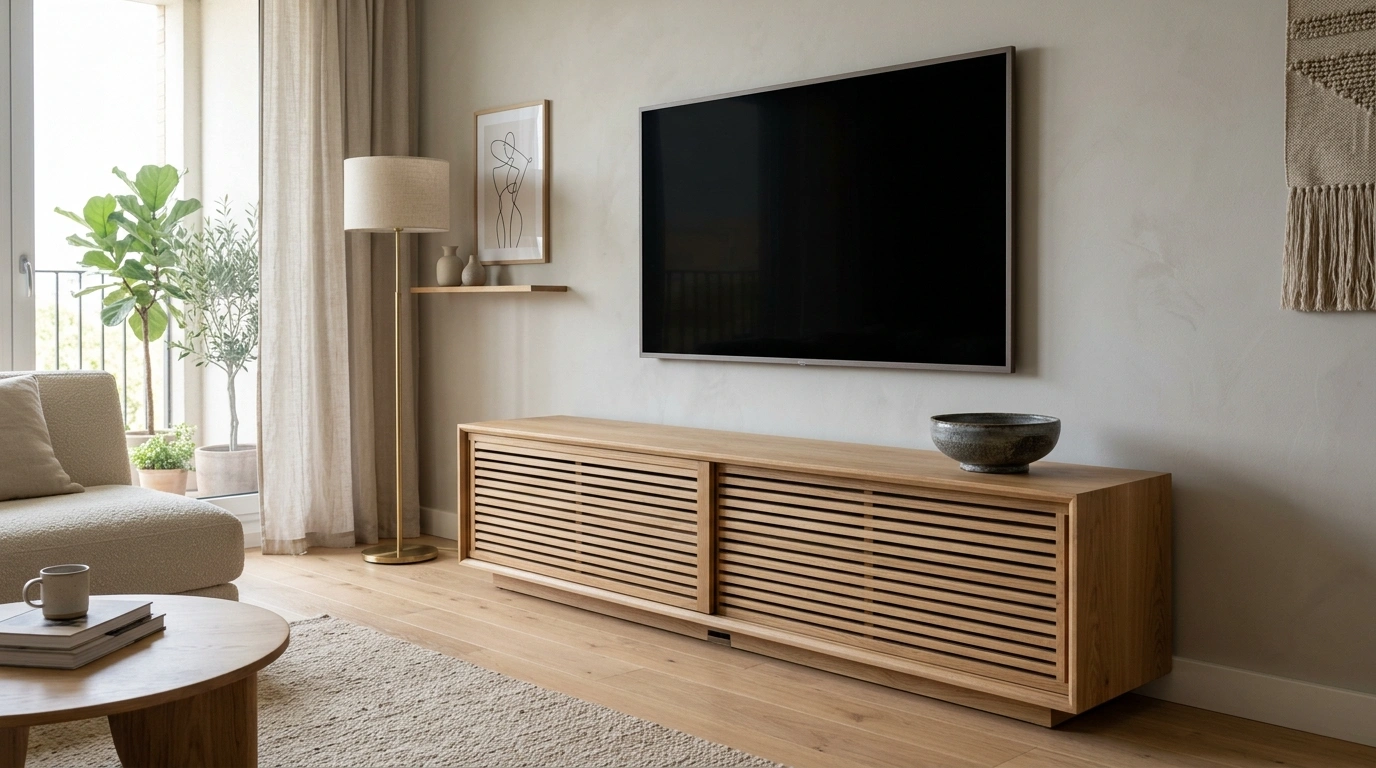
Look for a long wooden TV console that sits very close to the floor, featuring sliding slatted wood doors or woven cane panels that allow remote control signals to pass through while keeping the contents hidden. Choose a matte oak or walnut finish, and wall-mount your TV directly above it to keep the top surface of the console clean and open for a few beautiful decor items. To keep costs low, you can buy a basic, inexpensive IKEA wooden storage unit, paint it a soft cream or warm beige, and add simple wooden cabinet legs and doors for a custom, high-end Japandi look.
Suggested Price Range for Console: $300 – $900
The Cozy Reading Nook with a Sheepskin Throw
Every living room needs a dedicated spot that is purely about comfort, quiet, and slowing down. Creating a cozy reading nook in an empty corner of your room—featuring a comfortable armchair, a soft reading light, and a thick, fluffy sheepskin rug draped over the seat—brings that pure, Scandi hygge feeling into your home. It is a warm, tactile invitation to grab a hot cup of tea, wrap yourself up, and lose yourself in a good book for a couple of hours.
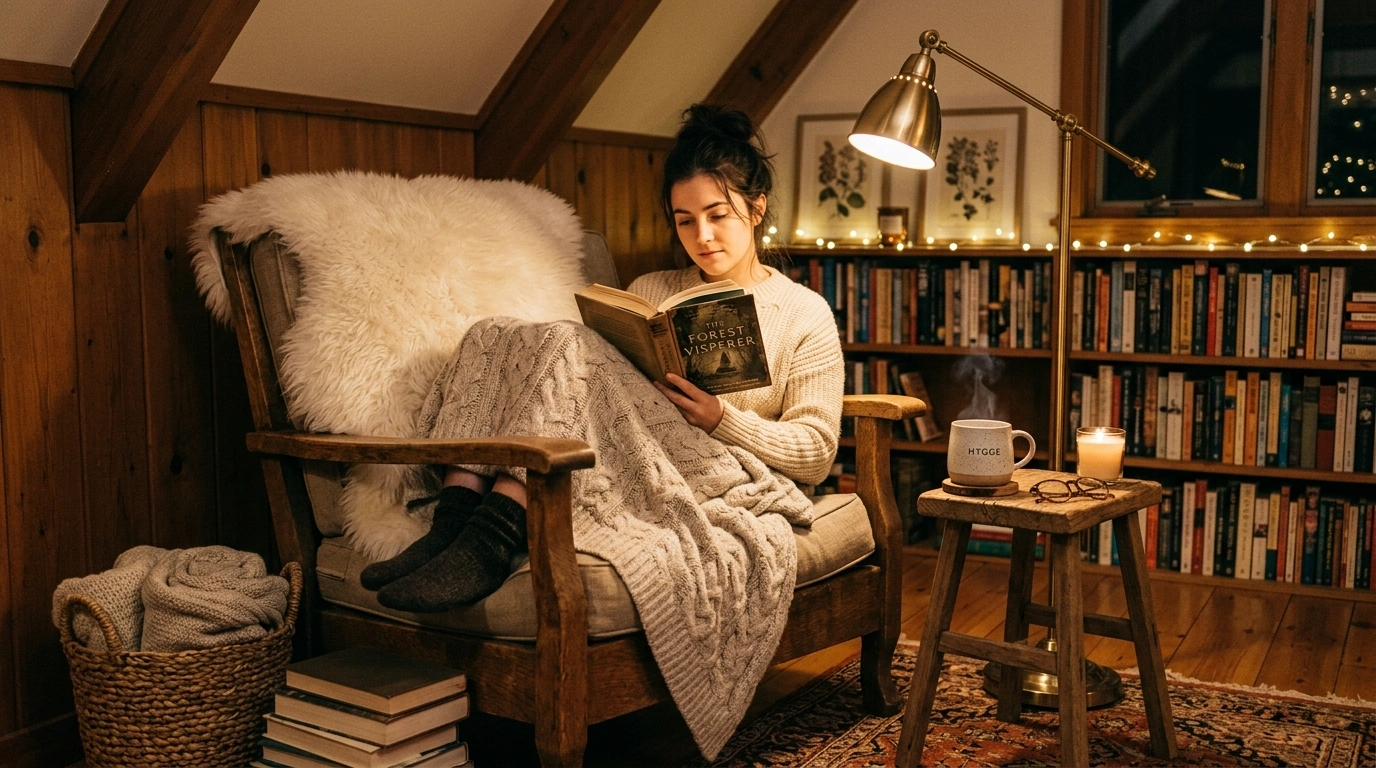
Start with a simple, comfortable armchair placed near a window to catch the natural daylight. Drape a high-quality, ethically sourced sheepskin or high-pile faux fur throw over the back of the chair to add incredible warmth, texture, and physical comfort. Place a small wooden stool next to the chair to hold your mug, and add a slim, matte black floor reading lamp behind it to cast a warm, focused light for evening reading. This works especially well if you want to make an empty, awkward corner of your living room feel highly functional and incredibly cozy without spending a lot of money.
Suggested Price Range for Nook Accessories: $80 – $250
Warm Off-White and Cream Color Palette
One of the biggest mistakes people make when trying to create a minimalist living room is painting the walls a stark, bright, clinical white. This can make the room feel cold, sterile, and incredibly unfriendly, like a doctor’s office. Instead, a true Japandi color palette relies on warm, creamy off-whites, soft vanillas, and pale greiges. These colors have warm, yellow or brown undertones that capture the light beautifully, making the room feel cozy, bright, and incredibly welcoming, even on dark, rainy winter days.
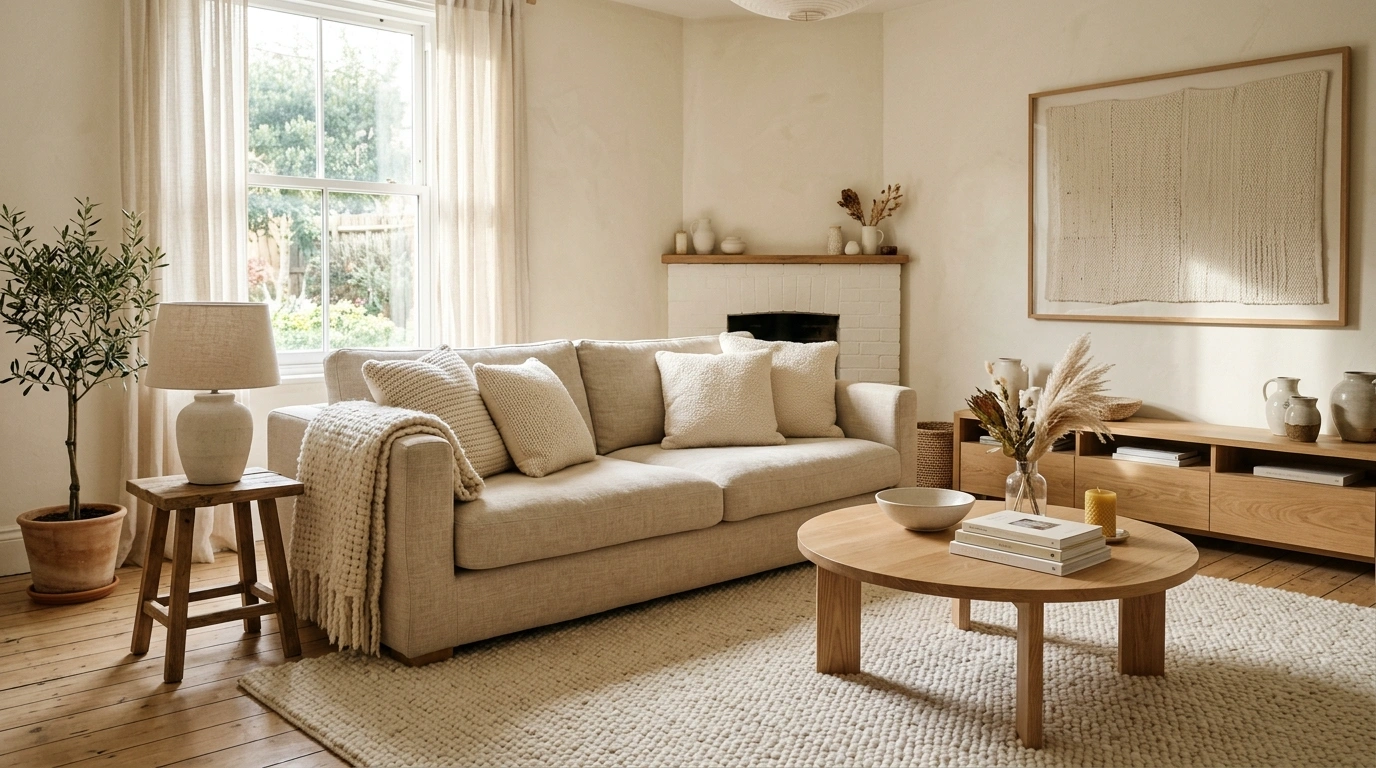
When choosing paint colors, always test large samples on different walls in your room and look at them at different times of the day. Some great shades to look for are warm cream, antique white, and pale, sandy beige. Paint all your walls, baseboards, and ceilings in the same warm, soft shade to create a seamless, cozy envelope of color. To keep the monochromatic look interesting, layer in plenty of different natural textures like linen, wool, wood, and stone in slightly different shades of cream, oatmeal, and beige.
Suggested Price Range for Paint: $50 – $150
Textured Plaster Fireplace as a Soft Focal Point
If you are lucky enough to have a fireplace in your living room, turning it into a soft, organic focal point can completely ground the entire space. A sleek, modern fireplace surround finished in a textured white plaster or a sandy micro-cement is the perfect blend of Scandi warmth and Japanese simplicity. It ditches the busy, complicated details of traditional brick or carved wood mantels in favor of a clean, sculptural form that celebrates the warm, flickering glow of the fire.
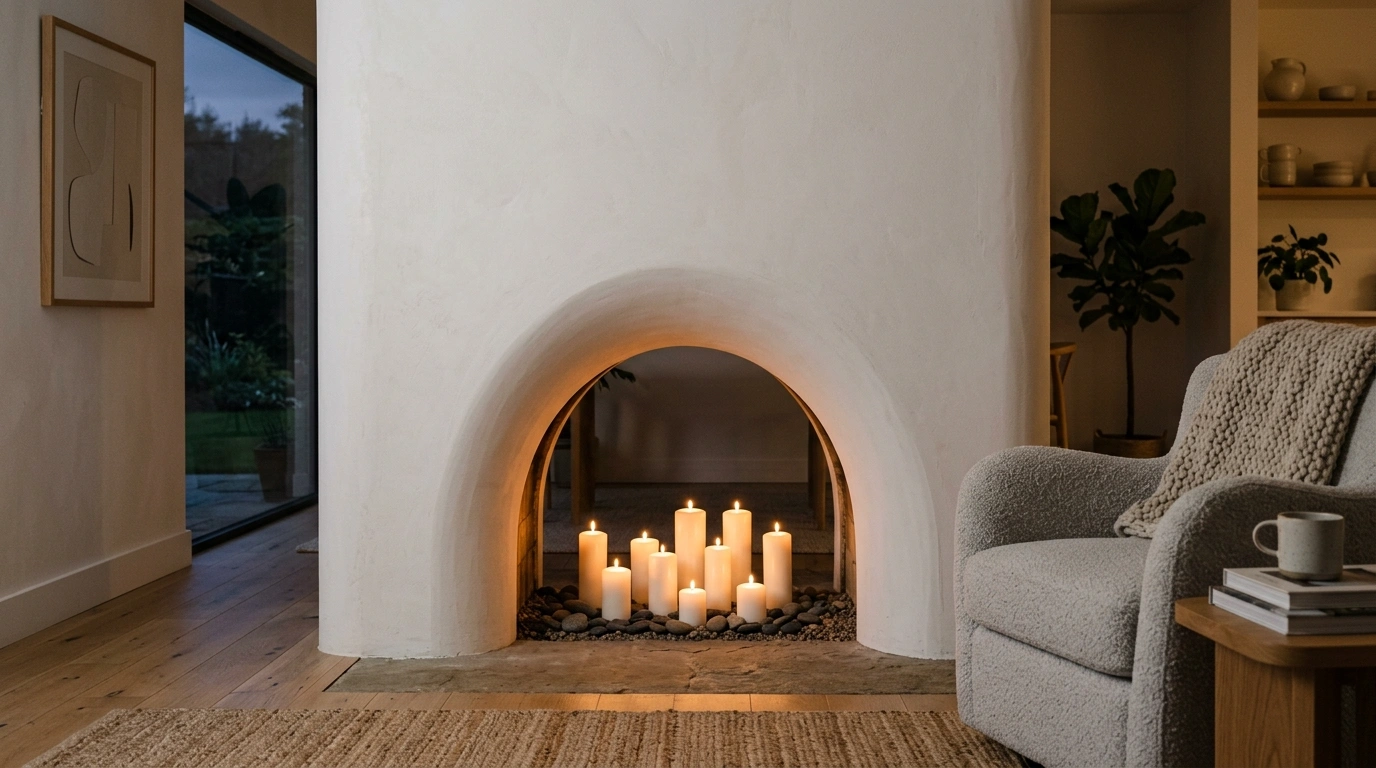
To style a plaster fireplace, keep the hearth and mantel incredibly simple. Place a single, large stoneware vase with a few dried branches on one side of the hearth, and leave the mantel completely bare or display just one beautiful piece of framed minimalist art. If your fireplace is non-working, you can fill the hearth with neatly stacked birch logs or a collection of unscented pillar candles in varying heights to create a warm, glowing focal point in the evenings. You can easily achieve this look by applying a plaster coating kit directly over an existing brick or drywall fireplace surround over a weekend.
Suggested Price Range for Plaster DIY: $150 – $400
Low-Hanging Accent Pendant Lights
While we love a main central light source, adding low-hanging accent pendant lights in specific corners of your living room is a wonderful way to create cozy, intimate zones. Hanging a delicate light fixture made of woven bamboo, frosted glass, or pleated paper directly over a side table or next to your sofa creates a soft pool of warm light that feels incredibly inviting. It defines a specific area for relaxing, reading, or chatting, making the overall room feel much more dynamic, layered, and comfortable.
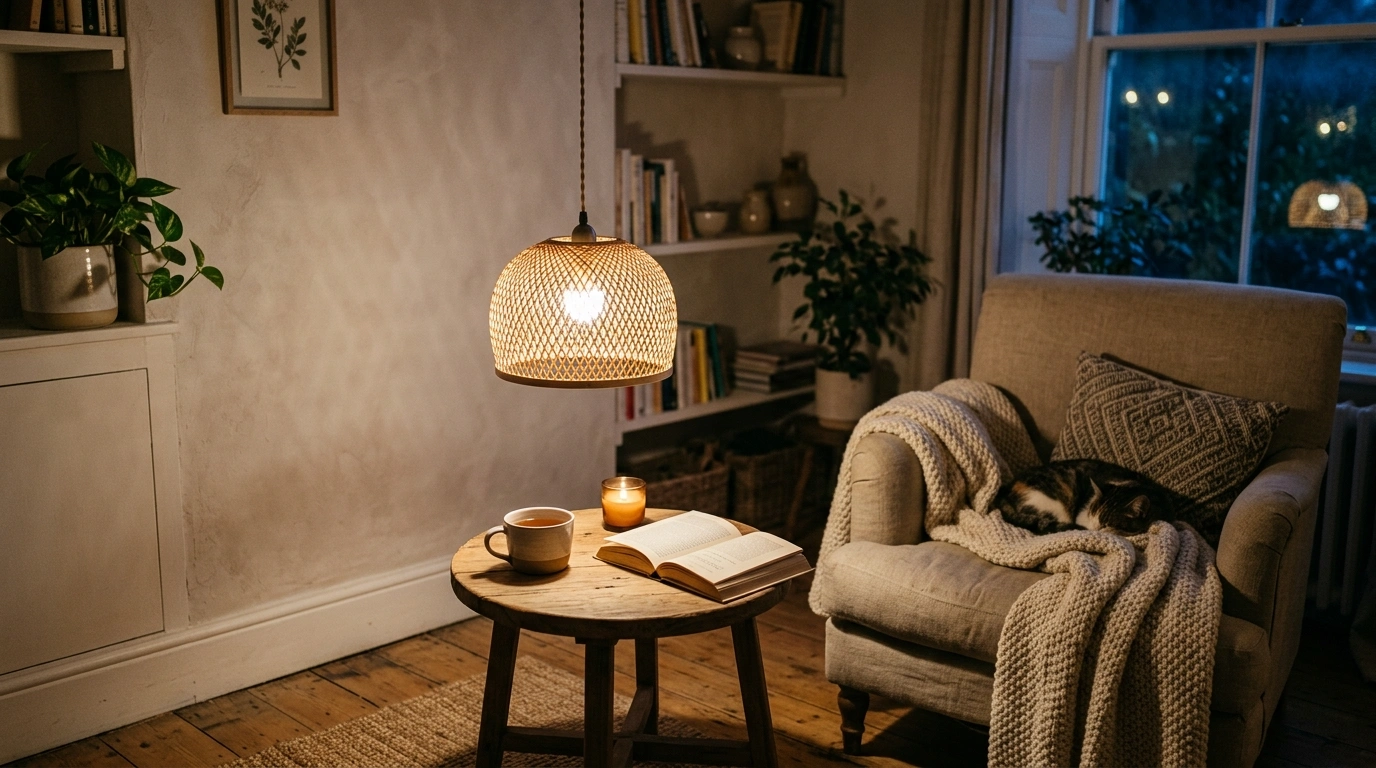
Look for a pendant light with an organic, textured shade that diffuses the light softly and prevents any harsh glare. Hang the pendant so the bottom of the shade sits about 30 to 40 inches above the tabletop or side table surface, keeping the light low and intimate. Make sure to use a warm, dimmable LED bulb so you can adjust the light level to match the mood of the evening. If you don’t want to hire an electrician to run wires through your ceiling, you can easily buy a plug-in pendant light with a beautiful woven fabric cord and hang it from a simple wooden wall hook.
Suggested Price Range for Pendant Light: $50 – $180
Framed Canvas Art with Wabi-Sabi Texture
Instead of a busy gallery wall filled with lots of colorful, distracting prints and shiny metal frames, a single, large piece of textured canvas art brings a quiet, meditative focus to your living room. A large, frameless canvas featuring simple, abstract shapes painted in thick, textured plaster or earth-toned clay feels incredibly artistic, modern, and Wabi-Sabi. The tactile, 3D texture of the paint catches the light throughout the day, offering a subtle, changing detail that feels deeply peaceful and artistic.
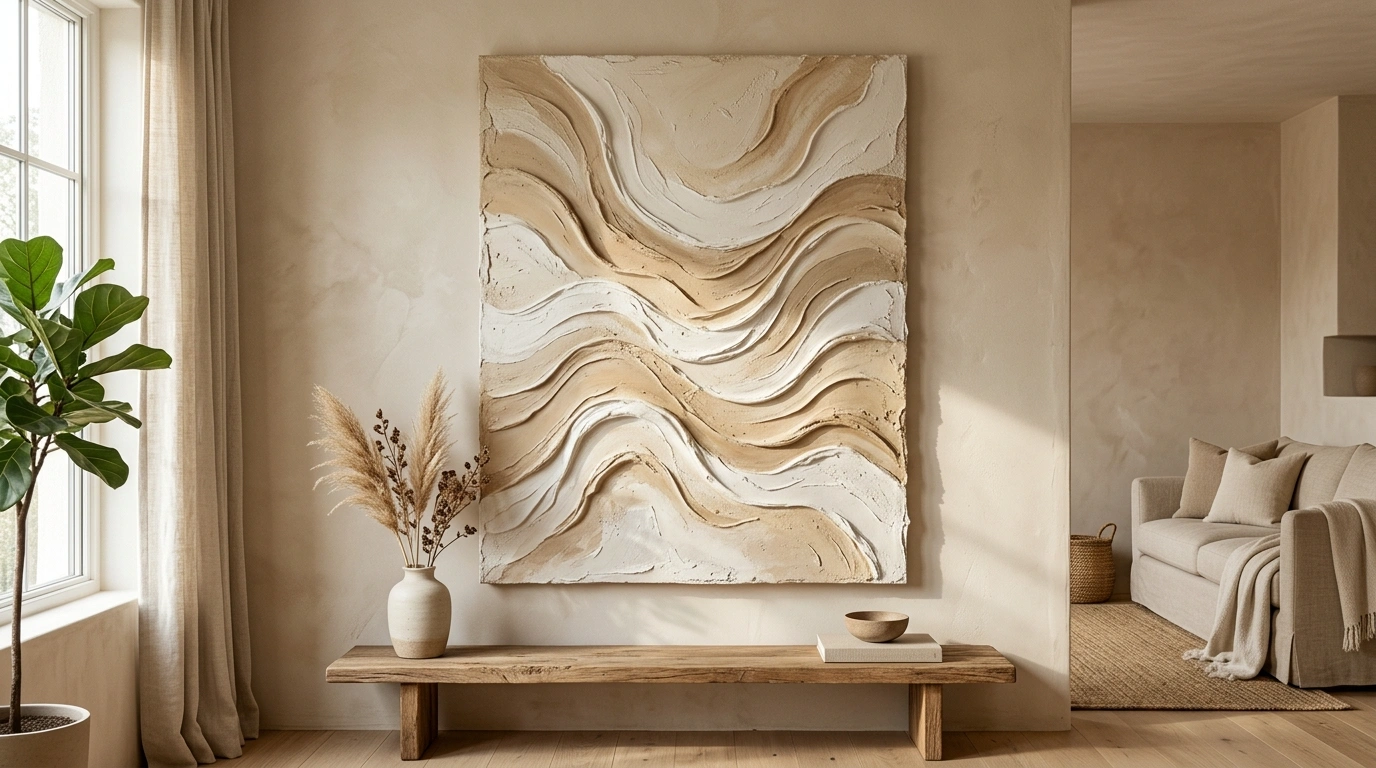
Choose a canvas that is quite large—at least three to four feet wide—and hang it centrally over your sofa or display it casually leaning against the wall on top of a low media console. Stick to a very quiet, minimalist color palette like warm cream, sandy beige, soft charcoal, and pale ochre. To save a lot of money, you can easily create this beautiful art piece yourself: buy a cheap pre-stretched canvas, apply joint compound or plaster using a spatula to create beautiful, rough textures and abstract lines, let it dry, and paint over it with a warm, flat cream paint.
Suggested Price Range for Canvas/DIY: $40 – $150
Multi-Functional Modular Furniture
In Japanese design, spaces are often small and must adapt to different activities throughout the day, which has inspired a love for highly functional, modular furniture. A modular sofa that can be easily rearranged, a nesting set of wooden coffee tables, or a bench that doubles as storage and seating are perfect for a modern Japandi home. This flexibility allows you to open up the room when you want a spacious, airy feel, or bring the pieces close together when you want a cozy, intimate layout for family movie nights.
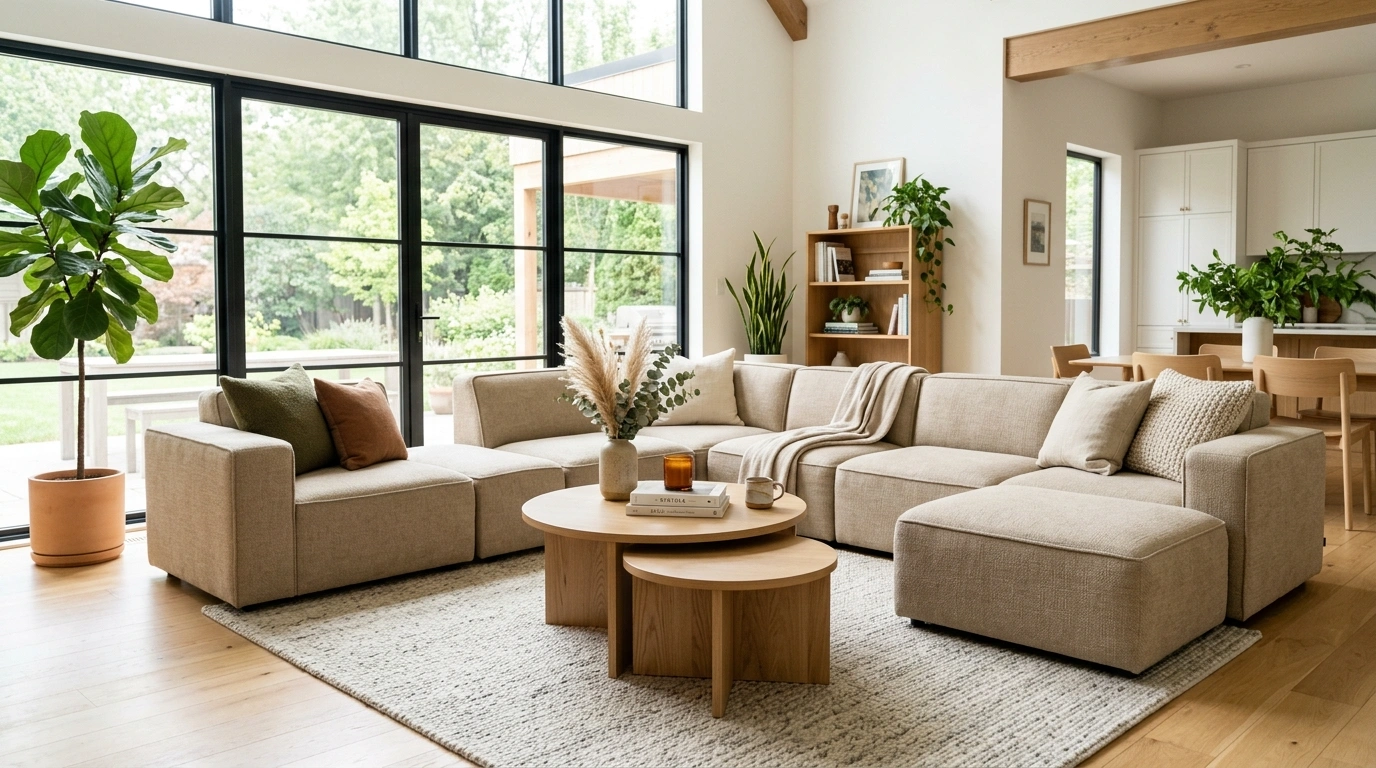
Look for modular seating units with a low-profile design and durable, textured performance fabrics in neutral tones like sand or soft grey. A nesting set of oak coffee tables can be stacked together to save space, or spread out across the room to hold drinks and snacks when you have guests over. Avoid heavy, bulky furniture that is difficult to move; instead, opt for pieces with clean lines and lightweight frames that feel breezy and adaptable. This works especially well if you live in a smaller home or apartment where every single piece of furniture needs to work double-duty.
Suggested Price Range for Modular Furniture: $300 – $1,200
Conclusion
At the end of the day, creating a beautiful Japandi living room isn’t about buying a bunch of expensive designer furniture or trying to make your home look like a pristine, untouched magazine cover. True style and comfort come from choosing pieces that feel good to touch, that support your real, everyday life, and that bring a sense of quiet peace whenever you walk through the door. It is about embracing the beauty of natural materials, enjoying the warmth of cozy textures, and letting go of the need for sterile perfection.
If you are ready to bring some of these 21 Japandi living room ideas for modern homes into your own space, I highly recommend starting with just one or two small changes first. Swap out a harsh overhead light bulb for a warm paper lantern, declutter a shelf to give your favorite ceramics some breathing room, or add a cozy sheepskin throw to your favorite chair. You will be amazed at how quickly these small, mindful adjustments can completely change the energy of your entire home.
Which of these Japandi ideas would you actually try in your own living room first? I’d genuinely love to know—drop a comment below and let’s chat!
Q: How do I make basic modern furniture look more Japandi?
In my experience, you don’t need to replace all your furniture. You can easily give basic modern pieces a Japandi feel by adding natural textures, like draping a warm cream bouclé throw blanket over a simple grey sofa, or replacing shiny metal legs on a cabinet with warm, matte oak wooden legs.
Q: What colors make a Japandi living room look more cozy?
To keep your space feeling warm and inviting rather than cold and sterile, avoid stark, bright whites. Instead, focus on a warm palette of creamy off-whites, pale greiges, sandy beiges, soft vanillas, and earthy accents like muted terracotta, warm olive green, and deep charcoal black.
Q: How can I decorate in a Japandi style on a tight budget?
You can easily create this look on a budget by focusing on simple DIY projects, like painting a cheap canvas with textured plaster, foraging for beautiful dried branches in your backyard, and shopping secondhand for solid wood furniture that you can easily sand down to its natural matte finish.
Q: What is the biggest mistake people make with Japandi design?
The biggest mistake people make is overdecorating and buying matching, mass-produced furniture sets. Japandi style relies on simplicity and breathing room; it is much better to have fewer, high-quality, mismatched pieces with plenty of empty space around them to create a sense of calm.
Q: How do I style oversized or bulky furniture in a Japandi room?
If you have a large, bulky sofa or cabinet, balance its visual weight by surrounding it with very light, minimalist elements. Pair a heavy sofa with a delicate paper lantern pendant light and a low, slim coffee table, which will instantly make the overall space feel much lighter, airier, and more balanced.
Similar Posts
12 Clever TV Wall Ideas Perfect for Small Living Rooms
If your living room feels a little cramped or uninspired, you’re definitely not alone. Small spaces can be tricky—especially when the TV becomes the main focal point. It’s easy for…
10 Christmas Mantle Ideas for a Cozy Holiday Living Room
10 Christmas Mantle Ideas for a Cozy Holiday Living Room The fireplace mantle is one of the most natural focal points in a living room. During the holidays, it sets…
12 Boho Living Room Ideas for a Laid-Back, Stylish Vibe
12 Boho Living Room Ideas for a Laid-Back, Stylish Vibe If you love cozy textures, earthy tones, and a carefree-but-chic aesthetic, the boho living room trend is calling your name….
10 Grey Bedroom Ideas for a Calm Cozy Space
10 Grey Bedroom Ideas for a Calm Cozy Space Many people hesitate when thinking about painting their bedroom grey because they are worried it will end up looking like a…
30 Stylish Green Sofa Living Room Ideas That Truly Work
If you’ve ever stared at your living room and felt like something’s missing, you’re not alone. The truth is, creating a space that feels warm, stylish, and truly you doesn’t…
18 Smart Open Plan Living Room Layout Ideas with Dining Spaces
Open plan living can feel like a dream—until you’re actually trying to style it. One big space, multiple functions, and suddenly nothing feels quite right. The sofa floats awkwardly, the…