10 Grey Bedroom Ideas for a Calm Cozy Space
Many people hesitate when thinking about painting their bedroom grey because they are worried it will end up looking like a cold, clinical hospital room or a gloomy rainy day. It is a completely fair worry. If you just slap a generic cool grey paint on the walls and use basic white sheets, the room can feel flat and uninviting. But in my experience, the biggest mistake people make is not paying attention to undertones and textures. When you get those two elements right, grey becomes one of the absolute best colors to help you wind down, quiet your mind, and actually get a good night’s sleep.
If you are looking for realistic 10 grey bedroom ideas for a calm cozy space, you are in the right place. We are going to walk through ten practical, beautiful ways to style a grey bedroom so that it feels like a warm, welcoming hug at the end of a long day. You will learn how to pick the right paint undertones, how to layer fabrics so your bed looks incredibly inviting, and how to mix in wood tones and accent colors to keep things grounded. You do not need an interior designer or a massive budget to make these changes happen—just a few thoughtful styling choices.
The Warm Greige Sanctuary
What I personally love about this look is how incredibly soft and gentle it feels on the eyes. By choosing a grey paint with warm beige undertones—often called “greige”—the room instantly avoids that chilly, industrial feeling. It feels like wrapped-up comfort, reminiscent of a soft cashmere sweater or a warm mug of tea on a foggy morning. This setup works especially well if you want to look more put together without trying too hard, creating a cozy envelope that makes you want to hit snooze every single morning.
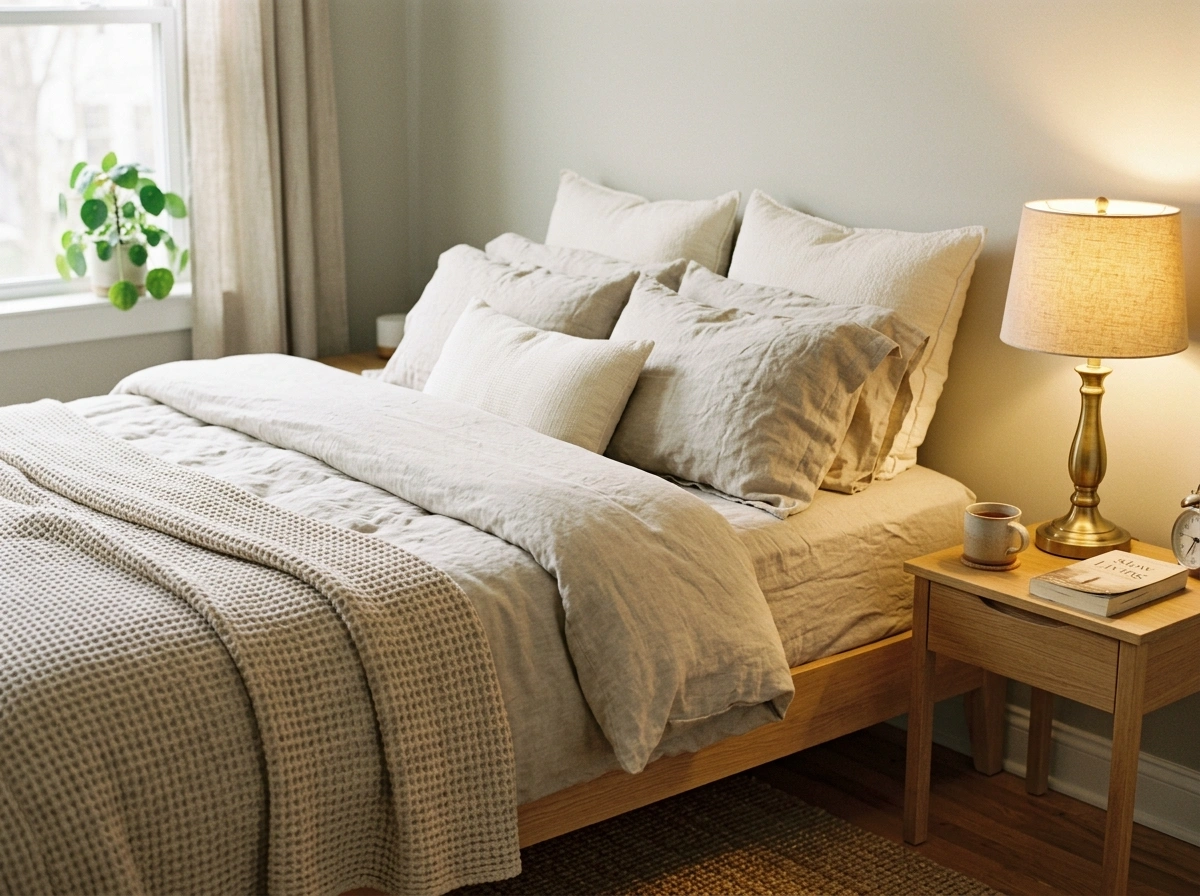
To recreate this look, I always recommend starting with a paint color like Sherwin Williams Agreeable Gray or Benjamin Moore Revere Pewter. Instead of crisp white bedding, opt for cream, ivory, or oatmeal-colored linen sheets to keep the warmth going. A lot of people overlook this detail, but swapping out cold silver metal hardware for brushed brass or warm gold drawer pulls makes the entire space feel much more expensive. Pair the bed with a textured waffle-knit blanket draped over the foot, and aim for a budget of around $150 to $200 for the textile updates.
Moody Charcoal Retreat
There is a common myth that dark colors make a room feel small and claustrophobic, but when done right, a deep charcoal bedroom feels like a cozy, protective cave. The dark grey walls absorb the light in a way that signals to your brain it is time to rest, making it perfect for light sleepers. Imagine stepping into a quiet boutique hotel room where the outside world just fades away—that is the exact feeling you get with a moody charcoal setup.
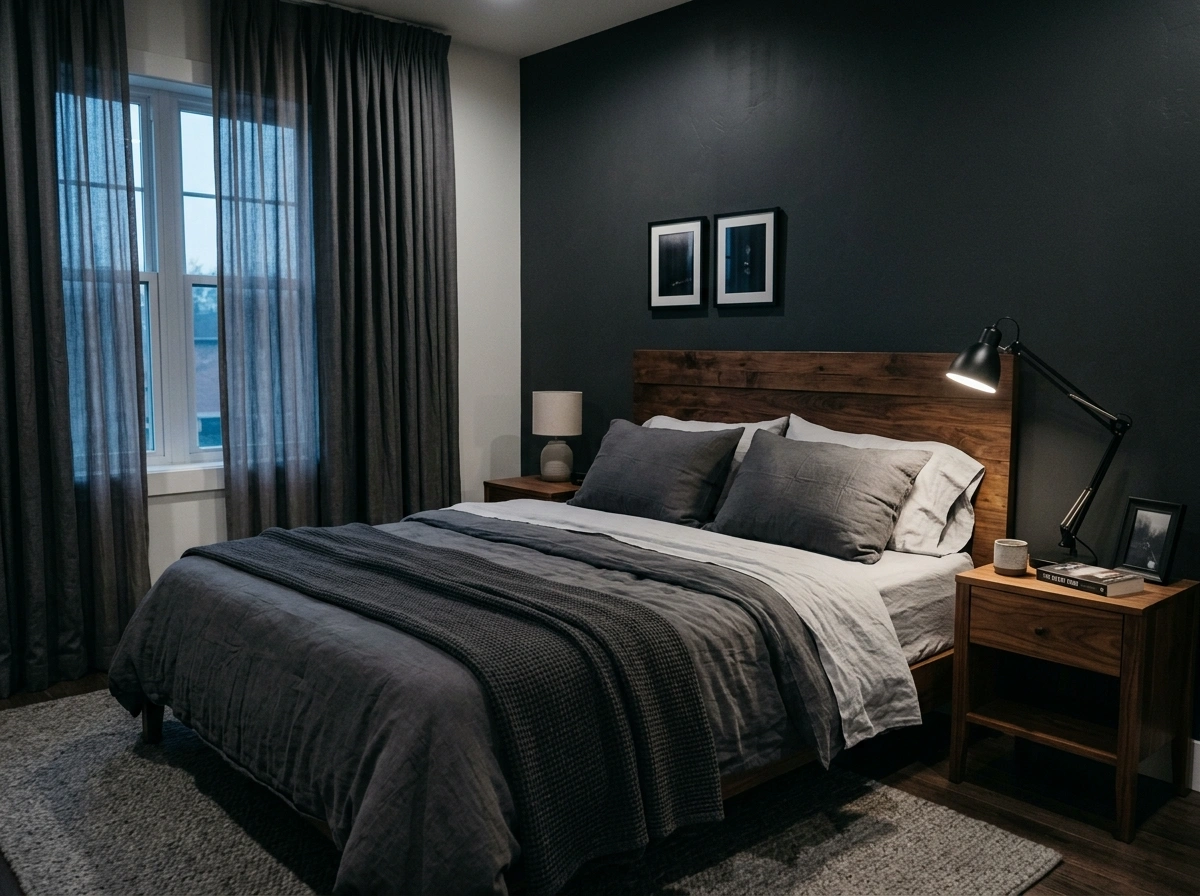
If you want to try this, do not paint all four walls charcoal if you do not have great natural light; instead, start with a feature wall behind your headboard using a color like Benjamin Moore Iron Mountain. To keep the space from looking too heavy, balance the dark walls with crisp light grey or soft white linen bedding. I always suggest bringing in natural wood elements, like light oak or walnut nightstands, to cut through the coldness of the charcoal. Avoid high-gloss paint here at all costs—a flat or eggshell finish is essential to prevent glare and keep the walls looking velvety soft.
Soft Silver and Chunky Knits
If you love a bedroom that feels bright, airy, and fresh but still want that cozy factor, a light silver grey is your best friend. This look captures natural morning light beautifully, making the room feel clean, peaceful, and wide open. The secret to stopping a light grey room from feeling plain or boring is to overload it with different physical textures that invite you to touch them.
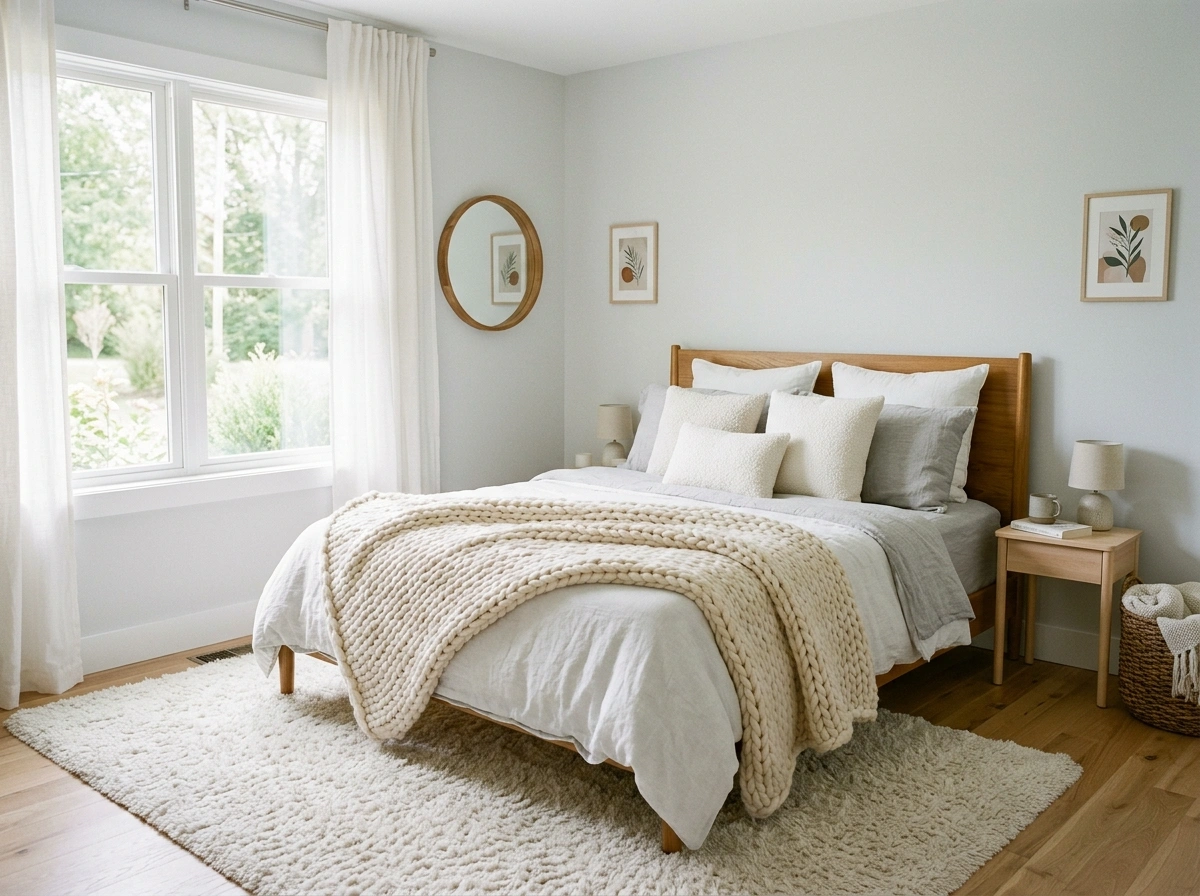
To make this style work, look for a pale grey paint with a tiny hint of warm undertone, such as Sherwin Williams Repose Gray. Since the color palette is so quiet, your bedding needs to do the heavy lifting. Layer a chunky, oversized grey knit throw blanket over a quilted coverlet, and add some soft boucle throw pillows. For the floors, a thick, plush shag rug in a cream or off-white tone will give your feet a warm place to land in the morning. Keep accessories simple with light ceramic vases and simple framed sketches on the wall.
The Coastal Mist Oasis
This style blends a soft slate-grey with quiet, watery blue undertones to create a room that feels like a quiet morning at the beach. It is an incredibly relaxing color palette that naturally lowers your heart rate and brings a sense of fresh air indoors. It works beautifully for anyone who wants a calm space that feels organic, breezy, and connected to nature without going full “beachy” with anchor motifs and seashells.
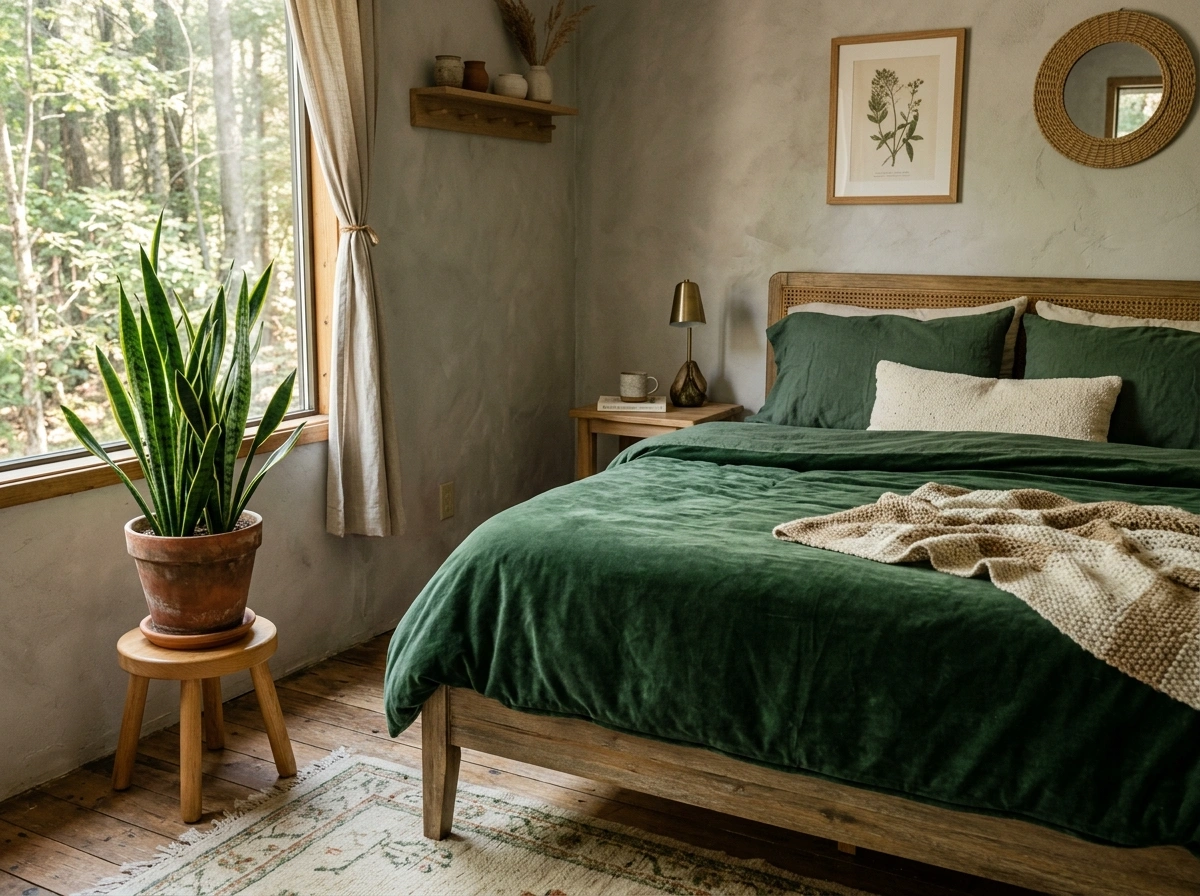
To recreate this oasis, choose a paint color like Benjamin Moore Brewster Gray or Sherwin Williams Sea Salt, which shift between grey, blue, and green depending on the time of day. Pair these walls with natural jute or seagrass rugs to bring in an earthy texture underfoot. For furniture, light oak wood or white-washed nightstands look wonderful against the blue-grey backdrop. Avoid shiny plastic or high-glamour mirrored furniture here; instead, stick to matte stoneware lamps and simple linen curtains that let the natural light filter through.
Forest Green and Ash Grey
One of the easiest ways to ground a grey bedroom is to pair it with colors found in nature. Mixing a soft ash grey with deep forest green creates a grounded, comforting aesthetic that feels incredibly peaceful. The grey acts as a clean, quiet canvas while the rich green tones bring life, warmth, and depth into the room, making it feel like a quiet forest cabin.
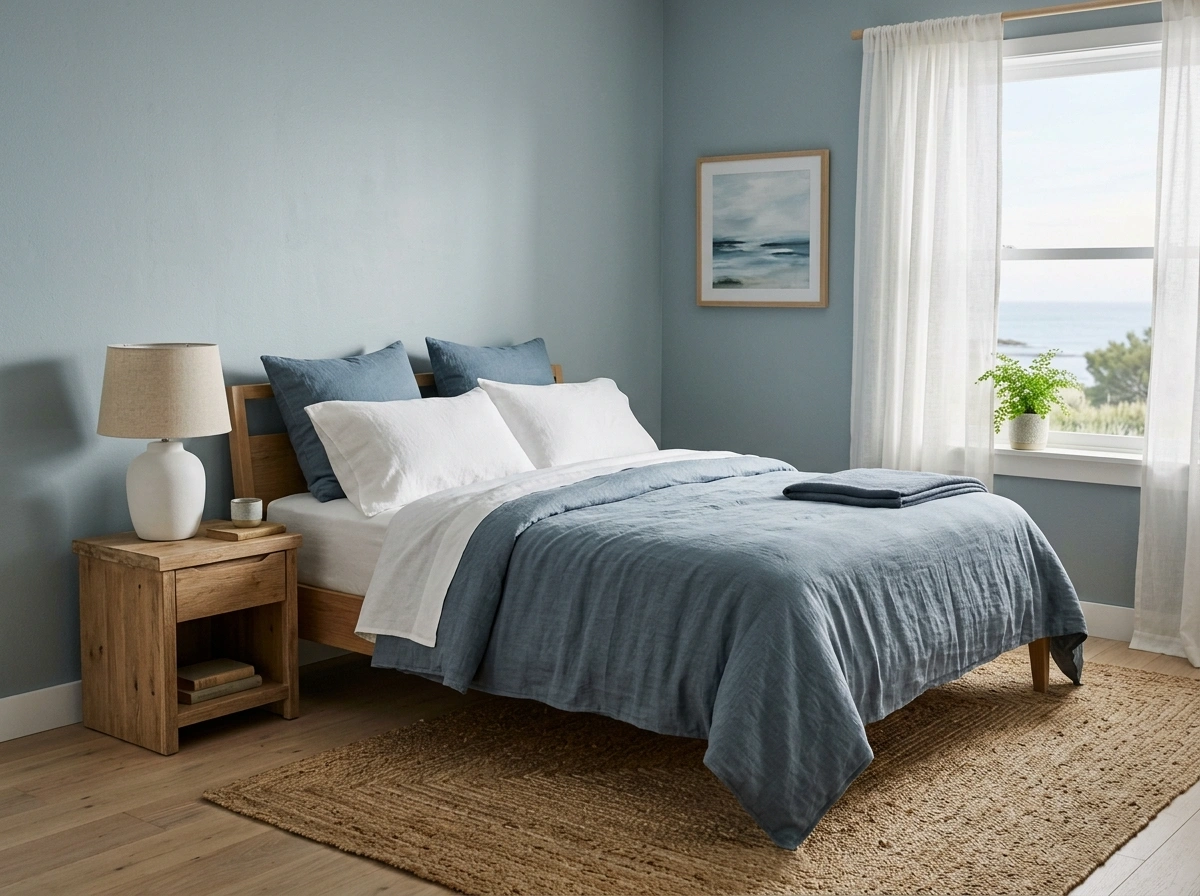
I always recommend starting with ash grey walls—like Benjamin Moore Stonington Gray—and using forest green as your accent color. You can easily do this by choosing a deep green velvet duvet cover or adding olive green throw blankets and linen pillowcases. The absolute biggest mistake people make here is using artificial, bright green accents; stick to earthy, muted shades of sage, olive, and forest. Add a real potted plant, like a hardy snake plant or a cascading pothos on a shelf, to bring actual nature into the corner of the room.
Minimalist Concrete and Warm Wood
If your style leans a bit more modern or industrial, you can still create an incredibly cozy space by pairing raw grey tones with warm, natural materials. This style relies on clean lines, simple layouts, and a beautiful contrast between the cool, solid look of stone or concrete and the soft warmth of natural wood grains. It feels very intentional, tidy, and calm because there is zero clutter to distract your eyes.
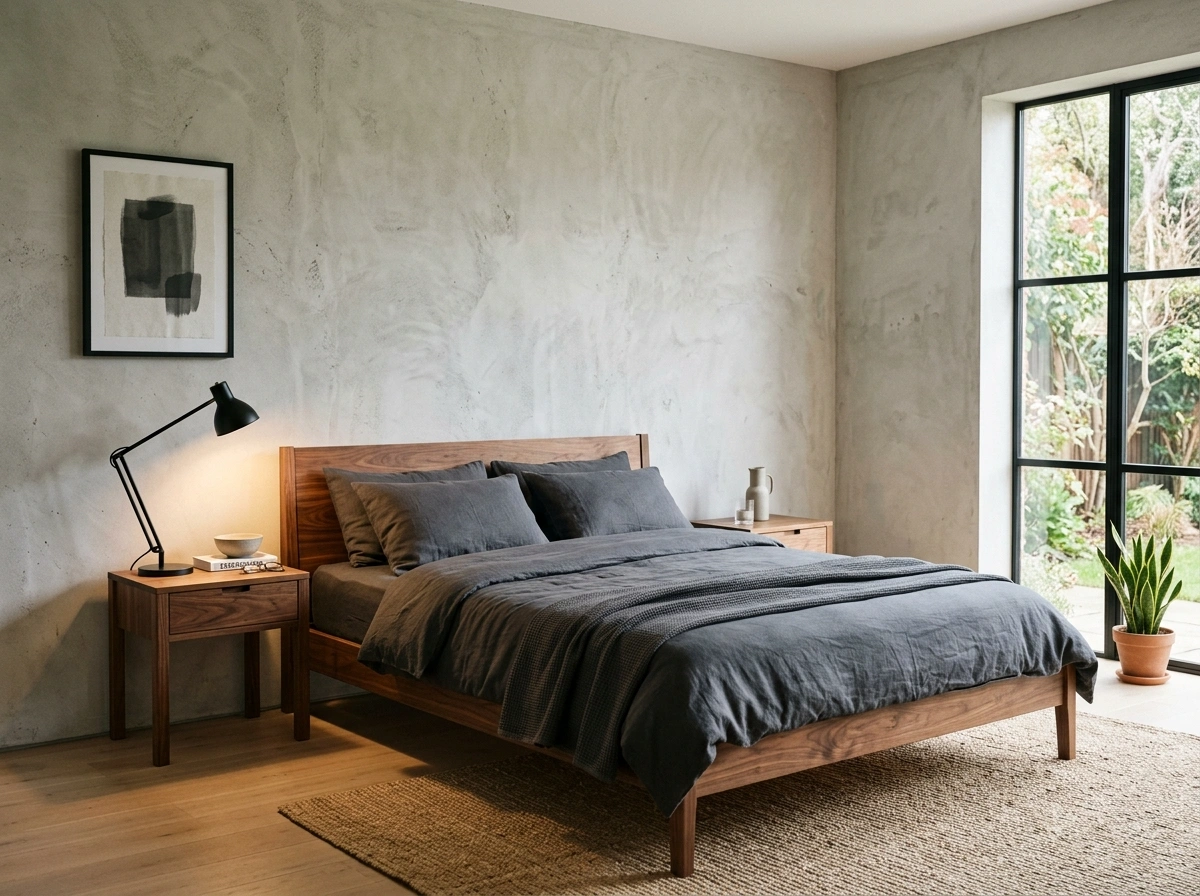
You do not need actual concrete walls to get this look; instead, look for a textured grey wallpaper or use a subtle color-washing paint technique to give your walls a slightly mottled, earthy plaster look. To balance the cool walls, your bed frame and nightstands should be a warm, rich wood like walnut or cherry. Keep the bedding simple with structured grey linen sheets, and use black metal bedside lamps for a sharp, clean finish. This look is all about editing down—only keep items in the room that are both beautiful and useful.
French Country Dove Grey
For a look that is soft, romantic, and slightly vintage, dove grey paired with distressed whites and antique details is a gorgeous path to take. This style feels incredibly cozy because it embraces imperfections—think slightly wrinkled linen, weathered wood, and soft, curved furniture lines. It has a beautiful, lived-in charm that makes you feel instantly relaxed the second you walk through the door.
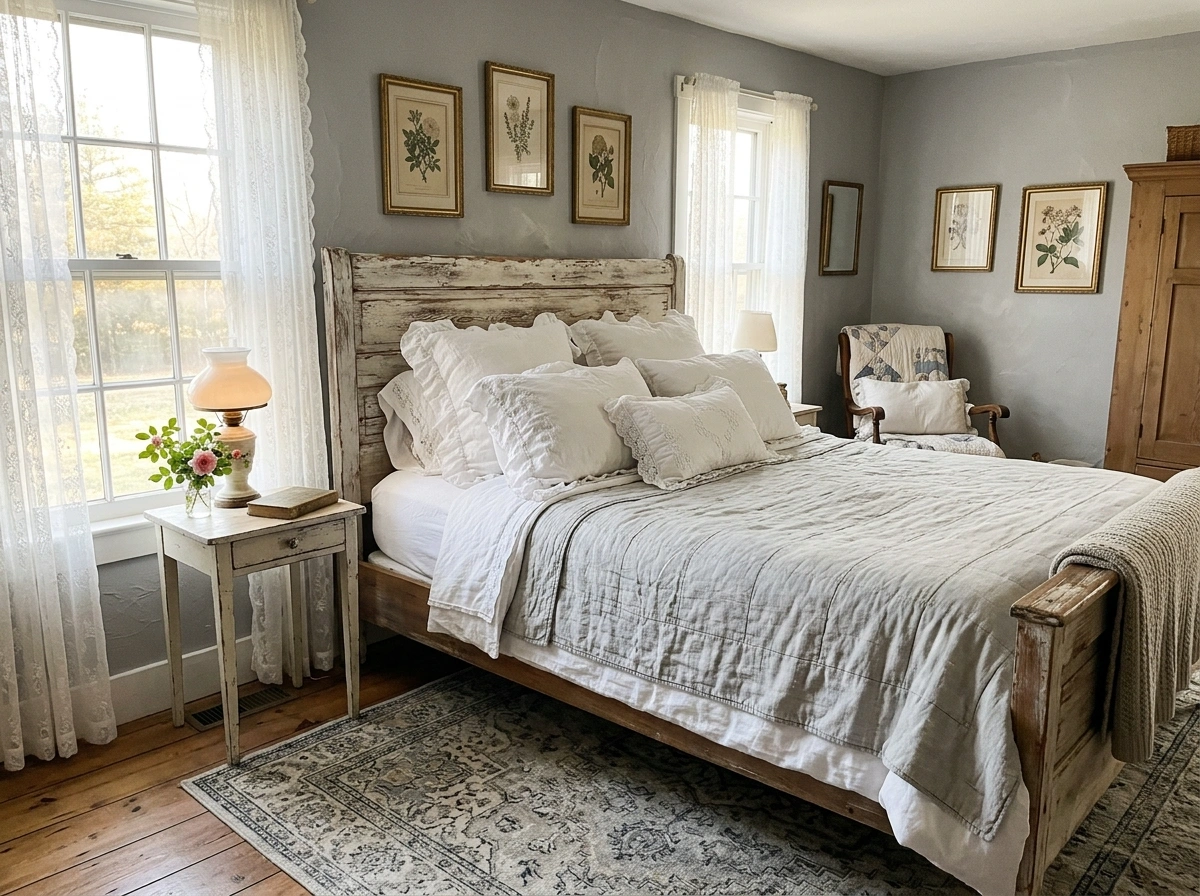
To bring this look to life, paint your walls a delicate, pale dove grey like Sherwin Williams passive. Look for a headboard with some soft tufting or a classic wooden frame with a distressed, white-washed finish. Layer the bed with ruffled linen pillowcases, a lightweight quilt, and a vintage-patterned rug in faded grey and cream tones underneath. A common mistake is going too modern with lighting; instead, look for a small brass chandelier or bedside lamps with classic white fabric shades to keep the soft, romantic glow.
Monochromatic Layering
You do not need a bunch of different accent colors to make a grey bedroom interesting. In fact, using only shades of grey can look incredibly sophisticated and peaceful, as long as you use a wide range of tones from very light to very dark. This monochromatic approach removes visual noise, allowing your eyes to rest completely because there are no bright colors competing for your attention.
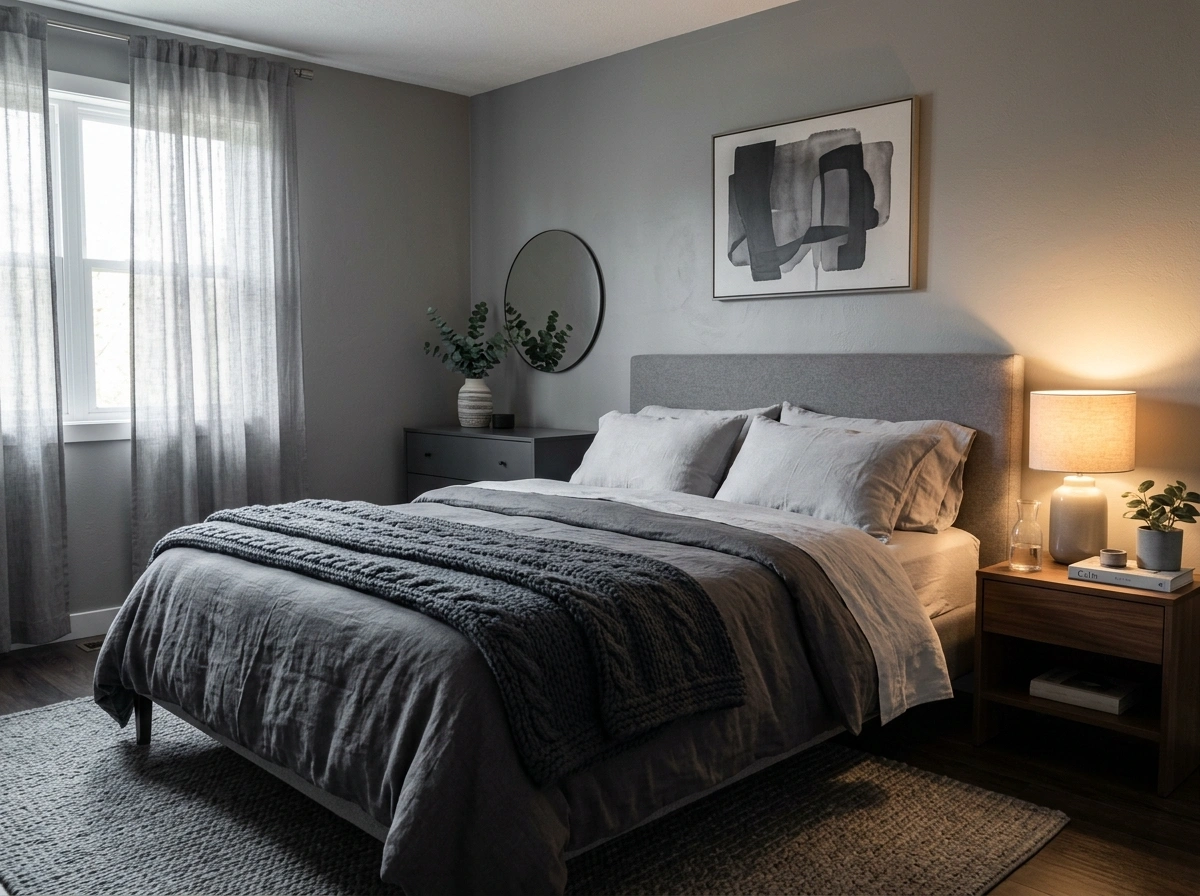
The secret to making a monochromatic room work is layering at least four different shades of grey. Paint your walls a mid-tone grey, use light silver-grey sheets, add a charcoal grey duvet, and finish with a dark slate-grey throw blanket. By mixing up the fabrics—combining rough linen, smooth cotton, and heavy wool—each layer stays distinct and cozy. It keeps the room looking rich and dimensional rather than flat. A budget of $100 for a couple of new grey pillowcases and a throw blanket can completely change the depth of your existing bed.
The Plush Velvet Boudoir
If your idea of cozy involves a bit of luxury and softness, bringing plush fabrics into a muted grey bedroom is a wonderful choice. This look focuses heavily on the sense of touch, using materials that feel amazing against your skin and look beautiful under soft, warm lighting. It feels very indulgent, cozy, and special—like your own private retreat from the busy world.
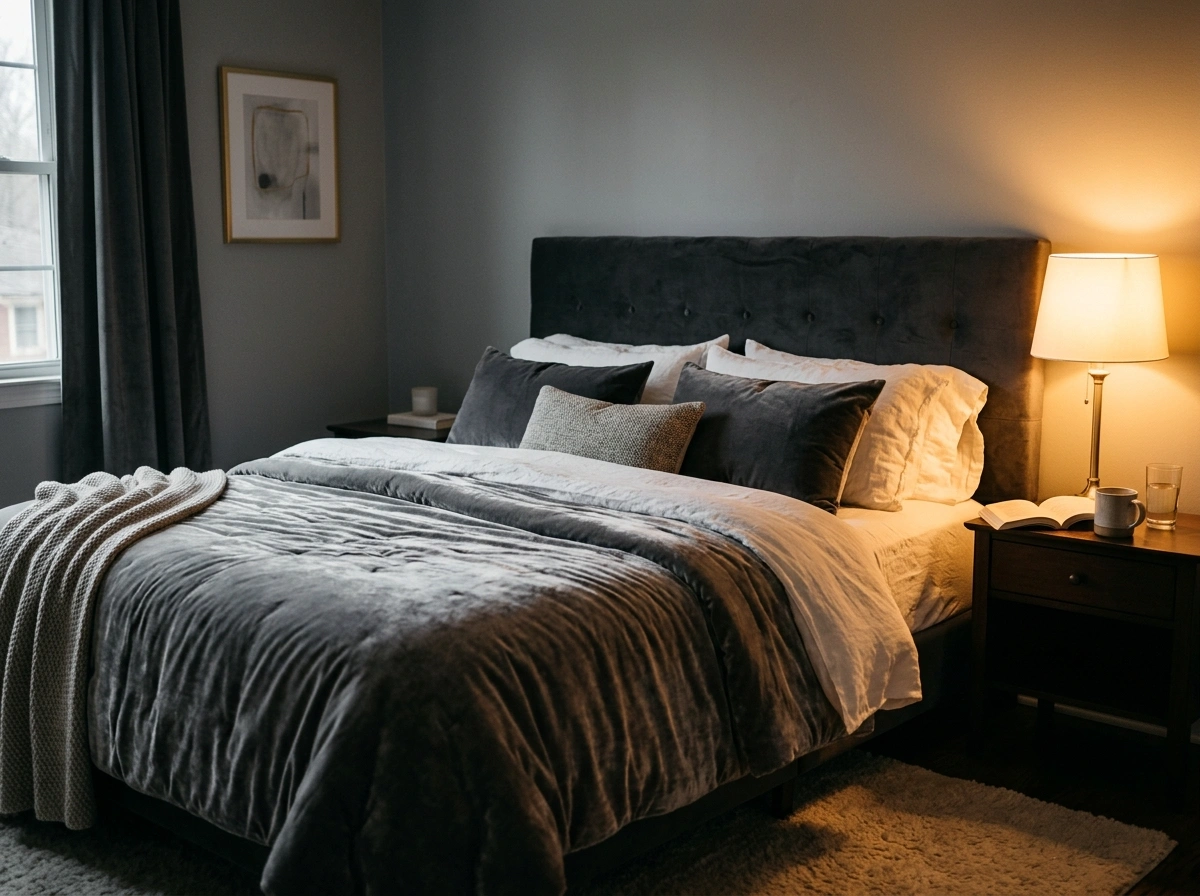
To style this, keep the walls a quiet, matte grey so they do not compete with the rich fabrics. Make the bed the absolute star of the show with a plush grey velvet comforter or a tufted velvet headboard. Because velvet has a natural sheen that catches the light, pair it with soft, matte linen sheets to keep the look grounded and prevent it from feeling too gaudy. Use warm-toned lightbulbs (2700K is the sweet spot) in your bedside lamps to cast a golden, cozy glow across the soft fabrics.
Terracotta and Charcoal Fusion
If you love warm, sunny, earthy tones but still want the grounding effect of a grey base, pairing charcoal with rich terracotta is a match made in heaven. The cool, dark charcoal provides a dramatic, quiet background that makes the warm, clay-red terracotta accents absolutely pop with cozy warmth. It feels like a beautiful sunset over a rocky landscape, bringing a rustic, desert-inspired coziness into your home.
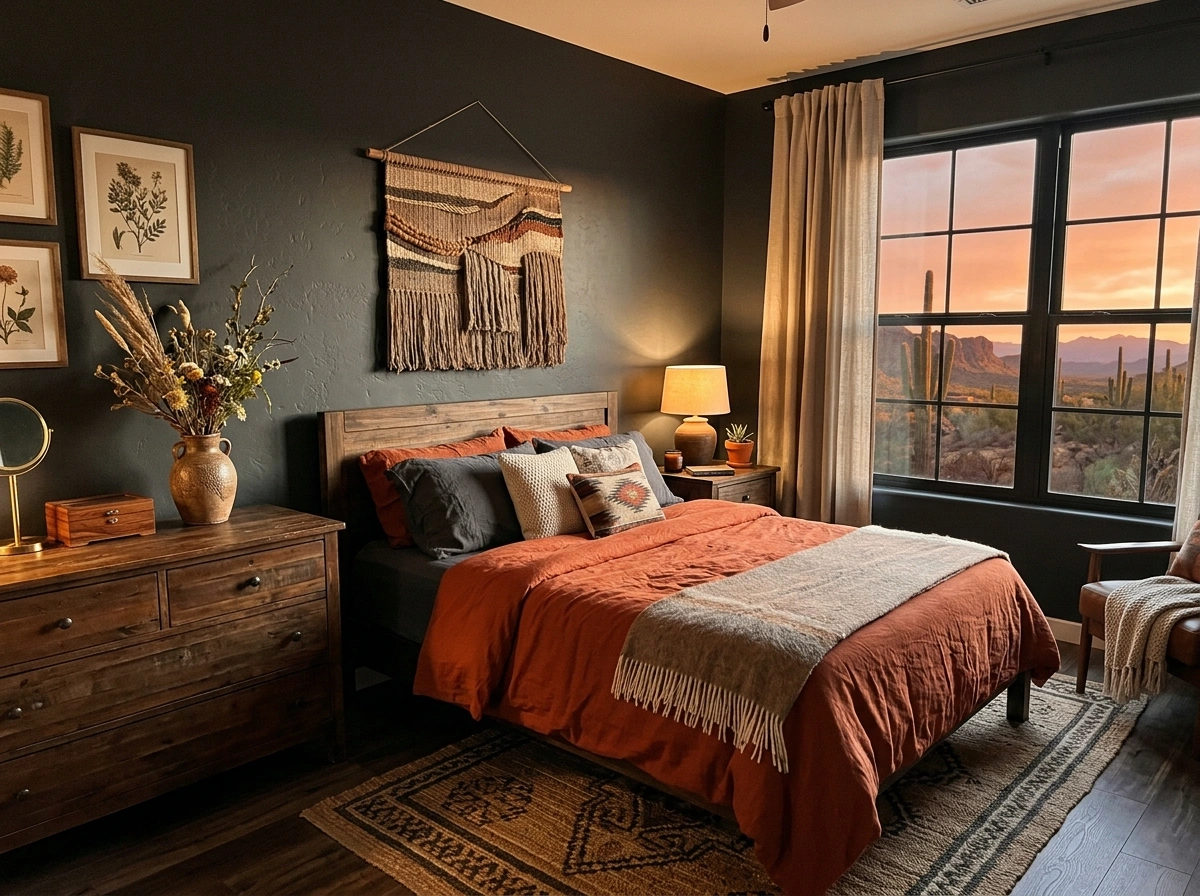
Start with deep charcoal grey or slate walls to set a quiet, moody base. Then, bring in terracotta through your textiles—think a rust-colored linen duvet cover, clay-toned stoneware vases on the dresser, or an Aztec-patterned rug with warm orange and grey tones. What I love about this look is how easily you can swap the accents out if you ever want a change, but the warmth of the terracotta makes it a staple for creating an inviting, cozy bedroom that feels incredibly unique.
Conclusion
At the end of the day, creating a beautiful bedroom is all about how the space makes you feel when you turn off the lights. You do not need a massive budget or a house full of expensive designer furniture to make these 10 grey bedroom ideas for a calm cozy space work for you. Start by looking at what you already own, pay attention to the lighting, and try adding just one or two new textures—like a soft knit throw or a warm-toned lamp.
Grey is a wonderful, versatile canvas that can be styled to fit almost any personality, whether you love the moody, dark cave feel of charcoal or the bright, breezy look of coastal mist. Take your time, experiment with different fabrics, and build a space that feels uniquely yours.
Which of these grey bedroom styles would you actually want to sleep in first? I would genuinely love to know, so drop a comment below and let’s chat about it!
Frequently Asked Questions
How do I make a grey bedroom feel warmer?
The easiest way to warm up a grey bedroom is by avoiding cool blue-toned greys and opting for warm “greiges” instead. Additionally, you should swap out cold silver metals for warm brass or gold, use warm-toned LED lightbulbs (around 2700K), and introduce natural wood furniture and cream-colored fabrics.
What colors pair best with a grey bedroom?
Grey is incredibly versatile and pairs beautifully with earthy, natural tones. For a cozy feel, look to warm terracotta, sage green, forest green, dusty rose, and creamy oatmeal. If you want a moodier look, rich charcoal paired with warm wood tones works incredibly well.
Is grey still a good color for bedrooms?
Yes, grey remains an excellent choice for bedrooms because of its incredible ability to quiet the mind. The key is to avoid flat, lifeless greys and instead use shades with rich undertones (like blue, green, or beige) paired with plenty of physical textures like linen, wood, and knits.
How do I style a grey bedroom on a budget?
You do not need to paint your entire room to change the vibe. You can easily cozy up a grey bedroom on a budget by purchasing a textured cream throw blanket, swapping your bedside lightbulbs to a warmer hue, or adding a couple of earthy-toned throw pillows to your bed.
Can I mix different shades of grey in one bedroom?
Absolutely! Mixing different shades of grey—from pale silver to deep charcoal—is actually the best way to create a sophisticated, monochromatic look. Just make sure to use a variety of different fabrics, such as linen, velvet, and wool, to keep the layers looking distinct.